Our Anchorage in Vanua Balavu’s Bay of Islands (Northern Lau, Fiji)

September 18, 2013

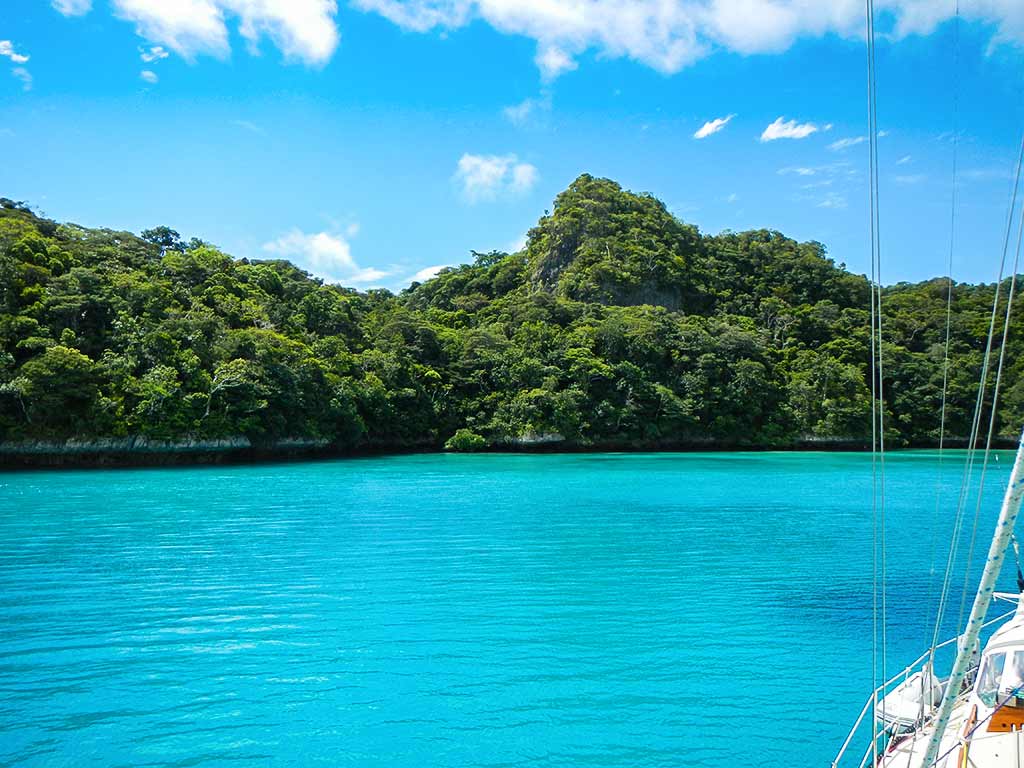
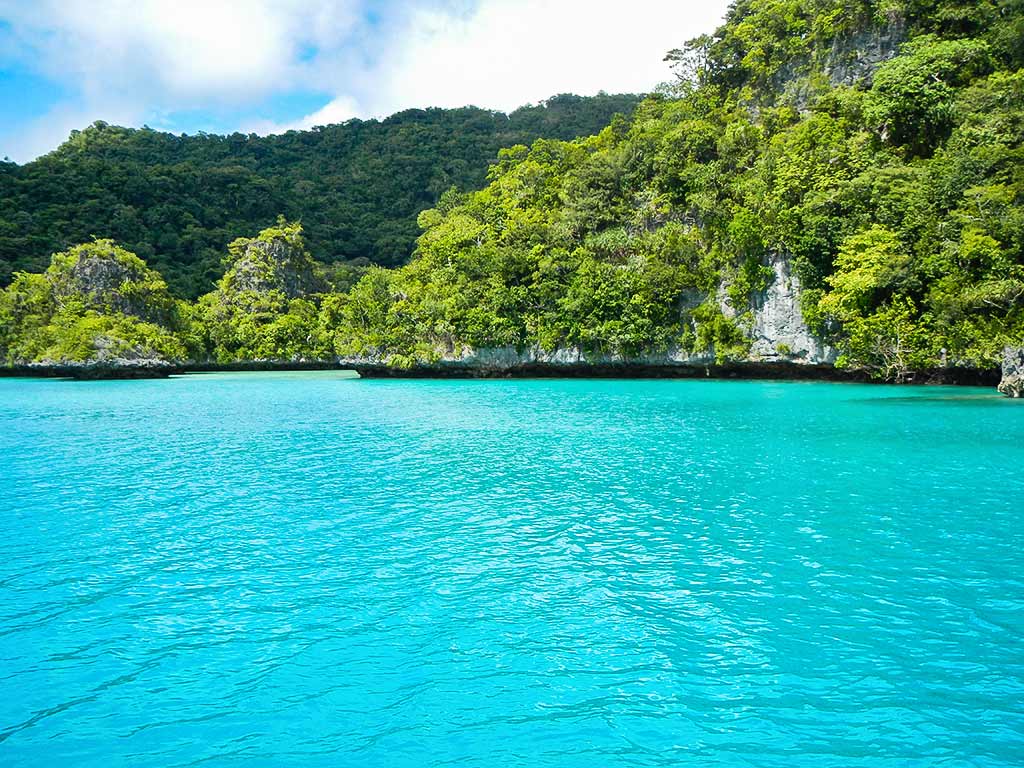
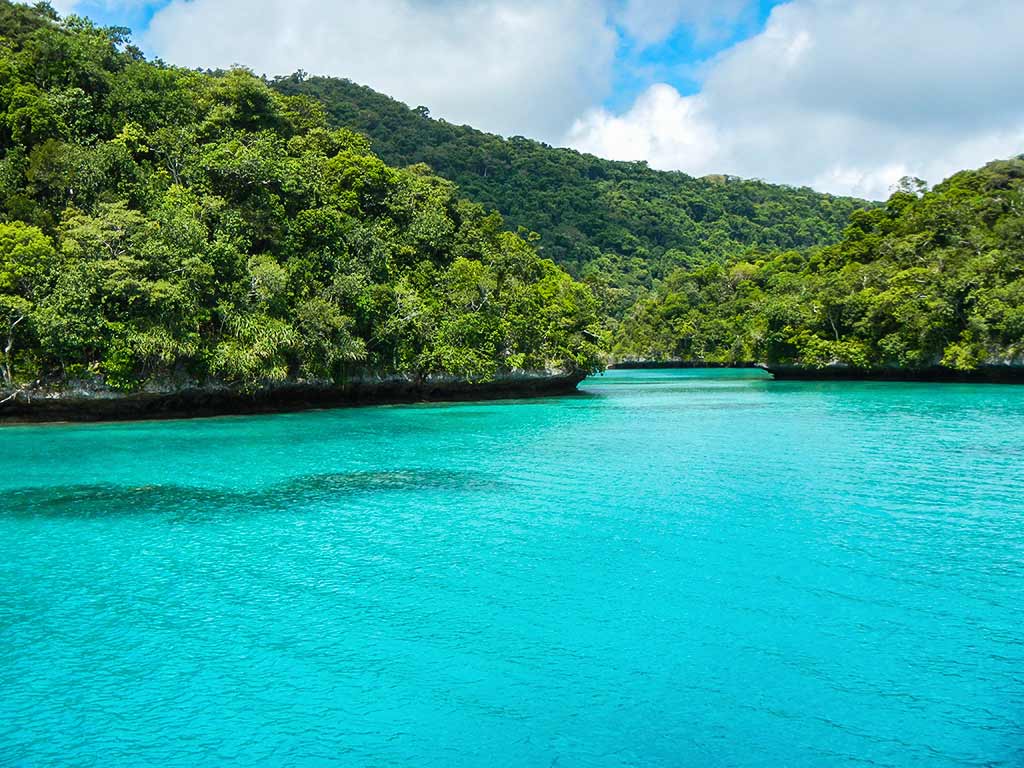
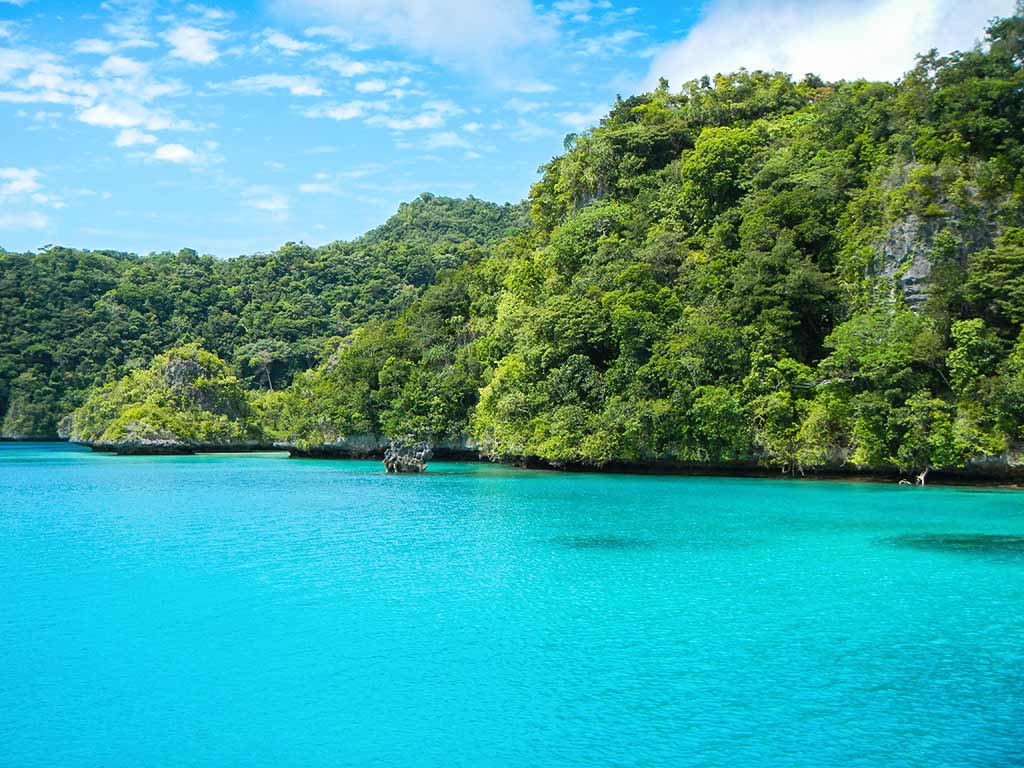
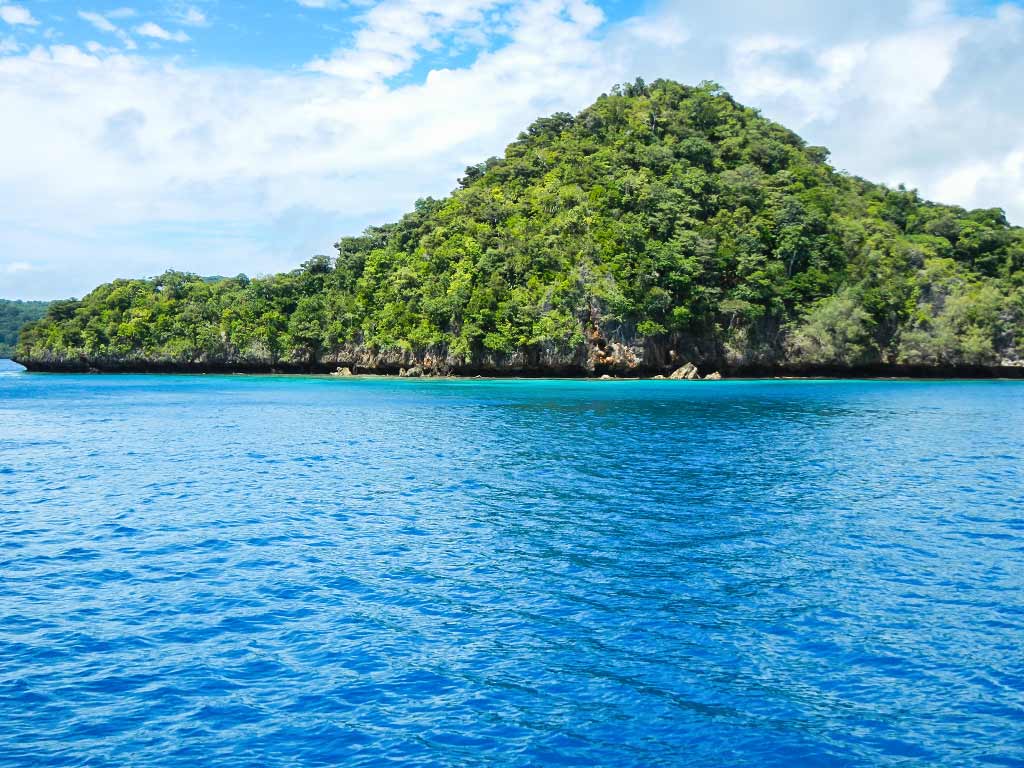
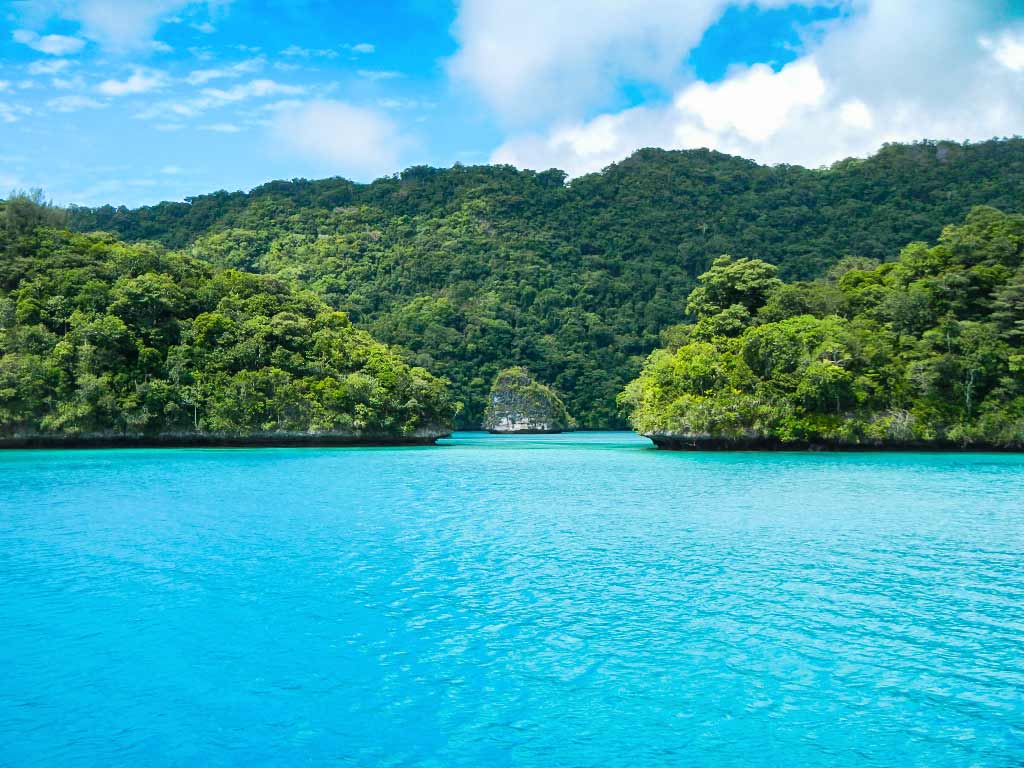
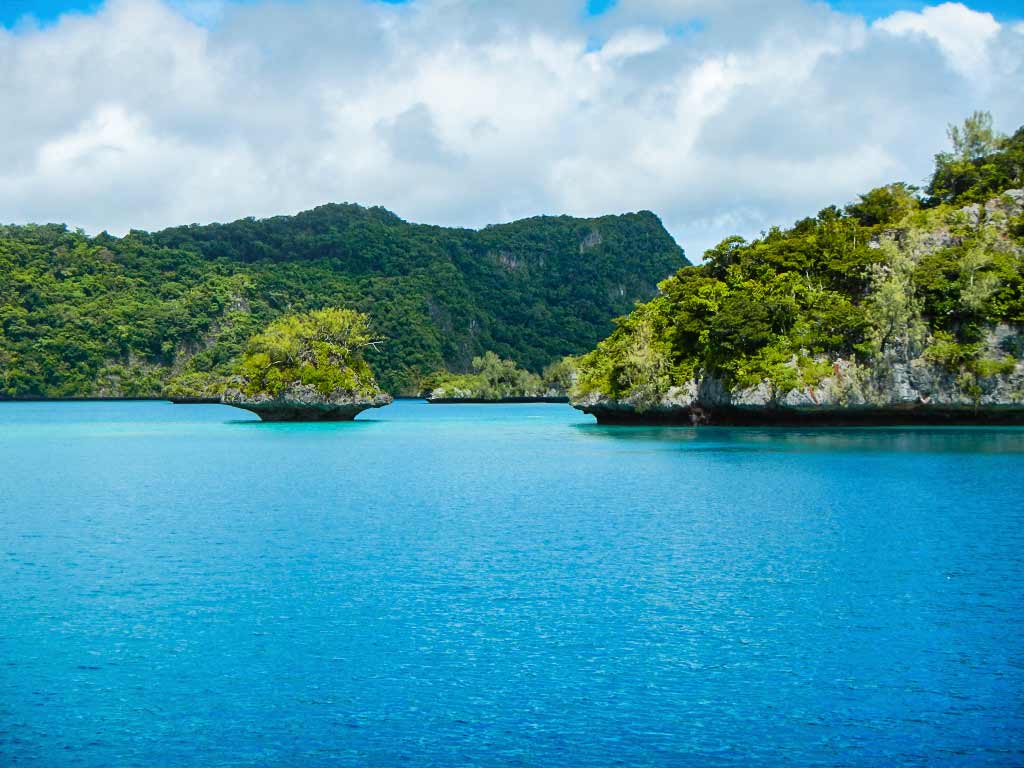
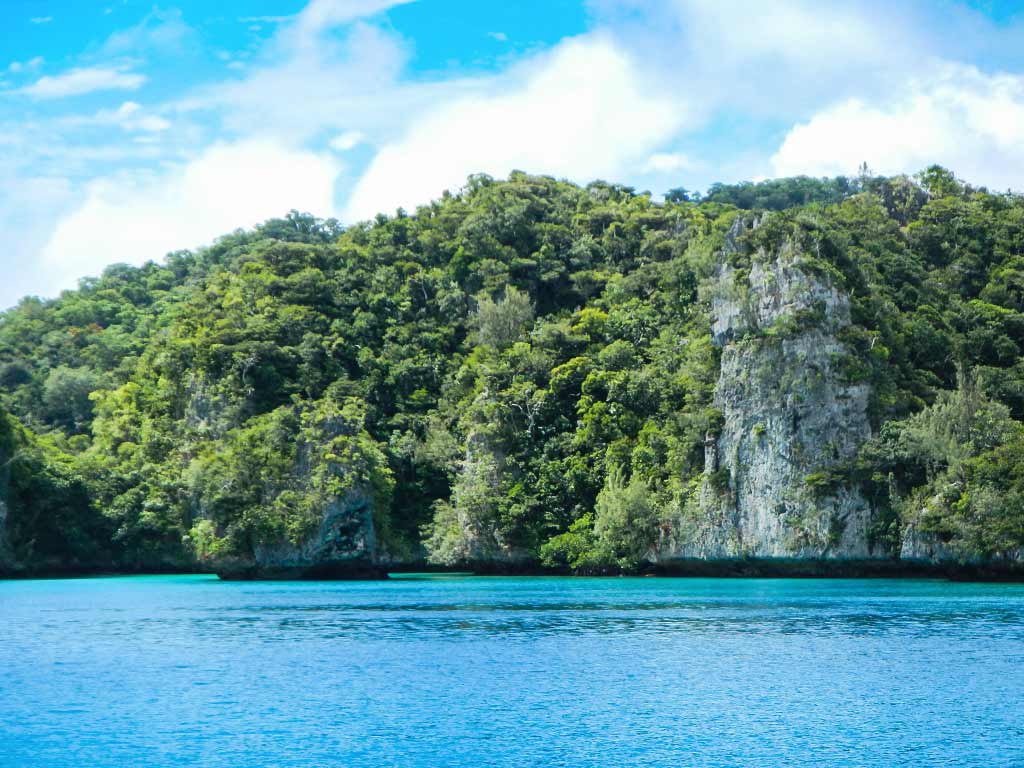
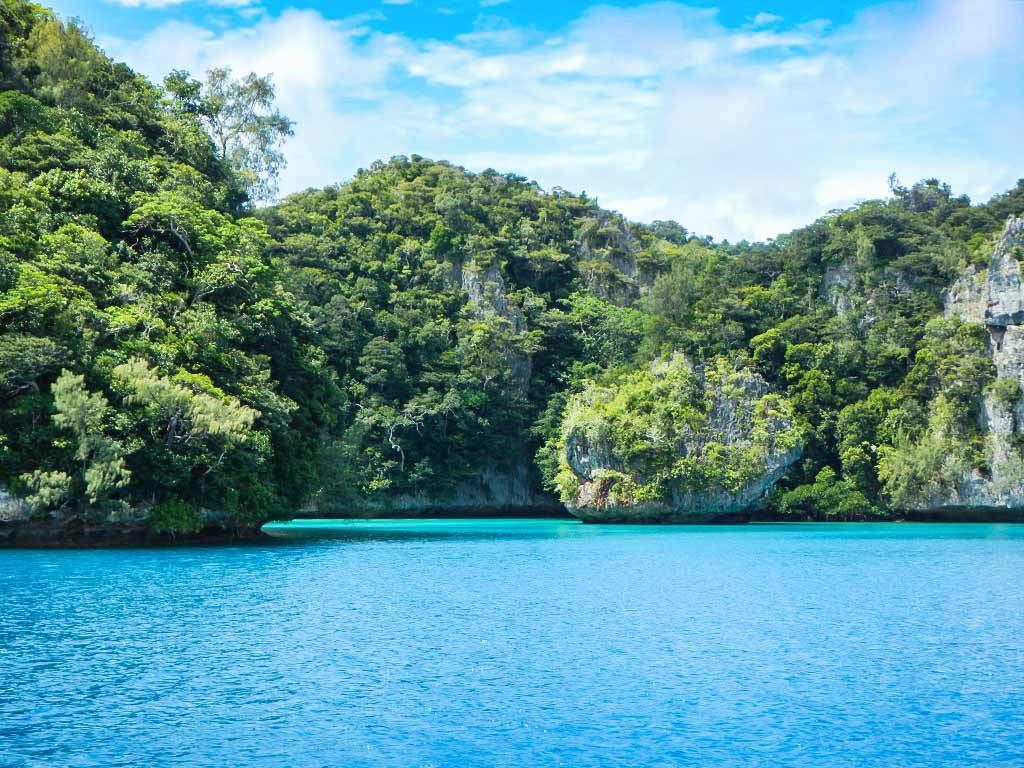
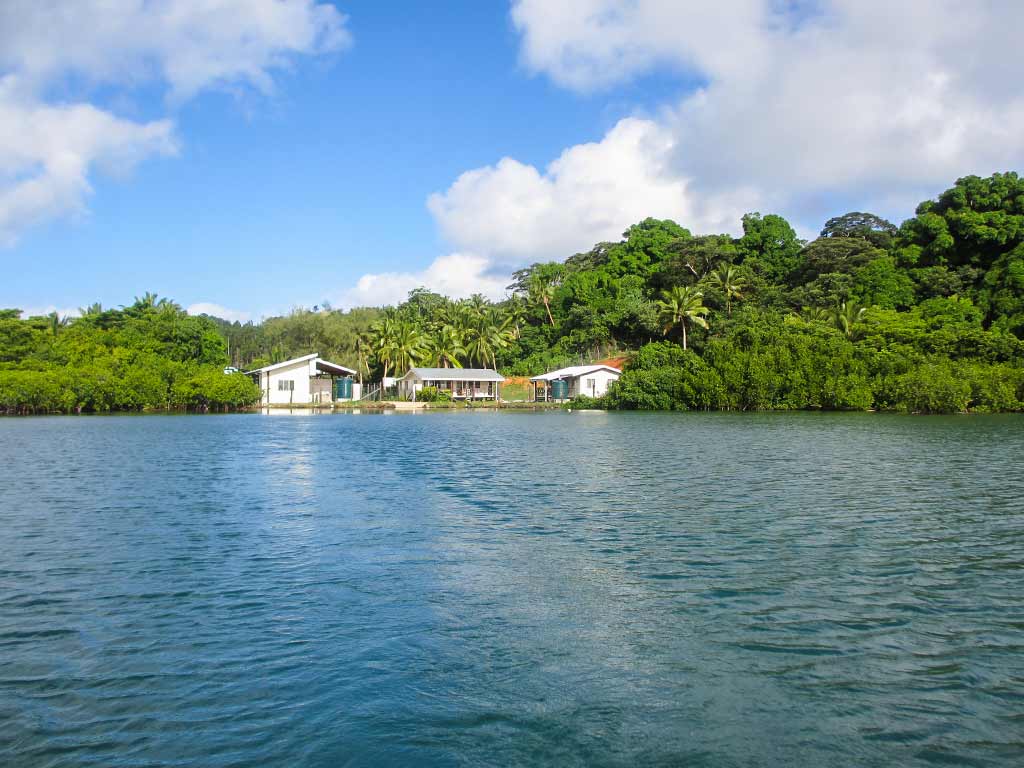
Just before we made our final turn into the area that intrigued us, we saw a turtle, generally a good-luck sign for us. We then turned the corner and gasped at the sight. The area looked just big enough for 2 boats. On the south side small islets were bunched together. We could catch a glimpse into the area amidst them: a large jade pool dotted with rock islands. Ahead of us was a pass into a large, deep navy blue body of water, the far side of which had a wall of mountain cliffs fronted by rock motus. On the other side of us, hilly green islands formed the north side of this bay. All around us the land was hilly and very green. The water was a mixture of rich teal and intense blues. This was about as beautiful as any place we’ve been.

The bay wasn’t without some challenges as we had to anchor amid bombies; making this area actually a one-boat anchorage (maybe two if using stern anchors). We managed to find a spot and set the anchor, then settled in to admire the exotic scenery. With all the islands around us, the area had the appearance of being landlocked, adding to its magic. Interestingly, this place reminded us more of Tierra del Fuego or Queen Charlotte Sound than the tropics: there wasn’t a palm tree in sight. Yet the air felt warm, and we could hear a multitude of bird calls and barking pigeons (sounding a bit like howler monkeys) in the trees. Truly, this was paradise.

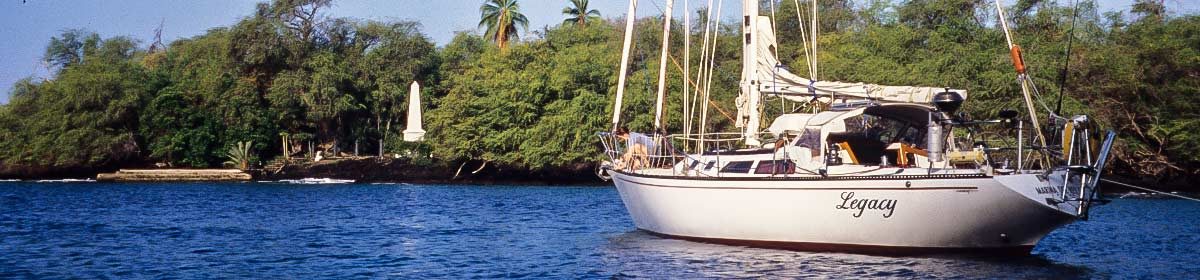
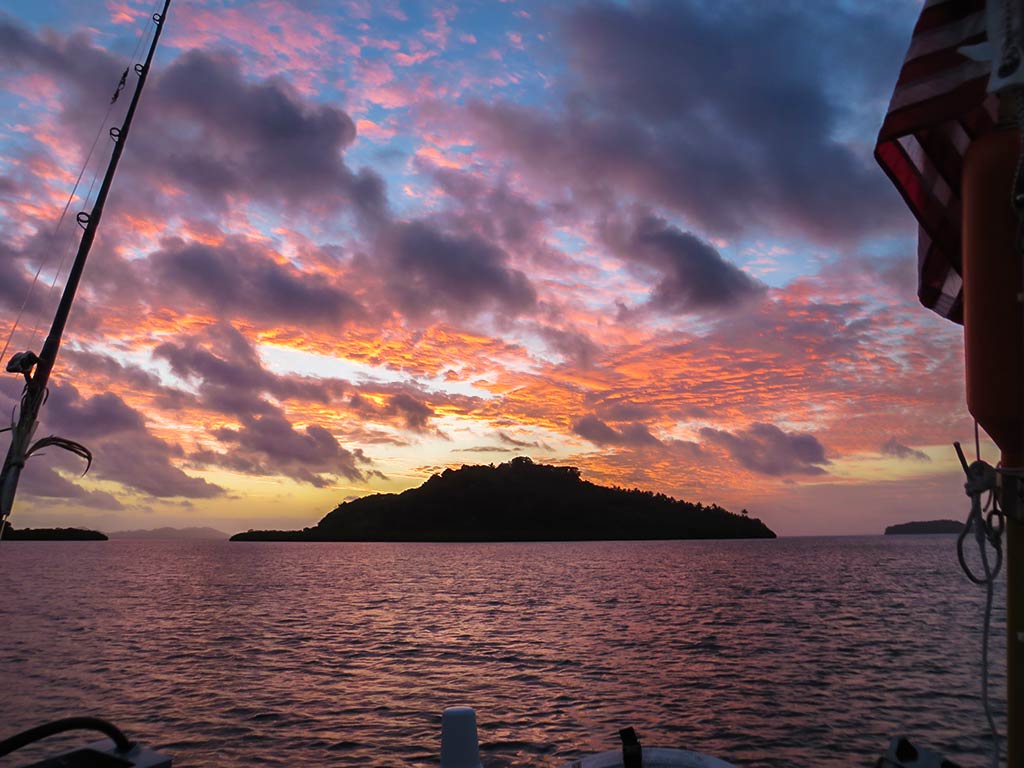
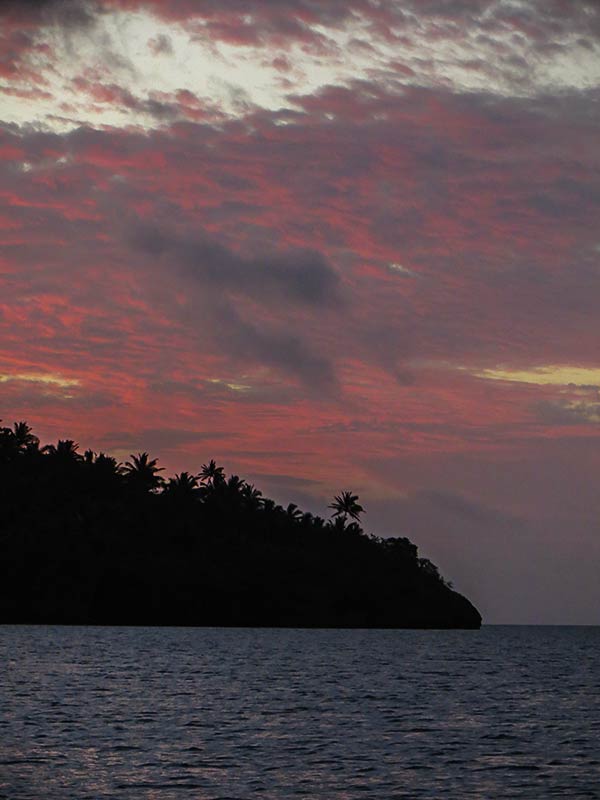
Once we anchored here we didn’t feel the need to move, but in the coming days we’d do a lot of exploring by dinghy. Below, a few photos of our anchorage, including a photo of Legacy taken from our dinghy.
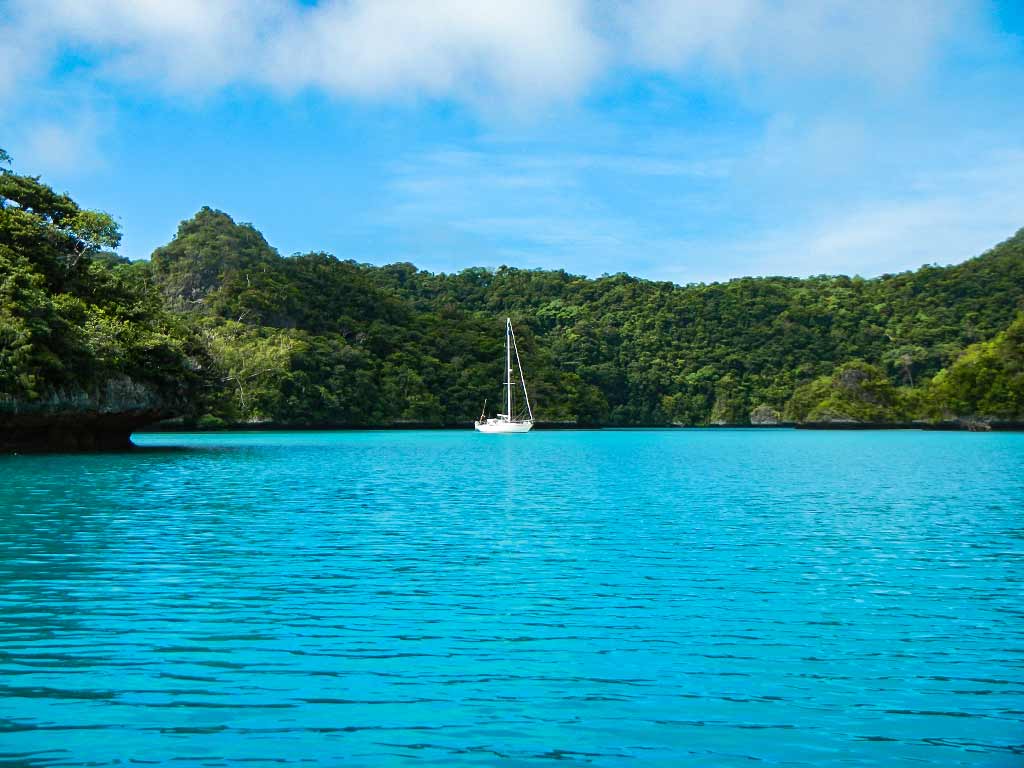
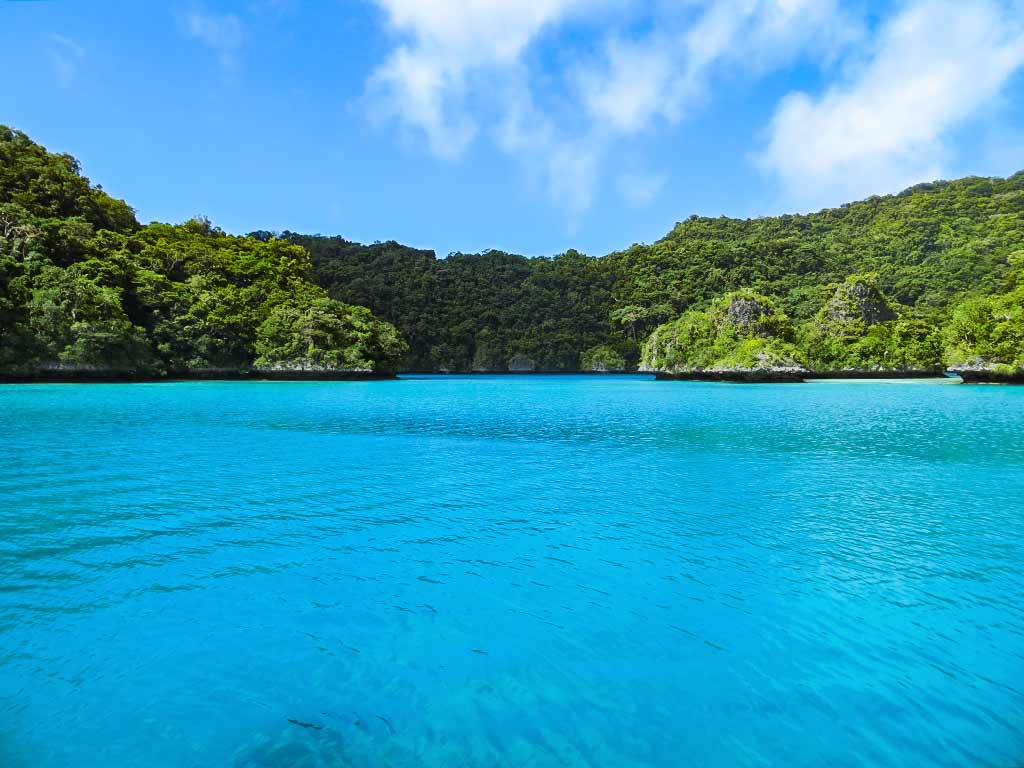
We were the only boat in this particular anchorage and tended to get lulled into feeling we were the only boat in the area. Thus, the occasional passing kayak would surprise us quite a bit. I’m sure we surprised them, too, as we were never, shall we say, dressed “for company.” It’s disconcerting to be wearing just enough to be comfortable in the warm weather (which might be very little) only to suddenly see a kayak passing by when you’re caught out in the cockpit.

I don’t love the idea of putting bells on a cat’s collar because the poor cat has to hear them all the time. I do love the idea of putting bells onto all kayak paddles so a person can be warned when they’re coming. Otherwise, how are you to know? Those kayaks can be sneaky, especially for vessels who have the anchorage to themselves. Kayak bells . . . maybe not a bad idea. — Cyndi
Motoring North to Vanua Balavu’s Bay of Islands (Northern Lau, Fiji)

September 18, 2013

This calm sunny afternoon was perfect for motoring up to the renowned Bay of Islands area, which as the crow flies, wasn’t very far away from our Malaka Bay anchorage. But since much of it’s either too deep or too shallow to anchor, visiting yachts generally enter via its north end, entailing a trip up and over the long skinny islands that somewhat enclose the Bay. One nice thing about this ride is that it lies behind the protective reef that surrounds Vanua Balavu; making for calm waters.

Below, our (very) approximate 8-mile route up to our chosen anchorage in the Bay of Islands. (If you want to see Rich’s post about how horrifyingly off our charts were for this area, here’s a link.)


We rounded the northernmost island, then headed back south into the rather large area known as the Bay of Islands. Glancing at a satellite photo, this would seem to describe only one small area of scattered rock islands. If you look closely, though, you can see areas of shoreline are actually tucked behind close-lying islands. That’s one of the things that makes this area so magical: all the hidden holes! This is truly a wonderland for dinghies and the sort of area that makes having a kayak aboard worthwhile.

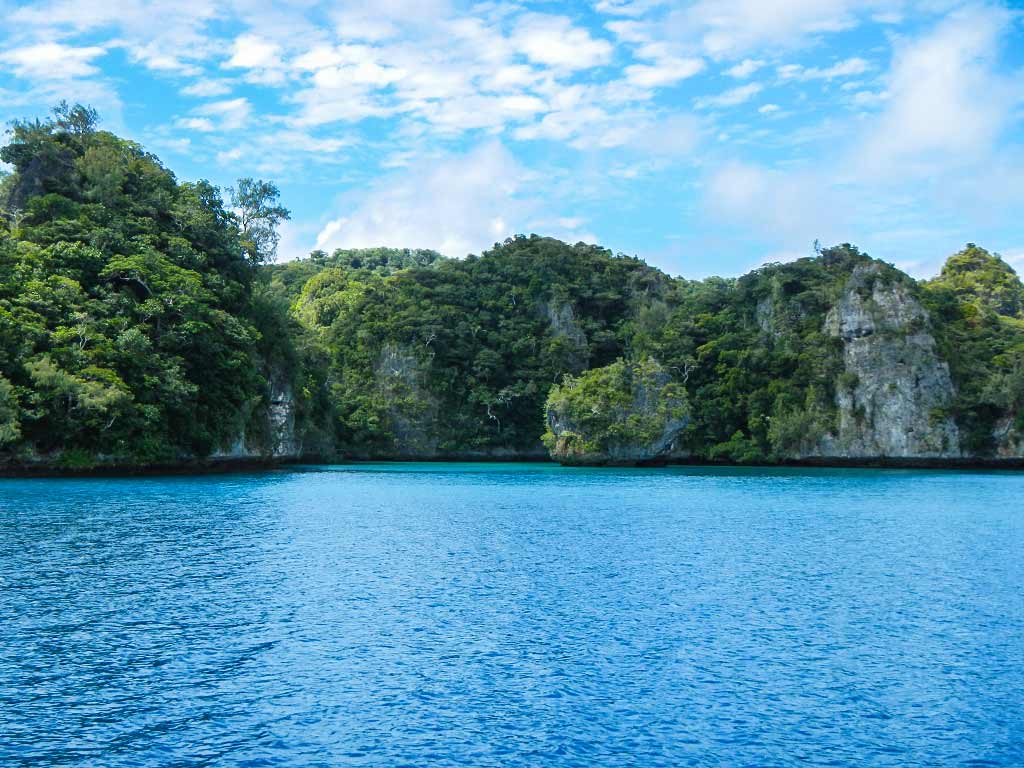
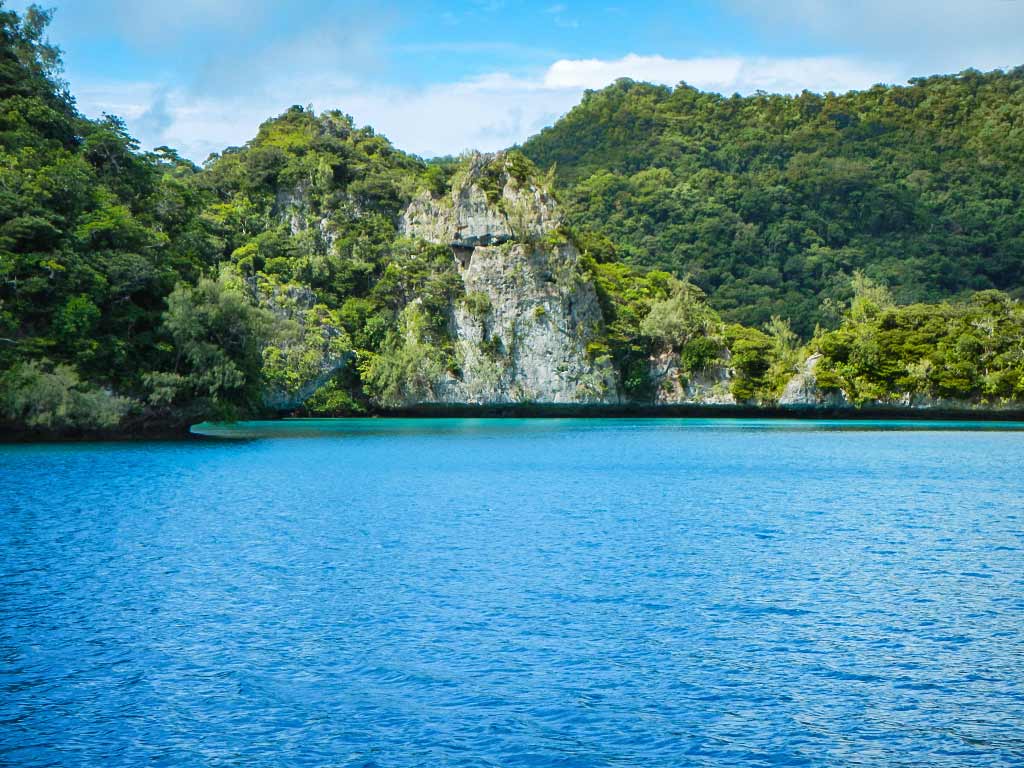
As we motored further south, our surroundings became more and more beautiful. Basically this area is made up of dark craggy islands with patches of bright green vegetation sprouting wherever it can get a foothold. Behind the islands, to the east, a long mountain ridge bisects northern Vanua Balavu, and its tall steep cliffs form a dramatic backdrop to the area.

The islands are all shapes and sizes: rounded monoliths with sheer rock walls, pointy cones, big and little mushrooms, and huge boulders. While they differ in shape and size, they all share a unique feature: an undercut above the waterline which gives them a toadstool appearance.

The water under these overhangs has some of the brightest, most electric colors of blue and green we’ve ever seen. It appears at times as if someone has set up neon lights below the water. I don’t know the explanation for this phenomena, but I do know it’s stunningly beautiful and what makes the northern Lau able to visually compete against the turquoise waters and white beaches of the southern Lau.

Our problem now was choosing an anchorage. The first possibility, the easiest one, was really lovely, but we continued on. Another anchorage appeared, a large teal pool surrounded with sheer rock walls dotted with thick green vegetation, a small island at the back of its bay. That one was really hard to pass by, but we wanted to see the innermost spot just around the next corner (the subject of the next blog post).

Below, a gallery of photos as we motored to the Bay of Islands (click to enlarge and scroll through gallery below). –Cyndi
A Trip to Lomaloma (Vanua Balavu, Fiji)

September 18, 2013

It was going well as we walked by Malaka Bay’s village to the bus stop, the people we saw calling out a friendly, “Bula!” and stopping to chat. We were almost through the village when a guy came up to us saying we needed to see “the king.” We said we did our sevusevu ceremony at Dalconi Village, but he wasn’t having it and said we needed to do it here. We told him we were catching the bus but assured him we’d do it when we got back. (I was afraid this would happen.)

We made a plan for when we got back later in the afternoon: keep our heads down and walk quickly to our dinghy, hoping we could avoid this guy. But if we ran into him again, we’d go get some kava from our stash and do the darn sevusevu. We also agreed (assuming we were successful in getting to the dinghy unaccosted) that instead of spending the night here, we’d make a quick exit out of the bay when we got back. We didn’t want to worry later about getting a knock on our boat asking us when we were coming in to see “the king.”

The bus to Lomaloma turned out to be a large truck, completely open in the back with bench seating along both walls. We sat with about 20 other people, and I regretted not wearing a sulu for this. I didn’t figure I needed one for town; it never occurred to me to worry about the bus.

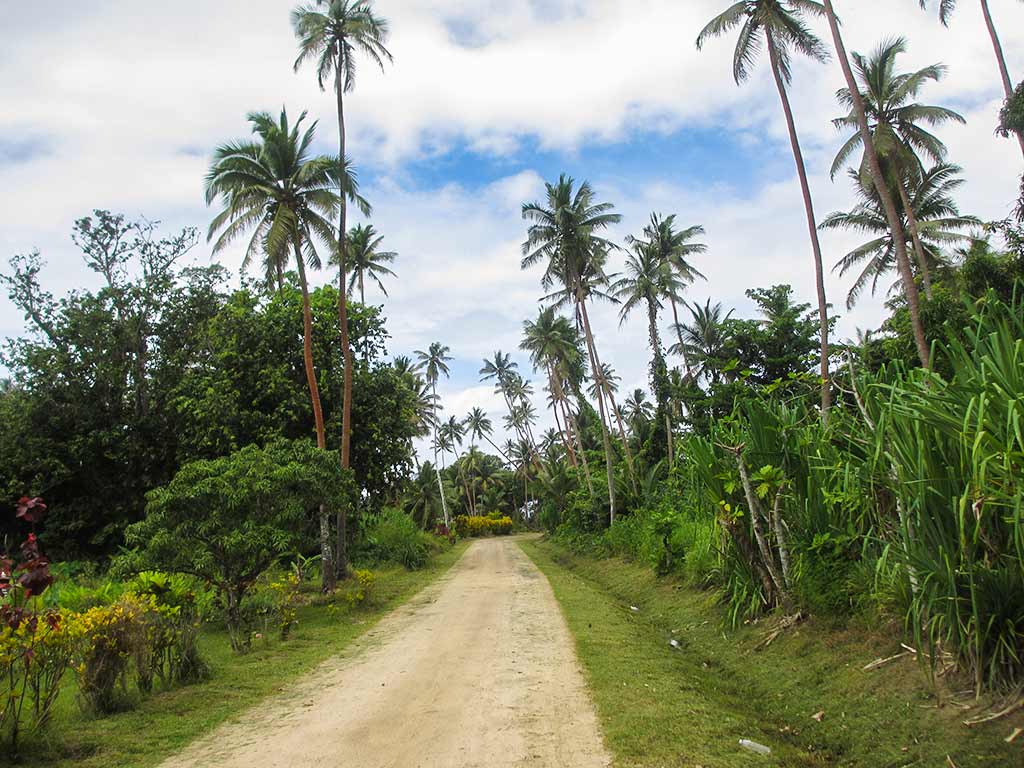
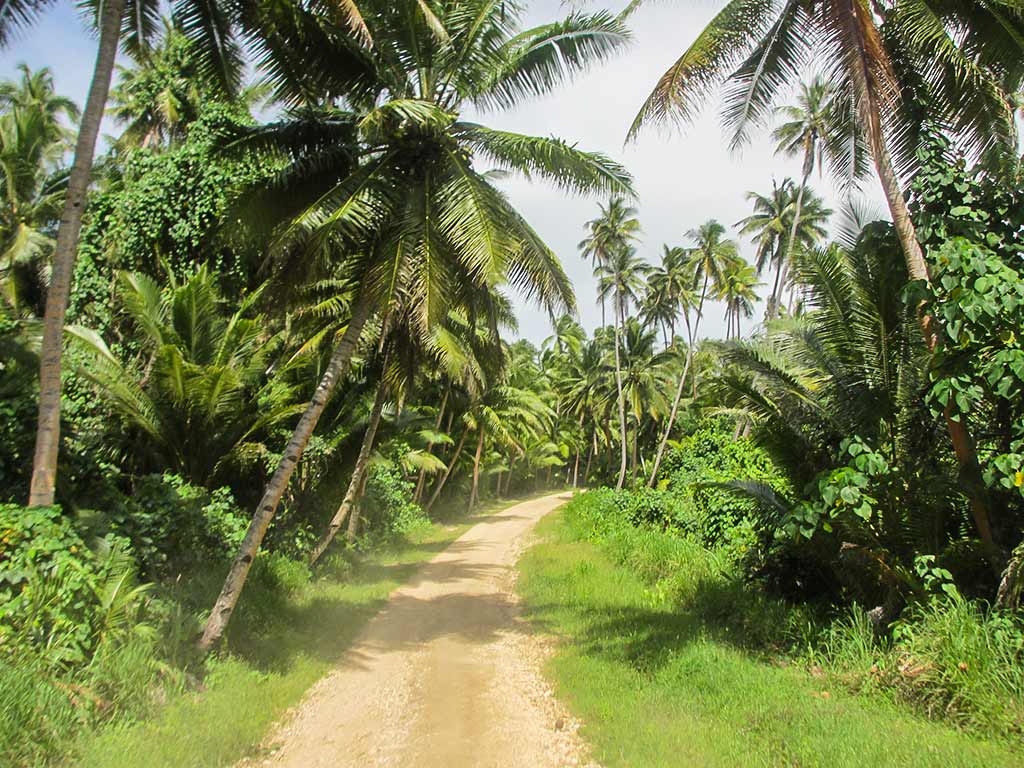
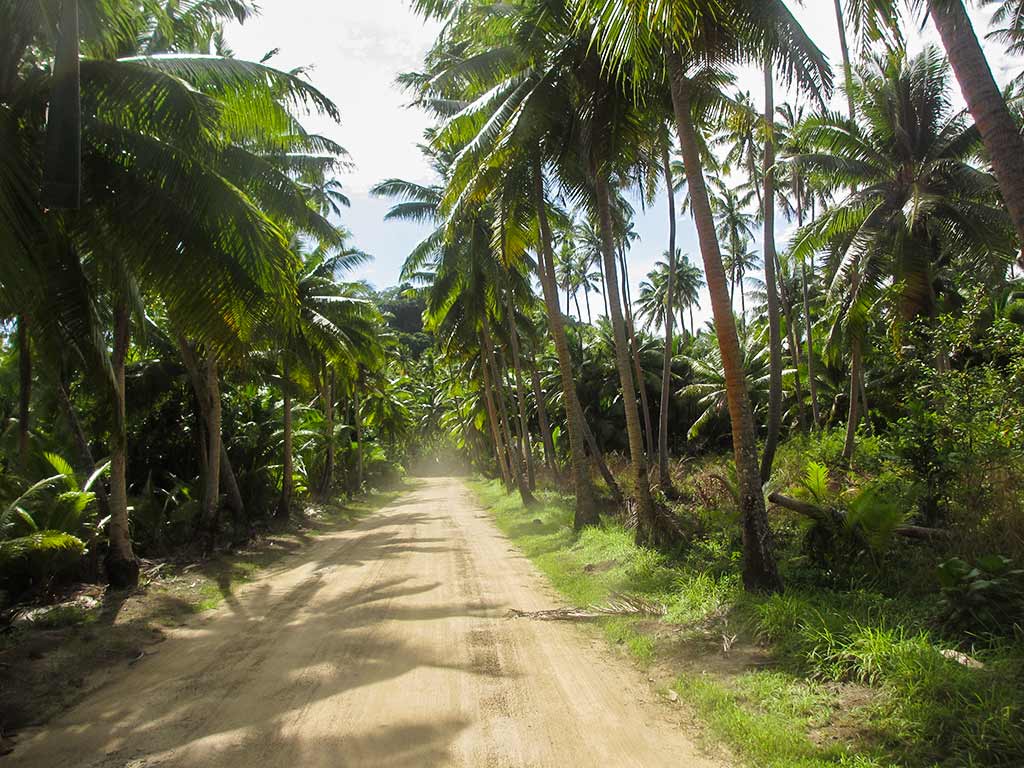
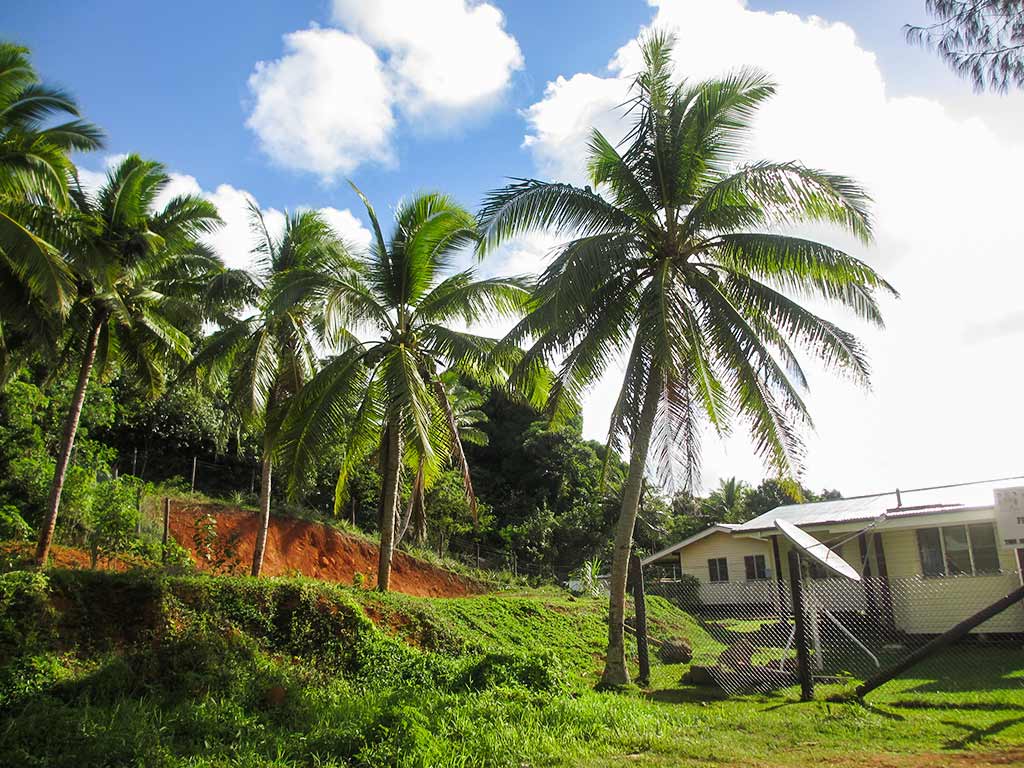
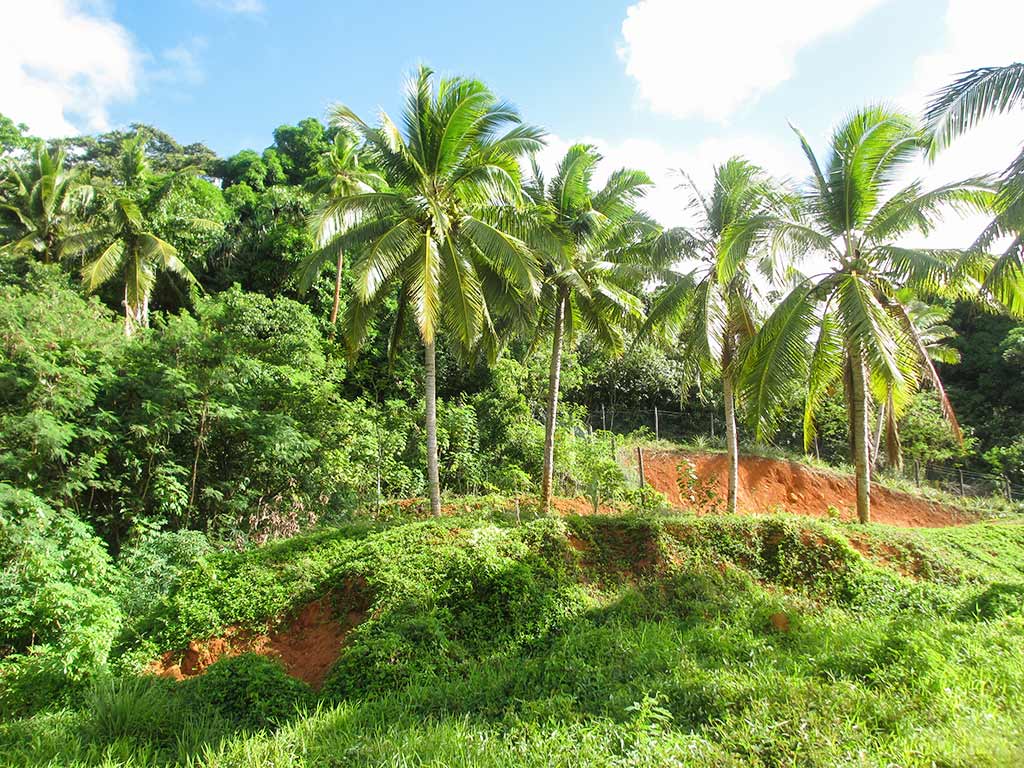
Soon, we were headed off to Lomaloma, the main town on this island. The dirt road was well maintained so it wasn’t very lumpy. It was actually a pretty ride though miles and miles of palm trees. As so often happens in foreign places, whether big cities or small rural areas, a kind person noticed us and made sure to advise us on when to get off the bus. In spite of my grumbling about the sevusevu thing, I want to emphasize that the people here are very, very nice. Below, a few photos of our ride across the island (click to enlarge/scroll through photo galleries below).

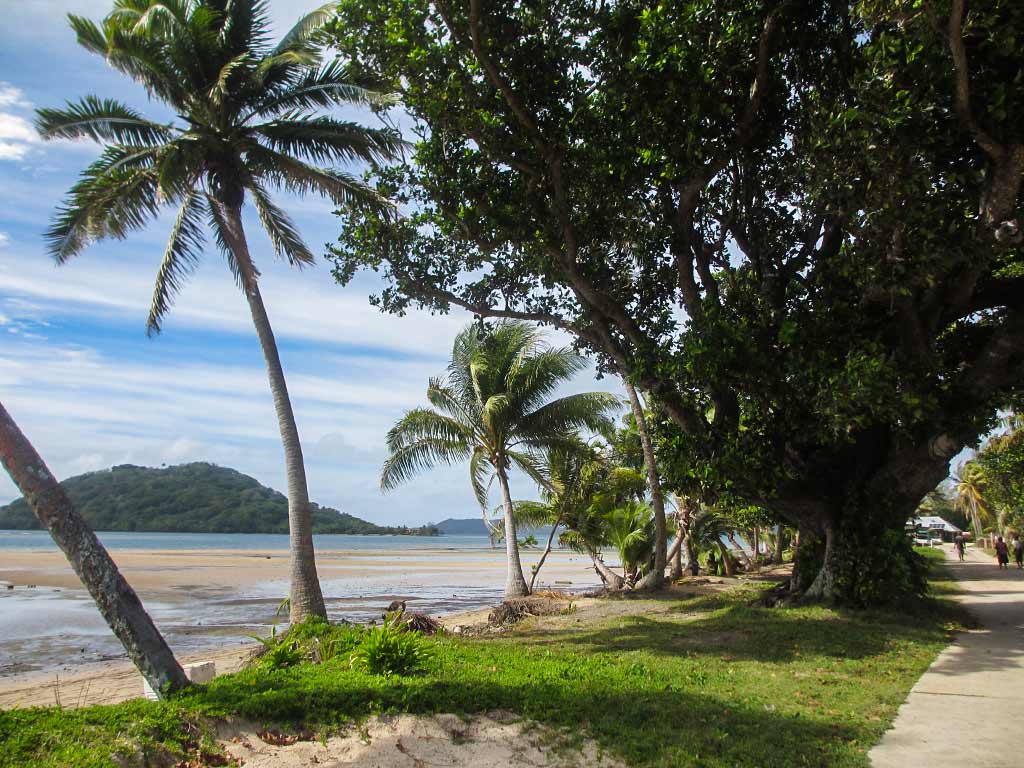
Lomaloma turned out to be an interesting town, sprawling along the seaside with small structures amidst well-manicured grounds. The trees were abundant, some large with gnarled trunks, some delicate wispy pines, and many, many palm trees. The town itself is flat but framed by green hills in the distance. Because of its location on the east side of the island, there’s a constant breeze that blows in from the ocean. In spite of being tropical, the town felt somewhat dusty and windswept, reminding me more of a town on an atoll than on a mountainous island. Below, a photo gallery of Lomaloma.

The first thing we did was find the market, where I was very relieved to find the eggs and onions I desperately needed plus a bag of potatoes and some cookies. This would help stretch our food supply another two weeks or so, after which we’d head back to Savusavu to restock. We also stopped at the town’s bakery and got some bread and snacked on cheese rolls, after which we took a walk through town and out on the wharf. This may not be the most beautiful place we’ve seen, but it had a nice ambience, very quiet and relaxed, and also very friendly. A man actually called out to us from his house asking if we’d like some tea, something I suspect happens all the time here. (We couldn’t take him up on his offer as we needed to catch our bus.)

We managed to find the correct “bus” (truck) back to Malaka, heading off just as a squall hit the area. It was very cool to sit and watch out the back of the truck as the wind picked up and the rain started pouring down behind us.

Once we got dropped off in our area, we made a beeline through the village to our dinghy, thankfully without seeing the guy who wanted us to do a sevusevu ceremony. Once back at the boat, we pulled our anchor and began our journey to the Bay of Islands, about five miles or so to the north. –Cyndi
Those Aren’t Bananas

September 21, 2013 in Bay of Islands, Vanua Balavu, Fiji

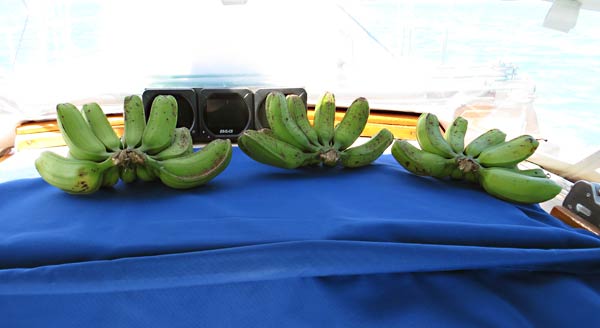
Vundi sitting out to ripen.
That’s right, those are not bananas. They are vundi, (or maybe budi, or maybe vudi, or maybe bundi – everyone gives us a different name!)
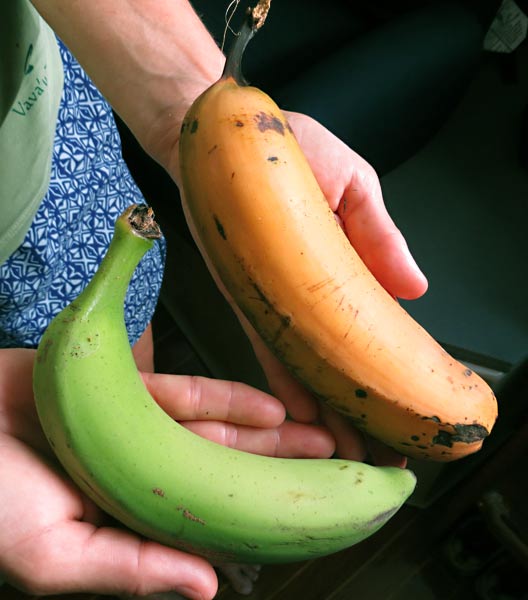
Is that a big banana or are you just happy to see me?

That’s right, they are much bigger than bananas. The green one is a banana and the yellow one is a vundi.

A Bunch of Vundi
A Bunch of Vundi

Other than that, they look pretty much like big bananas. But there’s a twist. When they’re green, they are virtually potatoes. When they’re yellow, they’re sweet, delicious bananas. We’ve found all kinds of things to do with them.

Hash Browns???
Hash Browns???

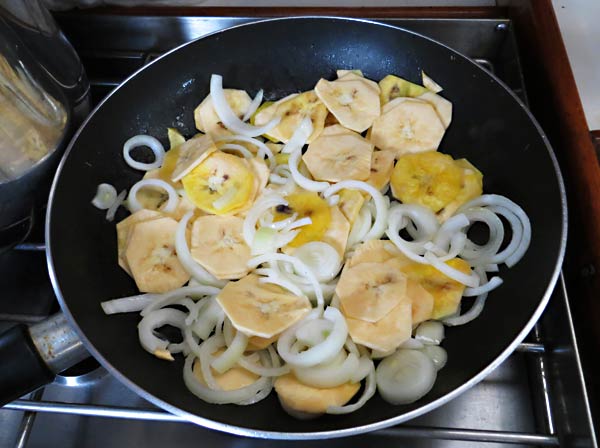
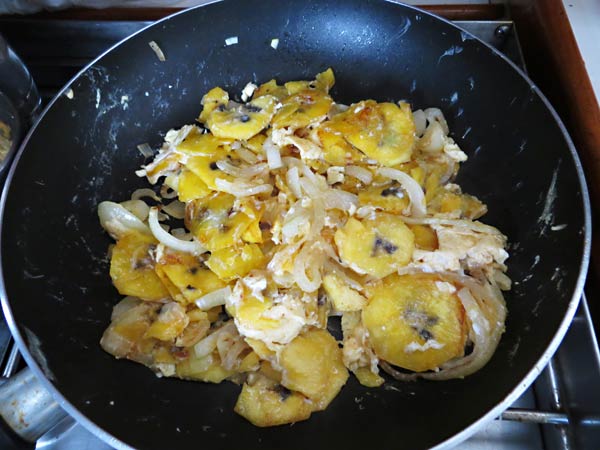
They make great hash browns. We use a potato peeler to remove the peel of the green ones – the peel is tenacious and won’t just peel off when green. We then use a cheese slicer to make thin slices and fry them up with butter, onions, and garlic and they come out like excellent hash browns.

Vundi and Eggs
Vundi and Eggs

They start out pretty white and turn yellow as they cook. Oh yea, we also add eggs.

Grilled when green, they make great patato wedges. When ripe, an incredible dessert.

When they are yellow and ripe, we either eat them just like bananas or put them on the grill. They caramelize a bit and have a crust that tastes a lot like marshmallows roasted over a campfire. The ripe ones are also great fried up with some butter, rum and brown sugar. Yum!

We’ve really enjoyed the vundi here – or whatever they’re called. I guess they might be a little like plantains. One of us might be just a tad bit obsessed with them (as I’m sure you can tell from this post) -Rich (the obsessed one)

A Pleasant Evening in the Malaka Anchorage (Vanua Balavu, Fiji)

September 17, 2013

After we returned to our anchorage in Malaka Bay, we were able to relax and leave the earlier stressful part of the day behind us. Well, we did have one small worrisome surprise. We knew we were anchored near a runway and that planes fly over this bay, but who’d imagine they’d fly so low? We thought we were well out of the way, but it seems not so much. It was rather unnerving, I’m sure for the pilot as well as for us. Luckily there aren’t very many flights here. Below, a clip of the plane coming in for a landing.

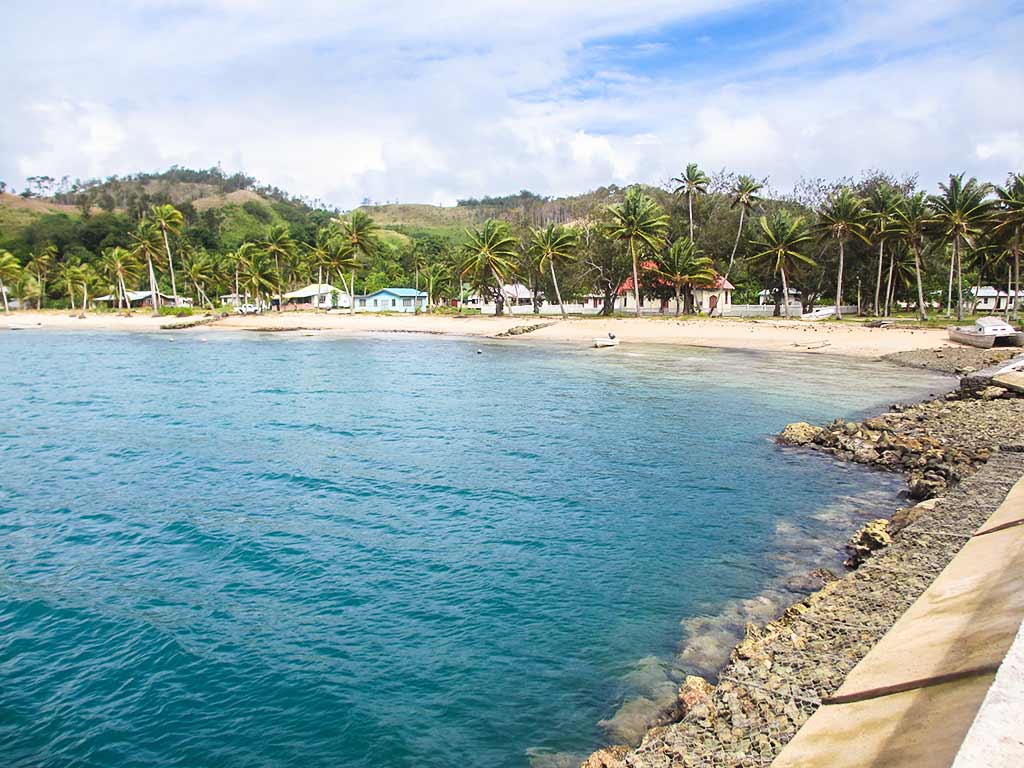
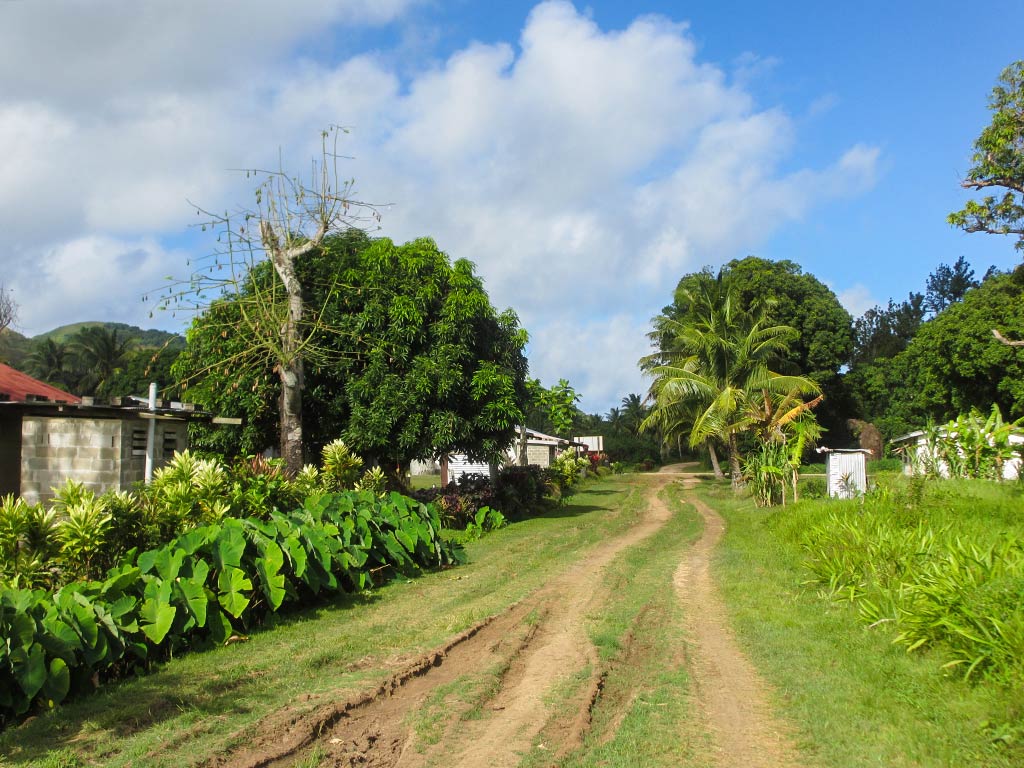
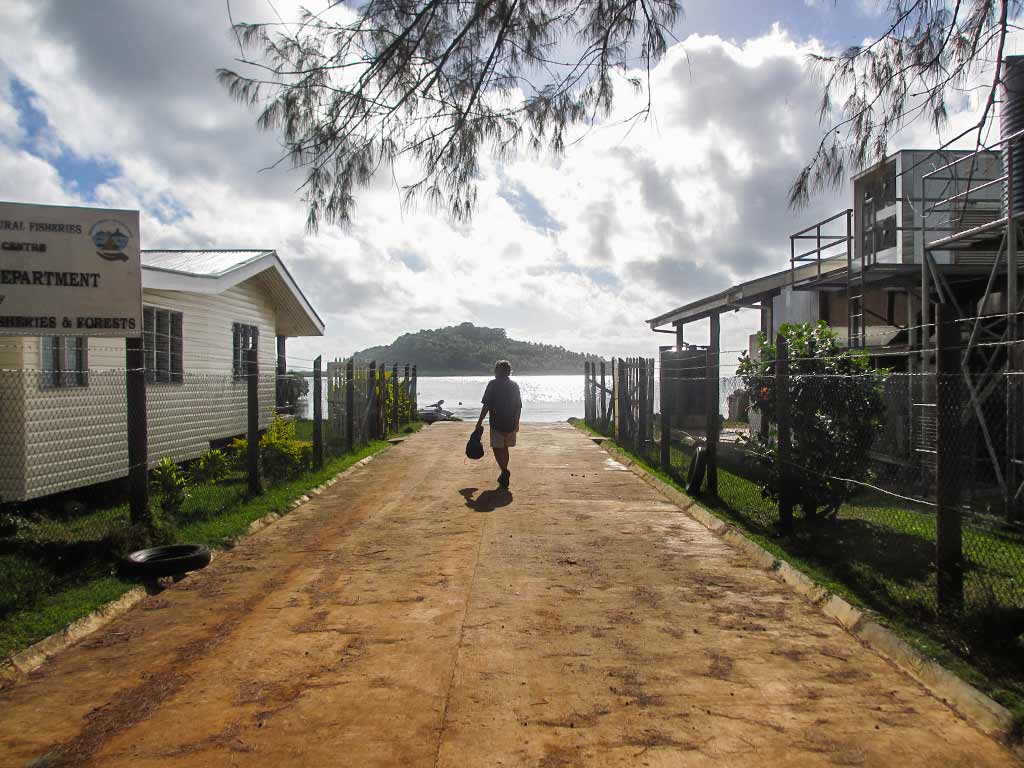
Later in the afternoon, we decided to head into Malaka Village and see how long it would take us to get to the bus stop (for tomorrow’s early morning trip to Lomaloma, the main town on the other side of this island). With the convenient ramp belonging to the Department of Fisheries and Forests building, the landing was easy. The village sits right behind all that, along a dirt road that heads inland from the shore.

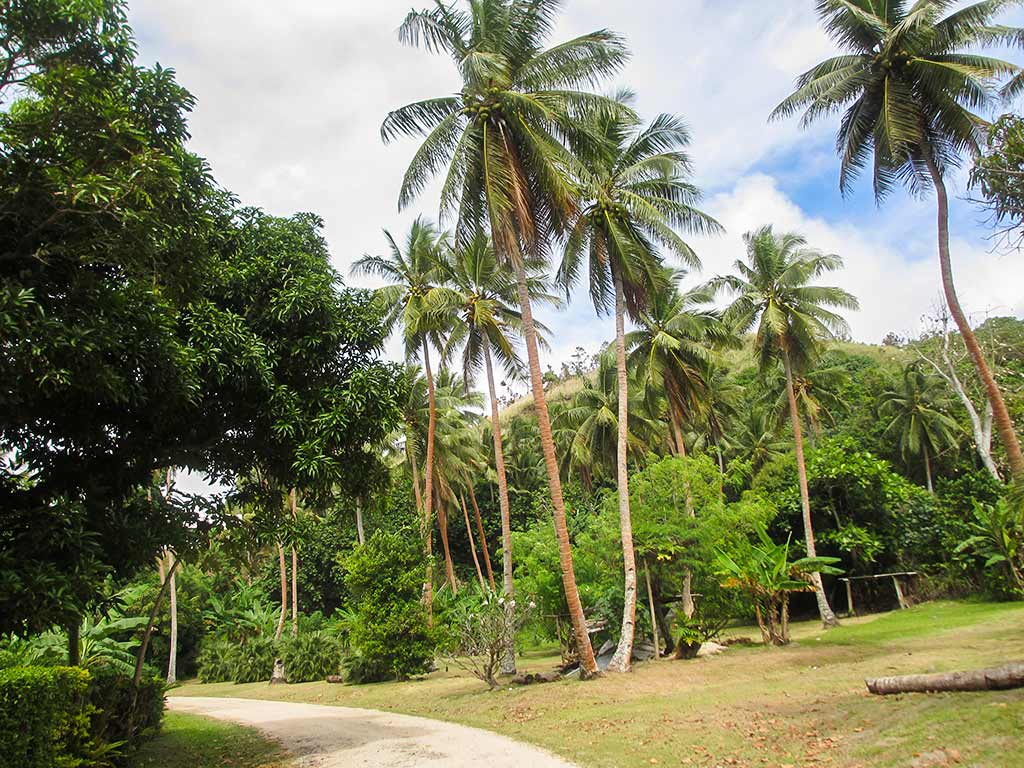
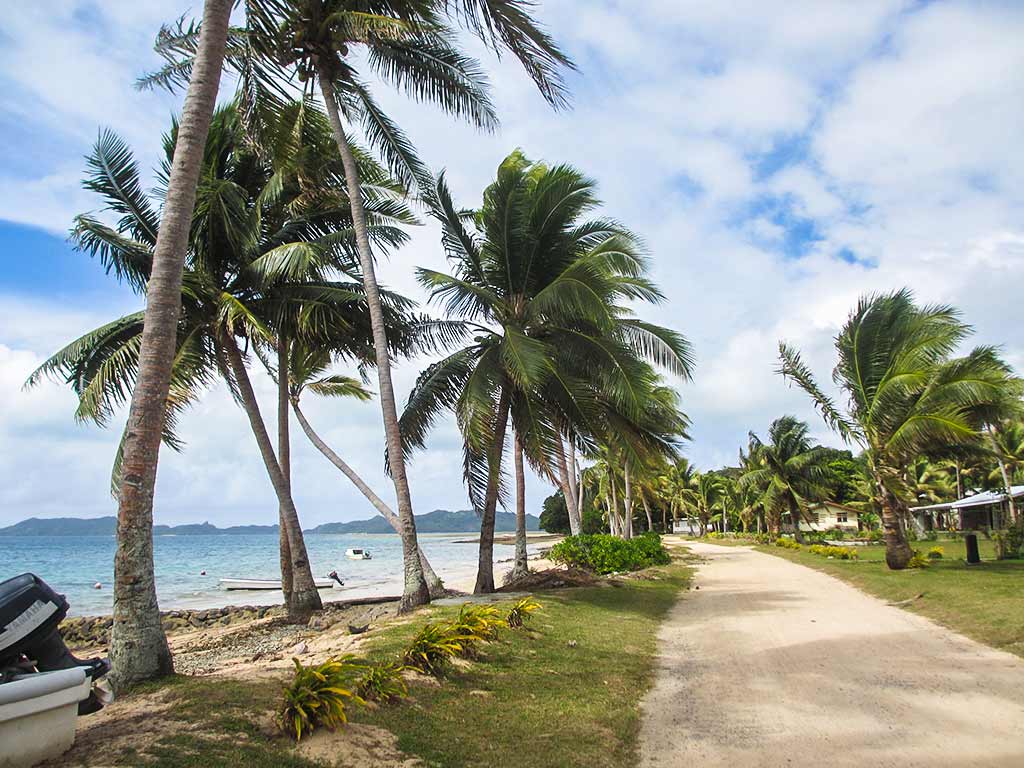
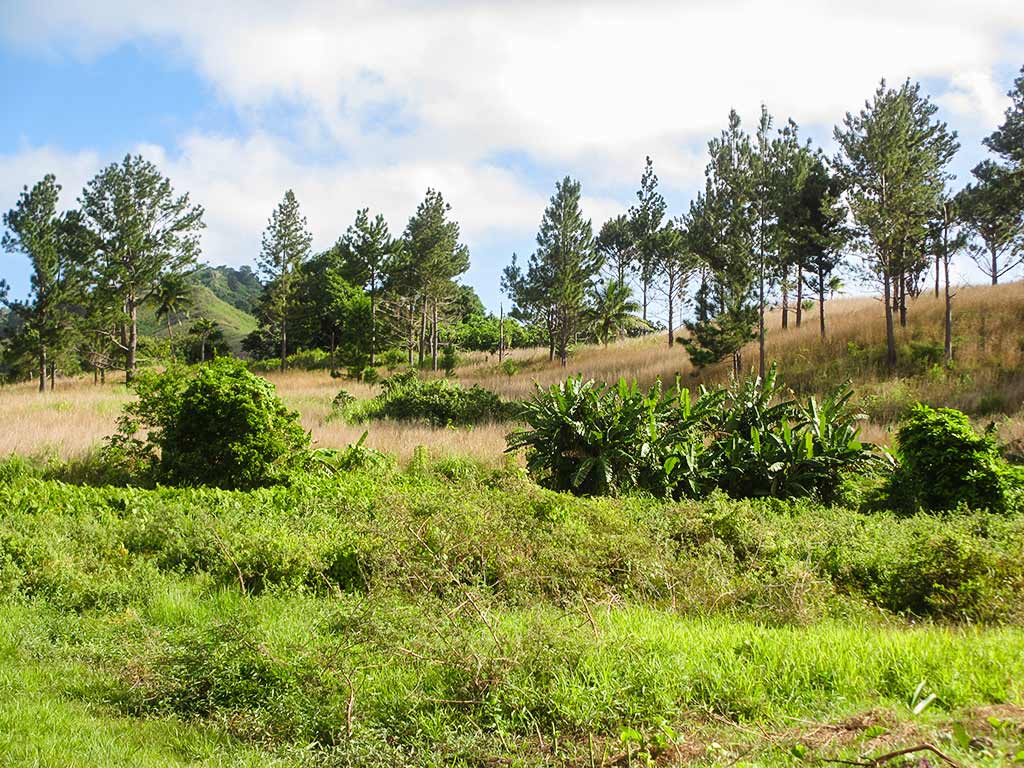
As we walked, we noticed the village was off to one side of the road. The other side had low grassy hills scattered with pine trees along with the usual palms. I’d been worried about walking here without a sulu (Fijian skirt) or being told we need to do a sevusevu ceremony for this village. Sam had told us that since we’d done the sevusevu in Dalconi, we didn’t need to worry about it in this village. I had a sneaking suspicion, though, these villagers might not agree. Seeing that the road went alongside the village and not smack through the middle, I felt better.

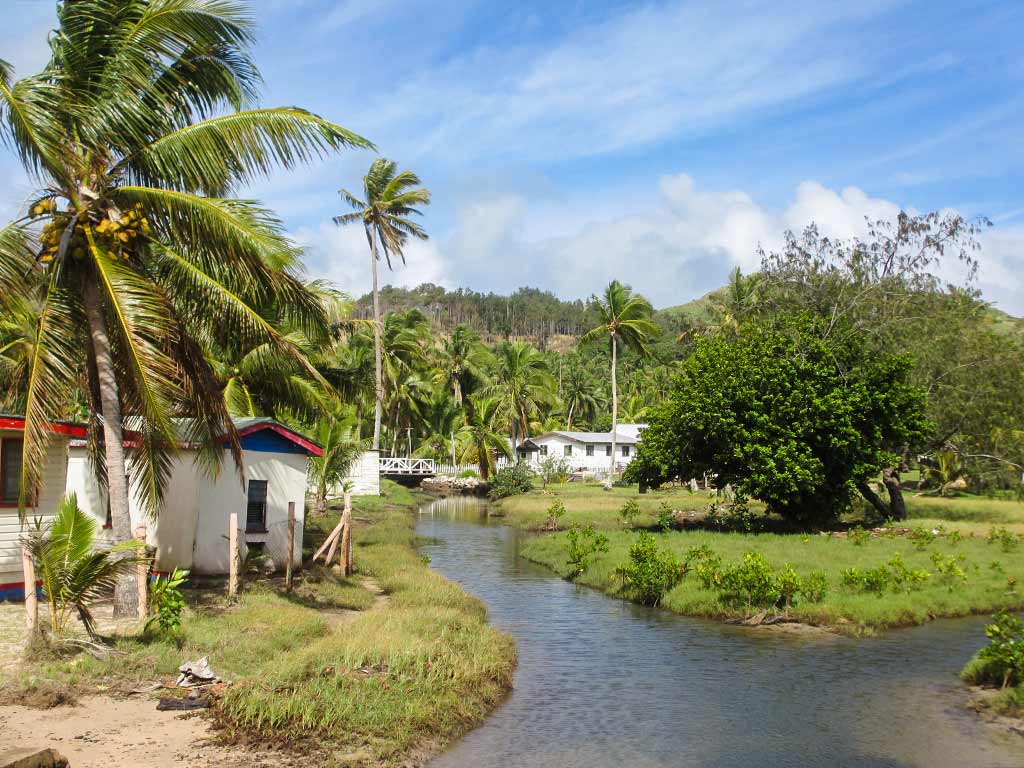
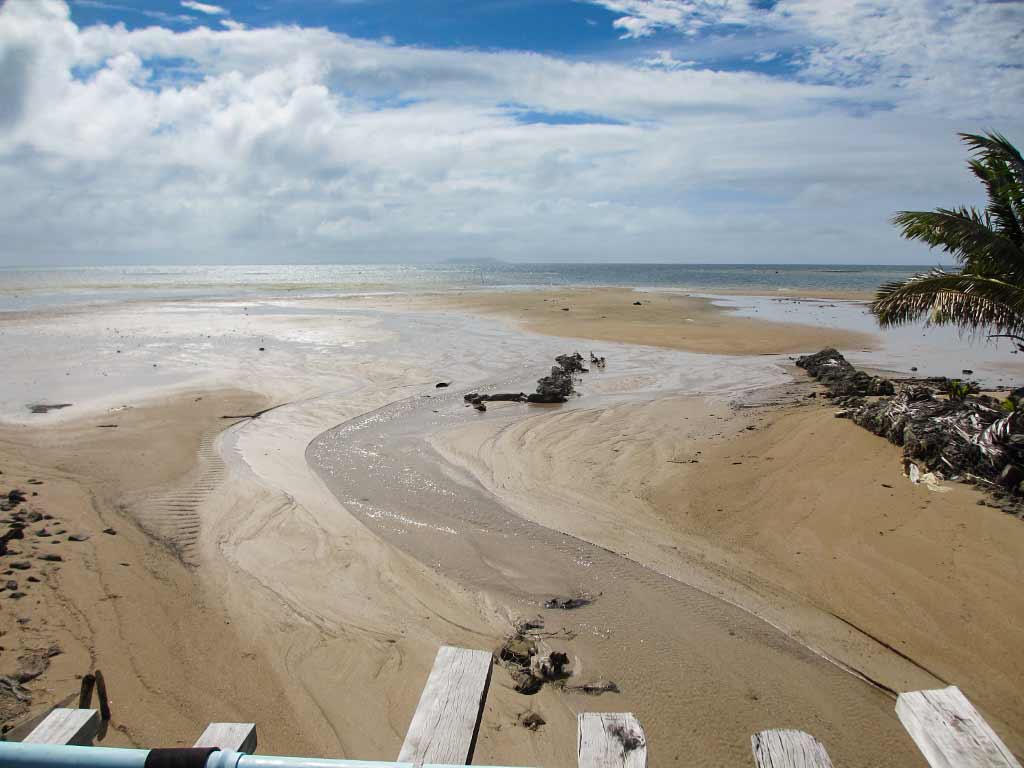
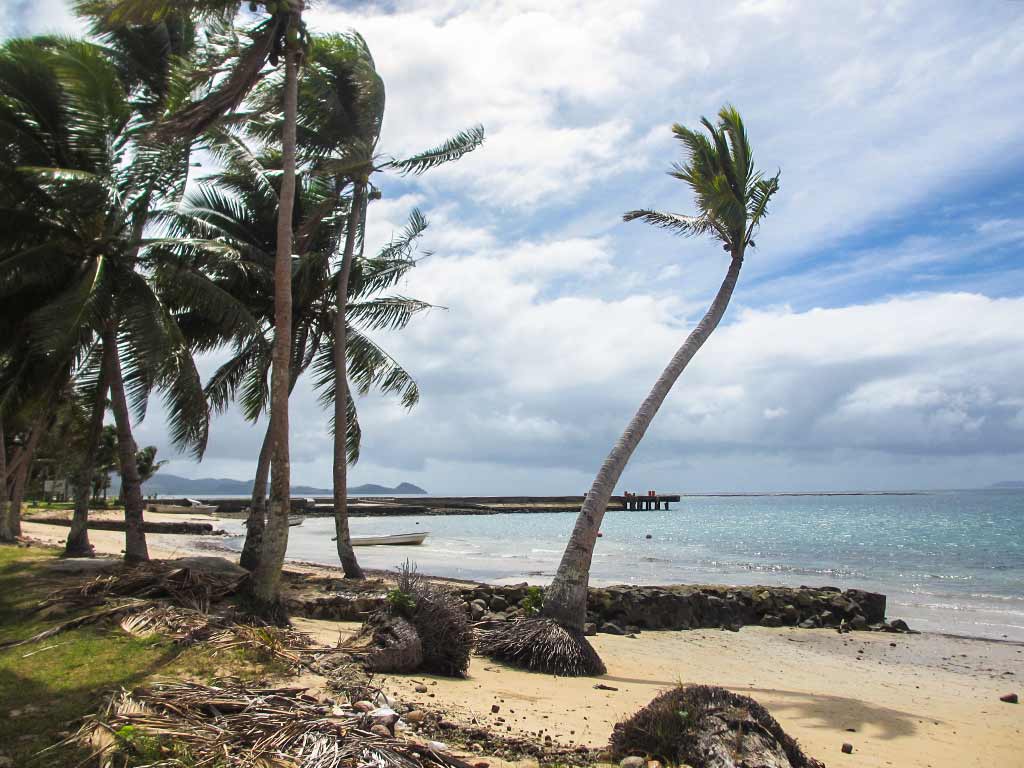
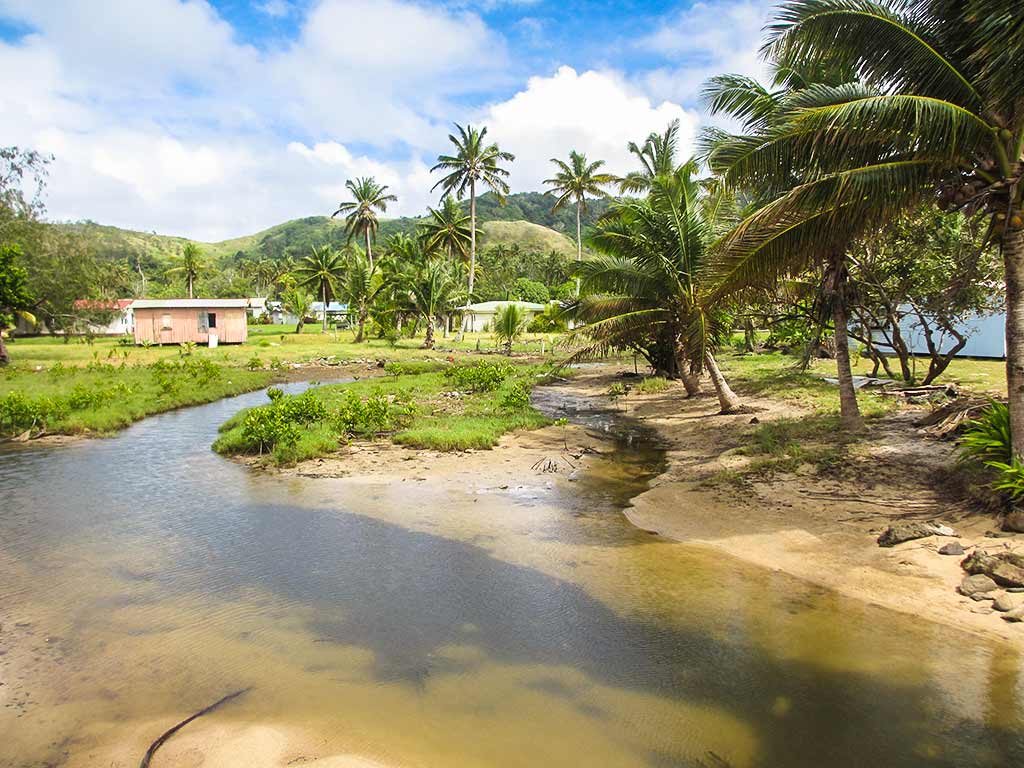
In all it was a very pleasant walk, the sun low and golden and the village very quiet (nap time? dinner time?). Below, a few shots from our walk through the village and the government buildings next to the shore. (Click to enlarge/scroll through galleries that follow.)

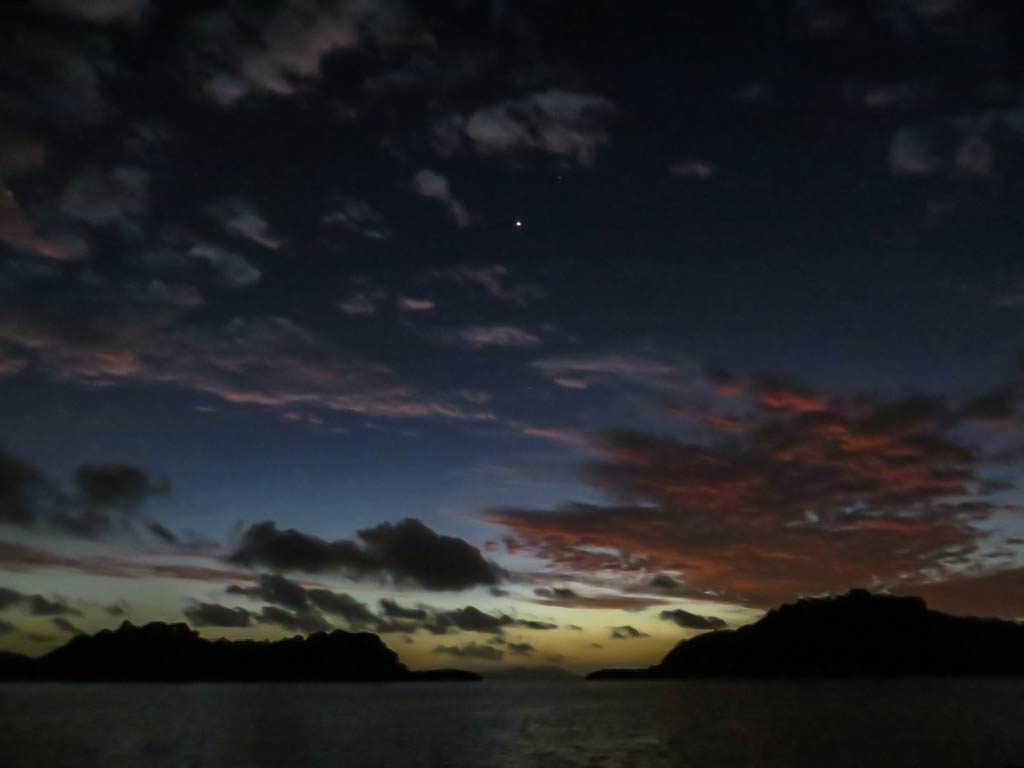
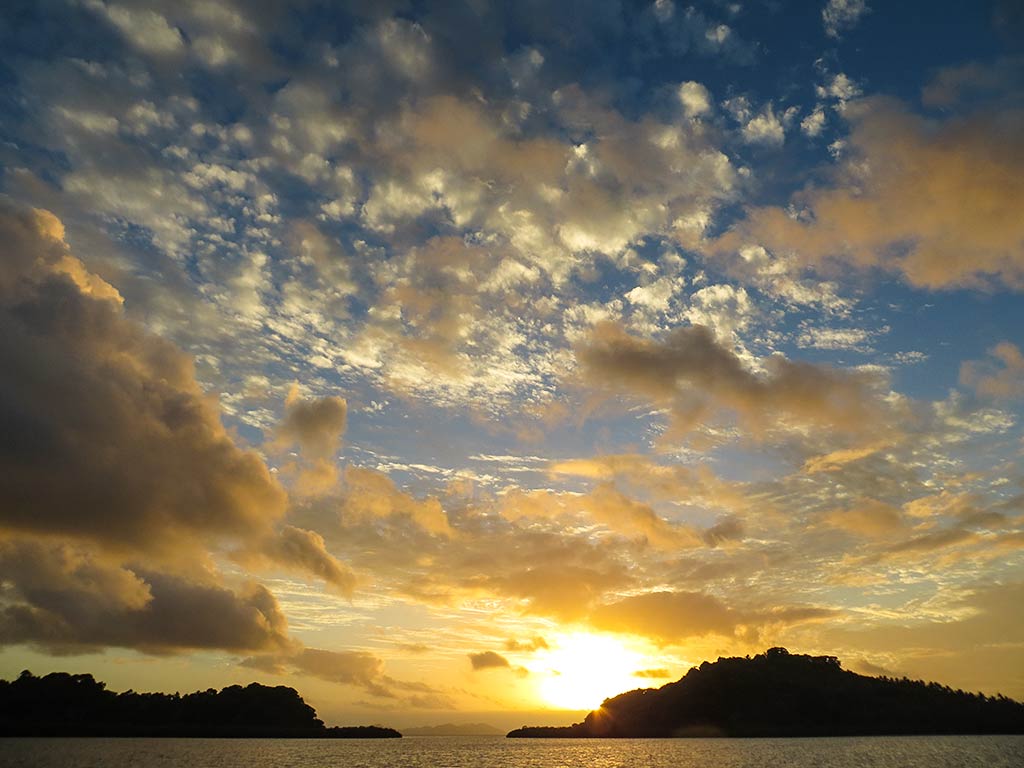
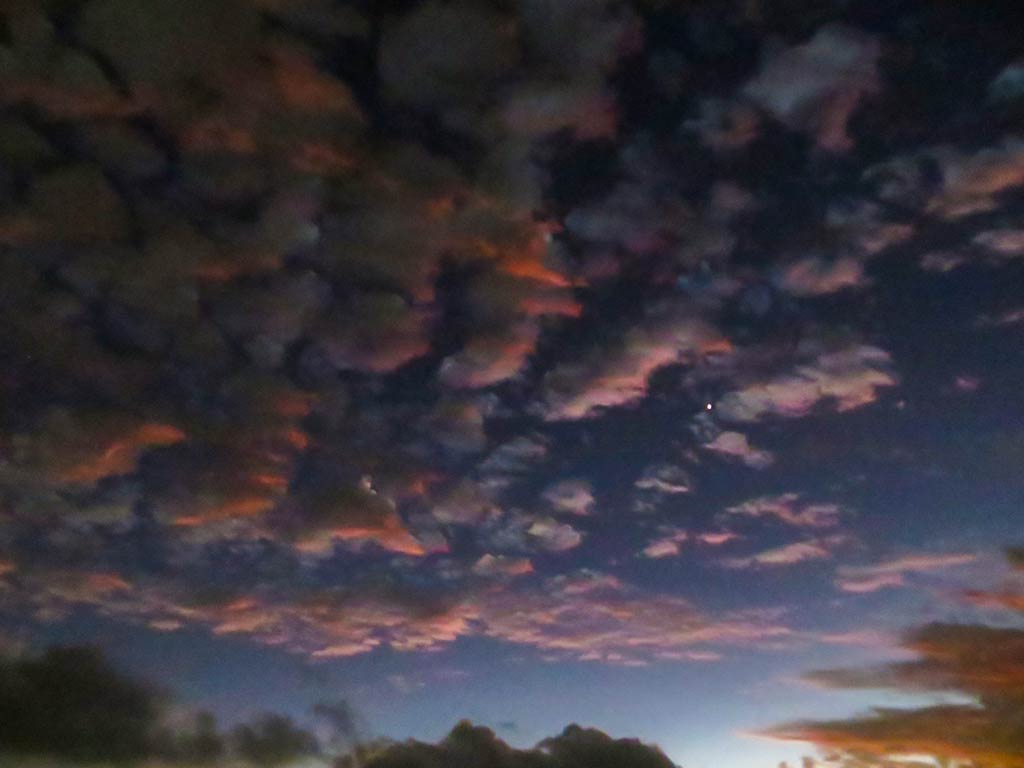
In the evening we had our usual sundowners in the cockpit, and by now the day had gone from being trying to very lovely. The sunset was beautiful along with the full bright moon hovering above. Venus came out shining brightly as a finale to this beautiful show. Below, a few photos.

This was one of those evenings we didn’t want to leave the cockpit, waiting as twilight became dusk, and dusk became dark. Life was good again.–Cyndi