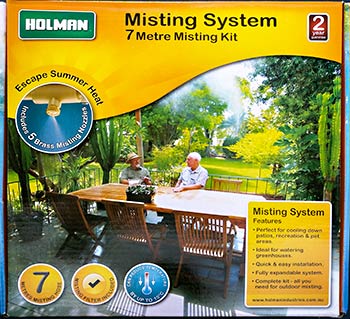
You may have noticed a lack of bitching about the cold on our blog lately. That’s because it’s no longer cold. It’s getting hot. That’s why we’re so glad we installed this…
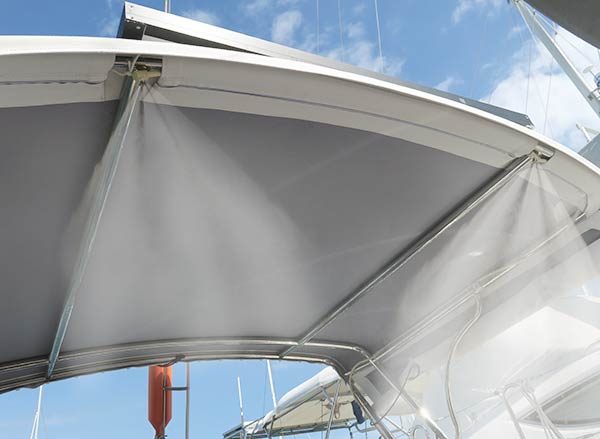
It’s a simple patio misting system available at most home supply stores. We ran the hose under our bimini and installed two misting nozzles. It just runs off our pressure freshwater system, uses very little water, and makes our cockpit look like this…
Wow, it feels nice. I can’t believe everyone hasn’t done this. -Rich
Update: September 25, 2015
I measured the water consumption of my two misting nozzles: They consume only 0.8 gallons per hour. Not bad. We’ve used them a bit now and really love them.
Update: August 31, 2017
With these misters, the higher the water pressure, the finer the spray and the less water it uses. Our pressure is a little lower than optimum thus the mist is a little bit course. Because of that, and that the nozzles are located pretty close to us, we do get wet, but that feels good too when it’s really hot out.
After two years, we’re still loving them and wouldn’t be without them.
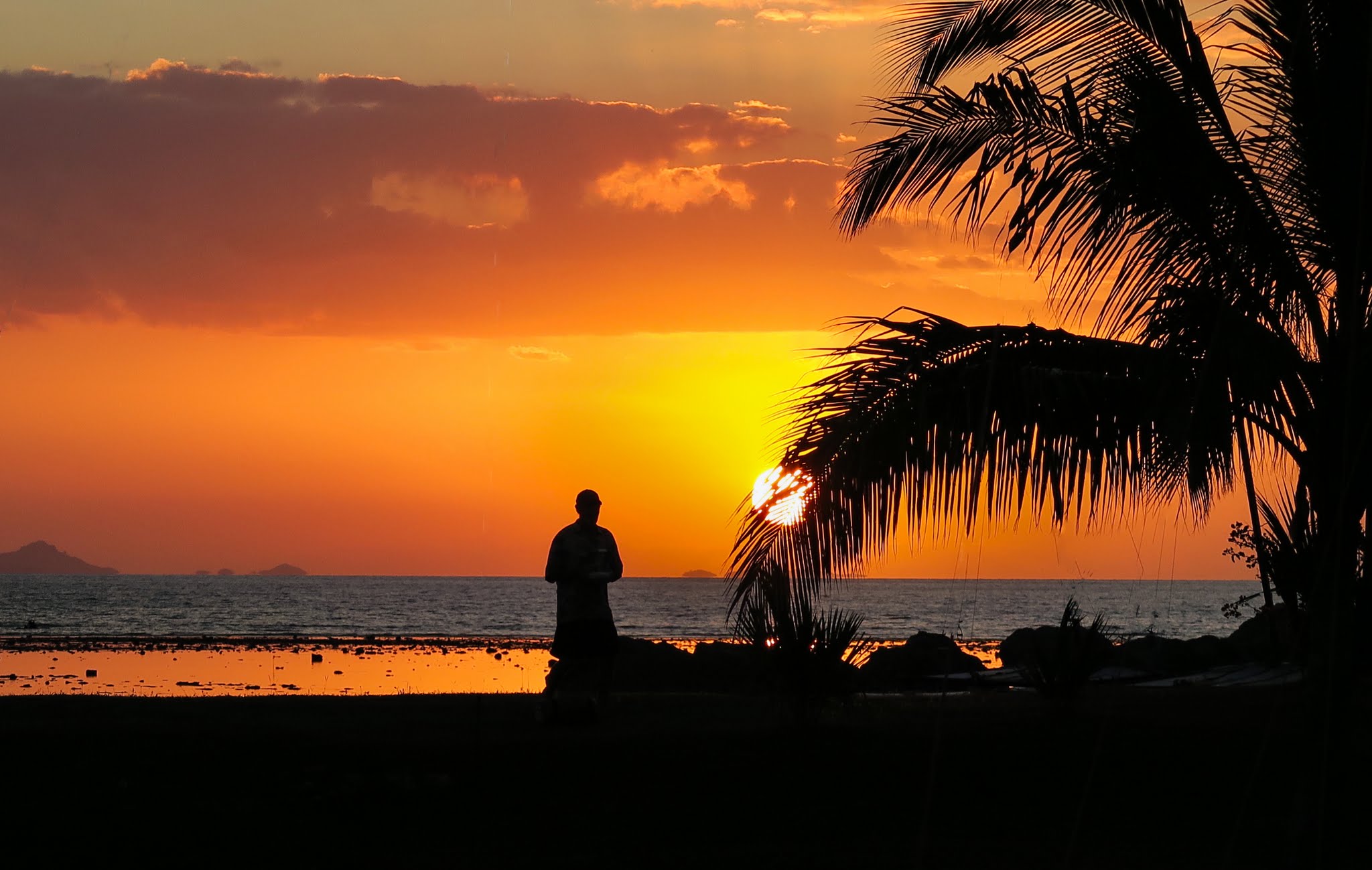
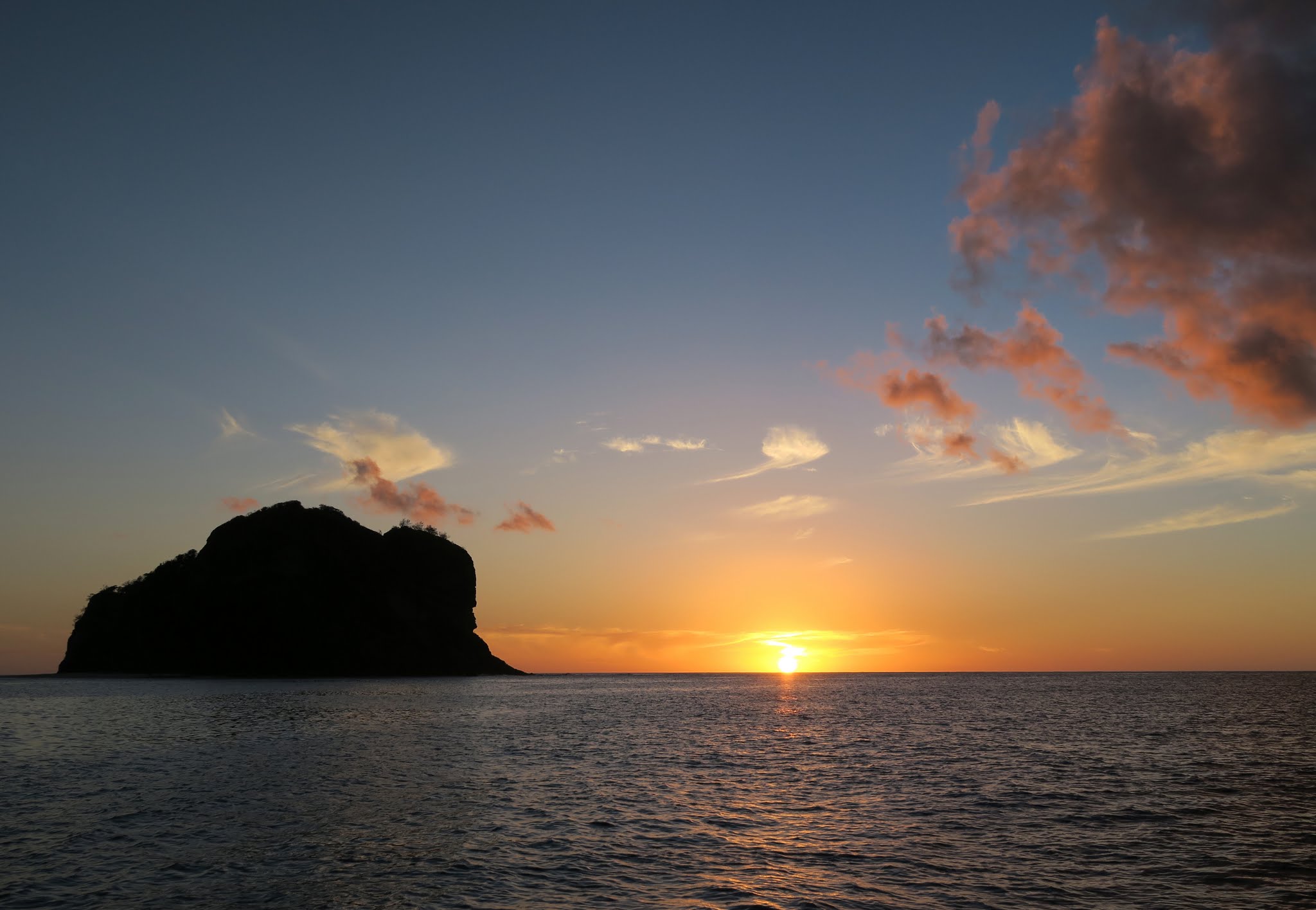
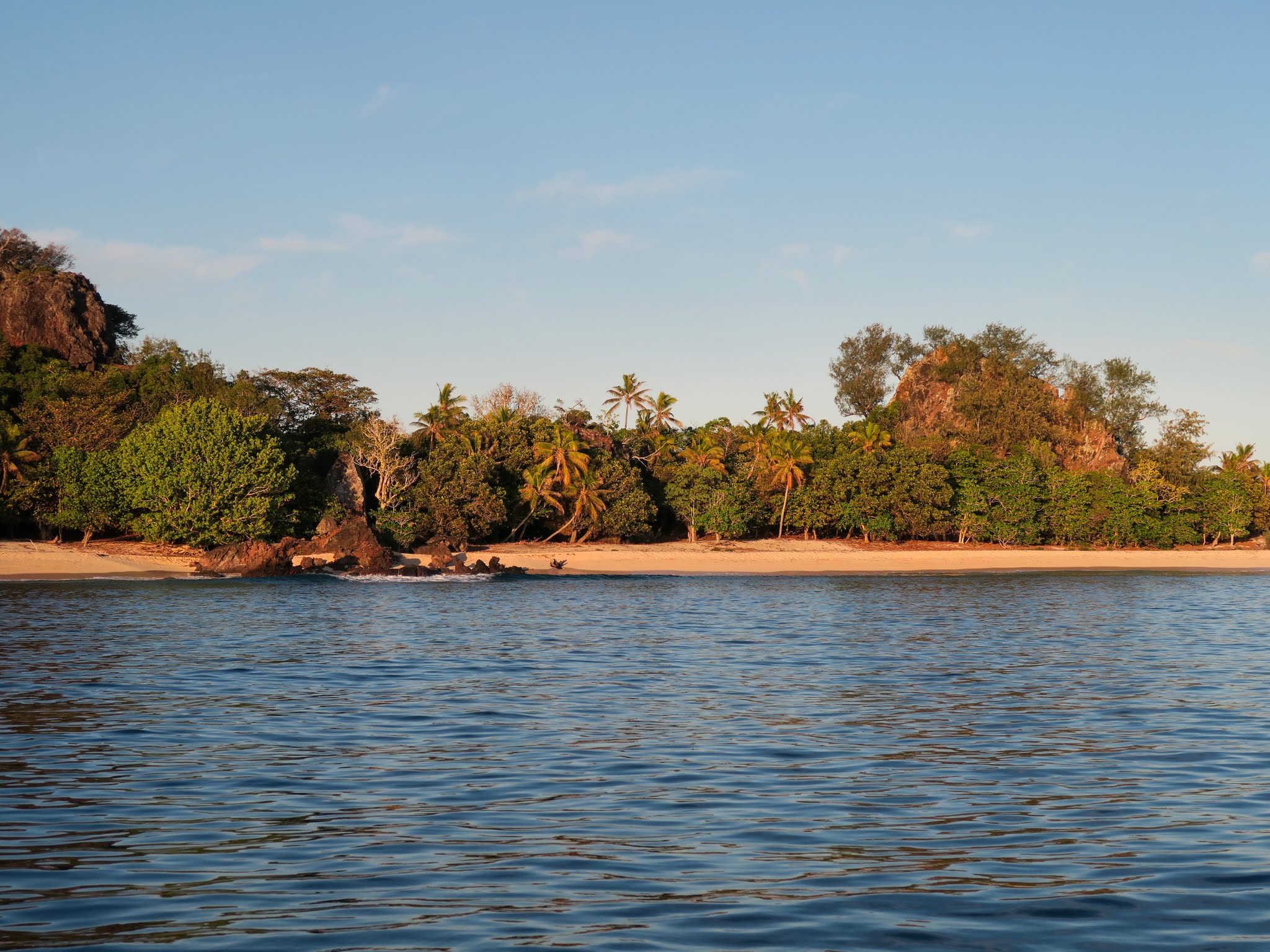
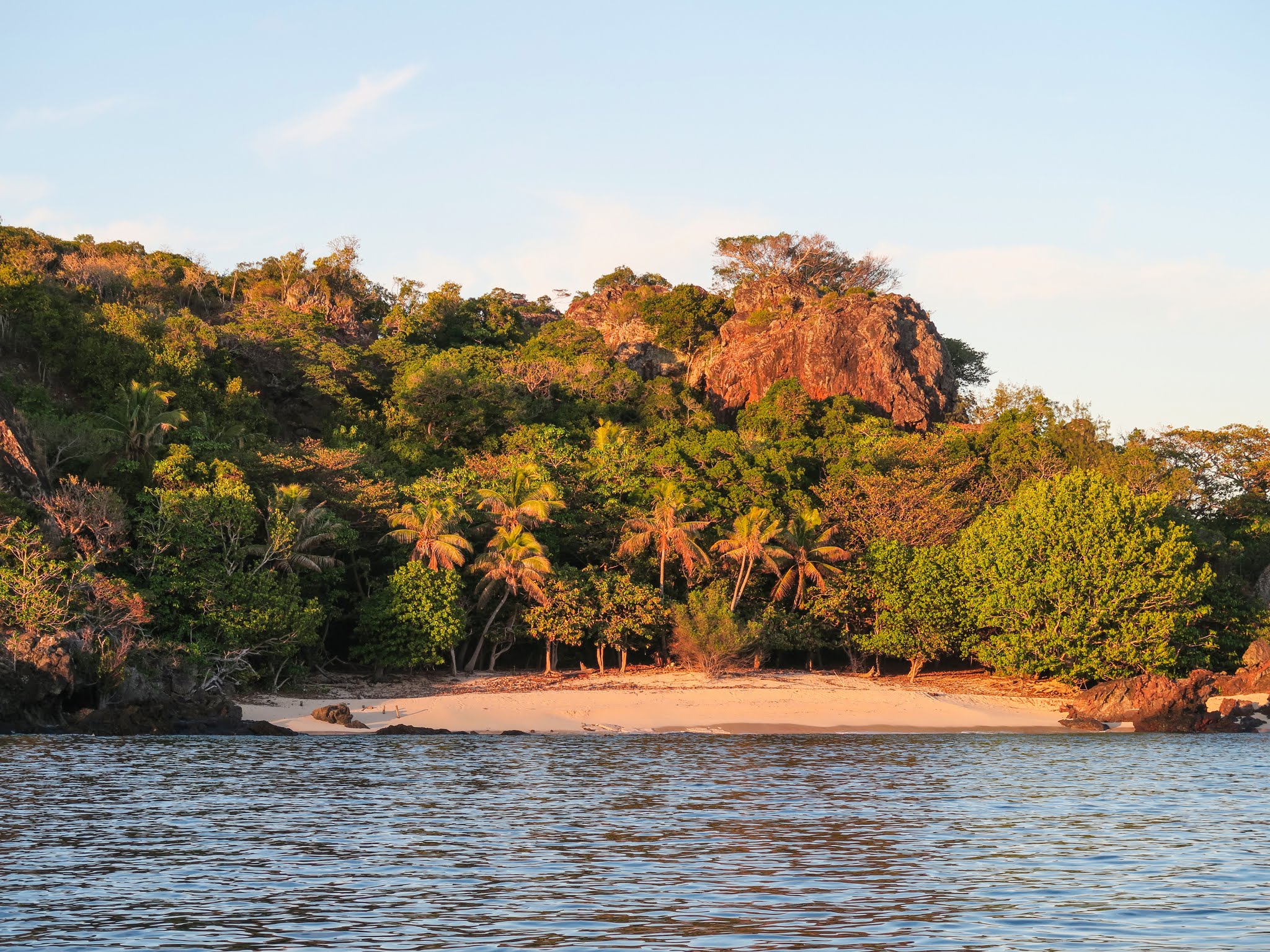
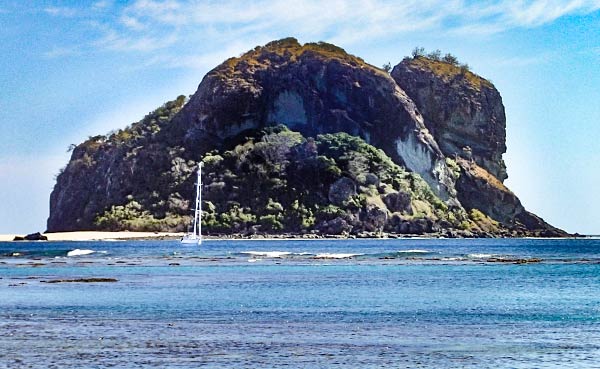
Sometimes you find a spot that’s as beautiful at sunset as it is at sunrise. The Vanua Balavu side of the Navadra/Vanua Balavu anchorage is one of those rare places.
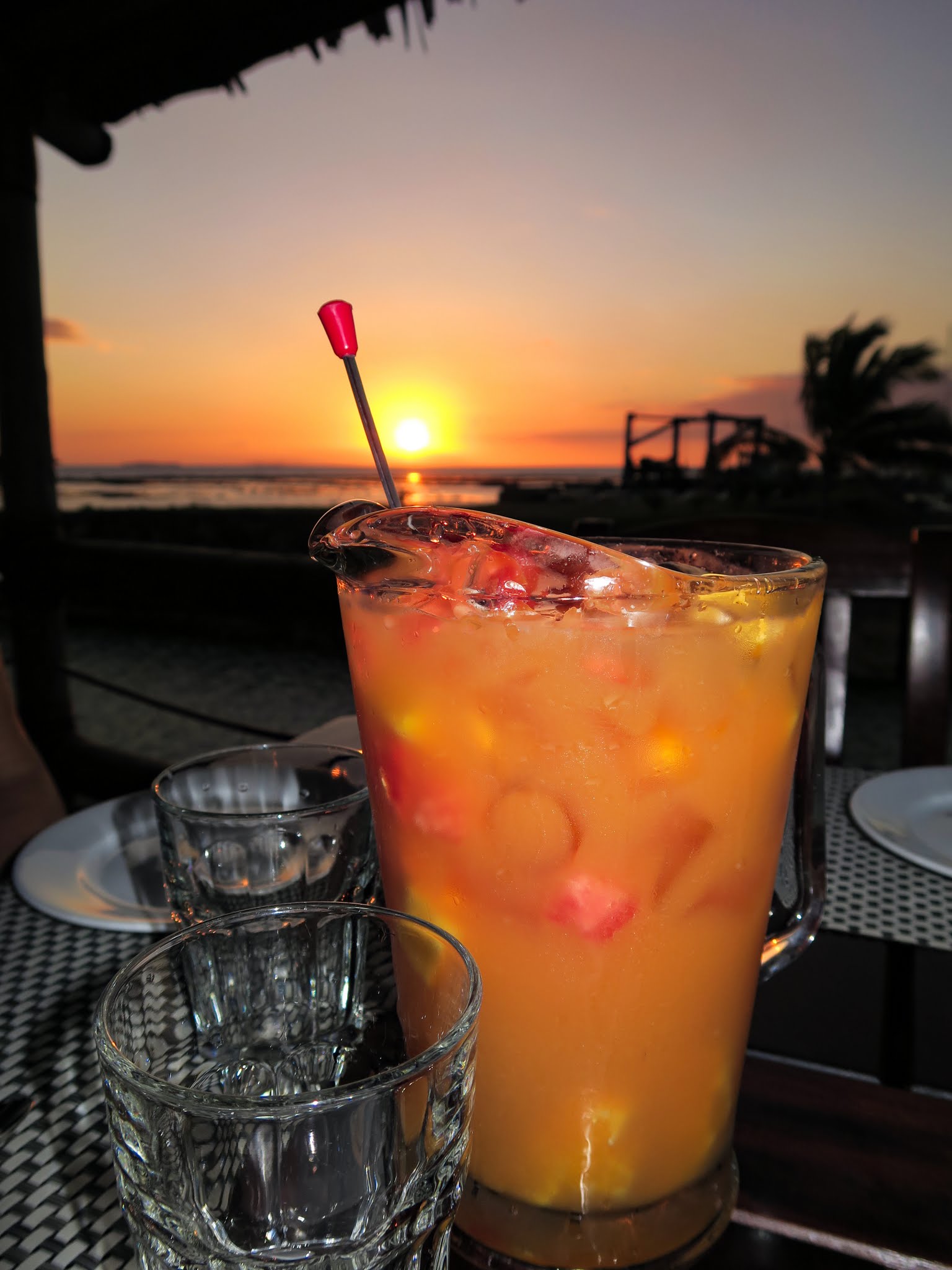
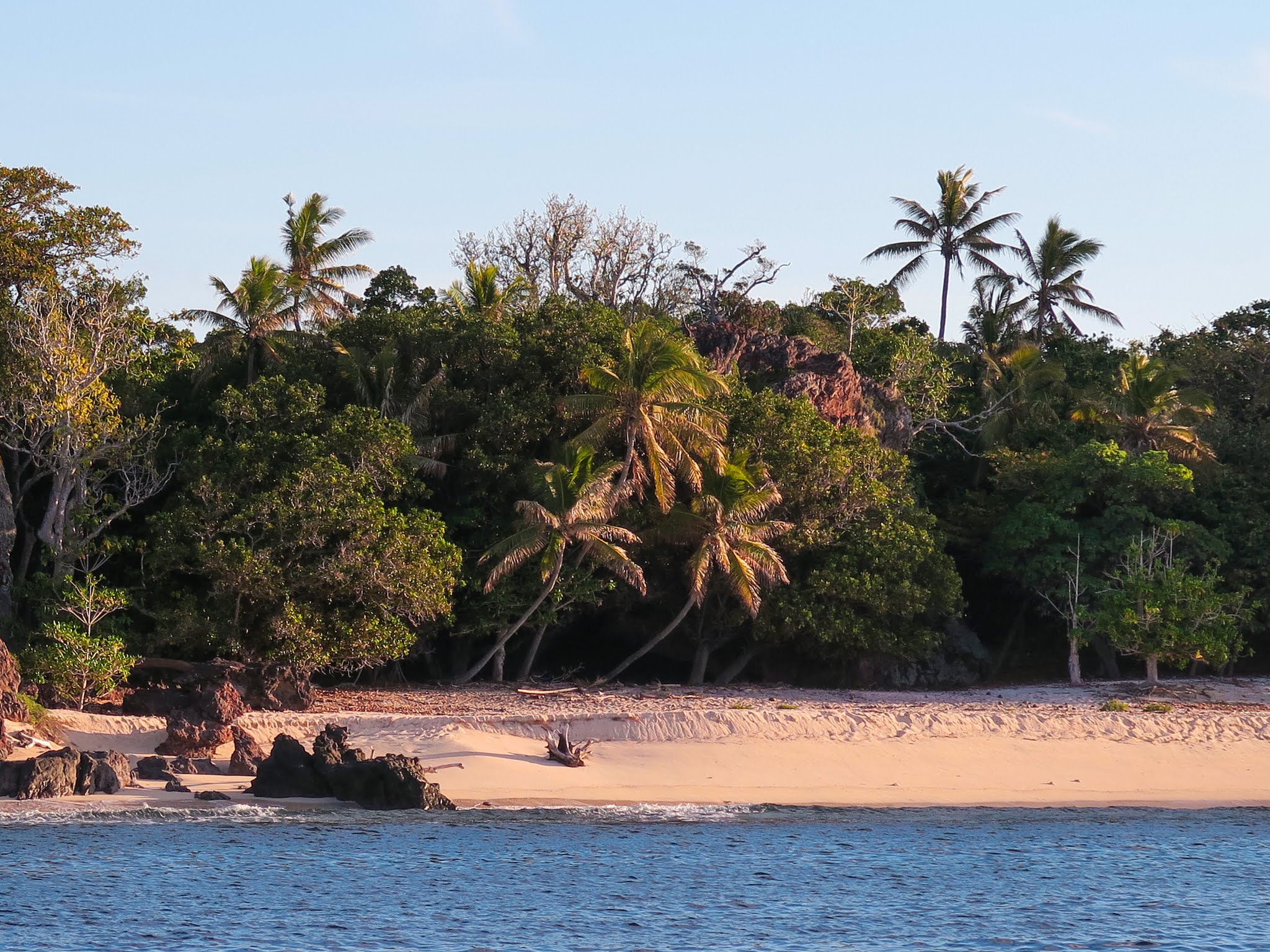
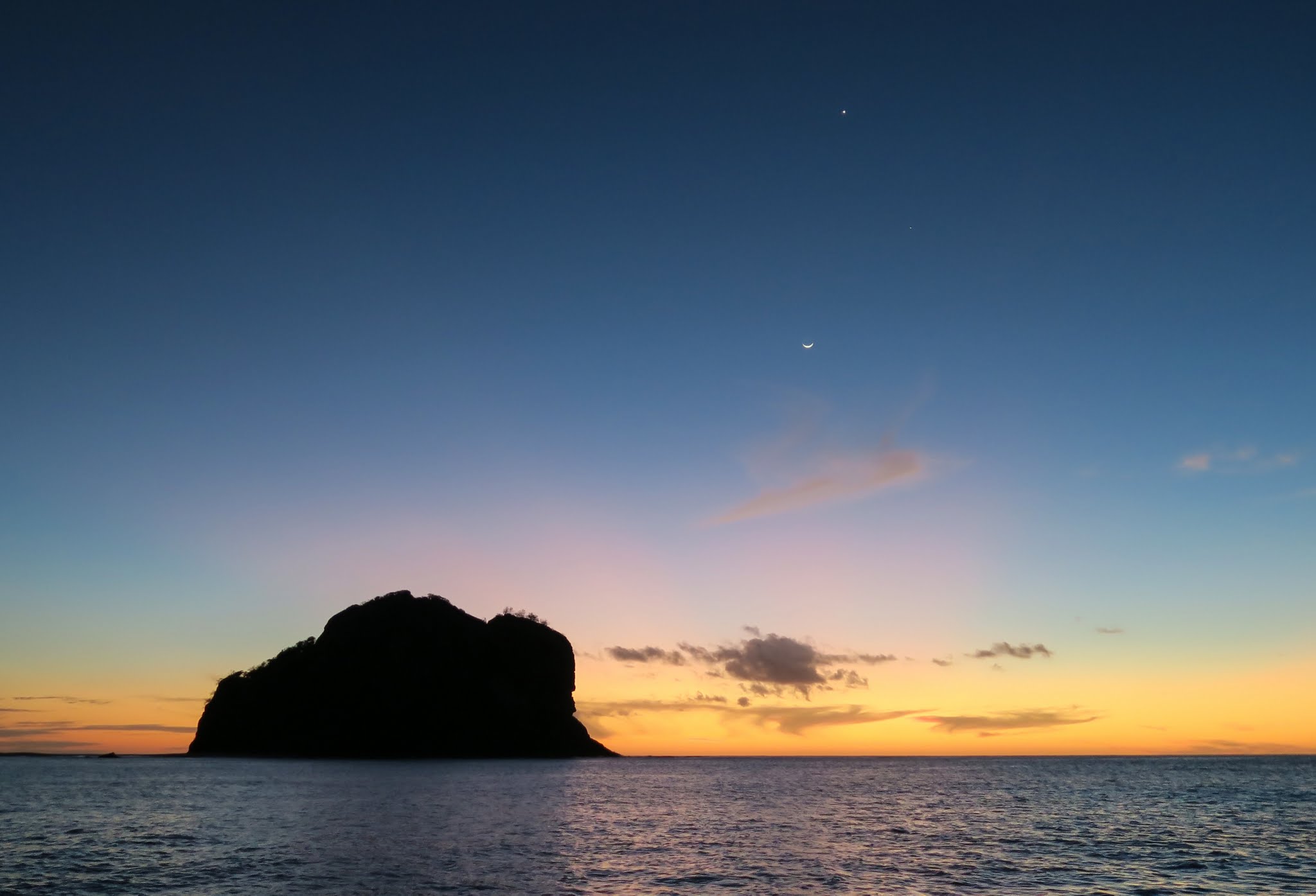
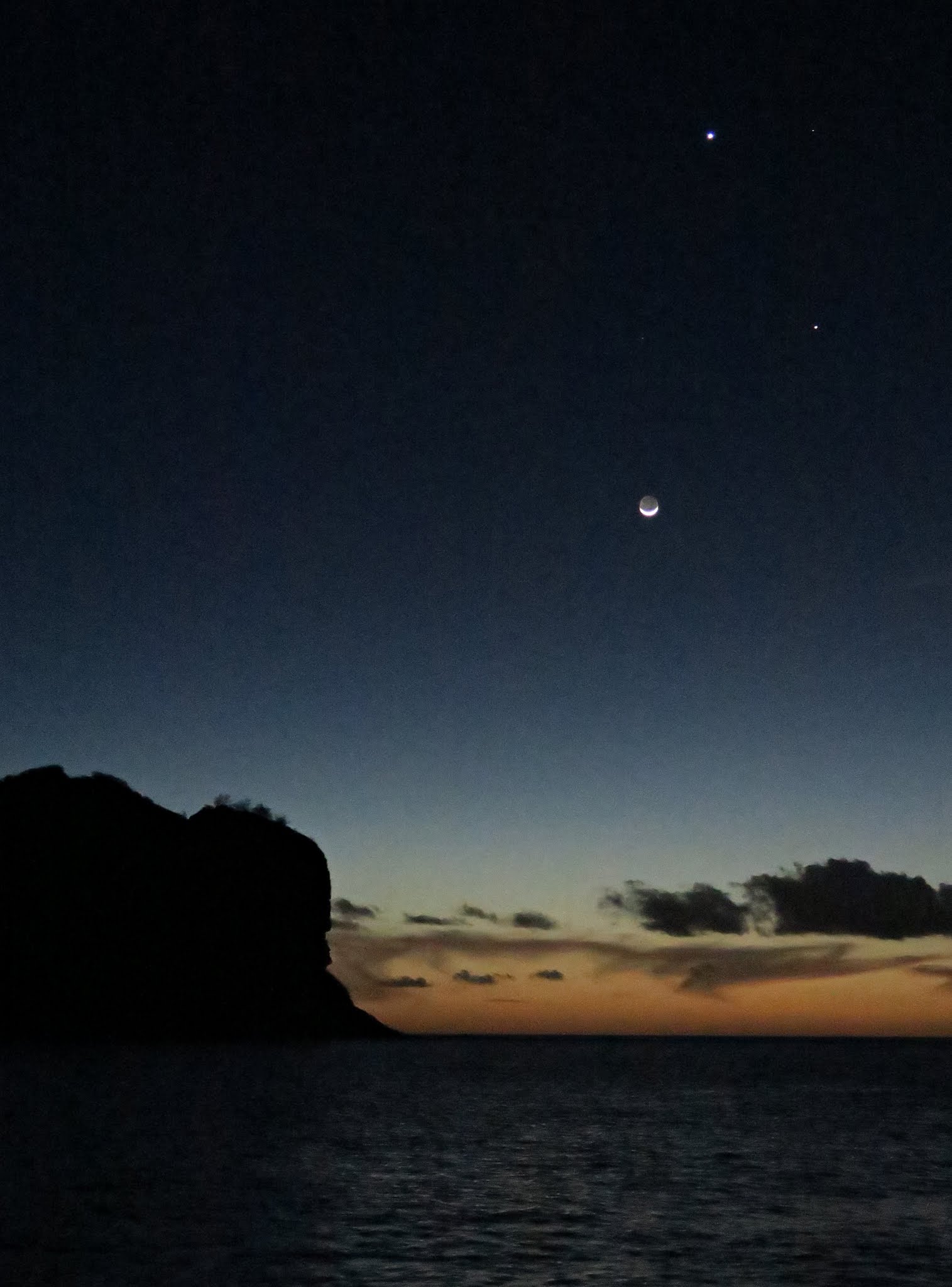
At sunset, the beaches turn pink, and the sun sinks into the sea framed by the big headland rock. Then the first stars begin to appear. Tonight we had Jupiter, Venus, and a crescent moon bright in the evening sky. (Click to enlarge and scroll through photo galleries that follow.)
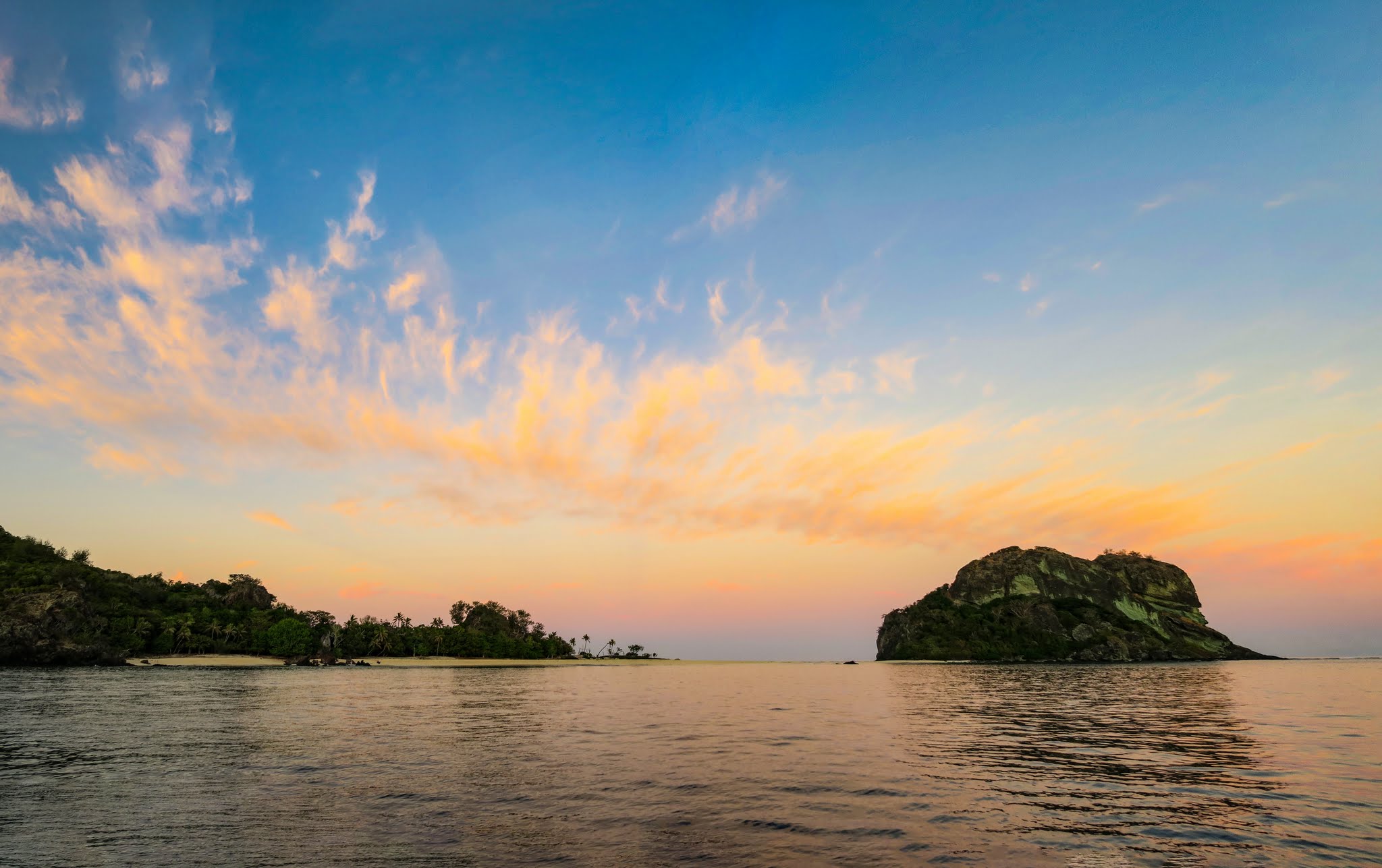
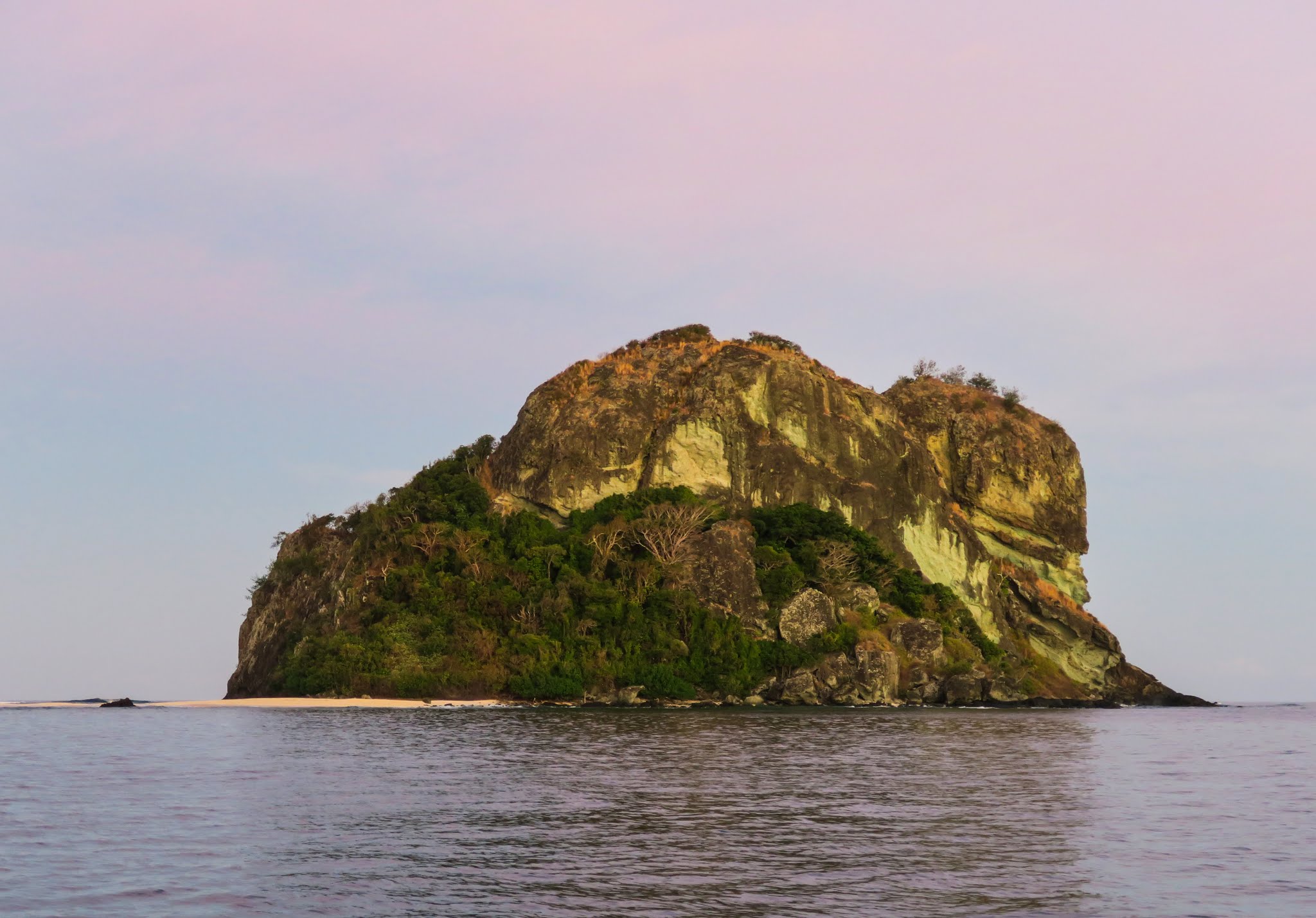
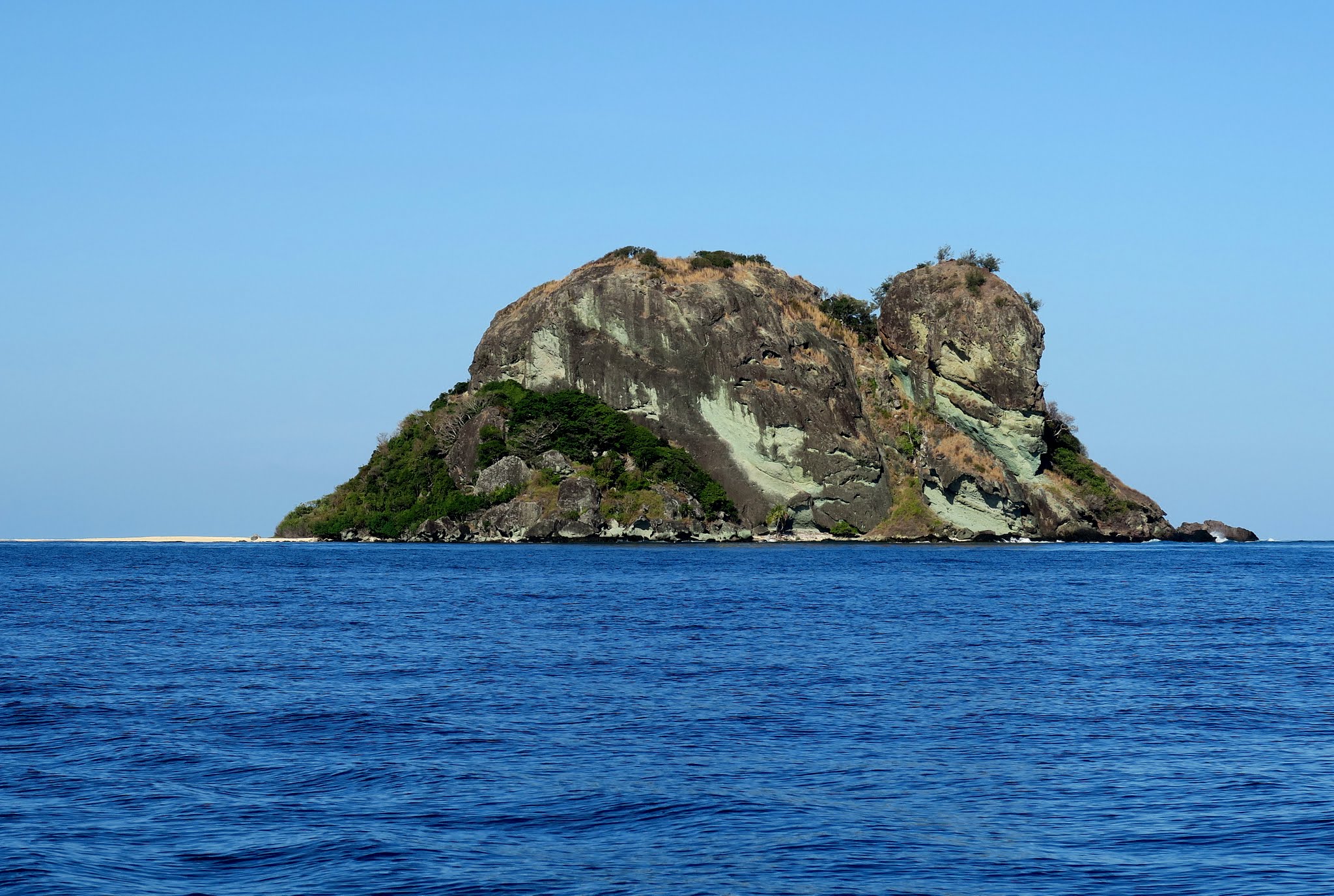
At sunrise the beaches once again turn pink, and areas of green rock in the monolith headland really stand out. I don’t know what the green is, but it’s only visible in certain light.
After the sunrise we headed back to Vuda Marina, where we spent a few days while the trade winds picked up. It’s always a treat to stay there (see post below).
Currently we are taking a few days out to enjoy quiet Saweni Bay just north of Vuda. We had planned to head north to the Yasawas, but worrisome weather is headed our way; so we’ll head back to Vuda Marina once again. –Cyndi
These are the among the northernmost of the Mamanuca Islands, and the anchorage that lies between them would be our last stop before heading back to Vuda Marina before the wind picked up.
At this point we had an amazing weather window to visit these northernmost Mamanuca islands, which are not only in a windy area but are very exposed to west and north swells. The winds were currently very light, and the swells predicted to be from the southeast.
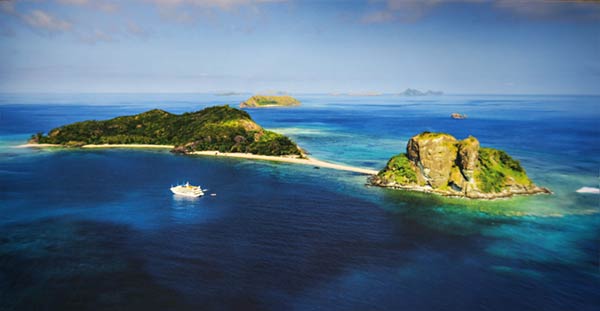
This is an aerial photo (“borrowed” from a brochure) of the Vanua Balavu (not to be confused with the Lau Group island with the same name). Just outside the picture to the left is Navadra Island, joined to this island by a shallow-water isthmus.
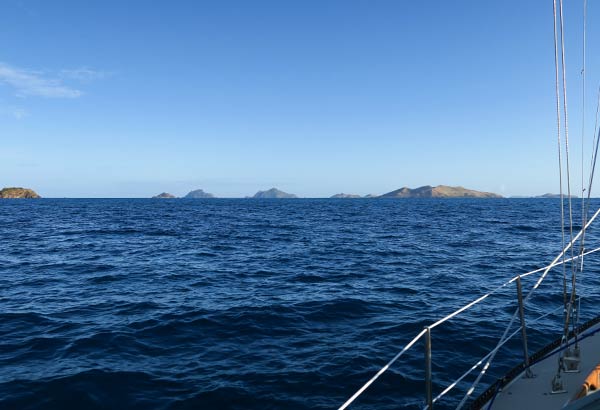
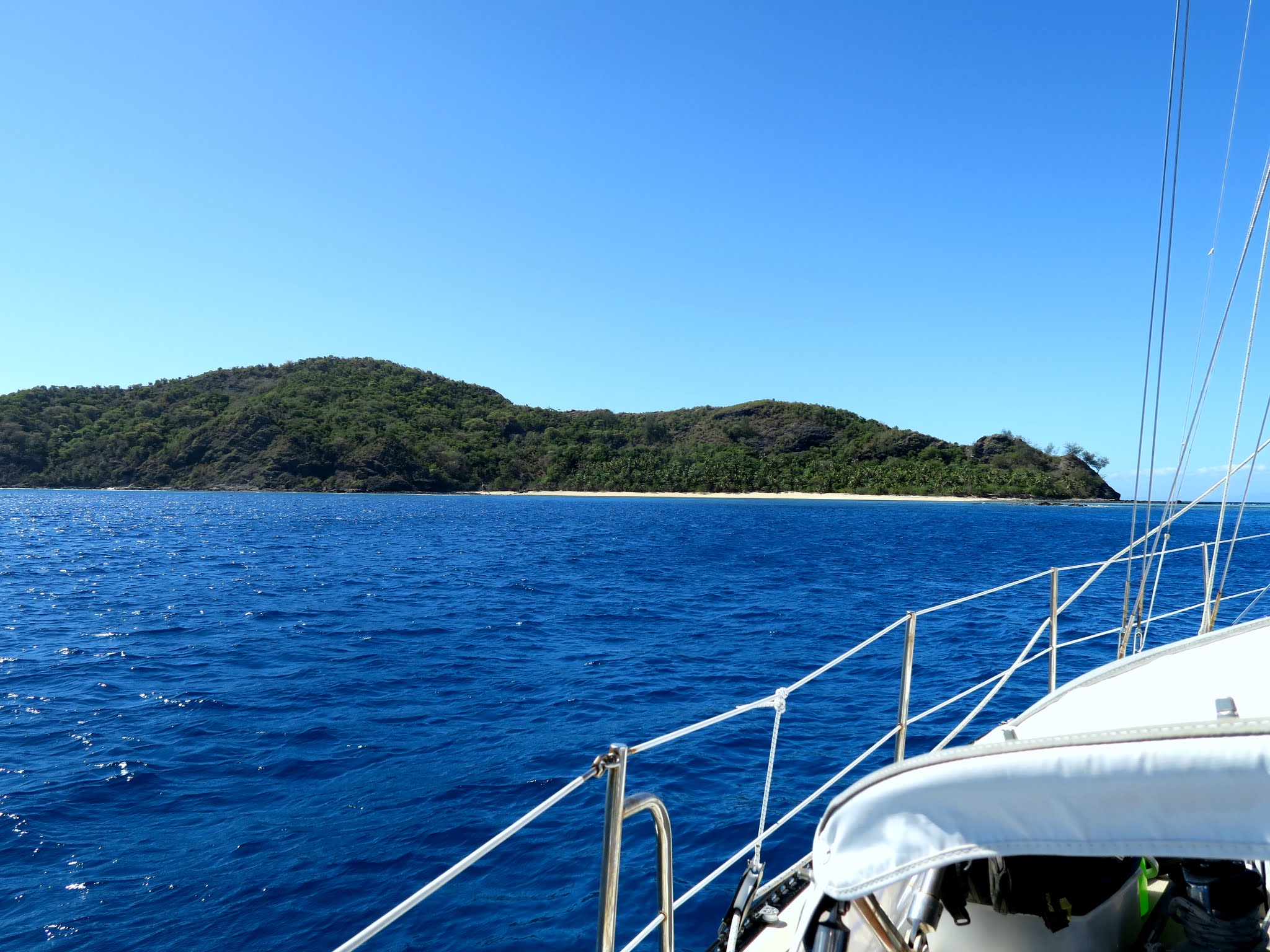
As we headed north past several of the Mamanuca Islands, it was obvious to see why some aren’t visited by cruising yachts: there are just no anchorages there. I suppose if someone were really determined they could manage it, but for us there’s so much yet to see on the beaten path that we don’t feel the need to go off it.
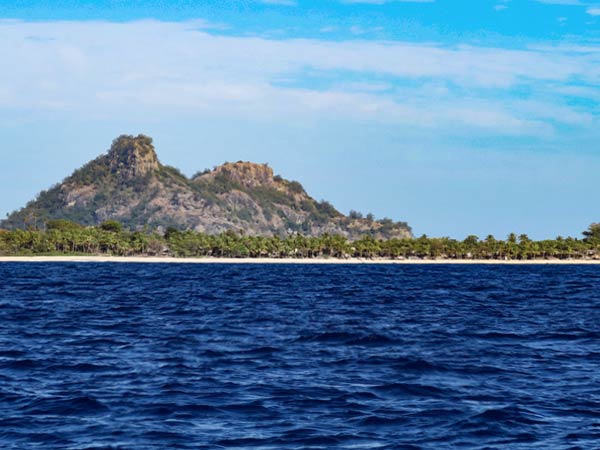
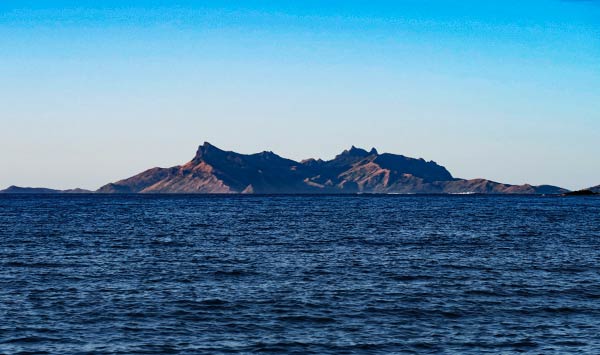
Looking back at the Mamanuca Islands to the south. (Fiji)Motoring past some of the westernmost Mamanucas including Monuriki Island where the movie Castaway was filmed. Monuriki, with its rocky and mountainous terrain, is different from the rest of the Mamanuca Islands. The palm lined beach in front if it is actually another island. (Fiji)To the north of the Mamanucas lies a more mountainous and windy chain of islands: the Yasawas. Above is the southernmost of the Yasawas, the Waya Island area. (Fiji)
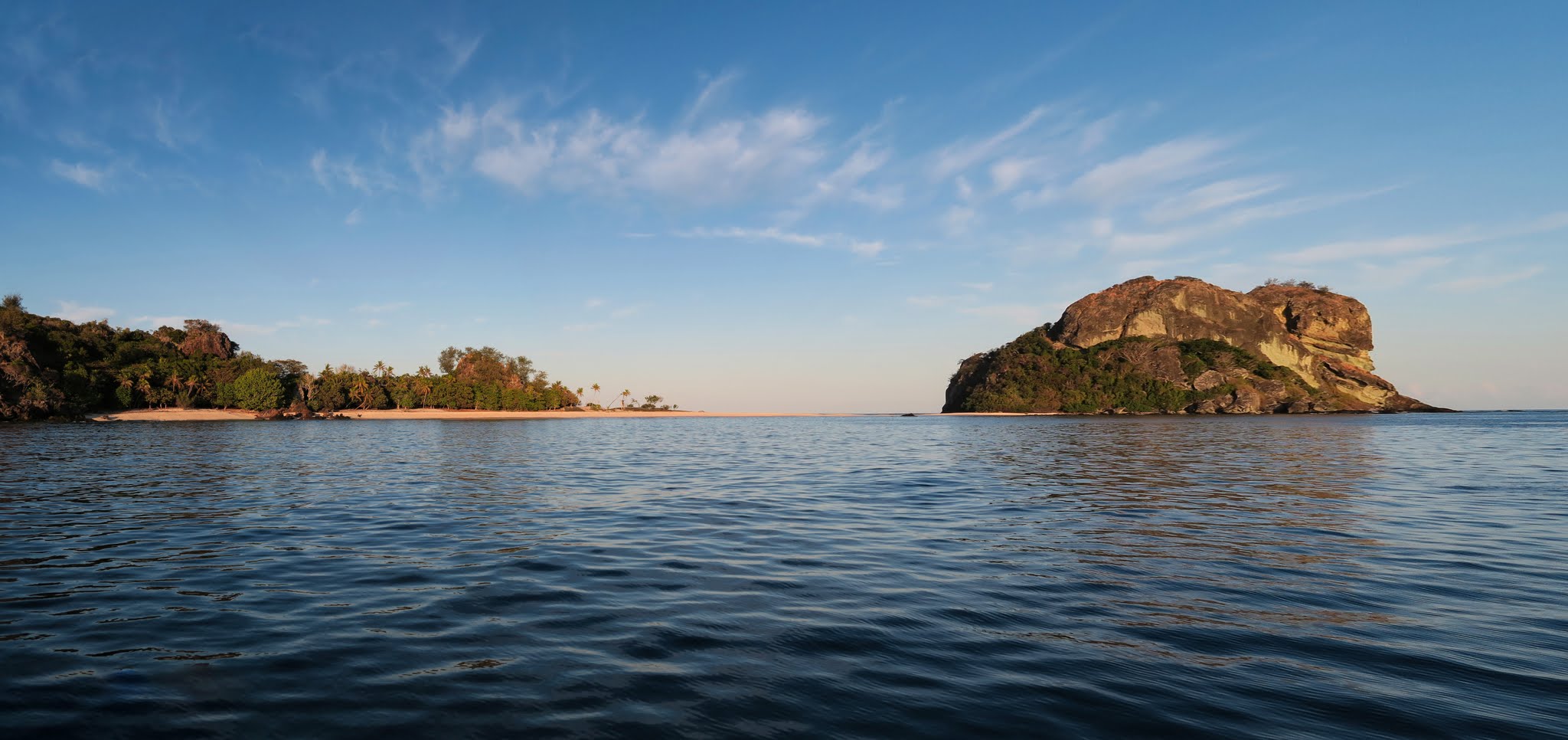
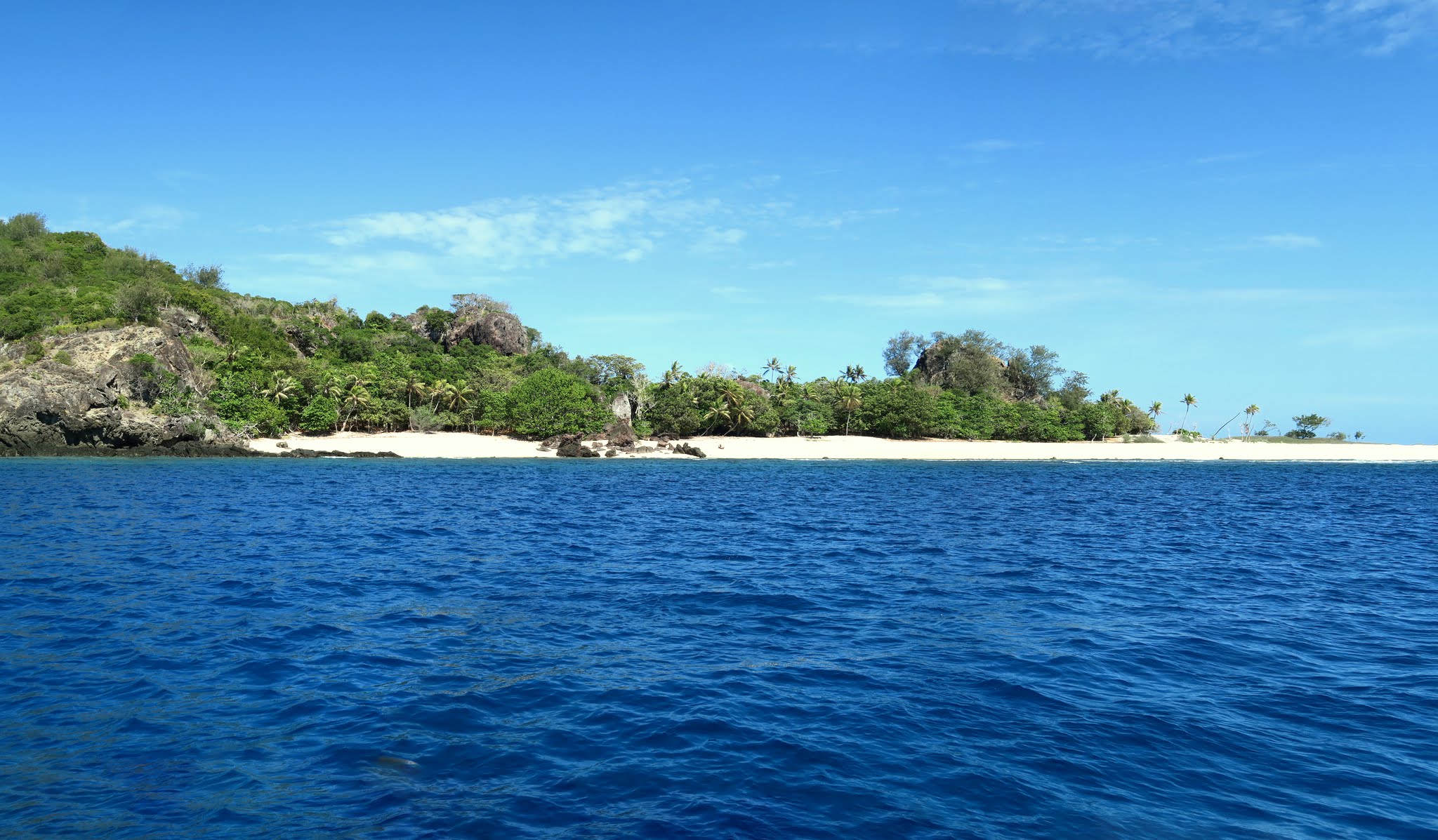
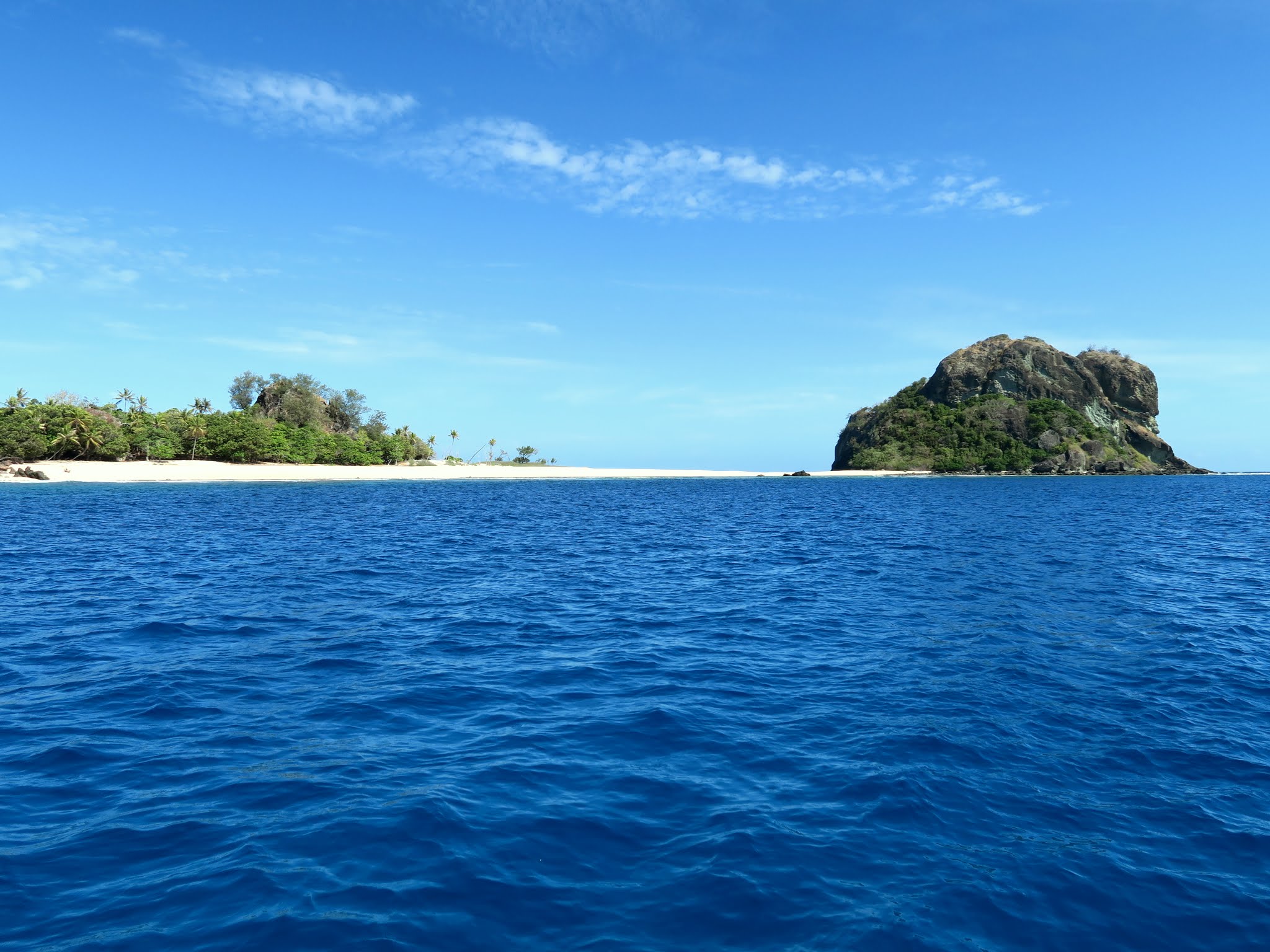
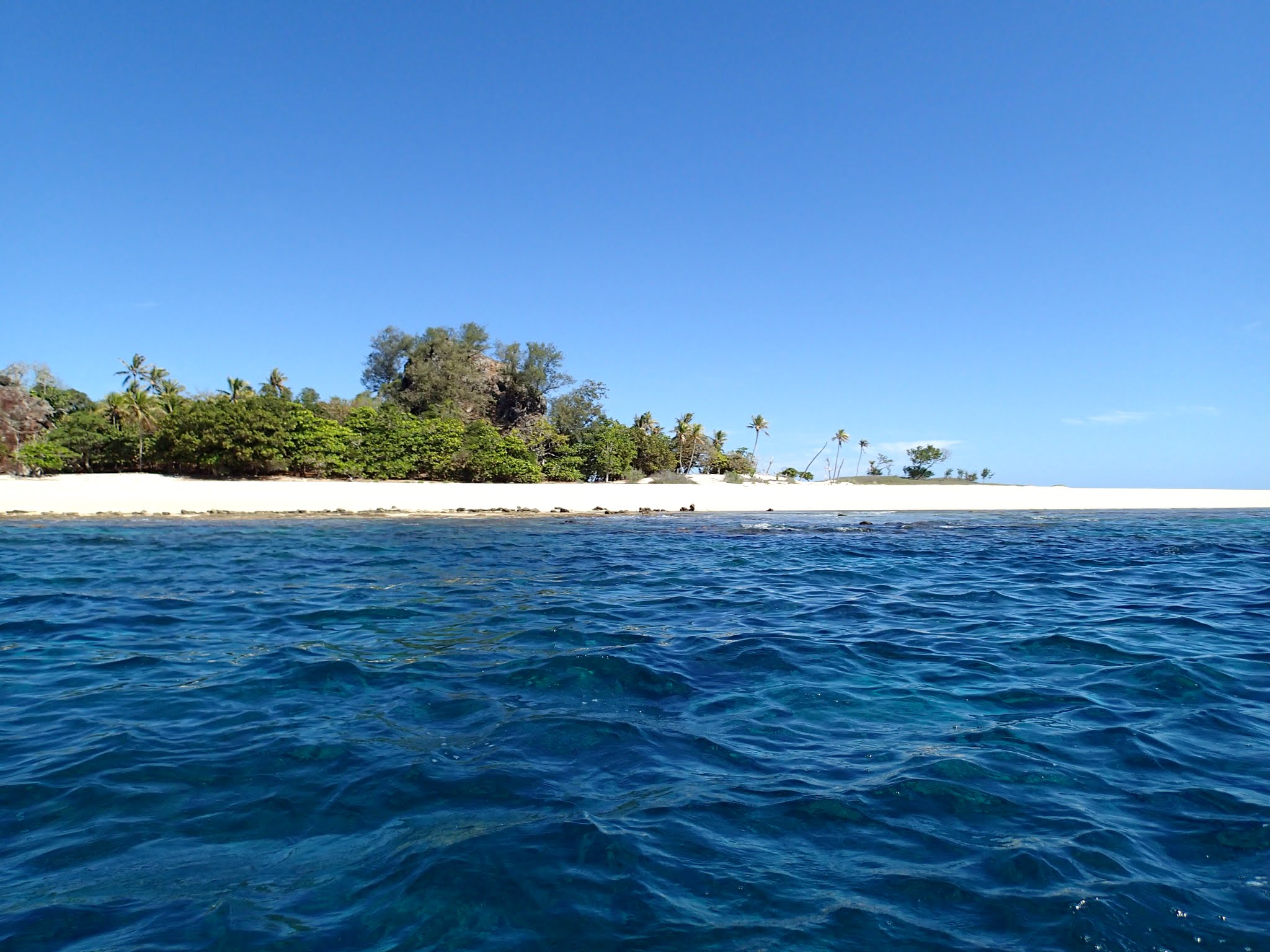
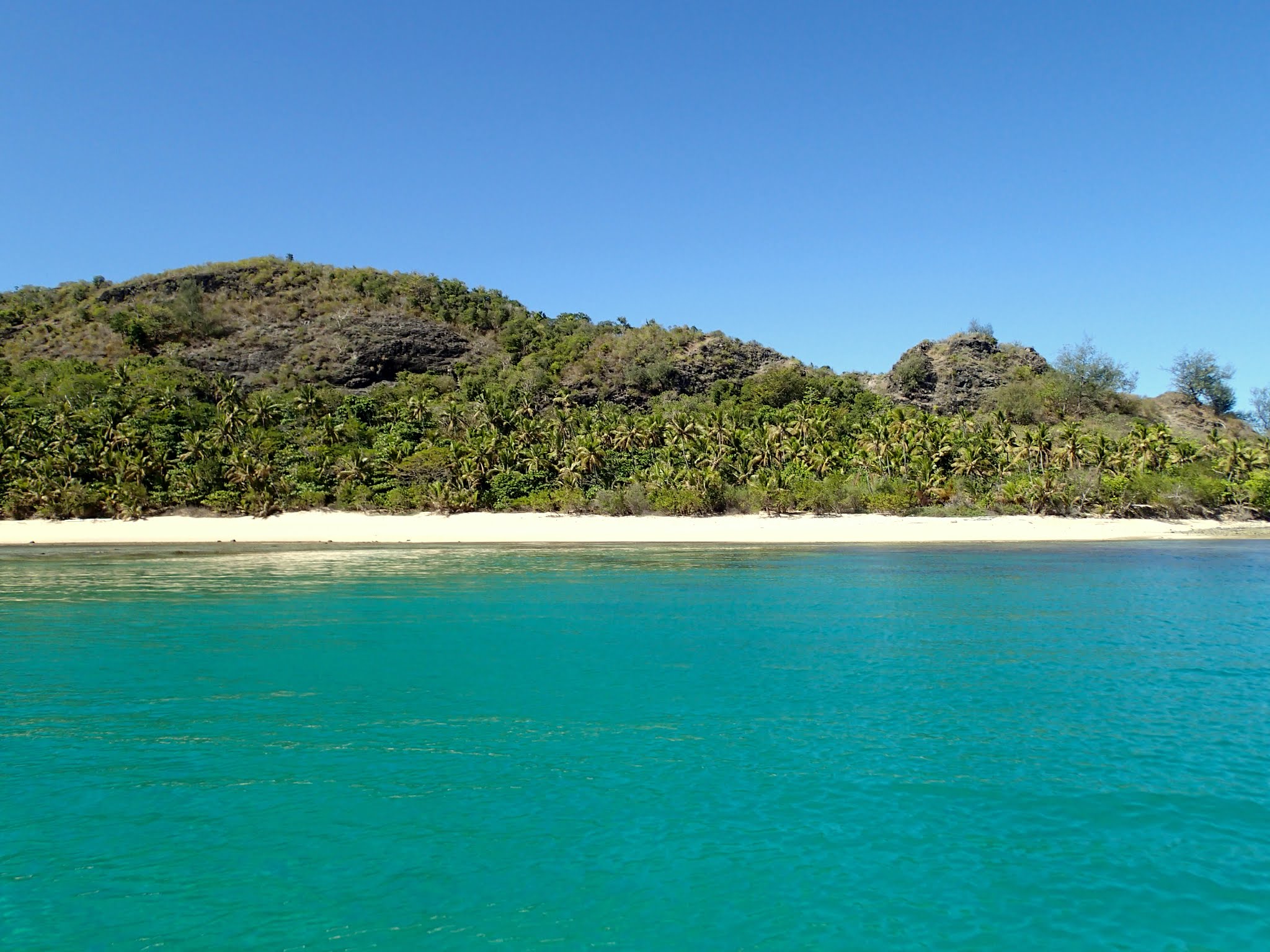
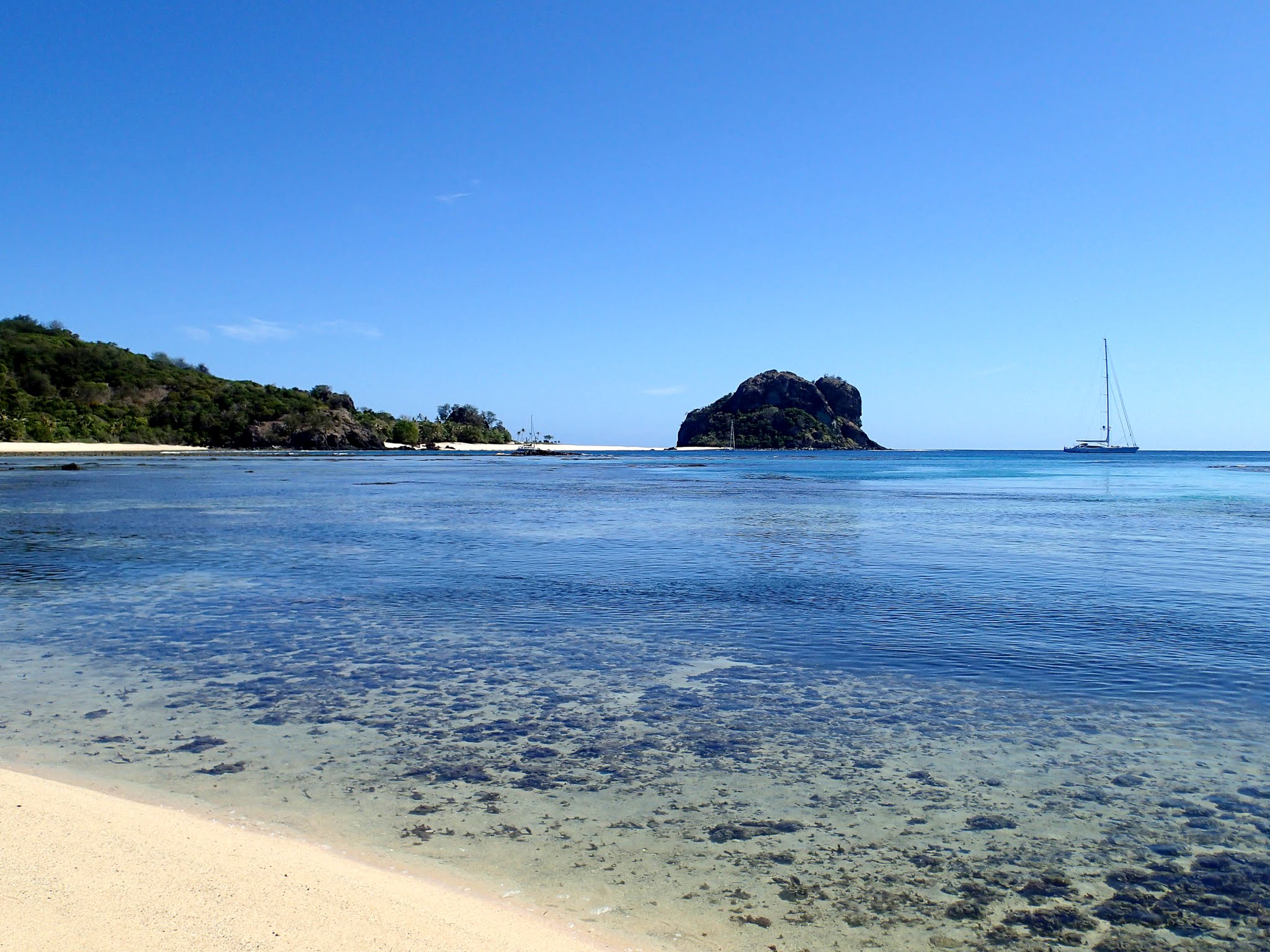
As we made our turn around the headland and got our first look at the anchorage, we were struck by its exotic beauty. The headland of Vanua Balavu is a giant monolithic rock formation, only joined to the main island by an isthmus stretch of sandy white beach.
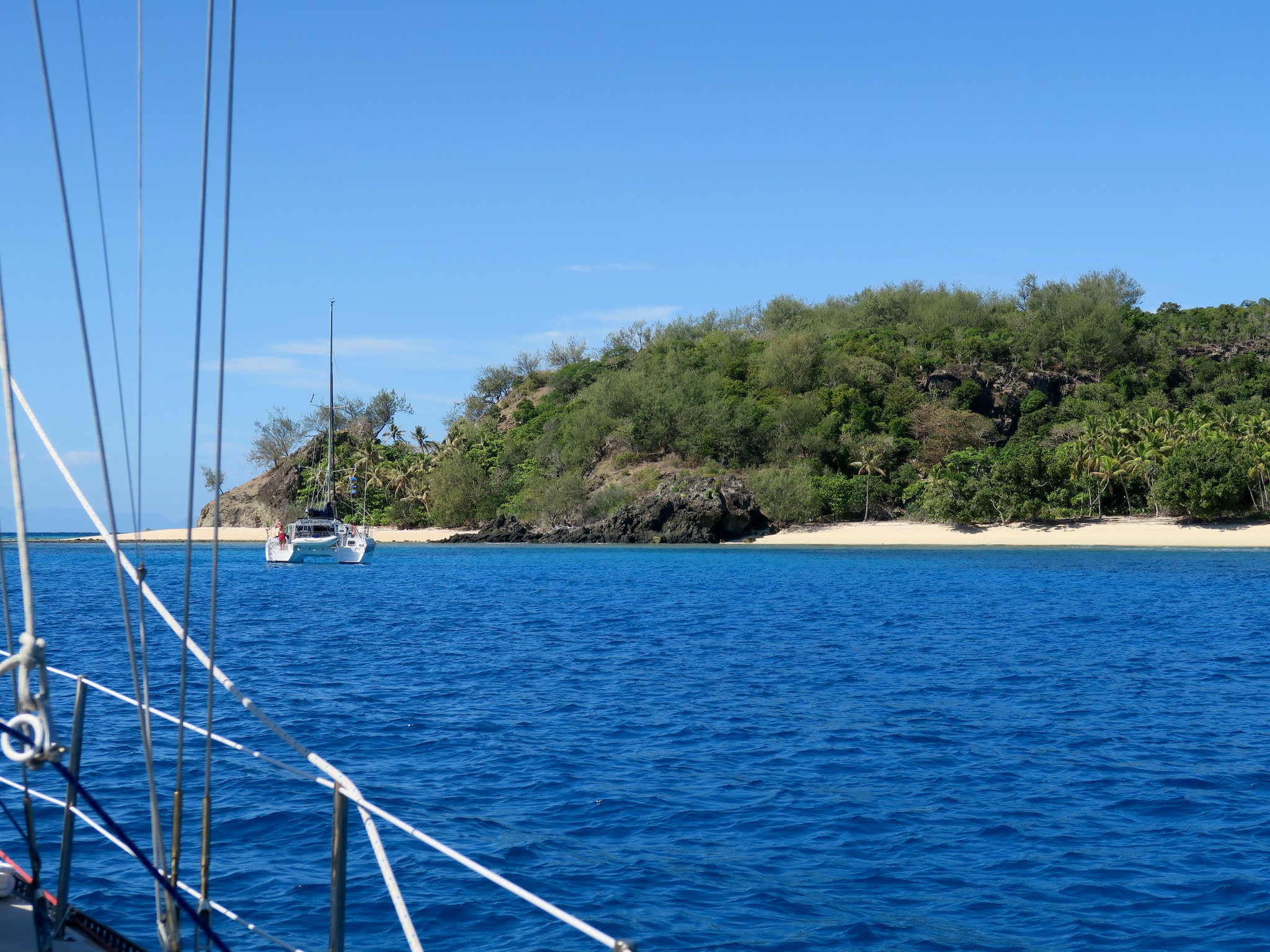
Another isthmus, this one under shallow water, joins Vanua Balavu to Navadra Island, which has its own beach. The islands are at an angle to each other, which makes an anchorage between them.
The good news is it’s beautiful here. The bad news: it’s generally quite rolly. Our friend Tom assured us that it’s possible to experience calm water here, but I suspect that doesn’t happen very often. We had very light winds and swell conditions, yet a persistent northern swell managed to make it remarkably rolly. We decided to stay and live with it. It picked up in the afternoon, making it a challenge to get onto the boat from the dinghy, but it wasn’t so bad that we couldn’t sleep later that night. Below a few pictures of the anchorage. (Click to enlarge and scroll through photo galleries below.)
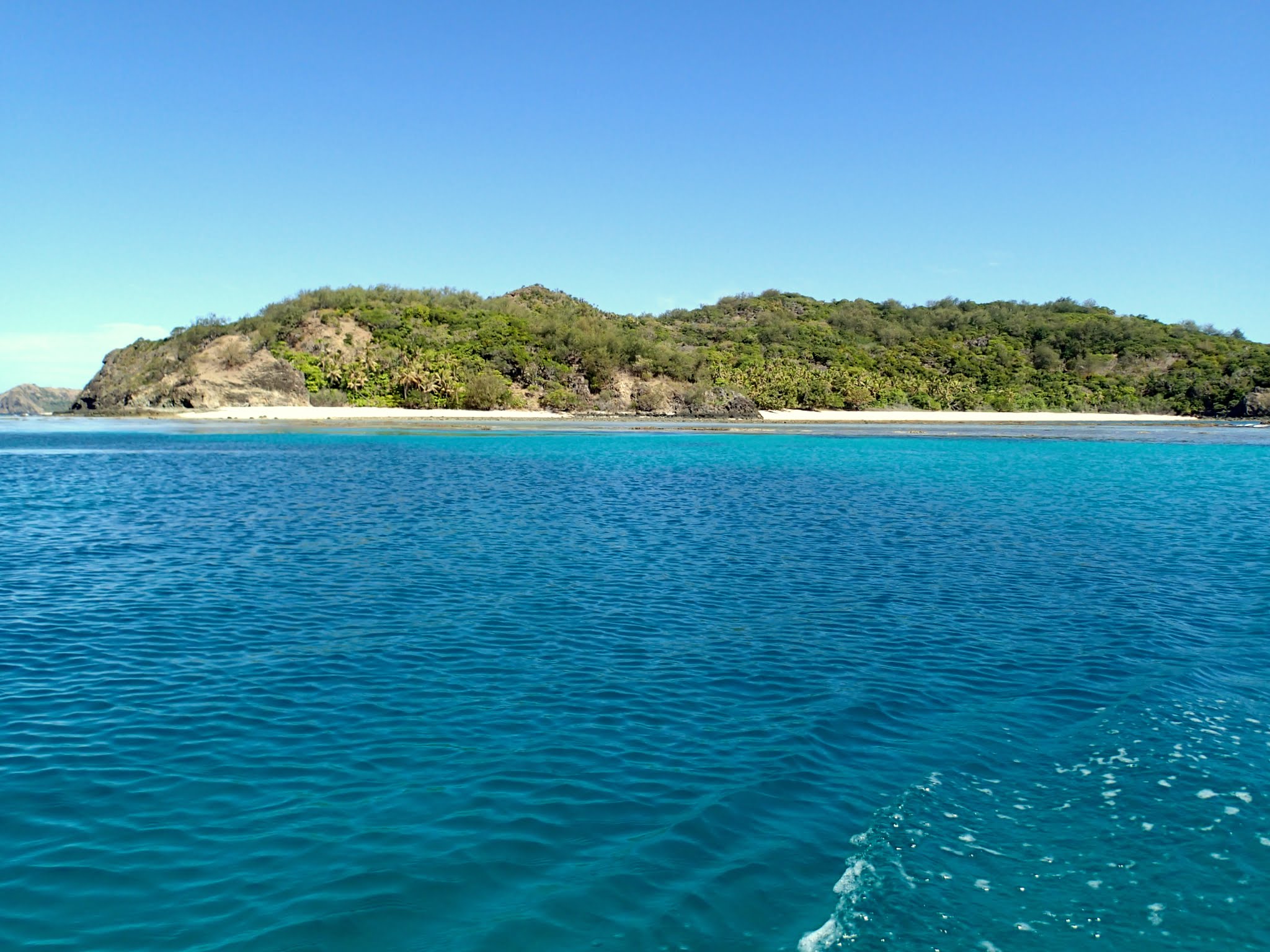
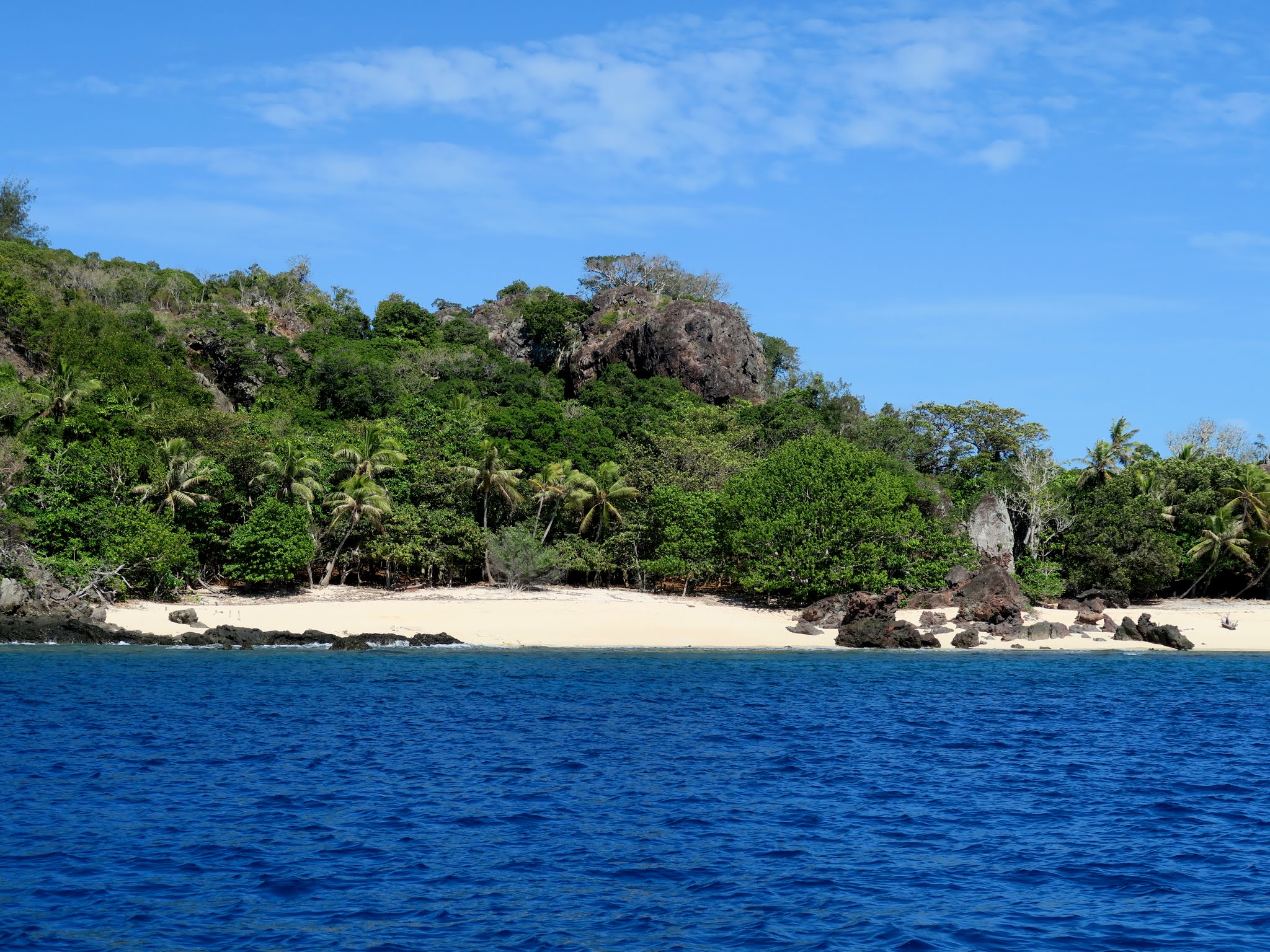
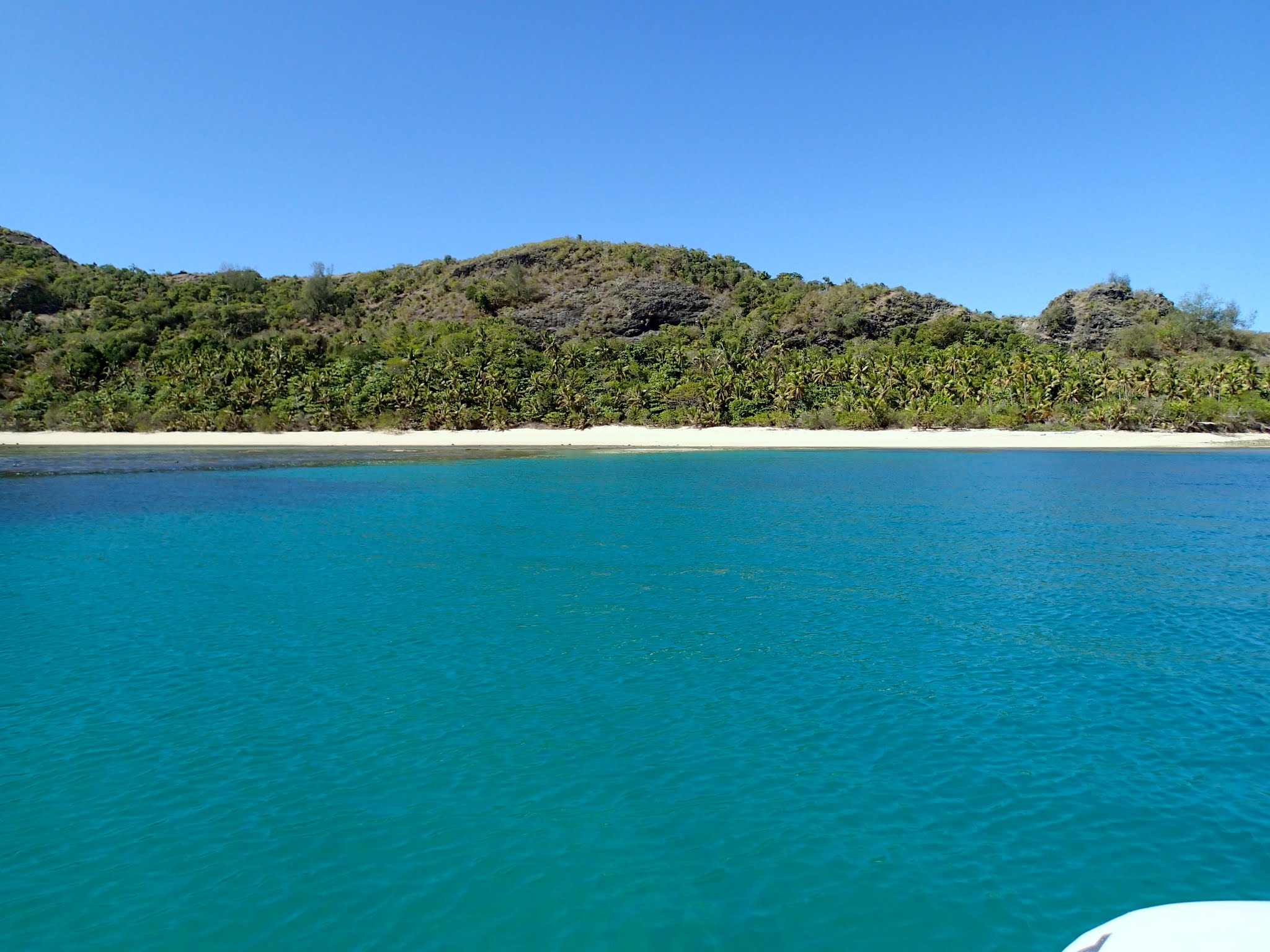
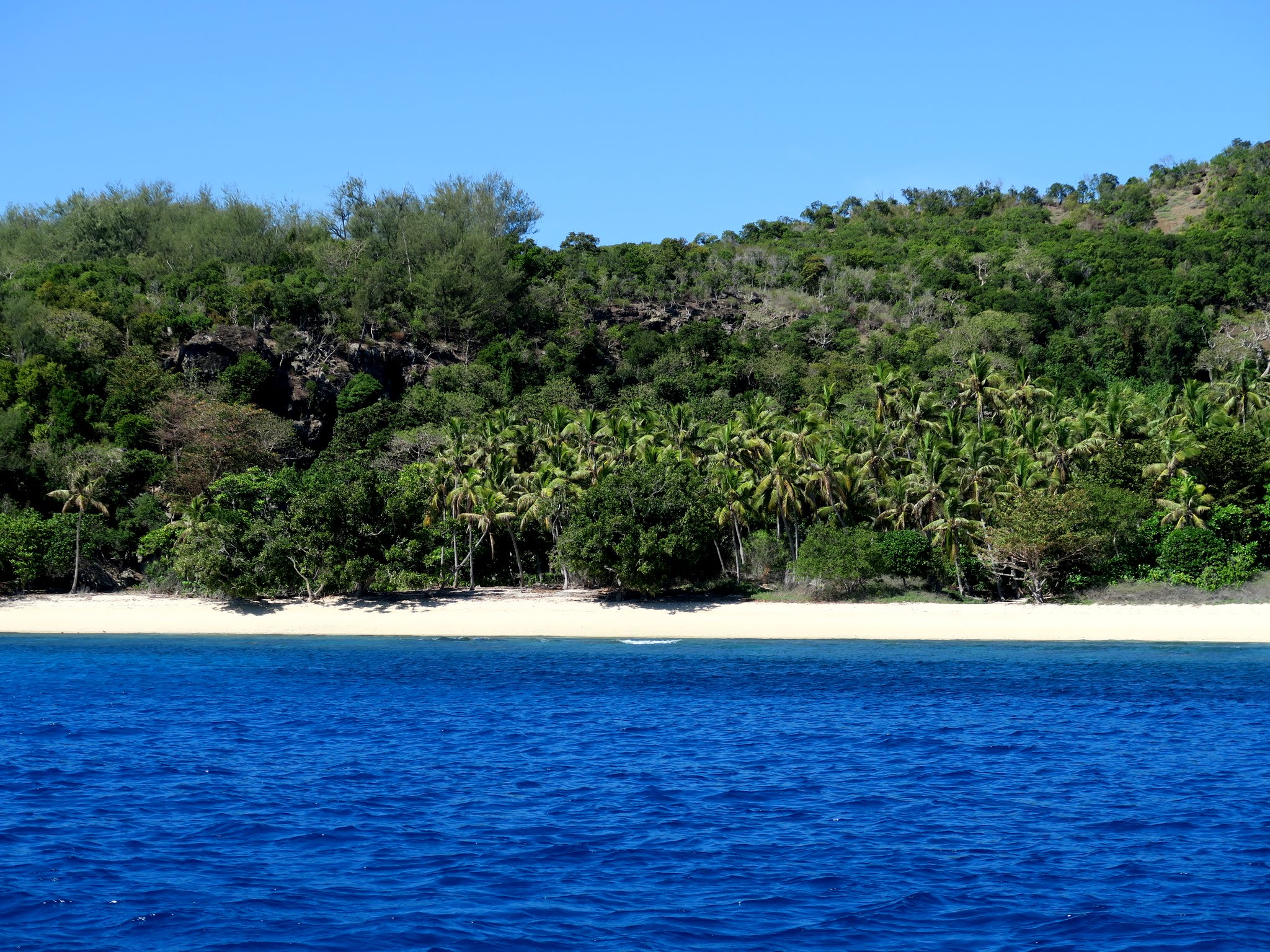
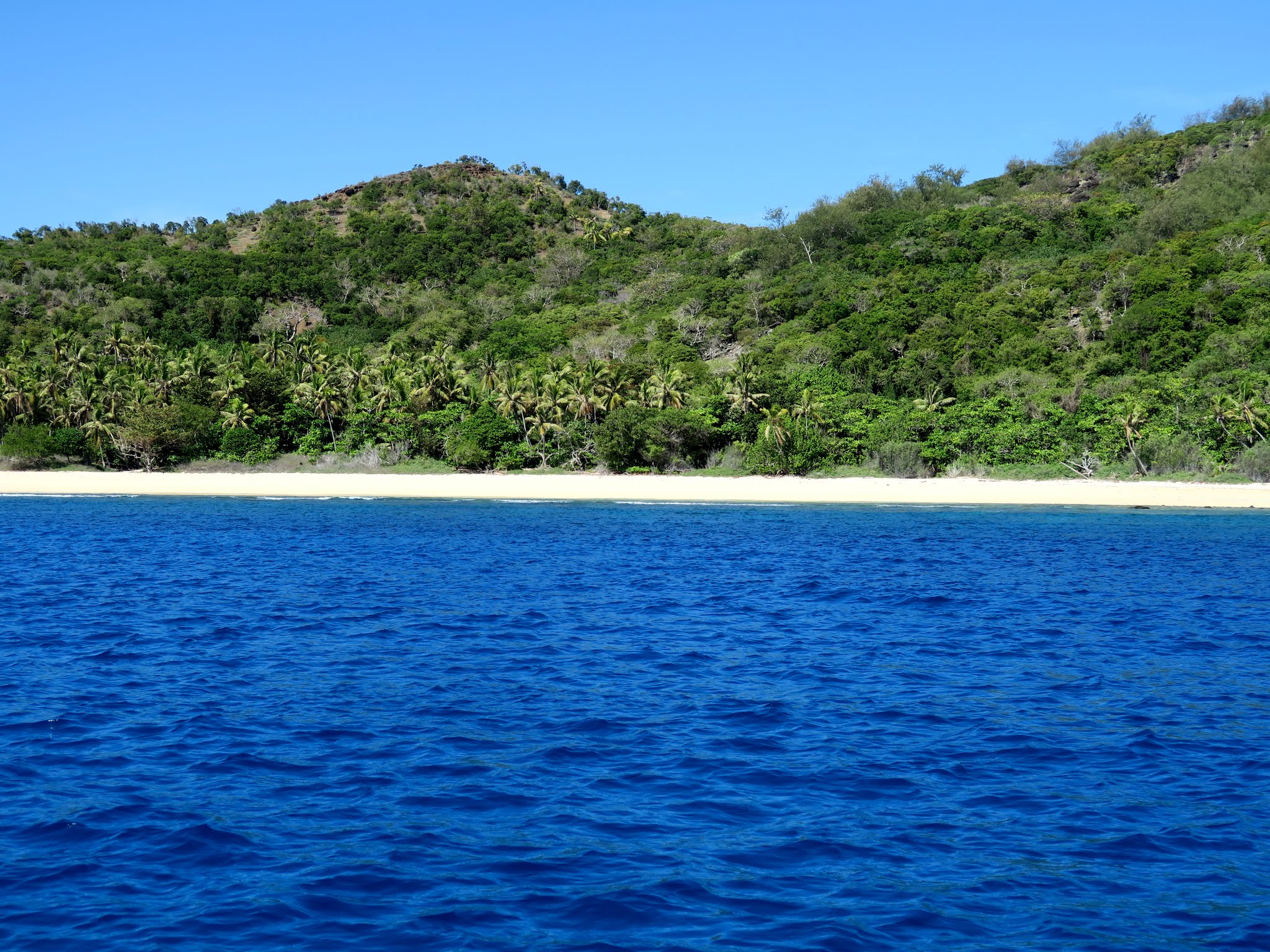
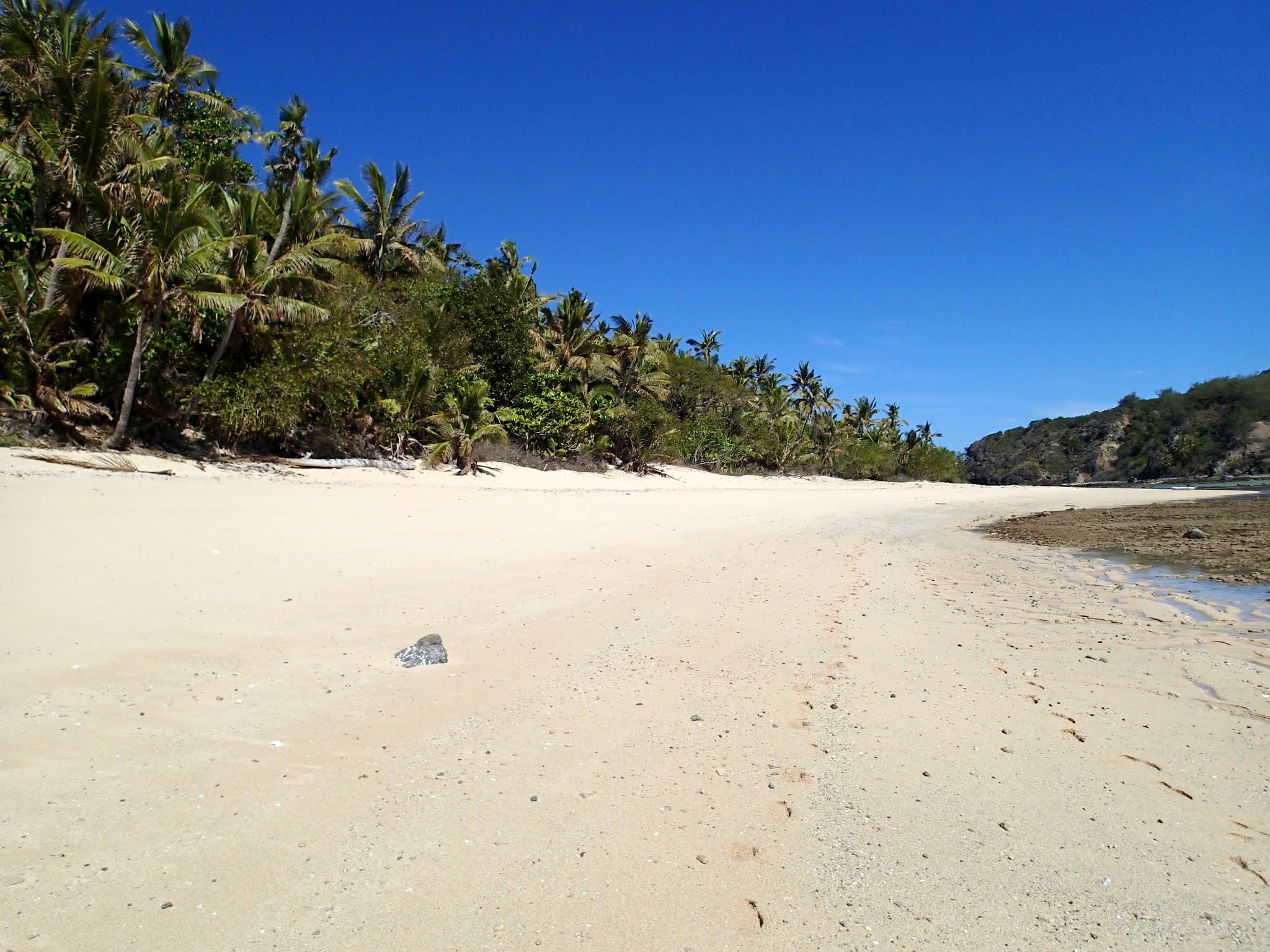
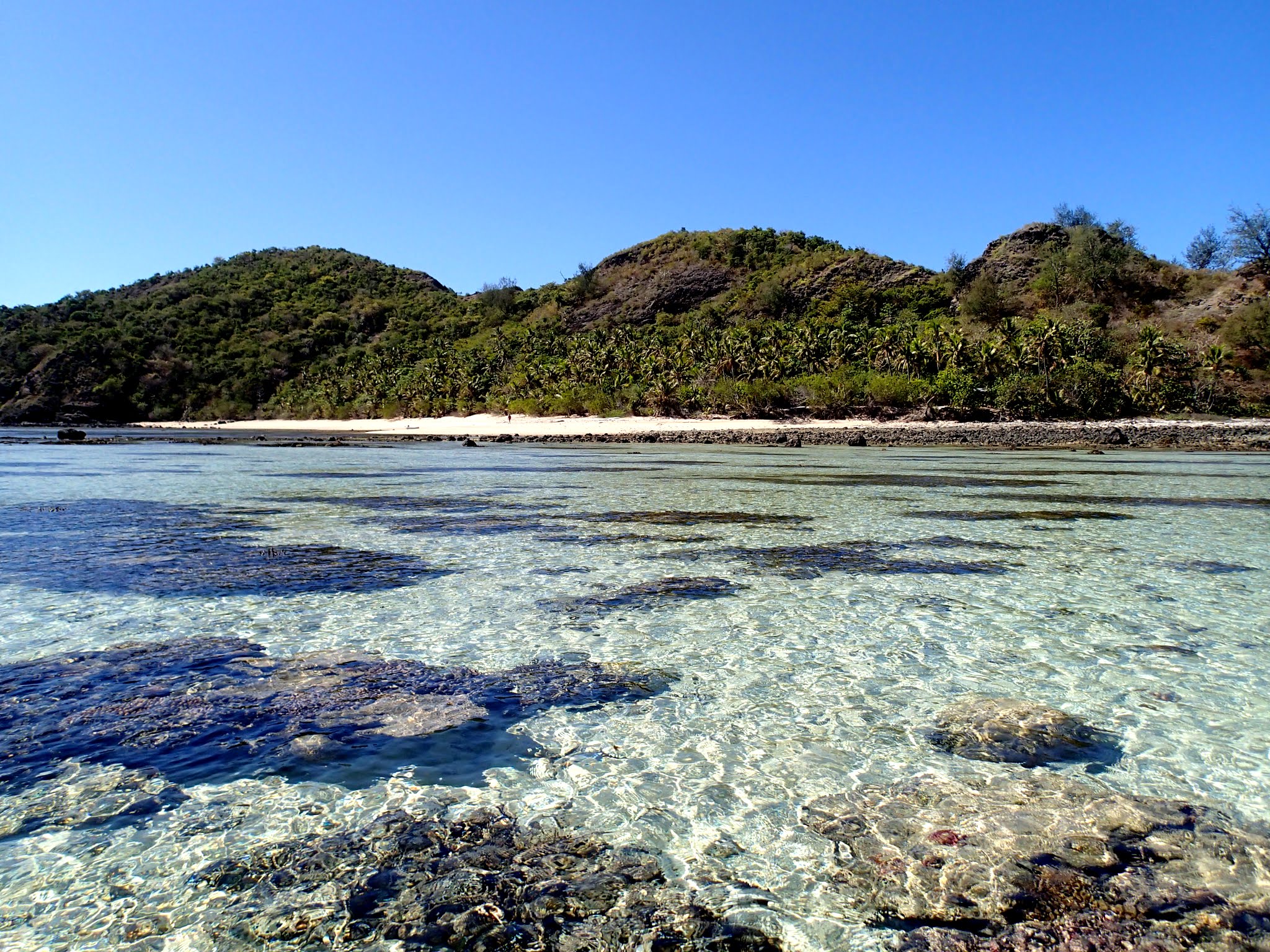
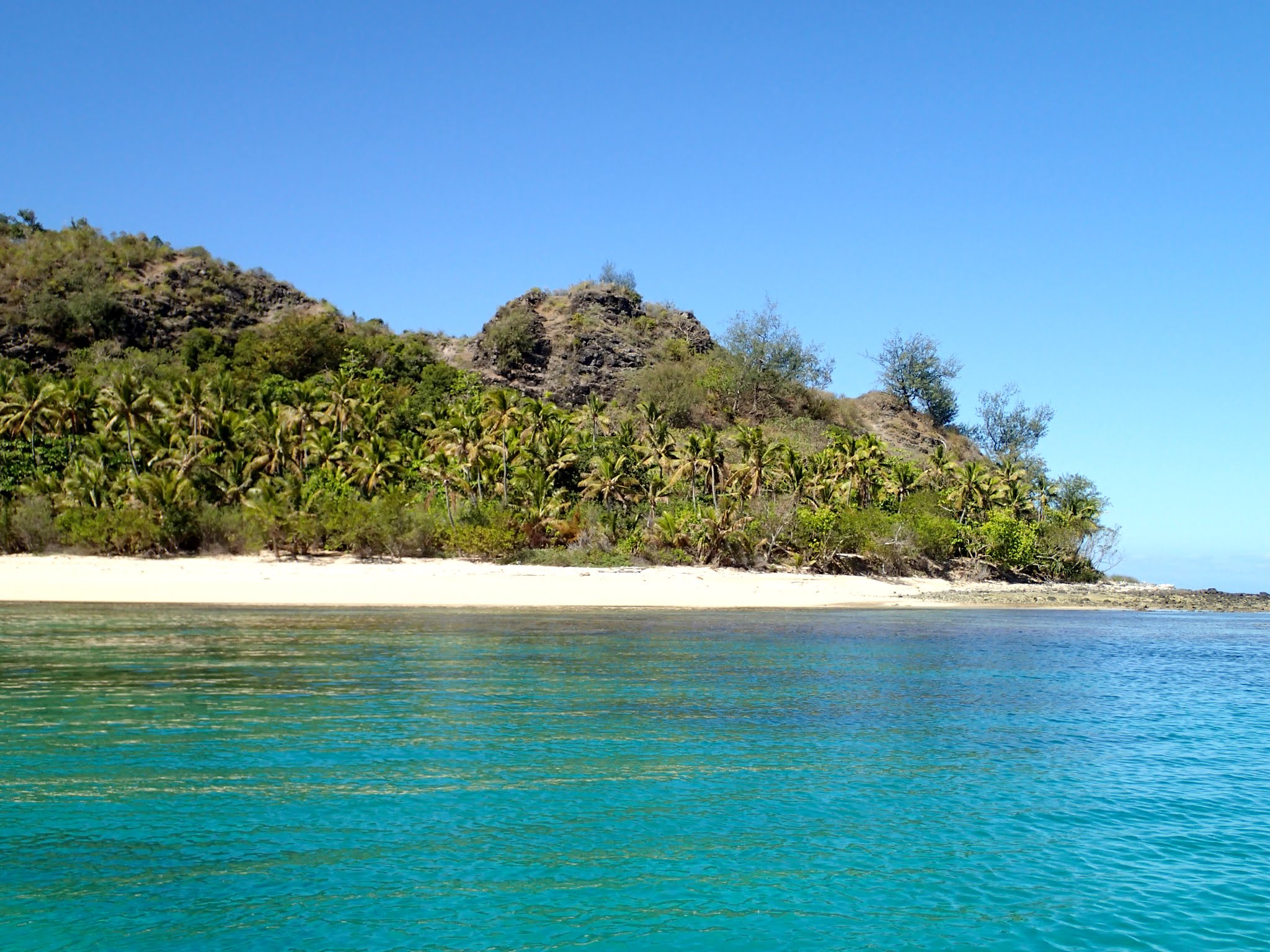
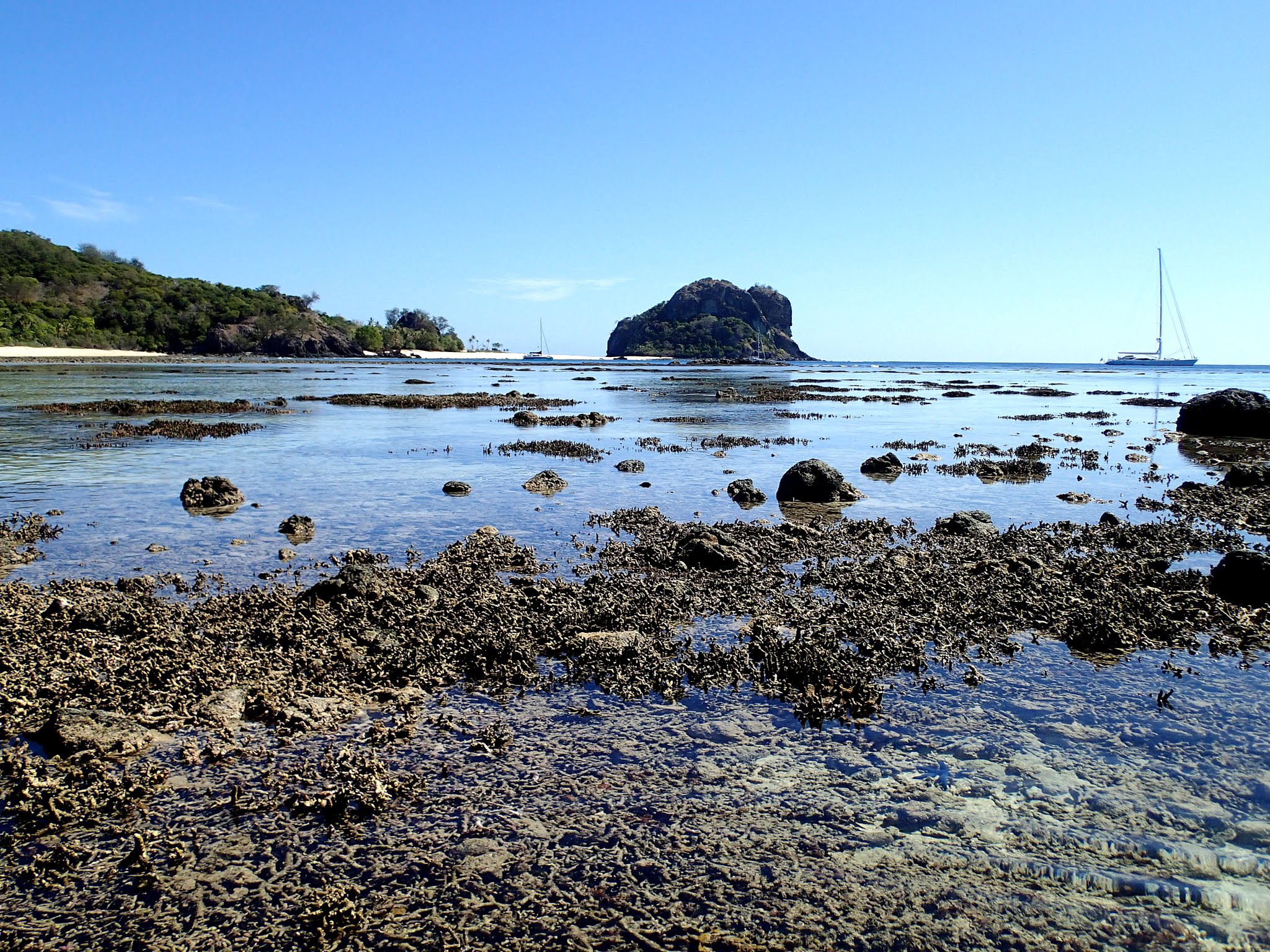
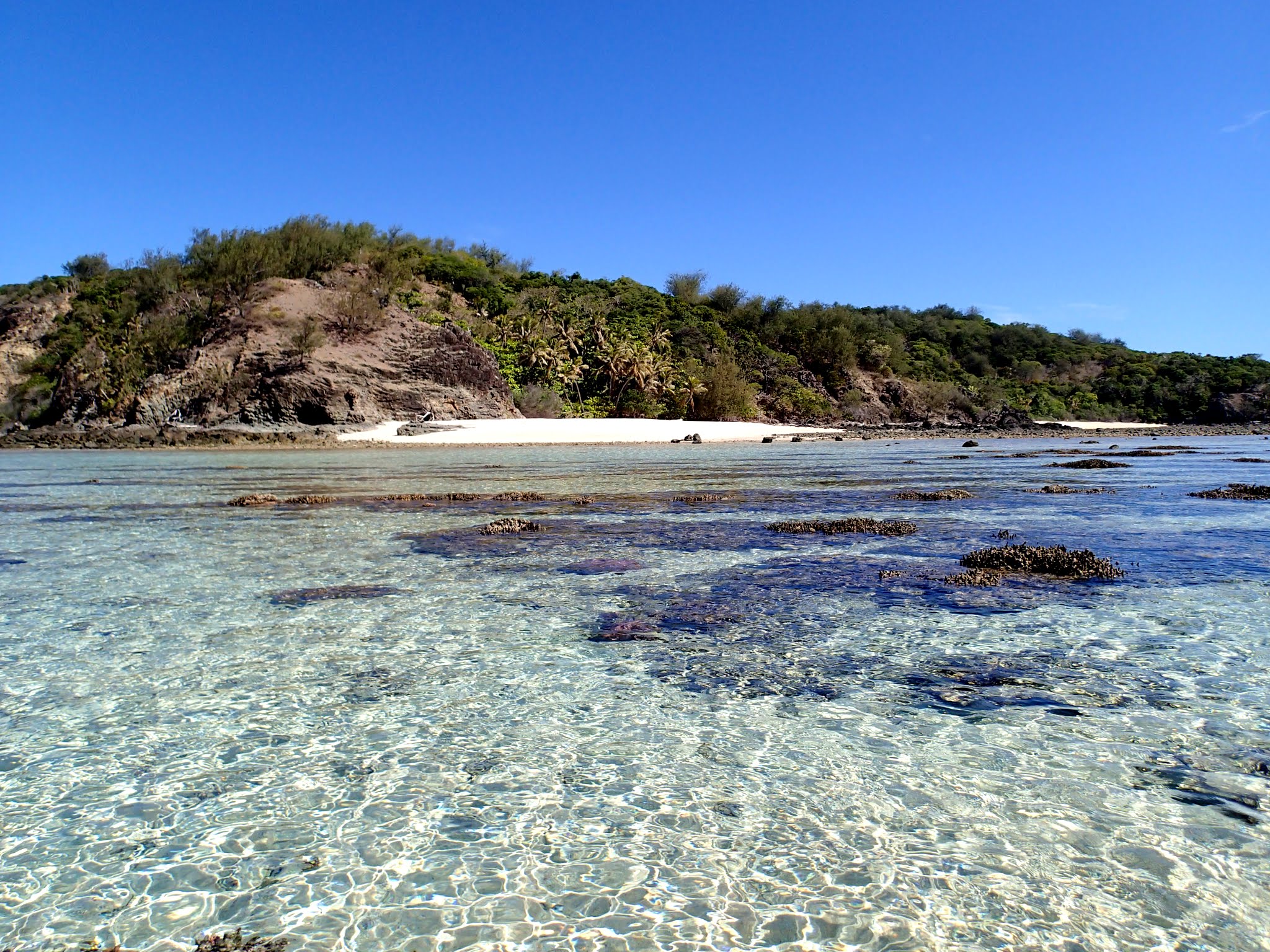
The second bit of good news: there are beautiful beaches! The second bit of bad news: a shallow coral shelf lines all the beaches and makes them hard to get to with a dinghy. We were there at low tide, though; so it might be easier at high tide. Below, a gallery of the beaches we had to choose from, if only we could get to them! We went from beach to beach, and none were accessible.
We finally did manage to find a small pass through some coral and get close enough to Navadra’s beach where we could pick up our dinghy and carry it (wearing sturdy sandals) to the beach. Once we set it down, we walked across the shallow, coral-strewn isthmus to Vanua Balavu, then back again to Navadra’s beach. The beaches are little hard to walk on, the sand a bit soft so you end up trudging over it, but there are lots of neat, although weather-beaten, shells to be found.
After walking along the beach, we carried our dinghy back out over the choral shelf, then used our yelling sticks (oars) to row out to deeper water. The snorkeling looked intriguing, and we thought about getting our gear and coming back. But then we got back to Legacy, and she was rolling around so much we didn’t feel inclined to leave her again. Instead we put our dinghy and engine onboard in case it got worse and we needed to leave. –Cyndi
Legacy rolling around in front of the monolith rock. (Navadra, Fiji)