A Morning at Ship Cove (Queen Charlotte Sound, Marlborough Sounds, New Zealand)

April 5, 2016

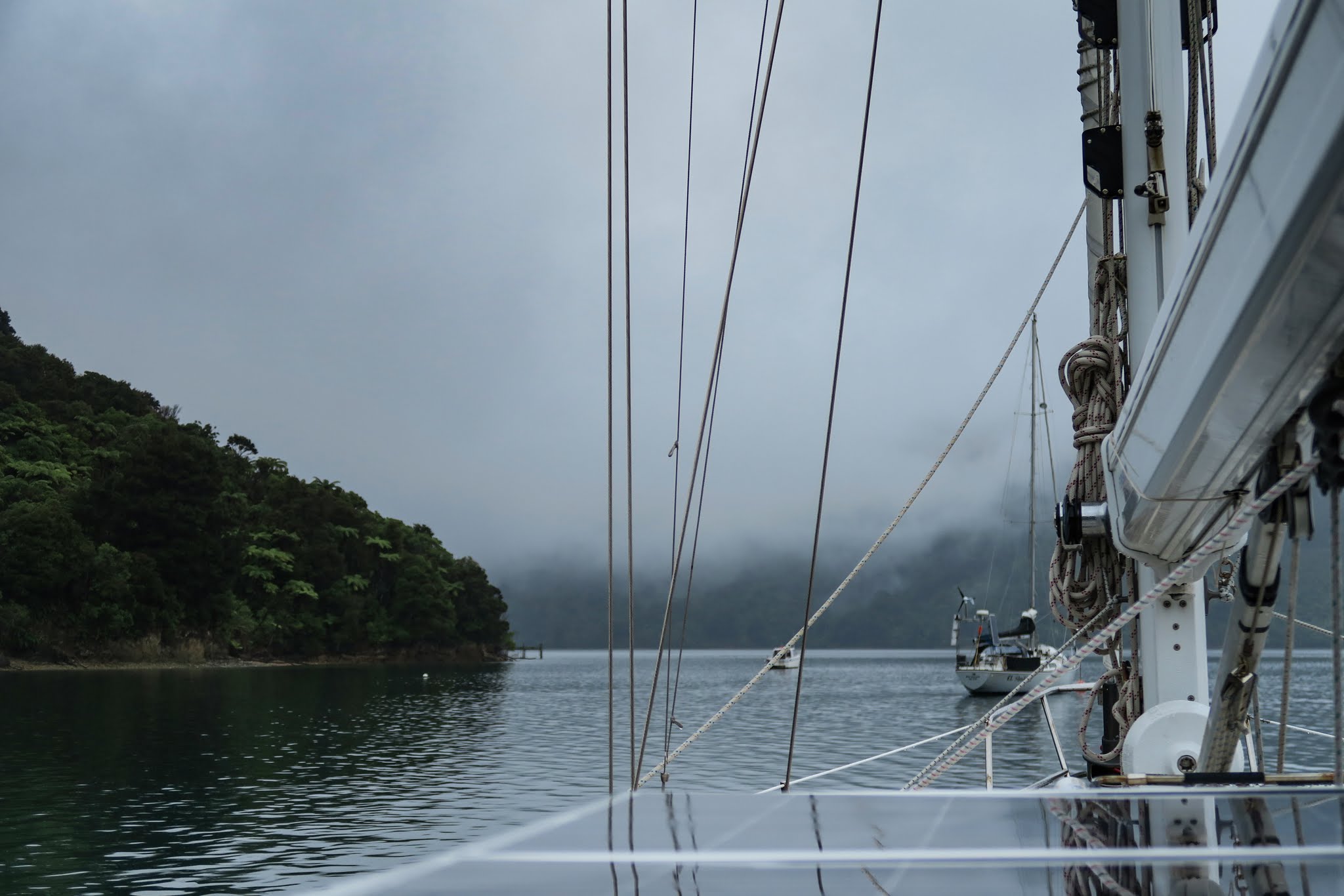
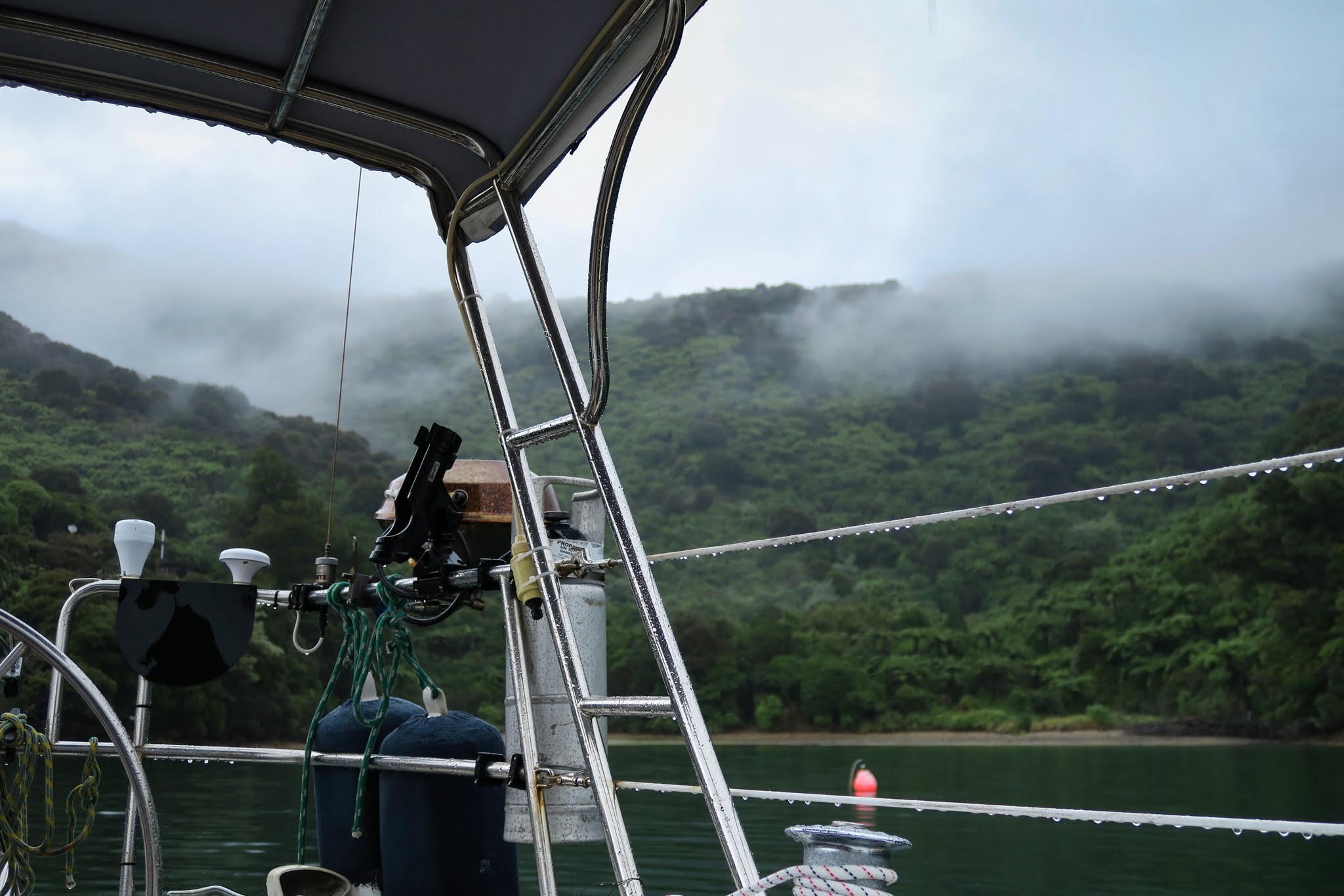
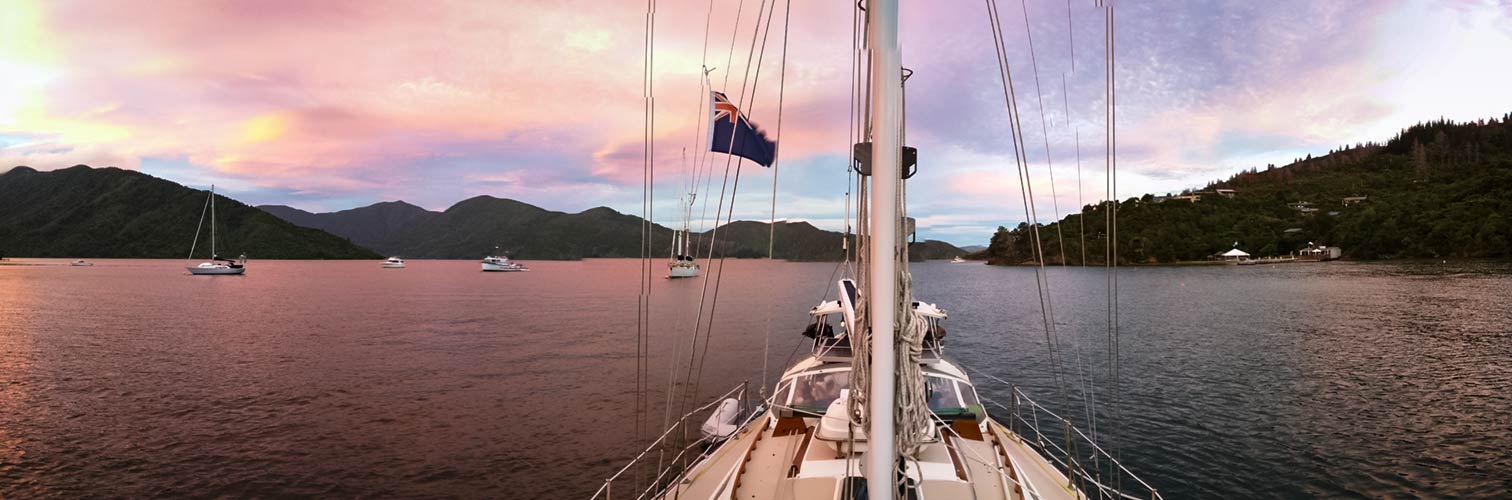
The wind died overnight, and scattered remaining clouds made for a beautiful golden morning. We went outside to admire the bay, and the combination of light and lush vegetation gave this place a kind of Magic Eye effect: the longer we looked, the more overlapping layers appeared in the hills, and the more multidimensional the scene appeared. It’s a strange visual phenomenon that happens sometimes, especially New Zealand.
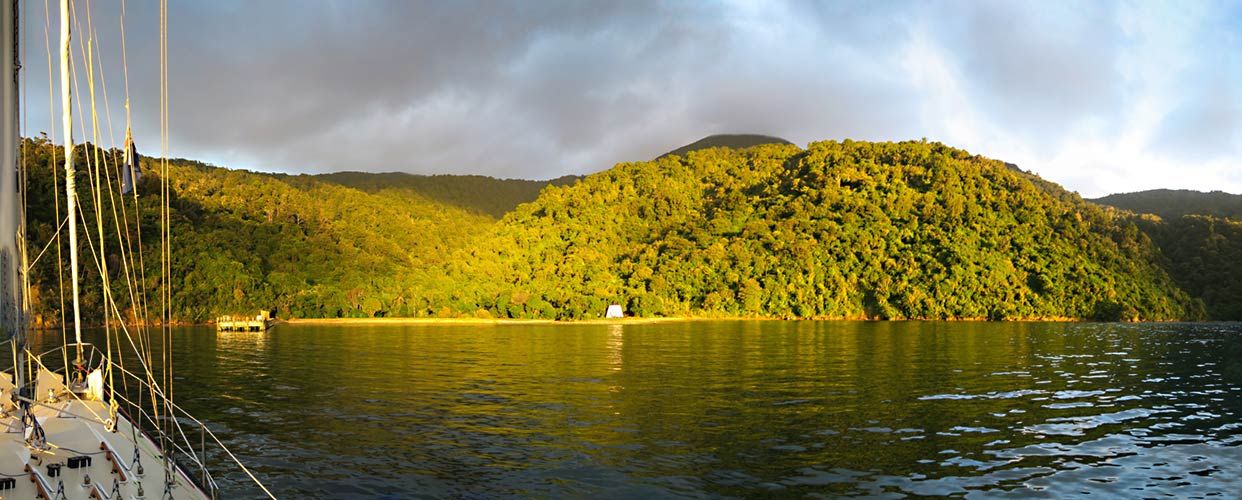
dawn-at-ship-cove-pan
Morning at Ship Cove (Click for larger image.)

Ship Cove is the beginning (or end for those going the opposite way) of the Queen Charlotte Track. People come and go on water taxis during the day; so we appreciated having the bay to ourselves this morning.

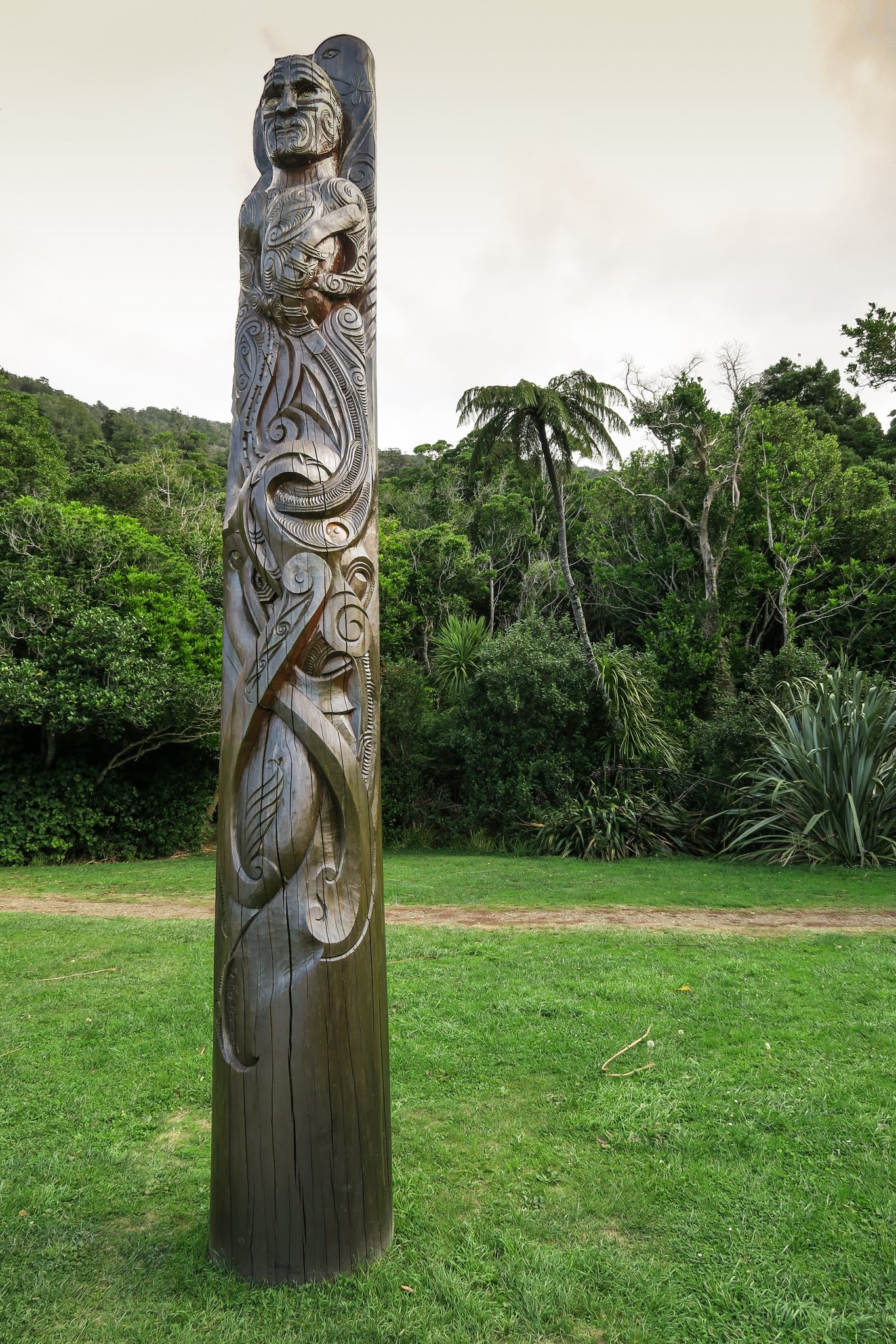
On our previous visit we’d had time to wander around the lawn and visit the monuments, but there wasn’t enough time for us to walk the beginning of the Queen Charlotte Track. Ordinarily this wouldn’t have mattered to me with all the bits and pieces we’d already done, but something about this area of the trail looked particularly beautiful and enticing.
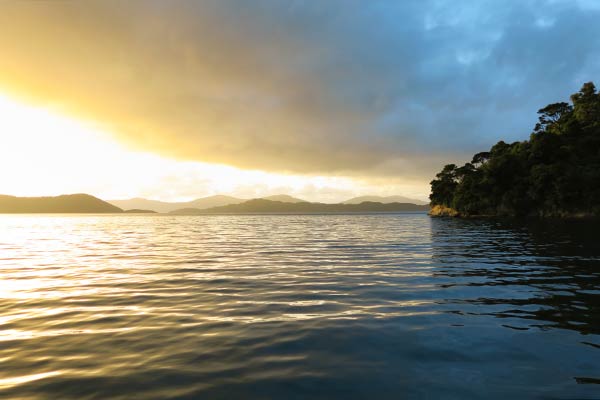
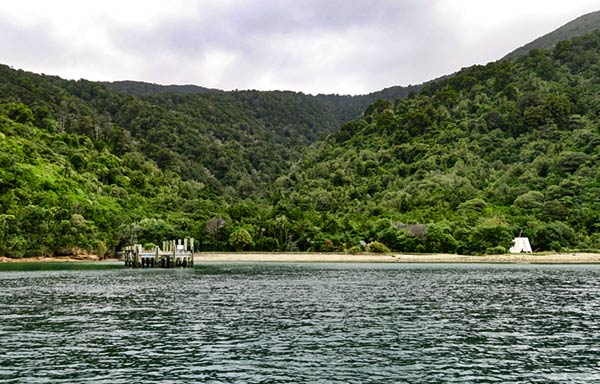
 Dawn at Ship Cove. (Queen Charlotte Sound, Marlborough Sounds, New Zealand)
Dawn at Ship Cove. (Queen Charlotte Sound, Marlborough Sounds, New Zealand)
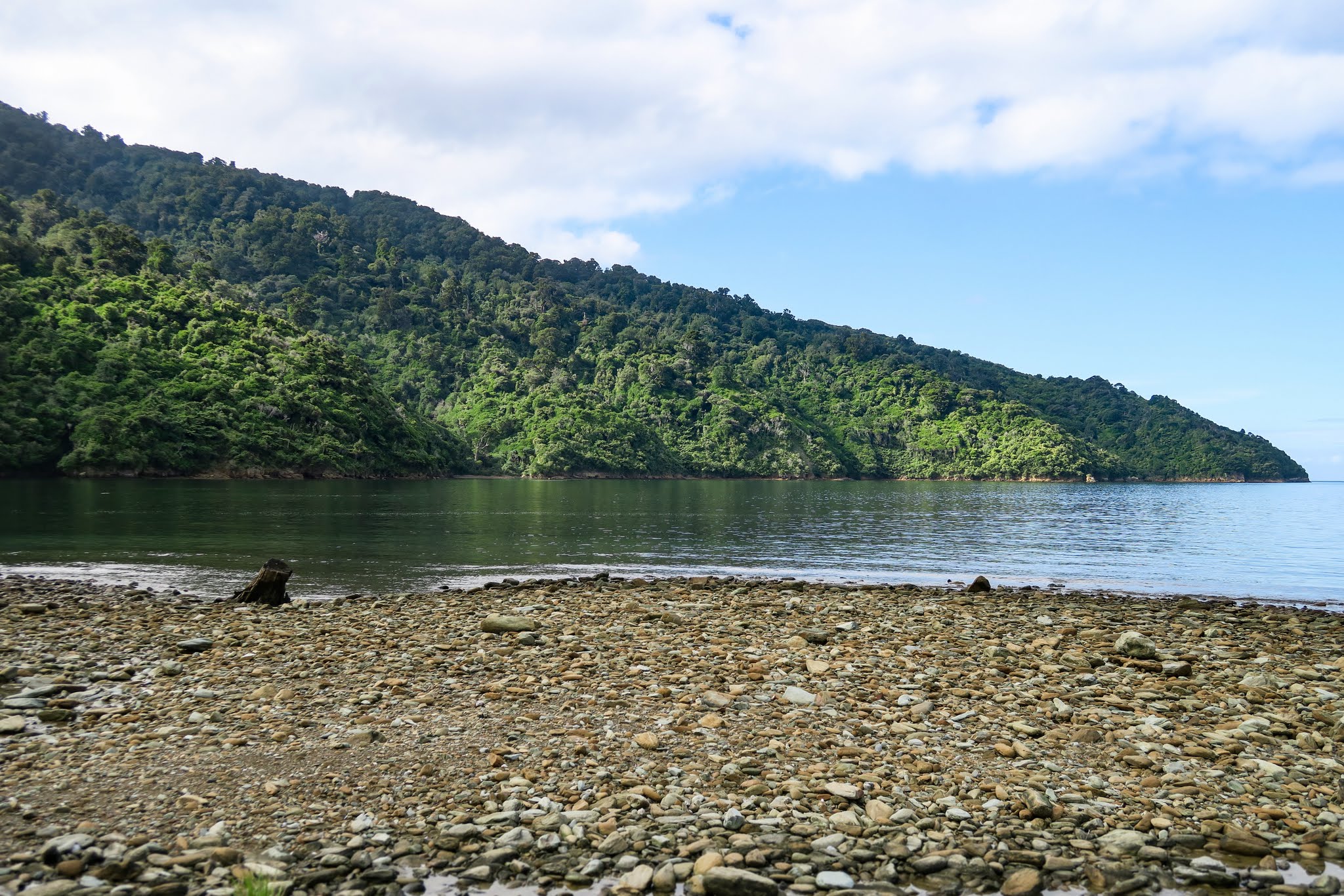
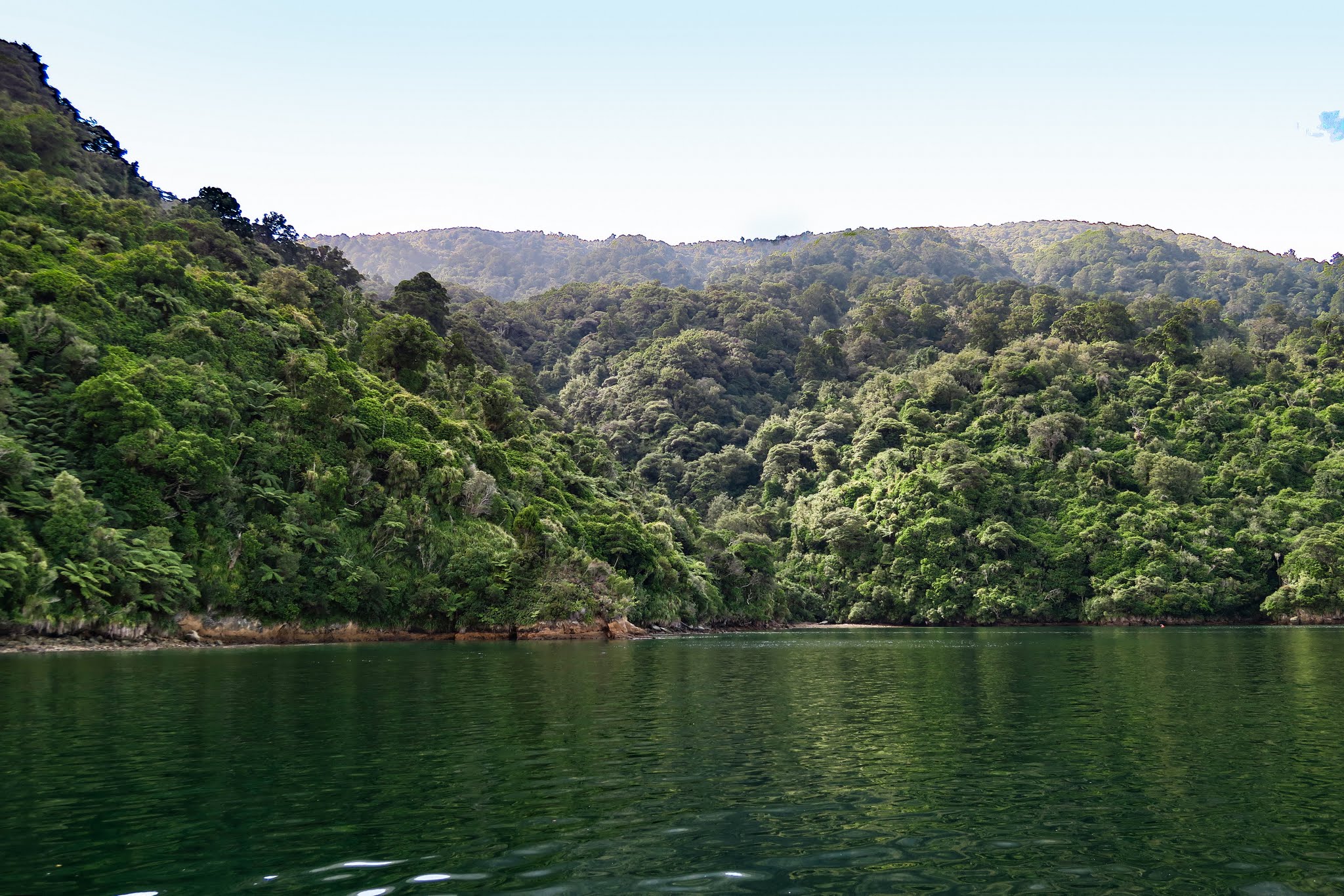
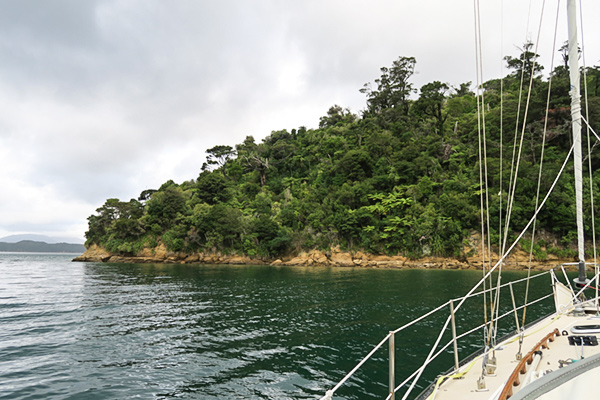
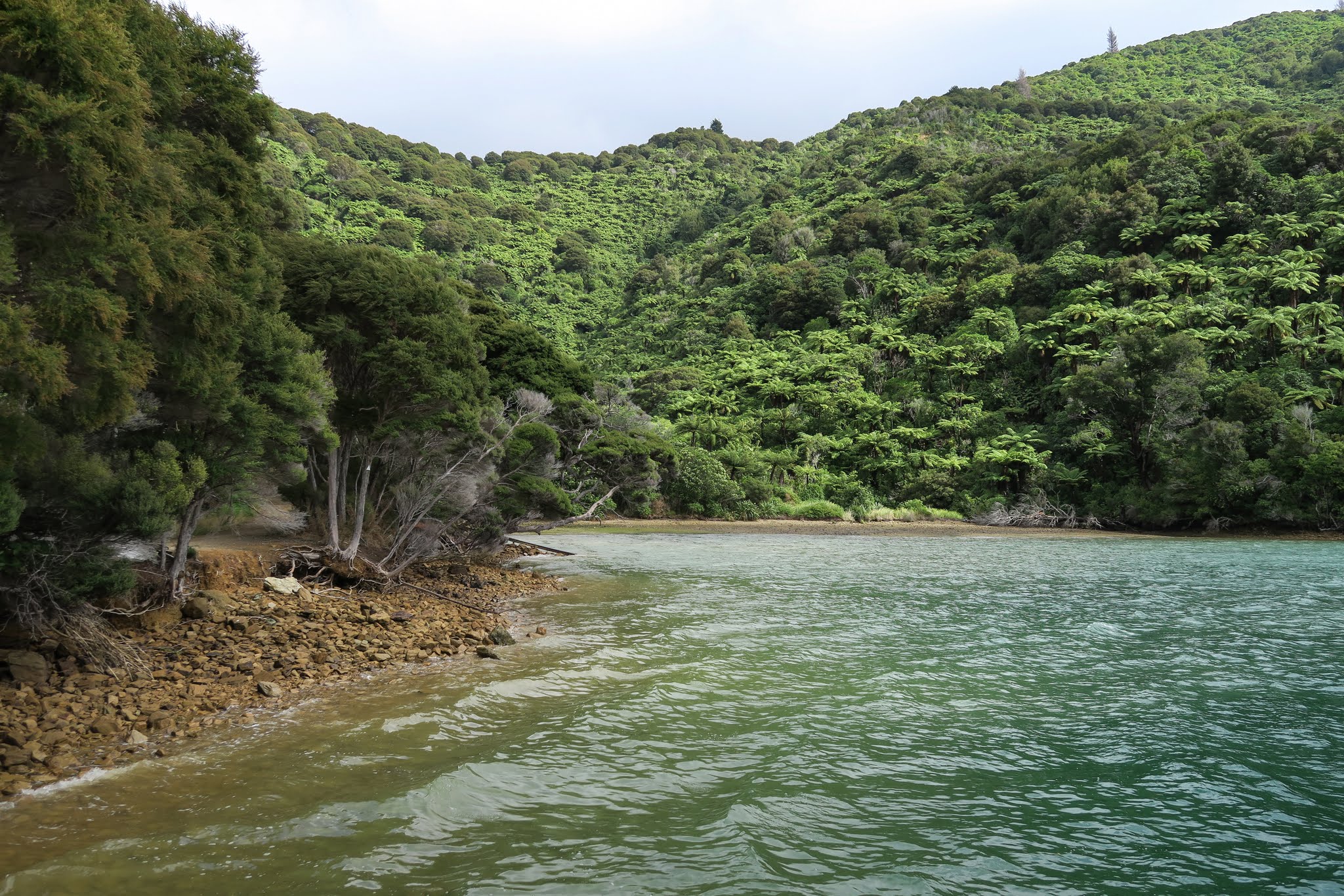
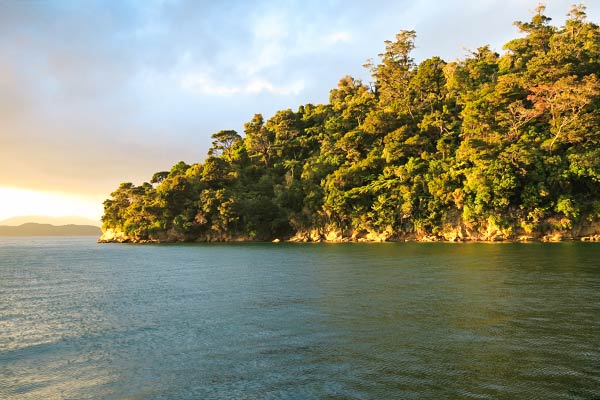
The early morning light on the nearby headland at Ship Cove. (Queen Charlotte Sound, New Zealand)
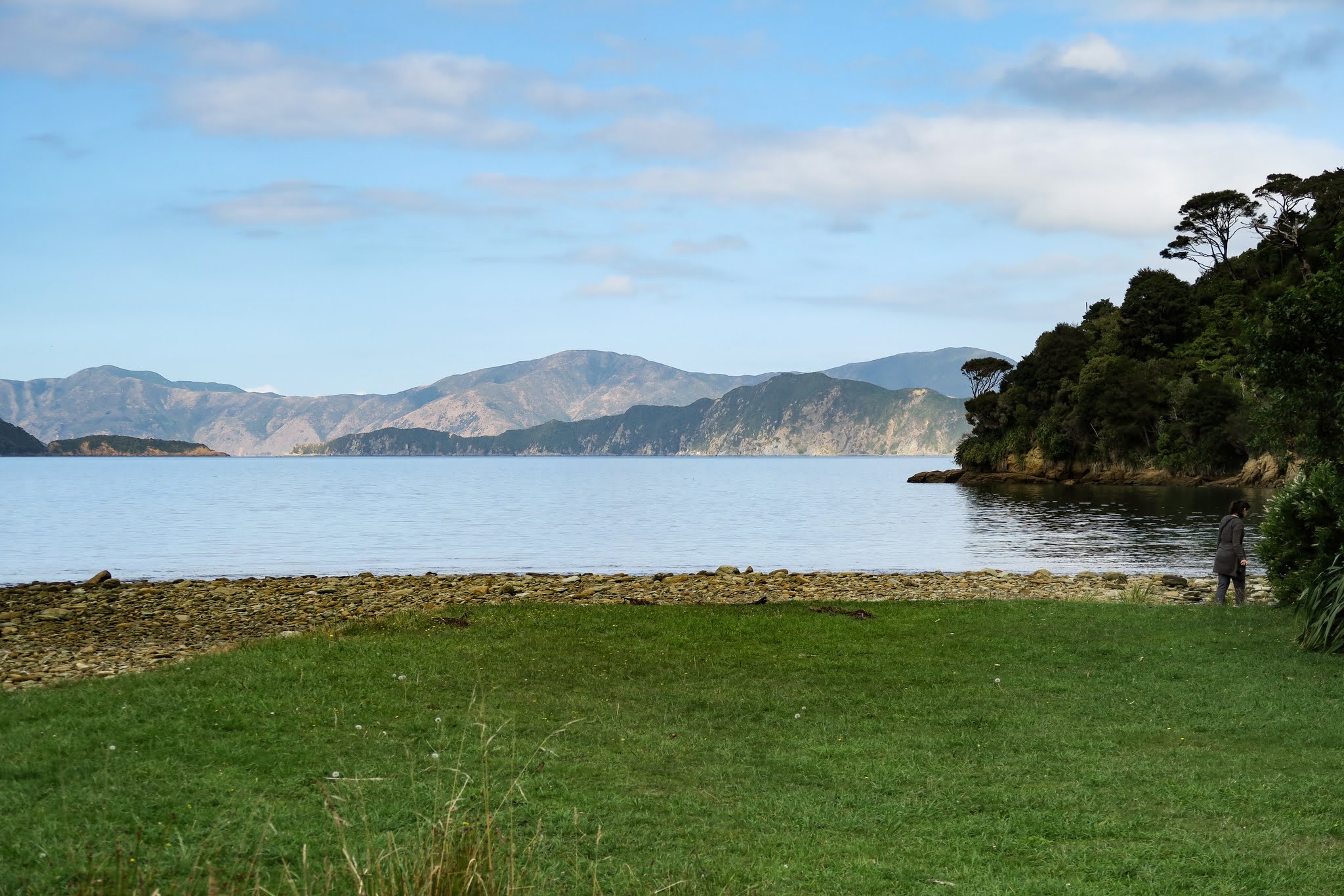
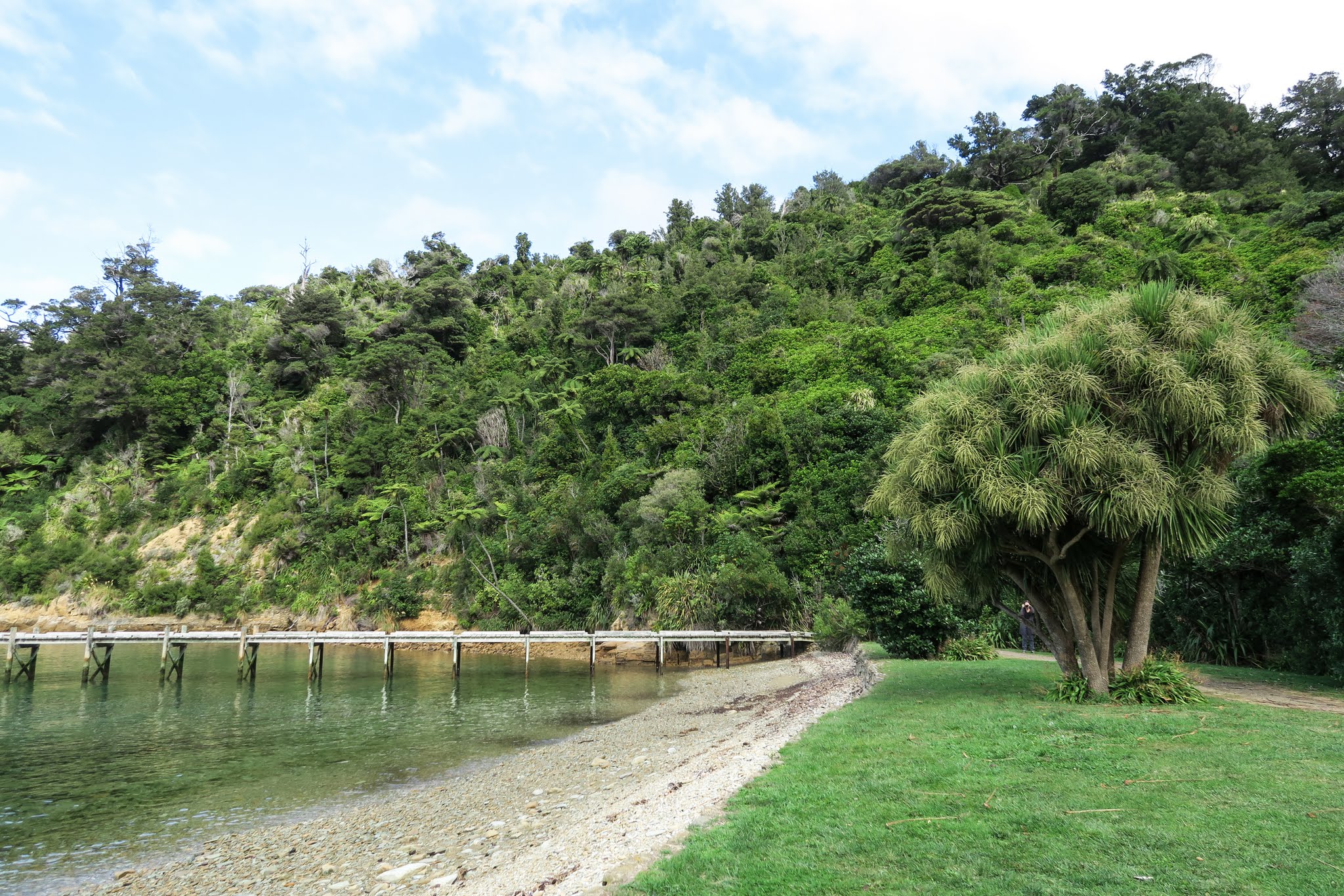
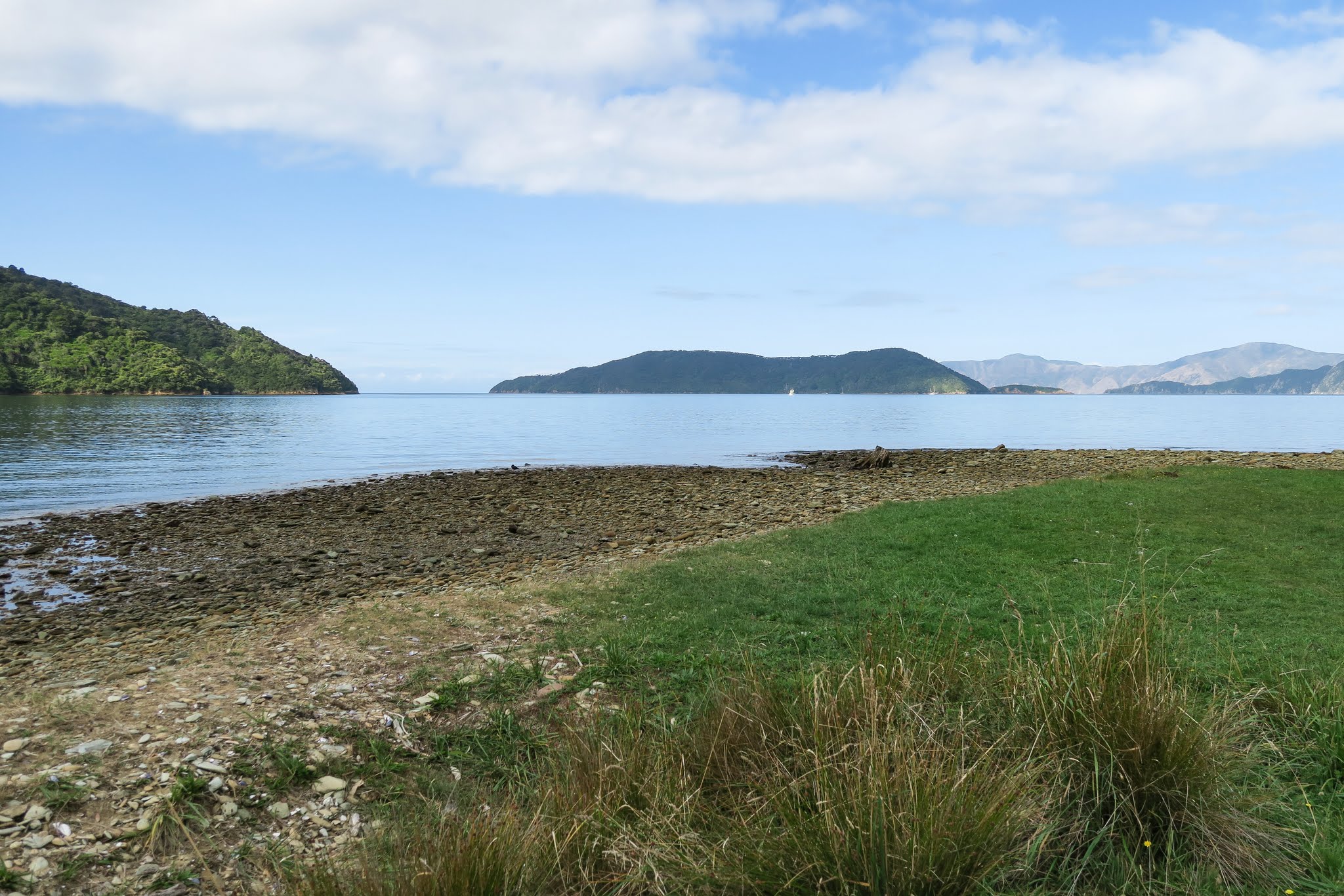
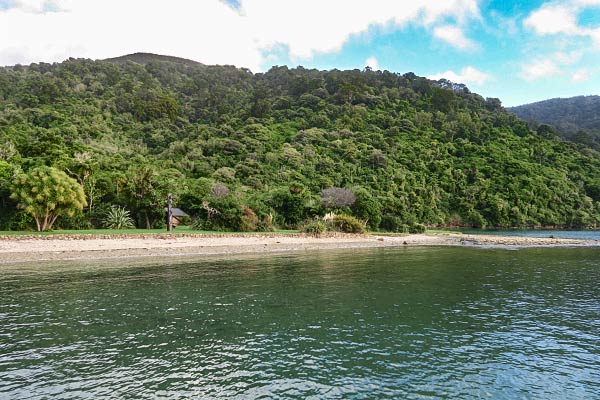
The lawn and beach at the head of Ship Cove. (Queen Charlotte Sound, New Zealand)
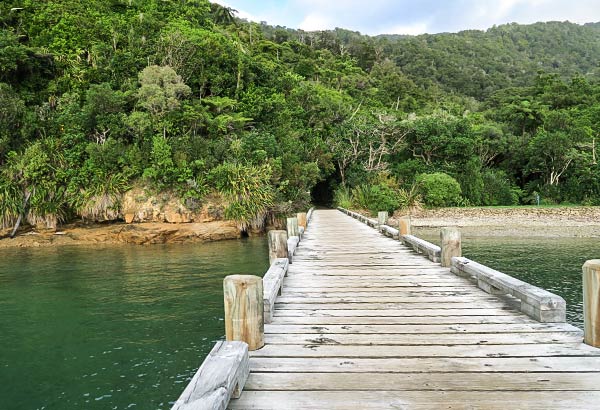
 The start of the Queen Charlotte Track at the end of the pier. (Queen Charlotte Sound, New Zealand)

The start of the Queen Charlotte Track at the end of the pier. (Queen Charlotte Sound, New Zealand)

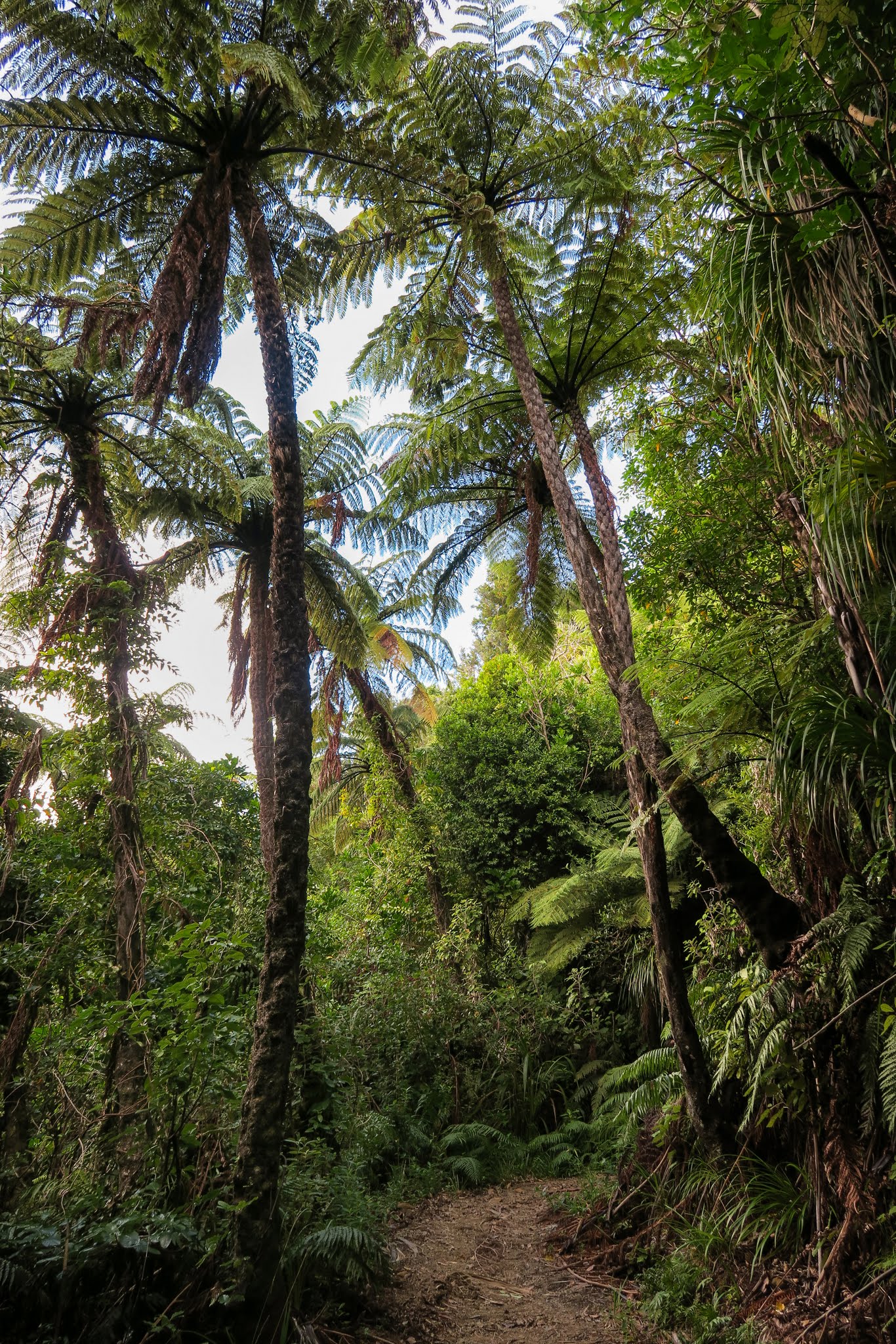
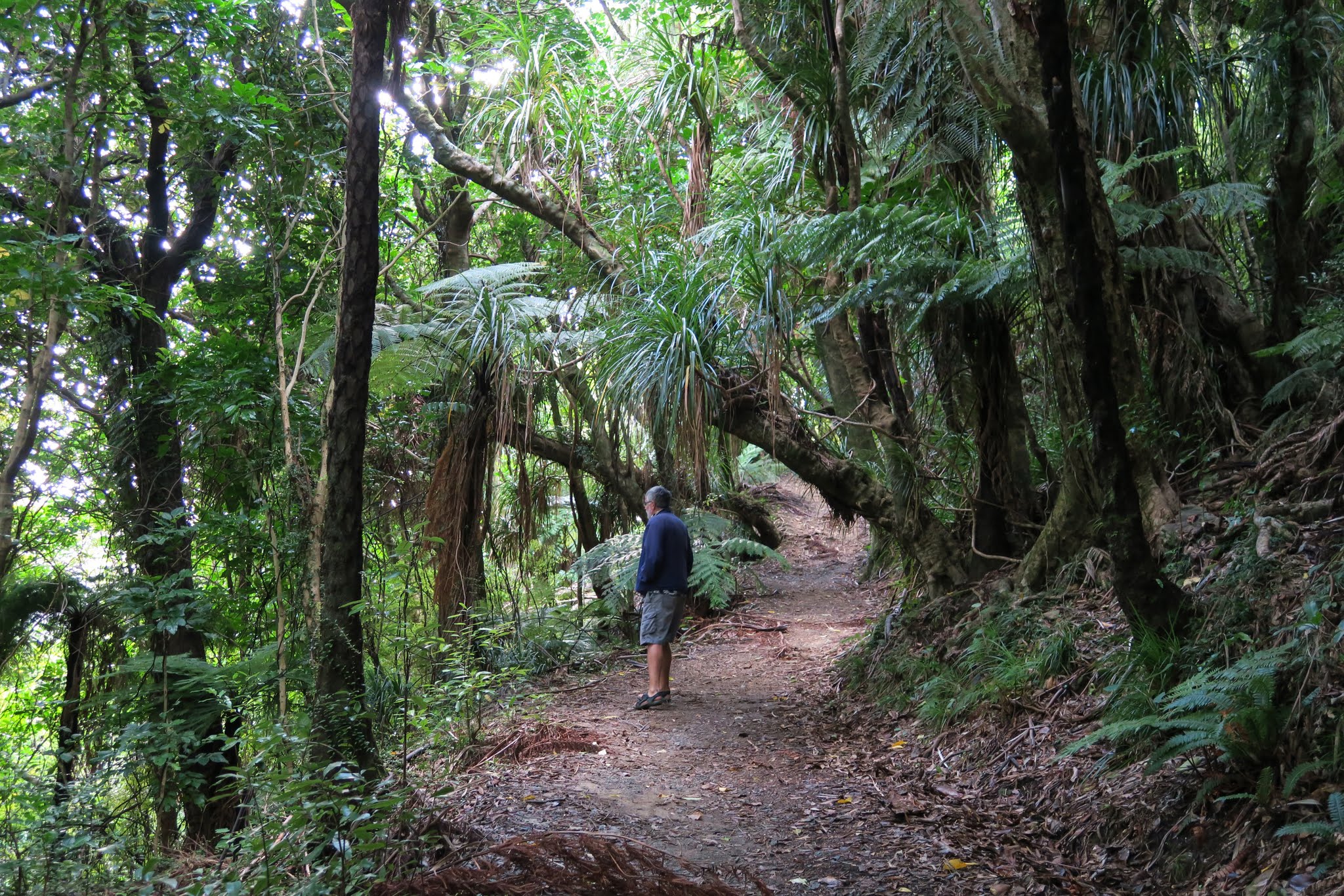
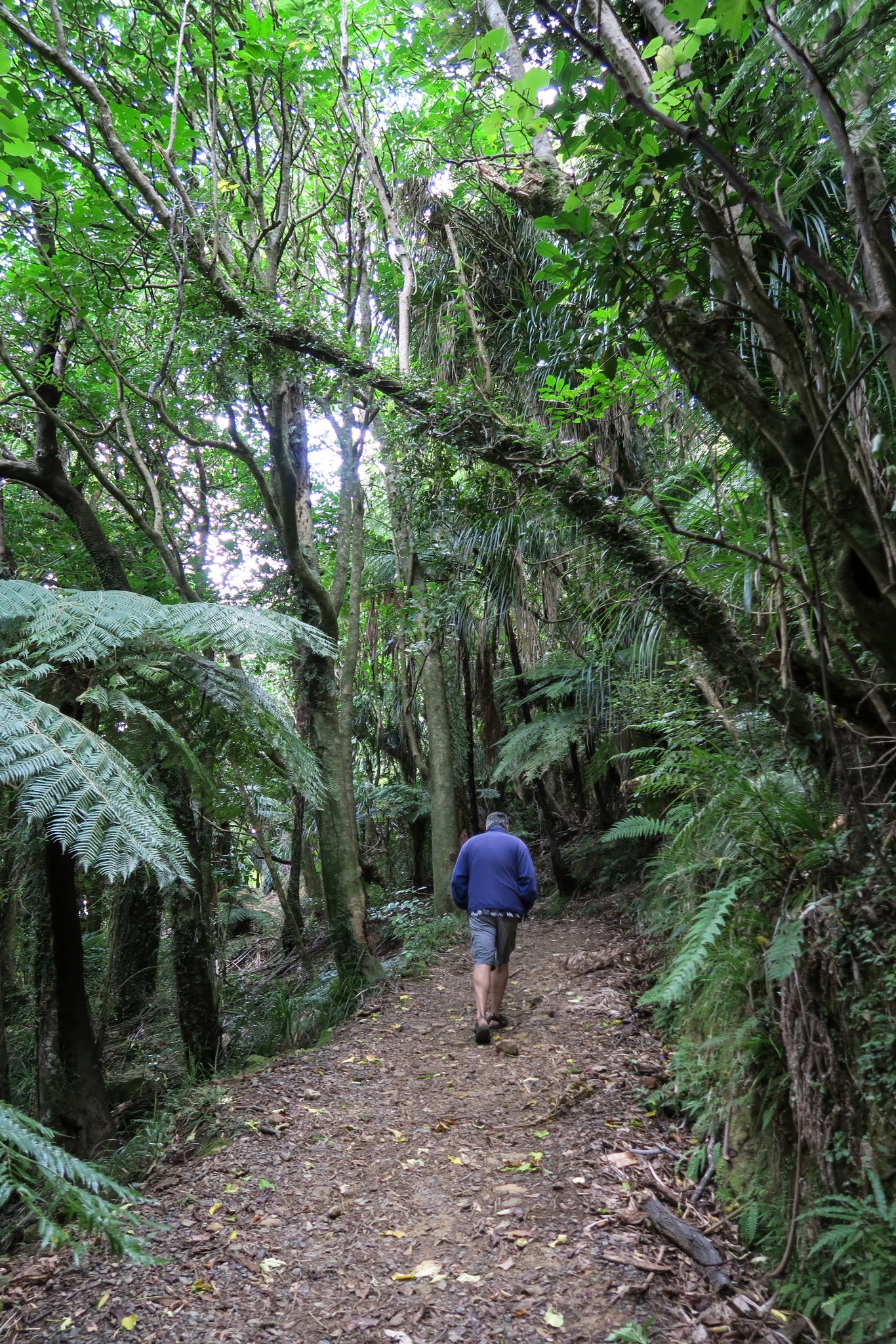
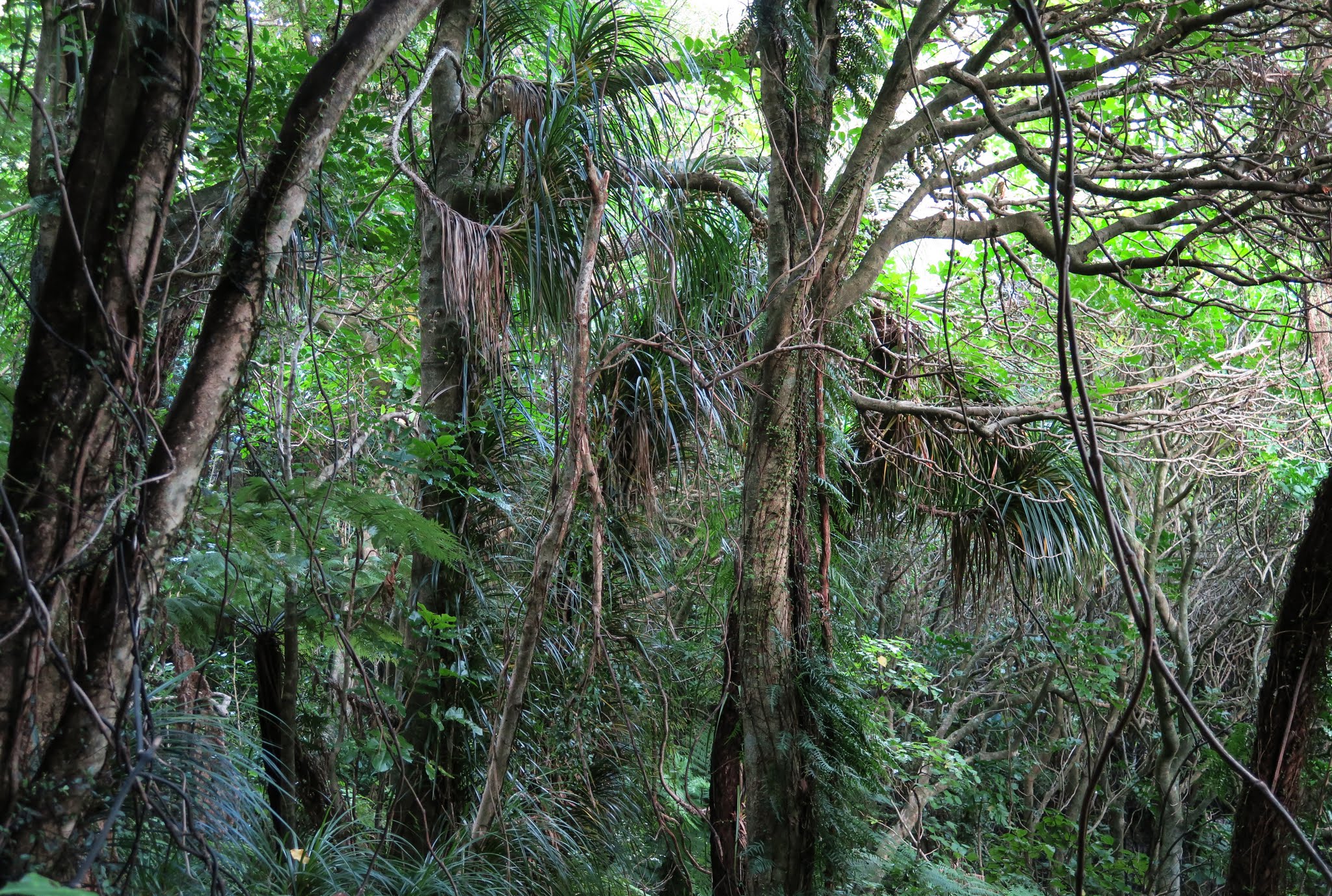
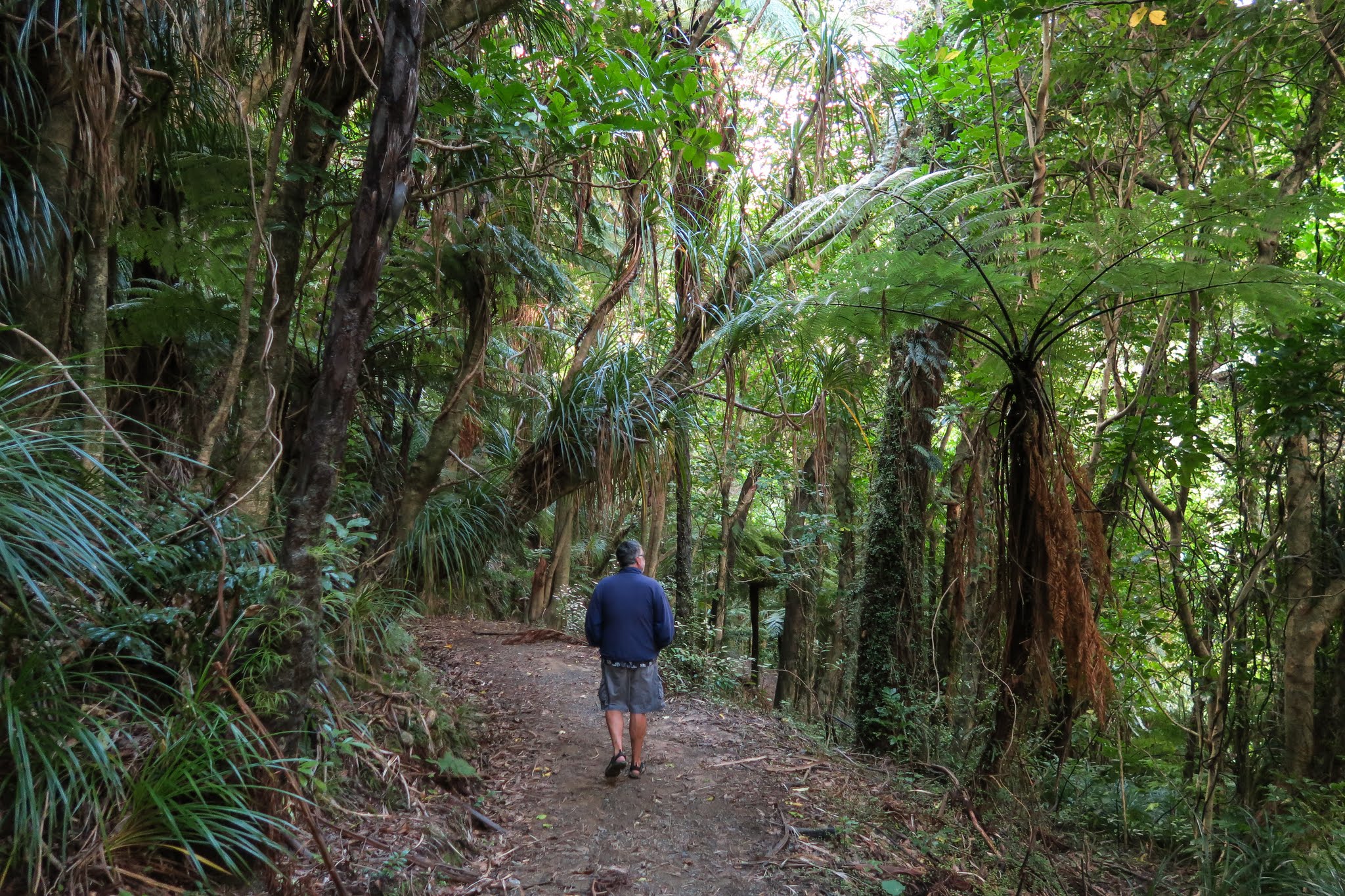
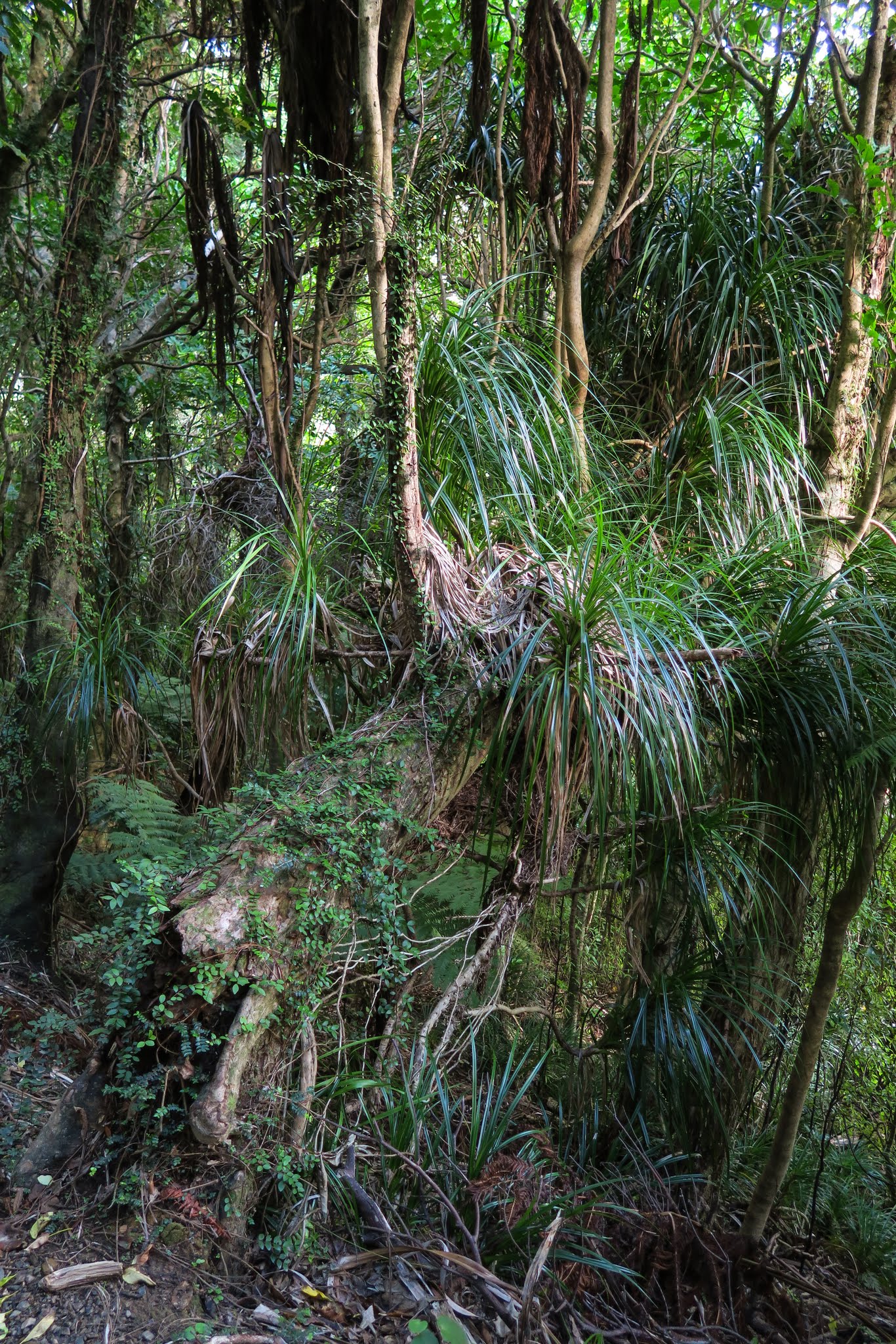
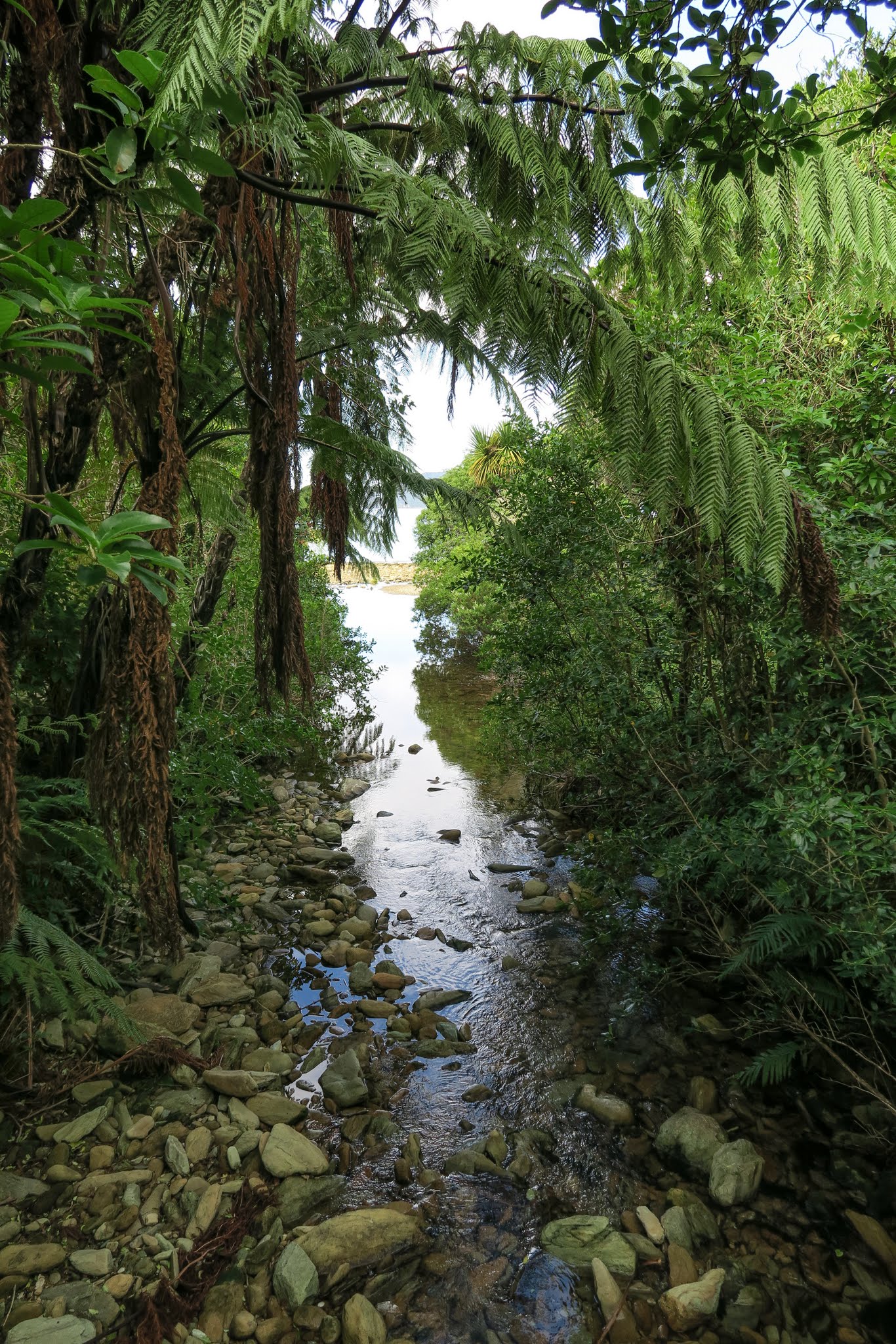
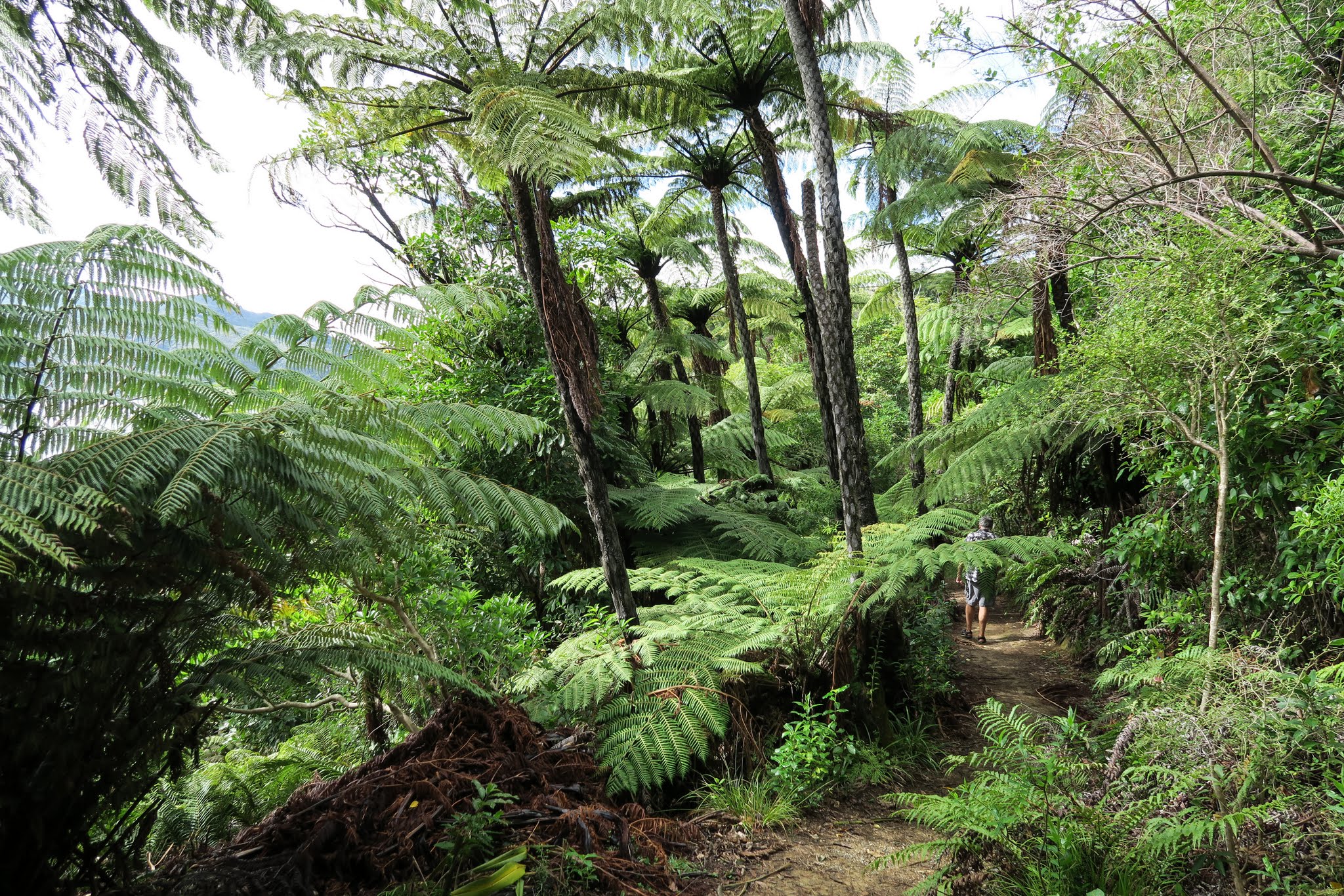
Today, we started on the track by going through a tunnel of greenery at the end of the dock. As we followed the trail up through the forest, our surroundings became even more beautiful. This was classic New Zealand subtropical forest at its best. Eventually the vegetation began to change, becoming more dry and open as we gained altitude. We would love to have walked to the first lookout point, but that would have taken more time than we had.  (You can click to enlarge/scroll though gallery below.)

Rich and I have only done small pieces of the Queen Charlotte Track. Some of the best viewpoints require far more hiking than we’re willing or able to do, but the photos we’ve seen online are pretty impressive. Still, if I were to pick just one piece of this track to do on a day hike, it would be this one, going either from Ship Cove to Resolution Bay or the Furneaux Lodge. Of course for those who prioritize amazing views, I’d recommend walking a portion of the ridge trail that runs from Punga Cove to Anakiwa.

For those with the fitness level, time, and energy, it would be incredible to do the entire 45-mile Queen Charlotte Track. For us, it was time to head back to the boat, pull anchor, and visit our final anchorage in the Queen Charlotte Sound: Motuara Island. –Cyndi

Deja Vu in Ship Cove

April 4, 2016

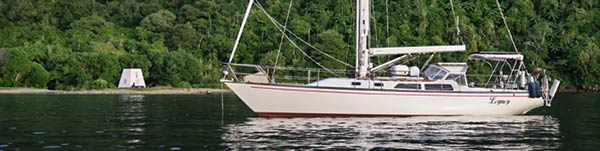
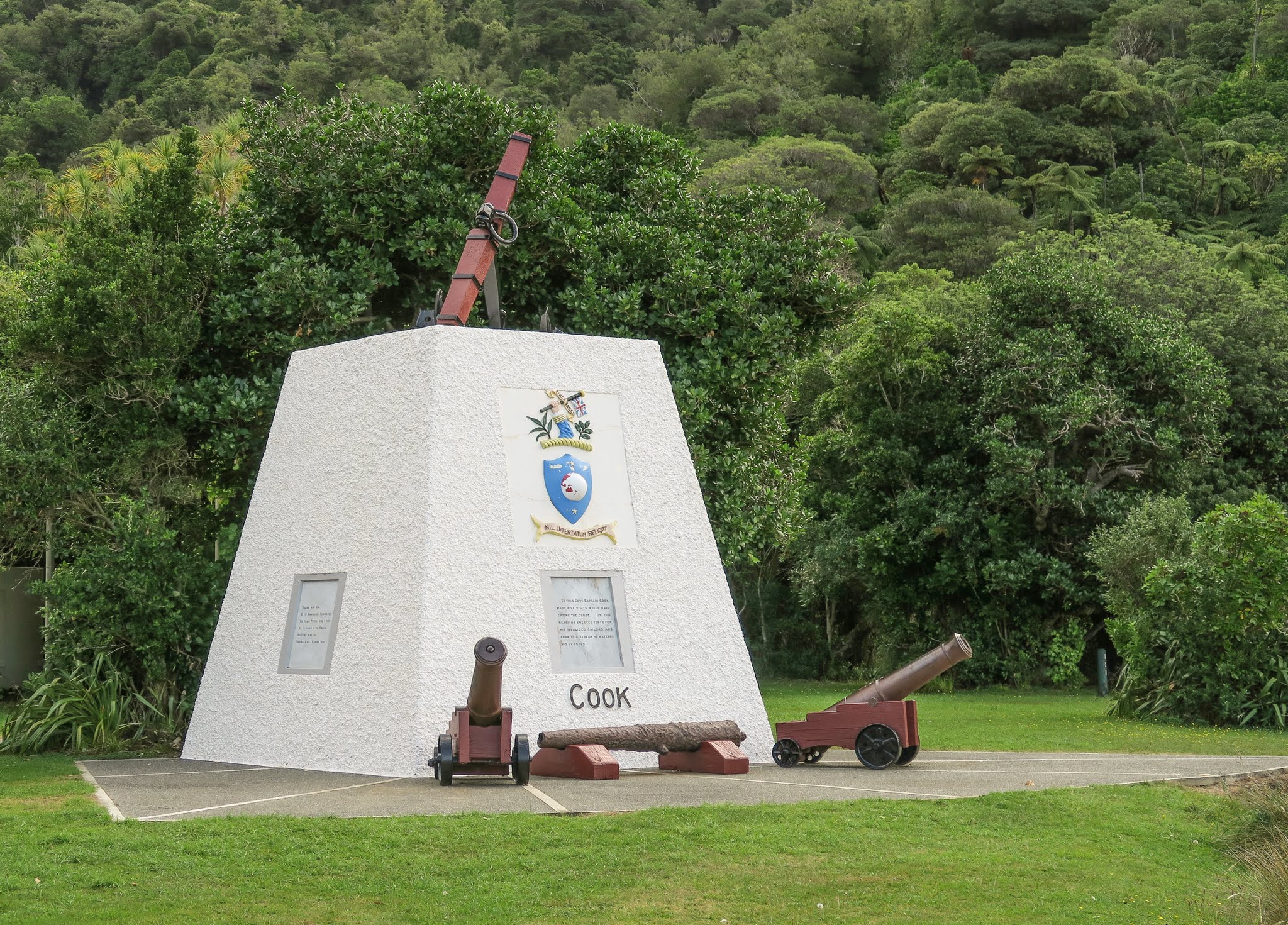
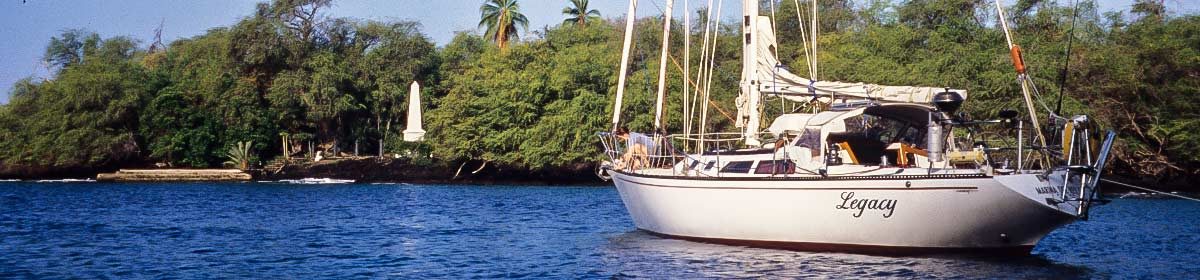
This was the view of Legacy in Ship Cove this morning. That’s a monument to Captain James Cook on the beach. At very top of every page of our website is a picture of Legacy, taken back in 1998, with the Cook monument in front of her, that time in Hawaii. Deja vu?

legacy-with-cook-monument

Heading to Ship Cove (Queen Charlotte Sound, Marlborough Sounds, New Zealand)
April 4, 2016

The southerly winds would die out during the night, and tomorrow would bring the kind of calm, settled weather we’d need for our trip to the Pelorus Sounds. We’d need to round Cape Jackson (the outer point of Queen Charlotte Sound) at slack tide, then make a 4-hour trip on the open ocean before heading through a pass into the next area of sounds.

Our planned last stop before leaving Queen Charlotte Sound was its most well-known and loved anchorage: Ship Cove. There are several reasons it’s so popular.

First, it’s the outermost anchorage in Queen Charlotte Sound and the best place to leap off for a trip to areas west (the Pelorus Sounds, D’Urville Island, and the city of Nelson). Conversely, it’s a convenient first stop when coming into Queen Charlotte Sound.

Second, it’s a historic landmark. James Cook chose to make a settlement here for a few months while he overhauled his ship. He then returned here four times during his voyages in the Pacific. It’s no surprise there’s a monument to him here.

(Rich and I can certainly relate to making settlements–we call it settling in–and returning multiple times to work on our boat. I’m sure our settlements involve far more pizza and beer than James Cook’s did.)

Third, and I’m sure the same reason Cook chose to stay here, is that there’s something really nice about this place. It’s beautiful and well protected in most winds, but beyond that, this place has an extra something special. It’s hard to pinpoint exactly what this X factor is, but it just feels nice to be here. It’s why, in spite of the fact we’d had time to walk around here during our mail boat cruise, we wanted to return.

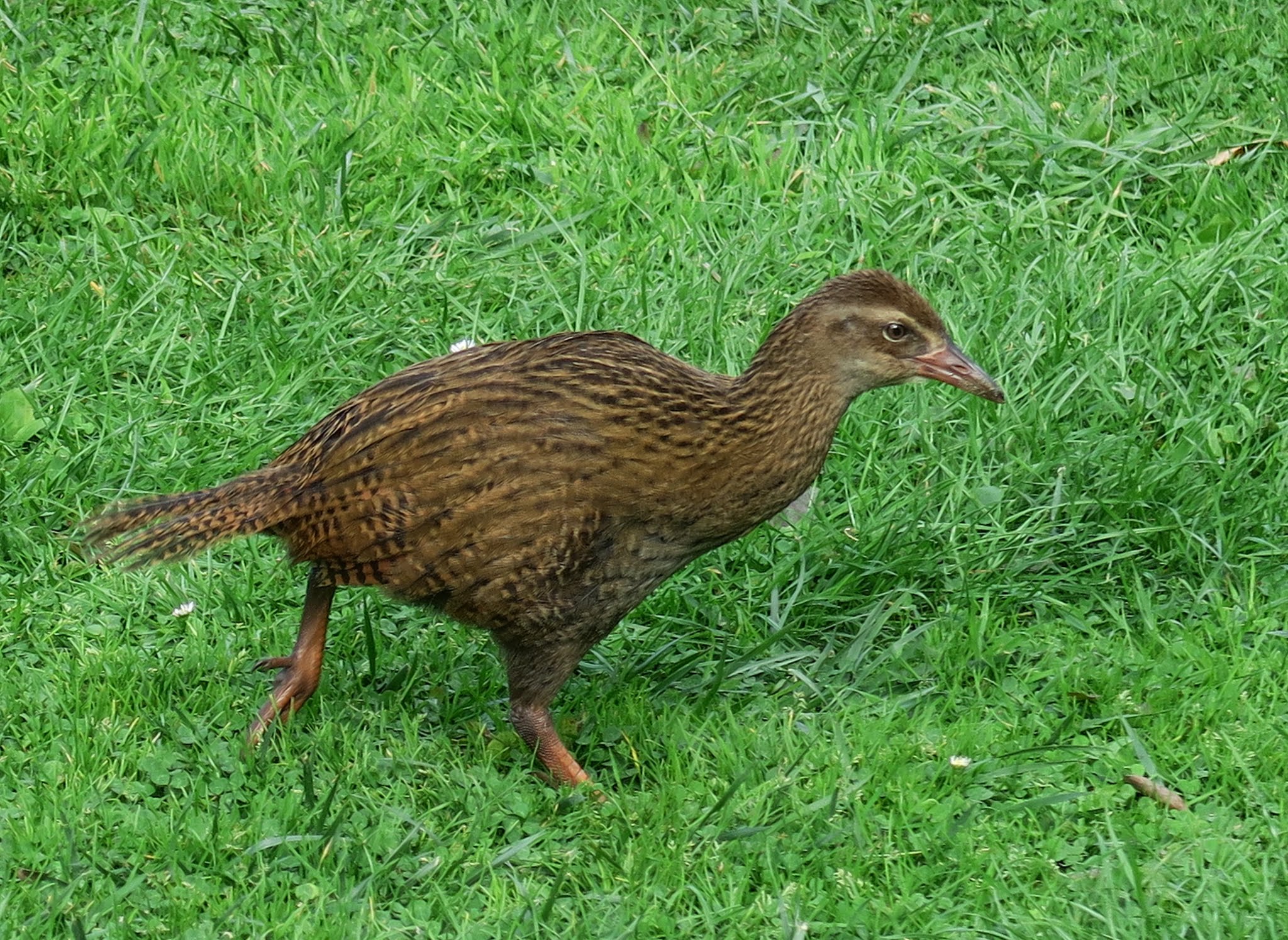
Below, a gallery of photos from our mail boat cruise stop. The bird is a weka. I don’t know what weka means in Maori, but in English it means don’t set down your camera, lunch, or any other object you don’t want to see running off into the forest.  Click to enlarge and scroll.

Even though the southerly winds had not quite died down, we decided to pick up and leave Punga Cove and make the 2-hour journey in cold, windy conditions to Ship Cove so we could spend the night there. This would give us time to go ashore early in the morning and hike a bit more of the Queen Charlotte Track before visiting nearby Motuara Island, a bird sanctuary. After that, we’d start our journey to the Pelorus Sounds.

Above a map showing our trip from Punga Resort to Ship Cove and Motuara Island.   You can click on the markers to see what’s what.  (We bypassed pretty Resolution Bay because we were short on time and had visited it on the mail boat.) Below, our early evening arrival at Ship Cove. –Cyndi

Our evening arrival at Ship Cove. (Queen Charlotte Sound, New Zealand)
Tucked in and out of the wind at Ship Cove. (Queen Charlotte Sound, New Zealand)

Sitting out the Weather at Punga Cove (Endeavour Inlet, Marlborough Sounds, New Zealand)

April 2 and 3, 2016

Every few days a particular weather pattern affects the Sounds (at least at this time of year). It starts with a day of strong northerly winds, followed by a day of strong southerly winds. The northerly winds aren’t very cold, but they may bring some rain. The southerly winds are drier, but they’re also quite cold. This windy period is generally followed by a few days of beautiful weather: warm, sunny, and calm. These are the days where one can enjoy cruising the sounds without worry about the wind.

We’d been out for a few days now, and the next round of winds was due to arrive. One complicating factor in this weather pattern: the switch from northerly to southerly winds often happens during the night. The best thing to do in this case is find an “all weather anchorage.” There was one in the Endeavour Inlet across from Punga Cove called Tawa Bay.

We planned to head there after our first night in Punga Cove, but one of the resort’s workers had advised us to take one of their moorings that was tucked behind a headland. We already had southerly protection here, but at this particular mooring we’d have northerly protection, too.

Once we’d settled in on our new mooring, we realized we could be very comfortable here during the windy weather. The disadvantage was, without having dinner at the restaurant, it would be $25NZD per night. The advantage was Rich managed to get pretty good internet access here.

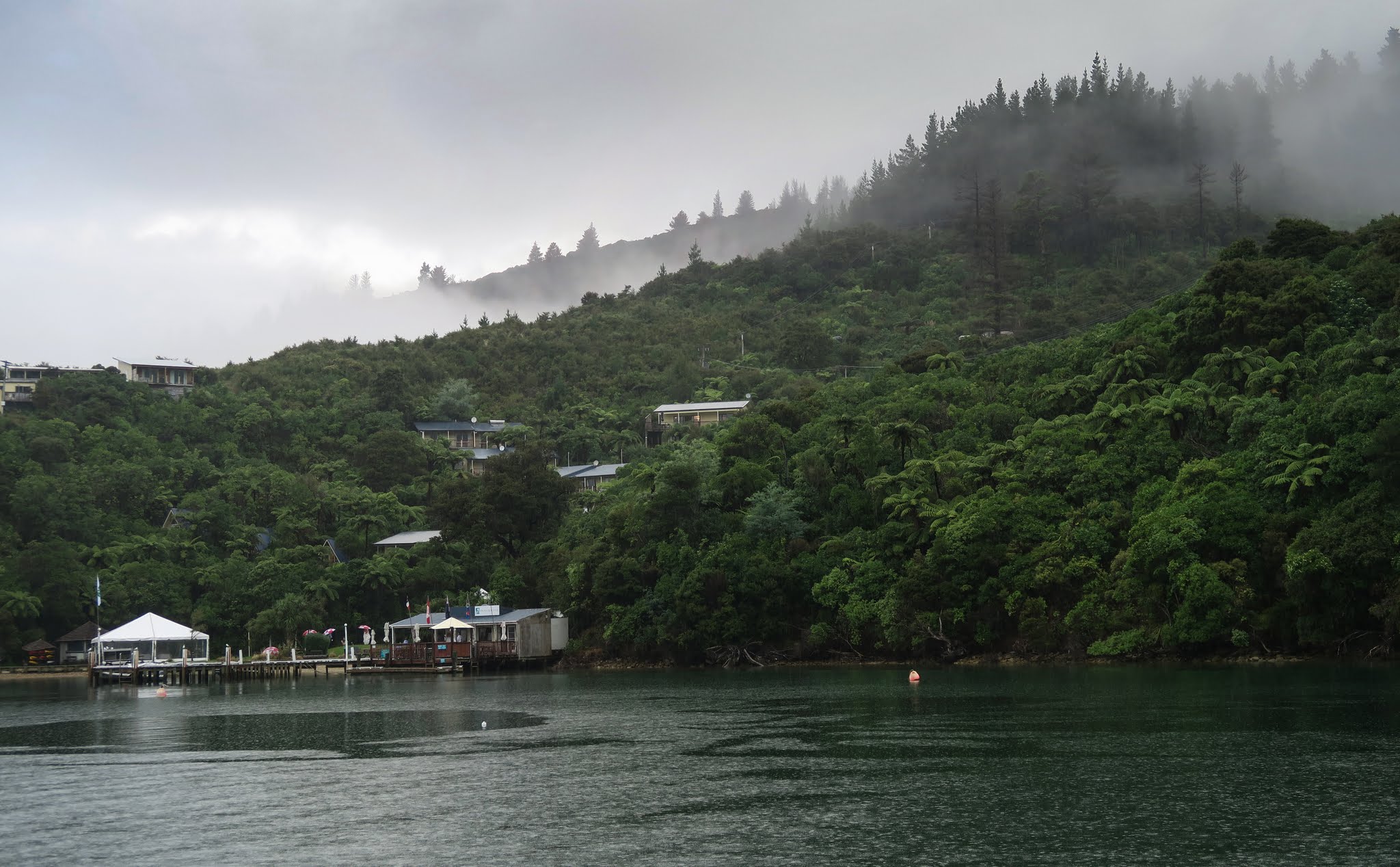
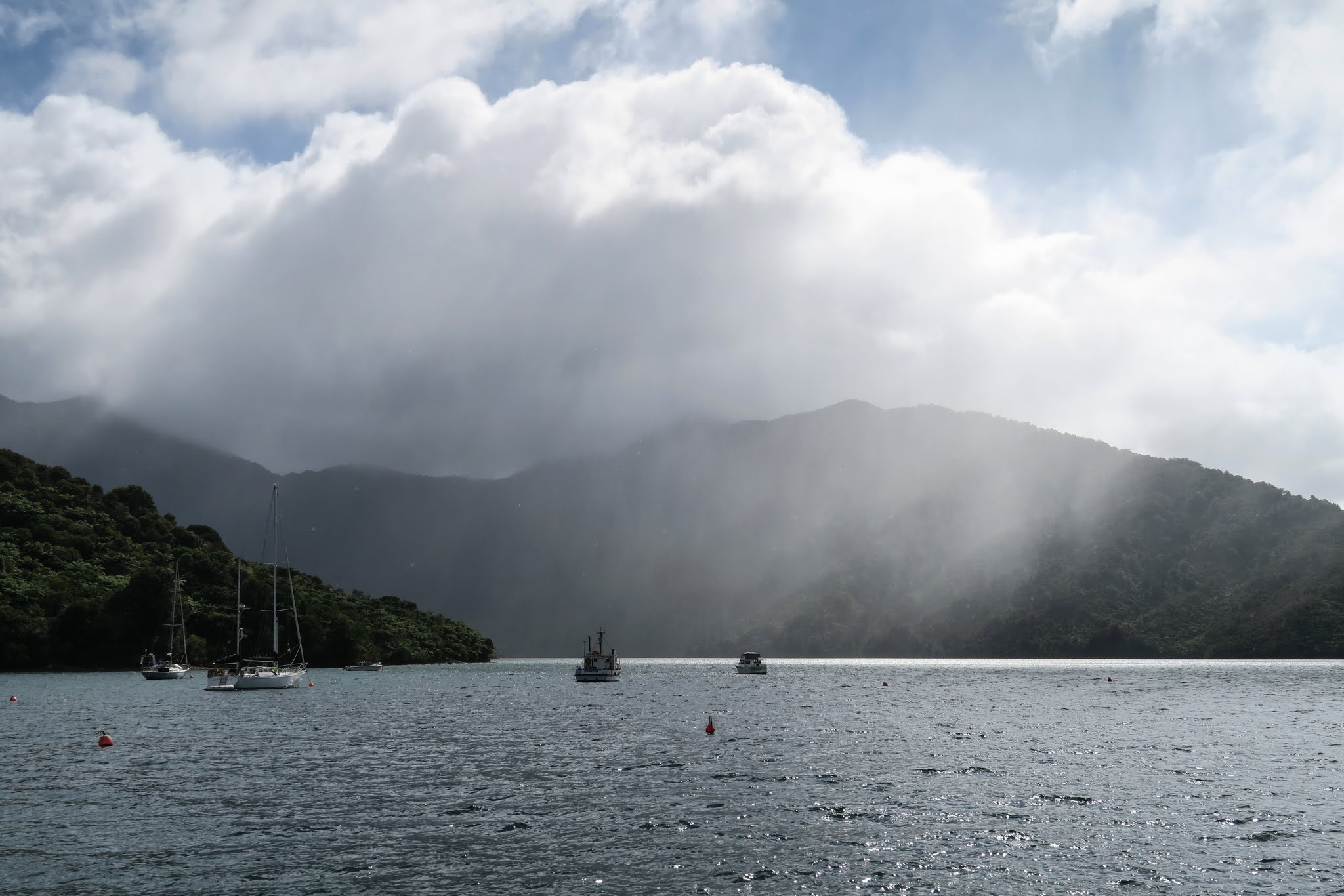
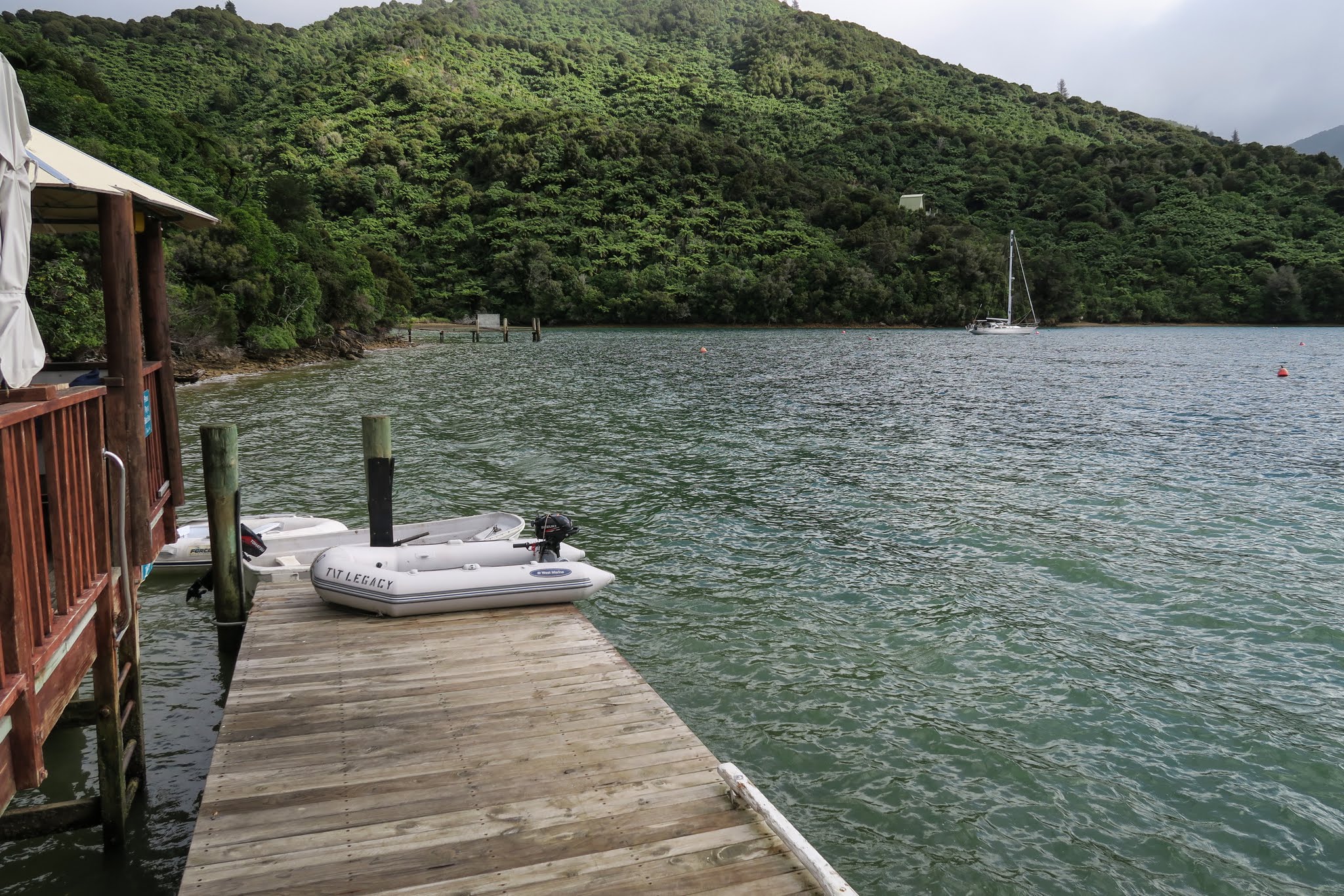
In the end, internet access, afternoon pizzas at their Boatshed Cafe and Bar, a walk on the Queen Charlotte trail to nearby Camp Cove, and the convenience of not having to pick up and move won out. We stayed put in Punga Cove. (Below, photos of our rainy day. Click to enlarge and scroll through any gallery.)

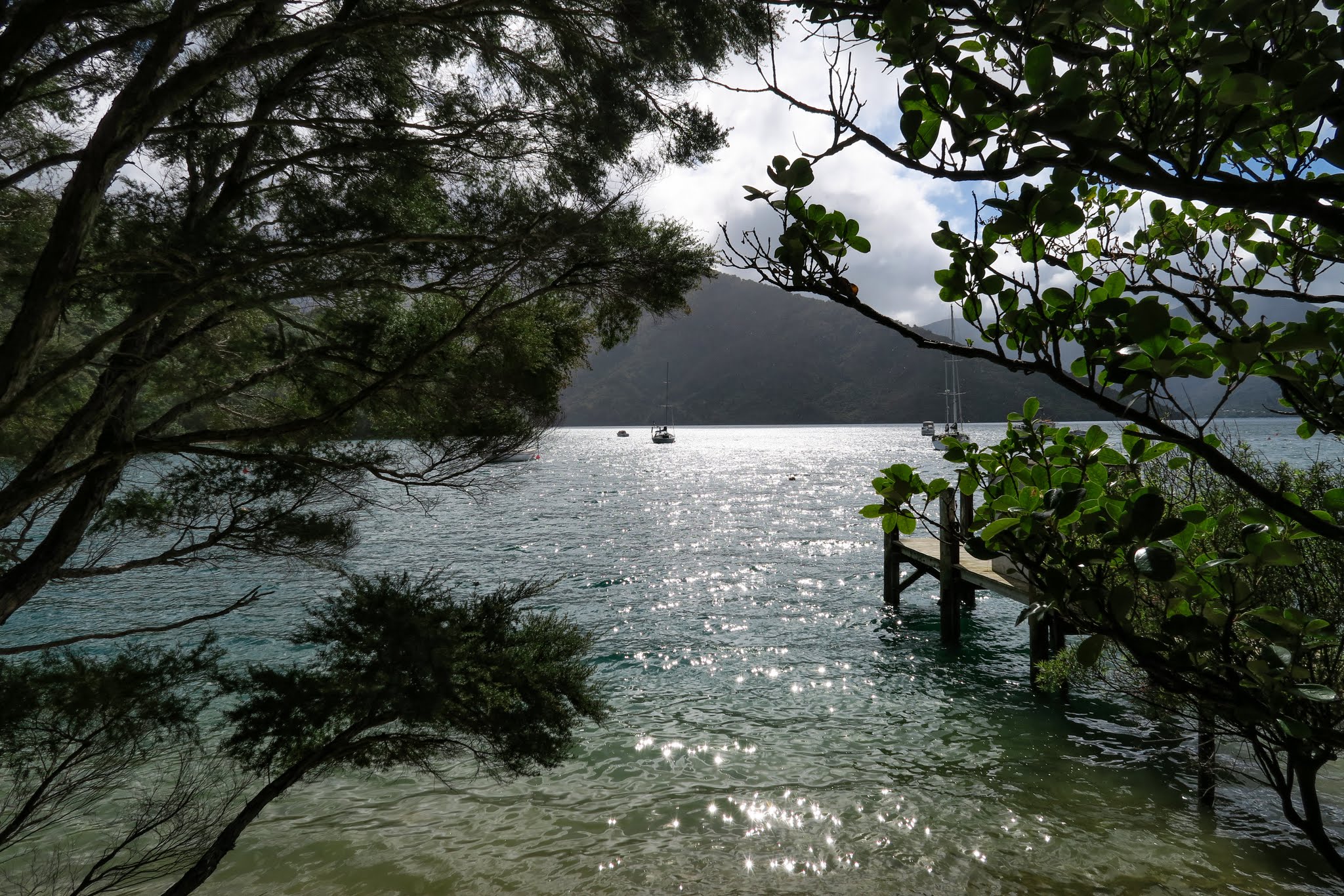
We ended up having a very nice time. The rain passed, and while we could see whitecaps in the middle of the bay, our area behind the headland was calm. The seas were a bit sloppy by the dinghy dock, and we were concerned about our dinghy getting banged against it. No problem; we just hauled it up and let it sit on the dock. We could now enjoy pizza and a walk to neighboring Camp Cove on the Queen Charlotte Track with no worries about our boat or dinghy. (Below, photos from Camp Cove.)

We ended up staying here three nights in all. After the rainy period we enjoyed some nice sunsets . . .

punga-cove-evenings-3

punga-cove-evenings-2

punga-cove-evenings-1

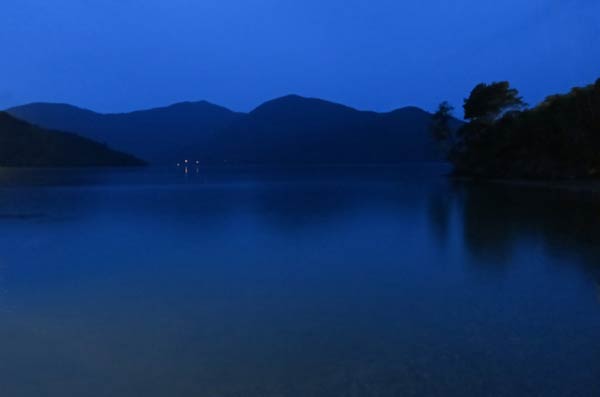
But the most impressive night was the indigo blue night we had after our first dinner. It’s not often I’ve seen a night this blue. –Cyndi

blue-night

Not Fall Colors (Queen Charlotte Sound, New Zealand)

April 2, 2016

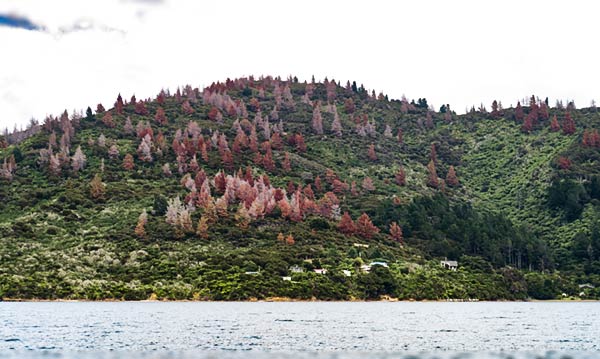
While it is fall down here on the underside of the ball we live on, and while these are kind of pretty, they’re not fall colors…

Killing off Wilding Pines

Much of the Marlborough Sounds are great big timber farms. Seeds from these farmed, non-native trees spread as they are designed to do. These runaway trees are called wilding pines.

In an effort to restore or maintain native vegetation, these wilding pines are poisoned and left to die off. When we first saw it, we lamented the disease that must have infected these trees. Now we know the disease is us – either in their spreading in the first place or their deliberate distruction. Oh well, the colors are pretty for a while. -Rich