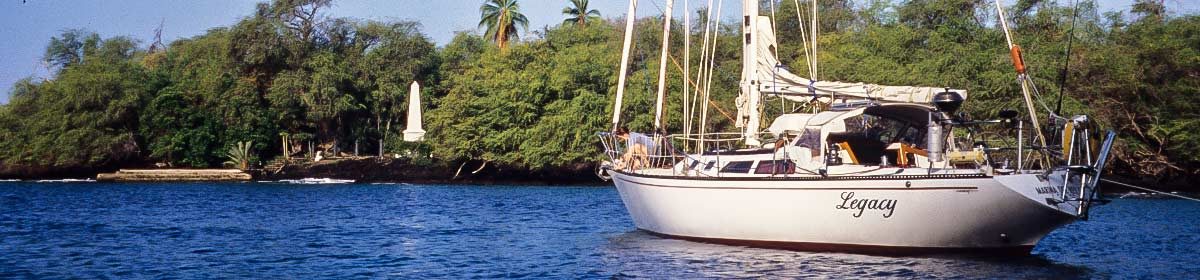
A Day at Tawhitinui Island (Tennyson Inlet, Pelorus Sound, New Zealand)

April 15, 2016

As soon as we got back from our morning hike at Jacobs Bay, we dropped our mooring and got underway. Today’s wildlife theme was definitely blue penguins–we saw them all over the place.
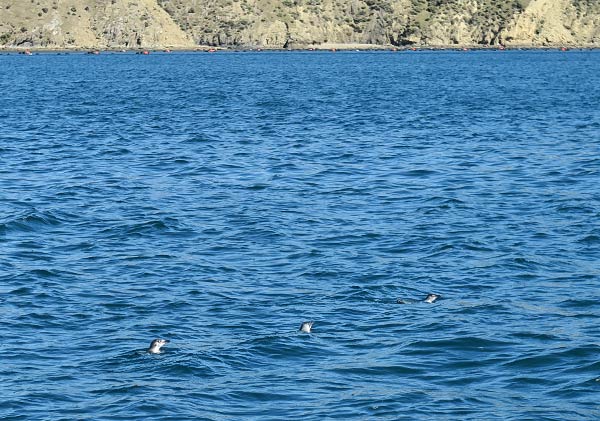
Blue penguins are a frequent sight in the sounds.

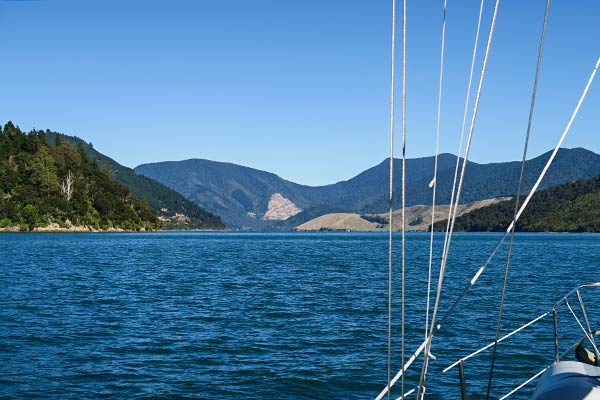
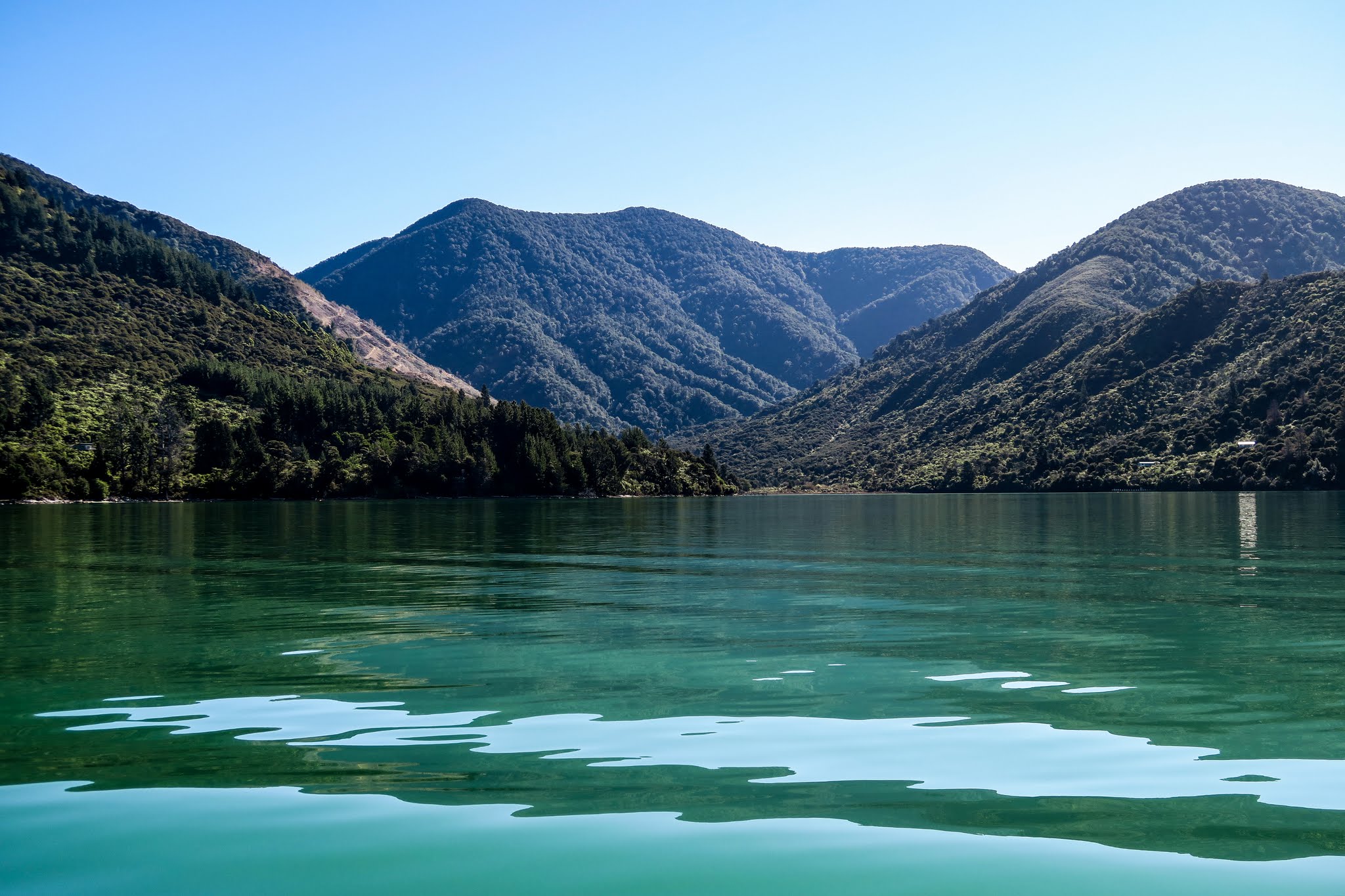
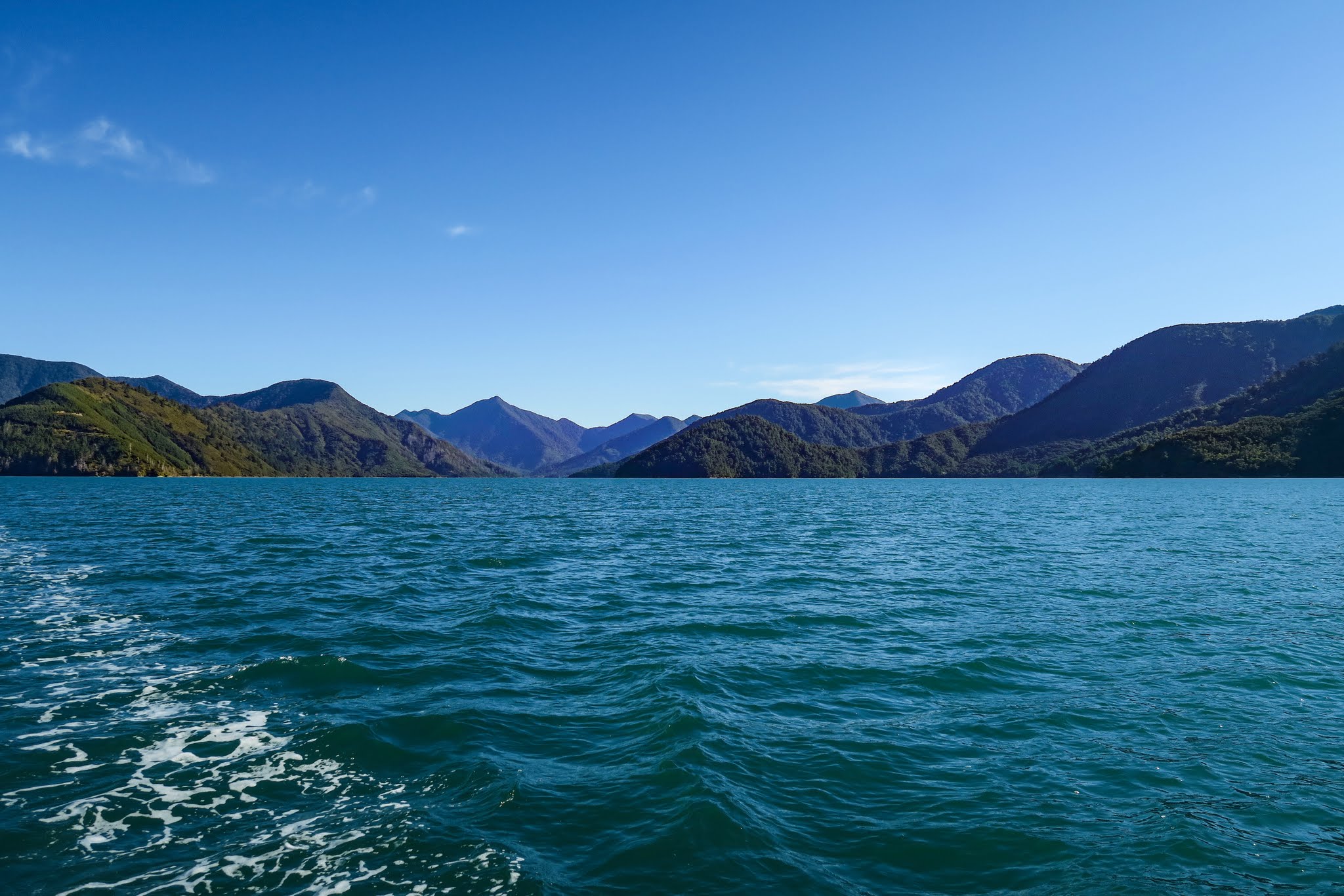
Our destination today was the little island I’d fallen hard for on our earlier visit to the Tennyson Inlet: Tawhitnui Island. So we headed back up the Popoure Reach, down the long, dry Tawhitinui Reach, to the islands near the entry to the Tennyson Inlet. The trip took about 2 hours.  (The interactive map below shows our route.)
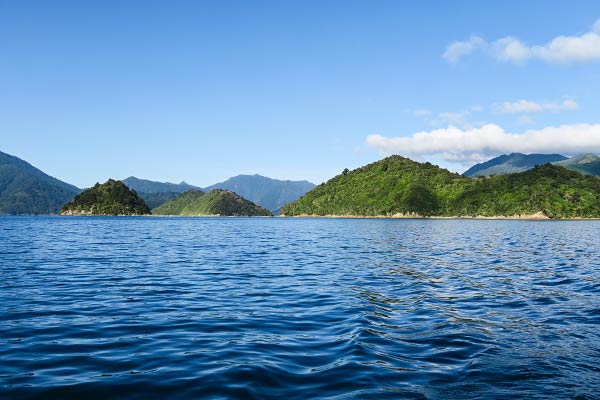

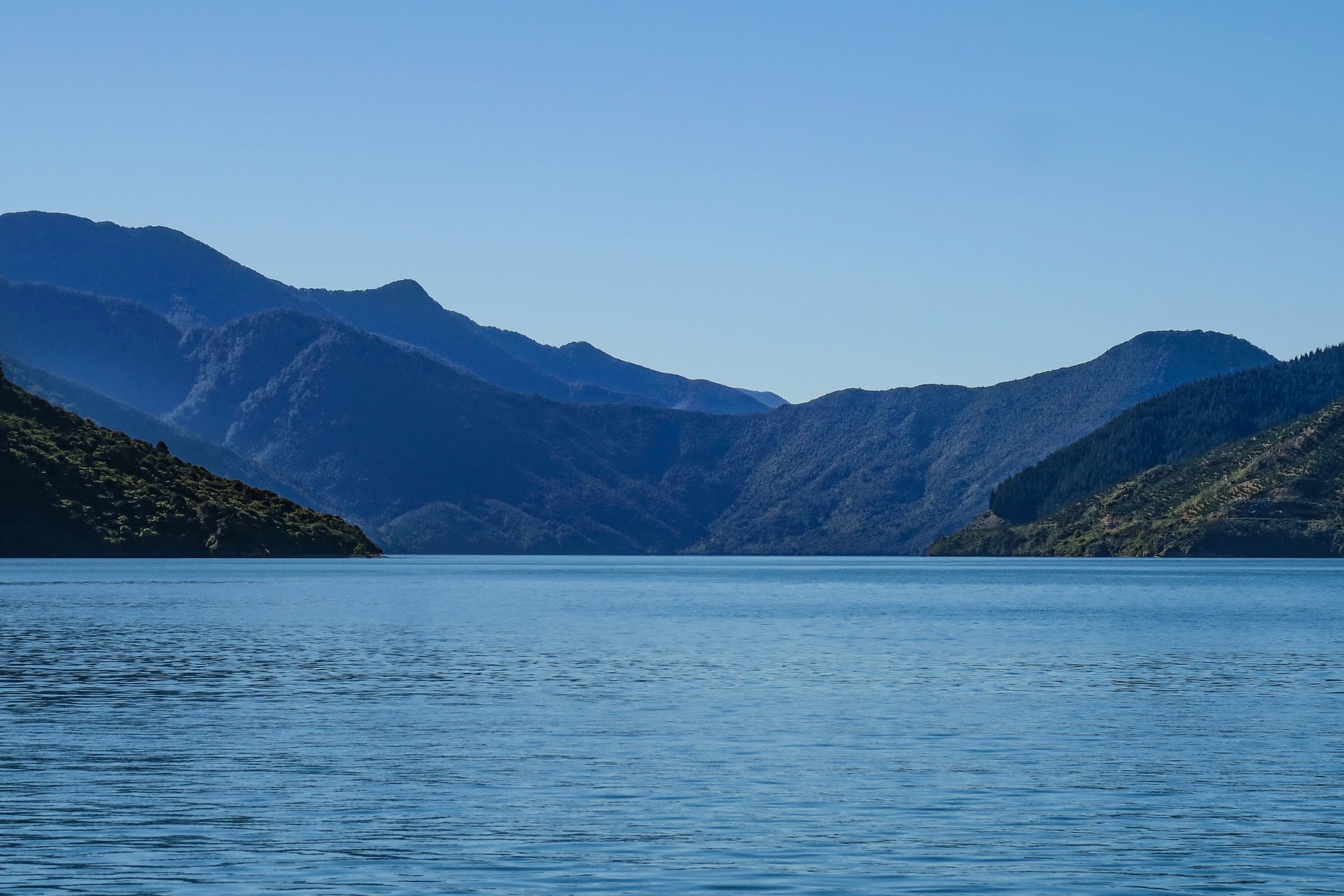
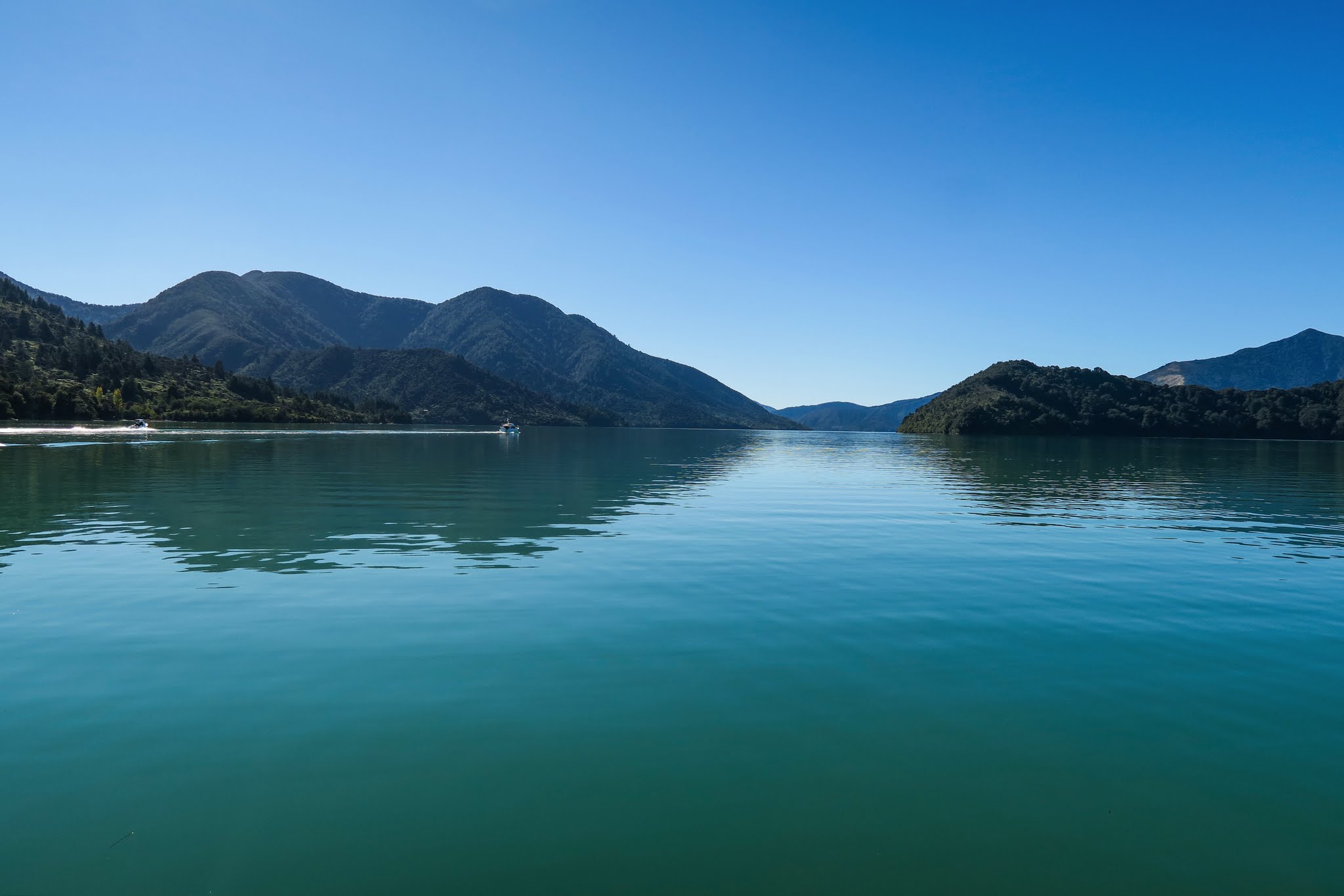
Looking down the Tennyson Inlet at Awaiti, Tarakaipa, and Tawhitinui islands.

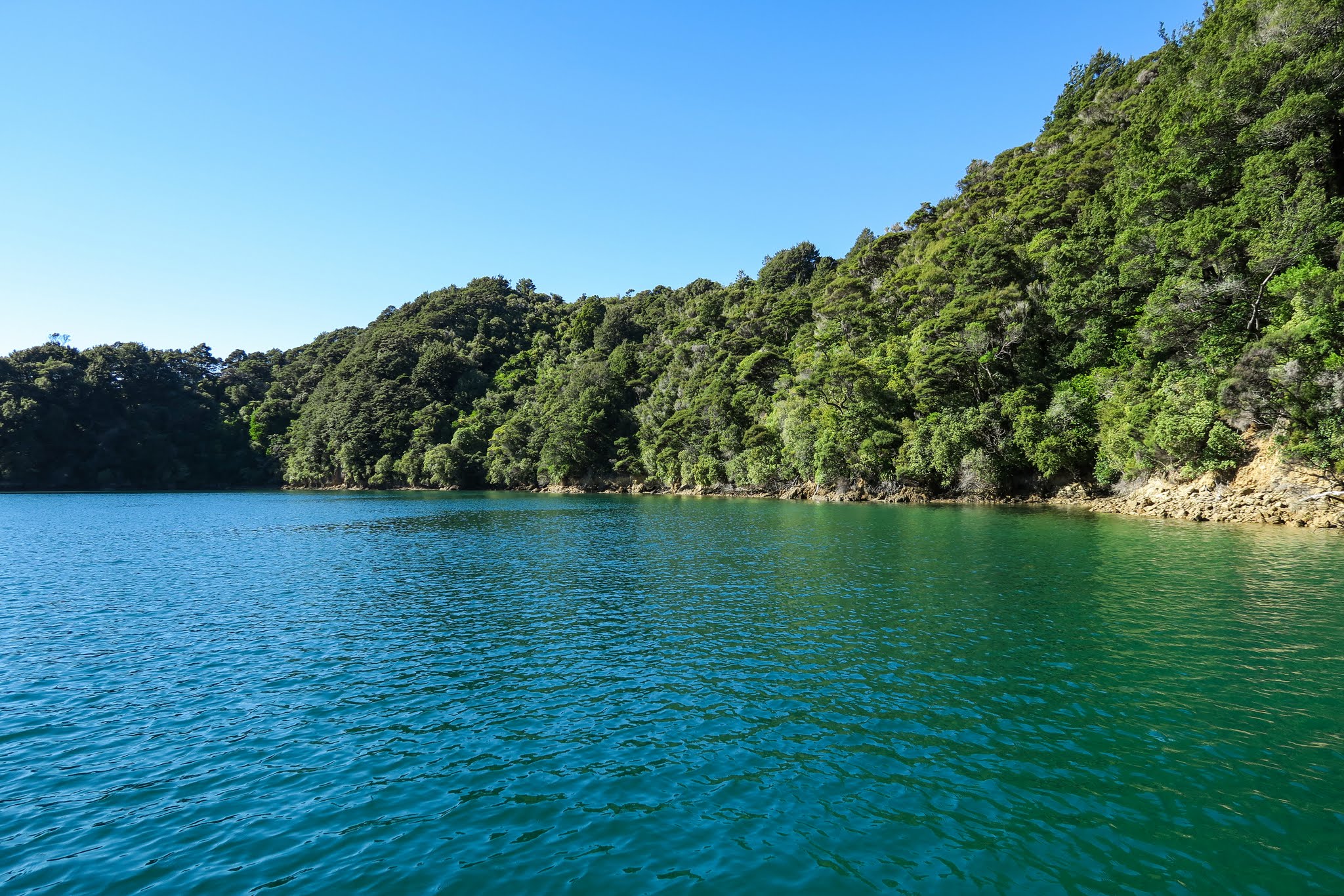
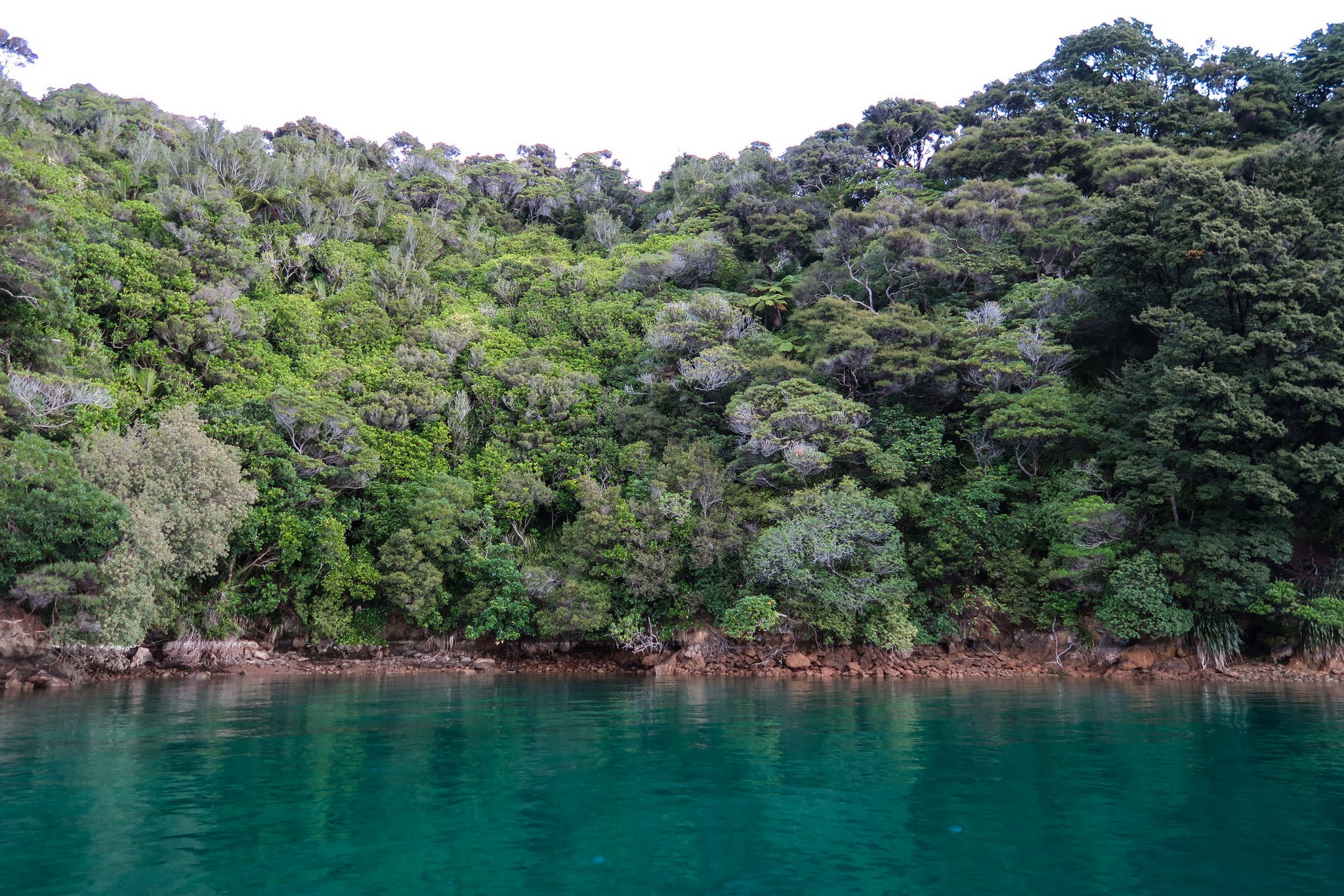
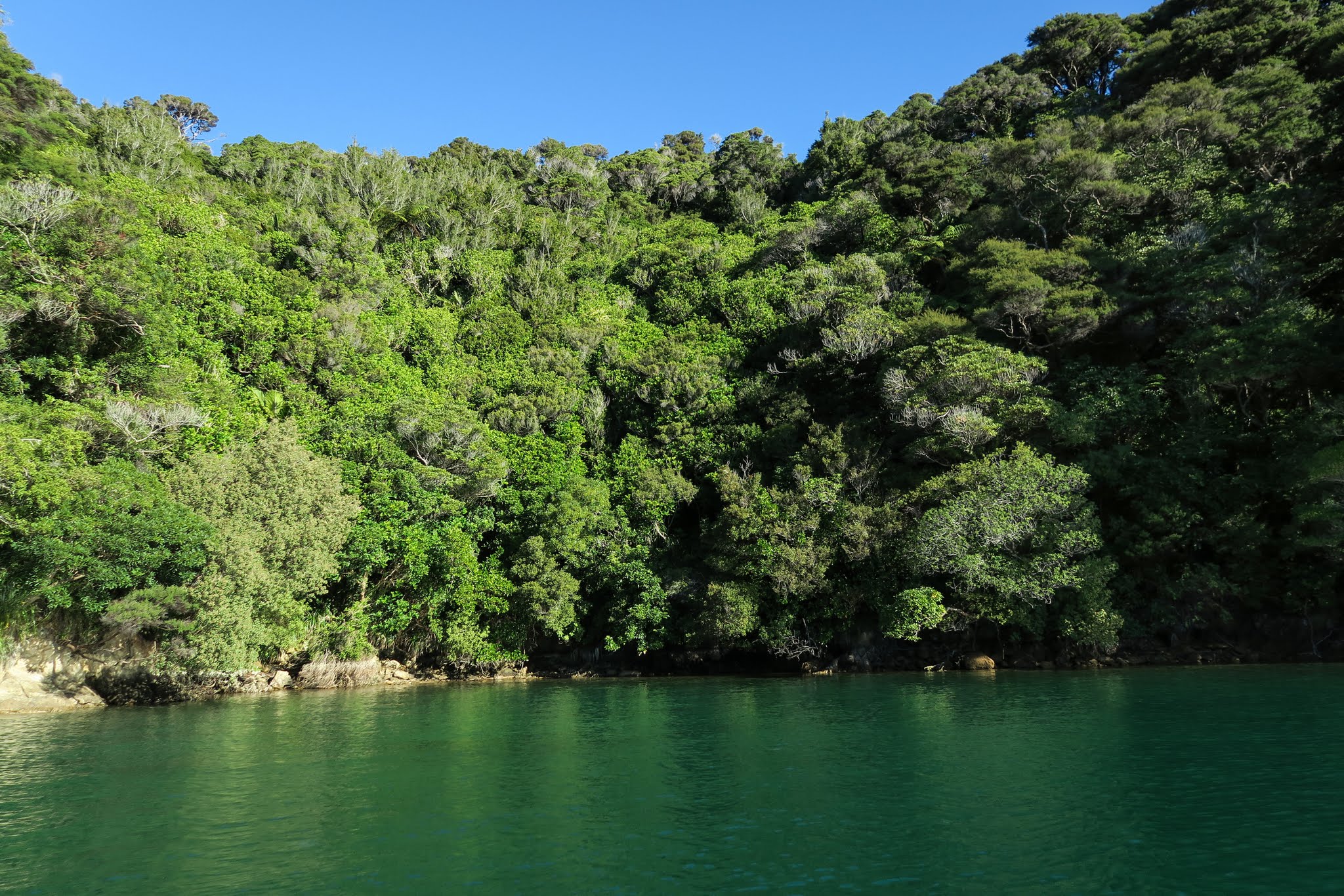
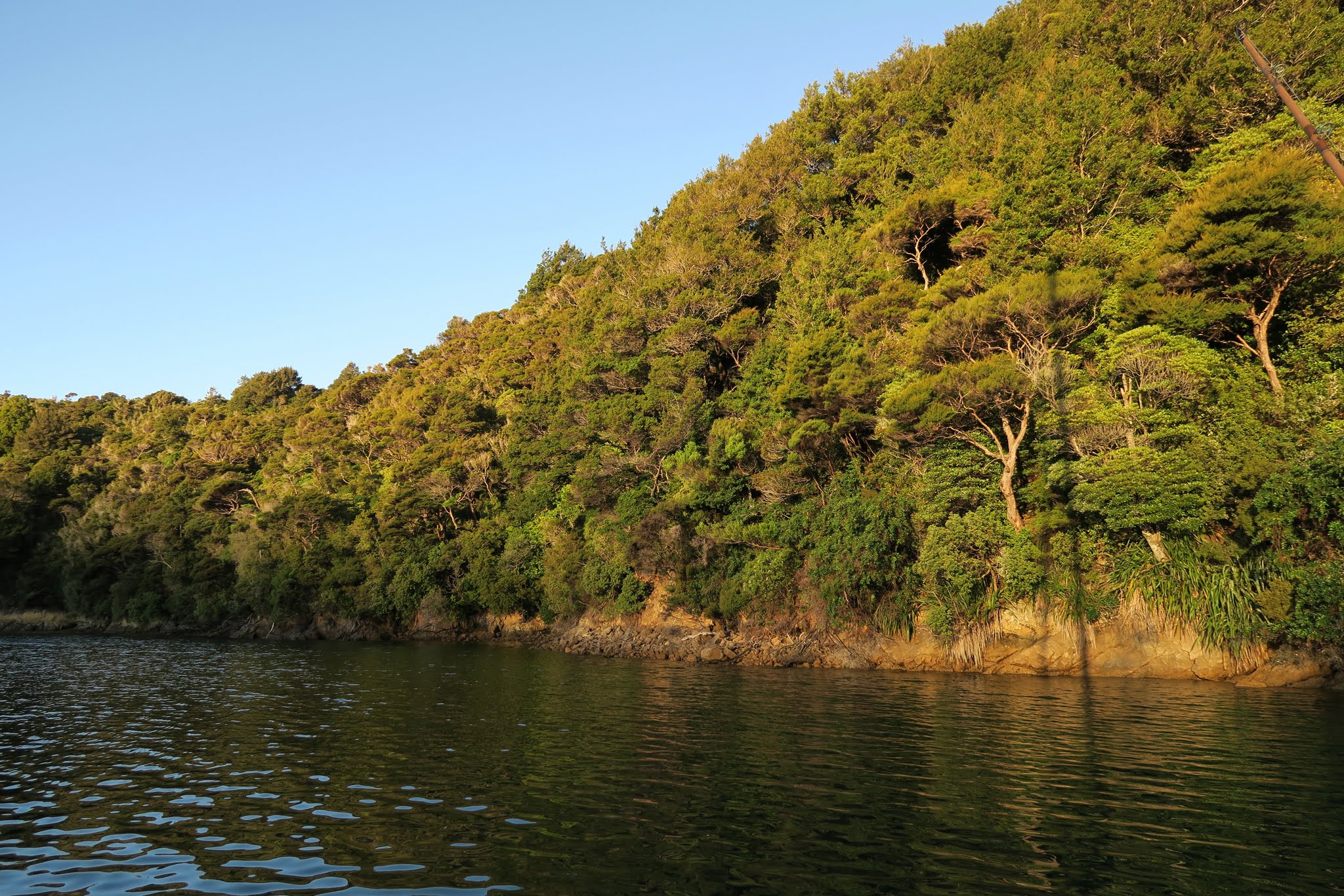
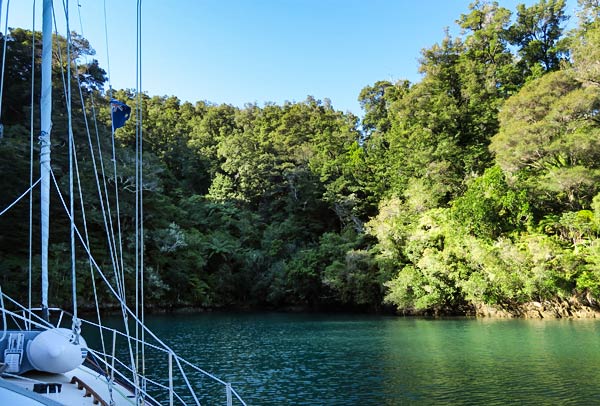
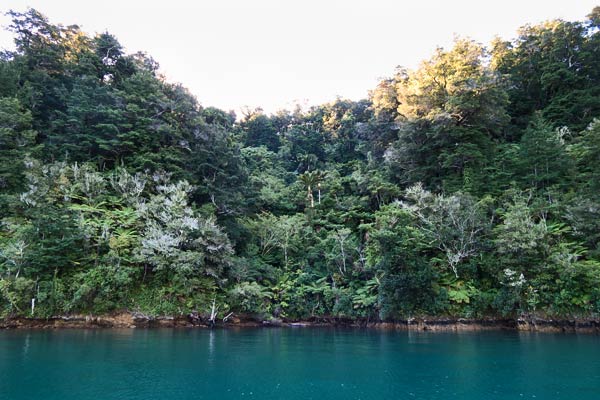
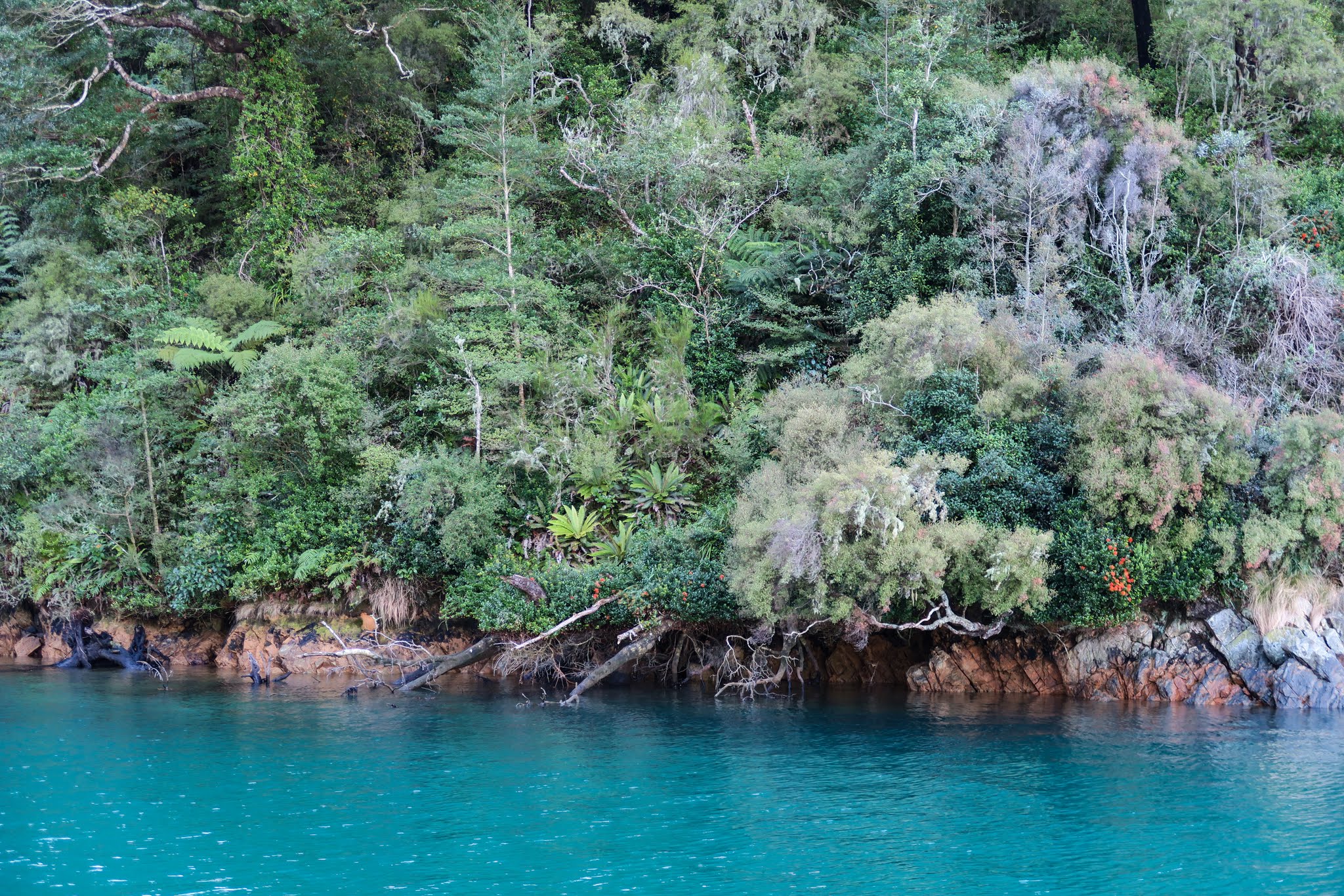
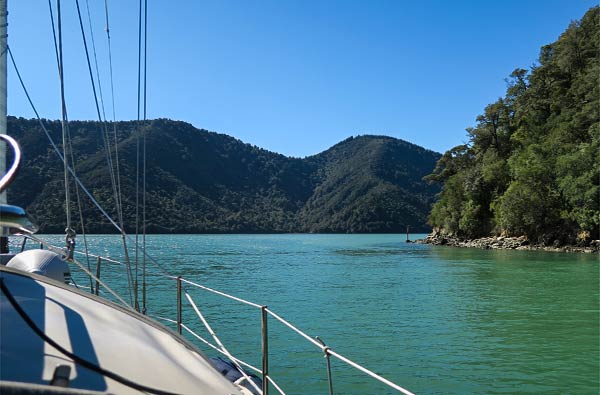
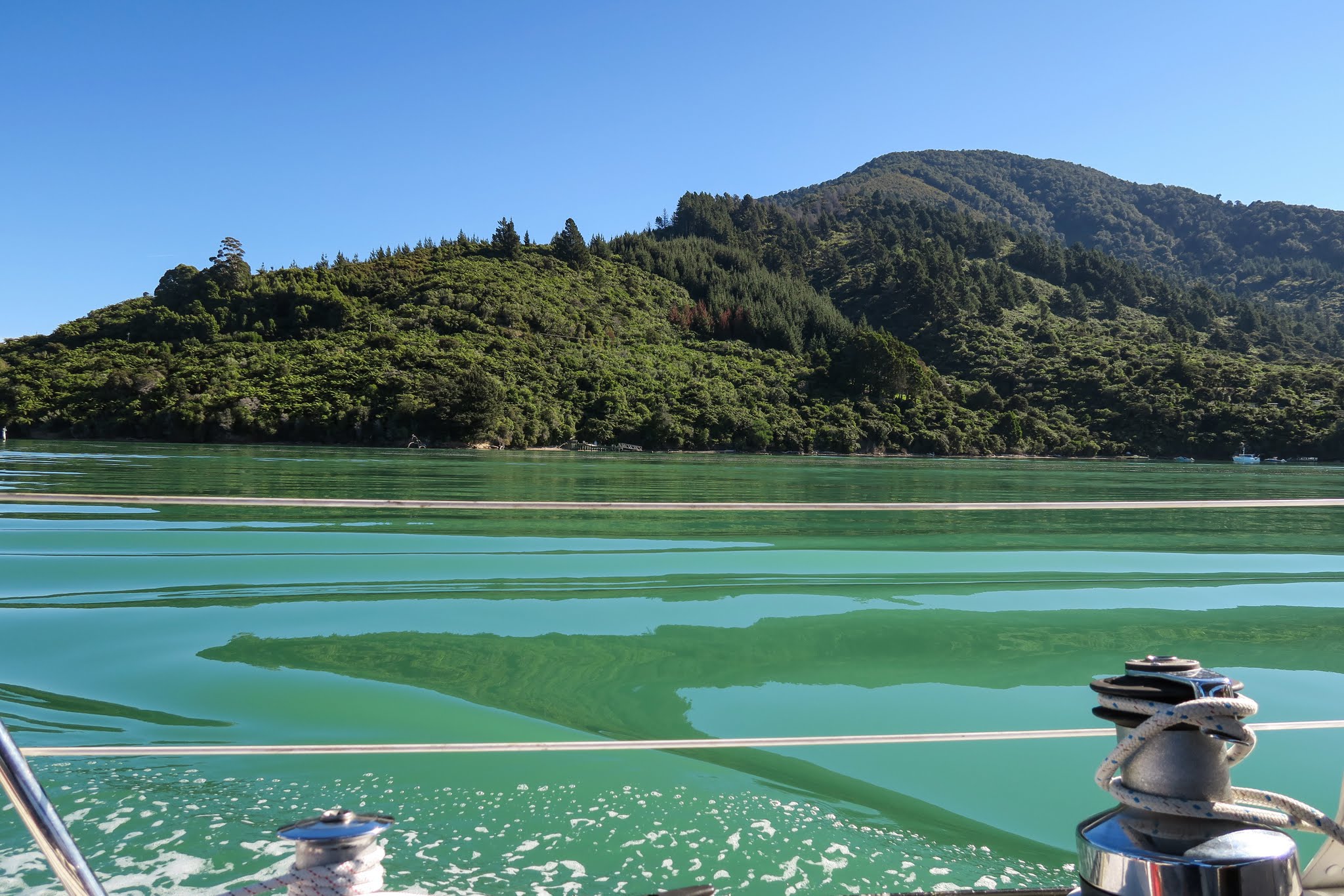
As we approached Tawhitinui Island, we could smell its jasmine-like floral smell. With an underwater rock and deep water, we’d need to tie off to the shore but had already made a plan using satellite images. It turned out to be pretty easy. We dropped and set the anchor, then tied off to a branch onshore. One nice benefit of tying off this way was a beautiful shoreline view from the cockpit.

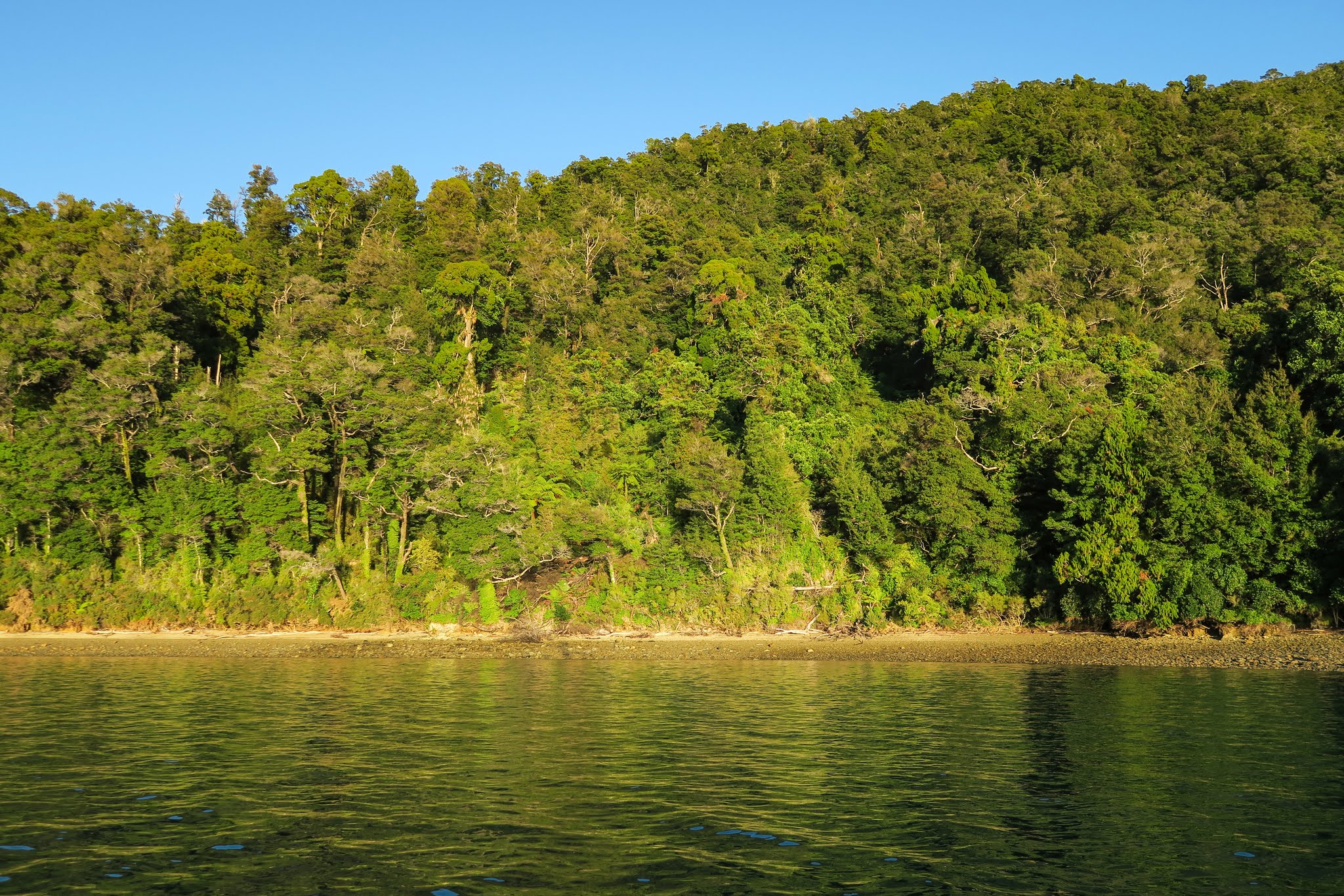
The lush shoreline vegetation made a gorgeous backdrop for our cockpit.

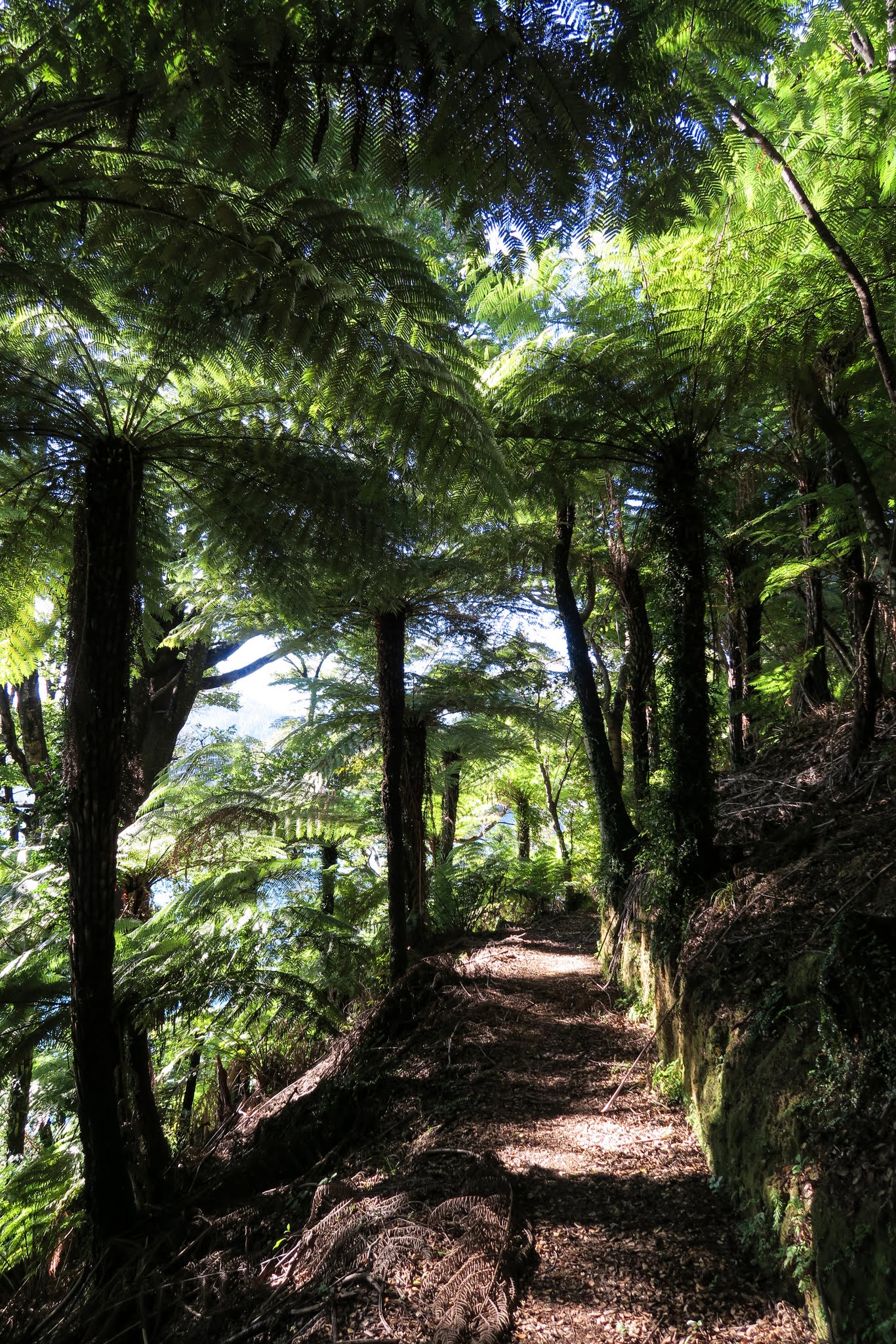
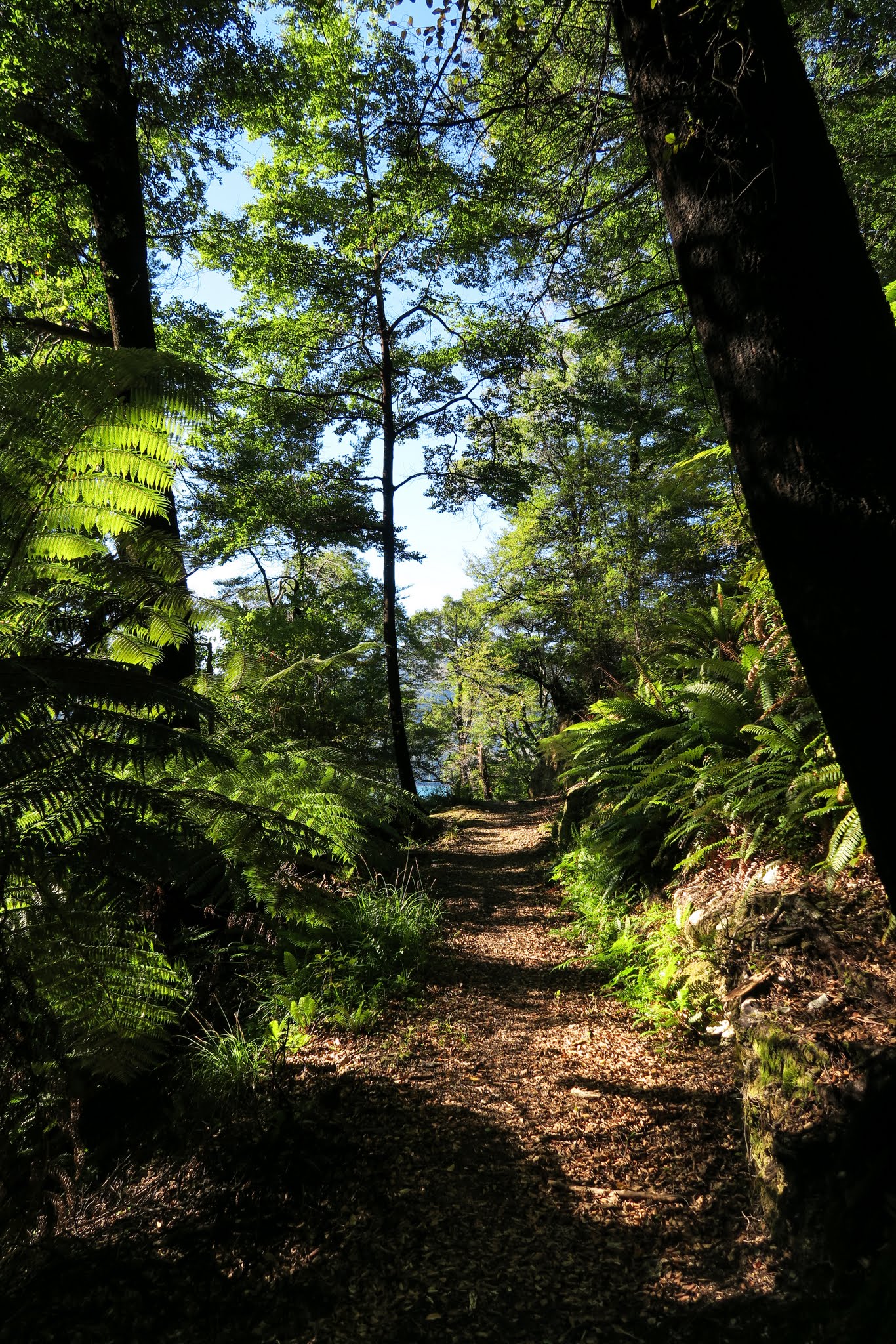
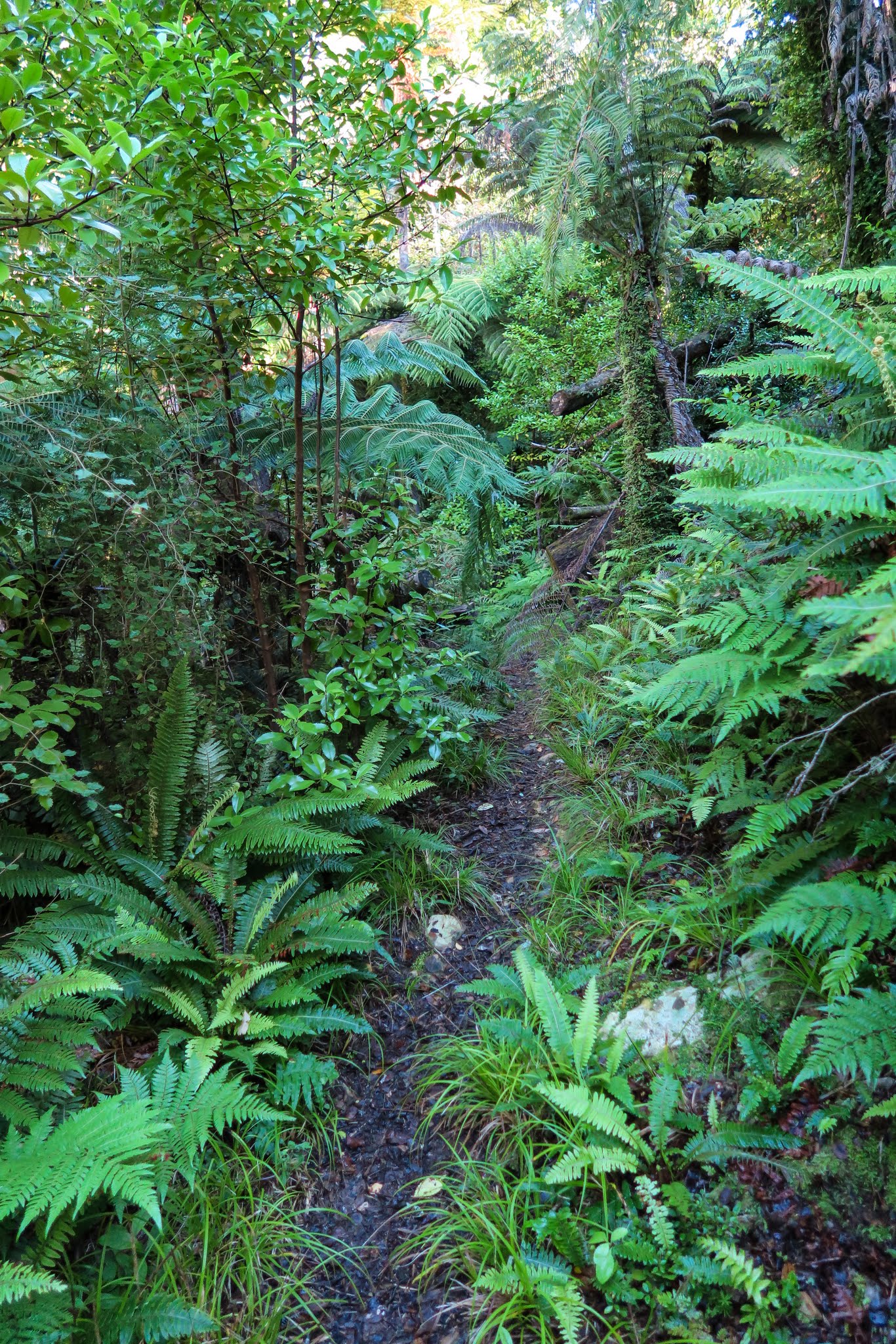
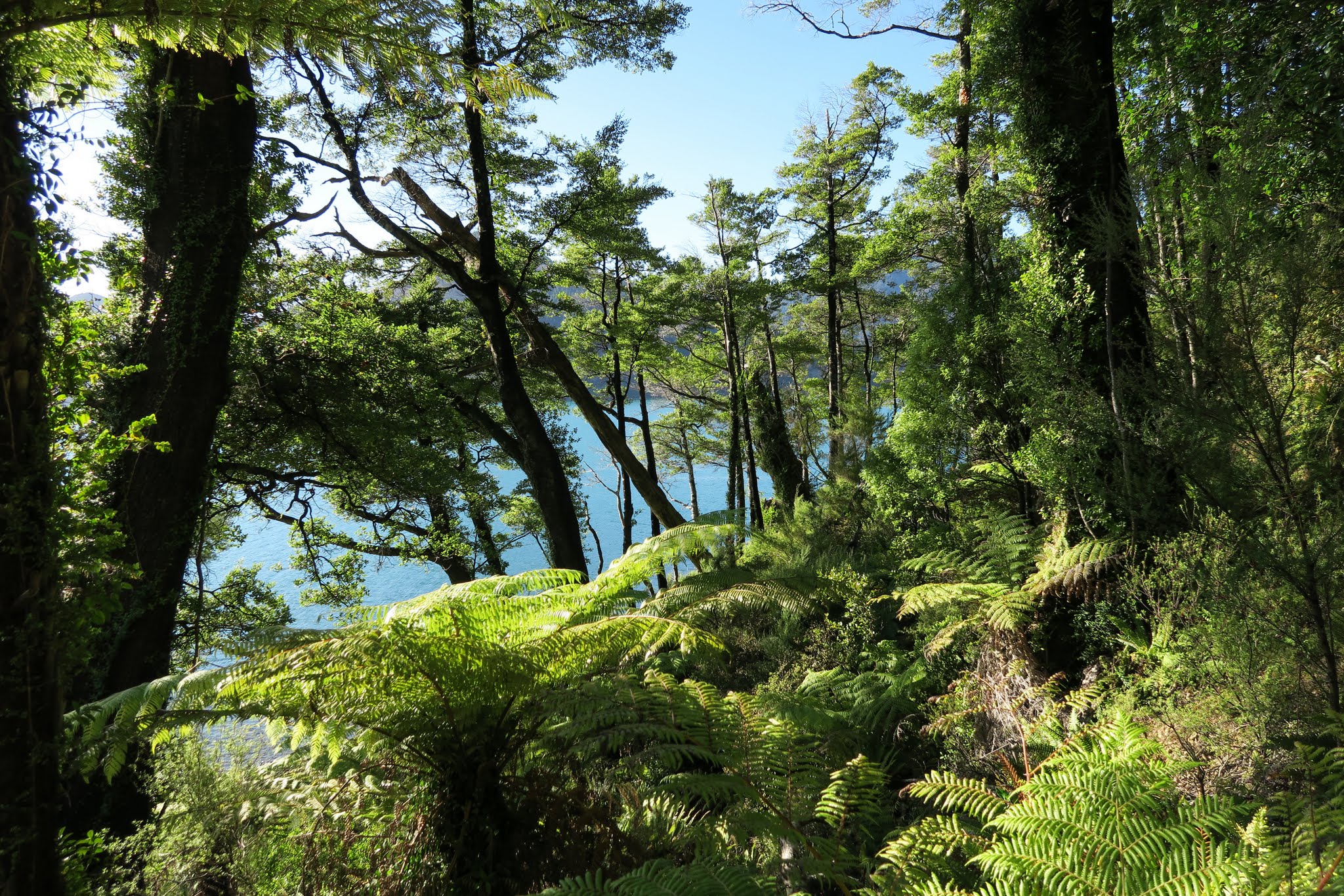
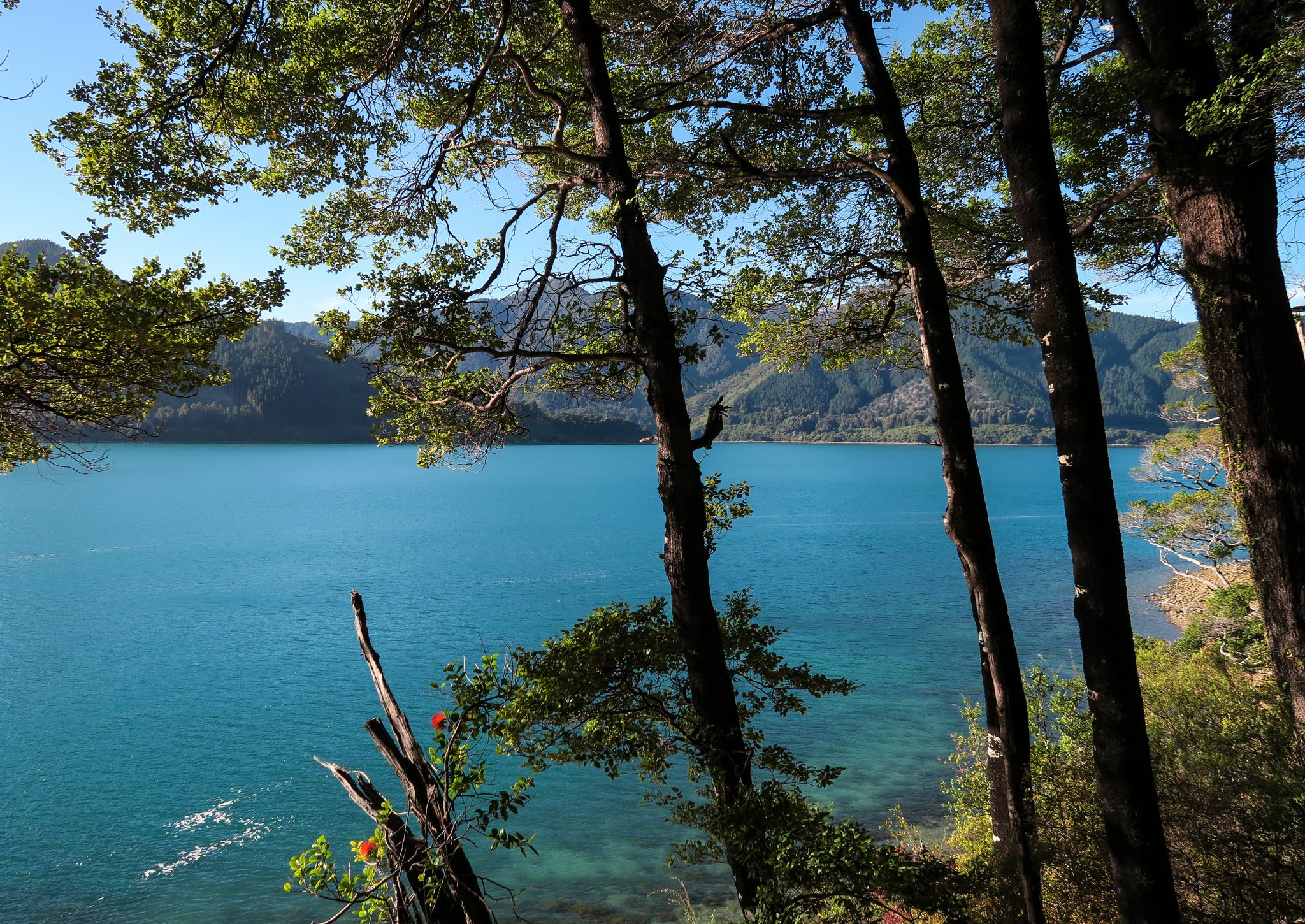
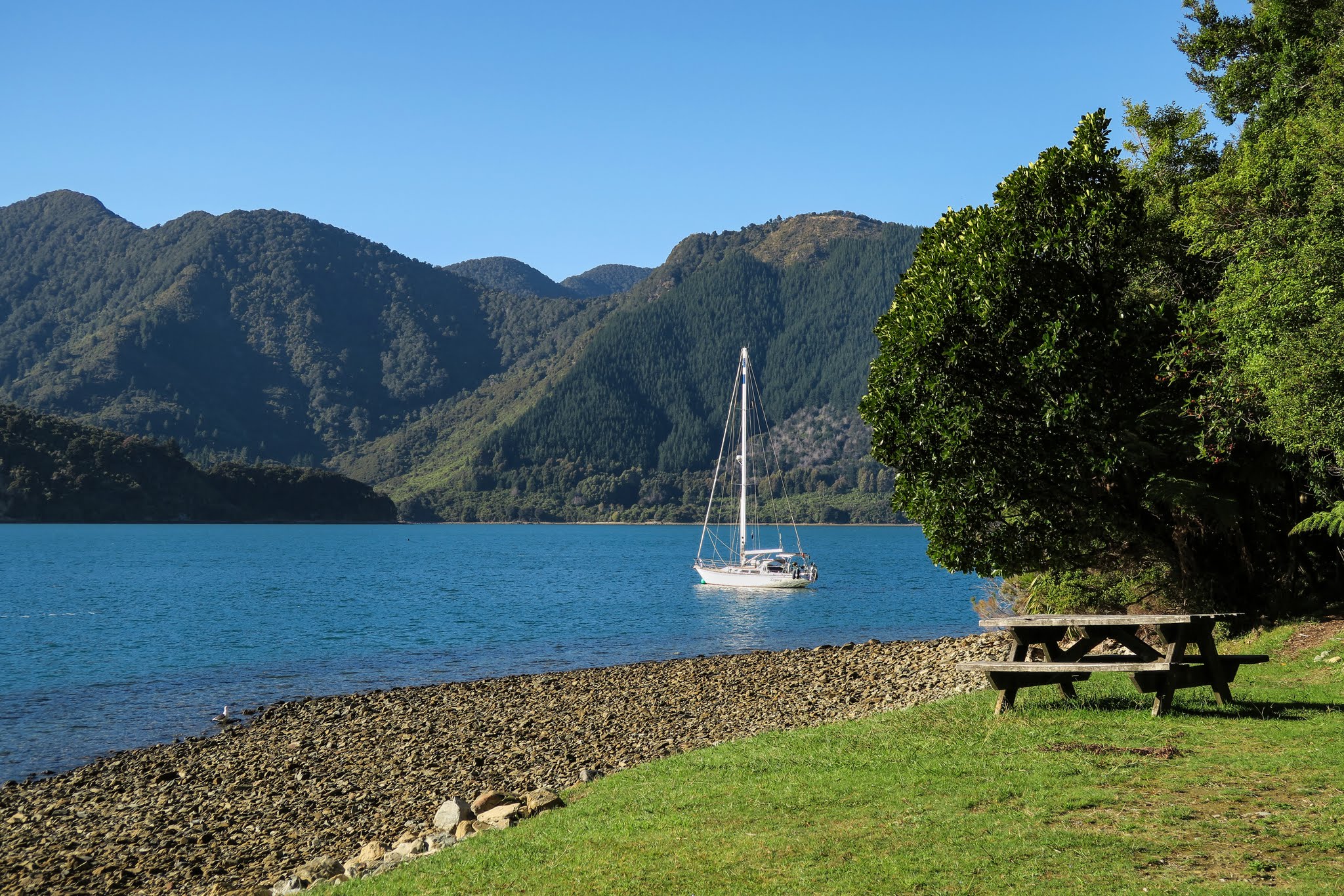
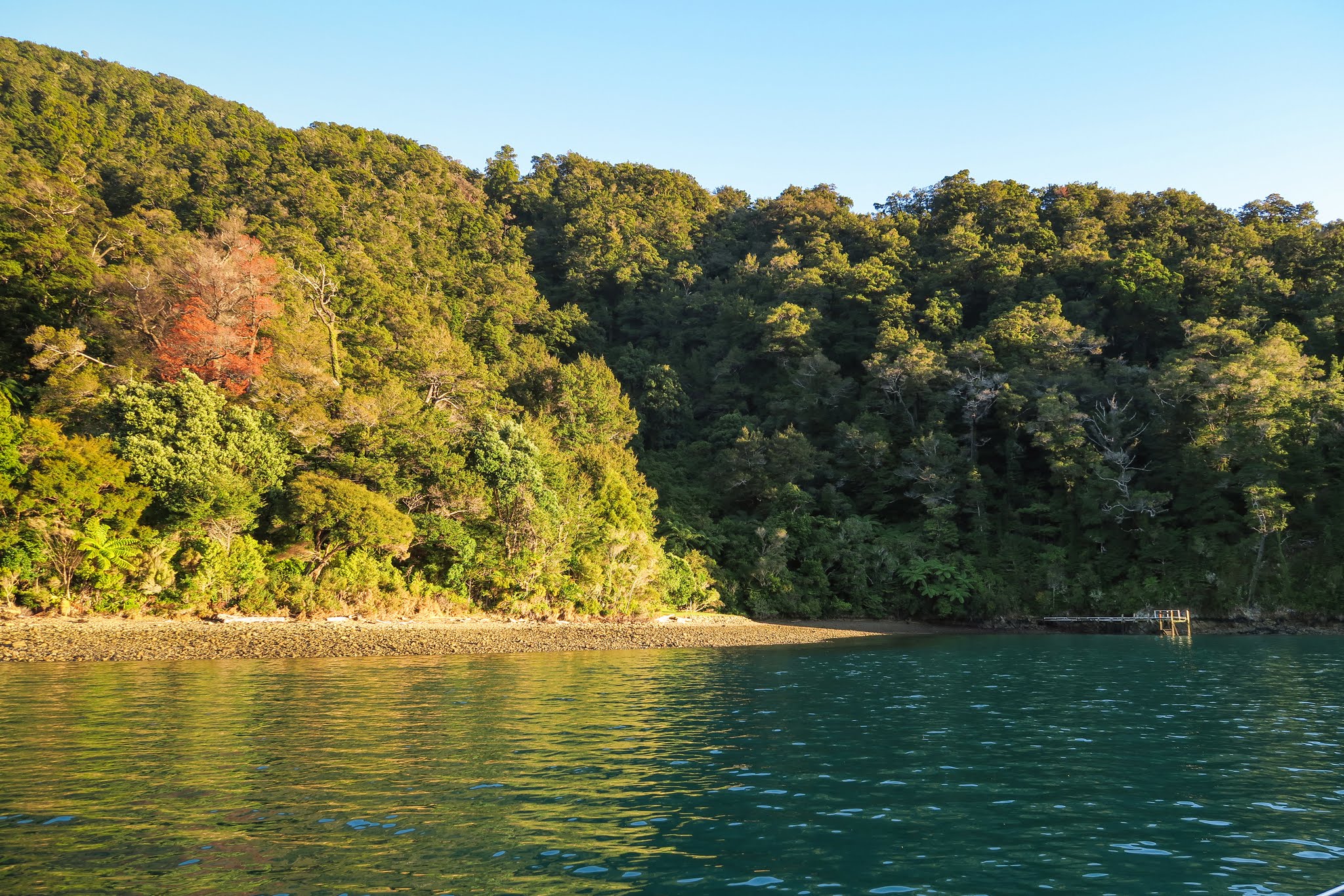
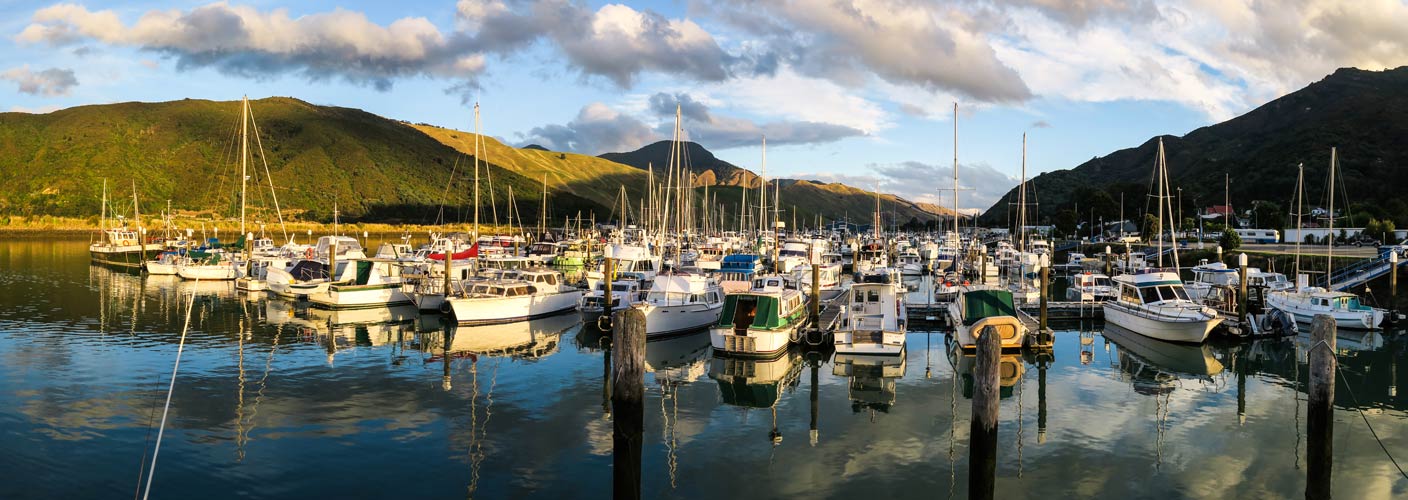
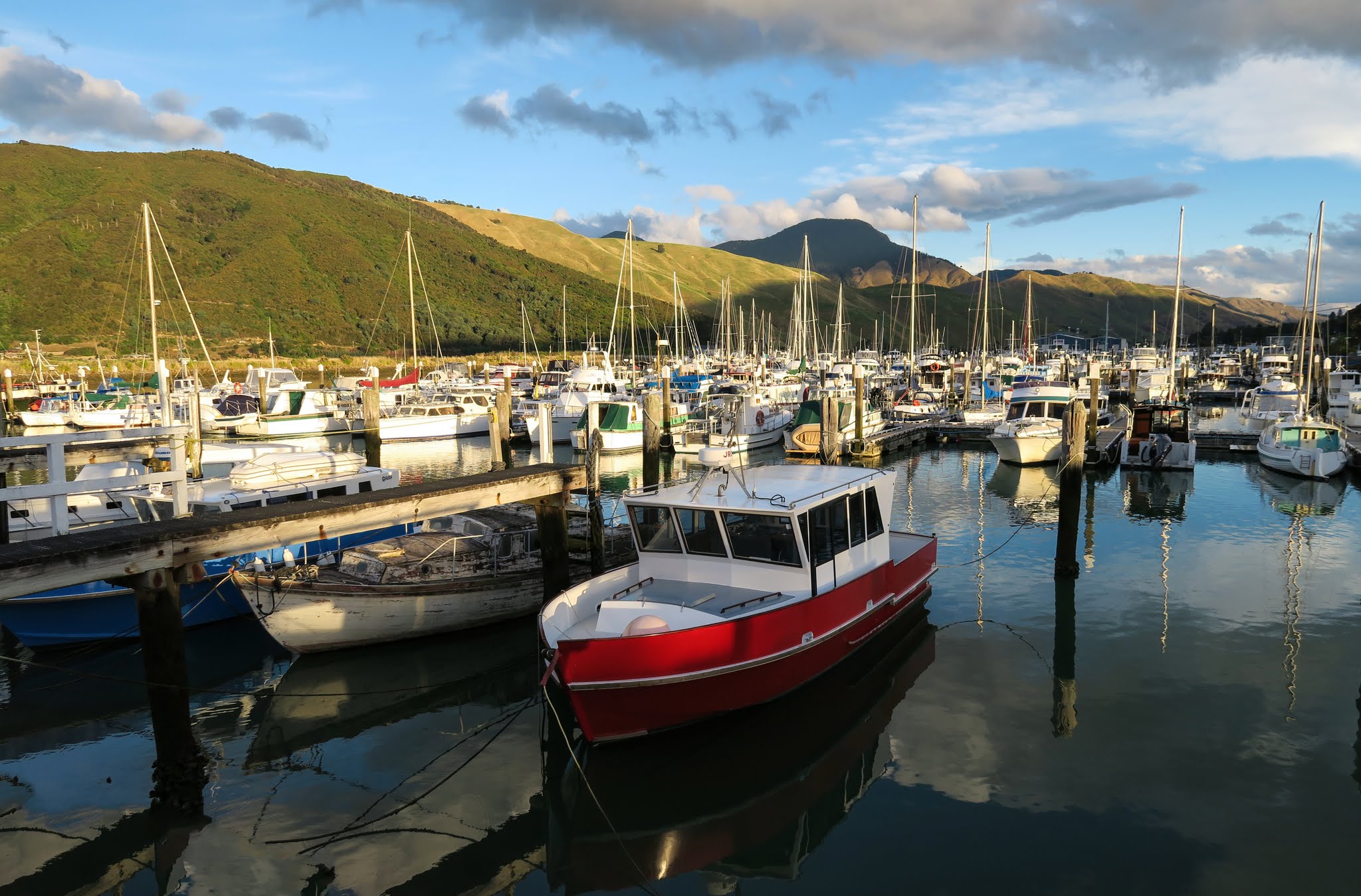
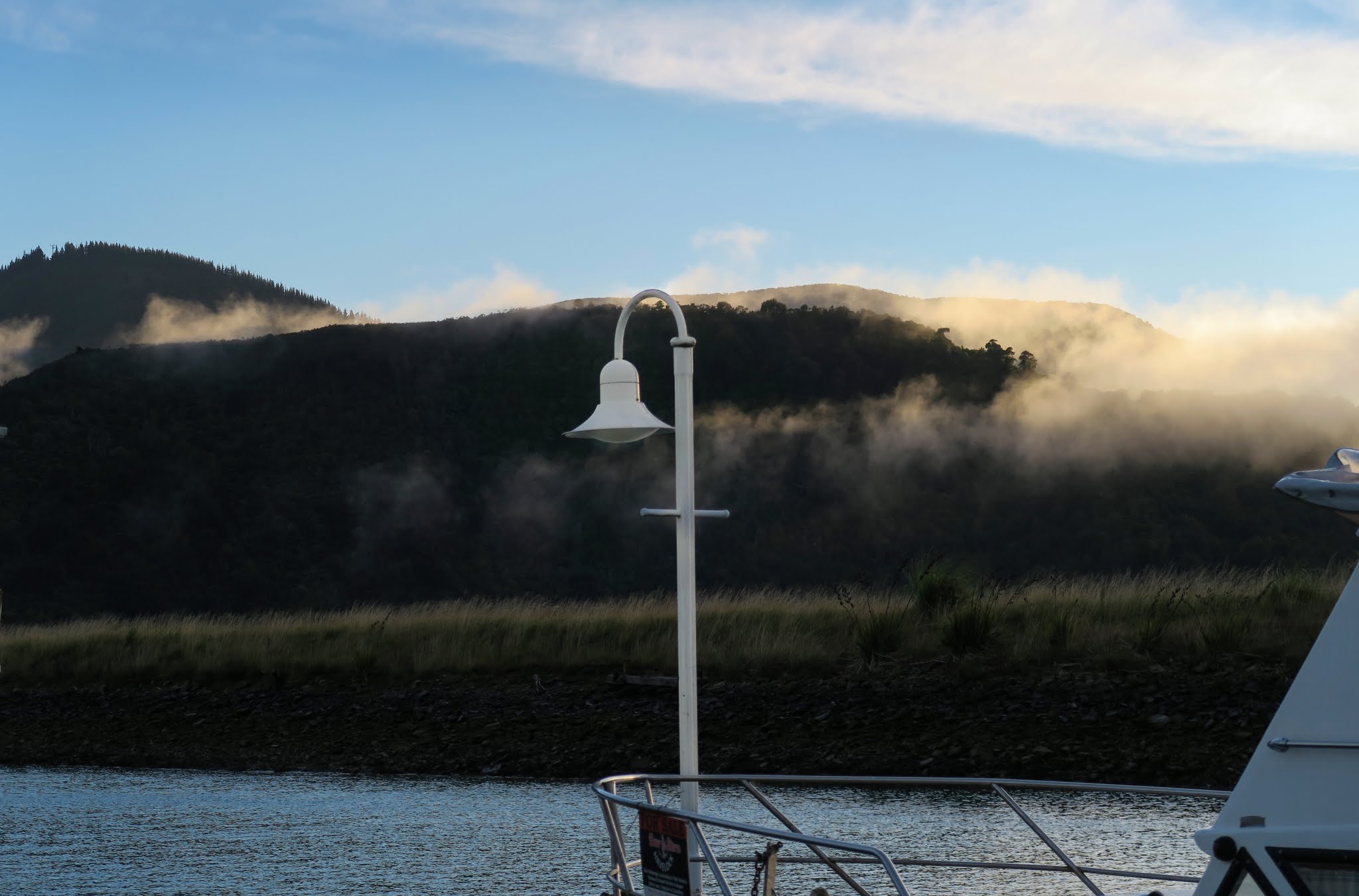
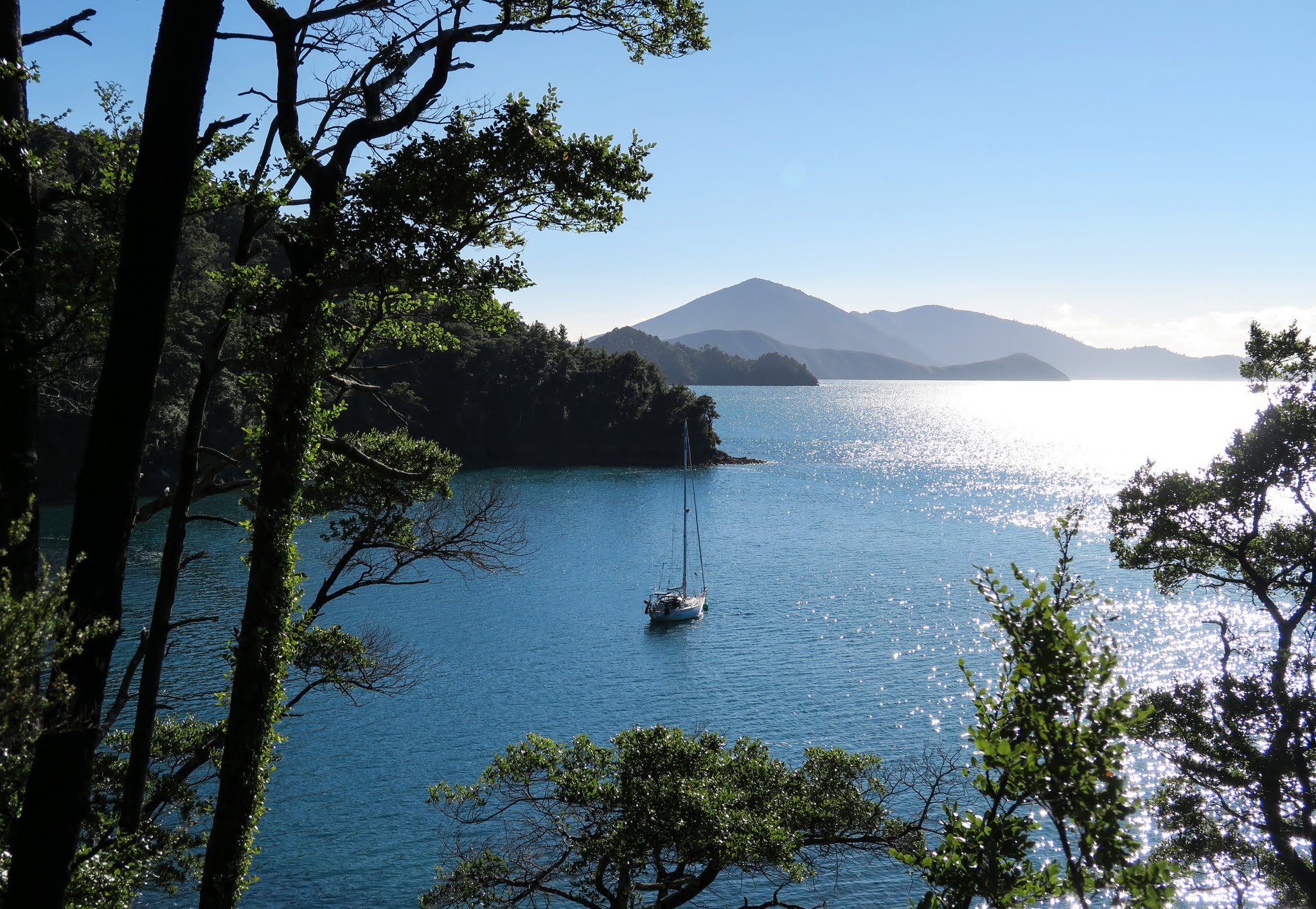
Last time we were here it was cloudy, while today was bright and sunny. This is generally a good thing, but in this case the island had lost some mystique in the bright light of day. It was still beautiful, but some element of magic was absent, at least for me. Rich, on the other hand, was now quite taken with this place–Tawhitinui’s strange magic had cast its spell on him. It just goes to show how drastically variations in light and sky can alter places and affect people differently. (Below a gallery of photos; click to enlarge/scroll.)
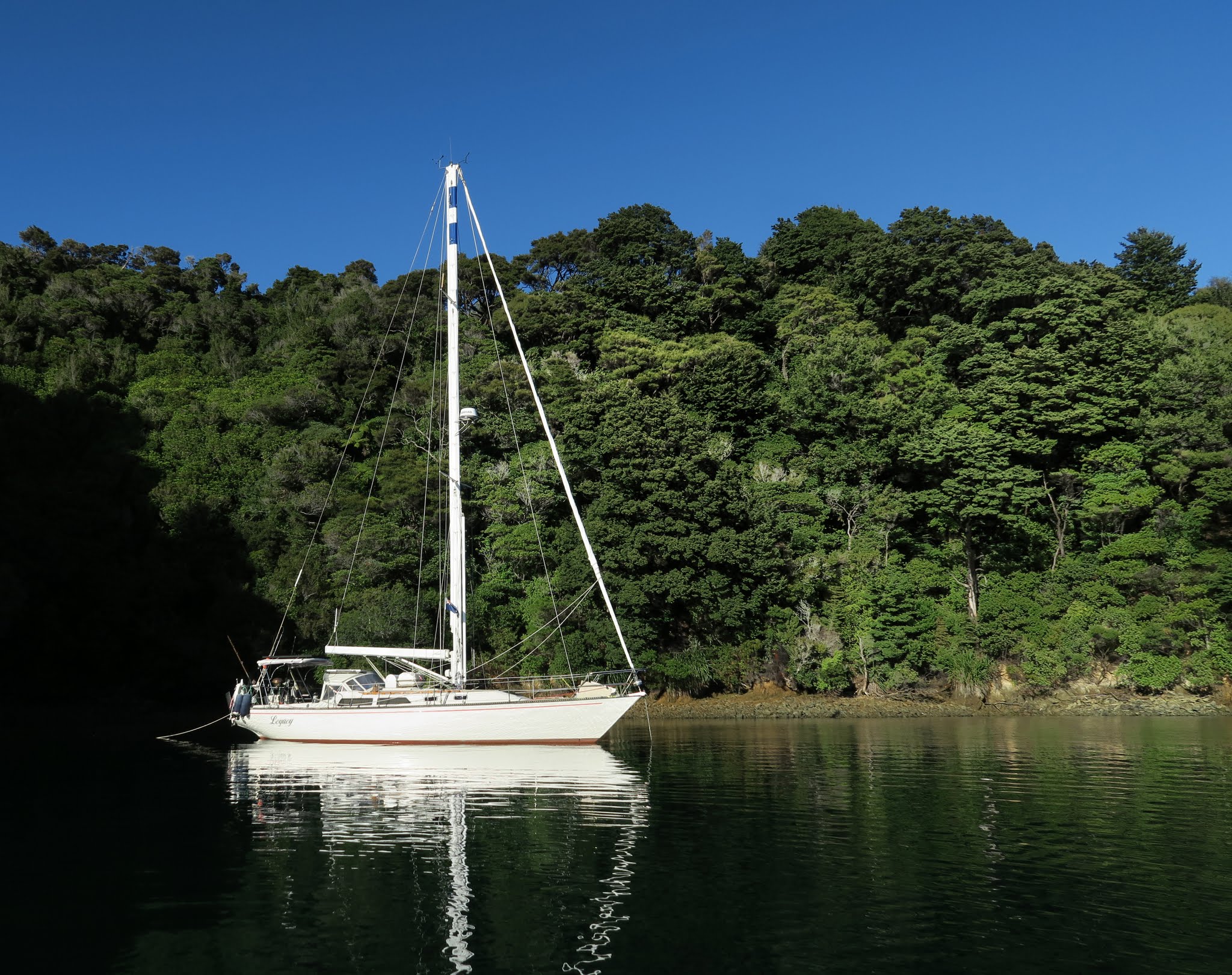
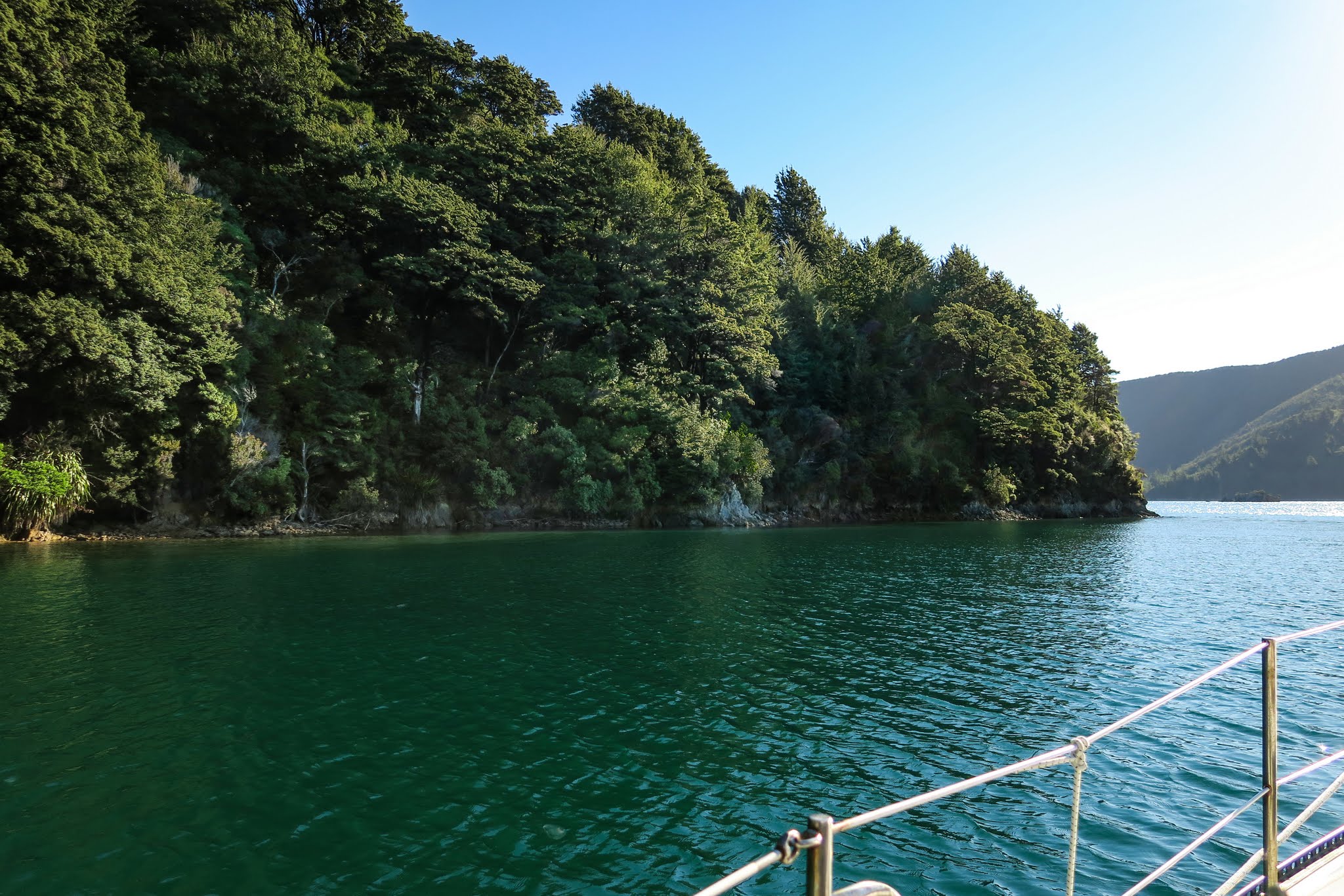
We ended having a lovely day and overnight here, sitting outside to enjoy the scenery as the changing light and shadows would change the character and feeling of these surroundings. Plus, there was that wonderful smell! The photo below shows the early evening moon sometime around sunset. –Cyndi
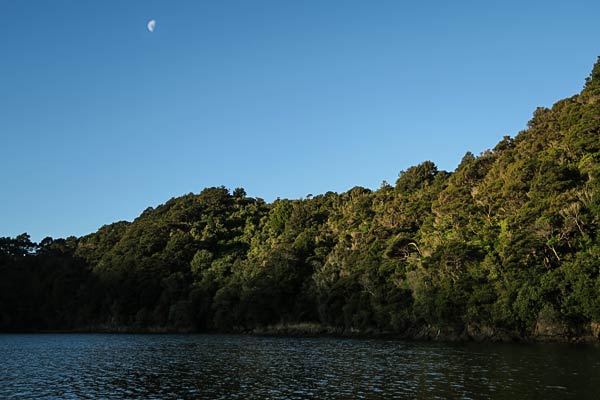
Evening moon over Tawhitinui Island

Taking a Walk on the Jacobs Bay/Fairy Bay Track (Pelorus Sound, Marlborough Sounds, New Zealand)

April 15, 2016

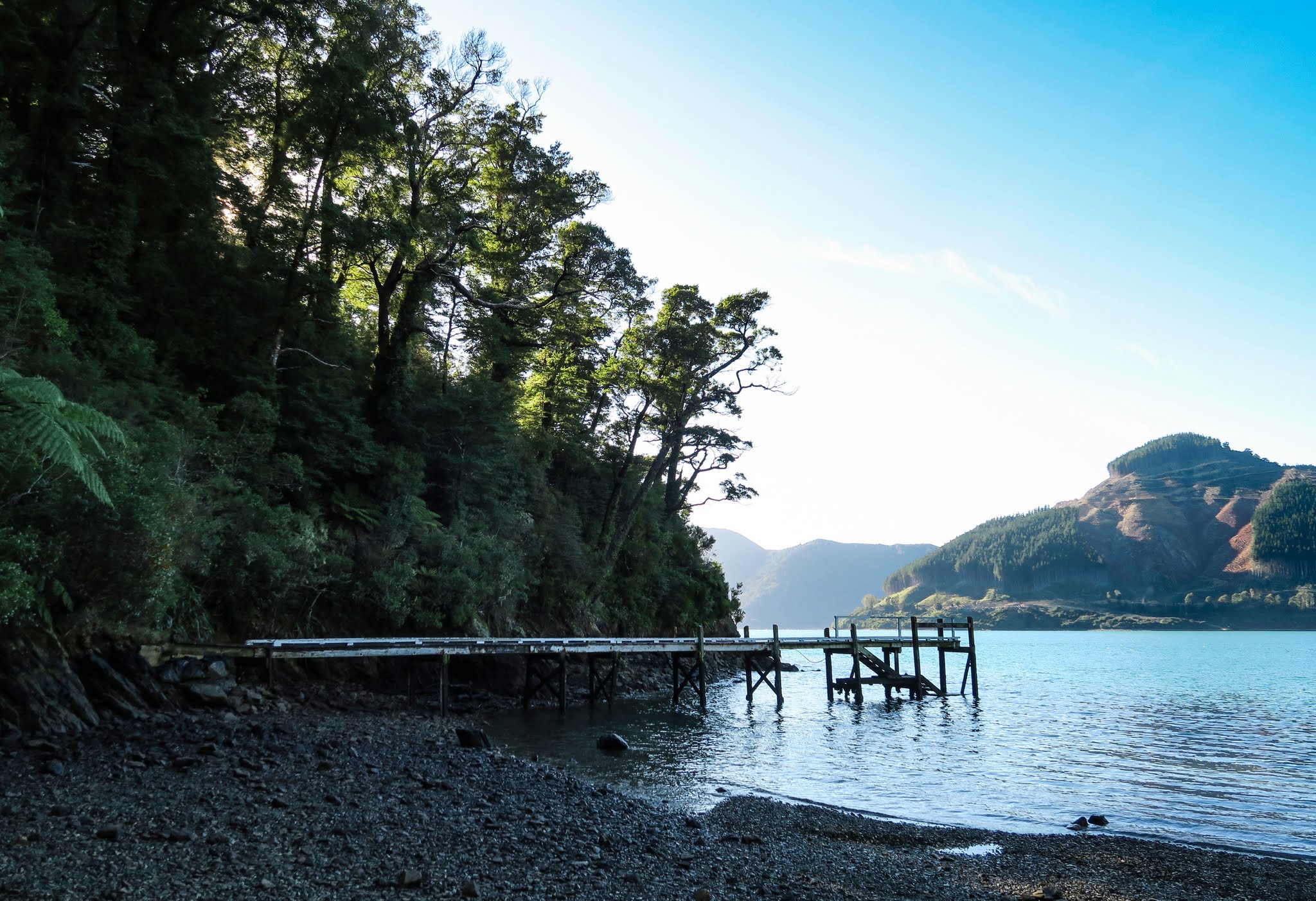
Our plan was to walk just a portion of the Jacob’s Bay track, taking the it to the Dillon Bell Point anchorage and back again. Unsure of the sturdiness of the little pier, we landed our dinghy on the stone beach then located the trail.

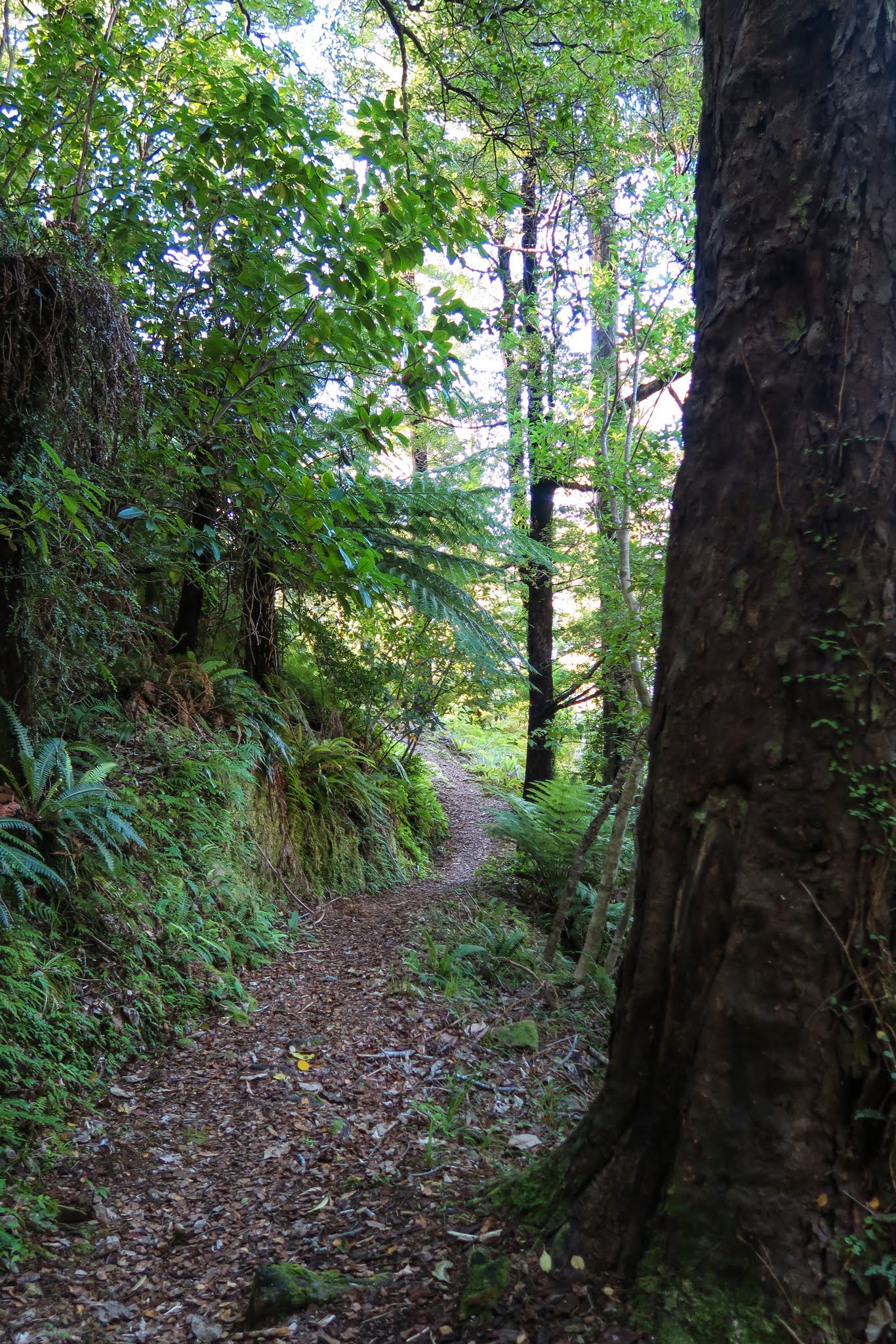
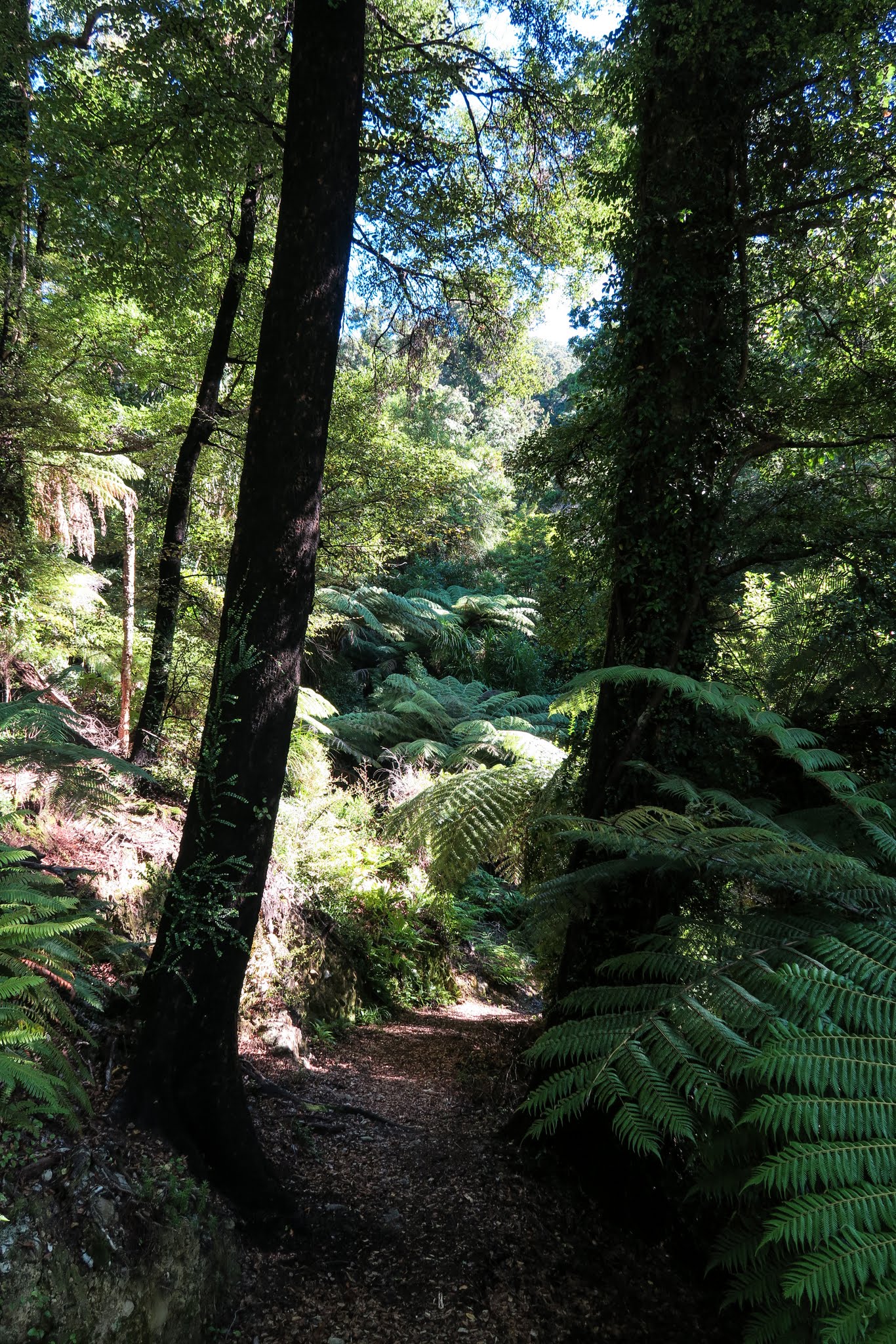
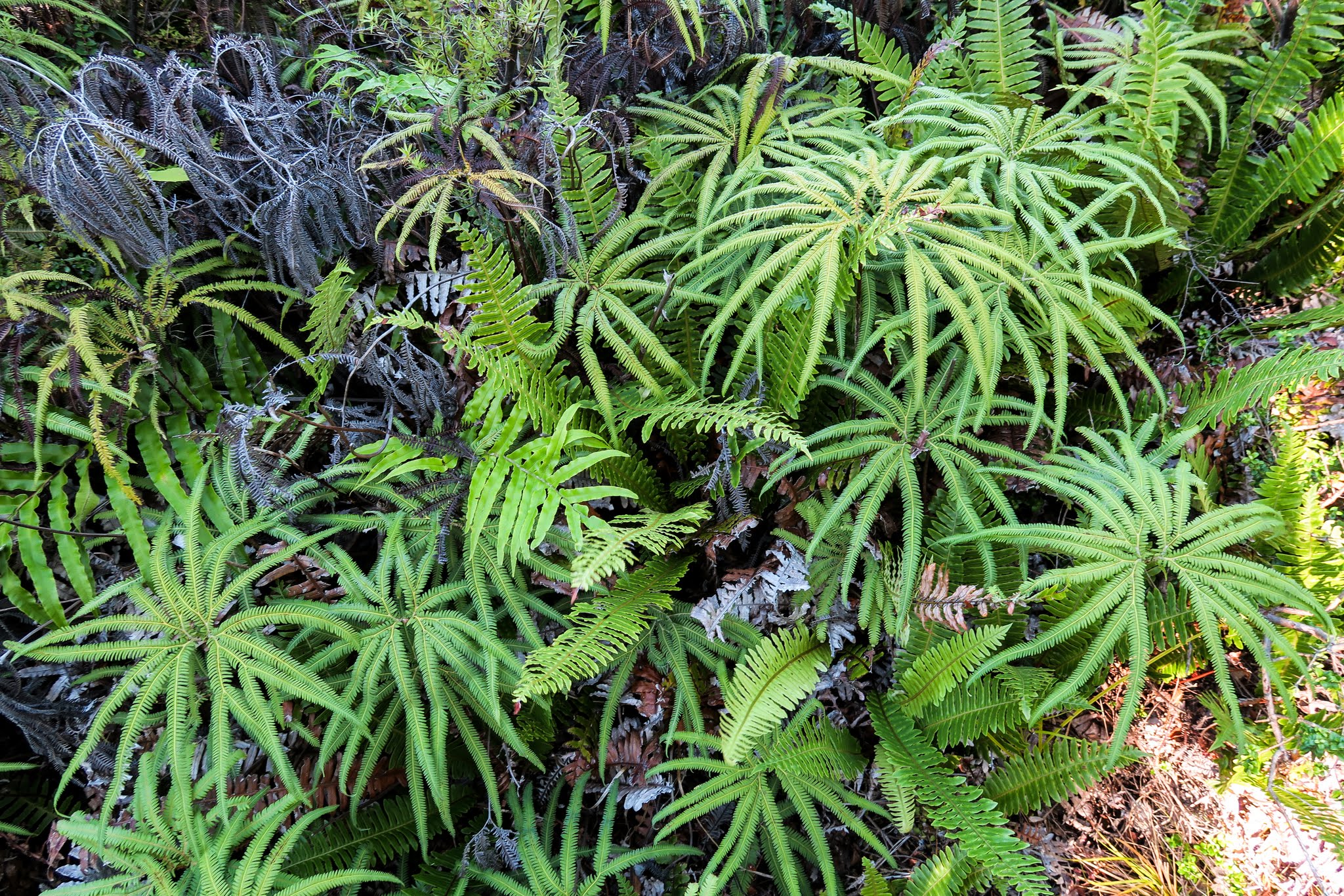
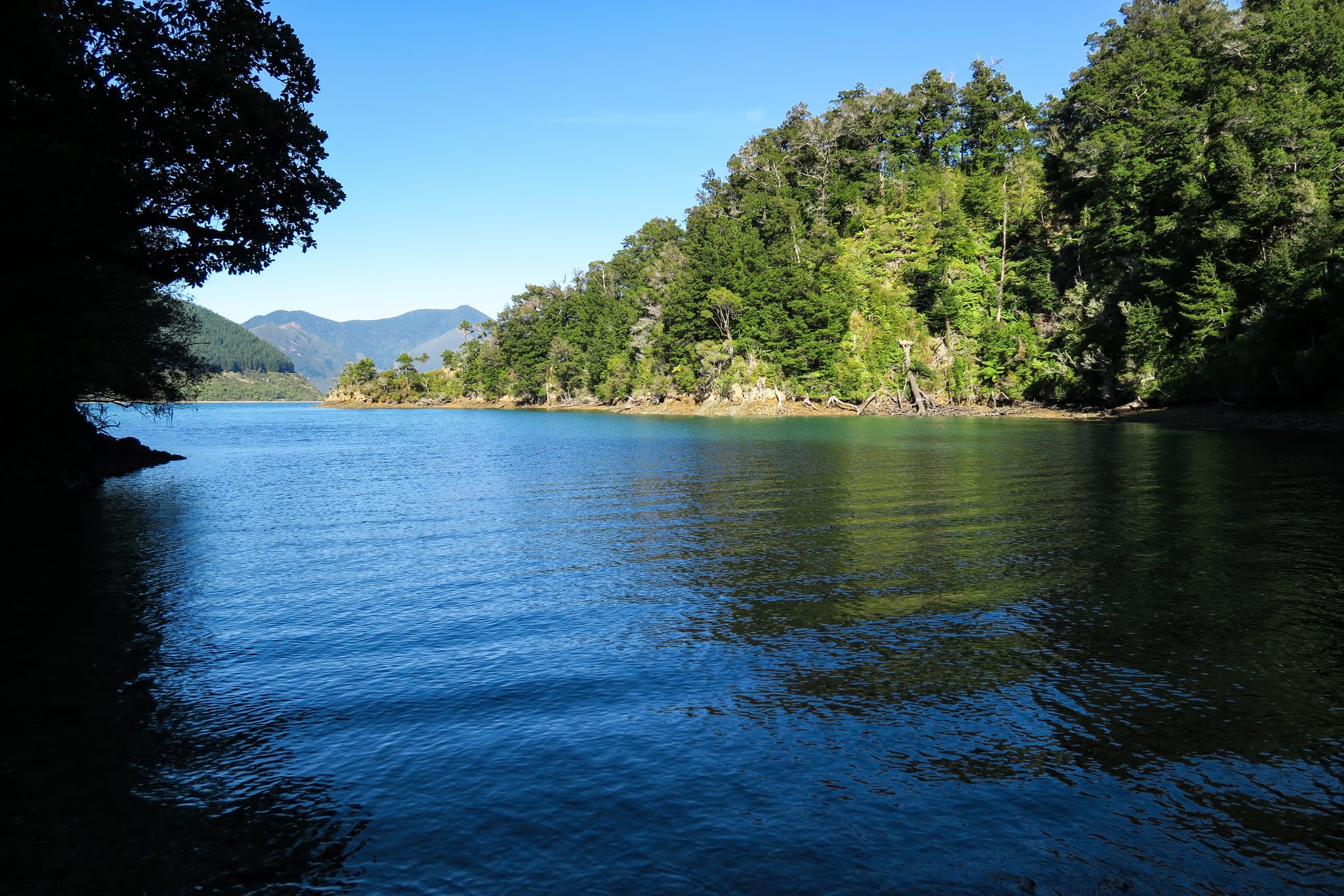
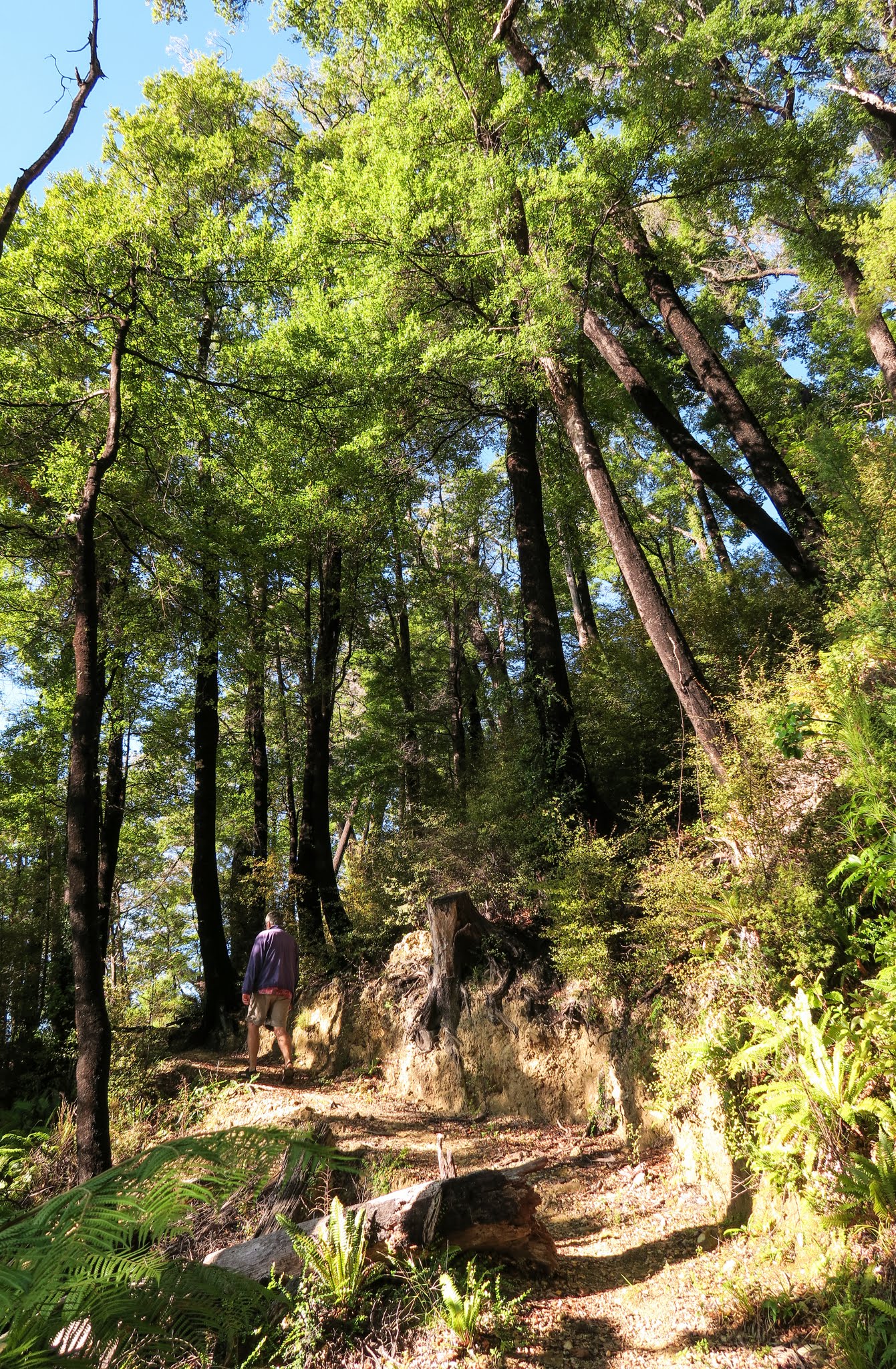
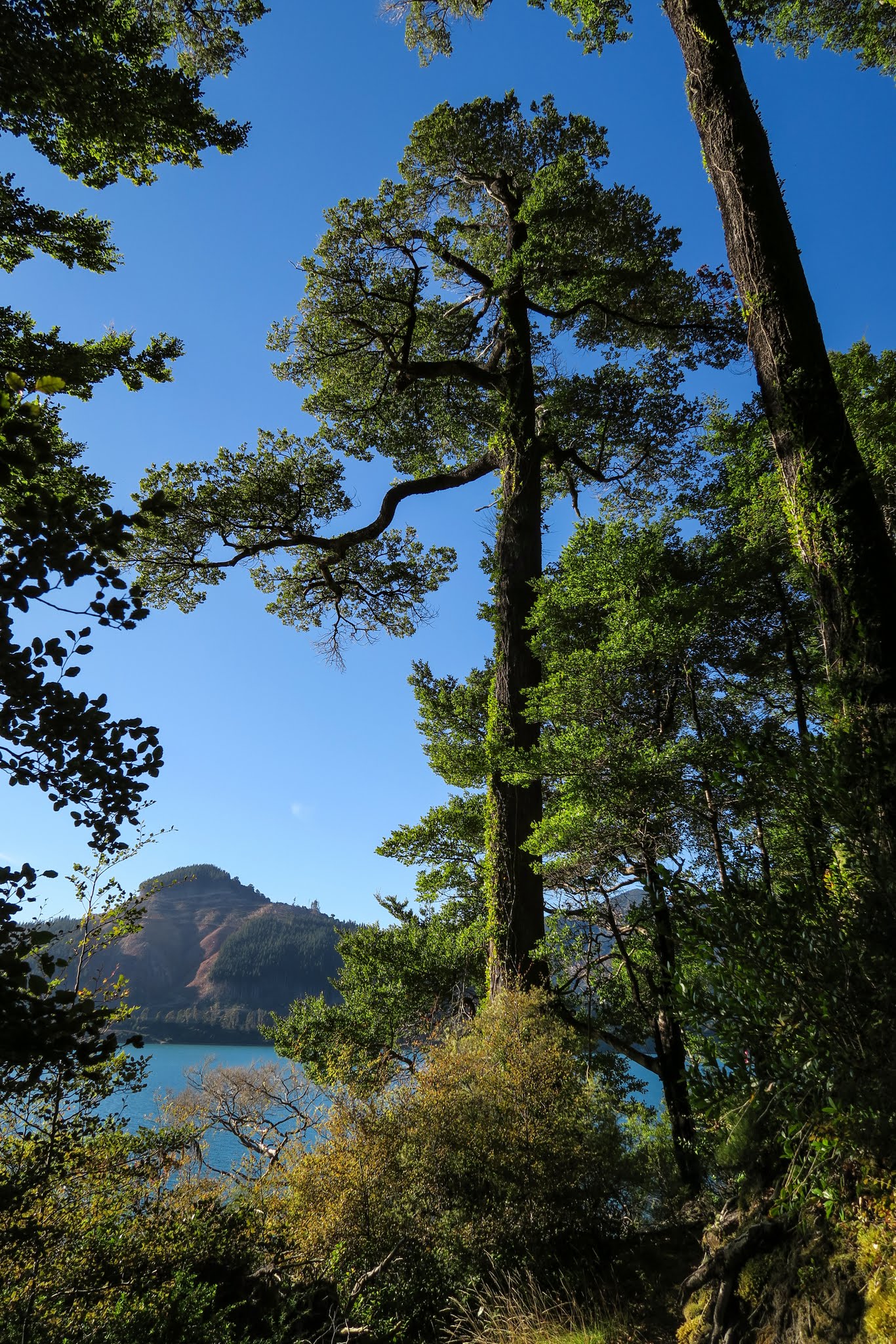
In many ways this hike was reminiscent of other shoreline trails we’ve taken in the sounds, with thick native bush, abundant tree ferns, stoney coves with blue-green water, and beautiful mountain views across peaceful sounds. But each walk has had something that makes it unique.

On this trail, it was a profusion of black beech trees. Coming across these trees on a previous walk, we thought there must have been a fire in the area because the trunks looked black and burned. We soon learned that’s how these trees are supposed to look, and it’s especially striking with their bright yellow-green leaves. Our other new discovery in the sounds has been a tree called the rata, with spiky red flower balls much like the pohutukawa. This wasn’t their blooming season, but some of them along this trail were blooming anyway, making little orange-red pops of color in the greenery.

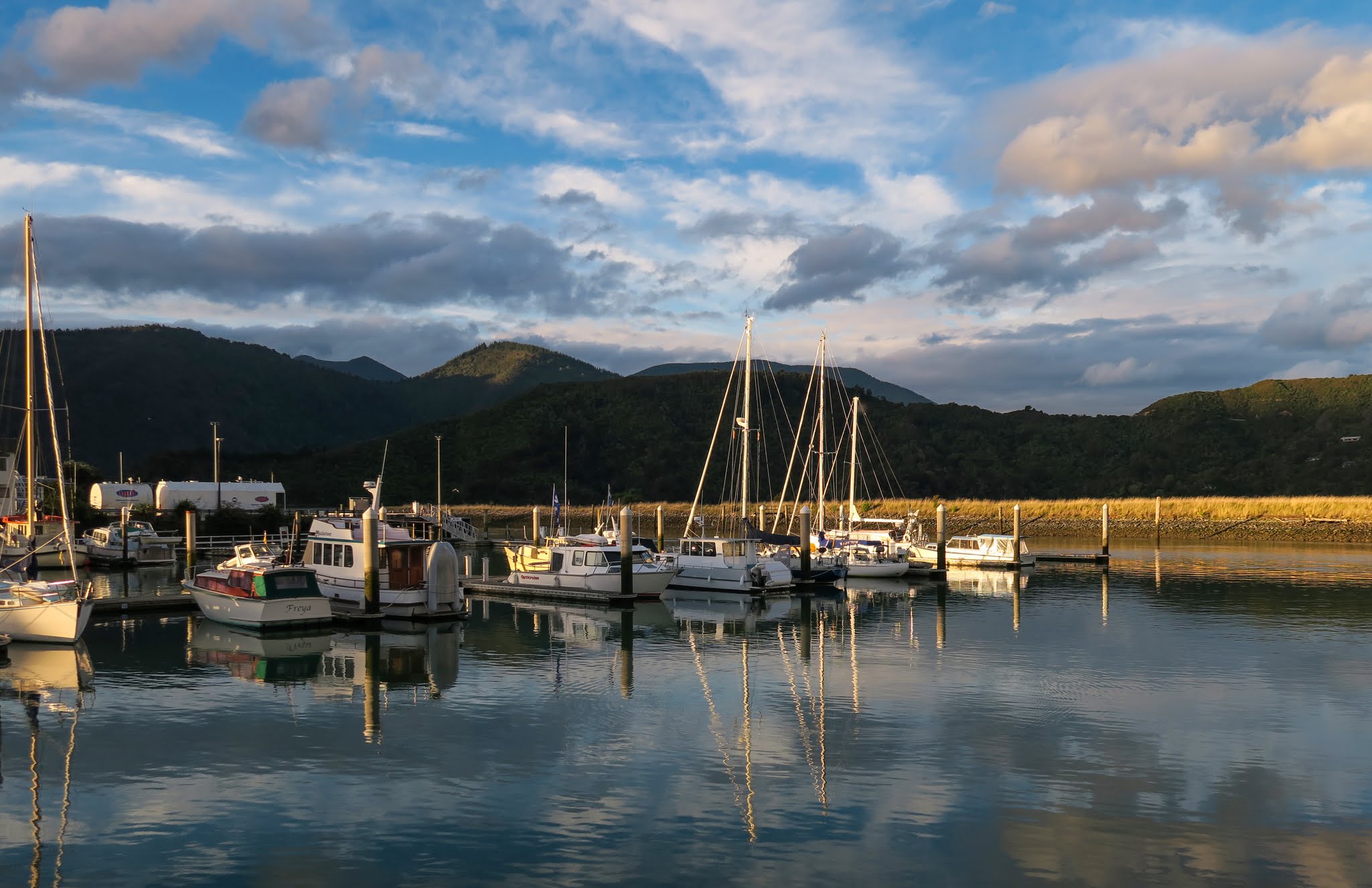
In all the hike took about an hour and was well worth doing. Below, a gallery of photos from our Jacobs Bay Hike. (Click to enlarge/scroll.) –Cyndi
Anchorages in the Dillon Bell Point Nature Reserve (Pelorus Sound, Marlborough Sounds, New Zealand)

April 14, 2016

We had three anchorages to choose from in the Dillon Bell area. Below is our impression of each.

Dillon Bell Point Anchorage

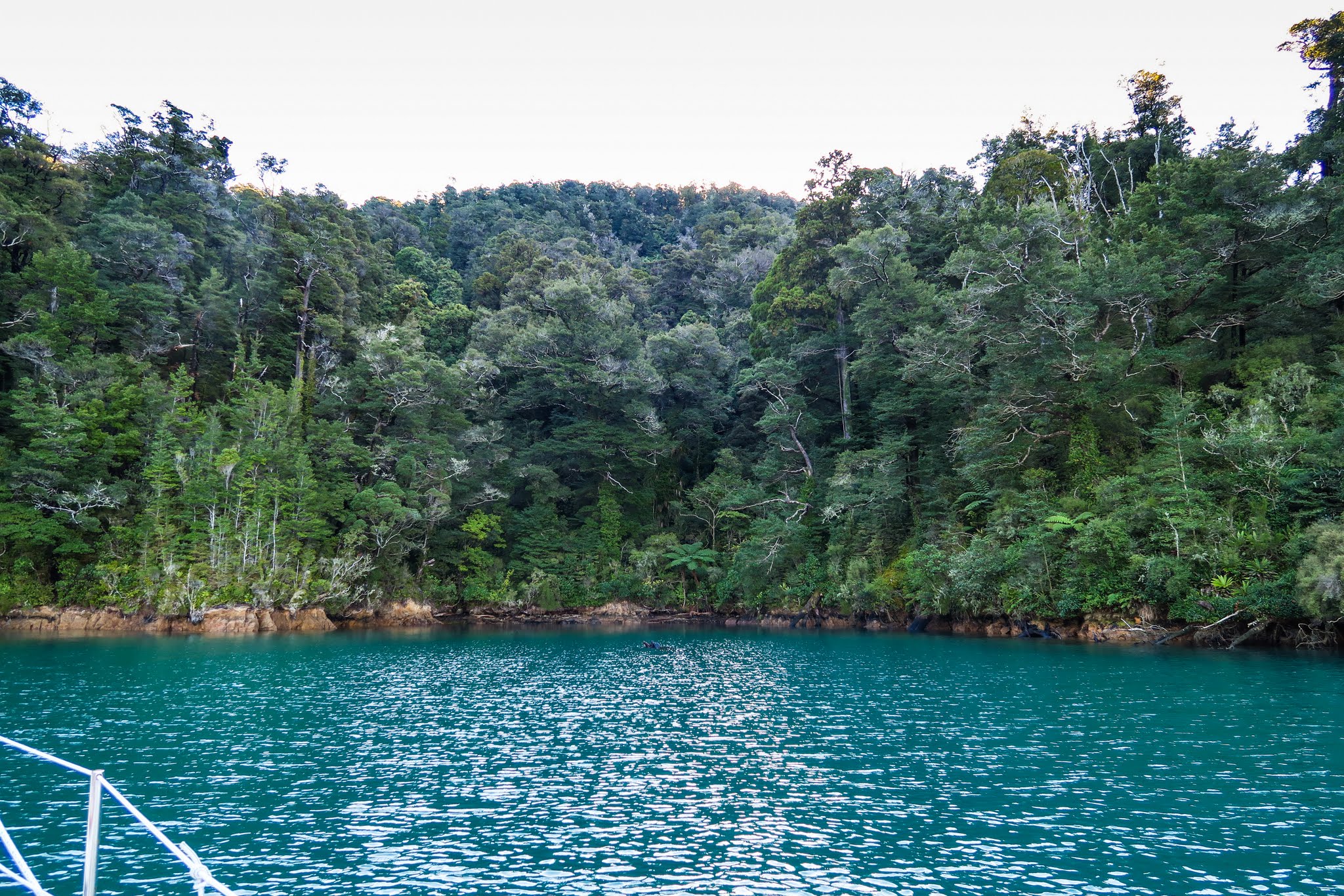
This little keyhole anchorage was so small we weren’t sure we could even get into it, but it looked intriguing enough to give it a try. Very carefully, we approached and succeeded in getting all the way in. What a gorgeous place! We were surrounded by walls of native forest so close they seemed to tower above us. There wasn’t much room, but by tying a line ashore we could have anchored there. The place was pretty enough that it would normally have been worth the effort, but the afternoon was starting to get chilly even in the sun. In the shade of this anchorage, the temperature had dropped 10 degrees, which didn’t inspire us to want to get out the dinghy and tie up to shore. Even if we did, it was too cold to sit out for a sundowner. A little reluctantly, we headed on.

Carefully heading into the keyhole bay behind Dillon Point. (Popoure Reach, Pelorus sound, Marlborough Sounds, New Zealand)
Now all the way in, the scenery was stunning in the little bay behind Dillon Point. (Popoure Reach, Pelorus sound, Marlborough Sounds, New Zealand)

Unnamed Anchorage South of Jacobs Bay

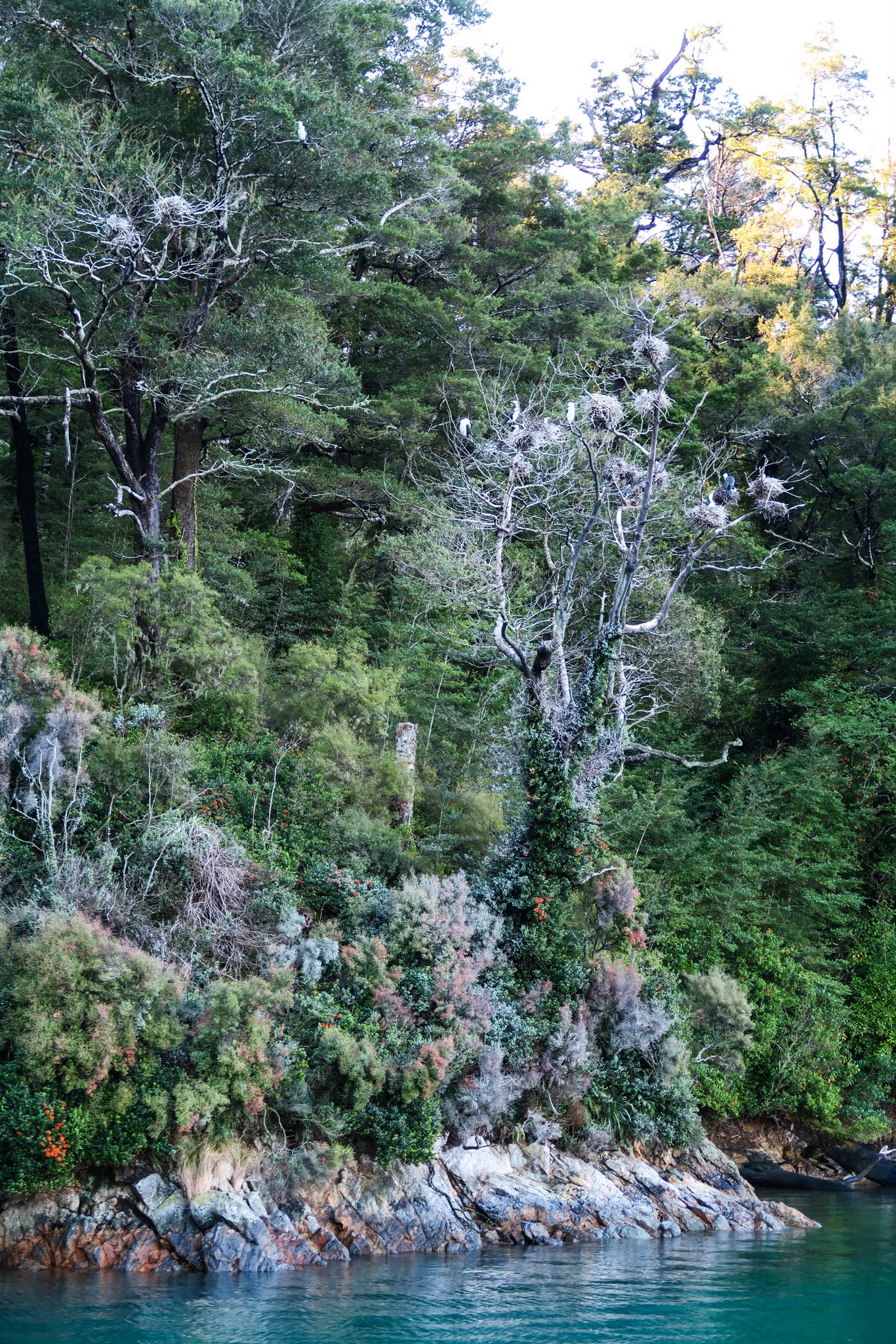
While not quite as stunning as the previous little anchorage, this was very pretty. But like the other anchorage this, too, was shady and cold. The nesting shags in a shoreline tree gave it a unique appeal, but the huge tree log sticking up right in the middle of the bay was a deal breaker. We decided to head to the next bay around the corner: Jacobs Bay. (You can click to enlarge/scroll through photos in the cascade below.)

Jacobs Bay

Jacobs Bay, while not as striking as the first two spots, had a couple of advantages. First, it was still getting some sun so was quite a bit warmer than the previous two bays. Second was its Combined Club mooring, currently unoccupied, which we went ahead and picked up. Onshore was a small campground and the entry to the Jacobs Bay/Fairy Bay Track, a hike we planned to take the following morning. In all, Jacobs Bay was the best choice for us today. -Cyndi
(Photos in the gallery below taken the following morning. Click to enlarge and scroll.)

Motoring Up The Popoure Reach (Pelorus Sound, New Zealand)

April 14, 2016


(The map above is interactive; you can zoom in and out and click on the markers to see what’s what.)

The windy period had passed and it was time to take advantage of the nice conditions and do more cruising. Our destination was the Dillon Bell Point area, a nature reserve with three possible anchorages.

First, though, we’d have to face the dreaded blind corner between the Havelock Marina and the Mahau Sound. We blew our horn as we approached, hoping that any boat coming the other way would hear it and hang back. No one was there; we came through unscathed.

blind-corner

Now began our trip back up the Mahau Sound, which looked quite beautiful after not seeing any sounds for a few days.

East end of Mahau Sound. (Marlborough Sounds, New Zealand)
west end of Mahau Sound, taken a few days earlier as we motored towards Havelock. (Marlborough Sounds, New Zealand)
West end of Mahau Sound, taken a few days earlier as we motored towards Havelock. (Marlborough Sounds, New Zealand)

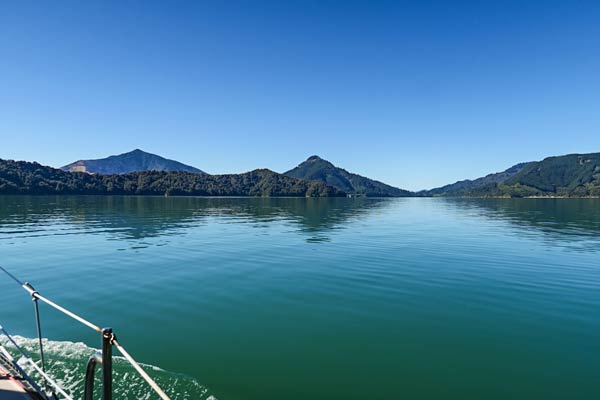
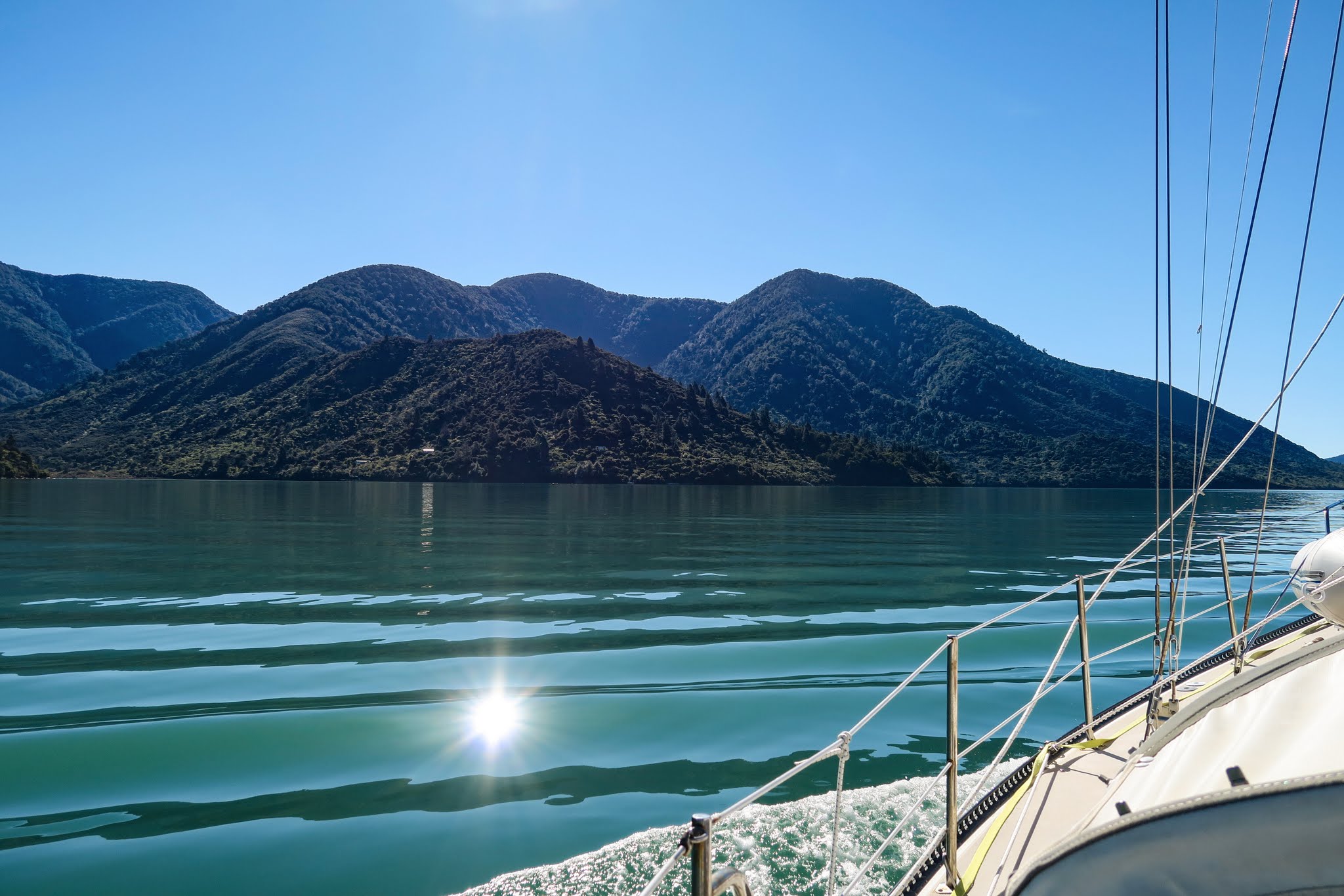
From the Mahau Sound, we turned up the waterway known as the Popoure Reach. Last time we were here the mountaintops were covered by low-lying clouds and fog. Today it was sunny and clear, and we could clearly see the mountains around us. The sun was glimmering off the still water, a beautiful day for a motor-boat ride.  (You can click to enlarge/scroll through gallery below.)

Our probable destination was an anchorage called Jacob’s Bay, but we’d check the anchorages just south of it to see what they were like.

Meanwhile, on our map you may notice a branch off the Popoure Reach called Nydia Bay. With one of the best-protected bays in the sounds and another bay with access to the Nydia track, this was always on our list of places to visit. But with the season getting on and the cruising ground of Abel Tasman National Park still ahead, we decided to wrap up the Pelorus Sound before the next windy period. If we ever get back this way, we’ll be sure to visit the Nydia Bay area. For now we were heading to Dillon Bell.–Cyndi