The Hauraki Gulf: Sailing into Auckland (New Zealand)

April 3, 2013

After our walk on Rakino Island, it was time to head on to our next stop: Auckland! Our new friends Barry and Sandy, whom we met while cruising the Cavilli Islands, had kindly offered to let us use their slip in the Viaduct. We were thrilled to accept, and it would be a perfect place to sit out the coming weather system.

We were sad to leave beautiful little Rakino Island but very excited about spending time in the Auckland. Visions of international food courts, Movenpick ice cream, pizza, Mexican food, and Starbucks danced in our heads, and we looked forward to the energy of the city after weeks spent in quiet anchorages.

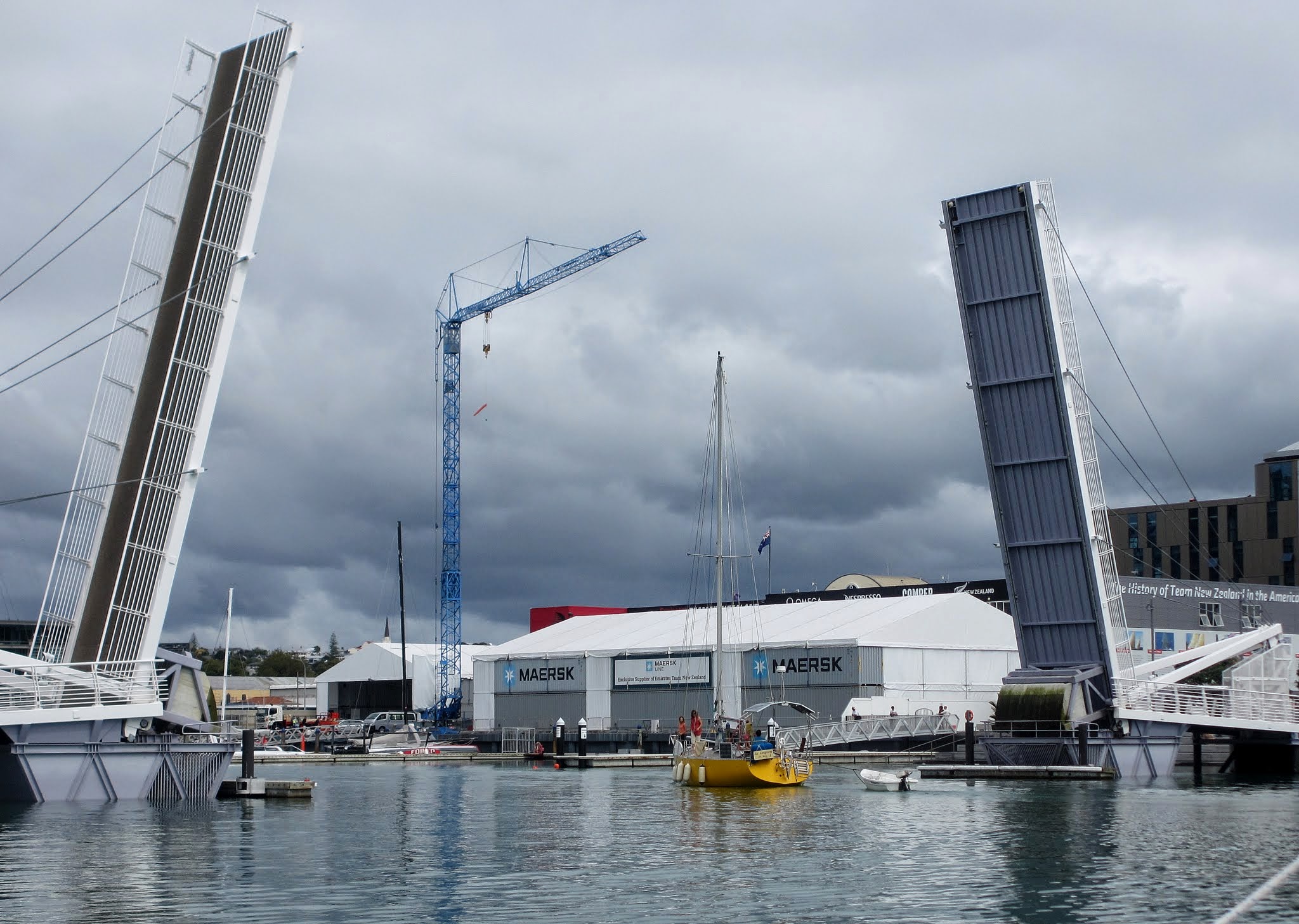
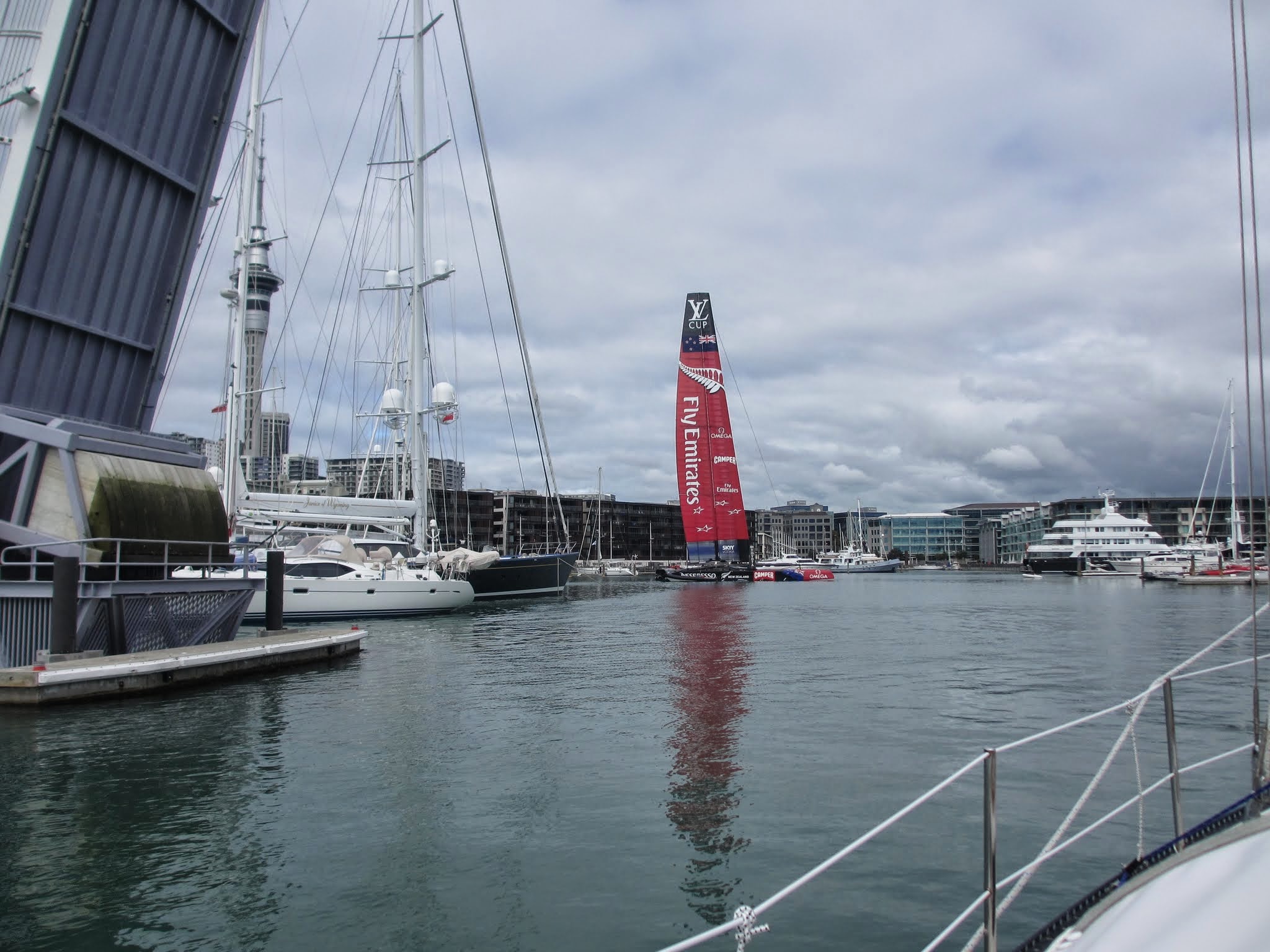
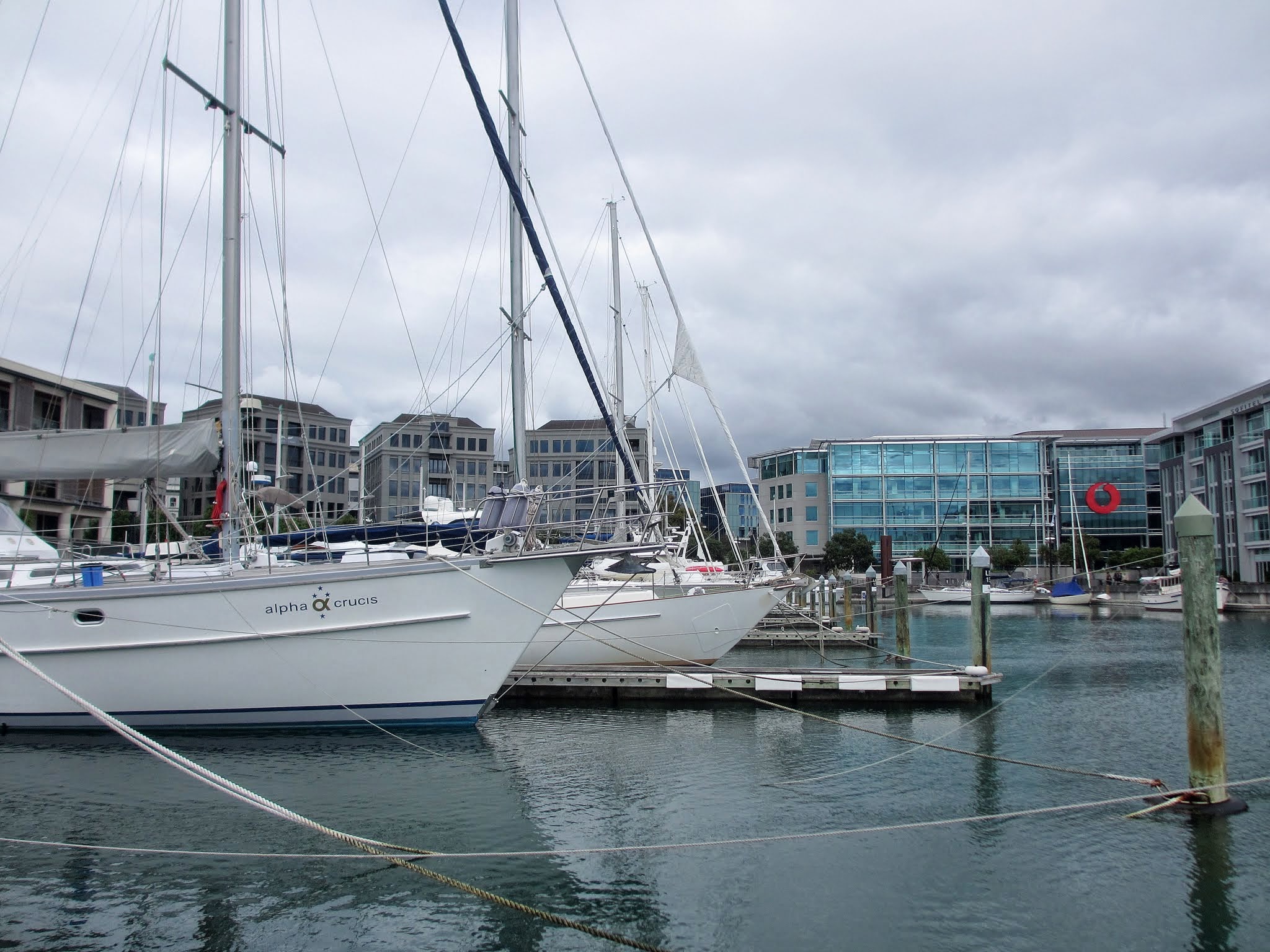
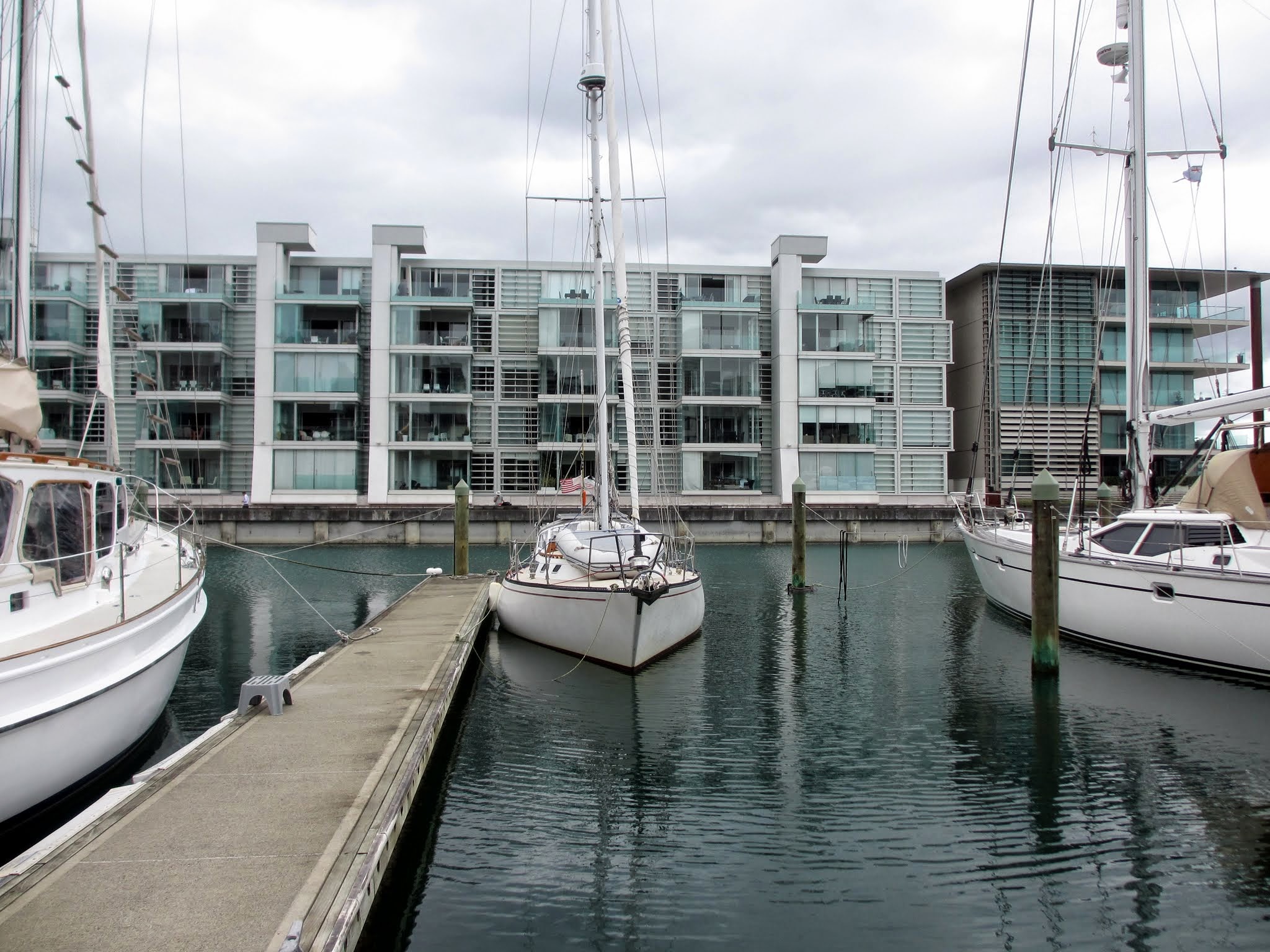
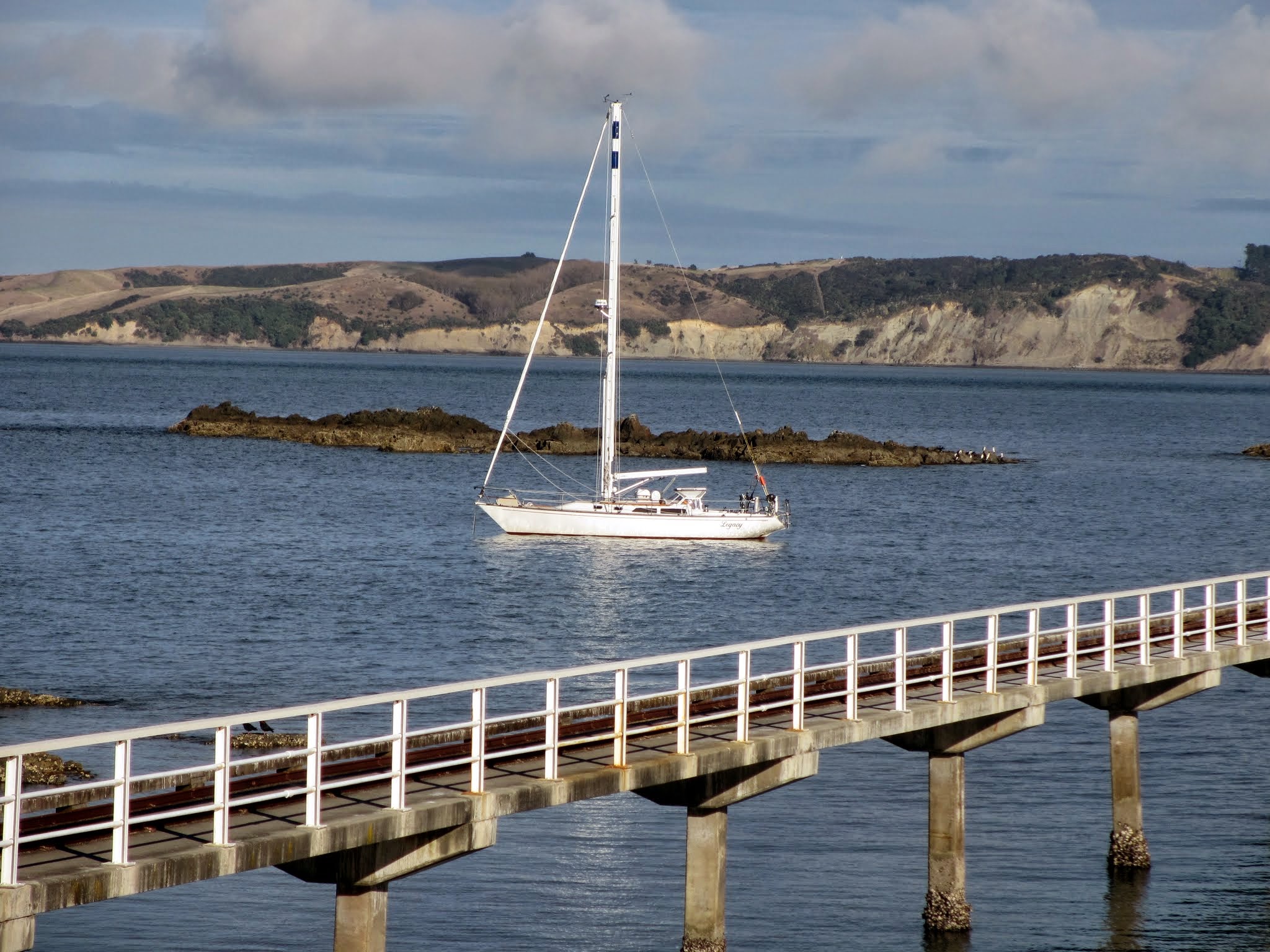
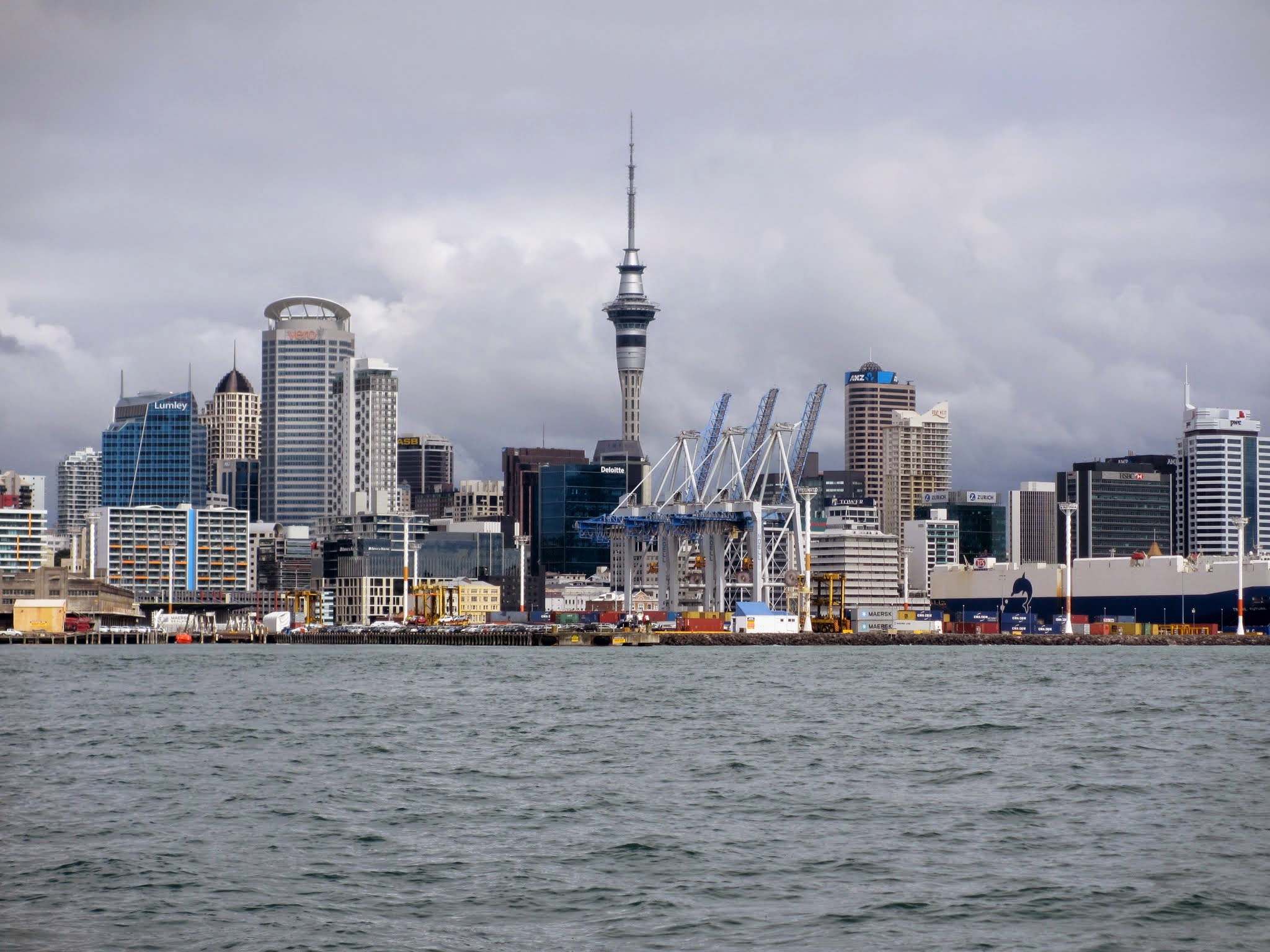
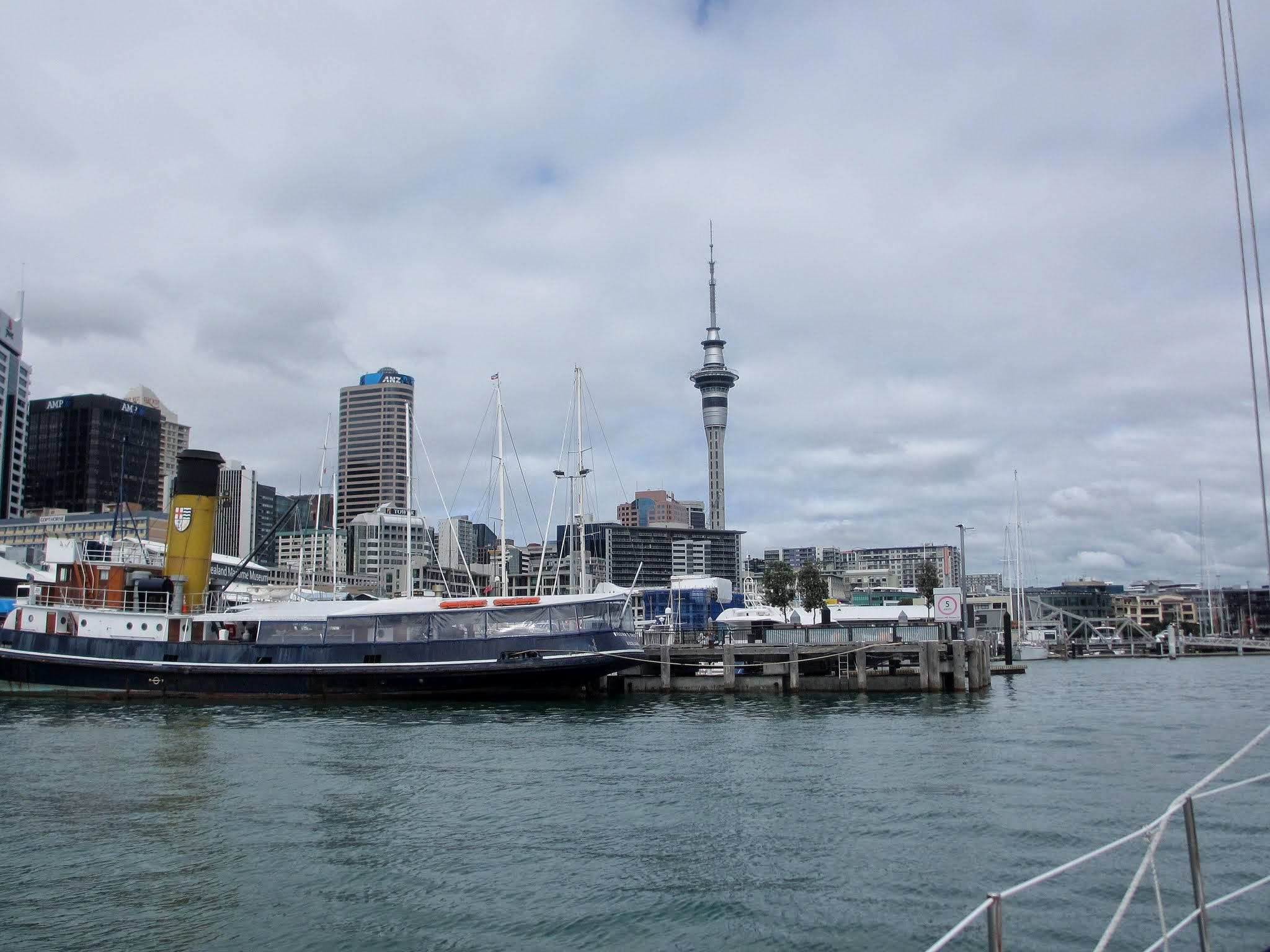
We had been to Auckland by car and knew the layout, but it was absolutely thrilling to see it from our own boat as we motored up the channel towards Viaduct Harbour. That harbor isn’t easy to spot as you have to wind in through an area of wharves and slips, have a pedestrian drawbridge raised, and then head down a channel amid hotel and apartment buildings to locate your assigned slip. This is not so much a marina as a harbor with slips, generally used by larger yachts, but there are occasional visiting boats our size. There are no facilities at all; the only available restrooms are nearby public ones. But it’s worth the tradeoff to be near the most festive part of the city.

We were pleasantly surprised as we approached the pedestrian bridge to see La Laopiote, the boat with the French acrobats, motoring in ahead of us. We don’t know them well, but after seeing them perform in Los Angeles and Tahiti, it was like coming across old friends. We motored down to the slip and got tied up. It was very exciting to have the Sky Tower, the symbol of Auckland, towering above us and to actually be tied up in the famous Viaduct Harbor. Days like this are about as exciting as it gets!

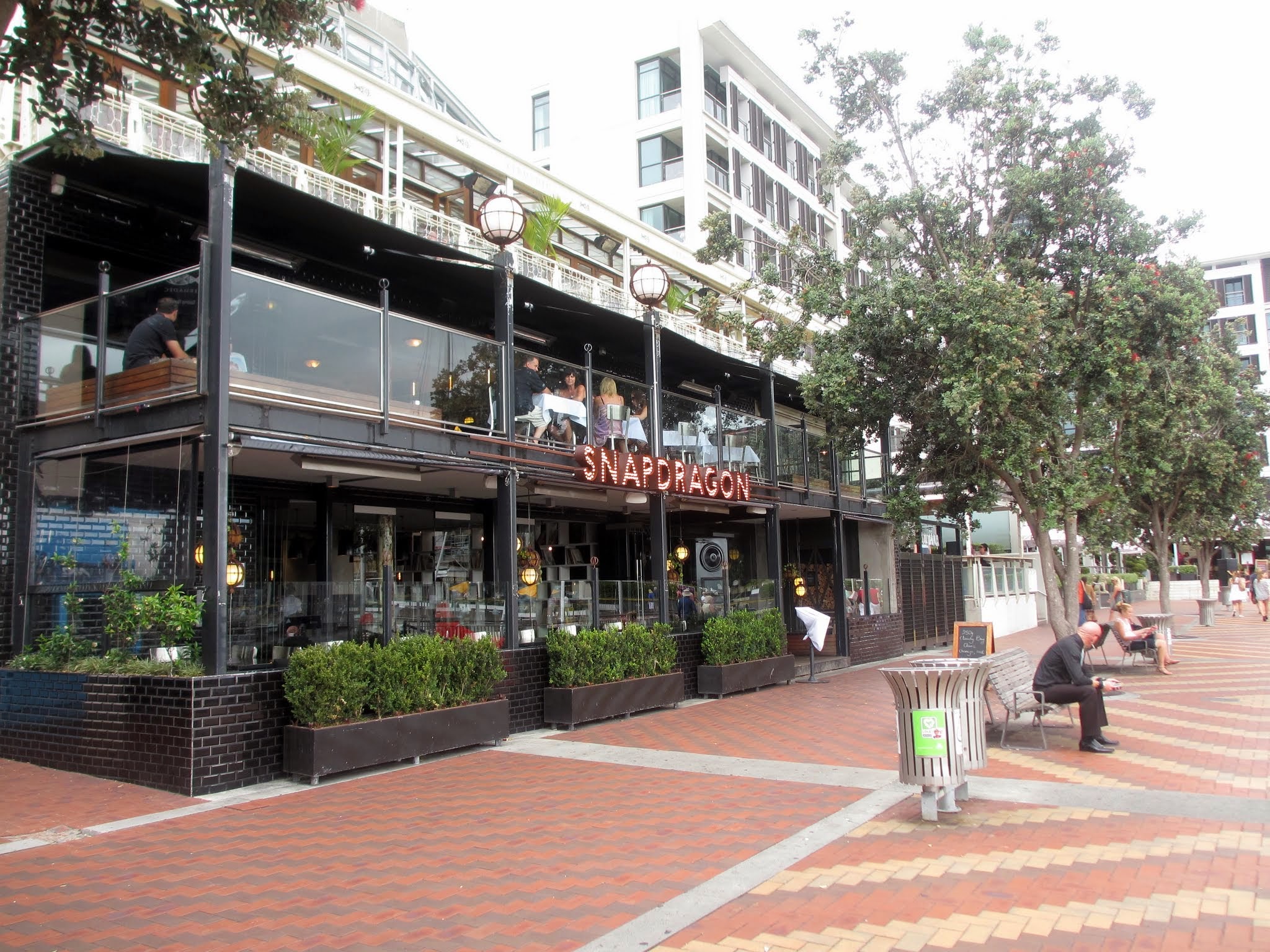
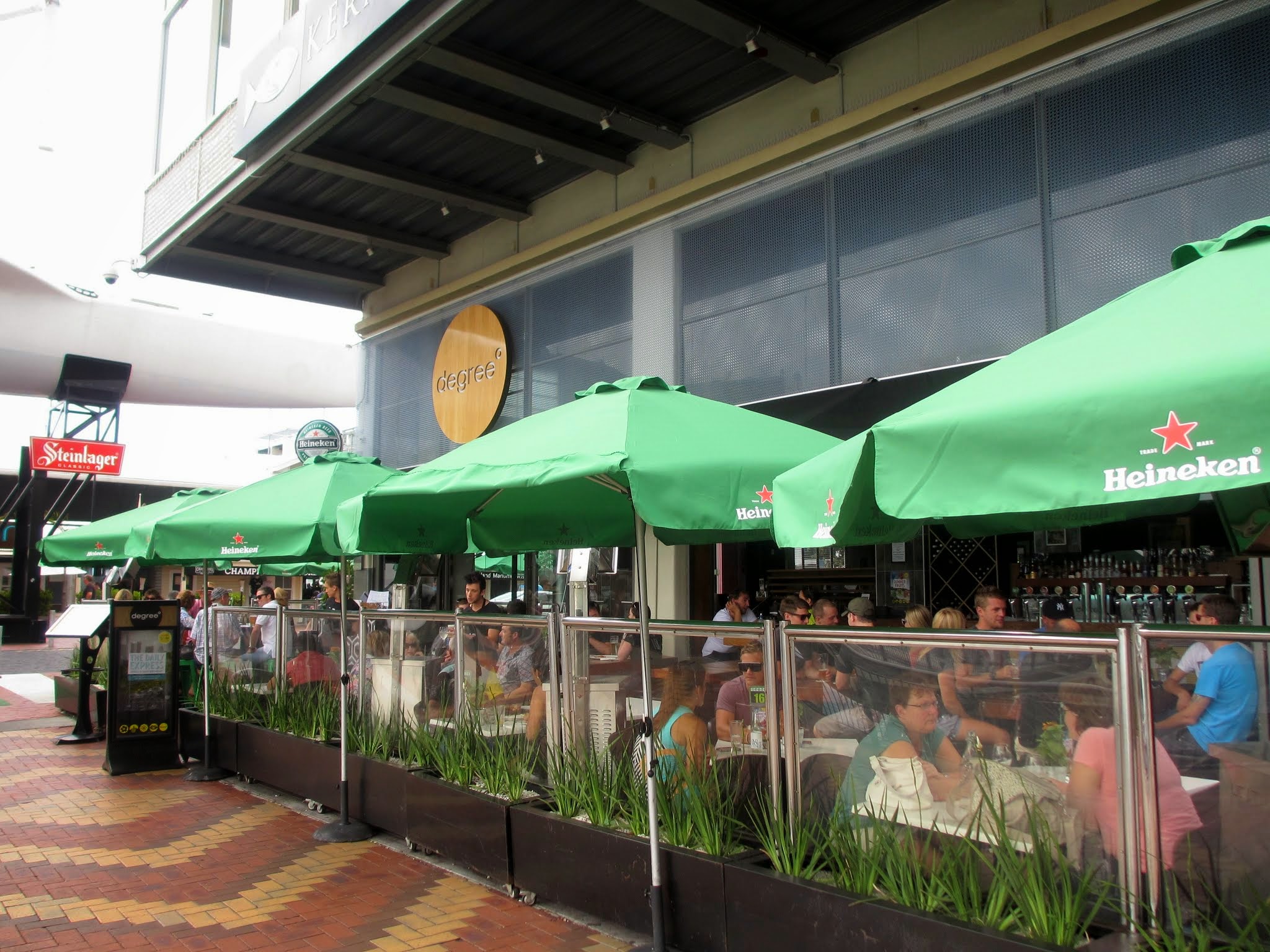
I will say we did have a bit of a shock once we headed into the city. Our area of slips was out of the fray and surprisingly quiet, but up a block and around the corner began the heart of the action. Restaurants around the square are filled, and the favored seats are the outdoor tables. Beyond the harbor are the city streets filled with cars and people. So much sensory input after being in the countryside was a little overwhelming. (link to Rich’s post)

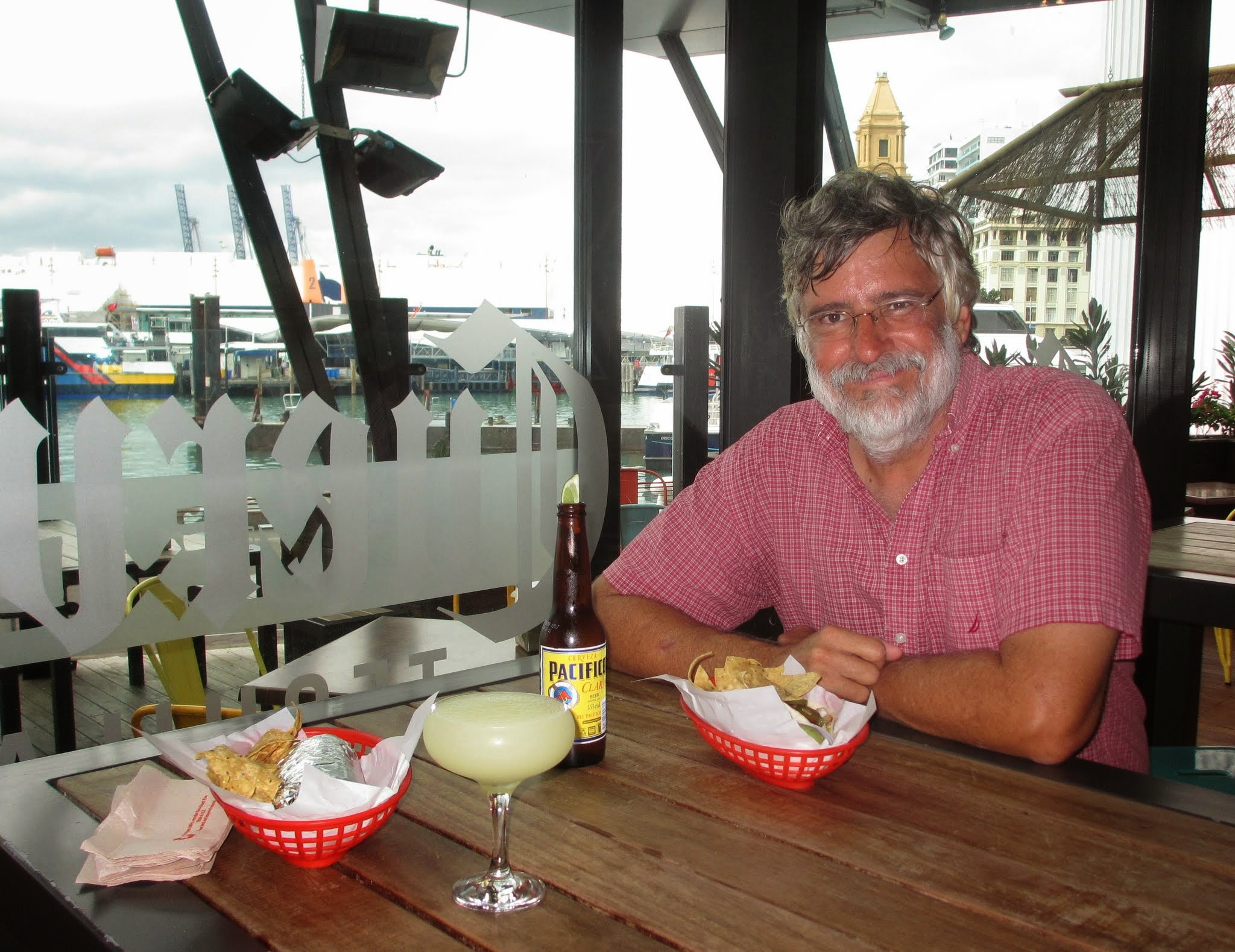
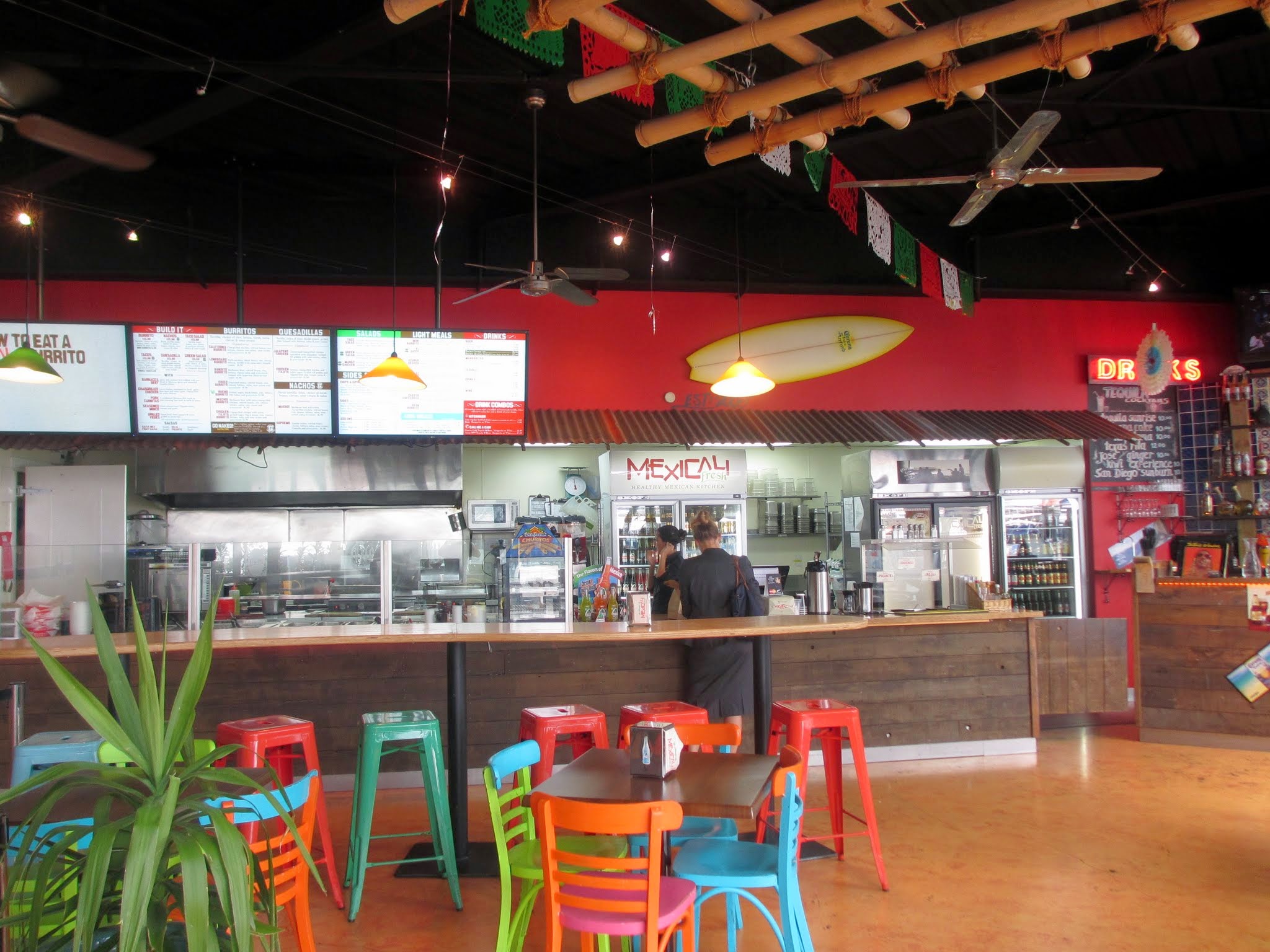
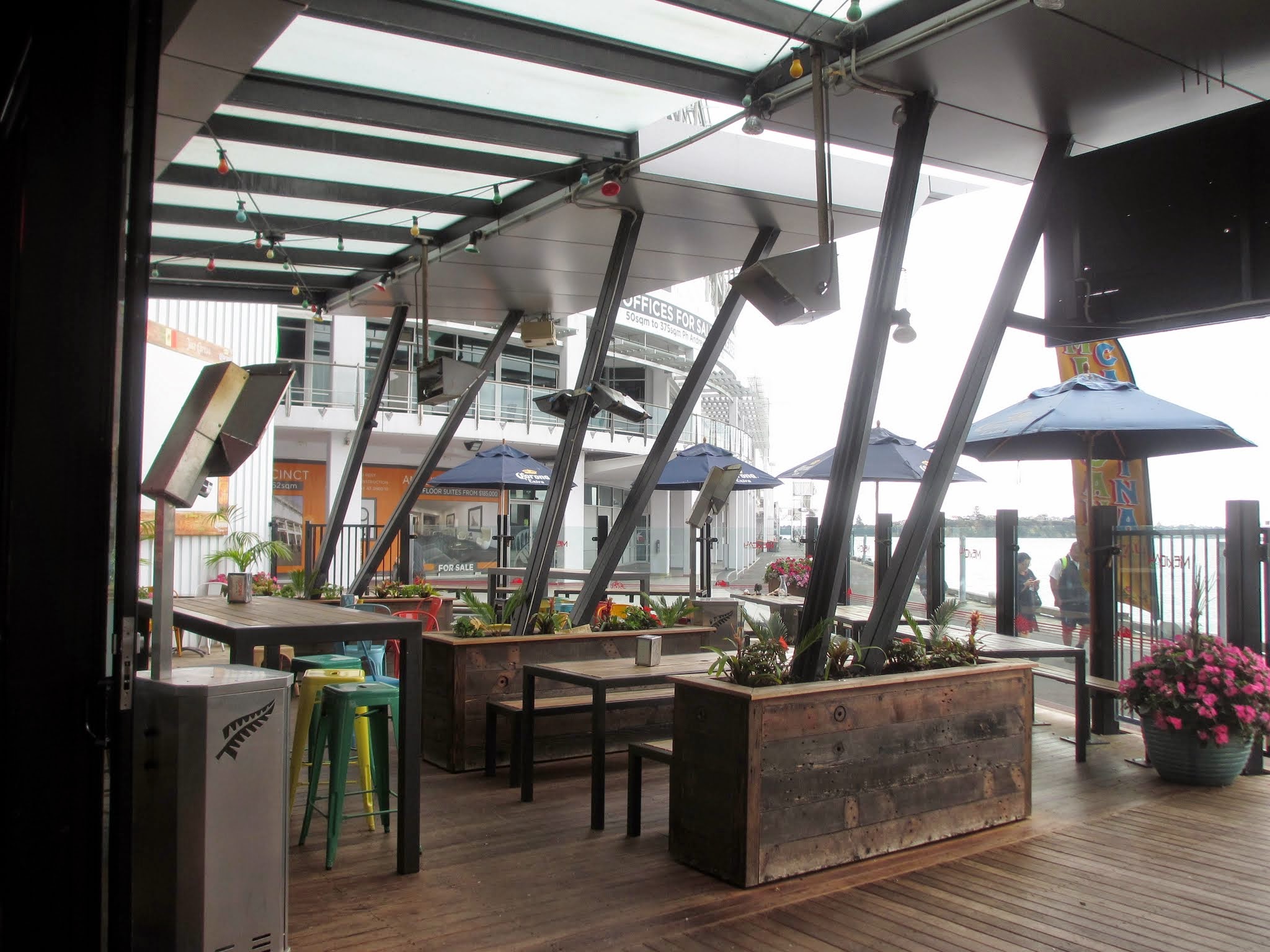
We decided that Mexican food would help us adjust and headed over to Mexicali on the waterfront, a place so much like Chipotle back in the states that I have to wonder if they’re related. We had a seat and in our dazed state enjoyed looking out at the world and eating tasty food! We followed it up with an affogato (espresso over ice cream) at Movenpick. I can’t say we were fully adjusted, but we were making progress.

Later that night Rich was out on deck and told me to come up and see something. Above us the Skytower was all lit up with multi-colored lights, something we had missed when we were here in January because it got dark so late. What a beautiful sight and a fitting end to our Auckland arrival day.

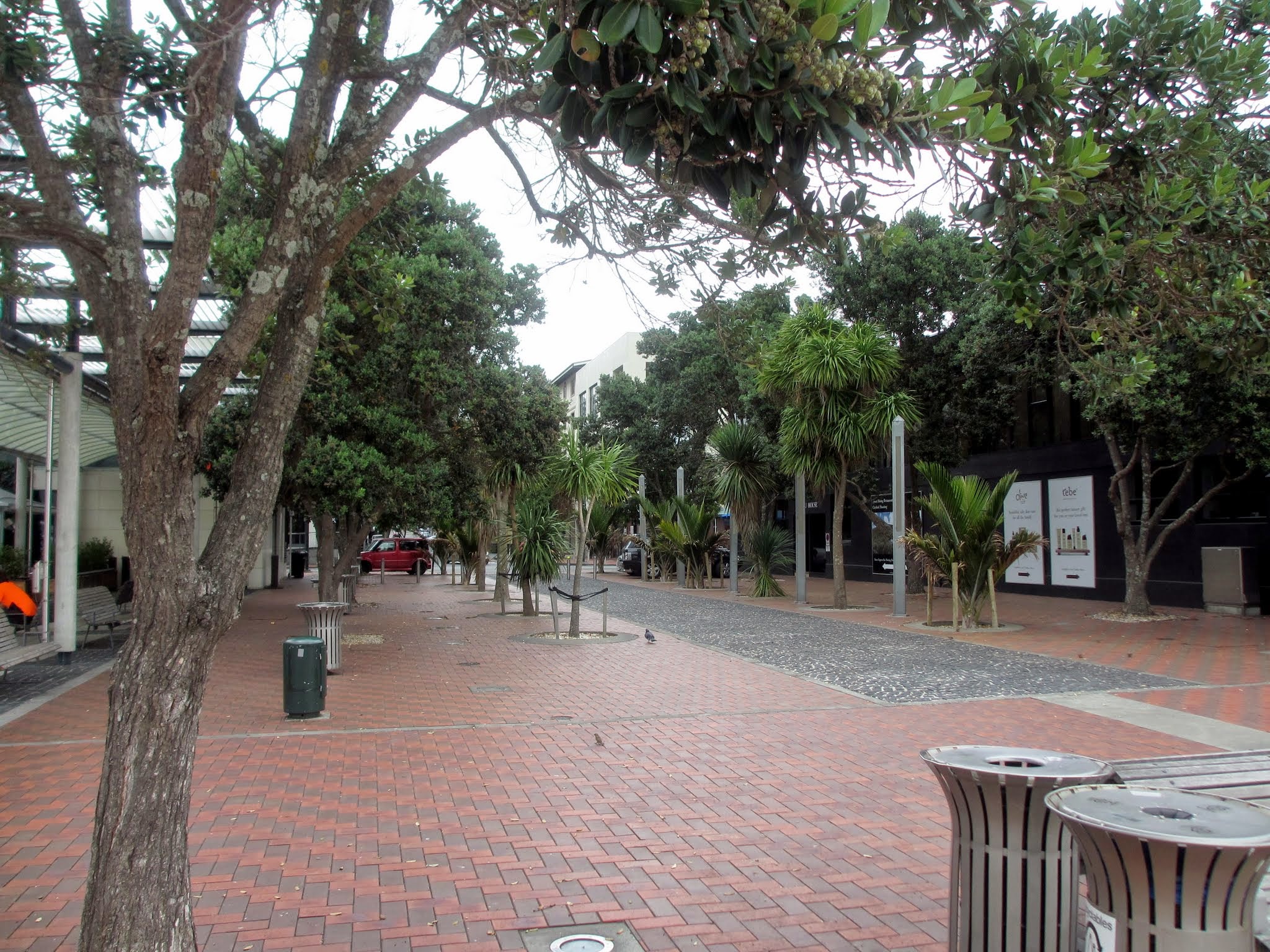
Below is a gallery of our arrival day, pretty much in order as we approach the city and then Viaduct Harbour, followed by a pictures of the calm back street en route to the busy square nearby and Mexican food! -Cyndi
The Hauraki Gulf: Rakino Island and the South Hauraki Gulf (New Zealand)

April 2 and 3, 2013

The north and south Hauraki Gulf are connected by the “notorious” Whangaparaoa passage between the tip of the Whangaparaoa Peninsula and Tiritiri Matangi island. It’s fine to pass through it in mild weather, but it should be avoided when strong winds run against the current.

The wind was light when we entered the channel en route to Tiritiri Matangi, and it was a huge thrill for us when, through a dip in the hills on the peninsula, we spotted the Auckland Sky Tower. We knew we’d be there soon, but we had a couple more days of nice weather before high winds were due to arrive, and we wanted to take advantage of them.

After spending the night and part of the next day at Tiritiri Matangi, we headed on to our final stop before Auckland (and our first island in the south Hauraki Gulf): Rakino and the Noises. It sounds like a sixties pop band, but Rakino is a small island with a couple of anchorages, and the Noises are surrounding rock islands that are popular fishing sites.

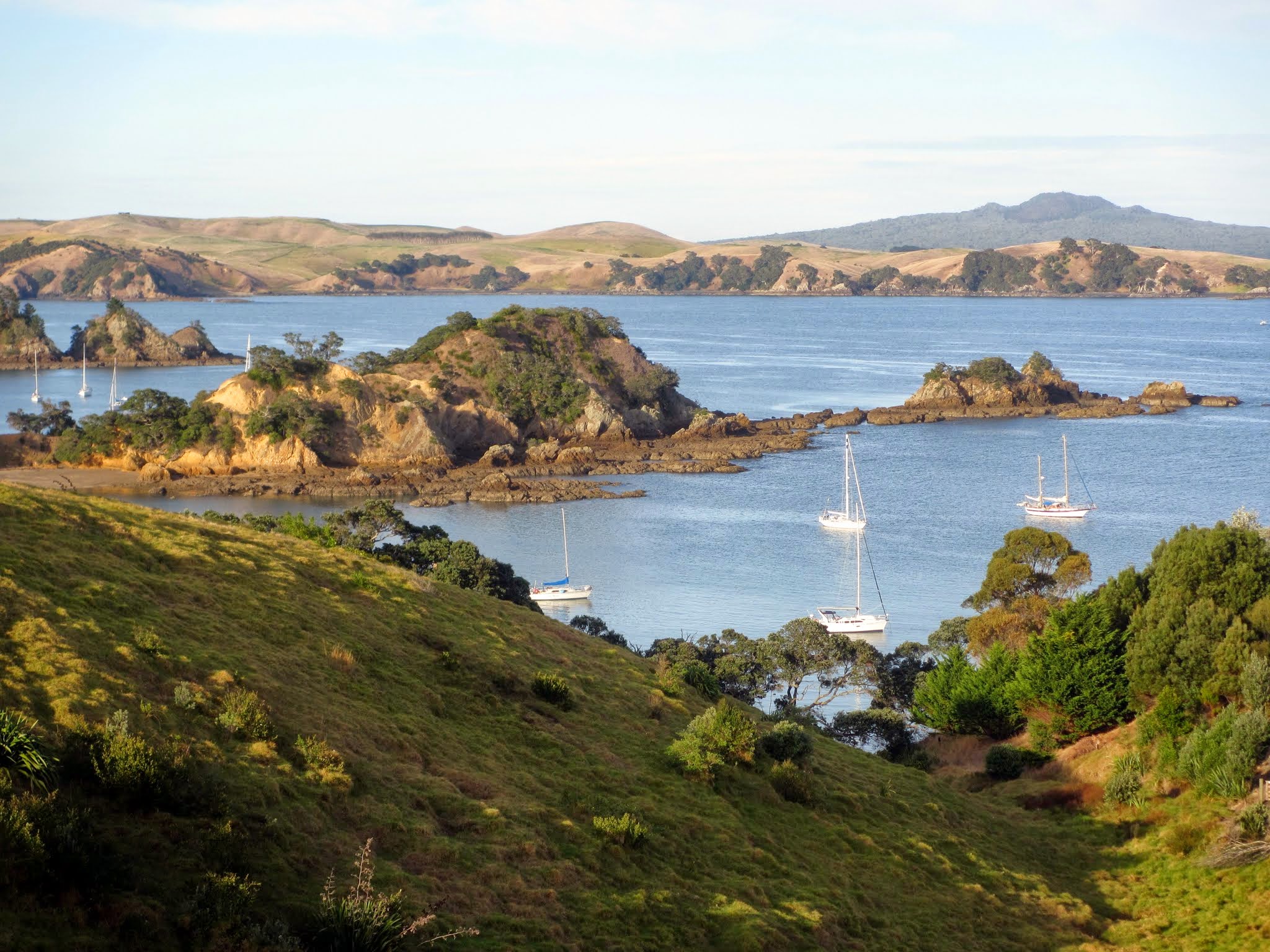
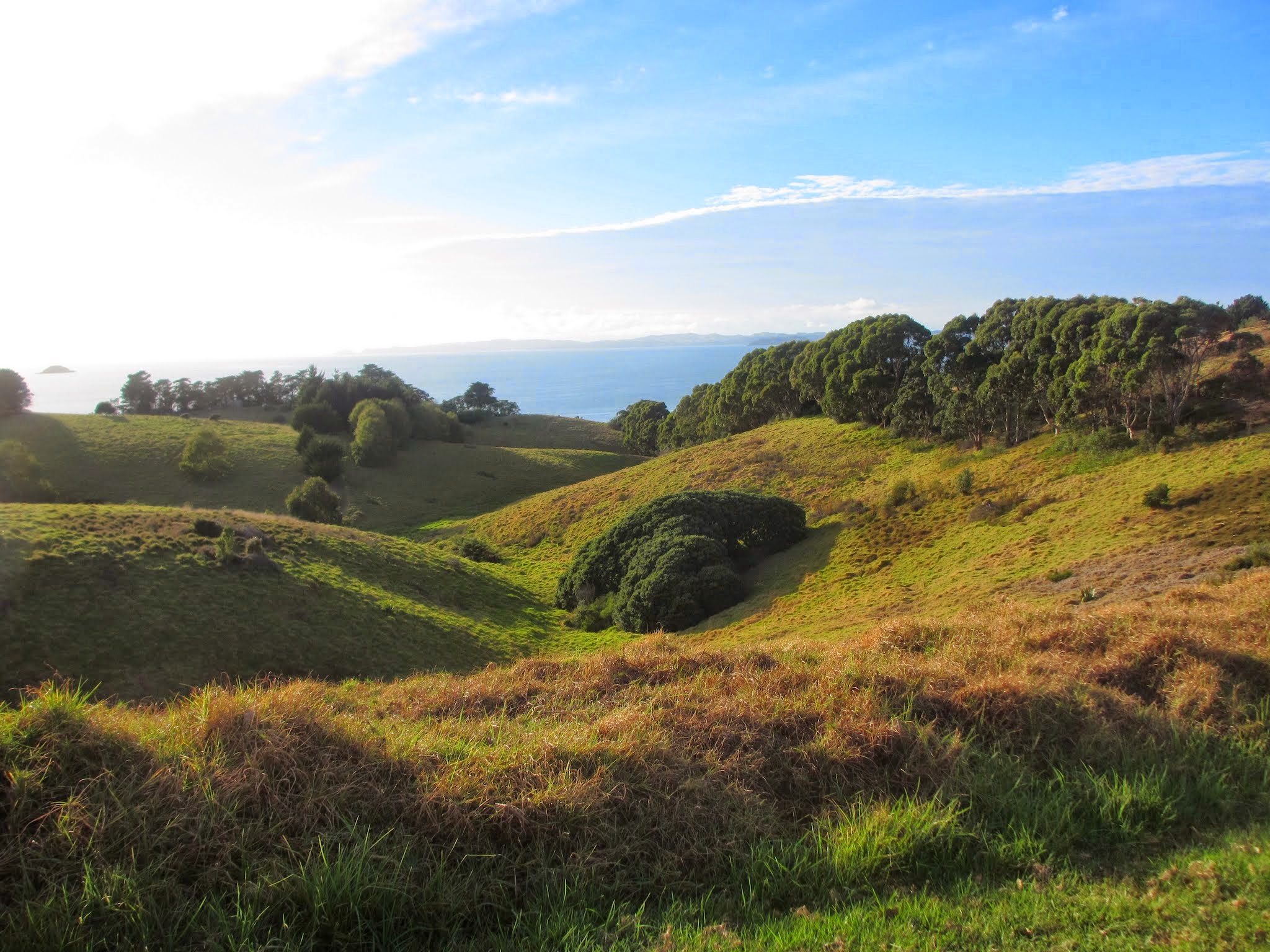
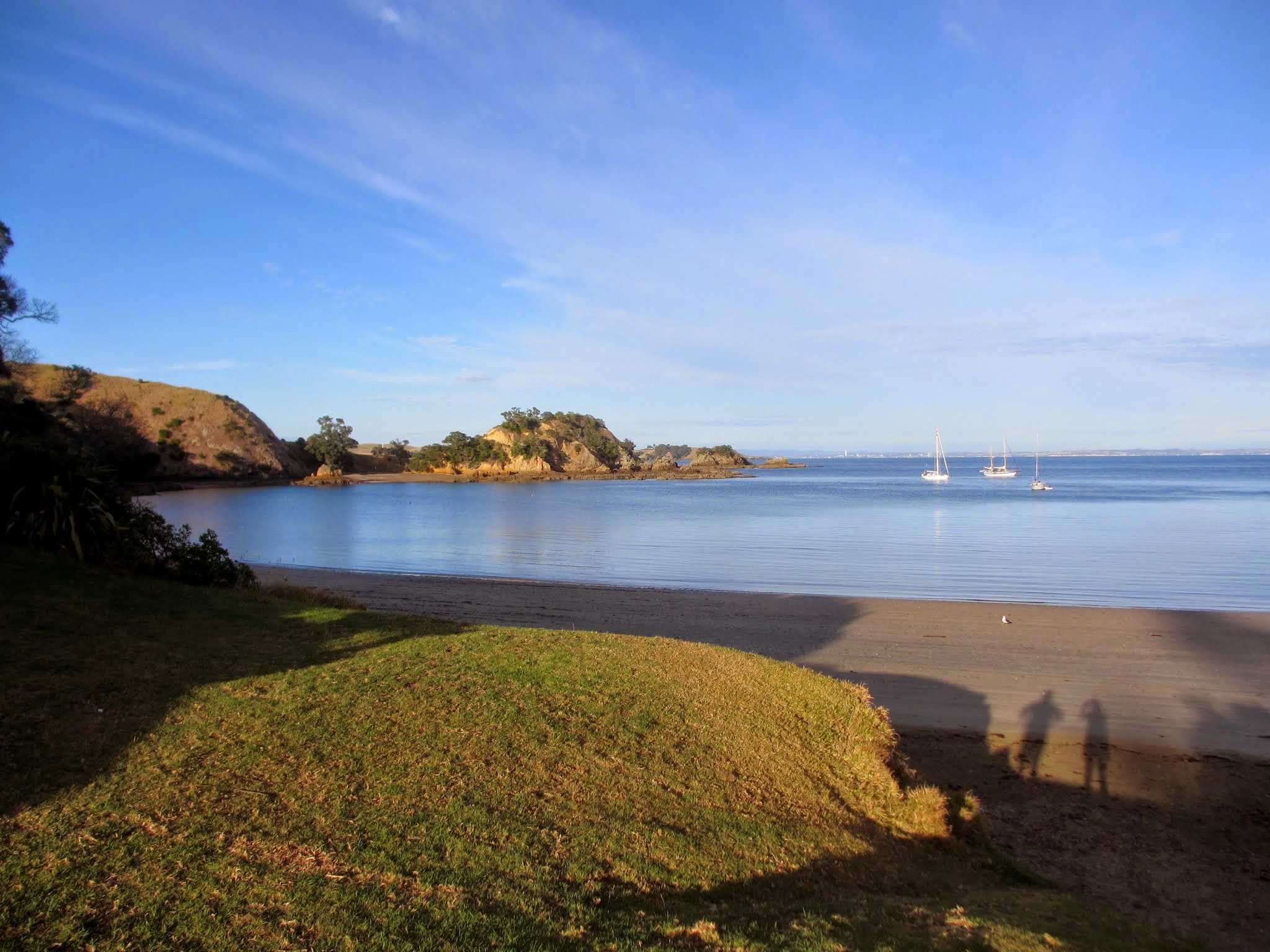
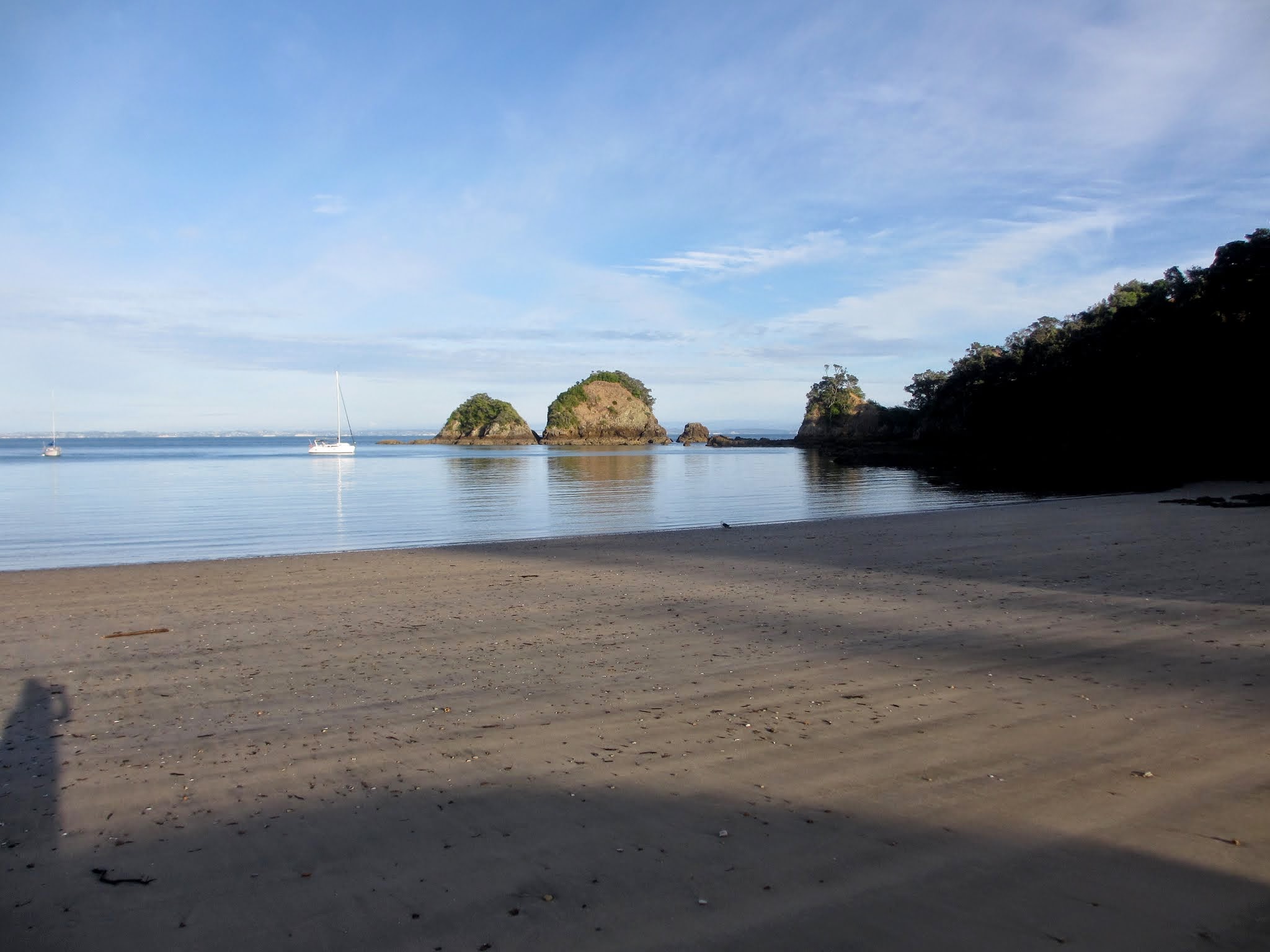
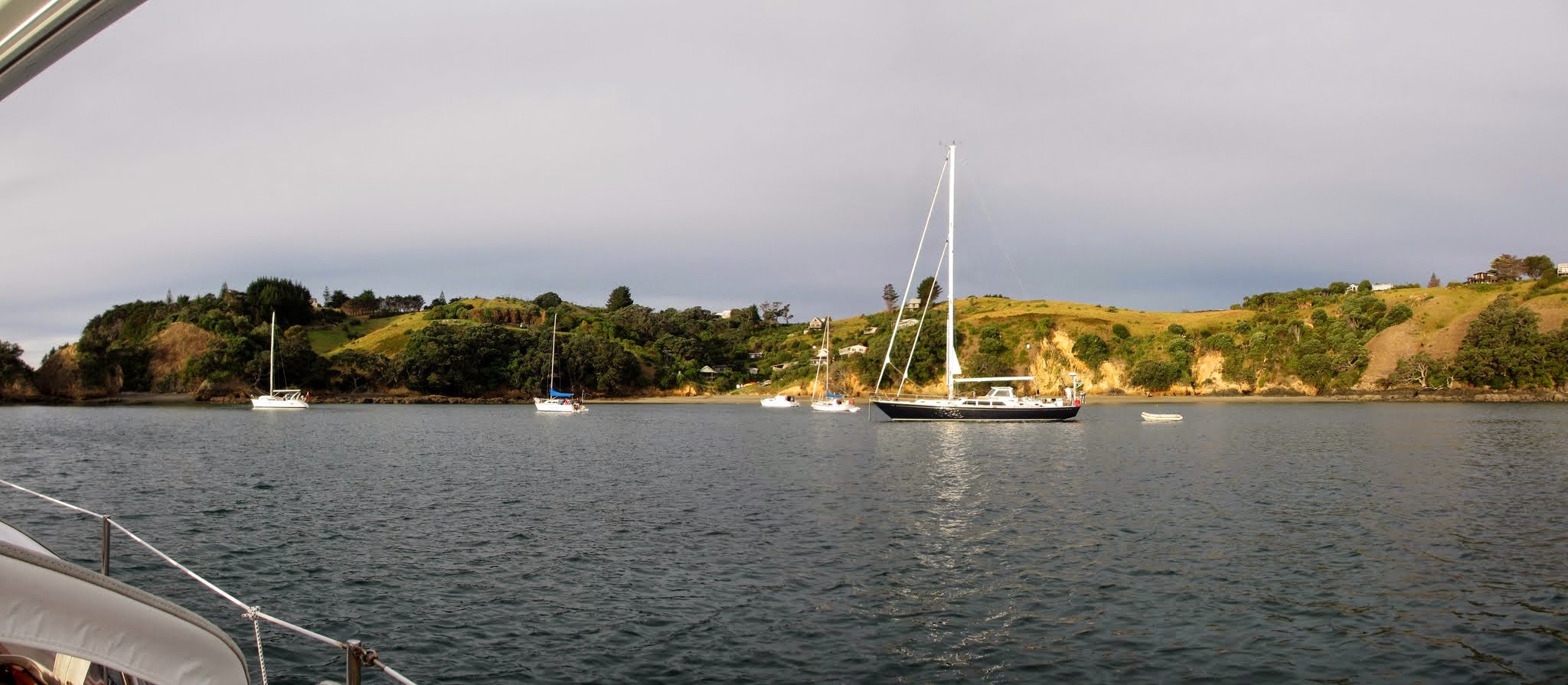
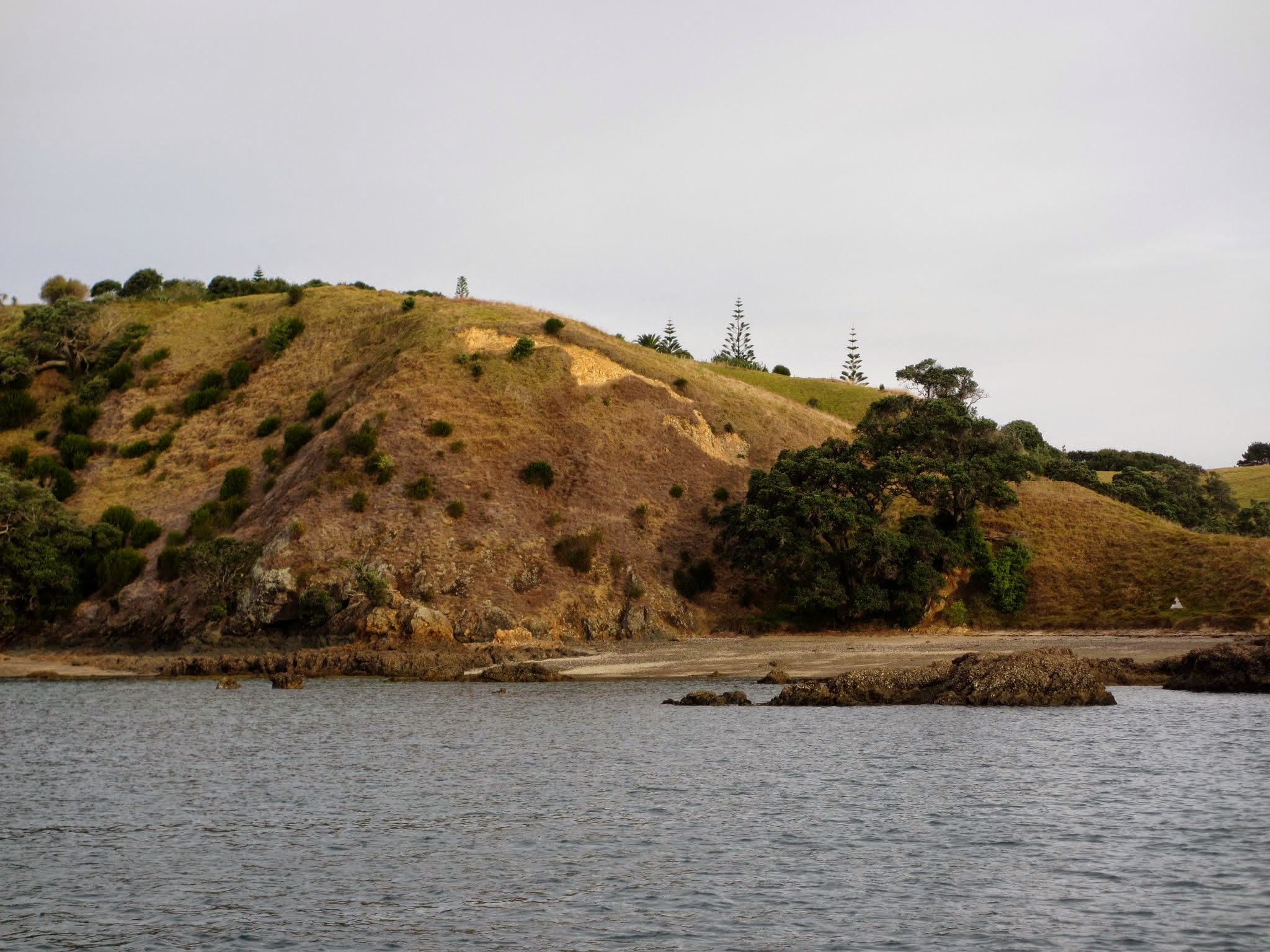
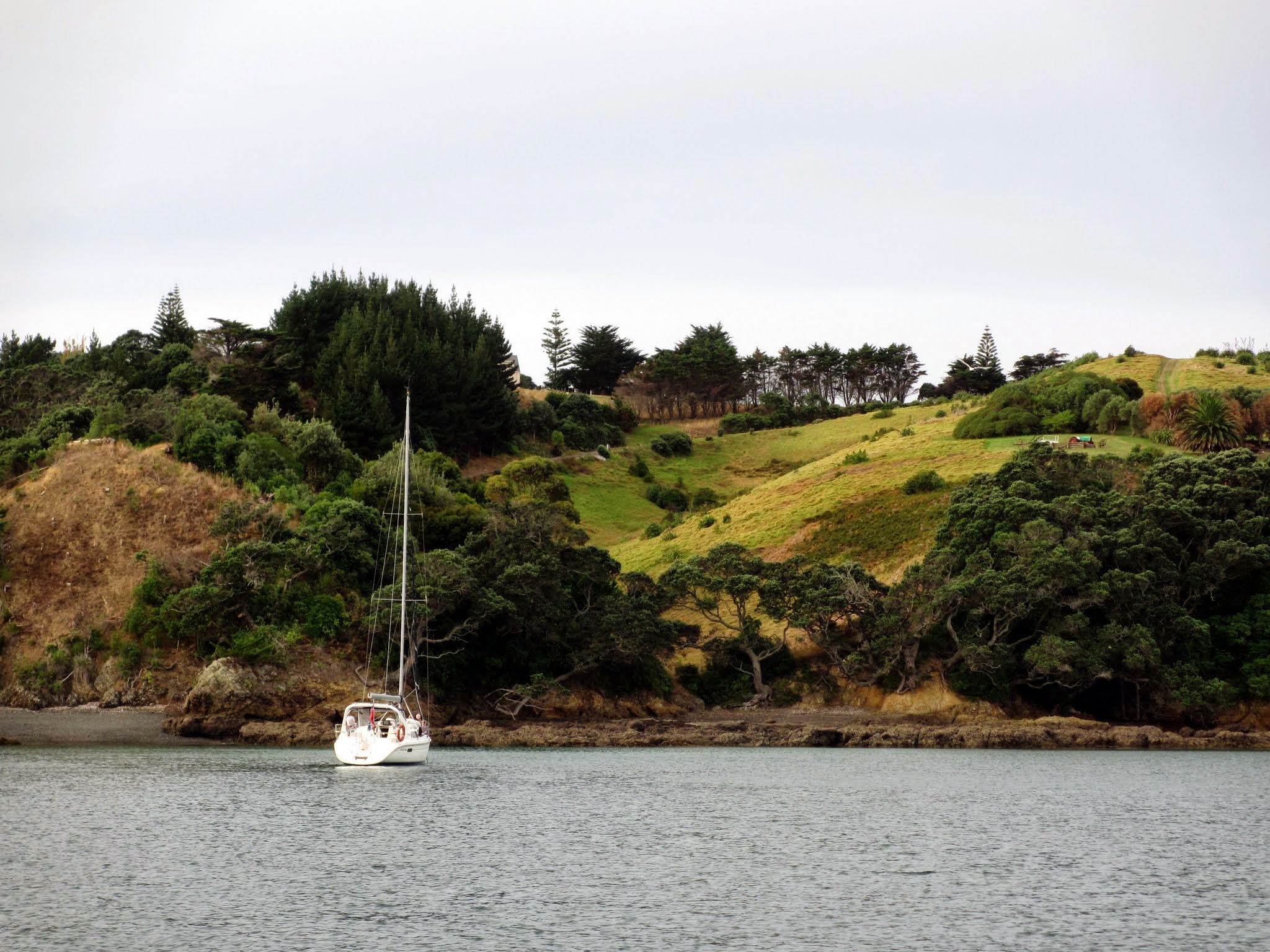
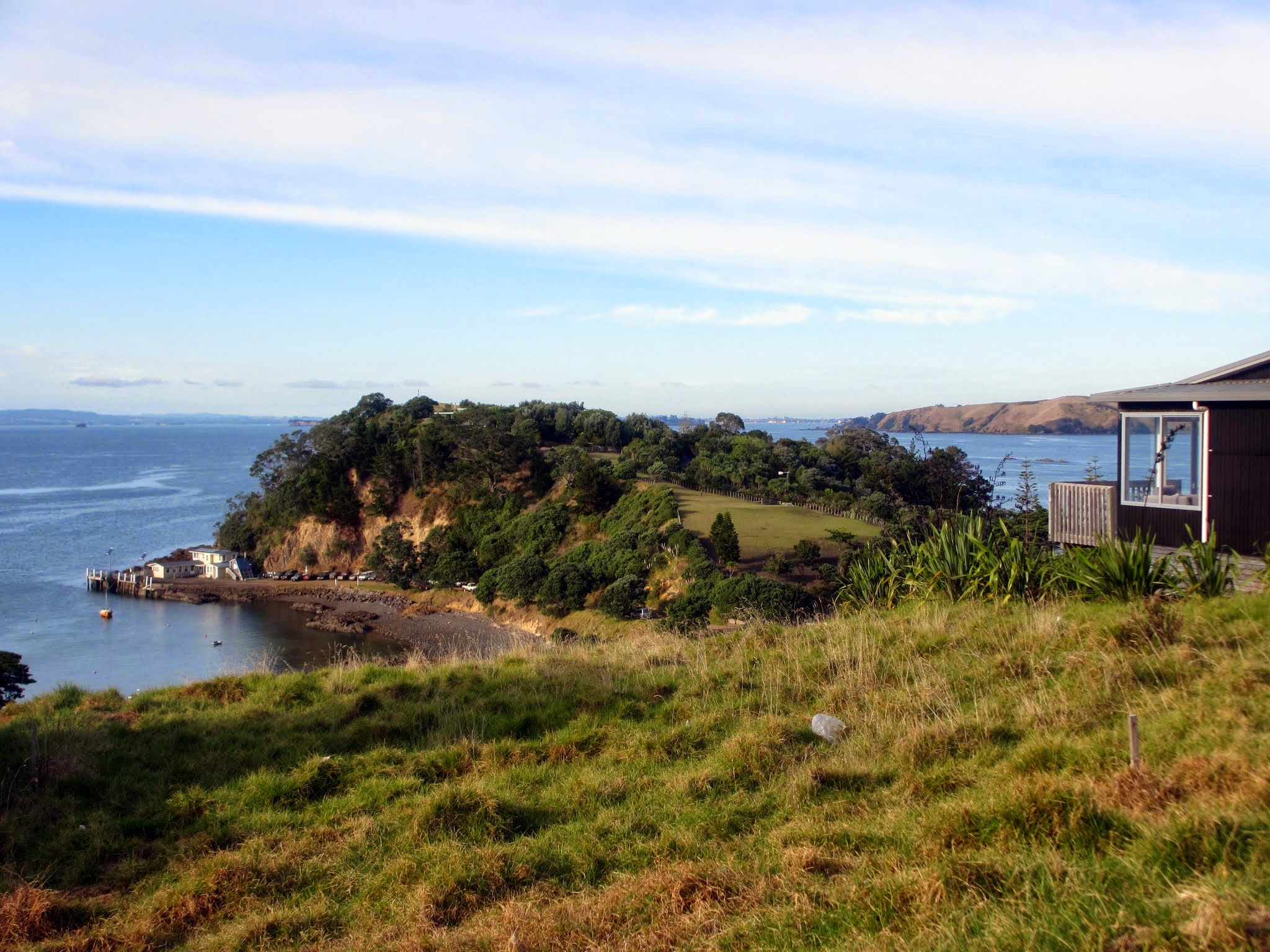
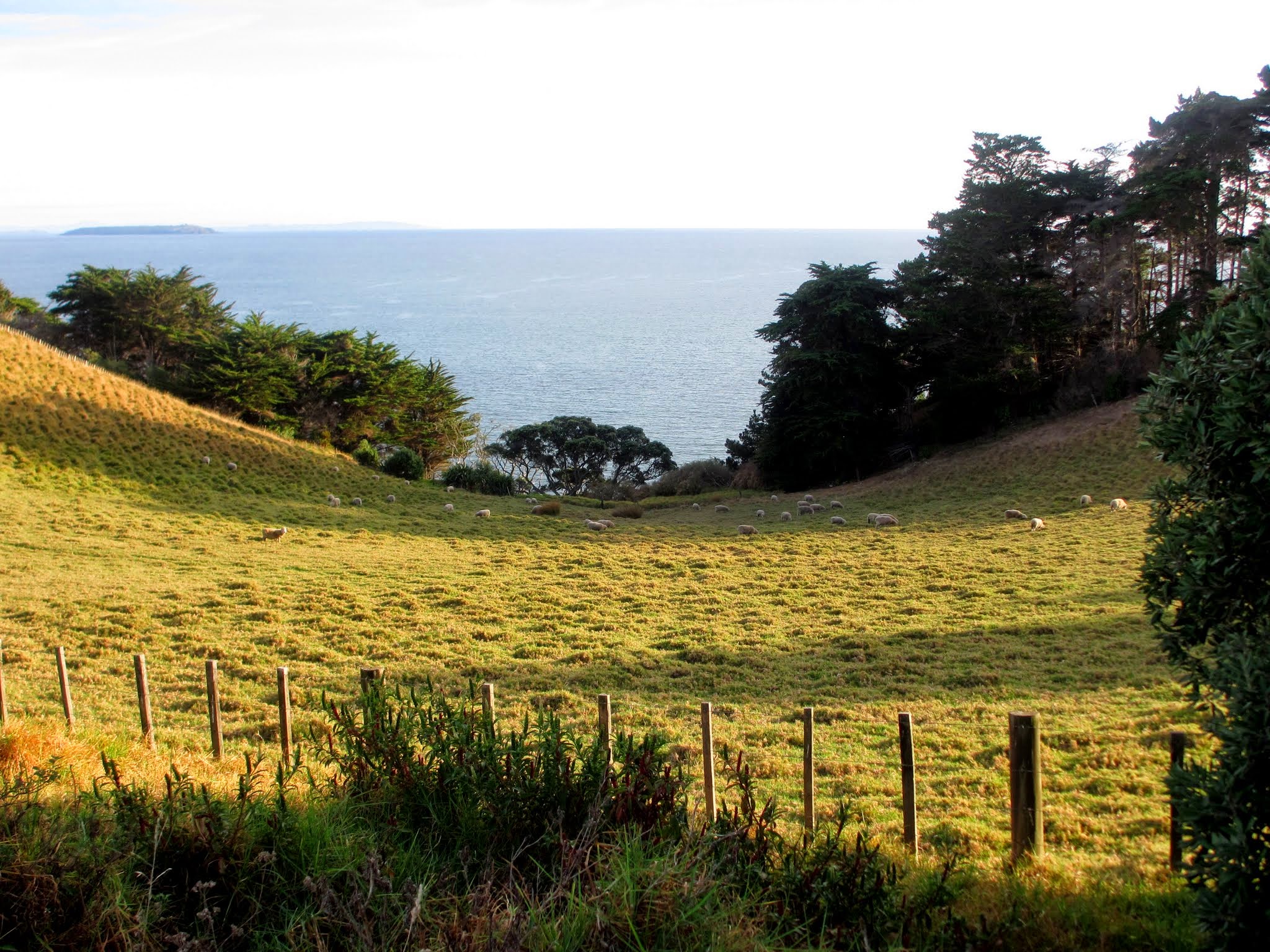
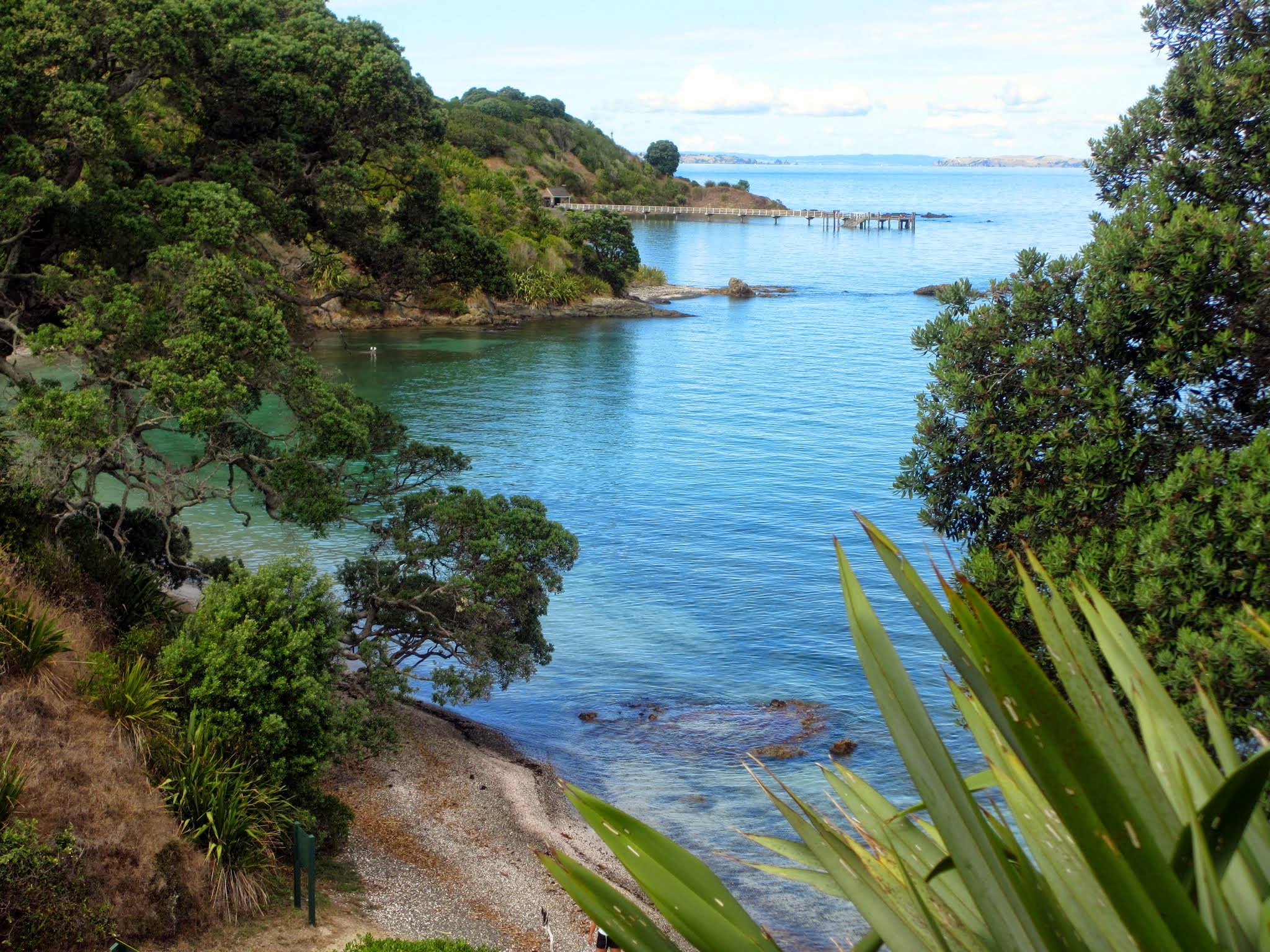
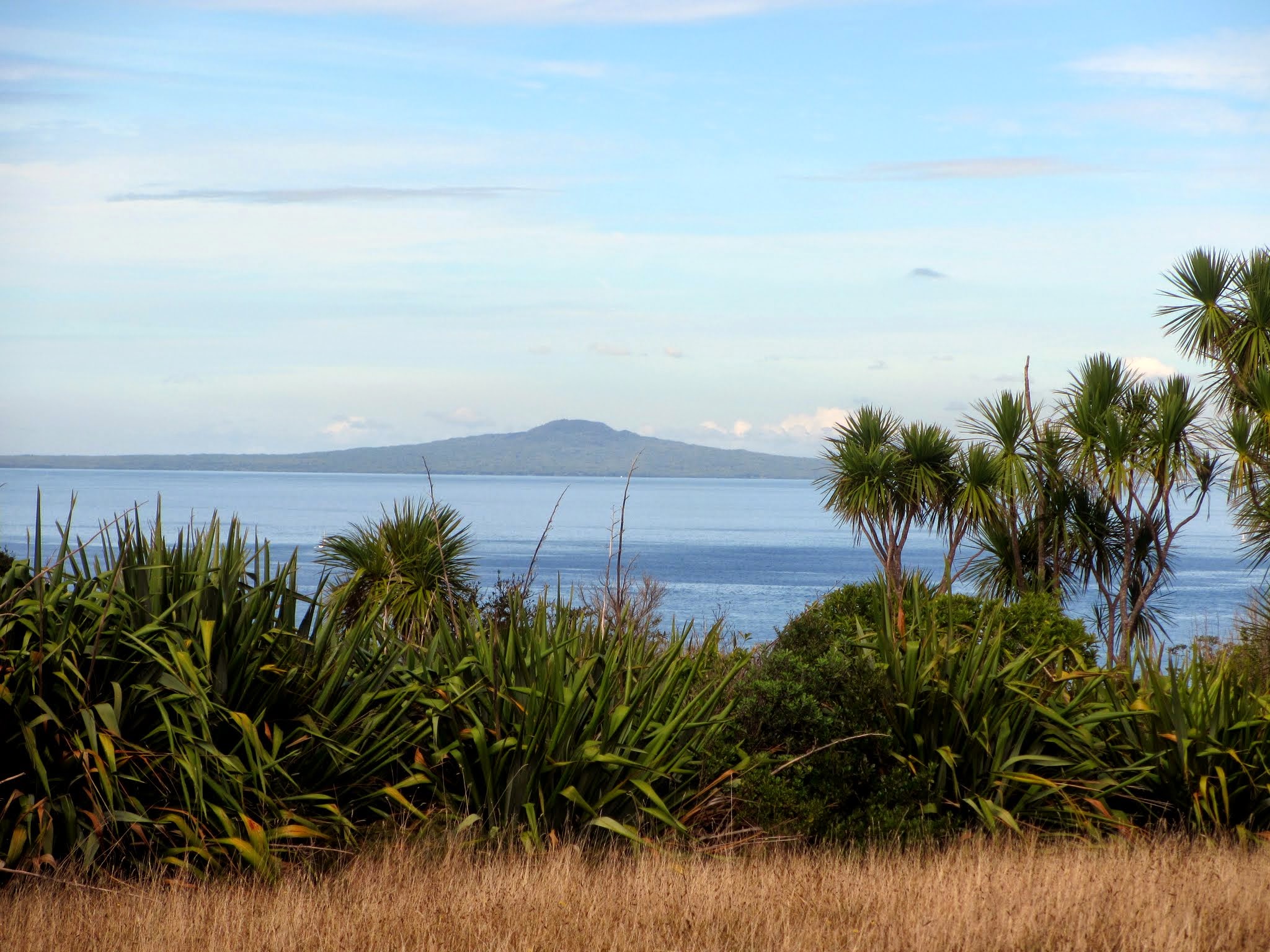
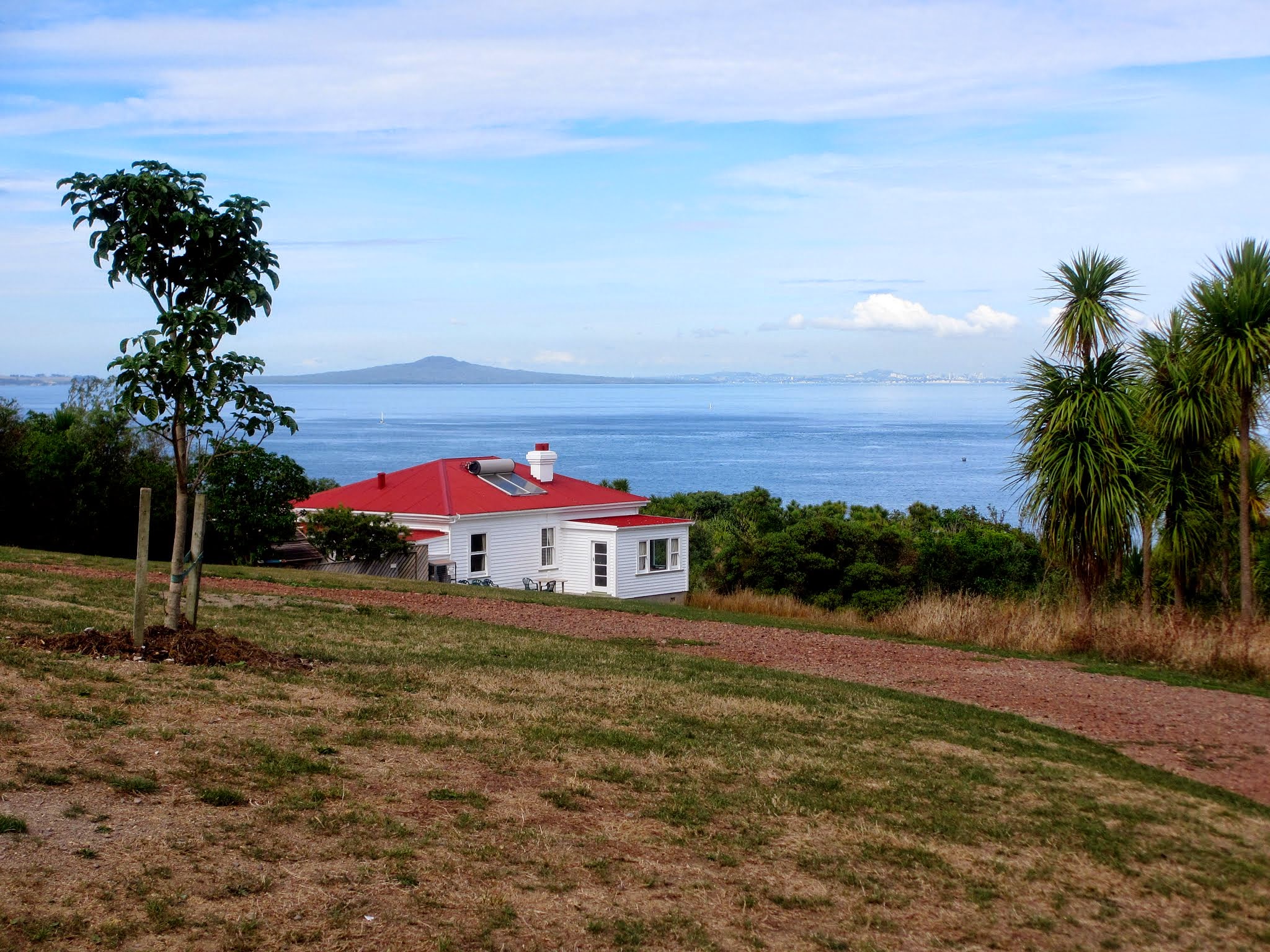
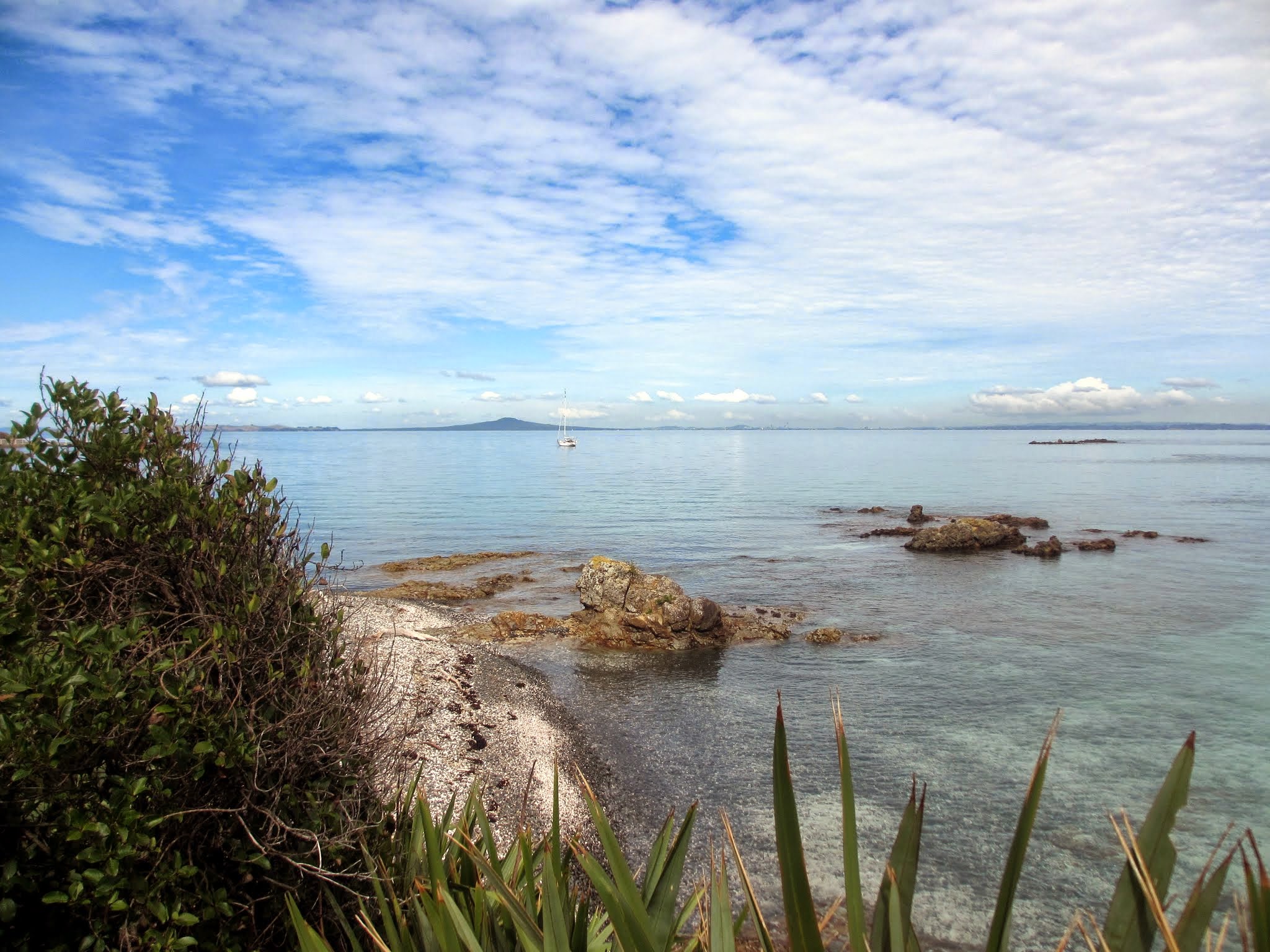
We chose to anchor in Woody Bay because it had a path to the main road that runs the length of the island, about a mile long. We pulled in to find a scattering of boats but plenty of room. Wow, what a beautiful place! In contrast to the rocky forested islands of the north gulf, this island (and neighboring Motutapu) had a dry, grassy look reminiscent of southern California.

Later that night it was startling to see city lights visible through the portholes, something we hadn’t seen since we left Catalina Island nearly a year ago. We were still very much in the countryside here, but those lights were a reminder that it was soon coming to an end.

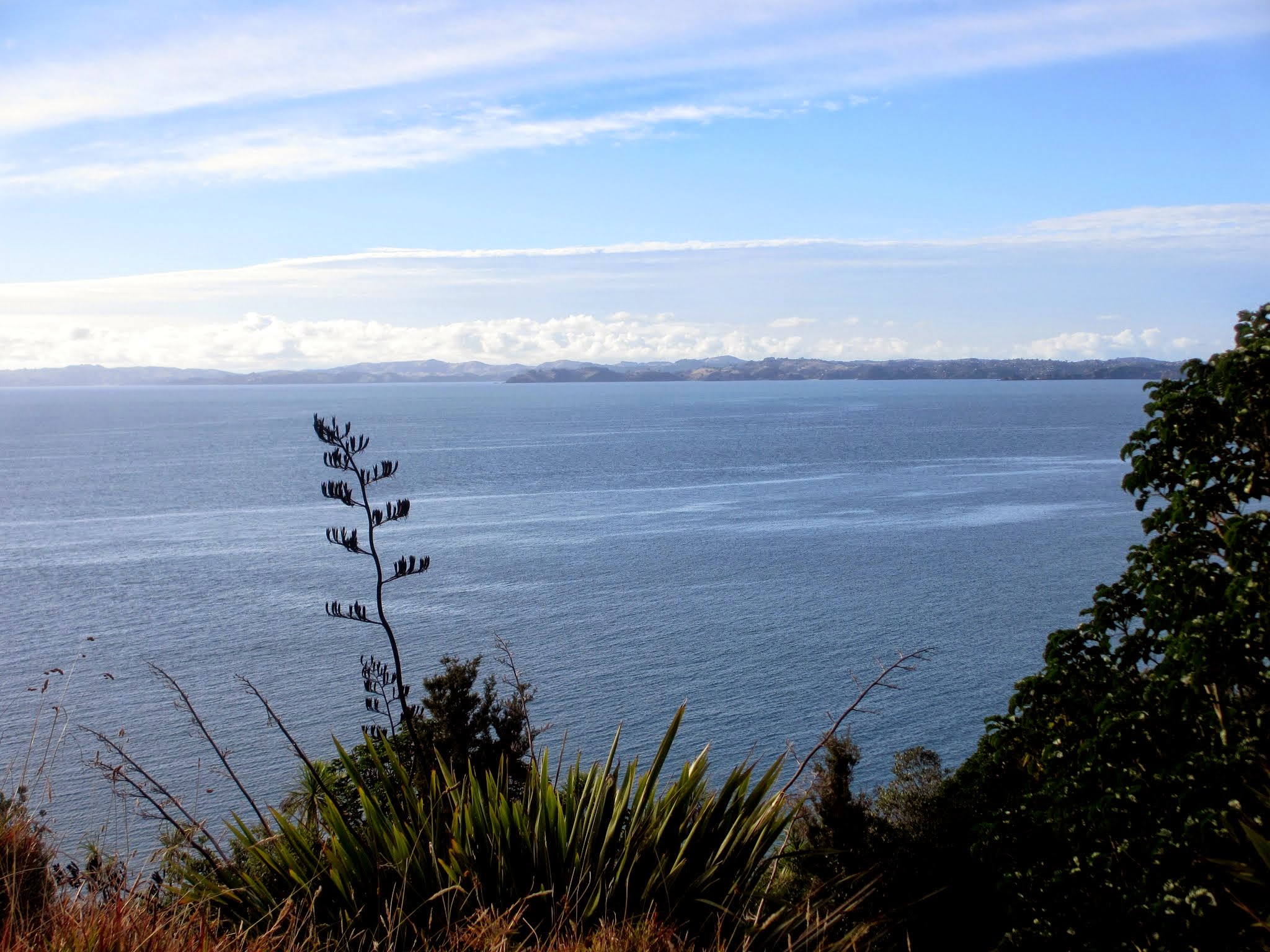
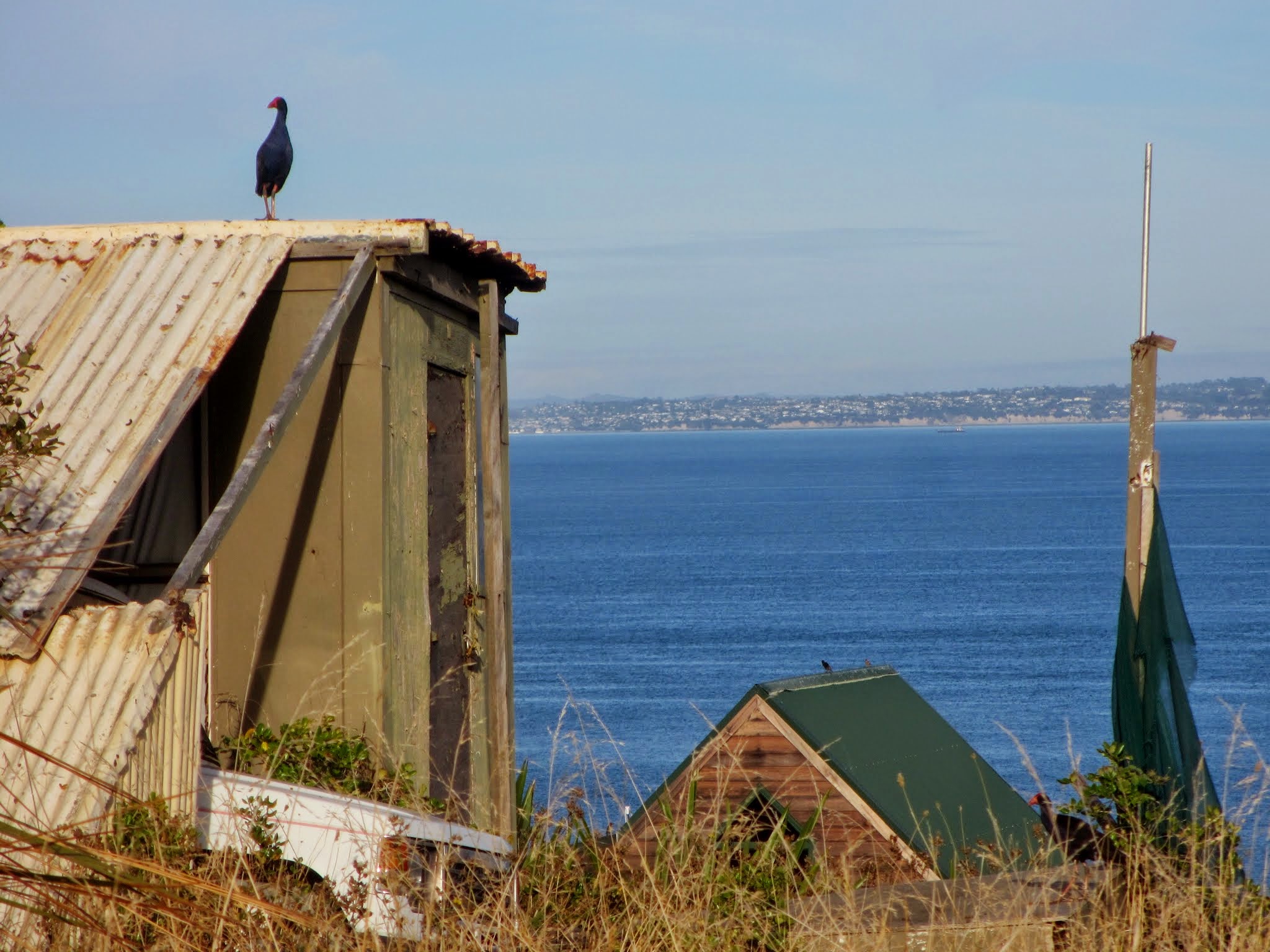
The next morning we went hiking up the hill to the main road and walked its length. We were instantly impressed with just how pretty this island is. It’s small, but everything about it is picture perfect: the crescent beach, the grassy hills with copses of trees, pretty homes scattered along the hills, and sweeping views of the Hauraki Gulf. I don’t think we saw one car on the road, and it seemed like an incredibly quiet and peaceful place. The big city may be visible across the gulf, but the only sounds we heard were chirping crickets and singing birds. Rakino has lots of birds, perhaps getting some spillover from Tiritiri Matangi. Bellbirds, tuis, and fantails flutter amid the trees while pukekos graze on the hillsides. Little Rakino Island is quite a magical place!

Above is a gallery of Rakino Island. As always click to scroll and enlarge. –Cyndi
The Takahe of Tiritiri Matangi (Hauraki Gulf, New Zealand)

April 2, 2013

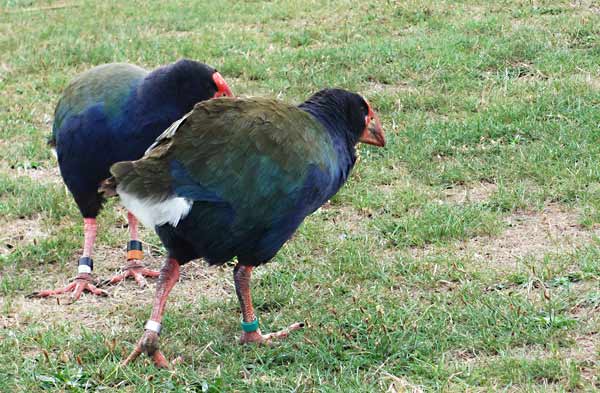
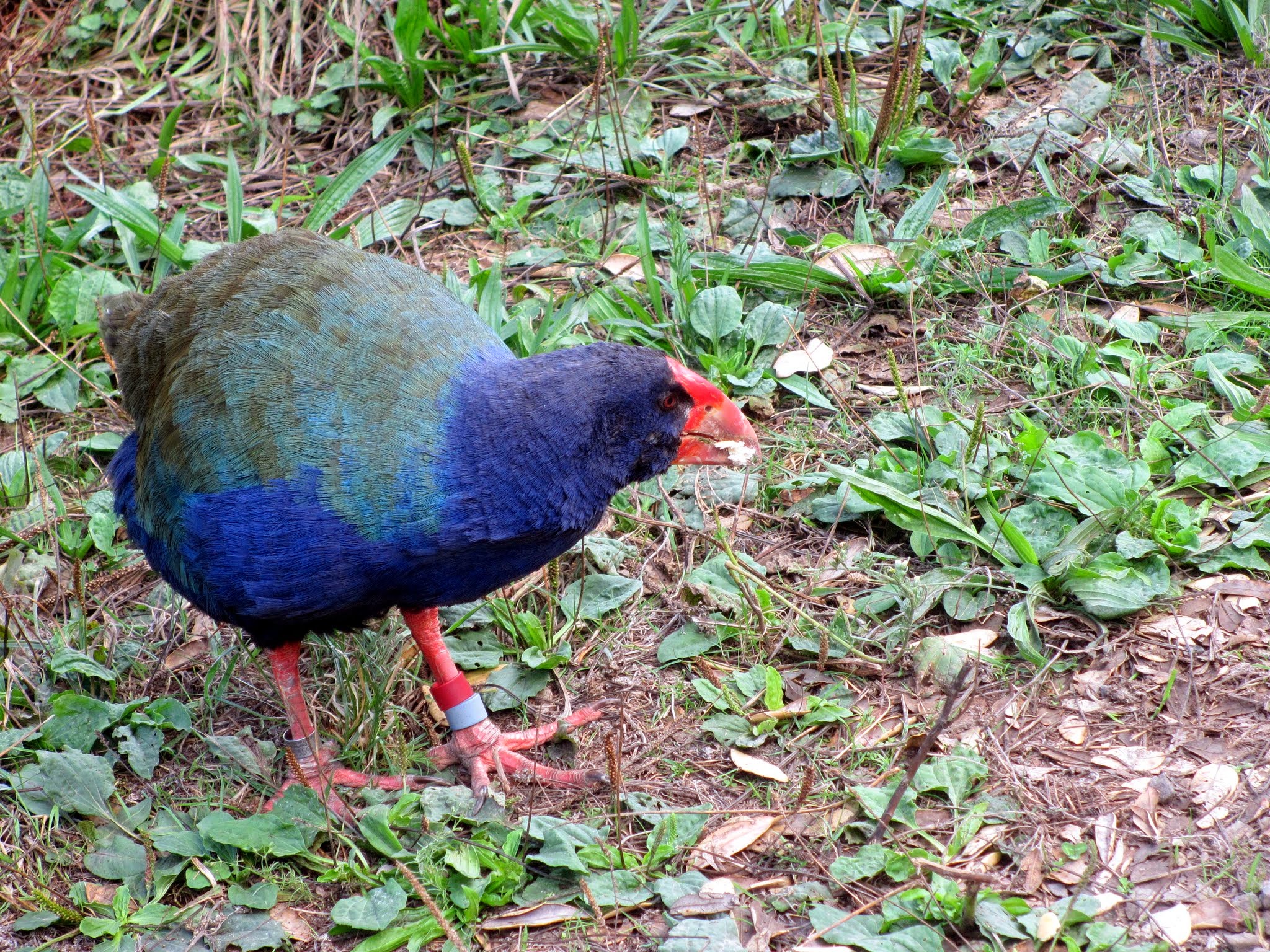
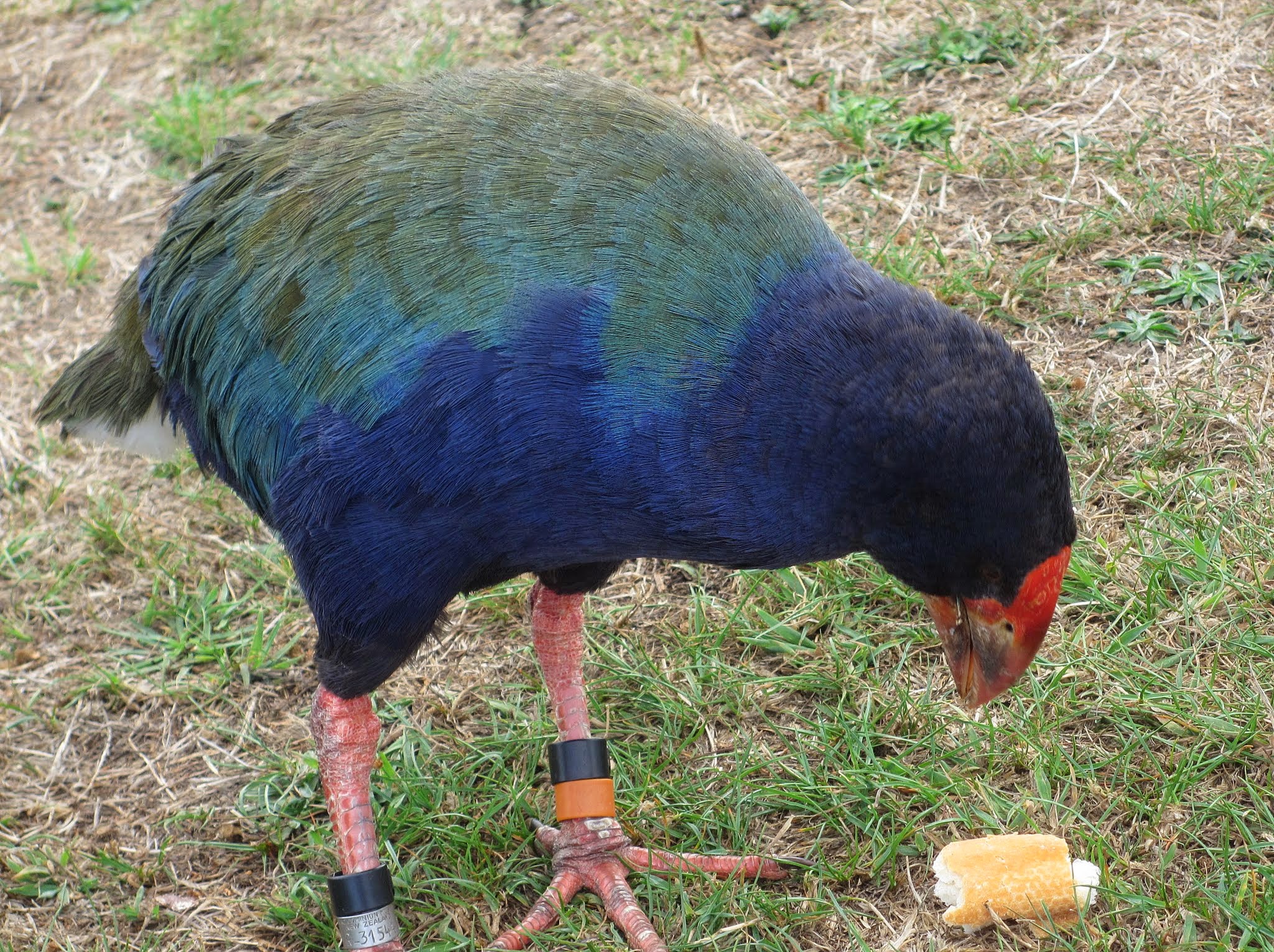
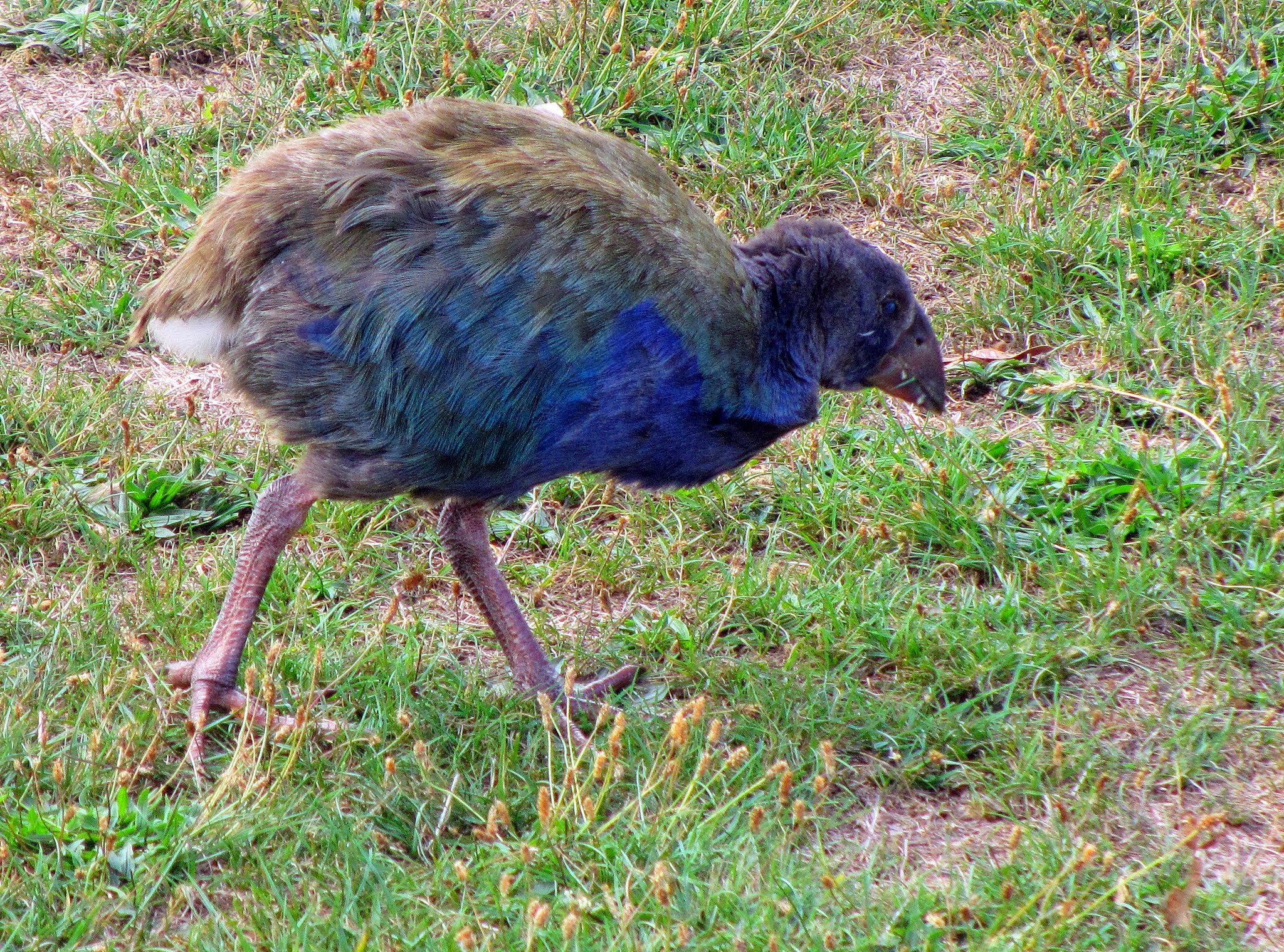
There are lots of fantastic birds on Tiritiri Matangi, but my favorite has to be the Takahe, thought to be extinct until 1948.

Takahes look a lot like pukekos (link here), those big blue birds that remind me of velociraptors, but Takahe are even bigger and heftier. If pukekos are the velociraptors of the bird world, takehe are the tyrannosaurus rex. They are very Jurassic-looking birds.

Takehe
Takehe

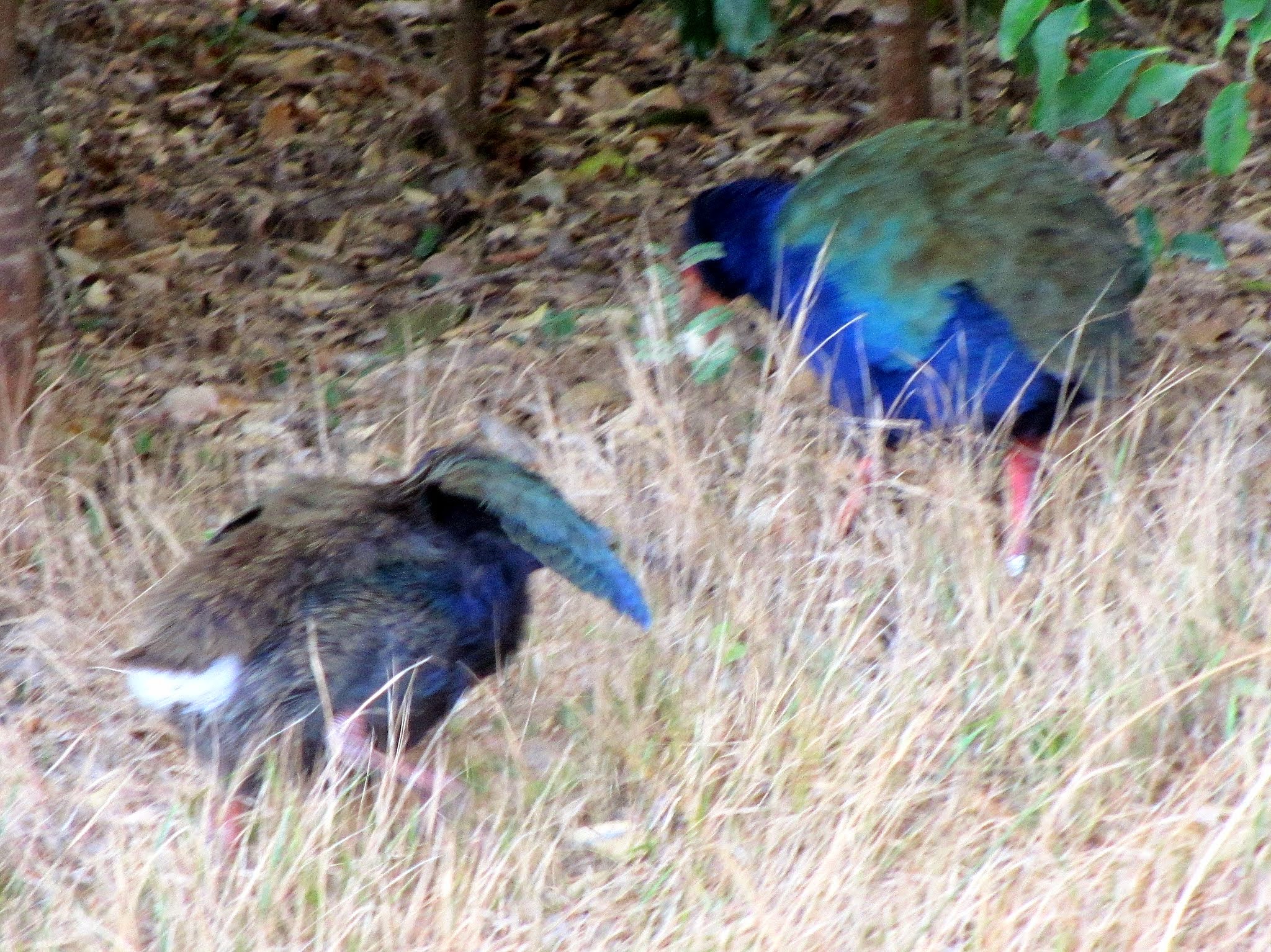
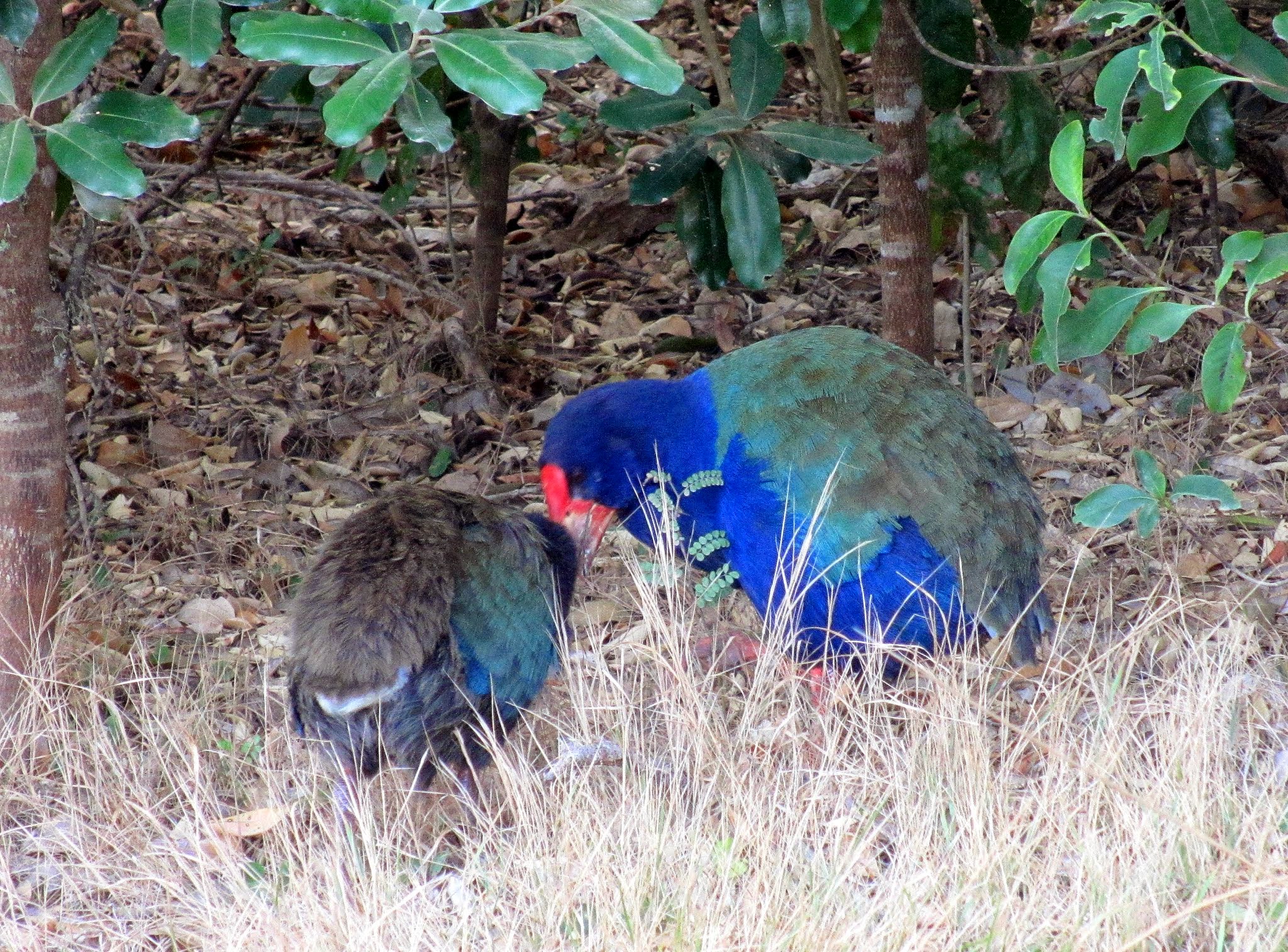
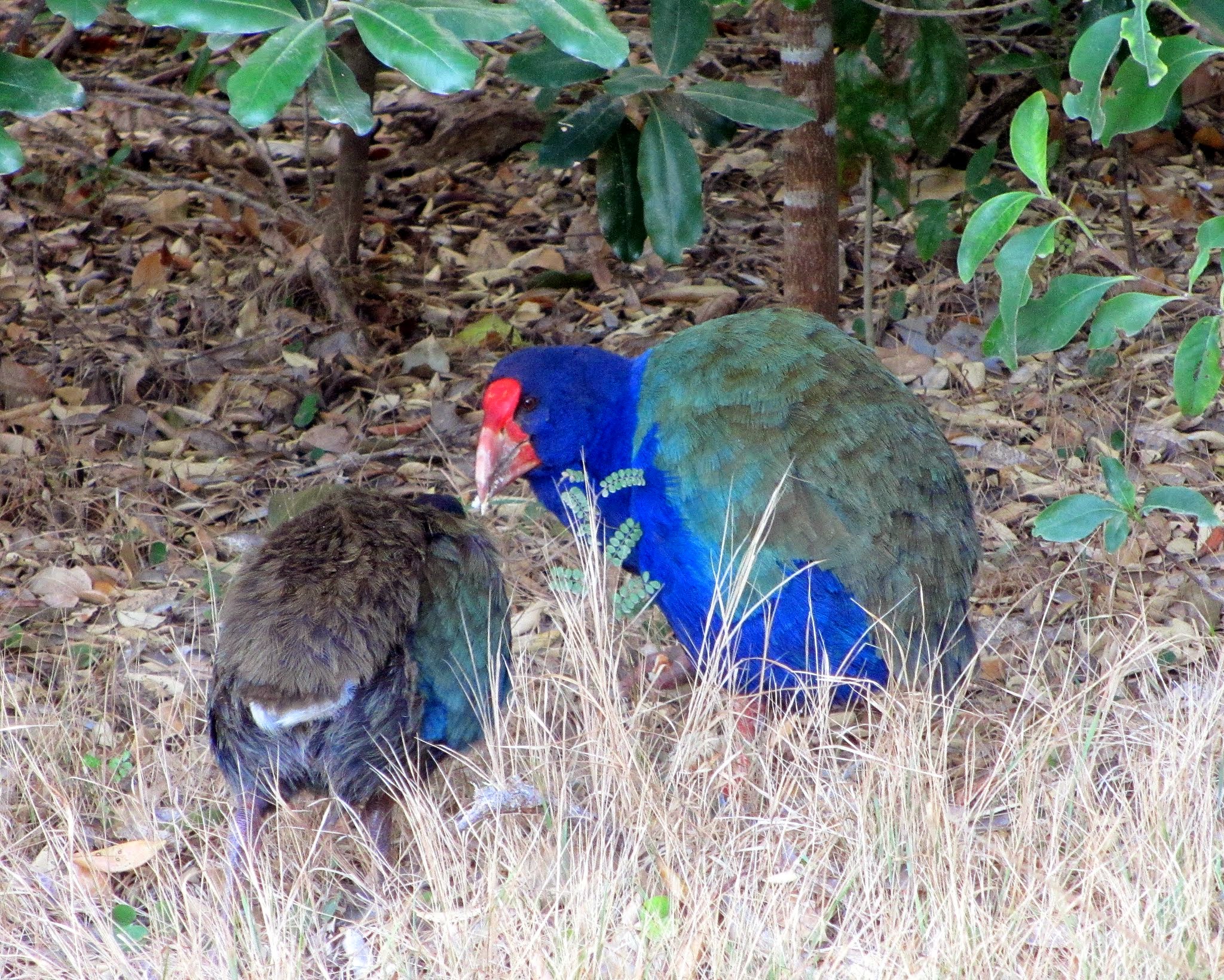
The most interesting thing about the takahe was seeing what good parents they are. The breeders make sure each mating pair gets to raise a chick. These chicks bring new meaning to the phrase “ugly duckling,” but they are doted on by their parents. If someone tosses a piece of bread to the mother, she’ll grab it and run full throttle to wherever her chick is, often greatly startling it as she nearly runs it over before barreling to a stop (I didn’t claim they were graceful mothers). But then she’ll go over to her chick and tenderly tear off pieces of the bread with her foot or beak. She’ll hold the pieces up for her chick, watching it intensely as it eats. I believe this bird would starve before letting her chick go hungry.

As it turns out, the takahe is yet another hazardous NZ bird. We enjoyed this depiction of a Takahe annihilating a smiley-face lunch bag. Personally I think anyone who carries their lunch in a smiley-face bag is asking for trouble. –Cyndi
Not a sign you see every day!

The Hauraki Gulf: Tiritiri Matangi, The Singing Island

April 2, 2013

After bypassing the Motuketekete Island Group, we headed on to an island called Tiritiri Matangi. (Click to enlarge/scroll through photos above.)

Tiritiri Matangi lies on the border between the north and south Hauraki Gulf, right off the tip of the Whangaparaoa Peninsula. The anchorage is small, not well protected, and it won’t win any beauty awards. But the island itself is one of New Zealand’s most magical places (well, if you like birds as much as we do).

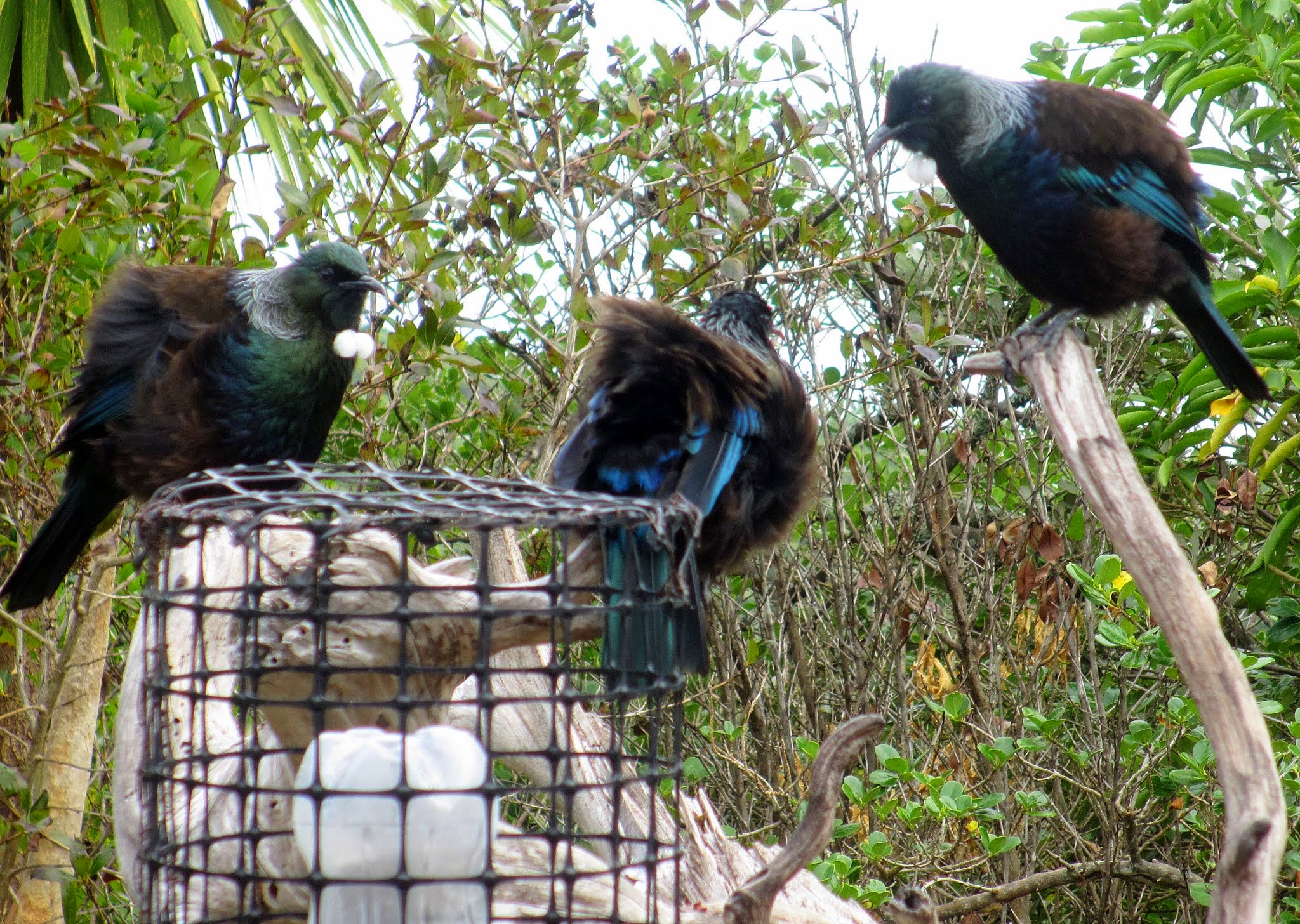
Tiritiri Matangi was once devoted to farmland but now is lush with native trees and serves as a sanctuary for New Zealand’s most endangered birds. The island is pest free, and feeding stations are provided for many of the birds. As a result, the birds thrive, and their singing can be heard offshore, earning it the nickname of “the singing island.”

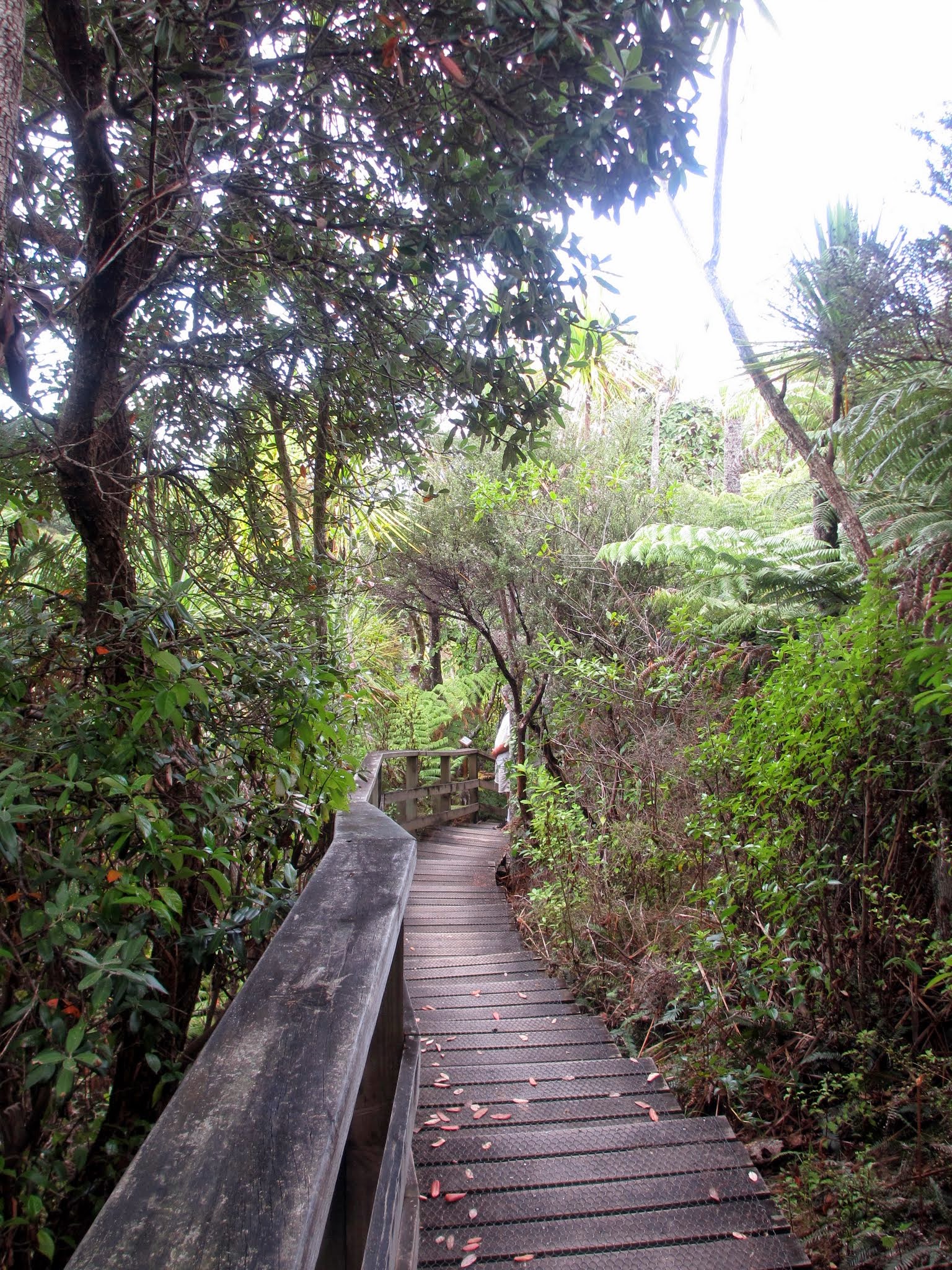
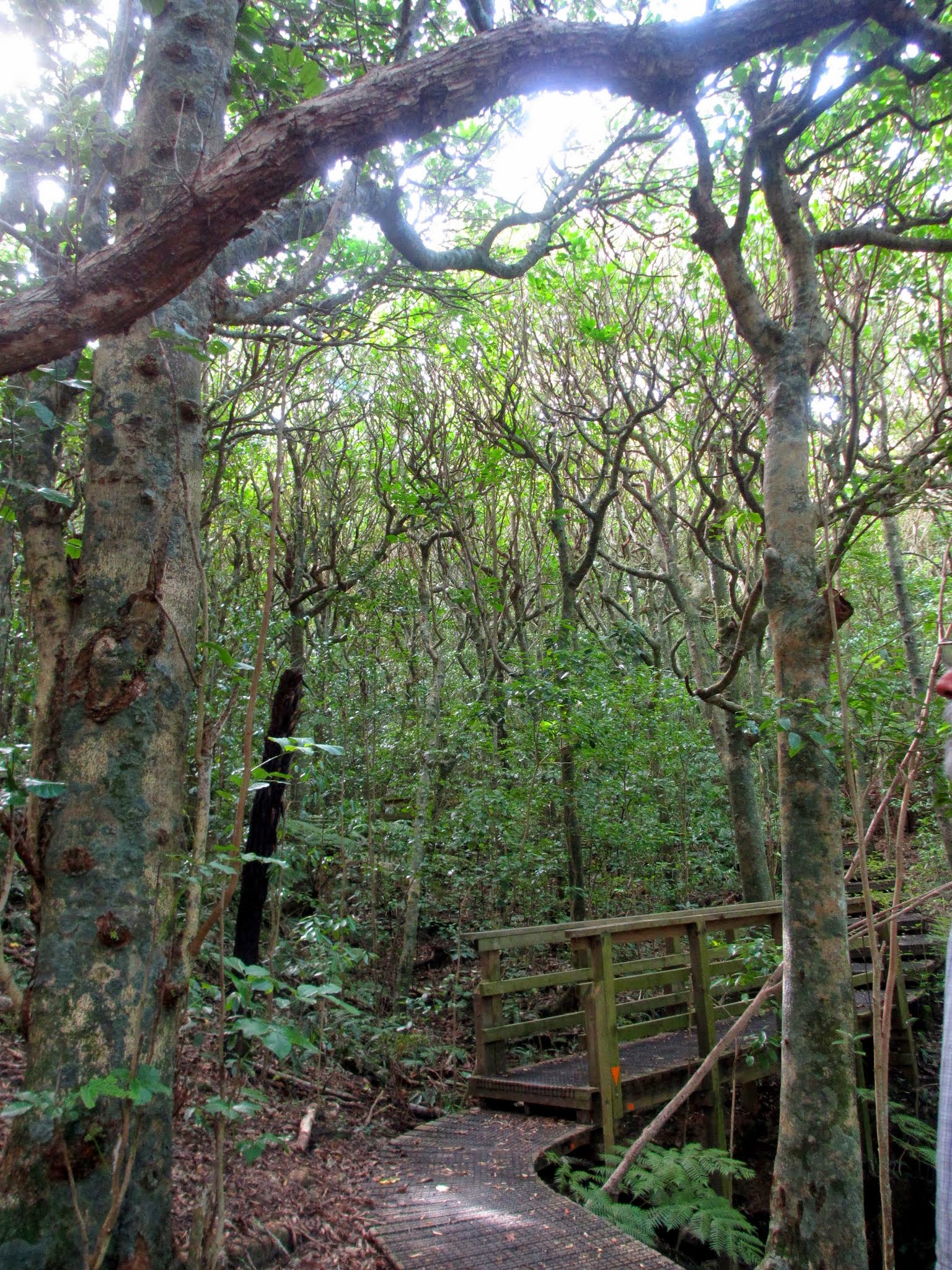
Luckily this is an open sanctuary, and people are free to visit (by private yacht or ferries from the mainland). There are trails through the forest that go by some of the feeding stations, guaranteeing a good look at many of the birds. What makes it even more magical is how relaxed and unafraid the birds are around people. They’ve been bred and cared for by humans, and they have no predators here.

When I was a little girl I loved to study my bird flashcards, which included some birds that had gone extinct. I felt sad that I would never see a dodo bird, passenger pigeon, Carolina parakeet, or great auk. I was only a little kid, but I still remember having a wonderful dream where all these birds showed up in our backyard and being bitterly disappointed to wake up and find it hadn’t really happened. In New Zealand I’ve had a similar experience: I studied my bird guide, but some of the birds are so close to extinction that I couldn’t hope to spot them. Then we came to Tiritiri, and it was like my dream came to life! Birds I never thought I’d see were abundant here, in some cases brought back from near-extinction.

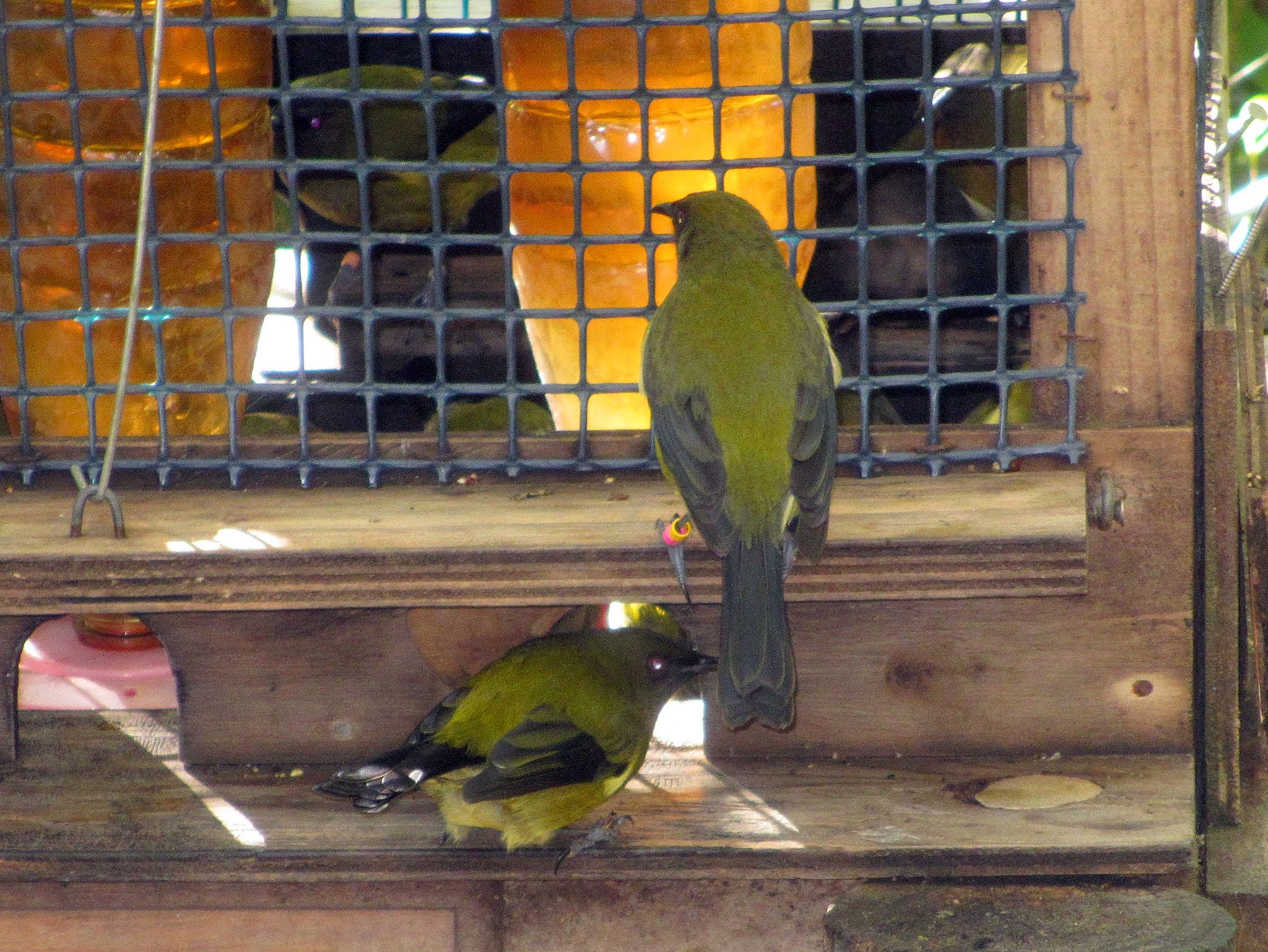
I was thrilled to see several species of rare birds here and excited for their future as other islands and even areas on the mainland are being cleared of predators so these birds can return. Some of the birds here are very rare, but it is a sanctuary for all birds and we enjoyed seeing the common tui enjoying its own feeding station. There are even special boxes on the beach for the area’s little blue penguins, and Tiritiri is now being used to regenerate New Zealand’s own lizard, the tuatara, which has been extinct on the mainland until very recently. It’s all pretty exciting stuff for bird and lizard lovers.

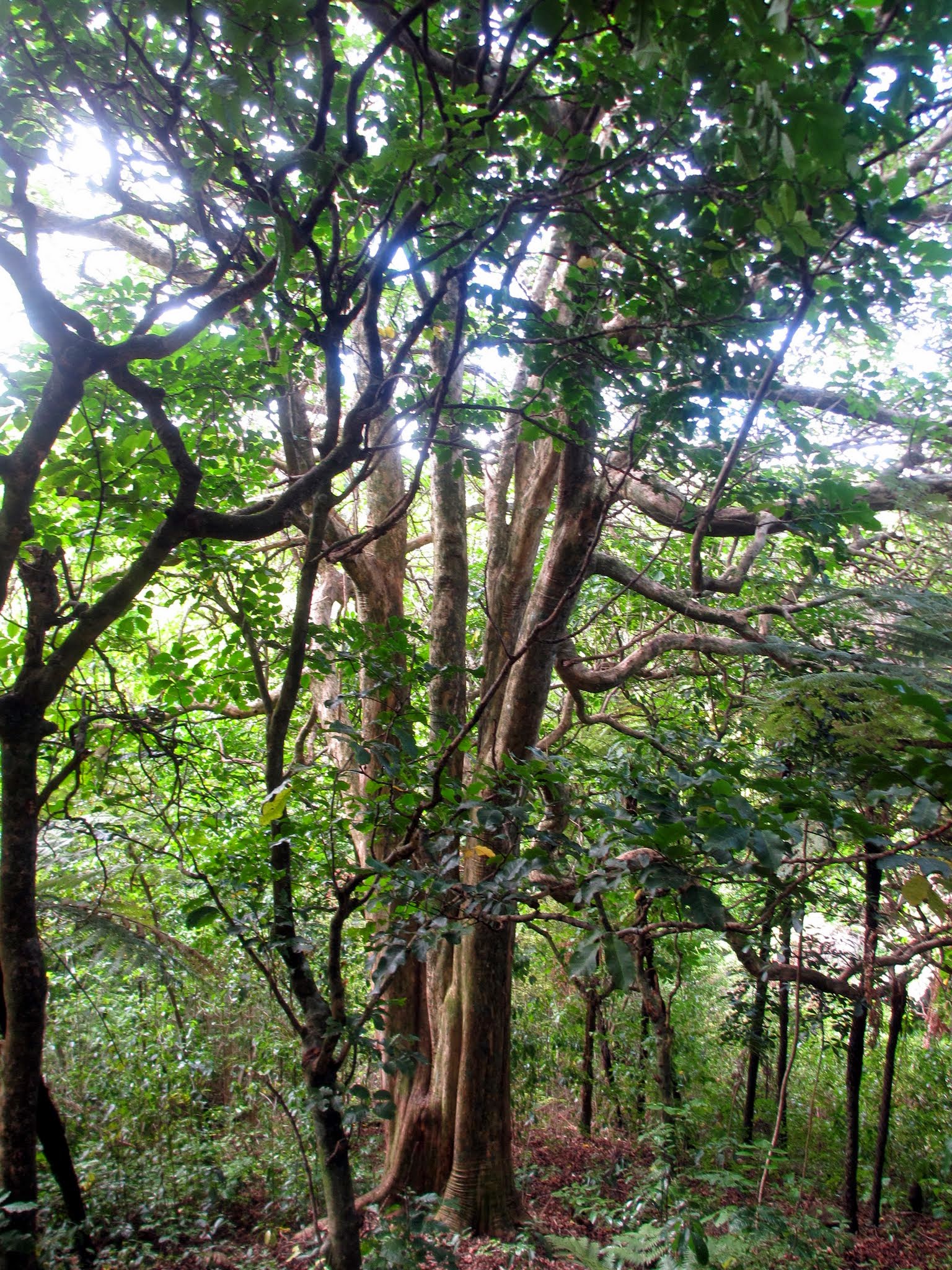
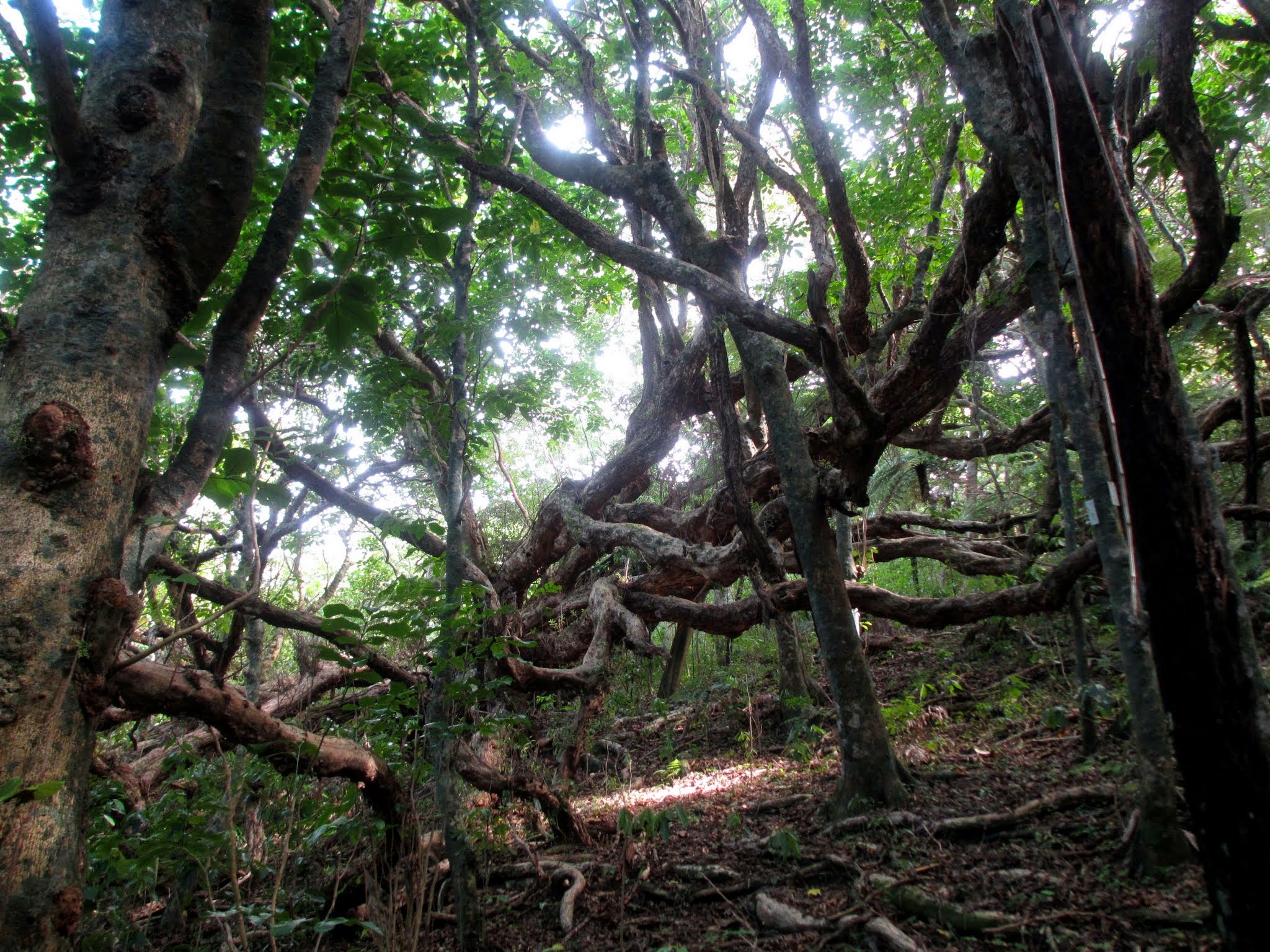
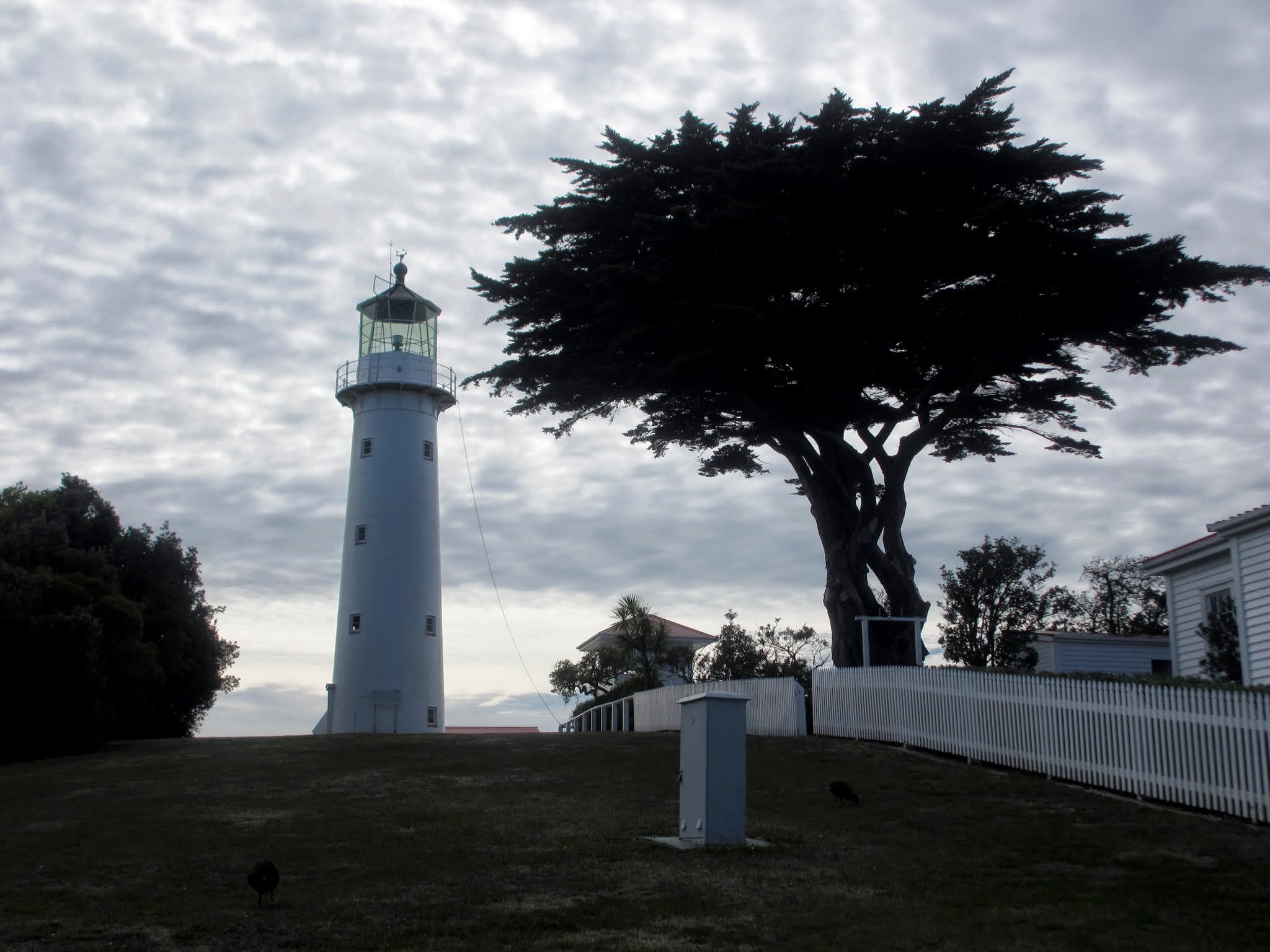
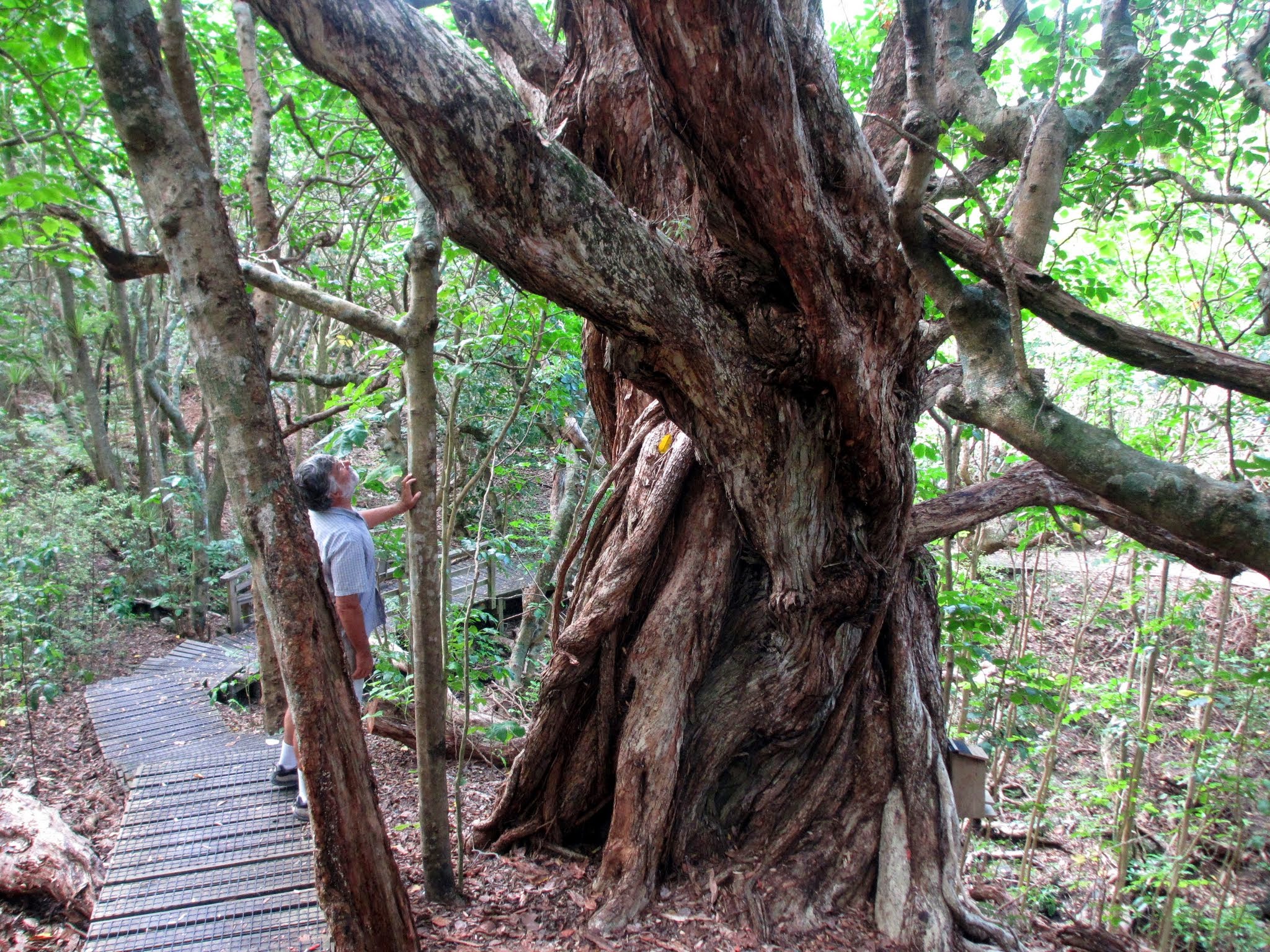
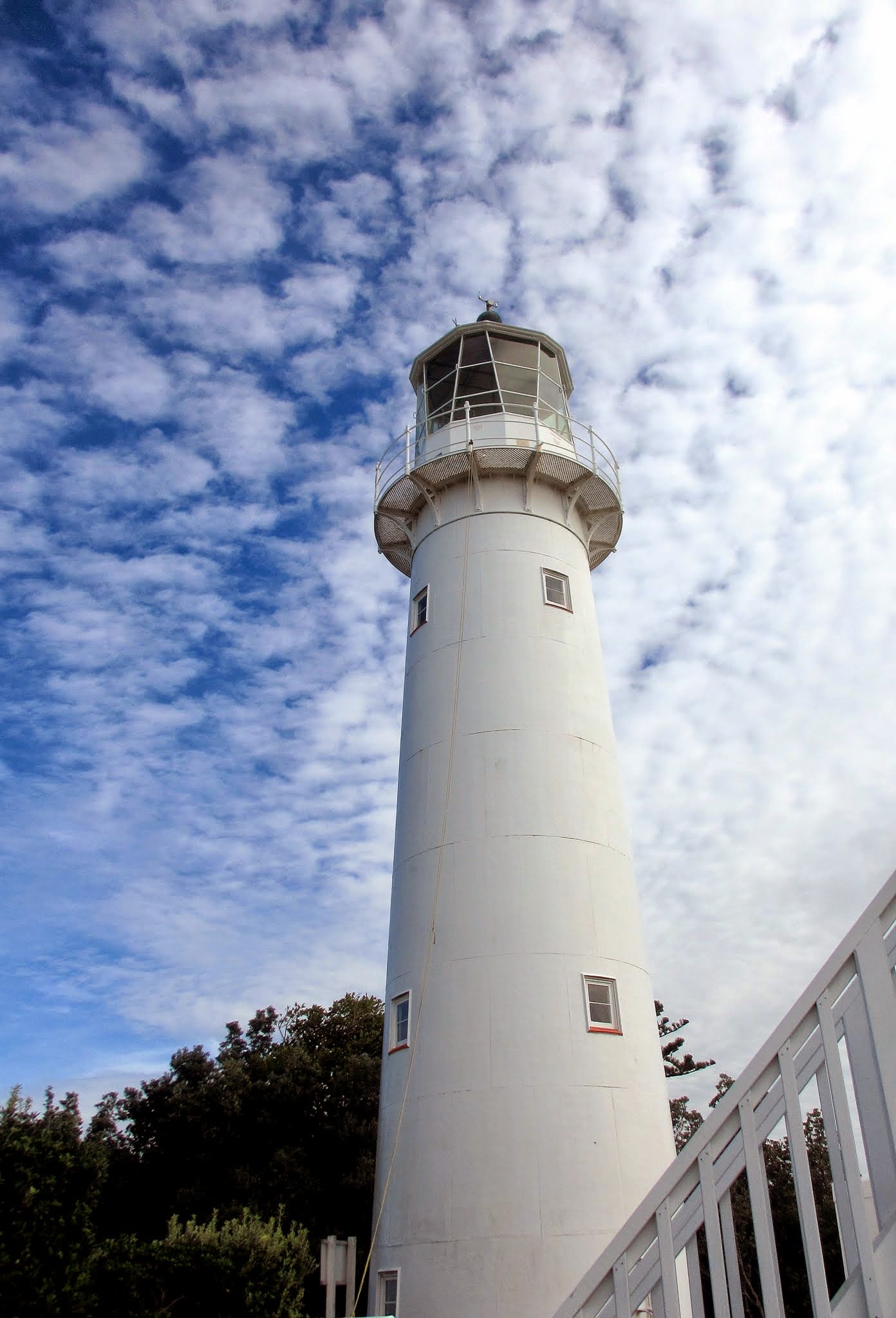
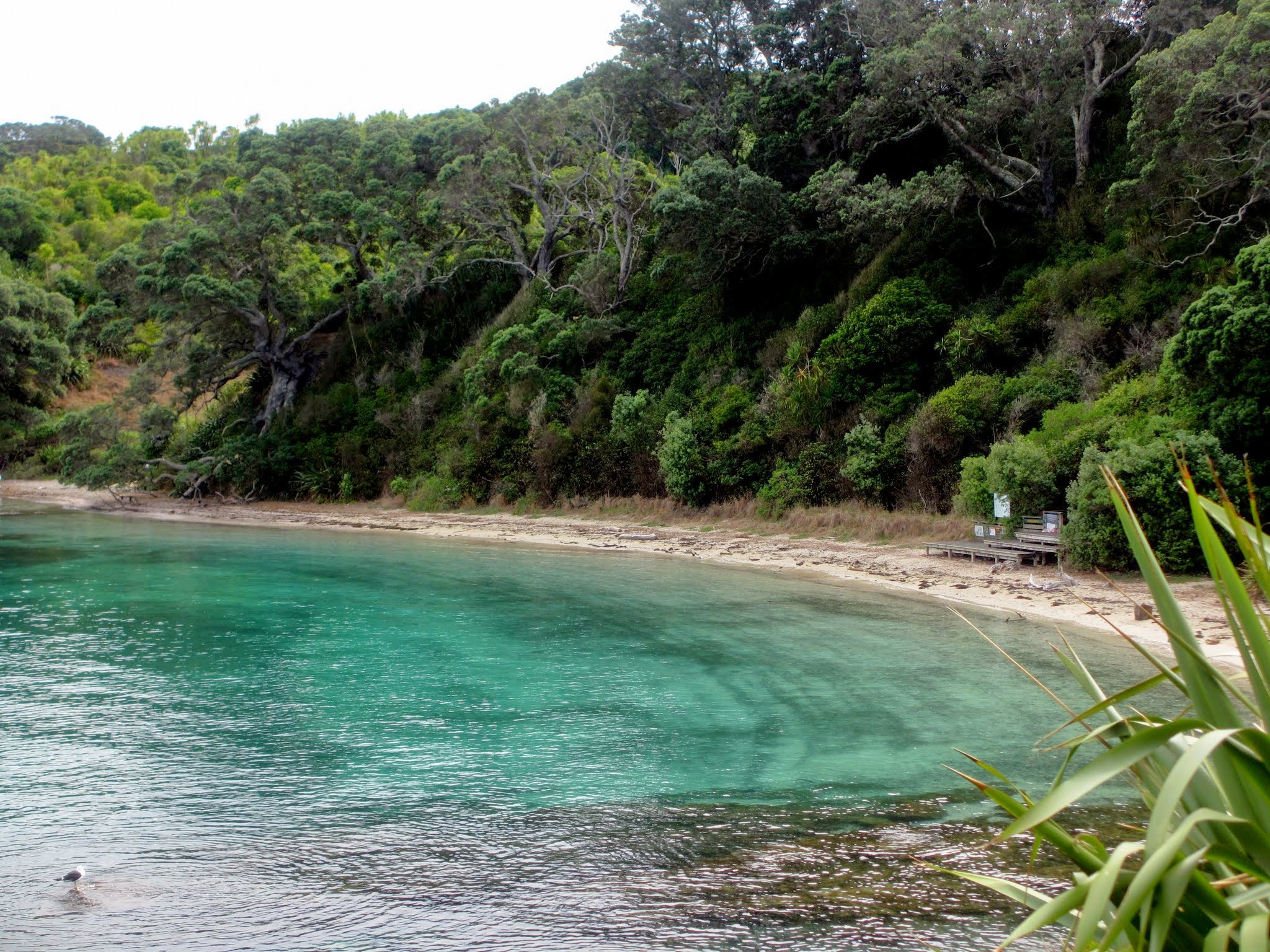
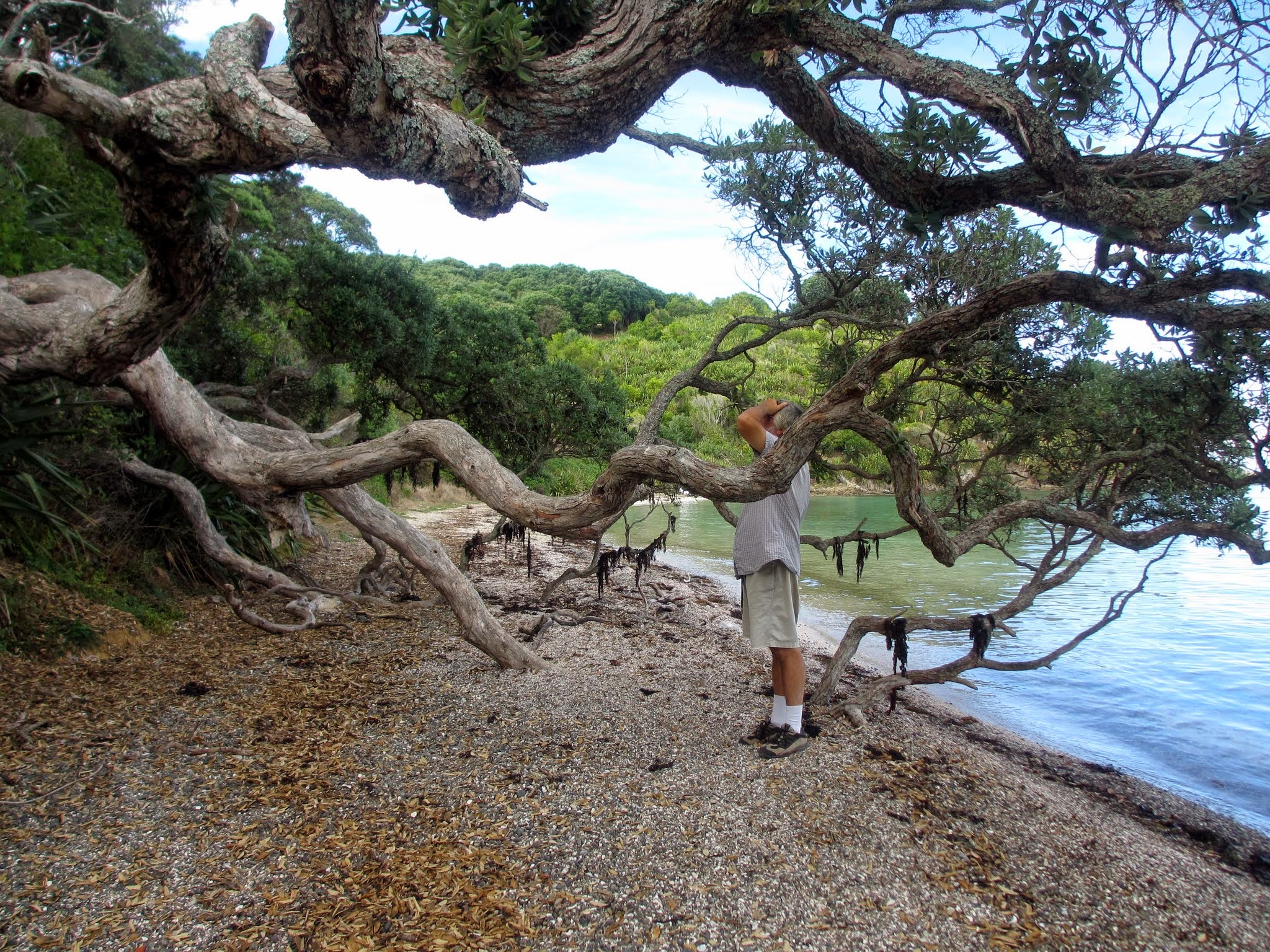
Even without the bird sanctuary this island would be worth a visit. There’s an old lighthouse, one of the first in New Zealand, and some terrific views of the south Hauraki Gulf islands. The regenerated forest is beautiful, but there’s some original forest left with ancient collapsed pohutukawa trees. When these trees get very old, the branches become so large they collapse under their own weight and root to the ground. Other trees then grow amid them into the light, and it’s a pretty incredible sight. Hobbs Beach is also very scenic, with clear green water and a light sand beach. It was all well worth the rolly night we spent here.

Above is a gallery of pictures. The beach in the bottom row of photos is Hobb’s Beach, and next to it is a photo showing part of a collapsed pohutukawa tree (these things are too huge to fit in a single picture). The last photo shows Legacy at anchor and behind her is the Whangaparoa Peninsula across the channel. (As always, click to enlarge and scroll).

Below is a video of bellbirds at one of the feeding stations. Bellbirds are very rare on the mainland but can be found on offshore islands of New Zealand. Their chorus at these feeding stations is pretty impressive–Cyndi
The North Hauraki Gulf General Area (New Zealand)
April 1, 2013

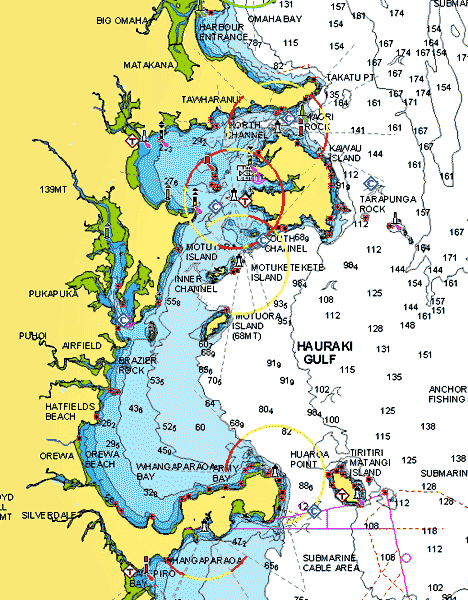
The north Hauraki Gulf definitely has its own character. It’s bordered by the Whangaparaoa Peninsula on the south end and the Tawharanui Peninsula on the north. In between these peninsulas is a 14-mile expanse which, aside from Kawau, contains only a few small islands. Much of the boating action actually takes place in the harbors and estuaries on the mainland, especially the Mahurangi Harbor, famous for its yachting heritage and annual regatta of traditional yachts.

hauraki-gulf-map

This map shows the north Hauraki Gulf area. The unnamed large harbor on the mainland is the famous Mahurangi Harbor.

Onshore is the Matakana wine country where vineyards and produce farms sprawl over the rolling hills. It’s famous for it’s wineries, artisan foods, and the Matakana Village Farmers’ Market. The lifestyle here attracts artists, foodies, weekend boaters, and suburbanites willing to make the long commute to Auckland. Unfortunately because of weather and time constrictions we didn’t get to explore this area in Legacy during our 2013 season, but we did make it back later by car. Off the top of my head I’d say it’s like coastal Maryland meets laid-back northern California.

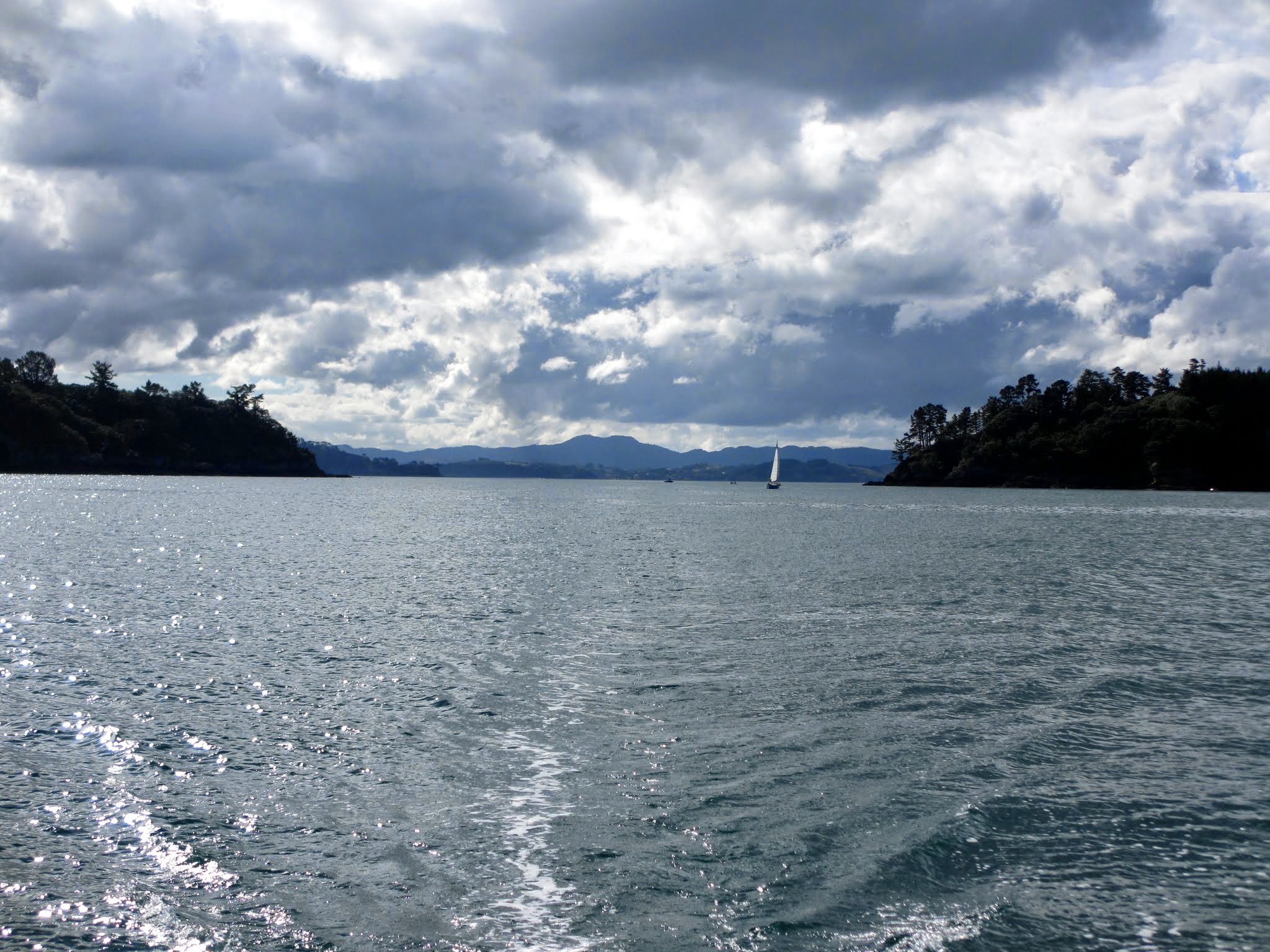
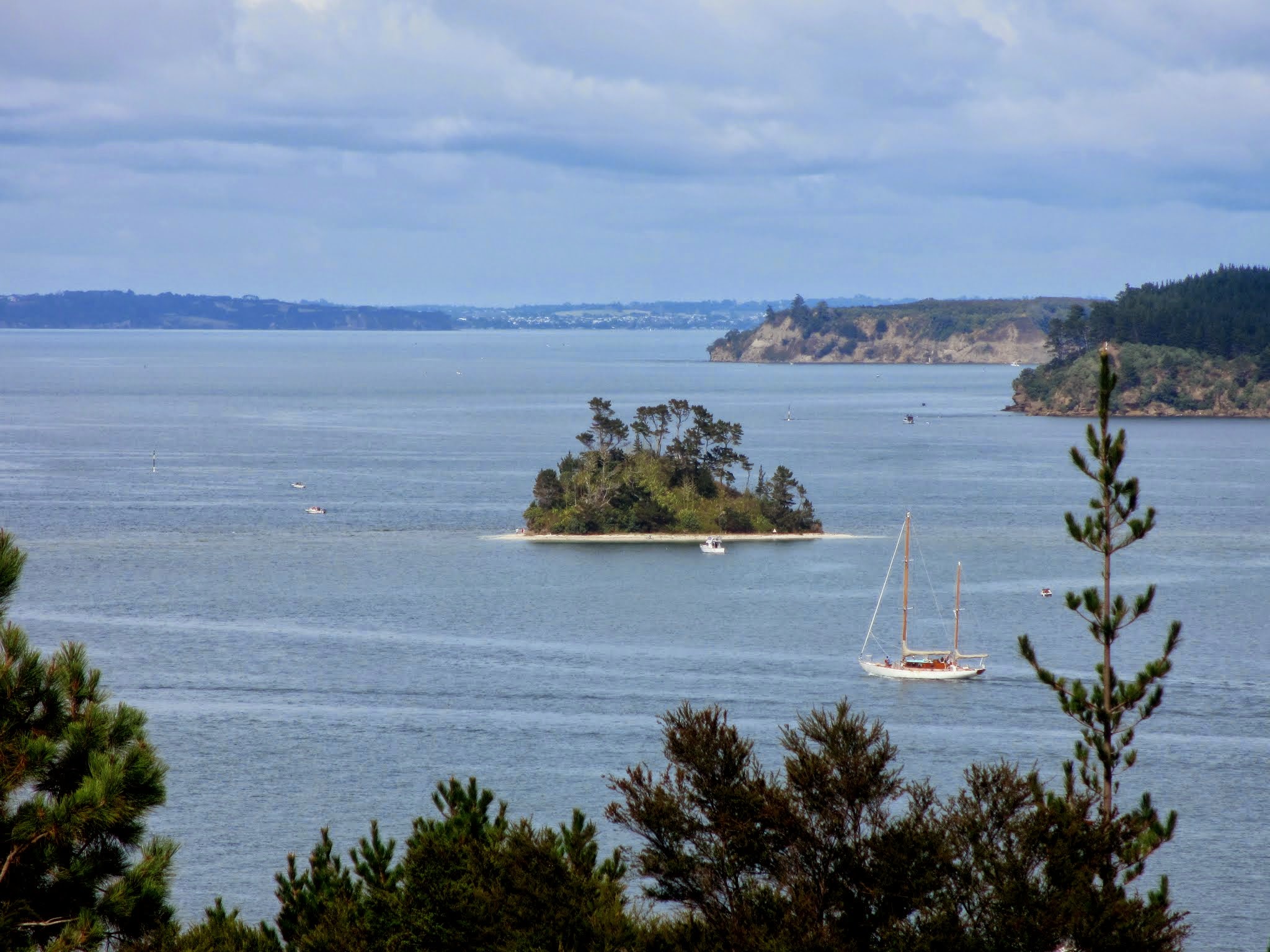
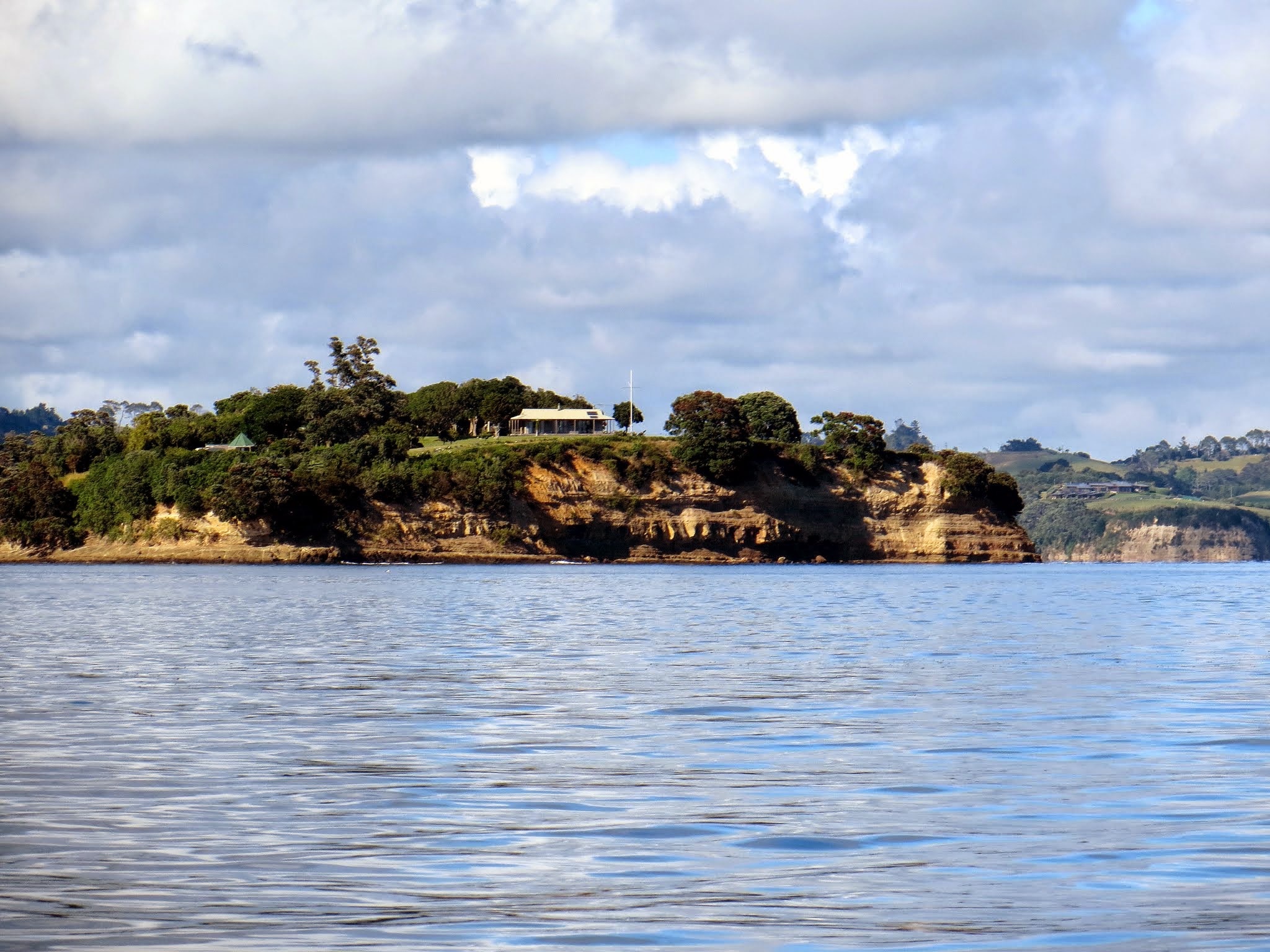
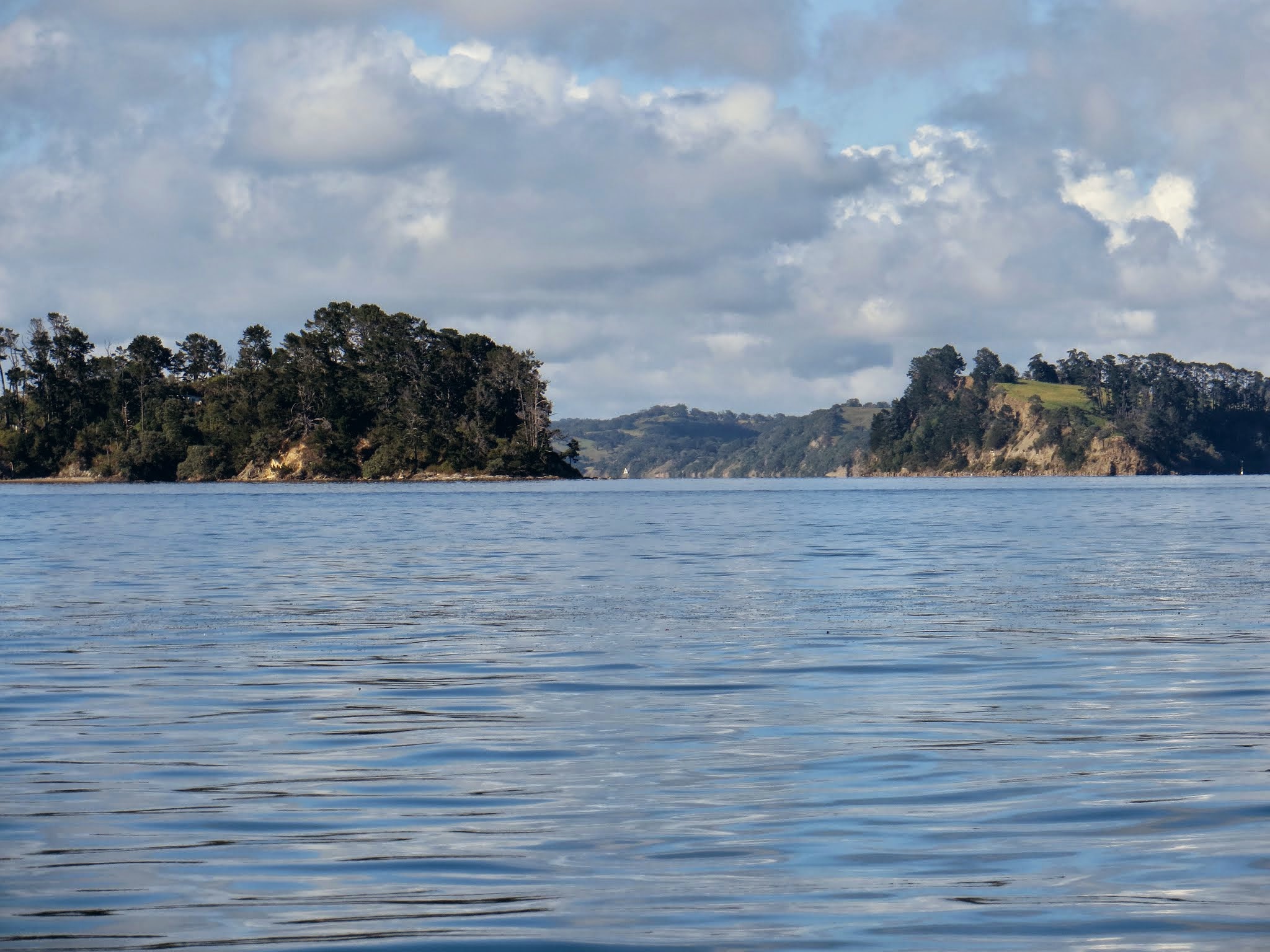
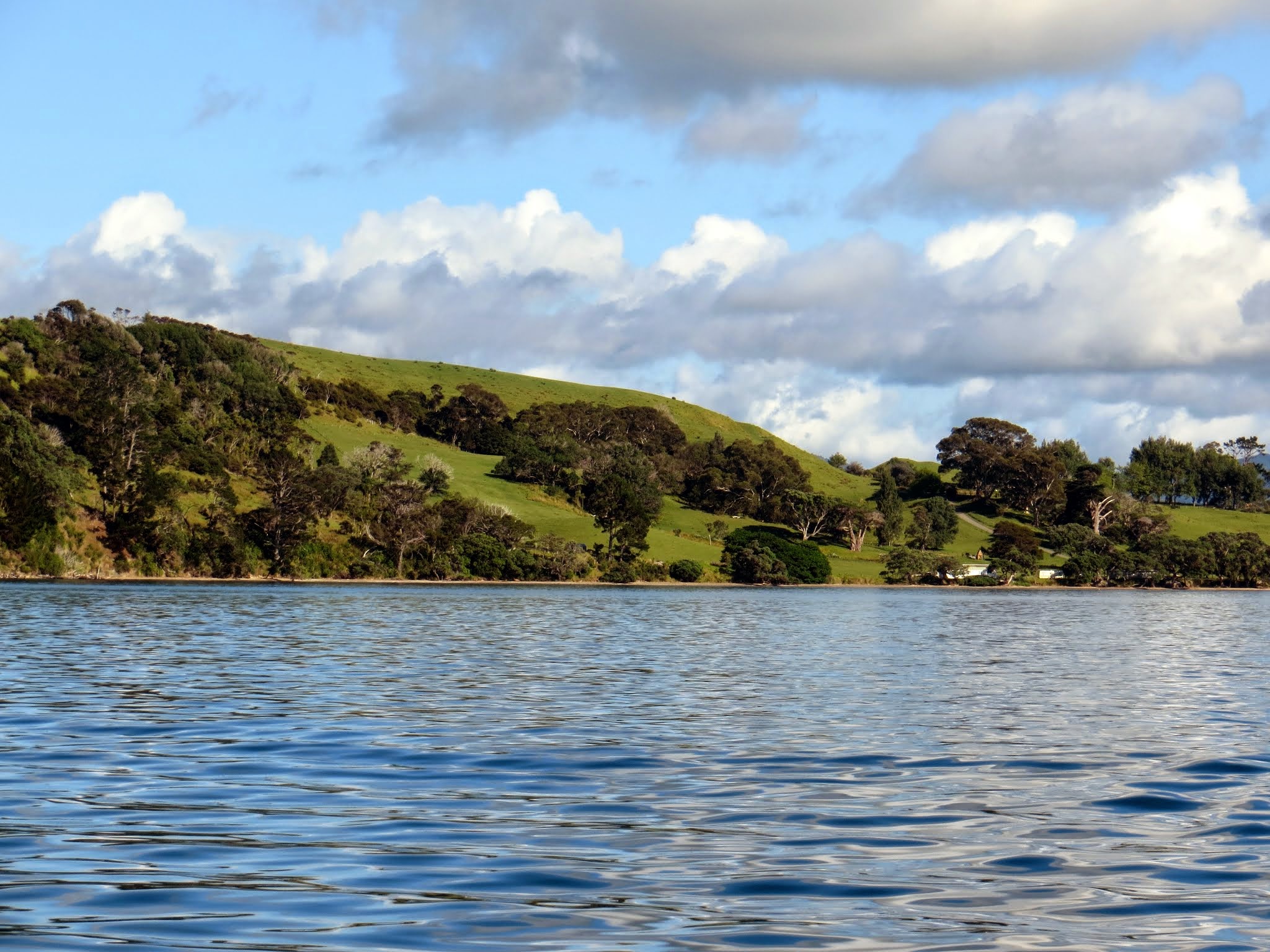
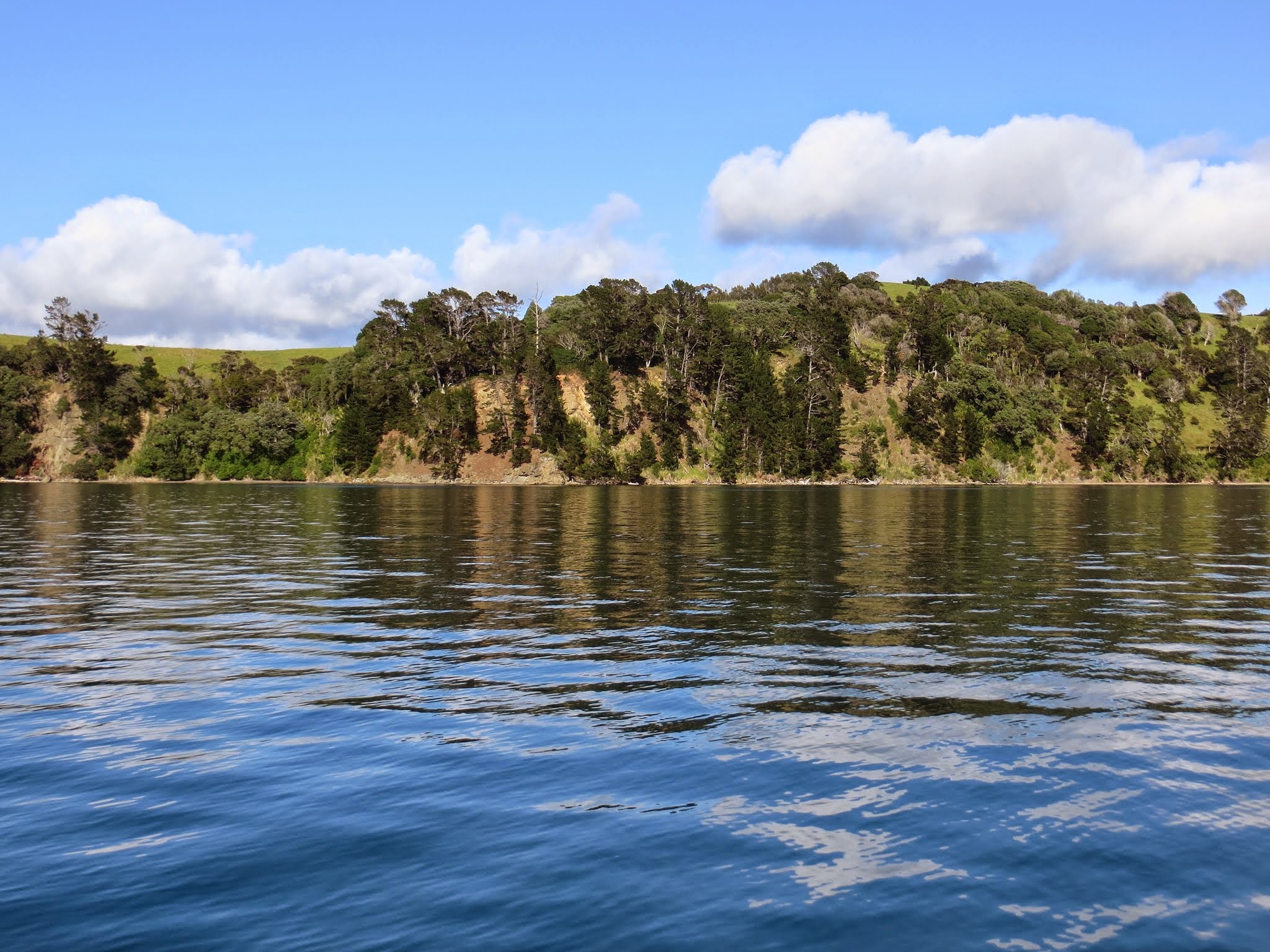
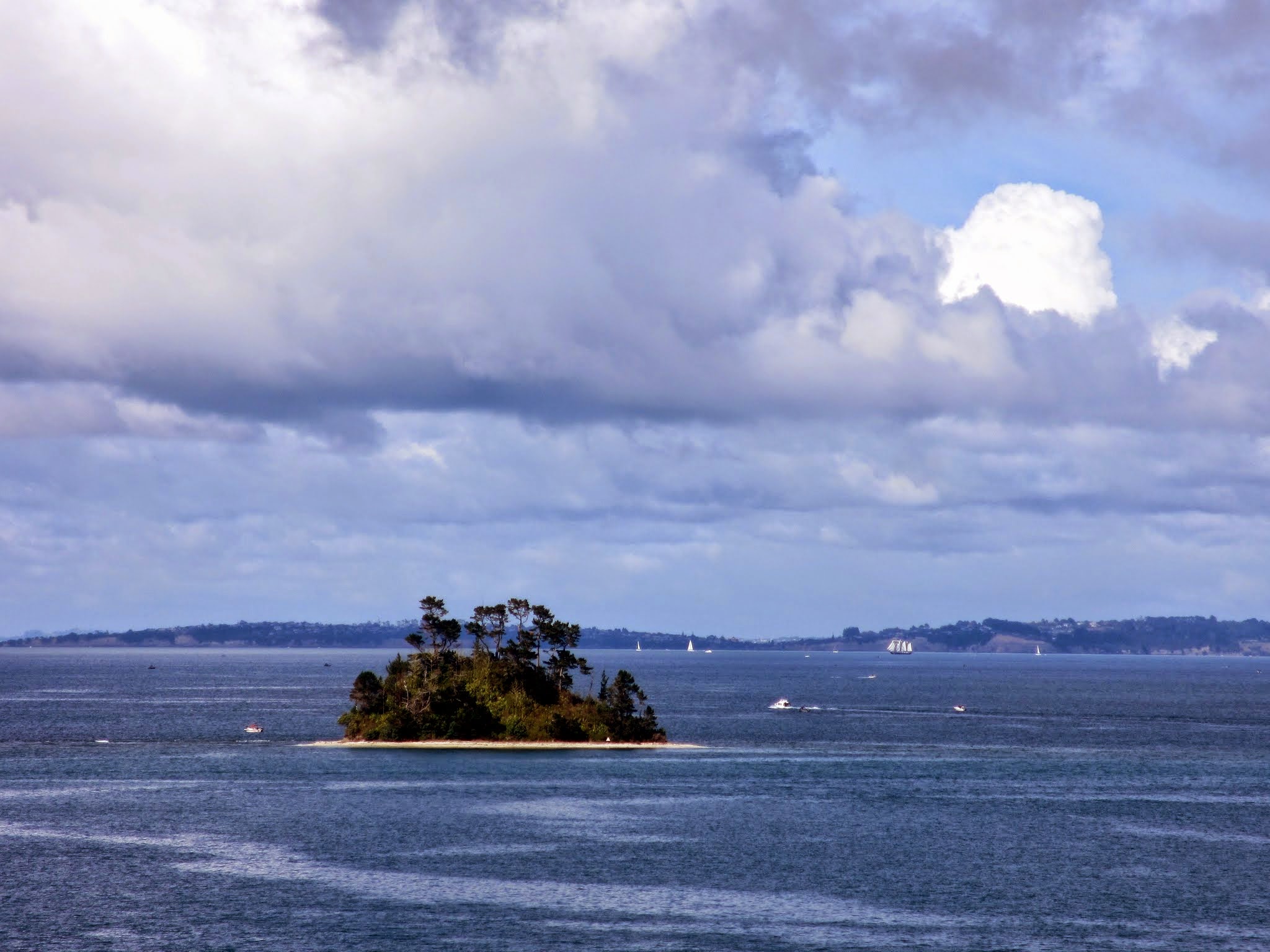
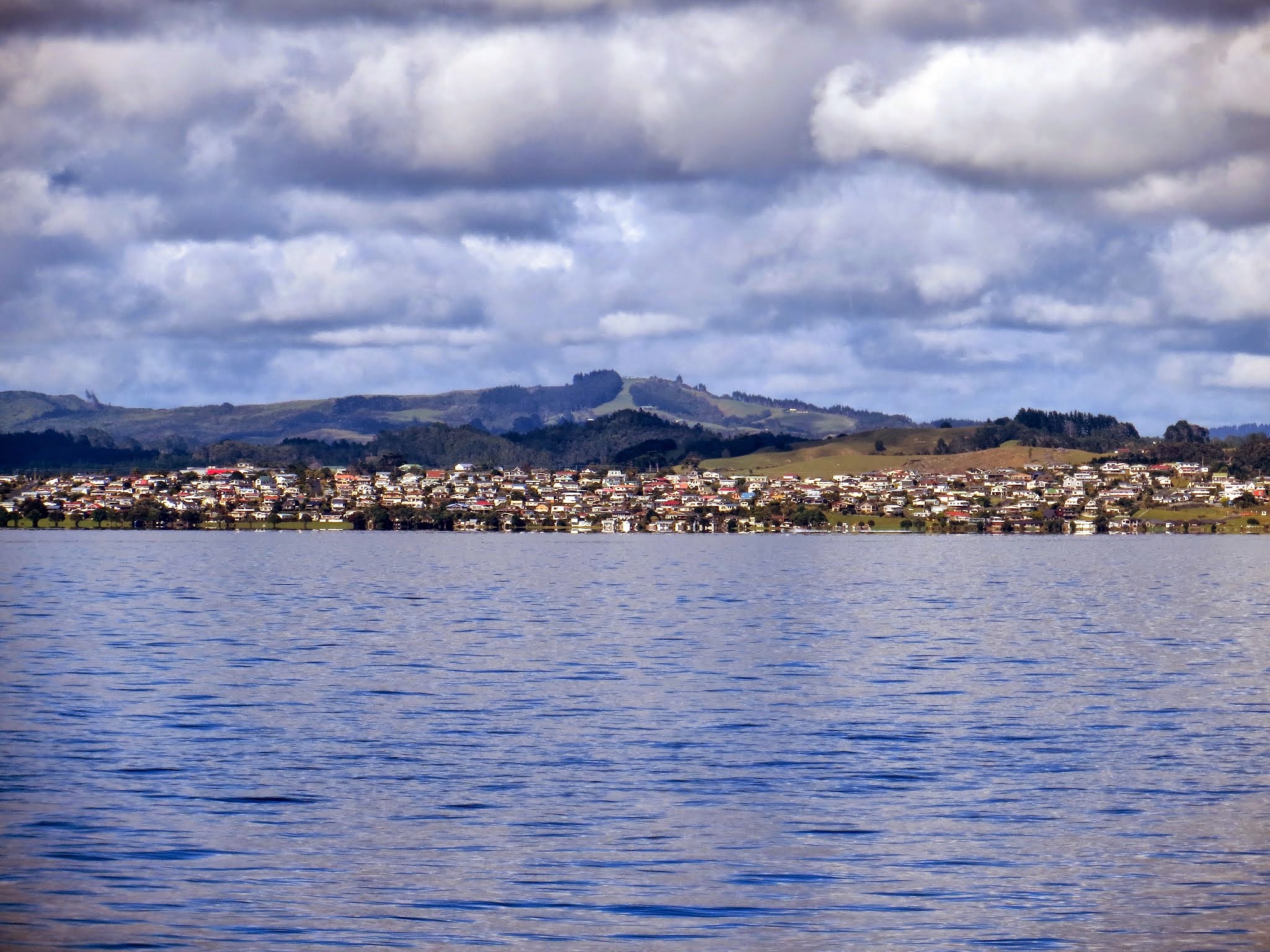
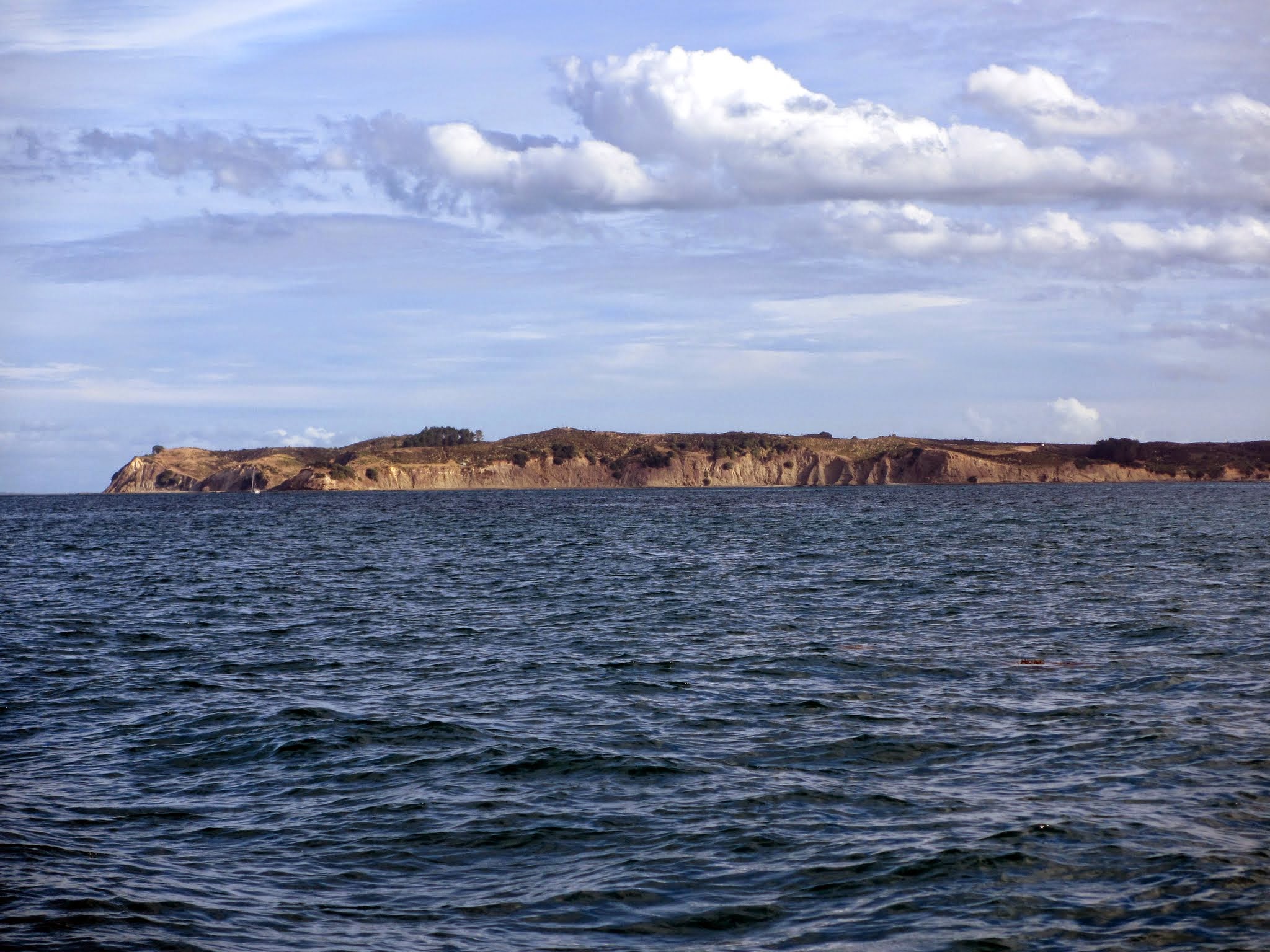
I’ll eventually do posts about the Matakana area, but for now I’m focusing on the north Hauraki Gulf and its islands. The gallery below is an assortment of pictures that I hope give a general feeling of this area. The last picture is of the Whangaparaoa Peninsula (beyond which is the bigger, more mainstream south Hauraki Gulf and the city of Auckland).

As always, click to enlarge or scroll. –Cyndi