Adventures in Suva (Viti Levu, Fiji)

November 11, 2013

Our first morning in Suva began dramatically when, at 5:30am, we where abruptly awoken by one of those bomb-raid horns which, with our lifestyle, might signal a tsunami alert. We sprang out of bed, and Rich ran for the computer to check out Hawaii’s tsunami alert site while I tired to get my brain to function pre-coffee. The horn only sounded once; so I figured it must just be a drill. Rich still worked to confirm there was no real warning. Feeling better now but wide awake, we wondered why they had to do that so early in the morning.

We were still doing our morning radio net as the last of our friends were on approach to New Zealand. We told one of them about our morning trauma, and he just laughed and said that’s the wake-up call at the prison across the street and it happens every morning. Well, now that we knew what it was, we’d be able to sleep through it, but it would be nice if the yacht club would warn a person! Maybe the 5:30am tsunami alert panic is sort of an unofficial hazing into the club. 🙂

Our first project this morning: find out why the autopilot had gone out. The answer: the solenoid had rusted from water that leaked in around screws on deck. Our second project: go forth into the world and see if we could find a new solenoid. The natural place to start was the industrial area that covered the area between the yacht club and downtown Suva, a veritable maze of streets and alleyways containing parts stores, hardware stores, industrial supplies, and the like. Below, a map showing the area.


We’d gotten a suggestion from the yacht club’s marine store as to where to look first, but it’s never that easy. Usually these scavenger hunts involve walking from one shop to another, no one having quite the right part but wanting to be helpful and suggesting a place to try next, leading us deeper and deeper into the recesses of the industrial maze. We’re used to doing these sorts of searches in various cities around the world (especially Hong Kong). Rich thrives on these challenges, not just the hunt but the discovery of other things along the way that can be handy to know about. I, on the other hand, am not mechanically inclined and can’t understand why we need to stare at every part in every store for hours on end (well, it seemed like hours).

Well, I guess I can understand how Rich feels when he goes grocery shopping with me. I ponder the items on the shelves (salad dressing is a good example), both the familiar and the unfamiliar. What’s this new brand, what are the ingredients, how much more expensive is it, is it better quality or just prettier packaging, should I try it or go with what I know, and look, are those canned cornichons? I needed them for a recipe awhile back but can’t remember which one. Should I get them while I see them or wait until I need them again? And look at these beautiful olives! Do they have seeds? Do I feel like dealing with spitting out seeds or should I get the seedless, yet less tasty, version? How many jars of olives do we have, and do we have room for another in the can locker? Hey, they go great with bread and brie—I should get some brie, but the baguettes are better at the other grocery store. Maybe we could stop there on the way home, but it’s getting near rush hour and things are more crowded now, etc., etc.

To me, these are all important thoughts to ponder. To Rich, it seems like I’m suffering some strange spell of grocery-store hypnosis where I think I’ll find the answers to the mysteries of the universe amid the merchandise. He’ll ask, “Why are you staring at the shelves? Just pick something and buy it for God’s sake!” I’ll think, “Yea, as if! Do you want to eat well or don’t you?” (Needless to say we don’t always shop well together.)

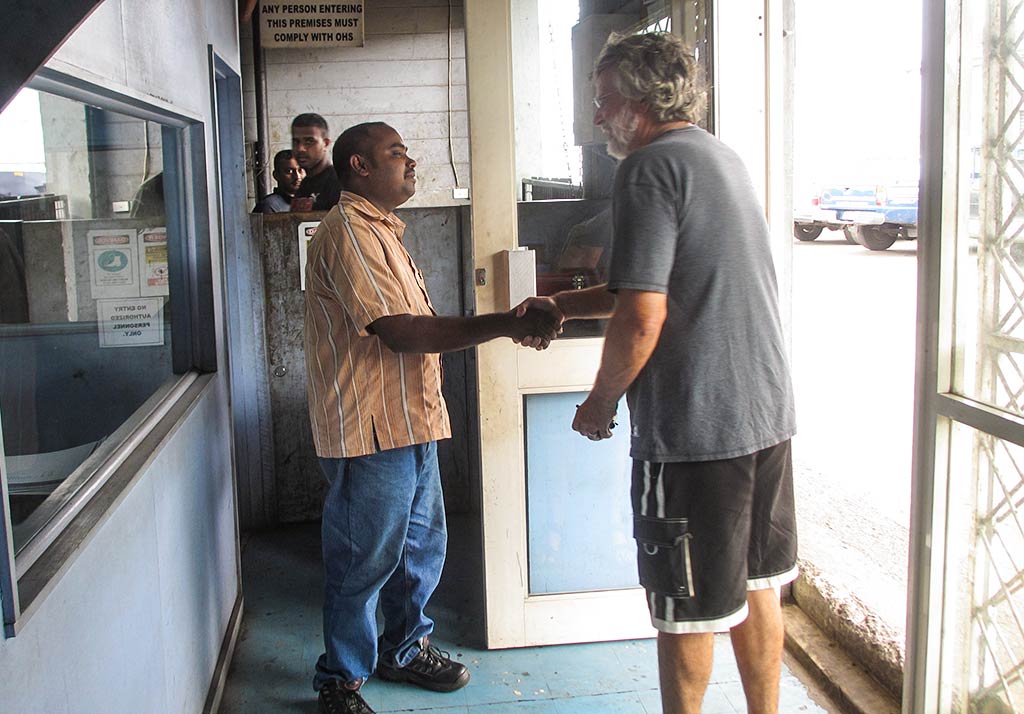
Anyway, after making many stops and talking to many people, we came across a place that had a man who could likely rewind (fix) the solenoid for us, but he wouldn’t be in until the next day. This sounded very promising so thus ended our quest for the day.

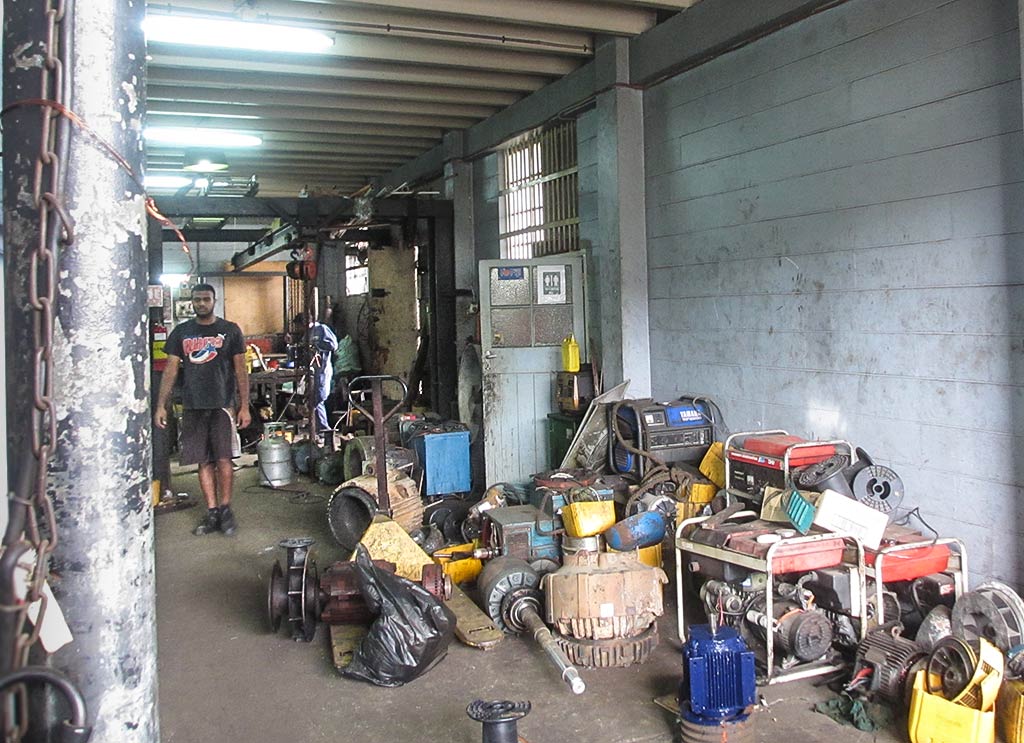
As it turned out, over the next couple of days, he would rewind and repair our solenoid. One thing that stood out during all our walking around was that many of these industrial stores were run by Indo-Fijians (Fijians of Indian descent who make up nearly half the population of Fiji); and they were some of the most can-do people we’d ever run across. Since Fiji is a small third-world country, they have to make do with what’s available and make it work; so we came across many ideas and suggestions. In more westernized nations with more resources, people are quicker to throw up their hands, say they can’t do anything, and suggest a new part be ordered (never a quick process).

Below, a photo of the place that fixed our solenoid, typical of many paces we came across in our search, and the happy outcome a couple of days later when the solenoid was fixed.
Once we put that project on hold for the next day, we decided to continue on and check out downtown Suva. We reached it by walking down a sidewalk along a busy highway, crossing a short bridge over a waterway and going around a large traffic circle. Below, a map including downtown (and midtown) Suva.


Here, we found the true heart of the city. It wasn’t the nicest part by any means, but as it encompassed the central bus depot, the hyperactive Suva Flea Market shopping complex, and the Suva Municipal Market (the city’s big open marketplace), it was a major intersection of Suva’s resident population. The area was thick with traffic, both pedestrian and vehicular, and it could be a bit challenging to get around. It was also the sort of area where one needs to watch out for pickpockets (as we found out later with an unsuccessful attempt to lift Rich’s phone from his pocket).

The area was interesting and the big open market is a must-see, but it was all a bit much for us. Yet by walking just a block or so further we found what I’d call the midtown area and face of the city: the shopping district. This triangular area was anchored by three shopping malls and chock full of stores in between them, mostly the clothing type, with a canal cutting through the center of it all. Here, the crowd was more international including native Fijians, Indo-Fijians, expats from Australia and New Zealand, and international tourists

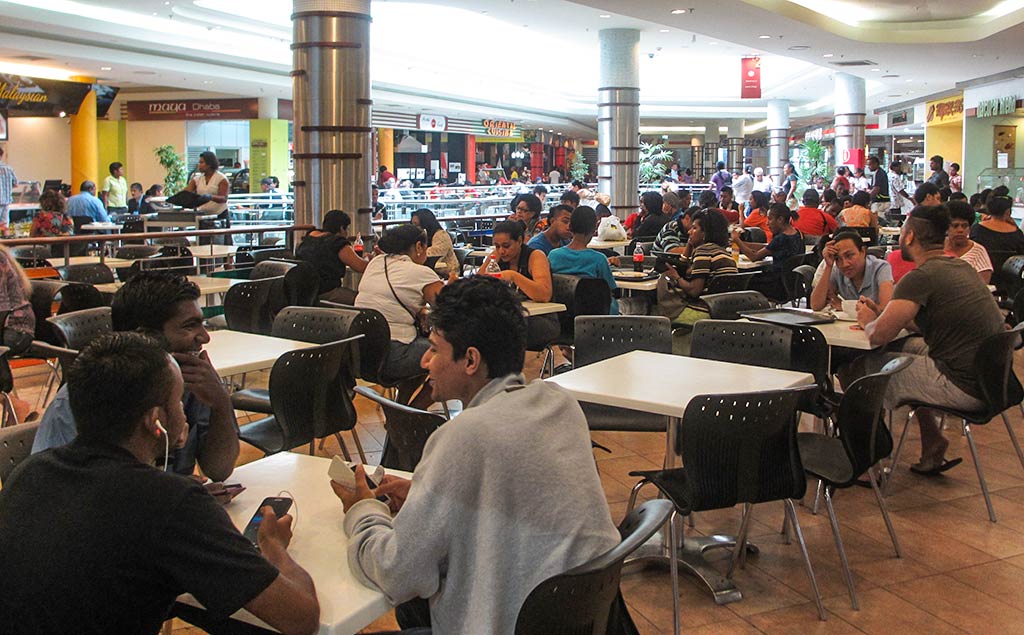
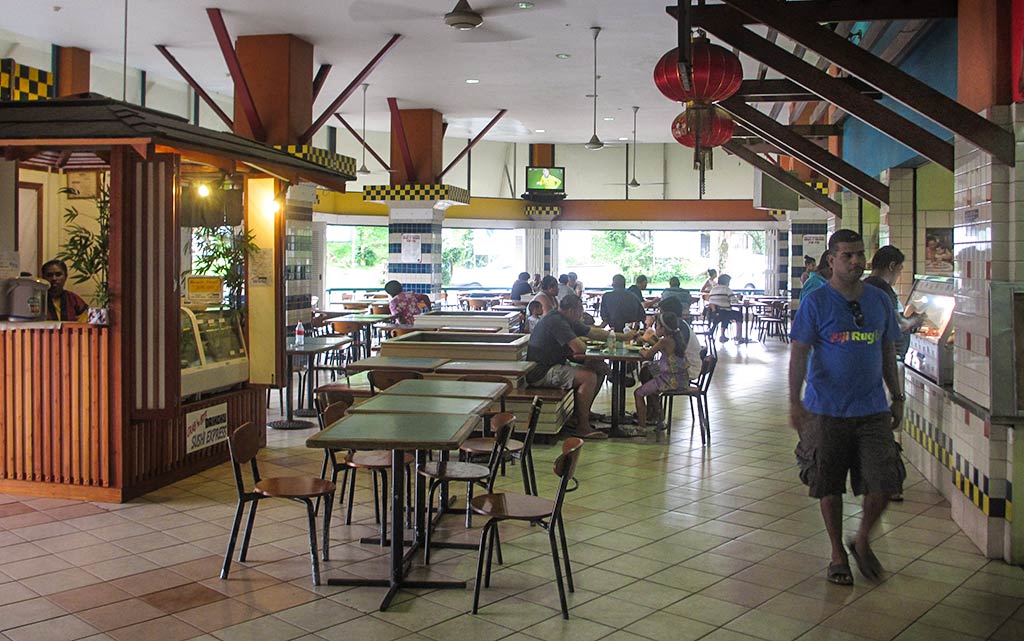
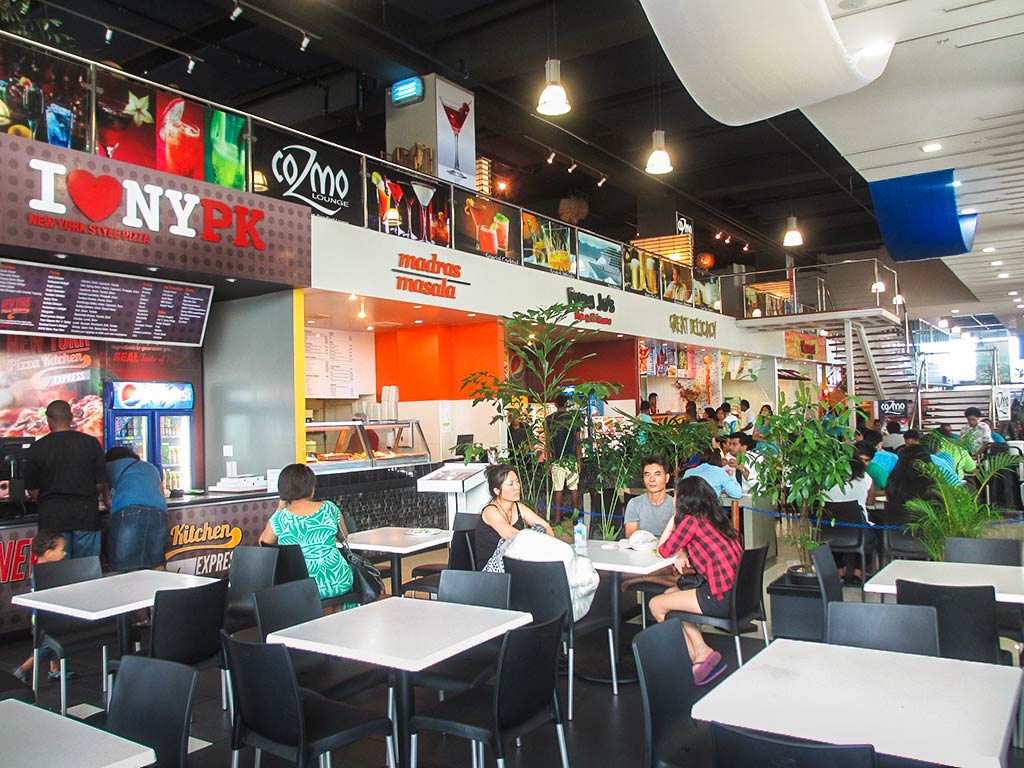
We started by checking out the tallest mall (which also may have been Suva’s tallest building at 6 stories), Tappoo City Suva. At first it seemed to contain different stores, especially with the ground-floor area being mostly about souvenirs for tourists, but it actually turned out to be one large 3-story department store (the Tappoo department store). It was only the 4th floor that had a few shops. It also had a glorious food court with a variety of cuisines, many of them Indian but also the usual burgers, fried chicken, and pizza. Above us, off to the sides of the building, were two more stories, but the food court ceiling went all the way to the top of the building, giving it a nice open feeling.

The standout feature of this area were the huge floor to ceiling windows with a beautiful view of Suva Harbor. We couldn’t help but notice we seemed to be the only ones to appreciate it; I guess everybody’s just used to this view.
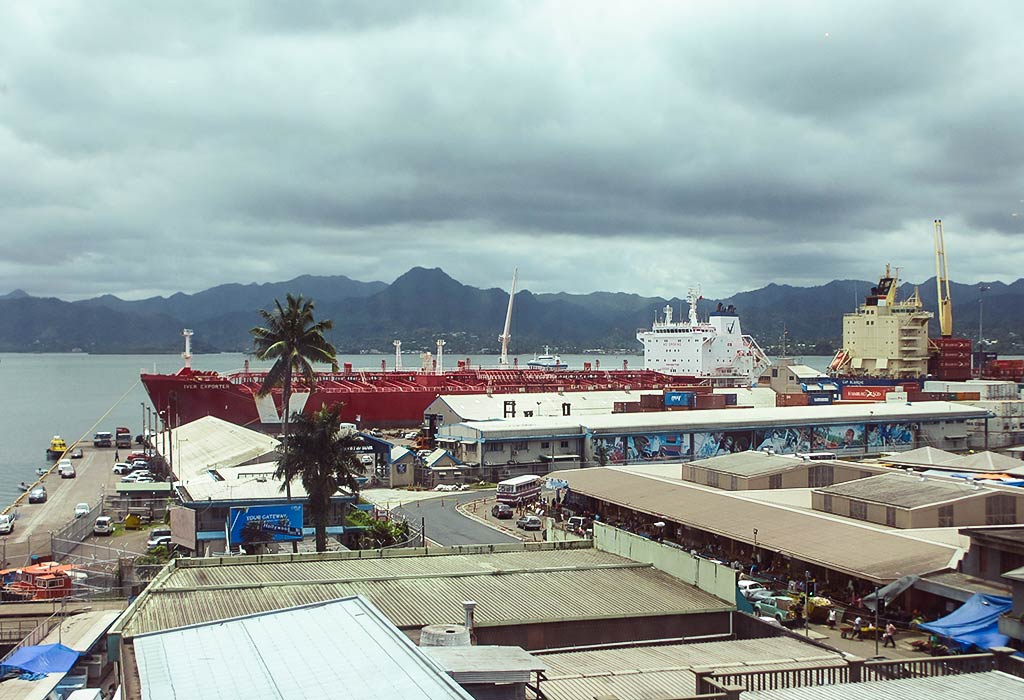
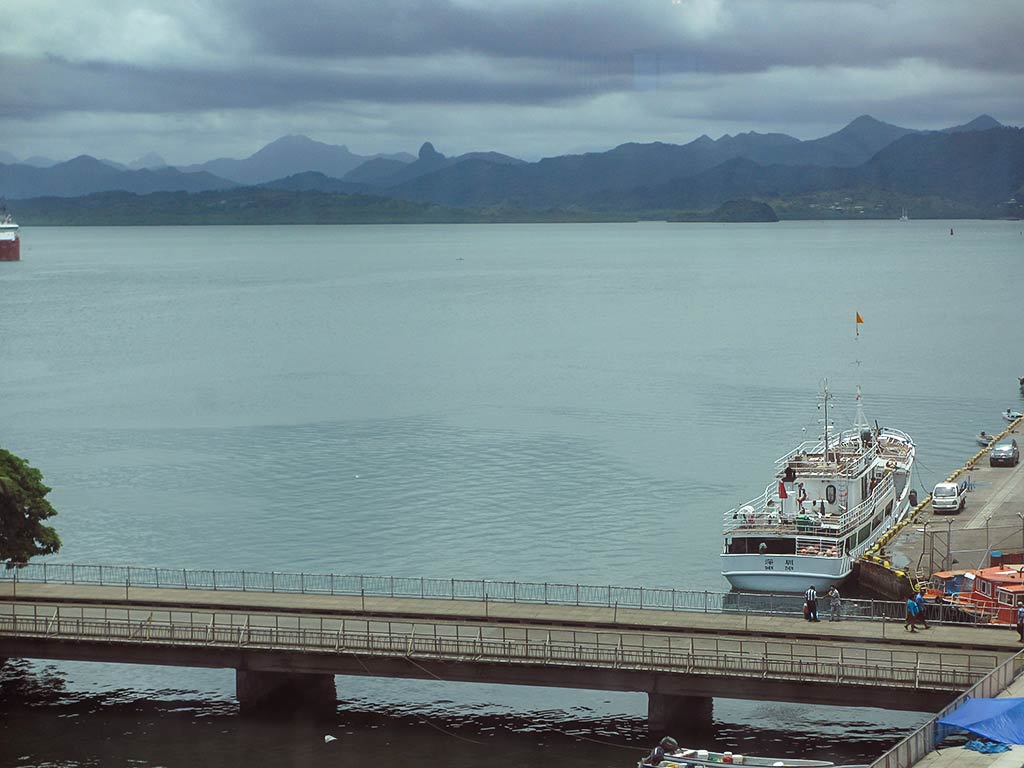
For lunch we settled on an Indian stall and got murtabaks, which are rotis (an Indian flat bread much like tortillas) spread with various curry fillings and folded up into squares. It’s actually more of an Indonesian dish than an Indian one, but in any case, very tasty!

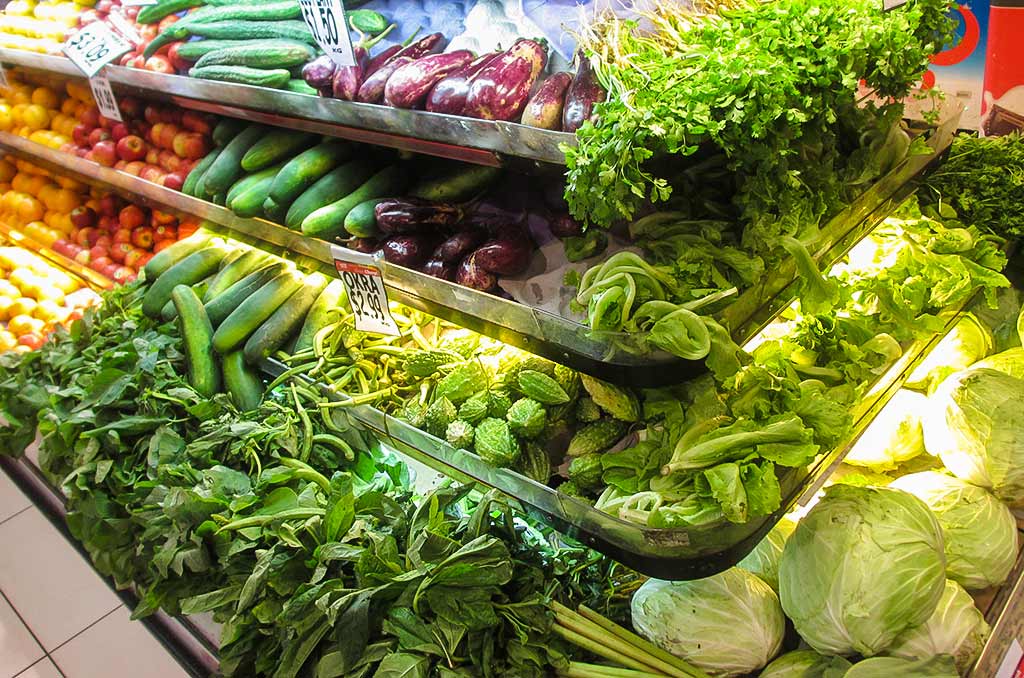
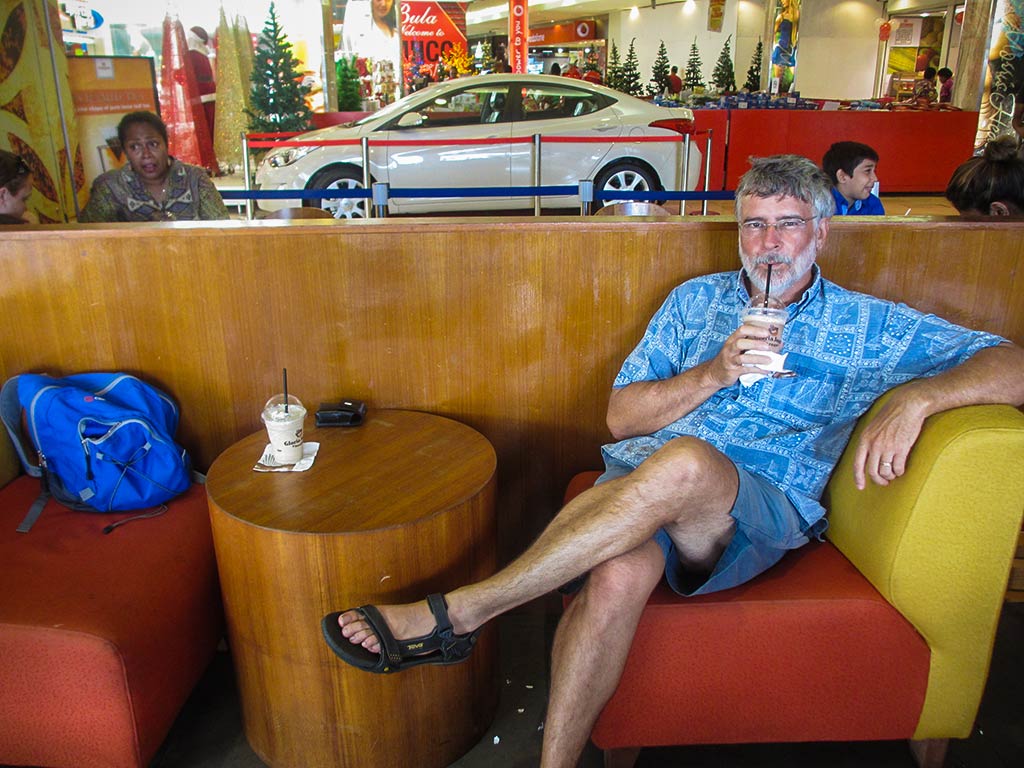
After lunch we walked inland to the next mall, MHCC, which was a true multi-level mall with a variety of stores. It, too, had a food court on the top floor, mostly with Indian food but there was a Chinese homemade noodle place and a Fijian place, too. The most interesting spots to us that day were both downstairs. One was a nice grocery store with a large produce department, the likes of which we hadn’t seen in months so I felt like a kid in a candy store! Who knew that vegetables could be so exciting?! The other spot was a Gloria Jean’s, a popular coffeehouse chain in New Zealand much like Starbuck’s. Here we had the first ice-blended coffee drinks we’d had in a long time, and they tasted like heaven.

Now, we crossed the street and checked out the final mall, Harbour Centre, actually just an arcade of shops and a food court, neither of which were very interesting. The walk through the arcade did bring us back to the main street of the city. Across the street were the Village 6 Cinemas showing an interesting mix of recently-released American movies and the latest blockbuster movies from India. Both film nationalities included family-based dramas, romances, comedies, and of course hero-vs-villain action thrillers which are very much the same in both countries except the American heroes tend to walk triumphantly off into the night, arm around the girl, while the Indian heroes might break out into a complex group song and dance routine (and look really, really good doing so).

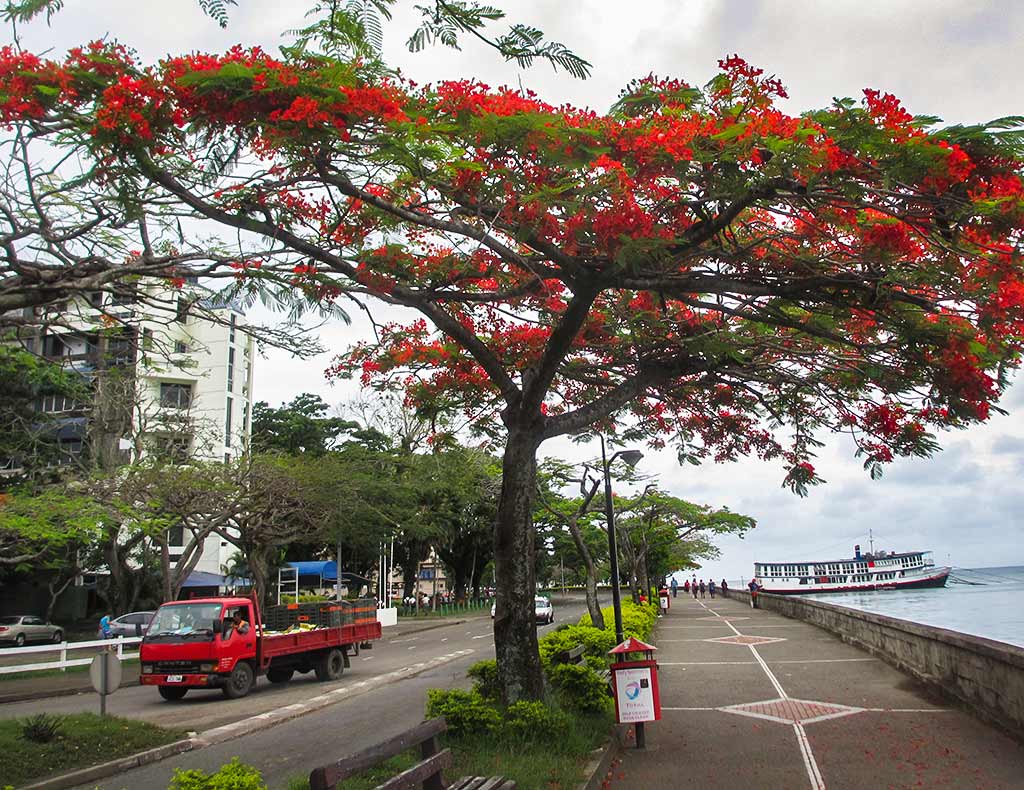
Continuing past the theaters and across a busy shoreline road, we arrived at Suva’s sea wall promenade, a 5km walkway popular with local families, joggers, and young couples. It’s a nice-enough promenade but it could use a face lift, more trees (especially palm trees) and maybe a coffee cart or food truck– something to make it feel less removed form the city’s energy. Suva is definitely a city that faces inland. Maybe this is because of all the port activities and shipping businesses, but the open water of the harbor and the view of the mountains that surround it are quite beautiful and worthy of far more attention than they get.

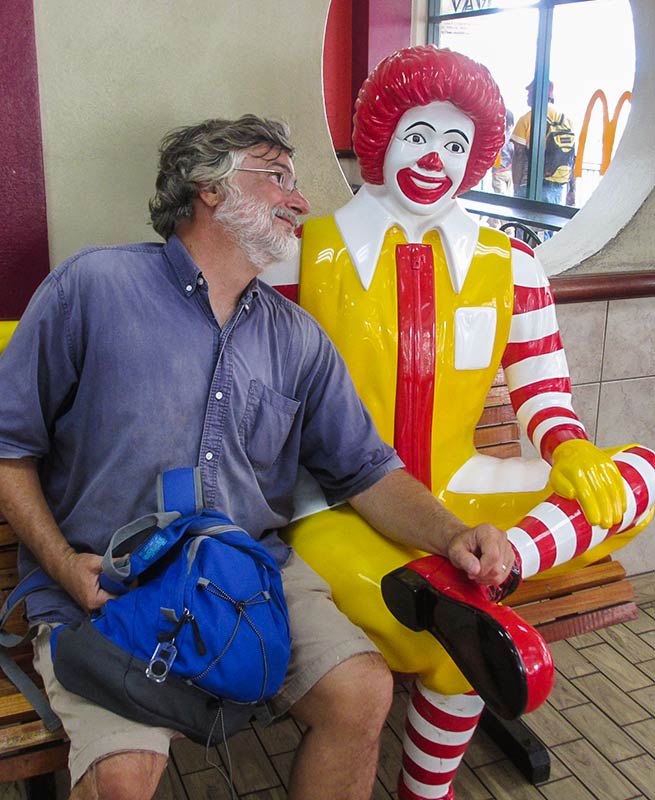
We walked a ways up the promenade to a small pretty park called Sukuna Park, the unofficial dividing line between busy midtown and the quieter uptown area. By now we were feeling hot and tired and ready to call it a day. That’s when I spotted it: McDonald’s! We headed right over to enjoy hot fudge sundaes in the air-conditioned setting. We love to travel to exotic places, but we also love to take a break on these little American “islands” that dot cities around the world. We were so happy for the moment that Rich went over to say hello to Ronald McDonald, America’s unofficial best friend.

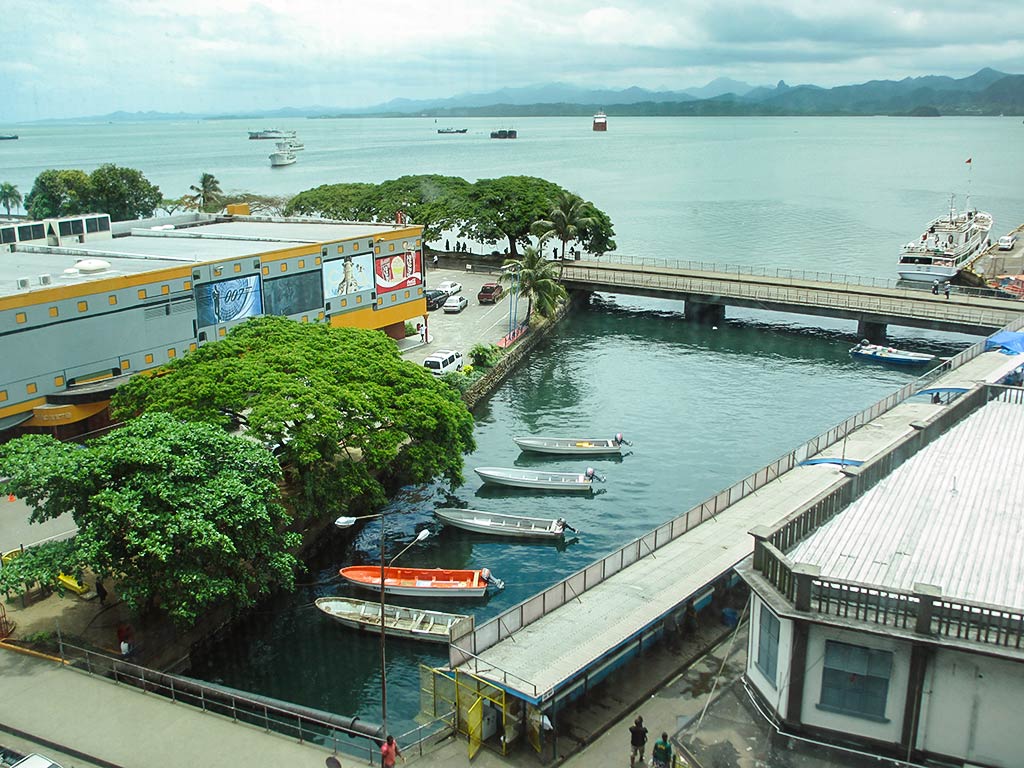
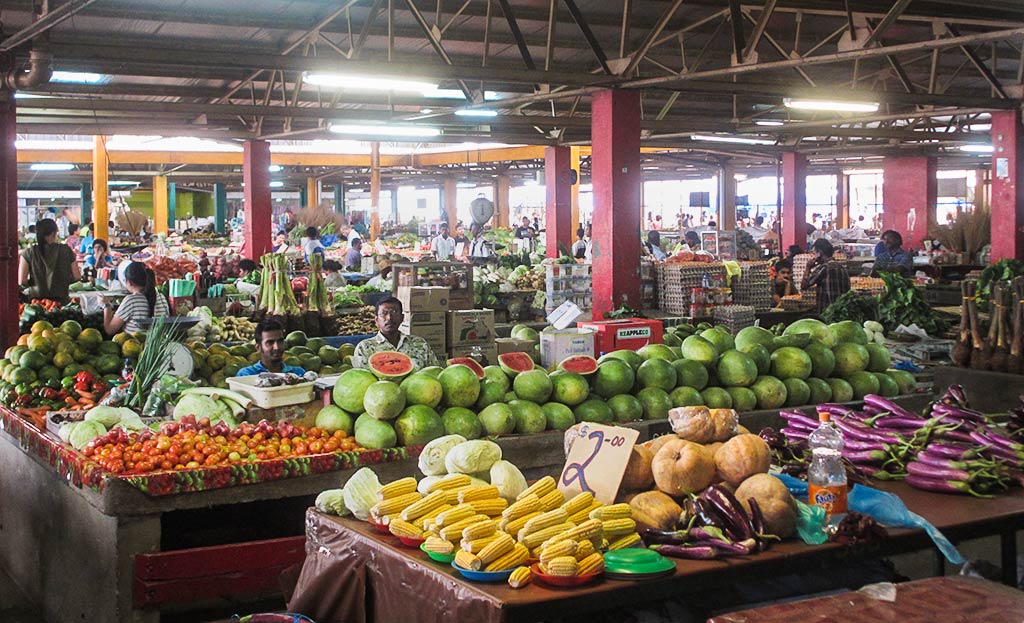
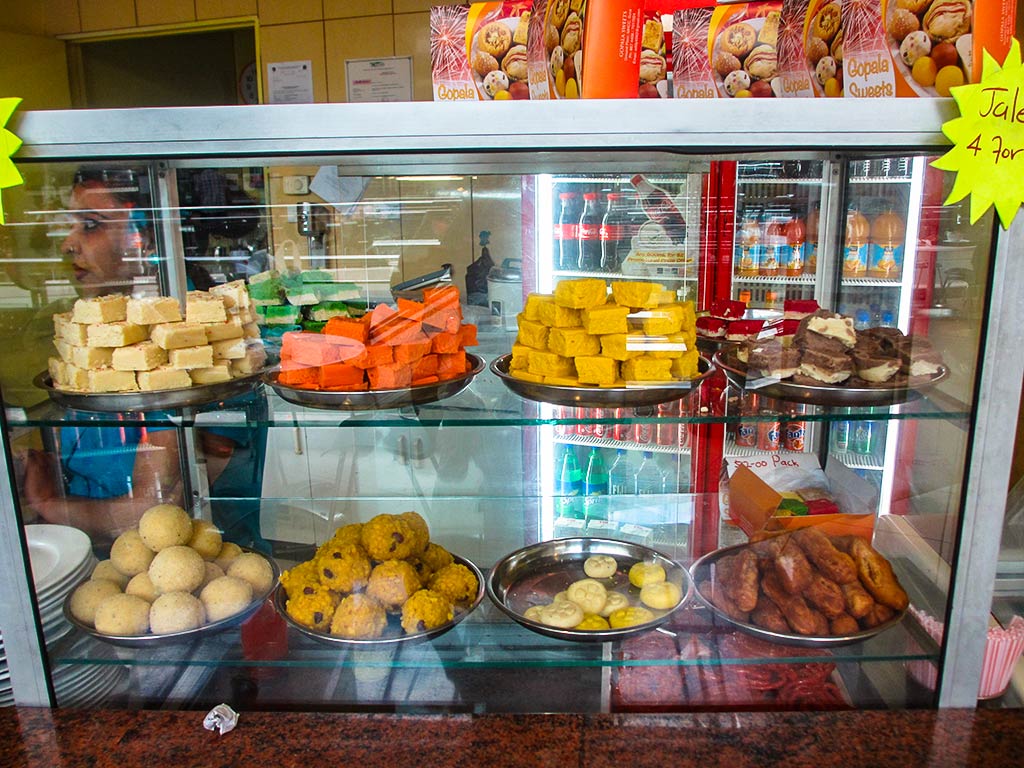
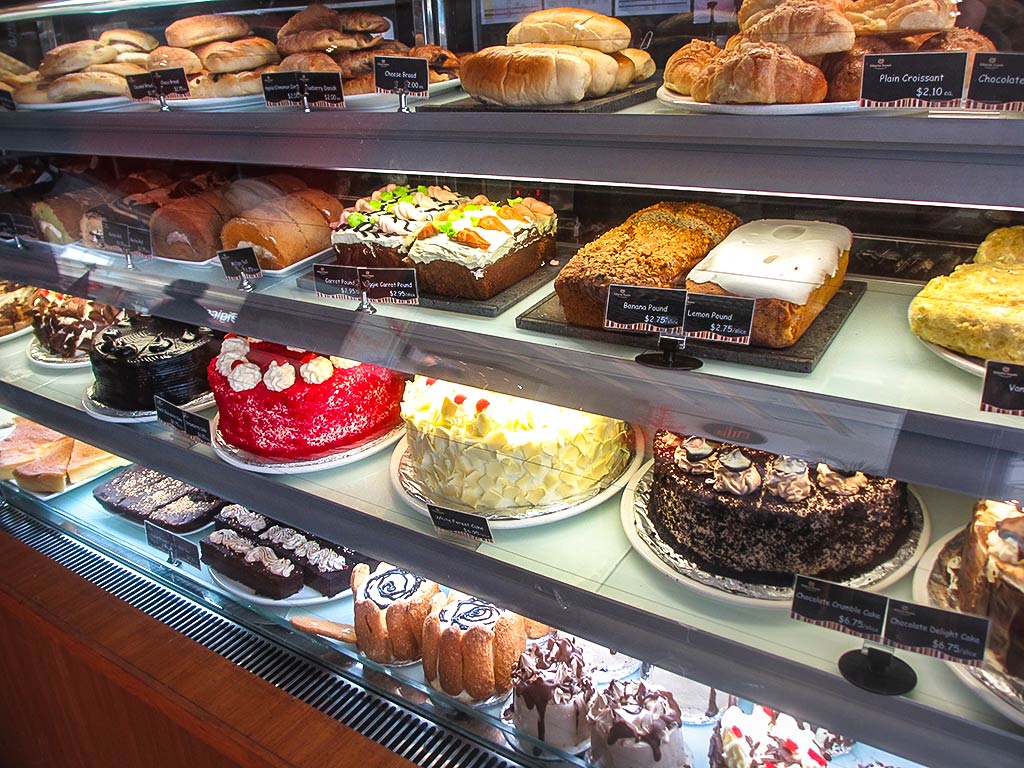
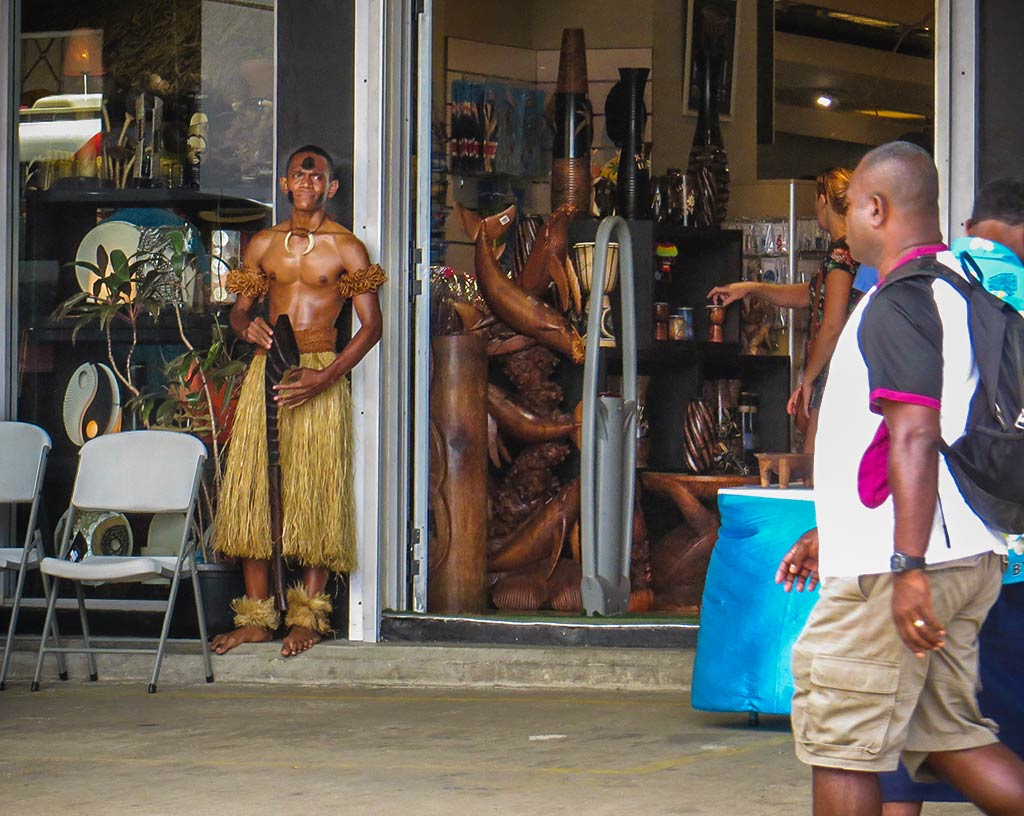
Below, a gallery of photos from our first day of wandering around Suva, including the food courts of all three malls, the bountiful produce at the supermarket, a iced coffee drink at Gloria Jeans, a visit with Ronald McDonald, counters containing both Asian and western-style sweets, the prettiest area of the seaside promenade, and some food stalls at the busy Municipal (central) Market. Also, note the photo of the guy standing in costume in front of the Tappoo department store. This happens when a cruise ship is in town, and it’s amusing to see these guys on their breaks, sitting nearby perusing their smart phones before getting back to work and resuming their less-than-menacing cannibal impersonations. (Click to enlarge and scroll through any of the photo galleries in this post.)

We took a cab back to the marina and signed in at the reception desk, picking up our key cards. We knew there would be a charge for the mooring and today found out how much: $35FD a night (about $18 for us). We decided to stay put for the time being and pay the fee. Yes, we could go anchor nearby for free, but we felt more secure on the mooring as the bottom of this harbor could be silty and trash-laden.

Our final task for the day was to sit at the bar and enjoy a Fiji Bitter. The bar at this yacht club is hard to resist. We’d walk right by it on the way to the dock, and it was so inviting and easy to sit down at one of their outdoor tables and have a cold beer. Tomorrow, we’d continue our tour of Suva by heading uptown. –Cyndi
Suva, Fiji – Morning Look

November 11, 2013 in Suva, Fiji

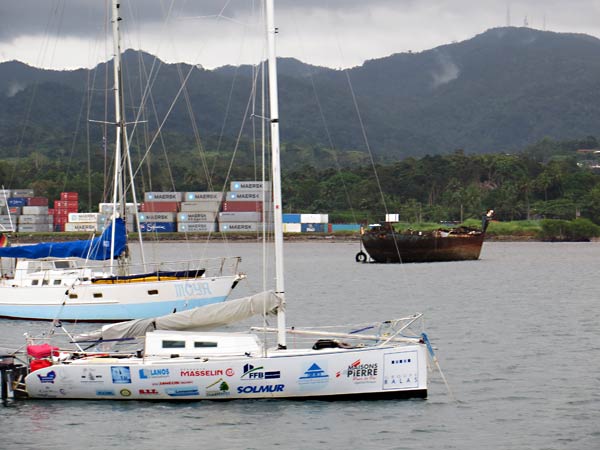
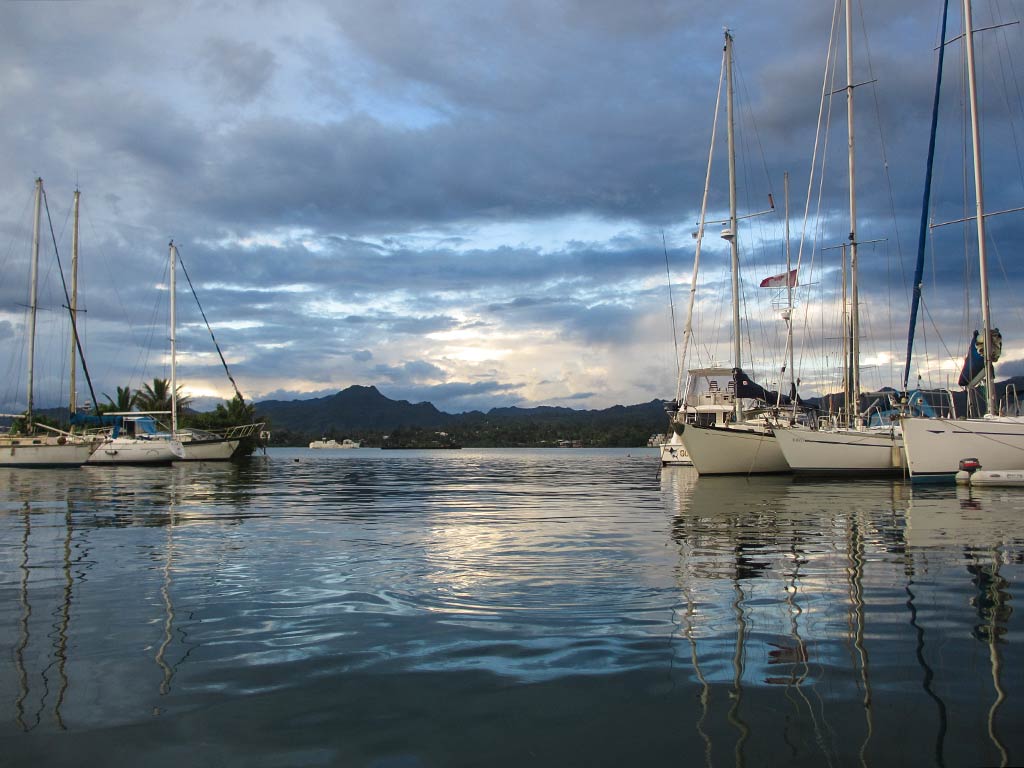
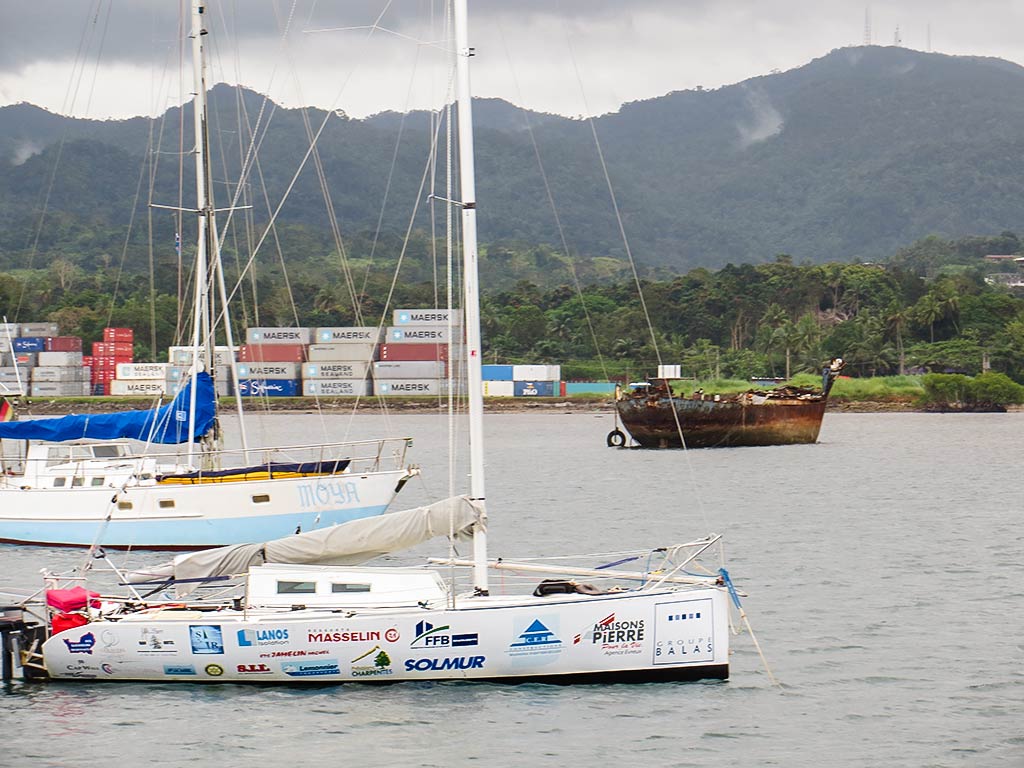
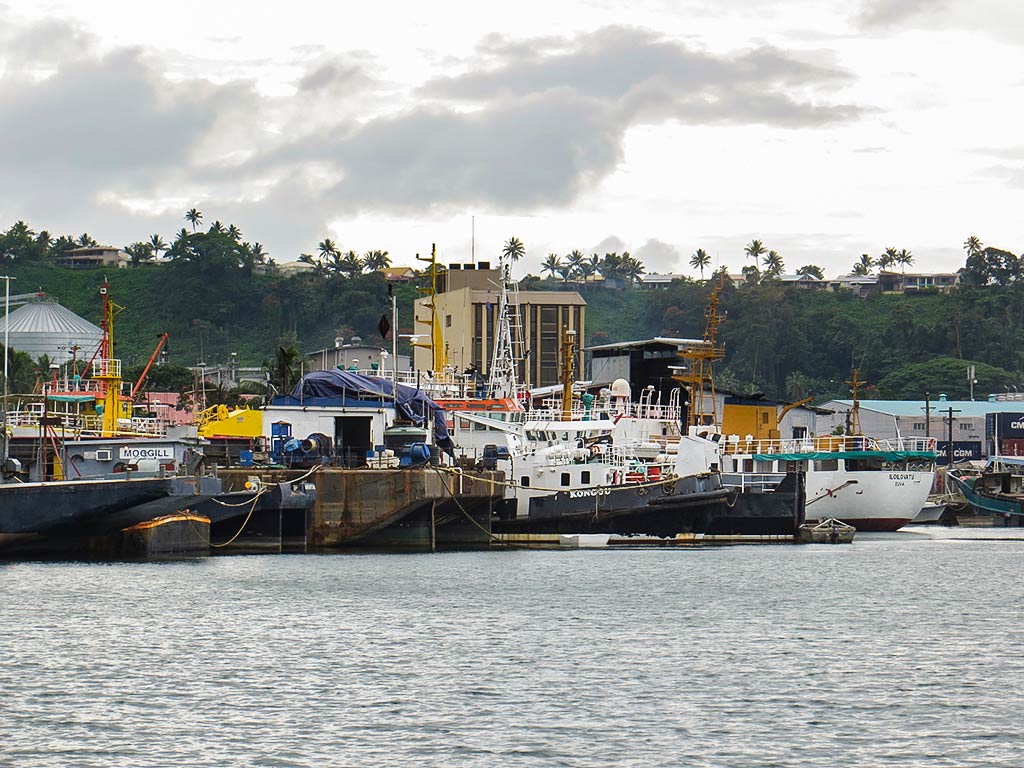
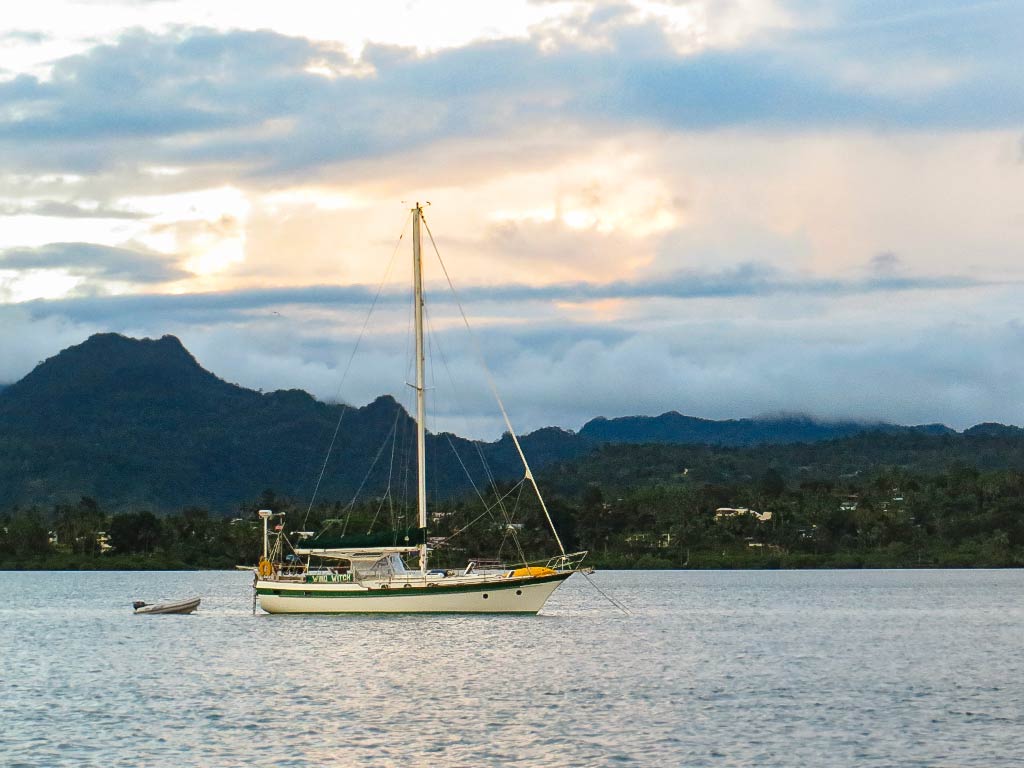
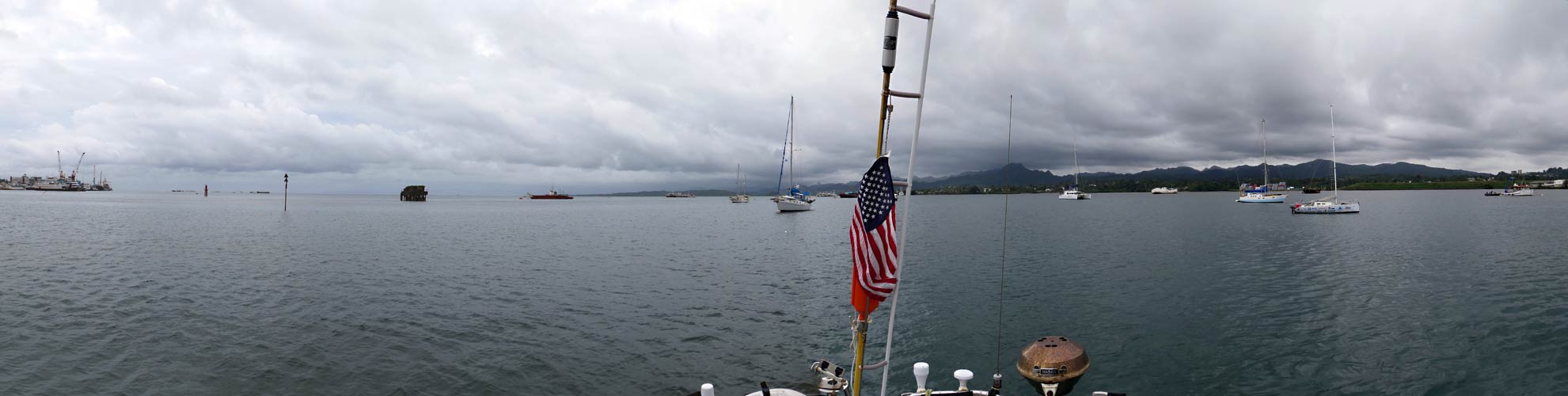
These pictures are of the view from our boat this morning.  Quite a change from the tiny tropical island (Leleuvia) where we spent the last week.  The harbor is big, commercial, and a bit noisy but interesting and pretty in its own way.  (We might like this harbor more than some other cruisers might as we spent a lot of time boating in Los Angeles Harbor – a monster commercial port.)

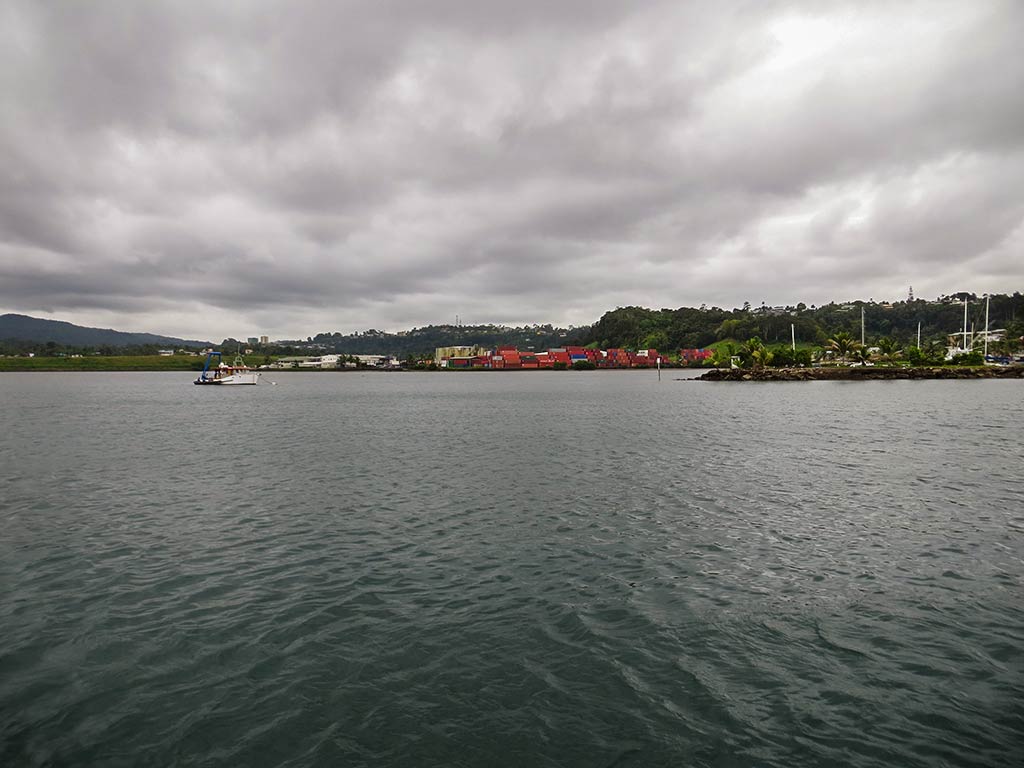
In front of our boat (click to enlarge).
The view behind our boat (click to enlarge).
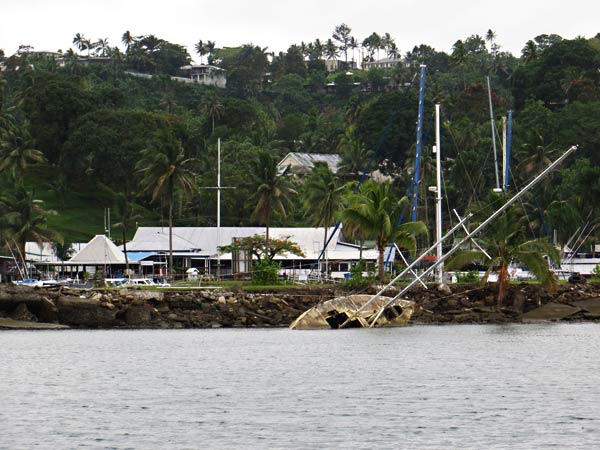
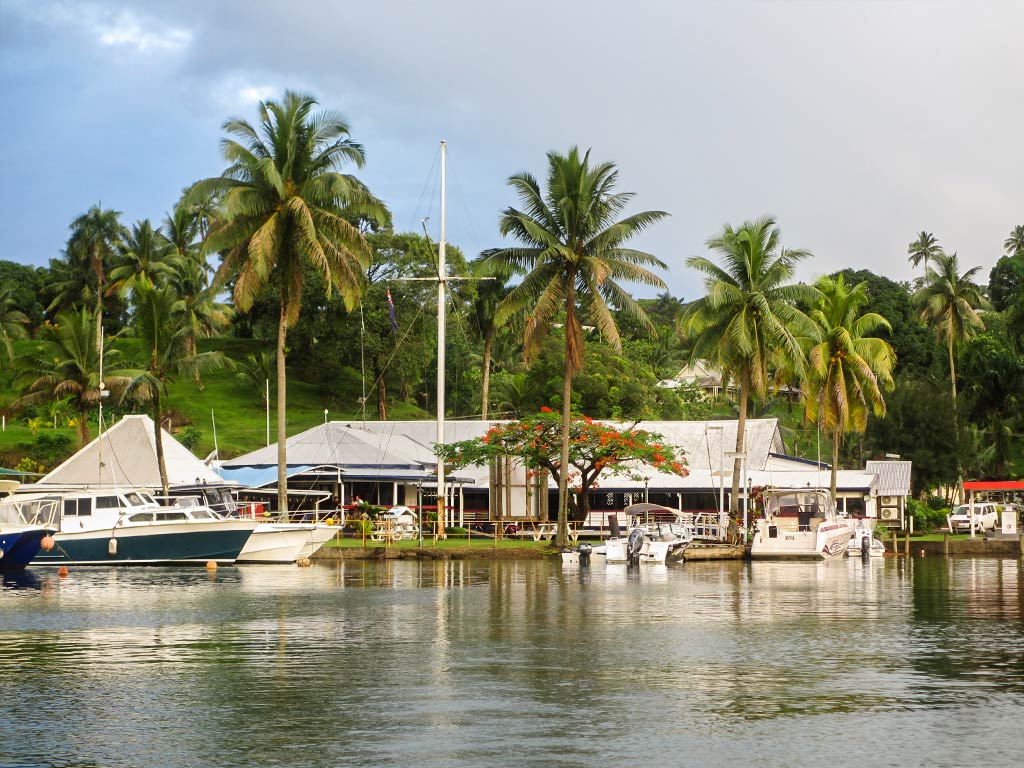
The view of the Royal Suva Yacht Club from our boat.
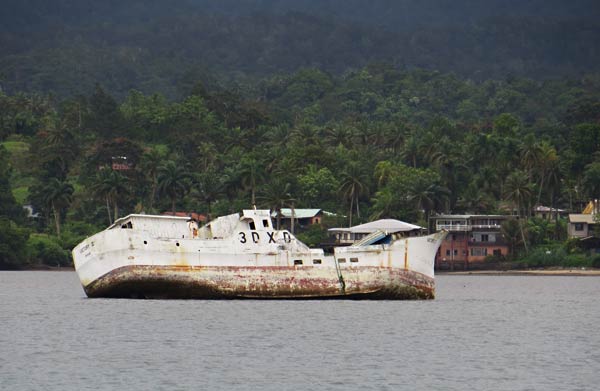
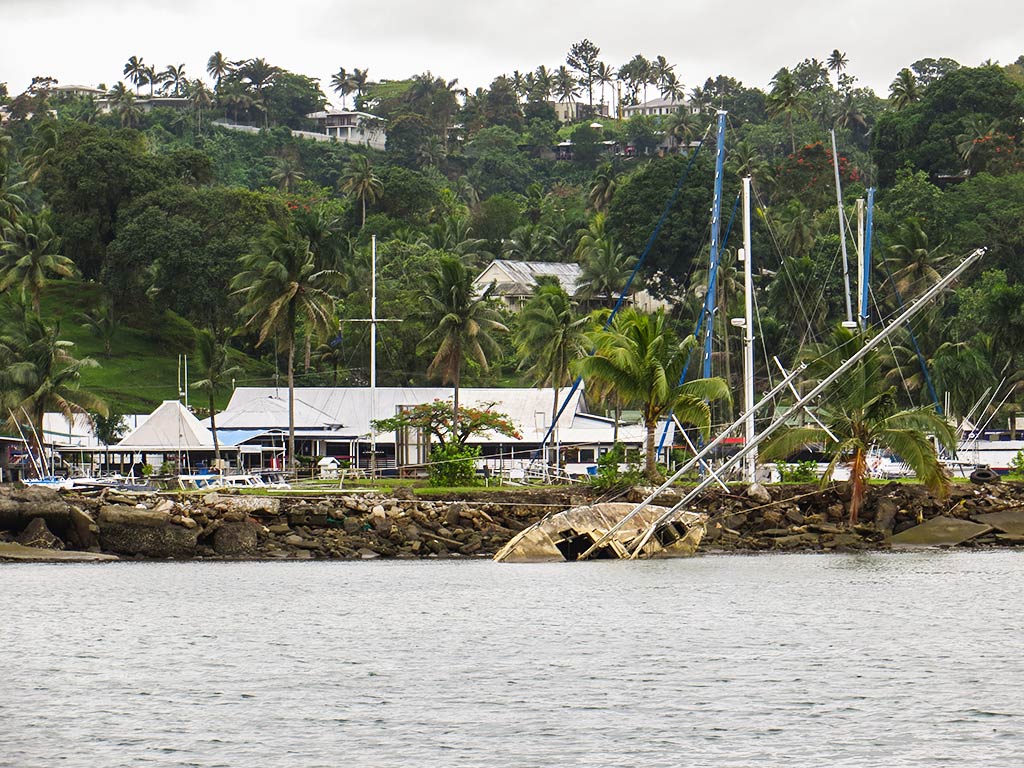
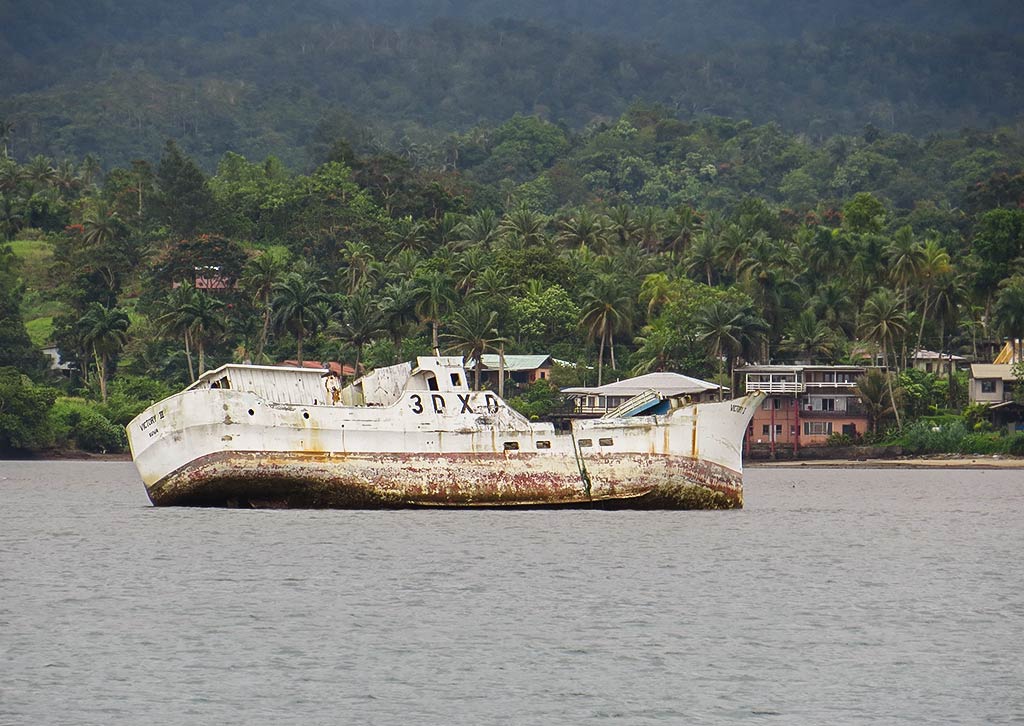
There are lots of wrecks in the bay.
Oops.
Oops.
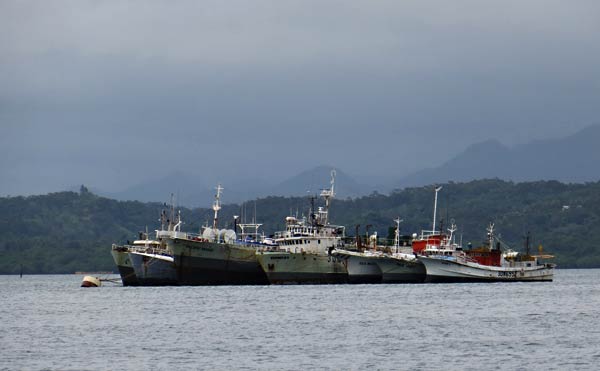
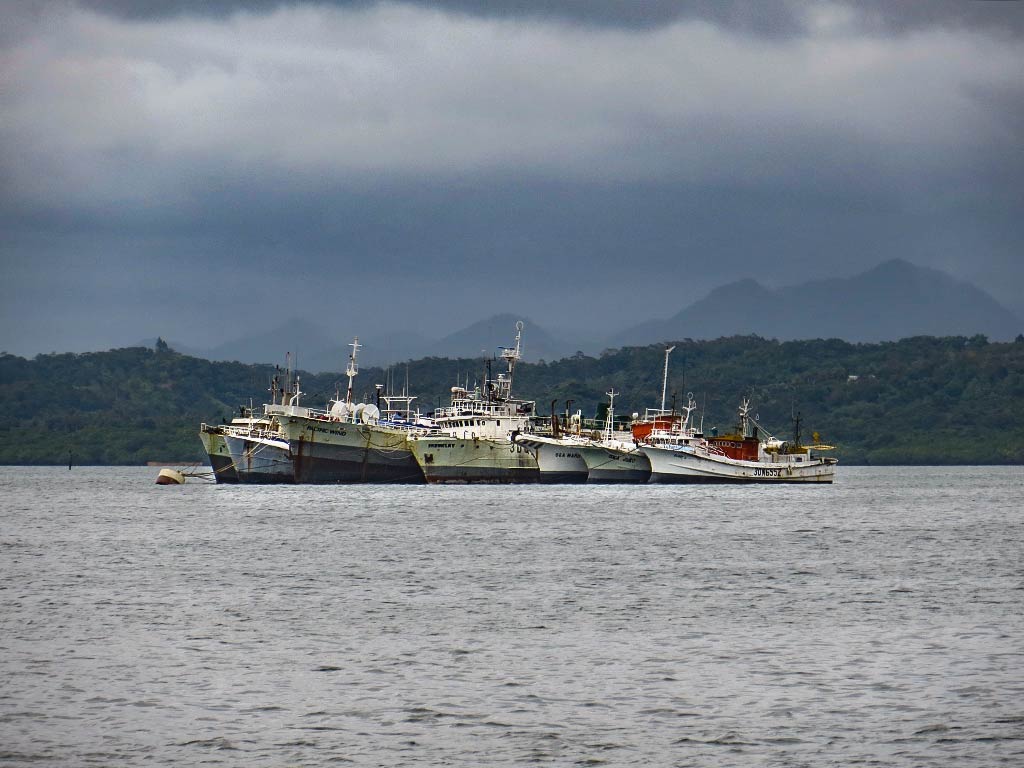
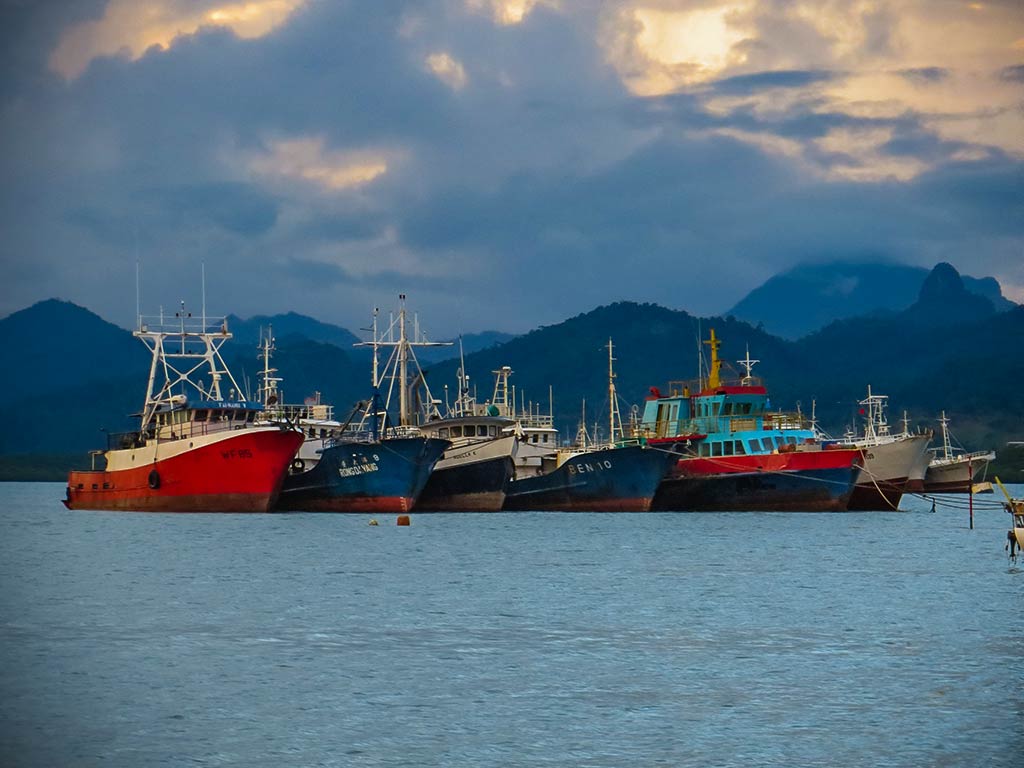
I'm not yet sure if these are active fishing boats or wrecks stored in a row - I'll let you know.
I’m not yet sure if these are active fishing boats or wrecks stored in a row – I’ll let you know.

The Royal Suva Yacht Club (Suva, Viti Levu, Fiji)

November 10, 2013

Once we were secured on the mooring, we decided to take our dinghy over to the Royal Suva Yacht Club, a historic building dating back to when Fiji was a territory of England. It’s still operating today and would be our base of operations here in Suva. For this we would pay a fee and sign up for a temporary membership to the club.

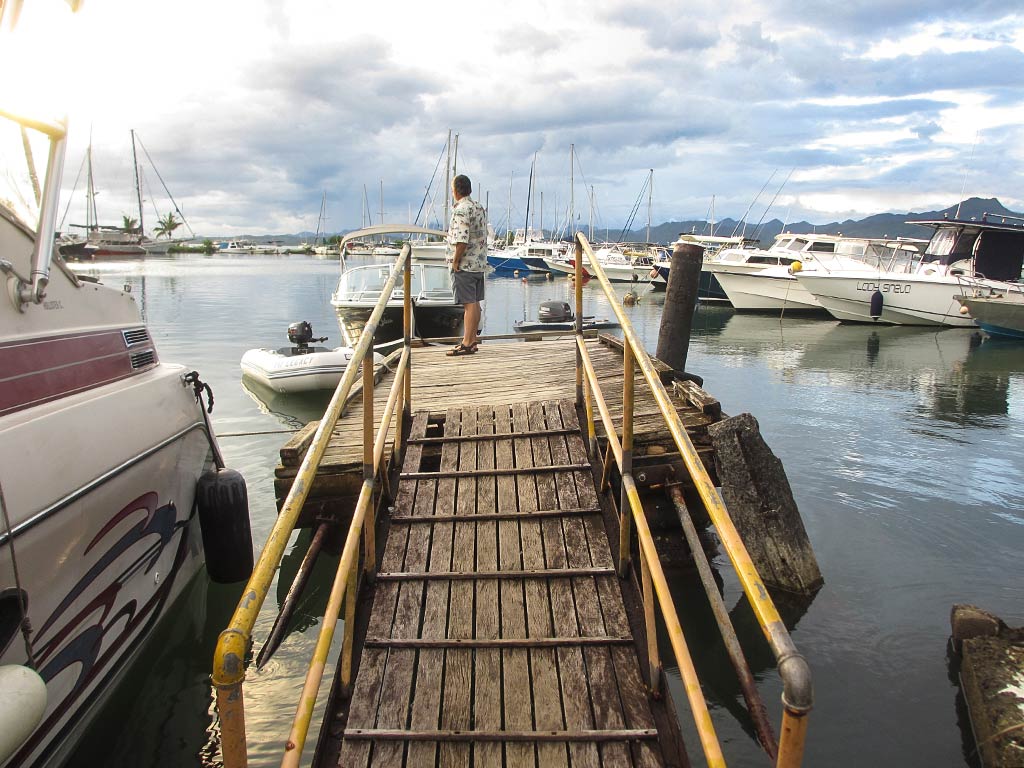
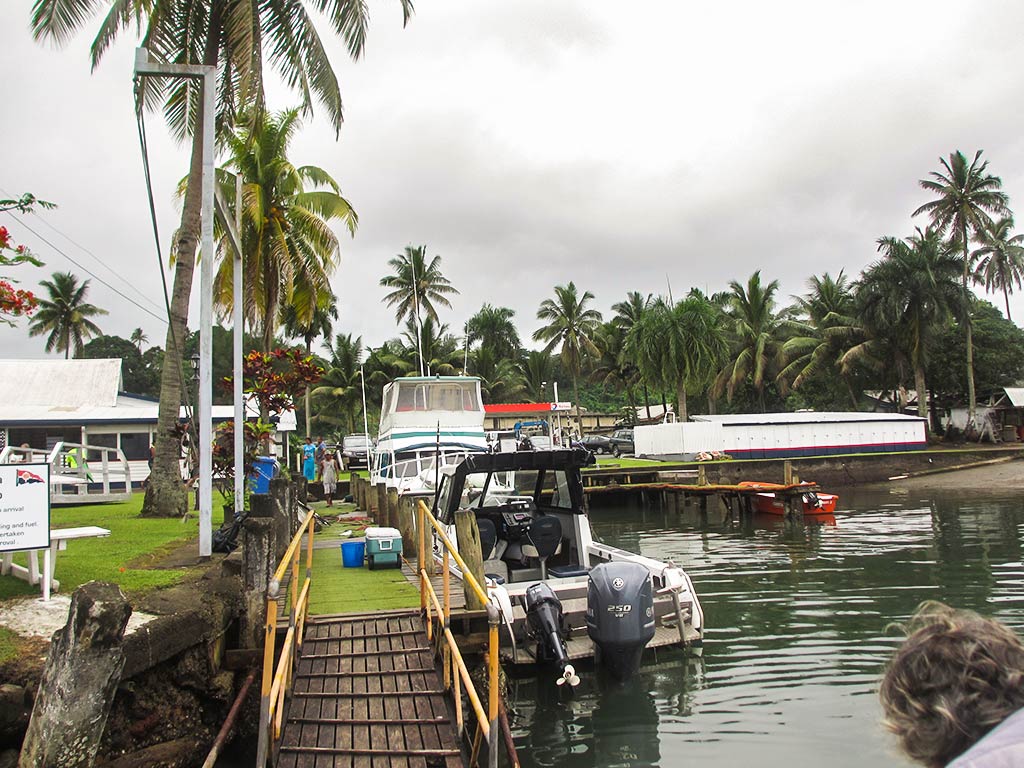
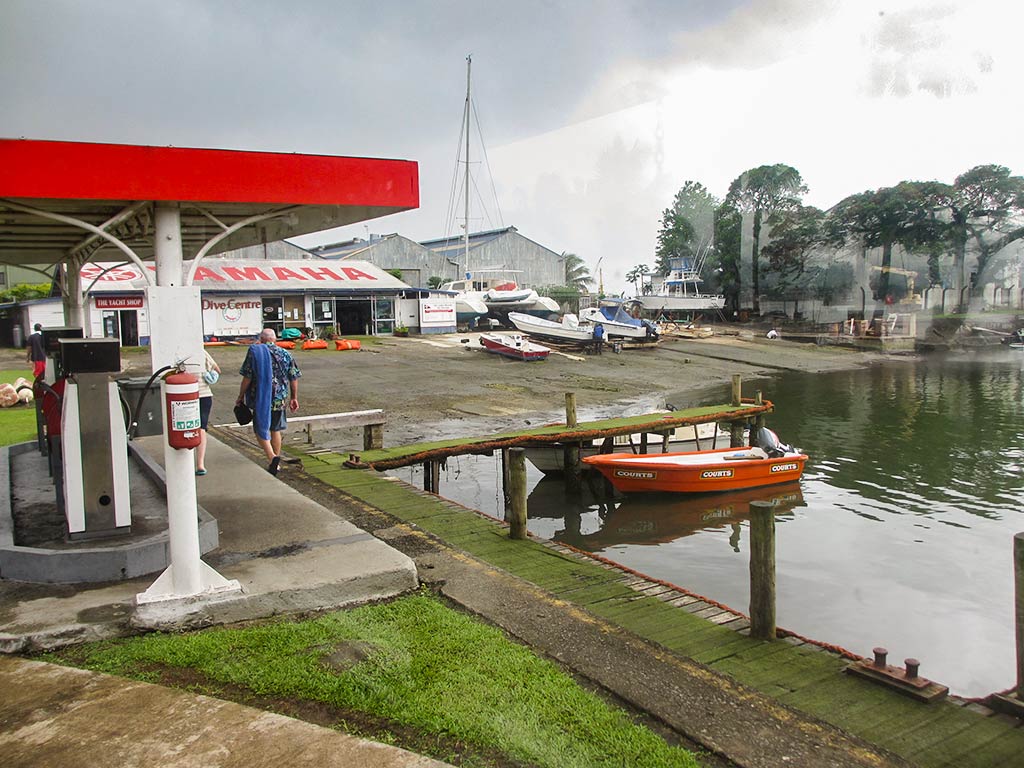
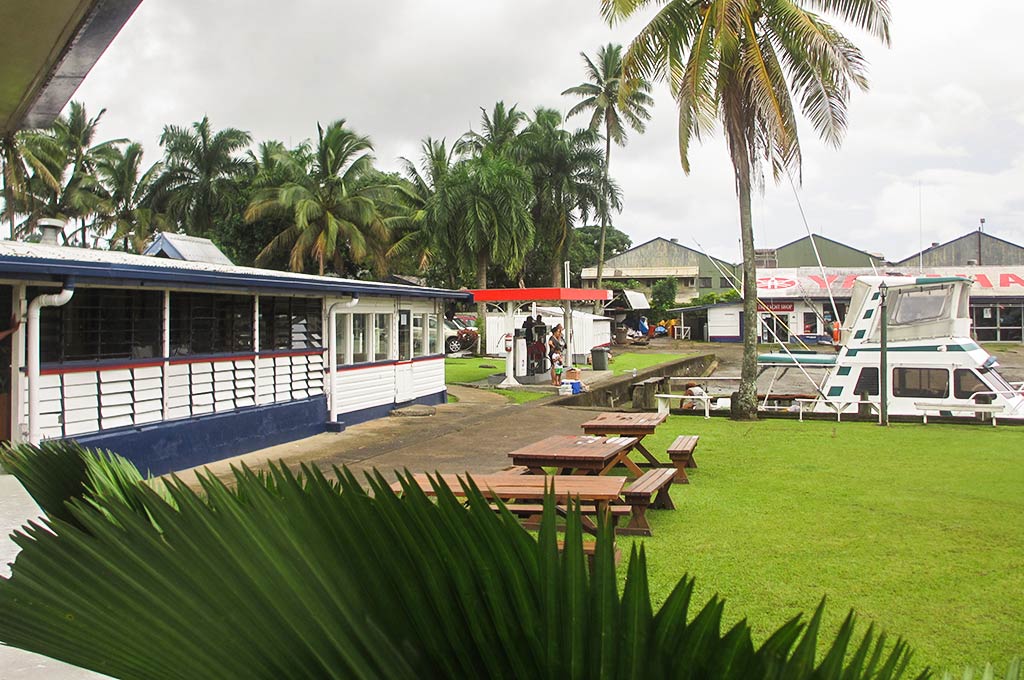
To get there we had to take a somewhat long dinghy ride past a breakwater and through the marina, most boats tied up med-moor style as the facilities weren’t exactly modern. We found the dinghy dock was also on the “historic” side, but at least it was functional. Stepping off from the dinghy dock we could see a fuel dock, handy but not big enough for Legacy to get into. On the far side of the fuel dock was a very small boatyard and marine store.

(Below, photo galleries of the marina area; the yacht club and the restaurant; you can click to enlarge and scroll through them.)

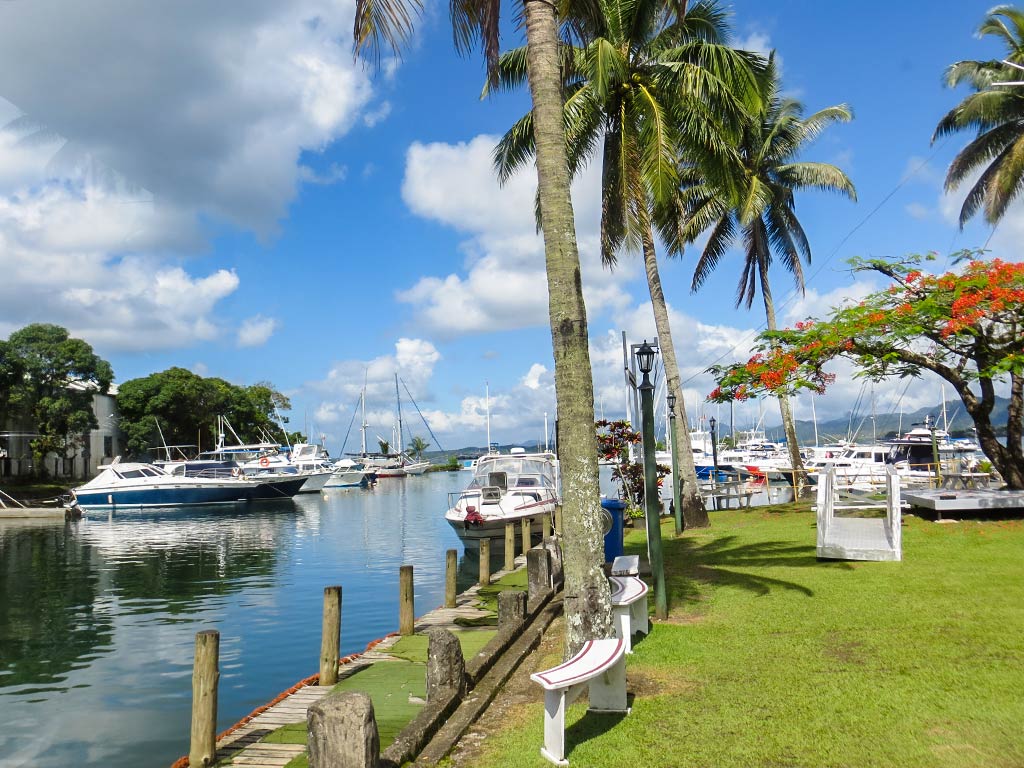
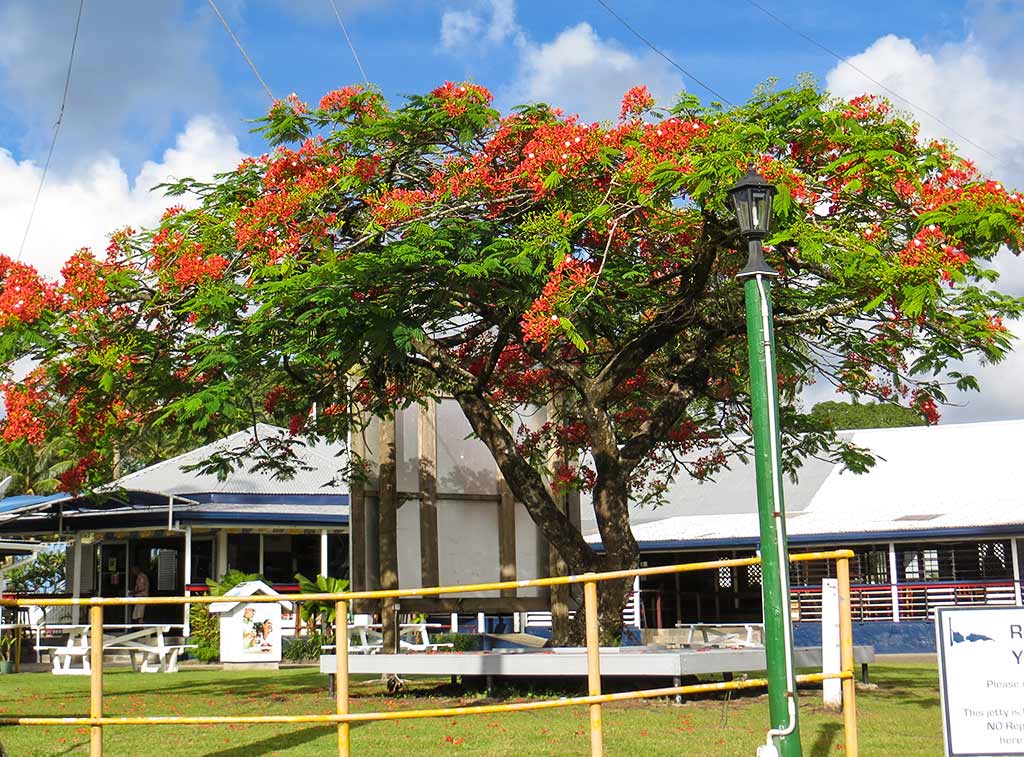
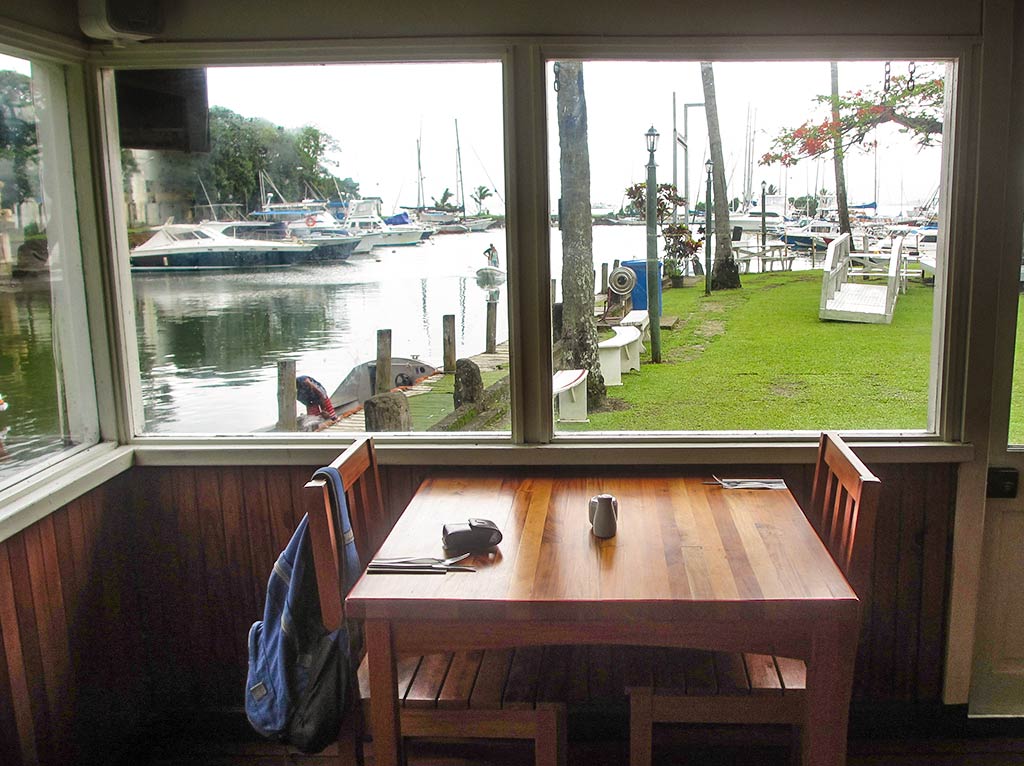
On our side of the fuel dock was the yacht club, built around a well-tended lawn shaded by a lovely flame tree. On the lawn were a few scattered picnic tables and a large screen for projected movies.

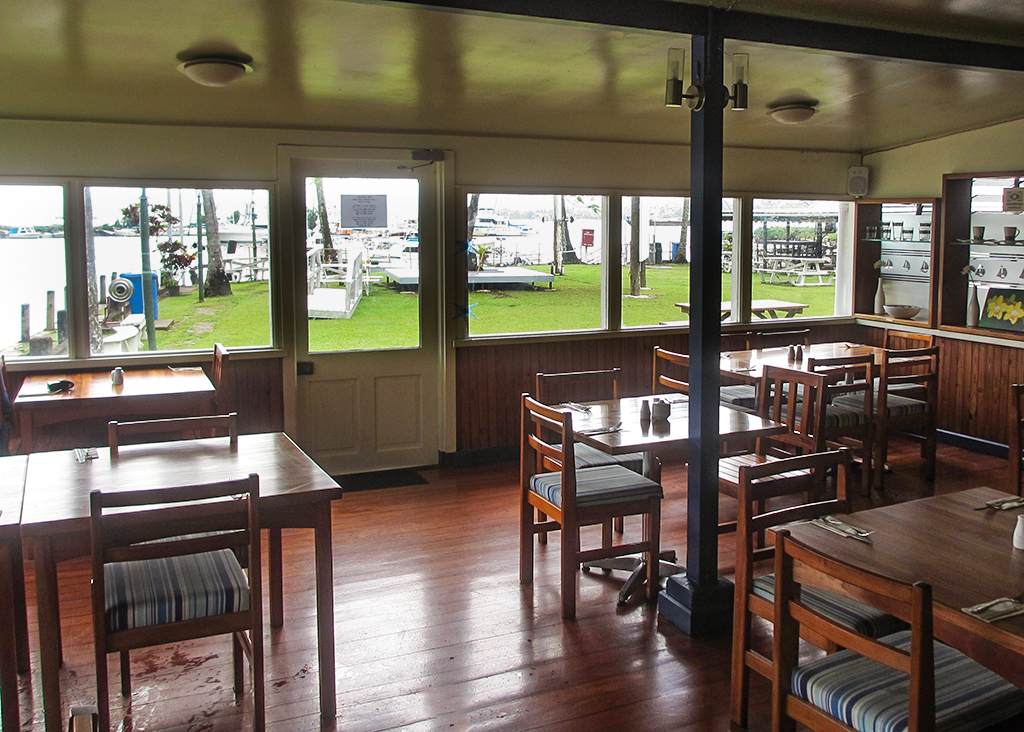
The yacht club itself had a large covered outdoor seating area next to the lawn, then a few stairs led up to the indoor bar. Outside the bar was a nice walkway with tables overlooking the lawn. The rest of the building included a rec room with a pool table, a main hall for functions and meetings, a small office, and, most importantly, an attached restaurant. This was not a tropical-style building but rather an old British building, complete with British yachting memorabilia and, naturally, a photo of the queen.

The club also had a few archaic rules concerning their dress code such as wearing “sensible casuals” during the day and “smart casuals” after 6pm (does having a wet-dinghy butt qualify as smart casual?). And males were forbidden to wear hats in the bar. If you forgot to remove said hat, you had to buy a round of drinks for everyone at the bar. (I don’t think they actually enforced this as it would be mighty expensive on a busy night.)

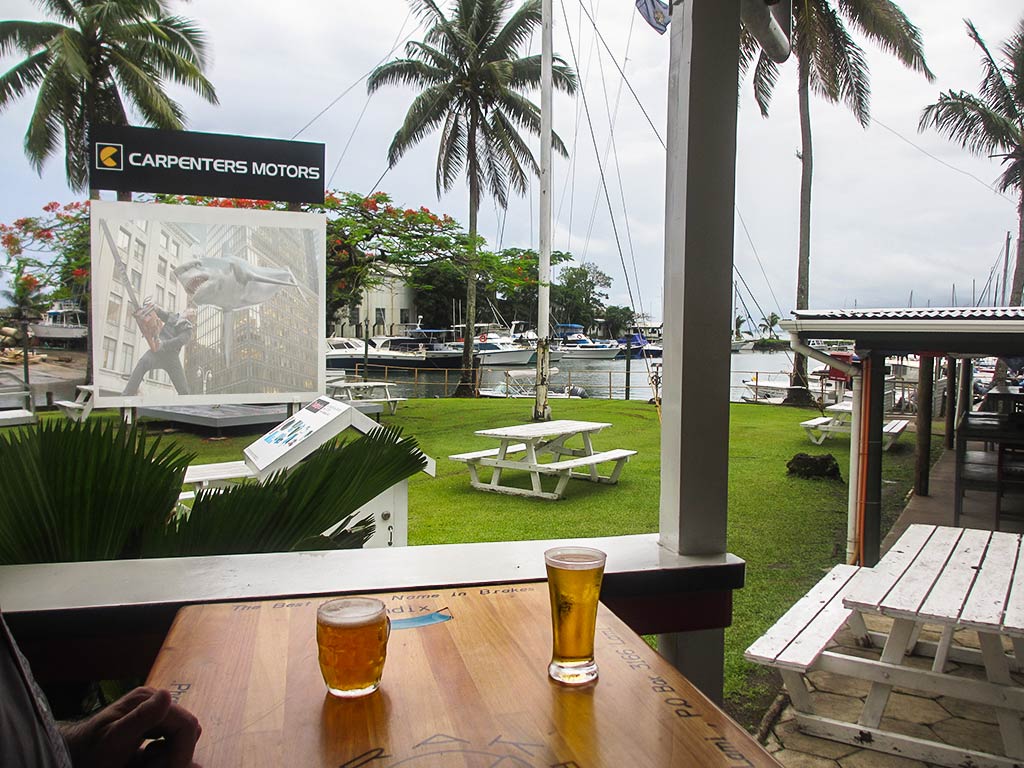
After signing in and getting our membership cards, we had an hour to kill before the restaurant opened for dinner. What a perfect time to go sit at one of those tables overlooking the lawn and enjoy a Fiji Bitter (our then beer of choice). It was a lovely place to sit! This club is actually located on the outskirts of Suva, the busy downtown area a mile way; so the feeling here was quiet and peaceful. The surrounding mountains created clouds that tempered the sun, making the November air cooler and much more comfortable than sunnier areas of Fiji. We hadn’t even made it to the city yet, but we already liked this place a lot.

(Full disclosure: Because our first visit to the yacht club was both cloudy and late in the afternoon, I have used some photos from a sunnier day in the yacht club gallery. The beer overlooking the lawn was real time, but there was no movie playing on the screen; Rich just thought that big white screen would look better with something on it. On the few occasions they did play a movie, you can rest assured it wasn’t Sharknado.)

When the yacht club’s restaurant opened we bee-lined right in for dinner. As yacht club eateries go, this was a casual and very appealing place with a wide variety of choices on the menu. I tried the tostada I’d heard about. British though this club may be, some sneaky American managed to have an influence at some point because this was the classic American version of a tostada, a tortilla bowl filled with Lawry’s-type seasoned ground beef, beans, lettuce, tomatoes, cheese, onion, etc. It was American comfort food and it was fabulous!

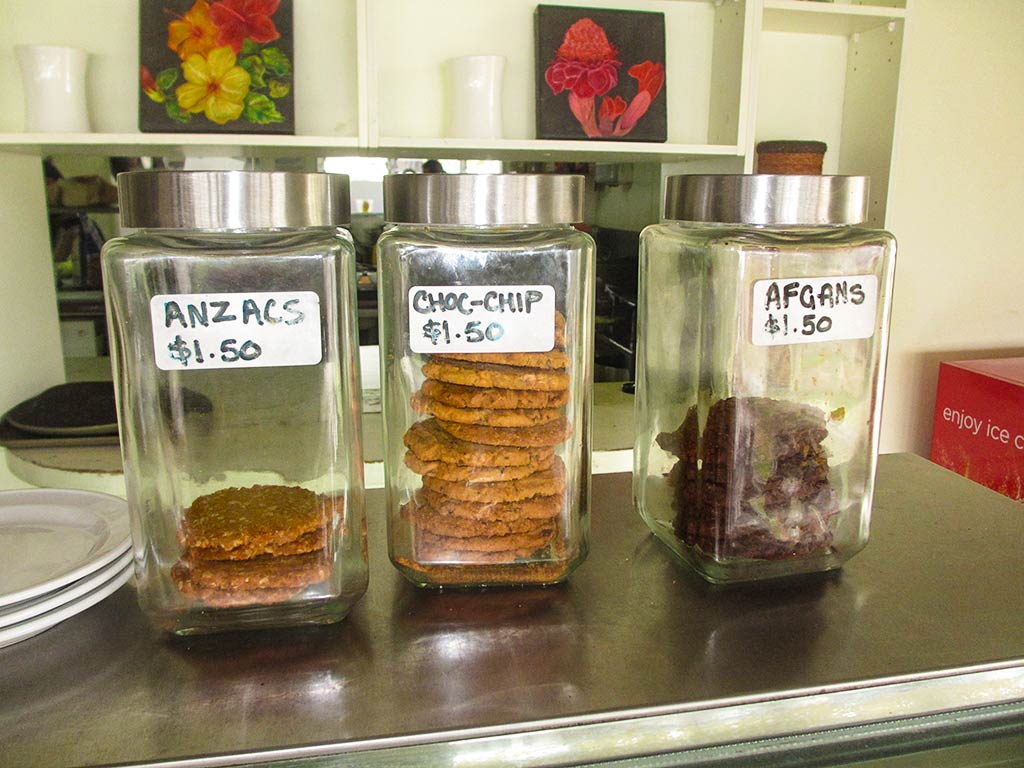
Of course they weren’t going to leave New Zealand out. In countertop jars, alongside the American chocolate chip cookies, were two of New Zealand’s favorite cookies: Afghans and Anzacs. Rich had acquired a strong liking for Afghans, and these were particularly good.

By now, even if we discovered we didn’t like the city of Suva, we could be happy living and eating at the yacht club. But based on some warnings we’d heard, we did decide to take some precautions while anchored in this harbor. They included locking up the boat when we left it, keeping the computer away from our open companionway overnight, and putting our outboard engine and dinghy up on deck every night. We have a place to put our outboard on the railing, and our dinghy actually serves as a cover for our forward hatch so we can leave it open when it rains. Suva is cooler than other areas of Fiji, but it’s still warm enough to warrant leaving hatches open overnight, and it sure is nice to have some cool air coming through that forward hatch even when it’s raining.–Cyndi
Heading To Suva (Viti Levu, Fiji)

November 10, 2013

It was time to head on to our final stop for the season: Fiji’s capital city of Suva. This is a big port city, with all the elements of any large city (shopping malls, government buildings, multi-story buildings, business headquarters, industrial plants, and city-style (enclosed and air-conditioned) restaurants. It’s also a port city with a mountainous and green terrain and a large central market filled with merchants hawking their wares. It has remarkably very few hotels as most foreign visitors come in on cruise ships. People who fly to Fiji arrive at the international airport on the west side of Viti Levu, a long distance away. In fact, most fly-in visitors never see Suva.

Since Suva is a day-long boat ride from Leleuvia, we had leave early in the morning. The winds were light, but it was gray and squally. The good thing: it was cool. The bad thing: squalls can have strong wind and we wanted to avoid them. In the end we had no squall encounters, but I was worried at times with these menacing dark gray patches looming around us. Below, a map approximating our route to Suva.


We were about 45 minutes outside Suva’s harbor entrance when our autopilot suddenly went out. We had to hand steer the rest of the way, not our favorite thing to do, but we were grateful this didn’t happen earlier in the trip. We did have some rain but it let up and soon enough as we were approaching Suva.

A very large reef protects and nearly encloses Suva harbor, but there’s a pass about a half-mile long through this reef, the Levu Passage. We had to be on our toes while navigating the pass because Suva’s a major port with lots of boat traffic ranging from big freighters to very small pangas, and without our autopilot we had to pay careful attention to the markers on the hillside. Rich focused his attention on maneuvering through boat traffic while I searched out the markers and made sure we were lined up properly. Waves were breaking on the reef on both sides of us as we traveled through, and we could see some old wrecks on the reef, reminders to be careful (not that we needed any reminders as we were definitely nervous as it was).

Once inside, the harbor is large, roundish, and very open, about 2.5 miles wide and 2 miles long. After we got through the pass we were able to relax a bit, but after quiet Leleuvia the shipping traffic was a bit overwhelming. Once we became confident we weren’t going to be run down, run anyone else down, or hit a reef, we were able to take it all in. This city had so many elements familiar to us: the cloudy skies of American Samoa, the industry and port activities of our home port of Wilmington, California, the green hilly terrain covered with buildings like Hong Kong (only on a much smaller scale), and a few wrecks in the harbor that reminded us of Nukualofa, Tonga.

The strangest thing were the Chinese fishing boats, huge and decrepit, tied up in scattered groups around the harbor. What was that about? They didn’t look sea worthy; were they just abandoned here? These strange boats and the wrecks gave this place a surreal feeling, especially in flat calm water under gray cloudy skies.

Before leaving New Zealand we’d gone to John Martin’s seminar for the ICA rally, and he summed up Suva by calling it “a pit,” making it clear there was no reason to go there. By then we’d found the talk arrogant, disdainful and pretty useless, full of fleeting references to islands and anchorages we’d never heard of as of course, we’d never been to Fiji. But it seemed a good portion of this rally group were repeat offenders, mostly there for the social experience and so knew the places he was referring to. Other people just intended to follow everyone else around so didn’t care about learning anything useful.

It was a rather frustrating experience, and we quickly caught on we shouldn’t take his comments as gospel. After the talk was over, we chatted with an experienced cruiser, asking his opinion of Suva—should we really avoid it? He said personally he loved Suva; so this thankfully opened our minds go going there.

And so now looking around this exotic and surreal looking place, we felt intrigued and optimistic. Yes, there were wrecks around the harbor, and it was industrial in areas along the shore, but the buildings and the greenery and the gray skies and the mountains made us feel somehow very comfortable here. Wanting to avoid the disappointment we had with Levuka (the old capital city), we decided to withhold judgement until we went ashore, but we couldn’t help but feel like we’d like it here.

We could see the yacht club area and motored over that way. The marina here is small, filled with local boats with virtually no room for transients; so visiting yachts have to anchor out beyond the marina’s breakwater. Thankfully this is generally a calm harbor (although it’s best to move elsewhere in strong southwesterly winds). There were about 10 boats anchored and another two on moorings. One mooring was free so we quickly snatched it up, happy to be on a mooring instead of anchored in area rumored to have dubious holding ground.

We took a few photos which I’m posting in this gallery below. As you can see it was cloudy and late in the afternoon, but I hope these photos capture a sense of time and place. (You can click to enlarge and scroll through the photos below.)

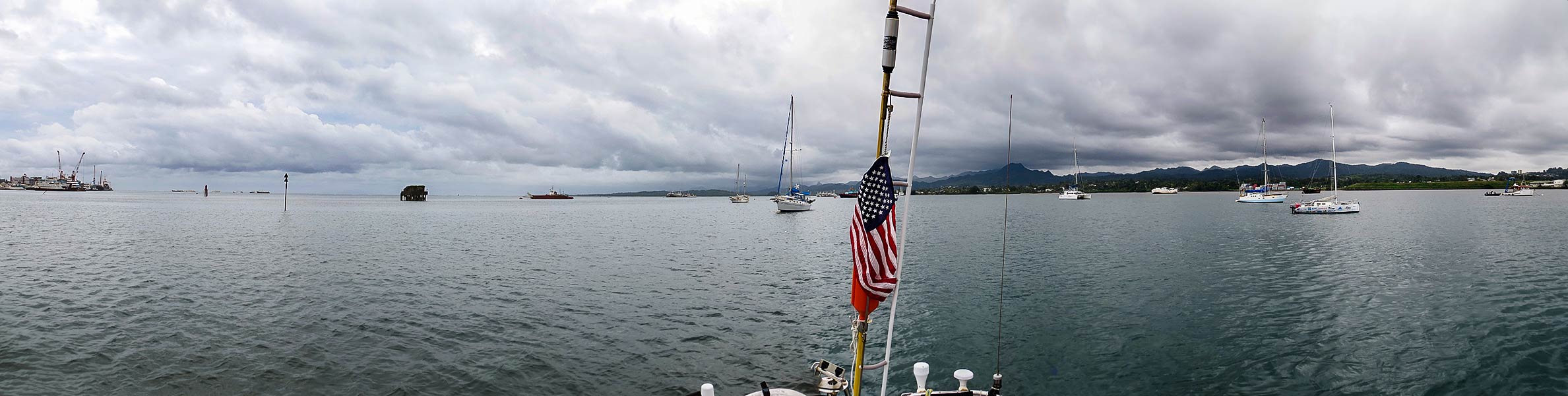
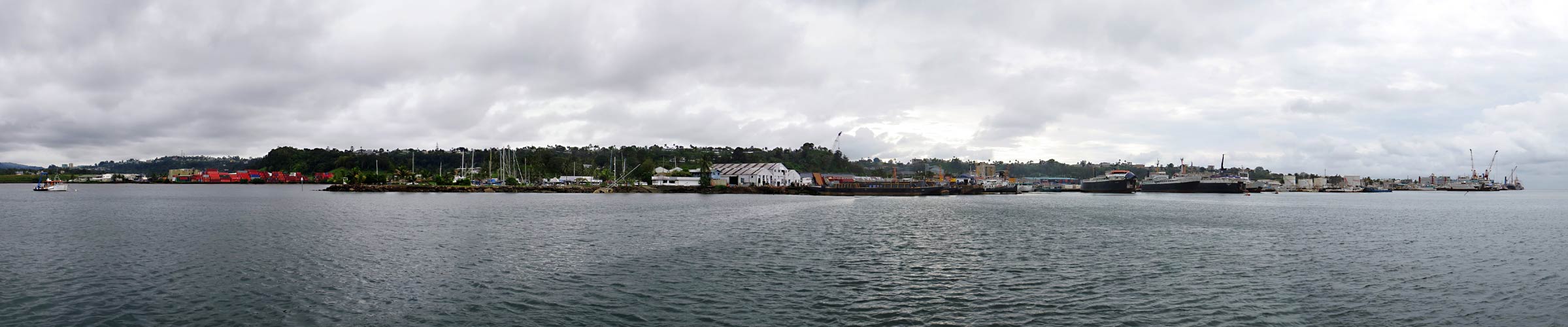
And below two panorama shots, the bottom of which was taken from our mooring. You can click to enlarge the photos.–Cyndi

Goodbye Leleuvia

November 9, 2013

Well, after a week of beautiful weather our final day in Leleuvia was squally; so much so that it looked like we might miss the lovo we’d deliberately stayed around for. We didn’t mind the rain, but we can’t go ashore in heavy winds as we don’t like leaving the boat unattended, nor do we appreciate wet splashy dinghy rides. After watching and waiting anxiously, the wind finally died down to an acceptable 8 knots just in time to make it in for dinner. We put on our rain panchos and headed in.

The buffet was as good as we remembered, well worth the effort to get here in spite of the wet weather.

During the dinner we had a couple of downpours that were impressive, but by the time we headed back to the boat, it lightened up. Later, the wind picked up and it rained heavily again; so we had gotten lucky with our timing. What a nice way to cap off a great time Leleuvia.

Below, a few miscellaneous photos that didn’t make it into the previous galleries but I like too much to discard. Click to enlarge and scroll through them.–Cyndi

Note from 2018: I’ll mention here that we visited Leleuvia once again in August 2018, and while the island is as beautiful as ever, the resort seems to have lost some of its spark. It’s still a very welcoming place, but they’ve cut back on the staff and meal options, the food is now rather expensive, and the bar has been moved from the center of the dining area to an out-of-the way spot, now much smaller with no bartender.

It almost seems like the owner feels having a bar is a necessary evil, something that should be hidden away and drinking not encouraged—we were never even asked if we wanted a drink with our rather expensive buffet lunch, and when I did order one they behaved as though that was an strange and unexpected thing. And they oddly seem to have gotten rid of their main office—the resort’s business affairs now taking place at a commandeered table in the dining room, but I’m hoping that’s temporary.

They’ve also taken out (or lost and not replaced) some of their moorings—there are only 1 or 2 left, but a resort vessel will still come out and show you where you can anchor, and they are still very welcoming to the yachties.

Still, this place is definitely different; maybe there’s a new owner? I don’t know, but I do hope whatever’s going on here is temporary and it returns to its wonderful normal self. Time will tell. I really hate to end all these glowing Leleuvia posts on a negative note, and I don’t want to discourage anyone from coming here as Leleuvia is a fantastic place. Just be warned that, for the time being, not to expect too much from the resort part of the experience.