Going Through the Pass at Fulaga (The Southern Lau Group, Fiji)

August 23, 2013

We arrived at Fulaga Island well before slack tide, but it was so calm we decided to check out the pass in hopes it might be calm enough to attempt.  It wasn’t; standing waves covered the pass!  I couldn’t believe the water could look so wild in one spot with such calm conditions otherwise.

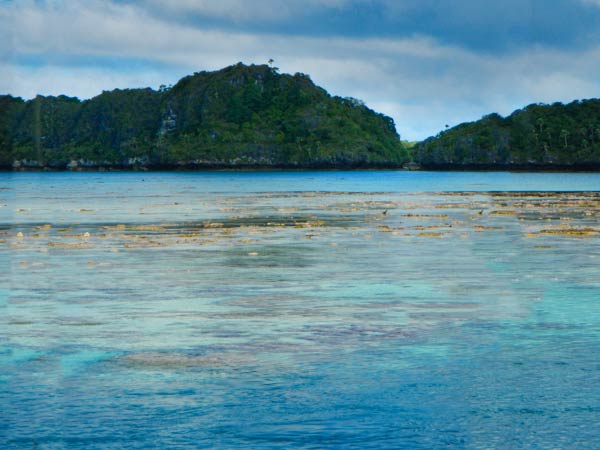
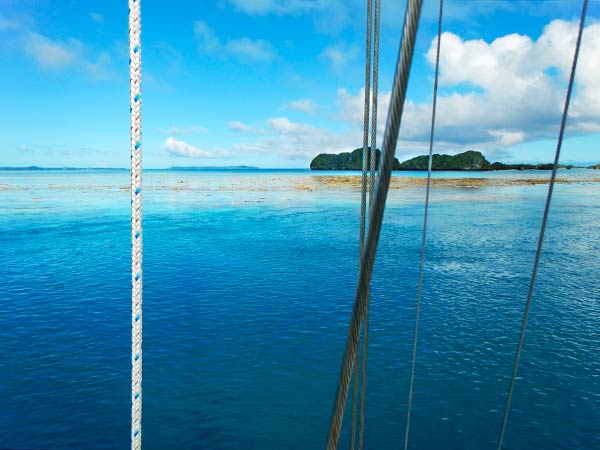
Meanwhile, we could see in through the pass to the beautiful and surreal world inside. The water was many shades of bright blue, and the area was strewn with rock islands. I’d never seen anything like it, but Rich said it reminded him a bit of Palau. We were anxious to get in and see more, but with a pass like this, patience is imperative.
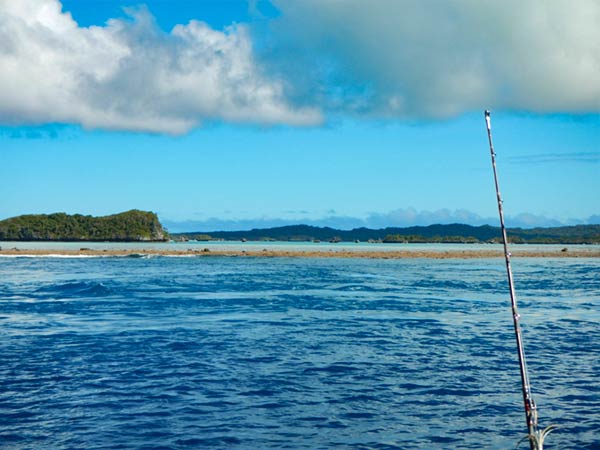
Looking in through the pass to the beautiful world on the other side. (Fulaga, Fiji)

We spent the next hour motoring back and forth outside the pass, anxiously checking to see if the conditions had calmed yet, and getting reports from our friends Bob and Linda inside, keeping a watch on their end of the pass from their dinghy.

Finally, things died down as much as we could hope for. The water was very swirly, but the waves had flattened. We had a 2-knot current against us; yet now we were also getting current from behind us. This meant it was time to go for it; those standing waves would be back soon!
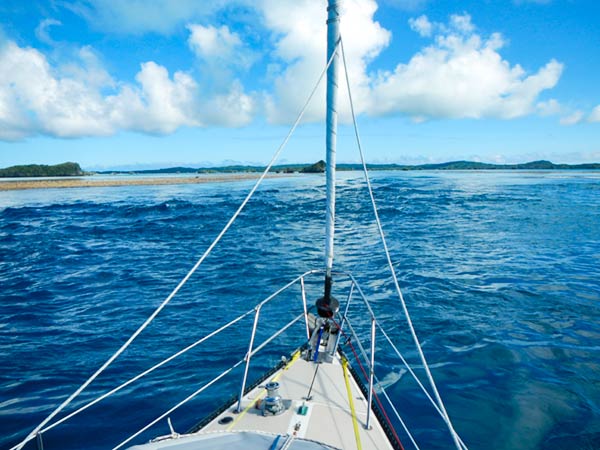
Making our way through the entrance to the pass at Fulaga. (Fiji)


Here, a film of the pass, very brief because I was also supposed to be keeping watch. (Fulaga, Fiji)

The water rushed and swirled around us as we headed in. As soon as I felt it was safe, I climbed up on the boom to keep a better lookout, although I couldn’t see into the water very well. I was glad our friends were on hand to give advice. Rich followed the waypoints we’d been given, and they worked great.

(Here are the waypoints we used – usual disclaimer… “they worked for us but you’d be  a fool to use them for anything other than entertainment!”) fulanga into anchorage
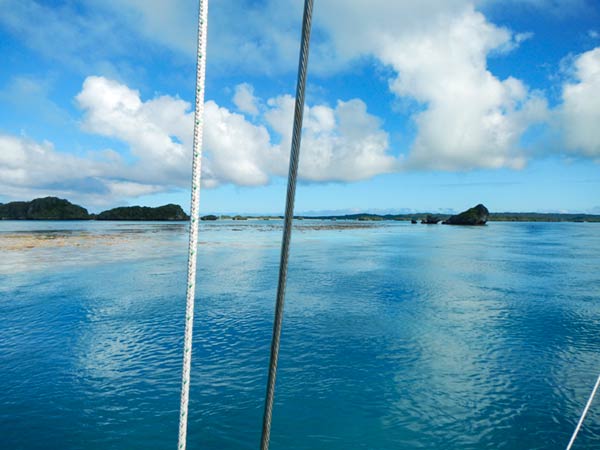
The water calmed as we got further in through the pass at Fulaga. (Fiji)
Taking care as we were surrounded by coral reefs in this pass. (Fulaga, Fiji)
The blues in the water became increasingly vivid as we made our way in. (Fulaga, Fiji)

Once we met up with our friends waiting in their dinghy, they led us past a floating soda bottle that marked a dangerous bombie and advised us how to go around a particular rock island.
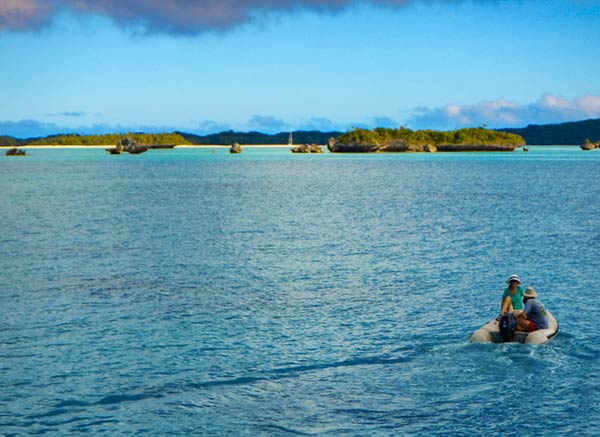
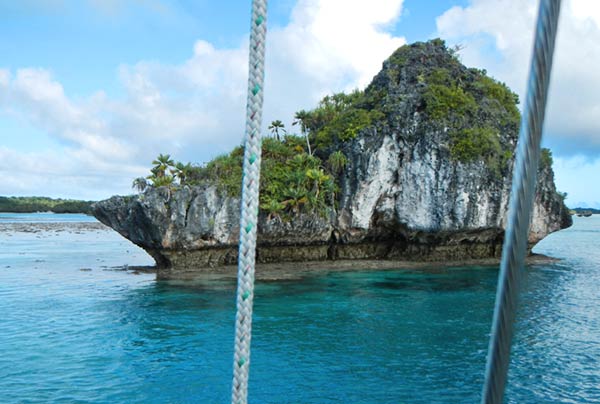
Catching up to Bob and Linda waiting to lead us the rest of the way through in their dinghy. (Fulaga, Fiji)
Motoring past a rock island as we finished the worst of the pass at Fulaga. (Fiji)
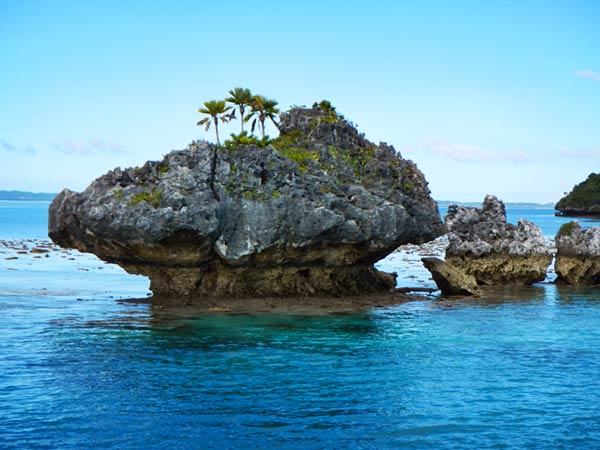
Motoring past another rock island. There are hundreds (thousands?) of these in Fulaga lagoon. (Fiji)

Once we were in, Bob and Linda took off back to Bright Angel where they were very kindly fixing us dinner (are these good friends or what?).  We’d still have to keep a careful watch as we made the 2-mile trip across the lagoon to our first anchorage, but we’d made it past the scary stuff and could get in the rest of the way ourselves –Cyndi
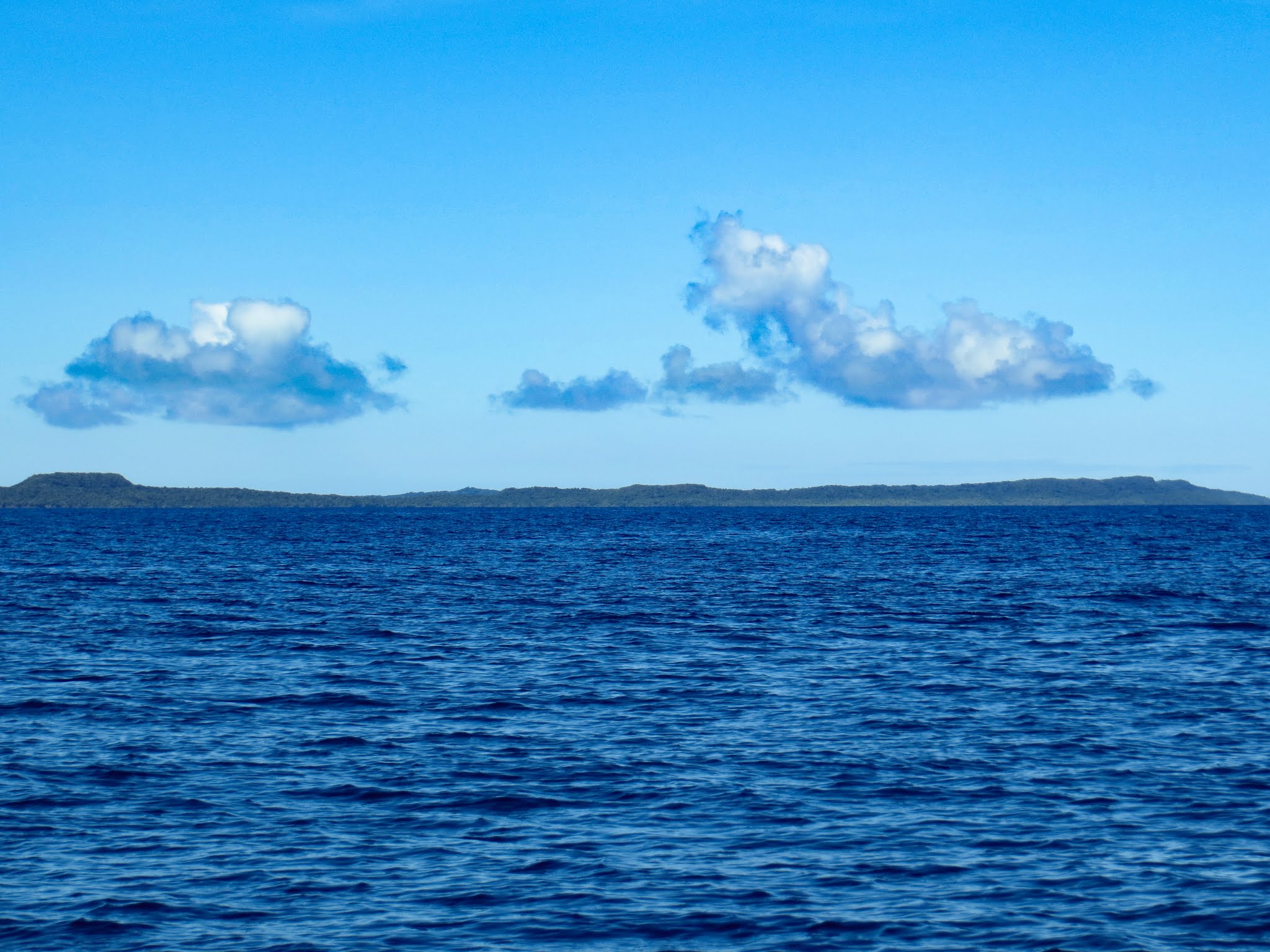
Motoring to Fulaga (Southern Lau Group, Fiji)

August 22 – 23, 2013

When you look at a picture of Fulaga, you can see that it’s sort of ring-shaped. Its northeast side is broken up, but a large reef completely surrounds the island, with only one narrow pass through it.

(You can zoom and pan the map below to get a closer look or back out and see exactly where Fulaga is in relation to your neighborhood Stop-N-Go.)

Because of the strong currents and standing waves created by tidal flows, boats have to wait for slack tide–those few minutes where the current ceases as the tide switches direction–to enter the pass.  Timing this is not easy because tide tables are only approximate for most areas. The general rule of thumb for entering an atoll is to get there early, watch for the conditions to calm at the entrance, then make haste and get through.

To arrive at Fulaga for a mid-day slack tide, we’d need to do a 2-night passage, leaving Savusavu late at night. (Luckily we had enough tracks in and out of the Savusavu area to feel comfortable leaving in the dark.)

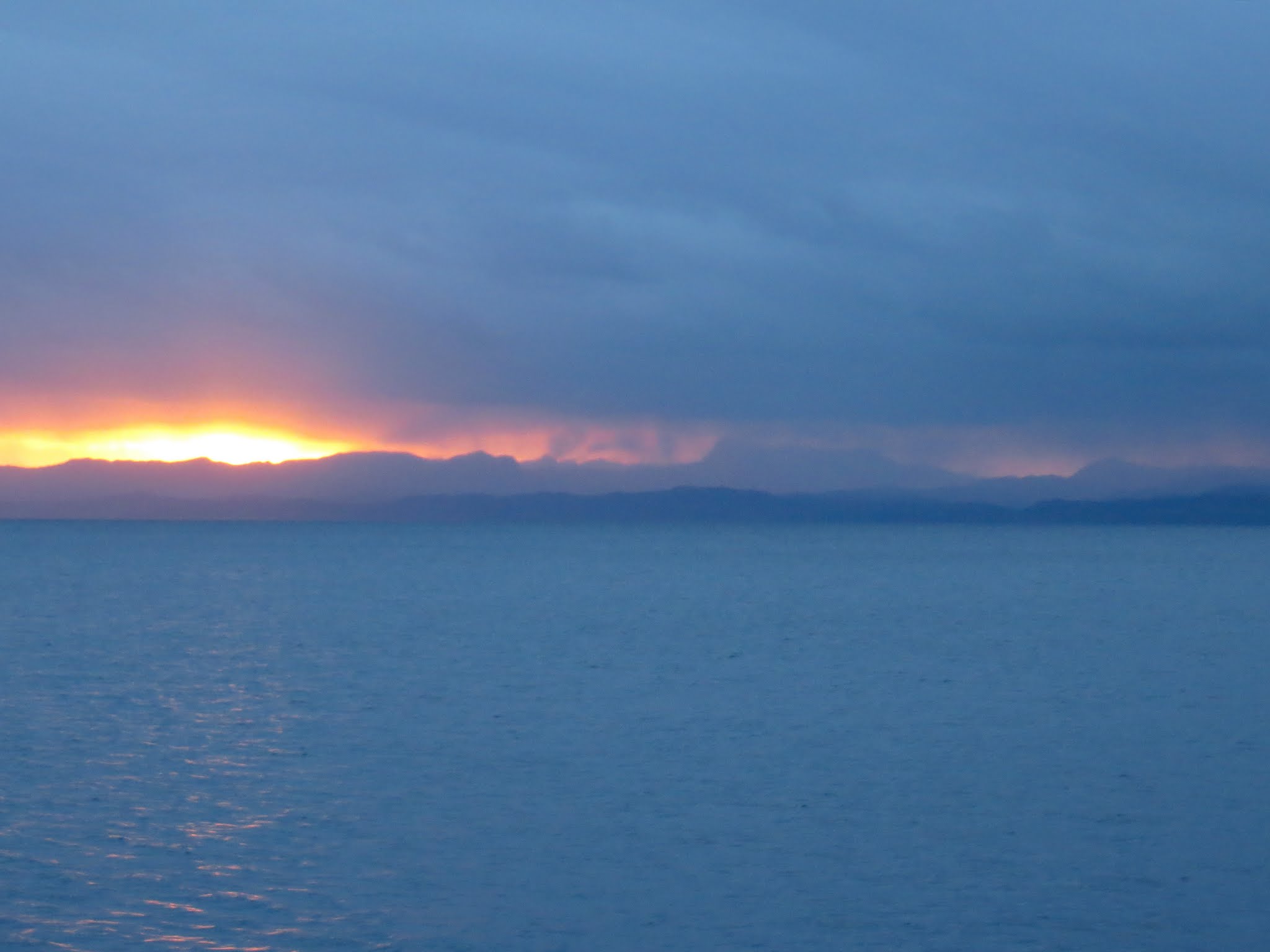
We left shortly after midnight, getting our boat out of the slip in perfectly calm, still conditions. It was cloudy and overcast with a full moon, giving us a nice amount of light. We left Savusavu behind and headed out through an area of islands towards Fulaga. The silver lining of having to do an overnight passage is getting to see islands in the moonlight, a rare and beautiful sight.

Our passage was really nice, the only incident being the mysterious object that would pop up on our radar then suddenly disappear. This was on my daylight watch, and it was very frustrating trying to figure out what was going on. I finally solved the mystery, discovering that our radar can pick up breeching whales. They were about 2 miles off; so that’s pretty impressive.

We arrived at Fulaga early; so we had some time to kill before we could attempt to enter the pass. Our friends on Bright Angel would be on hand to help lead us through some of the iffier areas in their dinghy. (Back in 2013, there were far fewer proven waypoints for this area. Thus it was common to for cruisers to hop into their dinghies to lead any arriving friends through the pass.)

Below, a gallery of photos from our passage, including a picture of our first Fulaga sighting. (Click to enlarge and scroll). –Cyndi

Gone Sailing!

August 21, 2013 – Savusavu, Fiji and beyond

We’re heading out tonight at about midnight, leaving the comfort, safety, great food, and ice cream of Savusavu and bound for Fulaga (pronounced Fulanga, of course).  It’s 193 miles from here it it’ll take us about 36 hours.  From everyone we know who’s been there, we hear it’s incredibly beautiful.  We’ll report back as soon as we can but we’re not expecting to have internet access out there, so don’t worry if you don’t hear from us for a while. -Rich

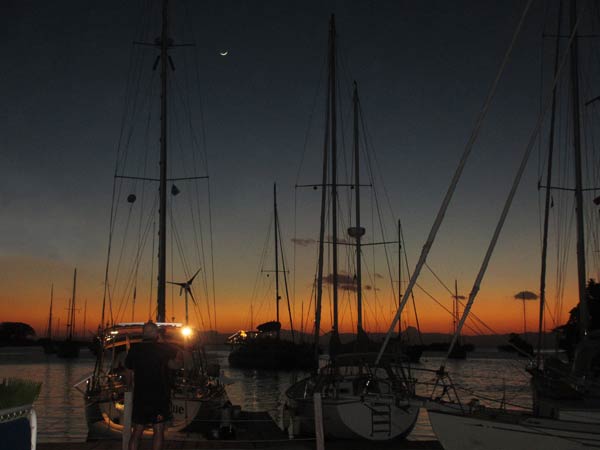
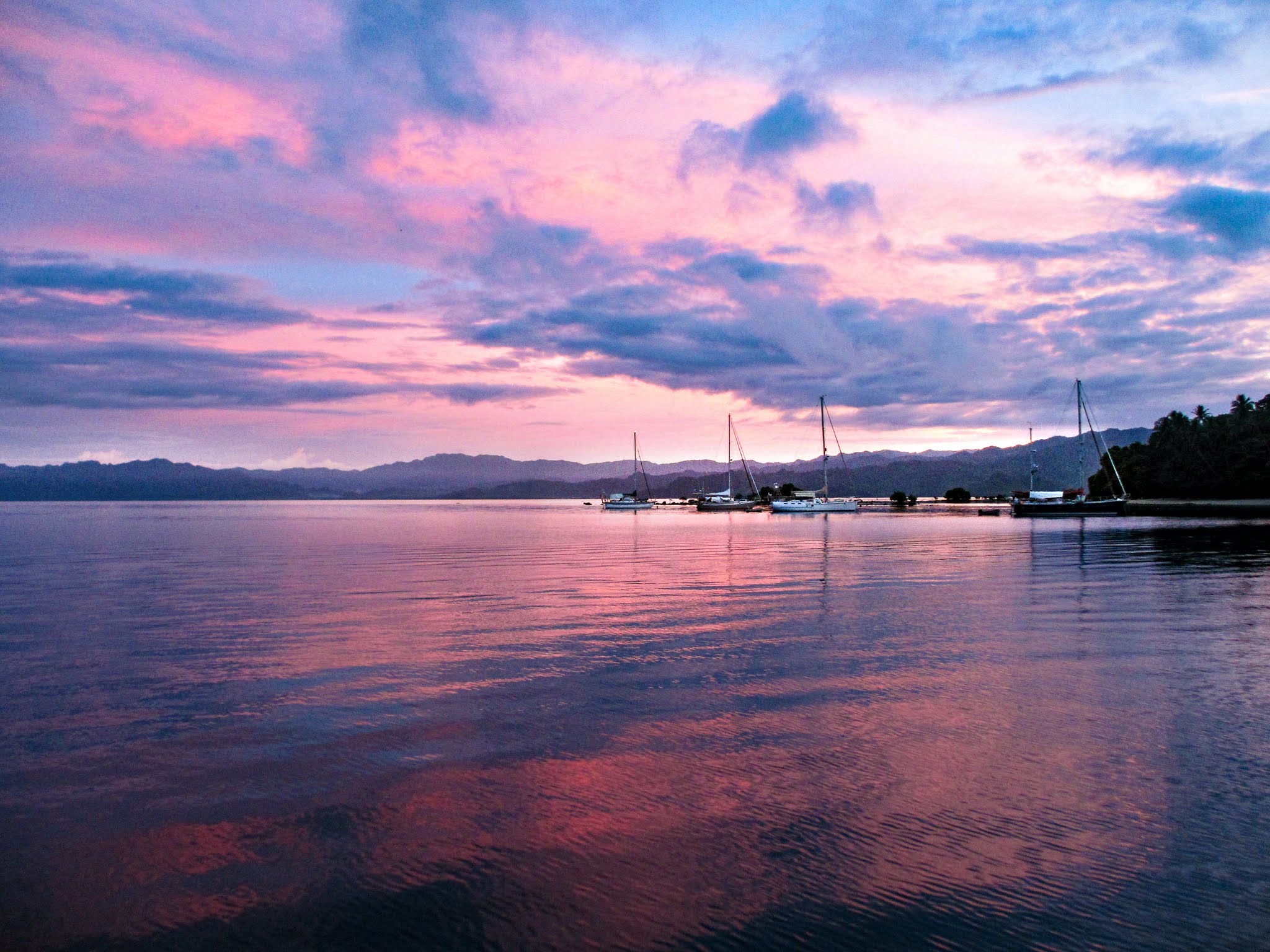
This is what we're leaving behind - sunset at the Copra Shed Marina in Savusavu, Fiji.
This is what we’re leaving behind – sunset at the Copra Shed Marina in Savusavu, Fiji.

Final days in Savusavu (Vanua Levu, Fiji)

August 19 – 21, 2013

One of our tasks in Savusavu was making the decision of where to go next. We’d already narrowed down the choice by deciding to stay on the east side of Fiji this season, leaving the west for another time (right now actually, as I write this almost two years later). But we still had several options to choose from.

Over the past weeks, we’d been hearing about the Lau group of islands. Visiting these islands used to require a special permit that cost a fair amount of money, putting them out of reach for the average cruiser. Fiji finally decided to change that and include the Lau islands in the general permit all cruisers are required to have. This was the first full season the Lau was open to everyone, and most of the cruising fleet was very anxious to get there. It was rumored to be pretty special.

There are actually two groups of Lau islands, one to the south of Fiji’s main islands, and one to the east. By now, much of the fleet had visited one or both groups, and both were getting rave reviews. While “the Lau” includes several scattered islands in both areas, most cruisers who go visit only the main island of the group:  Fulaga (in the south group) and Vanua Balavu (in the east group). Of the two islands, Fulaga is the more popular.

We’d gone back and forth on whether to visit either Lau group this season. Both areas require going against the prevailing trade winds and a night or two at sea. Both areas require a lot of provisioning as you have to bring your own food, liquor, fuel, etc. Neither area is well charted, and everyone was pretty much using the same limited waypoint information that was being passed around. This was new territory, and it would require some pioneering spirit to go.

Our friends on Bright Angel had gone to Fulaga a few days earlier. On our radio net they reported that it’s absolutely worth the effort and we should get down there asap! With that, we decided to go and try to visit both groups. We’d head to Fulaga first, then head north to Vanua Balavu (where an area called Bay of Islands is located).

We had a weather window coming up, which meant the winds were going to die to about nothing and we could motor the 190 or so miles down there (if we waited for agreeable sailing winds; we’d never get there). We spent our last days in Savusavu provisioning. This was a challenge in that we didn’t have a freezer, but we found if we turned down the fridge temperature low enough, the stuff on the bottom would stay frozen. This was important in that we’d be out a few weeks.

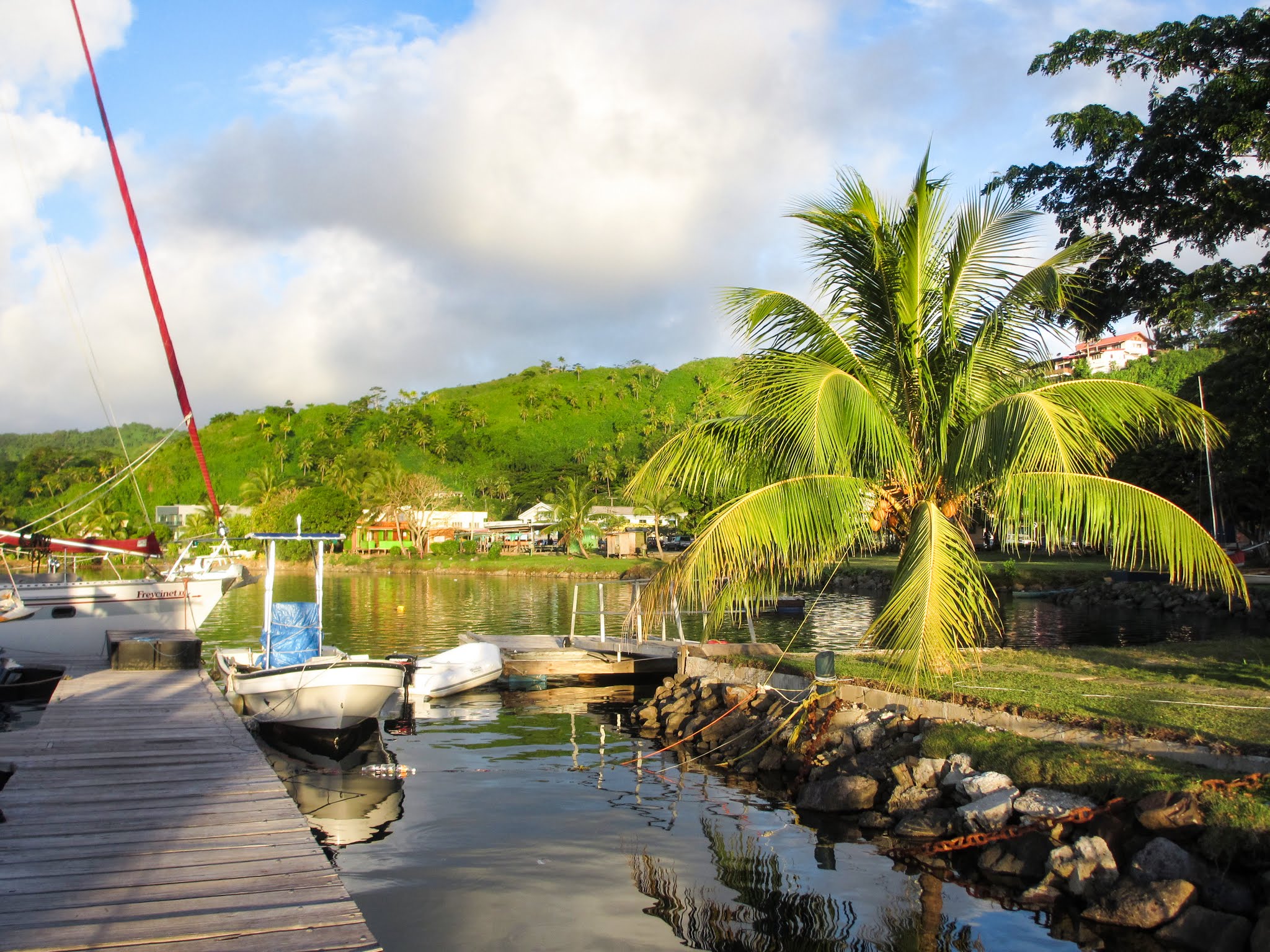
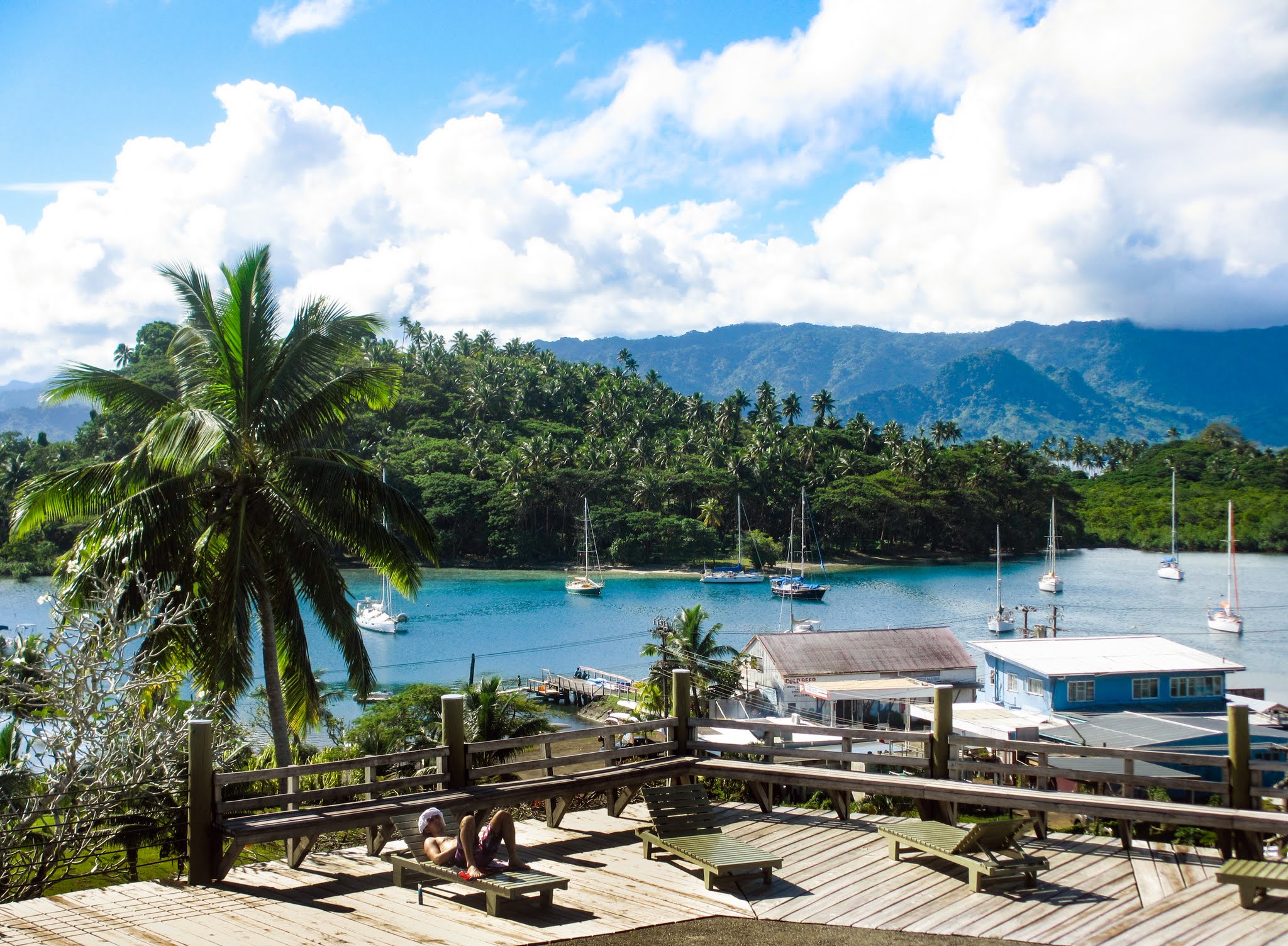
Below is a roundup of miscellaneous pictures of Savusavu. This had been our third stay here, and we planned to return again after visiting “the Lau.” –Cyndi

Savusavu Round Three (Vanua Levu, Fiji)

August 04 – 21, 2013

We spent these two-and-a-half weeks in Savusavu mostly regrouping, deciding where to go next, and eating very well. We did have one surprise big project: getting our propane tank filled. This ordeal took a few days to resolve. (Post Here)

We also visited the Scariest Resort Ever! We blogged about it at the time, but I’ve just amended that post as there’s even more to the story. (Here)

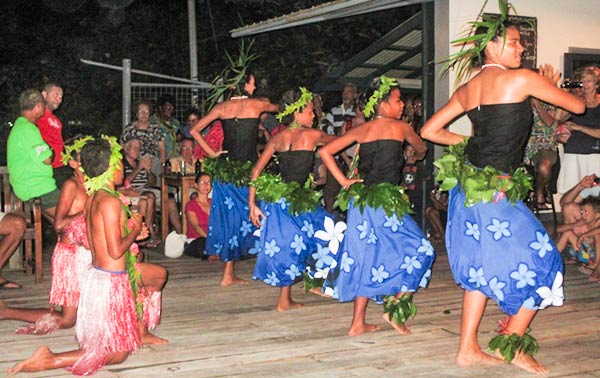
One of the highlights of our time here was ending up at the Friday night show at the Copra Shed’s bar. It’s a Fijian cultural dance show performed by some of the local kids, and somehow Rich and I hadn’t run across one of these yet. The bar was packed, and there was a very festive atmosphere.

A young woman came out and gave an introduction to the show with an explanation of the Fijian identity, that they are “mixed salad,” a mix of Melanesian, Polynesian, Indian, and European. What a great self-description!

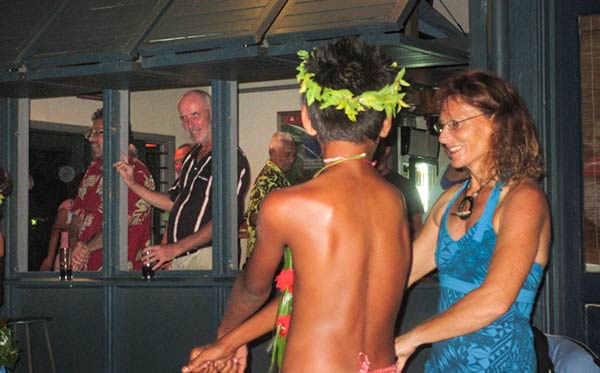
The show was terrific, and at the end the kids pulled some individuals out of the audience to do some Fijian dancing; then finished with an all-out dance to the song “Gangnam Style.” Very fun! –Cyndi

The dancers in the Fijian Cultural Show at the Copra Shed. (Savusavu, Vanua Levu, Fiji)
Amanda Neal (from Mahina Tiare) enjoys a dance with one of the performers.