November 11, 2013
Our first morning in Suva began dramatically when, at 5:30am, we where abruptly awoken by one of those bomb-raid horns which, with our lifestyle, might signal a tsunami alert. We sprang out of bed, and Rich ran for the computer to check out Hawaii’s tsunami alert site while I tired to get my brain to function pre-coffee. The horn only sounded once; so I figured it must just be a drill. Rich still worked to confirm there was no real warning. Feeling better now but wide awake, we wondered why they had to do that so early in the morning.
We were still doing our morning radio net as the last of our friends were on approach to New Zealand. We told one of them about our morning trauma, and he just laughed and said that’s the wake-up call at the prison across the street and it happens every morning. Well, now that we knew what it was, we’d be able to sleep through it, but it would be nice if the yacht club would warn a person! Maybe the 5:30am tsunami alert panic is sort of an unofficial hazing into the club. 🙂
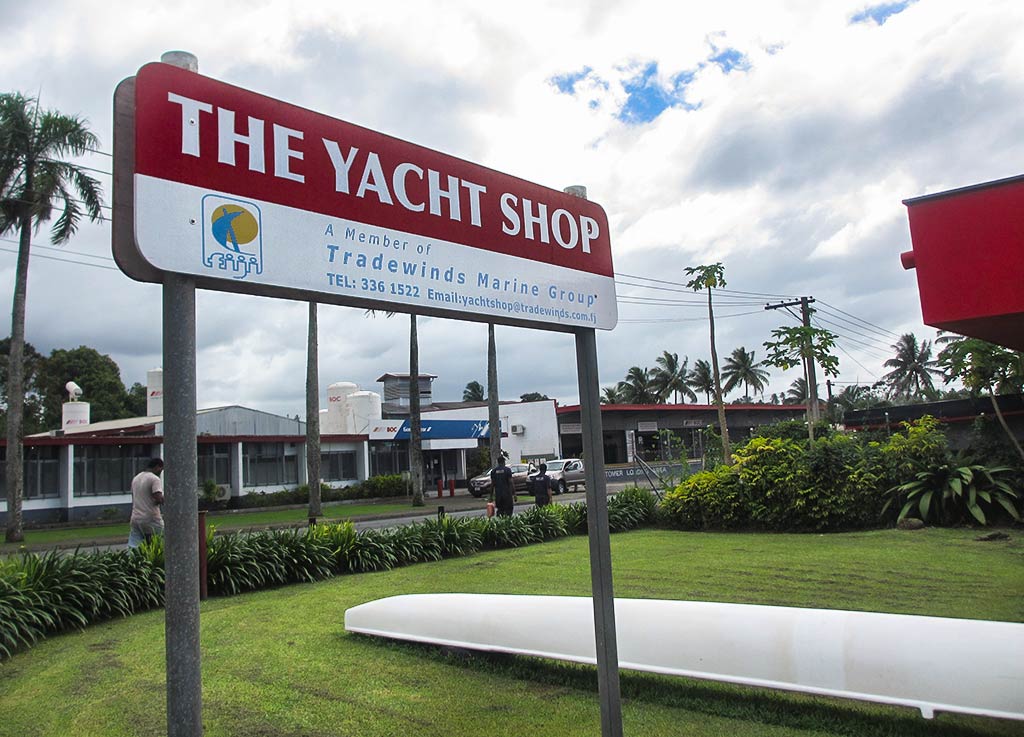
Our first project this morning: find out why the autopilot had gone out. The answer: the solenoid had rusted from water that leaked in around screws on deck. Our second project: go forth into the world and see if we could find a new solenoid. The natural place to start was the industrial area that covered the area between the yacht club and downtown Suva, a veritable maze of streets and alleyways containing parts stores, hardware stores, industrial supplies, and the like. Below, a map showing the area.
We’d gotten a suggestion from the yacht club’s marine store as to where to look first, but it’s never that easy. Usually these scavenger hunts involve walking from one shop to another, no one having quite the right part but wanting to be helpful and suggesting a place to try next, leading us deeper and deeper into the recesses of the industrial maze. We’re used to doing these sorts of searches in various cities around the world (especially Hong Kong). Rich thrives on these challenges, not just the hunt but the discovery of other things along the way that can be handy to know about. I, on the other hand, am not mechanically inclined and can’t understand why we need to stare at every part in every store for hours on end (well, it seemed like hours).
Well, I guess I can understand how Rich feels when he goes grocery shopping with me. I ponder the items on the shelves (salad dressing is a good example), both the familiar and the unfamiliar. What’s this new brand, what are the ingredients, how much more expensive is it, is it better quality or just prettier packaging, should I try it or go with what I know, and look, are those canned cornichons? I needed them for a recipe awhile back but can’t remember which one. Should I get them while I see them or wait until I need them again? And look at these beautiful olives! Do they have seeds? Do I feel like dealing with spitting out seeds or should I get the seedless, yet less tasty, version? How many jars of olives do we have, and do we have room for another in the can locker? Hey, they go great with bread and brie—I should get some brie, but the baguettes are better at the other grocery store. Maybe we could stop there on the way home, but it’s getting near rush hour and things are more crowded now, etc., etc.
To me, these are all important thoughts to ponder. To Rich, it seems like I’m suffering some strange spell of grocery-store hypnosis where I think I’ll find the answers to the mysteries of the universe amid the merchandise. He’ll ask, “Why are you staring at the shelves? Just pick something and buy it for God’s sake!” I’ll think, “Yea, as if! Do you want to eat well or don’t you?” (Needless to say we don’t always shop well together.)
Anyway, after making many stops and talking to many people, we came across a place that had a man who could likely rewind (fix) the solenoid for us, but he wouldn’t be in until the next day. This sounded very promising so thus ended our quest for the day.
As it turned out, over the next couple of days, he would rewind and repair our solenoid. One thing that stood out during all our walking around was that many of these industrial stores were run by Indo-Fijians (Fijians of Indian descent who make up nearly half the population of Fiji); and they were some of the most can-do people we’d ever run across. Since Fiji is a small third-world country, they have to make do with what’s available and make it work; so we came across many ideas and suggestions. In more westernized nations with more resources, people are quicker to throw up their hands, say they can’t do anything, and suggest a new part be ordered (never a quick process).
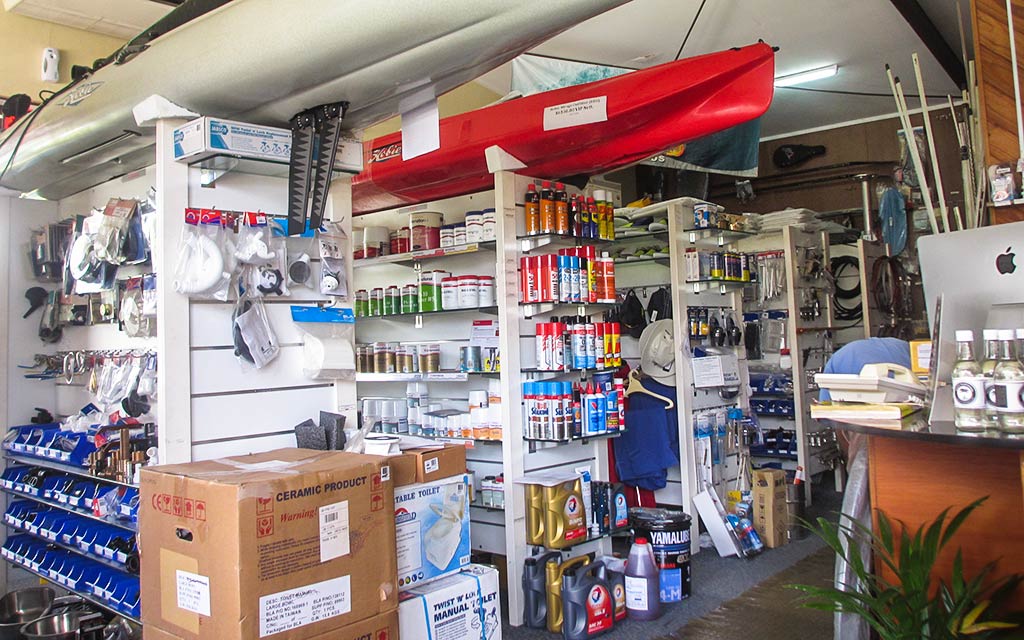
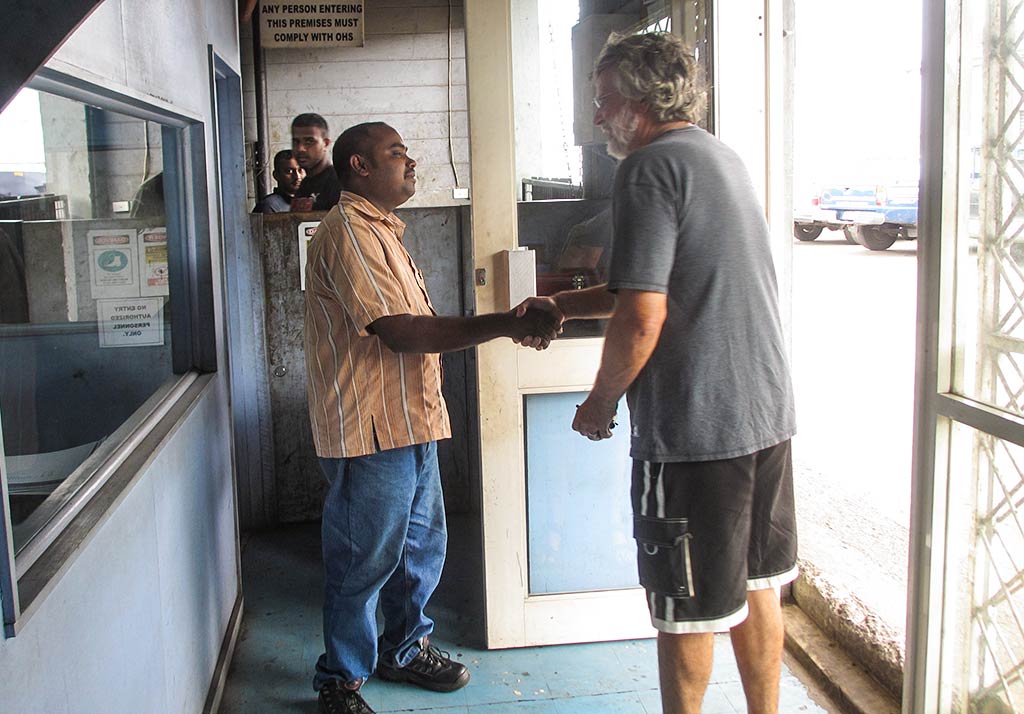
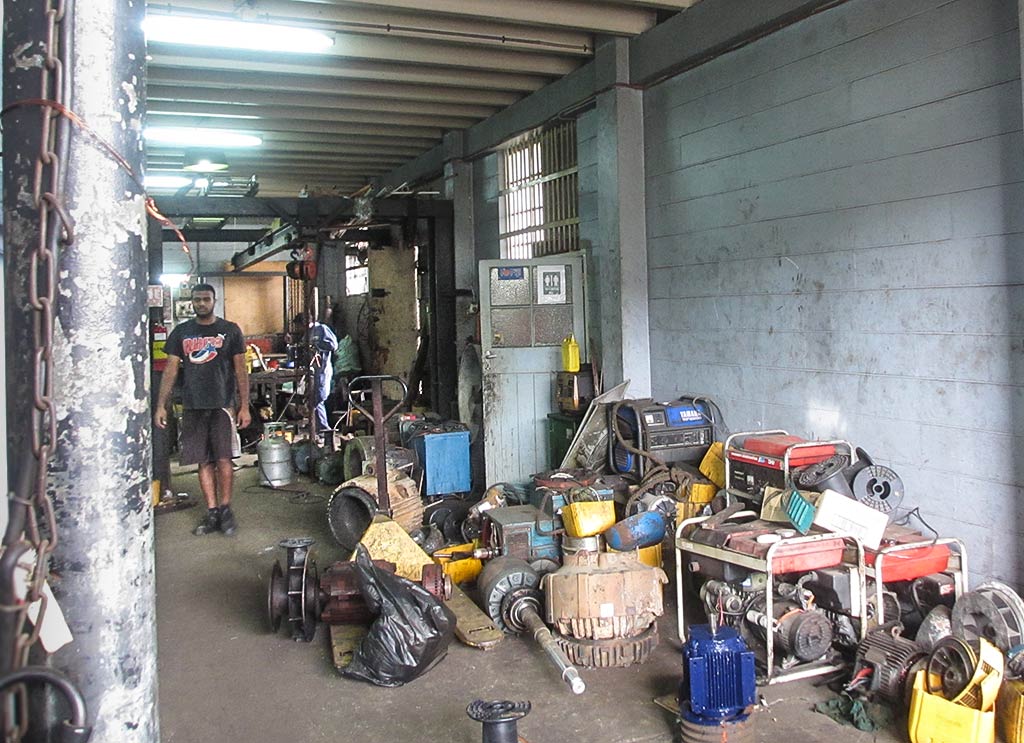
Below, a photo of the place that fixed our solenoid, typical of many paces we came across in our search, and the happy outcome a couple of days later when the solenoid was fixed.
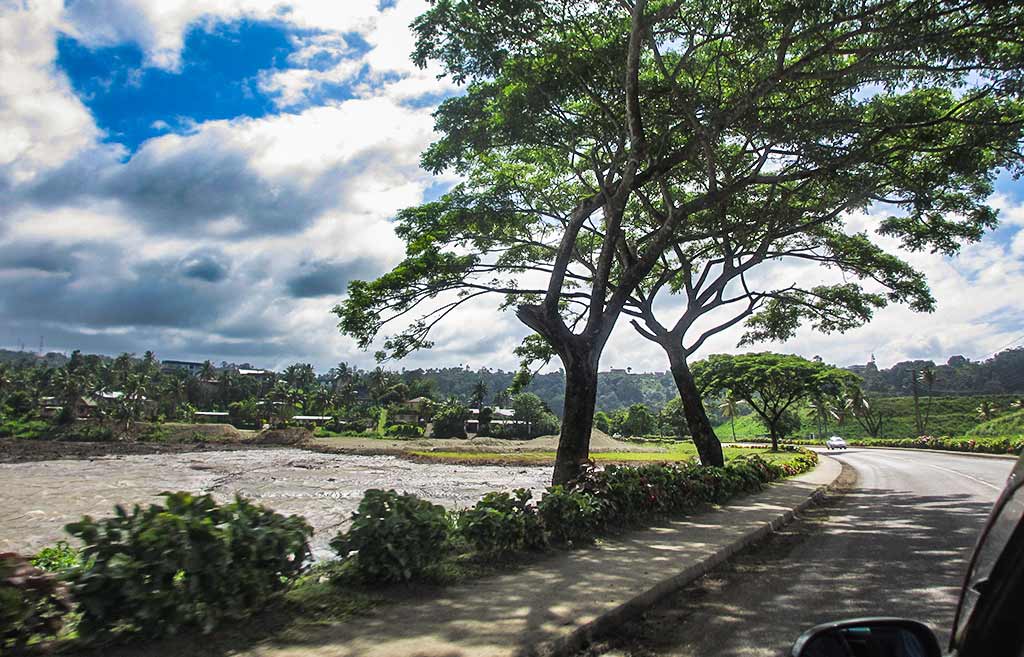
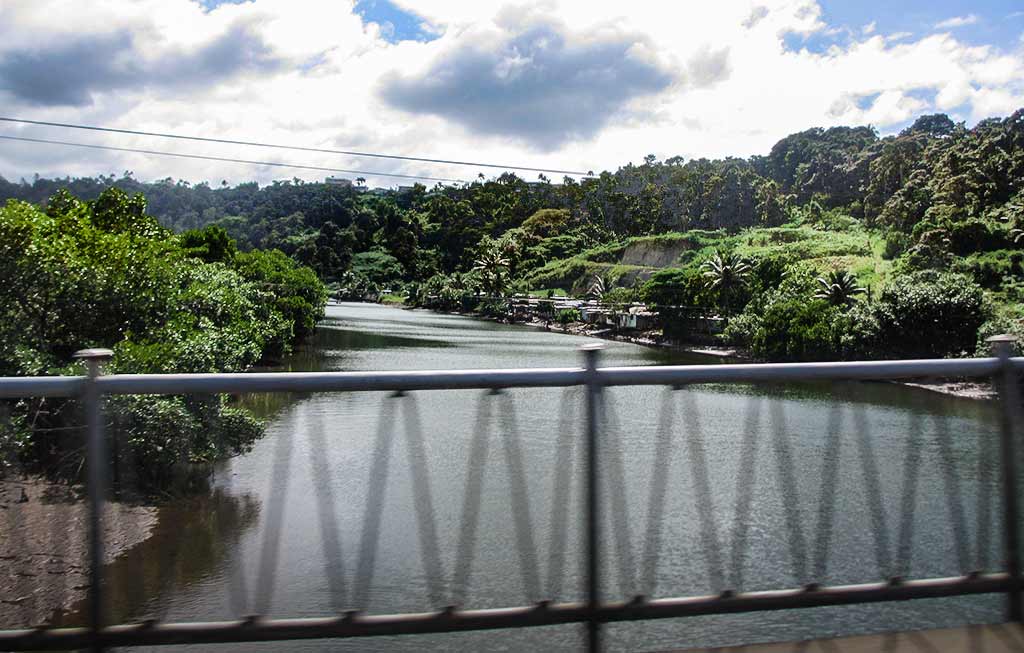
Once we put that project on hold for the next day, we decided to continue on and check out downtown Suva. We reached it by walking down a sidewalk along a busy highway, crossing a short bridge over a waterway and going around a large traffic circle. Below, a map including downtown (and midtown) Suva.
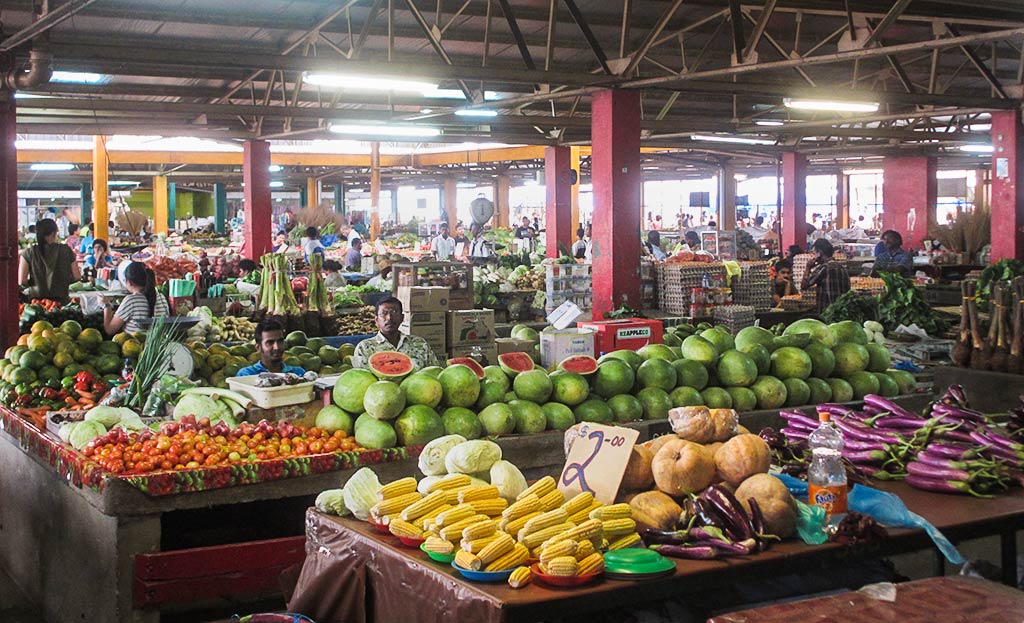
Here, we found the true heart of the city. It wasn’t the nicest part by any means, but as it encompassed the central bus depot, the hyperactive Suva Flea Market shopping complex, and the Suva Municipal Market (the city’s big open marketplace), it was a major intersection of Suva’s resident population. The area was thick with traffic, both pedestrian and vehicular, and it could be a bit challenging to get around. It was also the sort of area where one needs to watch out for pickpockets (as we found out later with an unsuccessful attempt to lift Rich’s phone from his pocket).
The area was interesting and the big open market is a must-see, but it was all a bit much for us. Yet by walking just a block or so further we found what I’d call the midtown area and face of the city: the shopping district. This triangular area was anchored by three shopping malls and chock full of stores in between them, mostly the clothing type, with a canal cutting through the center of it all. Here, the crowd was more international including native Fijians, Indo-Fijians, expats from Australia and New Zealand, and international tourists
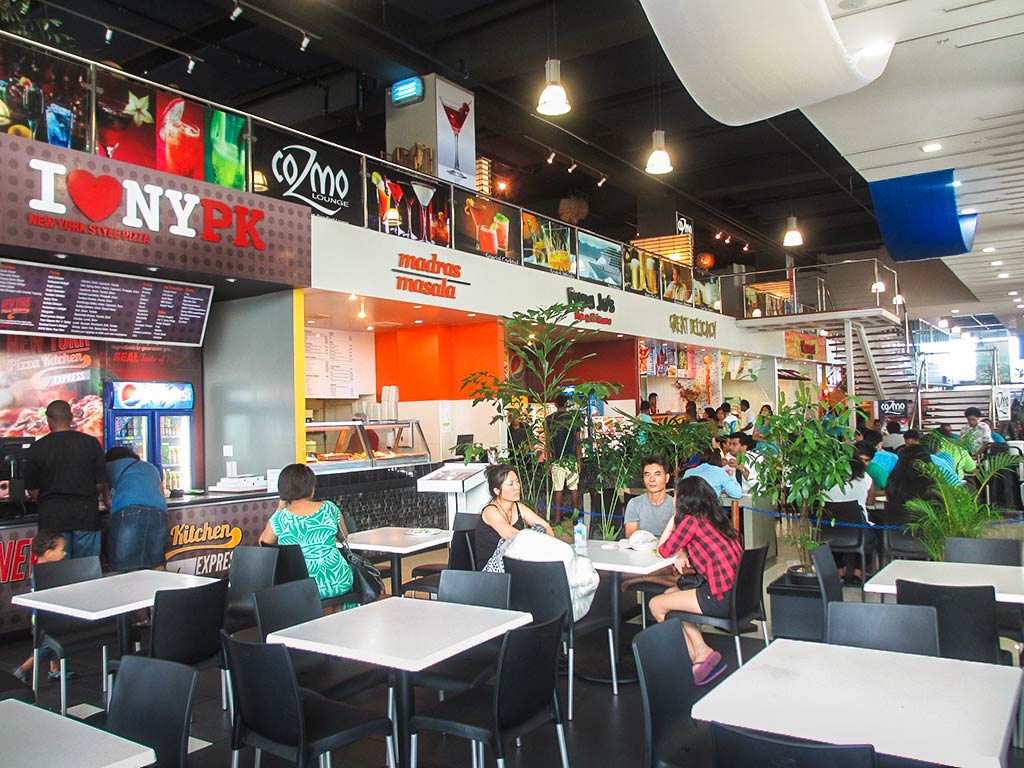
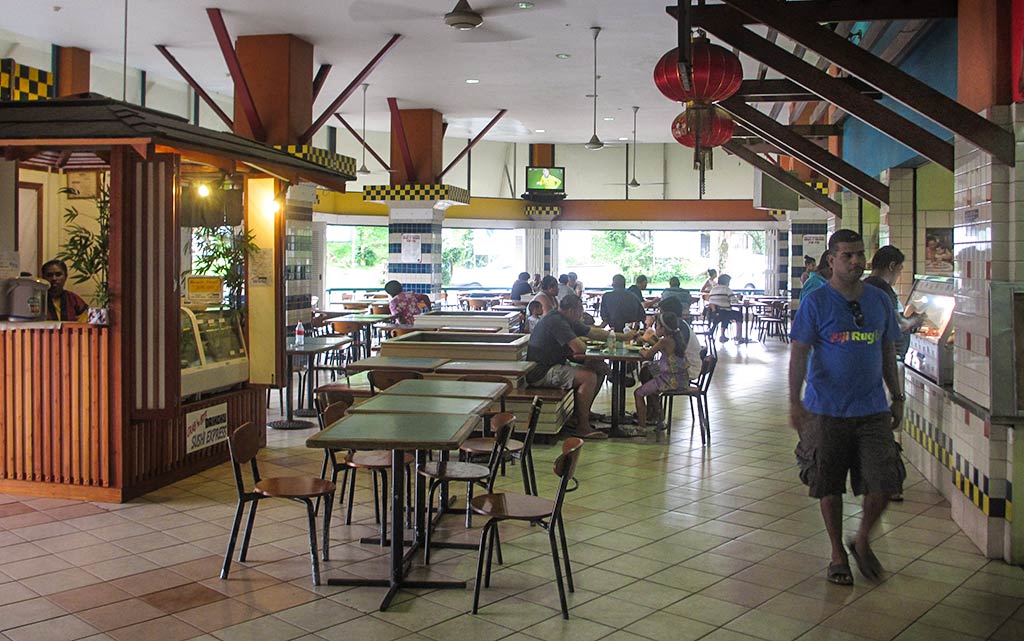
We started by checking out the tallest mall (which also may have been Suva’s tallest building at 6 stories), Tappoo City Suva. At first it seemed to contain different stores, especially with the ground-floor area being mostly about souvenirs for tourists, but it actually turned out to be one large 3-story department store (the Tappoo department store). It was only the 4th floor that had a few shops. It also had a glorious food court with a variety of cuisines, many of them Indian but also the usual burgers, fried chicken, and pizza. Above us, off to the sides of the building, were two more stories, but the food court ceiling went all the way to the top of the building, giving it a nice open feeling.
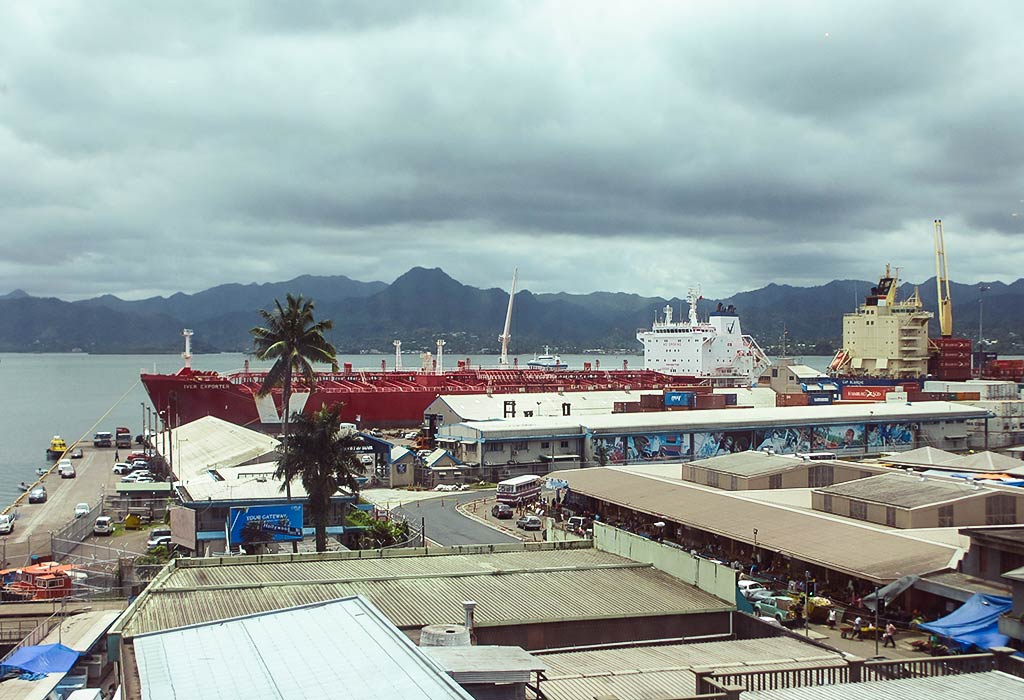
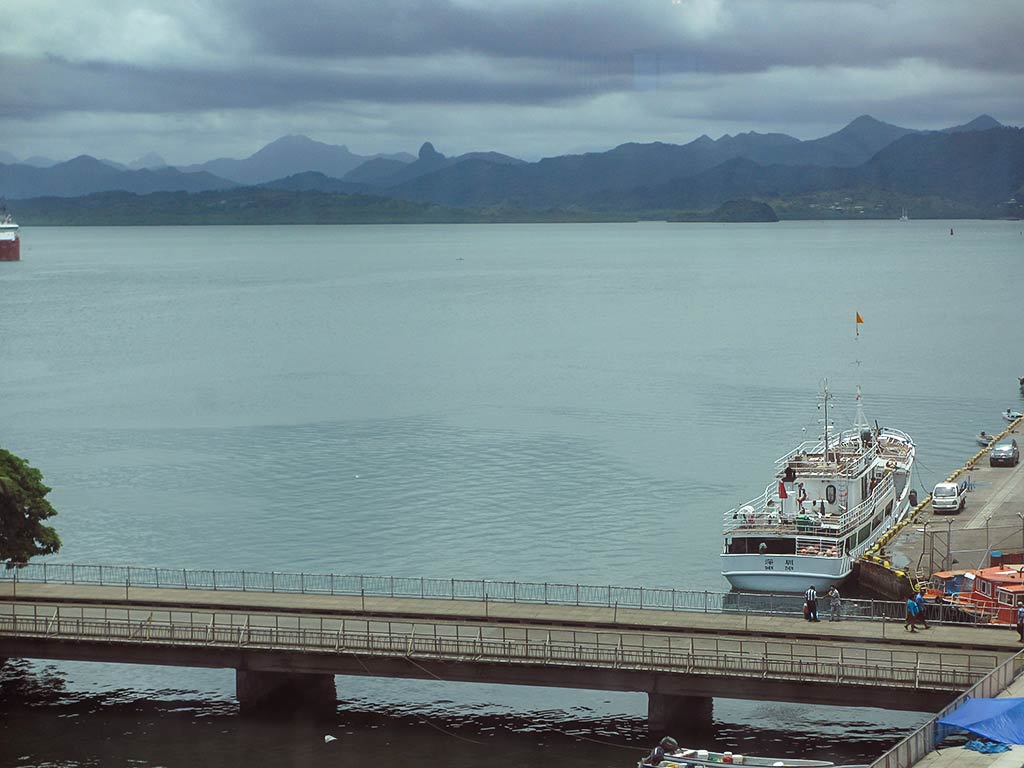
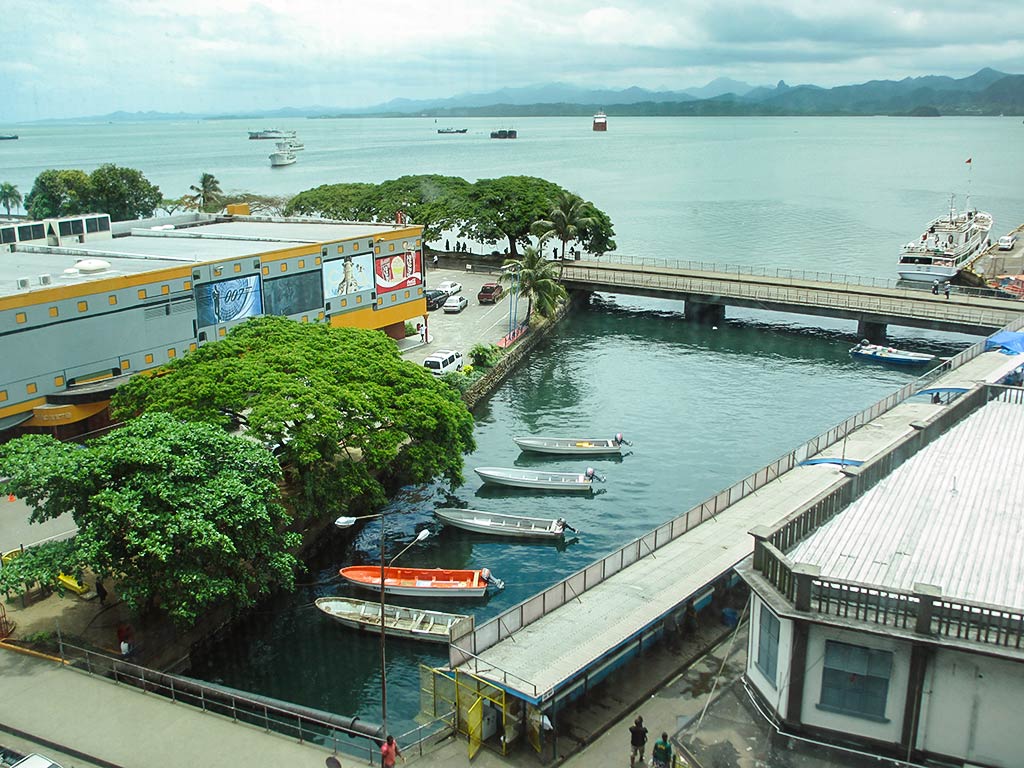
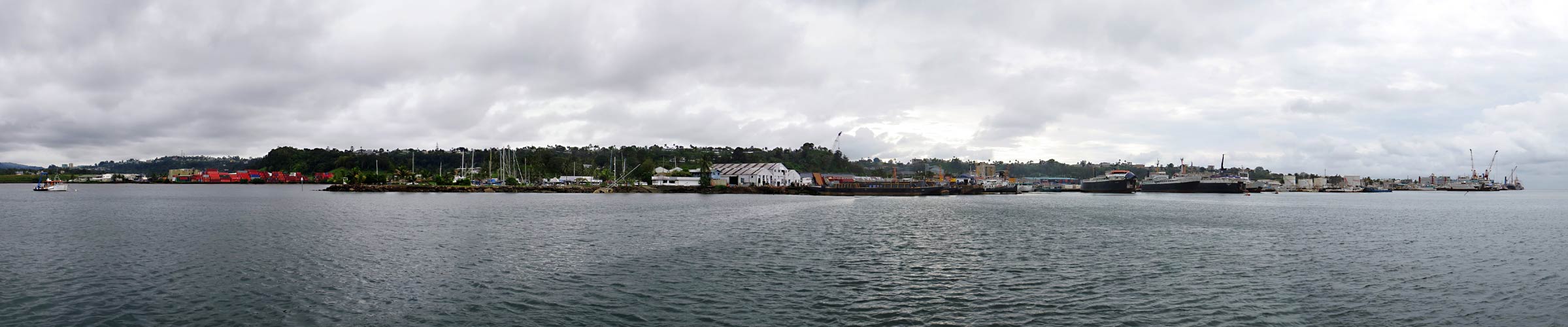
The standout feature of this area were the huge floor to ceiling windows with a beautiful view of Suva Harbor. We couldn’t help but notice we seemed to be the only ones to appreciate it; I guess everybody’s just used to this view.
For lunch we settled on an Indian stall and got murtabaks, which are rotis (an Indian flat bread much like tortillas) spread with various curry fillings and folded up into squares. It’s actually more of an Indonesian dish than an Indian one, but in any case, very tasty!
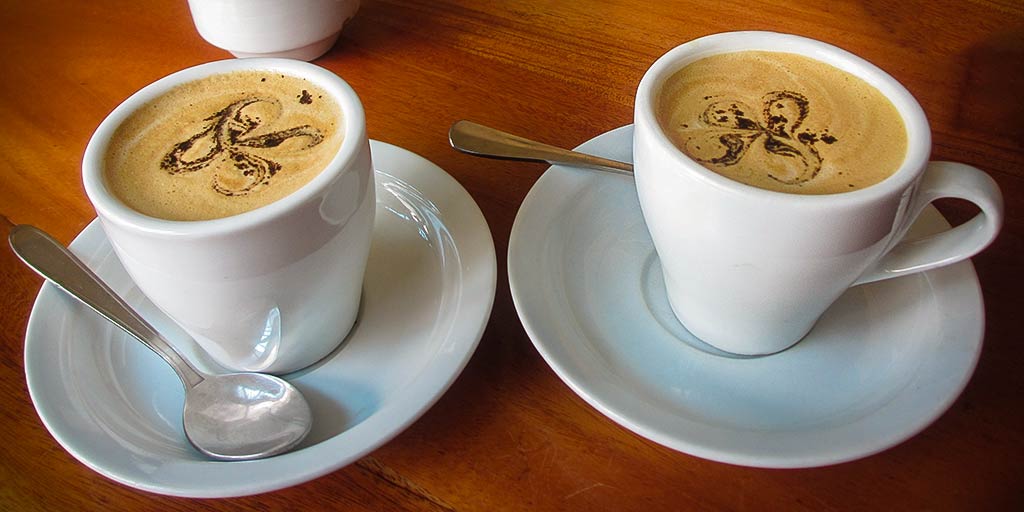
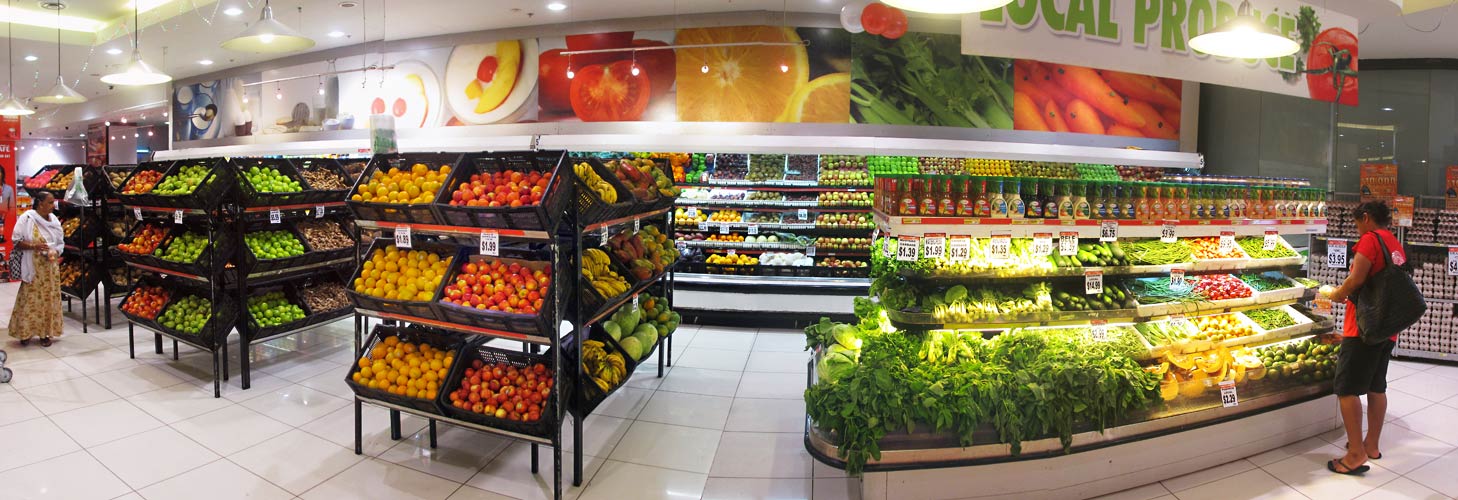
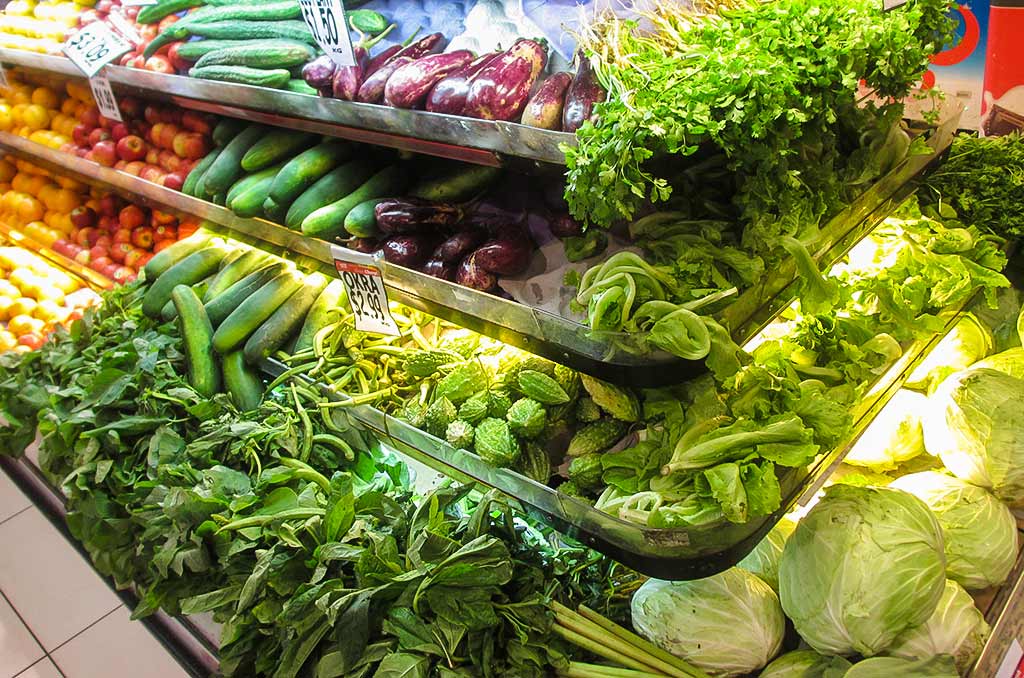
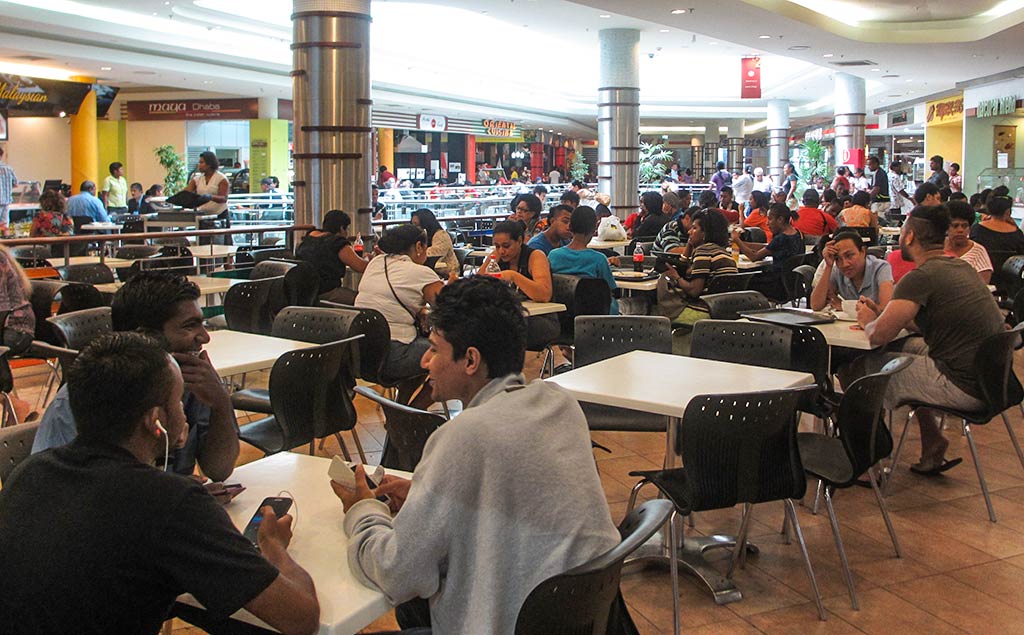
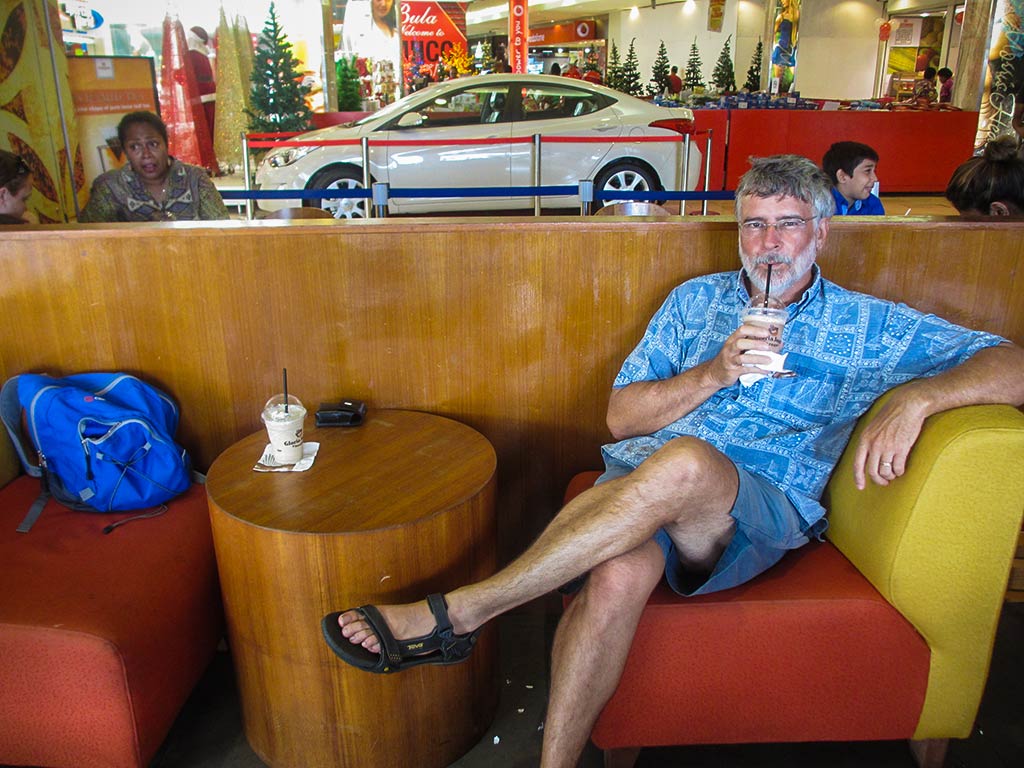
After lunch we walked inland to the next mall, MHCC, which was a true multi-level mall with a variety of stores. It, too, had a food court on the top floor, mostly with Indian food but there was a Chinese homemade noodle place and a Fijian place, too. The most interesting spots to us that day were both downstairs. One was a nice grocery store with a large produce department, the likes of which we hadn’t seen in months so I felt like a kid in a candy store! Who knew that vegetables could be so exciting?! The other spot was a Gloria Jean’s, a popular coffeehouse chain in New Zealand much like Starbuck’s. Here we had the first ice-blended coffee drinks we’d had in a long time, and they tasted like heaven.
Now, we crossed the street and checked out the final mall, Harbour Centre, actually just an arcade of shops and a food court, neither of which were very interesting. The walk through the arcade did bring us back to the main street of the city. Across the street were the Village 6 Cinemas showing an interesting mix of recently-released American movies and the latest blockbuster movies from India. Both film nationalities included family-based dramas, romances, comedies, and of course hero-vs-villain action thrillers which are very much the same in both countries except the American heroes tend to walk triumphantly off into the night, arm around the girl, while the Indian heroes might break out into a complex group song and dance routine (and look really, really good doing so).
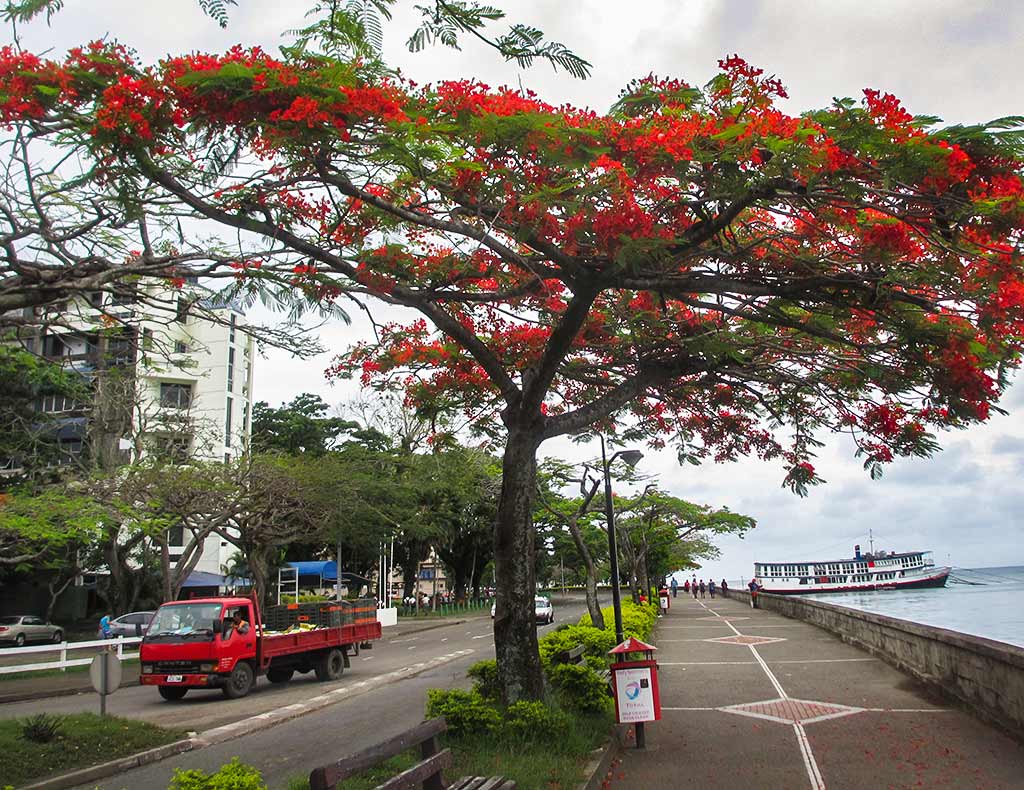
Continuing past the theaters and across a busy shoreline road, we arrived at Suva’s sea wall promenade, a 5km walkway popular with local families, joggers, and young couples. It’s a nice-enough promenade but it could use a face lift, more trees (especially palm trees) and maybe a coffee cart or food truck– something to make it feel less removed form the city’s energy. Suva is definitely a city that faces inland. Maybe this is because of all the port activities and shipping businesses, but the open water of the harbor and the view of the mountains that surround it are quite beautiful and worthy of far more attention than they get.
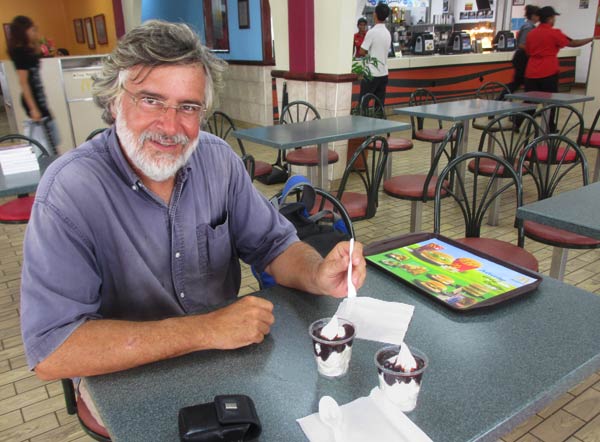
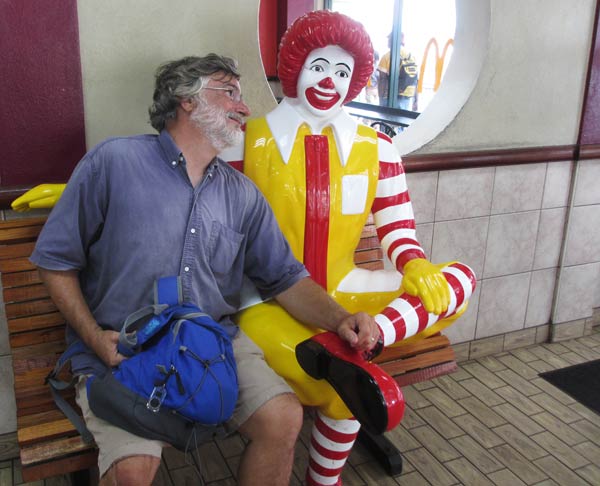
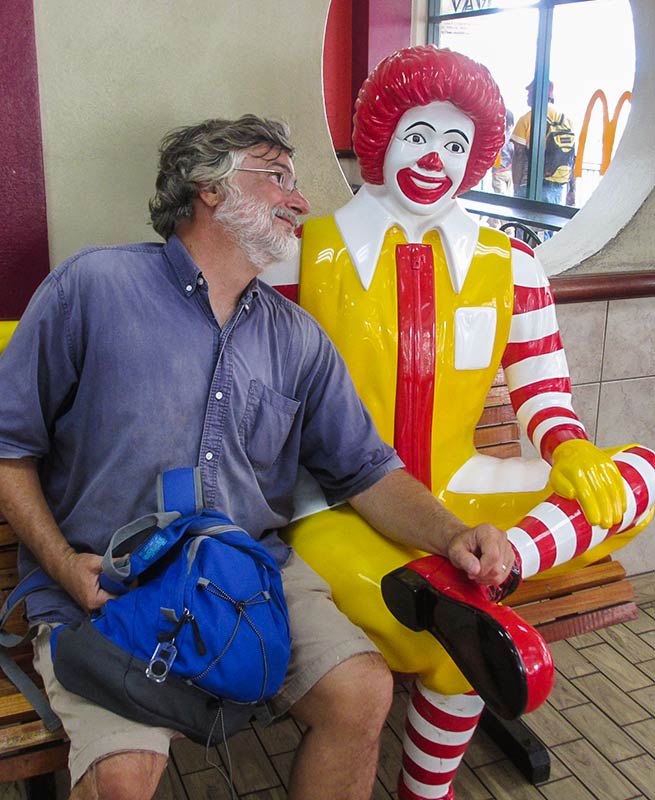
We walked a ways up the promenade to a small pretty park called Sukuna Park, the unofficial dividing line between busy midtown and the quieter uptown area. By now we were feeling hot and tired and ready to call it a day. That’s when I spotted it: McDonald’s! We headed right over to enjoy hot fudge sundaes in the air-conditioned setting. We love to travel to exotic places, but we also love to take a break on these little American “islands” that dot cities around the world. We were so happy for the moment that Rich went over to say hello to Ronald McDonald, America’s unofficial best friend.
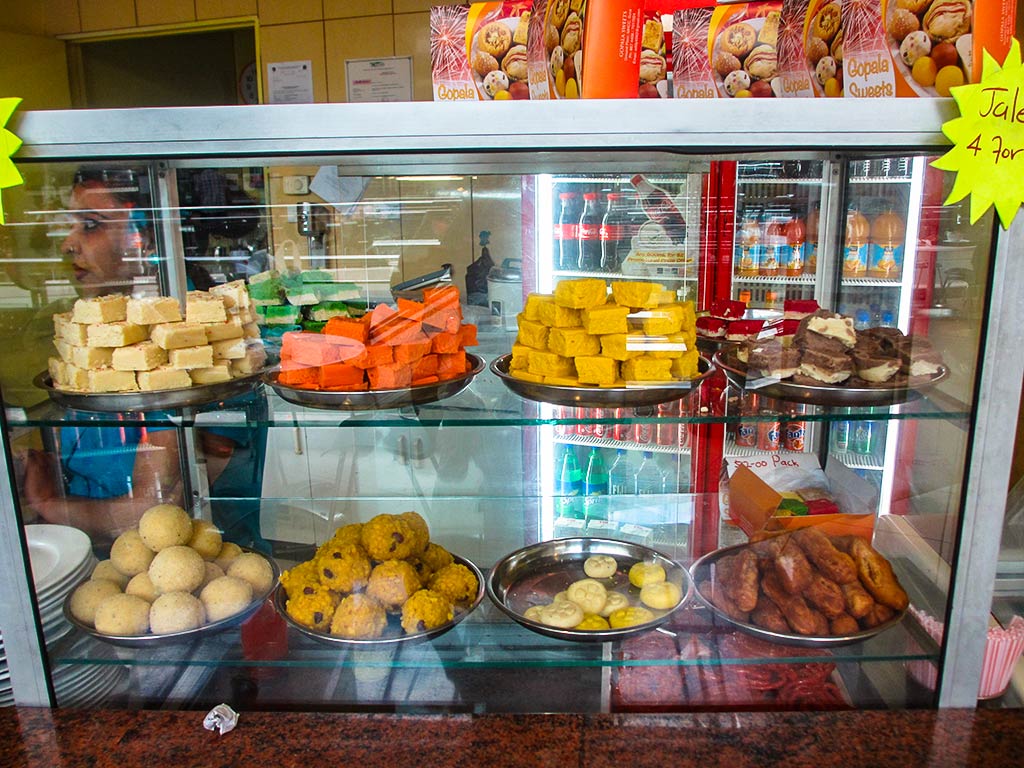
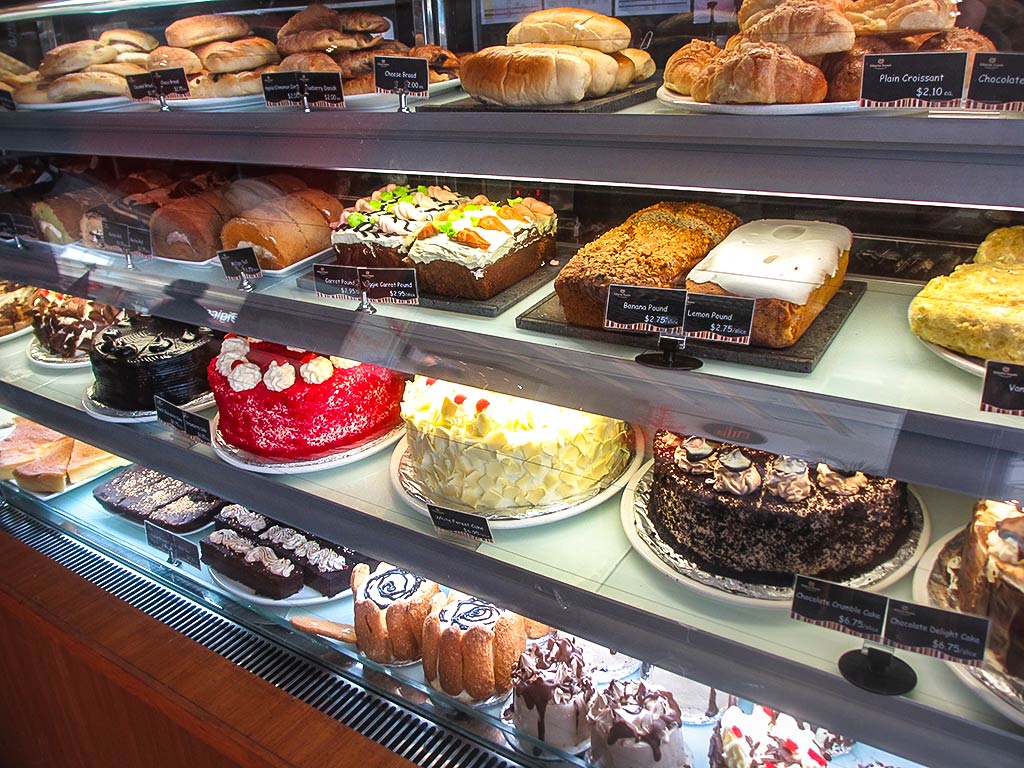
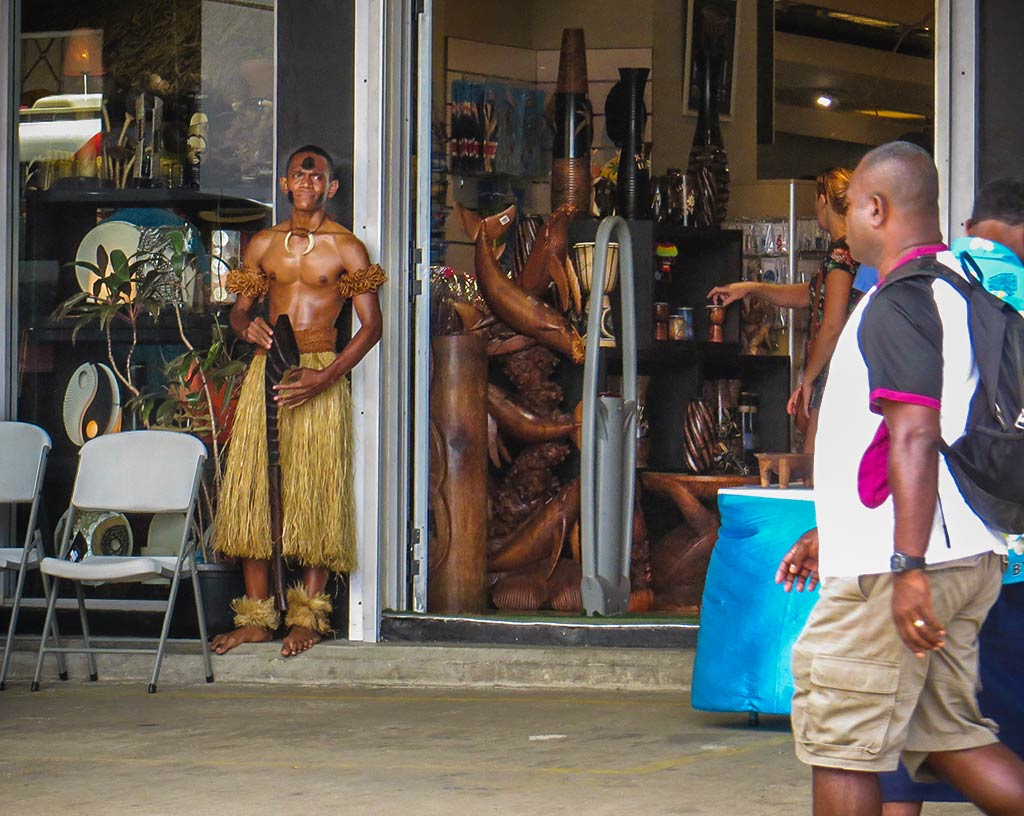
Below, a gallery of photos from our first day of wandering around Suva, including the food courts of all three malls, the bountiful produce at the supermarket, a iced coffee drink at Gloria Jeans, a visit with Ronald McDonald, counters containing both Asian and western-style sweets, the prettiest area of the seaside promenade, and some food stalls at the busy Municipal (central) Market. Also, note the photo of the guy standing in costume in front of the Tappoo department store. This happens when a cruise ship is in town, and it’s amusing to see these guys on their breaks, sitting nearby perusing their smart phones before getting back to work and resuming their less-than-menacing cannibal impersonations. (Click to enlarge and scroll through any of the photo galleries in this post.)
We took a cab back to the marina and signed in at the reception desk, picking up our key cards. We knew there would be a charge for the mooring and today found out how much: $35FD a night (about $18 for us). We decided to stay put for the time being and pay the fee. Yes, we could go anchor nearby for free, but we felt more secure on the mooring as the bottom of this harbor could be silty and trash-laden.
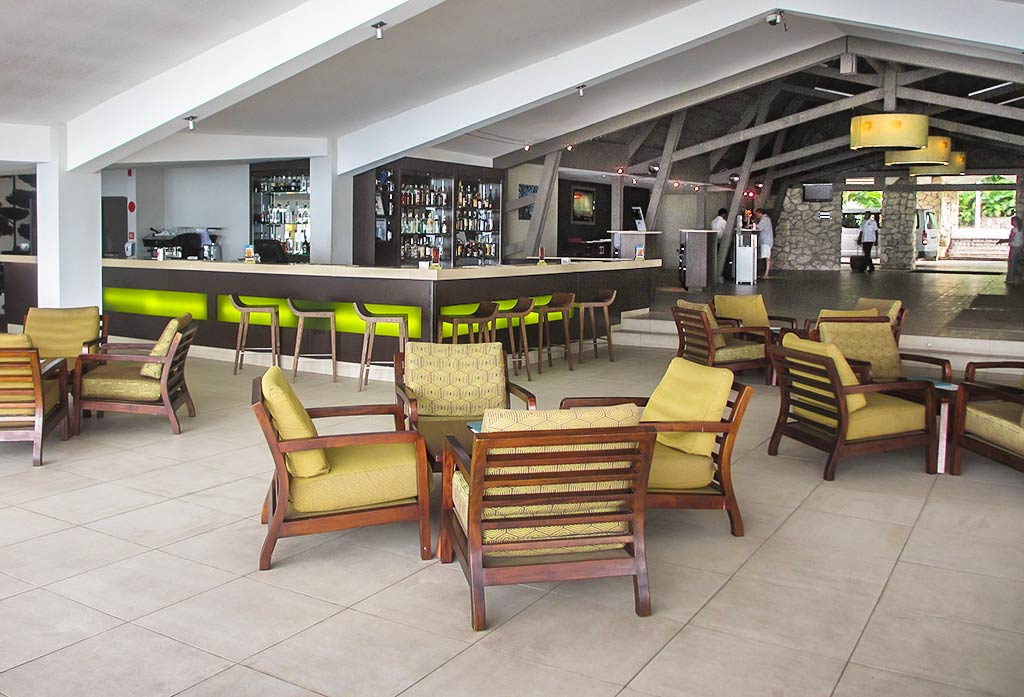
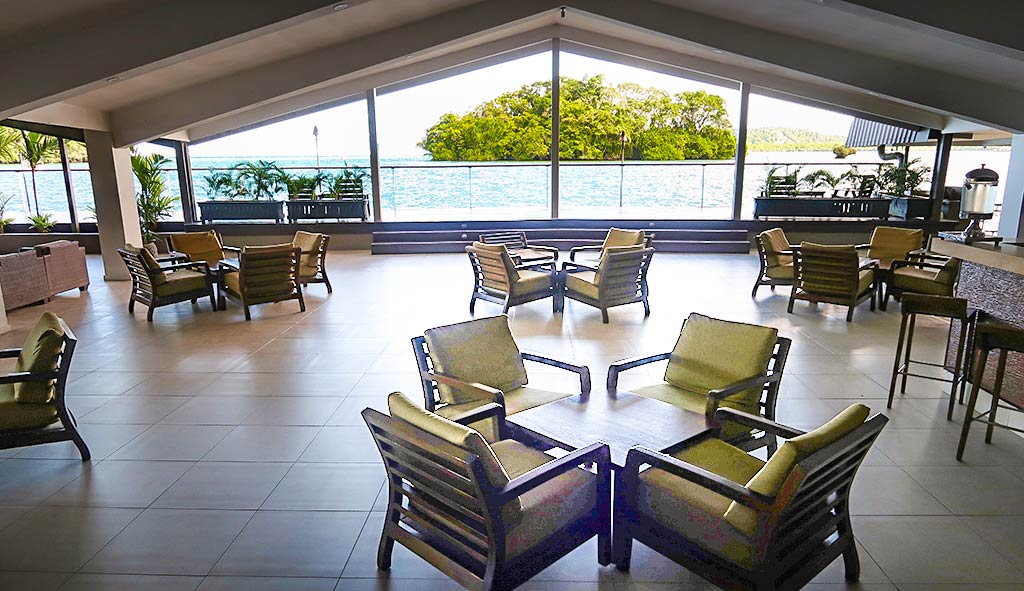
Our final task for the day was to sit at the bar and enjoy a Fiji Bitter. The bar at this yacht club is hard to resist. We’d walk right by it on the way to the dock, and it was so inviting and easy to sit down at one of their outdoor tables and have a cold beer. Tomorrow, we’d continue our tour of Suva by heading uptown. –Cyndi