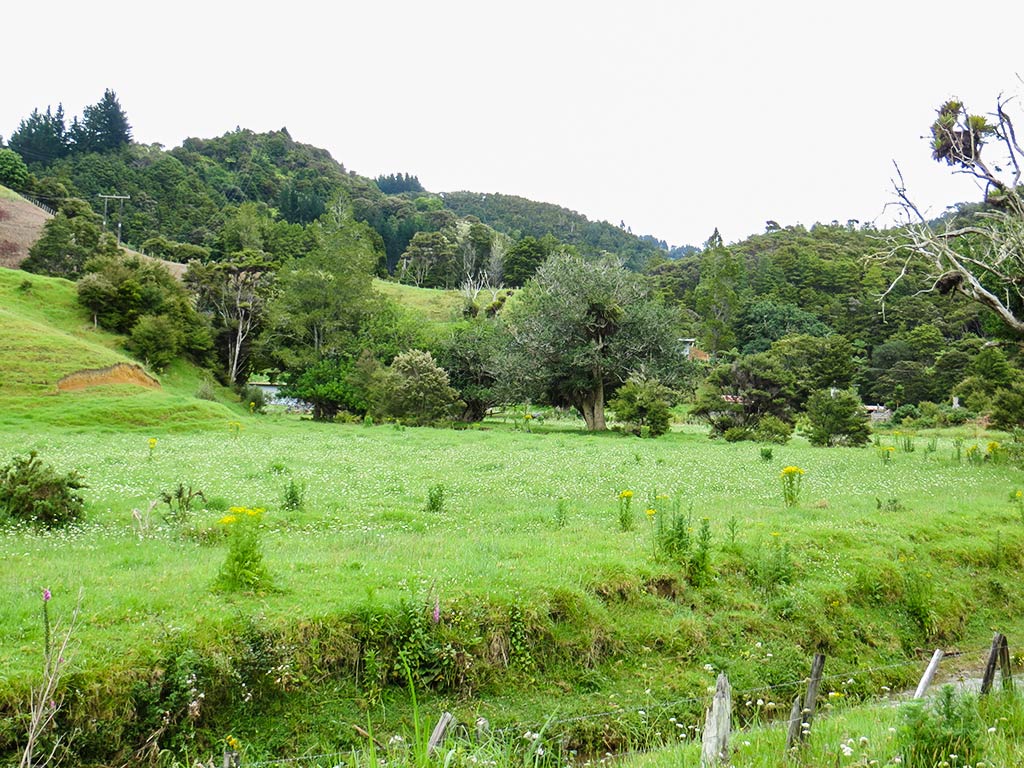
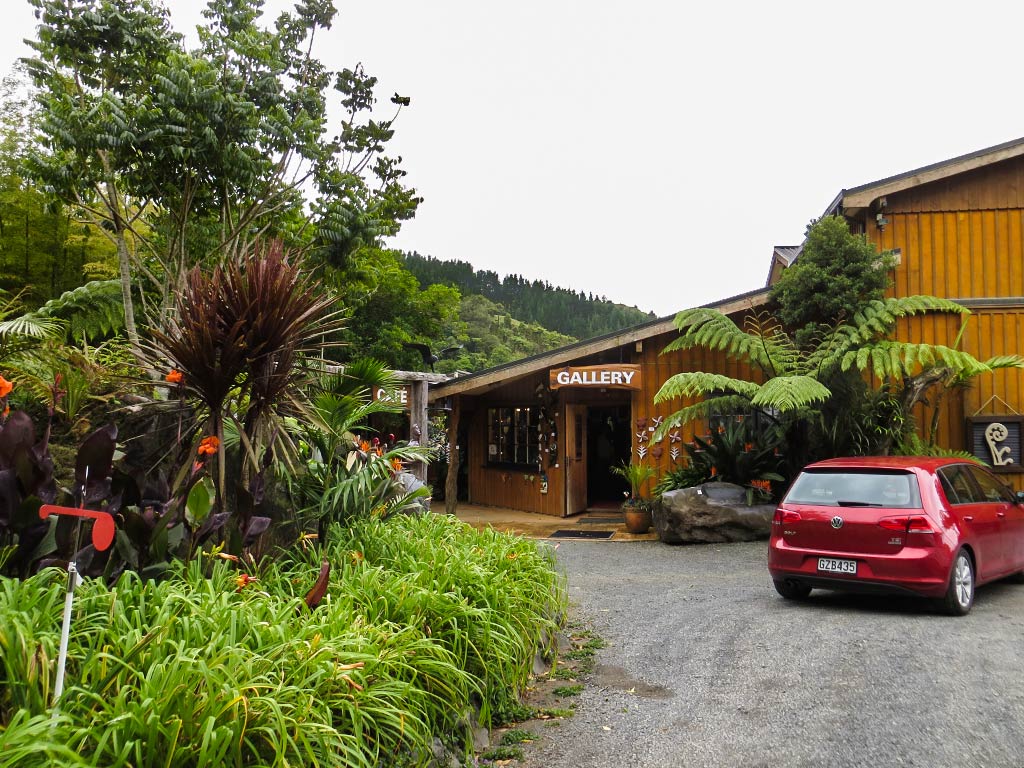
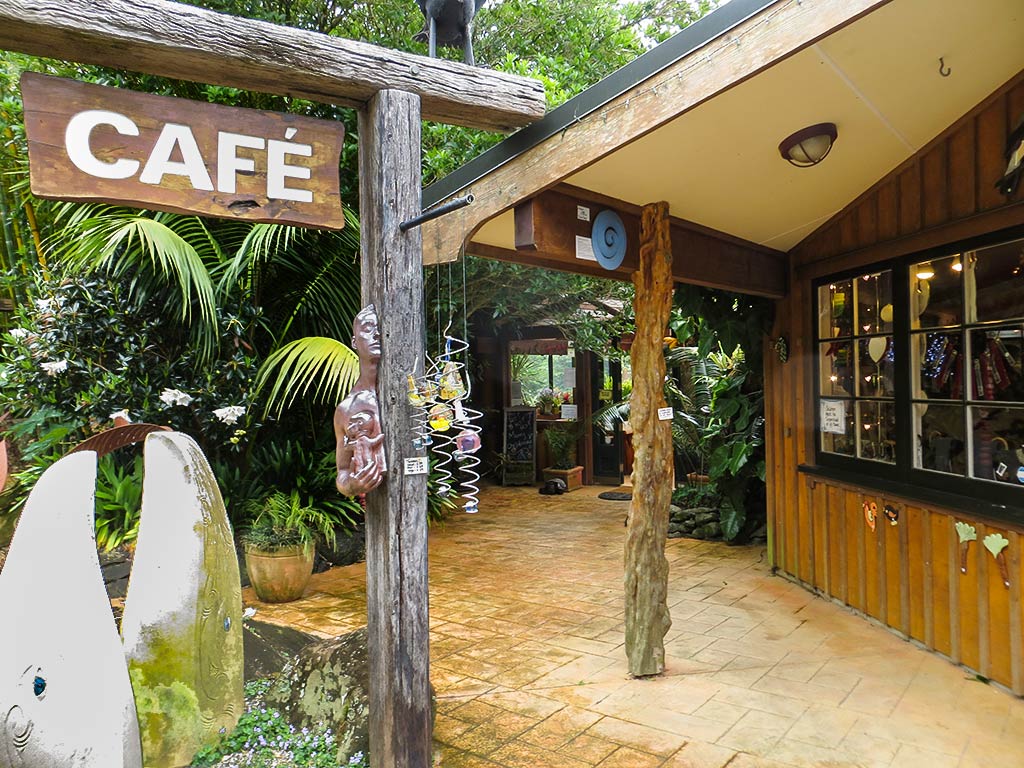
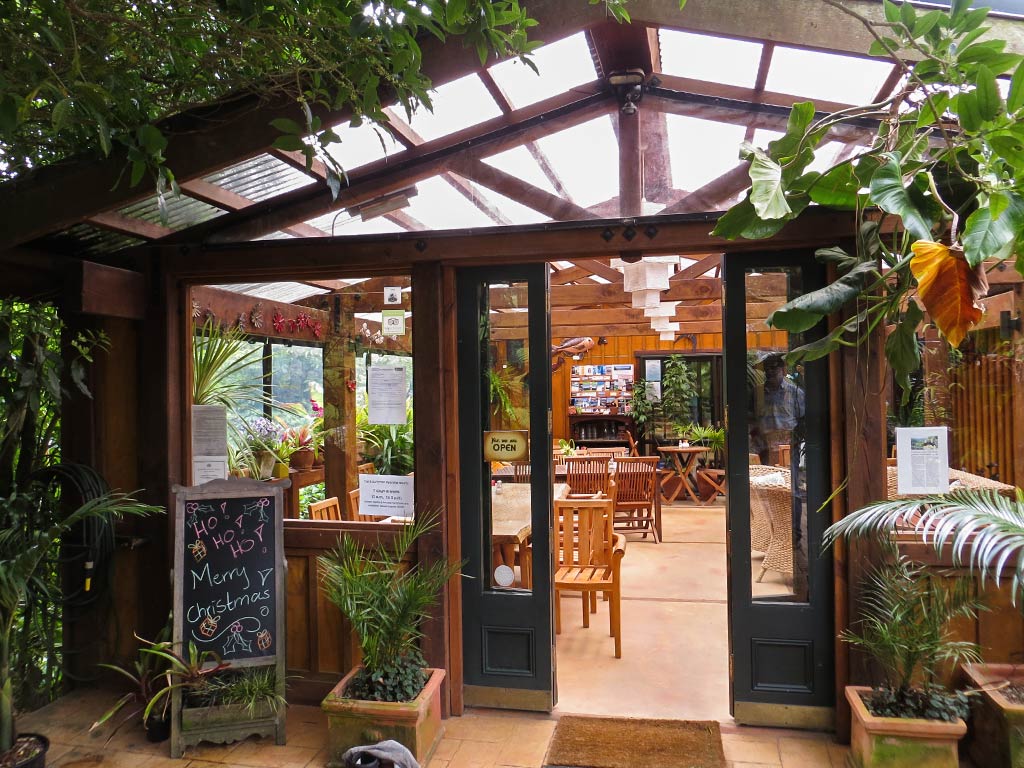
One notable outing we did while in Opua this year was taking a drive along a back road that goes from Russell to the lovely Gallery and Cafe at Helena Bay Hill.
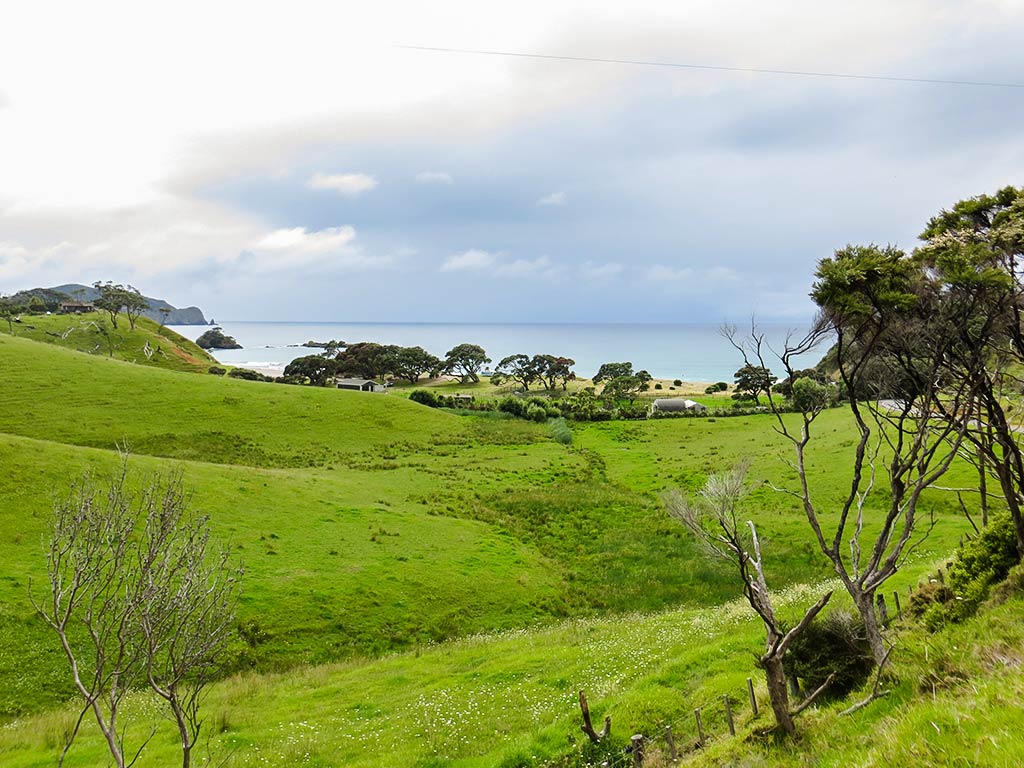
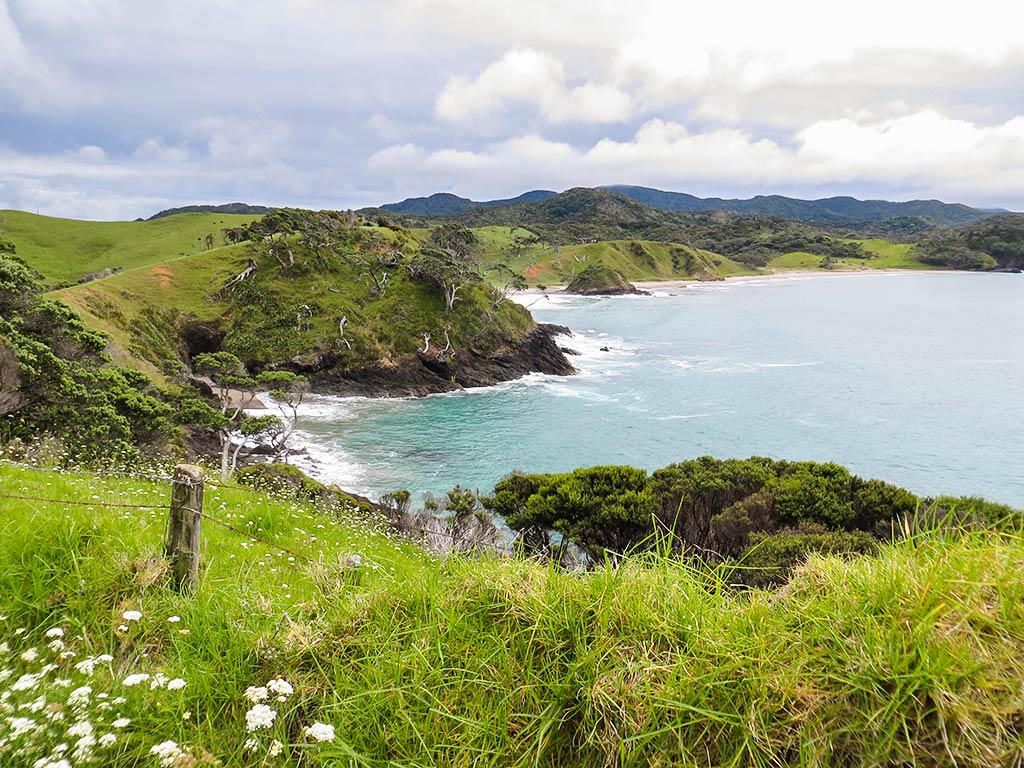
The trip started from Opua with the car ferry ride to the Russell area, then the road wound through rolling green hills before following the coast, giving us views of some very pretty bays. Near Helena Bay the road turned inland and wound uphill to the famous cafe. In all, it was a lovely drive through beautiful countryside scenery, and we even spotted wekas, a flightless, kiwi-like bird native to New Zealand. (You can click to enlarge and scroll through any photo galleries that follow.)
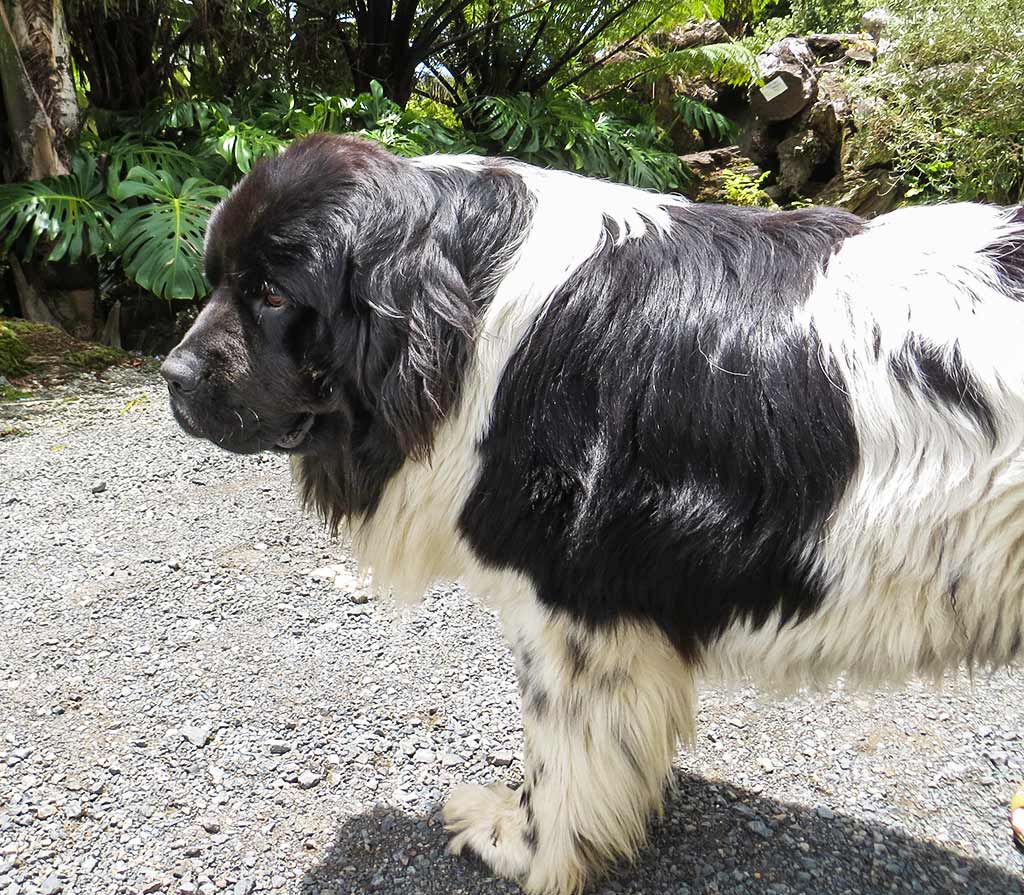
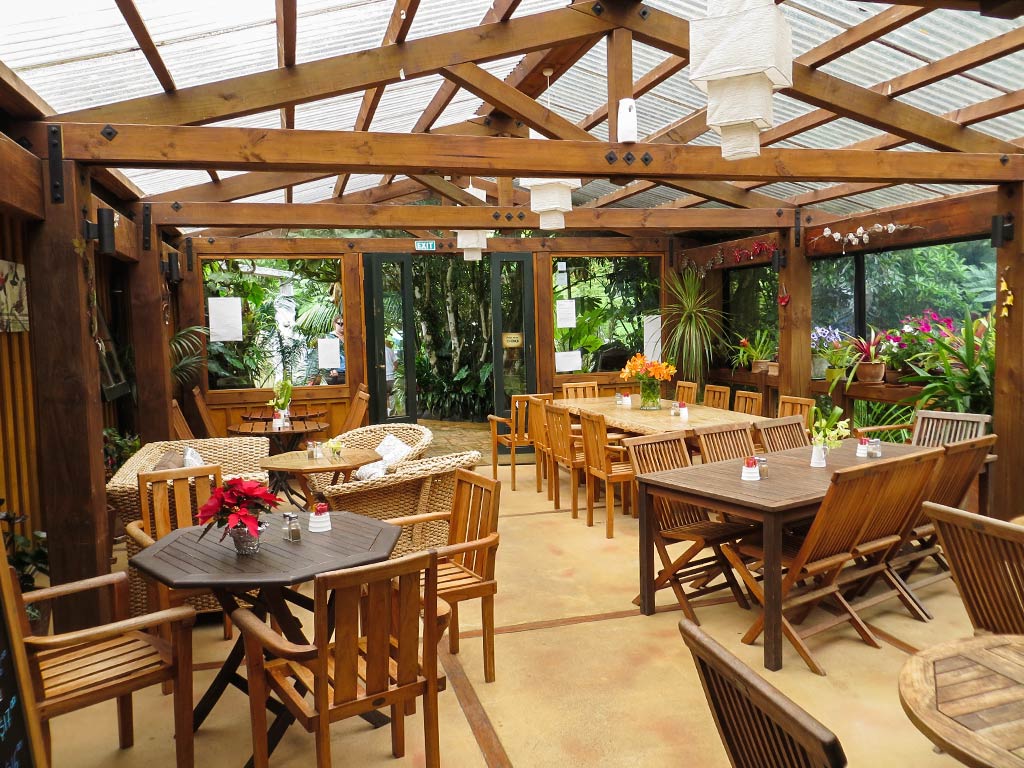
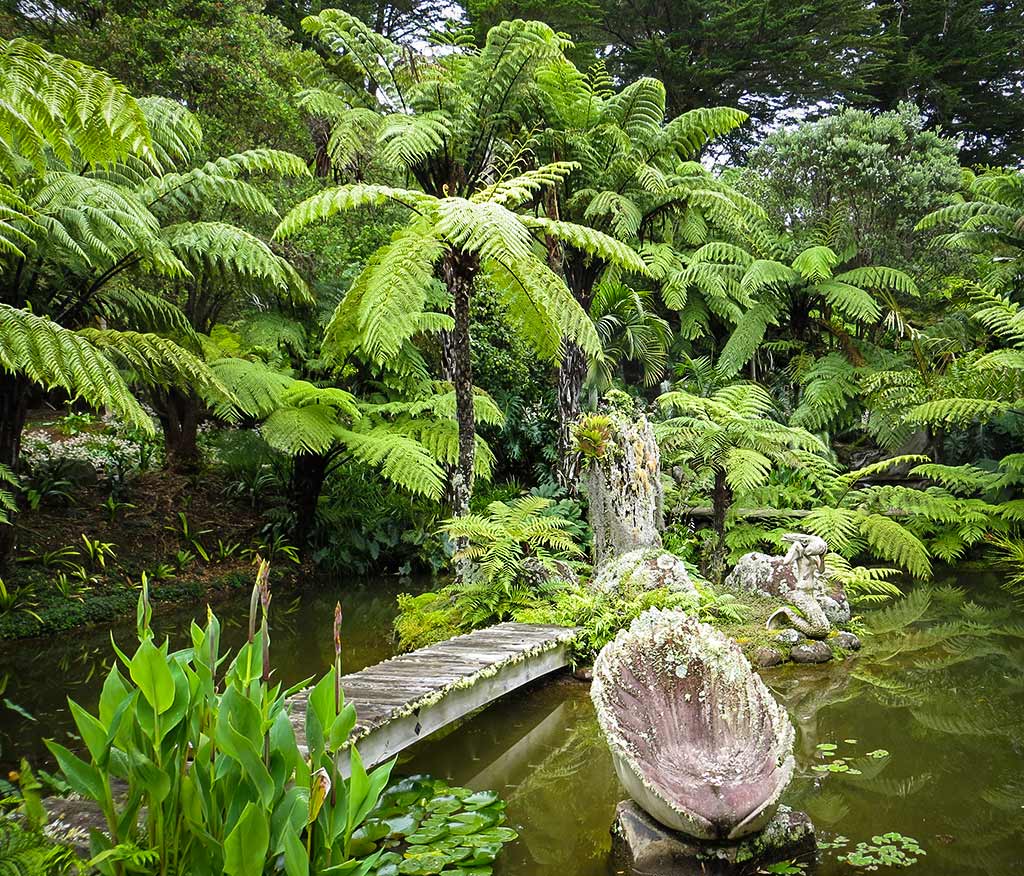
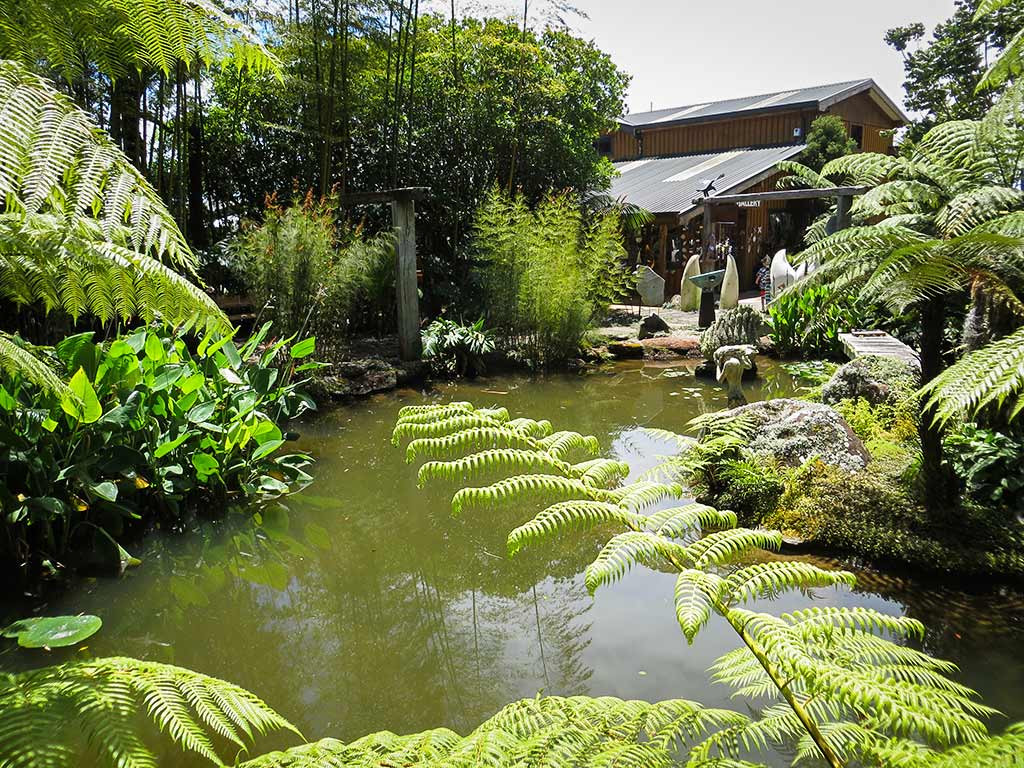
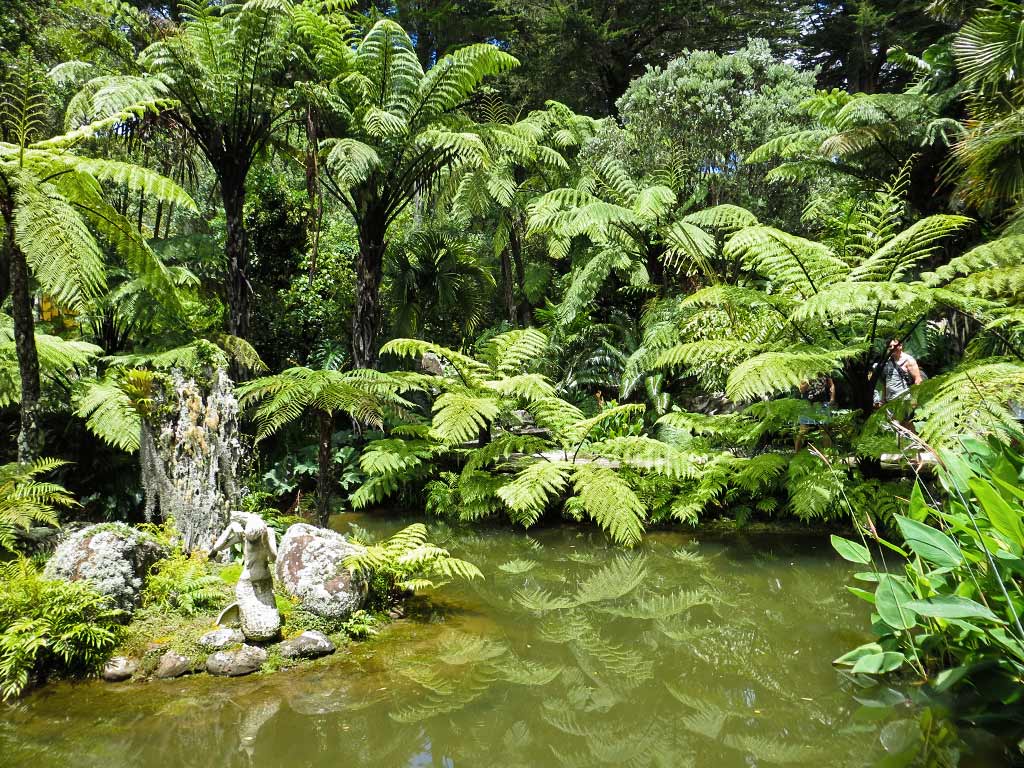
Once we arrived at the Gallery and Cafe at Helena Bay, the first noticeable feature was the beautiful subtropical sculpture garden surrounding a large pond, giving the place an Eden-like feeling. Two huge Great Pyrenees came out to greet us before we walked into the sky-lit wooden structure that housed the art gallery and cafe.
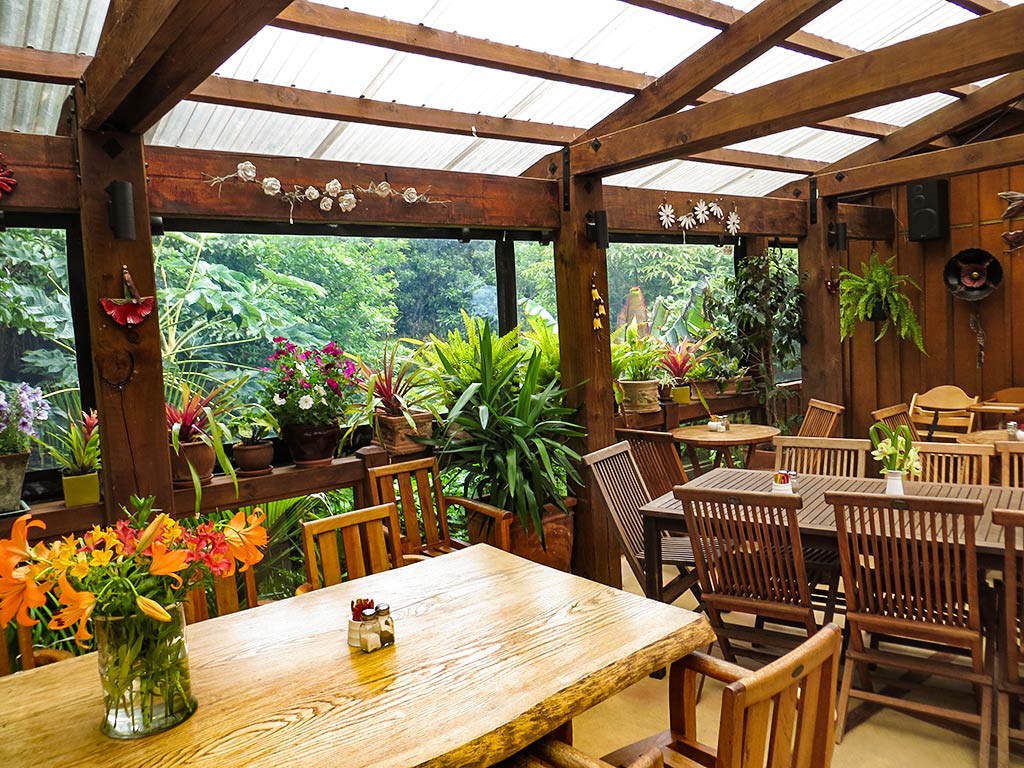
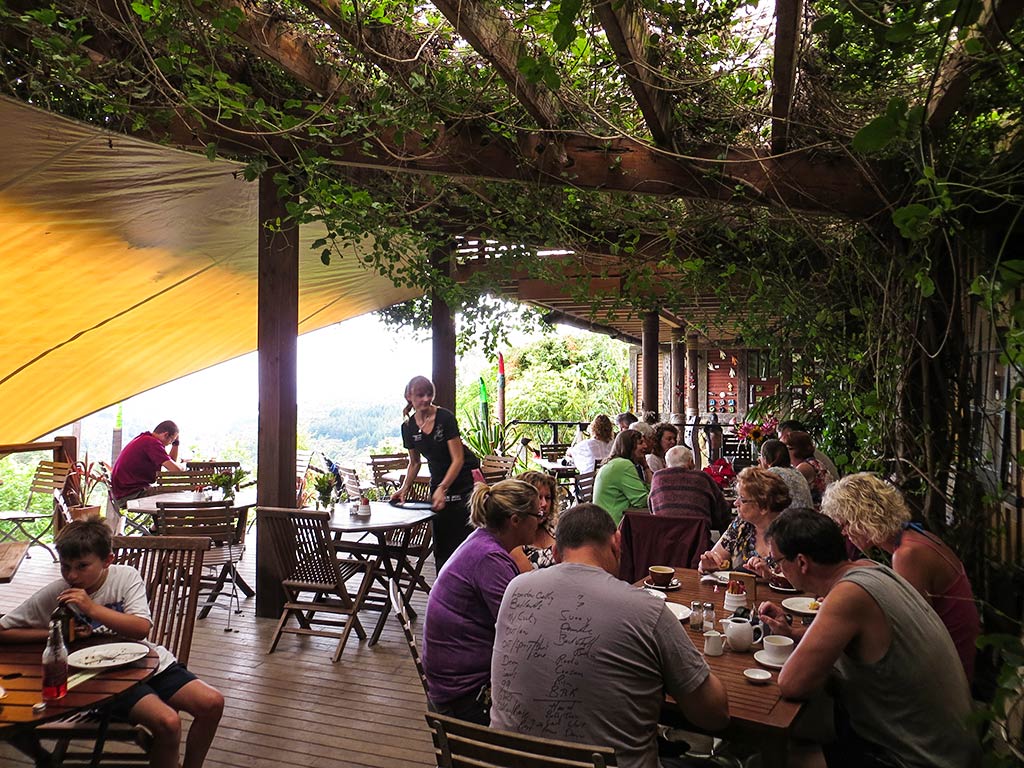
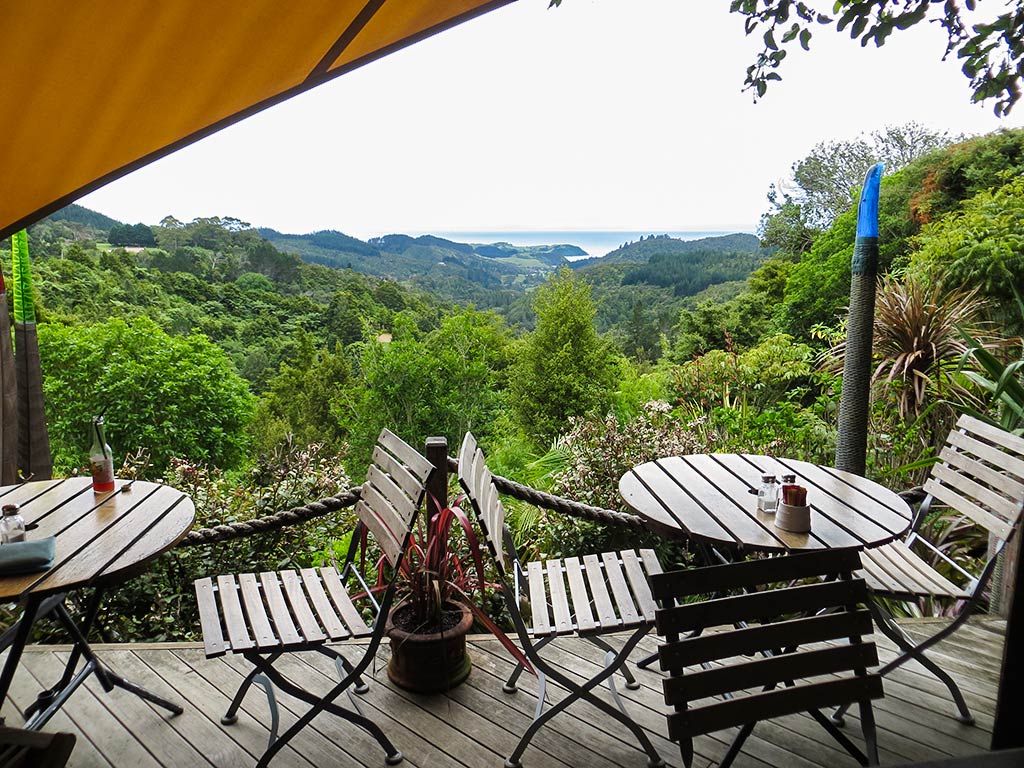
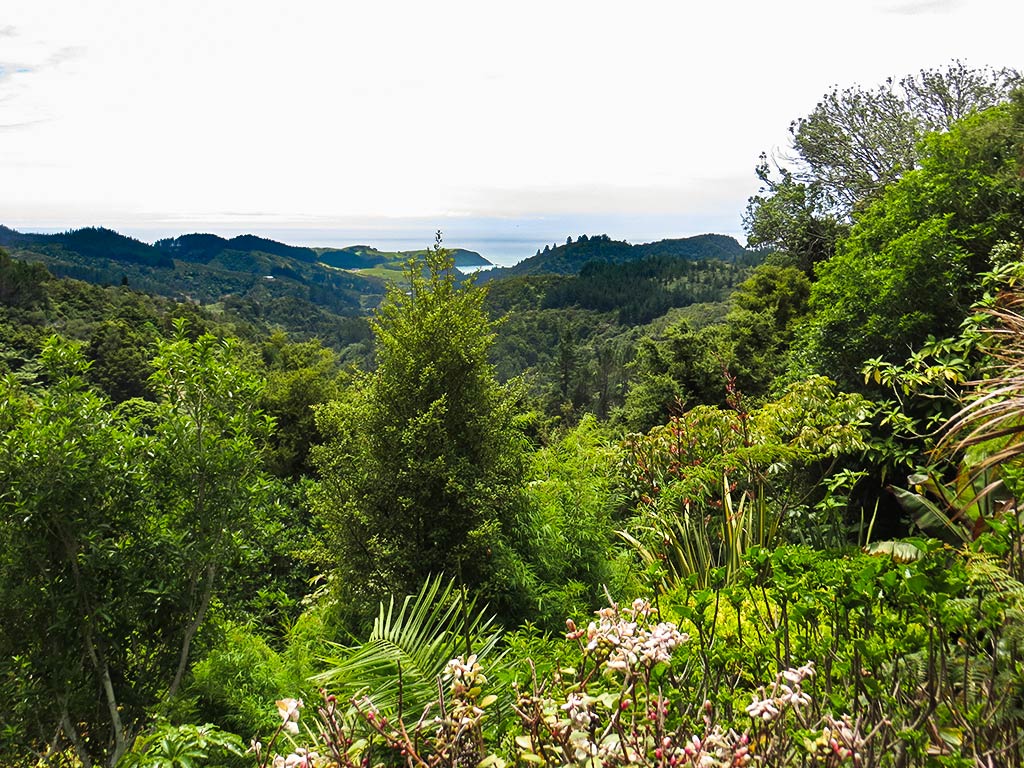
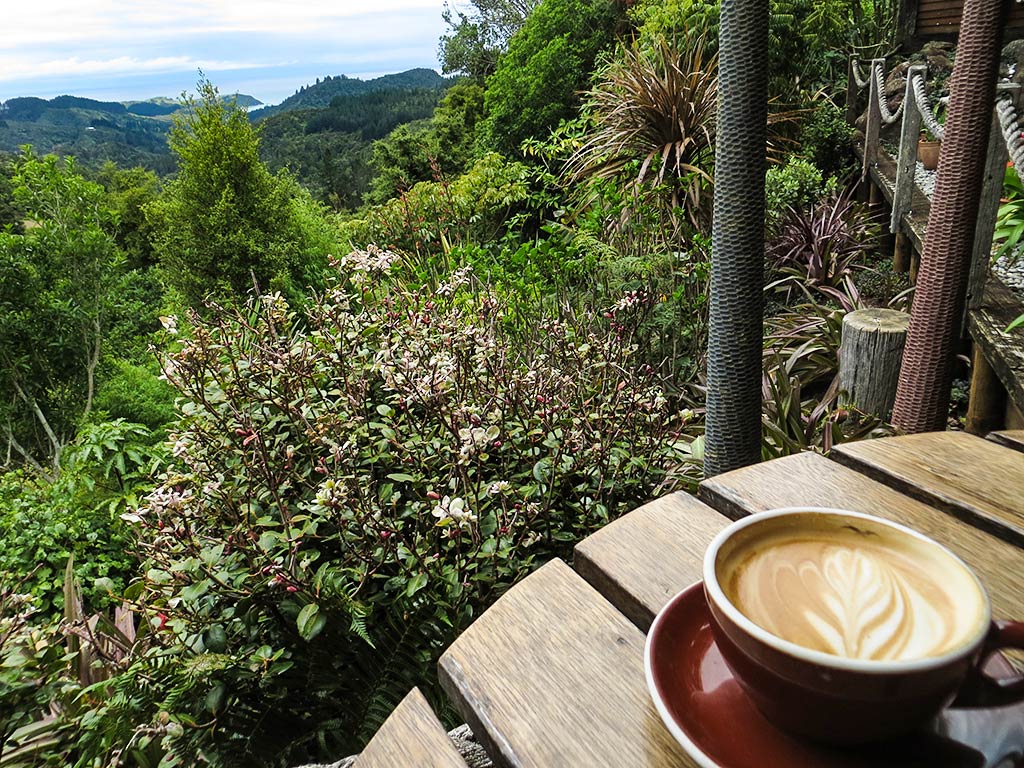
The gallery was full of lovely artwork, but it was the cafe that left us awestruck. The views of the hillsides and coast from its overhanging deck were amazing!
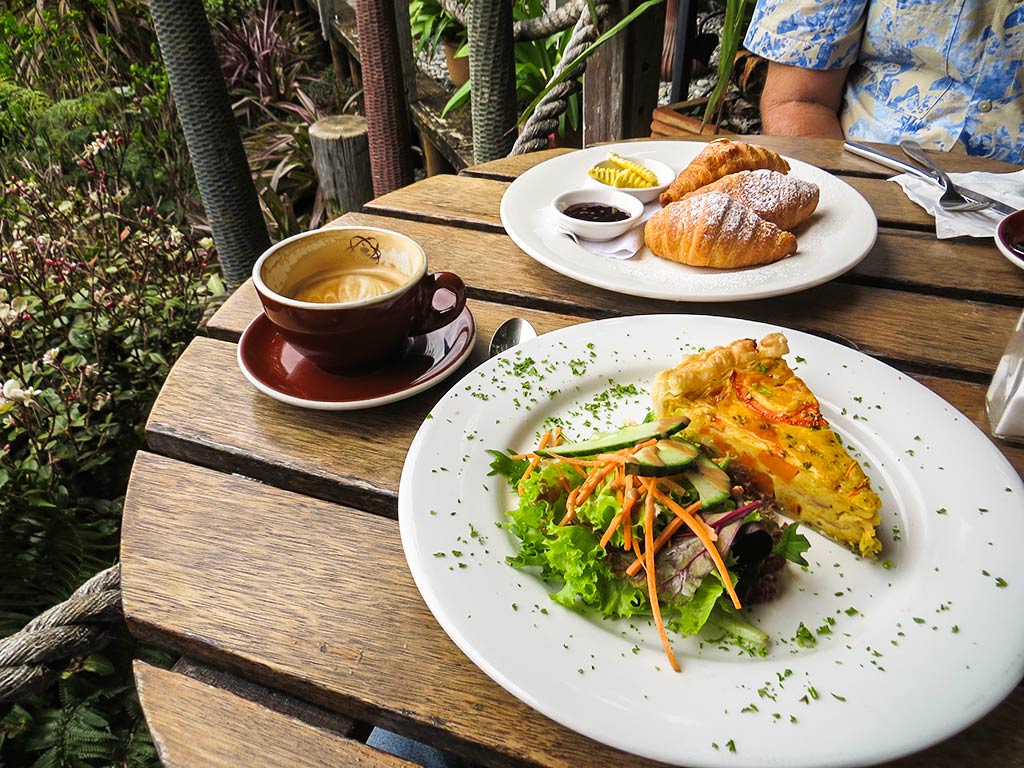
We snagged a table at the edge of the deck and enjoyed coffee drinks, very good quiche and croissants that would win the approval of any French native.
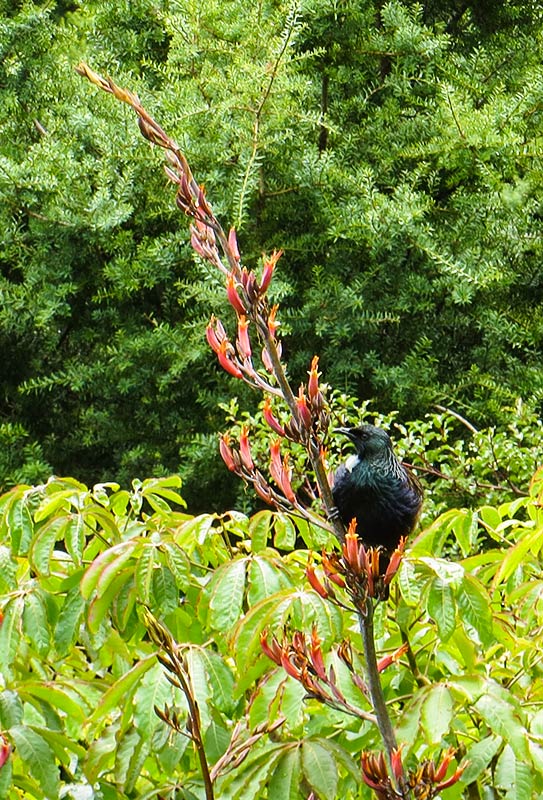
An iconic New Zealand image and the subject of many paintings is a tui bird clinging to a flowering branch of the harakeke bush. We had two tuis enjoying those flowers right next to us, like a painting come to life.
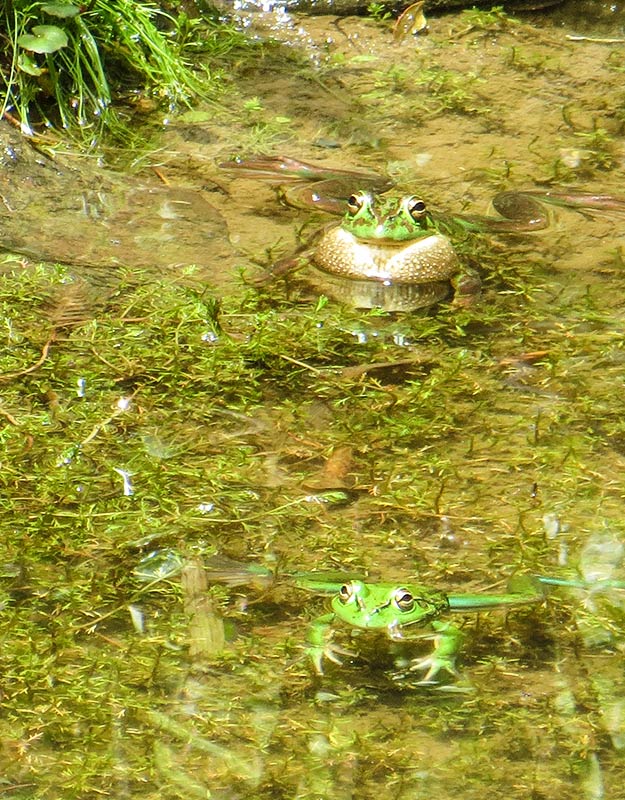
After lunch, we took the path through the garden filled with large tree ferns surrounding a pond, admiring the sculptures while being serenaded by many bellowing frogs. Well, I guess those males weren’t serenading us so much as the lovely lady frogs in the pond, but they were fun to listen to and watch. This was all enchanting and magical!
After our stroll, we returned to the the car and continued on to Whangarei for one of our visits there, but this Helena Bay outing had been good for us. We’d been feeling a little jaded this time around in Opua, somewhat immune to the beauty of the area after spending so much time there last season, but this experience totally revived us. It was terrific to feel awakened and awestruck once again at the beauty of Northland’s scenery, and a confirmation that it was time to change our home base and experience some new surroundings this season. –Cyndi
November 30 – December 9, 2013 (with added thoughts from November, 2019)
In this day and age of cruising, most boats spend more than one season in New Zealand. I believe one of the chief reasons for this is that the average cruiser has changed from younger, hard-core adventurers who had the “right stuff” but lacked time and money to older retirees who don’t have to return to work and would rather see more of a few places than bits and pieces of many. There’s too much of New Zealand to be covered in one season, and the same goes for Fiji. Then there’s Vanuatu, New Caledonia, and for many cruisers, a return trip to Tonga. To really cover this area of the world takes time, and most modern-day cruisers are willing spend at least two seasons trying to do just that.
Another reason the cruising fleet has slowed down is the situation with Somali pirates off the coast of Africa. The classic world cruising route used to entail a trip up the Red Sea into the Mediterranean, but that all changed around the turn of the century when Somali fishermen, defending their waters, discovered they could make a good living, even get rich, by kidnapping people on passing boats of all sizes and holding them for ransom. The ransom money enabled them to buy bigger boats that cover an area so large that there’s no way to get to the Red Sea without risking an encounter with these pirates.
The piracy danger continued into the 2010s; so cruising yachts have been faced with the prospect of going around the bottom of Africa and either skipping the Mediterranean or making their way back there via the Caribbean and an Atlantic crossing. A few boats might cruise up the west coast of Africa, but for most that’s not an appealing prospect as there are simply not enough Starbucks (kidding).
Thus, most cruisers are in no hurry to get to that difficult part of the world. Frankly, I think a lot of us are hoping that with time, the situation will be eradicated, and we remain perplexed at how long it’s taking. Why is the world putting up with these pirates? It’s true there haven’t been any incidents involving cruising yachts for a few years, but that’s because so few of them go to that area. (I will add, though, that several yachts managed to do the passage in 2018; so maybe things are finally changing.)
Meanwhile, like so many, we were beginning a second season in New Zealand. Rich and I planned to spend more time in Auckland and weren’t sure how long we wanted to stay in Opua. A common saying is that one cannot step in the same river twice, which is generally interpreted to mean you should appreciate the special times in your life as they happen because in trying to re-create them, you will likely end up disappointed.
In our experience, it is possible to step into the same river again and have a nearly identical experience, sometimes even better as we have more wisdom with which to appreciate it. On the other hand, the saying is sometimes true that it’s better not to return, to leave a past memory as it was and not mar it with a lesser one.
We generally know what not to repeat and what we should absolutely do again. Usually what not to try to repeat involves a great group of people coming together for whatever reasons and sharing an experience. Things that are safe to repeat are special travel and food experiences.
As an example, Rich and I will never return to Viani Bay, Fiji, because even though it’s one of our top recommendations for anyone cruising to Fiji, it’s now full of the ghosts of times past for us. On the other hand, I’ve been going to the Hitching Post restaurant in Casmalia, California, since accompanying my parents as child. That tradition involves spending the night at the Embassy Suites hotel in Lompoc then driving up to the Hitching Post for a steak dinner that’s second to none. Since the childhood trips I’ve managed to get there about every six years or so, and the experience has always been great. Rich and I just did this again last July (in 2019), and the experience was all the more special in that, between us, we’ve had amazing meals all over the world, yet dinner at the original Hitching Post still stands out as a peak experience. We will keep repeating that Lompoc and Hitching Post ritual whenever we go back home, and I don’t expect it will ever get old.
In the case of Opua that year, we weren’t sure what to think. Would we enjoy it a second time, or should we leave as quickly as possible and let that first special year be the memory we carry? We decided to go ahead and get a slip in Opua, give it some time, and see how we felt. On this note, we began our second season in New Zealand.
One of the interesting things about modern-day cruising across the Pacific is its similarity to high school. Every year a large number (in the hundreds) of boats cross the Pacific Ocean from North America and the Panama Canal, and by the time they arrive in New Zealand most of these cruisers have either met or are aware of each other. At this point it’s typical for cruisers to have a core group of good friends, a wider circle of more casual friends, agreeable acquaintances (generally the rest of the fleet), and unless they’re fairly saintly, a few people they’d rather avoid.
This season our core group of friends were all in Whangarei and Marsden, while the few boats we’d rather avoid all ended up in Opua. With many casual friends and agreeable acquaintances around, it wasn’t a big deal; yet I would call it an unfortunate circumstance overall, like a small dark spot during an otherwise nice time.
At first it felt great to be back in Opua, and we found we enjoyed our favorite things there even more because we anticipated them and knew how special they were. Our first night at the marina we had a pizza from the General Store. We’d grown addicted to those during our previous season in Opua; so it was a real treat to have one again. What better way to celebrate being back in Opua than to curl up with one of those pizzas and a bottle of local white wine and catch up on the TV show episodes we missed while underway.
During the following week it felt very special to watch the pohutukawa trees start to to bloom and admire the wildflowers as we drove to Kerikeri. We also relished eating the world’s best blueberry pancakes accompanied by wonderful coffee at the Kerikeri farmer’s market, purchasing a box of the unbelievably-good macadamia butter toffee from Makana Confections, and enjoying bowls of our favorite seafood chowder at the Marina Cafe. Other things on our favorites list included yummy chocolate-mint ice cream affogatos from Movenpick, the wonderfully Mediterranean-tasting food from the Aegean Pizzeria, long-anticipated and very special meals at Jerusalem Cafe and The Italians (both located in Kerikeri), and taking the car ferry to charming Russell for the best fish and chips in Northland.*
As much as we enjoyed repeating these experiences, we began to notice a pattern: our excitement always deflated quickly once we’d returned to our boat, kind of a crash after the high of the experience. We started taking more notice of the things we didn’t like, such as the coldness of the staff and members of the Opua Cruising Club. In fact I’d say if you ever want to see what it’s like when you’re dead, come here as they they love to ignore the cruisers unless the staff is giving you the stink eye as they take count of how many times you’ve been there.
We were also getting black fly bites, better this year than last as our immune systems were starting to tolerate them, but still an itchy annoyance. Then making a couple of visits to Whangarei to visit our friends (the Bright Angels, Dean on Local Talent, the Lisa Kays, and Aleris) made us feel more the presence of the few annoying boats and less like we belonged in Opua. At the end of this rather confusing week of ups and downs, we decided that while we were glad for the mostly-wonderful week we’d spent in Opua, it was time for us to seek out some new surroundings.
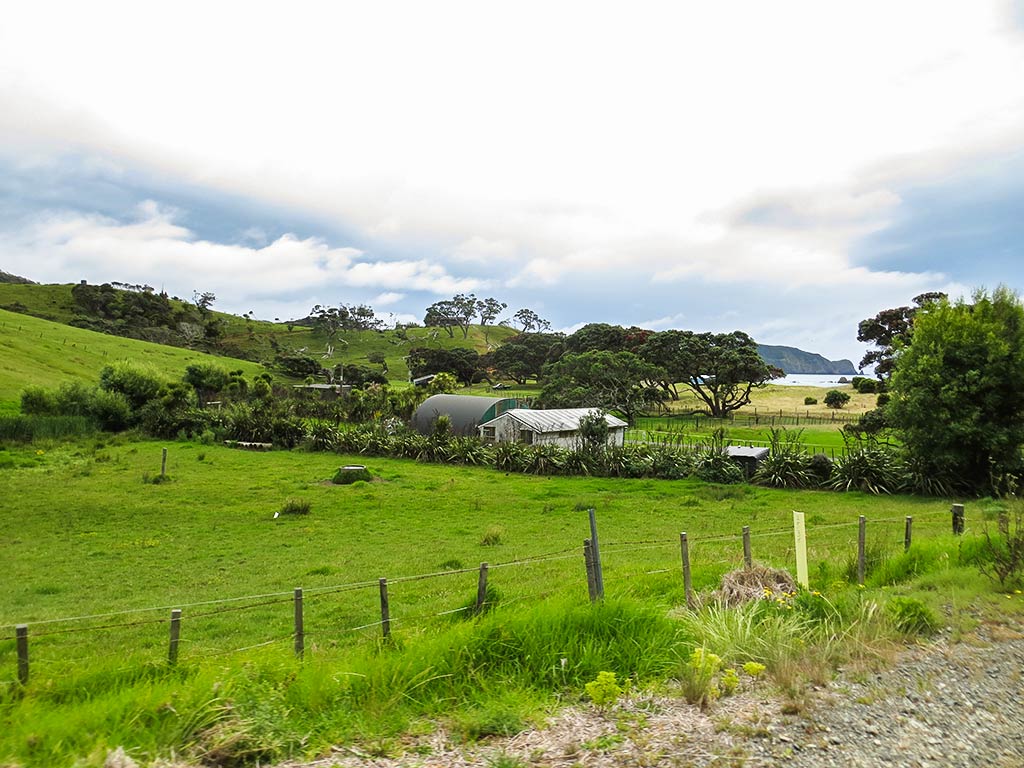
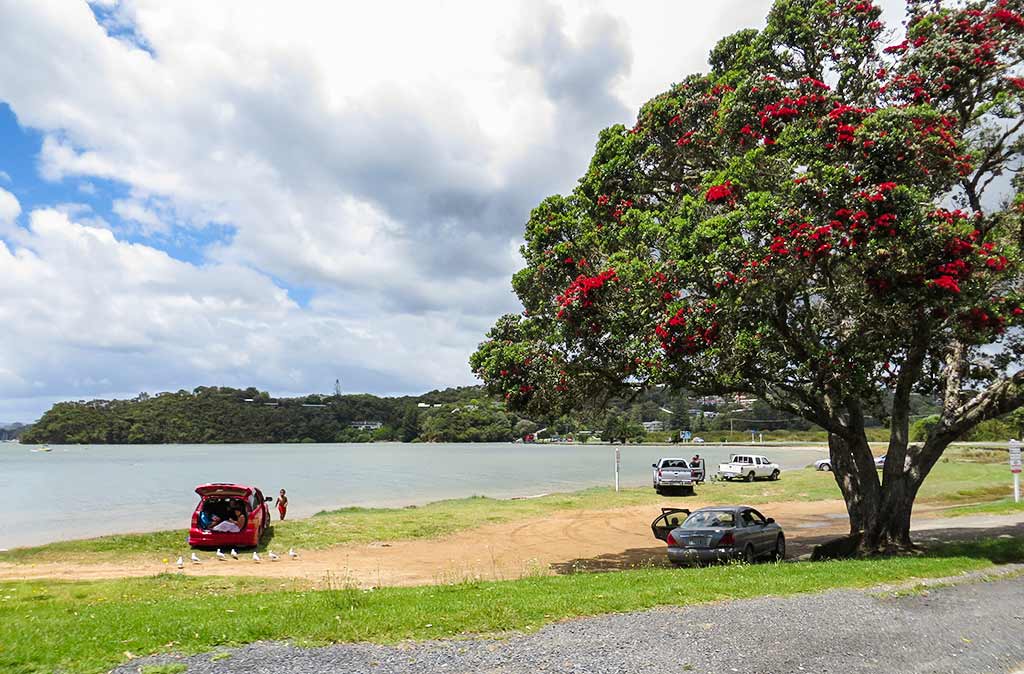
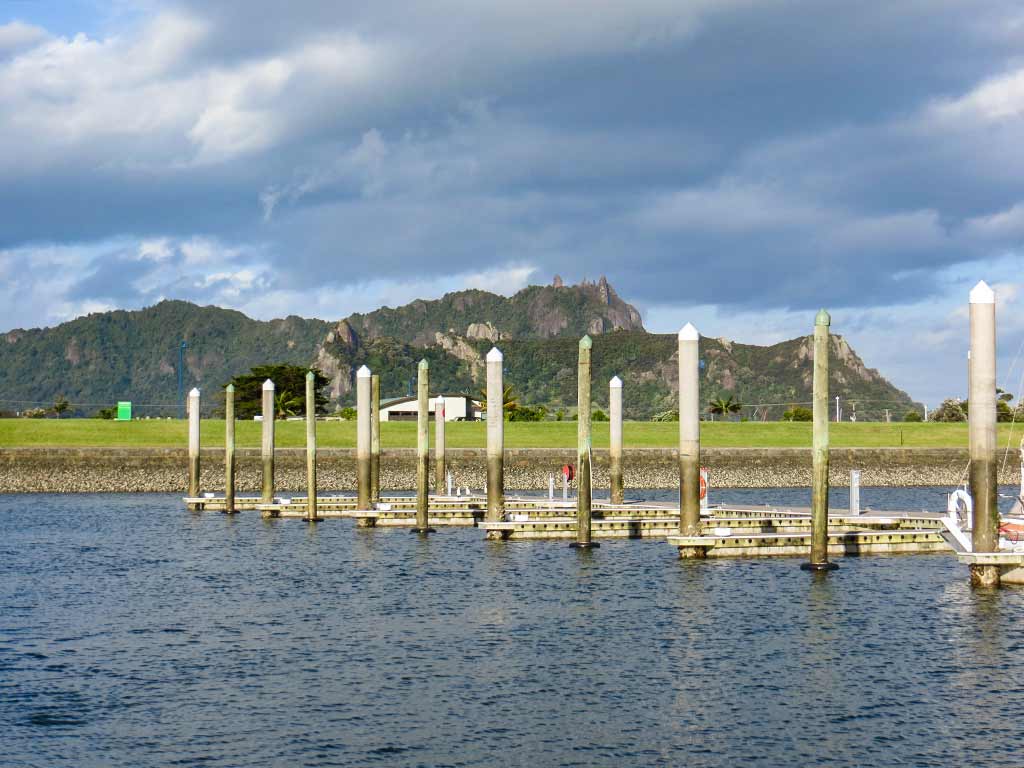
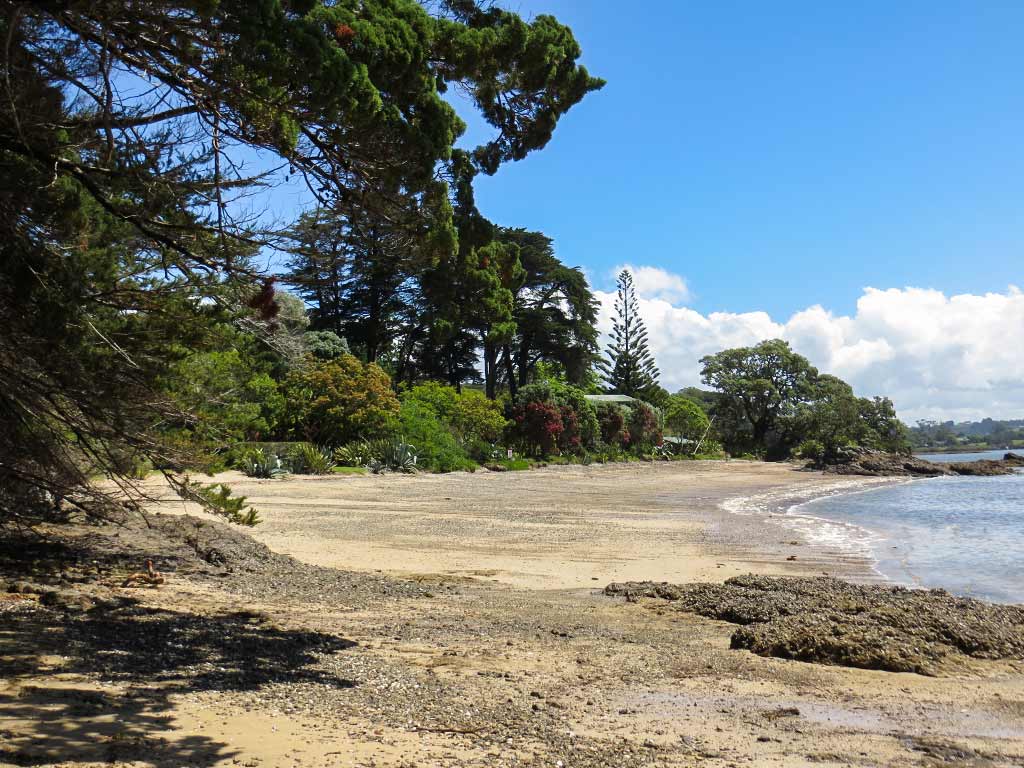
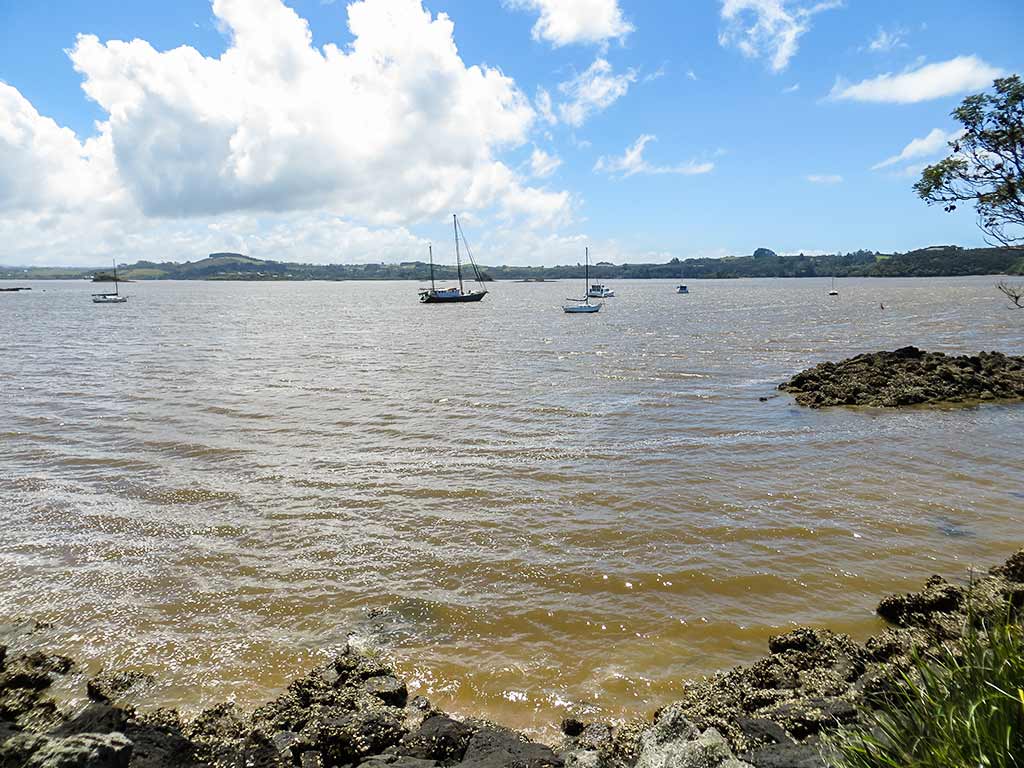
One thing I didn’t do much this week was take photos (I took so many the previous year I hardly needed any more), but below is a photo of a pohutukawa tree on a beach near Paihia, a couple of photos from a visit to Wharau Beach (which we hadn’t visited before) and on the top right a photo we took of Whangarei Heads from Marsden’s marina. We’re not big fans of that area, but I have to say this is a pretty nice view.
We also visited and took a tour of the world’s biggest beehive, which you can walk through, outside of Kerikeri. No photos were allowed, but we very much enjoyed the tour and learning about bees. –Cyndi
*Note: Sadly as of 2018, the blueberry pancakes at the farmer’s market, the Aegean Pizzeria, the Italians restaurant, and the fish and chips place in Russell are all gone. There was a rumor last year that they might open The Italians again in Paihia, but I haven’t seen any sign of that on Google.
Now that we’ve arrived in New Zealand and gotten settled after finishing our passage from Fiji, I am faced with an odd position of having to write Good-bye Opua posts (from 2012) when we have just arrived in Opua, which feels really stupid. After sitting with this, I’ve decided I’m just going to go ahead and do it anyway, picking up where I left off.
While I’m here in real-time, I’ll say this about the passage. The first 6 days were mostly wonderful. Things got uncomfortable on Day 7. Day 8 totally sucked. We will spend the next six months in New Zealand working to forget Day 8 so we will be naively optimistic enough to go out on passage again next May.
Now, back to getting those posts done.–Cyndi
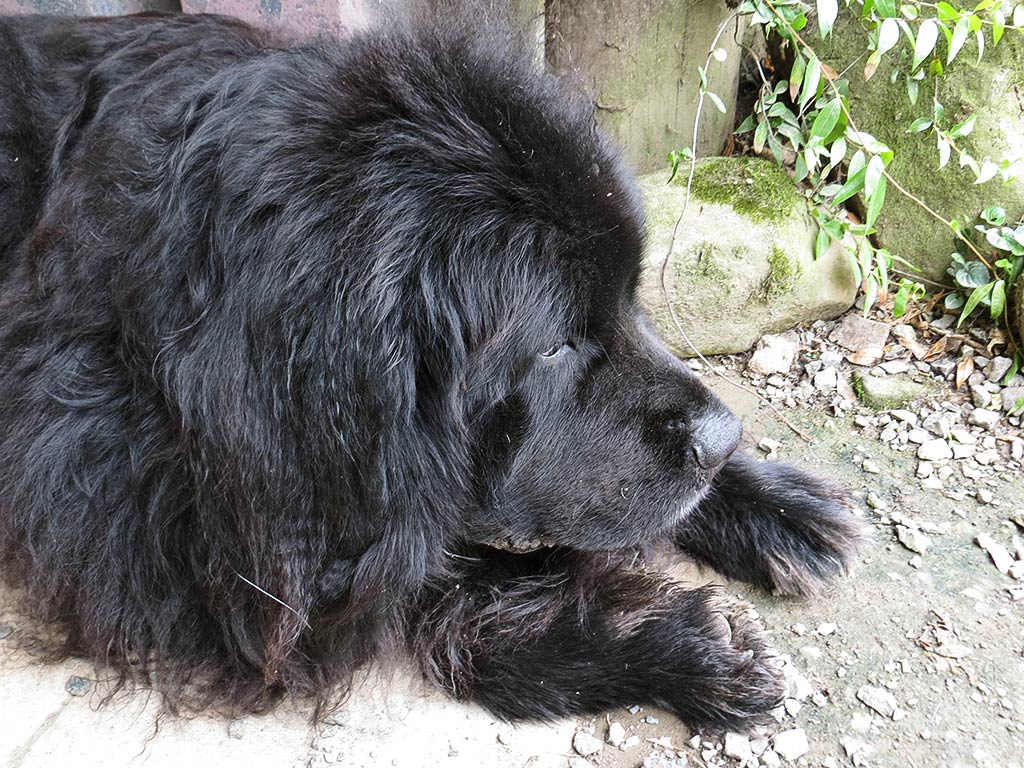
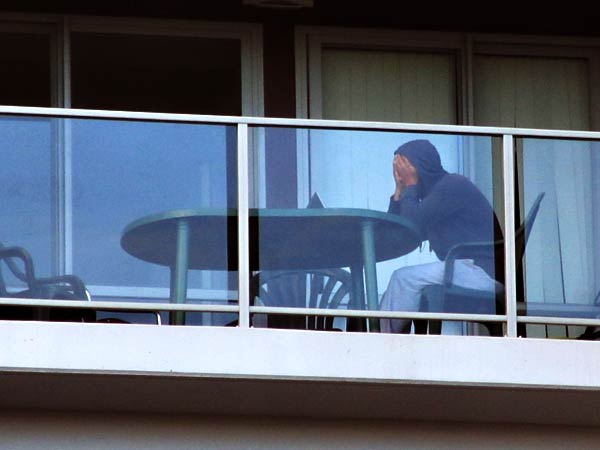
This guy looks how I feel about posting my Good-Bye Opua posts upon arriving in Opua.
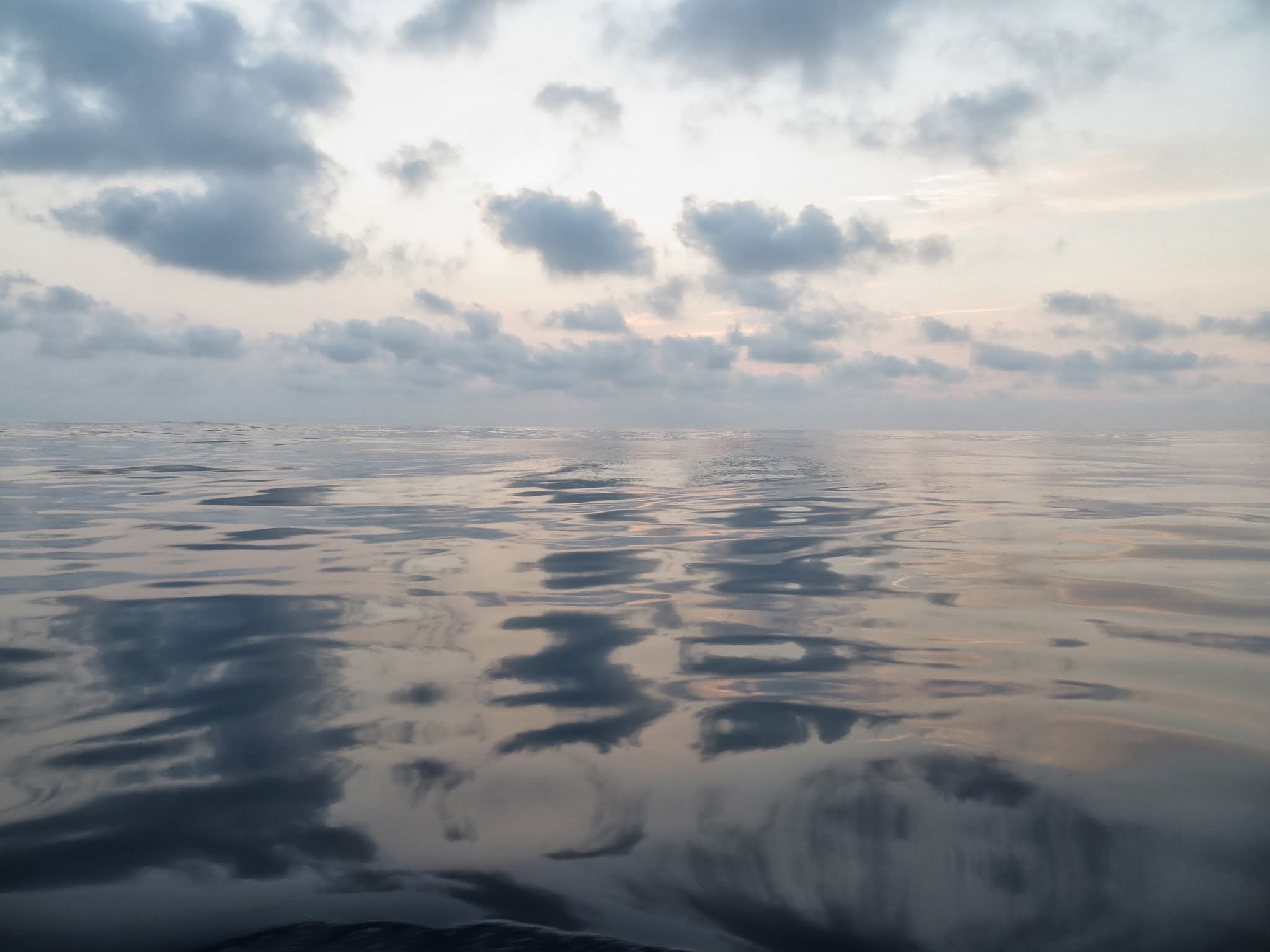
One of the disadvantages of leaving the tropics in windless weather is it can be rather hot, but with the accompanying calm seas, we can open the overhead hatches to let some air come through the boat as we motor along at 5 to 6 knots. It’s not ideal, but we prefer these conditions to getting knocked around by rough wind and sea conditions.
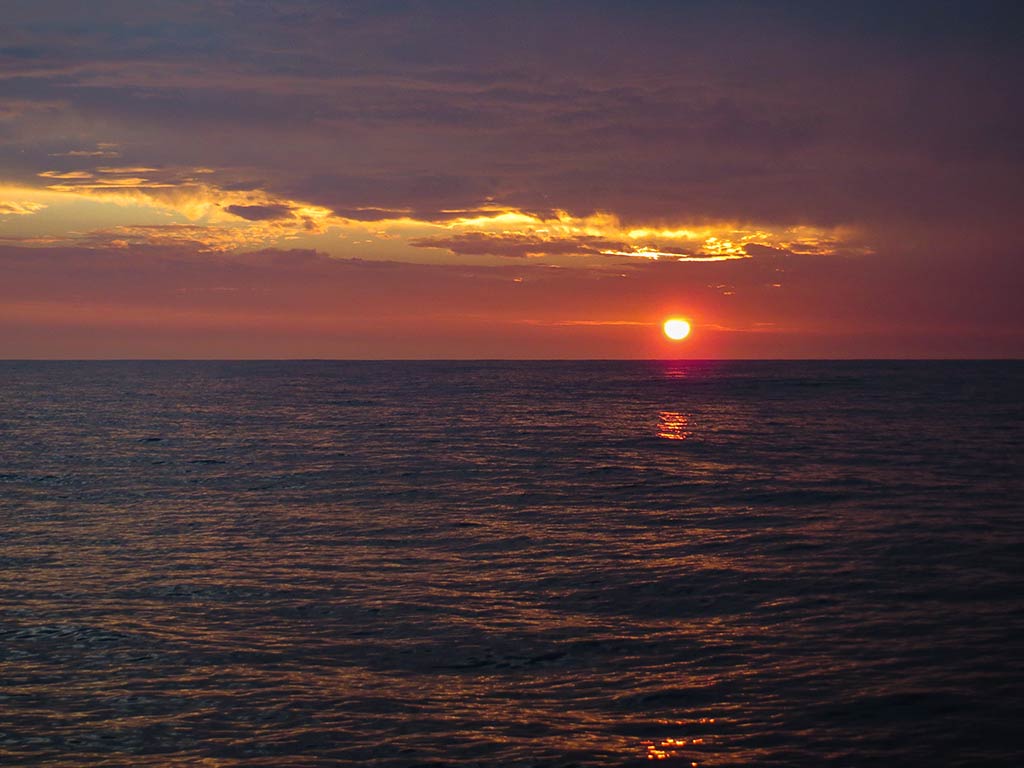
A peaceful sunset in calm conditions.
There was one bit of foreboding, and that was that the sea, usually glassy in these conditions, was washing-machine bumpy, a sign of squall activity about even if we couldn’t see it. I was on my night watch when I saw the first flashes of lightning. I went outside and could see bolts streaking across the clouds behind us and to the east. Thankfully it never got too close to us, but it did seem to follow us for awhile.
The lightning behind us was impressive.
The next day was once again hot and still. While there were some squalls during the night, the only light came from the moon and the bioluminescence in the water.
Motoring along in hot, still conditions.
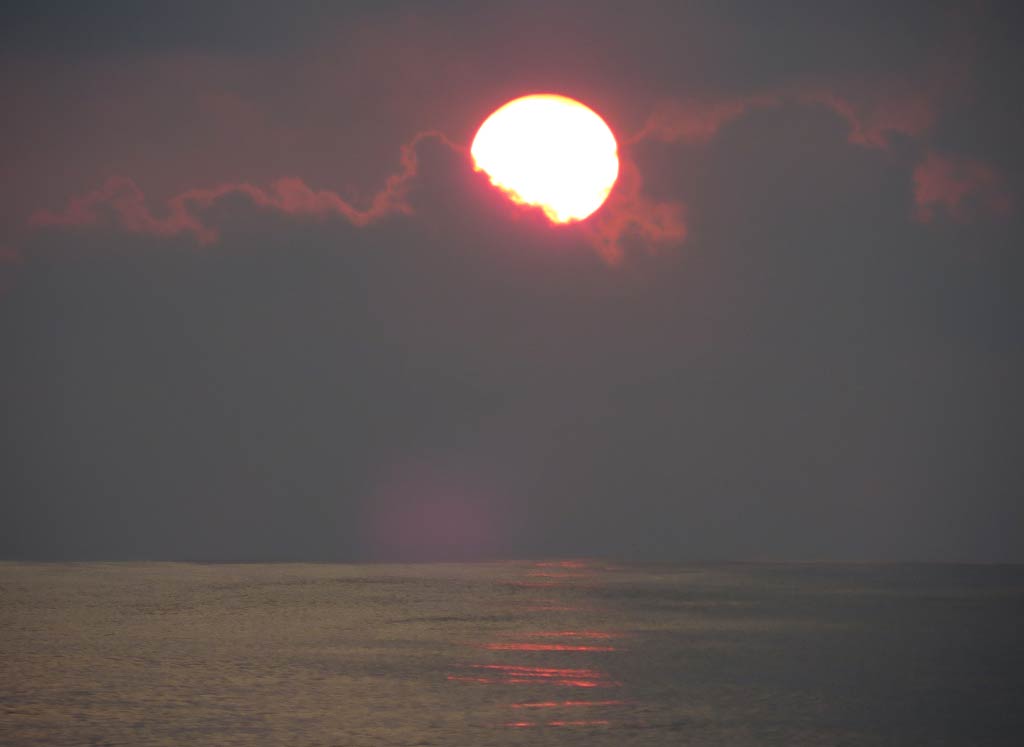
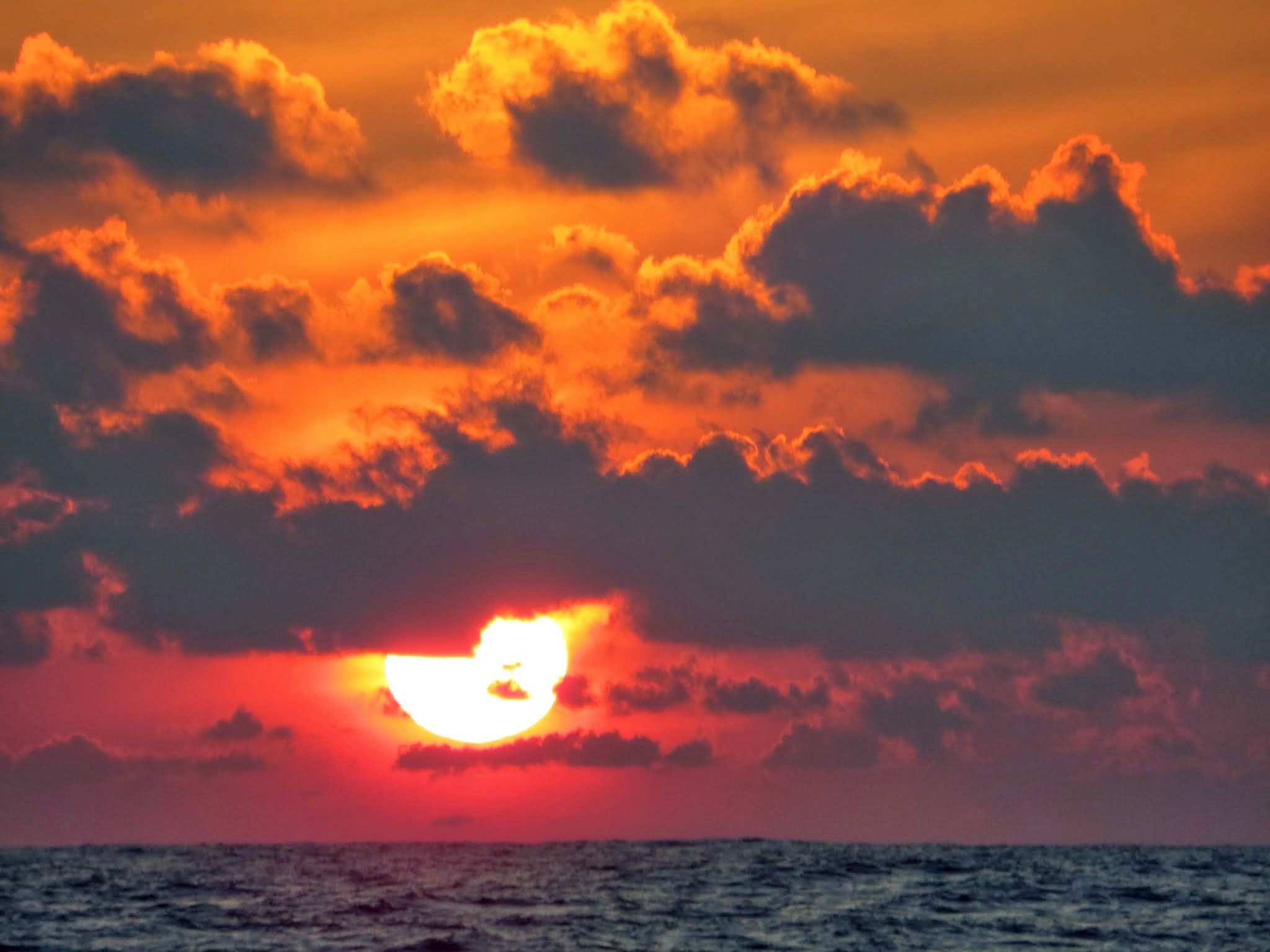
The third day, in spite of some cloud cover, the warm and windless weather continued. These hot still days brought us beautiful red sunrises and sunsets.
The morning sun appearing like a big red rubber ball.Red sky sunsets were the norm on this passage.
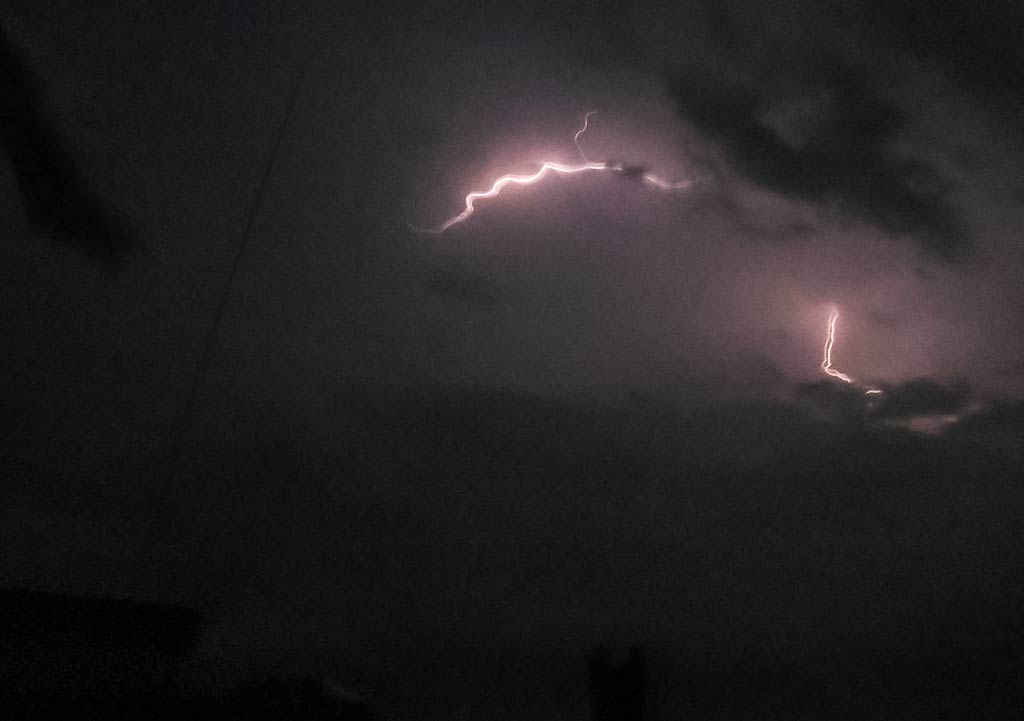
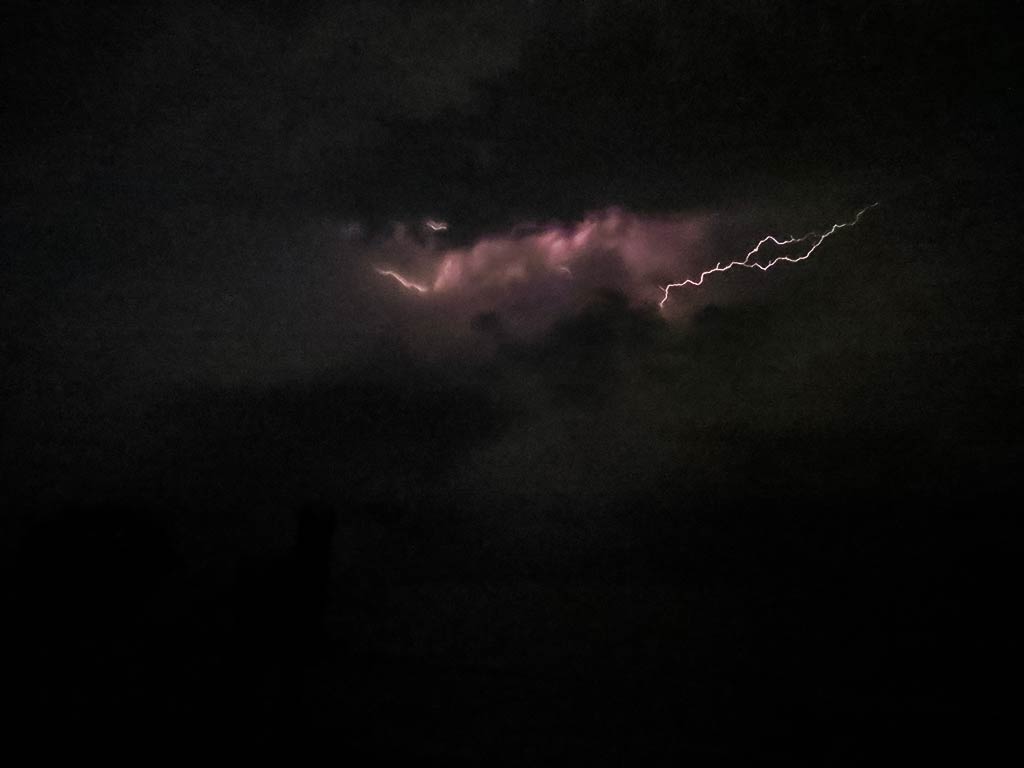
It wasn’t until the dead of night that we started to get some weather drama. The air and sea continued to be calm, but the sky started to light up with flashes of bright light – lightning, and it was pretty dramatic! This is when having radar really helped as we could locate the system and see it was about 20 miles to the east of us.
Lightening bolts streaked across the sky.
Even though the system was pretty far away, it was bad enough that we decided to put more distance between us and it; so we turned and headed west for awhile. Still, the lightning was so bright that lying in bed I could see near-constant flashing light through the curtains over our ports. Too nervous to sleep, I got up and joined Rich in the cockpit to watch the show. Bolts of light streaked across the sky, but the scariest were the bolts we could see hitting the water in the distance. We were glad we had turned because this system crossed the route we’d been on!
Lightning bolts frequently hit the water east of us.
As it was we weren’t hearing much thunder, but we did put our GPS, dongle and I Pad in the oven (which we hoped would serve as a Faraday cage). We took comfort in looking at the system on radar because it reassured us that it wasn’t as close as it looked (and it looked like it could practically be over us!).
We did eventually see another good-sized squall to the west, so we turned south again, threading the needle through both squalls. Finally the lightning became more distant, and I was able to sleep in spite of still seeing flashes of light through the ports. It was a relief there was no thunder with the flashing light, but it was also strangely creepy.
Silent lighting in the black sky.
The next morning brought more warm, light air and a sky made white by cloud cover. We crossed the Tropic of Cancer, and somehow I thought this would magically bring cooler weather, but it didn’t and we opened our hatches once again. The next day was pretty much the same. At least the lightning hadn’t come back.
Our fifth day brought a warm front, which was humid and muggy with a bit of rain. We were still motoring but now getting anxious for some wind as we couldn’t quite make it to New Zealand on our fuel alone. That night on my watch, I got my wish when the temperature suddenly dipped and the wind picked up from the northeast, just enough to sail. I put out the headsail, trimmed the sails, and turned off the engine. We were now were gliding through the water at 5-6 knots on a beam reach.
They say the happiest days in a sailor’s life are they day they buy the boat, and the day they sell it. But I would also include the moment when, after days of motoring, the wind comes up just enough to fill in the sails and propel the boat through still-calm water on a beam or broad reach. The sound of the droning engine is replaced by that of water swishing and gurgling as the boat glides through it, while nagging worries about fuel consumption abate. It’s truly a joyful feeling!
The next morning was still warm, yet gray and rainy. A trough went over us, bringing for a time unpleasant gusting winds and boisterous seas. But it passed, and once again we were moving along again in that magical combination of calm seas and a steady wind just behind the beam.
One of the things that can make a passage really nice, when the weather and seas are behaving, is the gift of free time. Part of the cruising dream generally involves having time to pursue one’s interests: the reading, writing, hobbies, or just sitting and thinking. It can be surprisingly hard to find time for this sort of thing during the travel-intensive (or even normal day-to-day living) times of cruising, but long passages can give us the feeling of having spare time, to spend as we wish, when the conditions are nice.
Unfortunately, nice conditions seldom last an entire passage. The spell gets broken when the wind picks up too much, or the sea gets rough. Sadly, things also take a downturn if the wind merely moves a few degrees and gets ahead of the beam. Today was that day. The conditions didn’t really change: the seas were a tad bumpy and the wind about 16 knots, but the wind went more south and ahead of the beam. It’s amazing how this changes everything. The boat heels more and the constant pull of the g-forces becomes so draining. Doing even the simplest task takes effort, and difficult tasks become near impossible. And naturally the mood onboard sours.
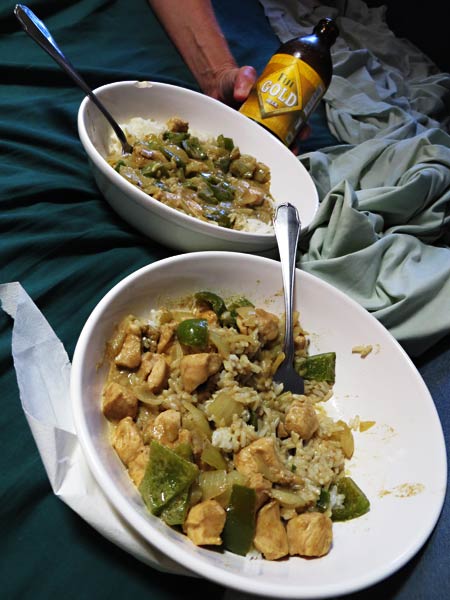
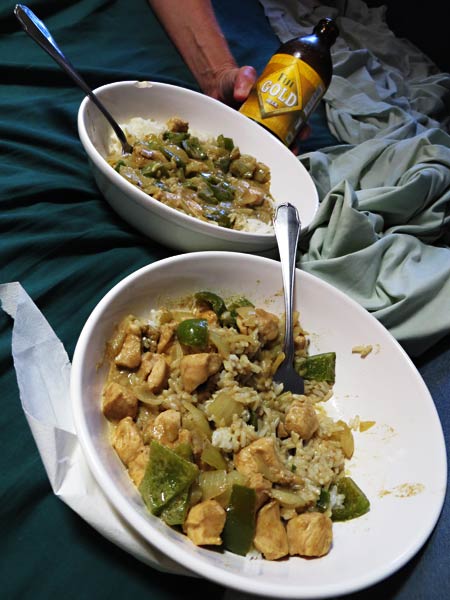
So far this had been one of our best passages, even when the engine was running constantly. But now everything was difficult and uncomfortable. Things got worse as we started to pass through squalls. The wind would gust as high as 25 knots, and the seas started knocking the boat around. I had plans for our Thanksgiving meal, but now it was too rough to make the steak dinner (no, we don’t do turkey on the boat) or even put champagne in the fridge. I did somehow manage to make green chicken curry so the special meal wasn’t a total loss.
Thanksgiving dinner of green chicken curry.
Our final day brought southwest winds at about 16 knots, which meant we were going to weather. Going into this sort of wind, while best avoided, usually isn’t the end of the world. But in this case the sea state was pretty rough, making the sort of conditions that can suck the will to live right out of a person. It’s the sort of conditions where everything seems exhausting and difficult, and it takes a conscious effort for us not to snipe at each other. Even though we knew it was our final day; we were too miserable to take much comfort in that.
Later we were telling some Kiwi friends that we’d had to beat into 16 knots to get to New Zealand, and hearing our tone they said, “Sixty knots? That’s terrible!” We said, “No, not 60, it was sixteen; and it was horrible!” There was a moment of silence where I’m sure our friends were thinking we must be a bit daft, but it goes to show that there are many factors which either make an ocean passage pleasant or unbearable. Swell height is an obvious factor, but we find what matters far more is the period between swells. Wind speed is another obvious factor, but what’s more important is where that wind is blowing in relation to the boat. We’ve been more comfortable in 40 knots than we were in the 16 knots we had as we approached New Zealand.
Finally the conditions died down as we neared the coast. It was chilly but not that cold. When we headed outside to keep watch as we approached the shore, we wore hats and foul weather gear but also had bare feet.
In a remarkably exact repeat of our arrival the previous year, we arrived on a dark, moonless night around 2am. This time, though, we could make out the shapes of islands and knew what we were seeing. In the Bay of Islands, the wind had died off completely, and we could see the lights of Kerikeri reflected in the clouds above it, and the lights of Paihia along the shore. We soon spotted the customs dock and were relieved to see there was plenty of room. We got tied up as easily as one can expect while exhausted, in the dead of night.
As we motored in, we both felt pretty beaten up by the day and rather numb emotionally, but we had started to feel happy to be back on spotting familiar things. After we docked and turned off the engine, I heard a Kiwi’s shrill cry in the hills, a distinctly New Zealand sound, and it felt good to be back.
After doing some cleanup and taking showers, it was time to celebrate with some champagne. Yes, we’re tired after arriving but also excited, and it’s nice to sit up and let the arrival-excitment adrenaline dissipate while enjoying a bottle of wine or champagne. We knew there would be more hurdles to clear in the morning: going through customs and immigration, arranging a slip in the marina, then actually moving to that slip during slack tide. But at least we’d made it here and the big passage was behind us. Happy day!
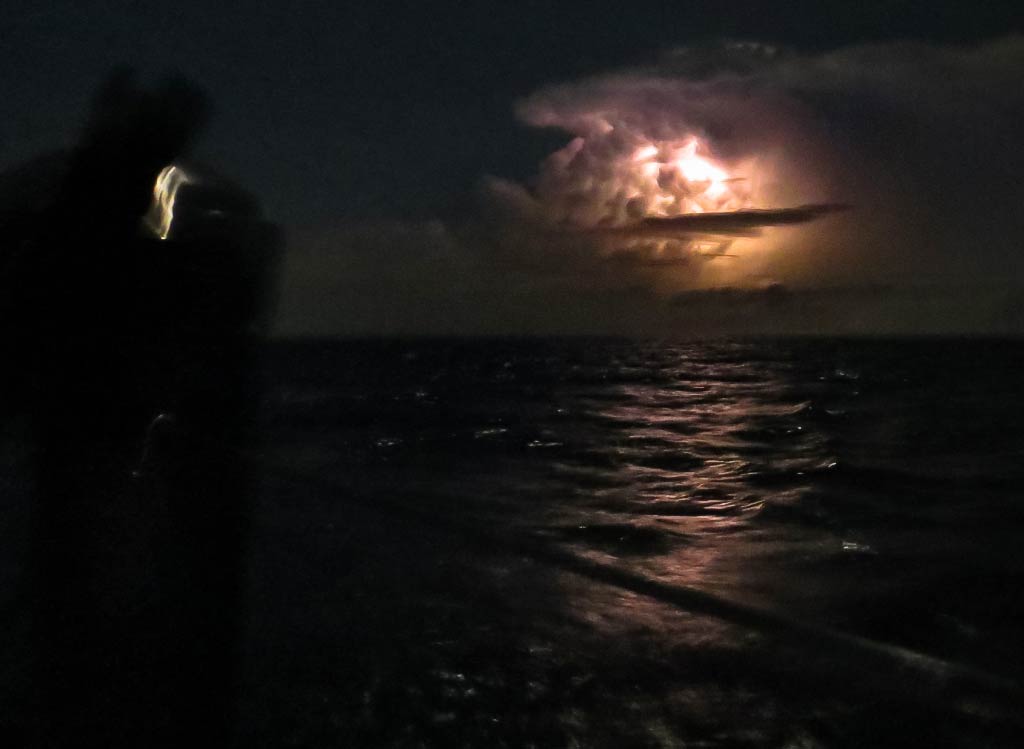
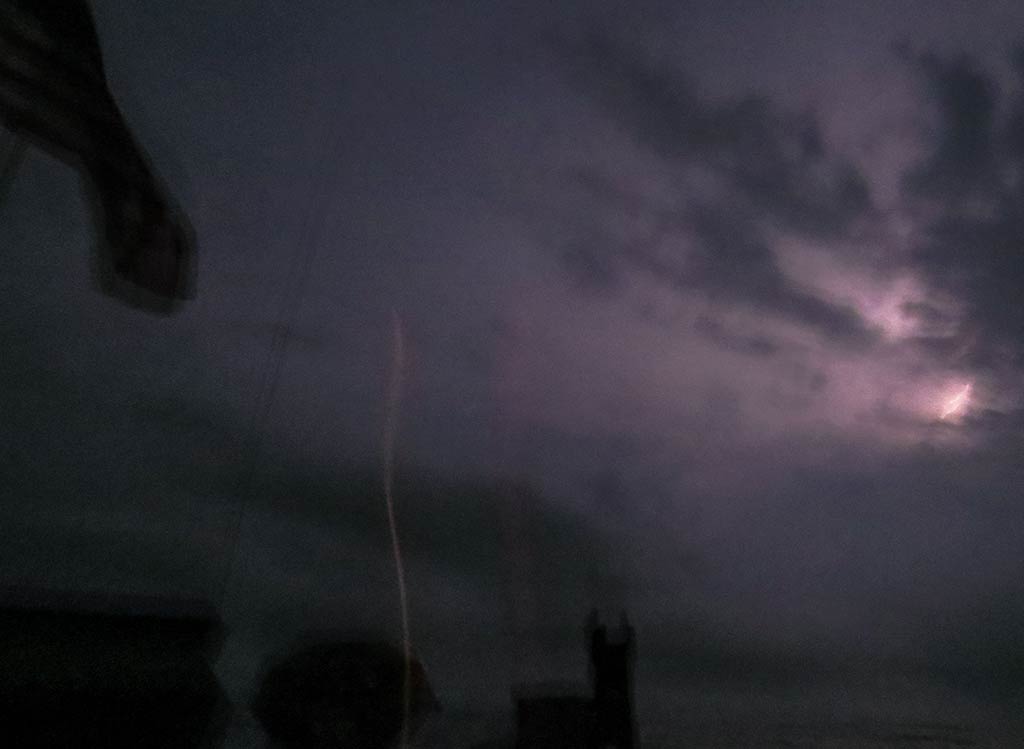
Final Note: In going through our photos after we arrived, we came across this one (below) showing a line of light in our cockpit. Rich thought it was a reflection from the antenna on our stern rail, but I’m not convinced as the light appears in front of our barbecue grill. Frankly I don’t know what it is, but it looks like it could be a streamer.*
This photo showing a possible streamer in our cockpit scares the heck out of me. That light in the background is from lightning, not the moon.
I assumed we were too far away from the system to get hit by lightning, but if that’s a streamer in the photo, we were apparently close enough, and thus very lucky this streamer did not connect with a leader. In any case, I find this photo very unnerving. –Cyndi
*Streamers are positively charged “branches” of electrical energy which reach up from objects on the ground in response to leaders generated in the clouds. When one of these streamers connects with a leader, it’s a lightning strike.
First, happy Thanksgiving to all of you in the U.S. of A. We celebrated the holiday at sea by getting bashed around on our last day of the passage from Fiji to New Zealand – not fun. Oh well, we’re here now. We’re tied up to the customs dock and ready for some sleep – after some champagne! We made it in 8-1/2 days, almost exactly. We traveled 1066 nautical miles to get here (1080 miles though the water – we lost 14 miles due to opposing current). Tired, tired, tired. Drink, drink, drink. Sleeeeeeep. -Rich
Our less-than-traditional Thanksgiving dinner… Green chicken curry served with a delicious, cold, Fiji Gold beer. Yum. Note the fancy bed, ah, I mean, table setting.