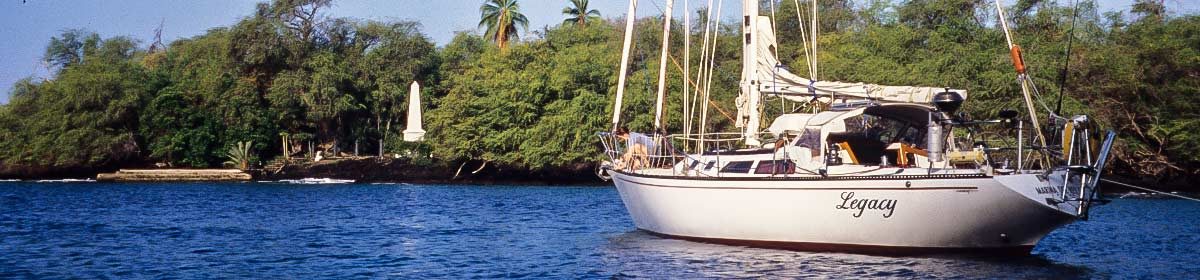
Leaving the Inner Queen Charlotte Sound (Marlborough Sounds, New Zealand)

March 31, 2016

Today we planned to head from the “Inner Queen Charlotte Sound,” to the “Outer Queen Charlotte Sound.” The Bay of Many Coves is the final bay in the Inner Queen Charlotte Sound.

It may be called The Bay of Many Coves, but it really doesn’t have any more coves than the other bays. There was one more bay here, though, that we were interested in: Cockle Cove. Julian had recommended it, and while we planned to head on, we wanted to at least go look at it and if it grabbed us, we’d stay the night.

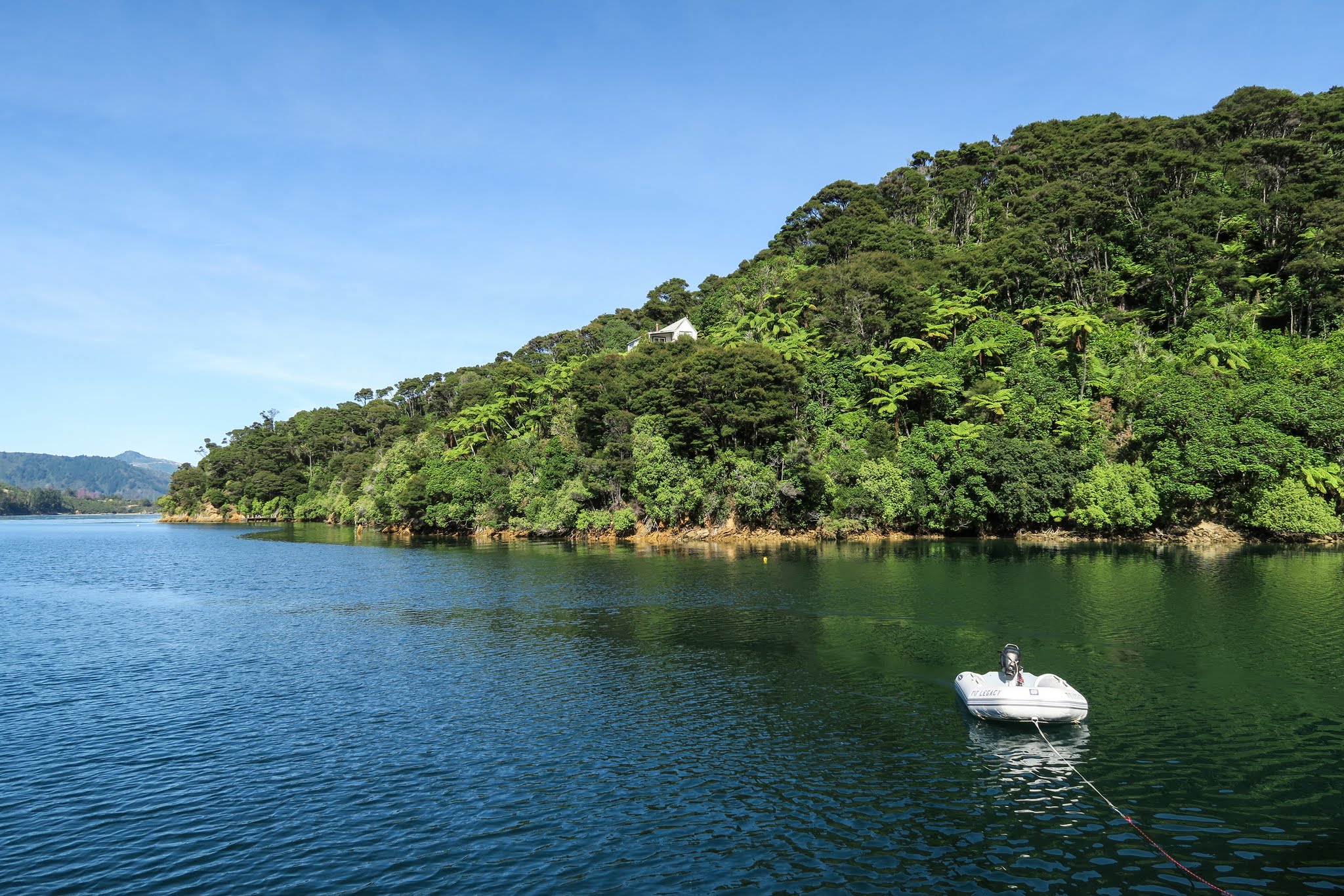
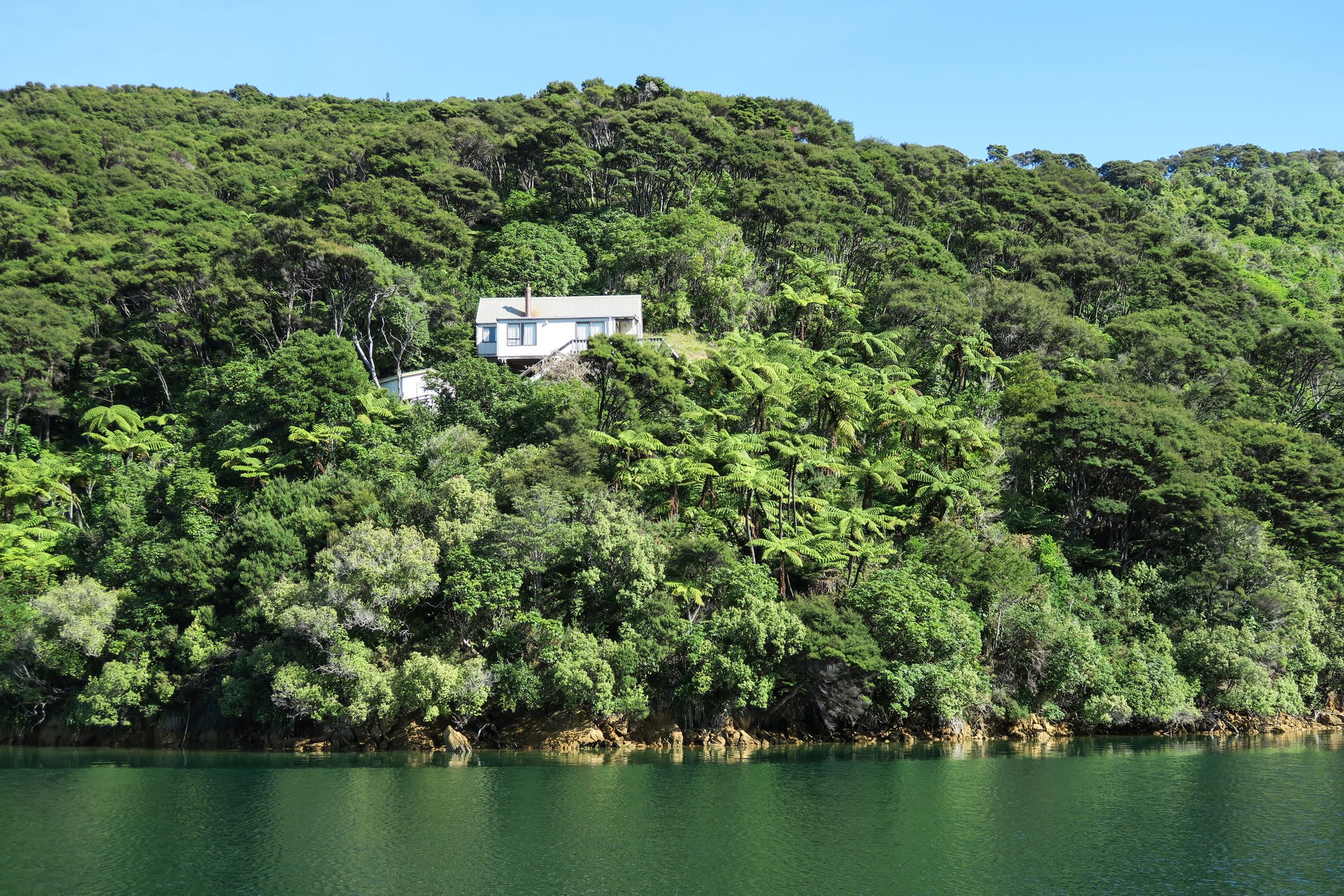
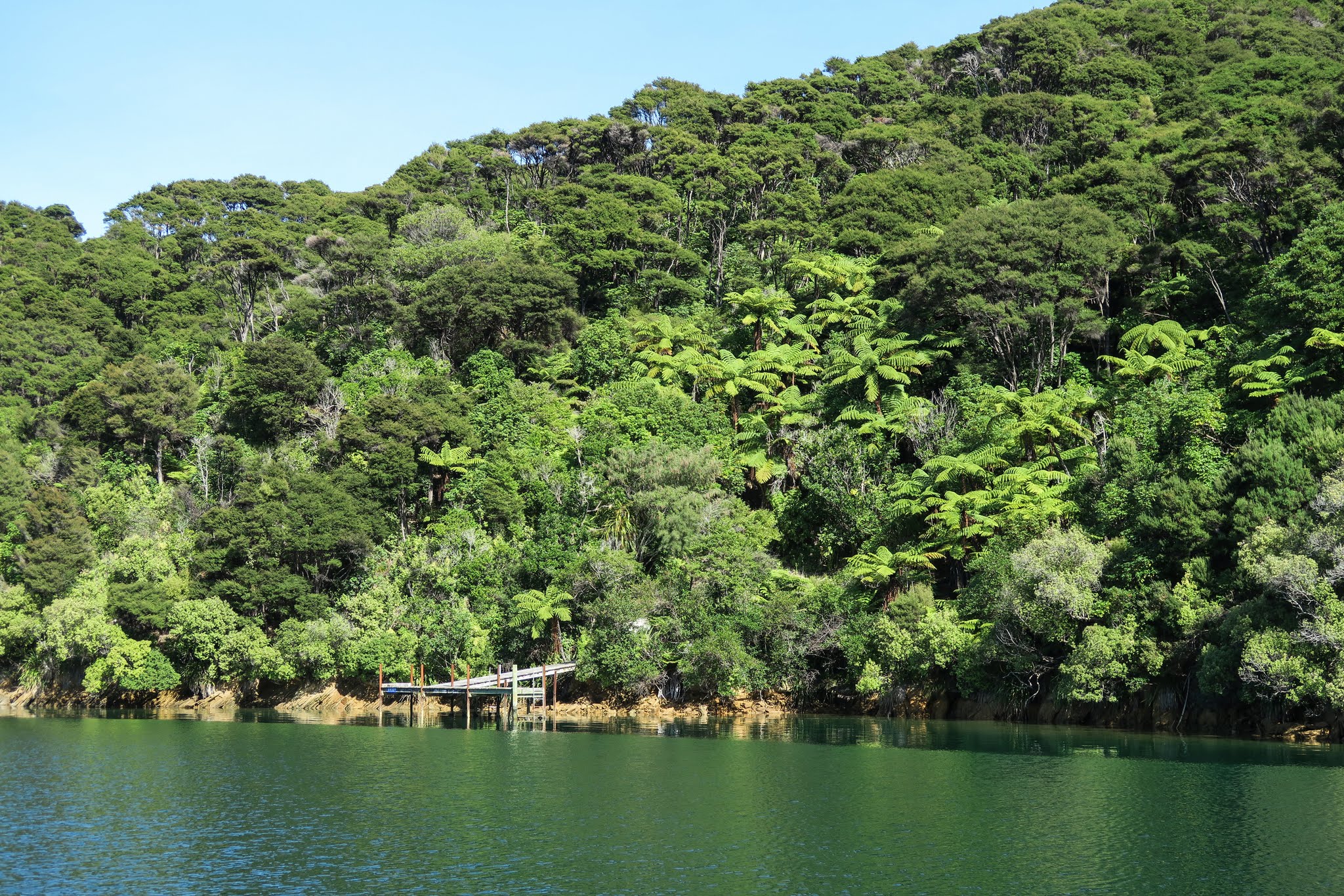
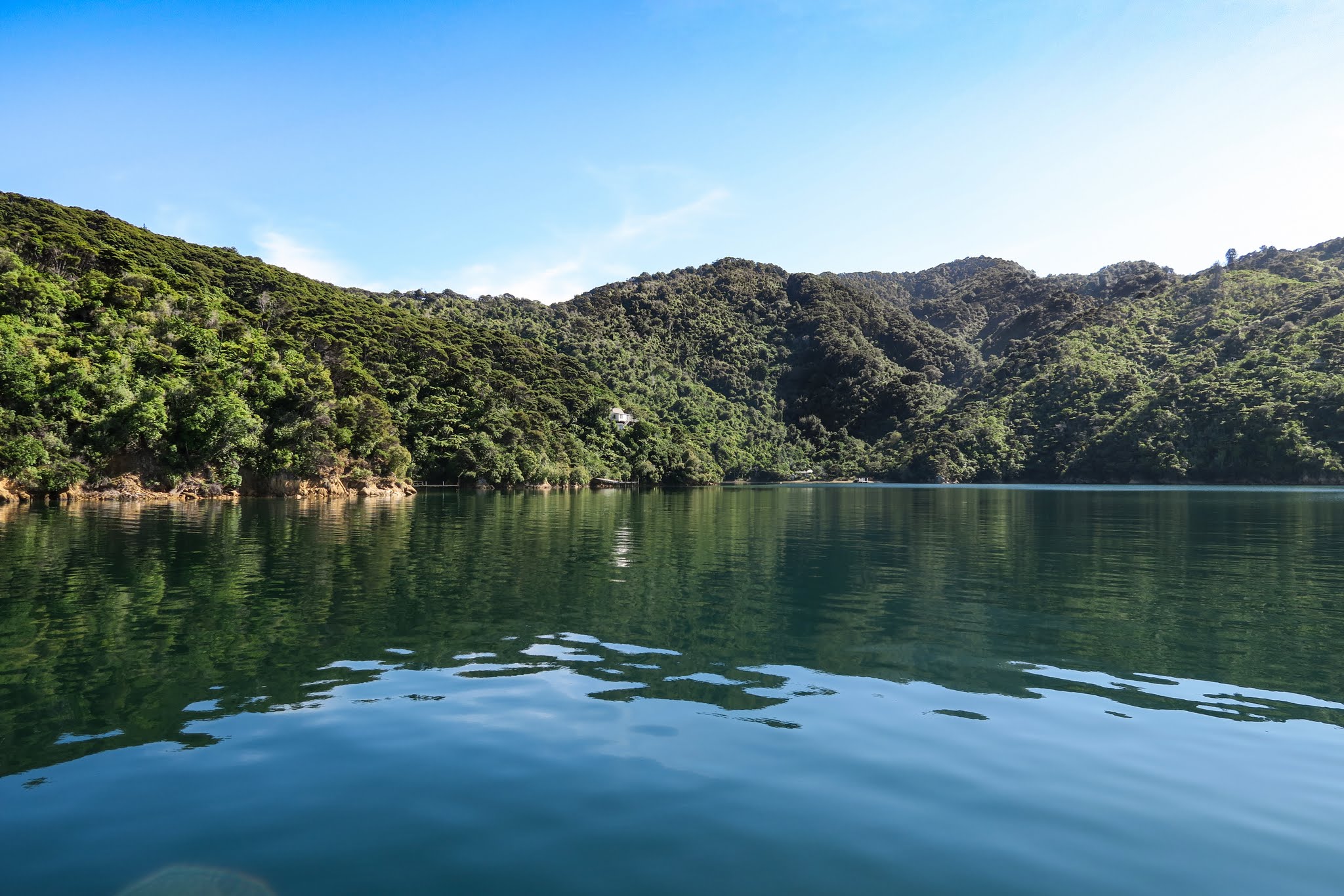
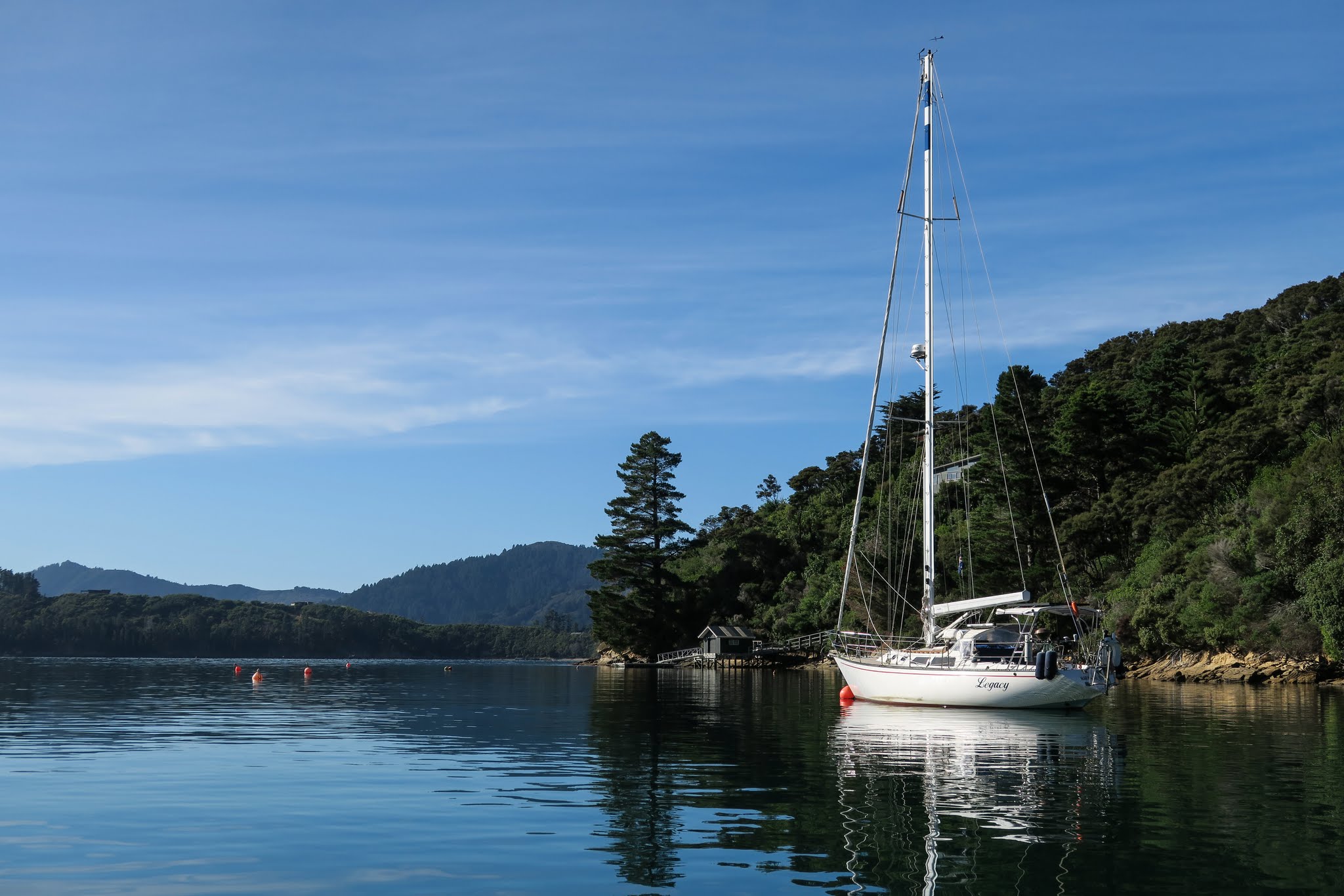
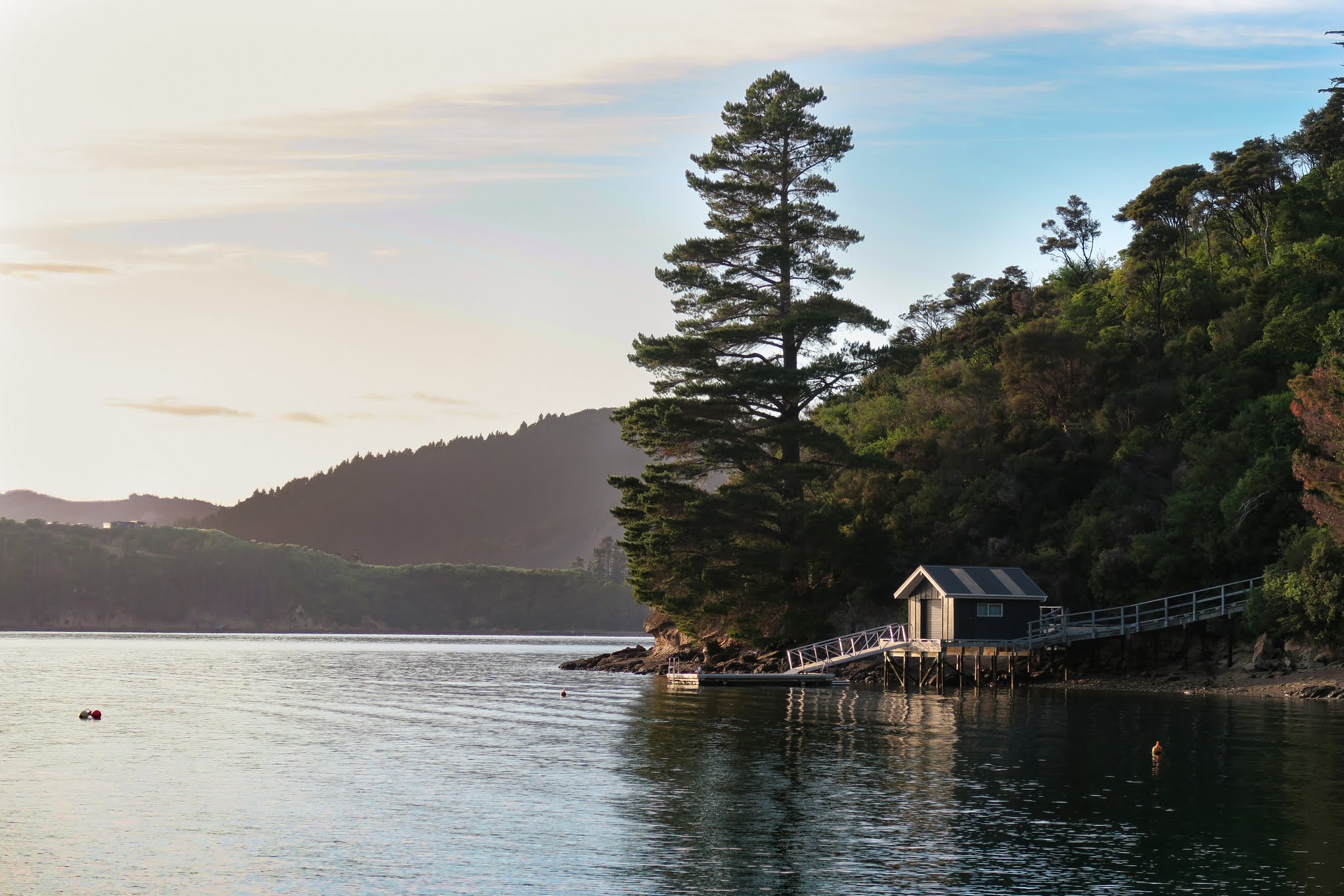
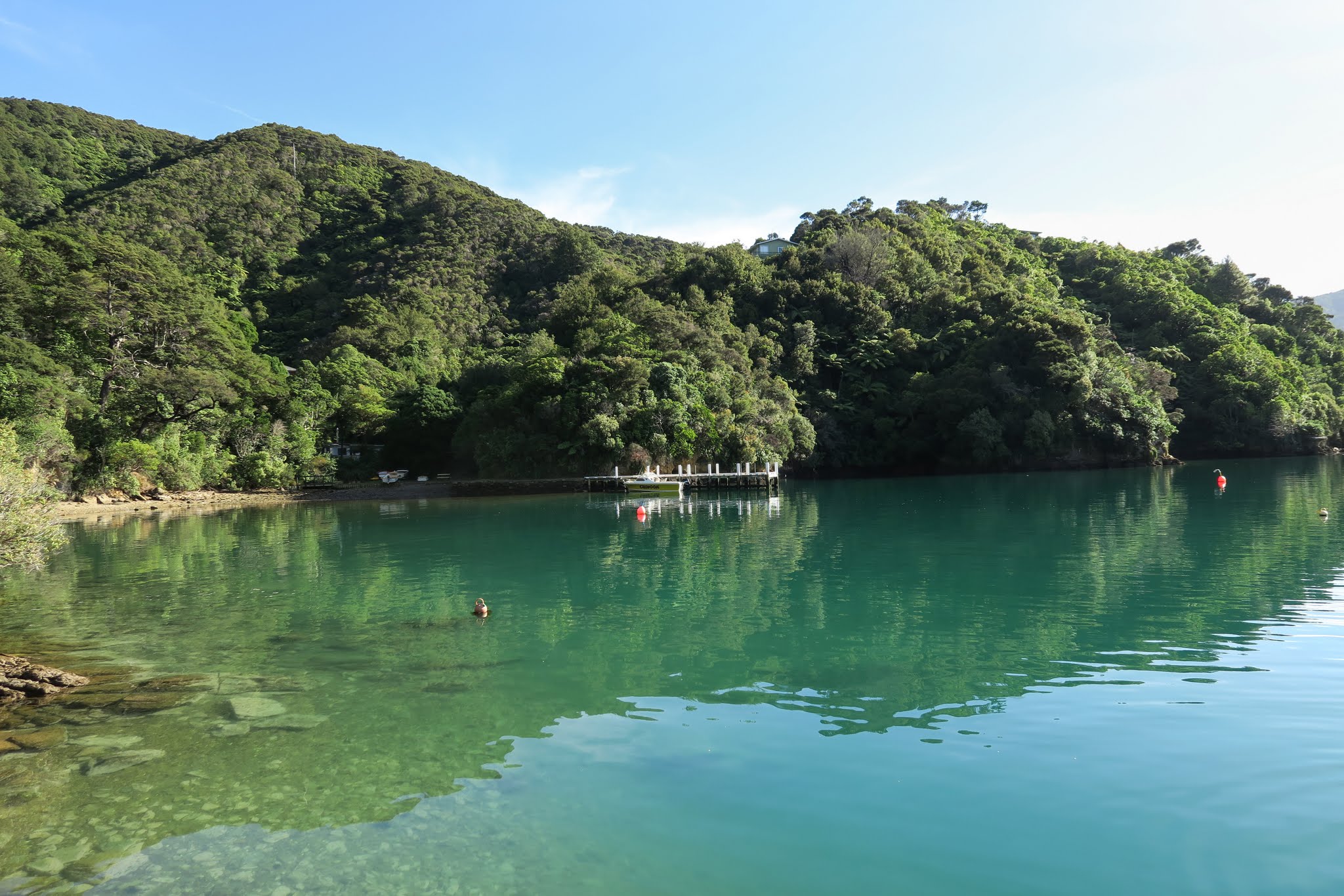
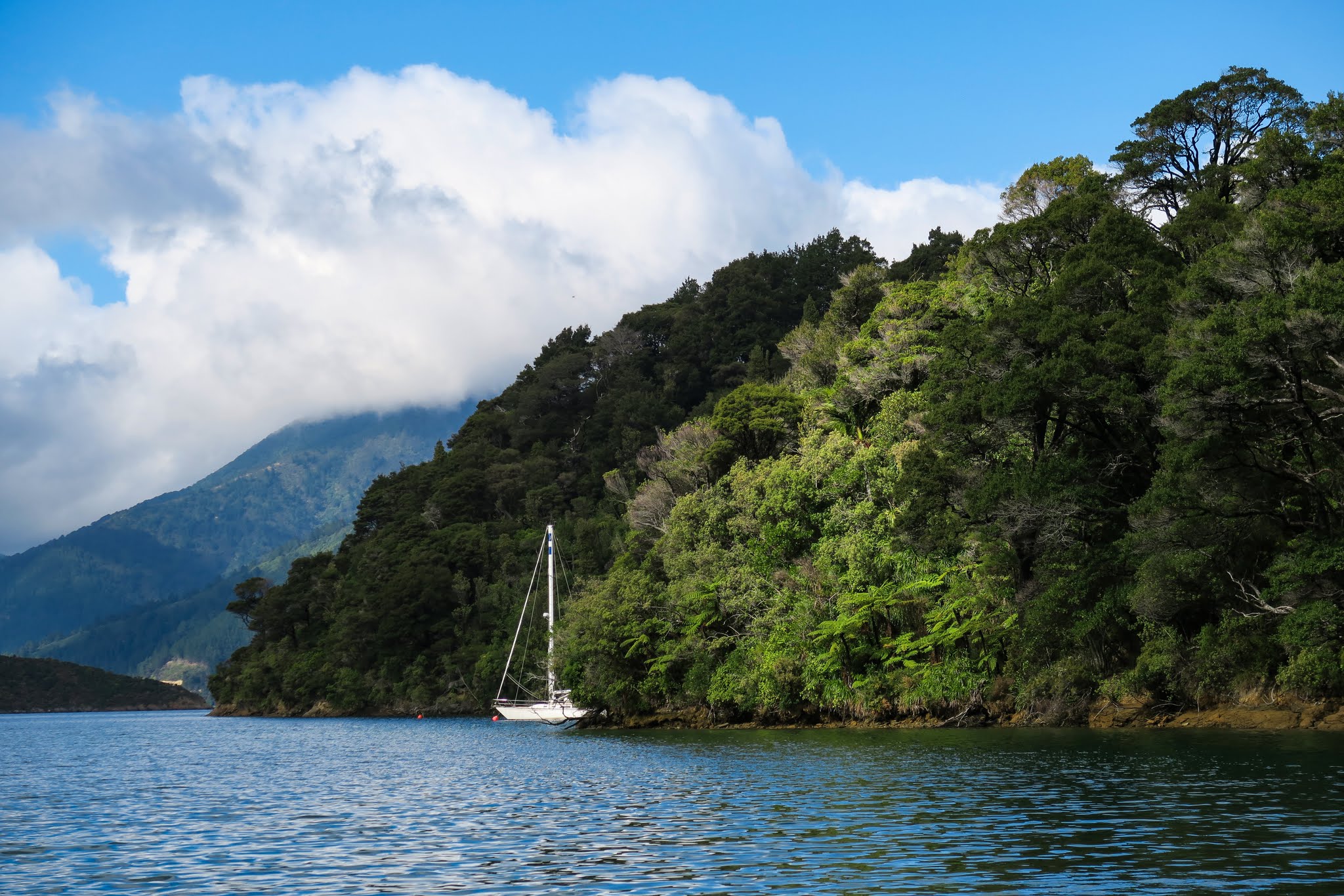
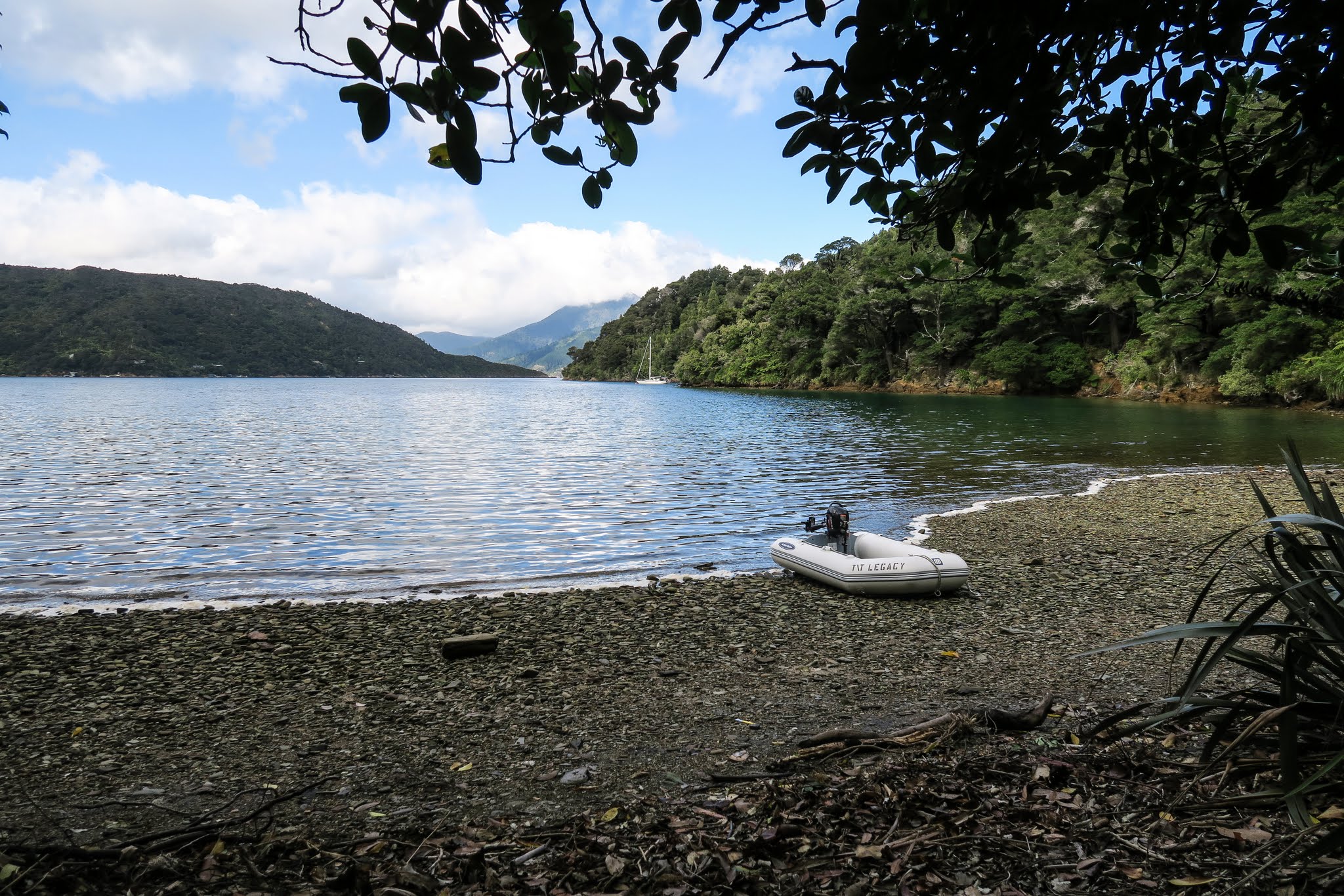
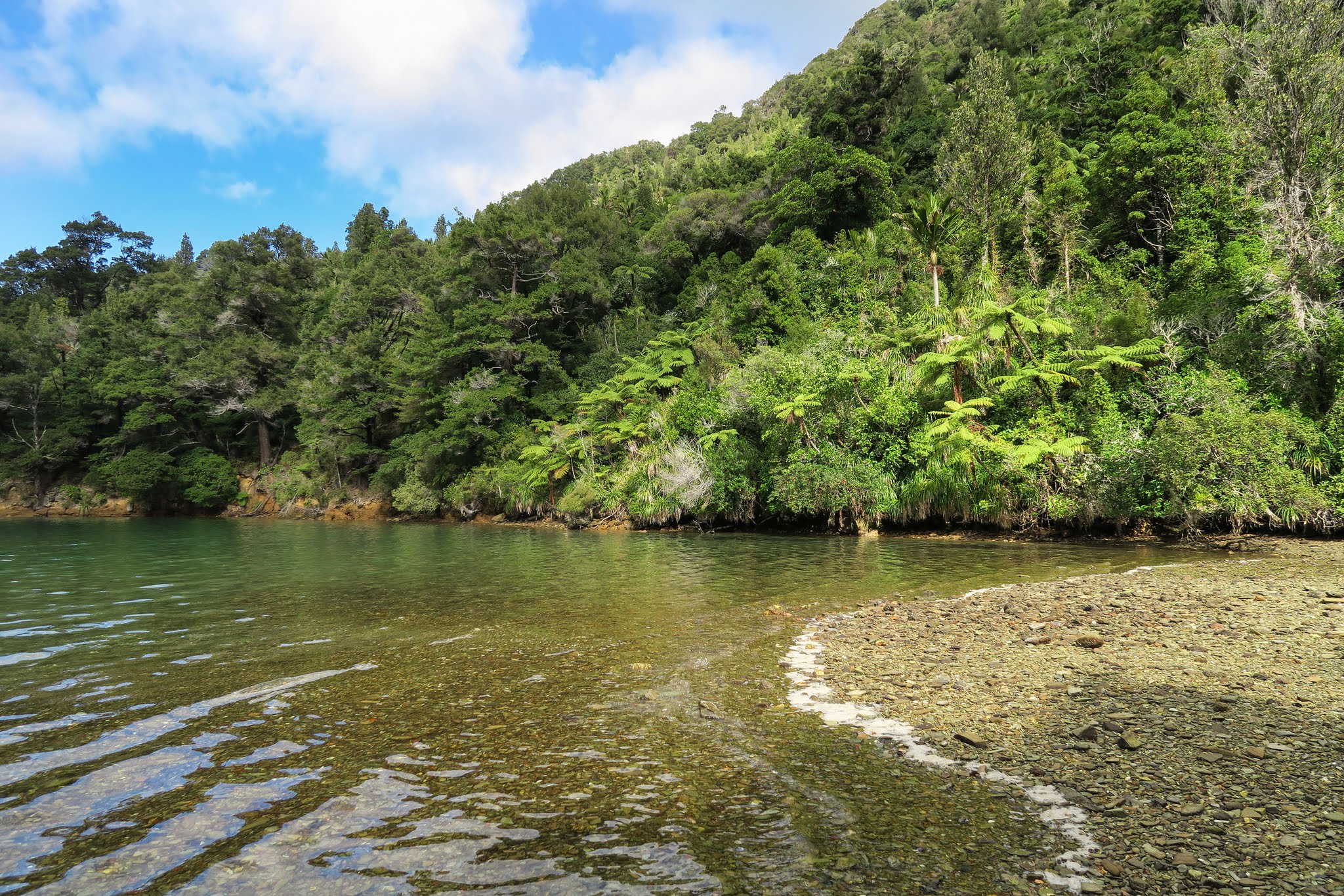
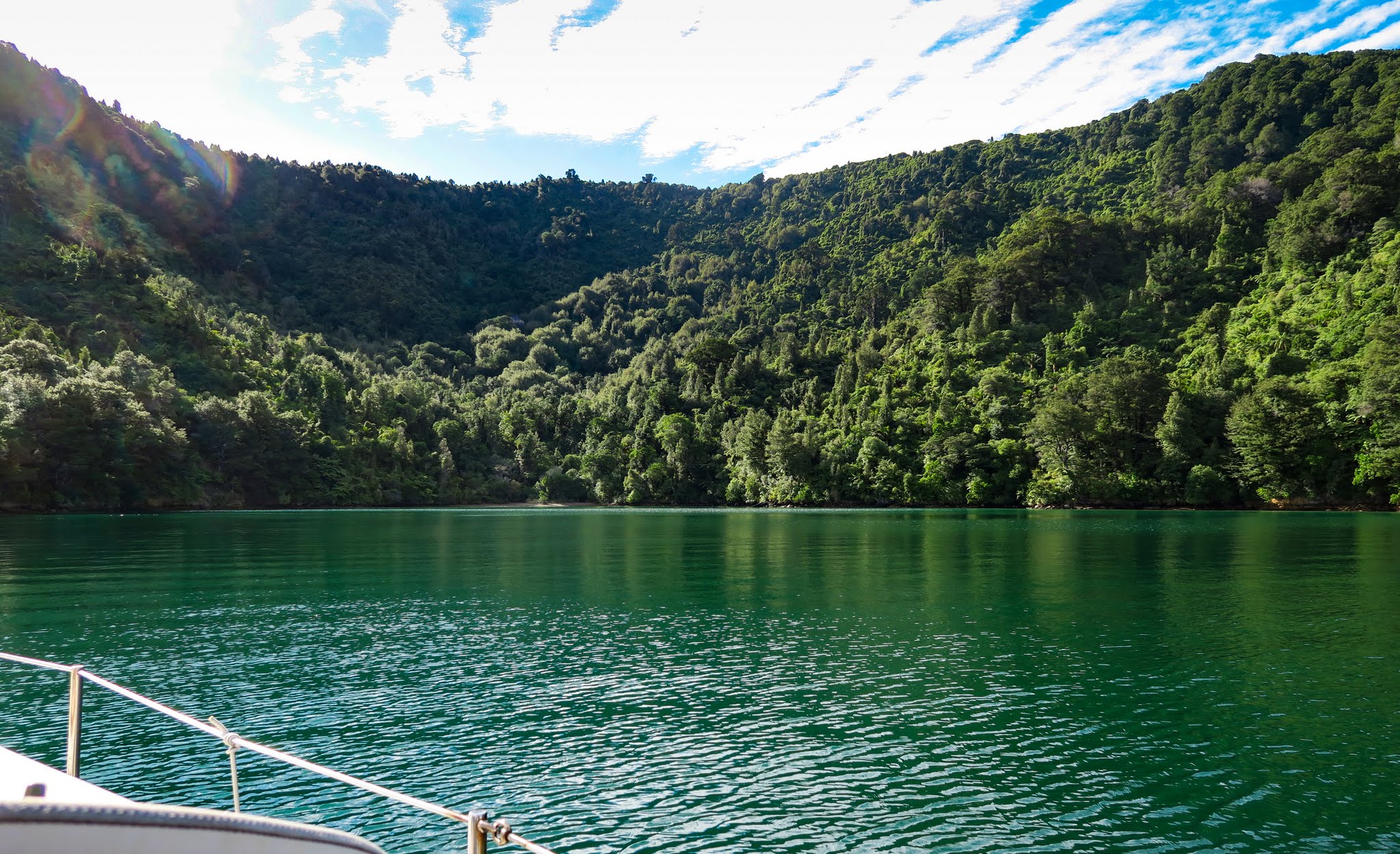
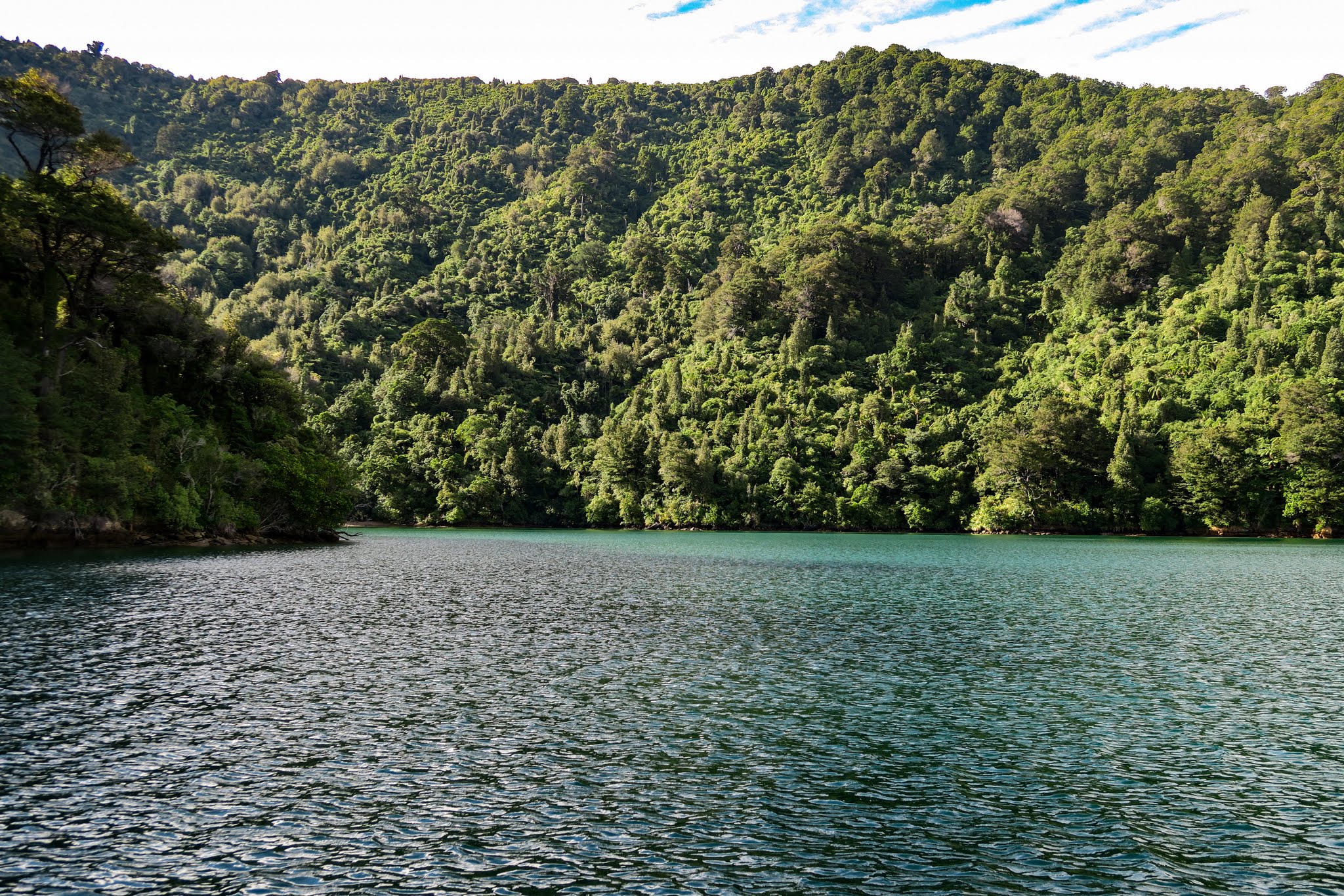
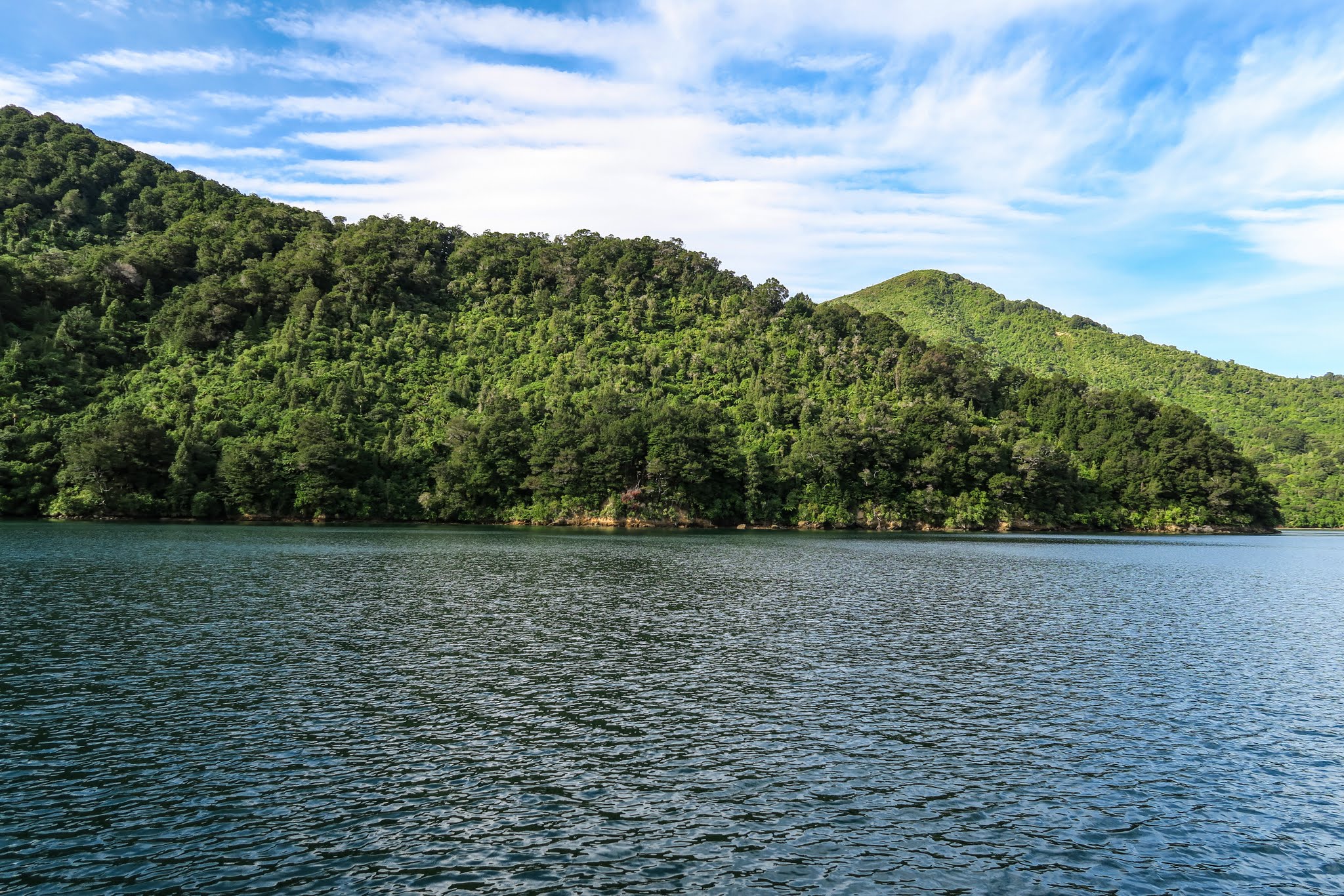
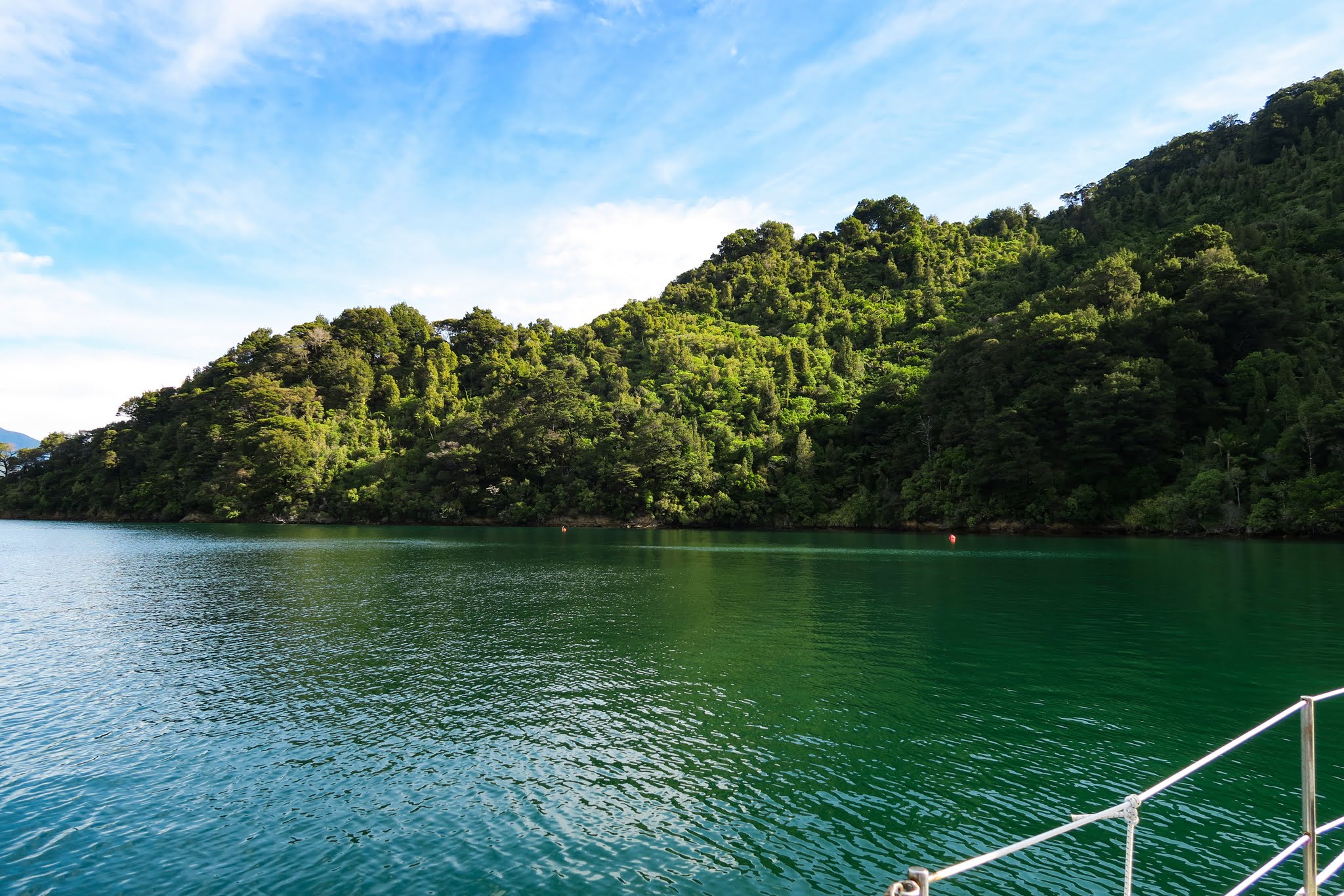
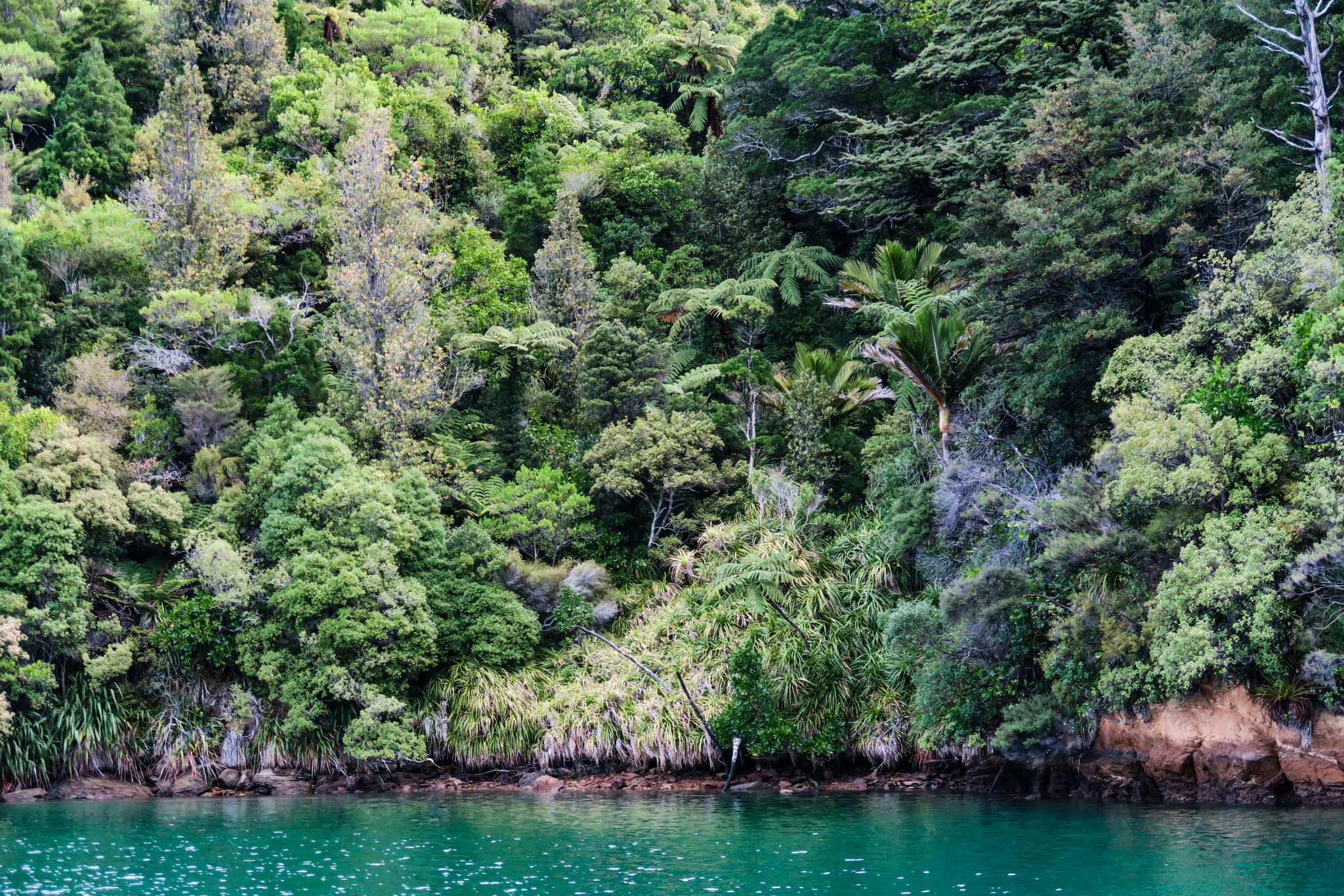
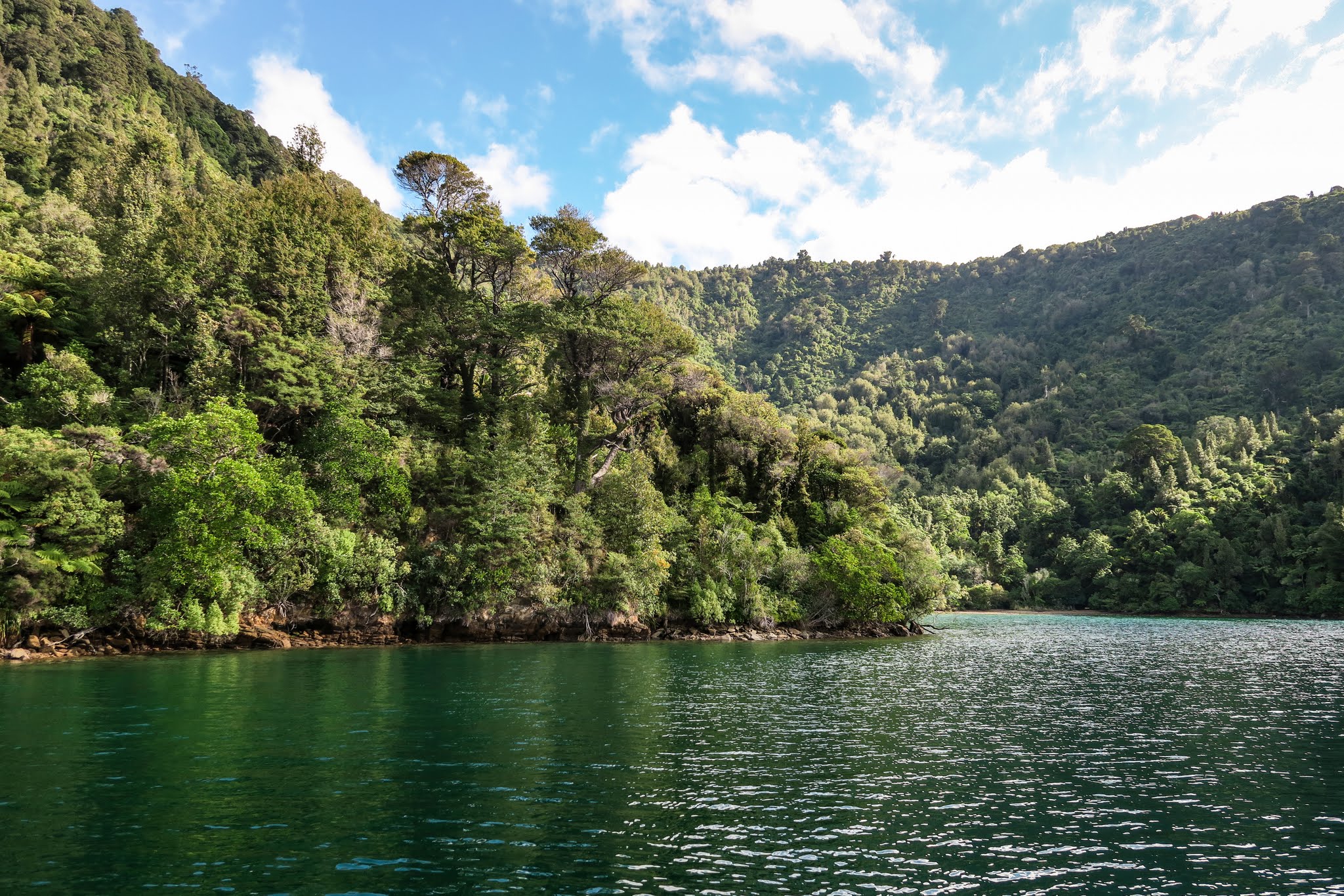
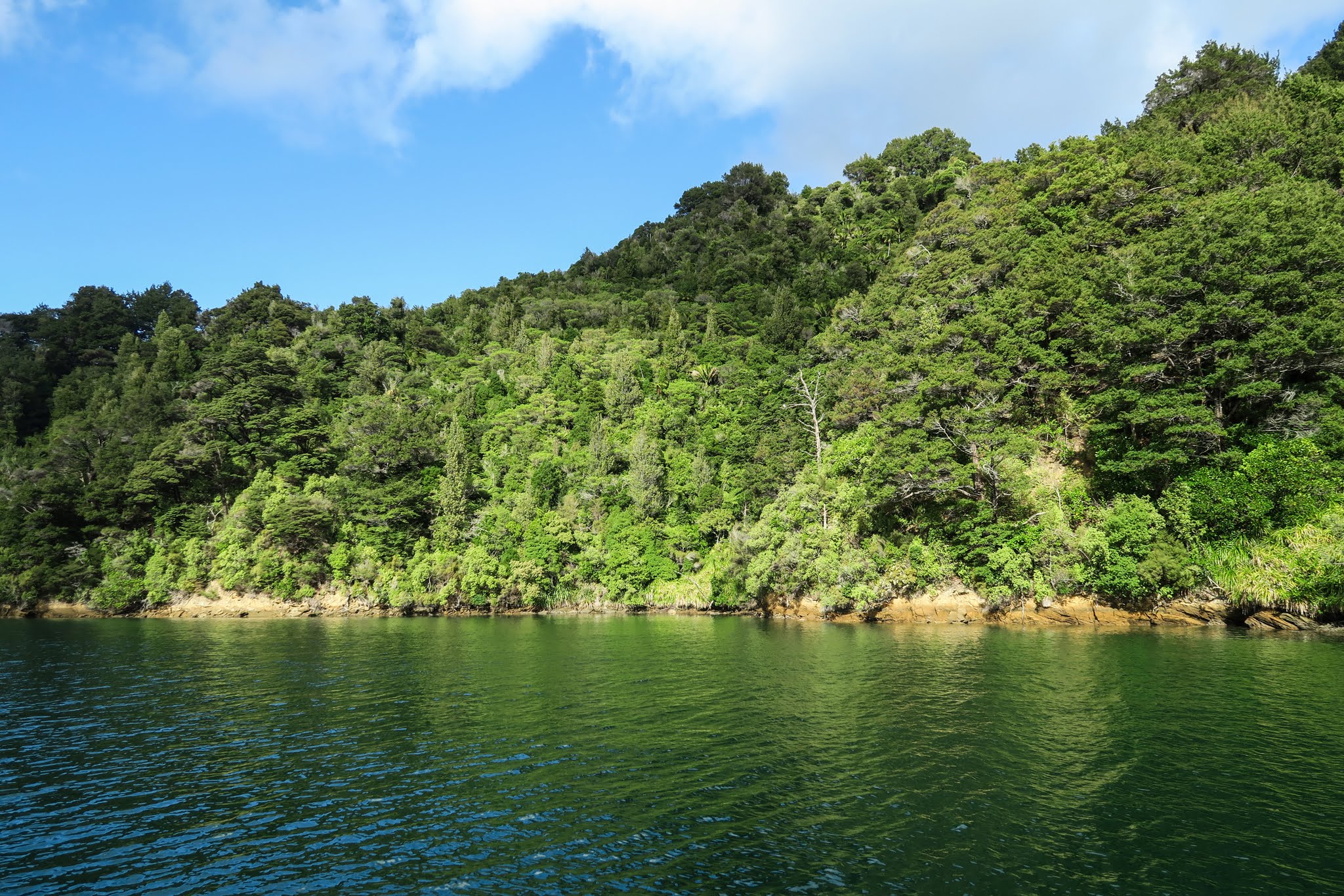
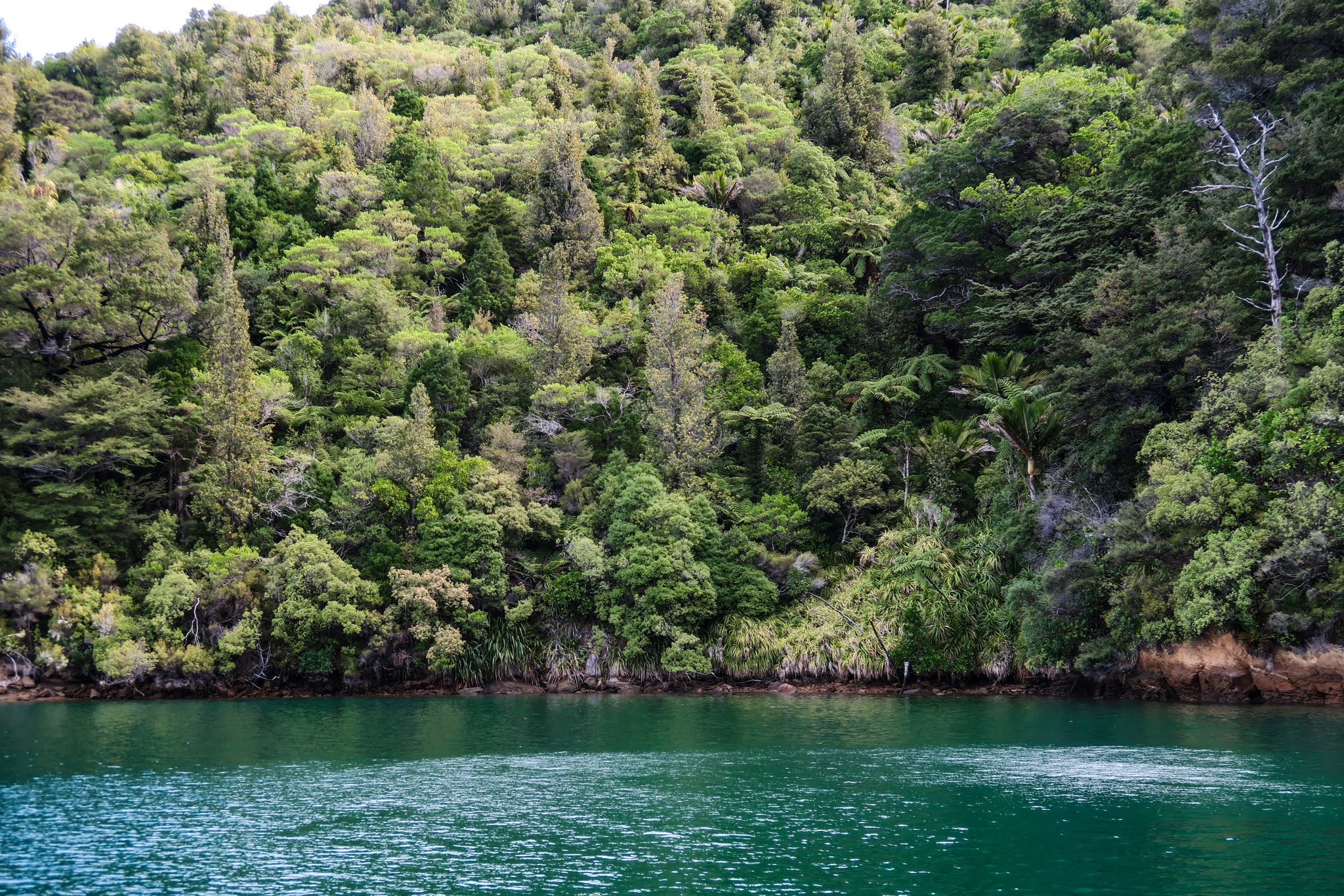
With that we motored across The Bay of Many Coves towards Cockle Cove. We noticed the protective arm of land around it had an amazing array of greens, with an especially high number of yellow-green ferns contrasting with the deeper greens of the various trees. Each bay here seems to have a little something special that makes it different from all other bays and in this one, it was the pretty range of greens. Motoring into the cove itself we found still green water, lots of thick vegetation and a stone beach. Right in the middle was a PMW (Combined Club) mooring, empty and waiting. Below, a gallery of Cockle Cove photos (click to enlarge and scroll).
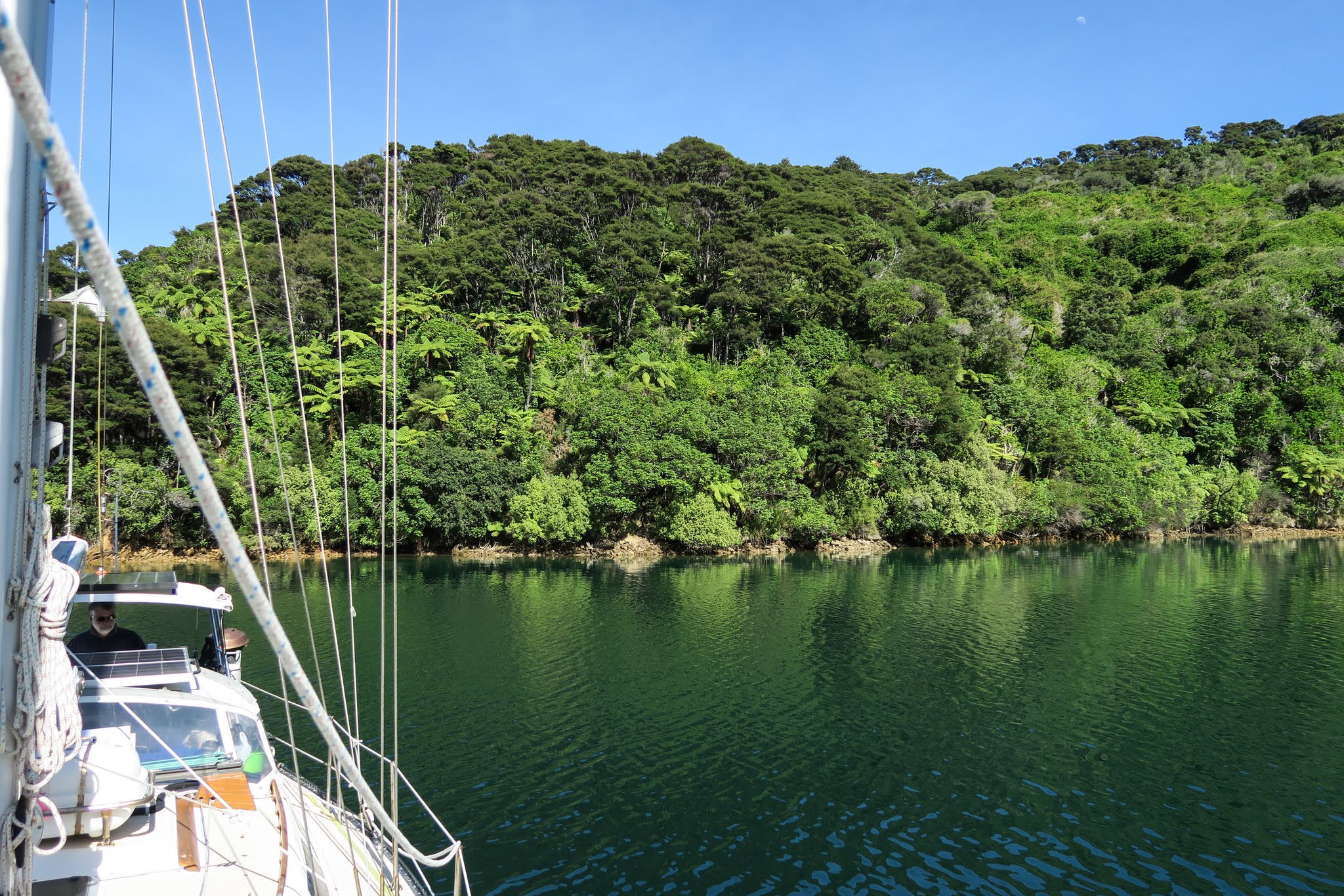
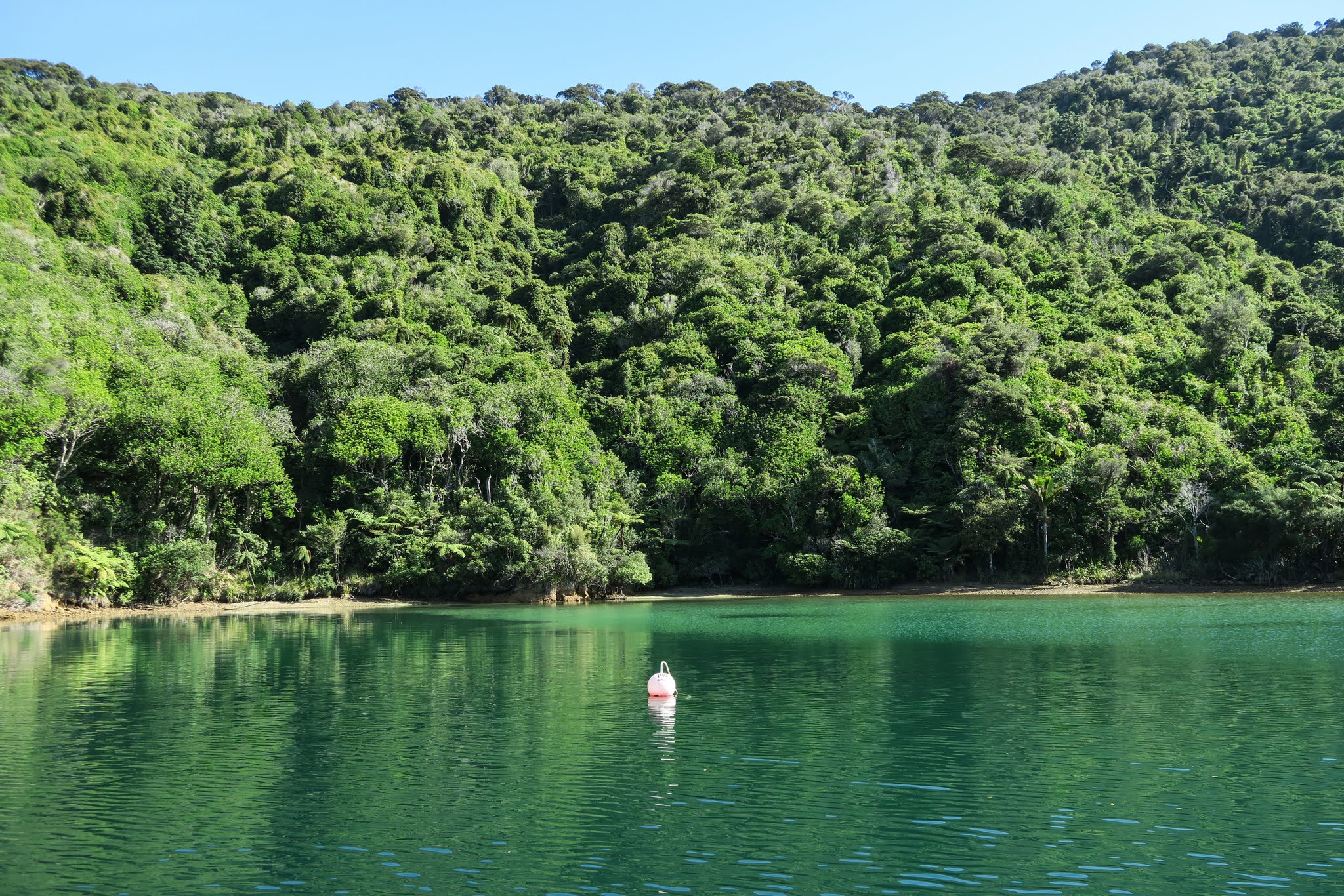
*A note about PMW moorings: There are three boating clubs in the sounds, and these clubs have combined resources to put in a few moorings at some of the more popular anchorages, generally one or two per anchorage. Officially, to use these moorings, you need to be a member of one of the clubs, which costs several hundred dollars. You then signal you’re a club member by flying the pennant flags. We talked to a few locals, and the unofficial consensus is that visiting boats should go ahead and pick up a mooring; no one really cares. If a boat who’s entitled to the mooring comes along, they’ll simply ask that you move, or offer to raft up with you.

We decided early on to avoid these moorings if possible. It’s better to be anchored and not have to worry about being asked to move. But sometimes the mooring is smack in the middle of a cove such that it’s impossible to anchor and be clear of the mooring. That’s when we’d make an exception. So far we’d stayed on two PMW moorings: one in a remote bay in the Tory Channel, and the other in Kumutoto, where realistically we could have anchored, but there were two empty moorings, it was late in the afternoon, and we were being lazy.

We might have taken this Cockle Cove mooring had this been extra special. But lovely as it was, there was a clearing onshore with a small house and a pier (not shown in the photos). That kind of ruined the feeling of being out in a remote place; it felt like camping in someone’s backyard. Also, the sun shone right in here, which I know many people would love, but I prefer this sort of place to have a shady feeling. It was nice to see this cove, but it was easy to remain with our decision to move on.

We had a good look at Ruakaka Bay and Blackwood Bay from the mail boat and didn’t feel the need to stop in either one this time (although Ruakaka Bay has a nature reserve, and if we’re ever back again I’d definitely go anchor there).

Next, we were traveling to the outer Queen Charlotte Sound, starting with a couple of places in the Endeavour Inlet. Today’s wildlife theme: blue penguins! We saw a lot of them, but they’re hard to photograph as they tend to dive when a boat approaches them.–Cyndi

Below a map showing our anchorages the Inner Queen Charlotte Sound and planned anchorages in the Endeavour Inlet.  (Just zoom and and out and click on the markers to see what’s what.)
Arthur’s Bay in the Bay of Many Coves (Queen Charlotte Sound, New Zealand)

March 30 – 31, 2016

Our next stop was a place we visited on the mail run: the Bay of Many Coves Resort. I’ve noticed my Frommer’s guide falls short of mentioning most of the resorts in the sounds, and our cruising guide was written before most of them existed. Most of what I knew came from poking around on the internet. When I poked around this resort, I looked at the dinner menu. The prices weren’t listed; they didn’t need to be. You could tell from the selection that it would be a very expensive meal.

And so I’d written it off until, as we were pulling up to the resort’s pier on the mail boat, Hsuen mentioned that the restaurant here is Really Good. She’d come for lunch and loved it. She also mentioned that a lot of celebrities stay here because it’s very removed. (Many of the little lodges are pretty much on the Queen Charlotte Track , but this one is more removed.) Hmmm, incredible food and celebrities. I don’t need to see celebrities, but the places they chose to visit generally don’t suck.

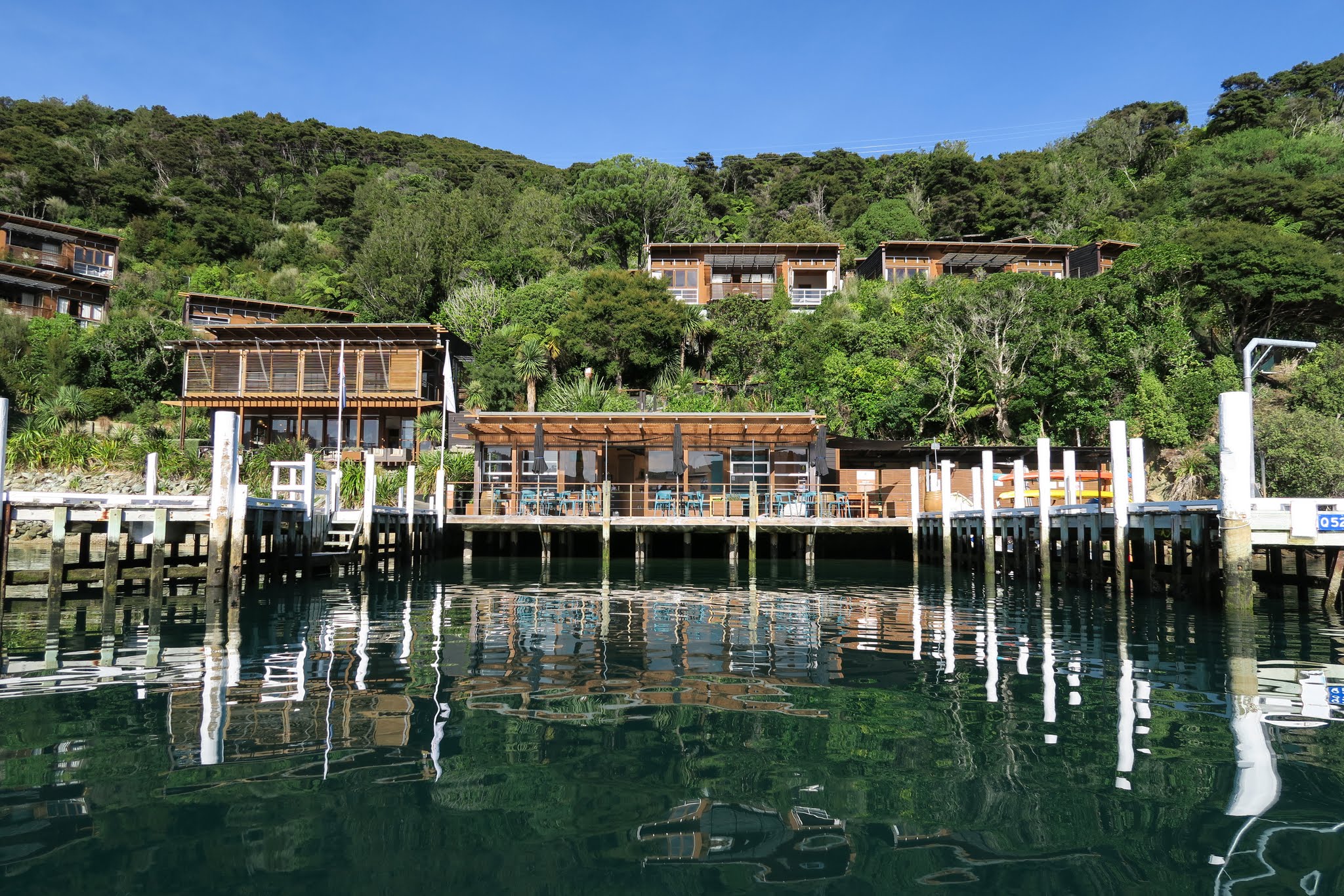
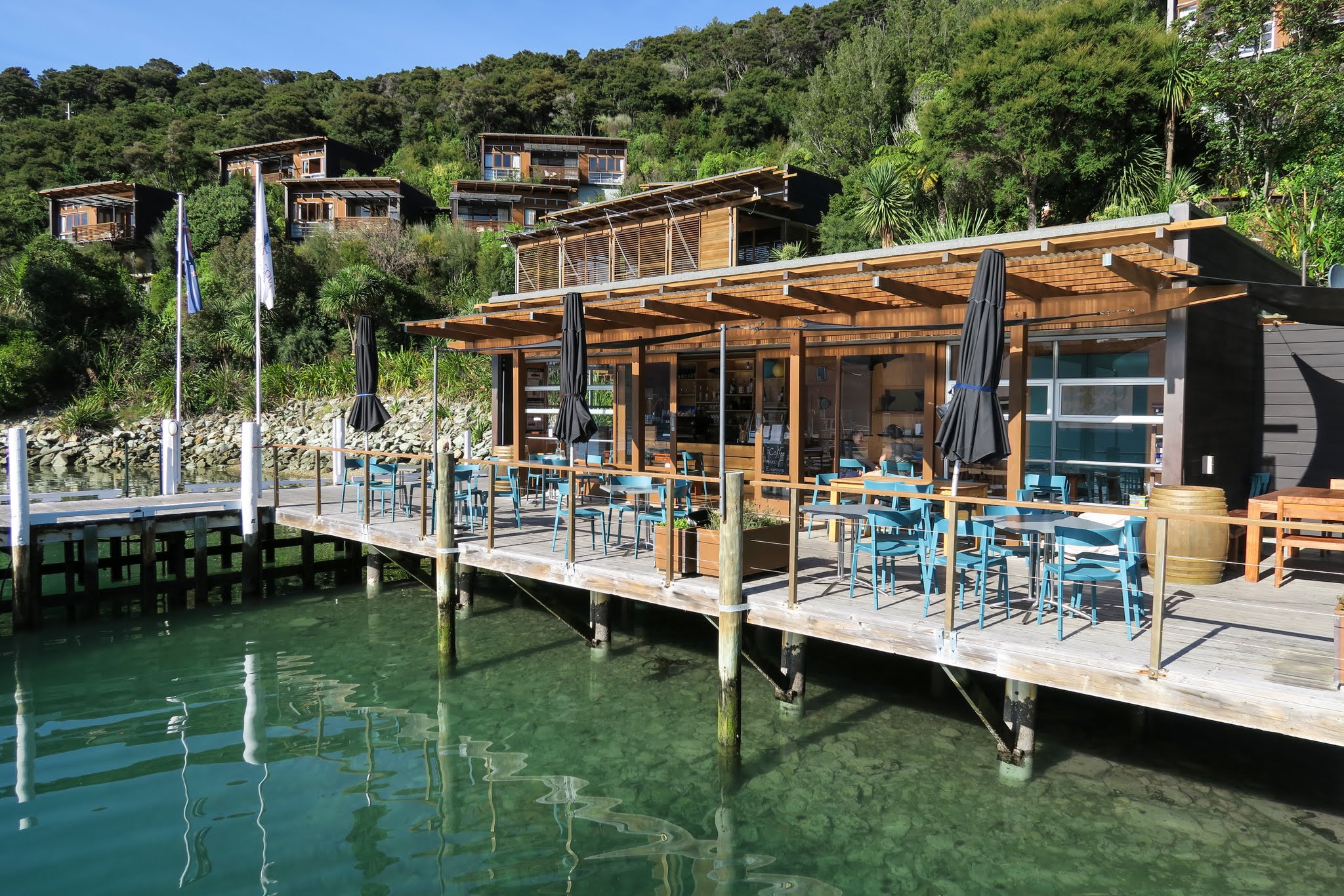
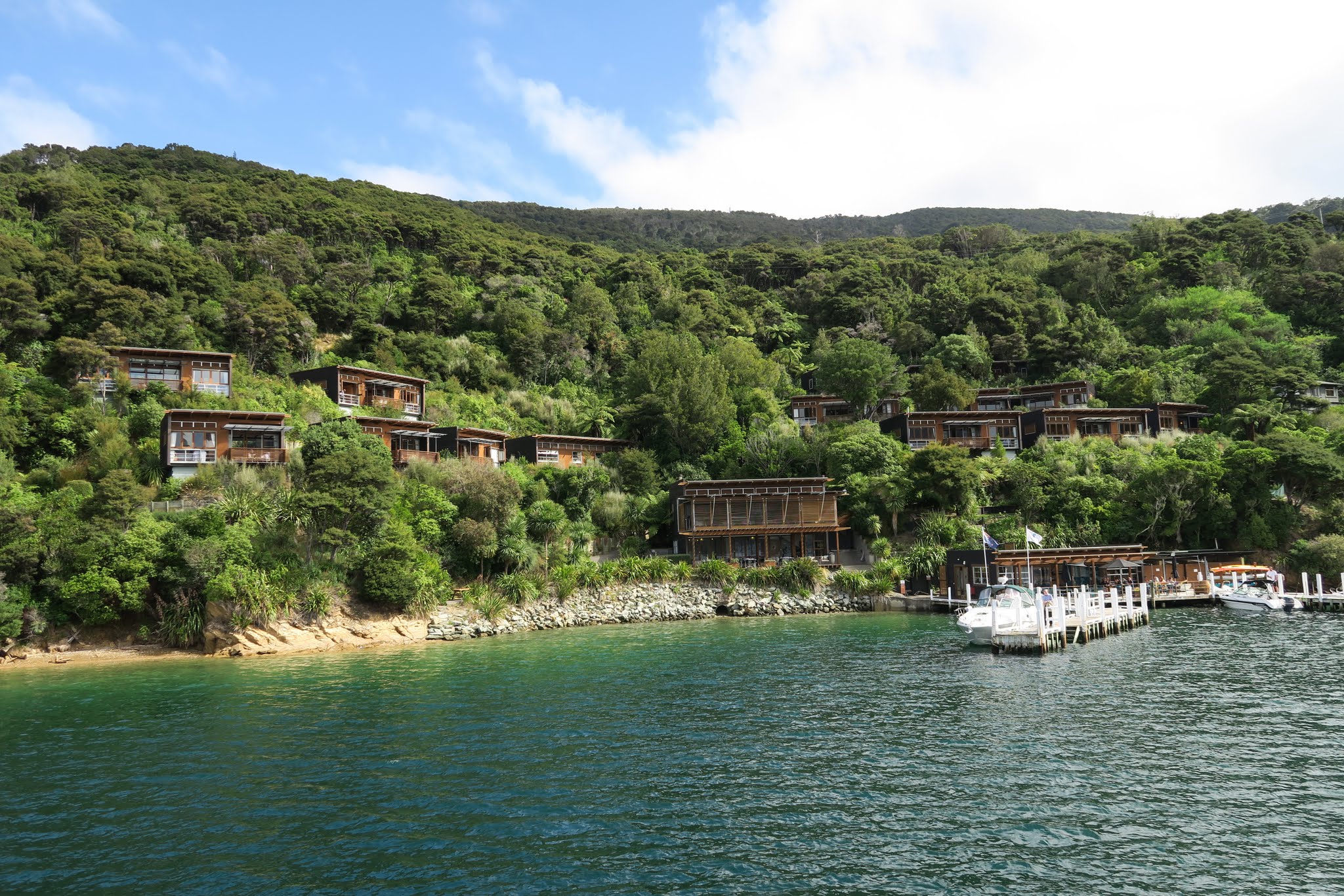
This place was certainly impressive, beautifully done units tucked into the natural vegetation on the hillside, large windows on the main restaurant, and a cafe right on the water, all with a view of the wide stretch of mountains across the placid water in the Bay of Many Coves. It was actually much prettier than it looked on its website, which is unusual, and we noticed they had a few moorings. I got back online, looked at the menus, and saw that breakfast was affordable. Decision made.

Rich phoned the resort as we arrived, saying we’d like to come in for breakfast tomorrow and could we take a mooring? They couldn’t have been nicer as they told us we were welcome to come in for a meal and to pick up whichever of their moorings we liked best. (It’s always so nice when places really welcome the boaters!)

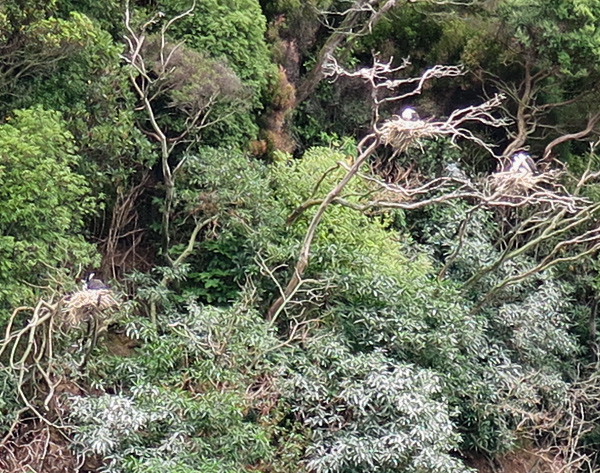
Later, we sat out in the cockpit to get a good look at Arthur’s Bay. I’d been so focused on the resort I hadn’t really looked around. The bay was actually very nice, surrounded by hills with covered with native bush, and a tree full of nesting cormorants right on the shoreline. Later we saw a fur seal swim by. This seems like a great place to enjoy the local wildlife; people who choose to stay here have chosen well.

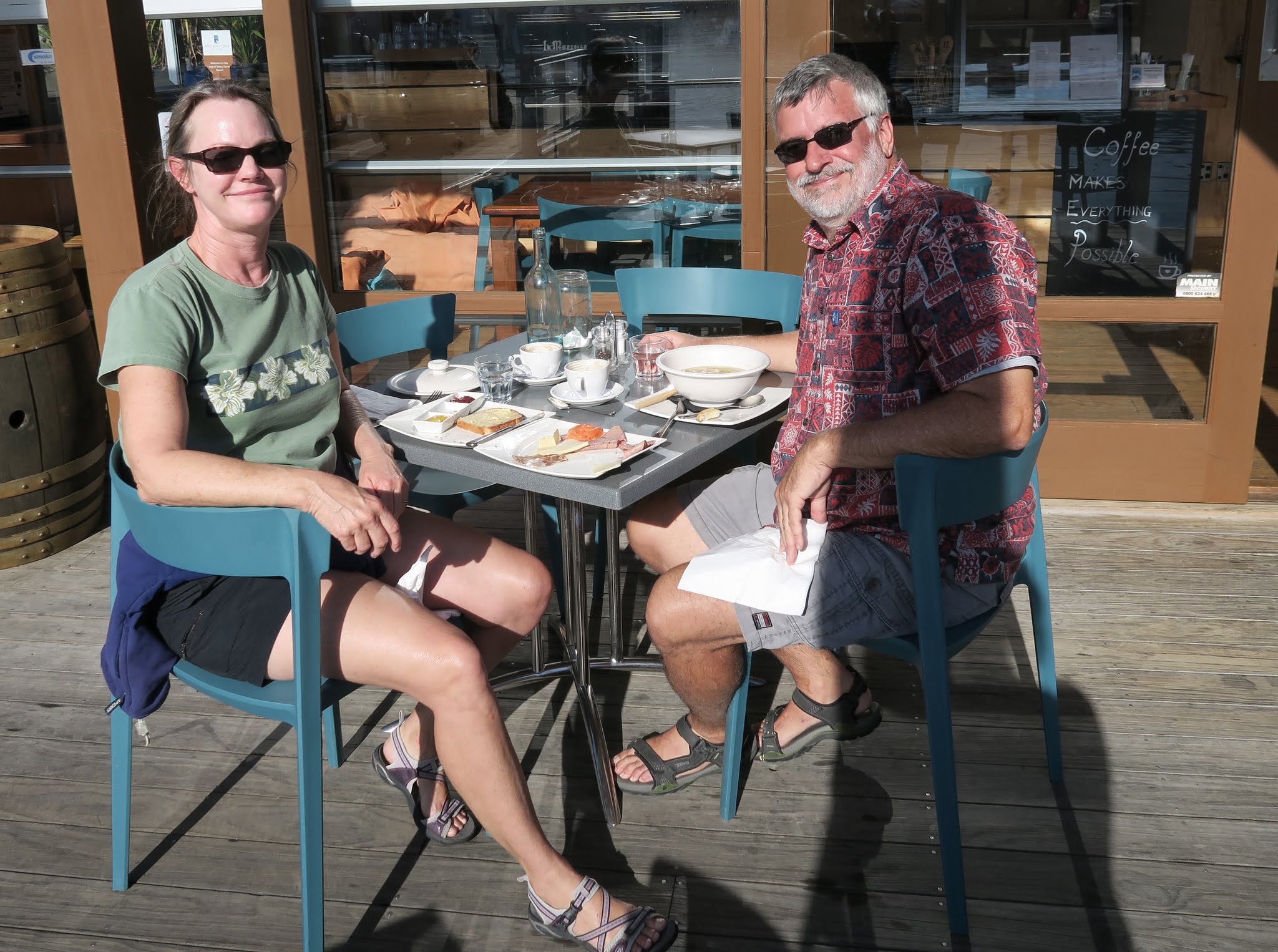
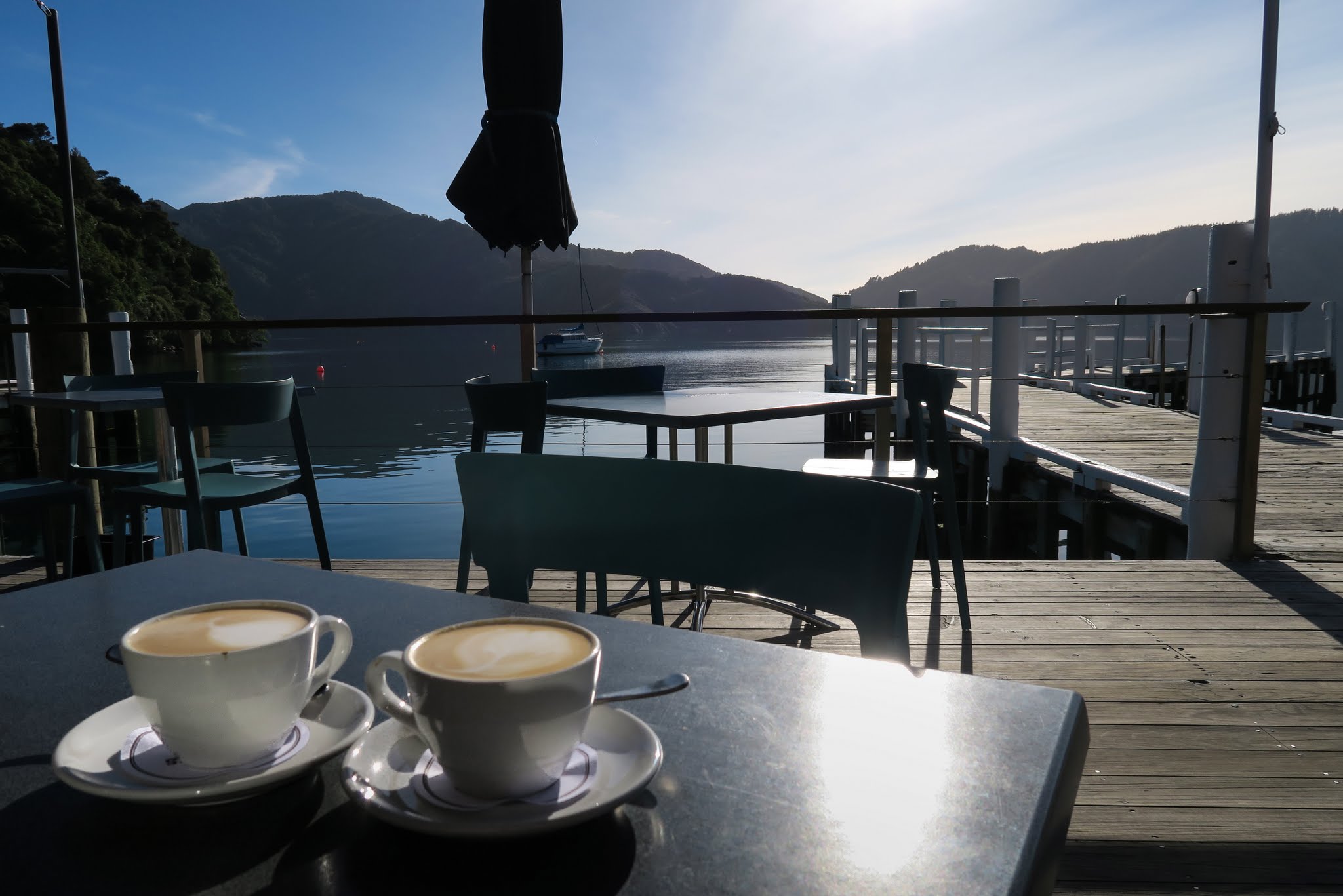
The next morning we headed into the cafe for breakfast, tying up to their dinghy dock. The cafe was so pretty, all wood and glass with a deck perfect for basking in the morning sun. It seems the other guests were either getting room service or eating in the main dining room; so we had the place to ourselves. We started with flat whites (coffee with steamed milk), then I ordered a Japanese breakfast of udon and dumpling soup, and Rich got the continental platter. Thankfully we split these, because Rich’s continental breakfast was amazing: homemade bread and a good croissant, spreads, smoked salmon, cheeses and cured meats. My soup was great, but his breakfast was out of this world.

We’d be moving on again today; but we didn’t have very far to go. We were glad; we wanted to linger on this wonderful deck as long as we could. Below, a gallery of photos from Arthur’s Bay and the Bay of Many Coves Resort. Click to enlarge and scroll. –Cyndi

Hector’s Dolphins (Queen Charlotte Sound, New Zealand)

March 30, 2016

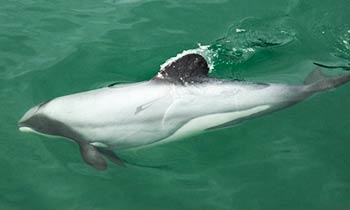
As we were leaving Kumutoto Bay, we were joined by two Hector’s dolphins. Here’s a little video…

There were a couple amazing things about this encounter. First, they’re beautiful and somewhat rare dolphins and I don’t think it’s all that common for them to hitch a ride in the bow wave. The truly amazing thing is how they hitched a ride.

We were just coming out of the bay and some idiot forgot to put the dinghy wheels up (me). We stopped, I climbed into the dinghy and took care of the oversight. As I climbed back on board, I saw a dolphin. Now picture the gesture you’d make if your hands were tied behind your back, you had no voice, and you wanted to get your friend to follow you and chase after the ice cream truck. Kind of a shoulder and head thrust in the direction of the cold, creamy goodness. That’s what the dolphin did. I swear it. I knew immediately what he wanted. I pushed the throttle forward, off we went, and off he went, with his friend to play in the bow wave. I’ll never forget this clear communication.

The two of them stayed with us only a short time. I don’t think our bow wave is big enough to be very interesting. That’s good for fuel economy but bad for dolphin sports.

Hector's Dolphin (photo from Wikipedia)
Hector’s Dolphin (photo from Wikipedia)

Here is a picture of Hector’s dolphins from Wikipedia. And here’s what they have to say about them.

To our two friends… thanks for joining us, if only briefly. It was a real joy! -Rich

Kumutomo Bay Hike (East Arm of Double Bay, Queen Charlotte Sound, New Zealand)

March 30, 2016

What a pleasure to wake up, look outside and see this beautiful bay. We almost missed this, and now we’d count it as one of our favorite spots. We were heading on this afternoon but planned to take a walk ashore before we left.

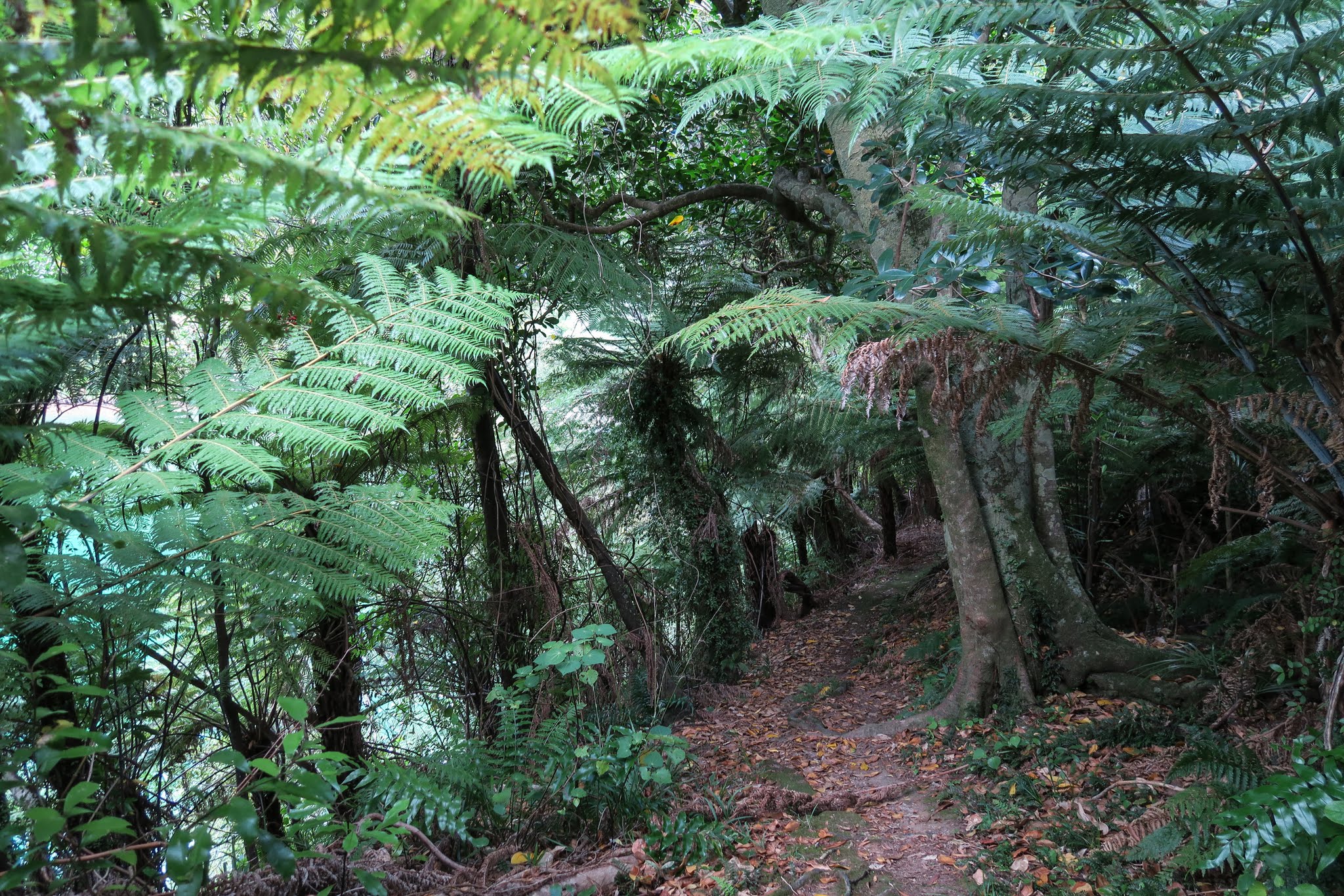
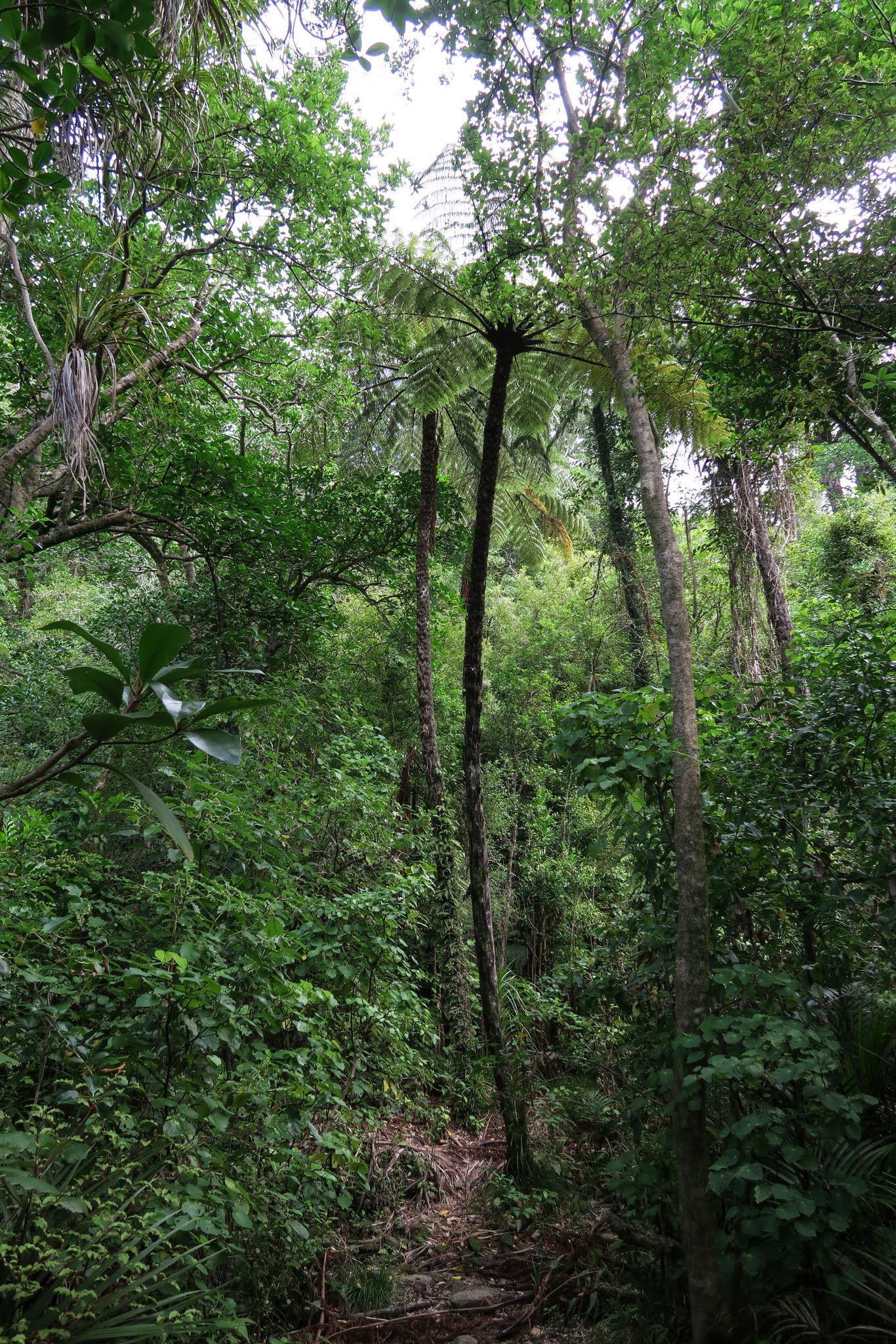
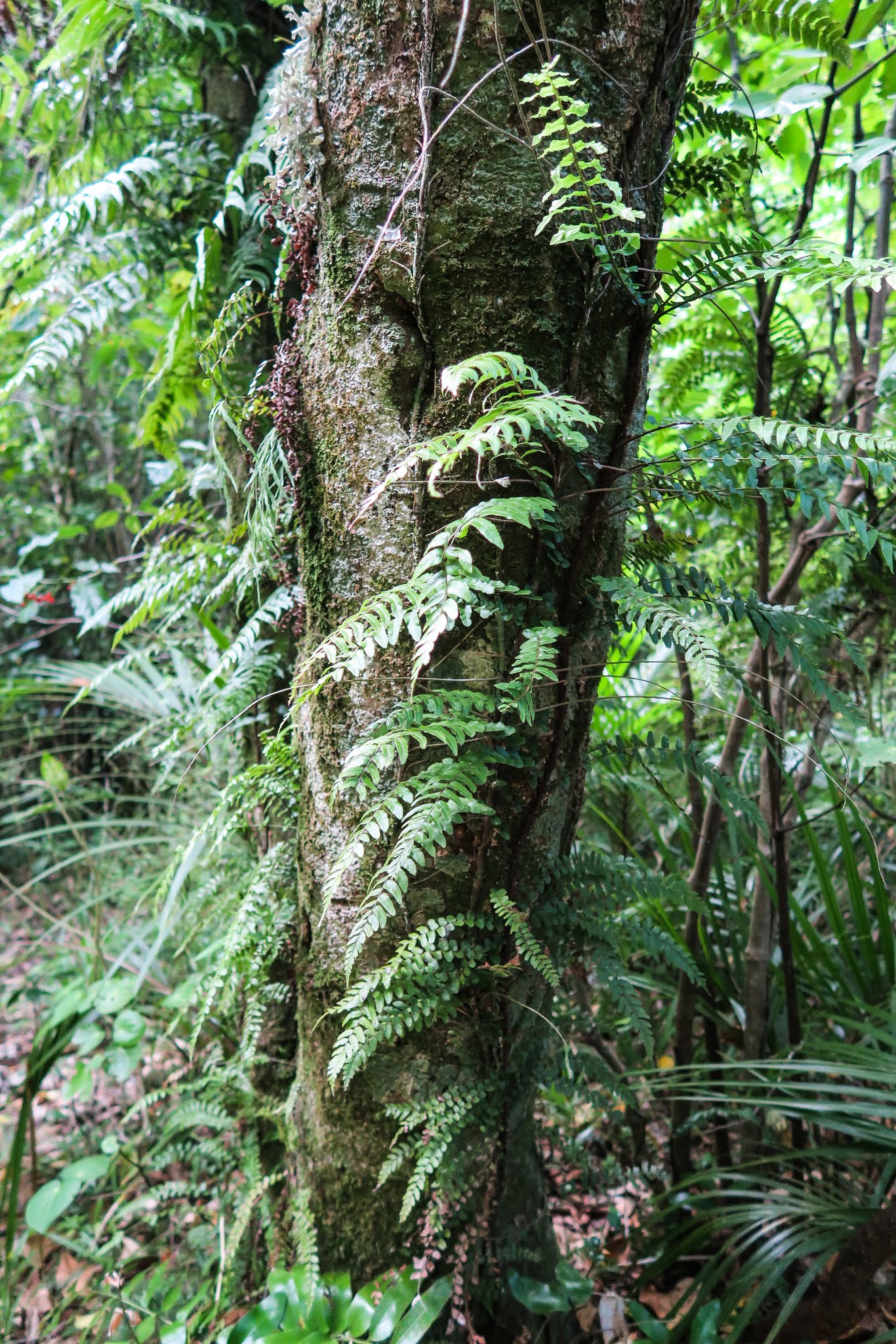
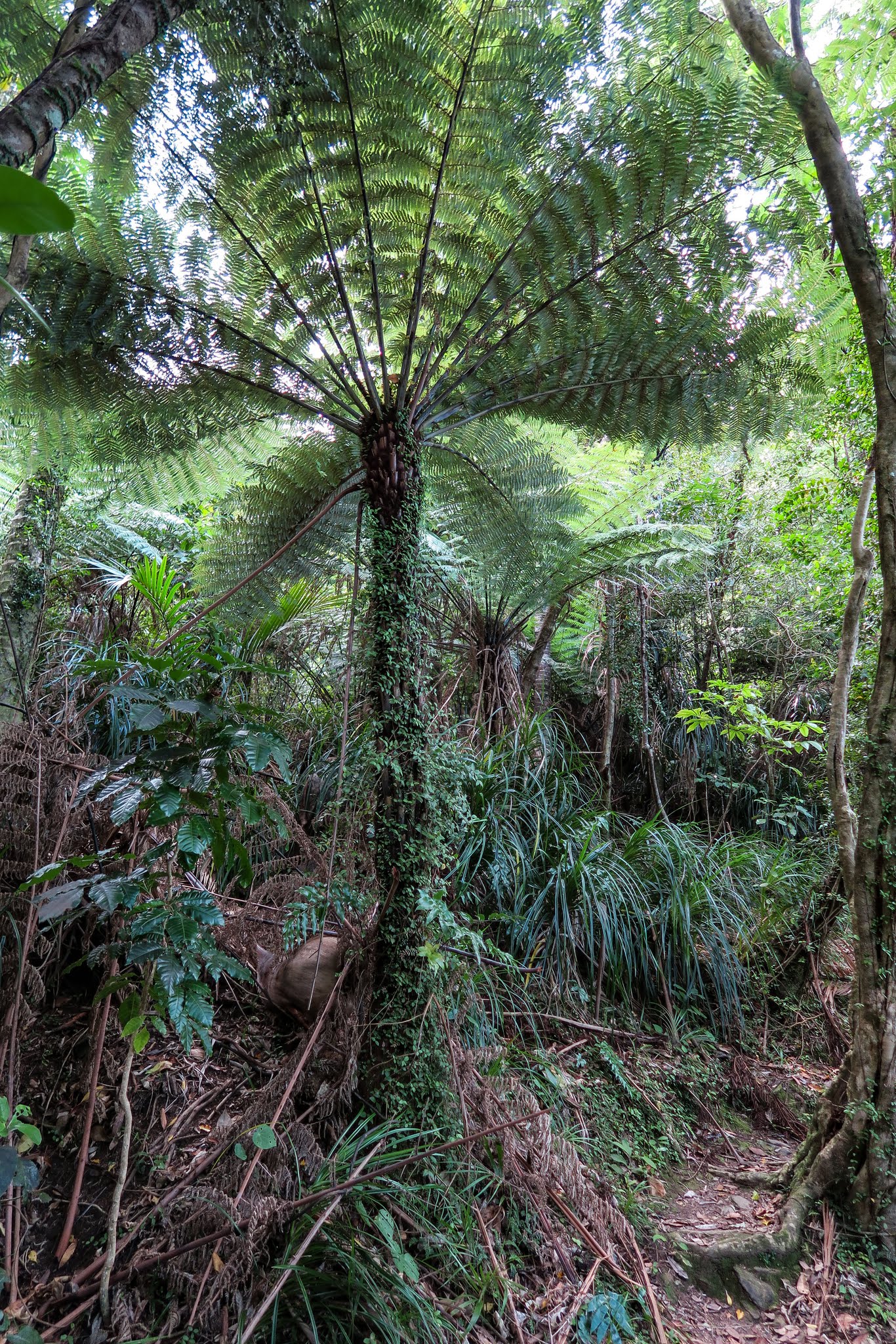
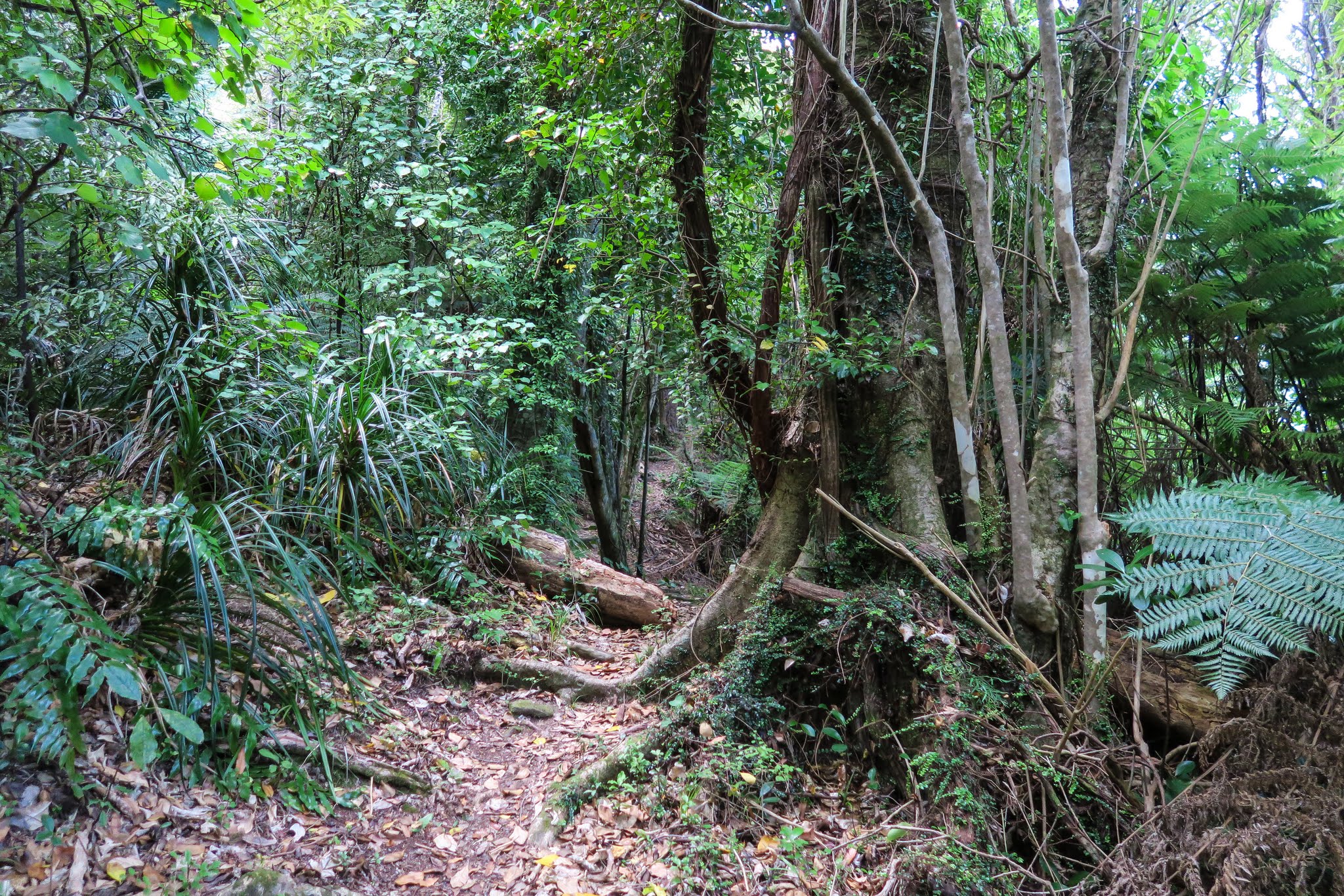
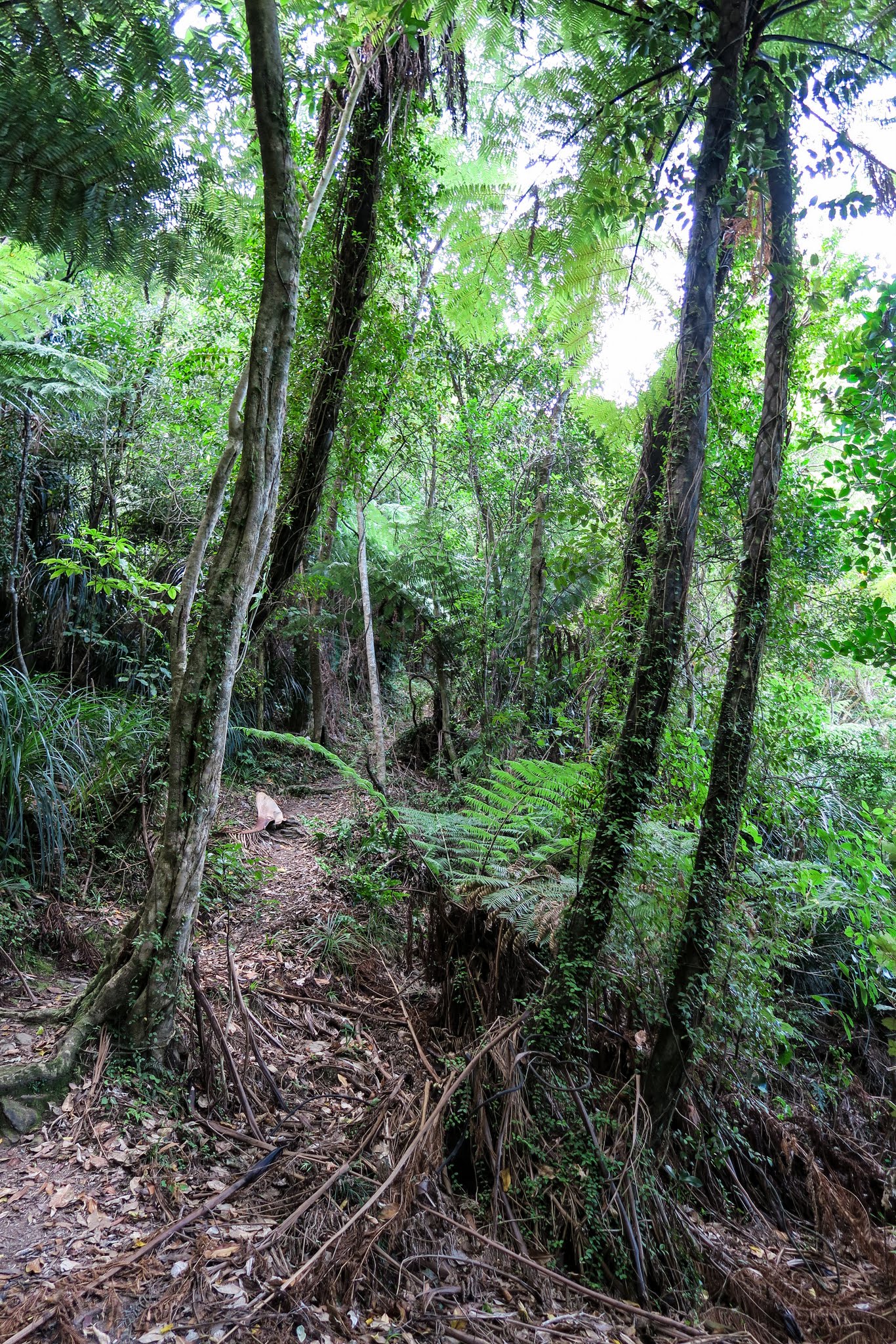
When we landed the dinghy, the brown stone beach, blue-green water and thick vegetation reminded us a lot of America’s Pacific Northwest. We found a trail and followed it through the lush forest, much too lush to get the hoped-for photo of Legacy from the headland. (As problems go, that’s one I don’t mind having.) As we headed back to down towards the beach, we could hear birds all around us. New Zealand works hard to rid their nature reserves of introduced predators, and it really makes a difference in the level of birdsong.

Below, a gallery of photos from our walk. Click to enlarge and scroll.

We were sad to leave this place, but it was time to move on. It was when we were headed out of Double Bay that we came across the Hector’s dolphins (see Rich’s post below). There’s a lot of wildlife in the water here: different species of dolphin, fur seals, blue penguins, stingrays, gannets, gulls, and cormorants (aka shags) everywhere. Later in the season, there’ll be orcas and, rarely, some large whales, but we should be gone by then. For now, we’ve started a wildlife theme of the day featuring whatever stood out the most, and today’s theme was Hector’s dolphins. –Cyndi

Kumutoto Bay (East Arm of Double Bay, Queen Charlotte Sound, New Zealand)

March 29, 2016

As Legacy’s itinerary planner, I now had some decisions to make. The mail boat cruise had given us plenty of information, but it also brought an unexpected complication. By now, fall had arrived in New Zealand, the clock had started to tick as we’re approaching the end of our time here, and there’s still lots more to see before we get to Nelson.

With a period of warm, settled weather arriving, the sensible thing to do would be this: appreciate the tour we had of Queen Charlotte Sound and use this weather window to make the passage to neighboring Pelorus Sound (which involves going back out in the open ocean for a few hours). But that didn’t feel right to me; the mail cruise was meant to help us decide where to cruise, not to take the place of it. After wrestling with the decision, I went back to the guide book and read again a remark the author made, that many consider Queen Charlotte Sound to be the most beautiful. I realized it would be a shame to rush through this area if it might be our favorite.

With that, I decided we should cruise a few of these big bays and wait for a later weather window to move on. I made a plan, Rich plotted the first course, and we were set. Except I still wrestled with the decision, worried whether we were doing the right thing. One other thing bothered me: between our Grove Arm cruise and the mail run, there were two bays we hadn’t seen. One I hoped to hike to from the Pelorus side, but the other would be a miss.

I consulted our cruising guide again (New Zealand Cruising Guide Central Area by Keith W J Murray). With any given guide book, you have to learn the author’s style and do some reading between the lines. In Keith Murray’s case, he’s really thorough about wind directions and anchoring techniques, but he’s not into detailed descriptions about the look of a place. The highest compliment he gives, only occasionally, is to call a bay “attractive,” or very rarely, when it’s really special, “very attractive.” I think he’s used the term “extremely attractive” twice in the entire book. I’ve also learned that “popular” generally means it’s “attractive.”

In this case I was reading about the bay we’d miss: Double Bay, and specifically the east bay within it called Kumutoto. The author used the words, “very attractive,” “popular,” and, “most excellent anchorage.” Wow, he must have darn near peed his pants when he saw this place! Thus, I suggested to Rich that we out to add it into our plan. And so the route was redone as we prepared to leave, but I still kept second guessing myself.

Our new friend, Hsuan, came by to visit us and brought us a special surprise gift of lobster from Julian’s freezer. We visited awhile, then the lure of one final garlic prawn pizza called to us, and we all decided to go out to lunch. By the time we finished, an afternoon wind had come up. With yet another round of indecision about whether to stick with our plan to leave today or wait until tomorrow. We decided to leave today. Kumutoto wasn’t very far away; so we didn’t need to be out in the wind very long.

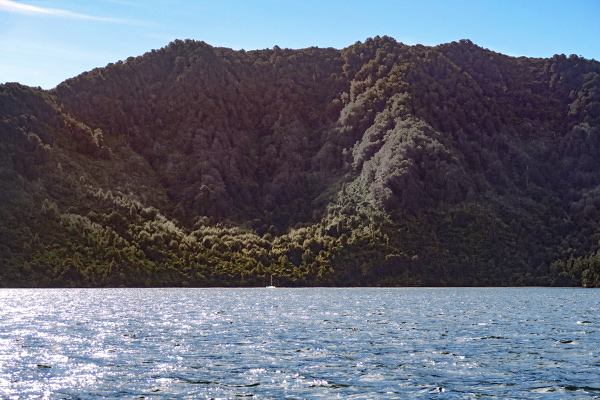
And so we motored out of Picton, into the afternoon wind, across Queen Charlotte Sound, and over to Double Bay. As we entered this protected area, the wind dropped. We still had a over a mile to go, but already all my doubts and second guessing were falling away. Double Bay was absolutely beautiful. As we motored further in past the west bay (Kaipakirikiri Bay), we were amazed at the sight of a little boat anchored at the foot of a huge mountain. We were tempted to head over there, but kept with our plan.

Little boat, big mountain.
Little boat, big mountain.   (Kaipakirikiri Bay in Double Bay, Queen Charlotte Sound, New Zealand)

When we entered Kumutoto, we’d found a remarkably beautiful spot surrounded by steep mountains and lush native forest. Because it’s a nature reserve, there are no homes here. When we were settled, we sat out to admire our surroundings. The feeling here is one of being surrounded by towering mountains, one of which slopes down into foothills at its base to create this bay within bigger bay. There was no doubt now we’d made the right decision about staying in Queen Charlotte Sound awhile longer.

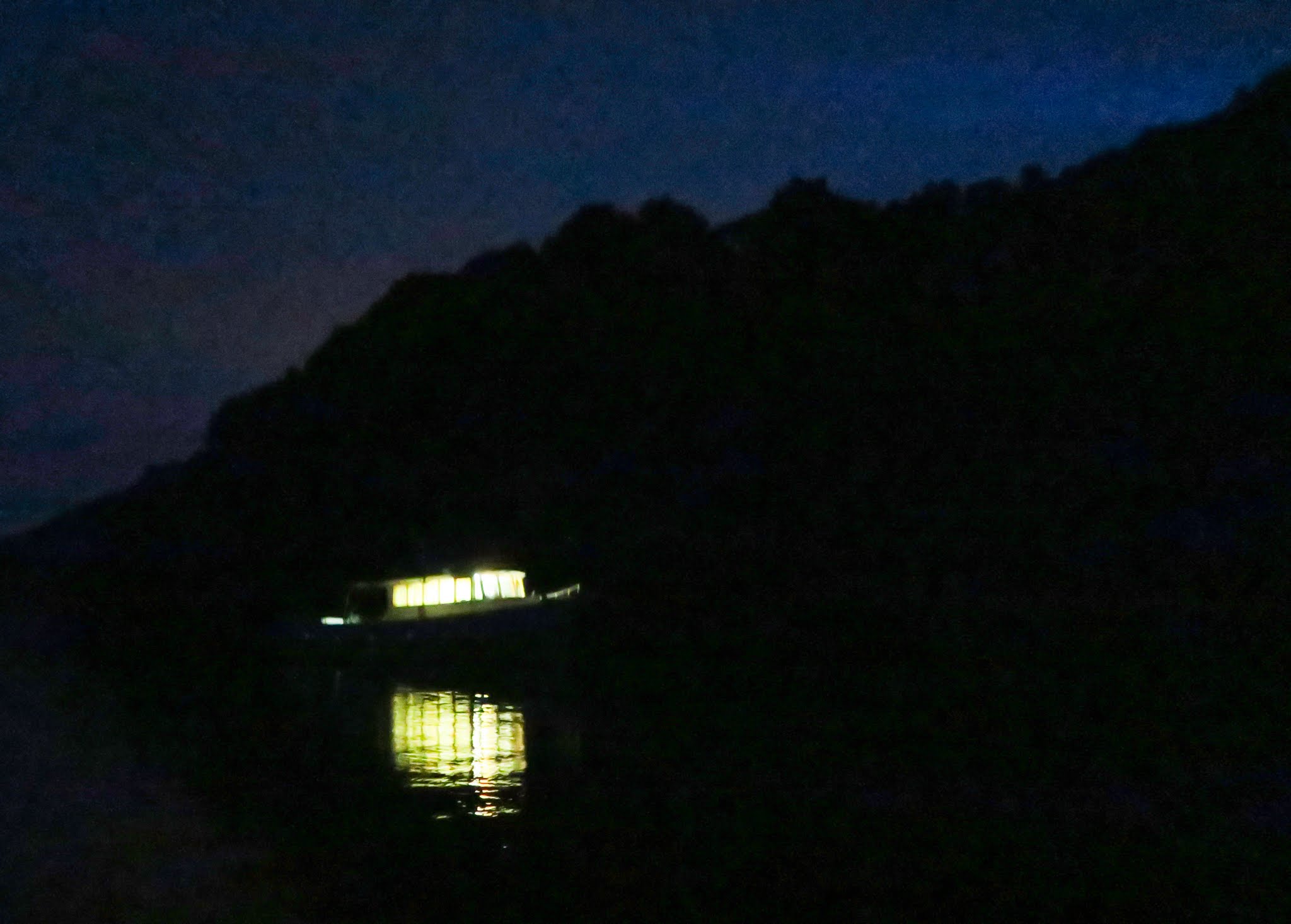
Our best moment was sitting outside after dark. There was a light cloud layer which covered most of the stars but gave the scene a certain warmth. We couldn’t see details, but we could see the silhouettes and shapes of the mountains and headlands around us. A small power boat had come into the bay, and a warm yellow light glowed from behind his curtains like a lantern. The water was glassy and still, and we could hear the call of moreporks (little owls) from the trees. The overall feeling was one of such peace and serenity; this felt like a New Zealand version of that classic Christmas Corona commercial.

Just then we heard a breath from the water, then a few more after that. It seems we had a visiting sea lion or two. This was one of those particularly magical moments that come around only once in awhile, no matter where you are, and it’s so good to pause and appreciate them.

Below, a few photos from Kumutoto Bay. Click to enlarge and scroll.–Cyndi