Our Trip to Rotorua, Part 4: Lake Tawarewa (New Zealand)

February 26, 2014

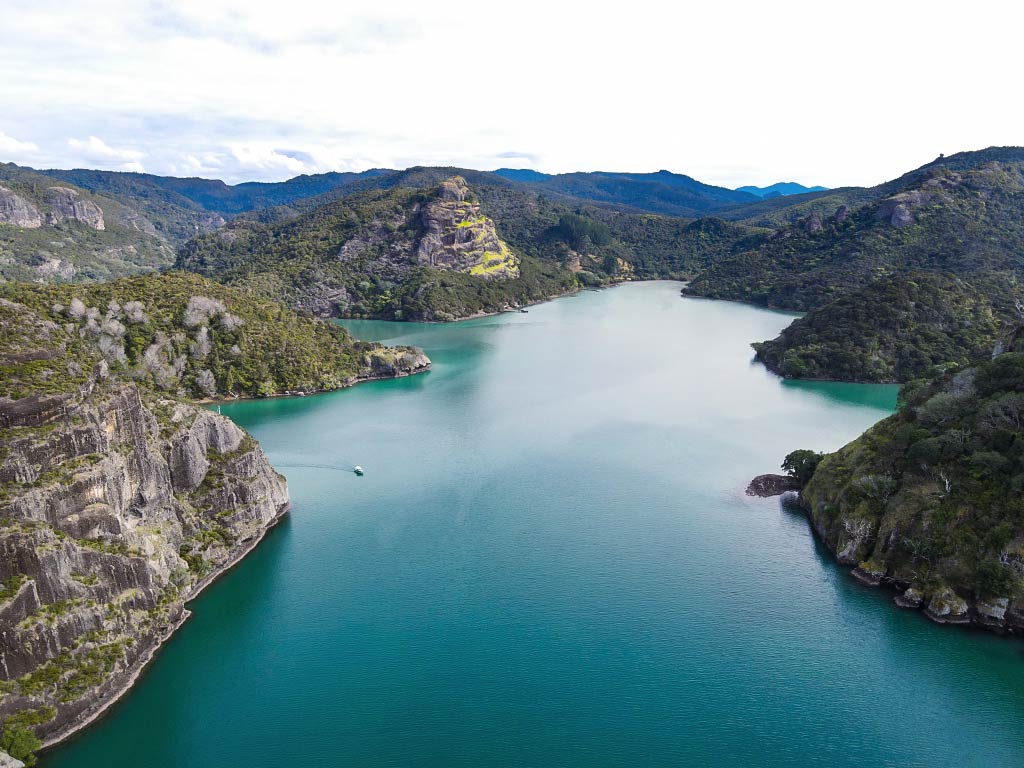
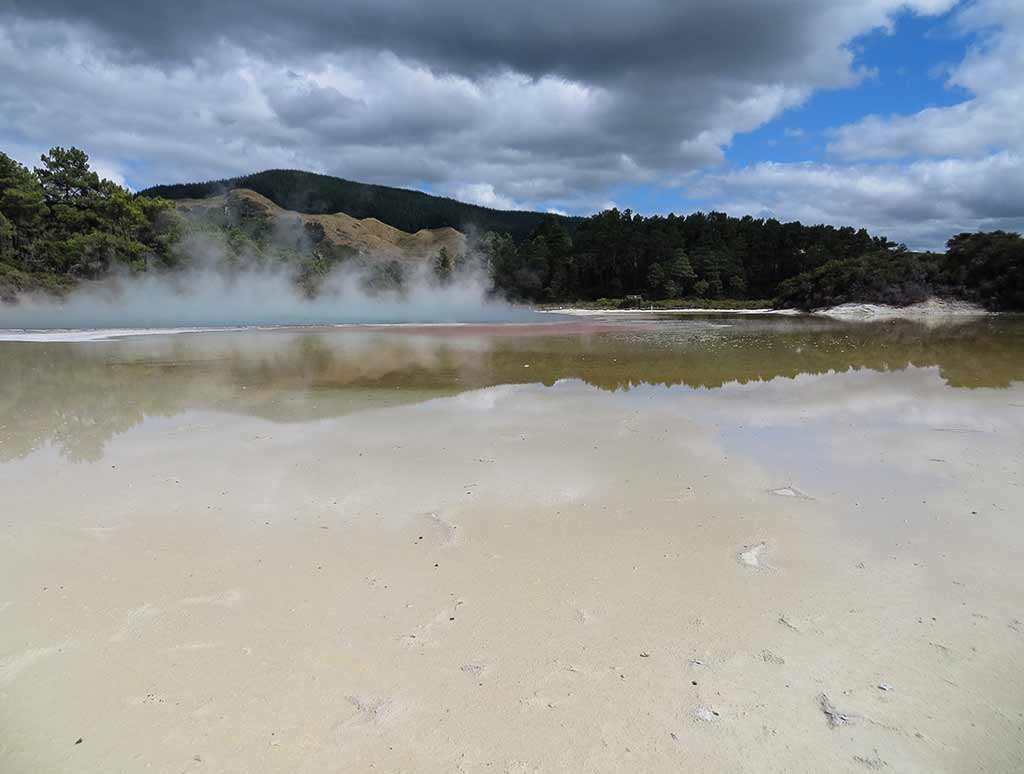
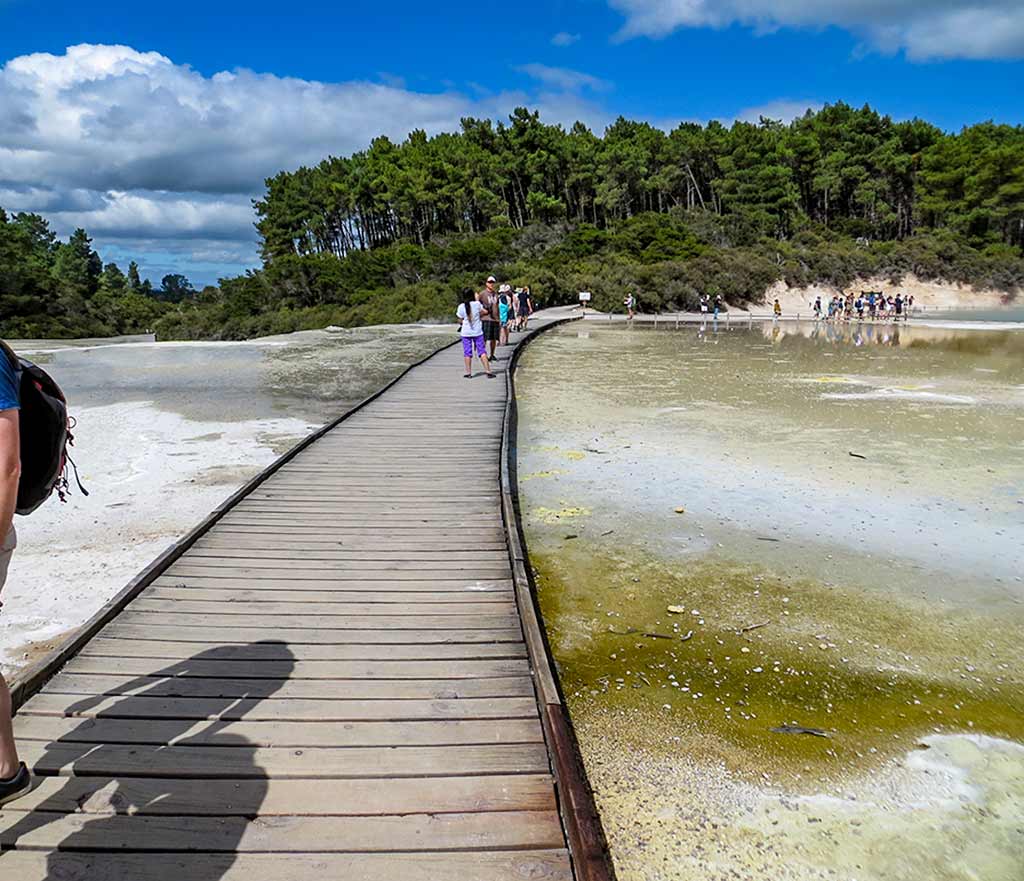
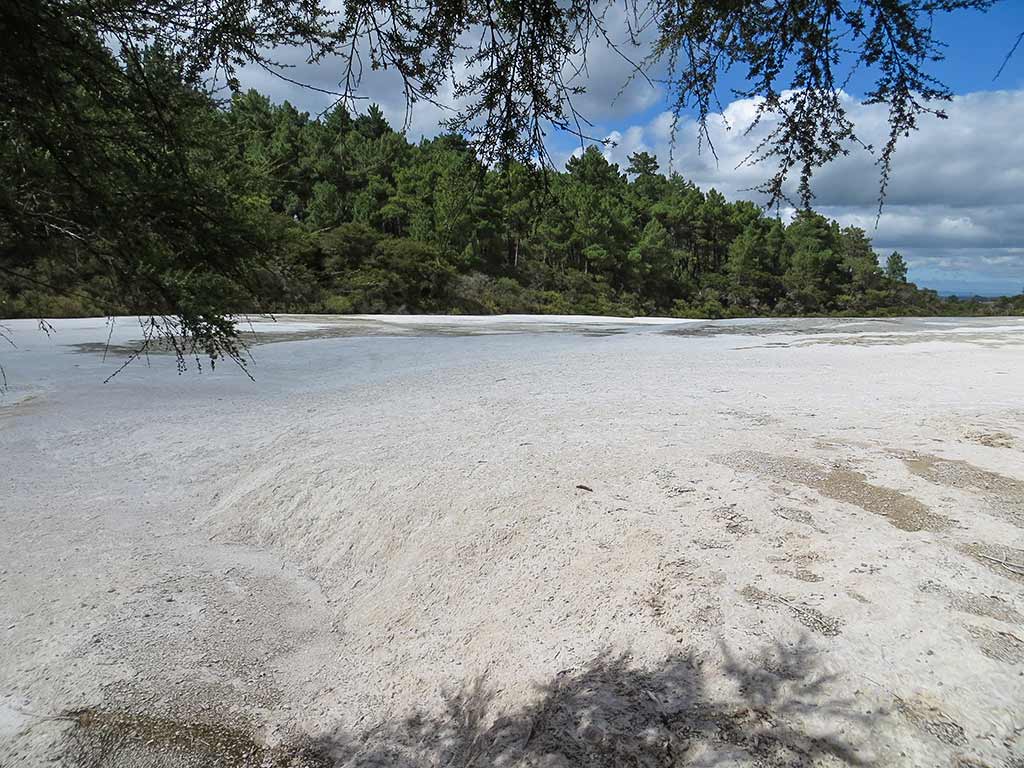
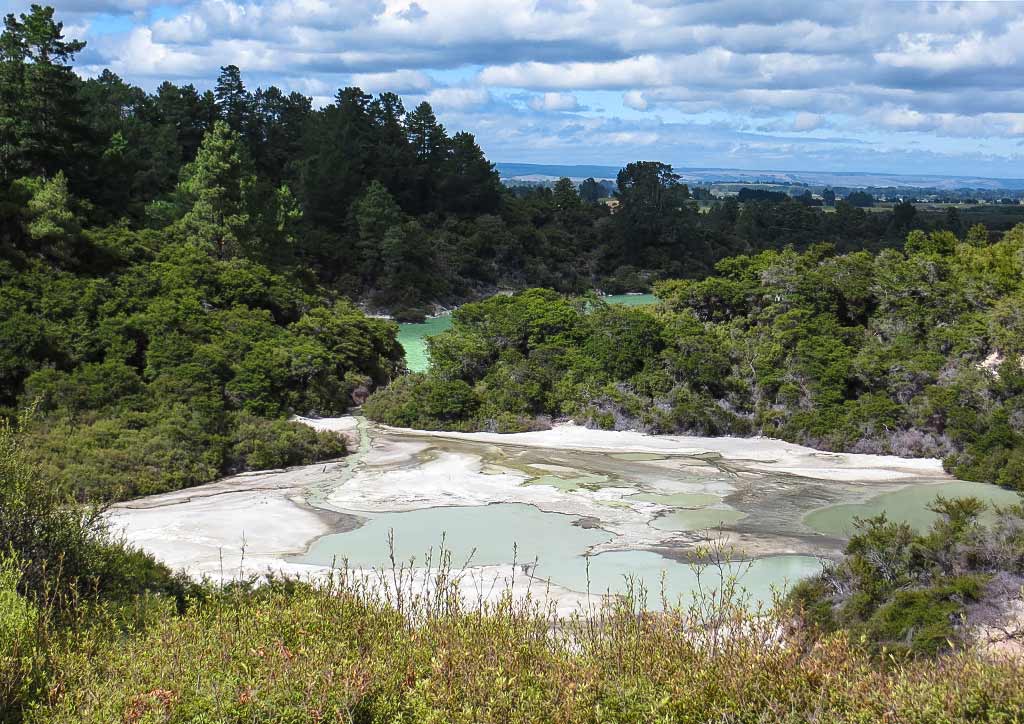
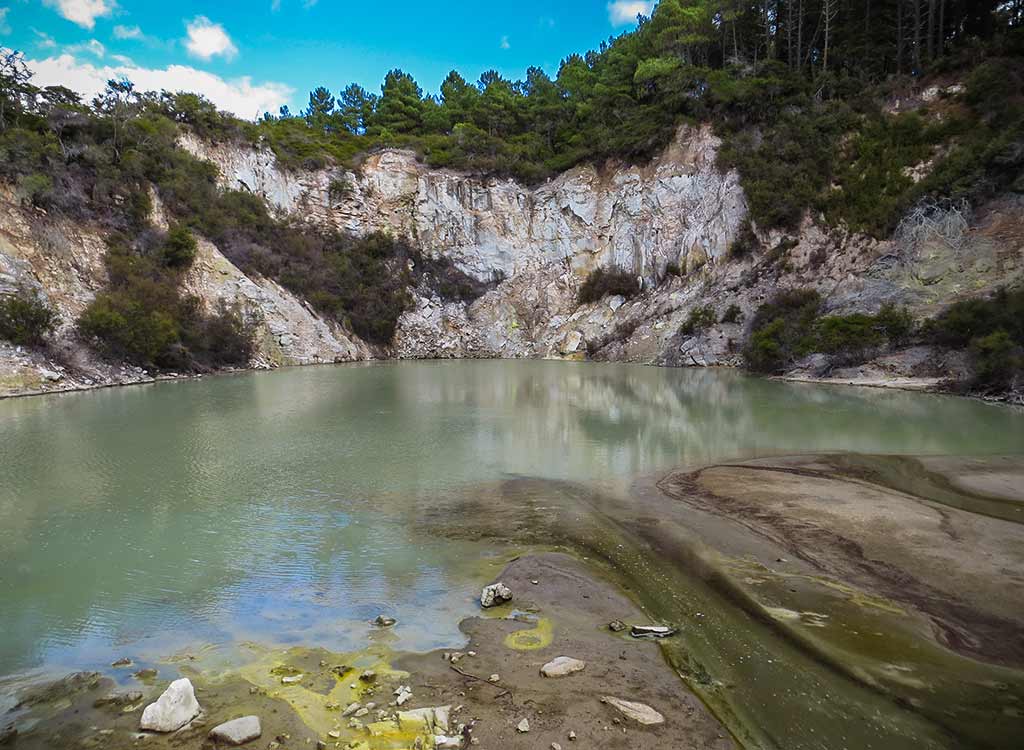
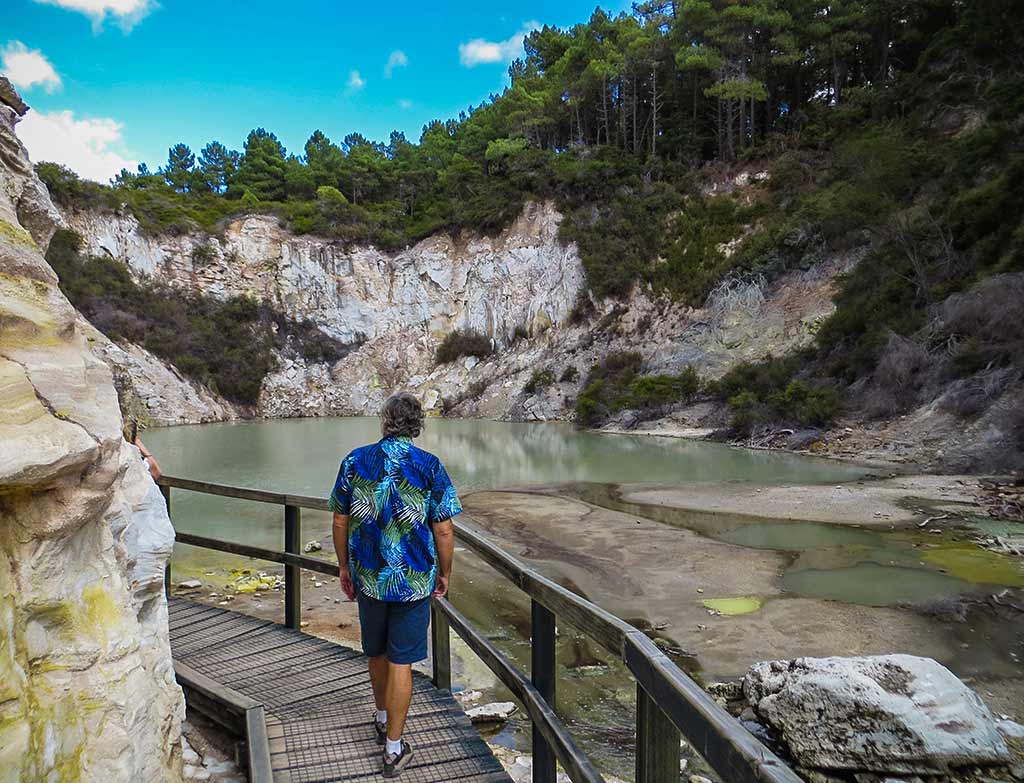
Our final outing in Rotorua was a boat ride across Lake Tawarera (the Lake Tawarera Water Taxi Eco Ride). Included with the ride was a visit to a hot water beach, a bush walk, and a soak in a natural hot spring. It would be a scenic outing, but getting a sense of the area’s volcanic history was a big part of the reason for doing this trip.

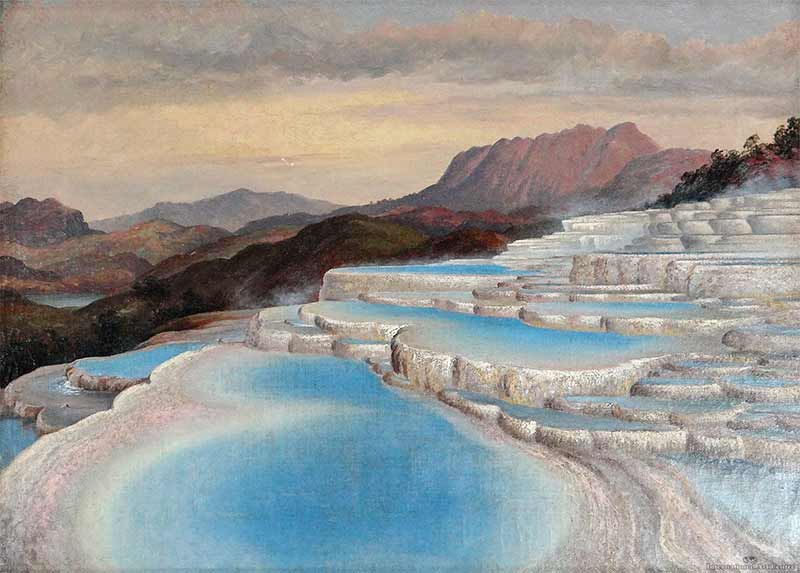
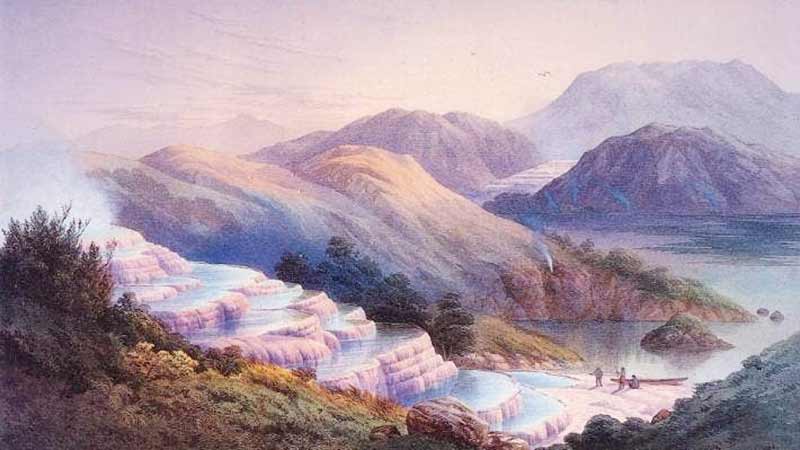
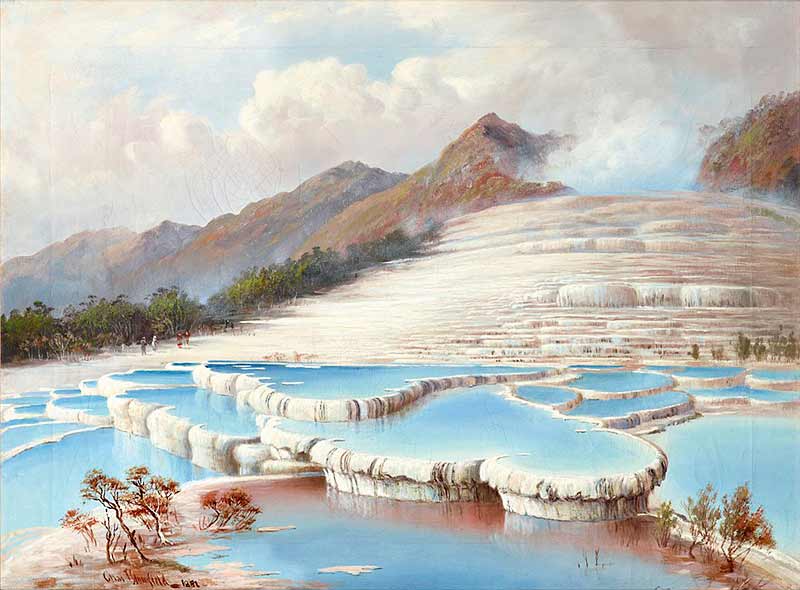
Before the late 1800s, this area was home to one of the world’s natural wonders, the Pink and White Terraces. These terraces were formed by upwelling geothermal springs of silica-saturated water. The mineral deposits in this water formed huge multi-level terraces covered with honeycombs of hot water pools.

So amazing were these terraces that even in the 1800s, visitors came from around the world to see—and soak in—the pools. The fact that these terraces sat on a lake surrounded by pristine mountain and forest scenery was an added bonus for these travelers.

The terraces which were located about a mile from each other. The White Terraces may have been the most striking to look at, but the Pink Terraces were preferred as the water had the most pleasant temperatures for soaking. Below, an artistic depiction of the Pink Terraces followed  by two of the Blue done by Charles Blomfield, an artist who spent extensive time in the area before the eruption.
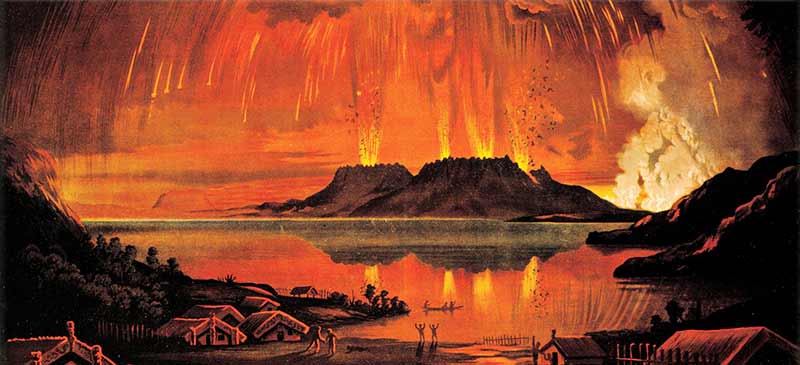
Sadly, this wonderland met its demise on a June night in 1886 when a massive volcanic mountain, Mount Tawarewa, erupted. The night’s events started with a series of earthquakes and a rash of sheet lightening. This was followed by the eruption of the volcano’s three peaks, each blasting columns of smoke and ash high into the sky.  Finally, around 3:30am, came the largest eruption, a pyroclastic surge that buried the terraces and several Maori villages. By the time this event finished, the shape of the nearby lakes and surrounding landscape were forever changed. The remains of the Mount Tawarewa are still visible, but the Pink and White Terraces are gone forever.

Below, a painting depicting the eruption of Mount Tawarewa. Having eruptions from three peaks must have looked like the end of the world to those who witnessed it!
Today, the largest of the buried Maori villages, Te Wairoa, has been excavated. Much of it was preserved by the volcanic ash, and it’s not surprising that this archaeological site is a popular tourist destination. For us it was tempting to visit, but in the end we decided to learn about this history by taking the tour boat ride.

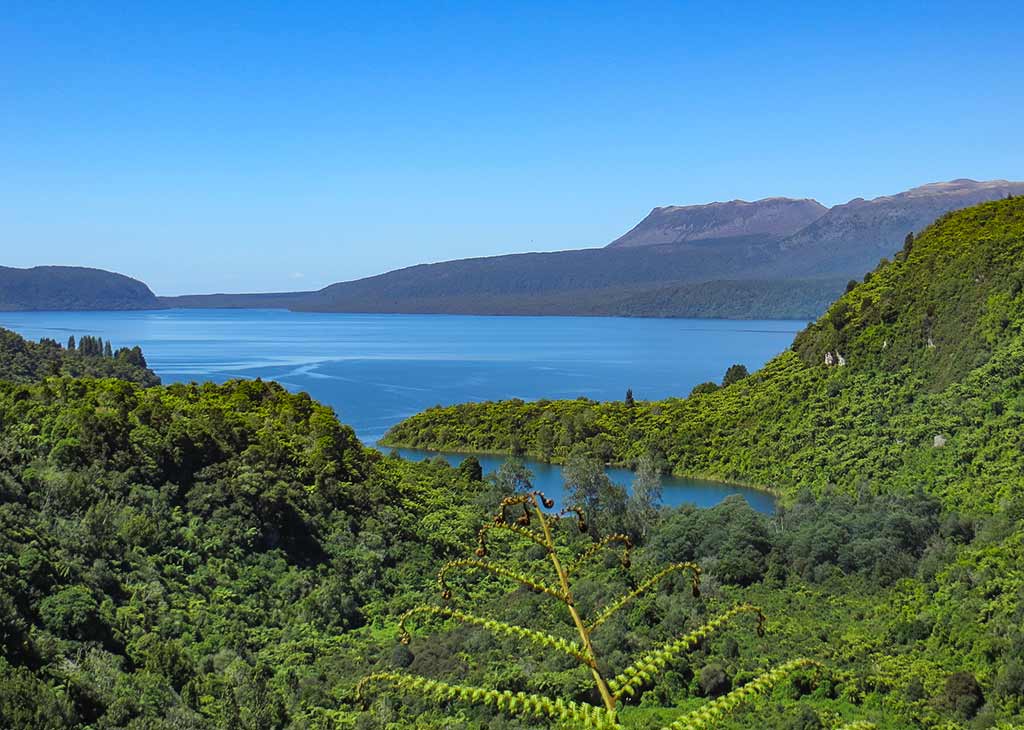
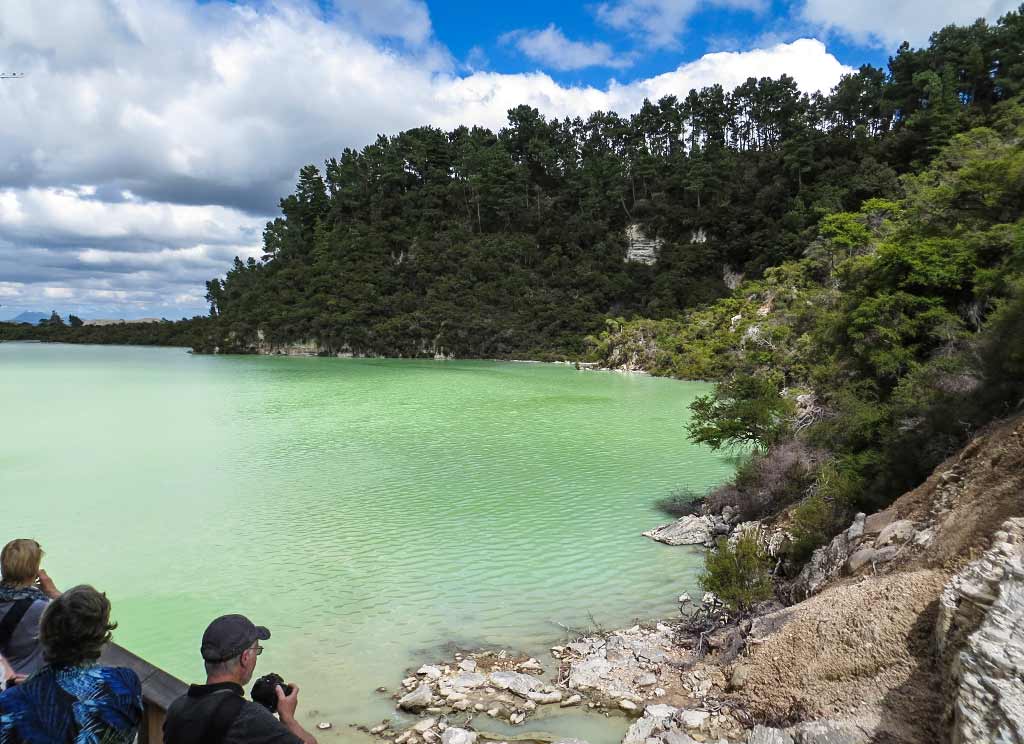
Before going to the lake, we stopped at an overlook to read the plaques and take in a view of the lake.
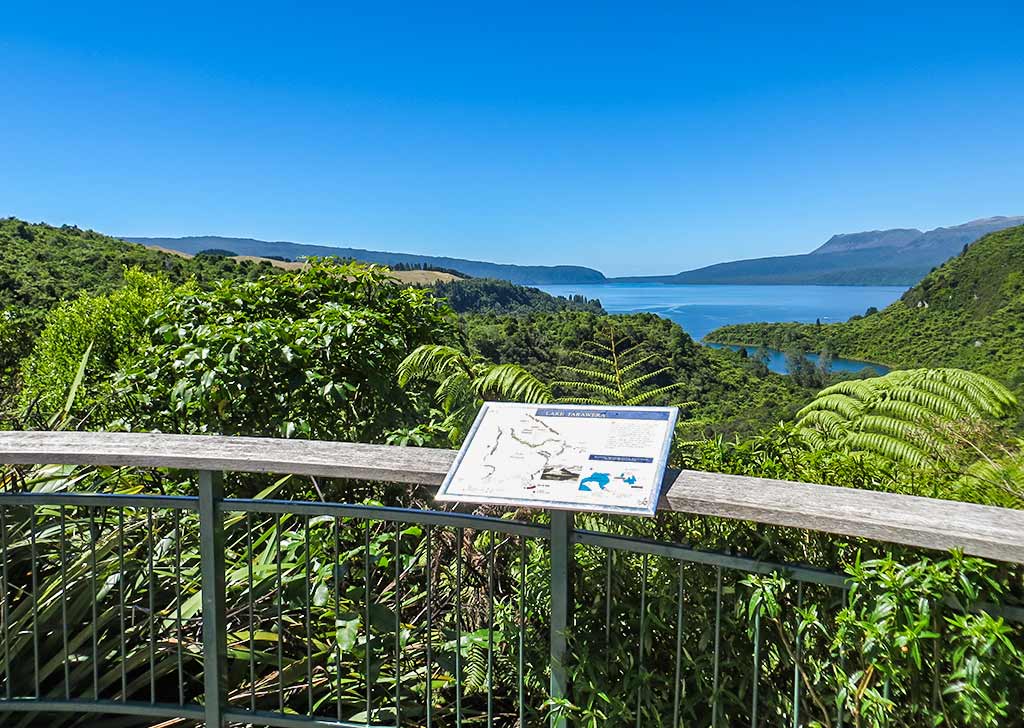
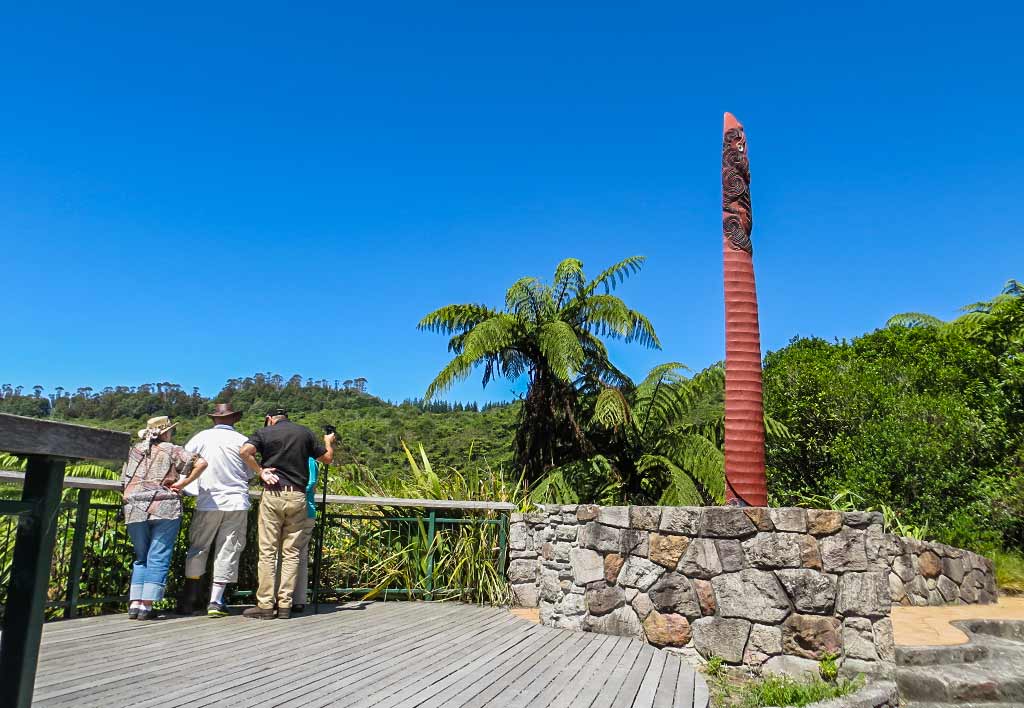
We then headed to the boat and met up with the other passengers and our guide, Dave. Soon we were all onboard and headed across the lake. Occasionally Dave would stop the boat to tell us stories of the past and what it was like when the volcano erupted. I’m not always a fan of being part of a tour group, but there are times that a special synergy happens when the guide is a good story teller and the group anxious to hear the information. It’s like going back to being a kid during class story time, listening with wonder as the teacher would read form a spellbinding book. This tour felt like that, the story brought to life by our guide and the scenery around us.

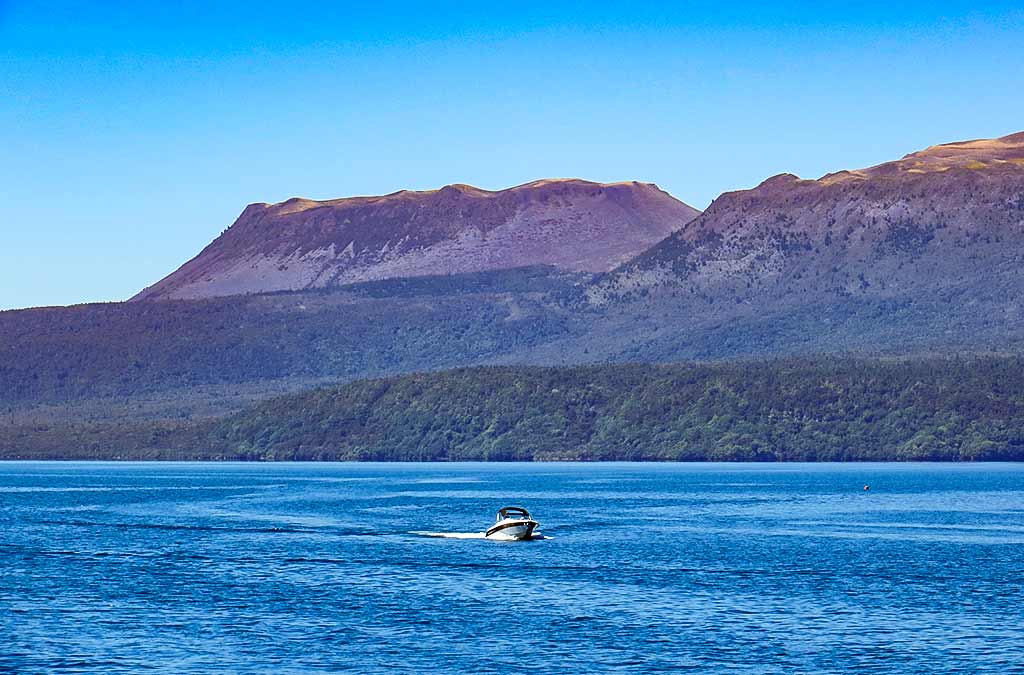
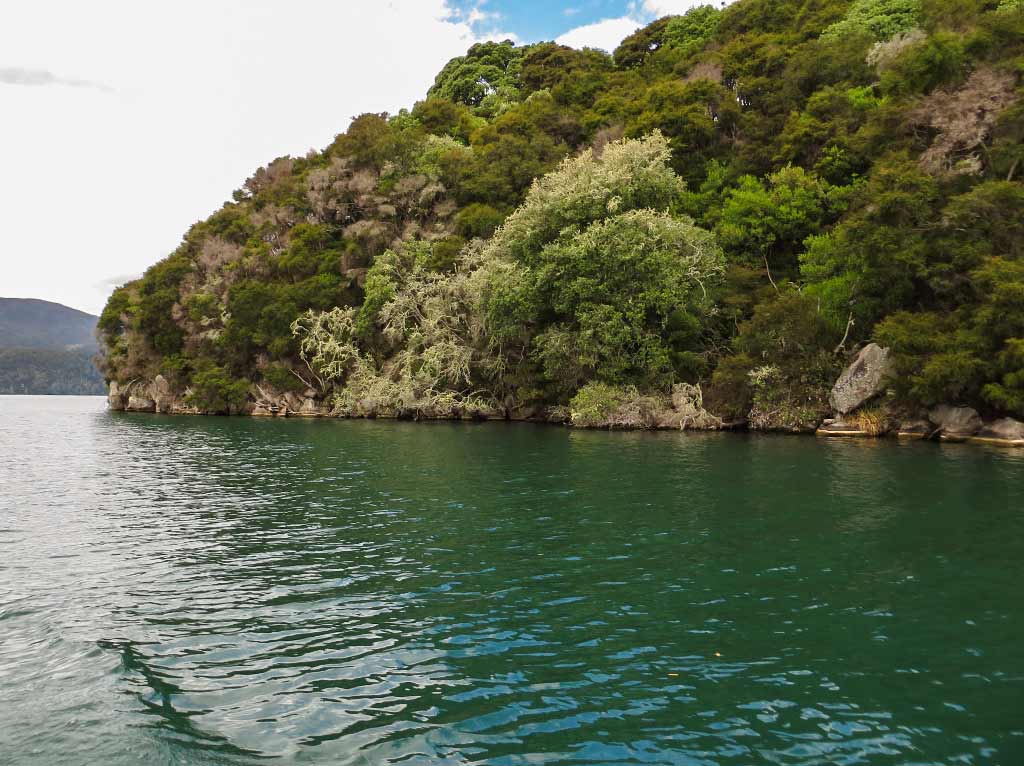
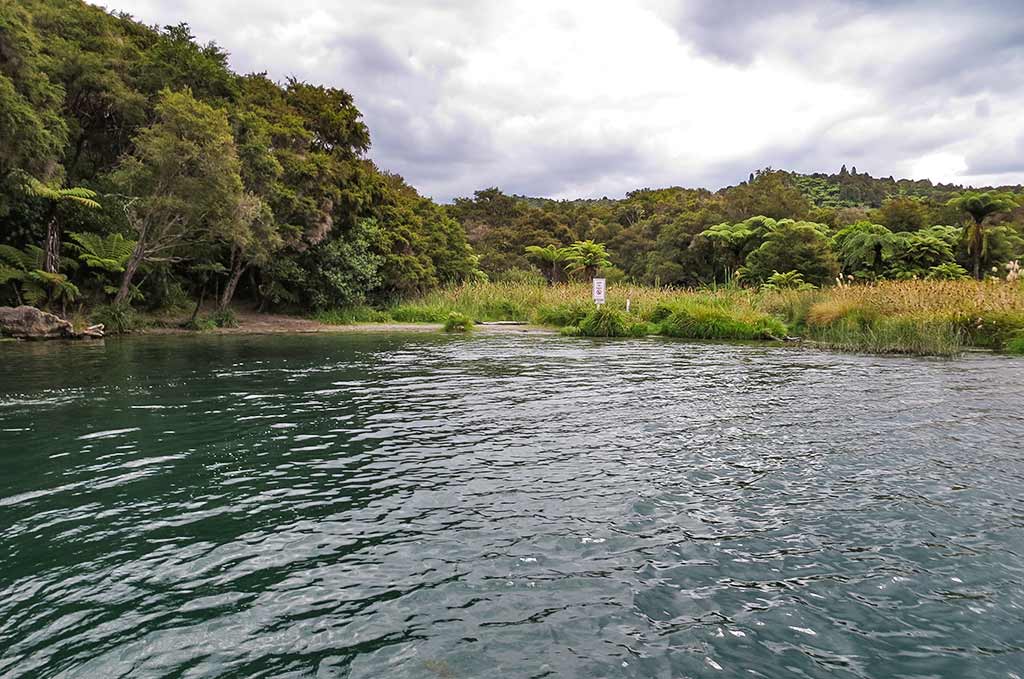
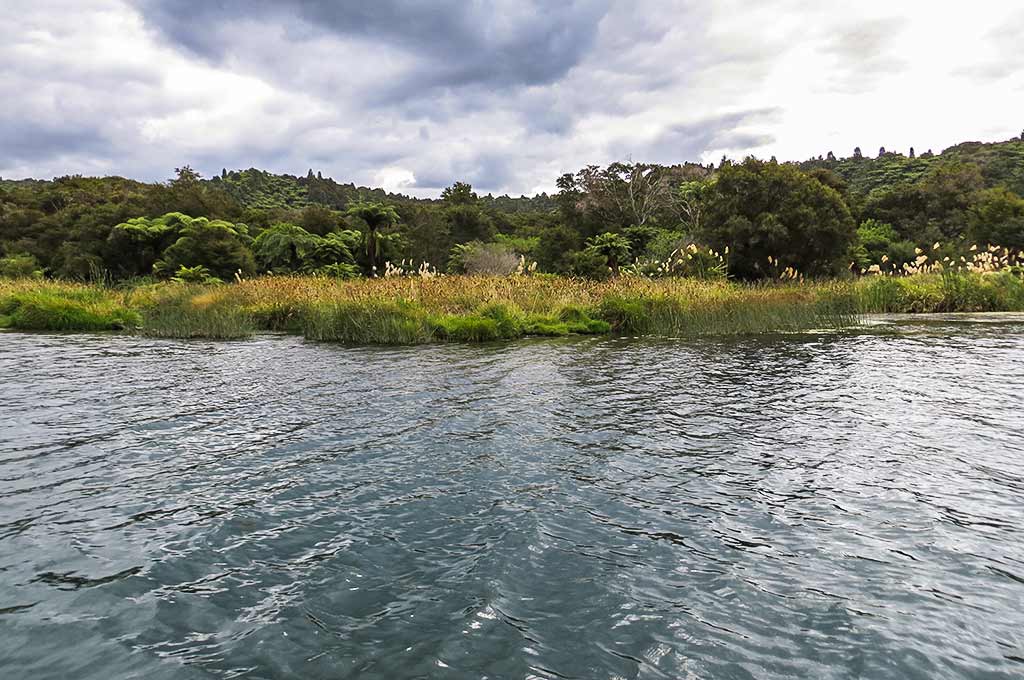
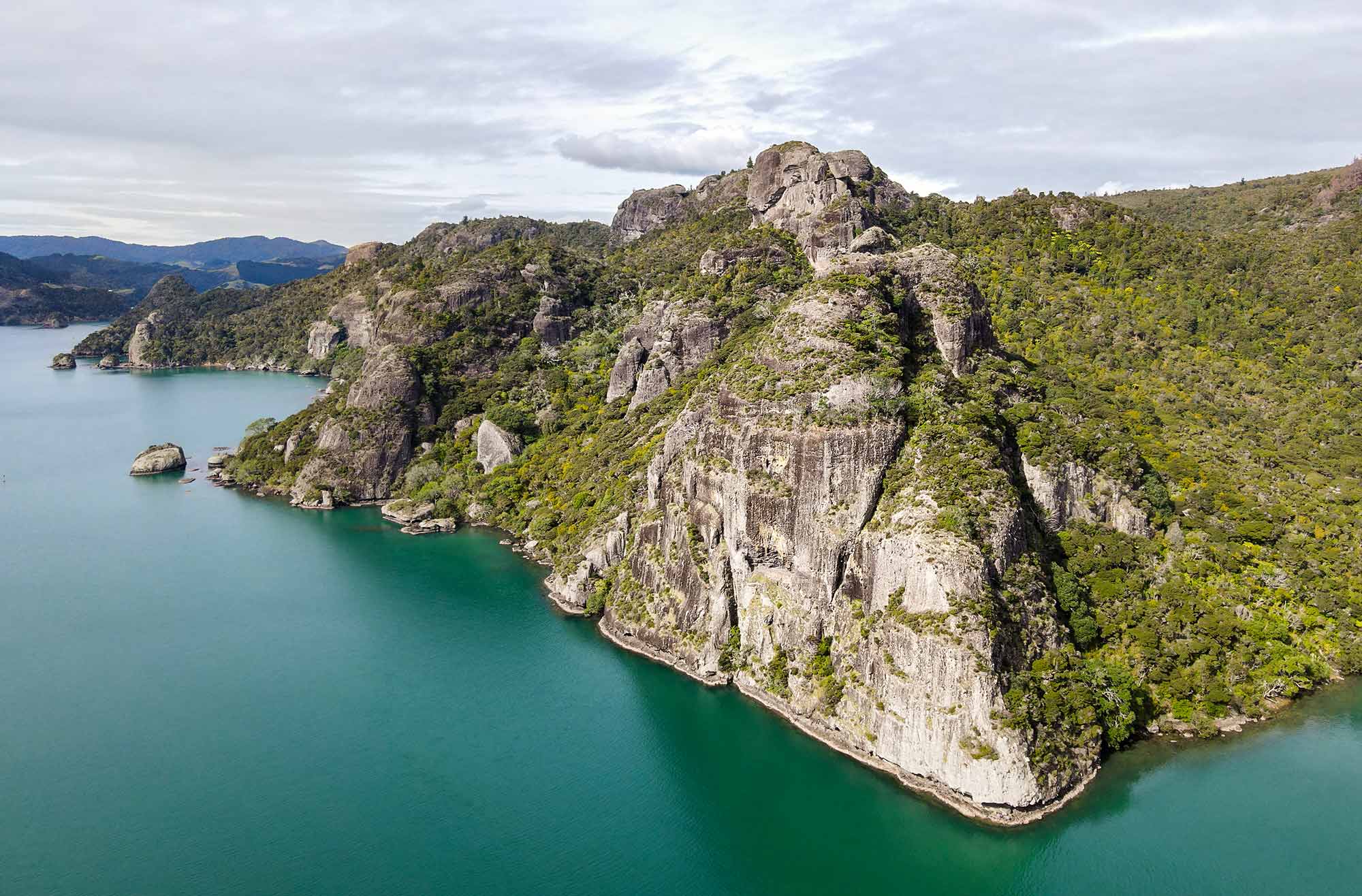
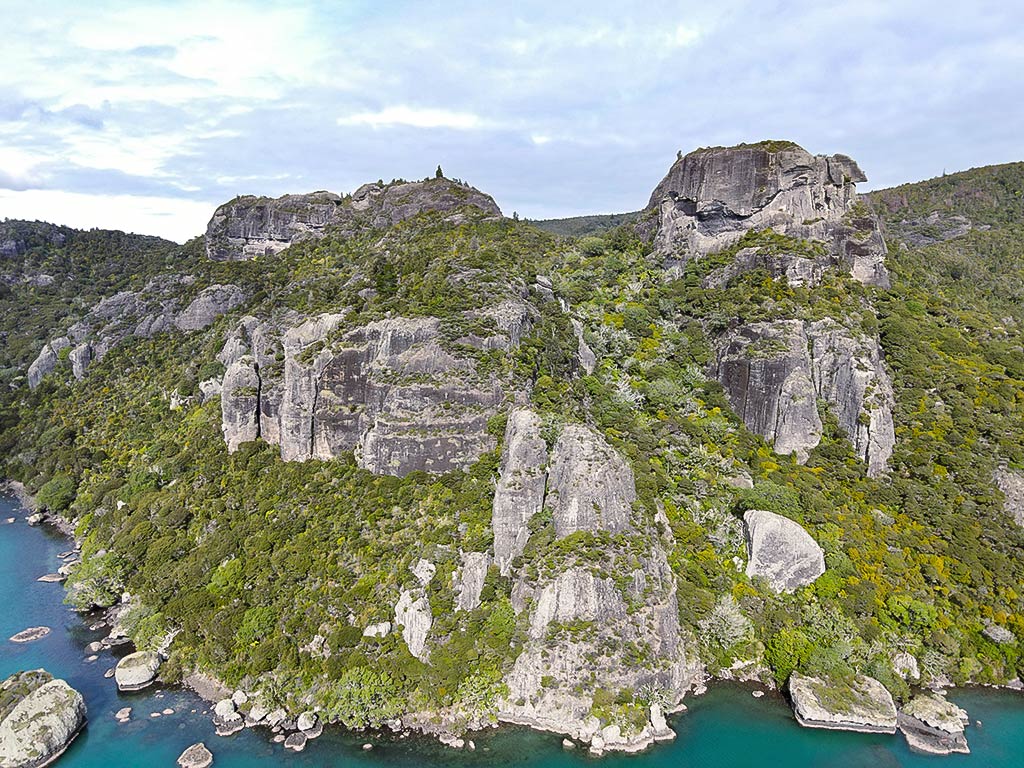
Below, a gallery of photos from our boat ride, including the remains of Mount Tawarera (click on any photo to enlarge).
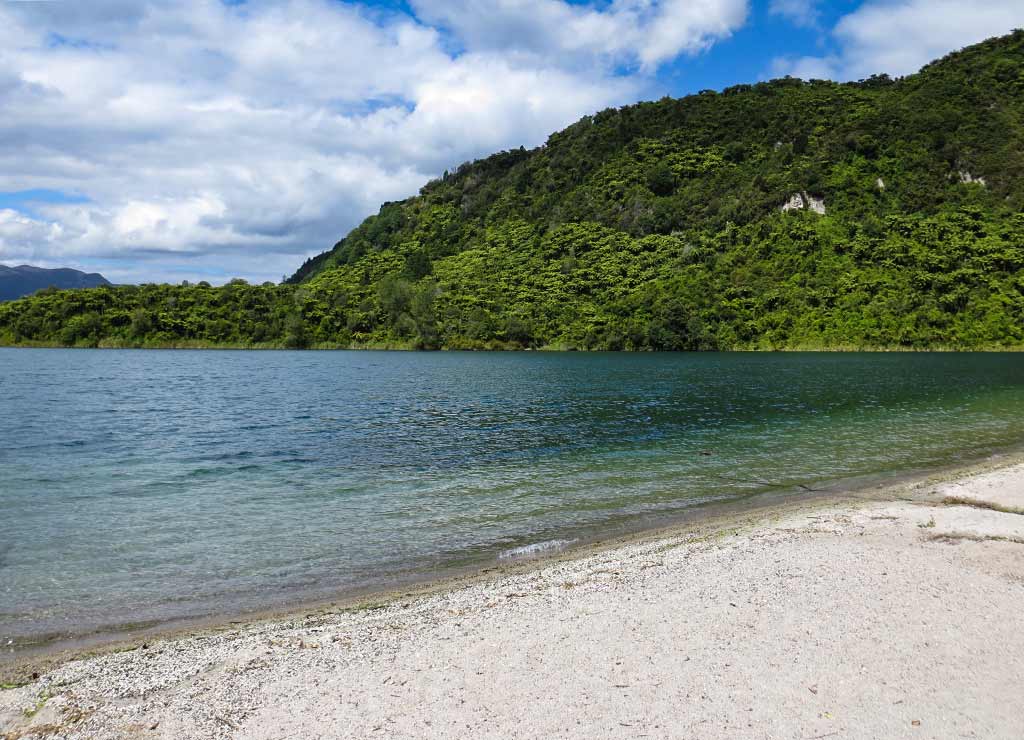
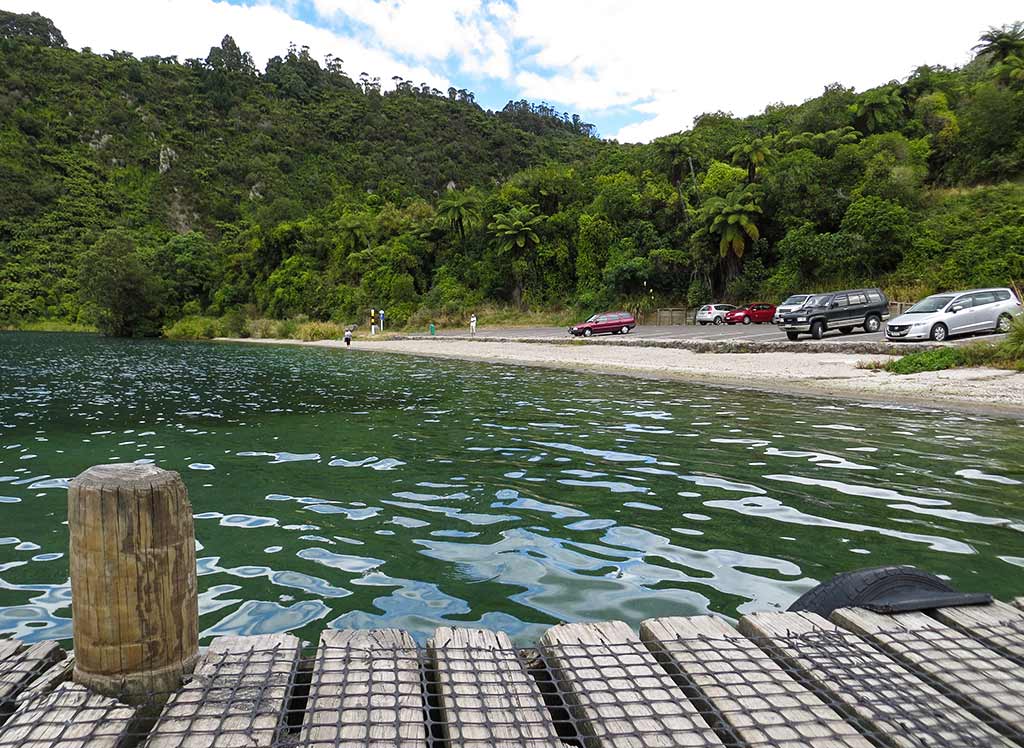
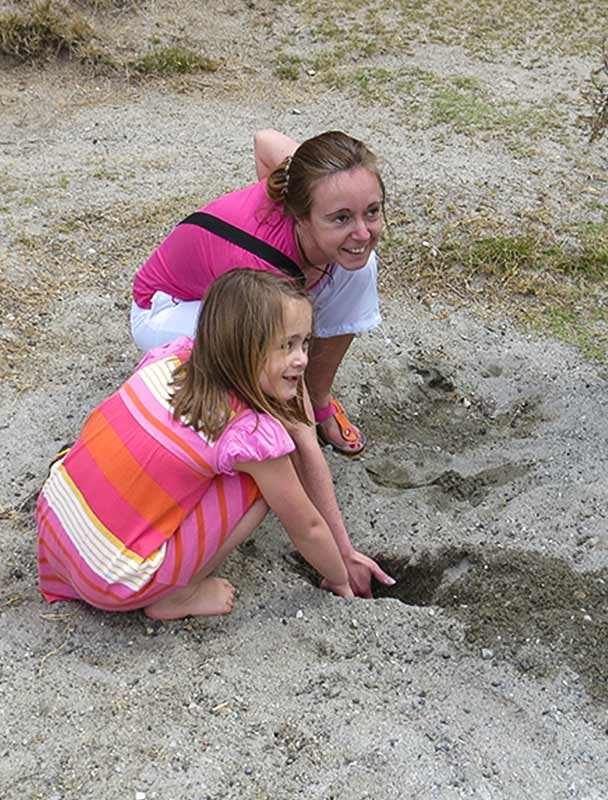
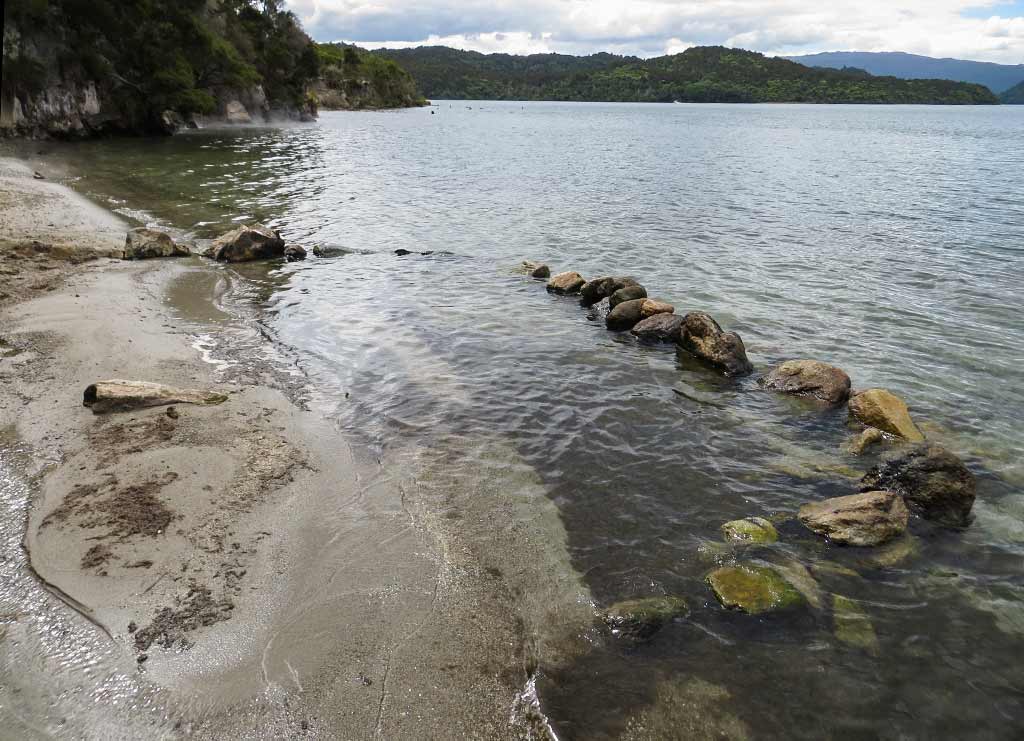
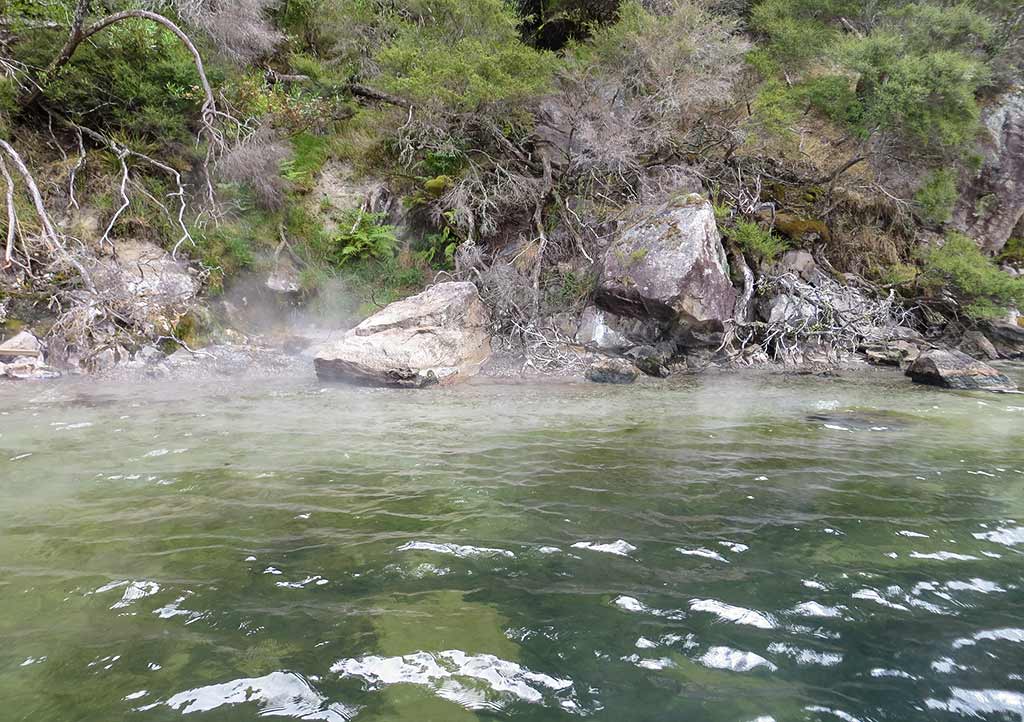
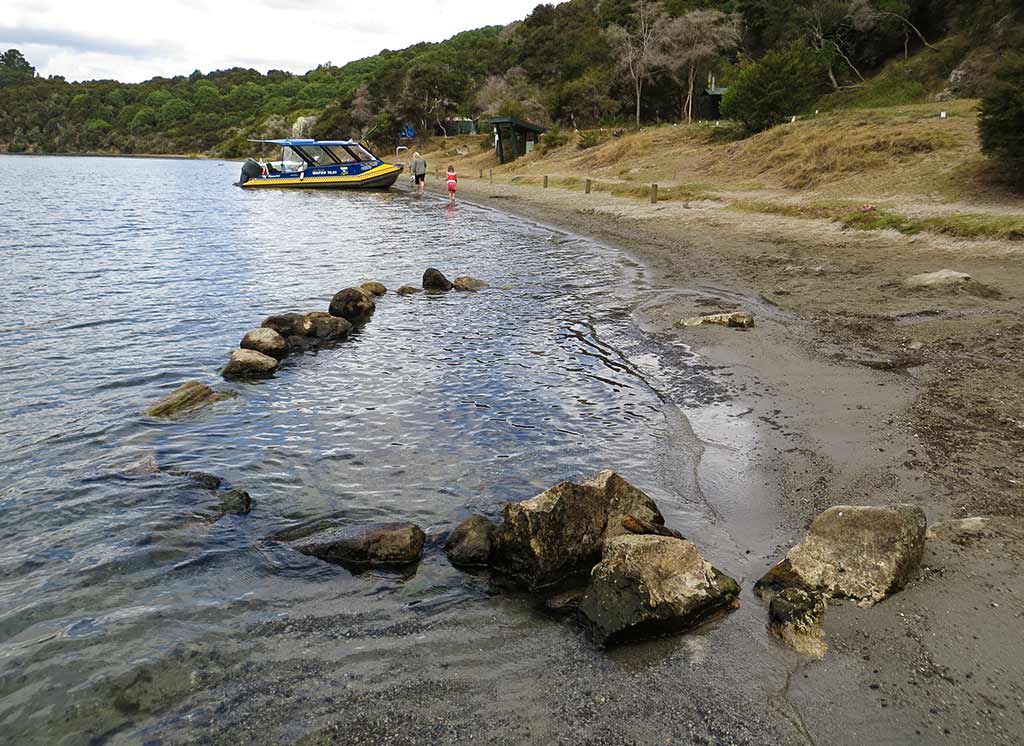
After a time, we arrived at the hot water beach, a phenomenon that happens in a few spots in New Zealand. Basically when the tide is right, you can dig in the sand and find hot water, making your own little hot pool. We then walked to an area with streams of scalding water where one could cook food (a traditional Maori way of cooking). I accidentally stepped in a small finger-size stream of hot water, burning my toe. I went to cooler water to cool it off but found hot sand at the bottom of it. This geothermal activity can complicate things if you pick the wrong place to cool off. Below, a gallery of photos of the beach…
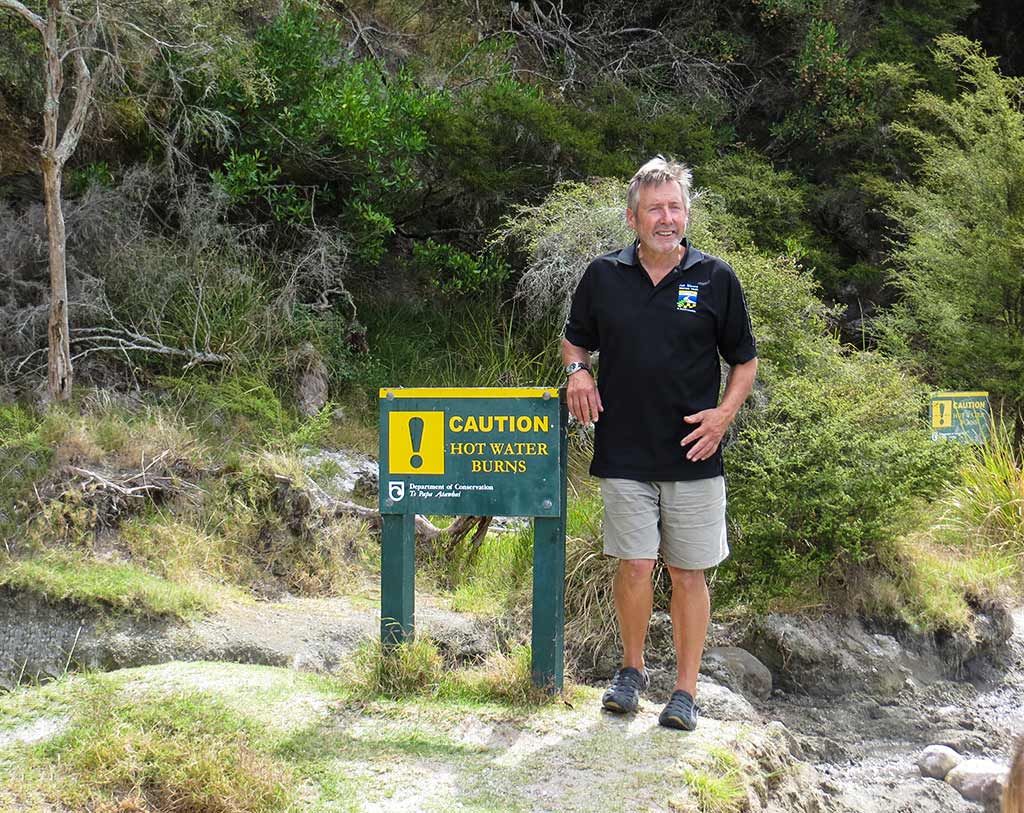
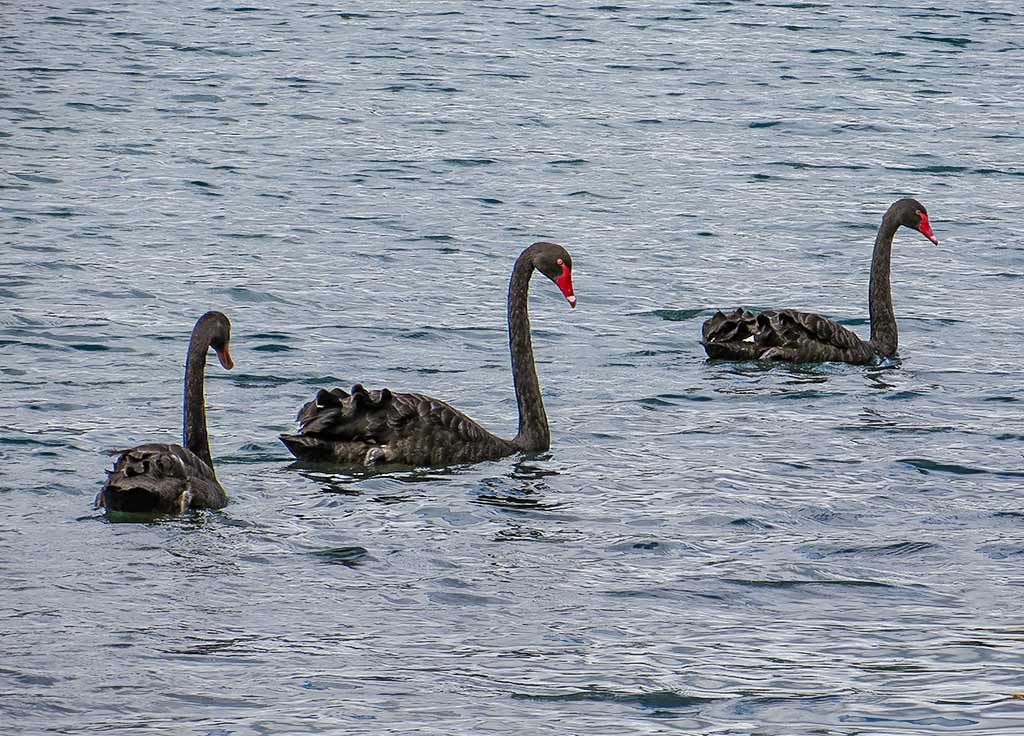
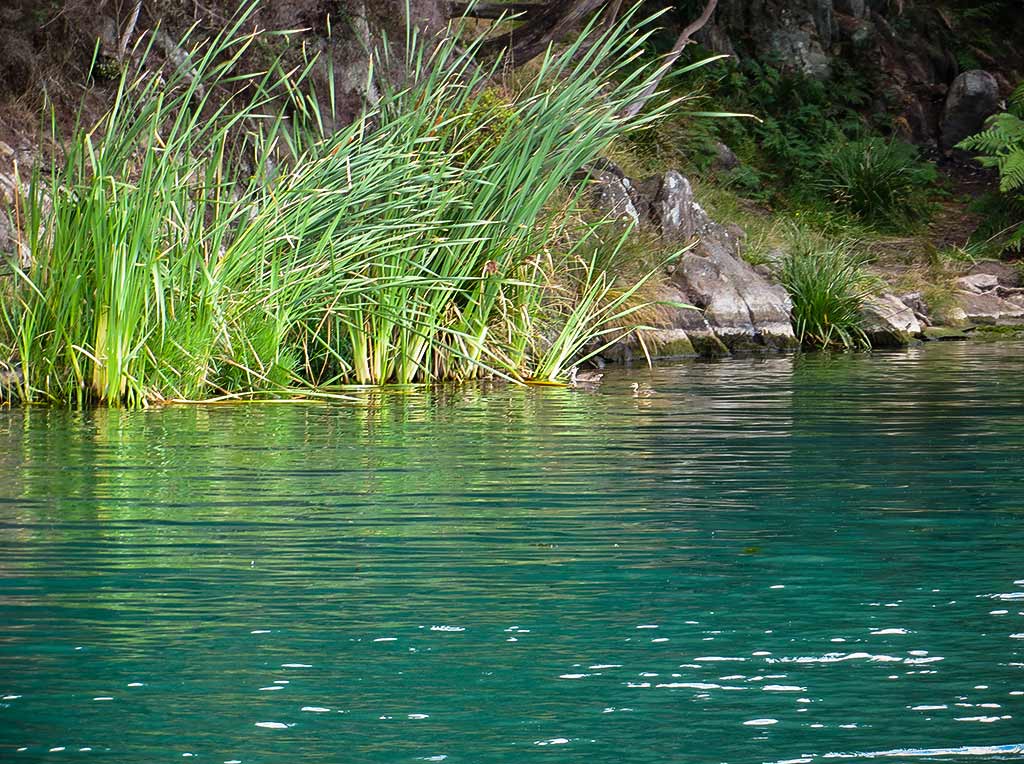
We continued to follow Dave around, taking in the information about this exotic place. Black swans floated nearby and came close, and Dave pointed out to us a very rare small bird.

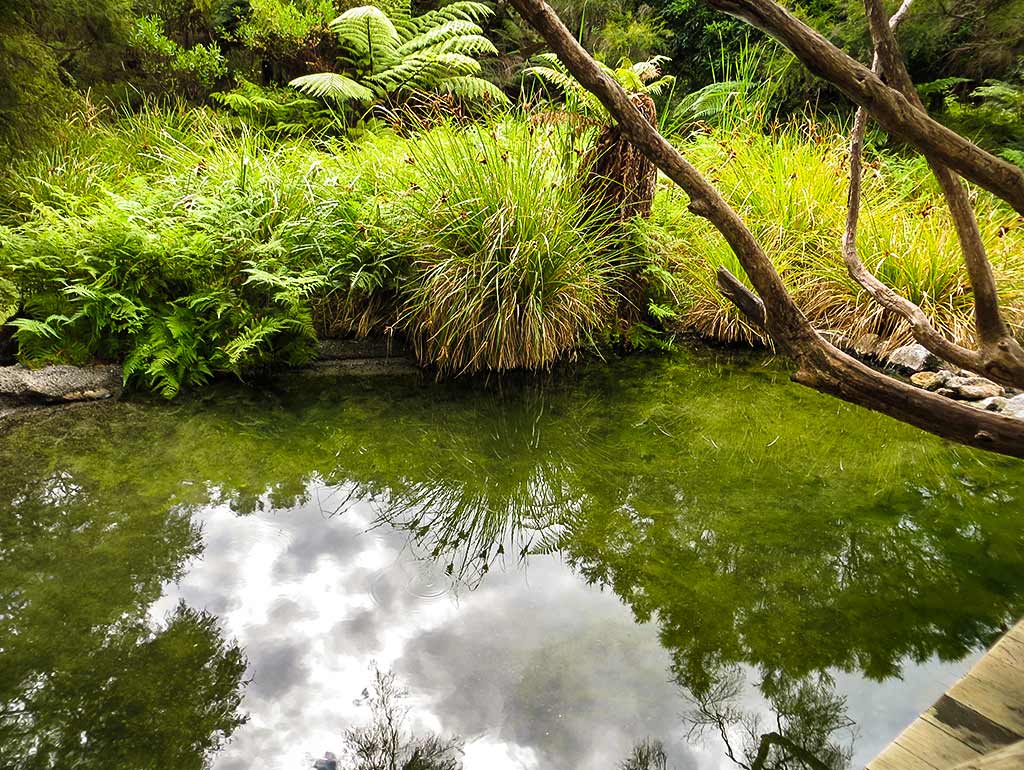
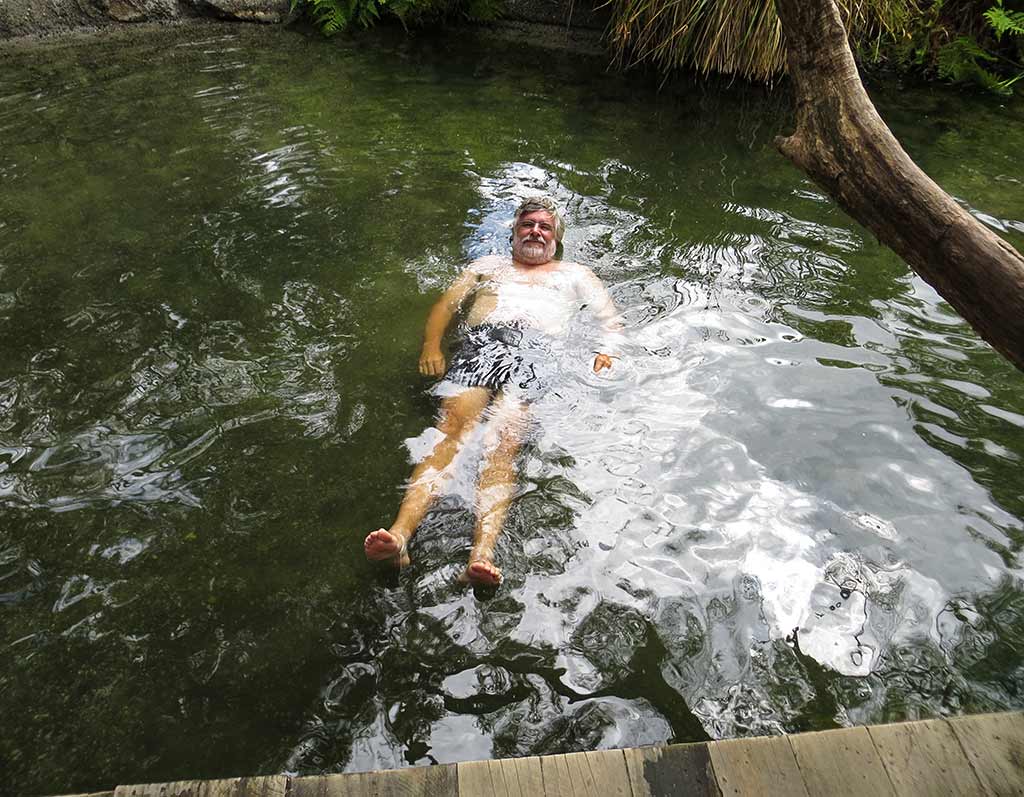
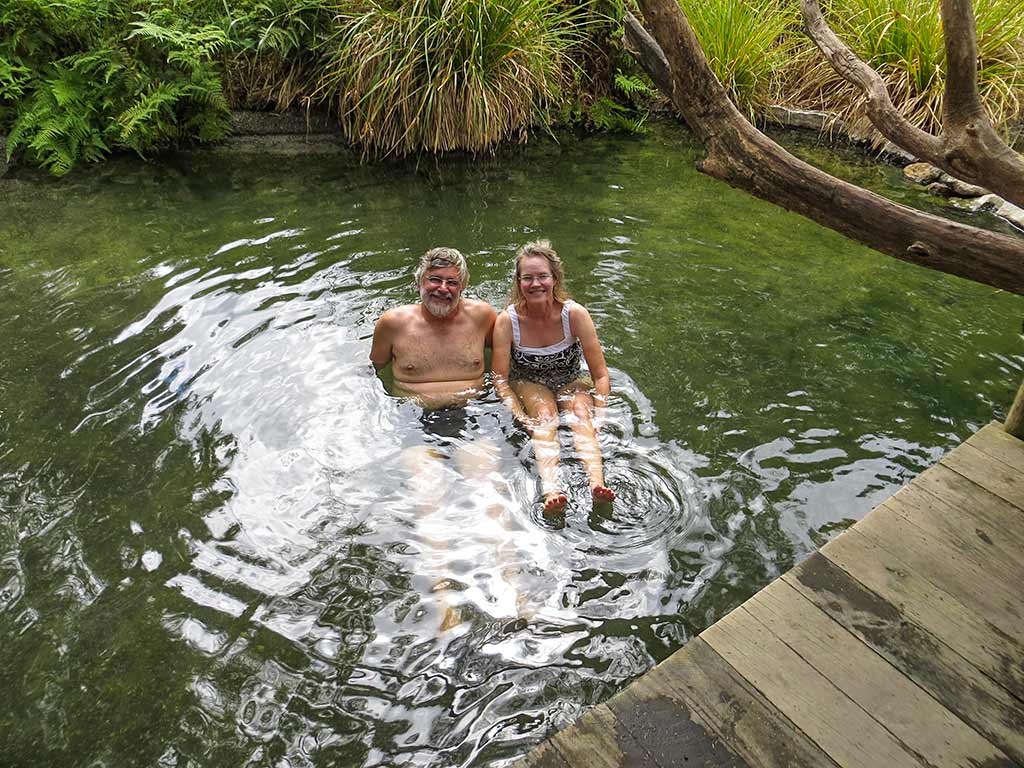
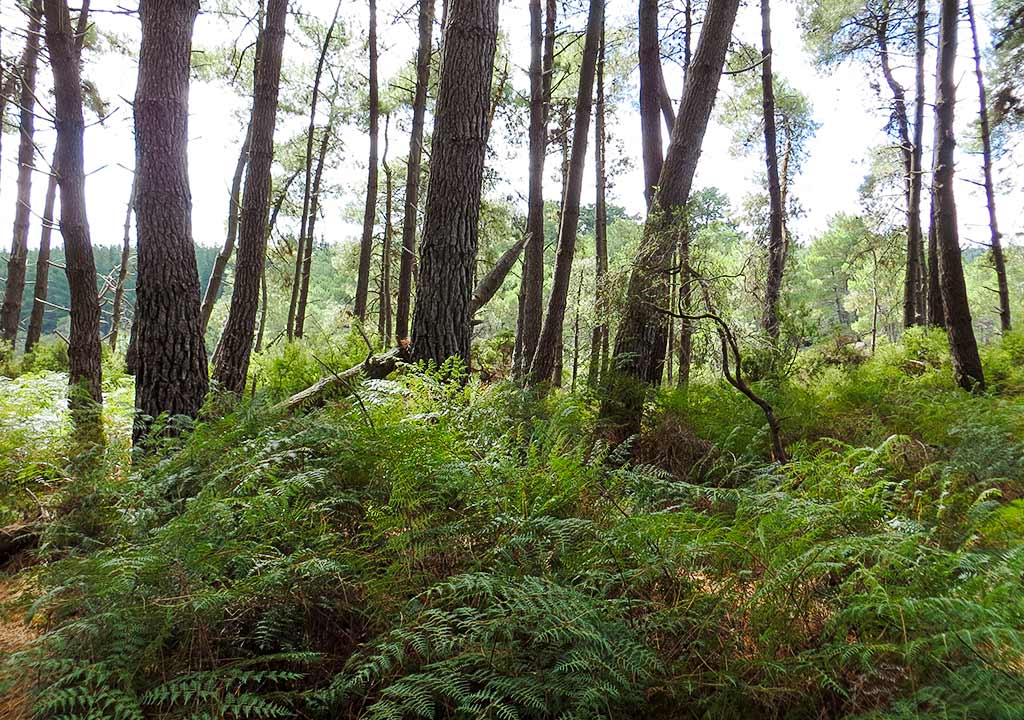
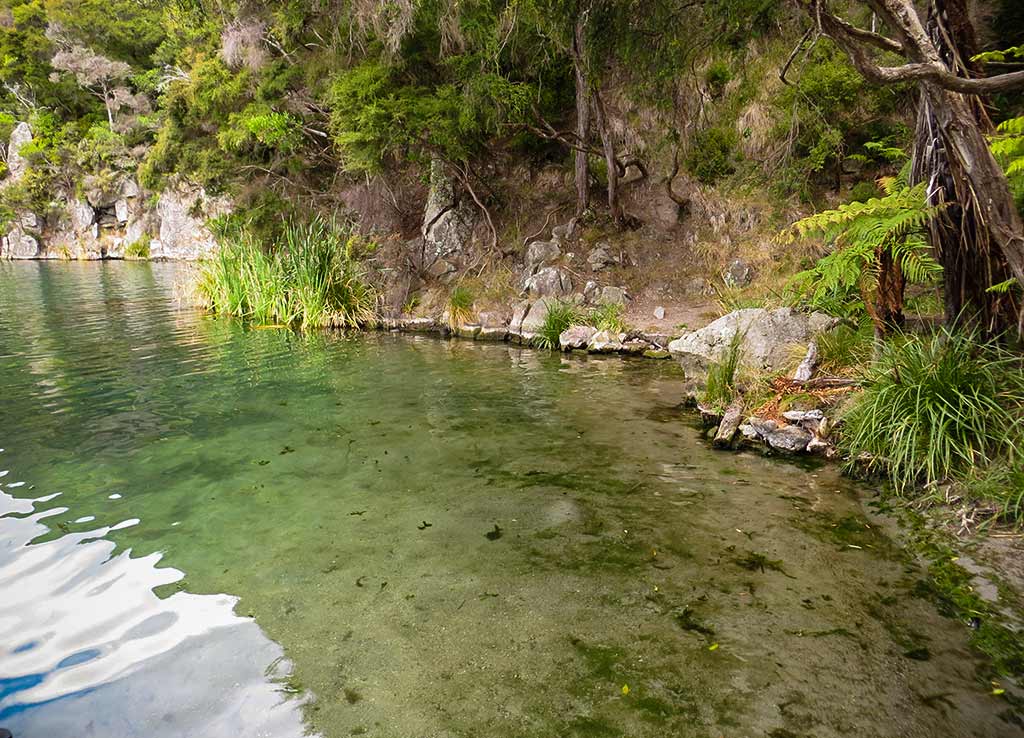
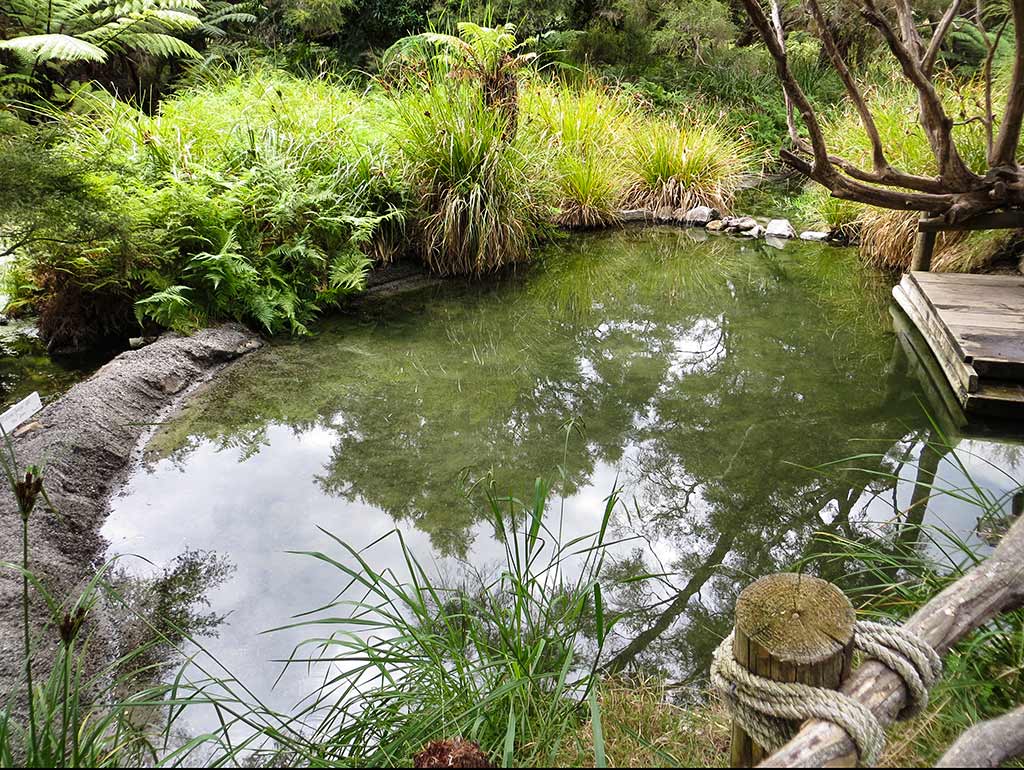
We went on a short bush walk and found the hot spring pool. It’s natural but has been enhanced by a small deck and rocks to dam the water. We’d worn our bathing suits, as had a few others in the group, and we headed into the pool. It was lovely to have a nice long soak in that hot spring.
Afterwards, we headed back to the boat, speeding across the lake feeling warm and relaxed after the soak. In all, this was a very satisfying and fitting end to our trip to Rotorua.

Once back in Tauranga we thought we’d treat ourselves to dinner at Phil’s, the lovely restaurant overlooking the Tauranga Bridge Marina. While we took showers, the owners saved us a table outside on the rail, under an umbrella and overlooking the water. This evening became one of our special moments in New Zealand, happy after the trip, sitting in the warm evening sun, Penny serving us cold New Zealand Sauvignon Blanc to go with the restaurant’s special seafood chowder. This is the kind of moment where life just feels good. Our Rotorua trip, topped by this dinner, was just what we needed to kickstart our time in Tauranga. –Cyndi


Weather Coming

May 22, 2021

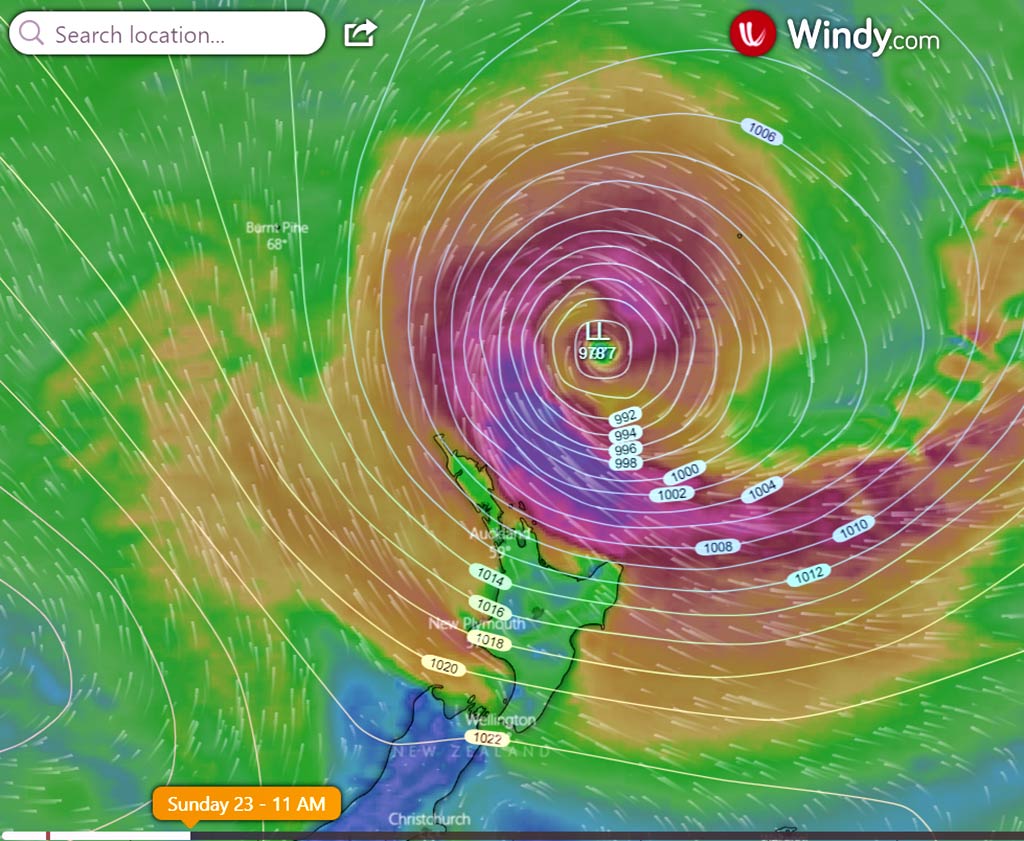
All the forecasts call for strong wind for the next five days or more so our usual game of weather-chess begins. What’s the best move? Shall we go north? South? Head into a marina and sit it out?

From Windy.com

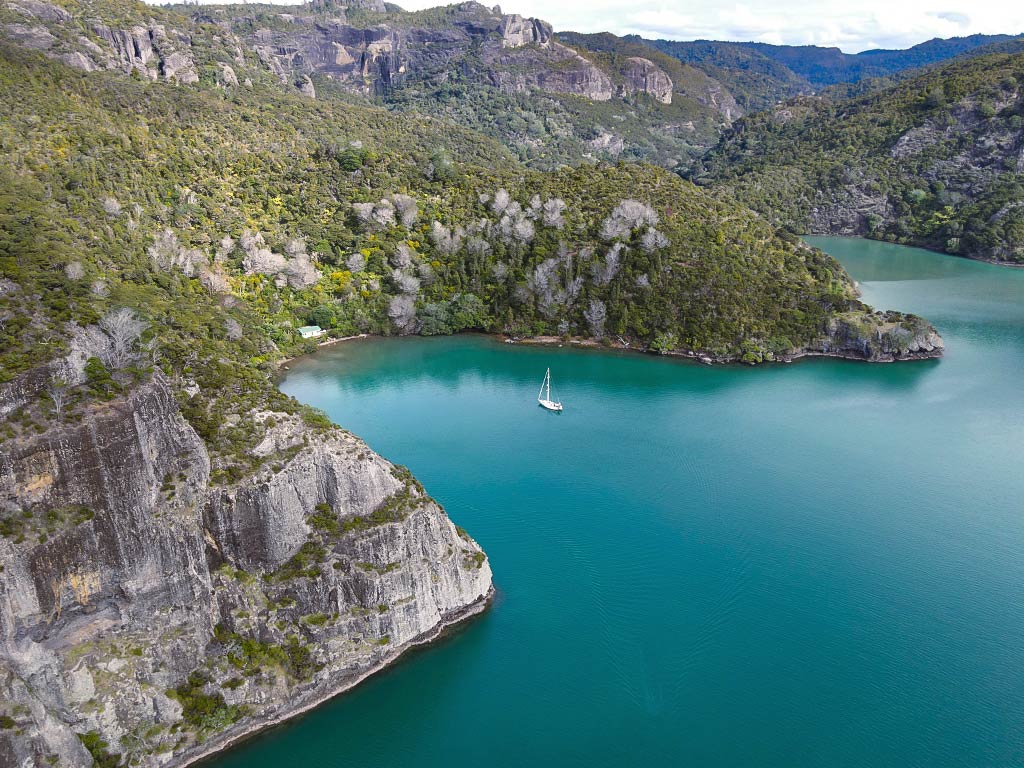
We decided to go into Whangaroa, hoping that its huge cliffs would provide great protection from the blow (rather than funneling the down the cliffs and blowing the paint off the mast!).

Here’s where we sit now…

Legacy anchored in Rere Bay.

And here’s our neighborhood…

That rock above us is called “The Duke’s Nose.” We’ve posted about it before.
We’re tucked into the bay with the water taxi coming out.

(You can enlarge any of the above pictures by clicking them. Full size, they really convey the grandeur of this place.) -Rich

Beautiful Sunrise Sight

May 19, 2021

I climbed up into our cockpit and the cold morning air just as the sun was rising and our neighbor for the night, Fanshi, was getting underway.

This boat was built by Annie Hill. It’s a truly beautiful creation and the way it moved so smartly through the water in just the lightest breeze makes me envy the junk rig. Unfortunately we didn’t meet her, though we shared a bay for the night. We learned about her from her blog. She has cruised over 100,000 miles in her previous boats. We really hope our paths cross again soon and we can get to know her. -Rich

Poor Knights Video

May 15, 2021

During this little New Zealand cruise we’re on, we had the chance to anchor at Poor Knights Islands. Here are some highlights in a short video set to music.

The video includes two flights through caves and arches. There’s a small cave that I was too afraid to fly through so we motored through in the dinghy while holding the drone. (“Cheater!” I know.)

It was hard to control the drone (DJI Mavic Air 2) in the caves as it kept wanting to dive into the water for a swim. We didn’t think this was a good idea. It has a tendency to lose altitude while flying low over the water but for some reason, in the caves, it was much worse. It got our heart rates up several times!

These islands are magical as well as difficult for boating. There aren’t a lot of good places to anchor – places that aren’t deep with rocky bottoms. Both times we’ve been there, we’ve waited for very calm conditions to go. This was the first time we felt comfortable spending the night.

There are a bunch of still pictures from our time there in this post: May Getaway.

-Rich

Our Trip to Rotorua, Part 3: Wai-O-Tapu Thermal Park (New Zealand) (New Zealand)

February 26, 2014

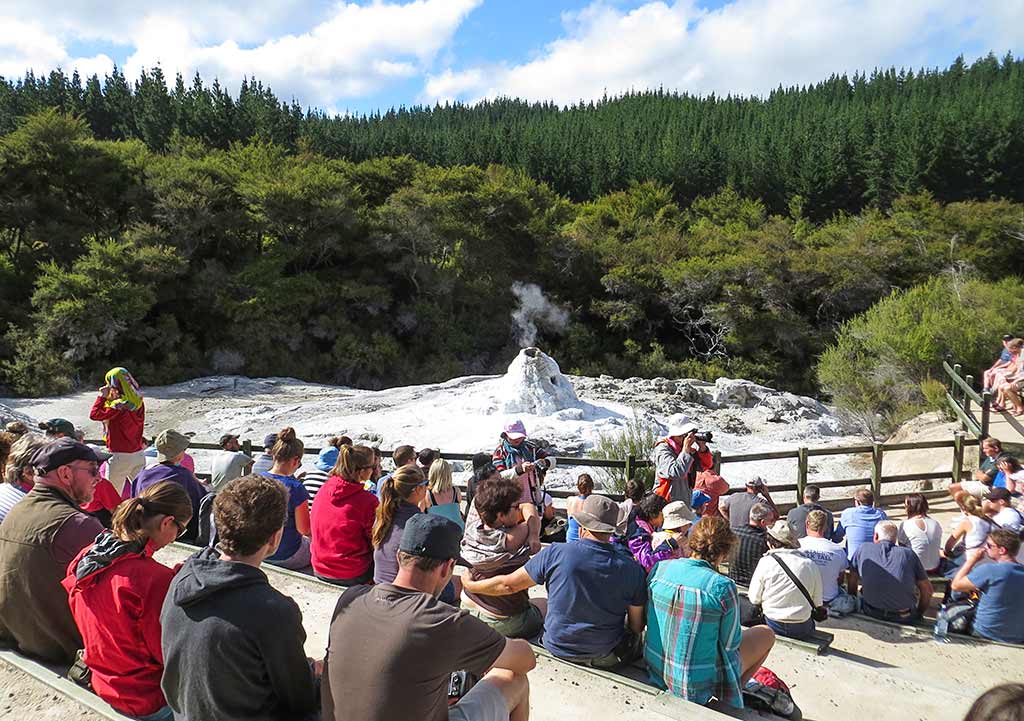
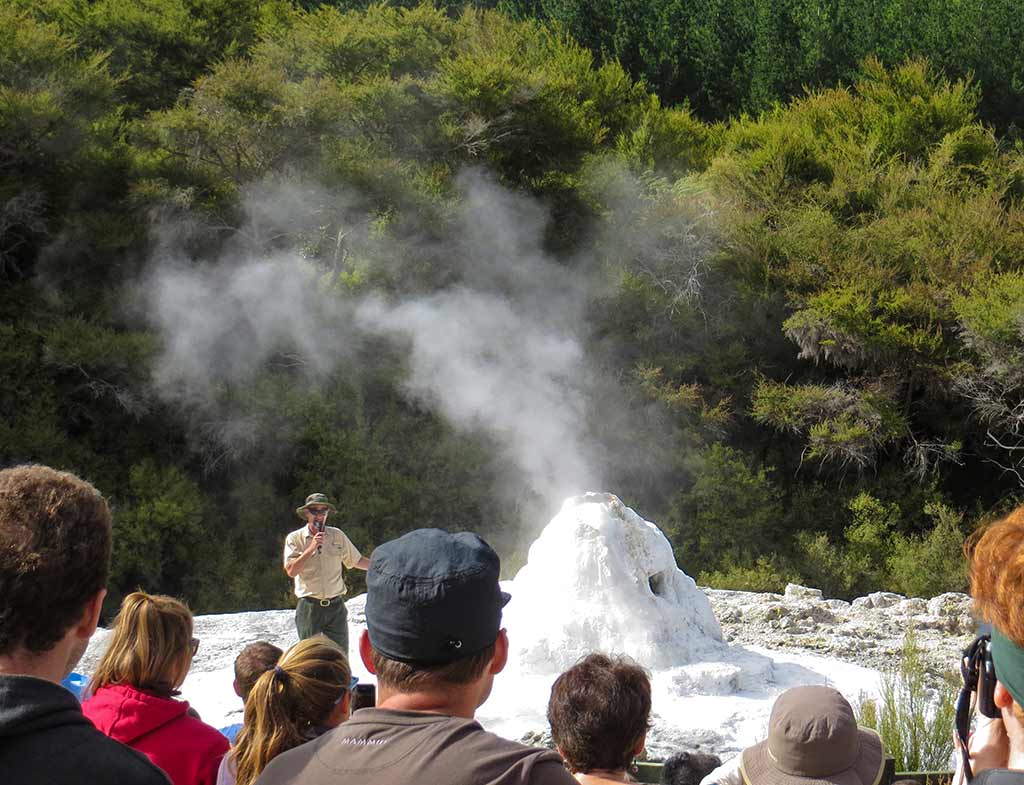
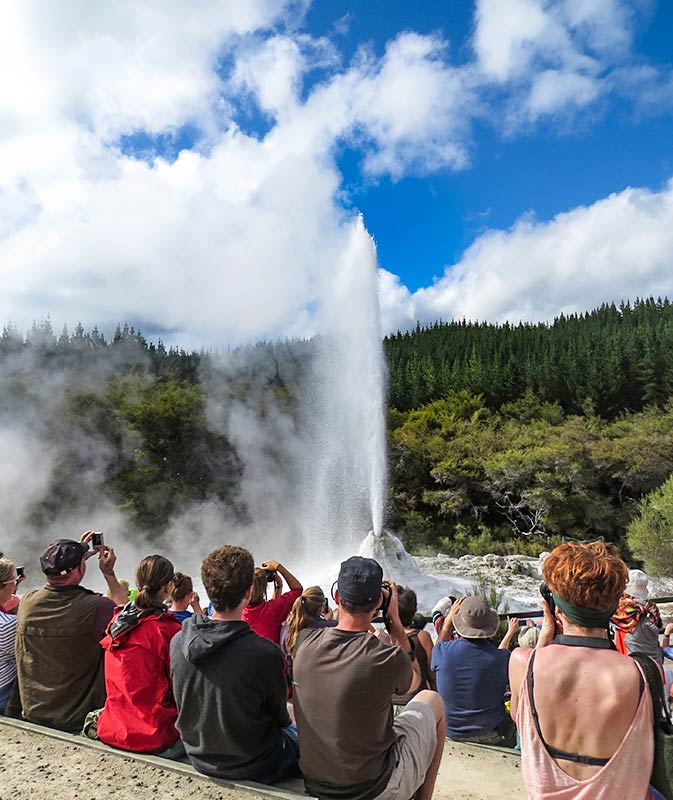
We got an early start, heading down for the hotel’s breakfast which turned out to be a surprisingly nice buffet. Then it was time to head off to the day’s first attraction, one of the big geothermal parks. This one was called Wai-O-Tapu and featured walkways through bubbling mud pits and brightly-colored hot water pools. Its key feature, though, was the Lady Knox Geyser which shot up as high as 60 feet and erupted at 10:15 every morning. Since it was already 10am we decided to start there. We took a seat in the small amphitheater surrounding the geyser, before which the ranger would give a small informational talk.

You know those times in life when someone should know something they might not like; so you try to slide that tidbit of information by and hope they won’t take much notice? This was one of those times. I’d told Rich about the geyser we were about to see, but I didn’t mention that soap powder, poured in by a park ranger, creates the chemical reaction which causes the geyser to erupt on schedule.

As people finished getting seated and the talk was soon to begin, Rich remarked that it’s amazing how they know when the geyser is going to blow. I mentioned that well, they “help” it along, hoping to leave it at that. But no, Rich asked what I meant by that; so I casually told him they pour some soap powder in, hoping that would be that. Well, not so much–I might as well have just told a kid there’s no Santa Claus. Rich was surprised, then offended. I didn’t think of the geyser as anything less because a human helps it along—in fact the geyser goes off naturally about every 42 to 74 hours. Rich did not share my feelings on this, however, and proceeded to make fun of the whole thing in such a way that was actually pretty funny.

It’s a good thing it was funny, because his poking fun at this didn’t stop after the show. It went for our entire park visit, then the entire day, and then for days afterwards, then for all our subsequent travel for the rest of the season as he wondered whether I was taking him to another soap-powder geyser. Sigh. At the time I thought maybe I shouldn’t have told him, but the ranger made no secret of using the soap powder and described how it caused the chemical reaction.

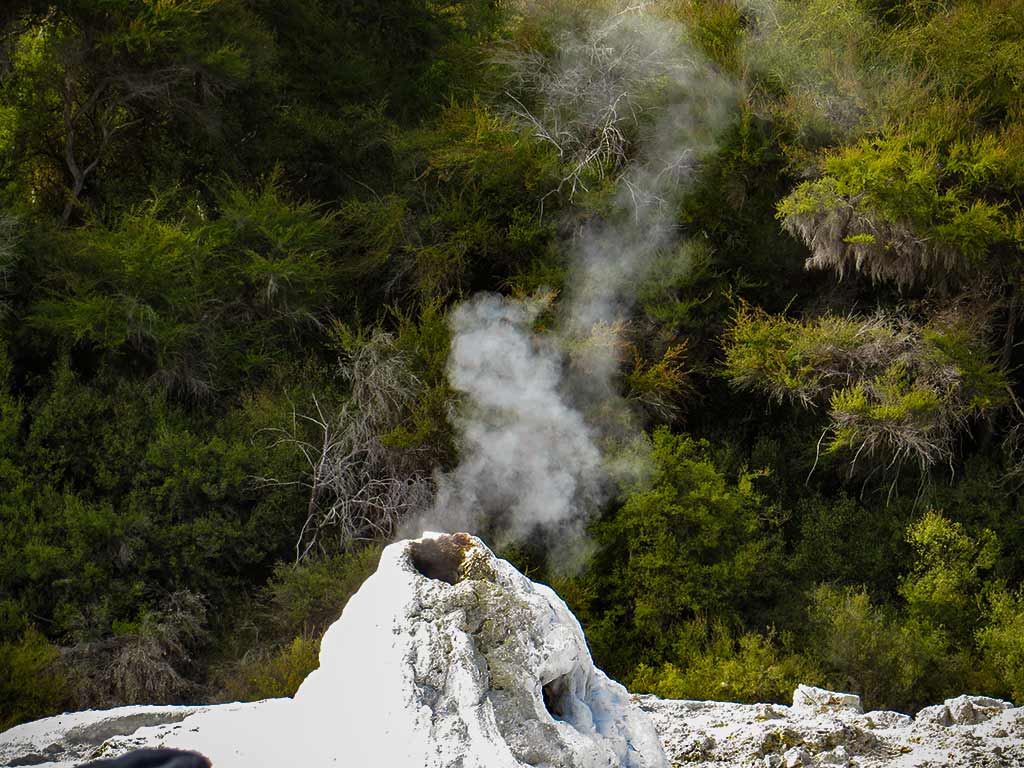
The talk was interesting and the geyser was pretty impressive, shooting up to at least 30 or 40 feet as the crowed oohed and aahed. Below, some photos of Lady Knox Geyser, impressive whether or not it’s set off by soap powder. (Click any photo to enlarge.)

After the show, we headed back to the park’s main entrance (the geyser is actually down the road a bit from the park), hurrying to stay ahead of the crowd. In retrospect, we should have done the walk through the park counterclockwise (backwards) to get some distance from the other visitors, bunched up after the geyser show. I noticed that when this happens, people get competitive trying to stay ahead of each other; and many end up bypassing or blowing through key viewing areas in an effort to stay ahead. We, too, were competitive but if a viewing area was too busy, we simply waited a couple of minutes for spots to clear. It would be a shame to miss any of this park’s natural wonders because one wants to keep ahead of the Jones’s.

Aside from some bunch ups at the viewing areas, this park visit was pretty amazing. To walk the entire park takes about 1 1/2 hours minimum. Knowing some visitors don’t have the desire or stamina to do the entire walk, they’ve divided the walk into three looped segments. At first glance it seems pretty apparent that the first loop contains the most significant sights. The sights peter out on the second and third loops, but there was an intriguing jade lake and steaming waterfall at the far end. My guidebook stated it was enough to do the first loop, the rest of the sights unimportant. But we decided to at least do the second loop and maybe continue on to the lake.

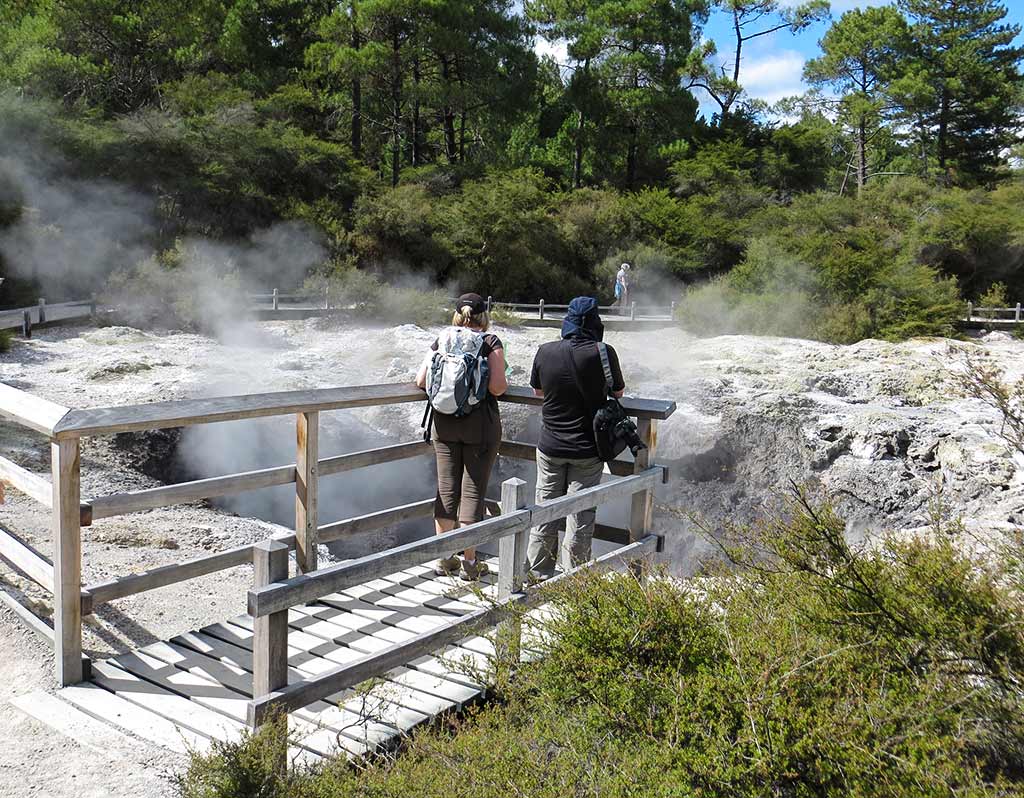
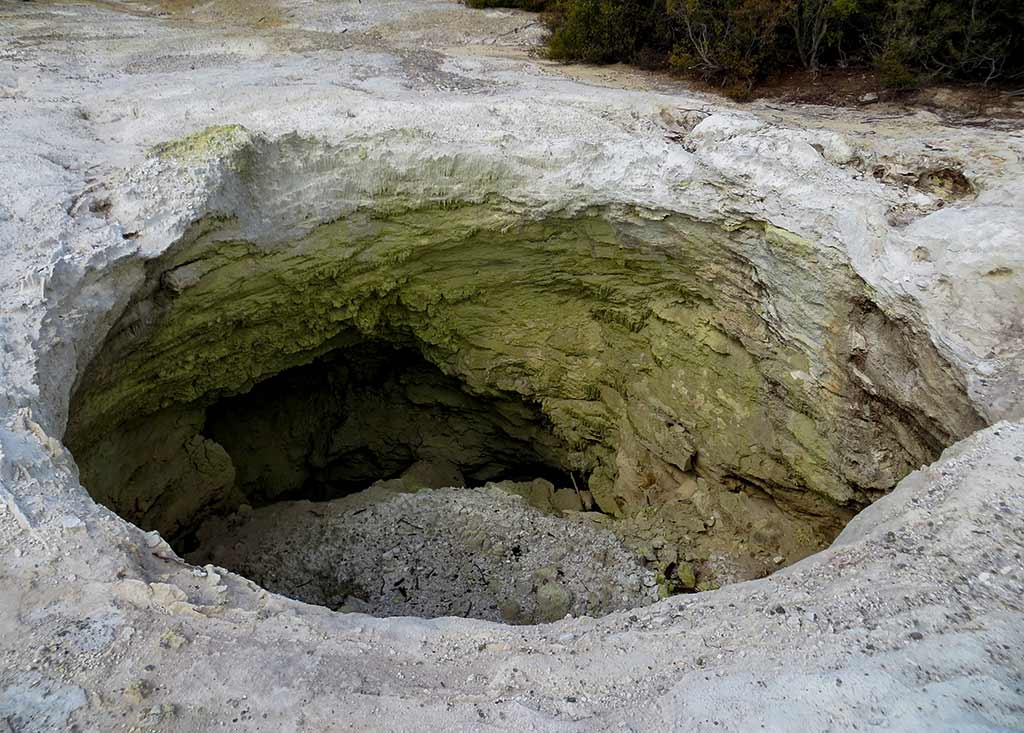
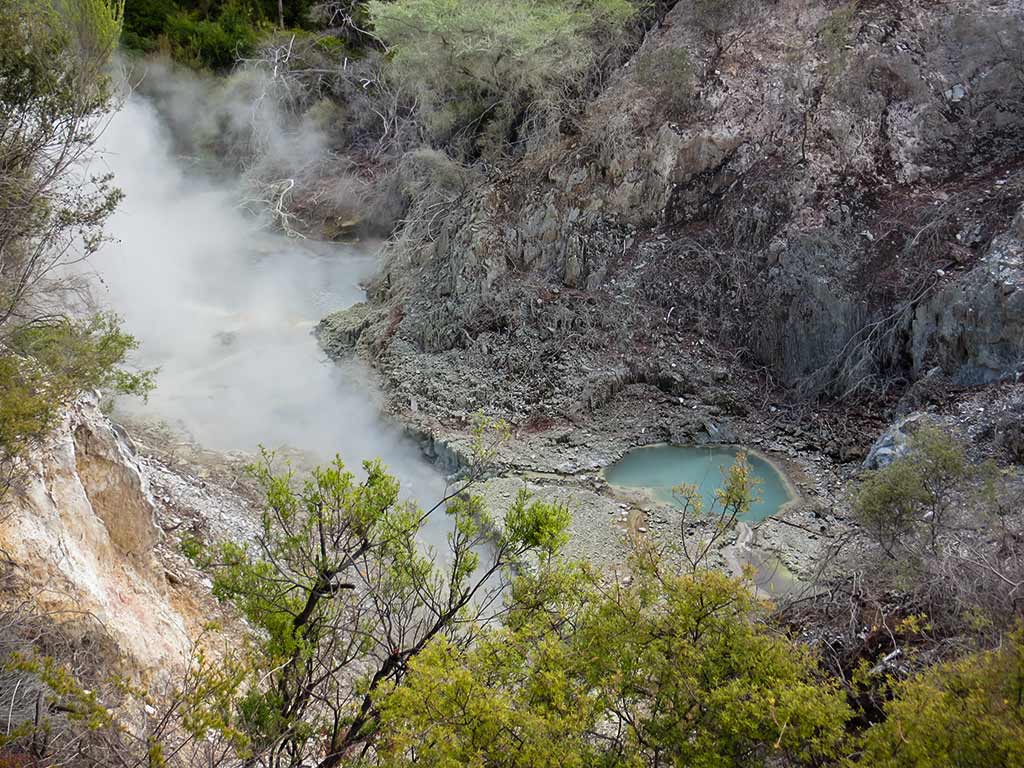
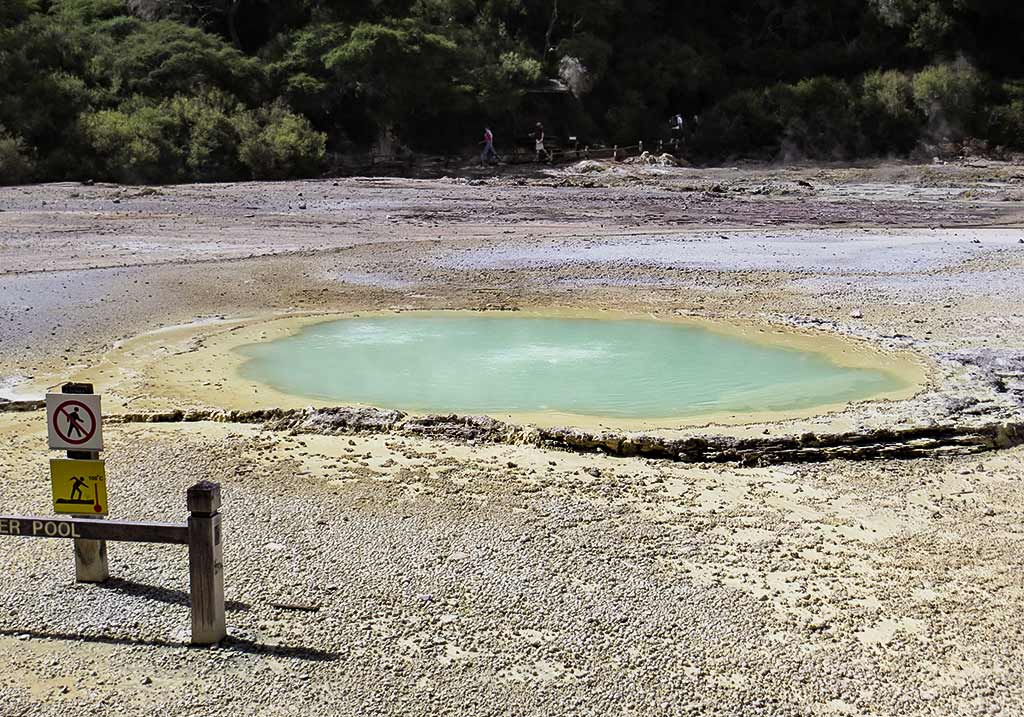
The start of the first loop took us through series of large steam craters made colorful by the chemical reactions between the earth and the steam. It’s a rather surreal experience to feel the air, at times thick with steam and the odor of sulfur, yet see the interspersed bushes and trees growing as close as they dare. Over one crater, swallows build nests to take advantage of the natural warmth.

Below, photos from the first part of the walk…

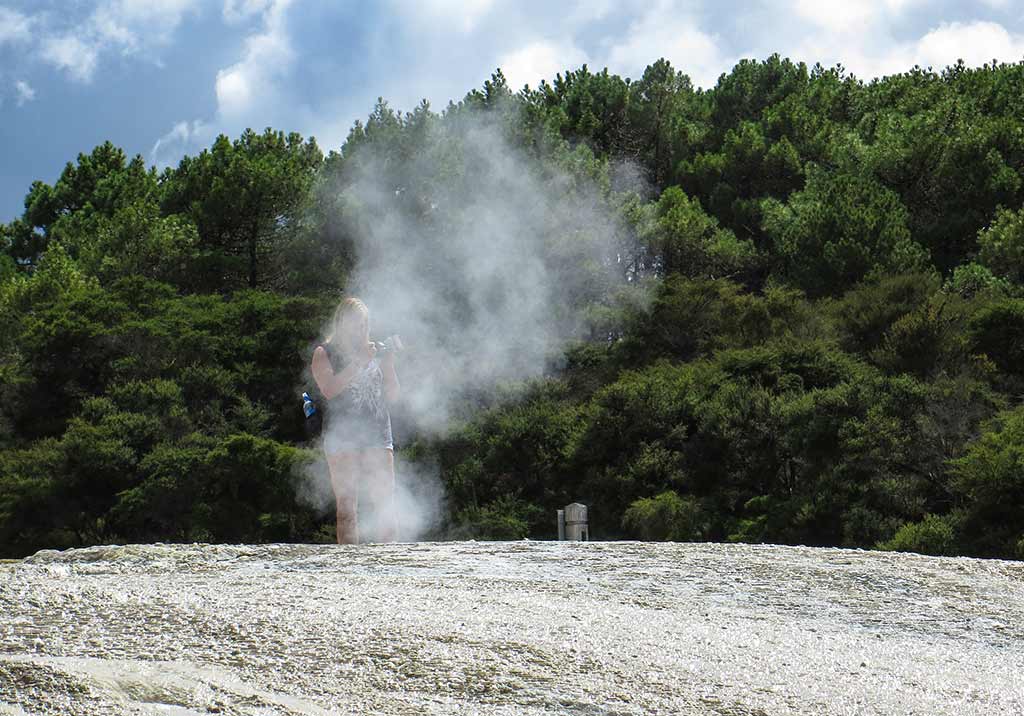
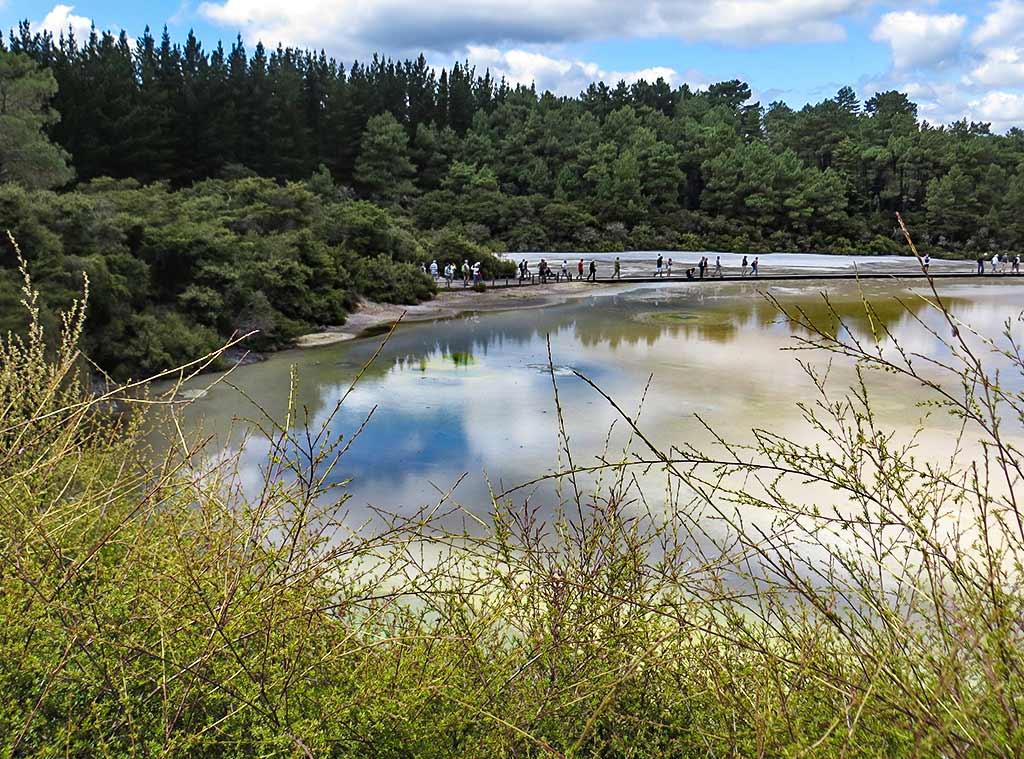
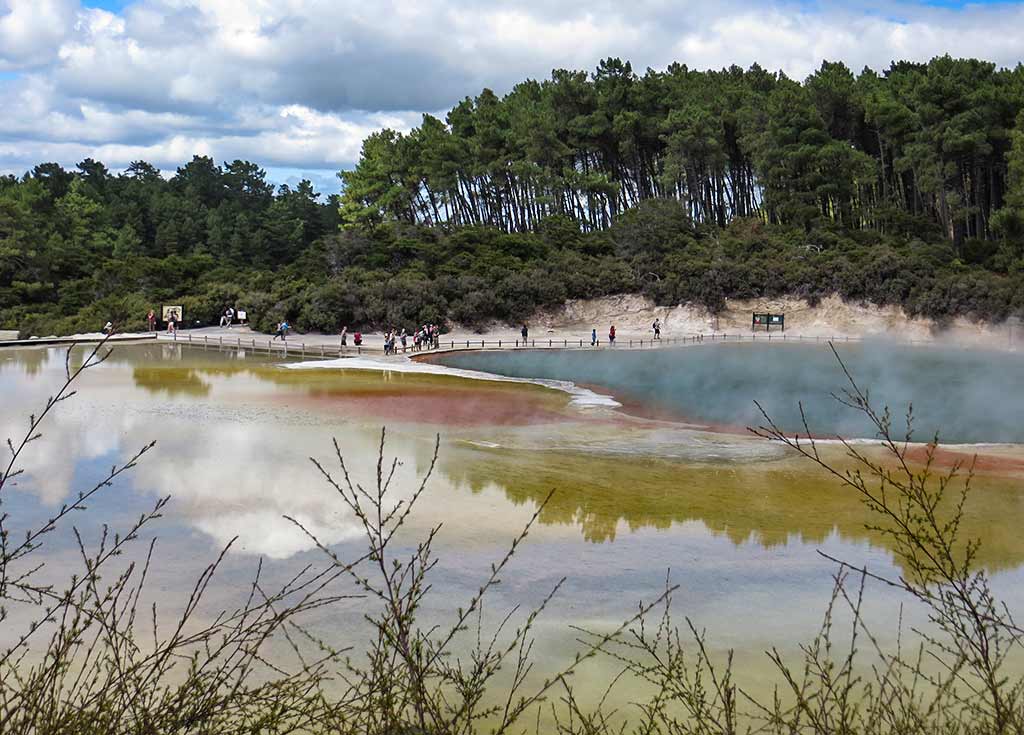
We then arrived at the aptly-named Artists Palate, a small lake of steamy water awash with vibrant hues of yellow and orange, interspersed with luminous greens and blues. Continuing along we came to the Sinter Terraces, consisting of an elevated walkway above the silica-crusted ground interspersed with steaming hot pools. This part of the park was like New Zealand’s answer to America’s Yellowstone Park.

Continuing onto the second loop, the attractions (and the crowds) petered out for a time, but it was an interesting walk with a great viewing area overlooking the park. It was there that I spotted the furthest attraction at the far end of the park: Lake Ngakoro (aka the Green Lake). It had an amazing emerald color and since I’m a sucker for colorful water, it was then an easy decision to do the third loop and see that lake up close! We continued on past more pools, silica cliffs, and sulfury steaming craters. Below, some photos from loops 2 and 3 (including a photo of the green lake in the bottom right of the gallery below).

When we arrived at the Green Lake, we headed up to the overlook above it and then climbed up some rocks for the best view. Wow! The lake was a glowing emerald color surrounded by white limestone, truly an amazing sight and frankly, the highlight of this park for me. (I have to wonder if the writer of my guidebook actually walked out to look at this or just looked at a photo and decided it wasn’t worth the bother.) We also saw the steaming falls.

We made our way back to back, completing the third and second loops which treated us to a lovely bush walk and lots more watery, steamy stuff.

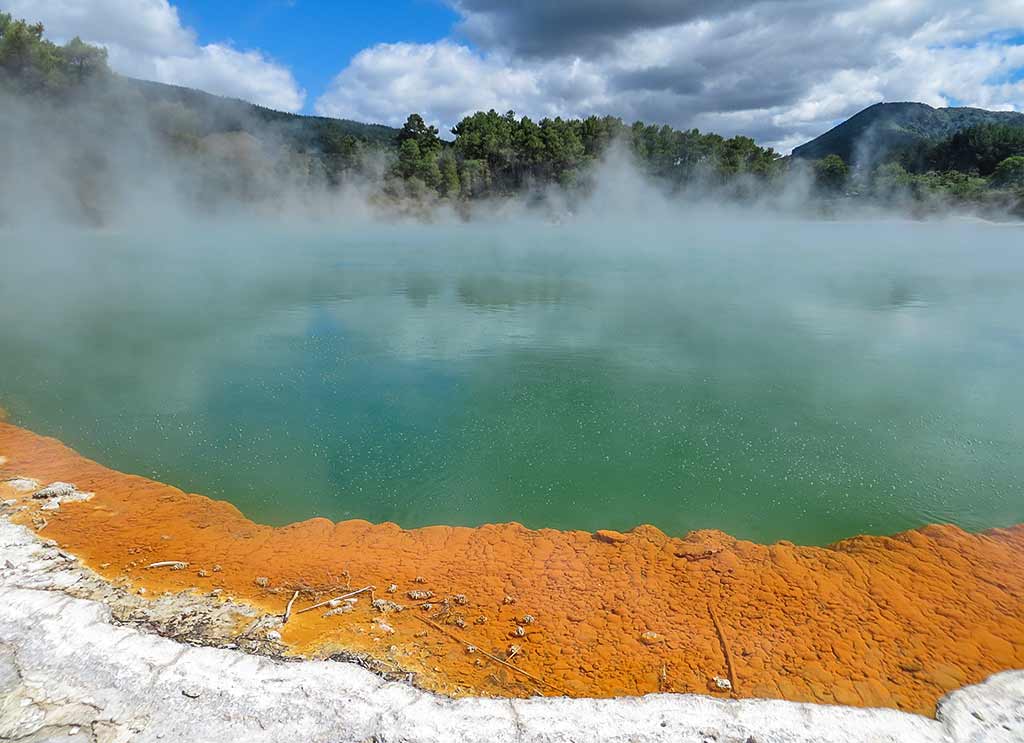
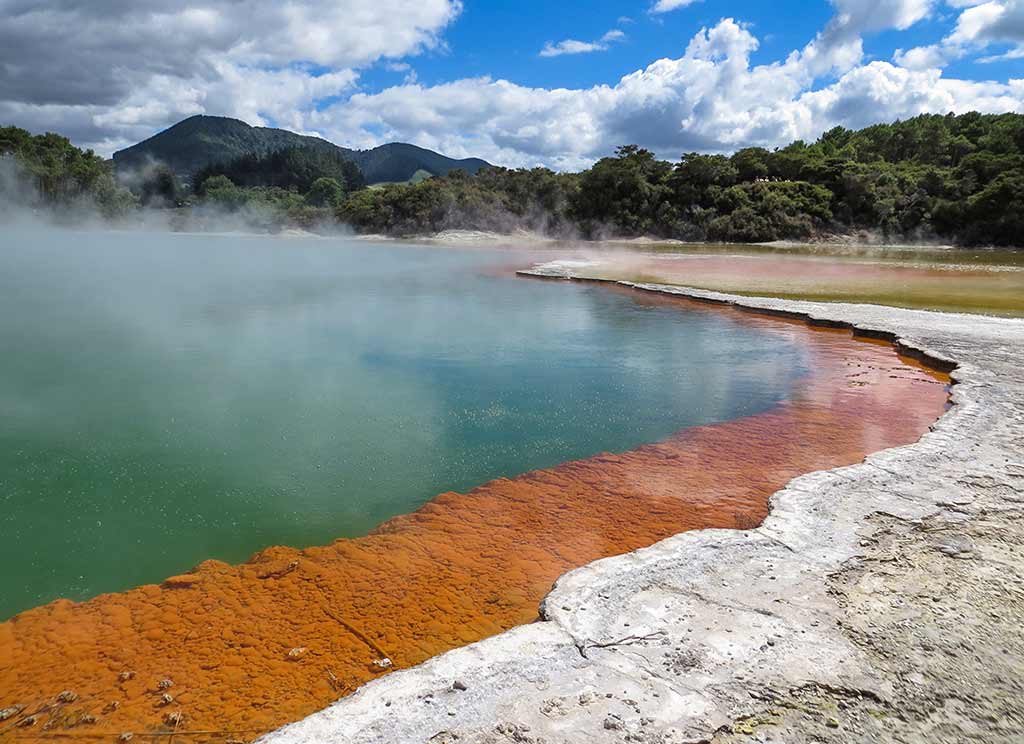
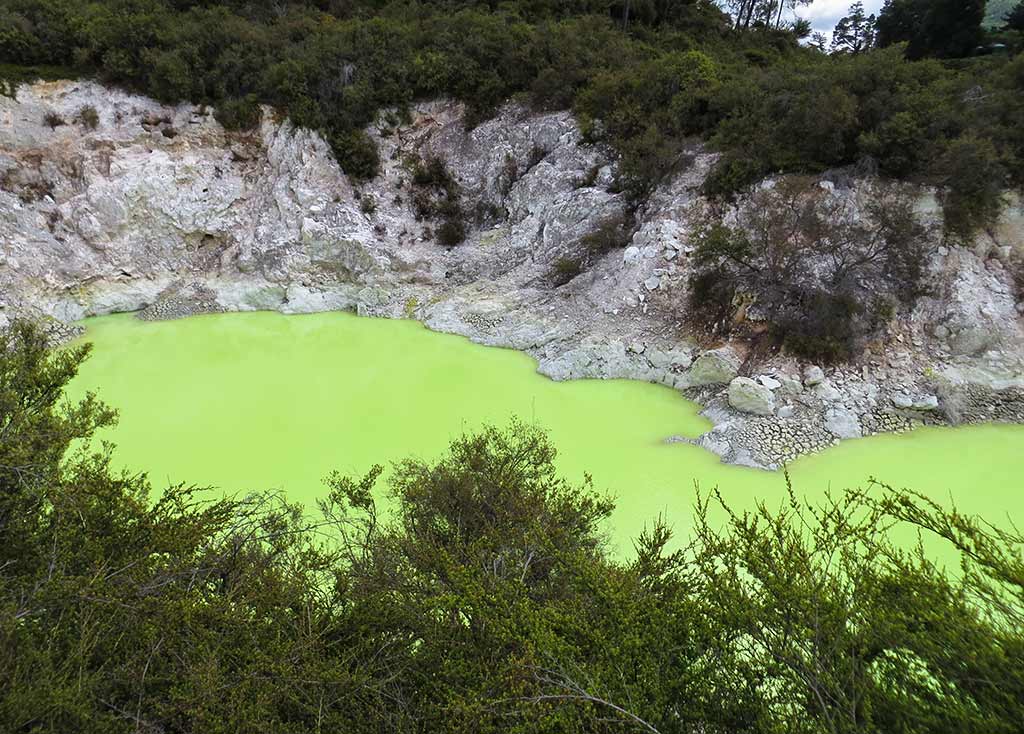
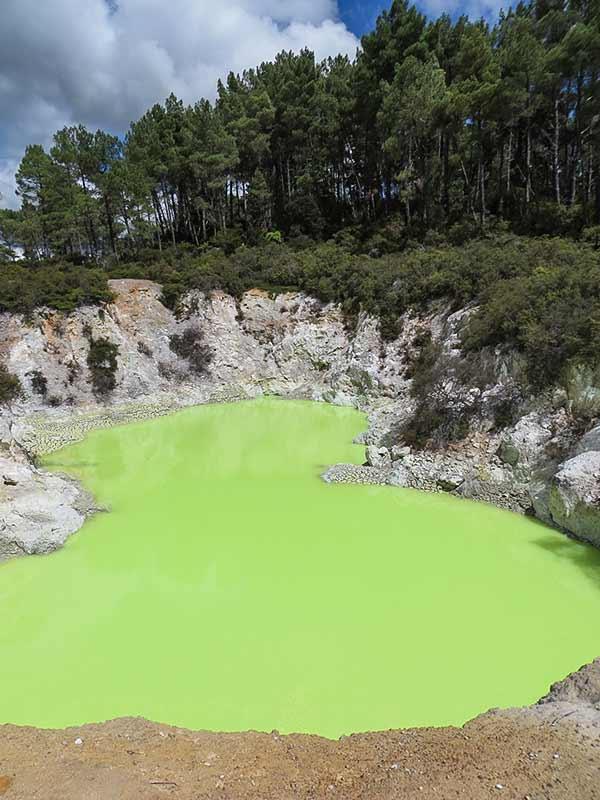
Picking up where we left off with the first loop, we came to one of the park’s star attractions: The Champagne pool. It’s a large pool with green water, a bright orange rim, blue smoke, and champagne-like bubbles, a bizarre and fantastical sight. Even more so was the next sight: the Devils Bath. Its a sunken pool of glowing yellow-green water surrounded by white rock walls, like a psychedelic swimming hole but very acidic so only for devils, not humans. We waited here for the sun to come out from behind some clouds to photograph the water at it’s most vivid.

Below, photos of the Champagne Pool and Devil’s Bath, the park’s star attractions.

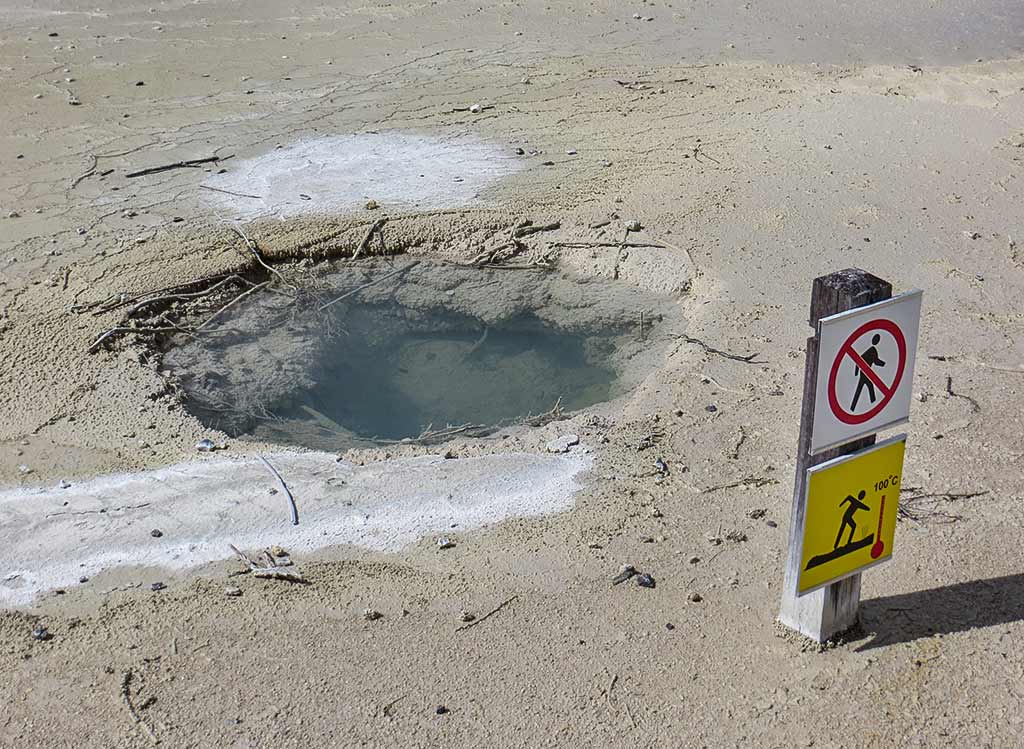
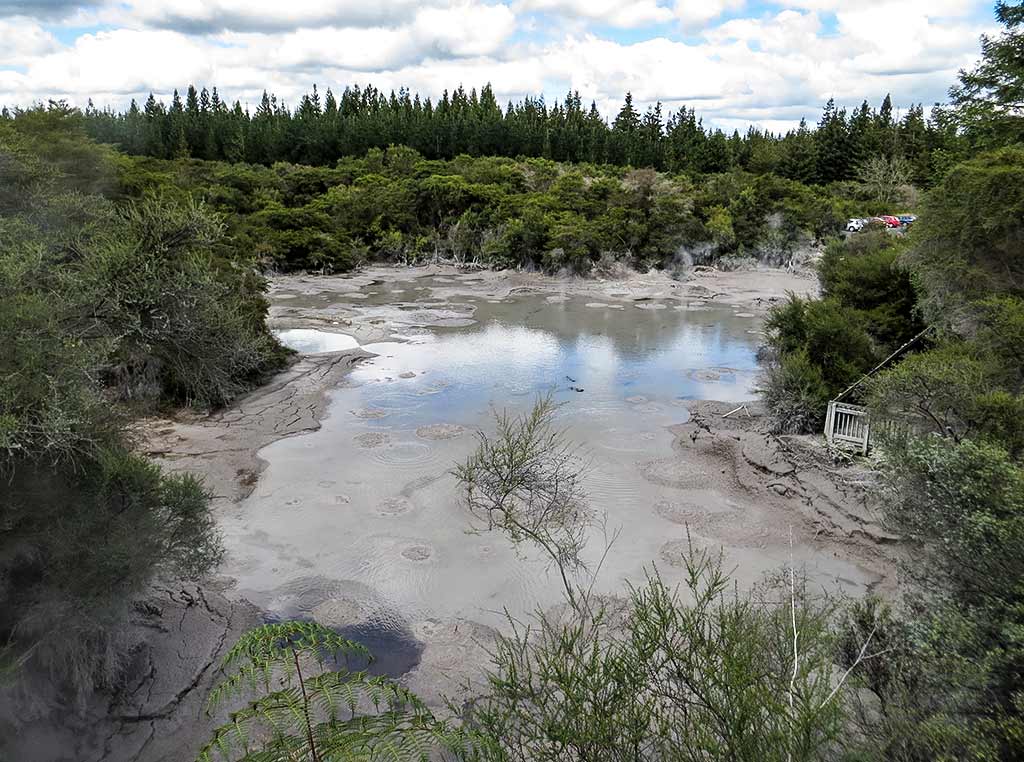
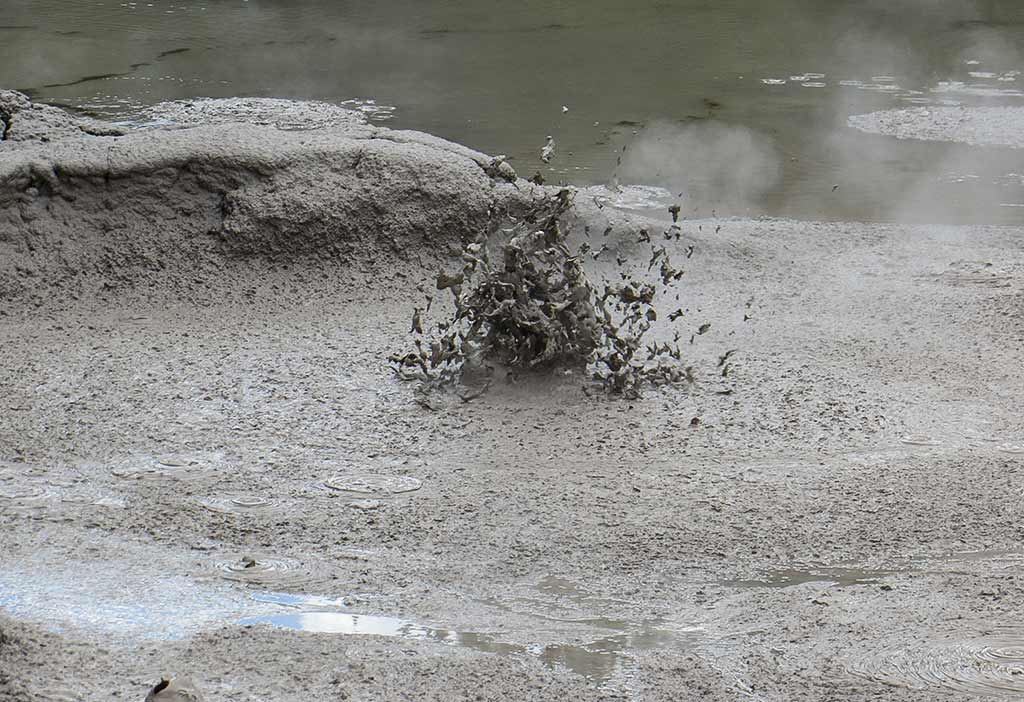
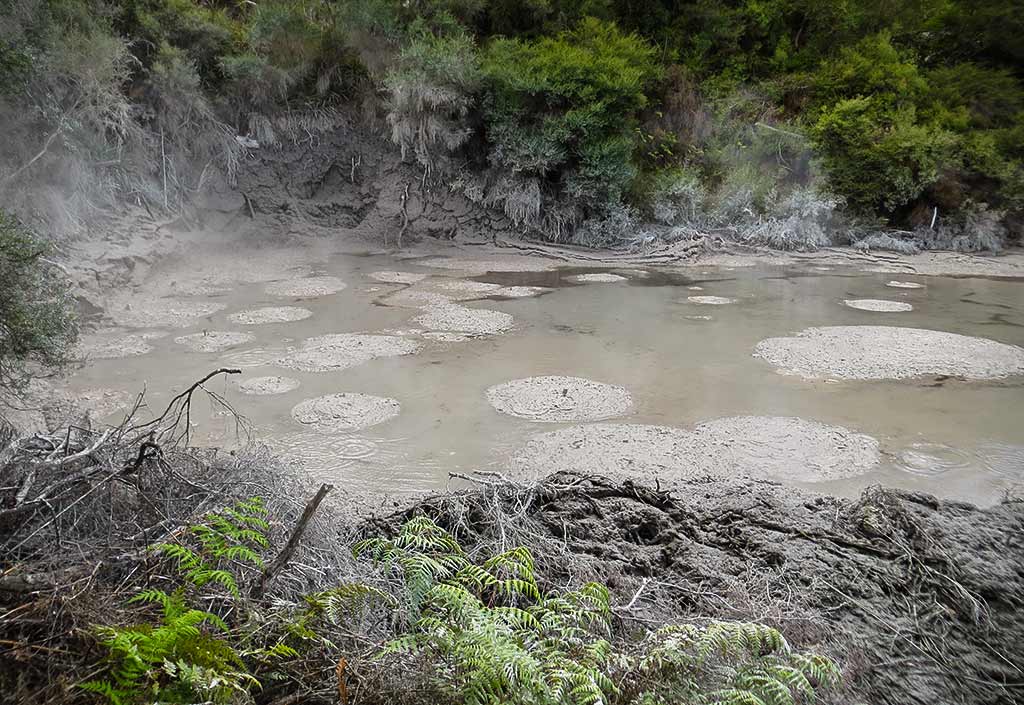
The Devil’s Bath was the final attraction, the finale of the visit to the park. In all, in spite of some challenges with crowd bunch-ups on the first loop, Wai-O-Tapu had been a spectacular experience, something we’d consider a must-do in Rotorua. On the way back to our car we stopped at a bubbling mud pool, the final thing to see in the area.

Our advice to park visitors: check to make sure this is still policy, but at that time a person could make two visits to the park within a certain time frame (I don’t remember what it was, maybe 24 hours?). This meant a person could visit the main park in the afternoon, then return just for the geyser the following morning. If this isn’t convenient, consider having coffee or a meal after the geyser but before doing the park, or do the park walk backwards. This would be a great way to avoid viewing-area bunch ups. –Cyndi
Epilogue (April 2021):

Out of curiosity, since Rich doesn’t tend to remember the names of things we did and sometimes forgets them completely until he sees the photos, I asked if he remembered the Lady Knox Geyser. It only took a second or two before he said, “Yes, the soap powder geyser.” I said, “Yea, I was just curious to see if you remembered.” “Oh yea, I remember,” he said.

He added, “By the way, there’s something I’d like to see while we’re here in Auckland. It’s up by the marina office—you put soap into this thing and your clothes come out clean. You can even make it happen at the same time every day!”

I reminded Rich the geyser would have happened naturally given enough time. He gave me a look that clearly said he wasn’t impressed, then he remarked, “I wonder if they’d pay to come see my garden hose. The rubber would eventually break down and it would go off on its own, but I can squeeze the sprayer handle and make it erupt.”

Sigh.