The Calm Before The Storm (Great Barrier Island, New Zealand)

February 11, 2022

Today would be our final day to enjoy some mild weather before the storm hit. At this point there was some disagreement among  weather experts as to what sort of storm this was. It had formed in the tropics and turned into a cyclone named Dovi before it headed south for New Zealand. Met Service Fiji still considered this a cyclone, but Met Service New Zealand insisted this was no longer a cyclone but a tropical storm. I figured it was safe to call it “cyclone remnants.” In any case it was going to get really windy in many areas of New Zealand, including here at Great Barrier Island.

During the day I sat outside and considered our situation. In a harbor scattered with boats, there’s a subtle kind of feeling that happens in the hours before a storm, an impulse to watch other boats along with a sense of being watched, because you never know who might be “in the know.” For instance, I was a bit obsessed with a boat anchored south of us in the middle of the channel. Would that be a better spot? Did these people know something we didn’t? How about the boat that appeared and anchored north of the entrance to this bay. What are they doing there? Are they going to move? And it’s possible, even likely, the guy on the boat we left behind at the unnamed bay was wondering the same thing about us, wondering if we might have been “in the know” about something when we left in a hurry.

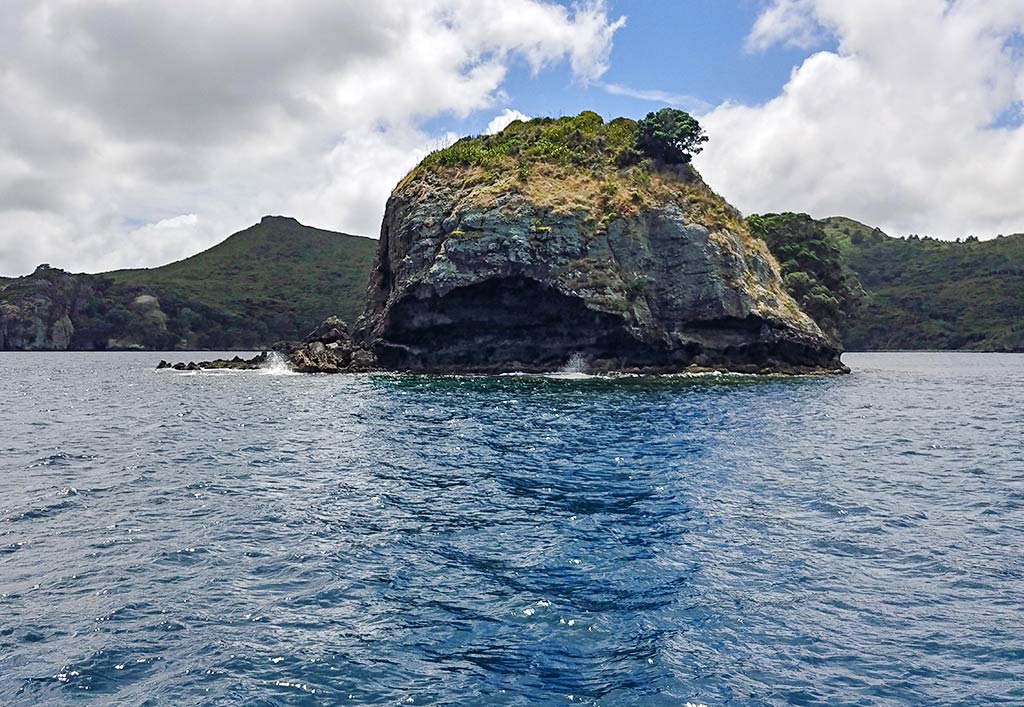
Along with looking at other boats, I also spent a considerable amount of time staring across the channel to the west side. There were no indented anchorages, but what if we just anchored in the channel next to the large rock island? We certainly wouldn’t want to do that at this point, but maybe we could move in the morning when the wind was supposed to go west? Second guess, second guess, second guess—a person can drive themselves crazy!

We also stayed on top of all weather updates, anxious to see if the forecast would get better, worse, or stay the same. This day was a strange combination of enjoying a relaxed day at anchor and being tense and on alert. On top of that, it was hot! We actually ran the engine so we could run our air conditioning, not something we ever expected to do at anchor in New Zealand.

So while relaxing, we worked on our computers and binge watched TV. While stressing we checked the weather and looked around outside. It did help to have comfort food for lunch and dinner: lasagna and burritos, and champagne as our evening drinks. Comfort food galore! We stopped just short of making brownies, which would have been a bit over the top today—maybe we’d make them the next day when we’d really need comfort food!

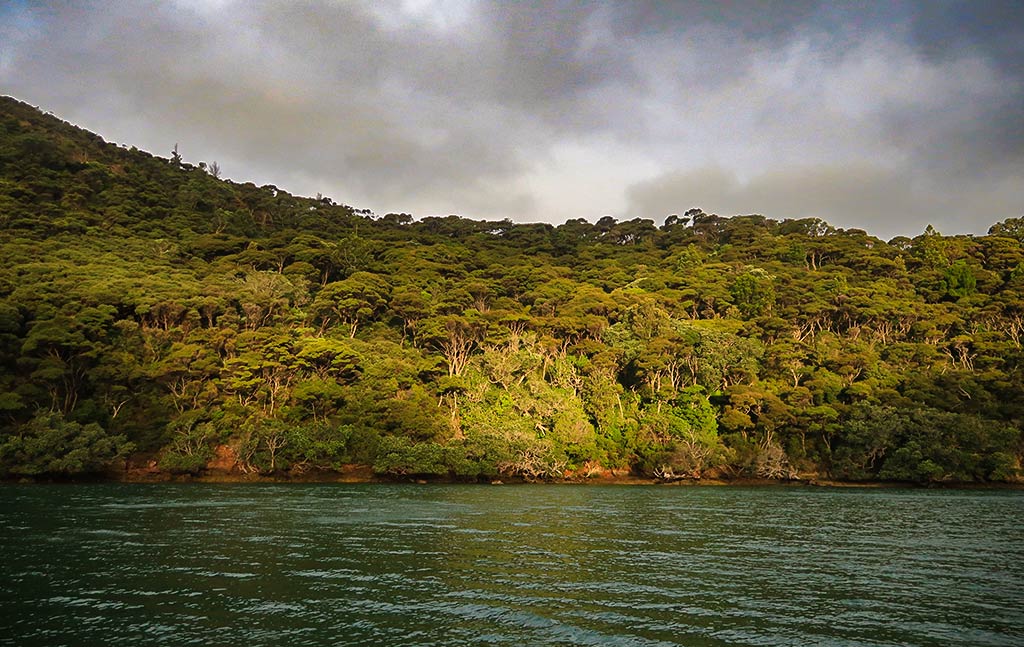
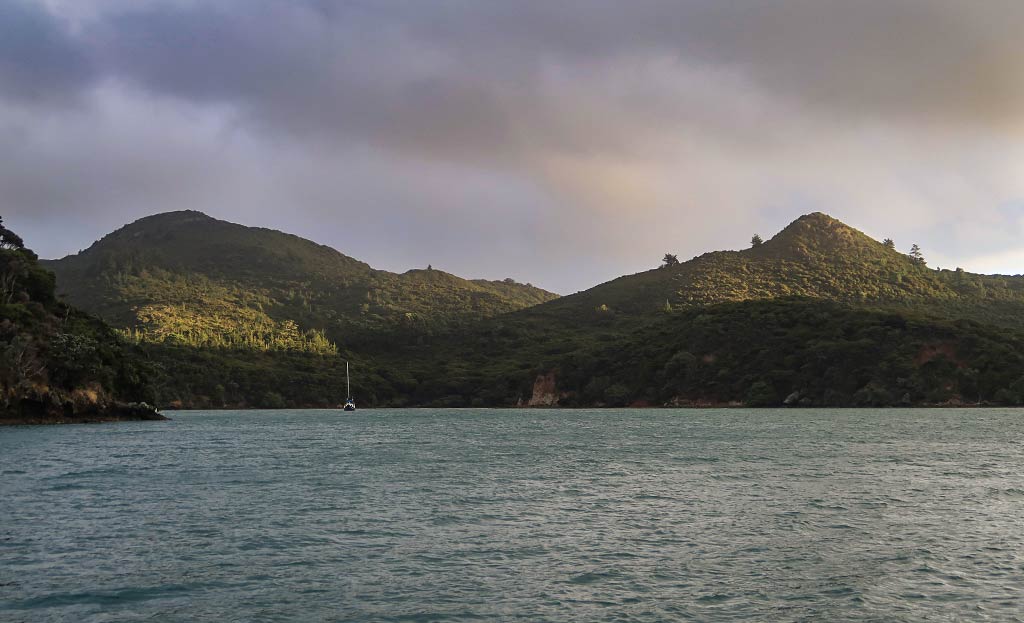
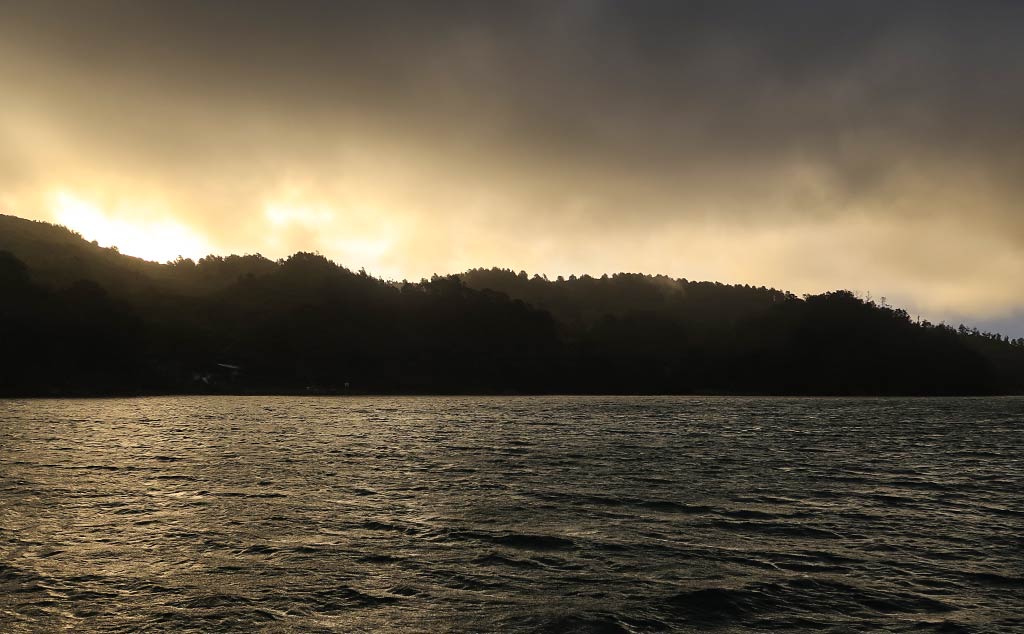
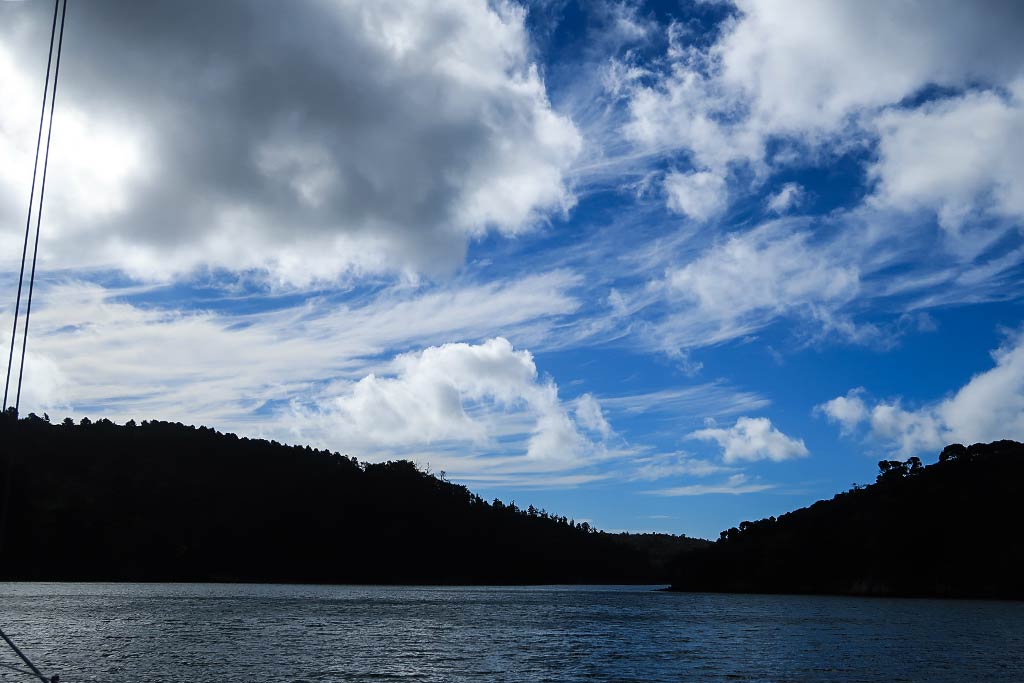
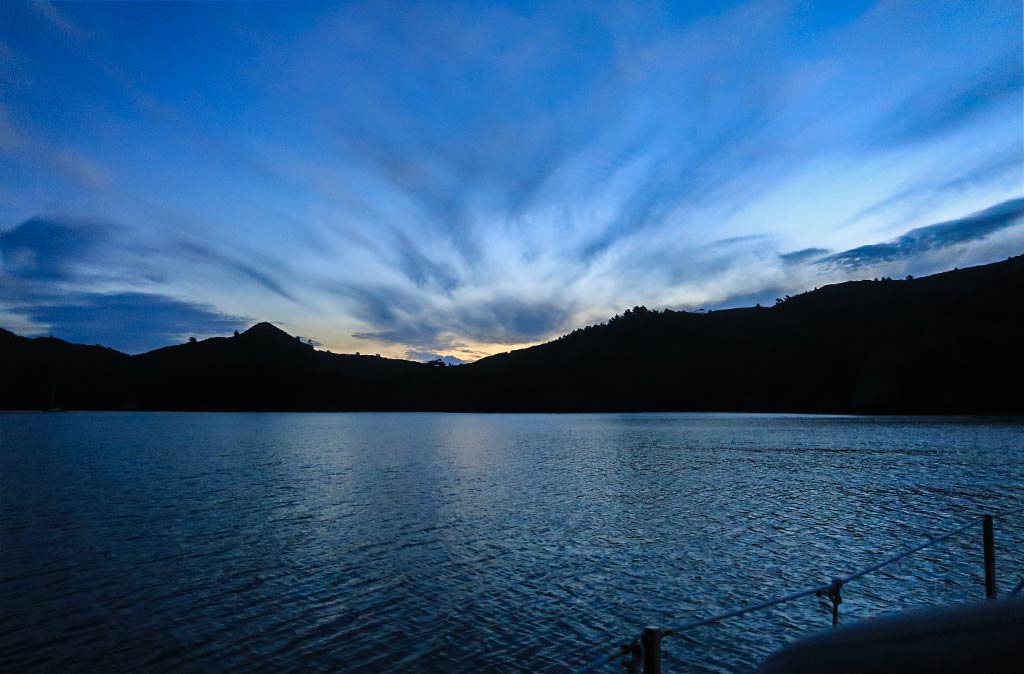
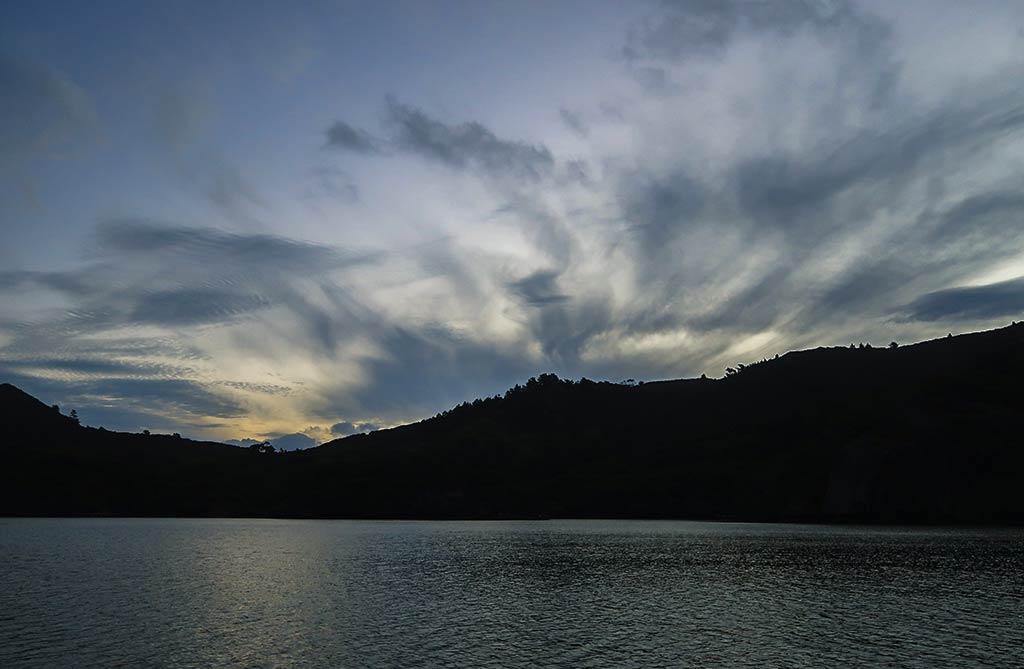
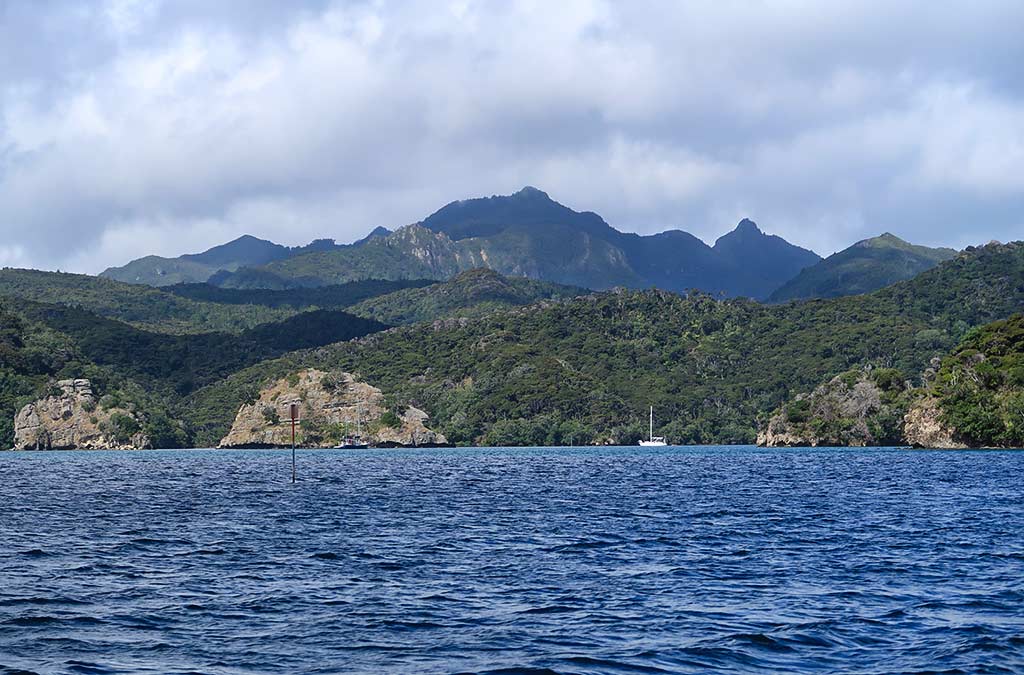
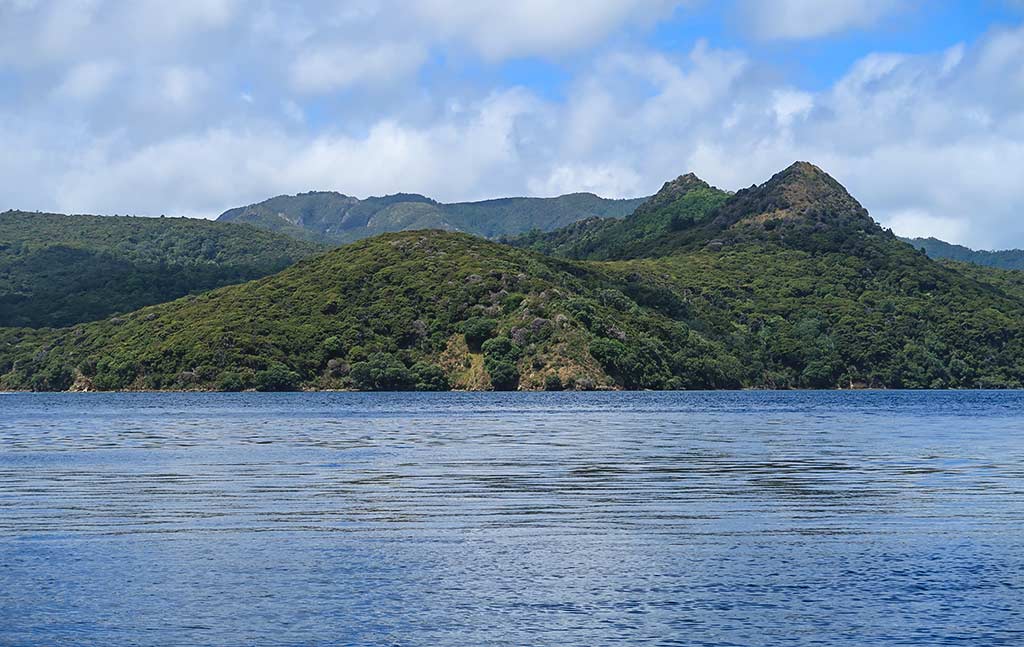
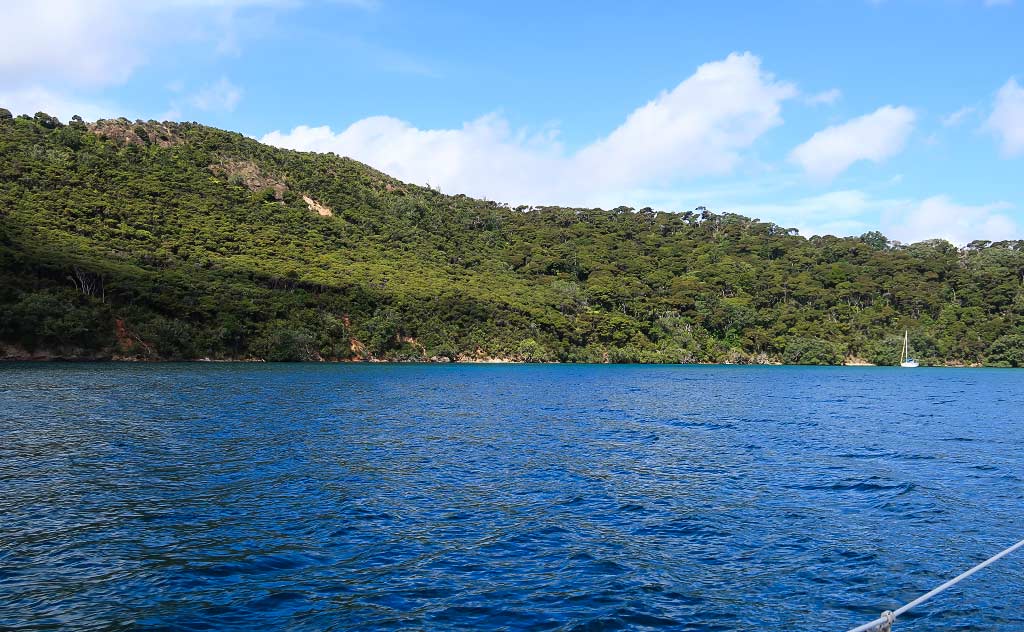
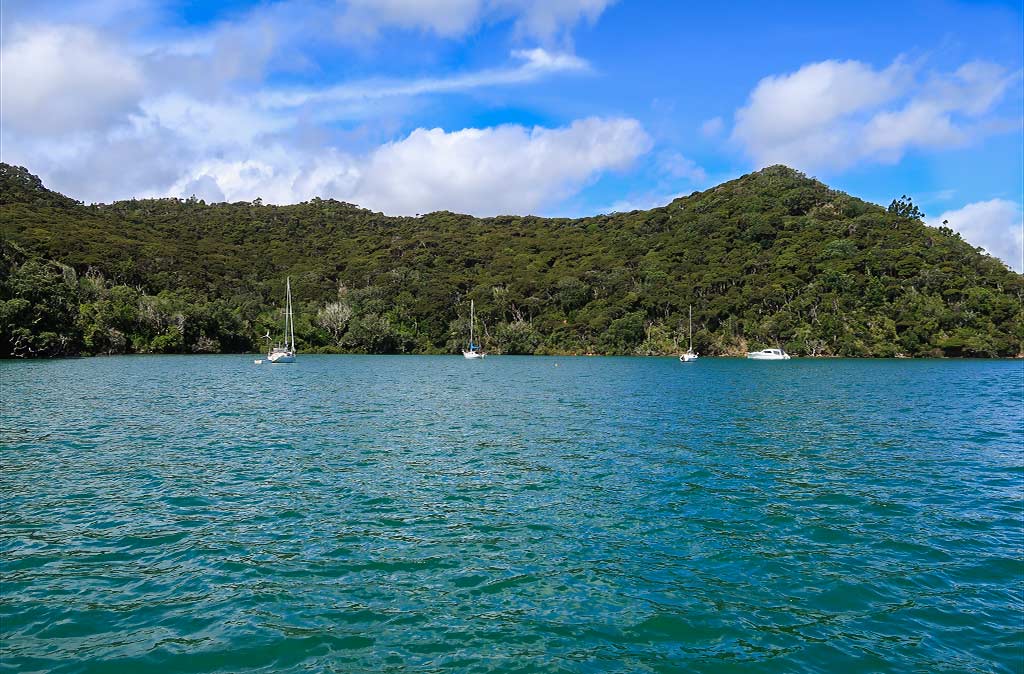
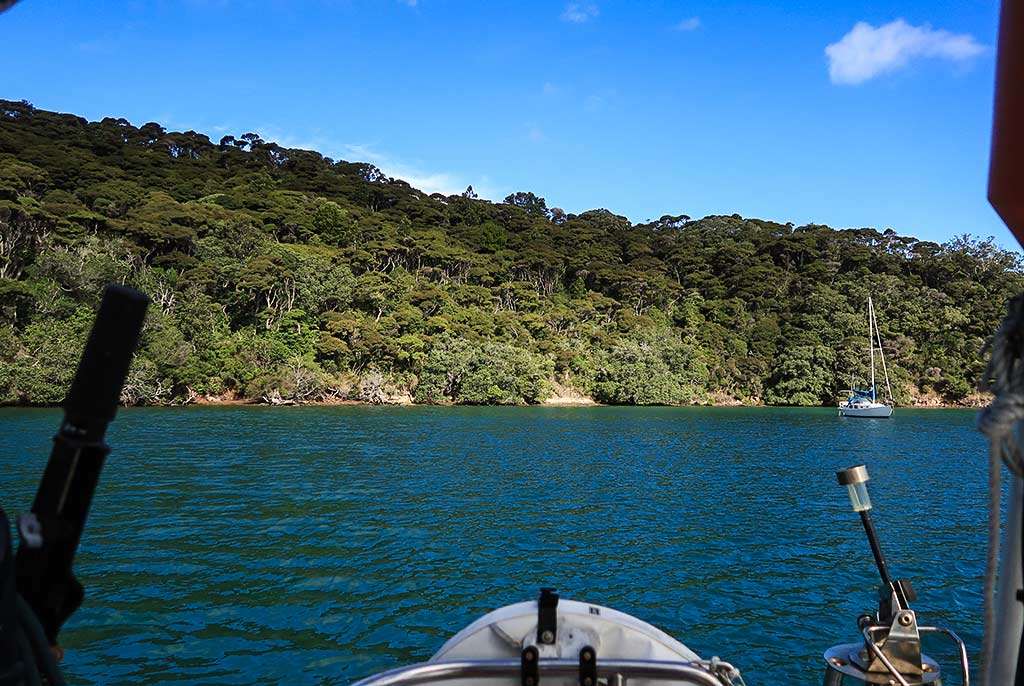
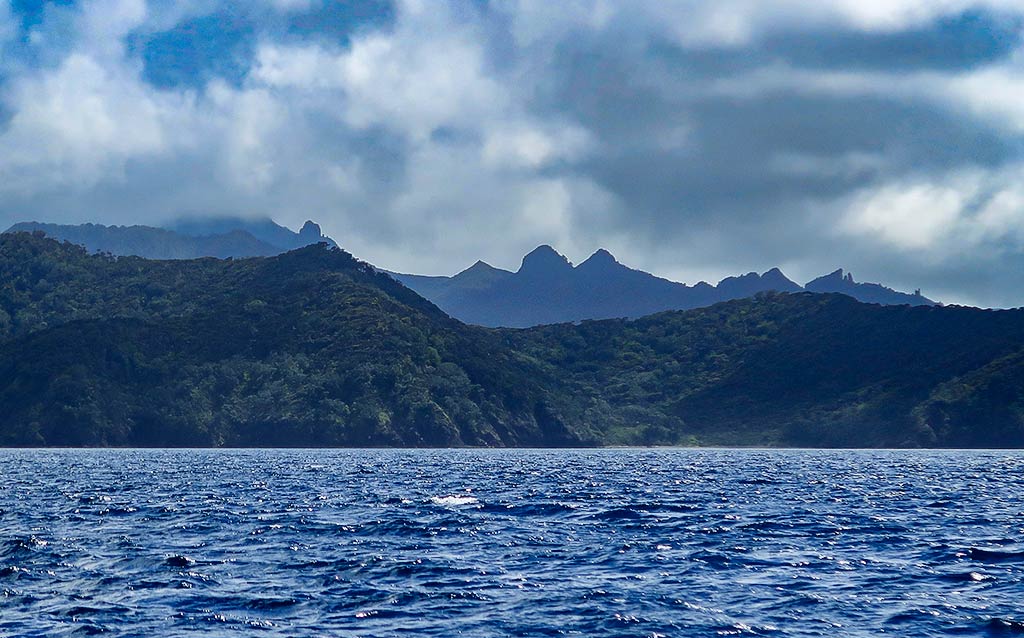
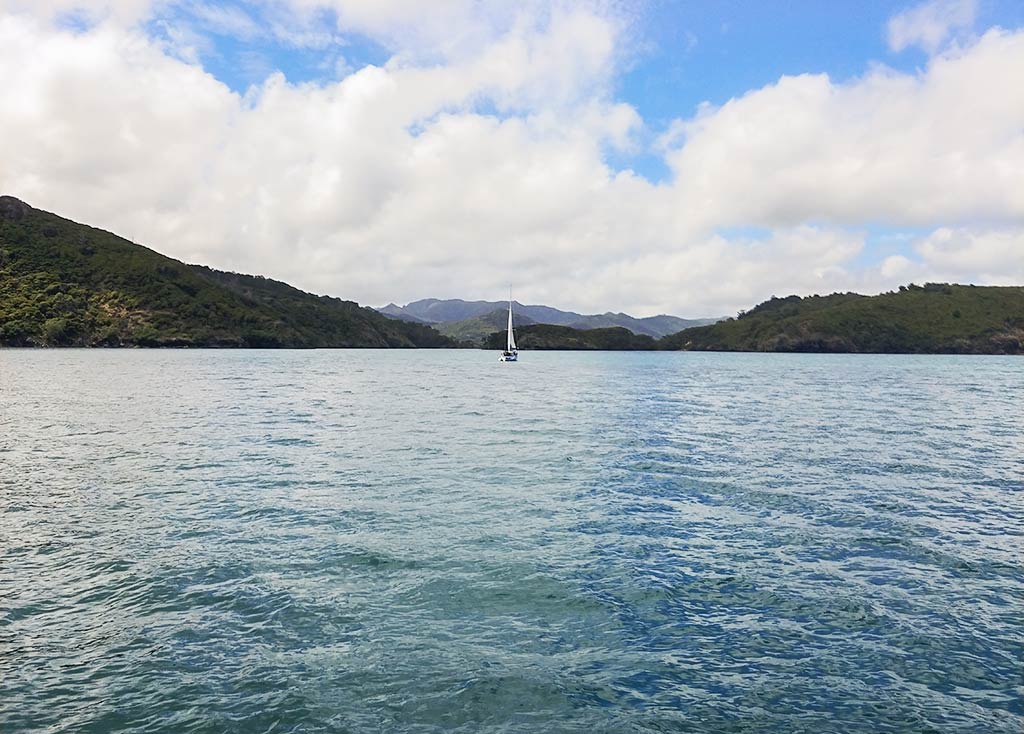
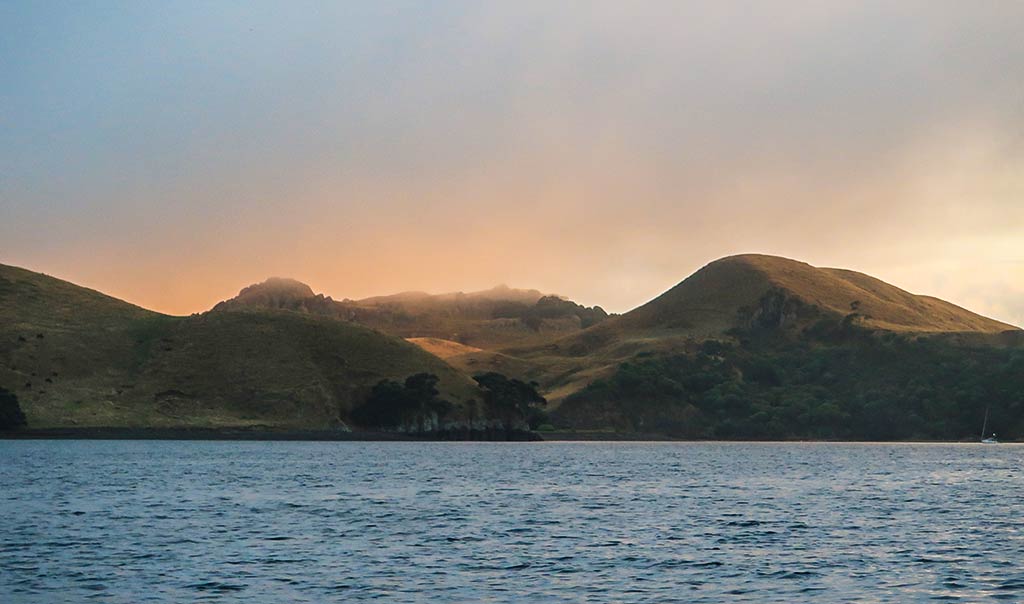
Below, a few photos as the sky became increasingly cloudy in the evening (click to enlarge any photo).

For now it was just a matter of sitting and waiting. It looked like the system would gradually pick up over the course of the next day and stay in the 20-knot range until around midnight; then things would start to get interesting. The wind would pick up into the 30-knot range, then the 40-knot range starting around 2am. Around 7 the following morning, we’d start seeing gusts in the 50-knot range up to 60 knots. It’s a good thing we had more burritos! –Cyndi

A Quiet Night in Wairahi Bay (Port Fitzroy Harbour, Great Barrier Island, New Zealand)

February 10, 2022

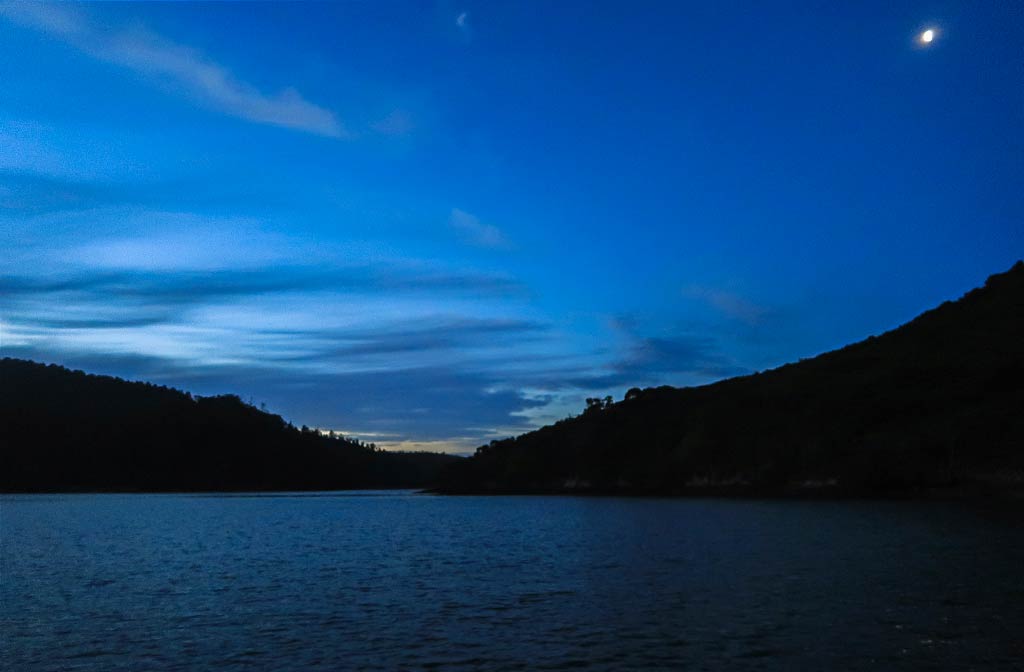
It was our first night in this new anchorage, and what a lovely night it was! The early evening skies had dramatic windswept clouds, but they cleared as the evening deepened and became a beautiful indigo blue, complete with a bright white moon. (Click to enlarge any photo in galleries that follow.)

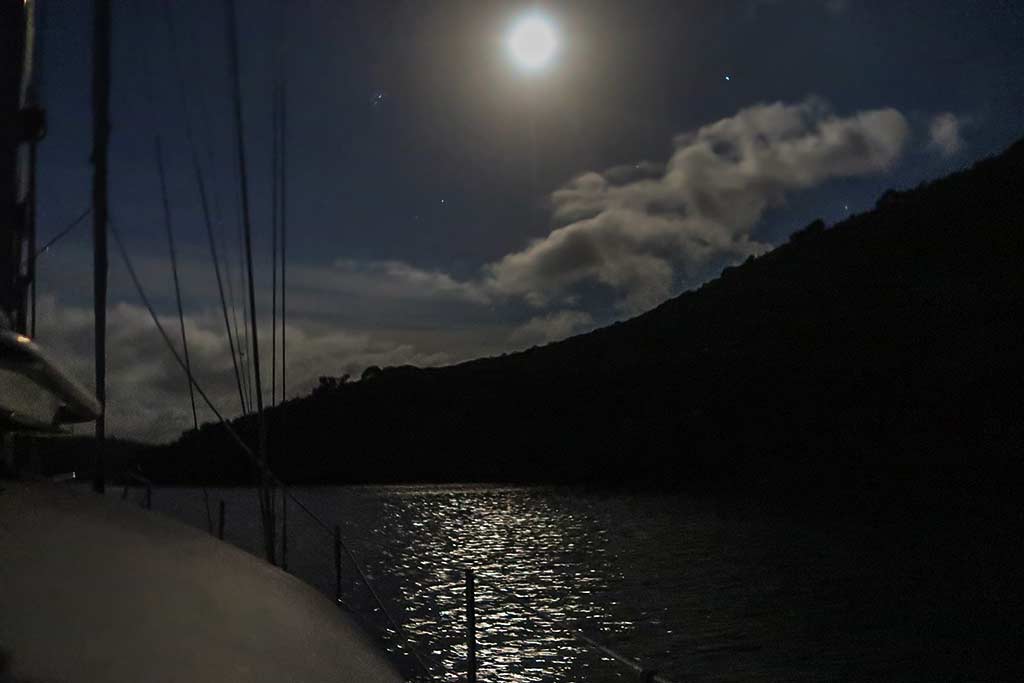
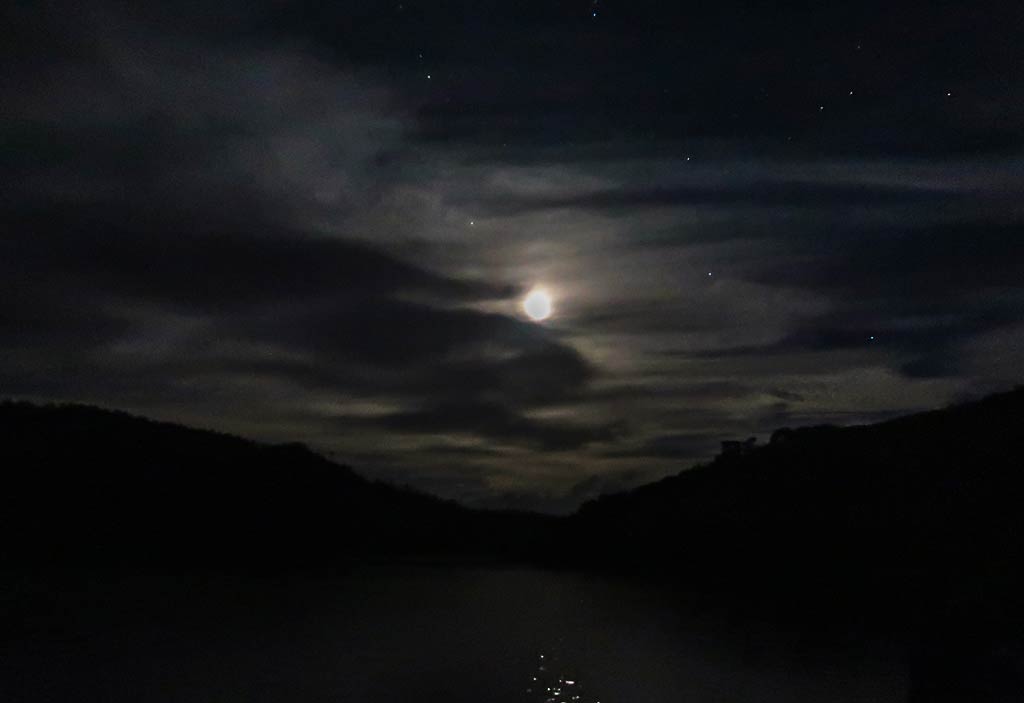
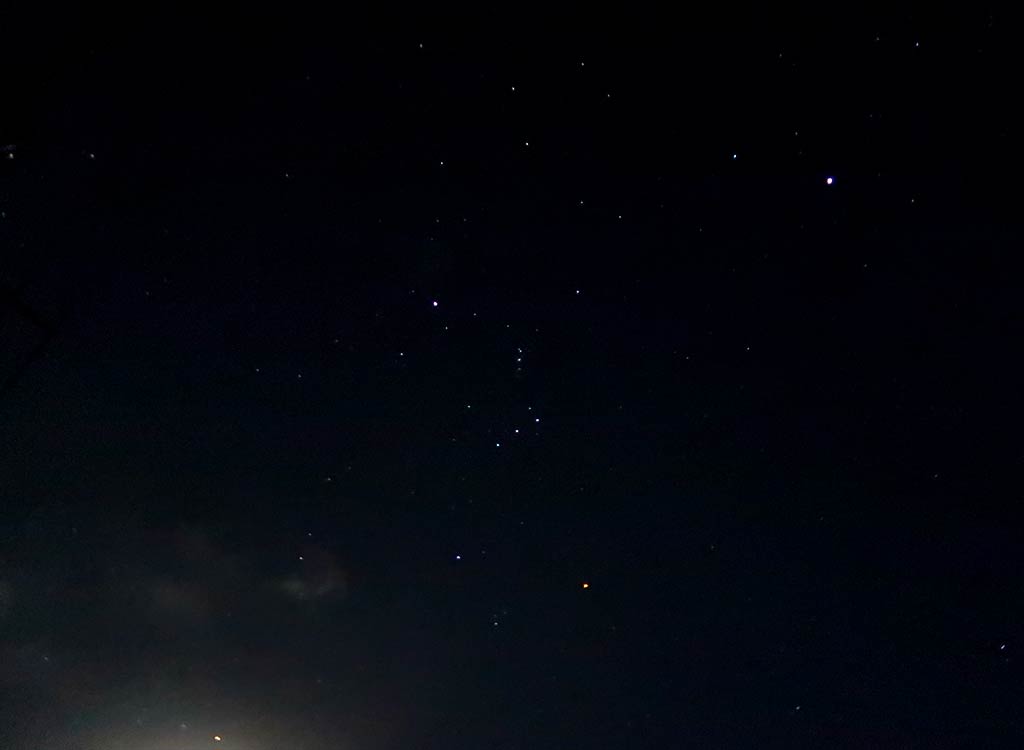
Later I went out to view the night sky, the first one I’ve seen in awhile as it’s either been cloudy or we’ve been too close to city lights to get a good look at the stars. Actually it was cloudy near the horizon tonight, the moon now low and lighting up those clouds, but the sky above us was dark and clear. I loved looking up to find Orion. It’s just a constellation, but to me it feels like an old friend. This is the constellation I could always pick out as a kid, and he seemed to watch over us during our cruises to and from Hawaii and Mexico.

We also see Orion in the southern hemisphere, although he’s not around when we’re cruising in the tropics but instead appears in the summer night sky while we’re in New Zealand. Right above us was the Milky Way, and behind our boat was another constellation we feel fondly about, the Southern Cross.

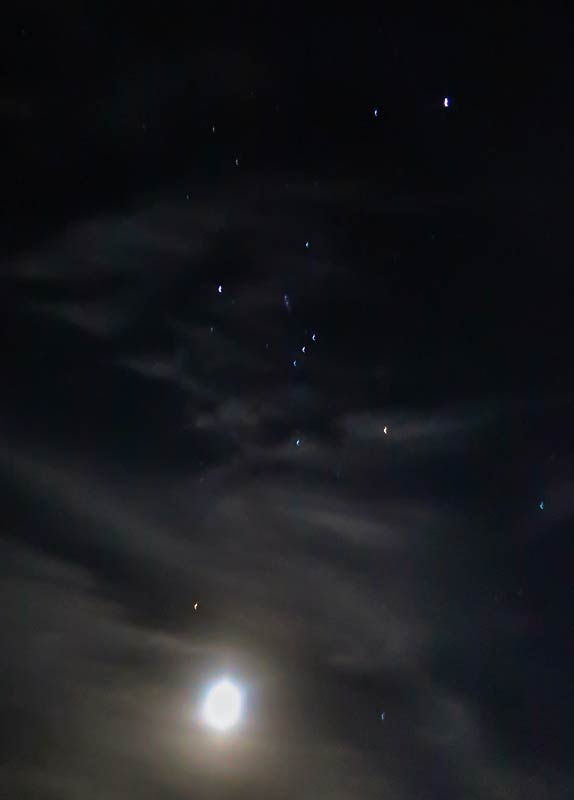
I took some photos above us some of the lit-up clouds near the moon. There was one I particularly liked of a cloud thinning out with the stars starting to shine through, with Orion perched above it. It felt comforting to know that Orion would be watching over us again in the days to come. –Cyndi
Scouting Out Port Fitzroy Harbour (Great Barrier Island, New Zealand)

February 10, 2022

Great Barrier Island lies about 10 miles off the top of the Coromandel Peninsula. It’s heavily forested, mountainous, and far enough away from everyplace else to remain remote and sparsely populated. While there are a few decent anchorages around the perimeter of this island, the well-protected harbor of Port Fitzroy is definitely the most popular destination for boaters.

Port Fitzroy harbor is created by the close proximity of Kaikoura Island, probably a piece of Great Barrier that broke off eons ago. At the north and south ends of Kaikoura are channels which lead into the harbor, a body of water which runs about 3 miles long and half a mile wide. Within this area are several deep bays which make for great anchorages. Naturally, it’s very popular with boaters, generally from Auckland and willing to make the hours-long trip from one of the Hauraki Gulf islands.

Below, a map showing Port Fitzroy Harbour and the anchorages we were interested in.


We’ve previously visited Port Fitzroy and all but three of its anchorages. Coincidentally it was these three that looked like the best bet for sitting out the remnants of Cyclone Dovi’s high winds. The good news was we’d see something new, but the bad news was we weren’t familiar with any of these anchorages and would need scout them out.

The wind was forecast to start from the north then back to the west when the winds would reach their highest point (we could see gusts to 60 knots!). So it looked like our best bet would be one of the two anchorages on Kaikoura Island. They were marked as anchorages in our guidebook but neither bay had a name and the information was sparse. We looked at a local guide’s comments and saw the southernmost of the two anchorages was called Stony Bay, although the commentator may have simply made this name up. In any case, we’ll call it Stony Bay.

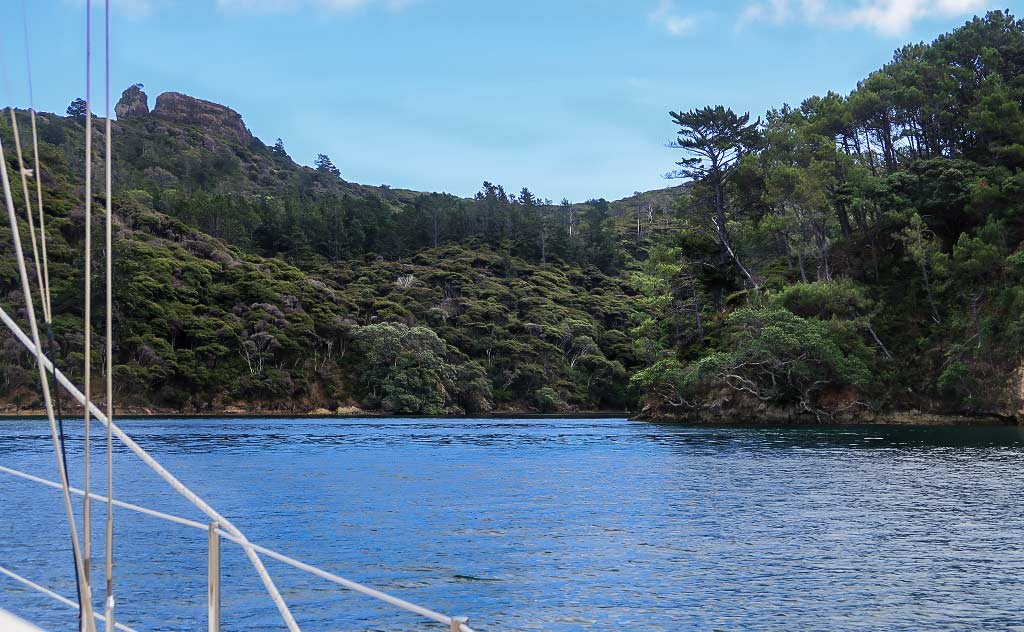
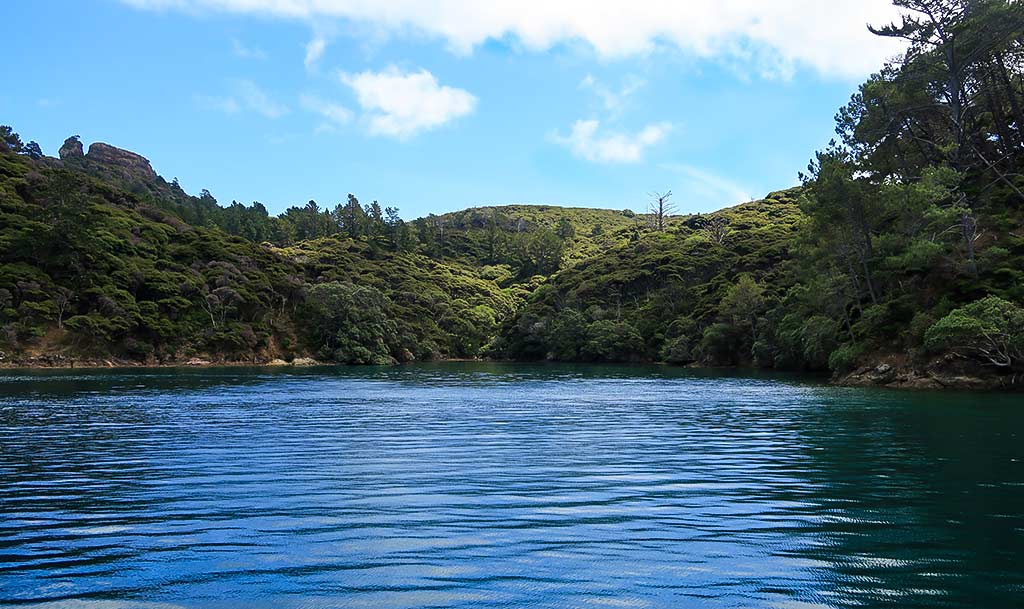
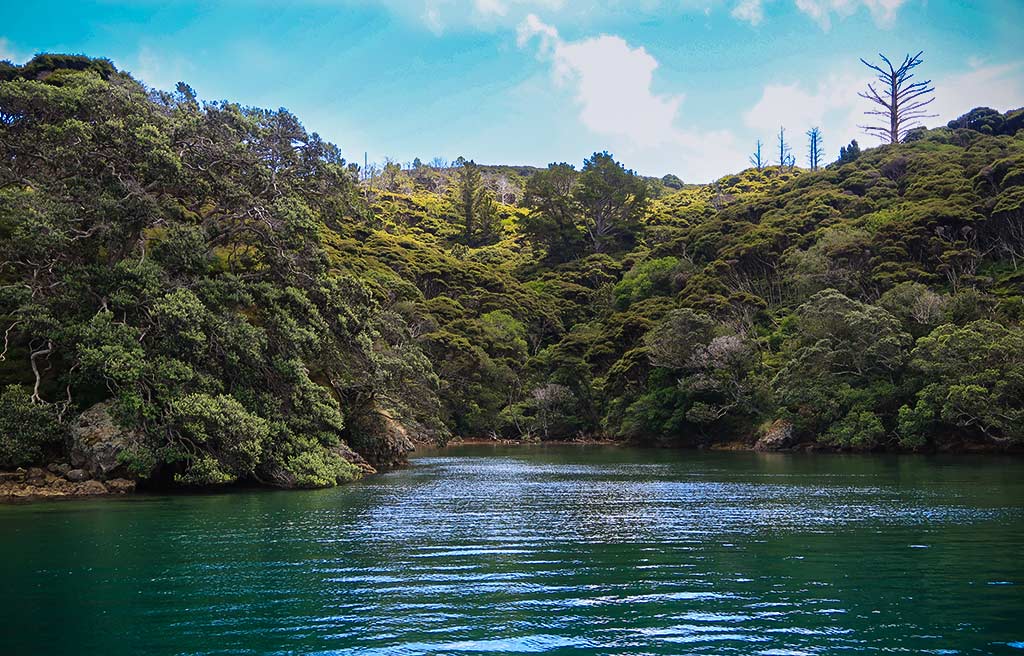
We motored up to Stony Bay and I was impressed by what I saw, but the unnamed bay just north of it looked to be roomier and better suited to our boat. We motored around the unnamed bay and it was nice, but not as pretty as Stony Bay. Of course “pretty” should not be the first concern when looking for a storm anchorage, but maybe Stony Bay would be suitable for that, too. We decided to go get a closer look at it.

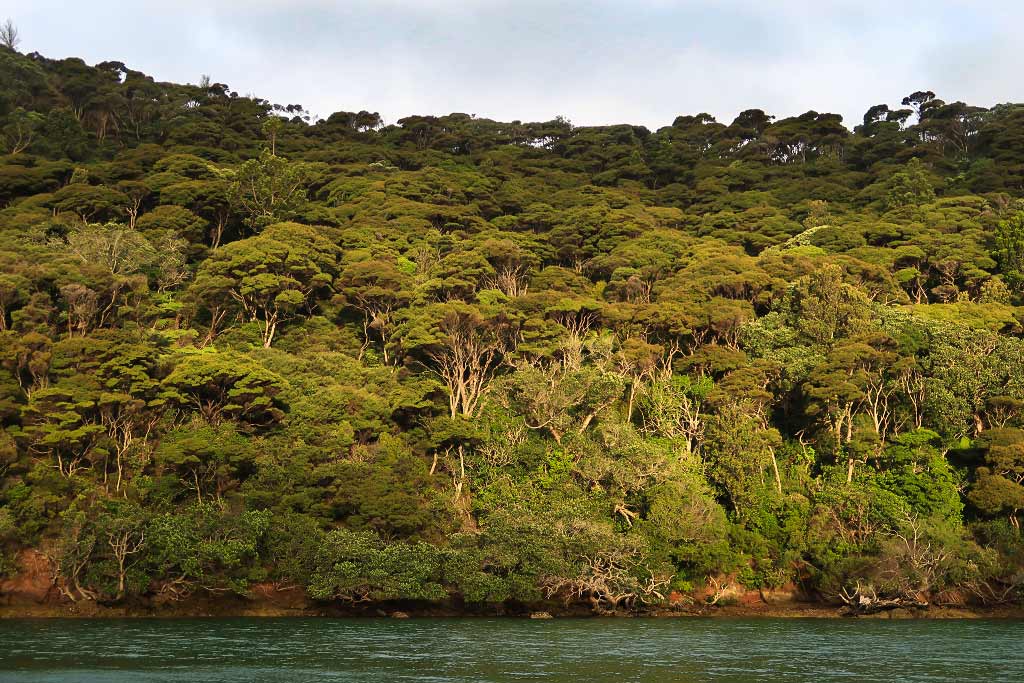
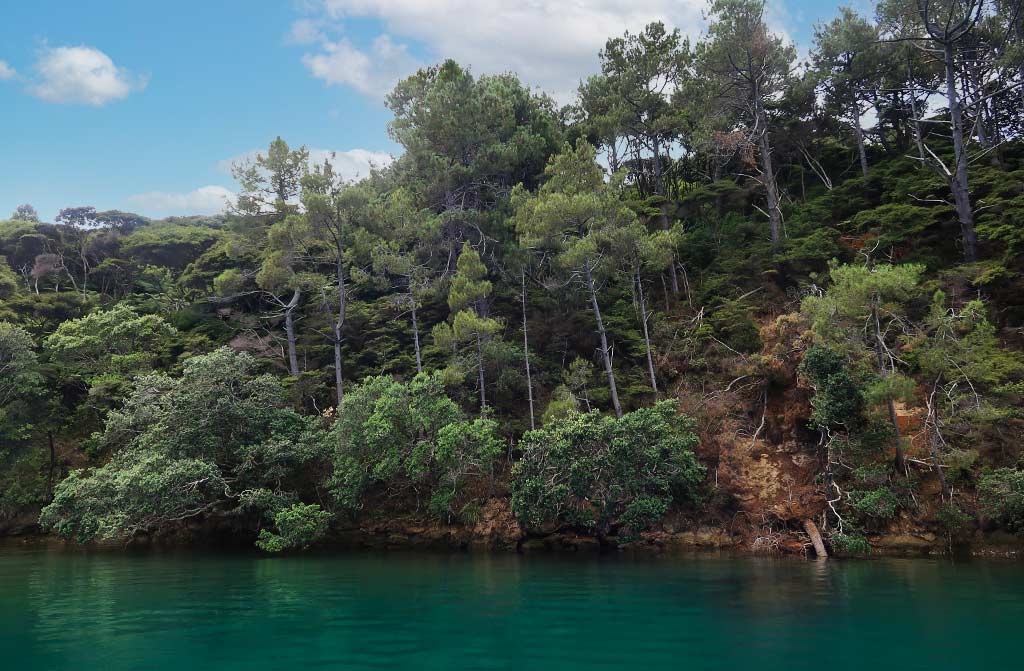
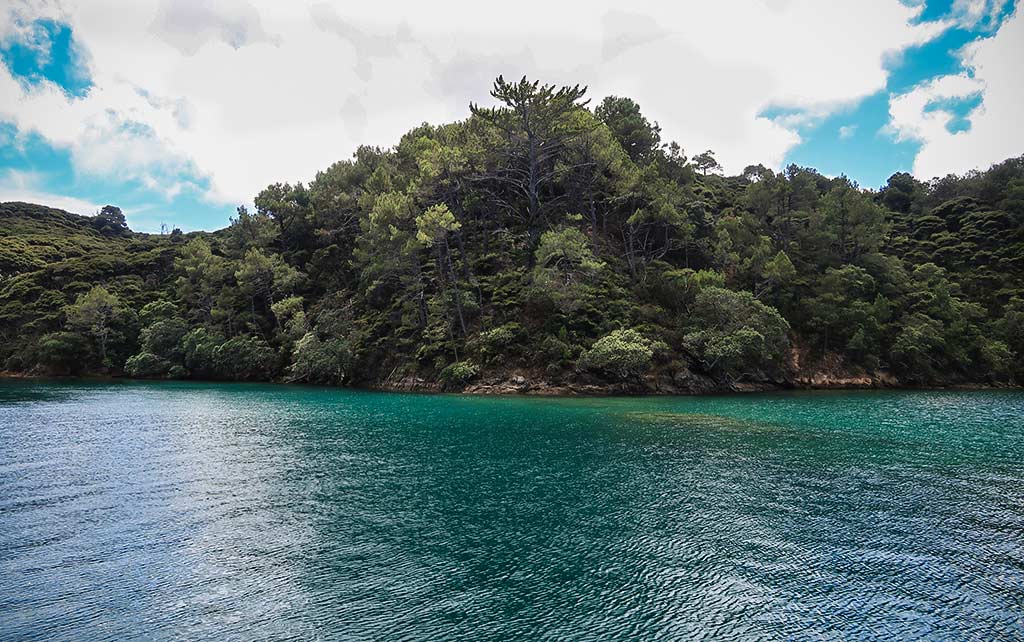
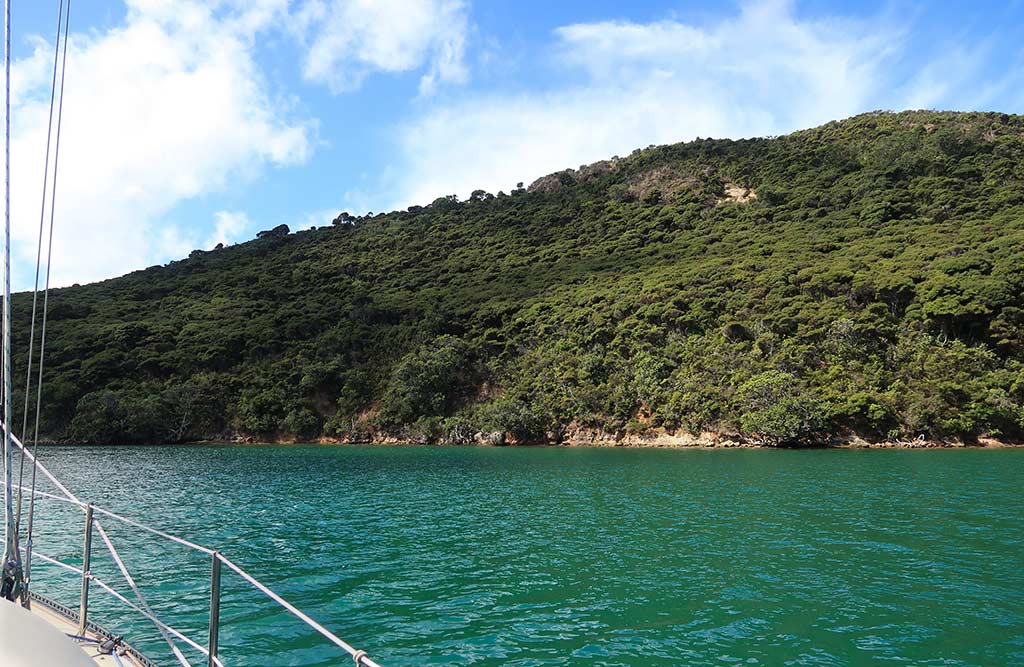
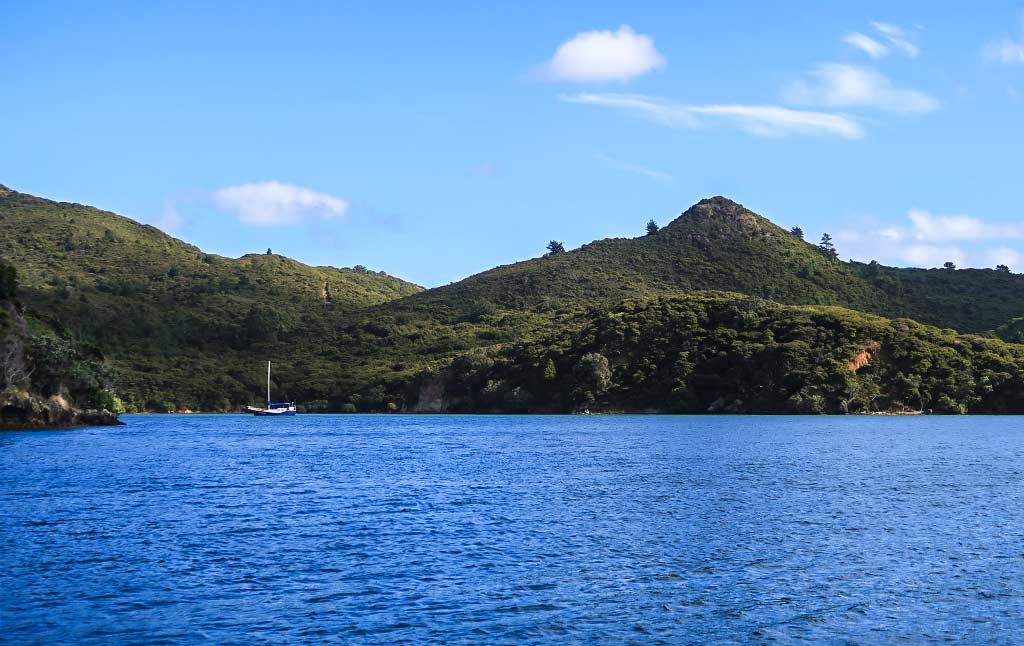
As we entered Stony Bay I was enchanted with its shadowy green beauty. The surrounding hills were thickly forested with trees, and I could hear the squawking of Kakas, New Zealand’s native brown parrot. At the head of the bay was a little cove, adding to the magic of this place. Below, a few photos (click to enlarge any photo).

We decided we’d love to stay there, but when we anchored it quickly became apparent there wasn’t enough room for comfort or safety, especially with the large underwater rock on one side of the bay. Sadly, we’d have to go to the other bay. I ran around getting photos and tried to soak in this place before we brought up our anchor and headed back to the unnamed bay.

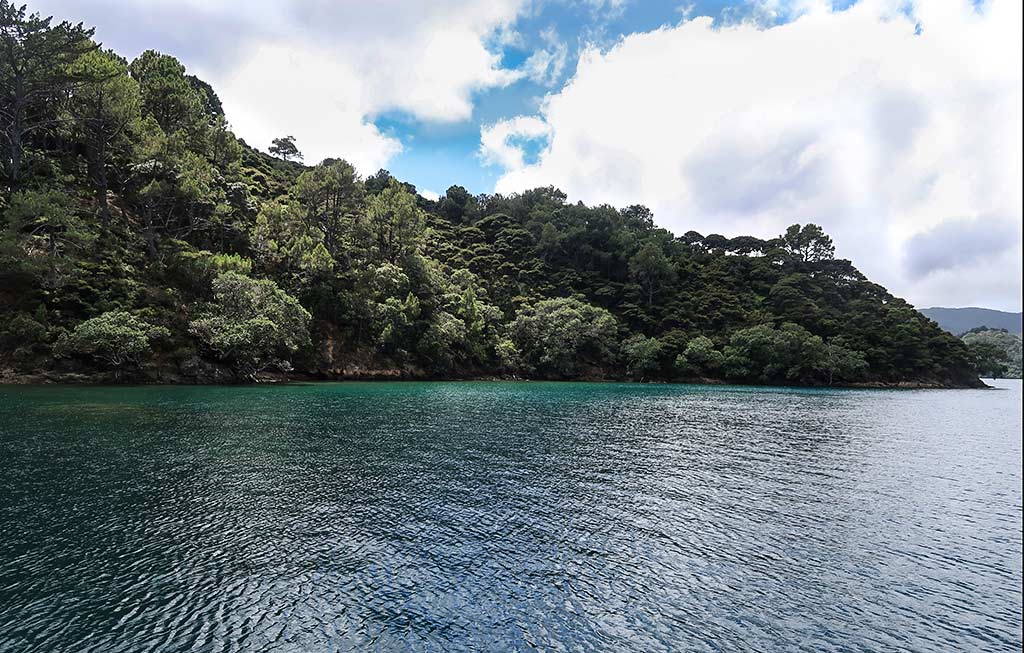
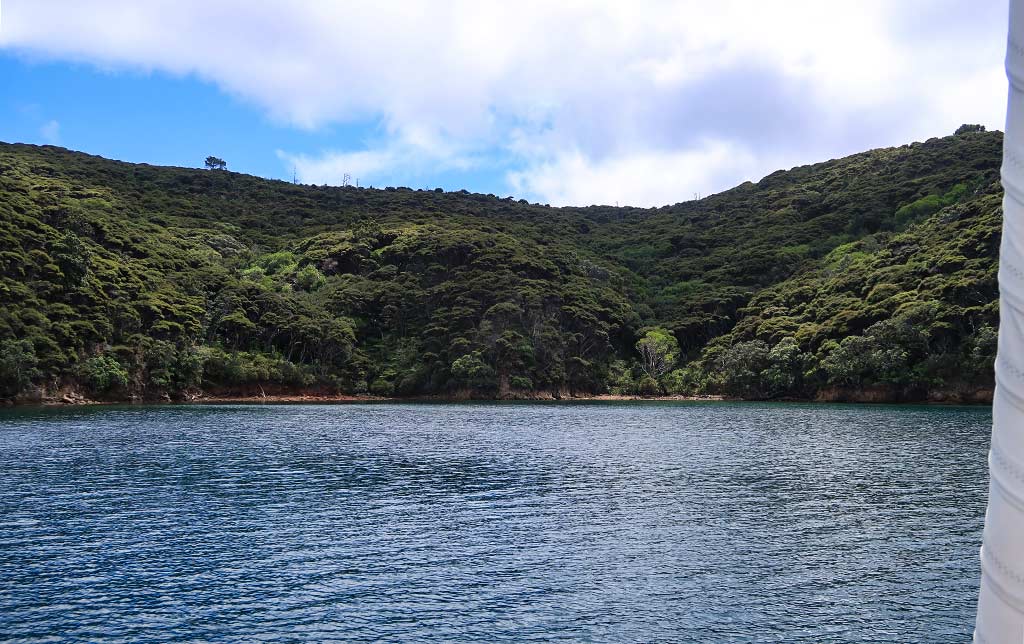
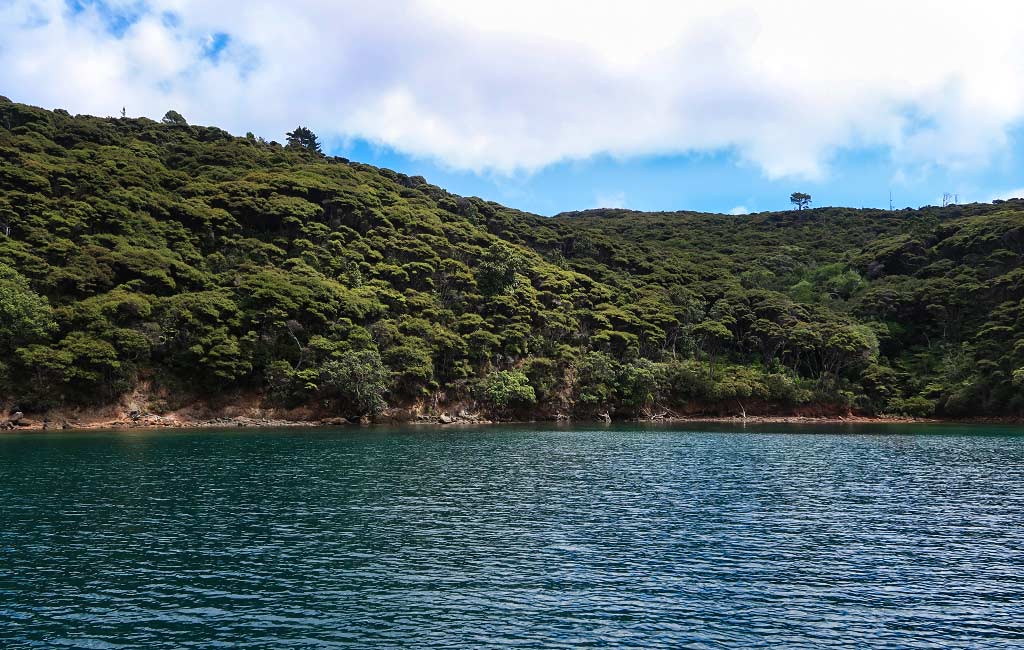
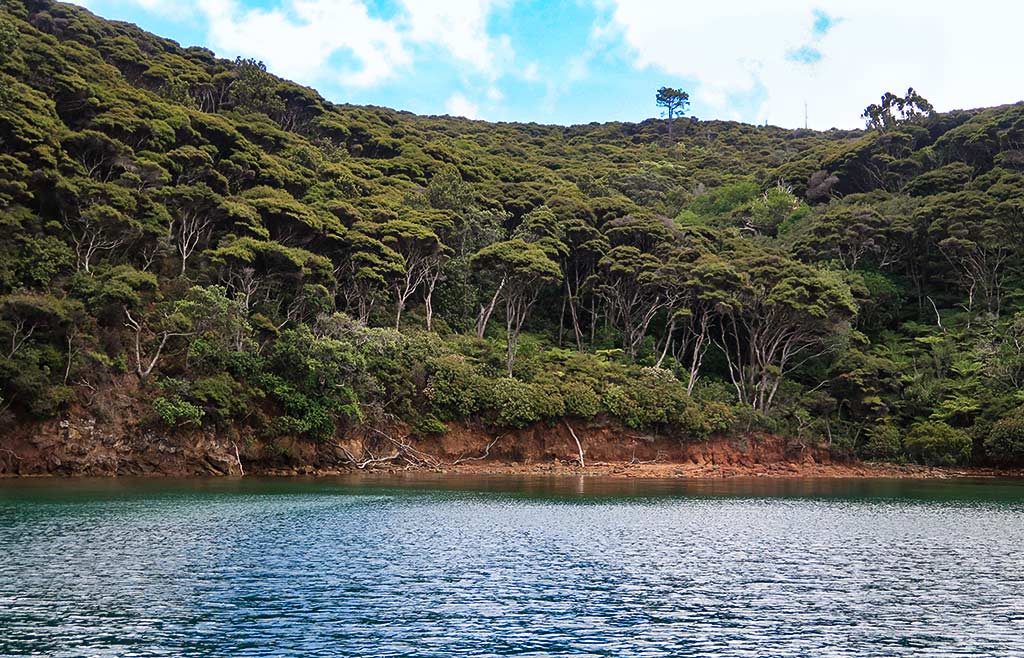
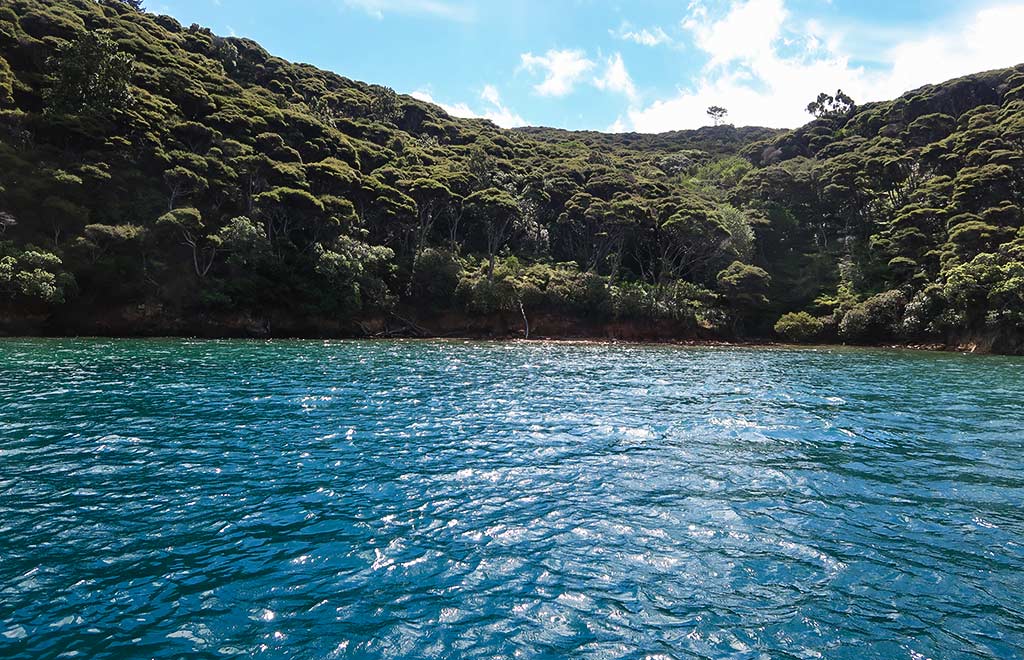
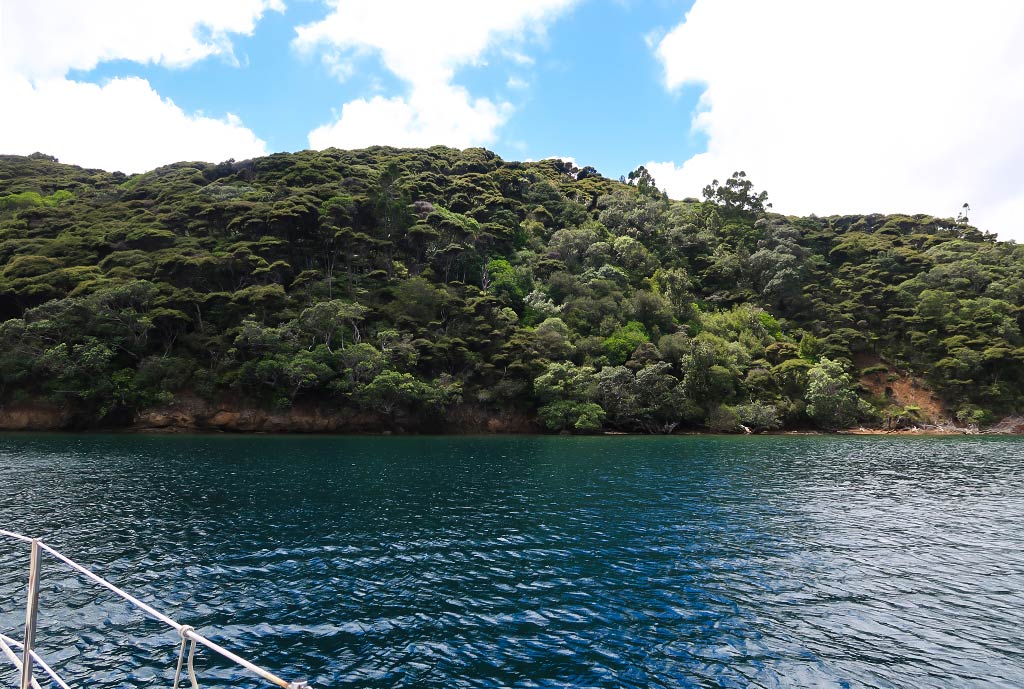
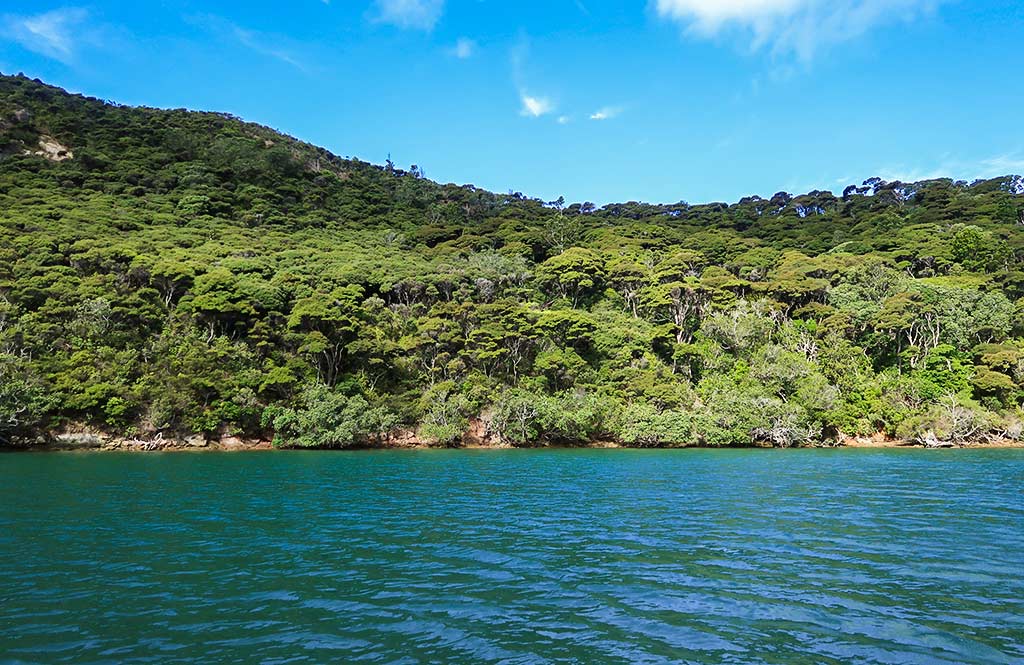
Well the unnamed bay, while not as pretty as Stony Bay, was hardly chopped liver. It, too, had lush tree growth and dark green water. What it lacked was the more cozy feeling of Stony Bay, and it didn’t seem to have its abundant bird life. But what it did have was enough room for us to put out a lot of anchor chain and have swinging room. Of course, this rather ideal situation depended on us having the bay to ourselves. Another boat trying to squeeze in would change everything. Below, some photos:

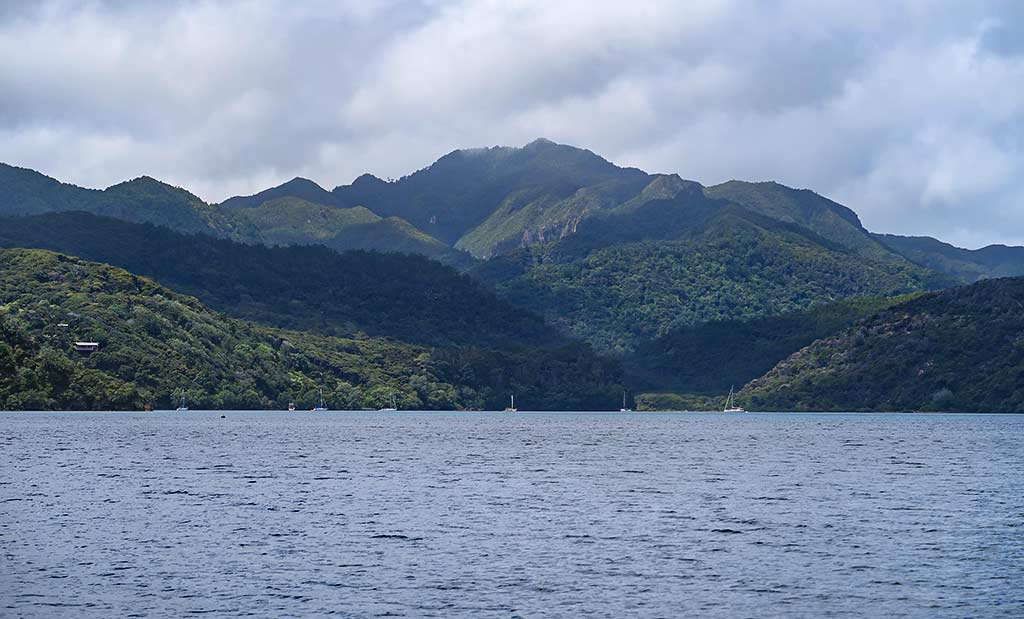
So, securely anchored and having the bay to ourselves, we weren’t quite satisfied yet. A complicating factor in an area like this is how the height and shape of the mountains and hills might affect the wind. As you can see from the photos below, Port Fitzroy has a tumble of mountains in all shapes and sizes, which probably meant there would be no shortage of wind surprises.

The wind currently wasn’t very strong, but it was enough to get a feel for the possible flow patterns in the harbor.

Well, it didn’t take long to see something of concern. The wind had gone northwesterly since we arrived and this bay should offer great protection from NW winds; so it was unsettling to see a breeze start to blow directly into the bay. How was this possible? We think of it as a venturi effect but I’m not sure that’s exactly the correct term for this. We use it to describe what happens when wind gets funneled in some unexpected direction. Mountains are generally the culprit, but lower hills can be tricky, too. We decided to keep an eye on the situation for awhile.

Later in the afternoon, I looked out and my heart sunk when I saw a boat anchored right behind us! That was the nail in the coffin for this bay—we immediately made preparations to pull up the anchor and head to our next choice for an anchorage, leaving in a huff and not even looking at the guy, who was out on his deck and probably wondering why we were taking off so urgently. I have to admit that since he anchored too close to us, I wasn’t wishing the best for him.

So now it was off to our third choice: Wairahi Bay, a mile-long arm of a bay located at the south end of Port Fitzroy. After we started down its arm, we saw a possibility, a wide indent that would give us northerly protection, but would we be close enough to the far side of the arm to get enough westerly protection?

We continued on to the next bight which looked promising on the chart but turned out to be full of anchored and moored boats. We couldn’t go any further in as it was too shallow, and going to the west side of the channel would leave us completely exposed from the north. So, it was back to the first bight, which we shared with a moored boat. I hoped the fact that someone had chosen to keep their boat on an unattended mooring in this spot meant it would be well protected.

Below, some photos showing our first view of this spot as we motored by, a view of the bay just south of it with too many boats, and then back to this spot.

Well, it might not be the most beautiful spot in Port Fitzroy, but I hoped it would be one of the safest. –Cyndi
Sailing Through the Broken Islands into Port Fitzroy Harbor (Great Barrier Island, New Zealand)

February 10, 2022

Today’s forecast was for the wind to drop around 1pm, at which point we planned to make the trip from our anchorage at Great Mercury Island to Great Barrier Island, specifically the well-protected harbor of Port Fitzroy. We had a few possible anchorages to choose from and would make the decision once we arrived there. Below, a map showing our approximate route.

We woke up and got on our computers, listening to the wind gusting outside while we leisurely read the news (and yes, wasted time looking at videos of cat antics on Reddit). We had some breakfast and just enjoyed having the morning to relax. But I couldn’t help but notice, around 10:30 or so, that the wind really started to die down.

Sometimes the lack of wind noise can be as disquieting as wind noise itself. If we’re planning to travel during a small window of opportunity, this is often a signal that it’s time to make a break for it. Meanwhile, the forecast was still saying we should wait awhile longer. Hmmm, what to do? It was now that I pulled out my latest invention I call “The Real Life App.” I really should patent this. It involves putting down the computer, tablet or phone, going outside and taking a look at the actual weather. Yes, the forecasts are pretty good, but sometimes a weather window can start earlier than predicted, which means it will end earlier. When windows are brief, it’s best to get going as soon as things start to settle, and things were rapidly settling. Tempting as it was to stay awhile longer, we decided to go.

Leaving turned out to be a good decision The winds were lighter than forecast as we motor-sailed across the Colville Channel towards the south end of Great Barrier Island. As we neared the island, the wind and seas started to pick up again, while the swells became larger and more on our beam (side). It was a relief to get in the lee of Great Barrier Island where conditions improved rapidly. We still had about 14 knots of wind but with the seas were mild behind the protection of the island.

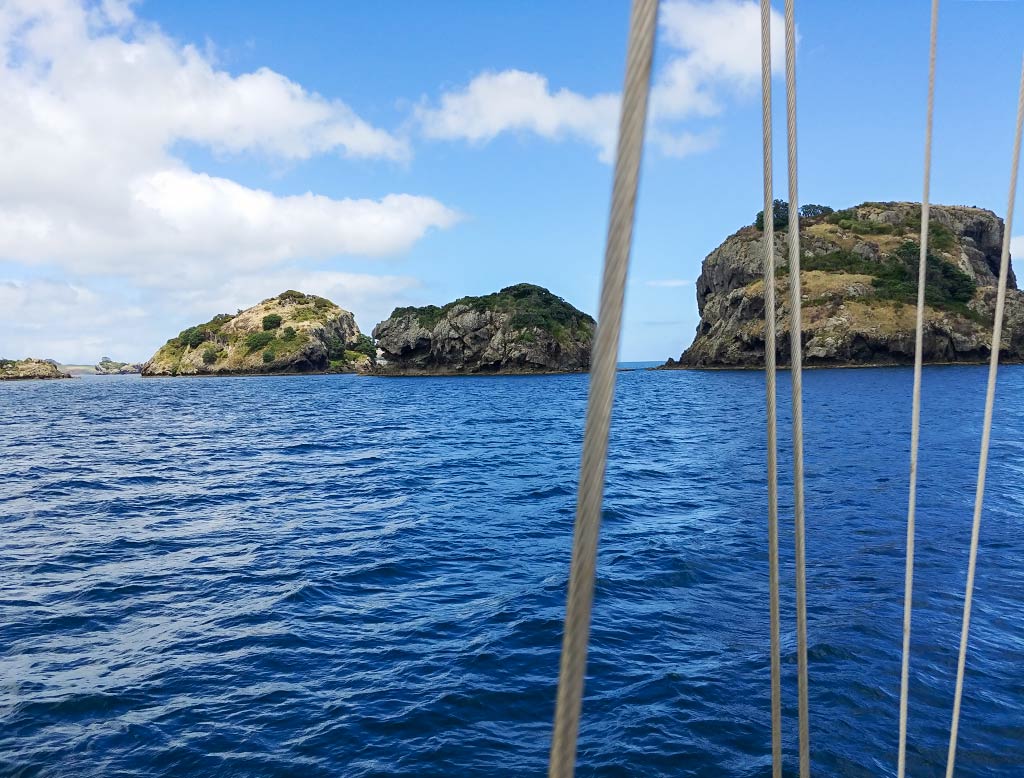
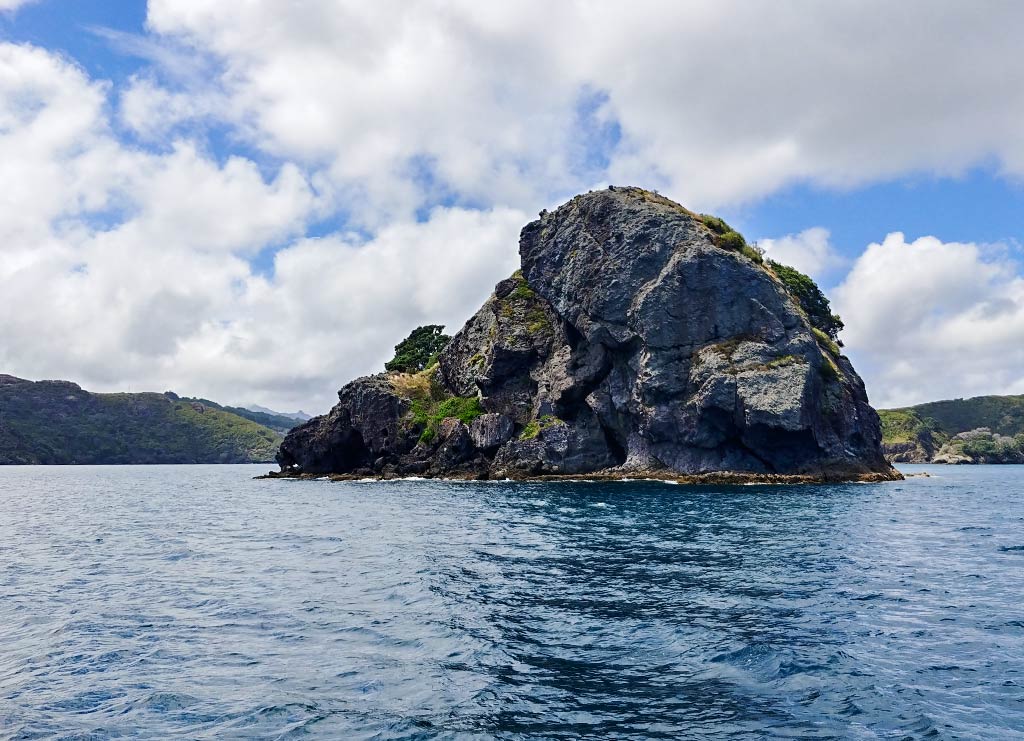
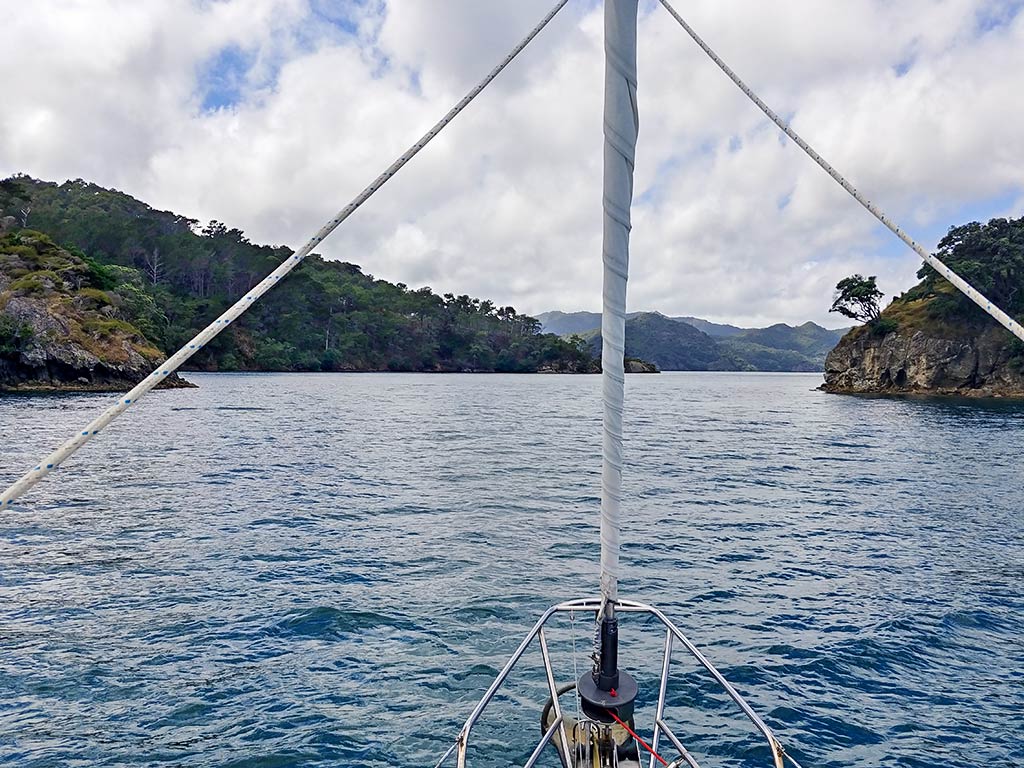
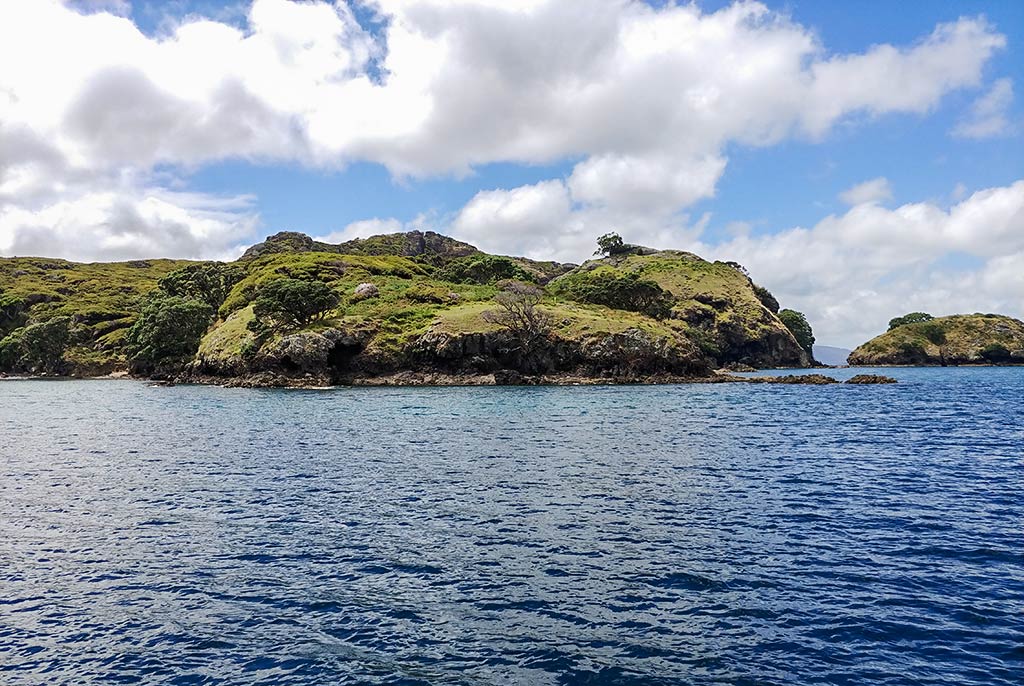
A few miles further along, we entered an area I’m particularly fond of: The Broken Islands. These islands sit off the coast of Great Barrier Island, splintered off as though the island were hit by a giant mallet on its edge, leaving the broken-off section in scattered bits. These little islands stretch 3 ½ miles just off the coastline, and while they don’t offer a lot of anchorages, they sure are scenic to sail through. Below, a map showing our route amid the Broken Islands and through the pass going into the harbor…

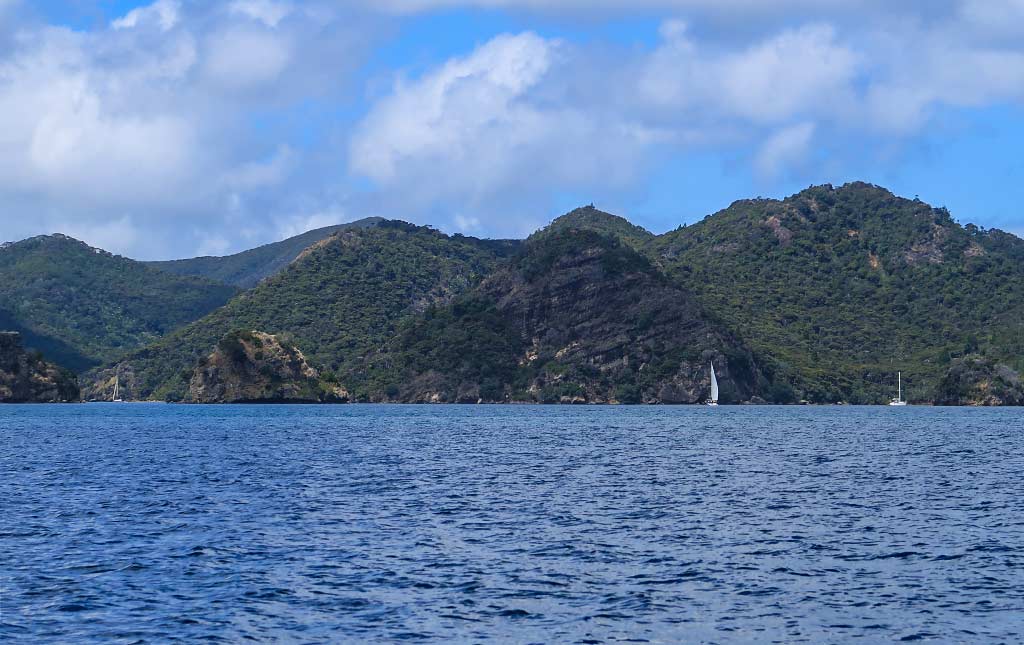
And a few photos…

As we motor-sailed through the Broken Islands Passage, I went up on deck and got some video to try to give a feeling of what this experience is like. The video starts at the south end of this chain of islands, then continues with clips from various viewpoints as we got further along. The final two clips are of going through the somewhat narrow Man of War Passage, which is the south entrance to the harbor of Port Fitzroy.

Once inside the harbor, it was time to figure out a good place to be in the coming winds. –Cyndi
 

Big Trip, Heading North (Parapara Bay, Great Mercury Island, New Zealand)

February 8, 2022 (a couple of weeks ago)

Before leaving Tauranga, we’d had a discussion about where we’d go next. With Whitianga not an option, the next closest possibility would be to do some cruising around Great Mercury and Great Barrier islands. Rich was amenable to the idea, but I was not. This was yet another area that, wonderful as it is, I was just feeling done with. After our recent stop at Great Mercury Island’s Hururi Bay, I didn’t feel like going back there. I told Rich I just wanted to head straight back towards the Hauraki Gulf, with no stopping at either Great Mercury or Great Barrier.
Friends, we went to Great Mercury and Great Barrier. Our plan was actually to stop at an anchorage at the top of the Coromandel Peninsula, Port Jackson, which I’ve always wanted to do but the weather is never right. Looking at the weather forecast from Tauranga, it looked do-able. But we also decided if conditions didn’t look good, we could continue on Colville Bay a few miles further, or to Waiheke Island and arrive around midnight. Plan A, B, and C all set! (God was probably having a good laugh at this point!)

Although we set out under overcast skies, the conditions were perfect in some ways. The wind was on a broad reach, 13 to 15 knots dropping as the afternoon went on. There were visible squalls, but only with misty rain and not much wind. The one condition that was far from perfect was the sea state. Not only had the squalls made the seas rather lumpy and confused, we also had meter-high swells with a short period between them, right on our beam. It was a reminder of just how important it is to take the sea state into account when looking at the wind forecast. We knew what the numbers would be, but we were still surprised at how uncomfortable this ride was. And we had just enough of that misty rain to keep things damp and cold, adding to the misery of this trip.

As the afternoon went on and things didn’t get better, Rich was thinking this swell would probably be wrapping around and into our destination anchorage, Port Jackson. Most likely, we’d have to continue past to Colville Bay. I hoped that making the turn to go over the peninsula would make the swell more comfortable, but I now had to wonder—would we be able to stop at Great Mercury for the night and have agreeable enough weather to continue this trip tomorrow? Rich was already looking into that possibility. We’d have higher winds the next day, but they’d be from behind us and the seas would be better. We decided to make a final decision as we neared the island.

I went below for Rich’s watch and fell into a deep sleep, surprising in that conditions got pretty rough for awhile. When I woke up, things felt so much calmer. I went outside into what looked like a dream world. The sky was overcast with low clouds and scattered rainy areas, the seas were relatively calm, and we were surrounded by so many little islands. Rich told me we were now among the Mercury Islands and they were providing protection from the seas. I don’t know if it was the low-cloud weather altering the usual view, but this area looked like nothing I had seen before in my life. Rich agreed. We’ve made several trips between Great Mercury and Tauranga and didn’t remember it ever looking like this. It was bizarre, like reality had shifted. Even stranger, this looked so much like dream I had years ago, a dream so wonderful I still remember it. Maybe this was a good omen.

We now considered our options. Soon we’d be heading out of the protective effect of these islands, but we’d be turning and putting the swells behind us. Suddenly, we got smacked by a surprise big swell that snuck up on us. Decision made: we would stop for the night and give ourselves a break.

With that, I had an idea. We were looking at a week of nasty weather ahead of us, including a direct hit from the remnants of a tropical cyclone heading our way. We planned to take refuge in various anchorages in the Hauraki Gulf islands, but now it occurred to me that Port Fitzroy, a well protected harbor at Great Barrier Island, would make finding a suitable storm anchorage an easier task.

So I said to Rich, “I have an idea; maybe we should go to Great Barrier.” Rich responded by staring at me as though deciding whether to have me committed or toss me off the boat himself. After all, I’d gone from refusing to go to suggesting it as though it were my own new and interesting idea. In my defense, though, I had said no to recreational cruising there, but now I was looking at it as a storm refuge. After recovering from my sudden turnaround, Rich instantly agreed. We could now stay at Great Mercury a night or two then head to Great Barrier, a much shorter trip than going to the Haruaki Gulf.

We could smell Great Mercury as we approached it, a wonderful smell of a New Zealand forest and dried grass. It was so calm as we got in the lee of the island I was able to make dinner as we headed in (we’d barely eaten today in the rough conditions), having it ready for us after we dropped our anchor.

As we got in sight of our favorite anchorage, Parapara Bay, we were surprised and delighted to see it was completely empty! It seems the weather forecast had sent people home. We had a squall pass over us as we anchored, a final blast of wet misty rain, before heading below, getting out of our foul weather gear, and relaxing while enjoying our chili-and-rice dinner and an episode of Broadchurch (our current TV show).

We could later hear the wind gusts outside, but the bay remained calm. Later when I stepped out into the cockpit I was met with an impressive chorus of chirping crickets! I love this sound but don’t often hear it in New Zealand, so what a nice surprise, especially since it was actually louder than the wind.

After a sound sleep, we woke the next morning and checked weather. It turned out we could spend another day here, then have good weather to get to Great Barrier in time to find a place in which to ride out the coming cyclone remnants.

This was good news because I was able to sit outside off and on during the day. The clouds were low, but the day got lighter as it went on. Oh my goodness I had forgotten how beautiful this bay is! When we talked about coming here, I’d said “No” to the idea of a busy anchorage or worse, a make-do bay, and the mild depression that comes after losing the sense of wonder for a place. But these issues weren’t a problem now! In spite of, or maybe even because of, the cloudy skies, combined with the isolation of having this to ourselves, this bay felt enchanted.

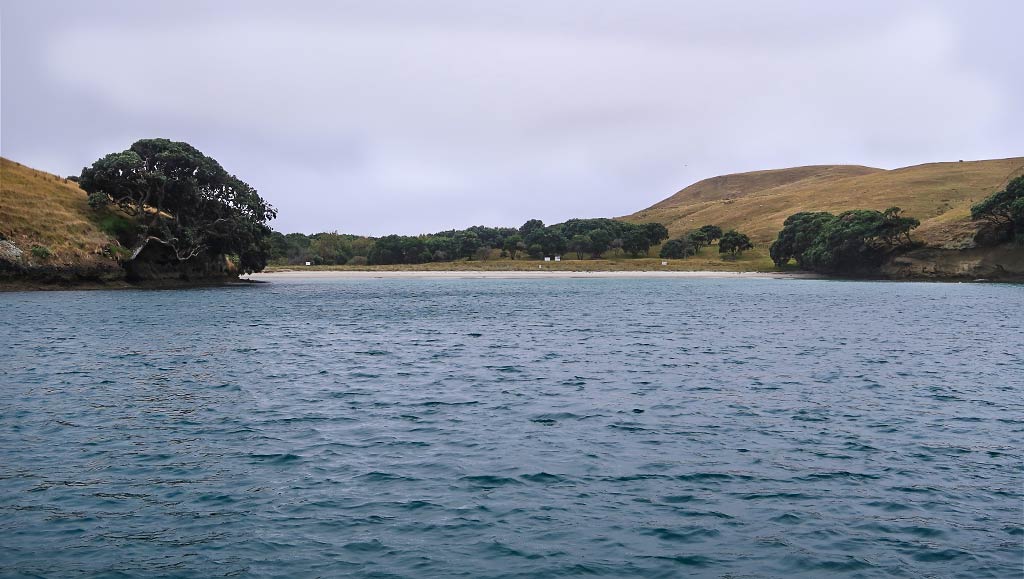
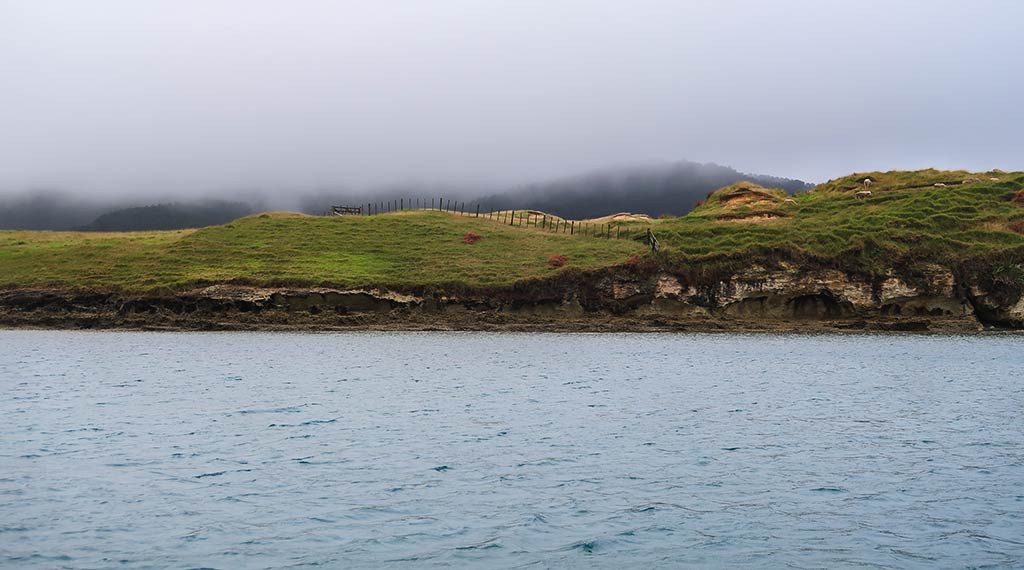
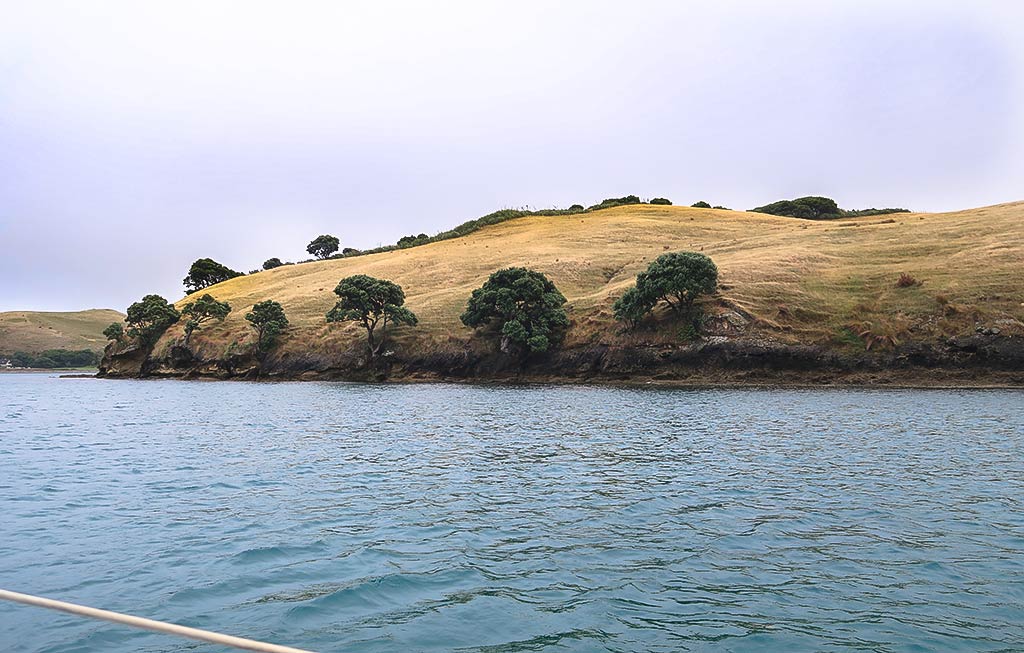
We were surrounded by golden grassy hills, thick batches of pohutukawa trees, and low cliffs that dipped down to a white sand beach at the head of the bay. The bay itself felt so peaceful, and well protected from wind that we could sometimes hear but could hardly feel. What we could hear was birdsong and the buzzing of cicadas during the day, and at night, those crickets! The water around us was calm and had as many sea birds as I’ve seen an any given place. Gannets in particular were a standout, diving into the water around our boat to catch fish, then preening themselves before taking off for another round. (Below, a few photos from this cloudy but lovely day; click on any photo to enlarge.)

What stood out overall here was a feeling of peace and beauty. Did I say I didn’t want to come back here? Now I felt like I could stay here forever. Tomorrow, alas, we’d be moving on. –Cyndi