March 12, 2014
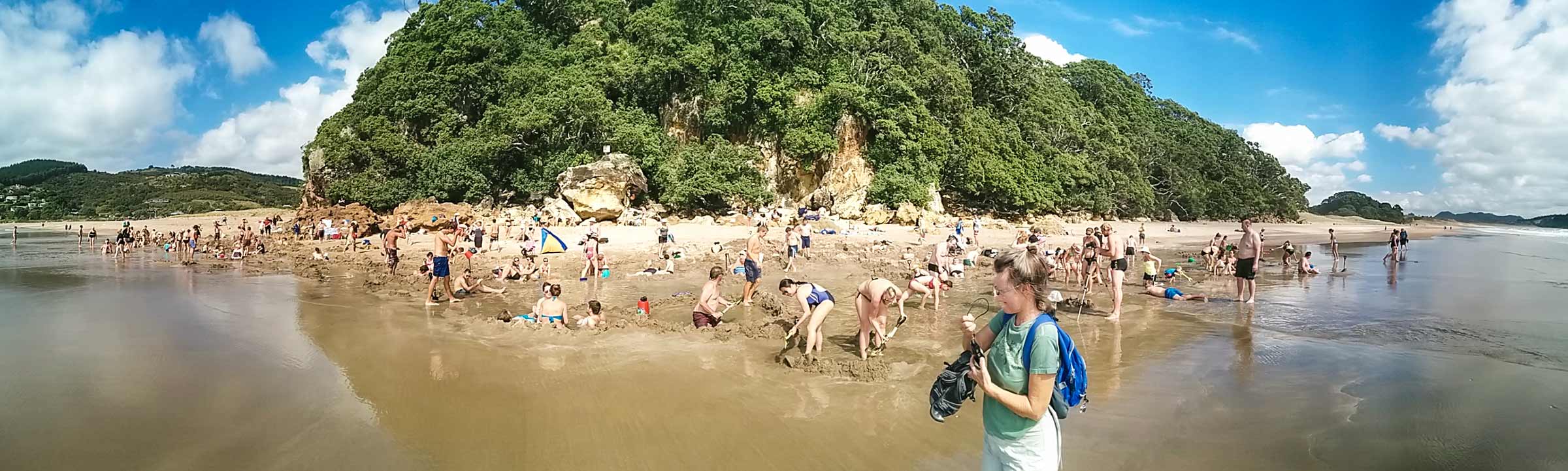
After Hot Water Beach, I had a few more stops in mind, but our next destination was the one I was most excited about…
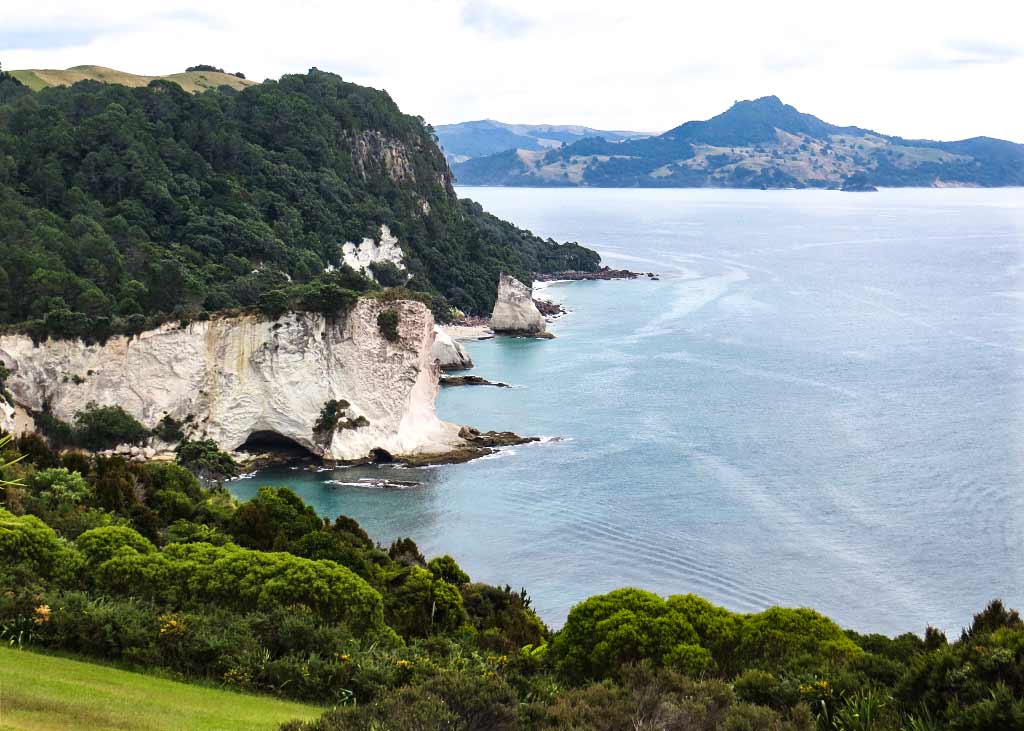
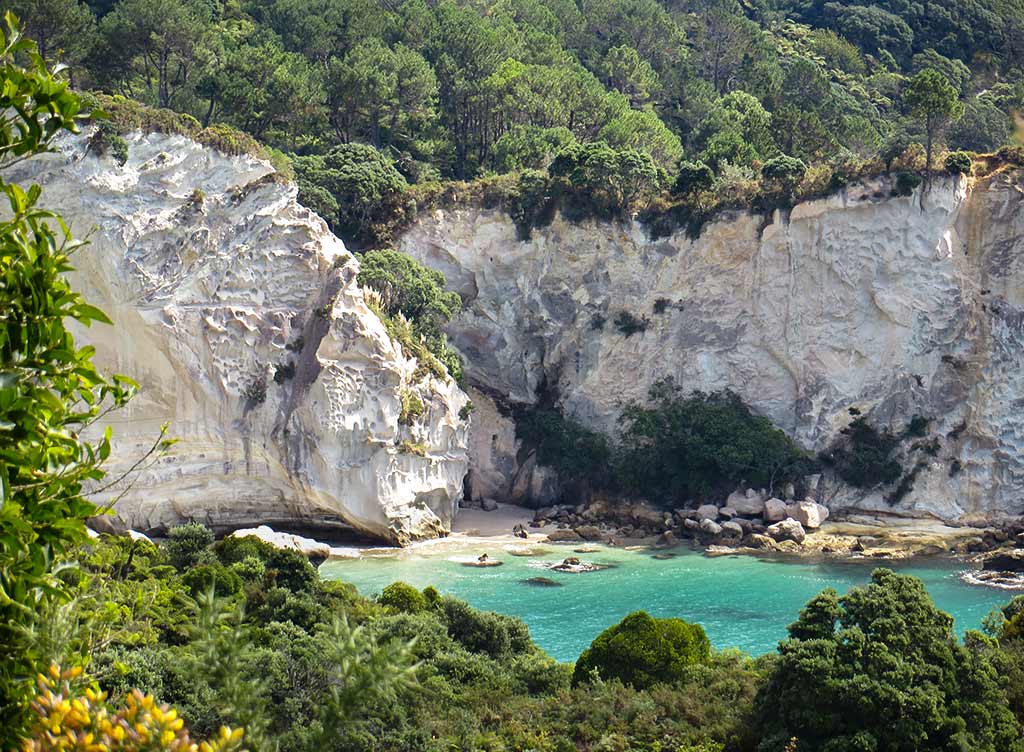
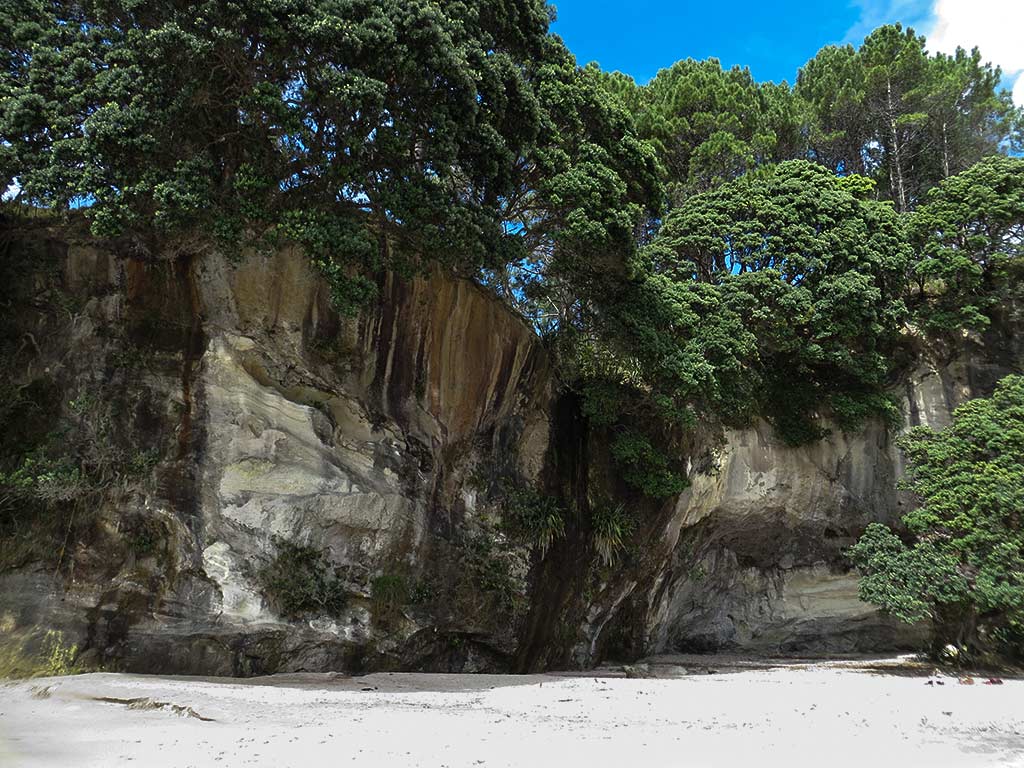
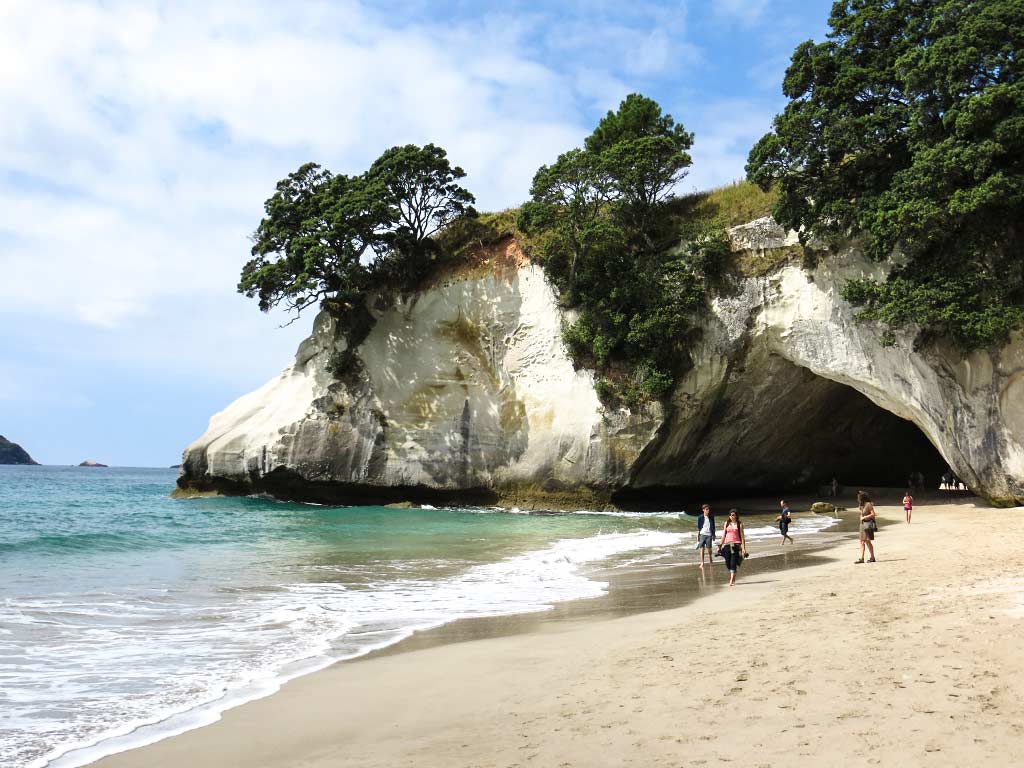
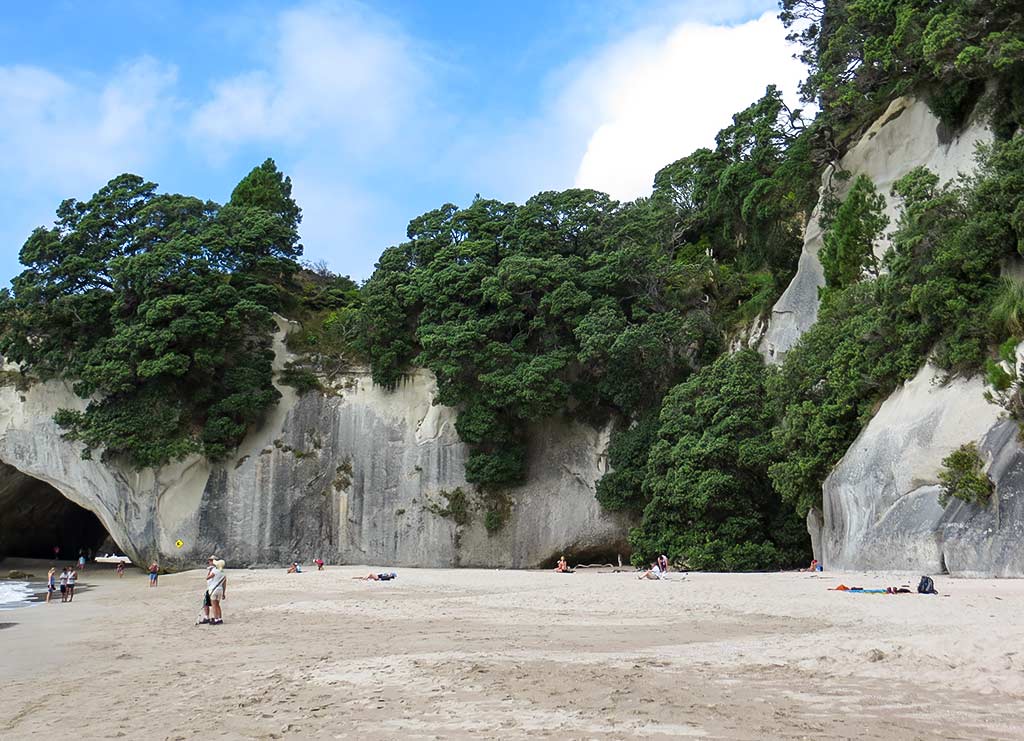
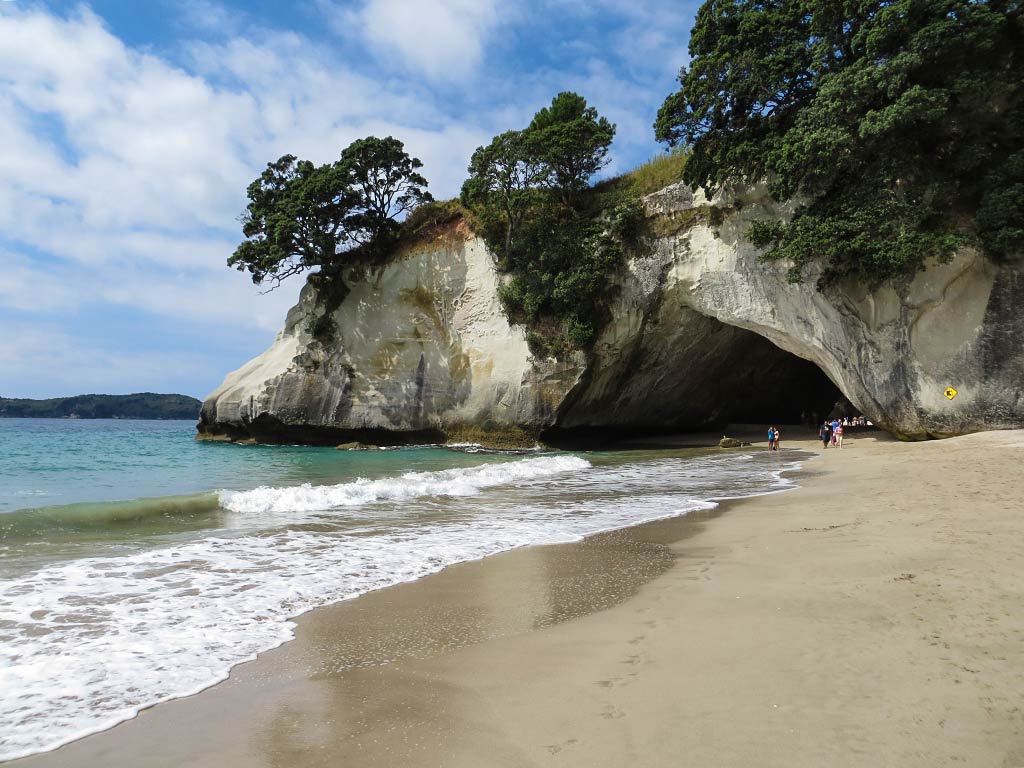
There’s a section of the Coromandel Coast that was formed from ignimbrite, a rock substance made up of pumice and ash from volcanic eruptions. This gives the cliffs here a distinctly white appearance, especially striking when combined with the area’s large pohutukawa trees and gem-colored blue/green water.
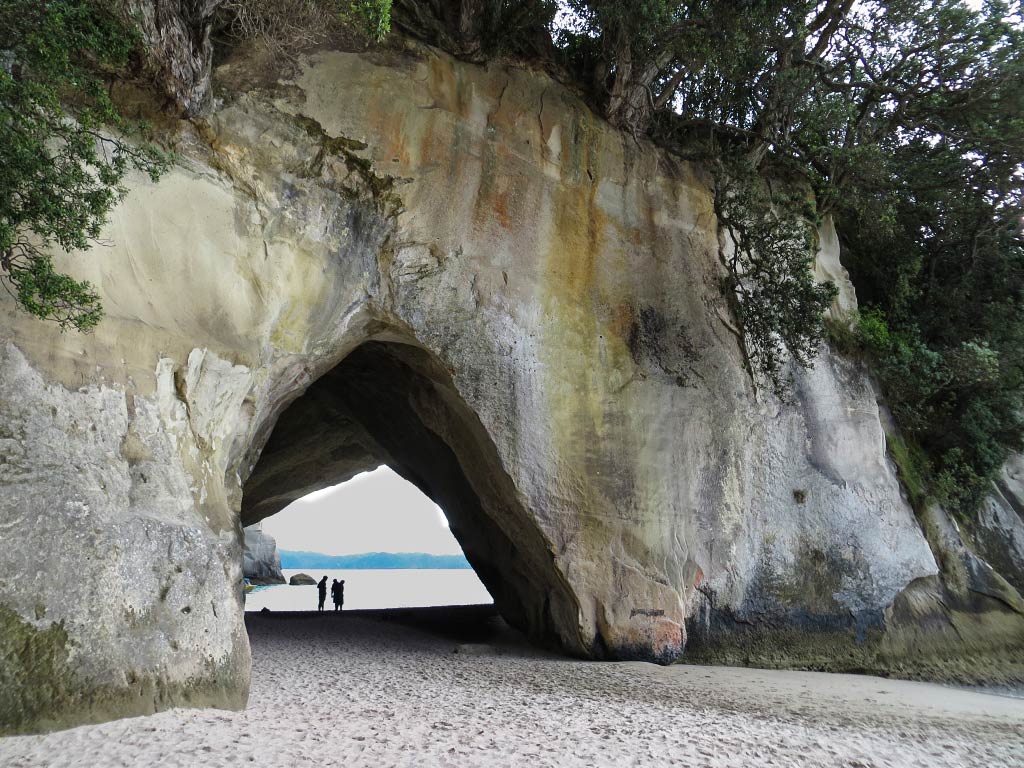
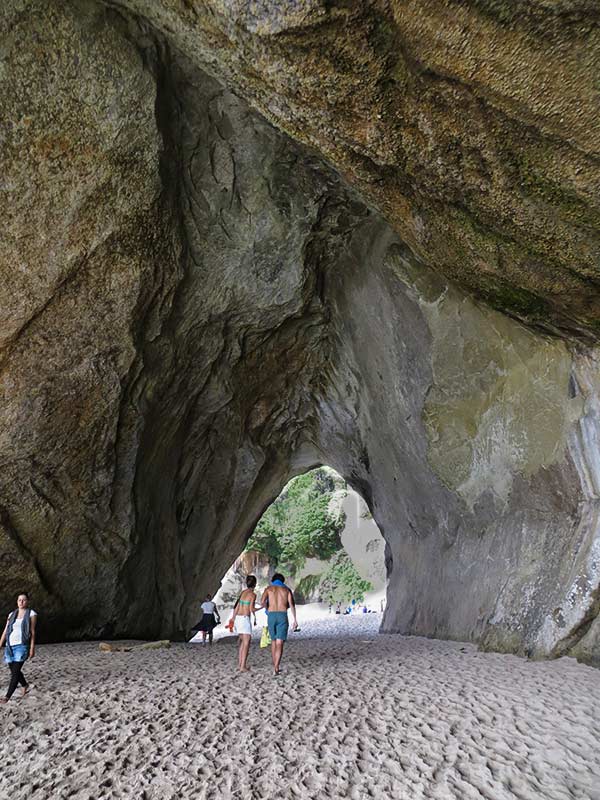
Cathedral Cove is the highlight of this area, with a huge naturally-formed arch over a white sand beach, effectively dividing it into two beaches. The underside of the archway forms a large, high-ceilinged cavern which inspired the name Cathedral Cove.
The best time to visit this area is at low tide when the cavern is dry and easy to walk through. This can make combining visits to Hot Water Beach and Cathedral Cove a bit hurried, but actually there’s a long period of time on either side of low tide to enjoy both beaches at Cathedral Cove.
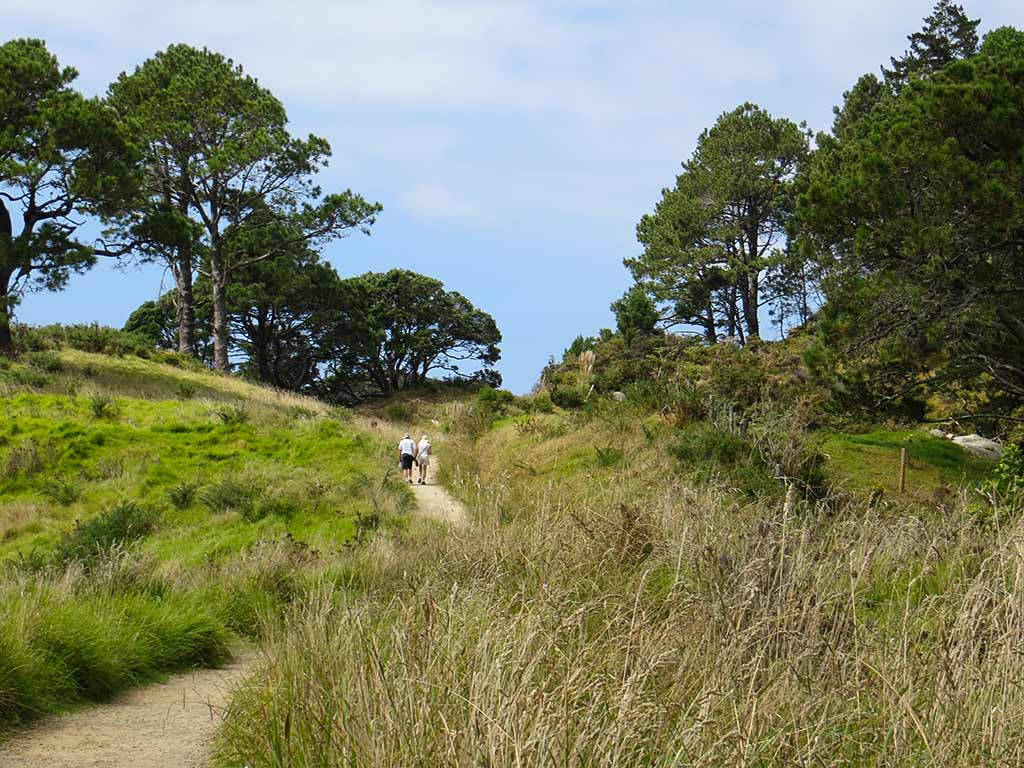
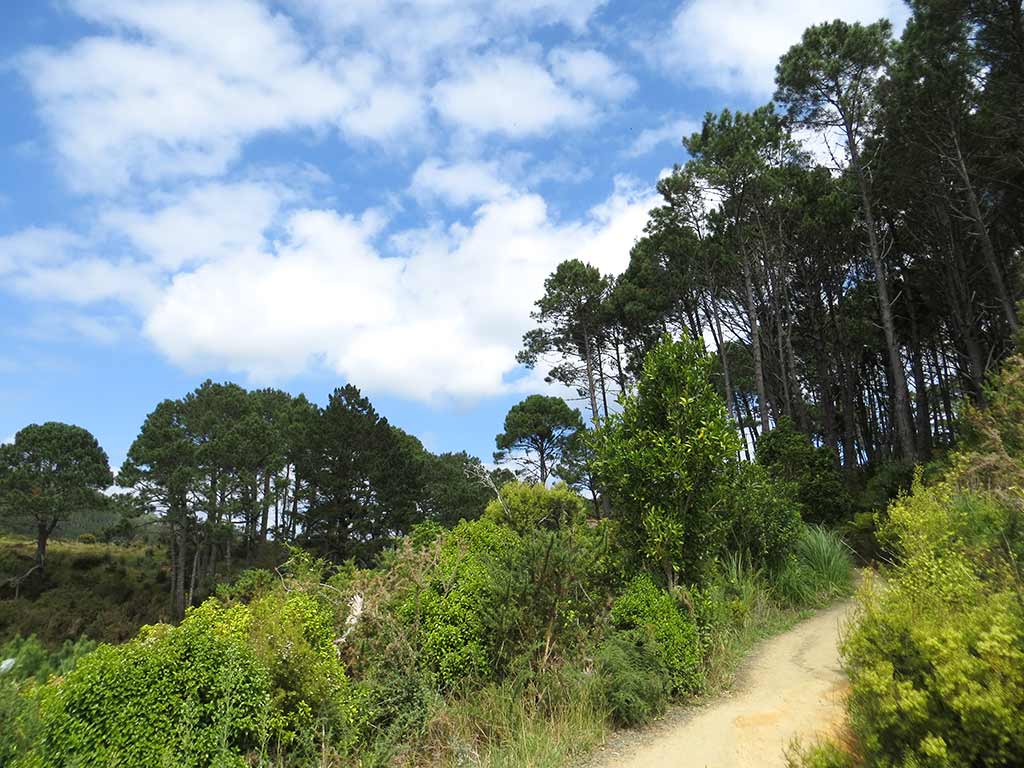
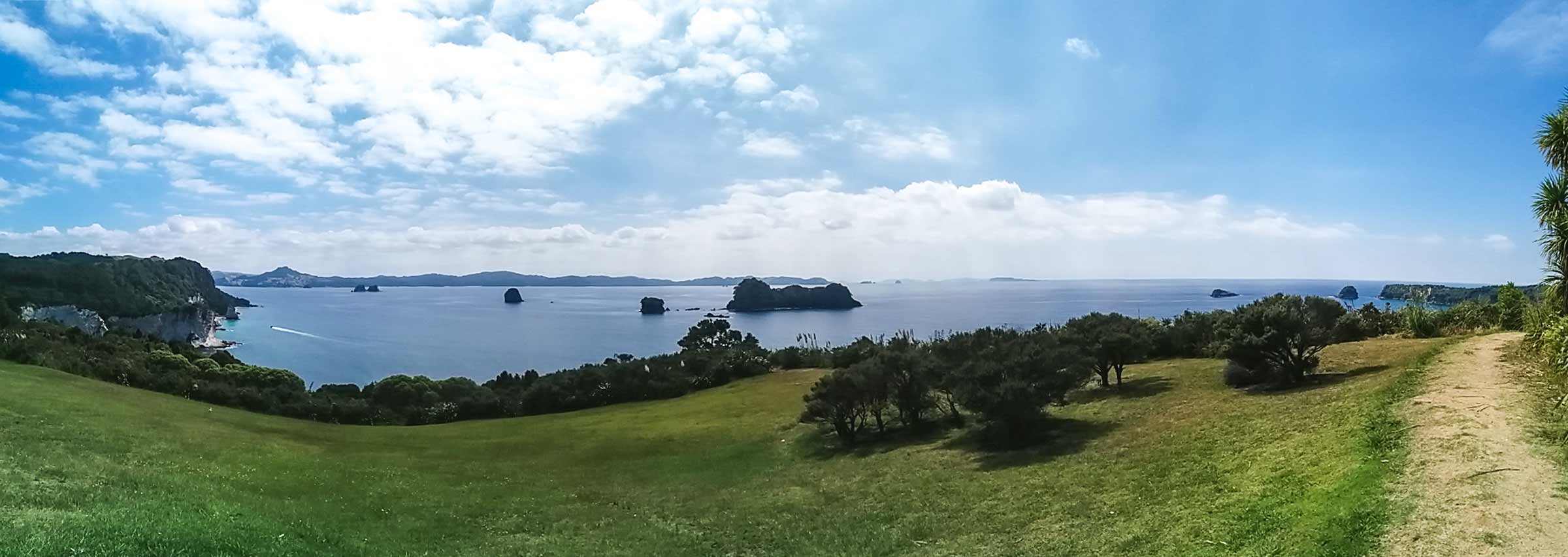
Once we’d managed to find a place to park, we embarked on the 40-minute hike to the beach. Some of it took place along the top of the cliffs, treating us to some really impressive views. Below, a photo gallery (click on any photo to enlarge).
And a couple of panoramas…
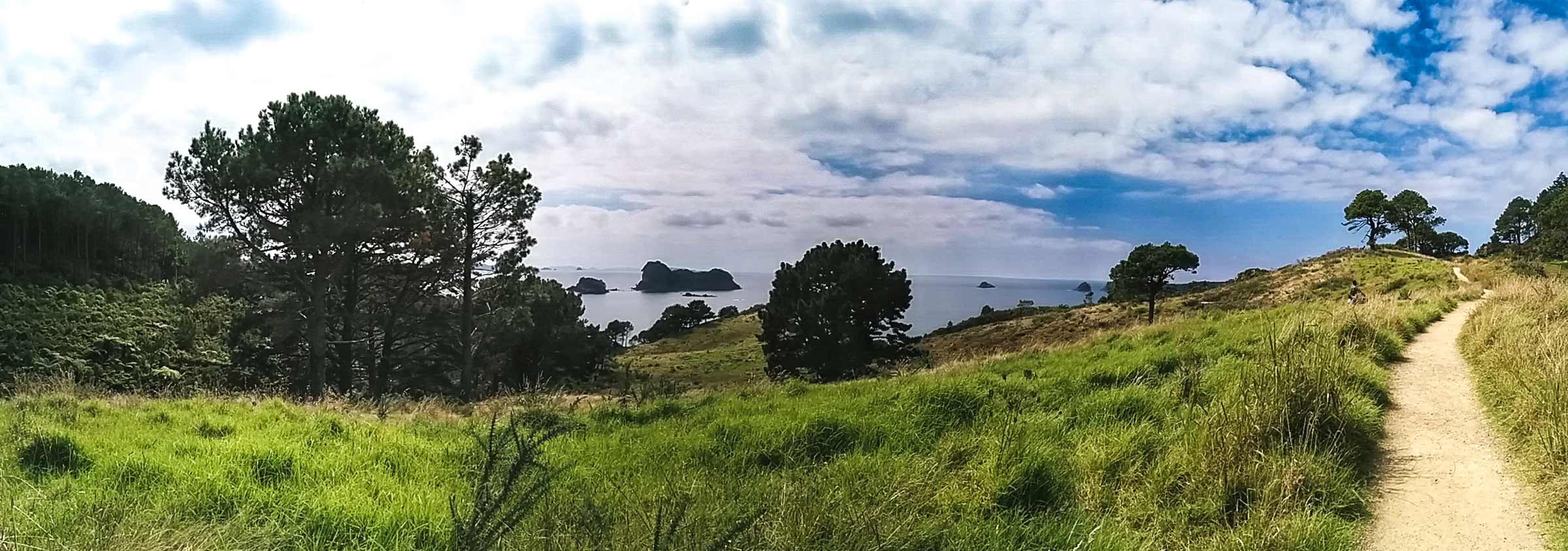
Then the path started winding downhill towards the shore. It actually wasn’t difficult; it just took some time. The final bit went down some wooden stairs amid brush and boulders, then we emerged onto the first beach, Mares Leg Cove.
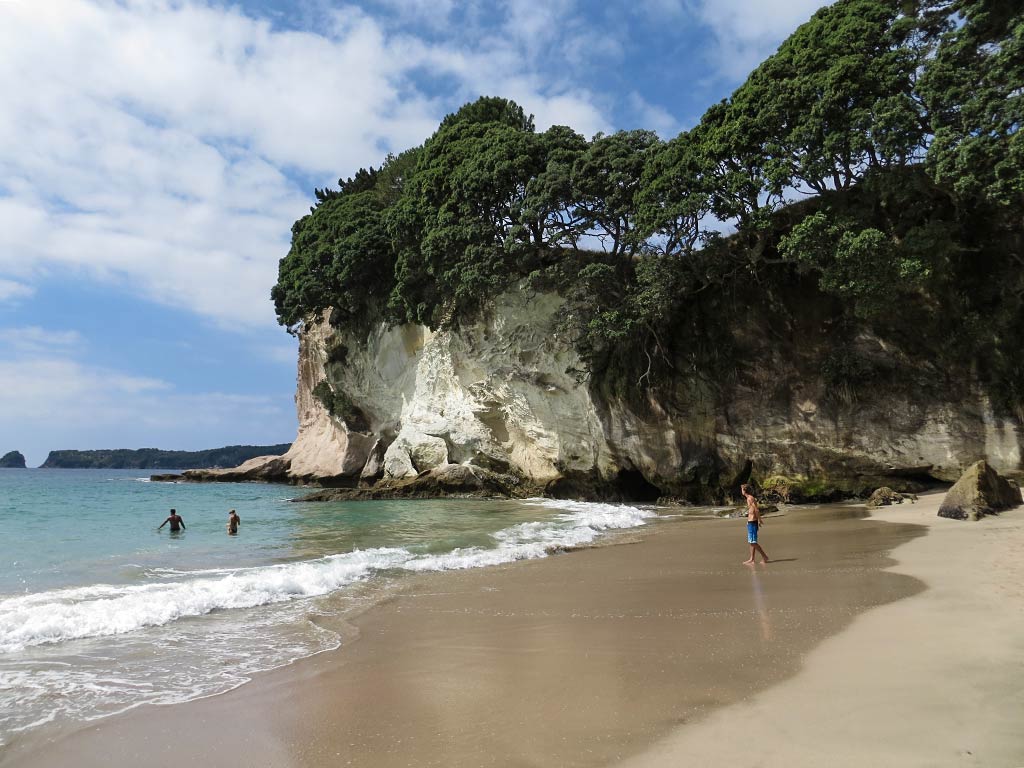
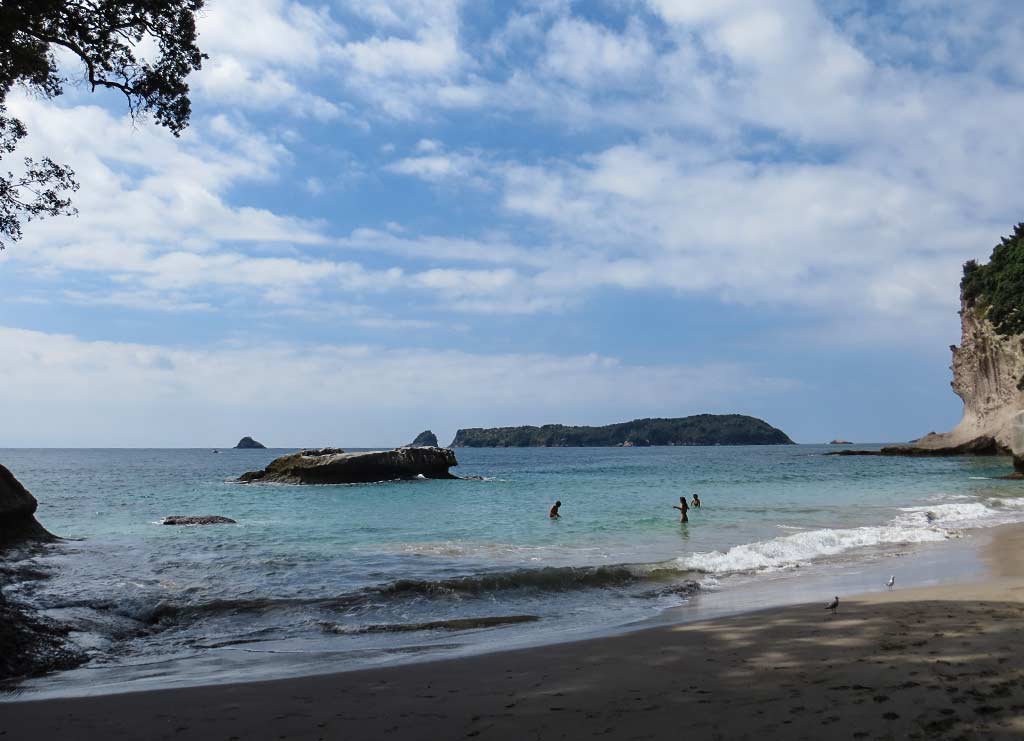
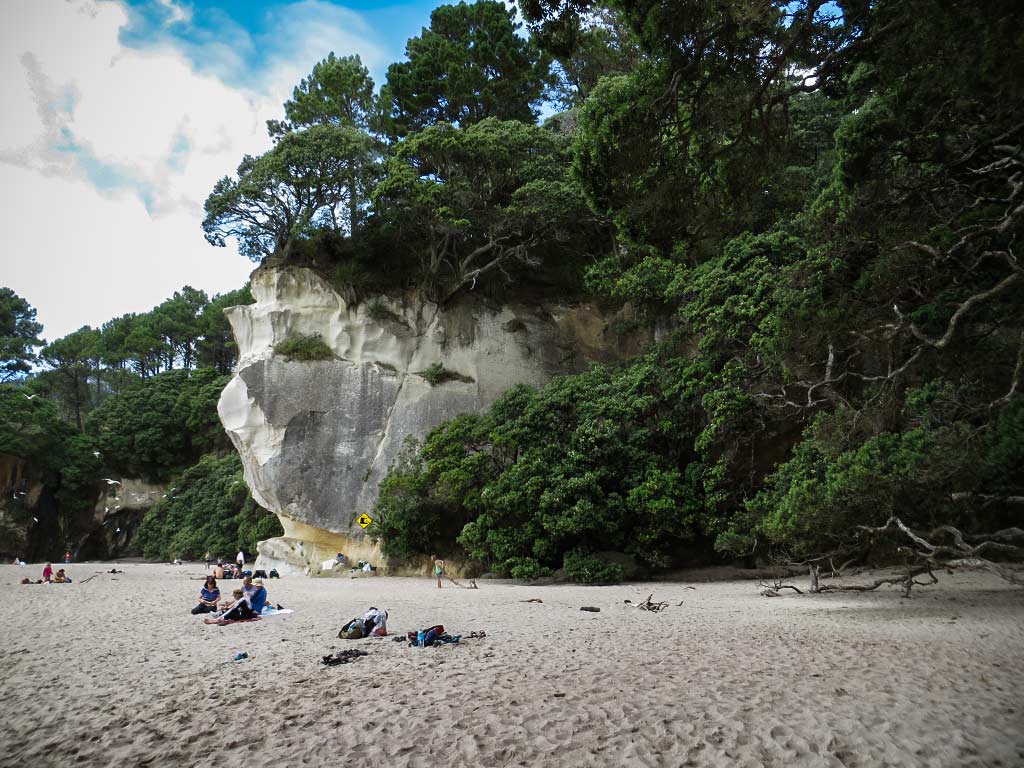
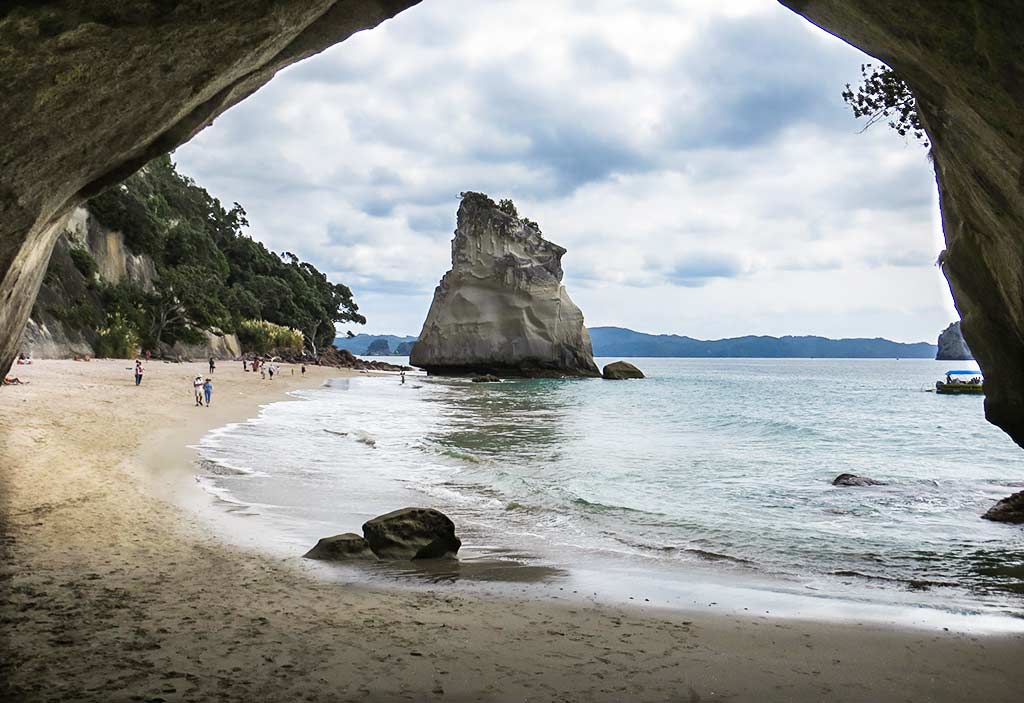
“Wow!,” was our first reaction. It felt like we’d gone through a wormhole to another world, a very beautiful one. On one side we had high white cliffs with gnarled green pohutukawa trees clinging to their sides. At the foot of these cliffs was a fantastic beach, framed on the south end by a headland. The water here was calm, with a few rock formations making little islets close to shore. Behind us was was the arch, which created a giant cave through which we could look to the other beach and its striking monolith rock formation. Below, a panorama…
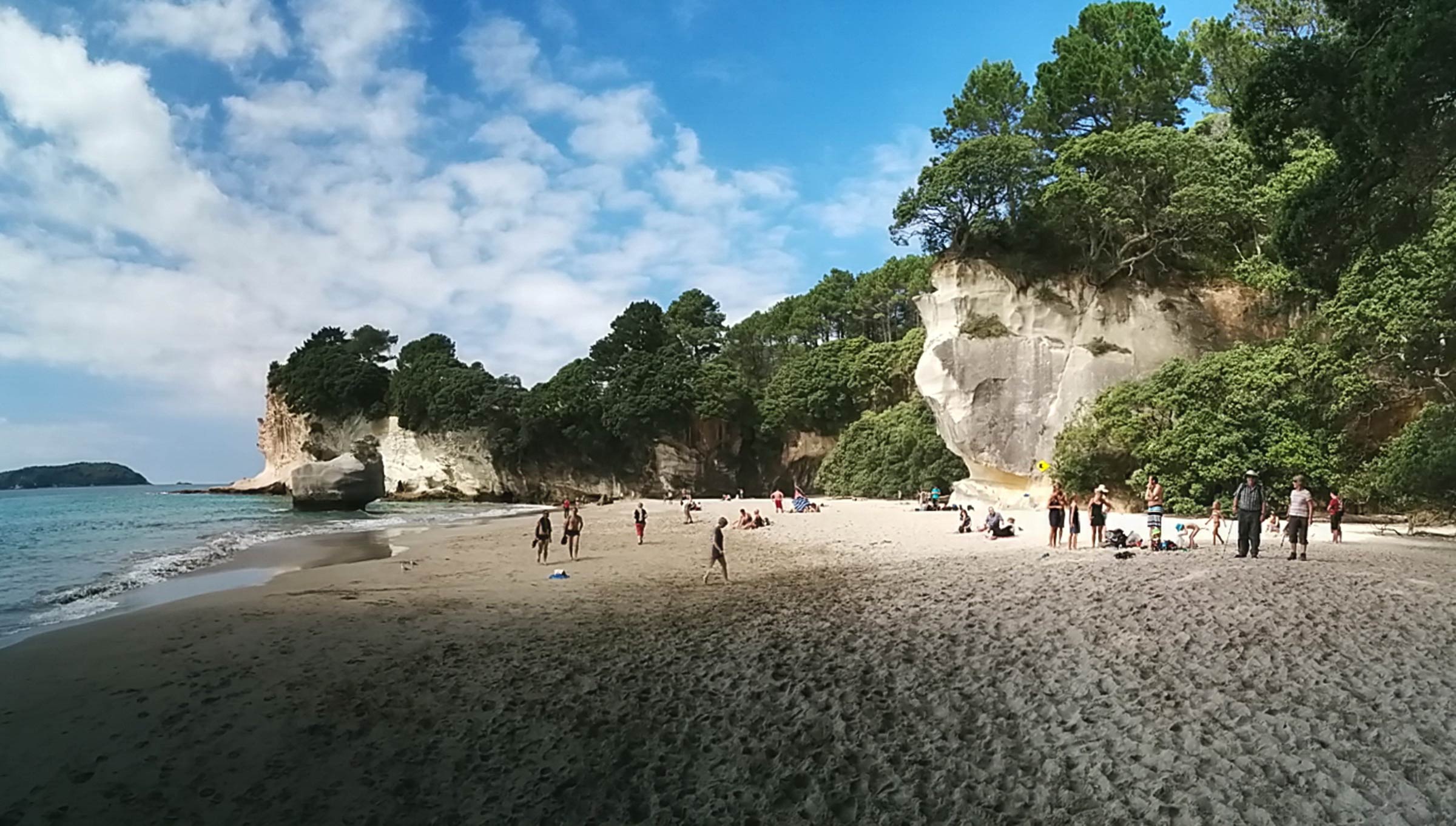
and a gallery (click on any photo to enlarge.)
This was one of those scenes that’s so overwhelming at first sight that it’s impossible to take it all in, however much we wanted to. Because to take it in would mean we could really be in the moment and fully remember it later. To be overwhelmed is rather anxiety provoking; so it really helped to take time to relax, walk around, and take plenty of photos.
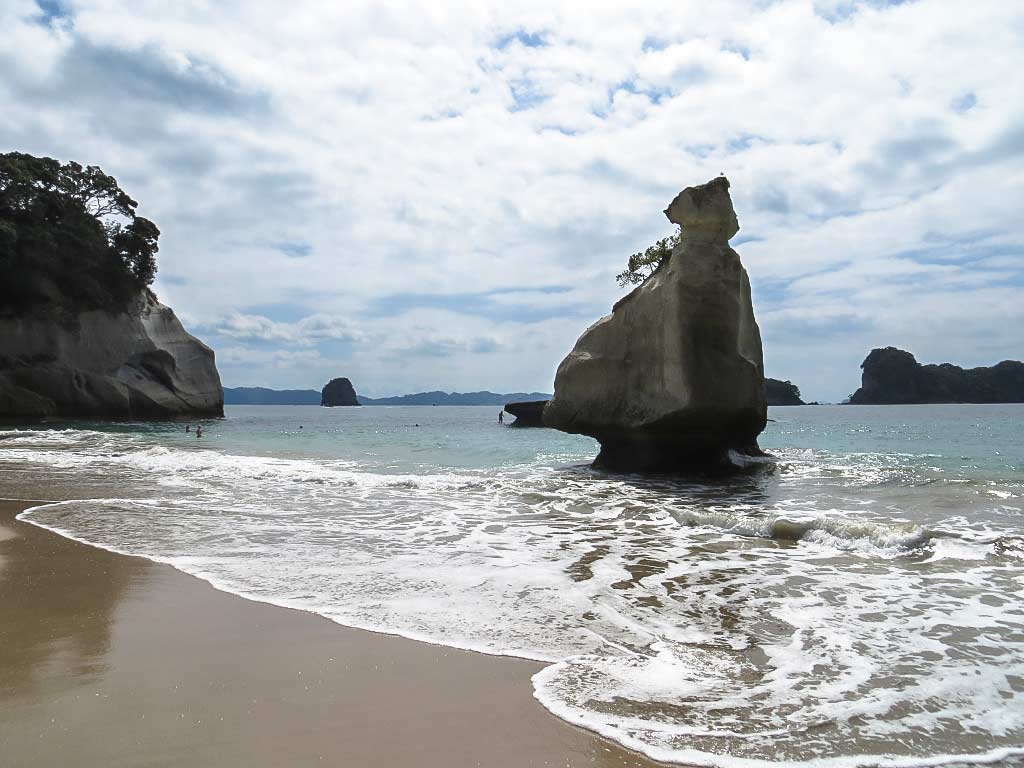
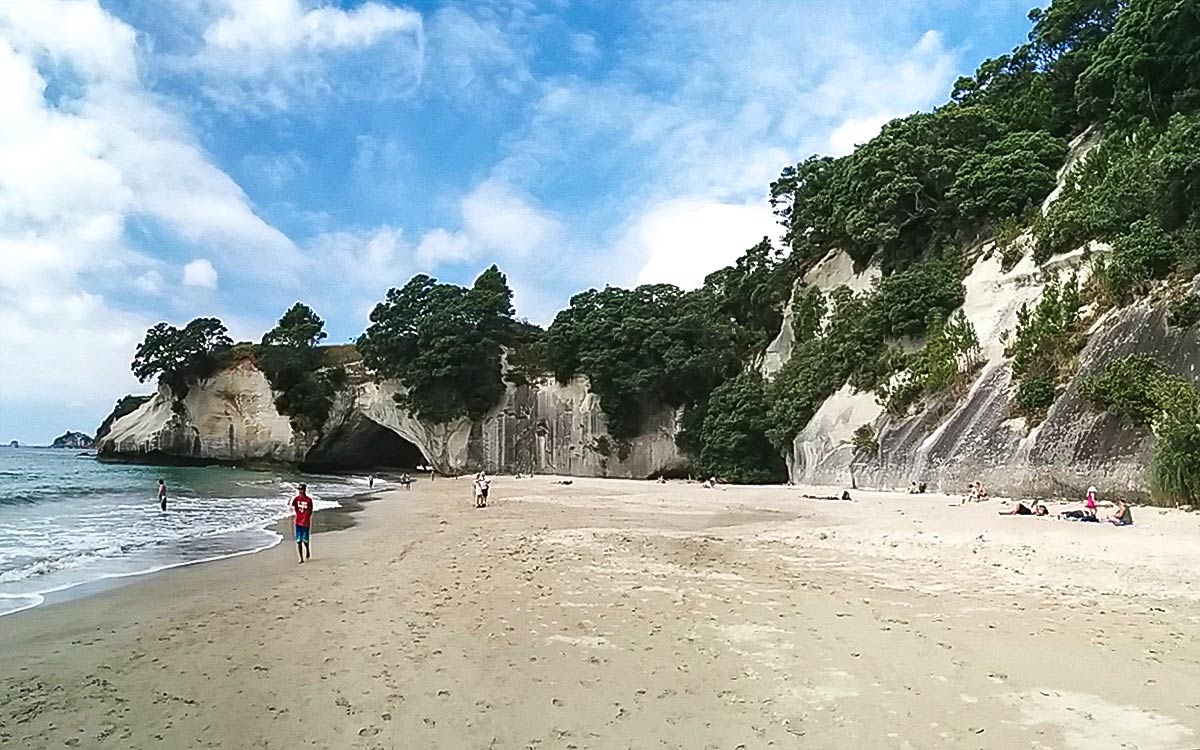
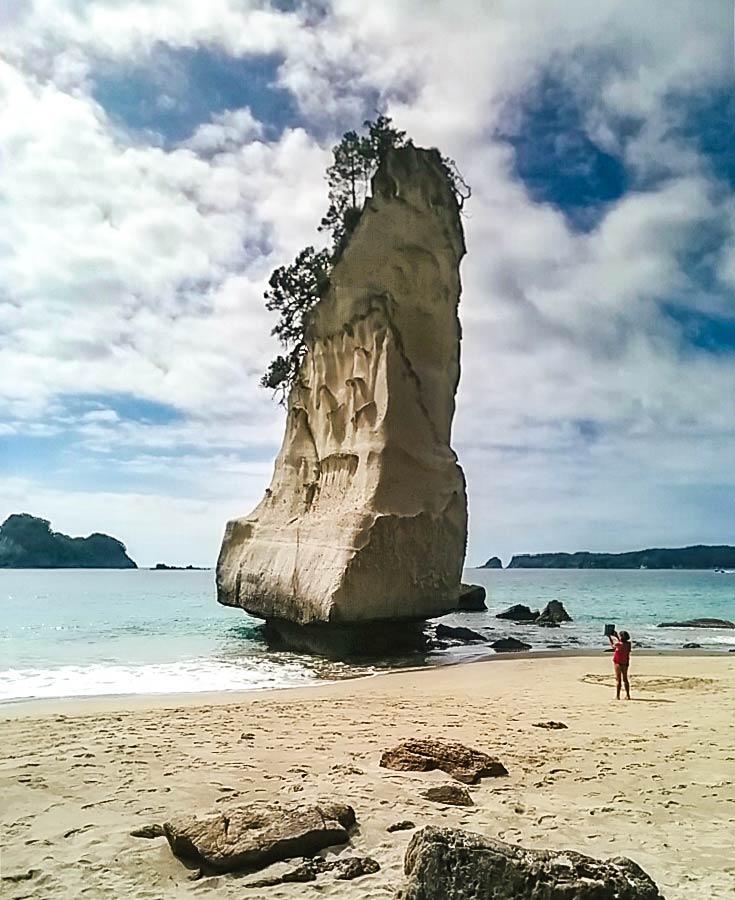
And so we did walk around, first exploring under the arch, then heading to the second beach: Te Whanganui-A-Hei. It was just as striking as the first beach with the white cliffs, clinging trees, and calm water, but it had something else that was special, a large rock pillar called Te Hoho. Below, a panorama of the beach…
and Te Hoho…
Plus a gallery of the beach:
After some time here, we went and walked the length of the first beach. Satisfied we’d experienced this place (although still a little overwhelmed), we began the 40-minute hike back up to the car.
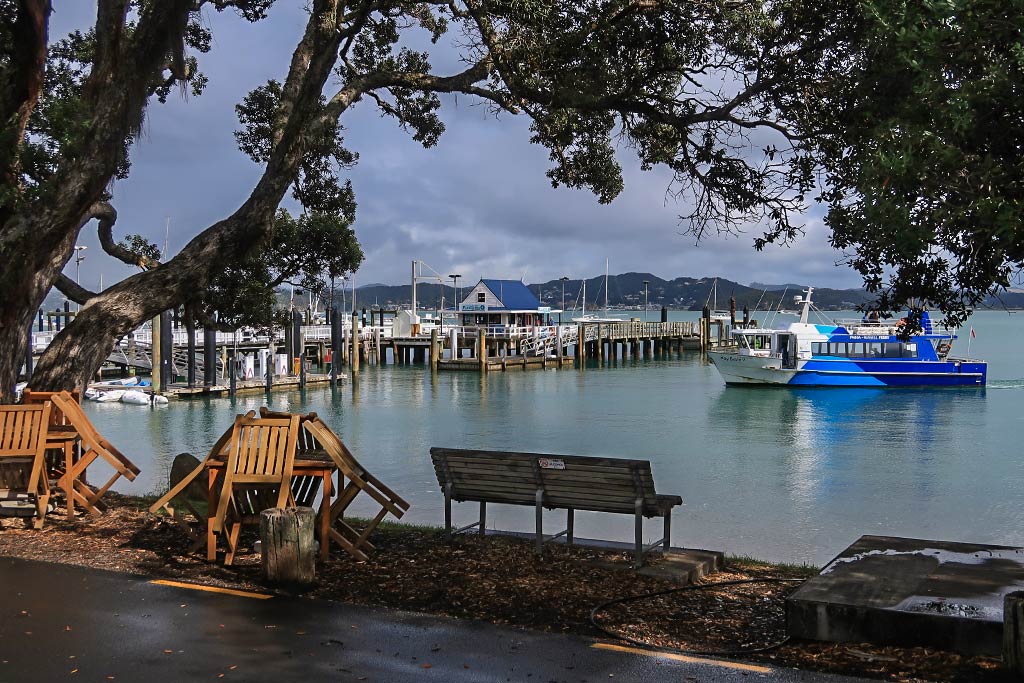
On our way out of the parking area, we stopped at the lookout overlooking Hahei Beach, the gateway to the Cathedral Cove area and home to the water taxis and tour boats that visit Cathedral Cove. With all this going on I wasn’t expecting much, so I was surprised to see that, while not as stunning as Cathedral Cove, it was really nice. The beach had pinkish sand stretching between rocky headlands, sheltered by an offshore island which made the water calm. If it weren’t for its proximity to the more beautiful area, Hahei would get plenty of attention for itself.
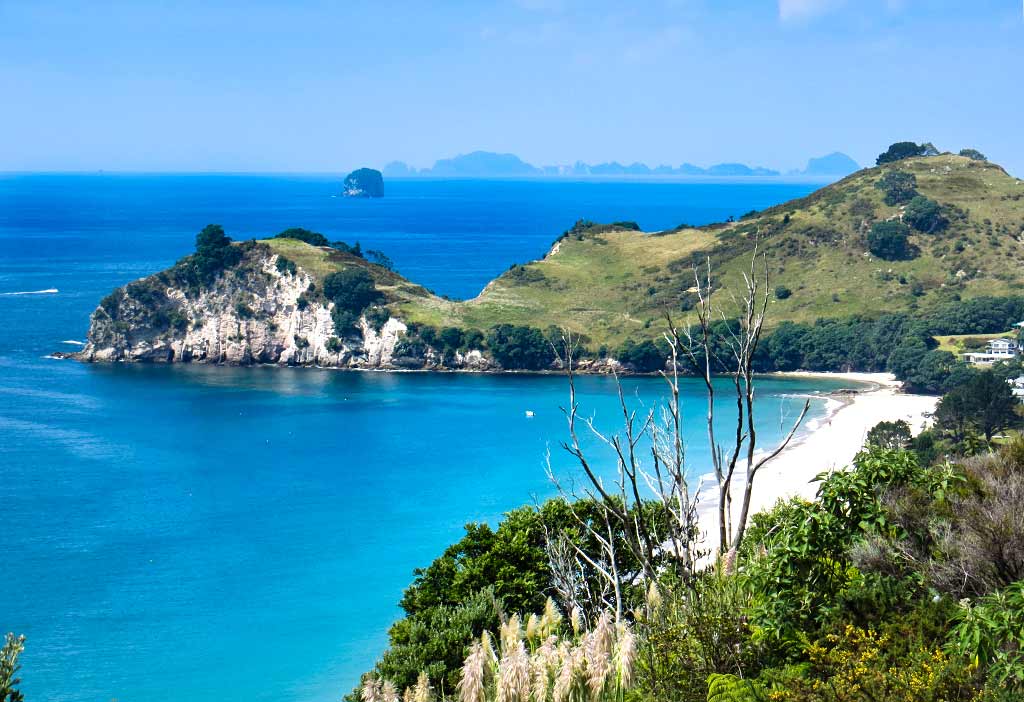
As we drove off, I felt lucky we got out here to visit Cathedral Cove. As popular as it is with New Zealanders, it’s too out of the way for the mainstream tourism track. Otherwise this would probably be considered an iconic sight in New Zealand. But I guess its somewhat remote location is just as well because it keeps it from getting too crowded.
Next up, I had one more beach in mind; then we could head to town for an overdue lunch and check into our motel.
Below is an interactive map that shows where Cathedral Cove is relative to Auckland and Tauranga.
–Cyndi