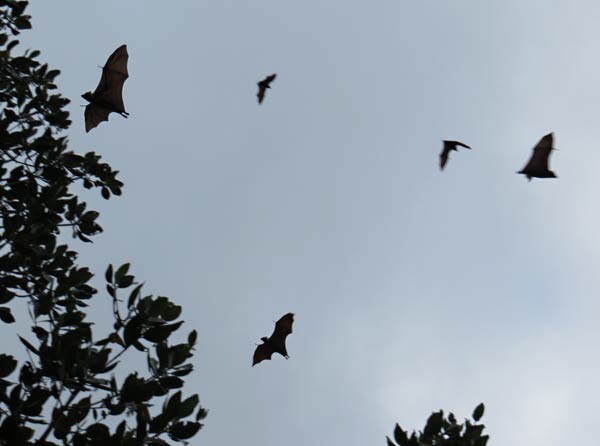
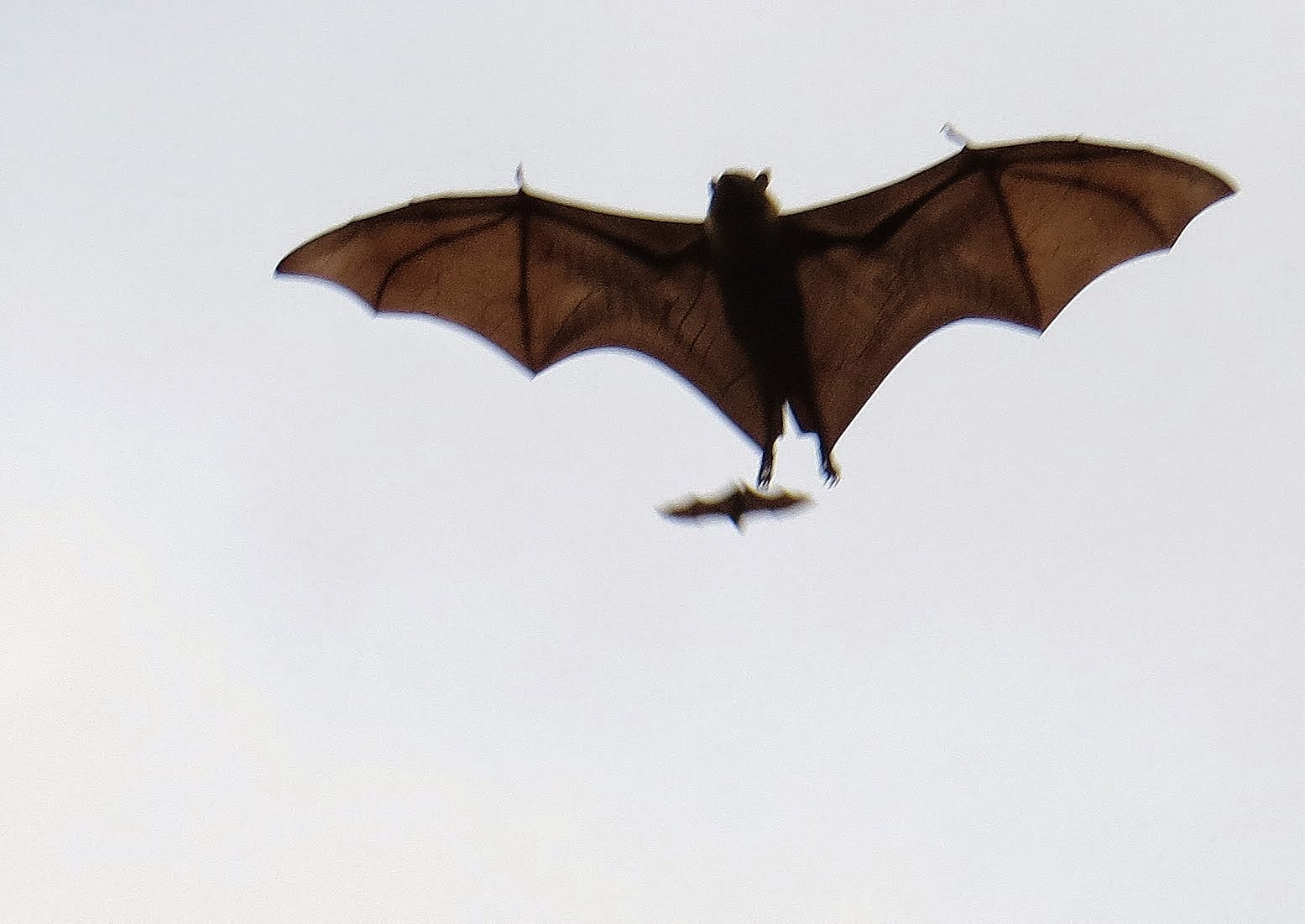
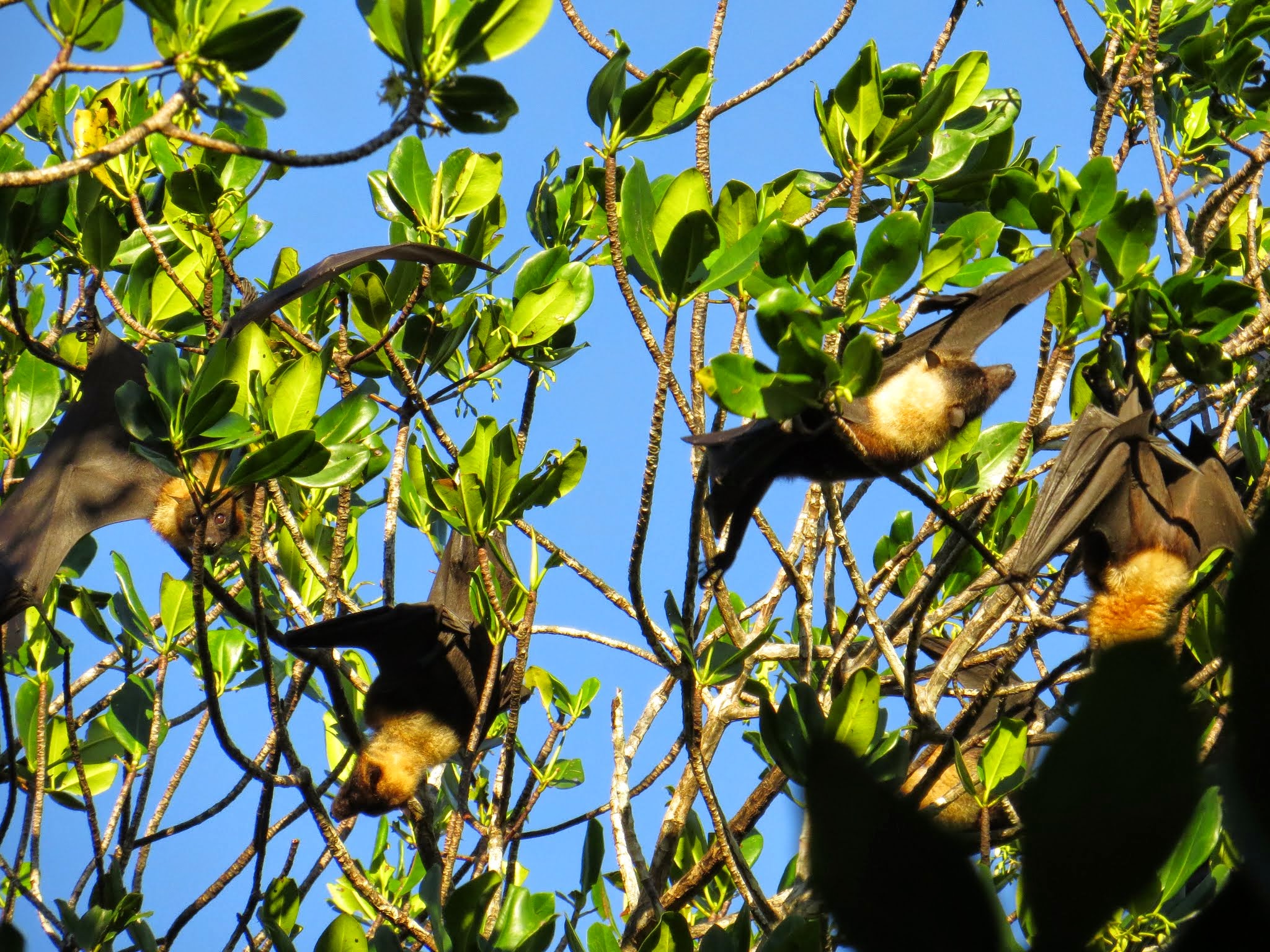
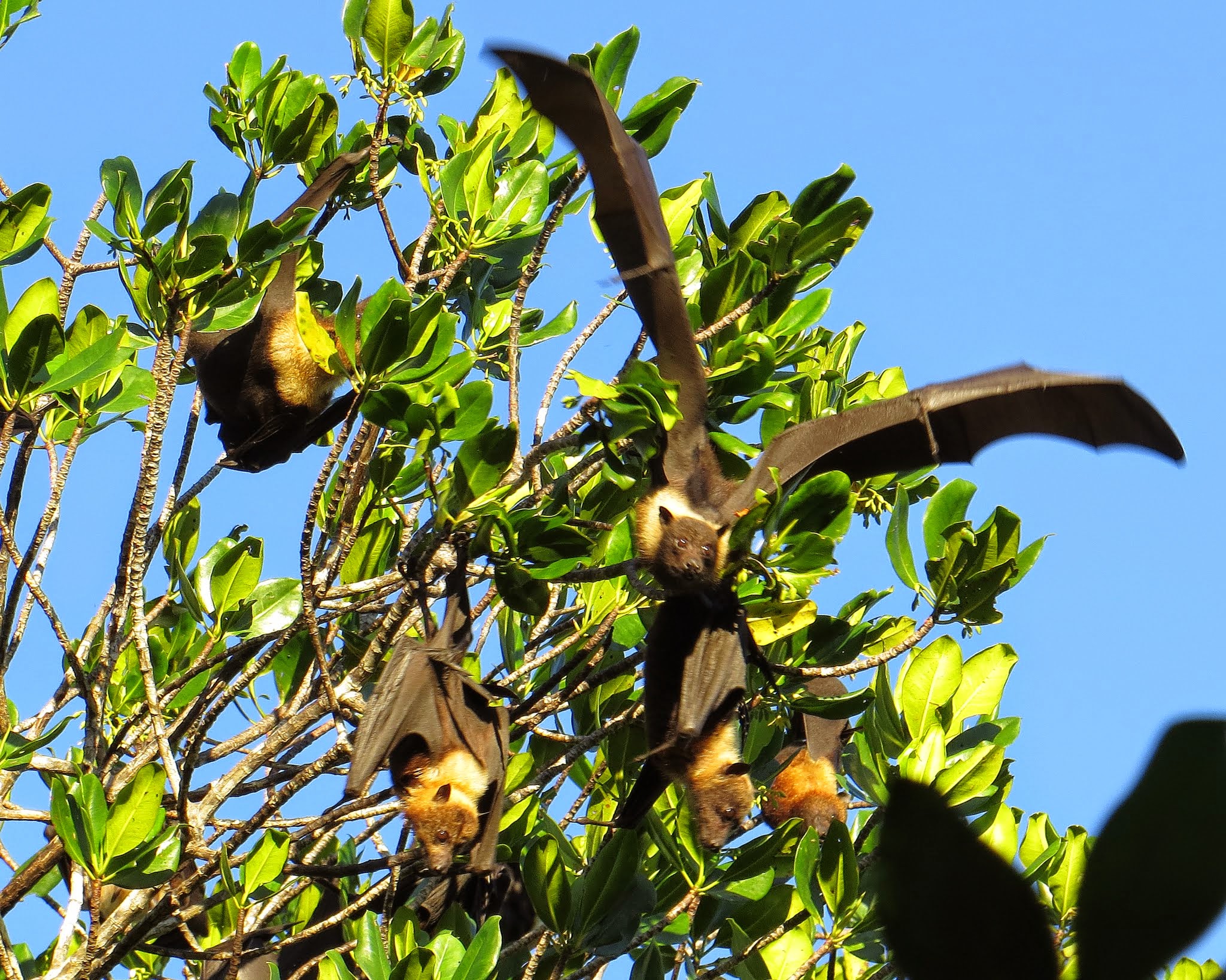
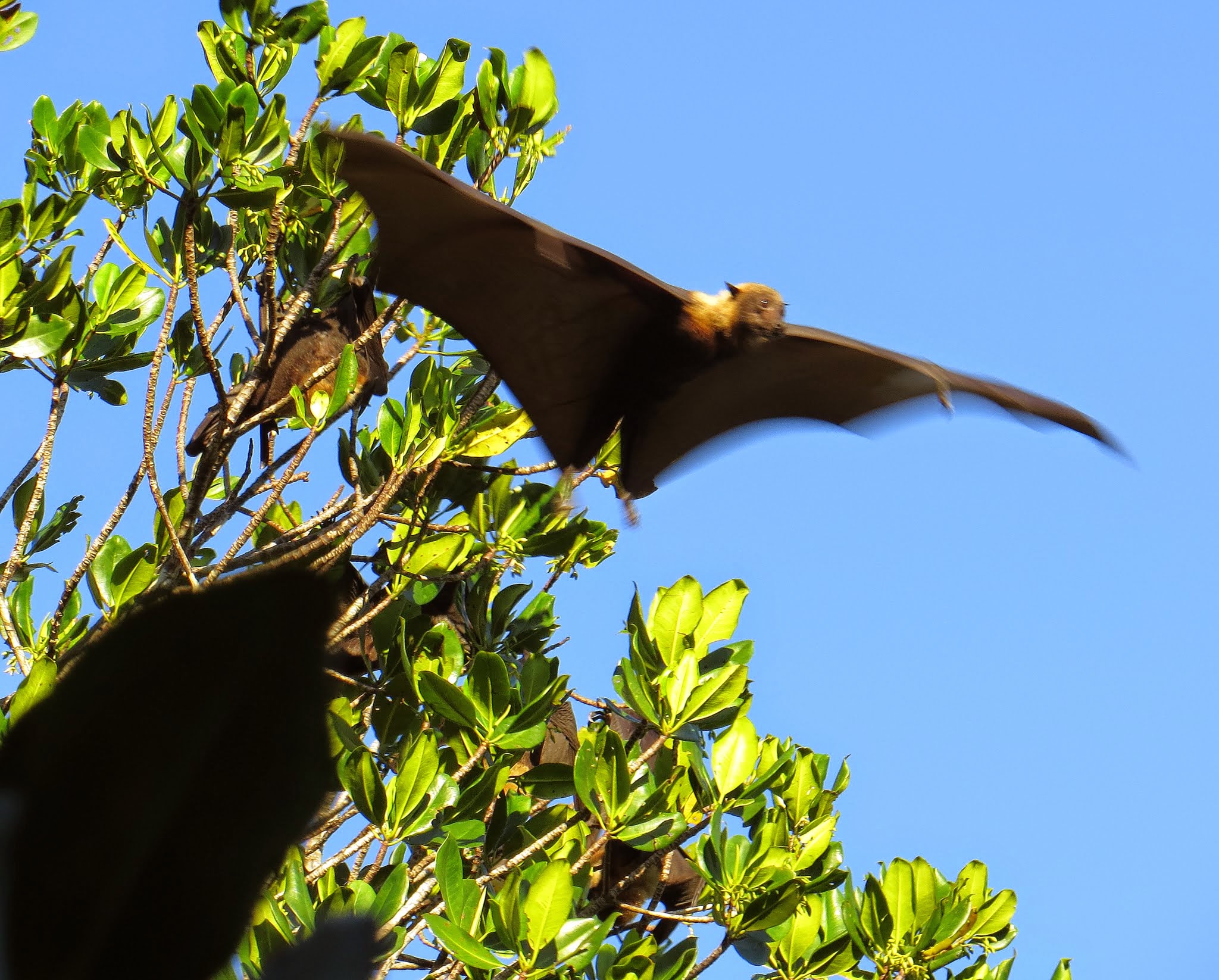
After unsuccessfully hunting for fruit bats, we hoped we’d spot them from Legacy later in the day when they’d be more active. Sure enough, around 3:30, we started to see bats flying near a particular area in the mangroves.
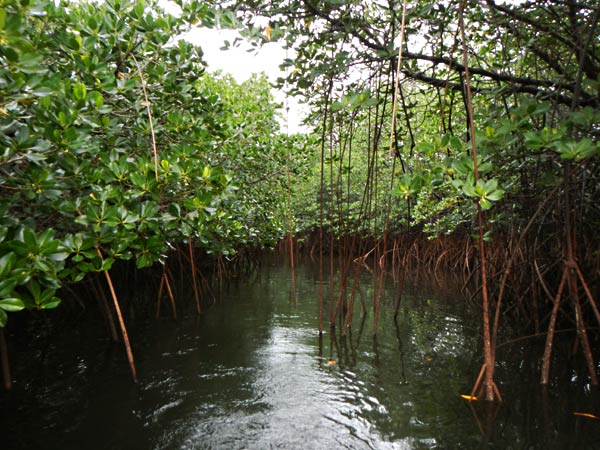
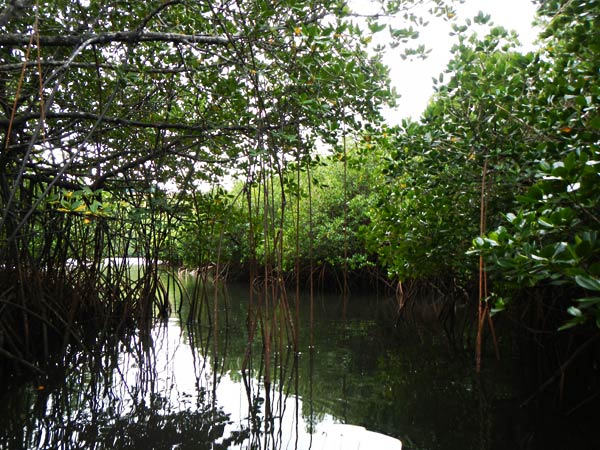
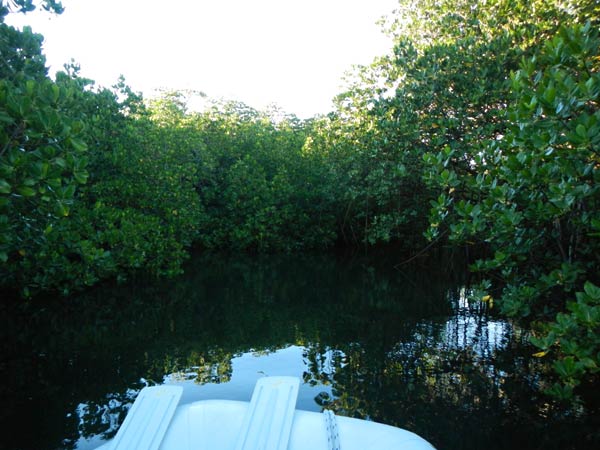
We headed over to the area and spotted an indent in the thick brush, hidden behind a tree. We investigated further and finally found the elusive tunnel through the mangroves. Bats squealed and squeaked overhead as we made our way through slowly, having to push some roots out of the way as we barely fit at times.
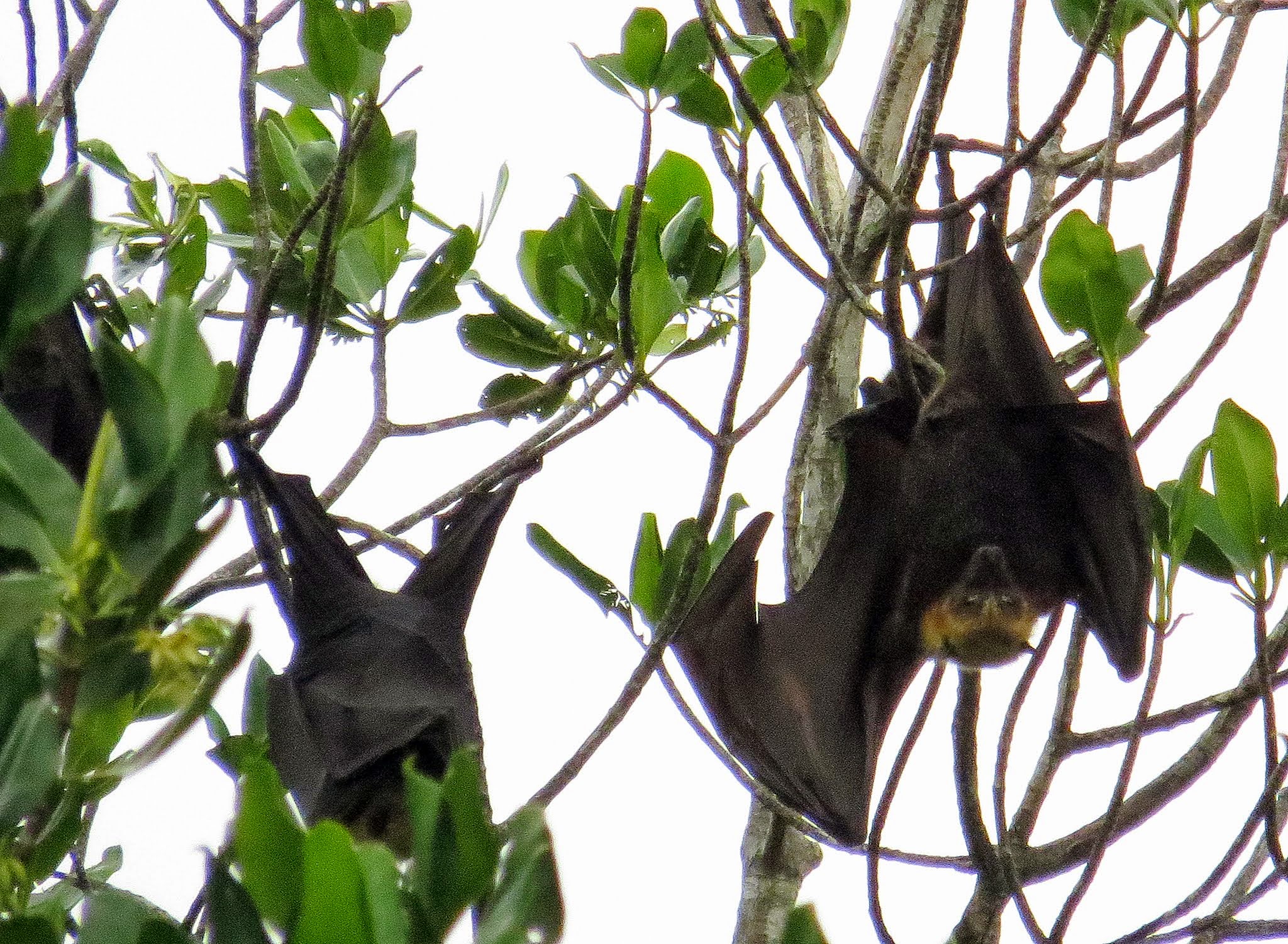
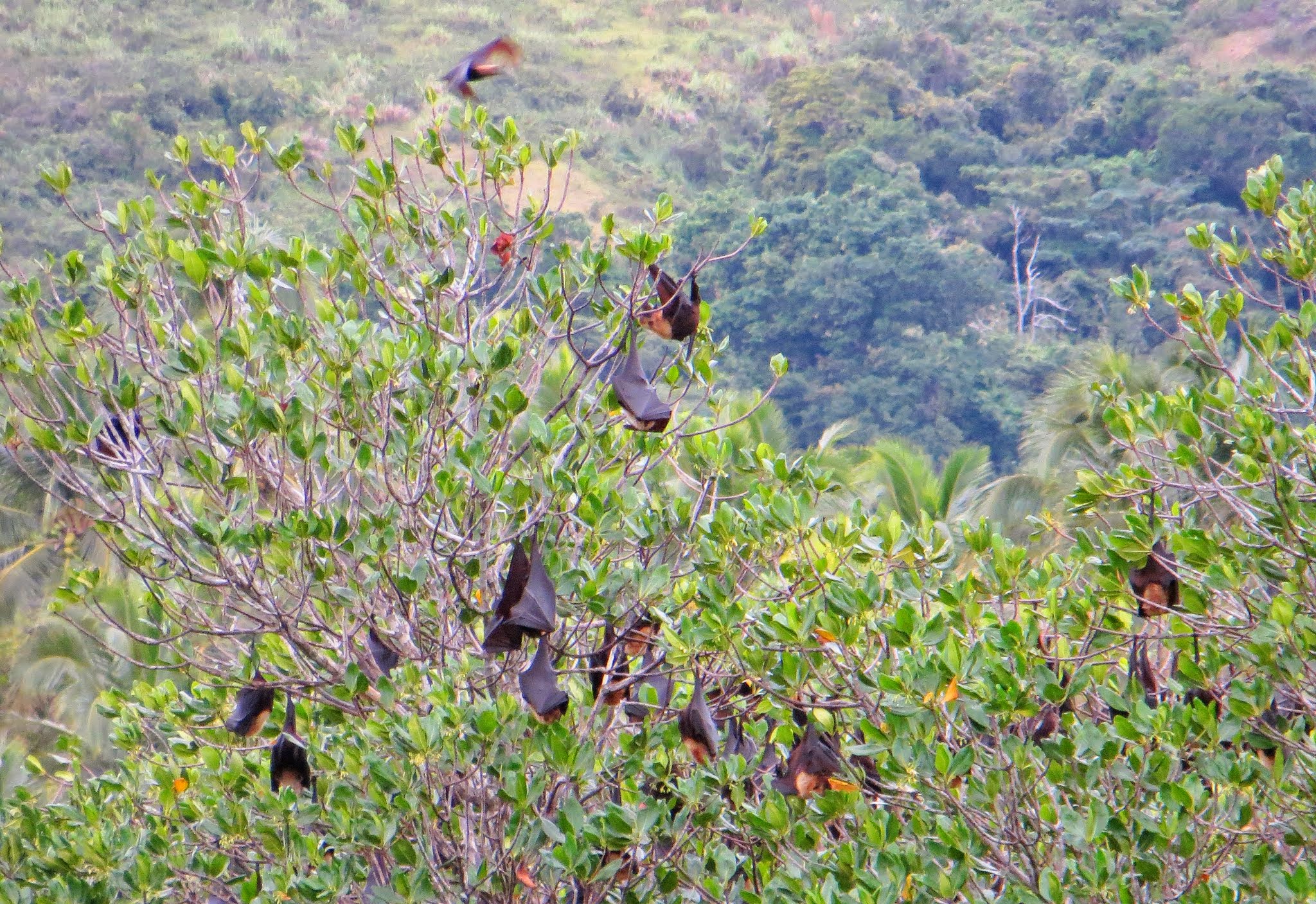
Soon we were in a small clearing right behind the main bat tree! It was so fun to be so close to the bats, chattering and squealing and unfolding their leathery wings.
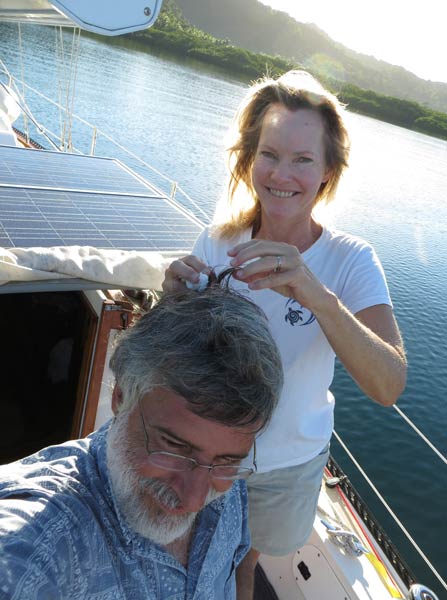
Bottom line: we know not everyone shares our tastes. Some people love visiting a local village or school, others love diving amid sharks. Rich and I are endlessly entertained by fruit bats even if they poo/pee on us as they take off from their perches. They do it in one expulsion, and if you’re standing below them, you may have to do some hair cleaning.
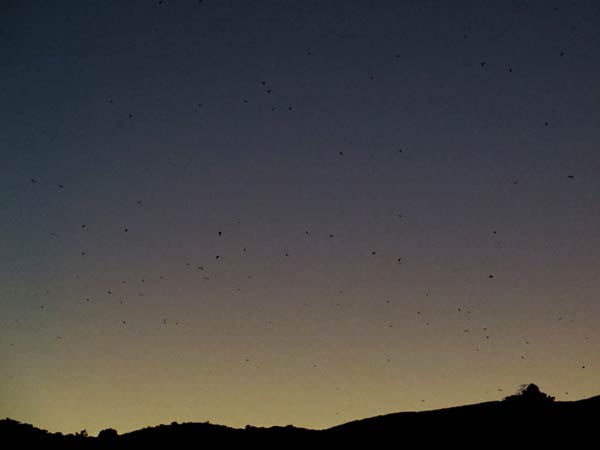
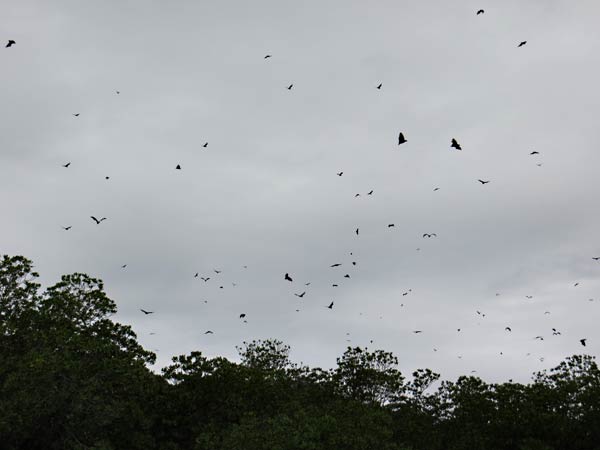
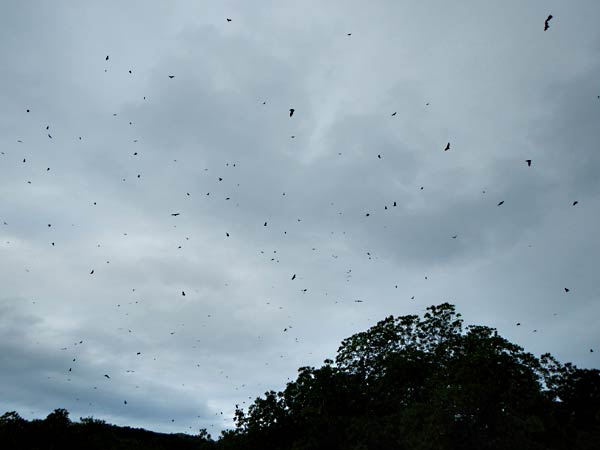
We realized they were dispersing from the trees and hoped we weren’t causing this. We decided to leave and made our way back out. When we emerged from the mangroves, we were stunned: bats were flying everywhere! There were thousands of them, filling the whole sky over the bay! Rich and I sat, basically speechless. Bats continued to fill the sky, as far as the eye could see, well into the evening.
This was one of the most amazing things we’d ever seen and certainly one of the highlights of our entire cruise! Below is a video of some of our time with the bats. –Cyndi
With better conditions today it looked like we could get out through the pass at Fawn Harbor. I headed up to the bow to keep watch and was surprised to see how much bigger the swells looked from up close! It was an unexpected and not very welcome thrill ride going out through the pass, up and over the incoming swells and hoping not to get drenched. Once we were out, the conditions were pretty nice for our two-hour motor to Dakuniba bay.
The entrance to Dakuniba was long and winding, through a wide area of reefs. The waves were crashing on either side of us, but the colors over the shallow reefs were beautiful, all shades of aqua, turquoise and mint. We continued past those reefs, going through a small pass between two headlands to an inner bay.
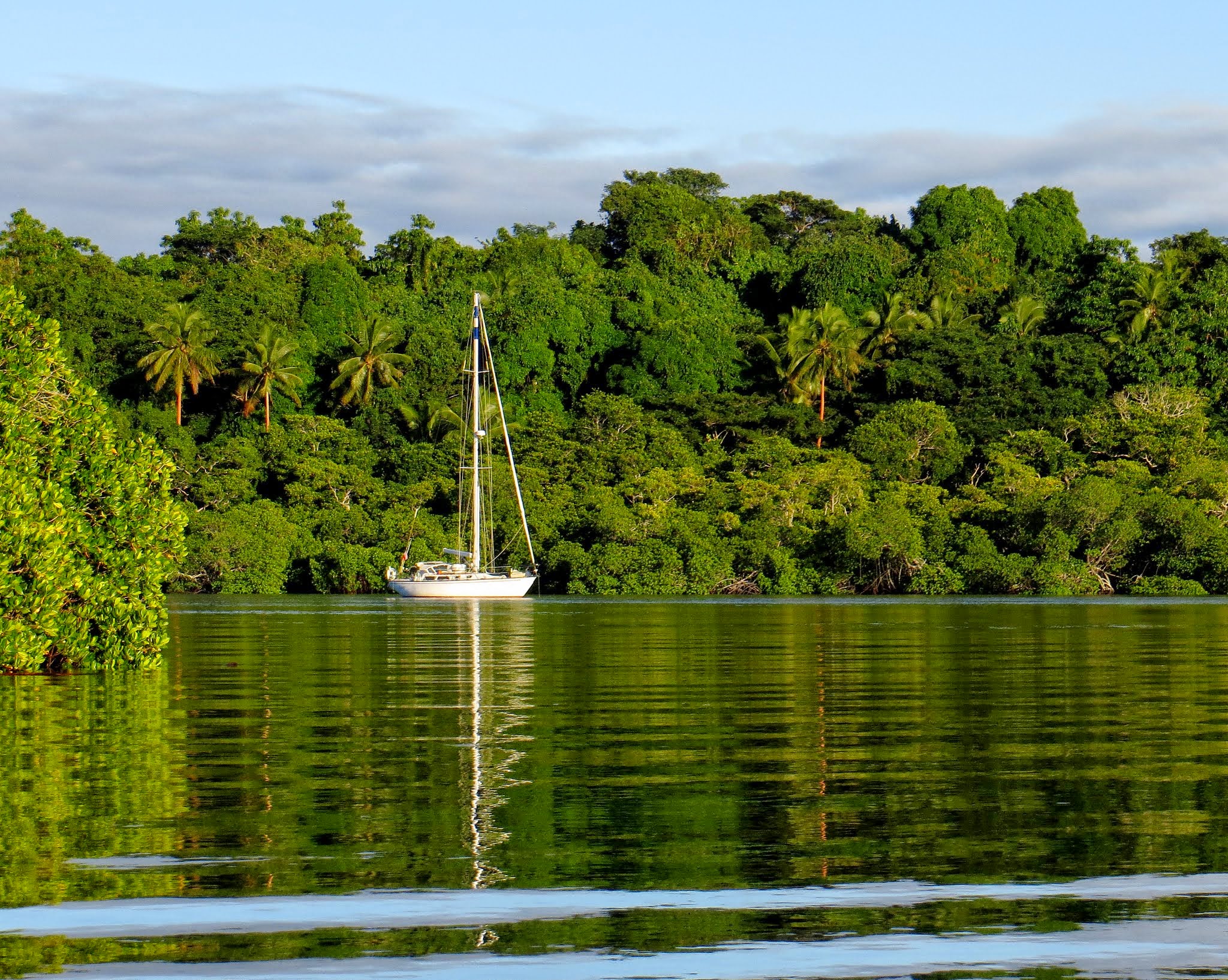
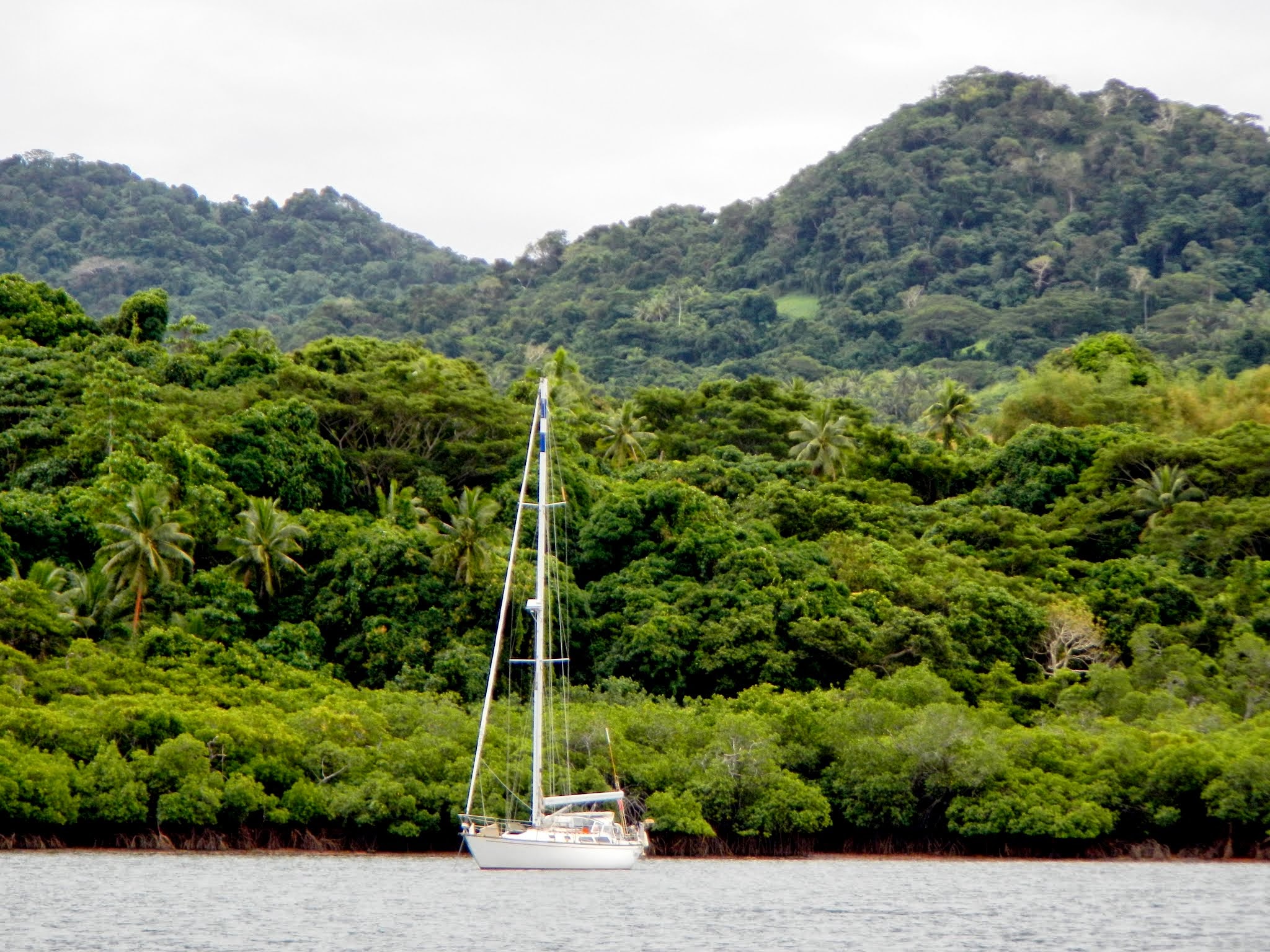
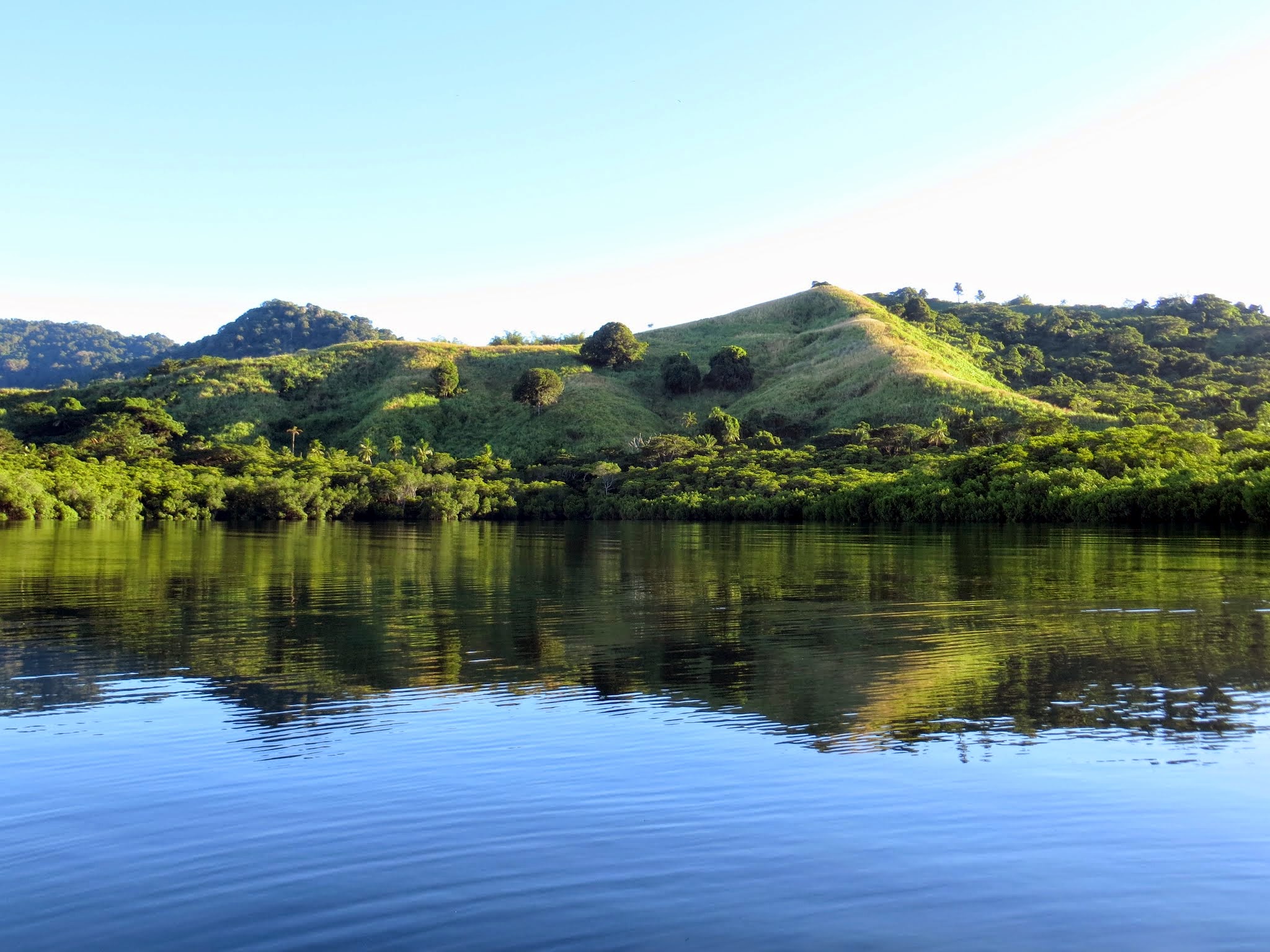
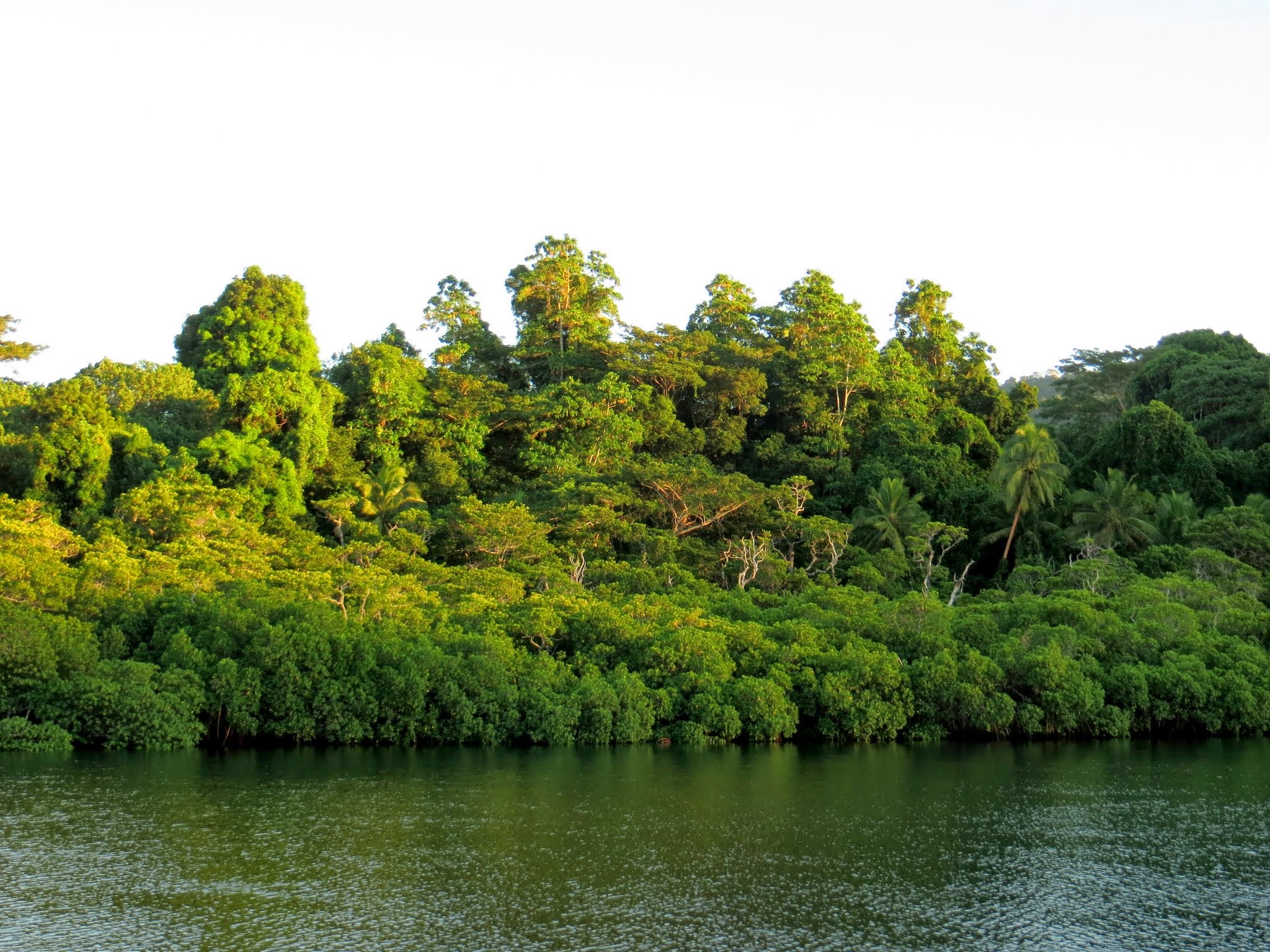
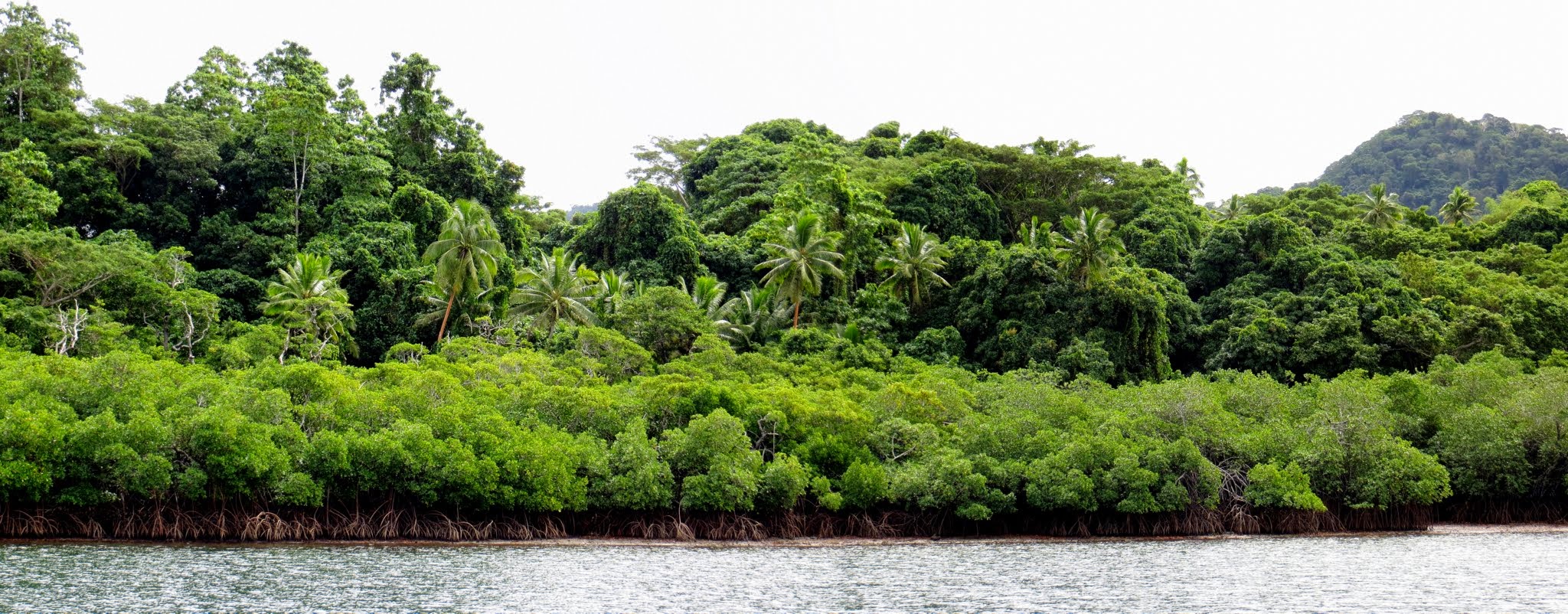
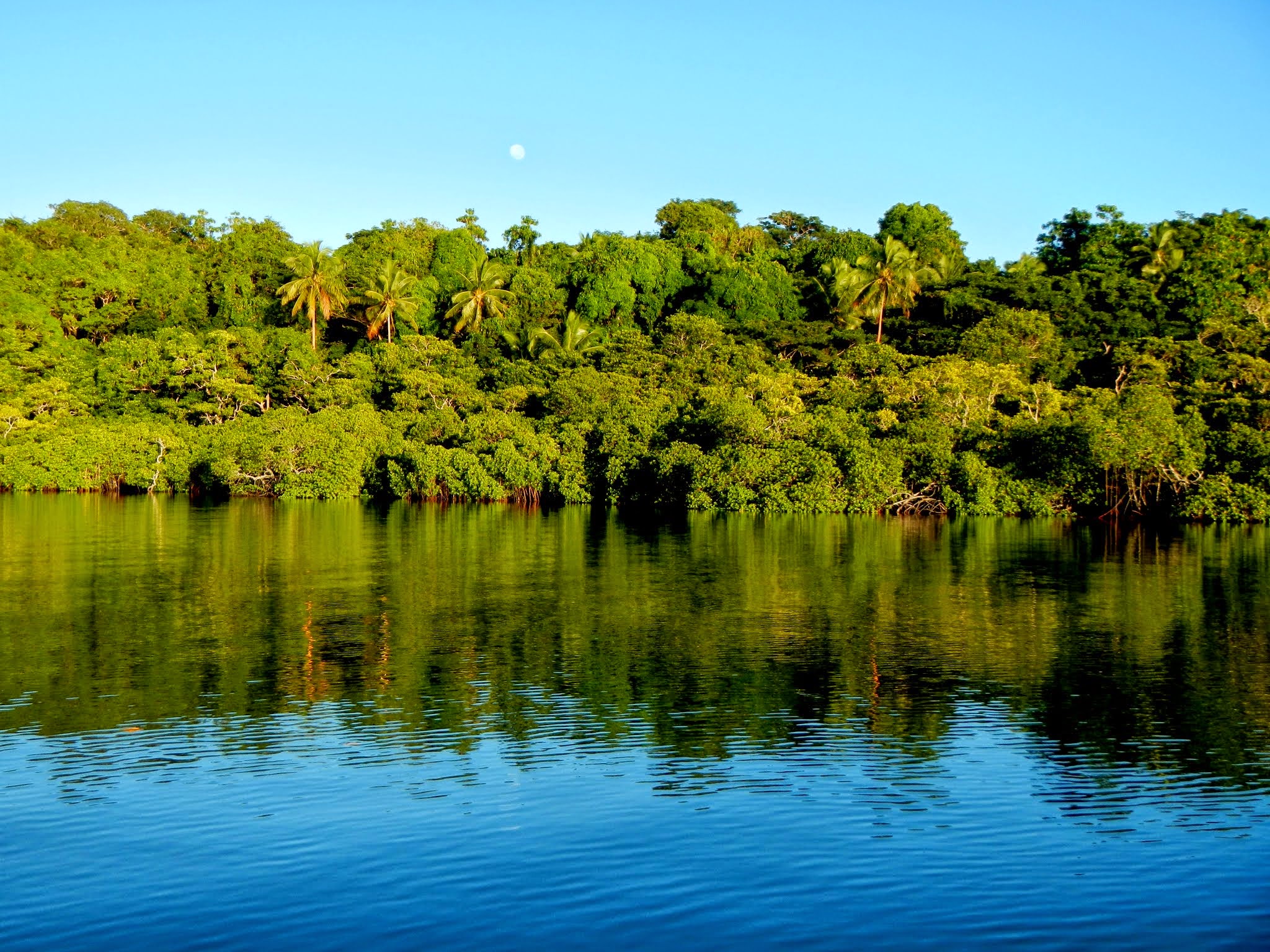
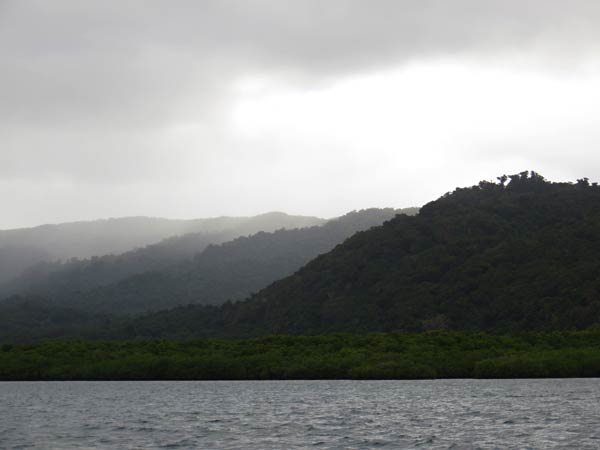
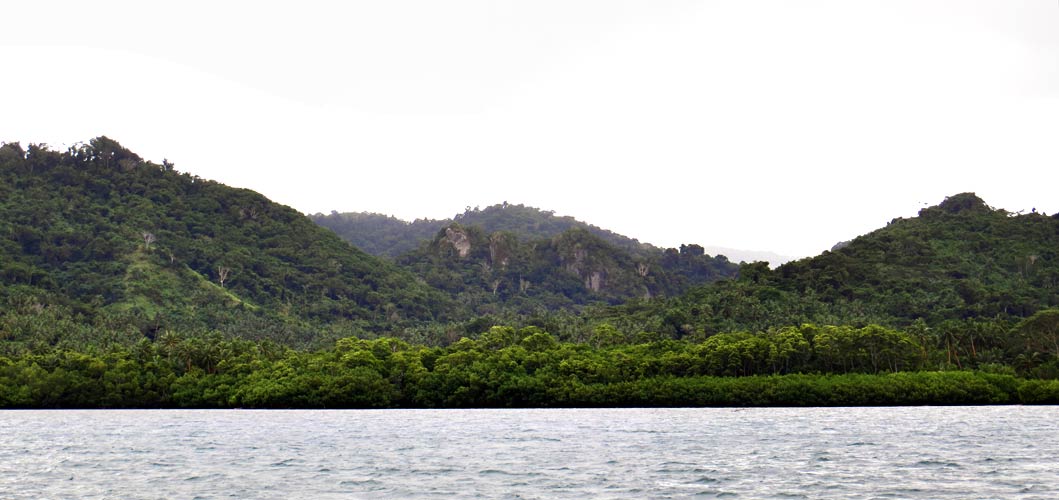
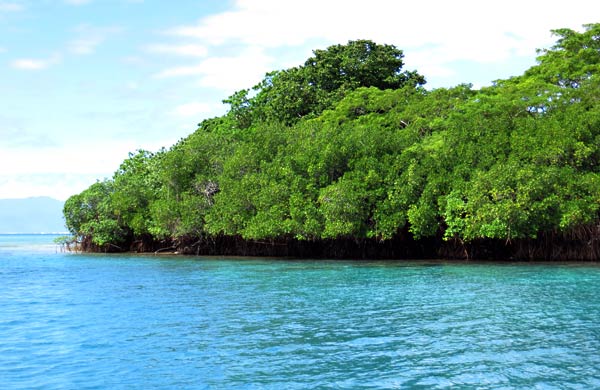
We found ourselves in a cove so well protected it’s considered a hurricane hole. It felt very enclosed, tucked in amid jungle-covered hills with a thick line of mangroves along the water. We had come here for the bats and were stunned to see just how beautiful this cove is, wondering why hardly anyone comes here. I guess it’s just overshadowed by neighboring Viani Bay. We actually felt bad we were only staying in this amazing place for a day, but we needed to get further east before the trade winds picked up again. There’s only so much time in a season and sometimes you have to make difficult choices.
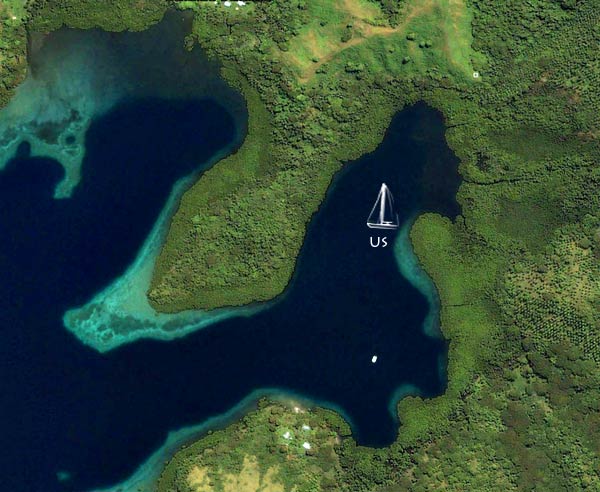
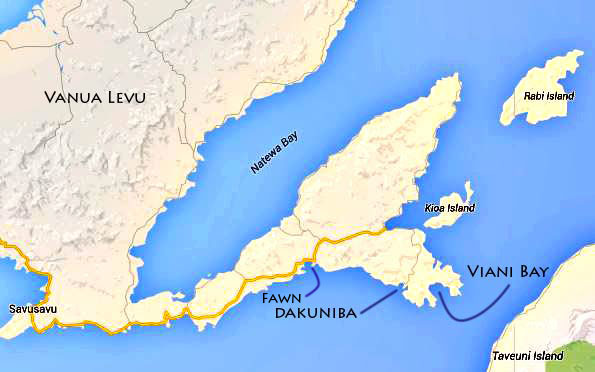
Google Earth image of Dakuniba, showing where we were anchored. Thanks Google!
We motored around in our dinghy and explored the area, but didn’t find the fruit bats (aka flying foxes) or a rumored tunnel through the mangroves. It was still early, though, and we figured we’d have better luck late in the afternoon when they start to get active. (More to come.)
Below a gallery of photos of beautiful Dakuniba Bay. (Cllick to enlarge and scroll.) –Cyndi
After two busy weeks in Savusavu it felt great to be heading out cruising once again. Our plan was to head east, back in the direction of Viani Bay. This time, though, we planned to stop a few miles short of Viani in a bay called Dakuniba.
Dakuniba wasn’t in our original plan, but we heard it has a lot of fruit bats. In our opinion, there’s no such thing as too many fruit bats! After Dakuniba we’d go on past Viani Bay to the islands of Rabi and Kioa before heading over to an anchorage at the eastern tip of Taveuni.
We headed out under cloudy skies, gusty winds, and lumpy seas, hoping conditions would get more pleasant after we rounded the corner and headed east. They didn’t really, but we had the current with us and it helped move us along at 7 to 8 knots. Still, when we passed Fawn Harbor with only an hour to go, we decided to give ourselves a break and duck in there. The skies were turning grayer, the conditions not abating, and it seemed like a good idea to stop for the night. We could then continue on to Dakuniba the next morning.
It was low tide, and with the choppy seas breaking on the now-exposed reef, the entrance looked a lot less benign than last time! We were very glad to have our track in from our previous visit! Once we got anchored we could still hear the wind, but conditions in here were wonderfully calm. There are few things in life better than gliding into a calm harbor after a rough day at sea.
Cloudy skies at Fawn Harbor (Vanua Levu, Fiji)A bay to ourselves at Fawn Harbor (Vanua Levu, Fiji)
The next morning was sunny but surprisingly breezy, and we could hear the constant rumble of waves crashing on the reef. We decided to motor out and just go take a look at the pass. We didn’t like what we saw: waves crashing on the reef with fairly big swells coming in through the pass. We decided to go re-anchor and try again tomorrow.
We weren’t worried, nor did we feel stuck here. We knew the conditions would be better tomorrow; so today would be about relaxing and reading. Fawn harbor is the type of bay with a lot of mangroves and dark water, pretty to look at but not inviting for swimming.
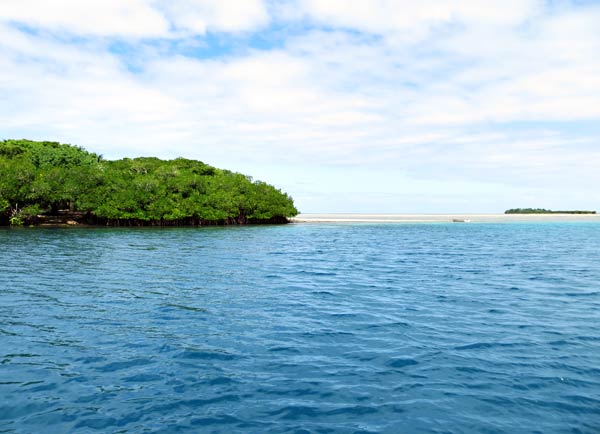
Our second day anchorage at Fawn Harbor (Vanua Levu, Fiji)Protected behind reefs and a small island in Fawn Harbor (Vanua Levu, Fiji)
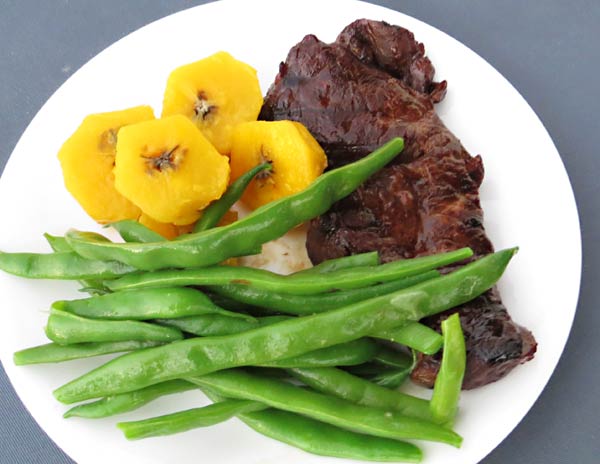
For dinner we had teriyaki steak, green beans, and our latest discovery: budi. They’re thick green starchy bananas that can be cut up and boiled just like potatoes. After they’re cooked, they’re delicious sauteed with a some butter and served as a side dish. They taste a bit like sweet potatoes and were a favorite of ours in Fiji.
Dinner in Fawn Harbor. (Vanua Levi, Fiji)
Our Polynesian meal just fit with the scene of lush mountains, the rumble of surf hitting the reef, and the feel of light warm breeze under a sunset sky. After dinner, we had rum drinks in the cockpit. The warm breeze picked up a bit, the classic feeling of a tropical night coming on.
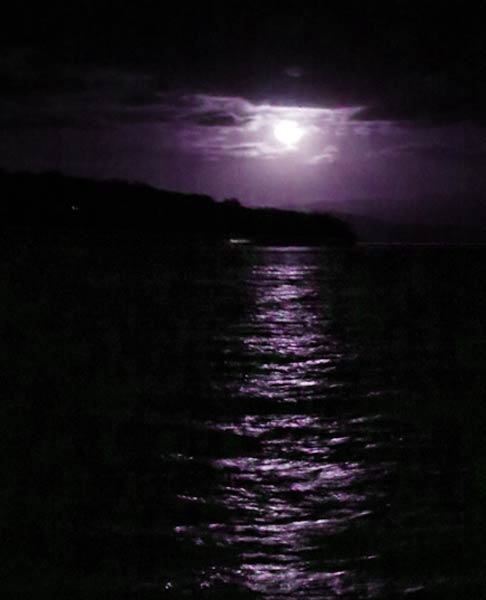
A moonlit night in Fawn Harbor (Vanua Levu, Fiji)
The full moon rose, giving the night sky a purplish color and creating a bluish light inside the boat. Every now and then I’d get up and look out at this magical night. I could see the white crest of waves as they crashed against the reef in the distance and smell that Fiji smell of water and damp earth. Nights like this are too beautiful for sleeping. –Cyndi
For the last three days, I’ve had what the cruising fleet is calling the Viani Virus. It probably started in Savusavu, but we passed it around pretty good in Viani Bay. Cyndi had a mild case but I’m not quite so lucky. Yuk! Oh well. I guess there are worse places to be sick. -Rich
(Thank you Photoshop for helping me get the feeling across!)
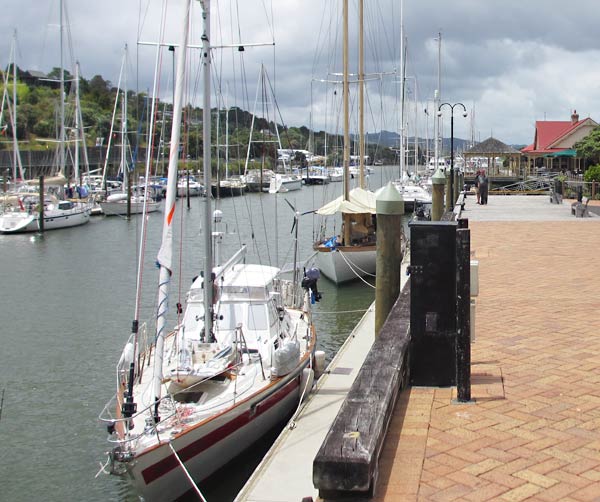
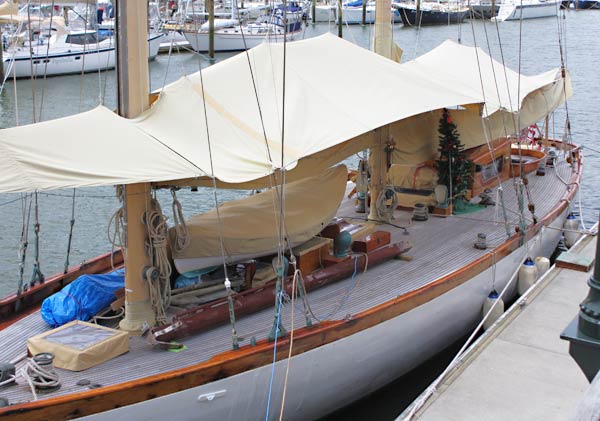
I first noticed the sailing vessel Nina during a December visit to Whangarei. I was struck by how pretty she was with a little Christmas tree on her expansive teak deck and took a picture.
When we came back to Savusavu, there was a lot of talk about a vessel that had disappeared en route to Australia. She left New Zealand the same day we did, going from Opua to Newcastle. She had seven people on board. There’d been search parties out looking for her and now authorities had decided to call off the search, much to the dismay of the parents of the young people helping crew the boat.
Rumors were flying: it’s a wood boat, no it’s fiberglass, no it’s fiberglass-coated wood, it wasn’t sea-worthy, they had no safety equipment, they did have safety equipment and a sat phone, etc. Curly’s girlfriend was one of the crew, and he may or may not (depending on who you talk to) have flown to New Zealand before they left, examined the boat, and advised her not to go out on it. It’s hard to sort out truth from fiction.
We went back and examined the picture I’d taken of Nina, but we couldn’t tell what she was made of or if she had a life raft. We found out later that she was an 85-year-old wooden schooner, and she did have an emergency beacon and a Sat phone. They weren’t using weather routing, but a crew member had e-mailed weather router Bob McDavitt saying conditions were bad and was there any way they could sail out of the bad conditions? He advised them to hove to. A final message from the Nina stated that their storm sails were shredded, gave a heading, and promised an update at 6pm, but Iridium never delivered the message.
Whenever something happens to one of the cruising fleet, everyone is anxious to know what happened. There’s a lot of talk, rumor and speculation along with a shortage of real information as it’s either still under investigation and/or the people involved aren’t talking. Cruisers like to gossip as much as anyone, but in this case we aren’t just a bunch of nosybodies. These are passages we all make or will be making, and when something goes wrong we want to know why so we can try to avoid the same fate or confirm that we are taking measures to prevent that outcome. We tend to point the finger because it makes us feel more in control and less vulnerable, but I have to wonder does any one person do everything right?
We’ll never know what exactly happened, but a message sent states that the storm sails were shredded. This, plus the apparent willingness of the crew to sail in whatever direction they had to for relief, tells us conditions must have been really bad. The fact that they weren’t able to set off their emergency beacon or use the sat phone makes us think that whatever happened, happened very quickly.
A friend who has studied the circumstances surrounding the loss of boats and measures taken by survivors once advised us that it’s not enough to know what you want to grab when abandoning ship. You have to be able to find those things in the dark, perhaps swimming to them if there’s been a catastrophic event and the boat is sinking. It really stuck me when he said this as I’d never pictured being near the bow and having to swim, confused, in shock and in pitch blackness amid floating debris, to find our grab bags, EPIRB, Sat phone and my stuffed Pikachu (ok, maybe not the last one) and then try to get topside to release the life raft. You don’t picture a vessel going down that quickly, but the fact is, sometimes they do.
Maritime New Zealand filed a report based on the issues surrounding Nina’s loss and the search and rescue operations. This news agency printed excerpts from the report, and it’s very interesting reading. Iridium fans be warned: you won’t like this very much.