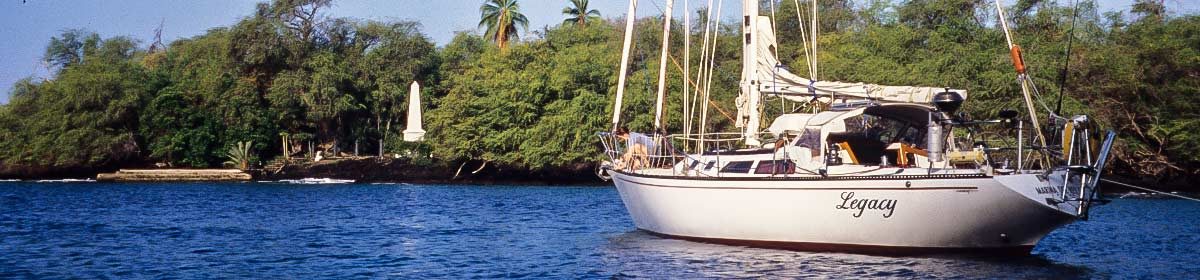
A Long, Strange Trip

December 24, 2022

Well, where to start. I guess with the most dramatic part of our six day passage from Thursday Island to Darwin, Australia.

The day before we left, we saw a low forming near Darwin. On departure day, it was gone (on GFS GRIBs). This tends to happen and most often, it comes back. It seems that the GFS forecast is often more accurate ten days out than it is two days out. And it was about two days out before the low showed up again. It didn’t look to serious and wasn’t even on the GMDSS (Global Marine Distress and Safety System).

It became apparent that we’d have some higher winds and rougher seas for our last day but most of that would be traveling between Melville Island and the Don Peninsula so we didn’t expect bad seas.  Both the wind and seas were forecast to be behind us also making this less severe.

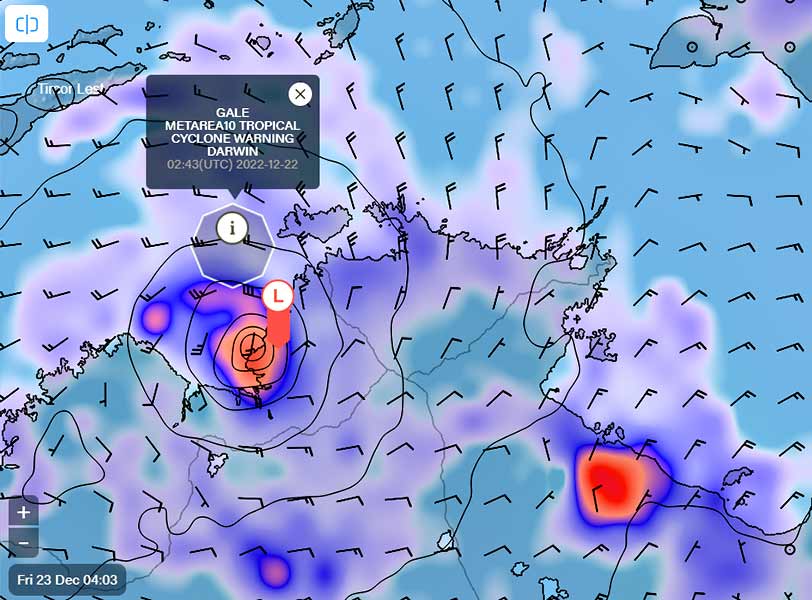
Well, weren’t we wrong (and the forecasts as well). When we finally got in, we were told that we’d just danced with cyclone Ellie. Oh crap!!! It had only been declared a cyclone at about 10PM – when we were just six hours out from Darwin.
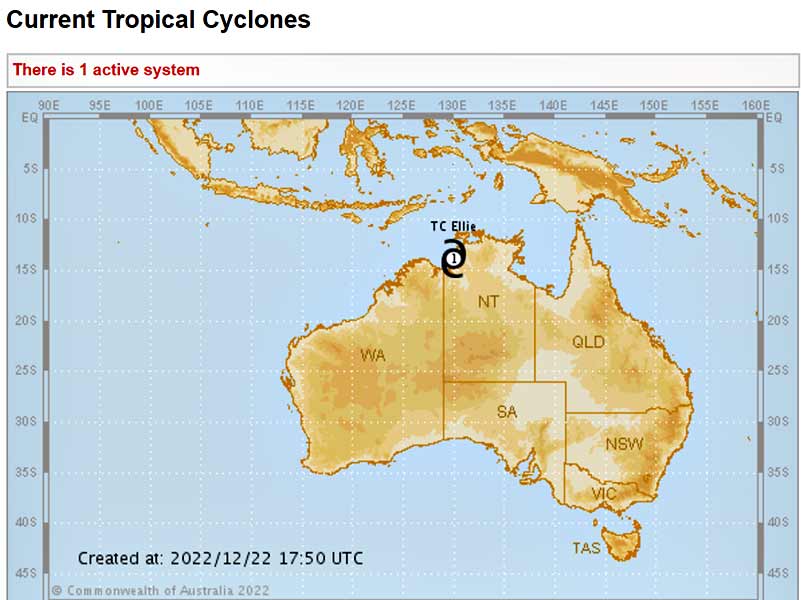
From Australia’s Bureau of Meteorology. Darwin is right about where Ellie’s name is.
Tropical cyclone Ellie on PredictWind with GMDSS turned on.

It really wasn’t that bad. What had become Ellie was just another complicating factor in a difficult arrival. The tidal range in this part of Oz is about 8 meters or 26 feet. That big tidal range produces a ton of current. I’d studied several posts about how to time and navigate these currents. We were supposed to hit the channel entry about 4 hours before Darwin high tide. That wasn’t in the cards as we got there at almost exactly the wrong time.

There was nowhere to hold up until the “right time” as the wind was now from the north and we could find no likely anchorage to provide any protection from that direction. We decided to start in and see how it went.

At first it wasn’t that bad. We only had about a knot of current against us. Since it was wind and waves against current, it made the seas worse than they’d have otherwise been. Oh well.

An hour later, the current was up to about 3 knots against us. Keep in mind that this is about a 100 mile entry into Darwin. With our five knots through the water turning into 2 knots over ground, we were looking at 50 hours, but hey, the tide wouldn’t be against us for that long – it had to turn around, right? We considered it “waiting at anchor while underway.”

Here’s a map with the “approach” to Darwin…

After about four hours, the current eased, then it worked its way up to 3 knots with us. Yippee! Now, according to some jack ass who wrote a blog post about how to navigate into Darwin, we’d ride the current all the way in! Nope. We looked at the current graphs on our charts and it was easy to see that there was no way that was going to happen.

Sure enough, after a nice, fast ride at up to 8 knots, we were back to “at anchor while underway” and making 2 knots. Oh well, it would ease and then turn around in another 4 hours or so. It did.

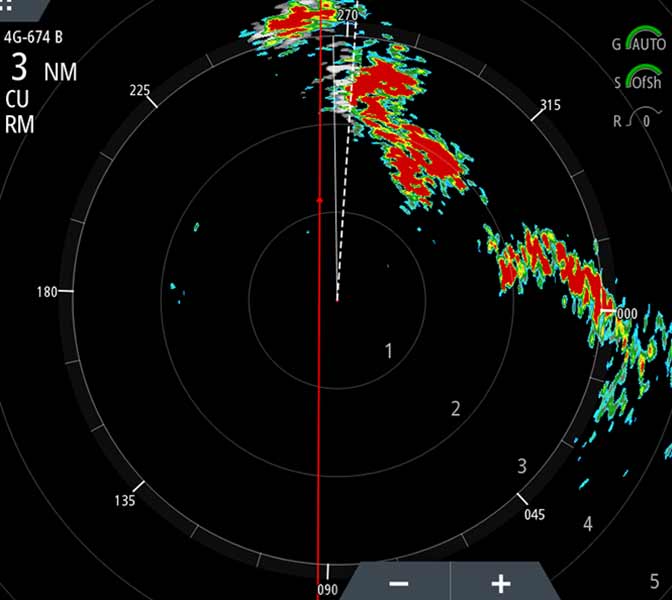
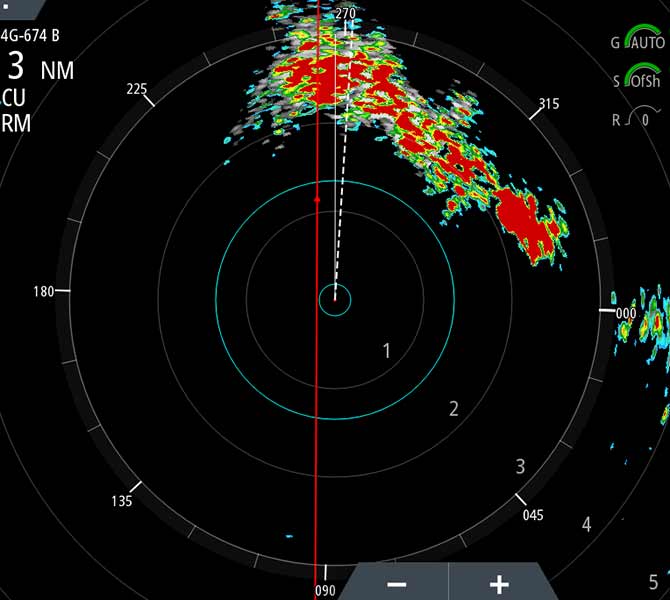
During this long ride into Darwin, probably 20 hours or more, we had one squall after another. Winds got as high as 38 knots with sometimes very heavy rain. The worst was on the penultimate leg into the marina with seas and wind on the beam, constant squalls, and massive waves. Some of the squalls brought the heaviest rains I think I’ve ever seen. They were “pull over to the side of the road and wait for them to pass” heavy. If only we could have done that!

Below, a small gallery showing some of the squalls on radar…
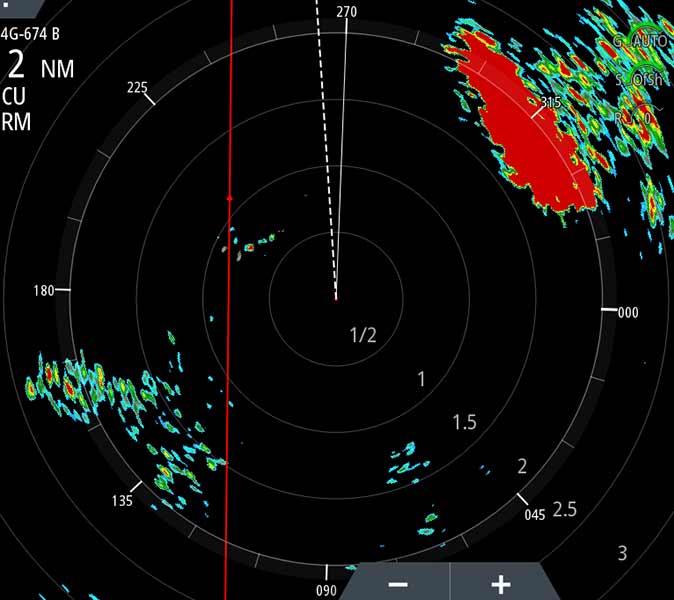
And this last one Cyndi took of our chartplotter with her camera. This was at one of the hardest downpours.
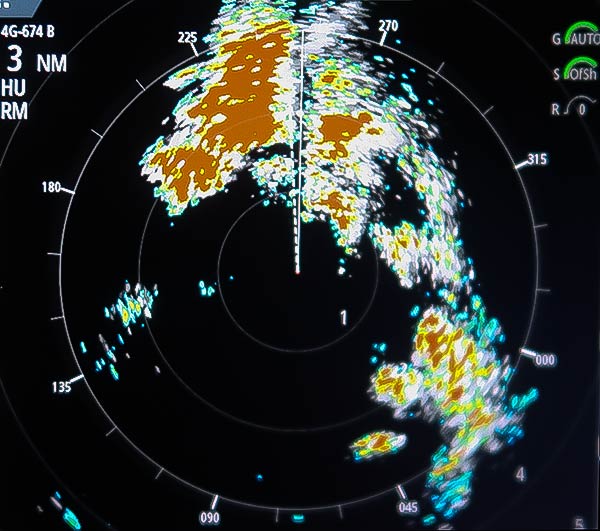
We turned downwind for the final leg and that made life better, but the rain got even heavier. At one point, there was a ship coming out of the channel that we could only see on AIS and Radar (amongst the rain clutter). When we passed by it, it was like a ghost ship coming out of the downpour. Spooky.

OK, now the fun stuff. It was 4 AM, we were at the end of a six day passage and completely infected with passage-brain, coming into a strange harbor with no moon (not that it would have shown any light through the heavy clouds anyway), with a complicated entry, nowhere to anchor to wait for daylight or easing conditions. Oh well, “let’s go for it” we psychically said to each other, and we did.

The most difficult part from a boat-handling standpoint was the last entry into the basin where we’d have to wait for an aquatic biosecurity check and a thru-hull treatment that would require us to stay at the dock for 10 hours. Sometimes, places that look small to me on a chart turn out to be quite large. Not this time. It was a tiny basin, with swells coming in, a small spot to tie up to on the pontoon and a very tricky entry in the pitch black. Yea, I guess you’re right, not smart!
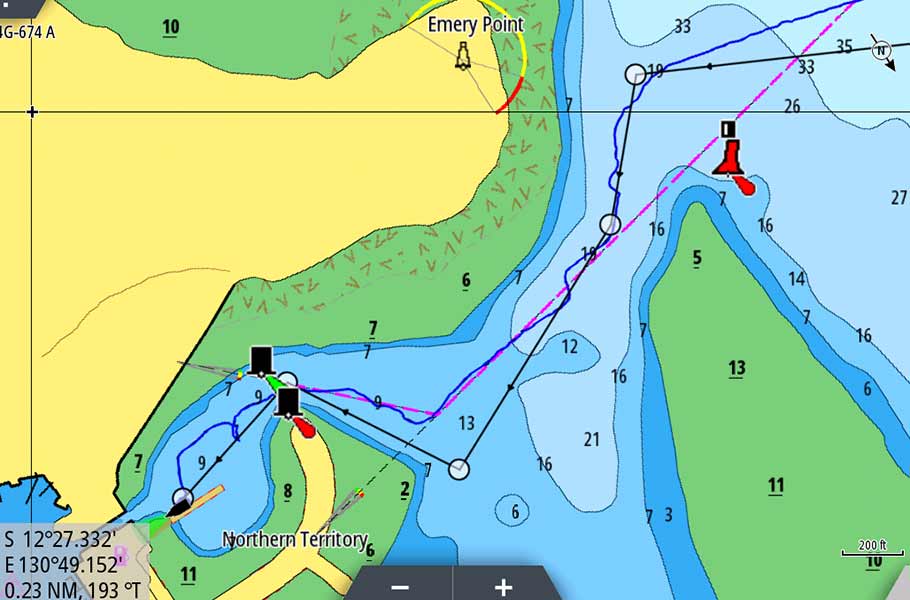
Our track into Cullen Bay Marina Outside Basin

Here’s our track (blue line) into the basin. Our autopilot handles almost anything but not this, with wild currents and swells pushing us all over the place. It was clear that the autopilot wasn’t going to cut it as we were being swept towards the reef. I took over and was steering almost lock to lock to try to stay on course.

We didn’t bump the rocks or reef (proof there is an all-powerful entity looking after fools, idiots and Legacy). We got fendered up and tied off for a couple hours sleep before our visit from the divers for our treatment. (It would have been almost four hours sleep, but we deduct the requisite two hours of drinking from that time. Wow, did we need it!)

We were all set to go into the lock  at 10 PM (yep, a lock because of the huge tidal range here) but we were just too out of it, both from lack of sleep and maybe a little from our celebration bottle of Champagne!

[Confession from Cyndi: it wasn’t the celebration champagne from our arrival but the fact that while Rich napped that afternoon while we waited out our 10-hour thru hull treatment, I had some red wine, thinking I’d then get some sleep and be ready at 10pm. As it turned out, I certainly slept, but I underestimated how much, in my tired state, the wine would affect me. Rich was OK to go, but I was not as OK as I needed to be, especially since conditions were rather windy. A catamaran behind us on the quarantine dock went through and had a heck of a time controlling his boat. Frankly, it’s just as well we didn’t go as we may have been going through the lock with him.]

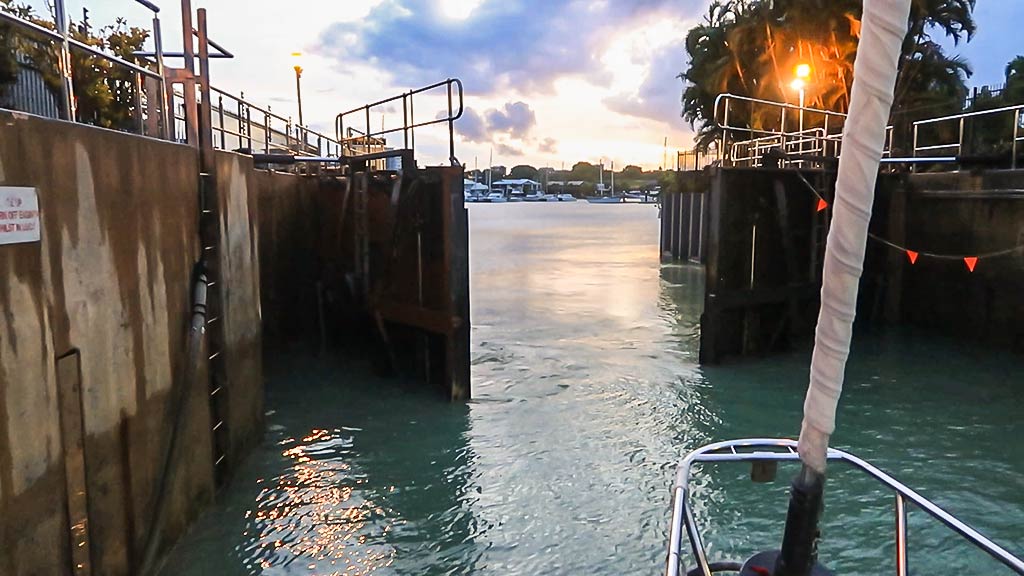
It didn’t seem smart to tackle something we’d never done before in our current state (and we figured we’d used up all our luck just getting in!). We rescheduled for 6 AM. Wow, it was not fun when the alarm went off. Nevertheless, all went well. Here are some pics of us in the lock…
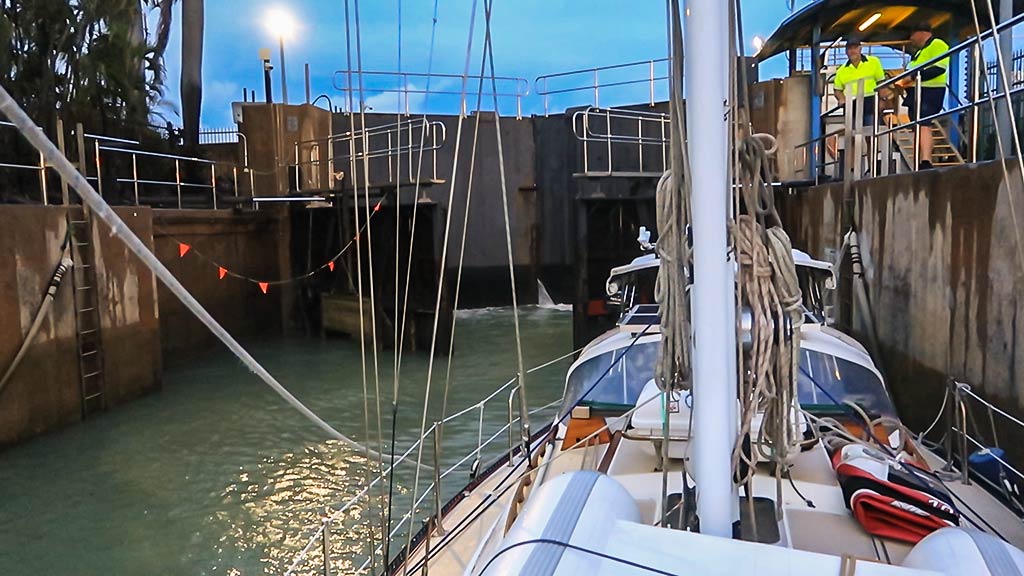
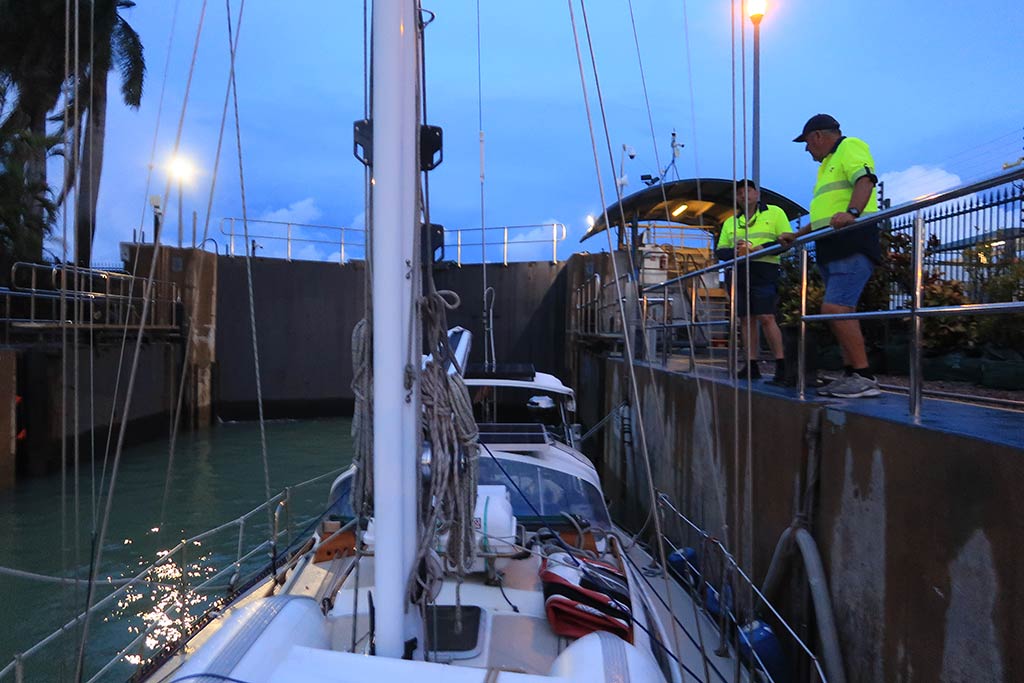
The trip from the lock to our berth was short and easy and the guys from the marina ran around so that they’d be there to catch our lines. Nice people!

Memories from the passage up to the Cyclone

Leaving Thursday Island was mostly uneventful but there was a lot of shipping traffic to dodge. There was no wind and we didn’t expect any for at least four days.
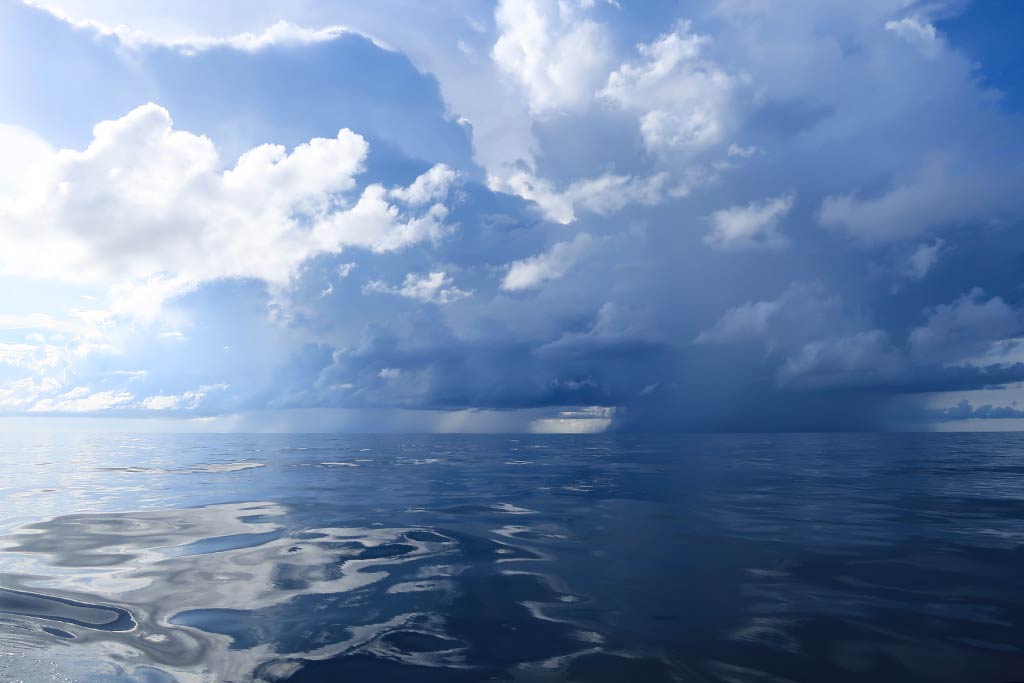
There were squalls every day and lightning every night, all around us but not usually very close. At one point, this squall looked like a waterspout, but I don’t think it was as the sea was flat and there was no wind.
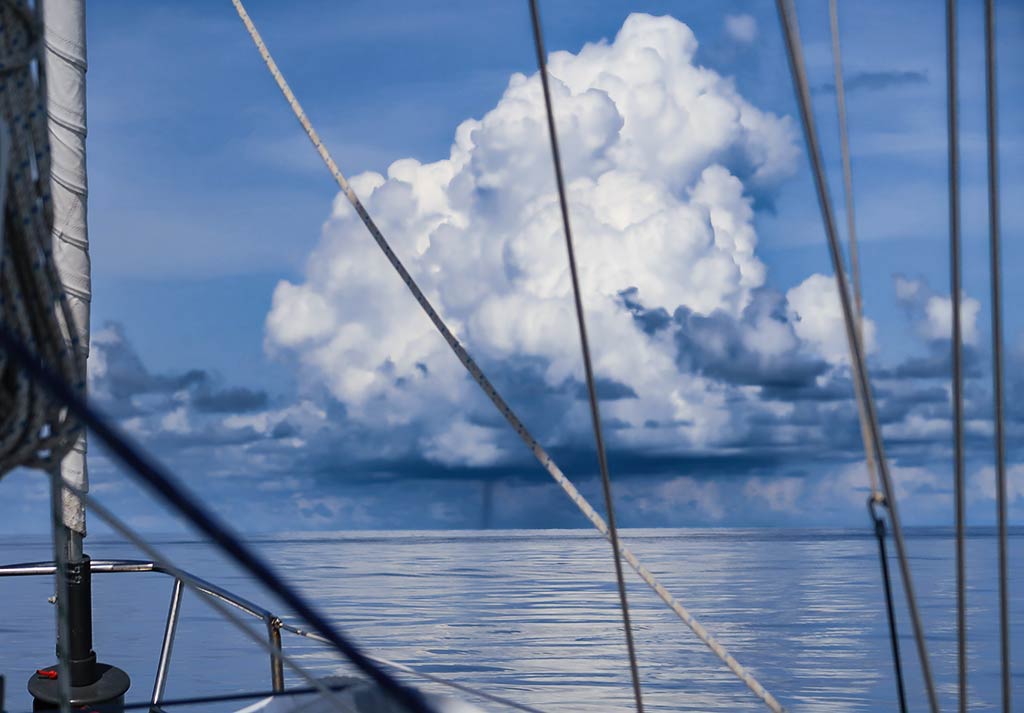
Most of the squalls were windless (until we got close to Darwin, that is). We got a little rain off and on but not much (until we got close to Darwin, that is).
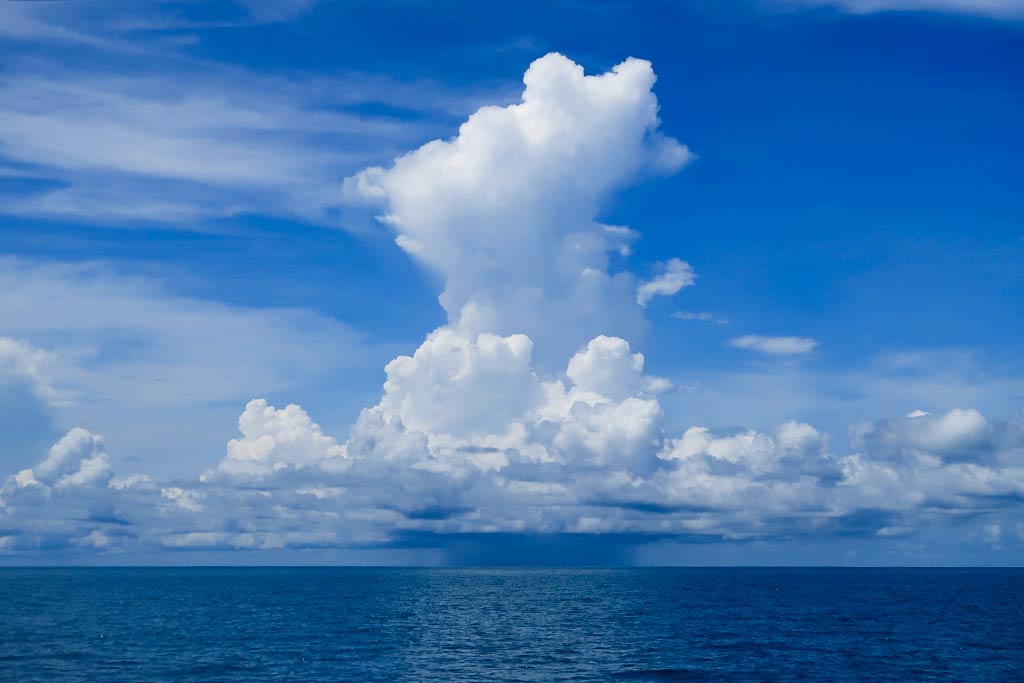
Here’s a typical squall in the distance.

Fuel was an issue. We filled up at Thursday Island and had 87 gallons onboard (330 liters). The trip was to be 730 miles so our normal rate of 10 miles per gallon, we could theoretically motor the whole way. The problem is that my 10 mpg figure was always with a little wind assisting us and there was no wind for the first four days.

The first two days, I ran the engine at 2200 rpm and was going through fuel way too fast. I dropped the throttle back, sometimes 1800 and sometimes 2000 rpm. This helped with fuel consumption but it was still looking touch-and-go.

We finally got a little wind and actually sailed for a few hours, but while there wasn’t usually enough wind to turn off the engine, there was a little wind assistance for motor-sailing which helped our fuel situation a lot. We arrived with 16 gallons to spare.

(While we had 16 gallons onboard, 10 of those were in jugs but, in the final hours of our passage, it was far too rough to get those into the tank without also getting some of the ocean in there as well. Good lesson: get the fuel from the jugs into the tank as soon as conditions are good enough to do it.)

The passage was about six days but to me, it felt like one of our longest and I don’t really know why. I just didn’t seem to be able to keep track of the days or dates and was constantly counting the days on my fingers.

The last day was the hardest, not just because of the storm, but because I get last-day syndrome as we approach a new destination. Usually, it’s just for the final approach, 30 miles or so, but because the final approach to Darwin was over 100 miles, last-day syndrome deprived me of sleep for 20 plus hours.

Oh well, we’re here now. Time to explore, eat out at new restaurants and see new sights. Next up, Indonesia, but we’re not sure when now. We think we might hang out here for a while. We know we’ll be here for at least a month and during that time, we’ll firm up our Indo plans. We could be in Darwin for as long as four or five months.

While Darwin is in the Cyclone zone, the marina we’re in is a registered cyclone haven, so that feels good, but we still don’t want to experience a big one close up and personal.

-Rich
 

Darwin Here We Come!

December 17, 2022

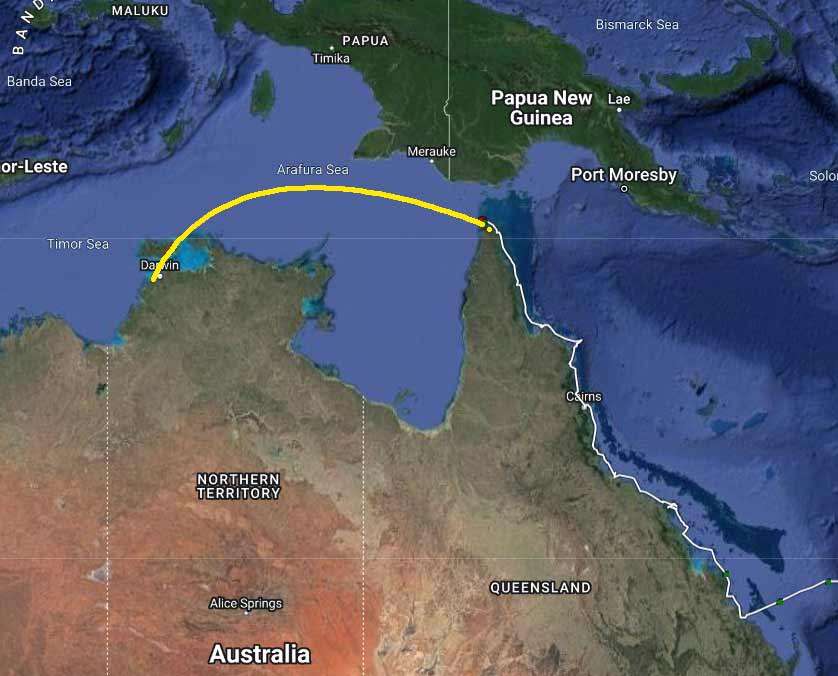
We’d planned to leave for Indonesia from here at Thursday Island but that plan has changed. It turns out the best course for where we want to go in Indo takes us very close to Darwin, so why not?!

A map showing our track from where we landed at Gladstone four months ago and in Yellow, where we’re headed now.

We’re leaving now and it’ll take us about six days to get to Darwin if all goes well. Our track here is updated hourly if you want to check our progress.

-Rich

Our Favorite Things About “The Oasis,” Part 1 (Gladstone Marina Parkland, Australia)

Posted December 15, 2022

August 11 – 30, 2022

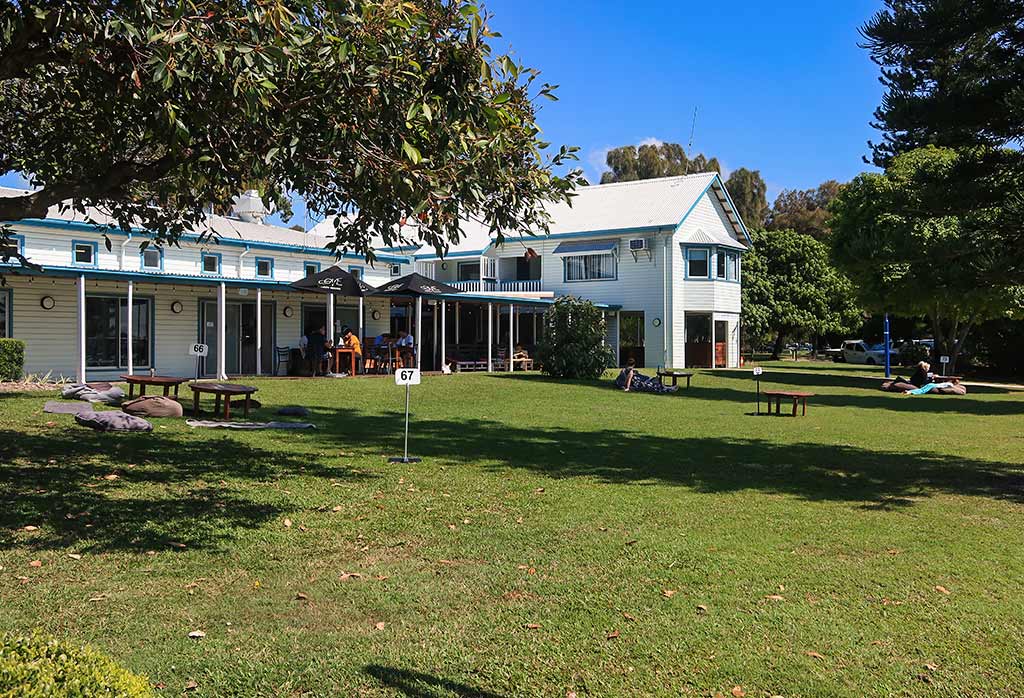
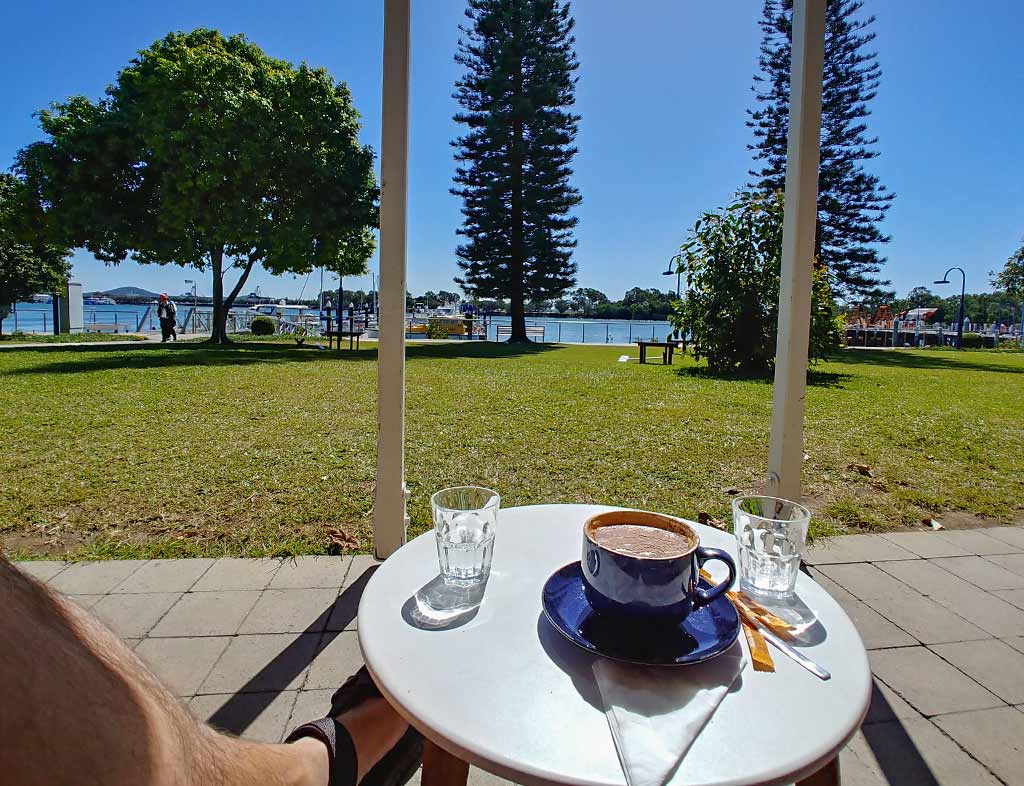
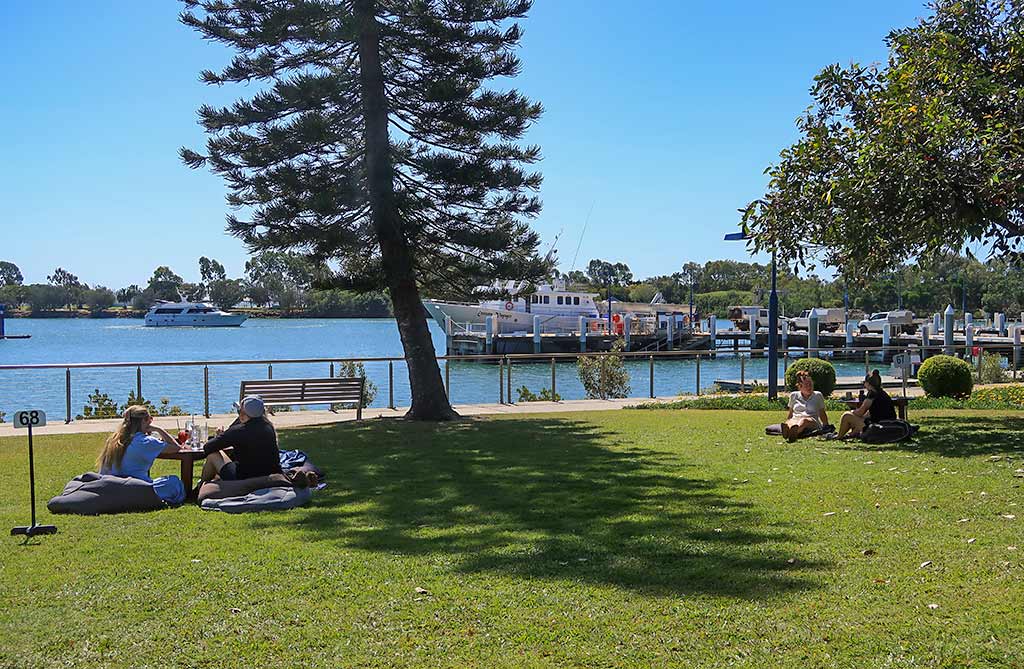
Our favorite spot in “The Oasis” was Flavours Marina, the nearby cafe which overlooked the water and offered both sunny and shady places to sit, a nice option for everyone.

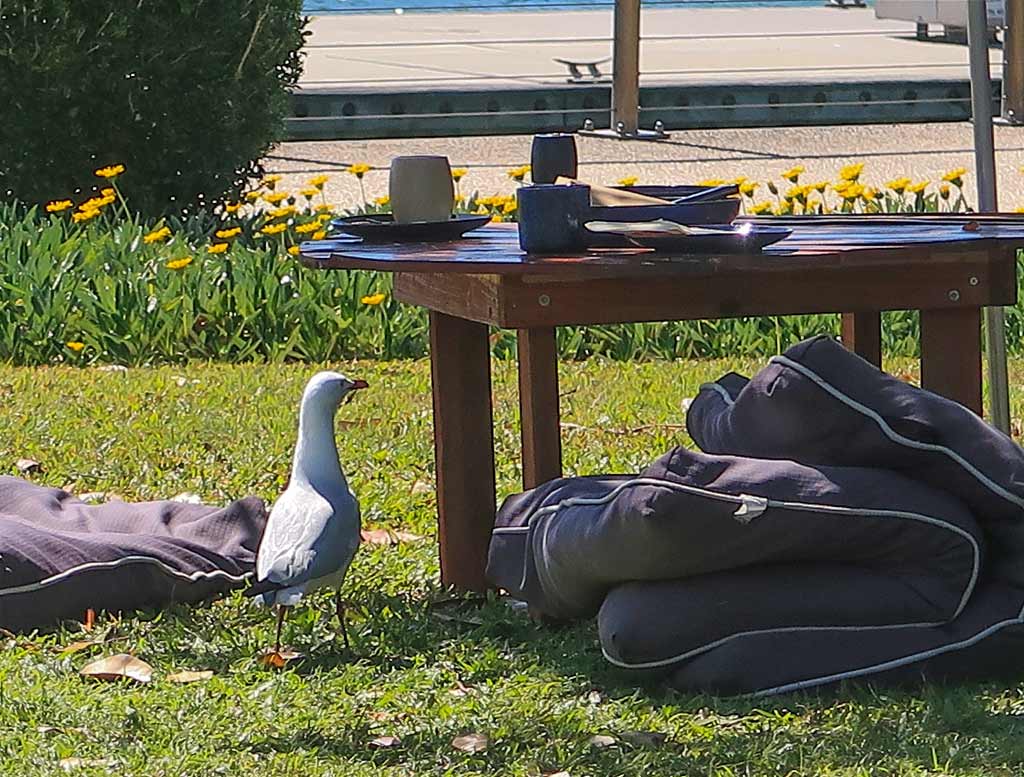
What stood out most was its lawn area scattered with low tables and bean bag chairs, perfect for people with dogs or kids. Aside from the lawn seating, there were tables with umbrellas and bigger tables under a covered area. Then they had this interesting setup with one very long bench seat fronted with several small tables, perfect if one just wanted to sit and enjoy drink. (That is if one doesn’t mind sharing the bench with opportunistic birds who like to perch on the backrest—I’ll be talking more about these in the next post.)

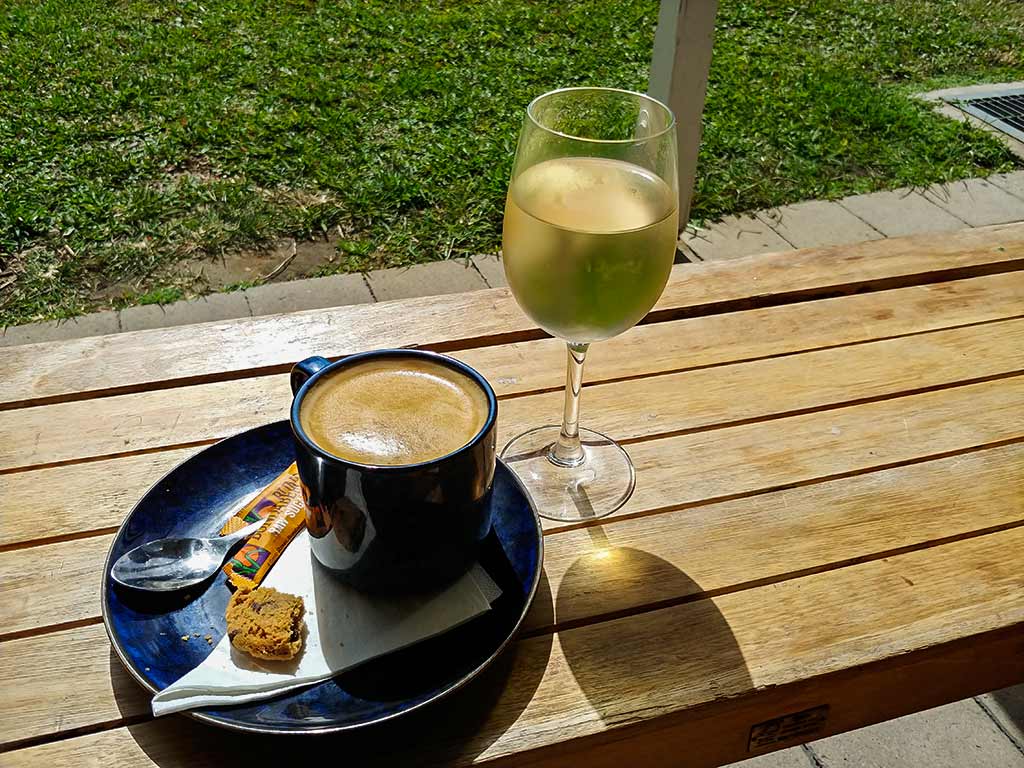
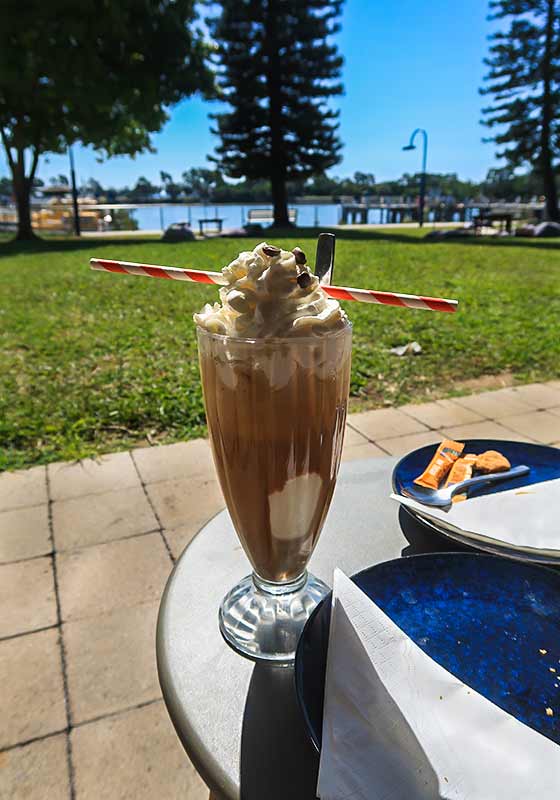
The staff were very nice, the food was good, and then there was the coffee, which was terrific. This was a huge joy for us to find as it had been awhile since we’d had good coffee. French Polynesia, including the Society Islands and New Caledonia, makes some wonderful things to eat and drink, but coffee is not one of them. For reasons I can’t fathom, the French countries in the South Pacific have what must be the worst coffee in the world. Australia, on the other hand, may well have the best.

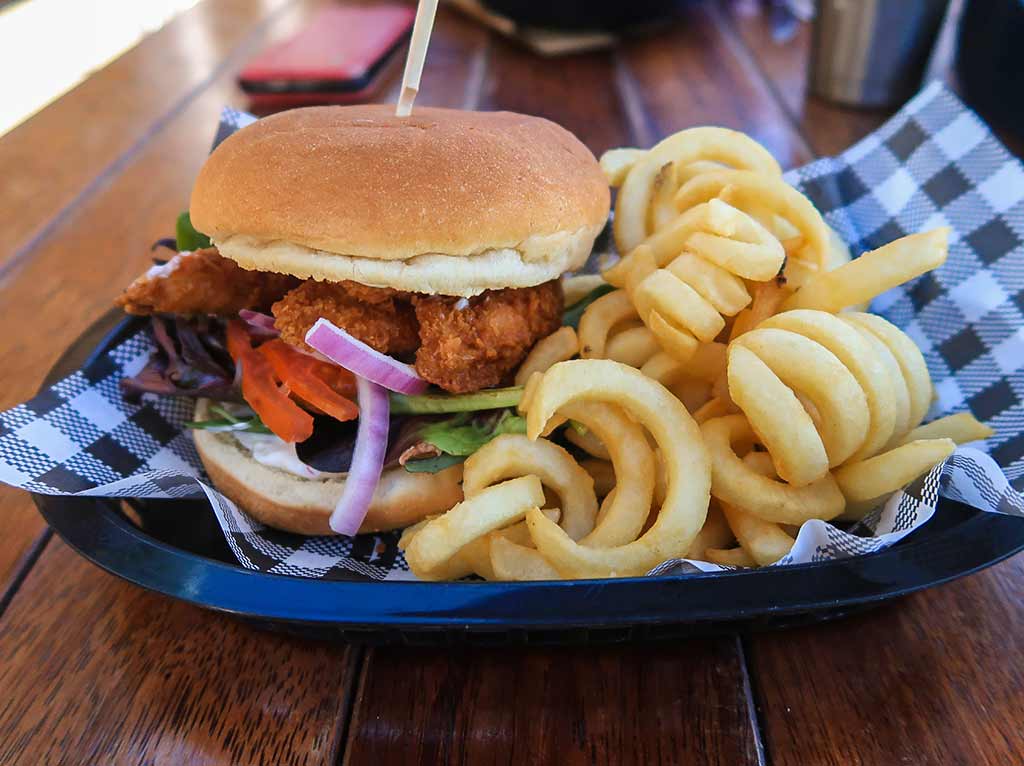
The café was only open for breakfast and lunch, kind of a shame given its beautiful setting would be perfect for an evening meal or drinks. Maybe someday they’ll extend their hours, but for the time being we were happy to enjoy a few morning and afternoon meals there. Below, a few photos (click on any photo to enlarge).

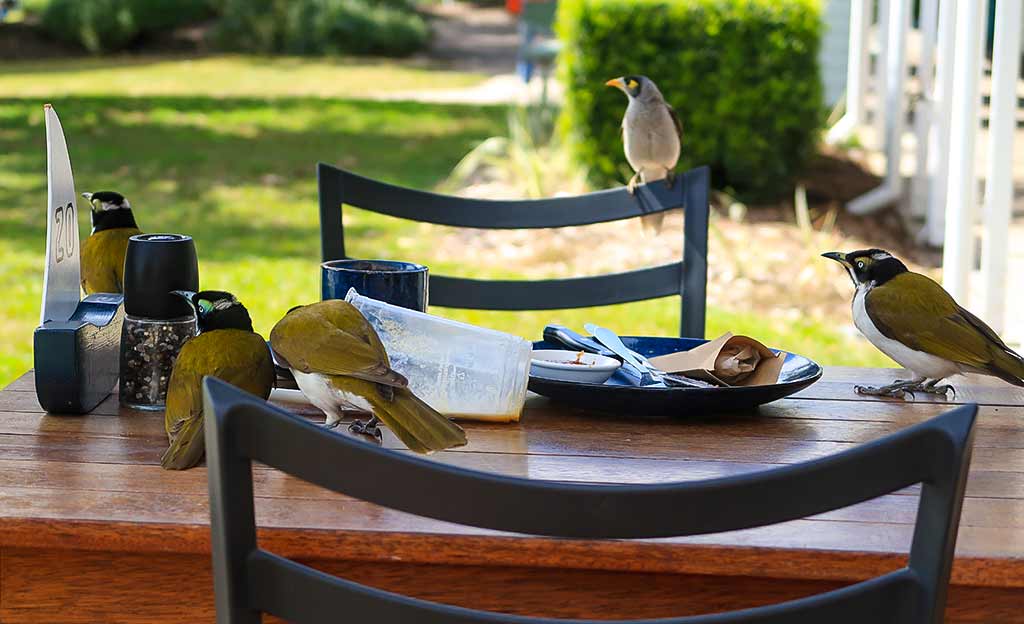
Our other favorite thing about “The Oasis” were the impressive number and variety of birds! They were all over the park but tended to congregate most around the café, waiting to swoop in and enjoy any unattended leftover food. The staff certainly tried their best to clear the tables quickly, but those birds were fast and cheeky (a down-under expression meaning audacious). And they had little fear of people.

My next post, Part 2, will feature these wonderful birds. –Cyndi

Settling Into a New Phase of Life (Gladstone, Australia)

August 11 – 30, 2022
(Posted December 9, 2022)

Soon after we arrived in Gladstone, I began working on a plan for cruising the coast of Queensland as we made our way north. Before arriving here, I’d already learned a few things about area’s the “big-gun” cruising destination: The Whitsunday Islands, located about 250 miles to the north.

It seems the Whitsundays get pretty crowded during their peak season, June through September, when droves of Australian yachties head north to join the regular parade of charter boats that cruise the area. This results in crowded anchorages and marinas, not something we wanted to experience. And we were already hearing that this year’s season had not only been extra crowded but relentlessly breezy due to enhanced trade winds.

In some ways, it made us feel better to hear about this difficult season. We’d planned to arrive in Australia in June, but had that happened we would have been right there in the crowded, windy conditions when we got to the Whitsundays. Getting to Australia later than planned was looking to be one of those situations where an apparent misfortune turns out to be a stroke of luck.

At this point I decided we should take our time heading up that way, hoping that by arriving in the Whitsundays later in the season we’d have better weather and fewer boats. On the downside, we’d also be cruising the rest of the coast later in the season, putting us unnervingly close to cyclone season. For the time being, I decided to focus on immediate issues and save other worries for their appropriate times.

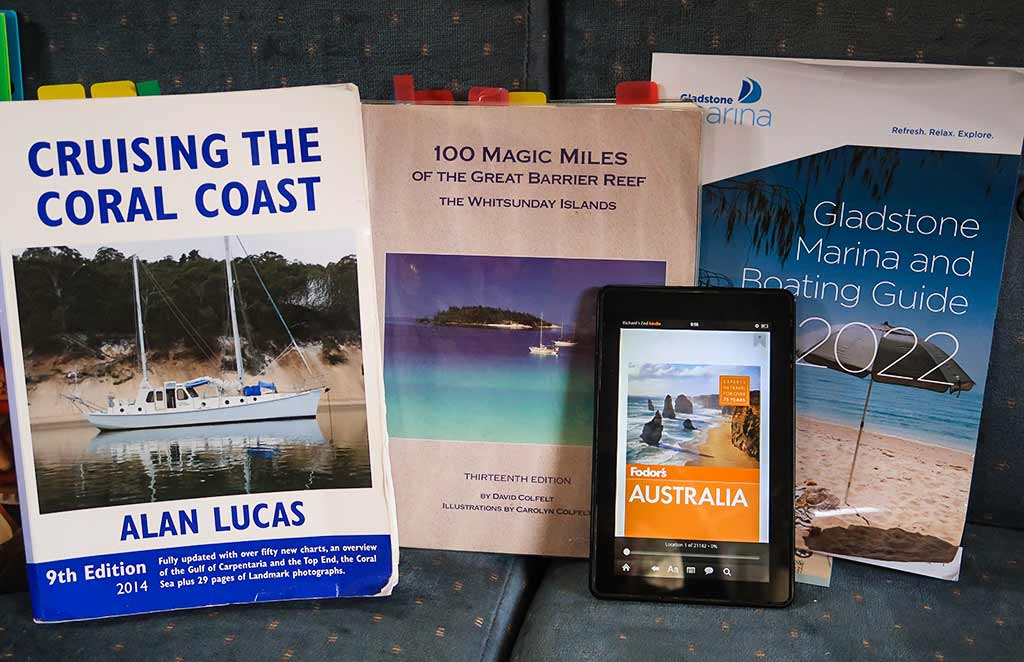
So, the first decision was where to go from Gladstone. I had my trusty Alan Lucas guidebook, Cruising the Coral Coast, an excellent brochure-booklet the Gladstone marina had given us with a good overview of nearby islands, another guidebook called 100 Magic Miles for when we got to the Whitsundays, and an out-of-print book lent to us by a friend for cruising this area of the coast, known as the Curtis Coast. I also had a Fodor’s Travel Guide to make sure we didn’t miss any must-sees on land, and of course The Rectangle of All Knowledge (aka my computer when connected to the internet).

Initially, I had a heck of a time making decisions about where to head first and what to pass by. The closest cruising area off Gladstone was known as the Capricorn group, made up of small islands and reefs.

Everything initially looked tempting, but I ended up taking a pass on these places for various reasons such as these:

1. Lady Musgrave Island: Actually an anchorage south of the Capricorn Group. It’s inside a reef with beautiful blue water, good snorkeling, turtles galore, and to top it off, a very pretty island. What’s not to like about that? Unfortunately for us to go, we’d have to wait for a period of very calm weather not only to motor 60-plus miles southeast, but then to enjoy the rather-exposed reef anchorage. We just couldn’t afford to take the time to do this.

2. Fitzroy Reef: Would it worth going 50-miles out of our way to visit a pretty reef when we’d just visited spectacular reefs in New Caledonia? Maybe if we were visiting other islands nearby, but otherwise no.

3. Heron Island and its resort, on my To-See list, certainly welcomes day trippers who travel over by ferry. But come to find out they do not welcome yachties who arrive on their own boats. Well who needs those poo-poo heads anyway. 🙁

4. North West Island had some shark attacks, including a fatal one on a young park ranger. Scary. Even if we didn’t go in the water, just looking at photos of the island gave me a foreboding feeling.

5. Wistari Reef looked nice but was located between poo-poo-head Heron Island and hungry-shark North West Island. No thanks. I find Aussies have a tendency when, after a shark attack, to believe the shark stays only at that one place where the attack happened! But I’ve seen enough Shark Week to know that sharks can cross oceans; so making their way amid neighboring islands, reefs and bays would not be an issue for them.

There were a few other small islands around this area, but without visiting the bigger draws on the above list, I decided they wouldn’t be worth going to see for themselves. So it was an overall “No” for the Capricorn Islands.

The next cruising area to consider lay about 40 miles to the north: The Keppel Island group, specifically the much-revered Great Keppel Island, considered a must-do by Aussie cruisers.

By the time I’d finally settled on a plan, it looked like Great Keppel Island would be our first stop, but a windy period was forecast soon after we’d arrive there. Could we duck into the nearby Keppel Bay Marina when that happened? Yes, it seems cruisers do this all the time!

I would eventually learn that marinas on the Queensland coast see a rather constant flow of boats migrating north for the winter and south for the summer. While there are islands and anchorages along the way, many of them are quite swell-prone during enhanced wind conditions. It doesn’t do much good to be protected from the prevailing wind if one is uncomfortably rolling around in the swell.

Then of course, there’s always the lure of laundry facilities and re-provisioning in towns and cities along the coast (virtually every marina north of Gladstone has courtesy cars just for this purpose). Alan Lucas calls this “The Coral Coast,” but I think “The Migration Coast” could also be an appropriate name as yachts of all types are consistently on the move here.

During the 2 1/2 weeks we spent pulling ourselves together and figuring out our plan, we felt very much at home in what I came to think of as “The Oasis.” We weren’t actually on an island where our marina was, but it sure felt like one as we had to cross a bridge to get to the adjacent city of Gladstone.

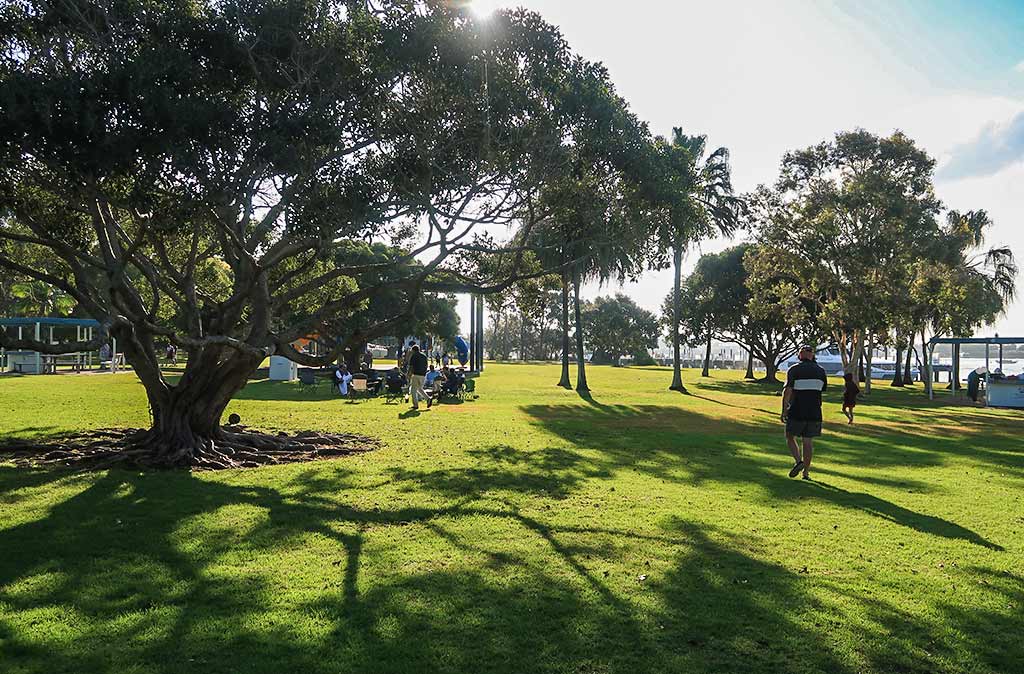
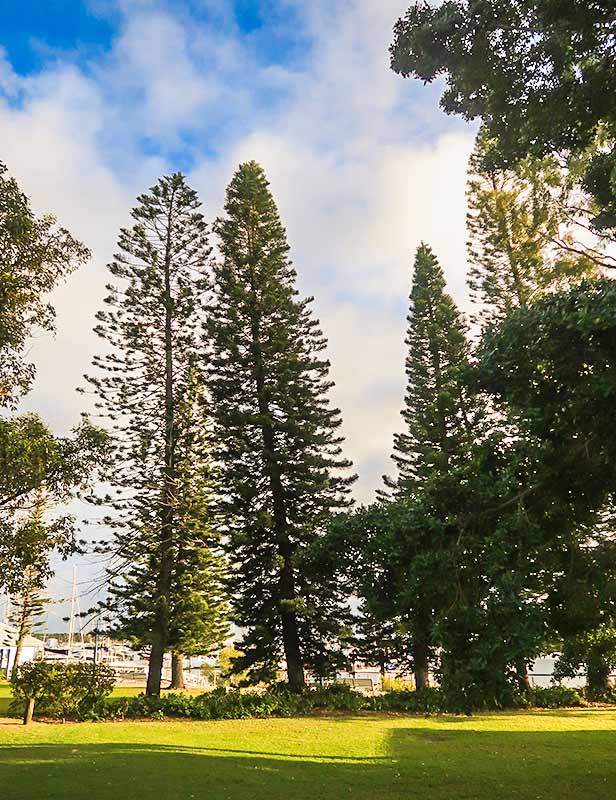
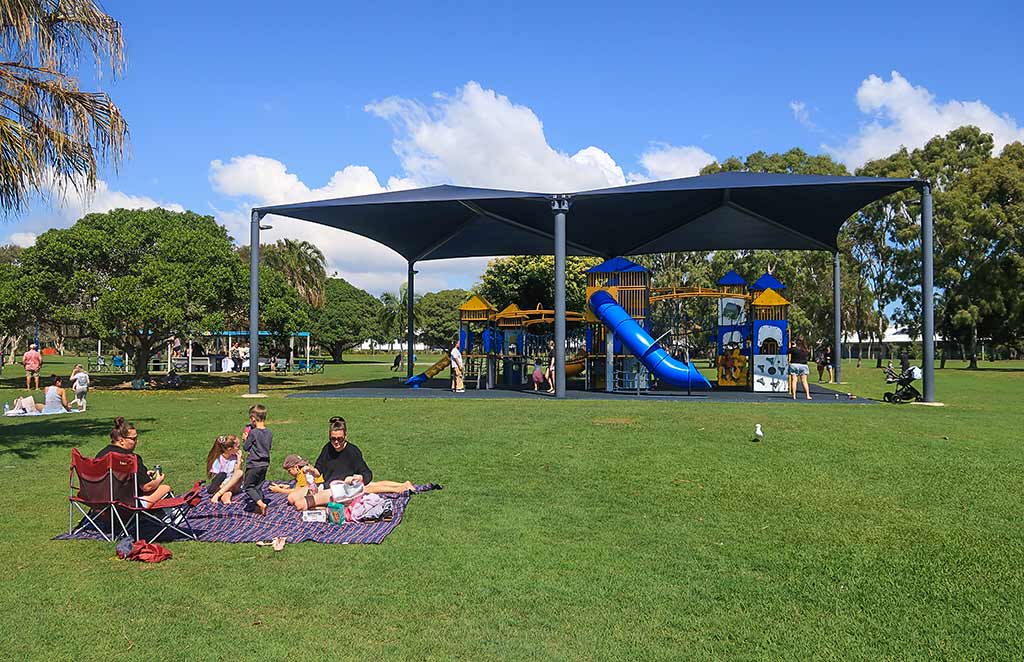
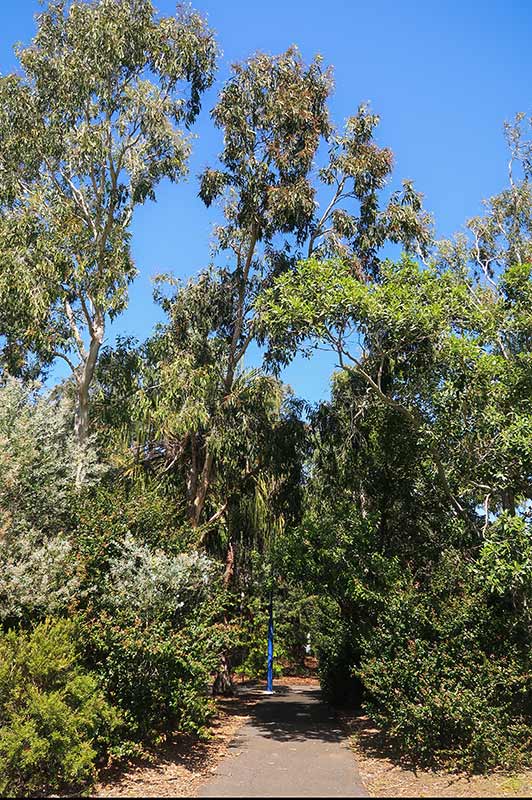
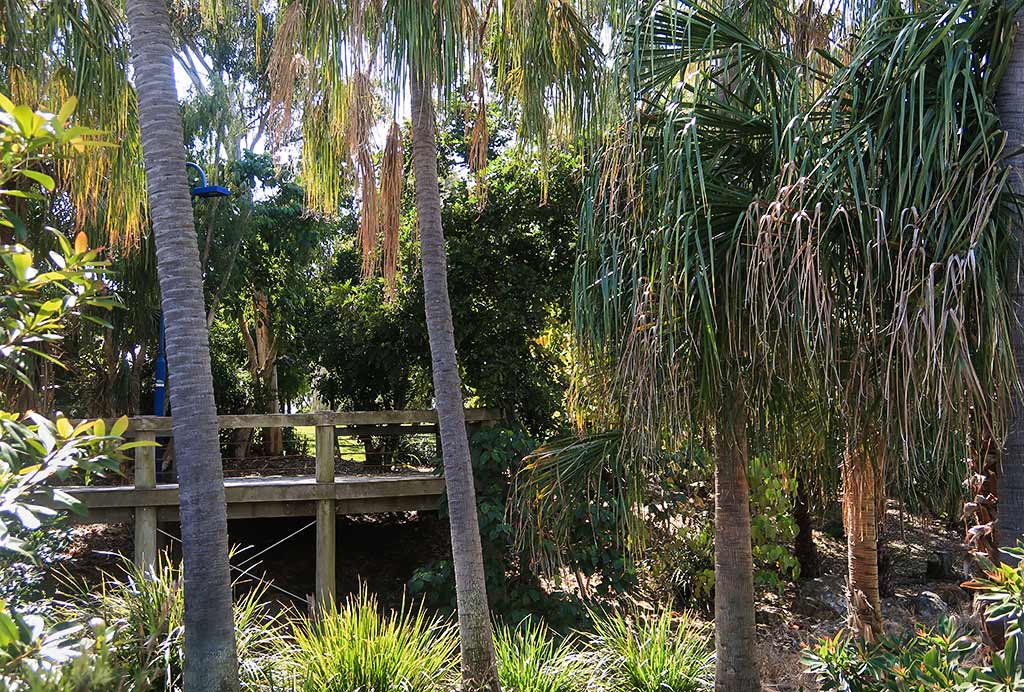
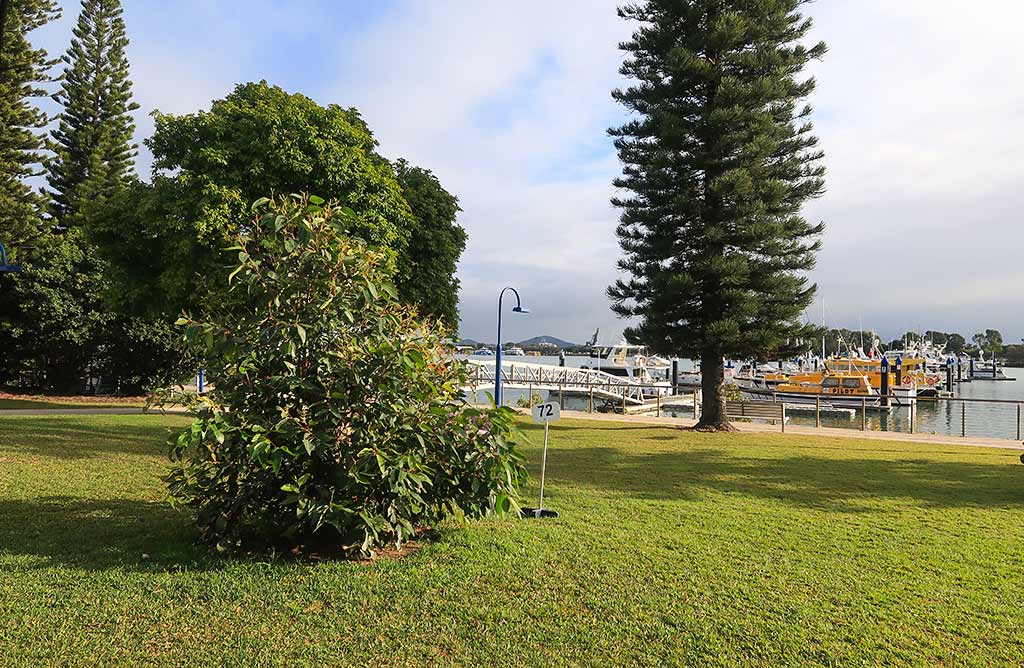
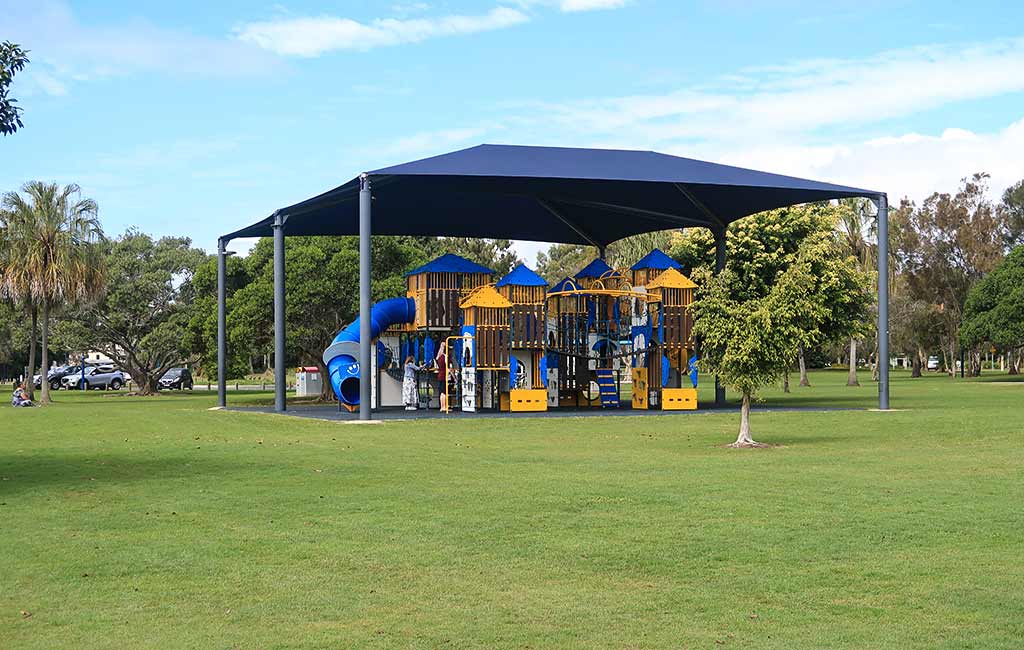
What a striking difference between the nearest area of Gladstone, which felt rather hot, dry, and deserted as most eateries were only open for dinner. Crossing the bridge into the park, however, meant entry into a world of large shady trees, green grass, flowering plants, abundant bird life, and people who were there enjoying themselves with picnics, refreshments at the cafe, dog walking, or watching their kids play in the covered playground.

Aside from occasional shuttle bus trips to the center of the city (much busier and more active than the area of the city closest to the park), we did have occasion to exit the Oasis on foot, walking across the bridge to visit the nearby seafood market or yacht club, or walk further afield to a liquor store or market. We also walked to stores with boating supplies, including one place where Rich had a part made. But every time we returned from these outings, I’d breath a sigh of relief as we crossed the bridge back into the park.

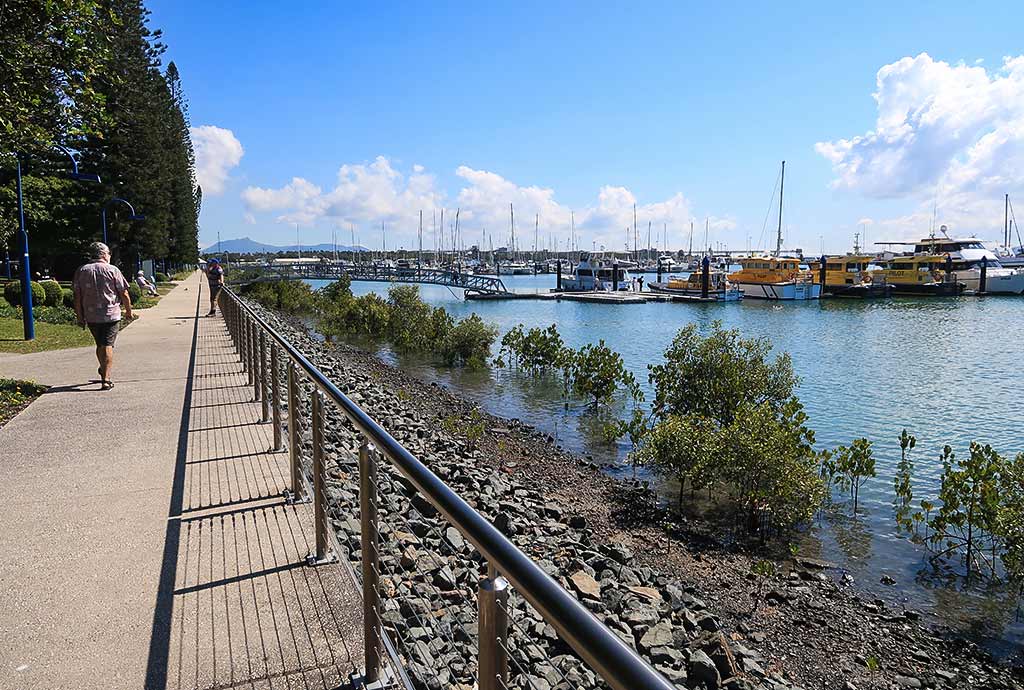
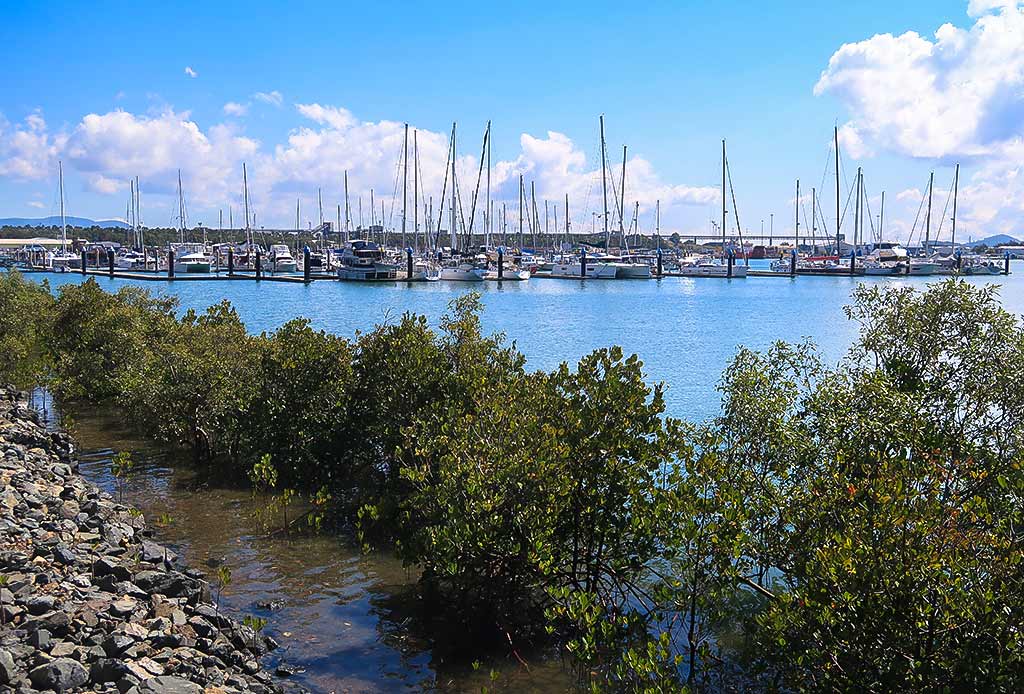
Below, a few photos of our “oasis” (click on any photo to enlarge) . .

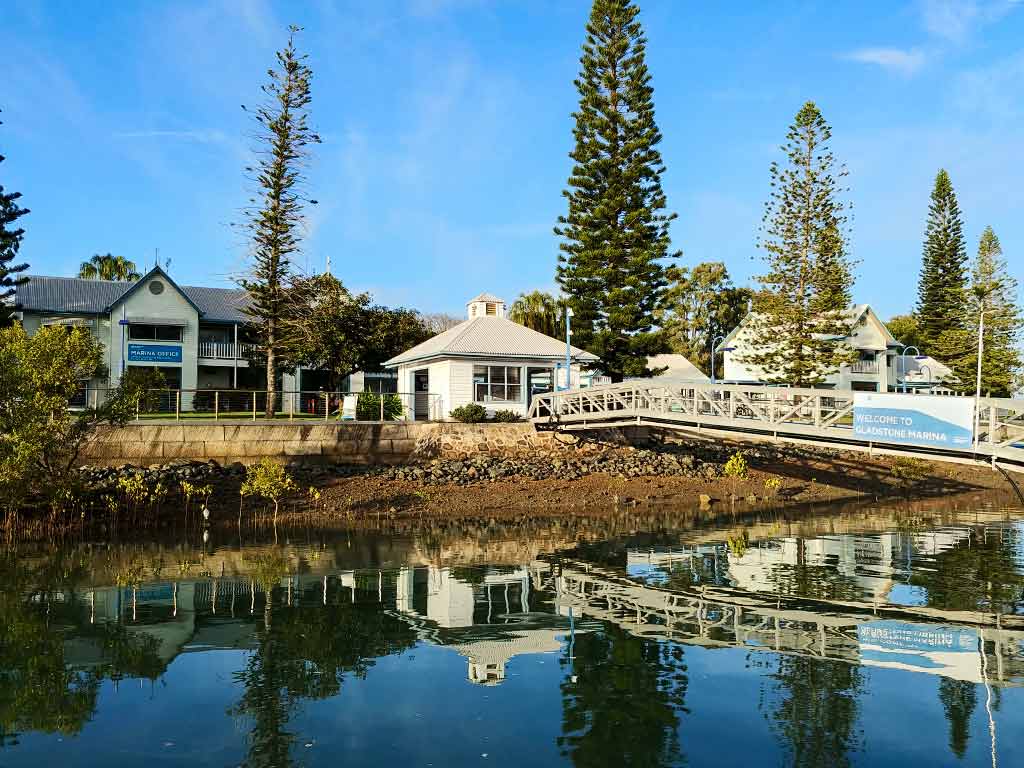
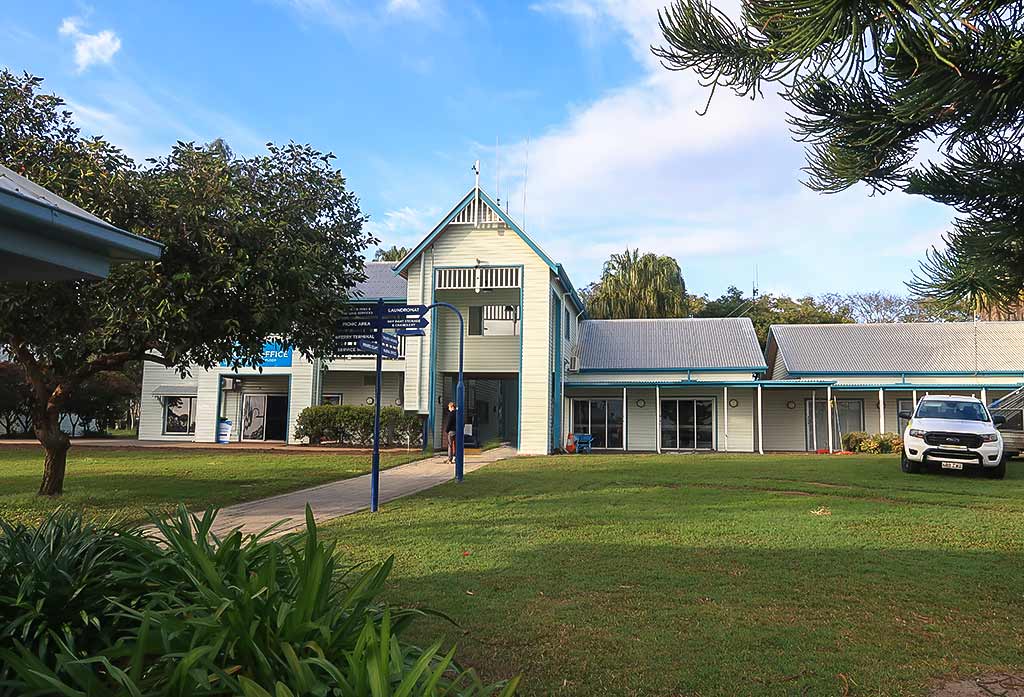
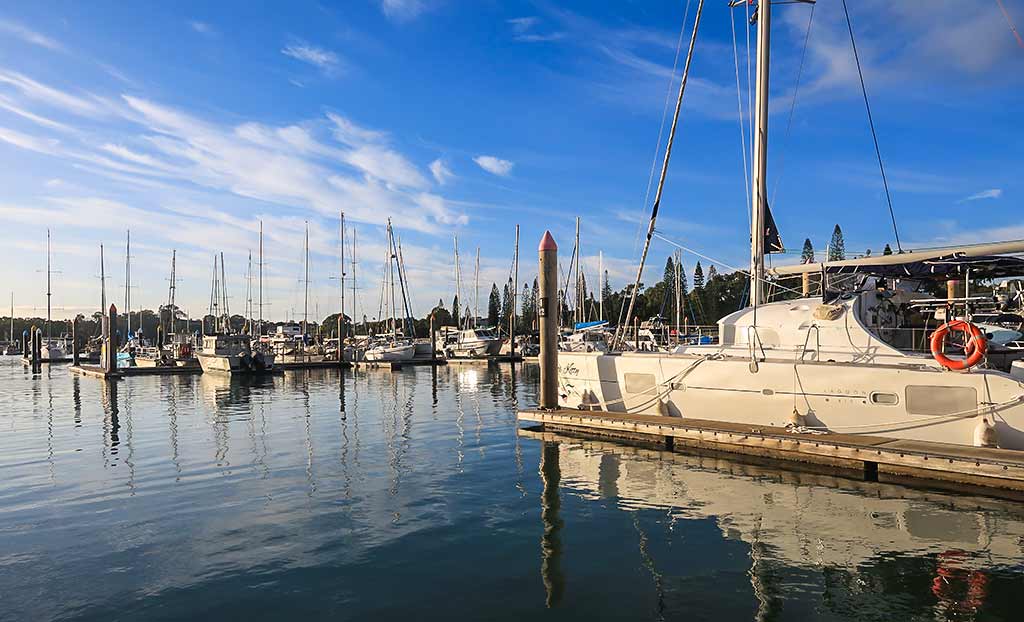
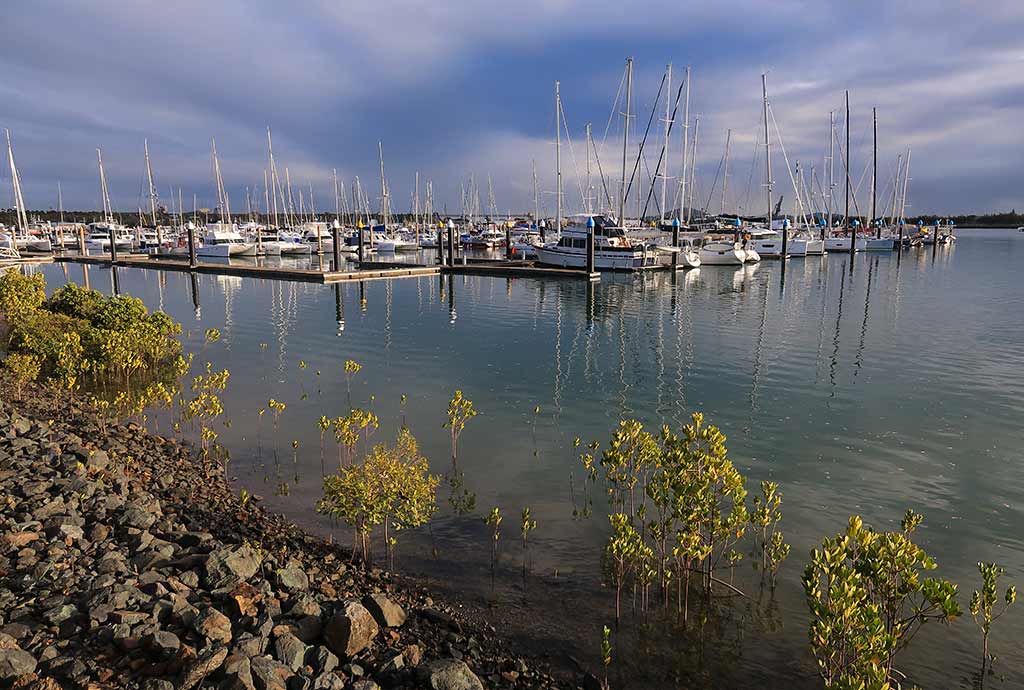
And a few photos of the Gladstone Marina, our home sweet home . . .

–Cyndi

Australia Discovery #3: Cold Seafood Platters

(Posted November 26, 2022)

I’ve posted about the joy of eating Australian prawns, but that’s only part of the story. Aside from being served on their own, they often play a starring role in something larger: the cold seafood platter.

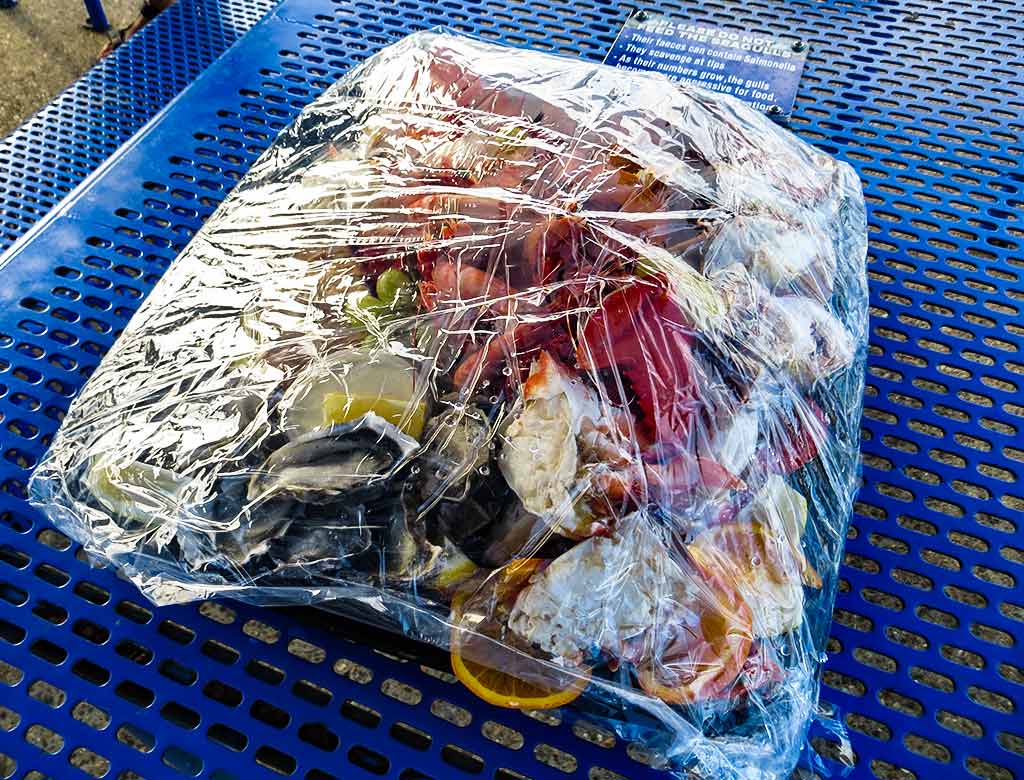
A seafood platter photo from a Google local guide.

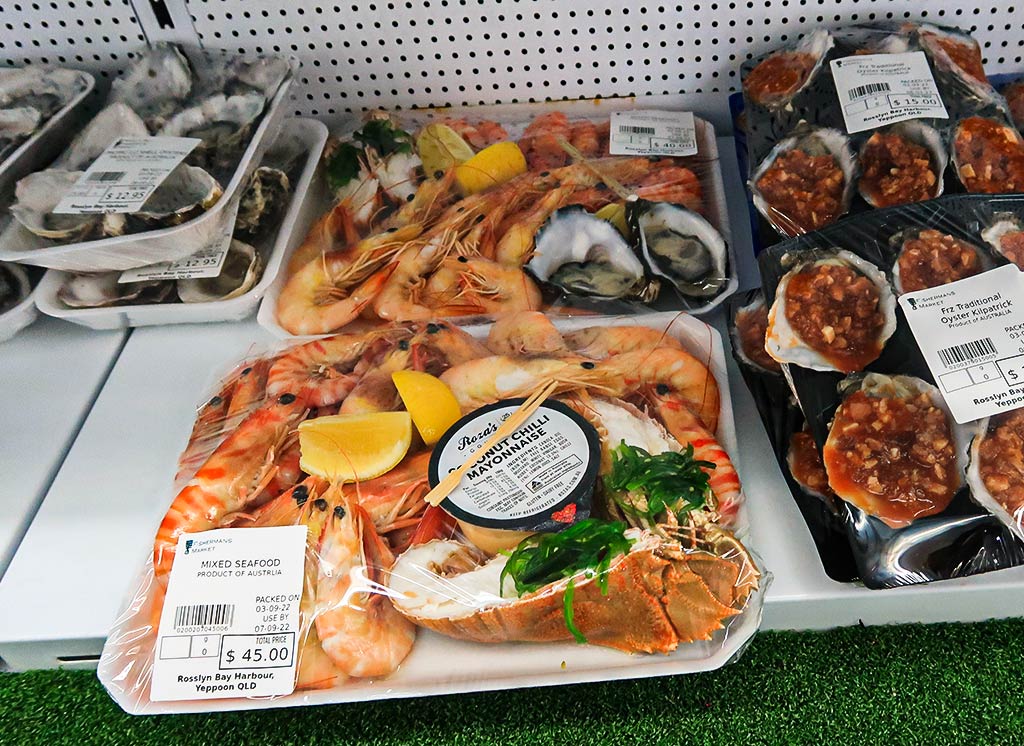
Generally cold seafood platters are sold at fish markets or takeaways. Restaurants may have seafood platters, too, but those are generally made up of hot seafood like battered fish and chips, calamari rings, crumbed scallops, cooked oysters, etc., and are found all over Australia.

Cold seafood platters, on the other hand, are a specialty of Queensland. Not surprisingly, the main ingredient is prawns. But added in are another Queensland specialty known as Moreton Bay Bugs. These are a type of slipper lobster, smaller than regular lobster with a flat head and no claws. They are chiefly caught in Moreton Bay near Brisbane but in fact are found in the waters off northern Australia and up into parts of southeast Asia.

As with prawns, they are often cooked and then served chilled. The tail is the best part, cut in half and added to the platter. And like prawns, they are wonderful dunked into seafood sauce.

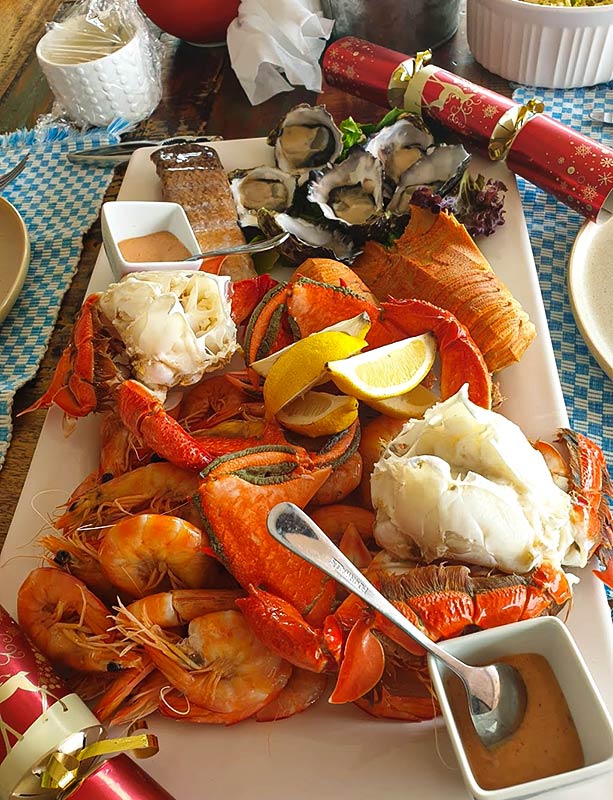
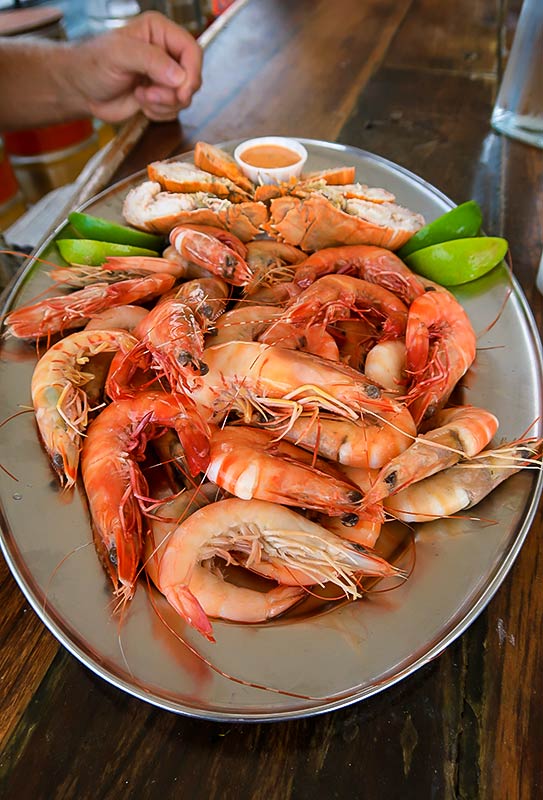
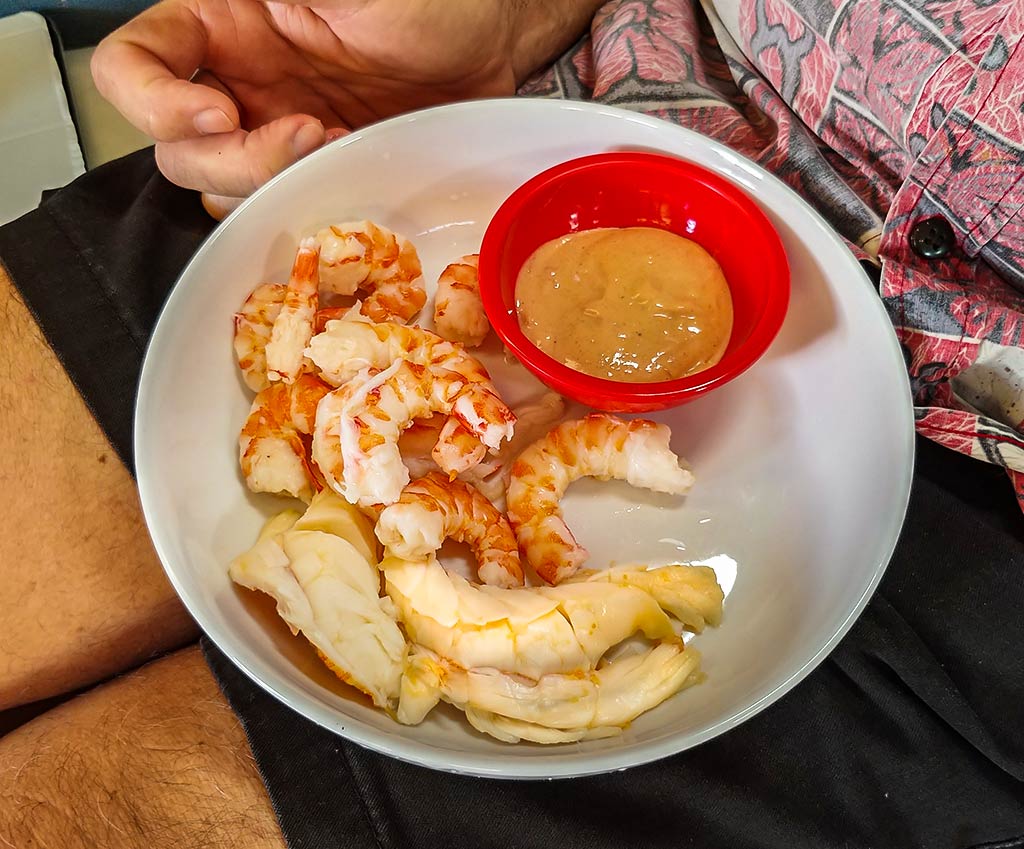
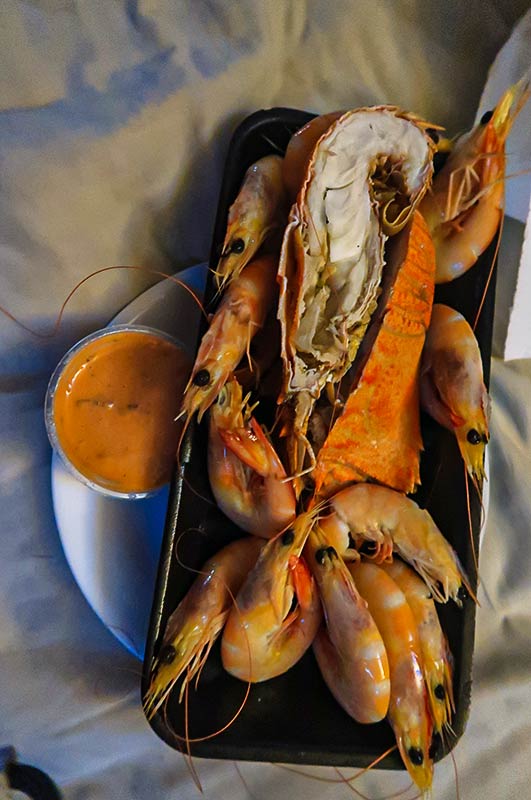
Prawns and bugs make up a basic platter, but those platters can get more elaborate with the addition of oysters on the half shell, fat red spanner crab, a variety of sauces, and if really extra, a rock lobster. A fully loaded cold seafood platter is a work of art and something to behold! Below, some prawn and bug seafood combos . . .

Our first experience with a cold seafood platter was in 2014 when we arrived at the Bundaberg Marina in Queensland. At that time, as a welcome and introduction to the area, the marina was gifting each new arriving boat with a voucher for a cold seafood platter from Ocean Pacific Seafoods, a seafood market located right at the marina. In this case, it was an elaborate platter, beautifully arranged with prawns, Moreton Bay bugs, and Spanner Crab.

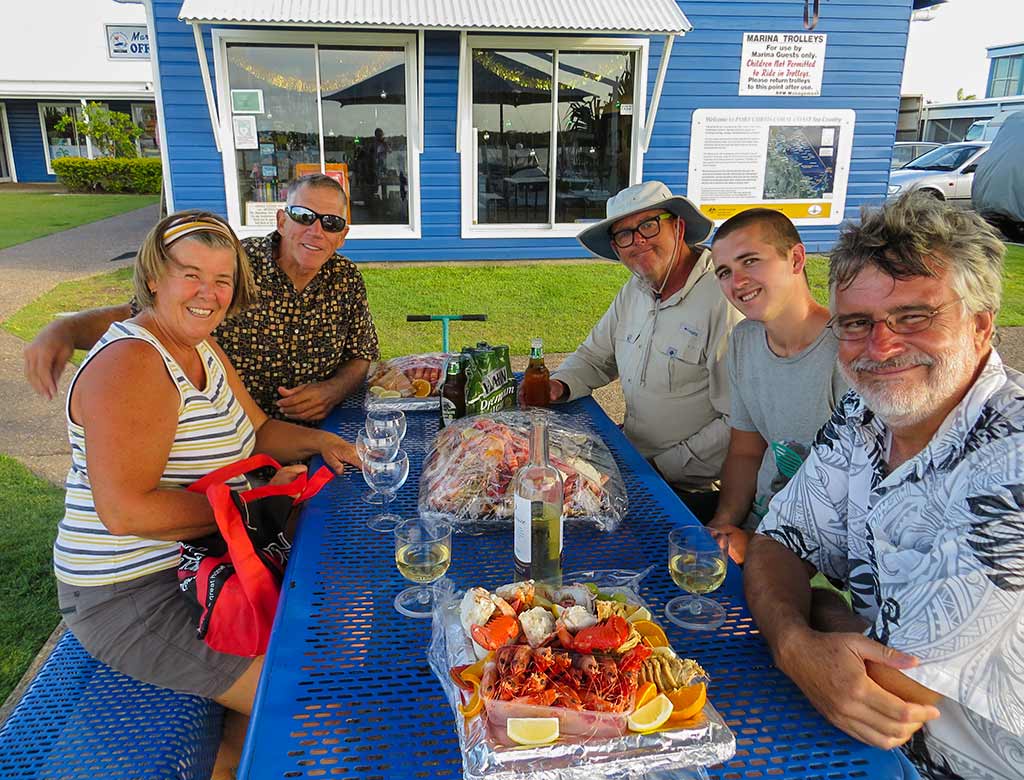
Three yachts arrived from New Caledonia at the same time and after checking in, we all went to order our seafood platters. That evening we brought our feasts to an outdoor table so we could enjoy them together. What a treat that was!

I will mention that one reason these platters are so popular here, aside from this being where platter-type seafood is harvested, is Queensland is in the tropics and tends to have very warm weather. Thus a cool refreshing seafood platter really hits the spot.

Not knowing much about Queensland back when we landed in Bundaberg, we assumed the platters were a specialty of that particular city; so we didn’t seek them out as we made our way south. What a shame, but at least we know better this time around and have enjoyed several of these platters, usually bought in a seafood market and brought back to our boat to have with cold beer and a binge-worthy TV show. We are really going to miss these platters when we leave Australia! –Cyndi