Mysterious Makogai, Trip Ashore (Fiji)

October 29, 2013

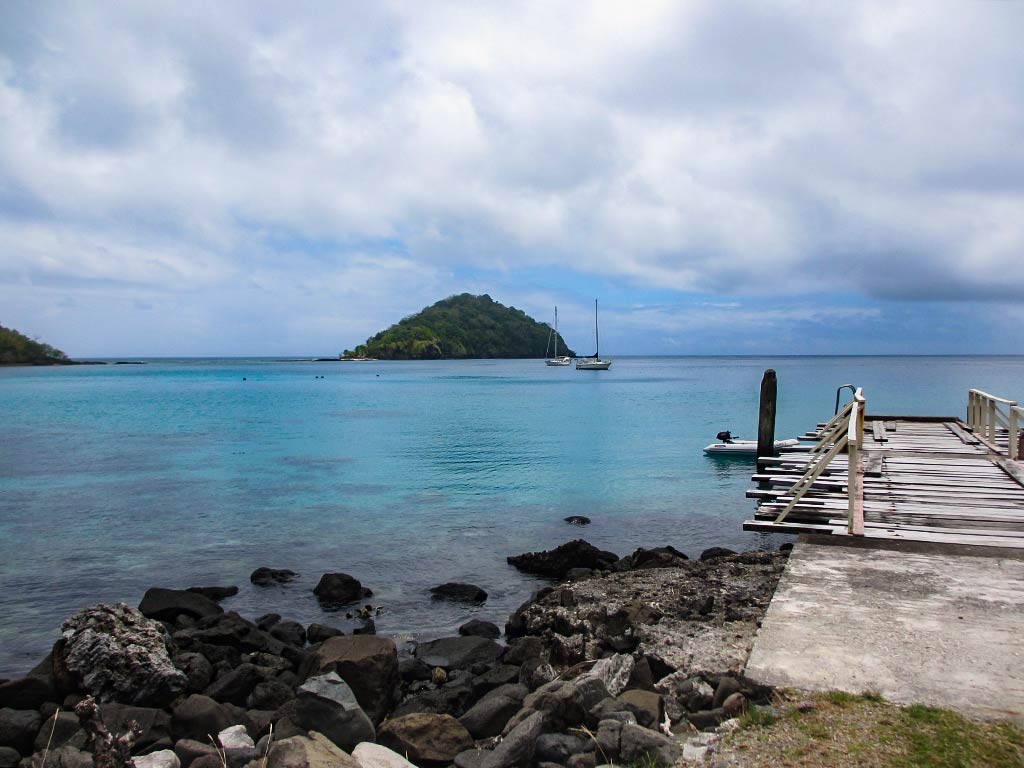
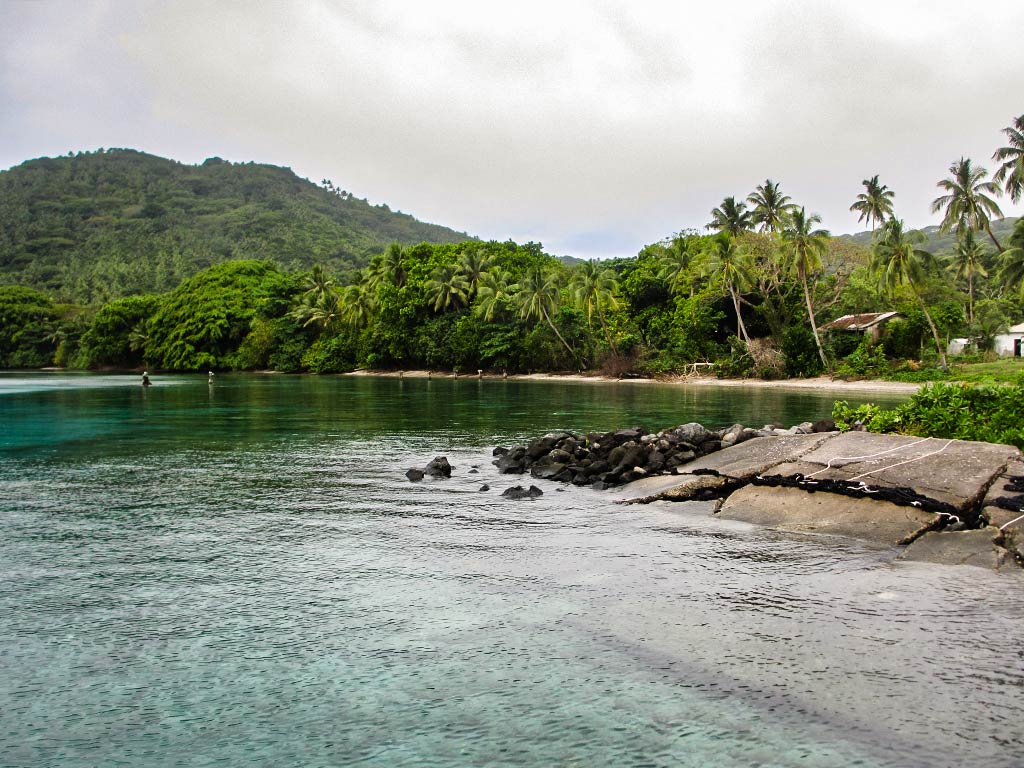
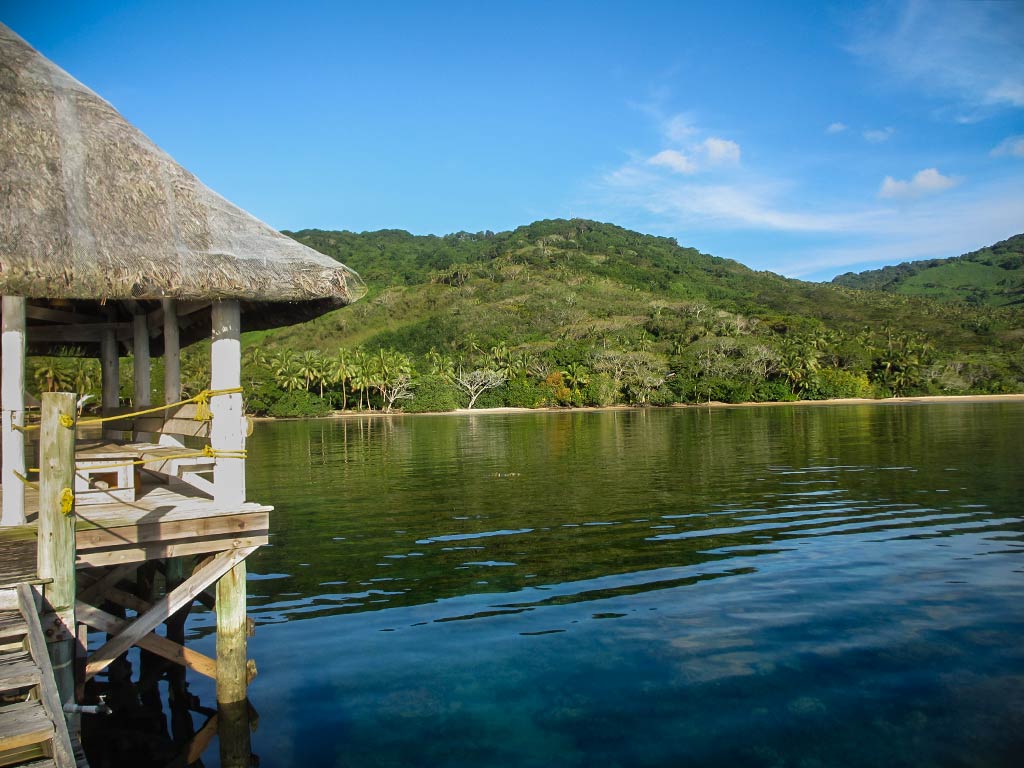
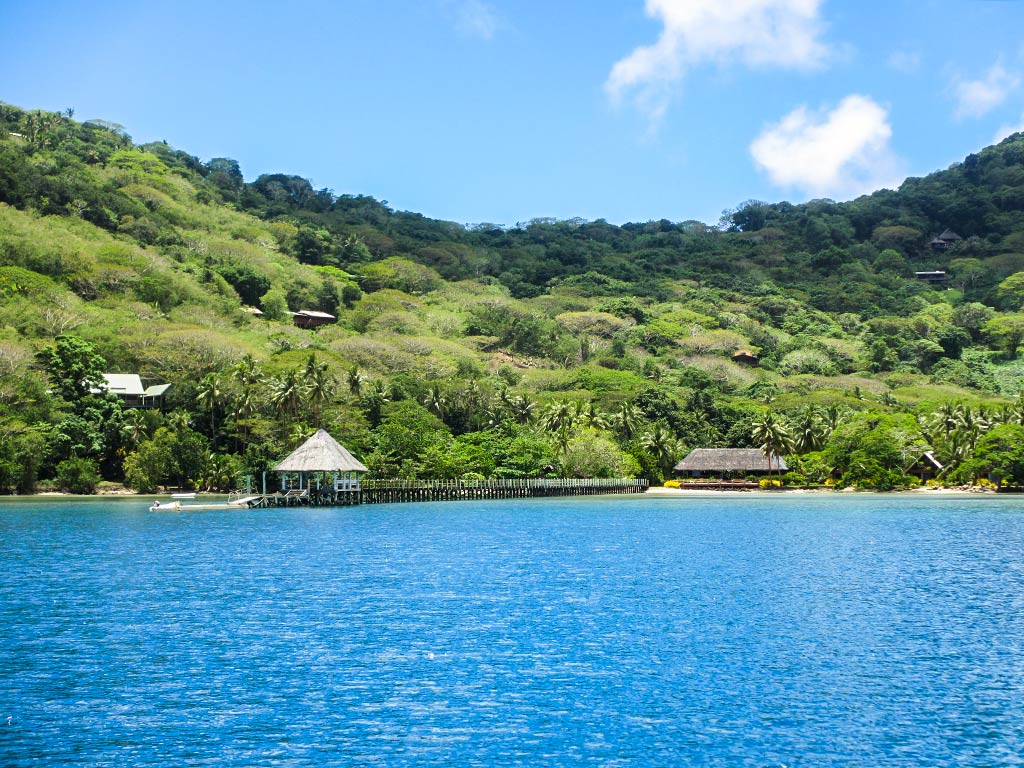
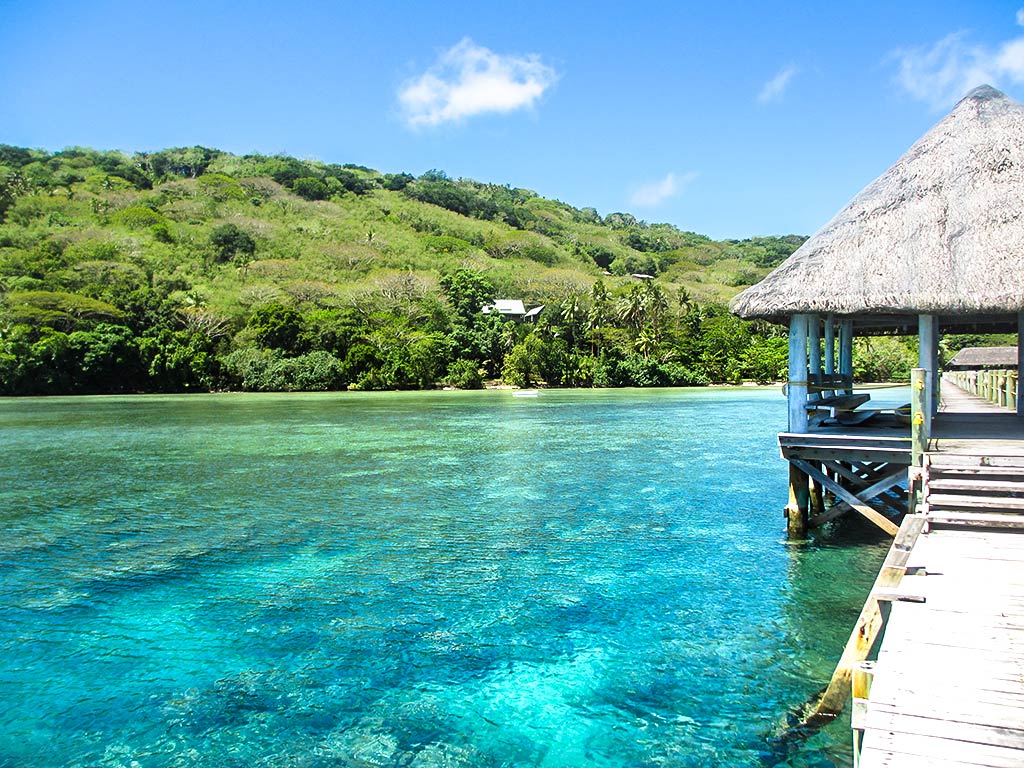
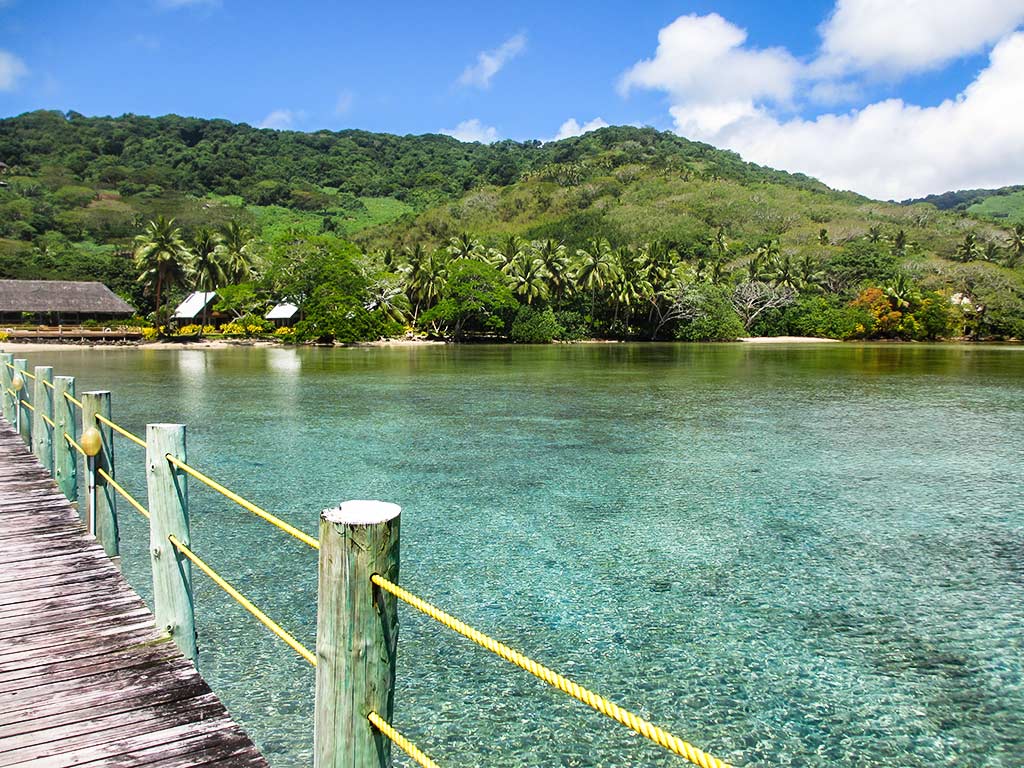
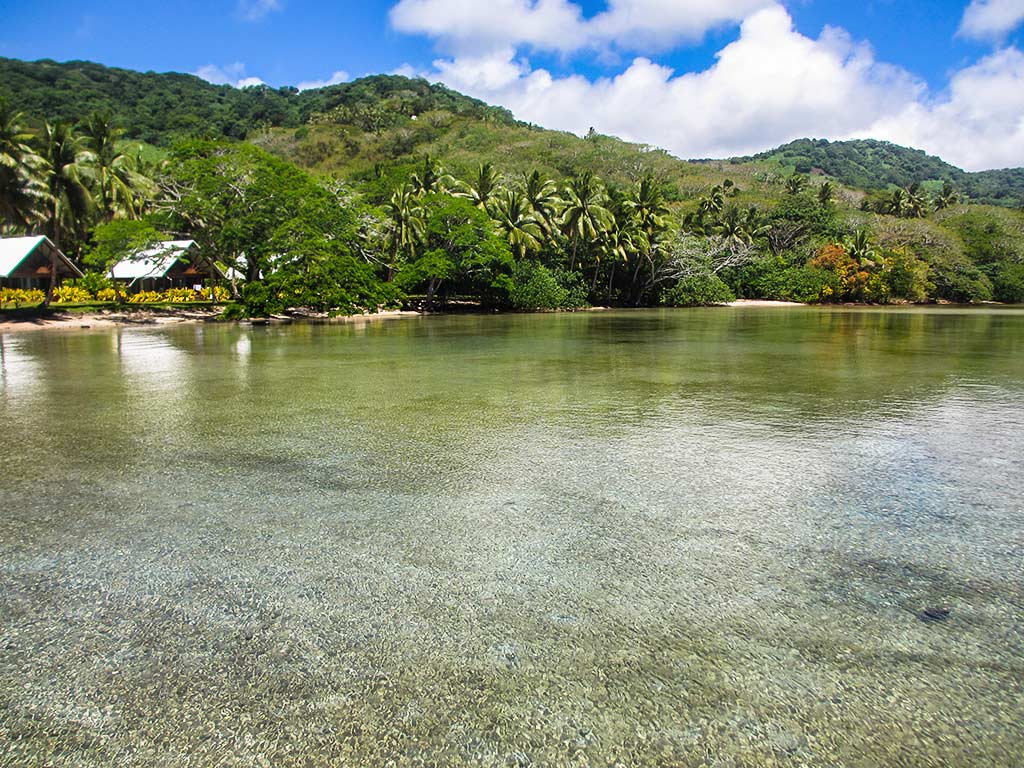
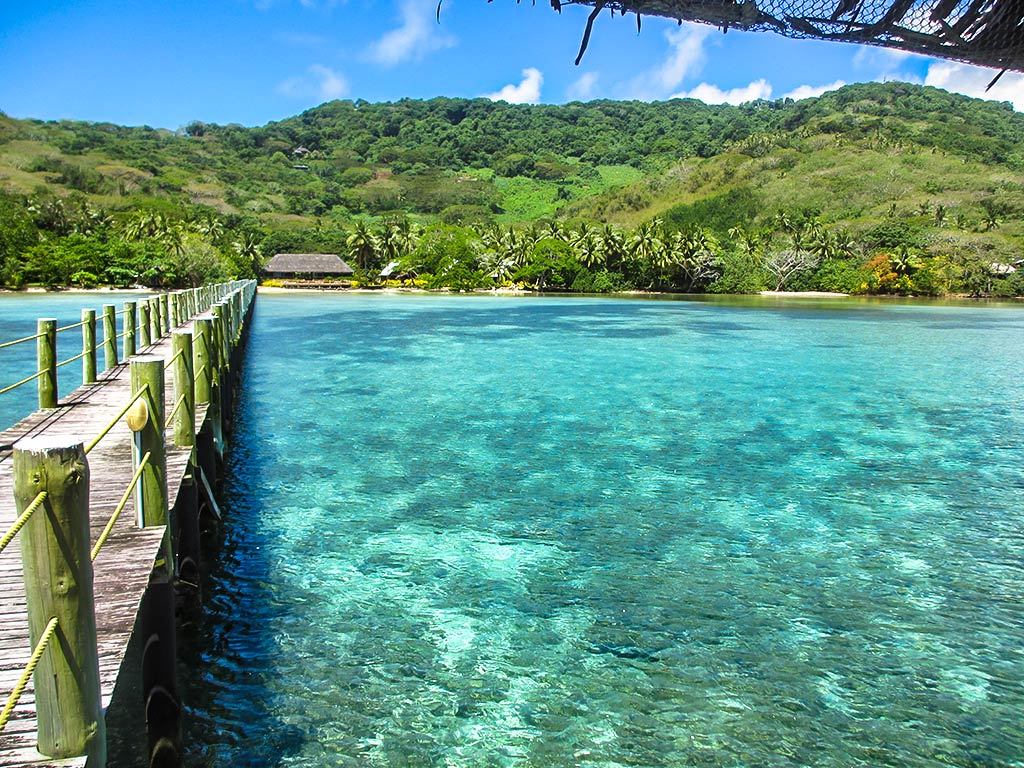
We headed ashore, me in a sulu toting kava in my backpack and prepared to do a sevusevu. I did suggest Rich not bother with long pants as this wasn’t really a village and the caretaker wasn’t really a chief. Frankly, I felt annoyed about having to do this ceremony at all but felt better when I realized it would be our final one this season. We pulled up to the pier and tied up the dinghy. (Below, a photo gallery of the pier. Click to enlarge/scroll though any of the galleries that follow.)

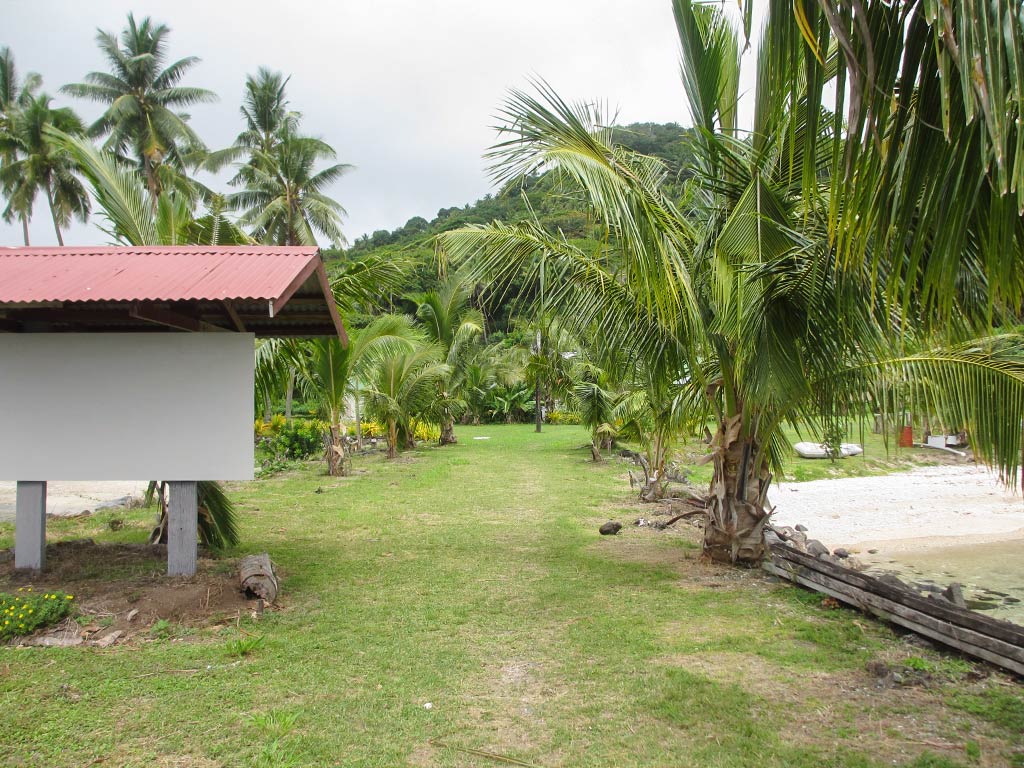
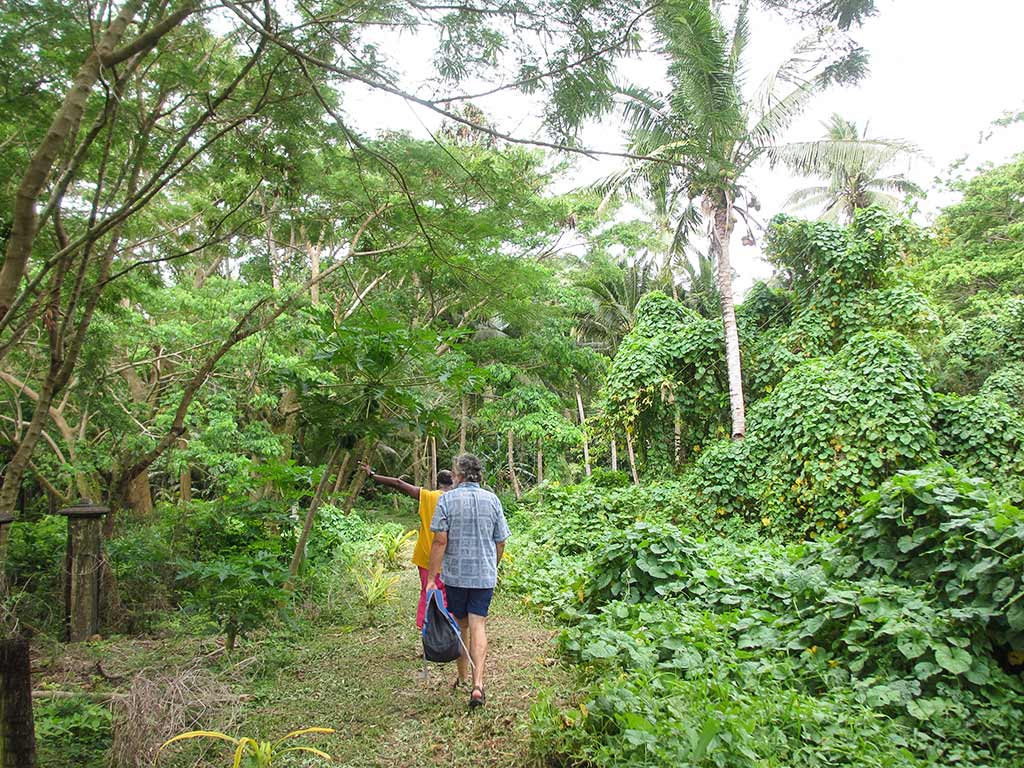
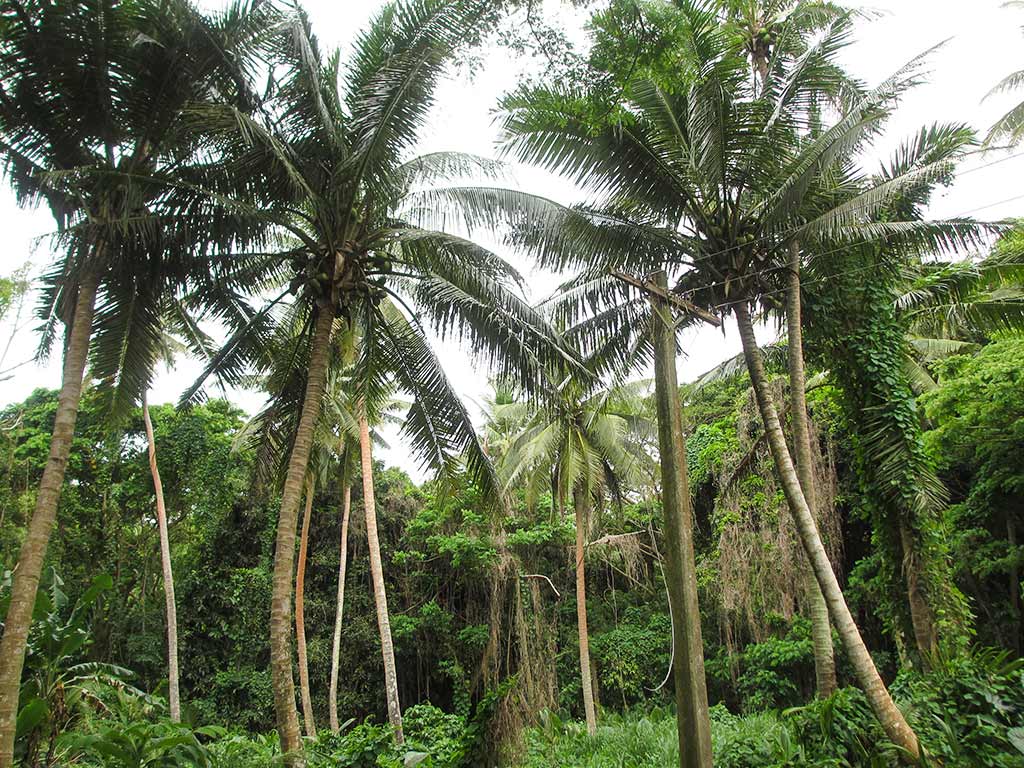
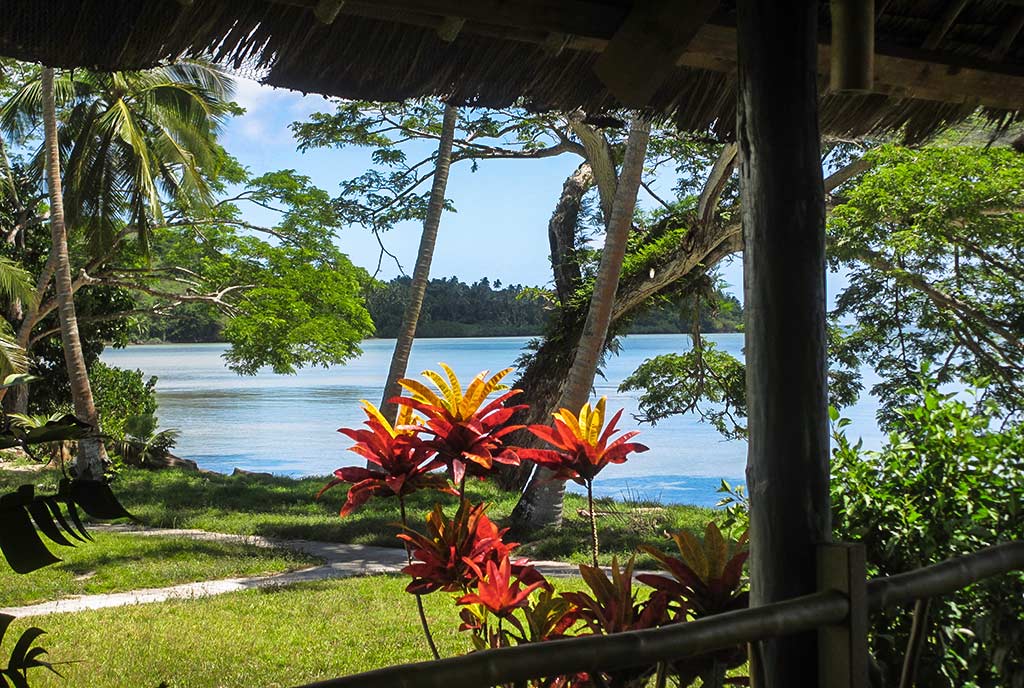
I found myself taken with the strange beauty of this place as we followed the tree-lined path towards the settlement.

We located the caretaker’s house and right away heard a voice calling us in. We were greeted by the caretaker and his wife, gifted him with our kava, and soon he was doing the sevusevu talk welcoming us here. He was so nice and appreciative that I felt bad for being irritable about this earlier, especially when he offered to take us on a tour.

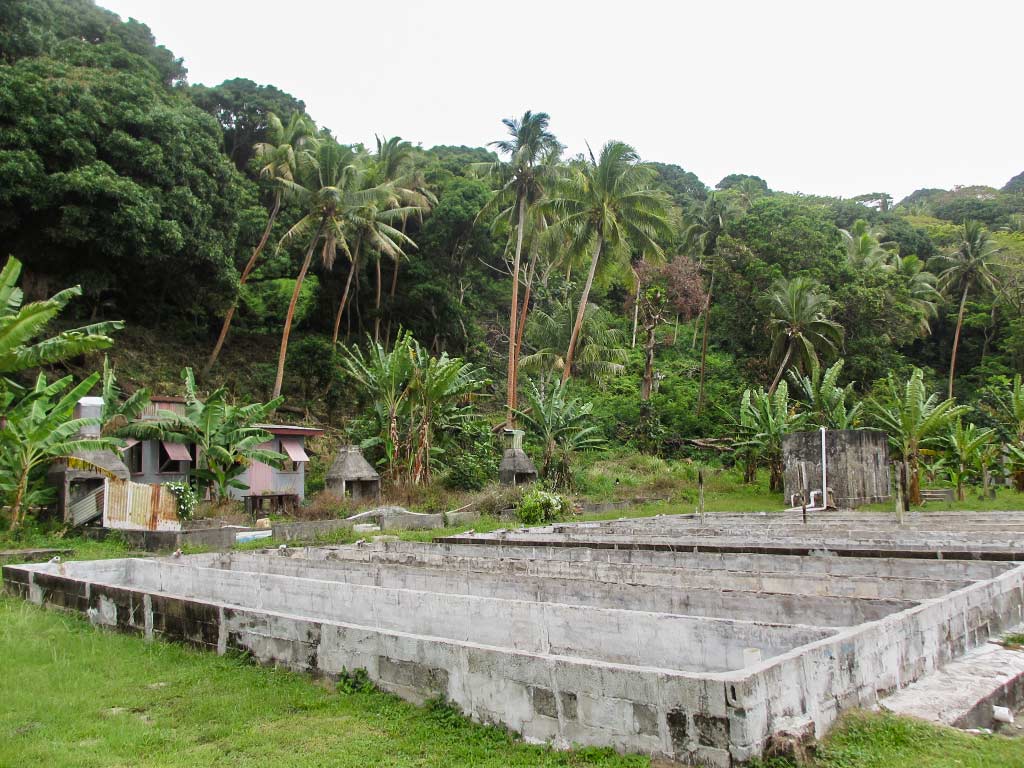
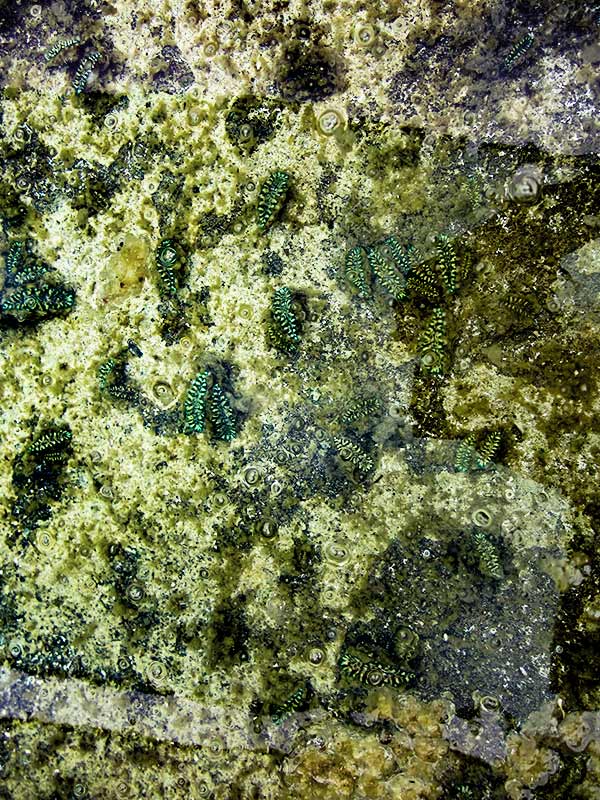
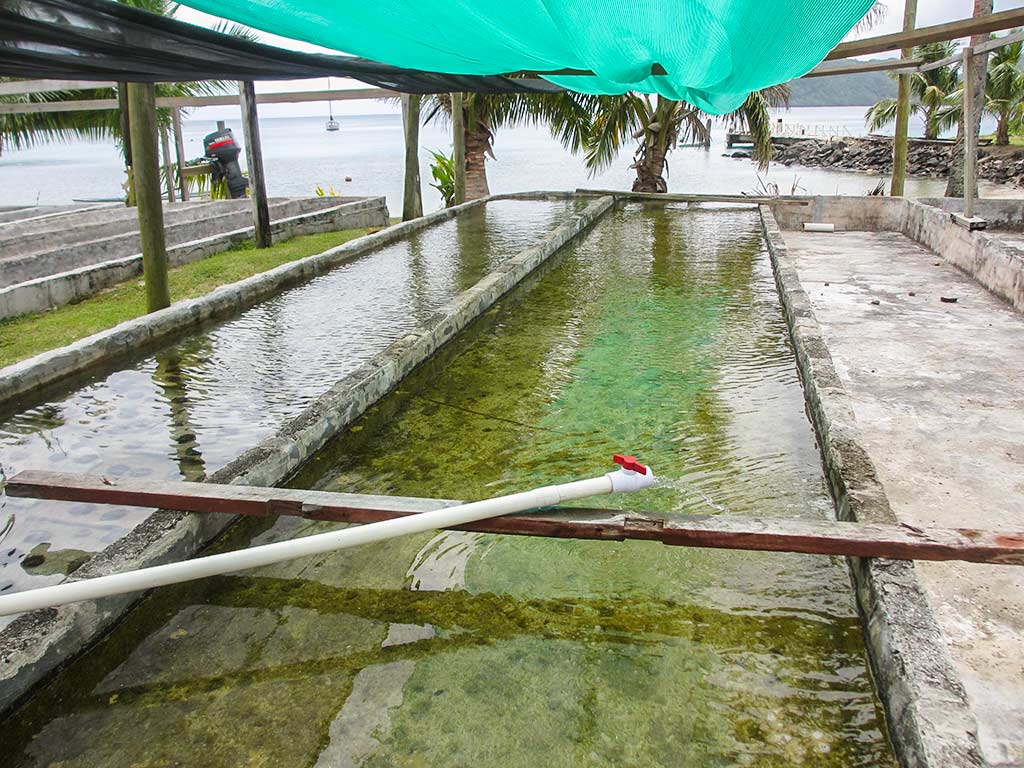
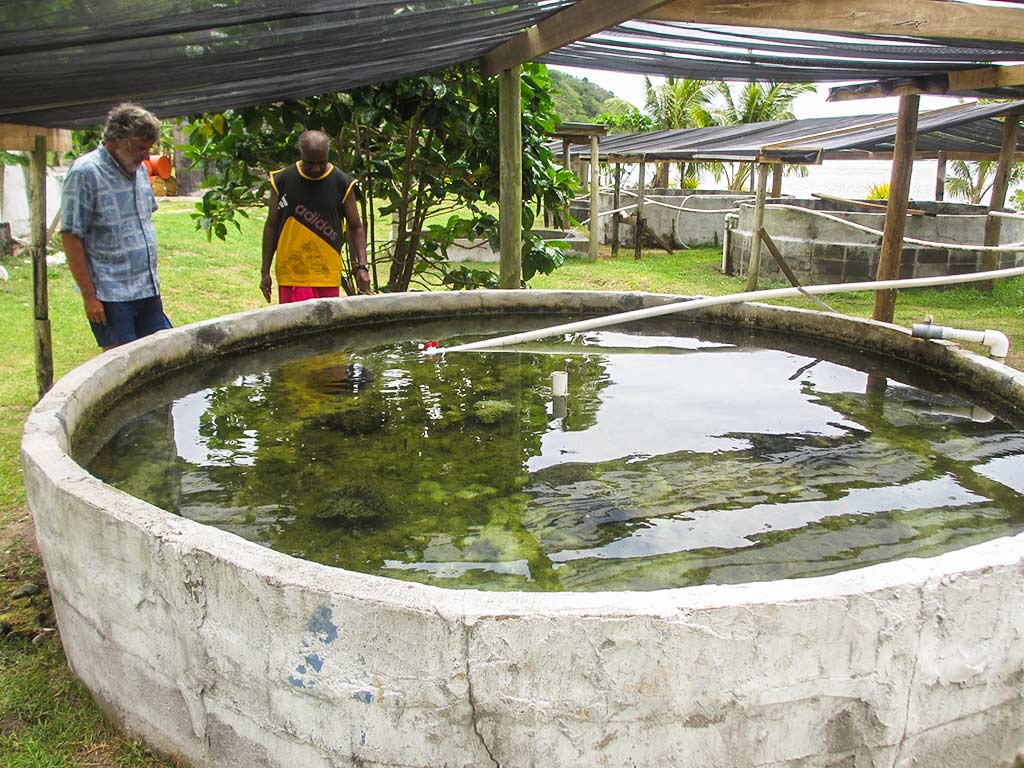
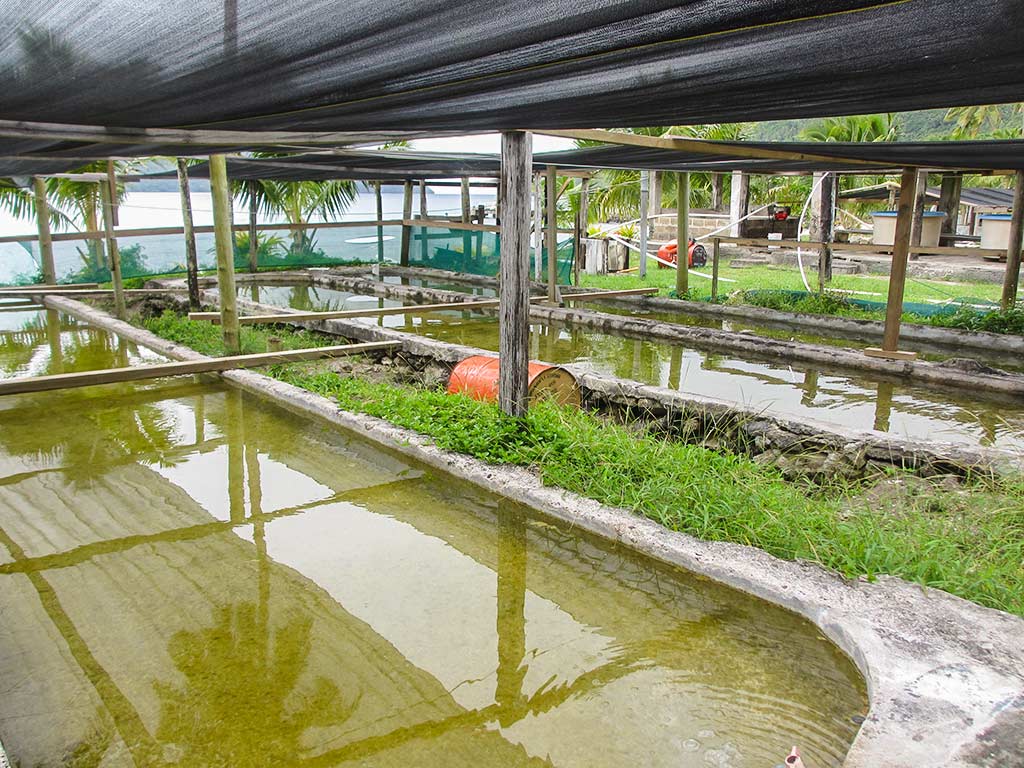
He started our tour at the big cement tanks where they grow the clams. They ranged from tiny babies to bigger clams a couple of inches across. (When they get bigger they go into the bay.)

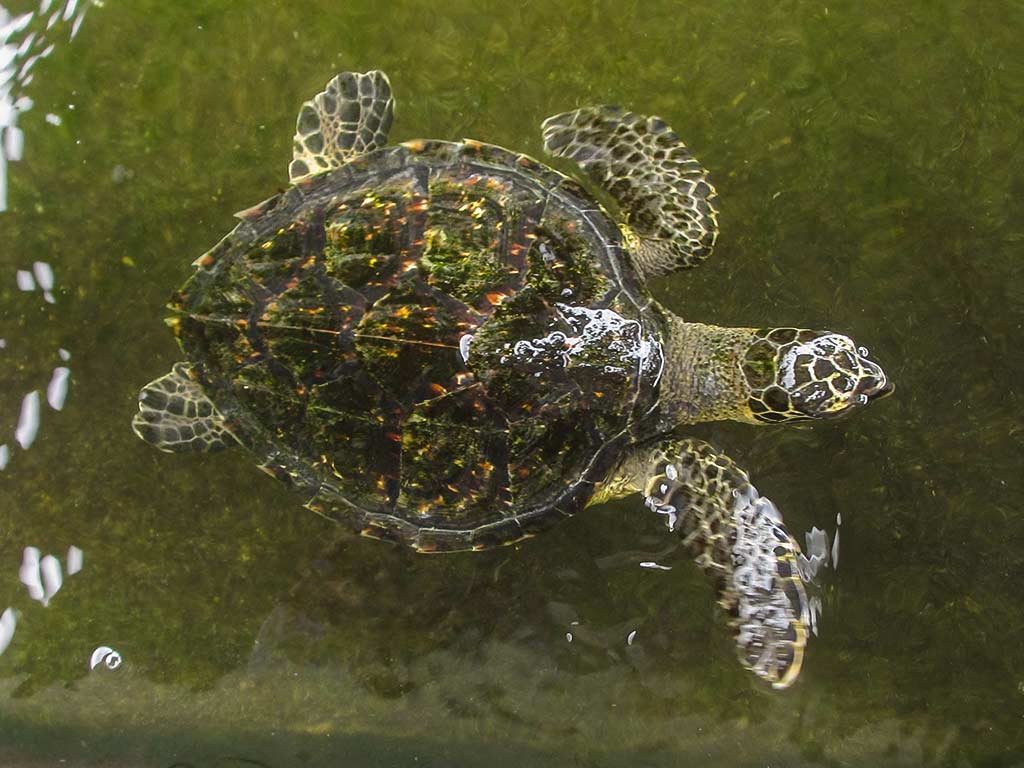
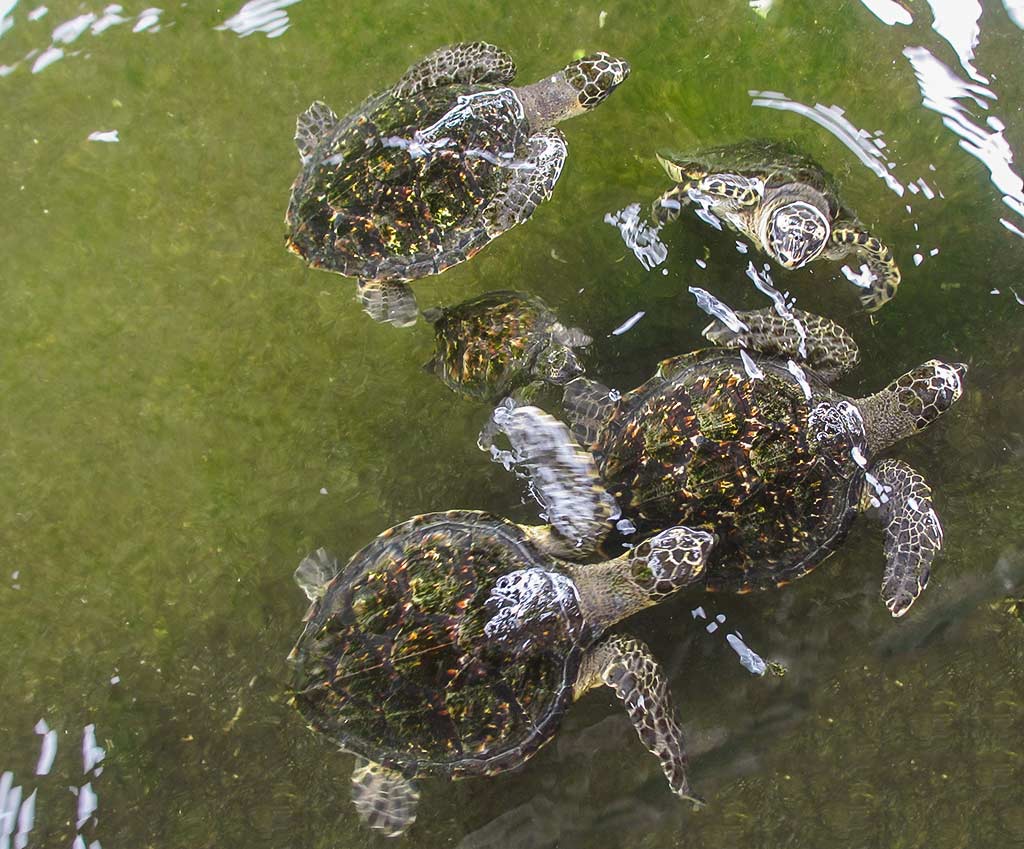
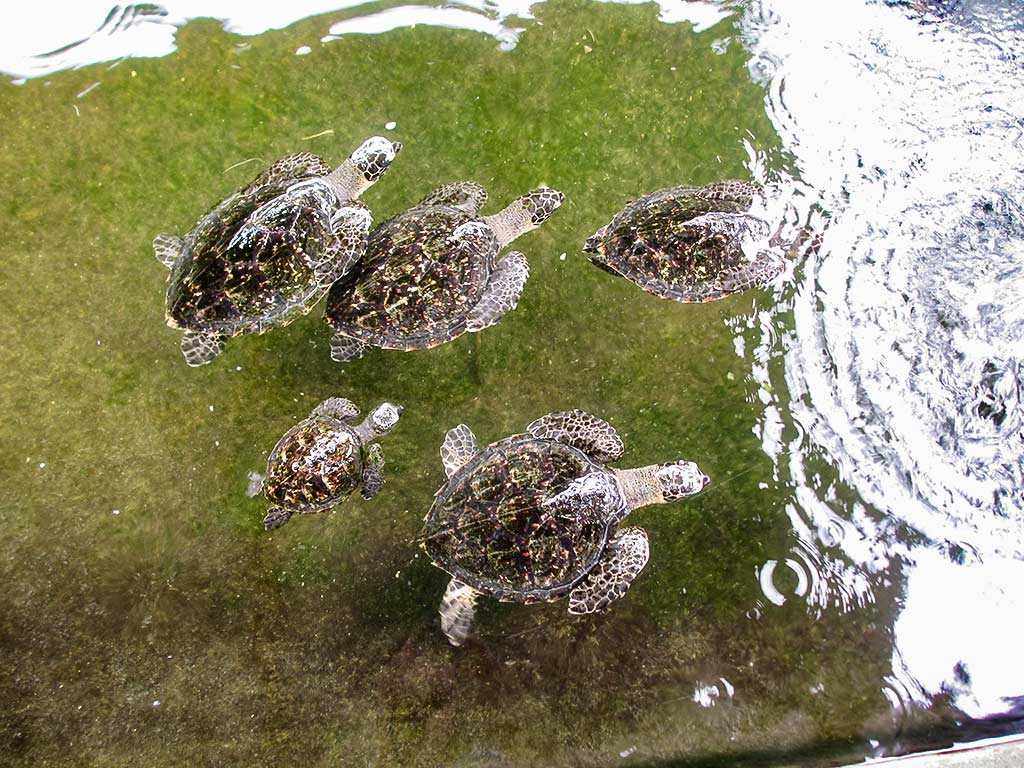
We also saw they were raising some baby turtles. Impressive!

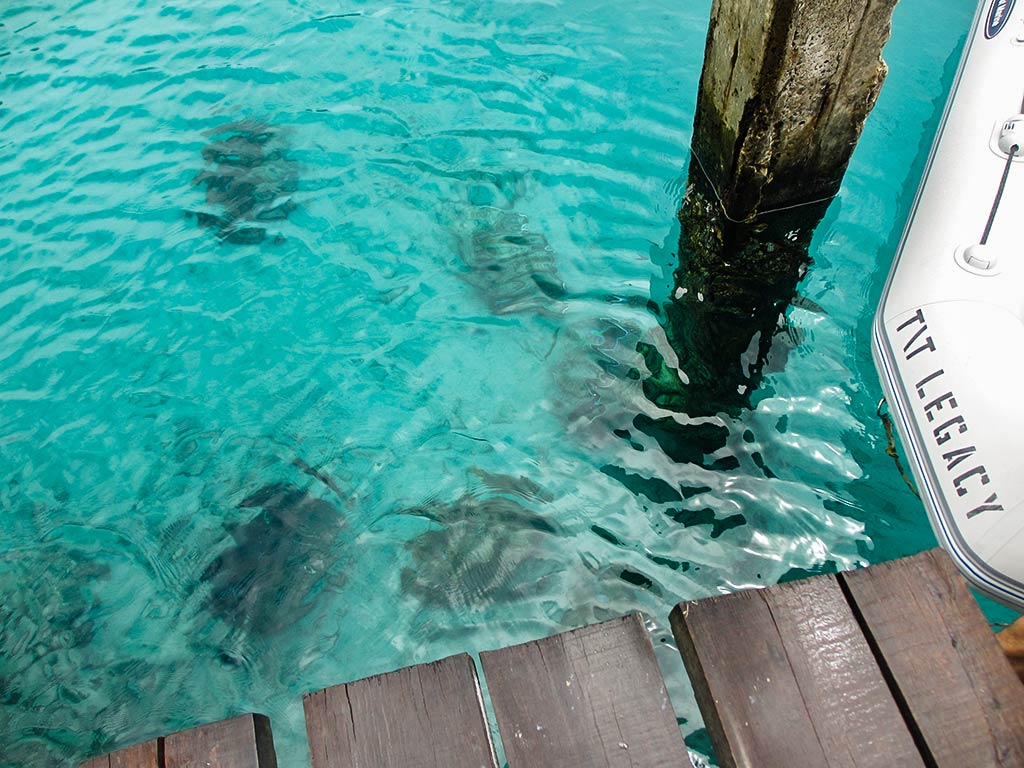
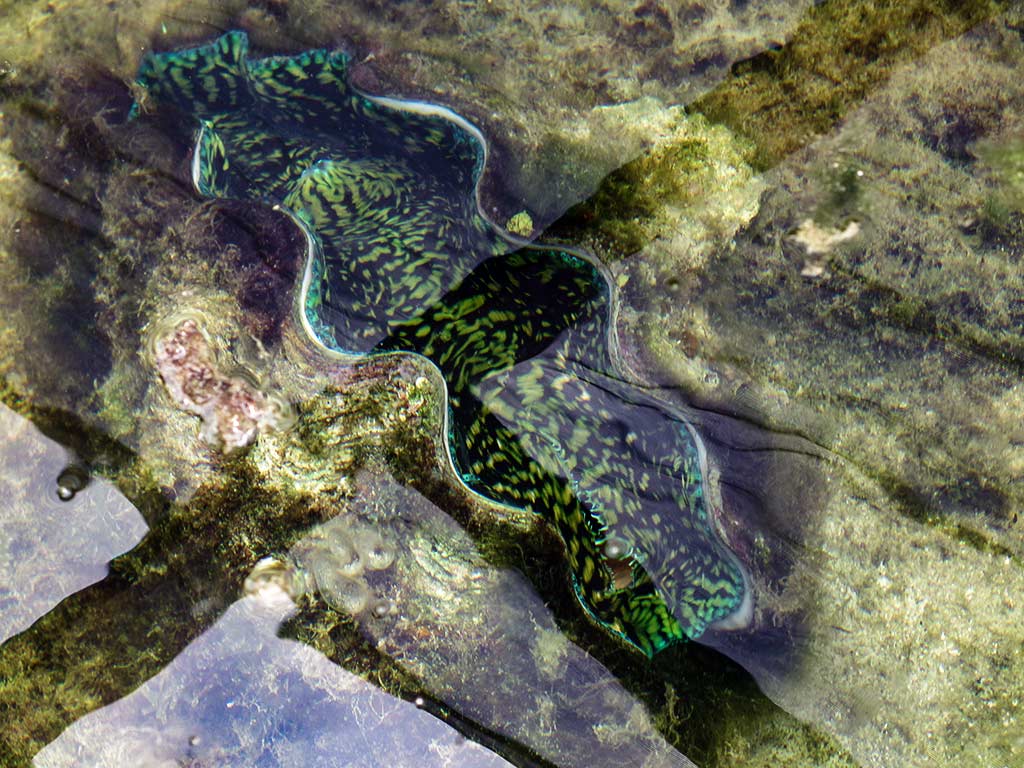
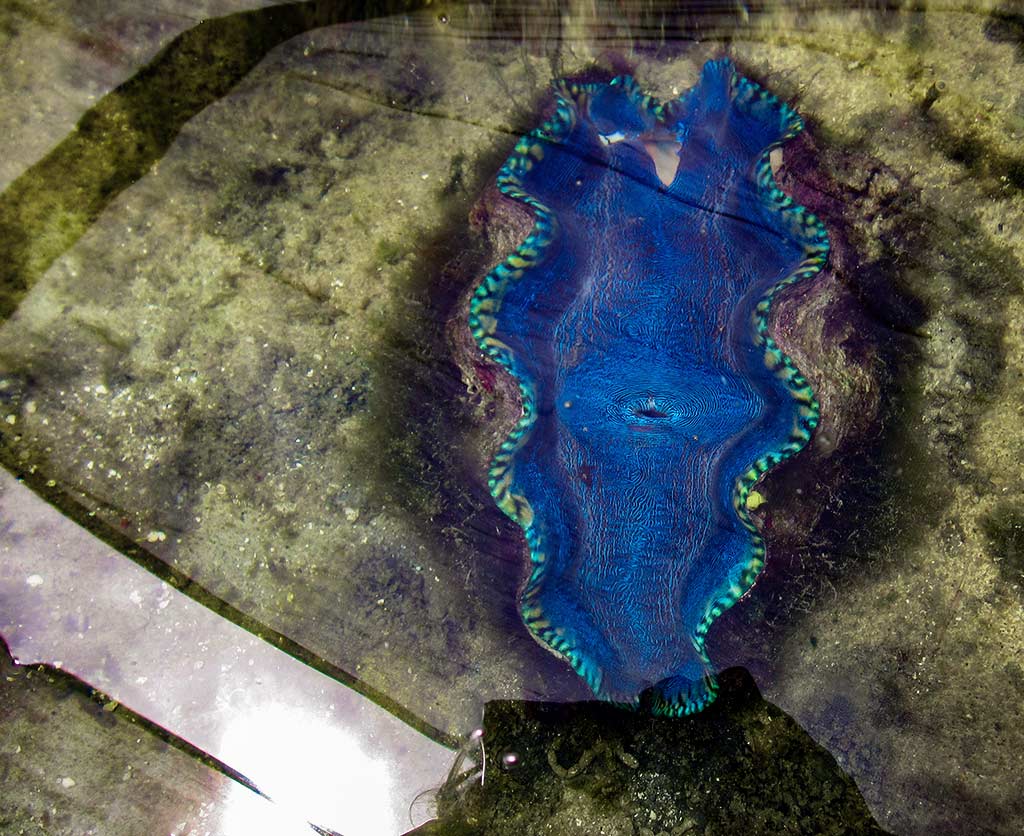
We anxiously asked him where we could find the giant calms we’d heard about. It turned out the big calms were scattered not far from shore, and the biggest of them were right under our dinghy (see a photo in pier gallery above)! Naturally we were anxious to go in and snorkel with them, but first there was more to see ashore.

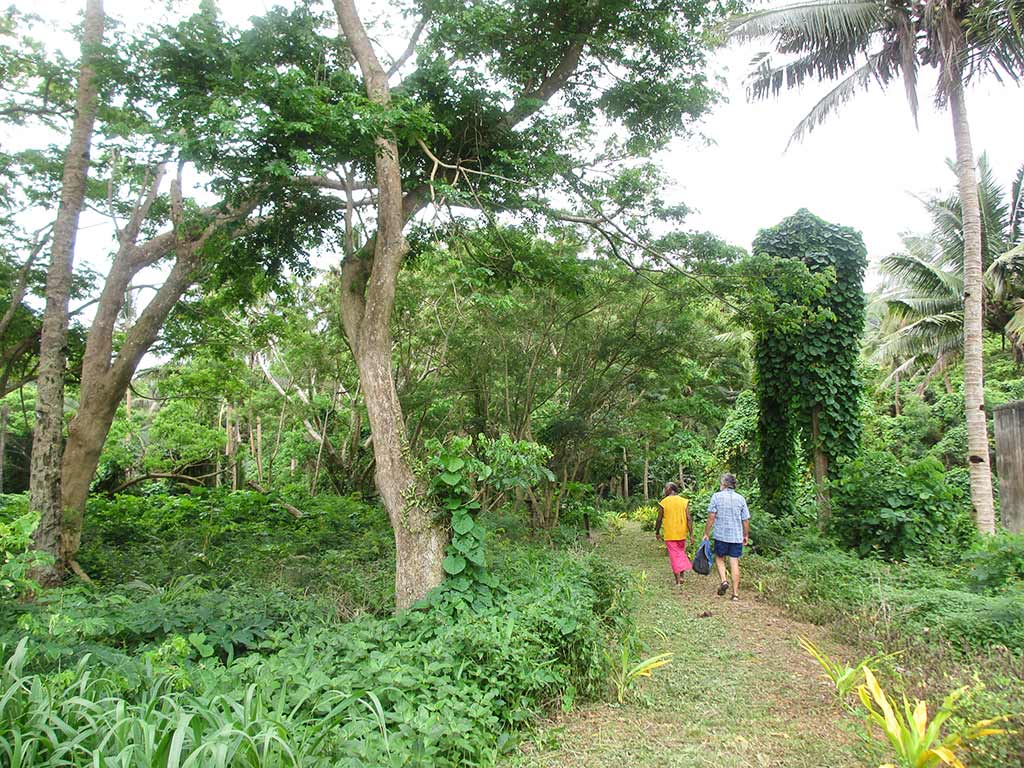
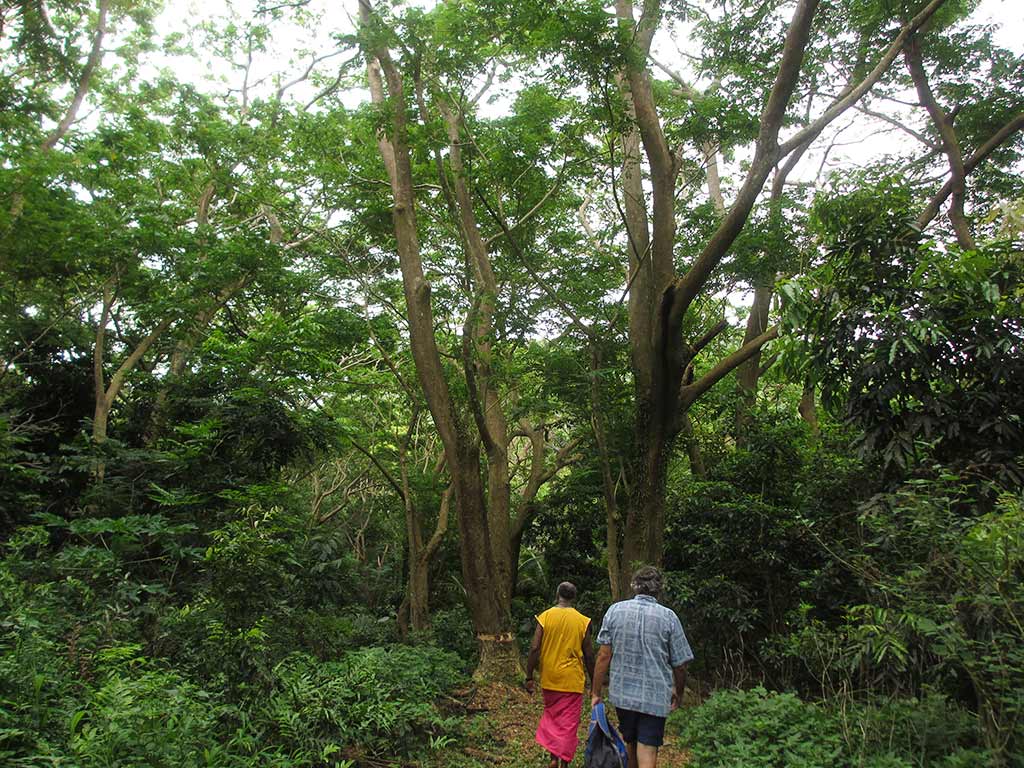
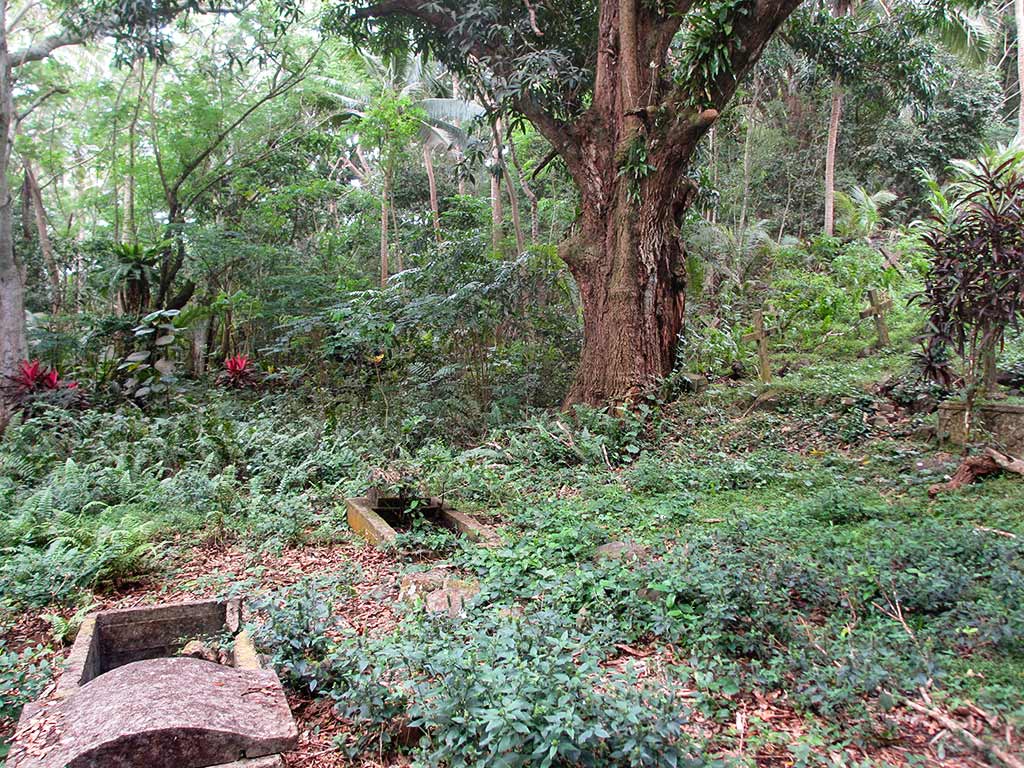
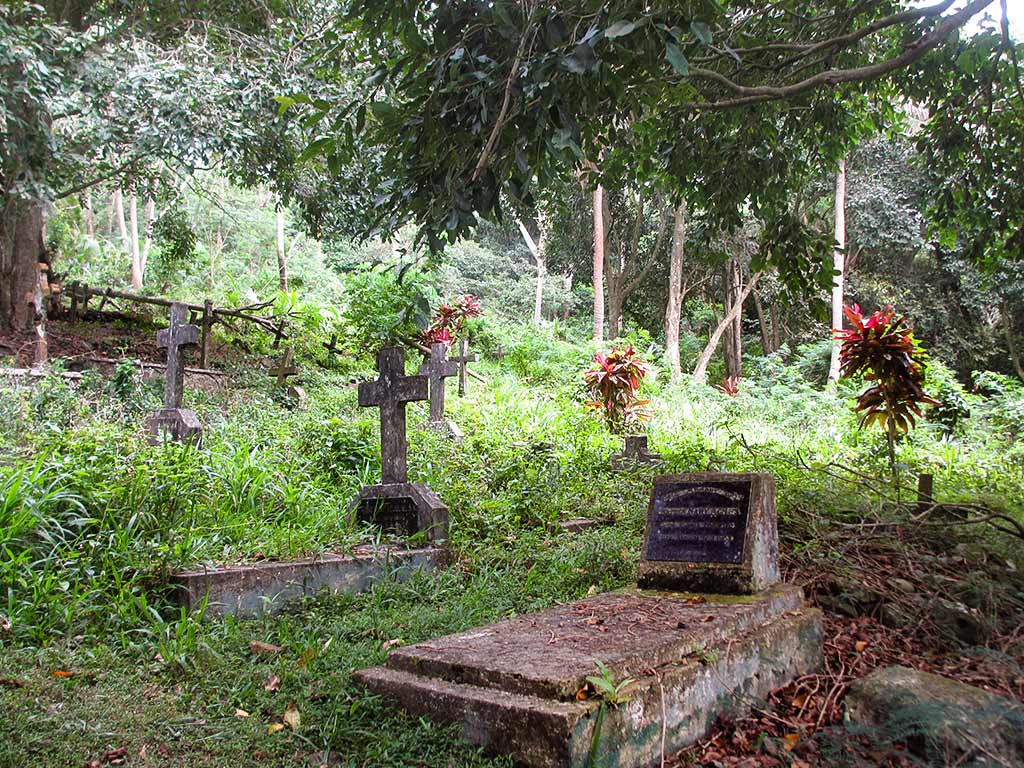
Our guide (unfortunately I don’t remember his name) next took us to the ruins of the leper colony. They were old enough to look like ruins yet not in so much disrepair that they were unrecognizable. We then walked down a beautiful path through the jungle to see the graveyard. (Below, a photo gallery of the walk.)

In all, this was was a really nice tour, informative and interesting but not so long as to get boring. Walking back through the jungle it started to rain, giving a sort of surrealness to the experience.

Our guide finished the tour by giving us two big papayas and inviting us to come in that night for a school fund raiser and party for a small cruise-type boat coming in. We knew the guys from Pancha planned to go and appreciated the invitation, especially since it implied no obligation—just come in if we felt like it. Nice!

When we got back to the boat we were tired and decided to hold off on snorkeling until the next day, which meant staying at least one more day. By now we were under the spell of this island and happy to stay a bit longer. This place had a quiet stillness to it that was very pleasant, and the combination of gray skies over jungle growth and ruins ashore gave it a sort of mystique. The sad history was offset by focus of growing new life and repopulating Fiji’s reefs with amazing giant clams, not to mention the turtles they’d be setting free into the local waters.

In all this place was beautiful, mysterious, and exotic—perfect if you’re in the mood for this sort of experience. Maybe not the place to be if you’re anxious for sunny beaches and waterside bars, but for the time being we’d had enough of that so this was just what we needed. Tomorrow we’d go seek out the giant clams. –Cyndi
Mysterious Makogai Island (Fiji)

October 29, 2013

Once again, at Koro Island, we had our dawn coffee in the cockpit and watched the big thunderheads southeast of us. The difference today was that we were leaving and that was about the direction we were headed. Rich went down and double-checked the weather: we were in for light winds today and needn’t worry about the clouds. In fact it was going to be so calm we’d have to motor all the way to Makogai! If we waited one more day we might have had helpful winds, but we just weren’t up for another sweltering day.

Makogai is located about 25 miles east-south-east of Koro Island, which at first glance wouldn’t seem to make much difference in our air temperatures. But there’s another factor: Makogai lies off Fiji’s south island, Viti Levu, a huge and mountainous land mass. Those lovely mountains are rainmakers for much of Viti Levu’s east side and some of the islands that lie off it. Rainy, cloudy weather can change a sunny, miserably hot day into a reasonably comfortable one. Plus we hoped those mountains might block some of the evening sun.

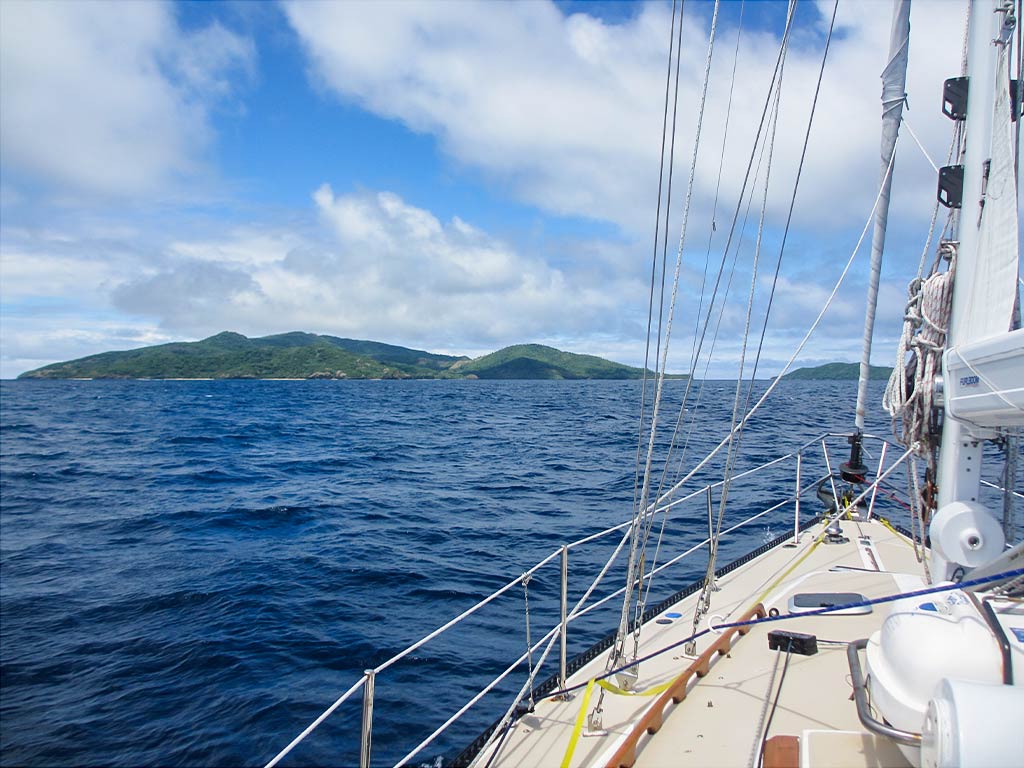
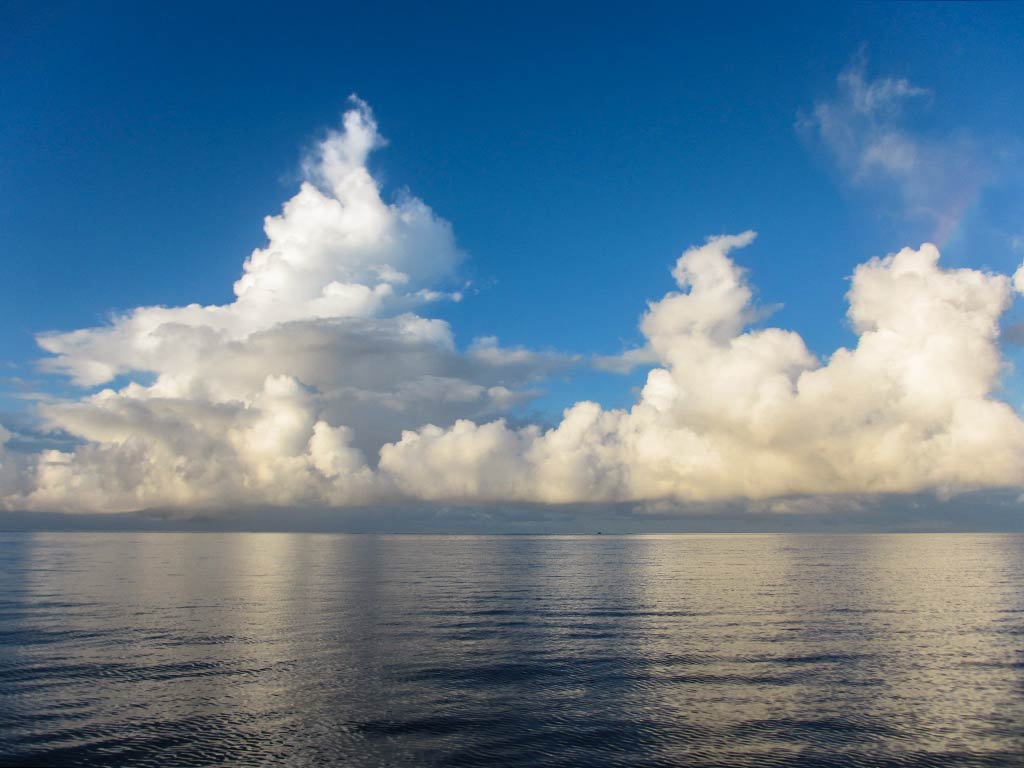
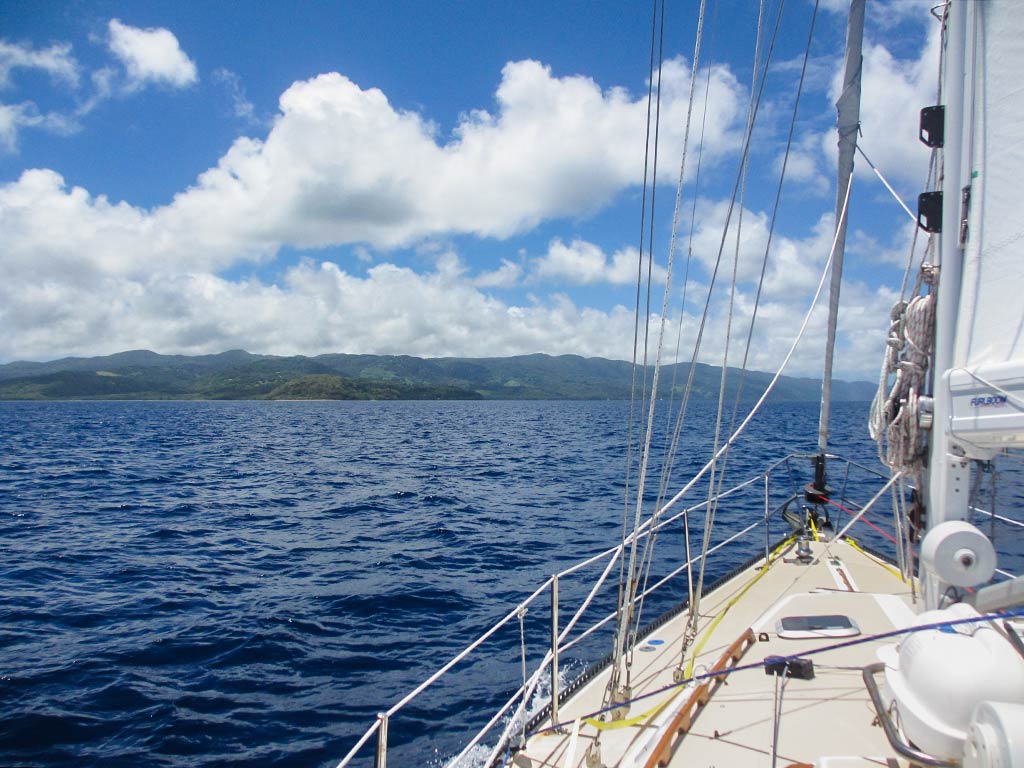
And so we motored east and south towards Viti Levu. What a nice surprise when some clouds seemed to come out to greet us along the way! We were in a long line of them after that. I was very happy because to me it both looked and felt cooler. Rich was not so happy; he had to take off his sunglasses because all the gray was depressing him. (Below, an interactive map showing our approximate route.)


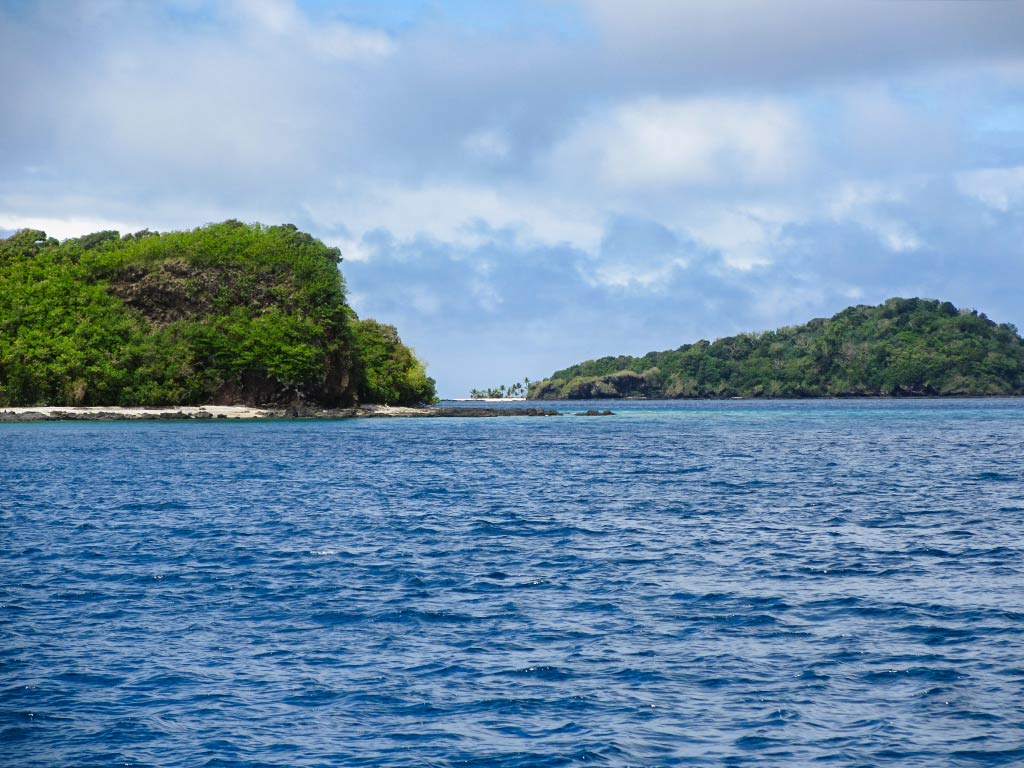
The sun was peeking out here and there as we arrived at Makogai. We knew the approach would be more complicated than it looked as there’s quite a lot of hidden reef. There are two passes to the anchorage: one on the west side and one seldom-used pass on the north end. We’d opted for the north entrance and it turned out to be pretty easy with our good waypoints.

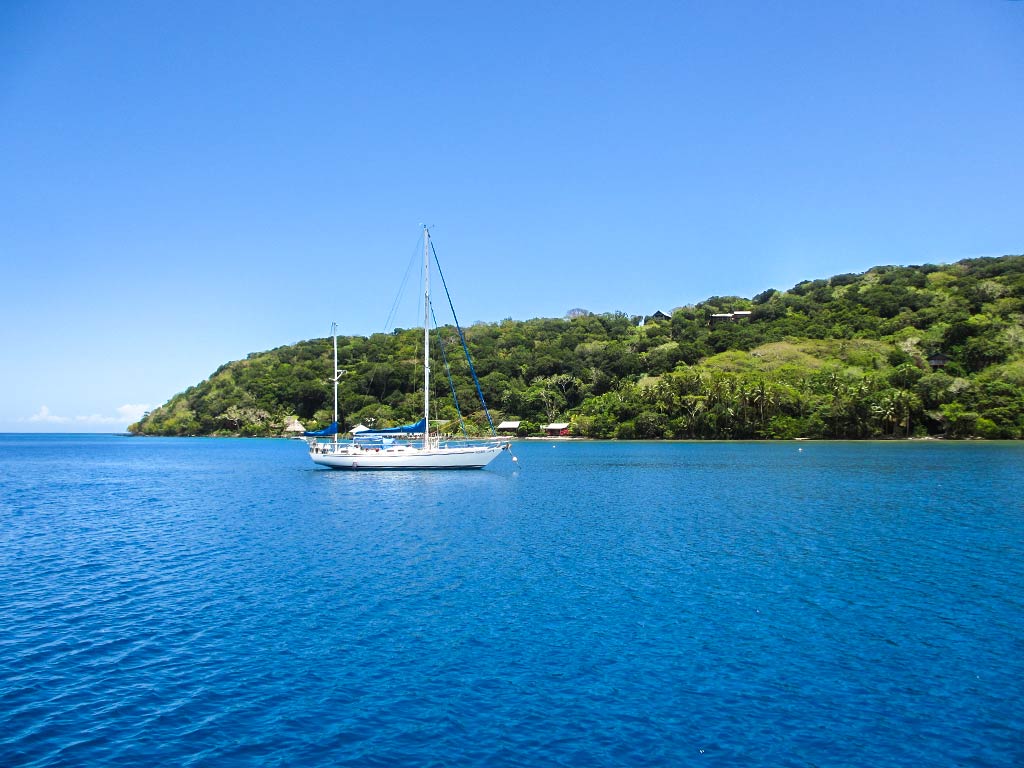
We got through the pass, then motored by a small off-lying island into the anchorage at Dalice Bay. Only one other boat was there. We picked a spot, dropped the anchor, and after a bit of dragging it set. (Below, an interactive map showing our approximate route into Dalice Bay and some photos of our approach into the anchorage.)


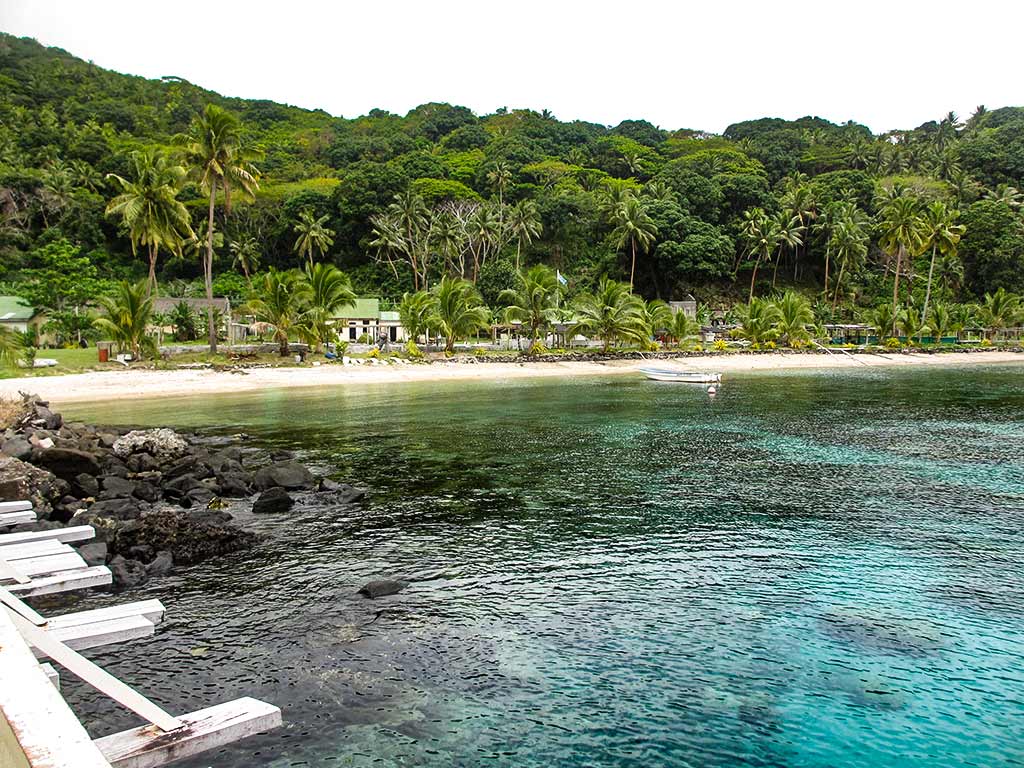
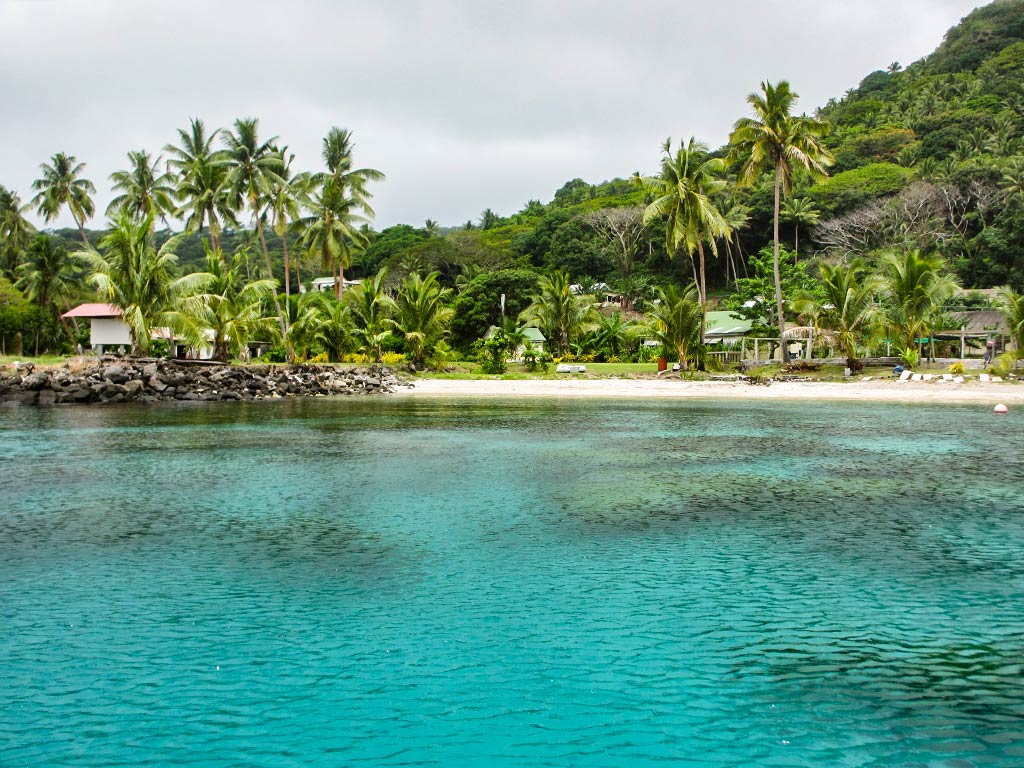
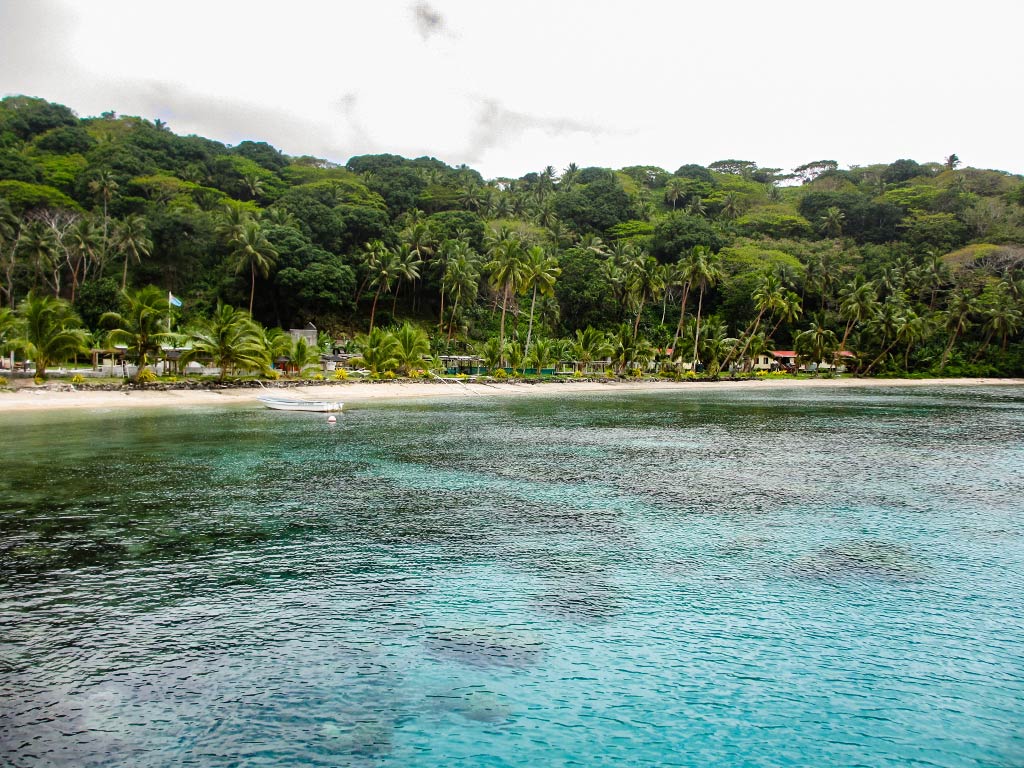
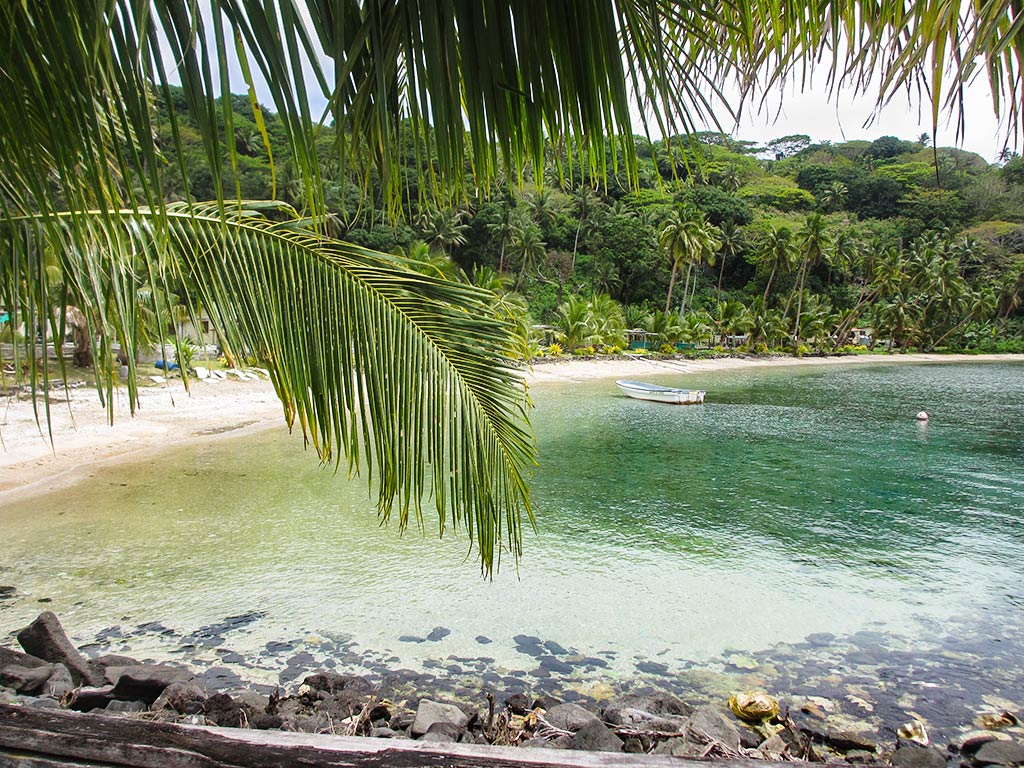
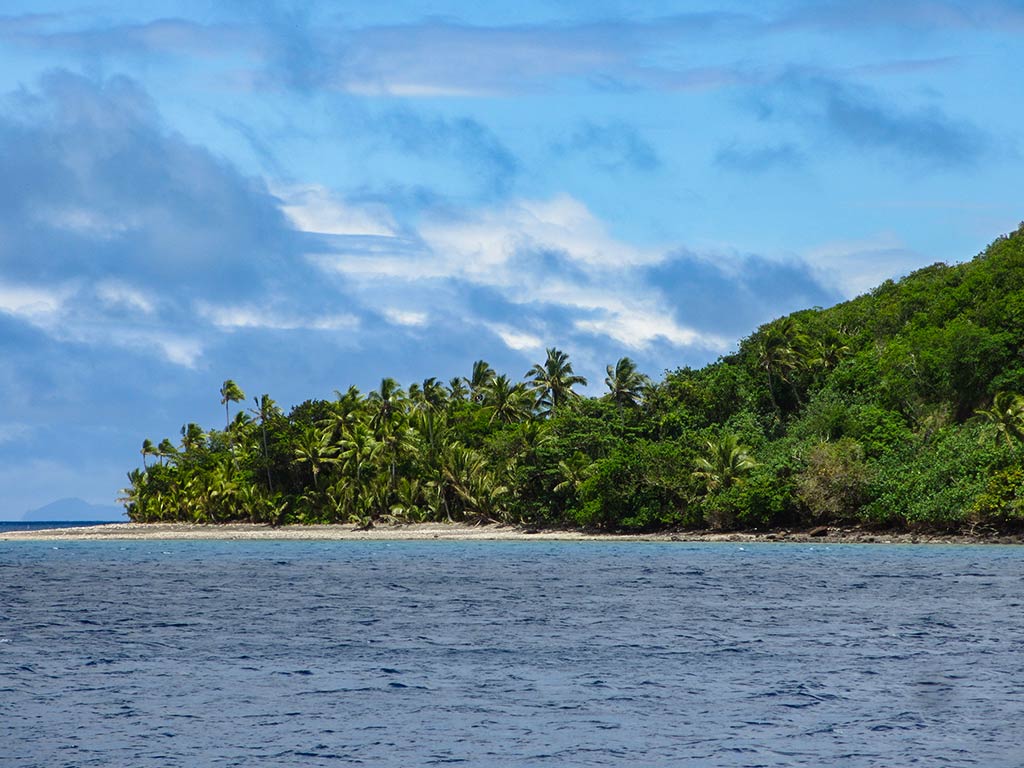
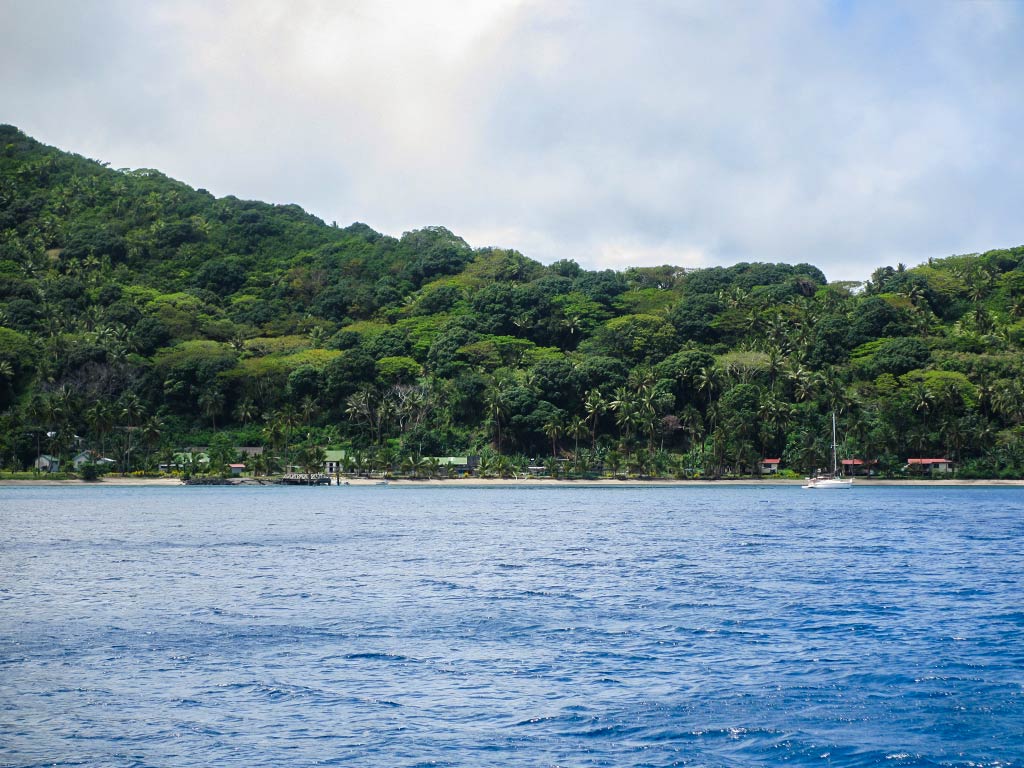
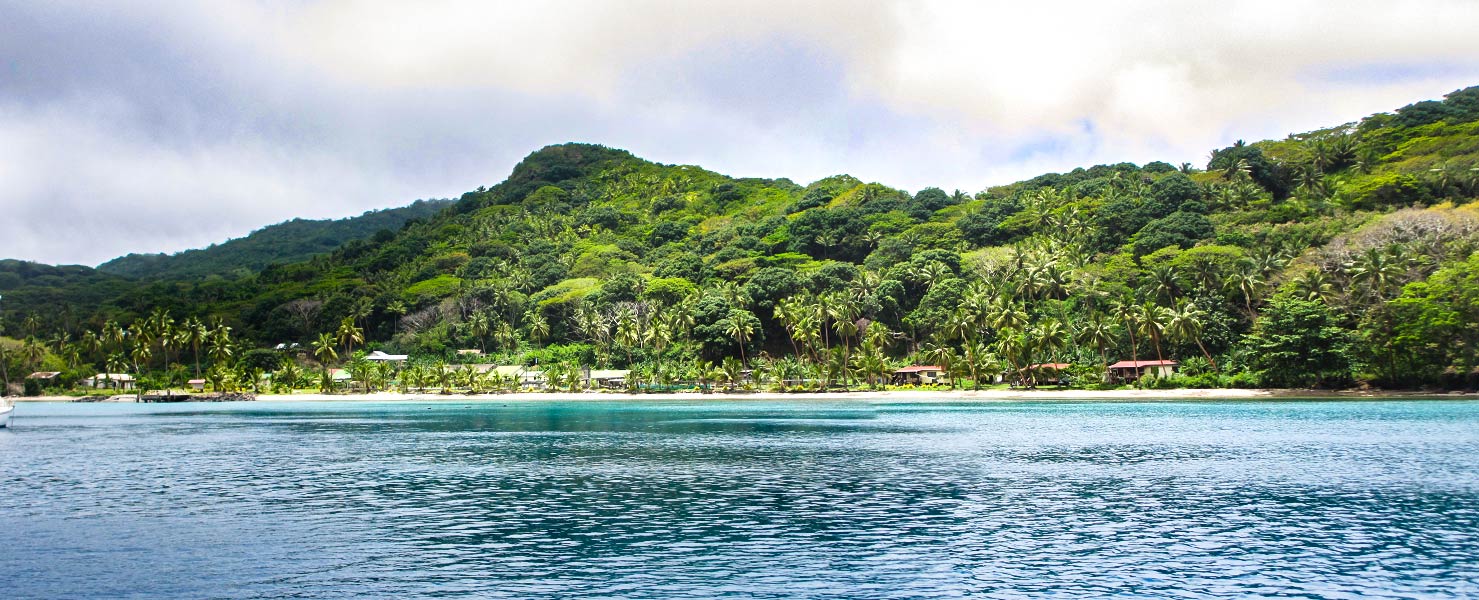
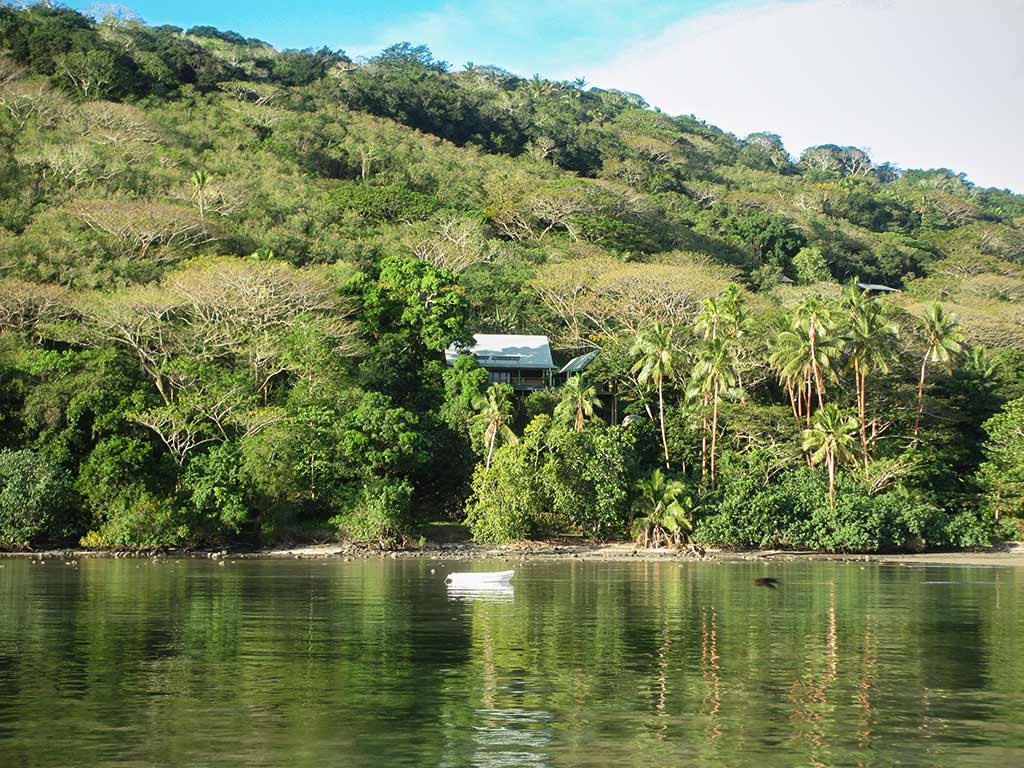
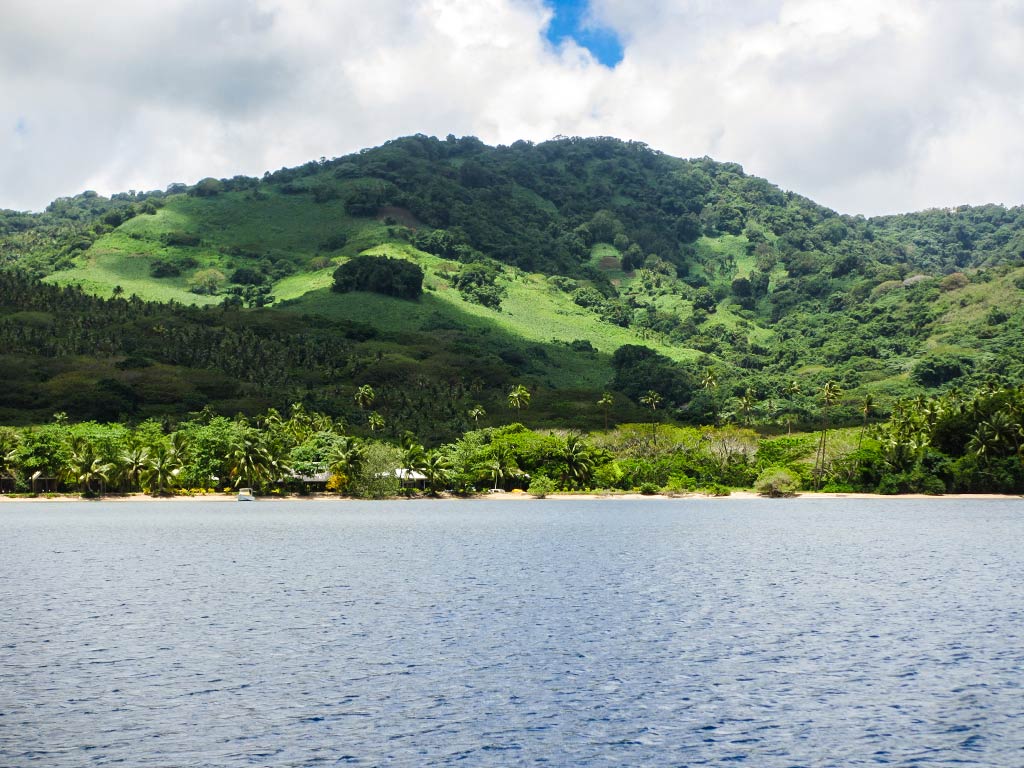
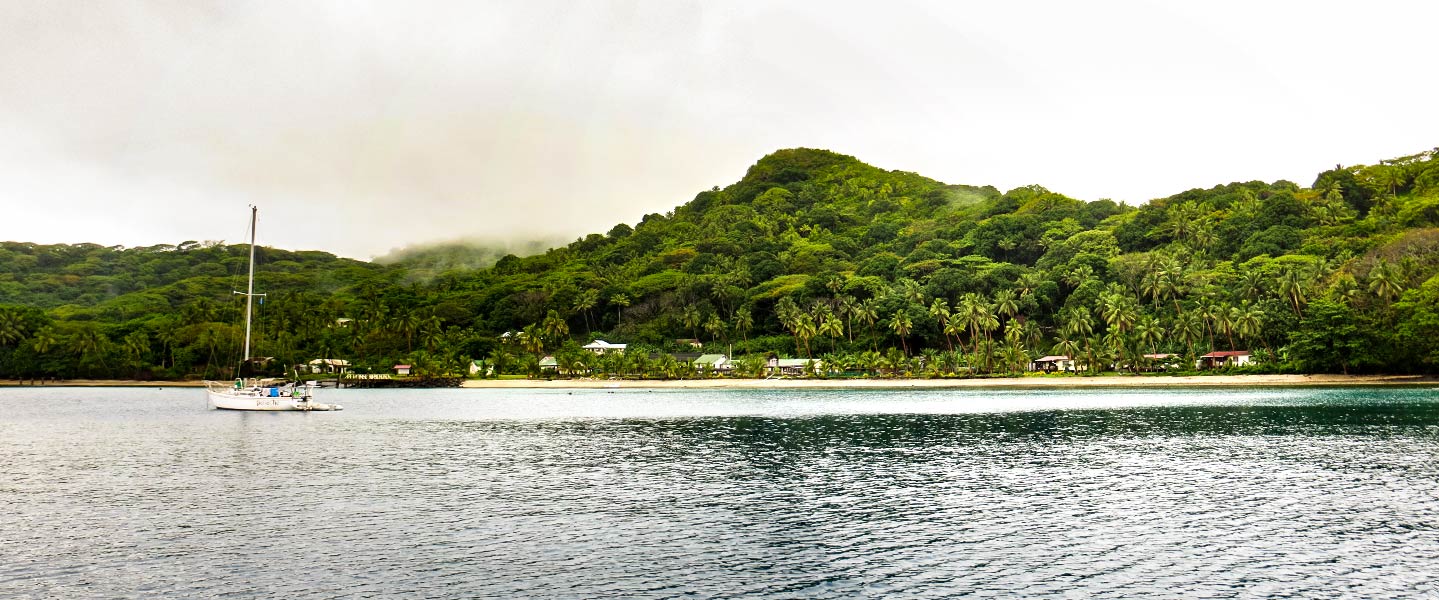
Wow, what a beautiful spot! Verdant green hills sloped down to a narrow, palm-covered flatland. A few small red rooftops peeked out from lush greenery, and along the shore was a small white beach. The anchorage was protected by a small off-lying island, Makodroga, and a reef stretched part of the way between it and the small rabbit hump of an island off the south headland. To the north, another headland stretched out to give further protection. Aside from that, the entire island of Makogai was nearly surrounded by reef.

Between the islets, reefs and hills, this place felt very enclosed and protected. A saddle dipping down between the tall hills made an attractive curved line that allowed some breeze to pass through. As I hoped, it seemed to be much cloudier here than it was in Koro and Vanua Levu, yet the sun peeked out frequently enough that I could get some nice photos. The water in the outer anchorage was a deep, dark green, becoming a very attractive teal blue near the shore.

We did not expect this place to be so beautiful as people tend to focus their descriptions on the leper colony ruins and the giant clams. Those things sounded interesting, but this place was pretty enough to warrant a visit based on that alone.

Below, photos Dalice Bay when the sun is out, and under the clouds.

(click for larger image)

The reason I called this place Mysterious Makogai was that (at this point) we only had bits and pieces of information about it, some of it conflicting. All we knew was that there were the remains of a leper colony somewhere on this island, that there were giant clams somewhere on the bottom of Dalice Bay along with old metal bed frames from the leper colony, that the village was not located in Dalice Bay but a rather long walk inland (and did they expect us to come do a sevusevu?), and that there’s a caretaker here who’s not a chief but might expect kava. We could see some small houses ashore—were there people living here besides the caretaker? It seemed we had a lot to figure out.

Thankfully the guys from the other boat, Panache, came over to visit and cleared up many of the mysteries. Turned out that right here were the leper colony remains, a clam farm (where they grow giant clams in an effort to repopulate many of Fiji’s reefs), and the caretaker. The main village was a long walk from here, but a handful of islanders had moved over here and now had a very small settlement. There was no chief, but the caretaker does kind of act as chief and yes, he likes cruisers to come do a sevusevu with him! In return for the gift of kava, he gives a tour which includes the leper colony, the graveyard, and the clam farm. It seemed this was a combination historical site and marine reserve, and the caretaker was combination park ranger and chief.

After some lunch, we planned to head ashore to check this place out.–Cyndi

Koro Island Day Two (Fiji)

October 28, 2013

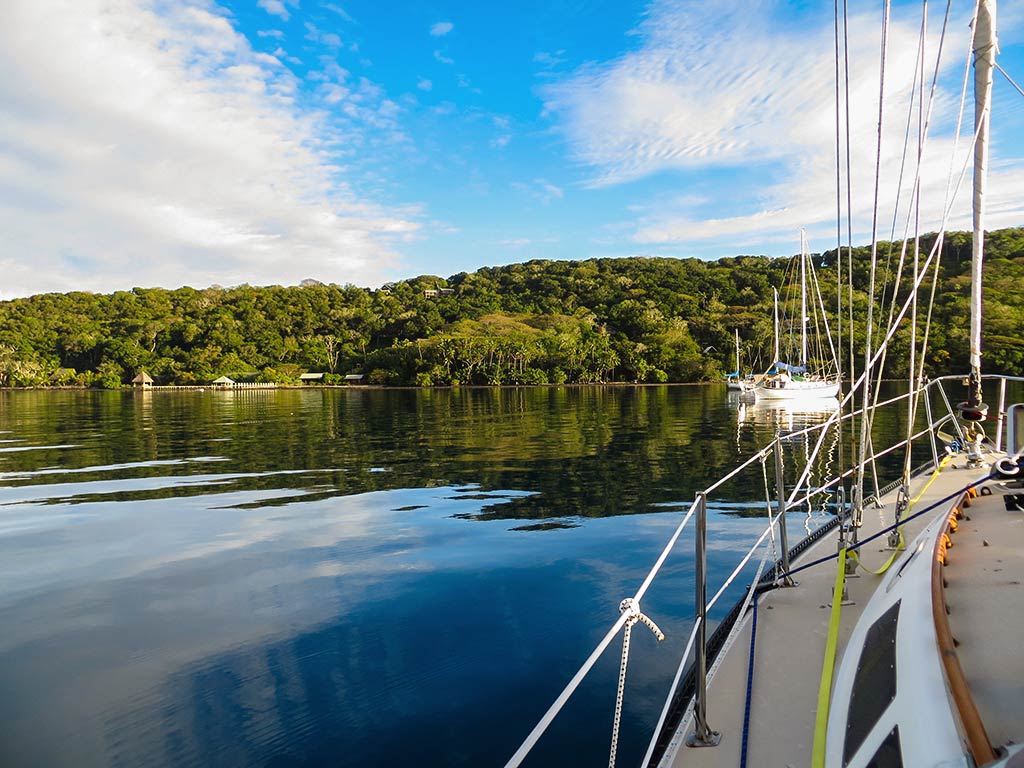
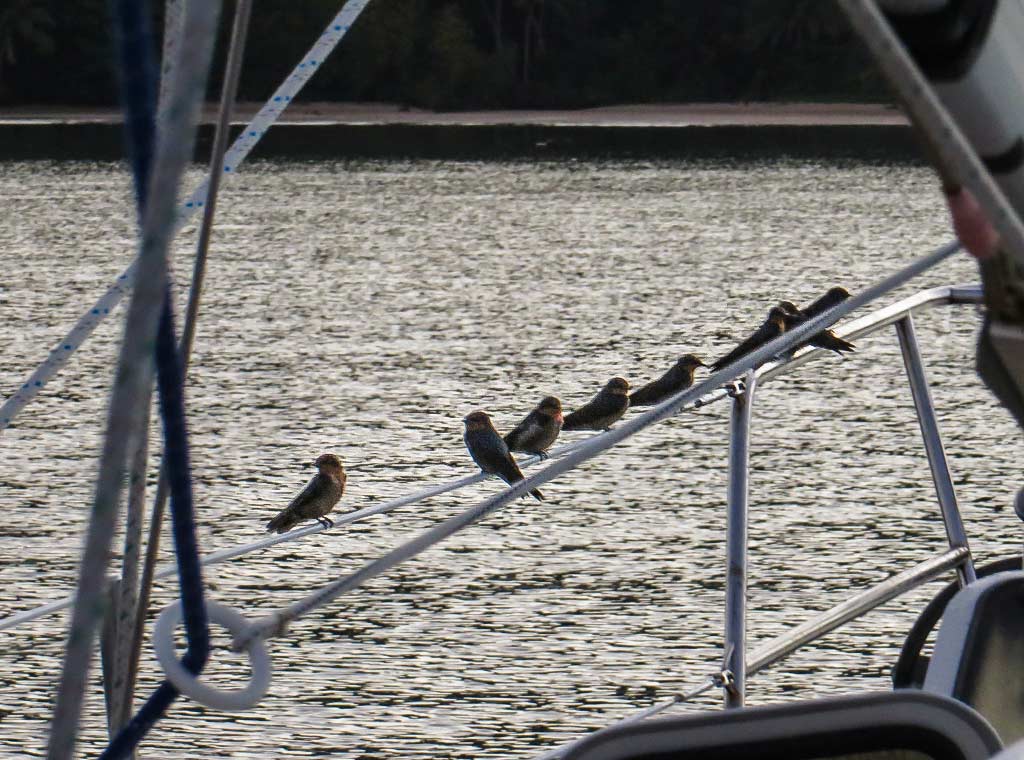
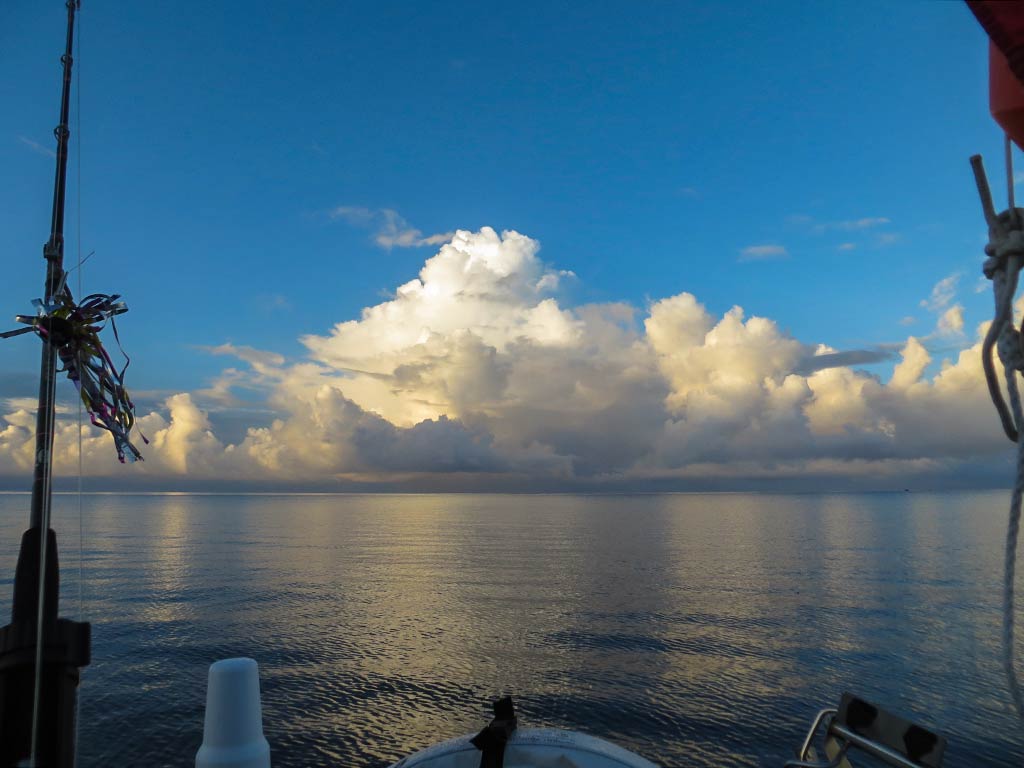
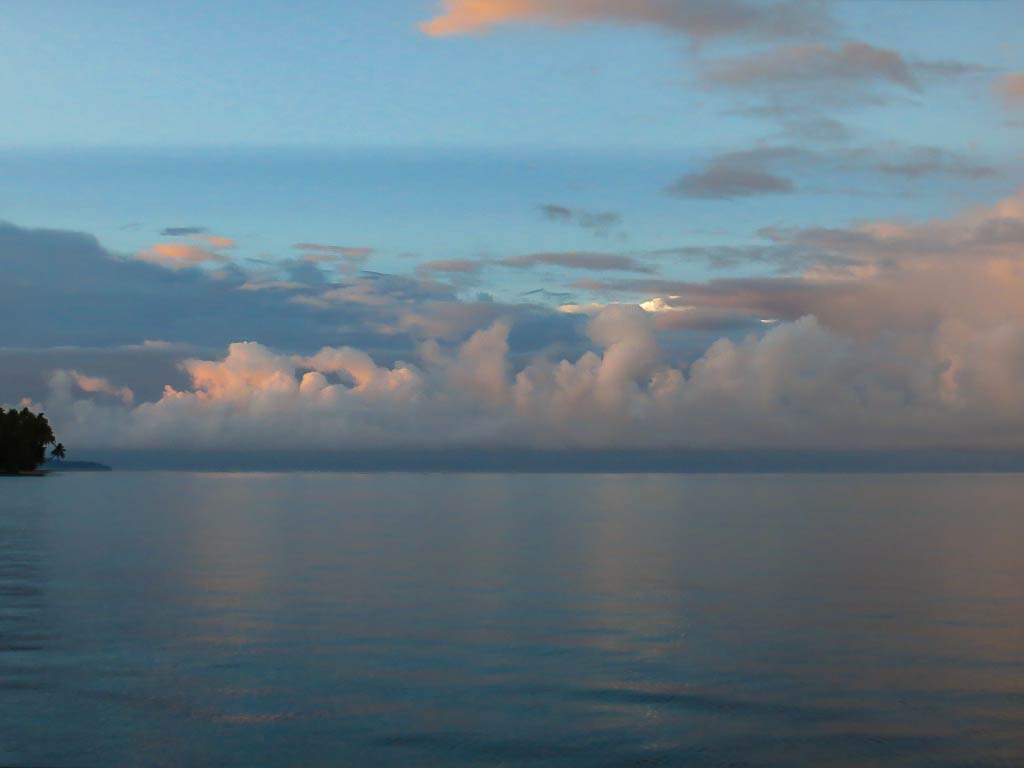
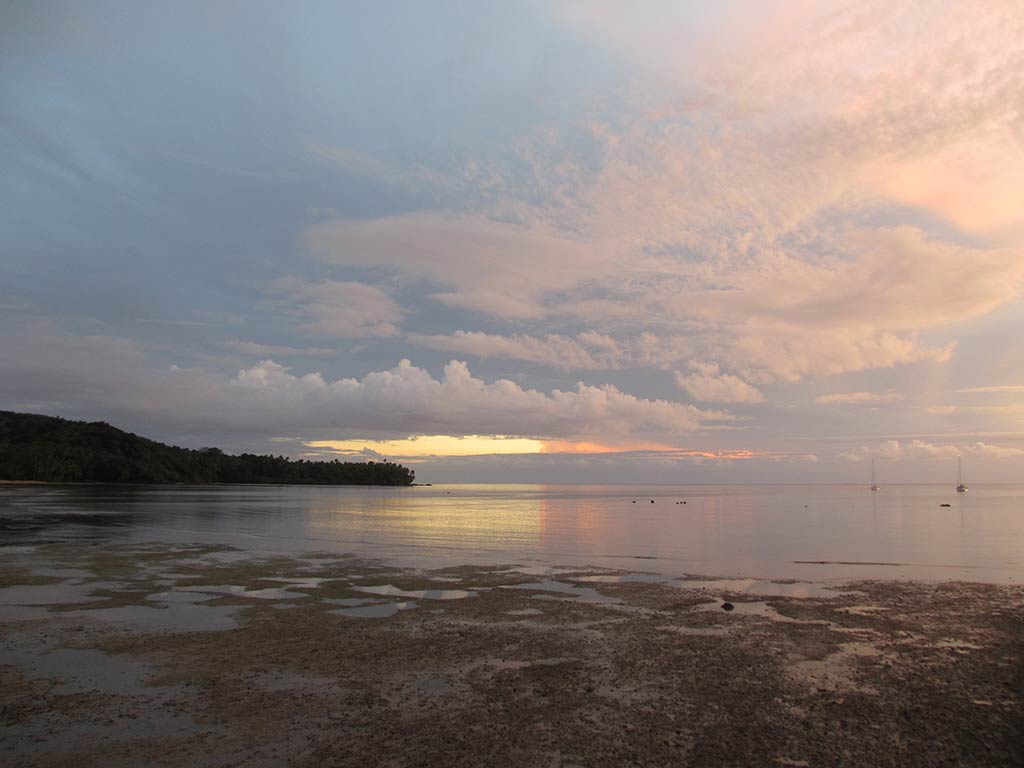
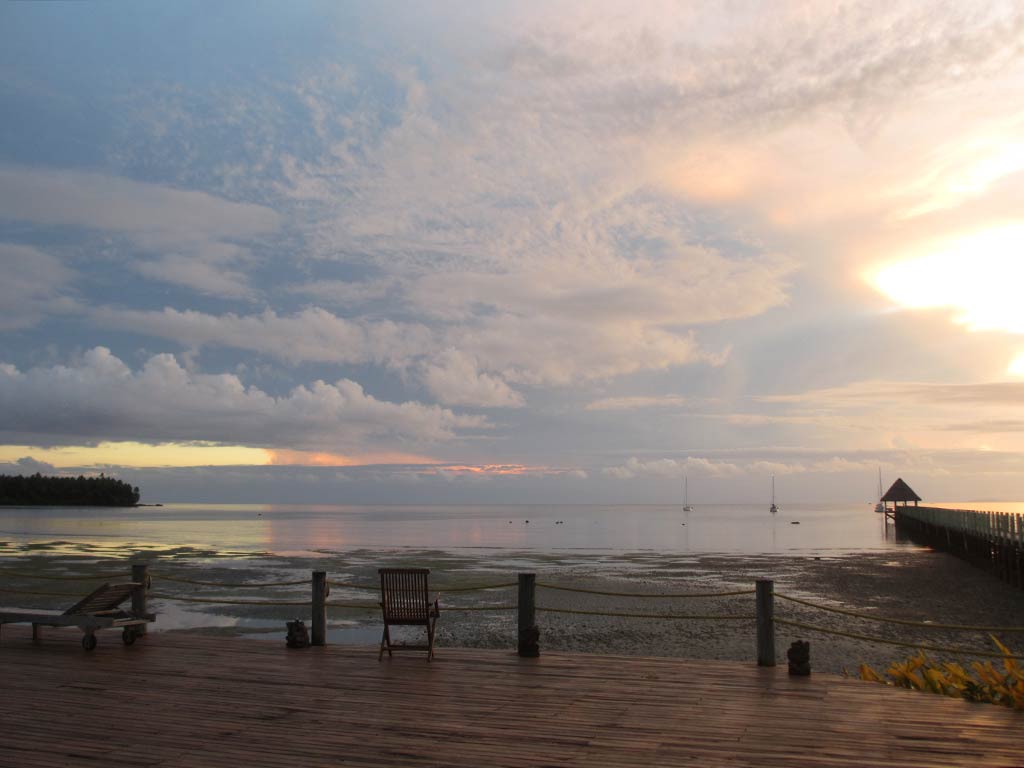
Even with the time change it was fairly light by 5:30 AM, which meant we were up and headed out to enjoy our coffee in the cockpit. The morning was beautiful, the water glassy and still and under sunrise-pink clouds. Swallows made themselves at home on our bow railing. Off to the west we could see thunderheads building up, probably a daily occurrence at this time of year. This place, in spite of some strange aspects, definitely had its magic. (Click to enlarge/scroll through any photo galleries below.)

Unfortunately, it also had heat. As soon as the sun came up we headed below, and there was no way I wanted to use the stove to cook breakfast (yogurt it was!). Rich got onto the radio net we’d formed and probably for the first time this season, there was no one there. Aside from the heat, this was another sign of the changing season: people were switching out of cruising mode and getting into passage mode. Some people were already heading off, while another group hoped to leave in the coming days. It seemed no one felt like chatting, and our Bula net was coming to an end.

Later, when we headed out to go snorkeling again, I noticed the line of thunderheads across the way seemed bigger and closer than yesterday. Maybe we’d get some rain after all. We anchored the dinghy and jumped in. Very soon we saw another giant humphead wrasse, very exciting. We also saw a couple of white tip sharks, also exciting (but not in a pleasant way), and thankfully they swam by and disappeared into the distance. Once the unwanted visitors left, we circled through this amazing world of coral, fish, and canyons. We next headed over to the bombie with the butterfly fish, then headed on to check out the area our new friends had told us about.

As we neared the area, I was once again astonished as we went over giant bombie after giant bombie. They were separated by the sandy coral scrub bottom between them, so each bombie had its own contained world of coral and fish. The water was so clear we could get a look at these places as we rode over them. This area of these bombies was so vast it felt like we were riding over the surface of an alien planet. A person could probably spend months here exploring all these snorkeling sites!

How to pick? We just finally picked one at random and went in for yet another amazing snorkel, our last before heading back to the boat. So now we know: the snorkeling at Koro island is fantastic, but you have to know where to look. (Approximate waypoints: 17 16.882S, 179 20.964E). The biggest surprise was that there wasn’t a major dive resort here.

(Note: I’d normally put in a video of the snorkeling area, but our footage has gone missing. We have one last shot of finding it but will need to wait on a friend to send an old backup drive. Fingers crossed for finding it! If we do, we’ll do a future post. For now, you’ll just have to take our word on the loveliness of this underwater world.)

Our plan at this point was to stay here for another day, waiting for predicted northerly winds that would assist our trip to the next destination. That changed after we got back to the boat and the afternoon heat intensified. It was 35 degrees celsius (95 fahrenheit), the hottest day we’d yet seen. We’d had enough and decided to leave the next morning, hoping our next jump south would mean cooler temps.

Meanwhile, Rich thought instead of happy hour ashore we’d invite our new friends, Alicia and Alfredo from On Verra, over for drinks here. I looked at him and said, “Too hot!” Alicia soon paddled by and said they’d thought about inviting us over for evening drinks, but it was too hot. So we’d meet for happy hour at the resort. (Kind of sad when it’s too hot to have friends over to the boat.) And so we headed in for happy hour.

It turned out the group tonight was much bigger than the previous evening and it was much more festive. We had a terrific time, although we felt a little sad to tell our new friends we’d be leaving in the morning. We hate to be wusses, but what can I say, we’re just not built to survive in the heat.

(Note from Rich: It’s no secret that I “adjust” our photos in Photoshop to make them look more like what we experienced in real life (Develop your Digital Images Post). The six photos above are a very rare exception – they were perfect straight out of the camera, with no adjustment needed. Sometimes the camera gets it right!)

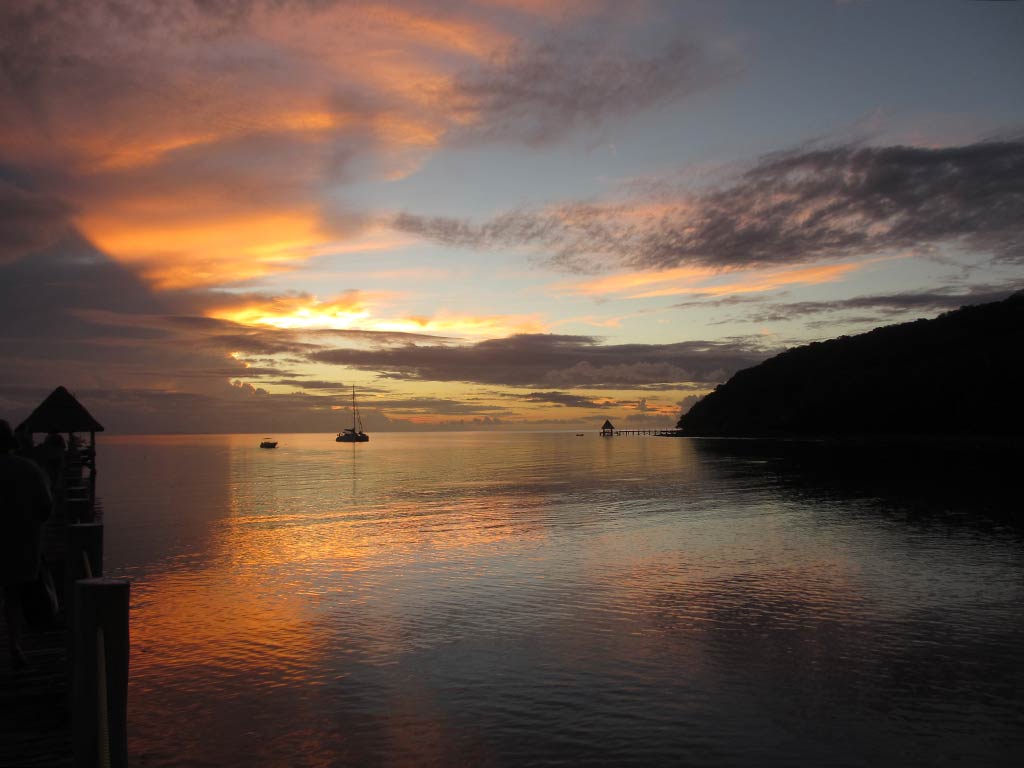
Back at the boat, showering off mosquito spray and sweat, I looked out at the clouds. I predicted we’d get a show tonight and sure enough, we soon started to hear distant thunder. Not long after, lightening flashed through the big clouds making quite a show. Magnificent! –Cyndi
Where’s Legacy?

October 27, 2013 in Fiji.

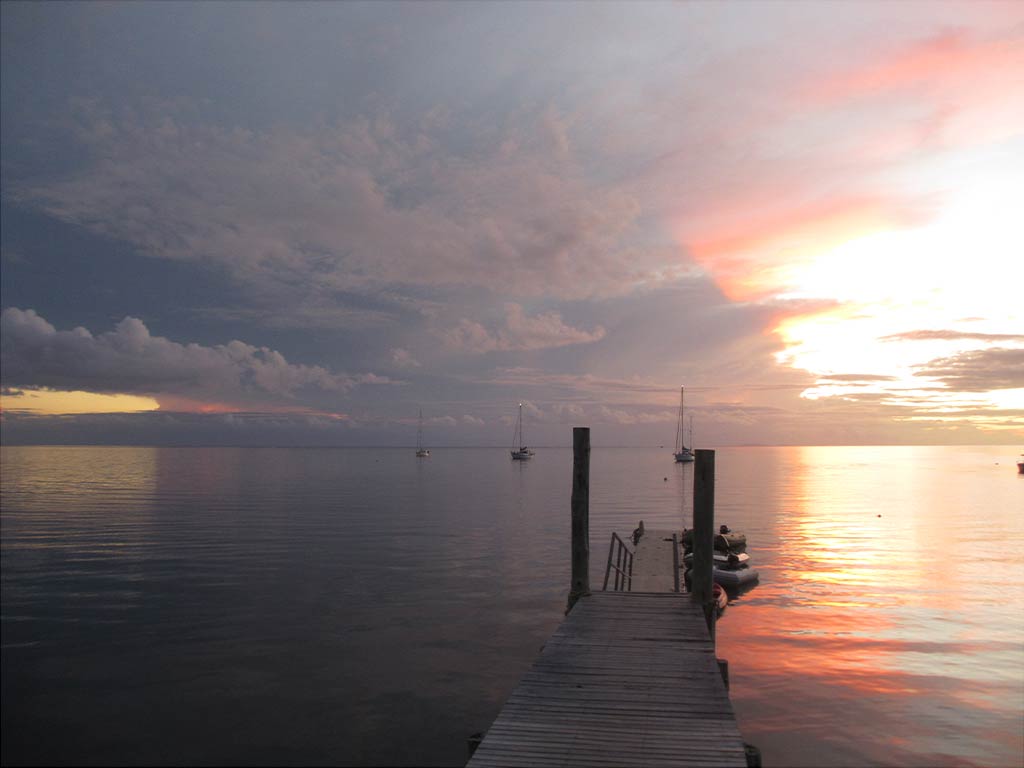
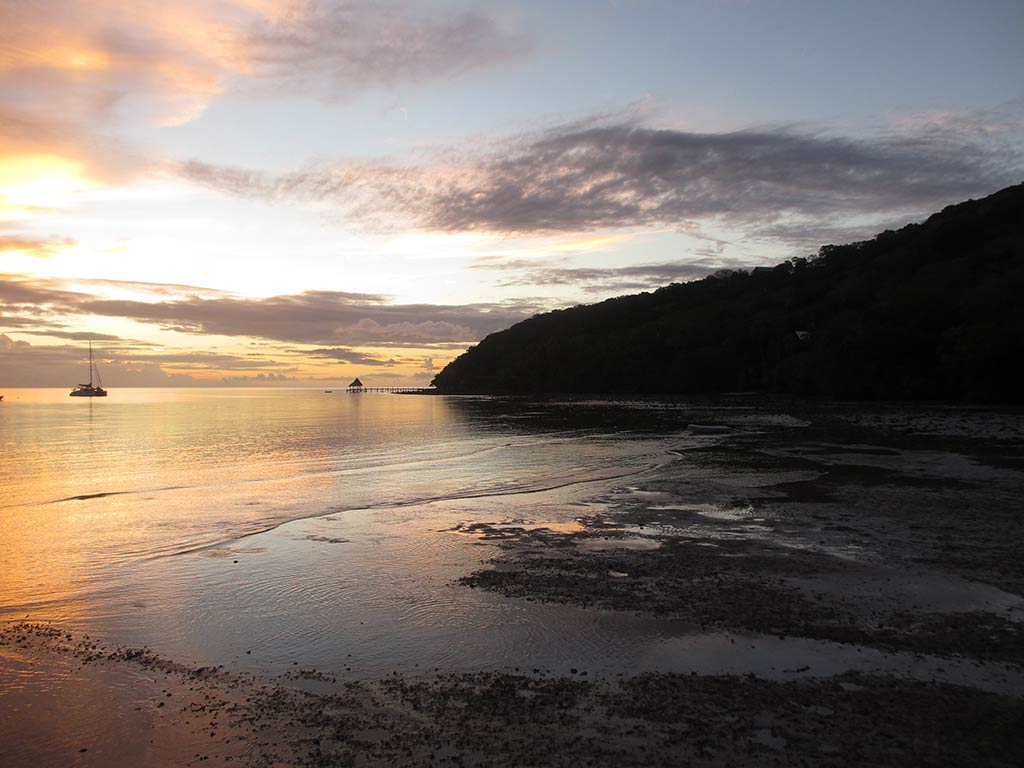
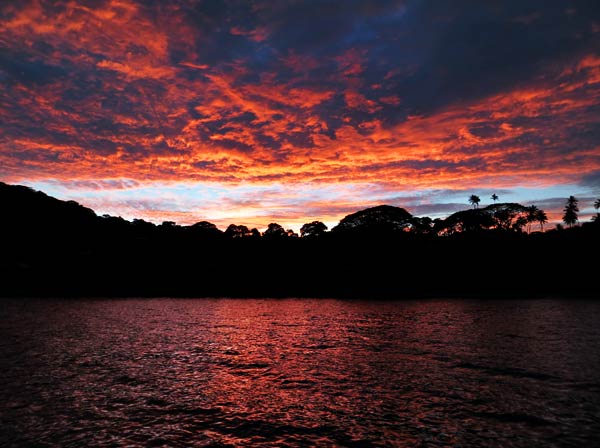
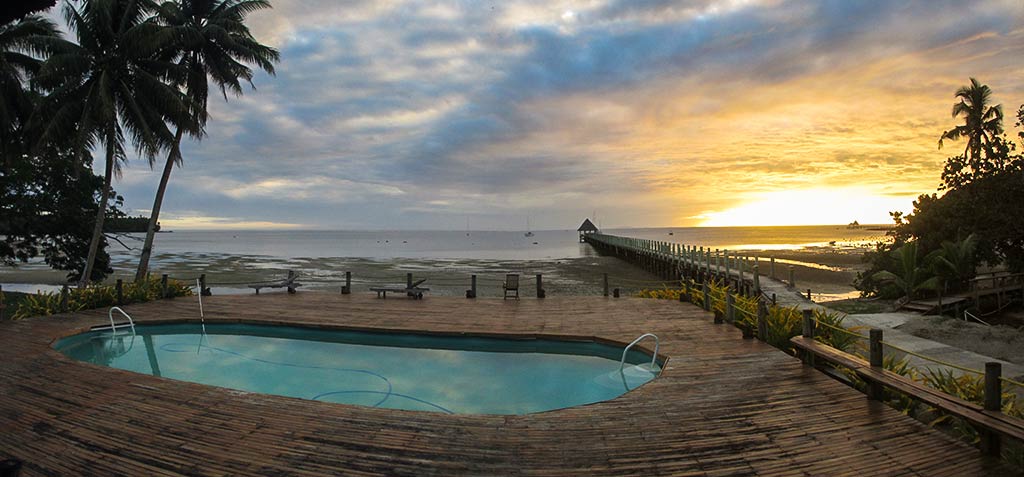
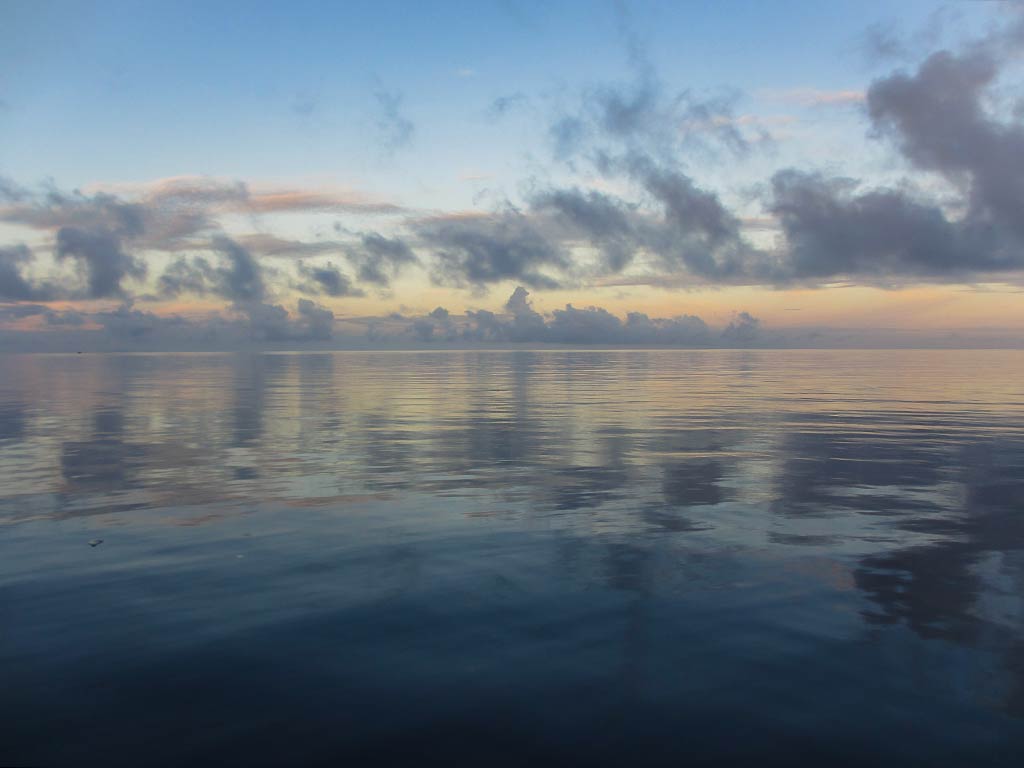
This morning, while this magnificent sunrise was in progress, we were anchored off the Jean-Michel Cousteau resort near Savusavu, Fiji, preparing to get underway. This afternoon, we’re sitting at an island called Koro, about 30 miles south of Savusavu. We’ll spend a few days here then work our way south to Suva, making a few island stops on the way. By about the middle of November, we’ll be looking for a weather window to sail south – back to New Zealand for the cyclone season. Wow this is fun! -Rich

Sunrise near Savusavu, Fiji

Koro Island (Fiji)

October 27, 2013

Since it’s a slightly upwind trip from Savusavu to Koro, this island is less visited than others and thus we hadn’t heard much about it. Someone did tell us the snorkeling here is amazing and gave us tips on how to find the key area; so for us it became a must-visit. We knew there was some sort of resort there with moorings for visiting yachts and would attempt to call them on the radio when we arrived.


We had a lovely motorsail 30 miles south to Koro, during which time we caught—and lost—two mahi mahi. With a fridge packed with food and with a resort visit ahead I didn’t mind, but it’s always a disappointment for the person (Rich) actually doing the fishing.

Soon, we were approaching this surprisingly large island, then headed down between the protective reef and the island’s west shore to an anchorage called Dere Bay. We could see four moorings, two of which had boats on them. We tried to call the Dere Bay Resort on channel 16, and another cruiser (not in the anchorage but sailing by the island) came up saying, “They won’t answer you!” So, we tried the phone and had success: it seemed we could take any available mooring. We went and picked one up.

At this point Rich decided, in the interests of sharing information, to report back to the person who’d called us and tell her we’d telephoned and gotten a mooring. Rich promptly got an earful about how the place was closed when they visited here, we probably called the wrong resort (we hadn’t) and should instead track down the owners in Suva, they’d had a terrible time, and there’s no good snorkeling. She seemed to expect, on hearing her opinion, that we’d pick up and leave and was sounding a bit put out that we weren’t doing so. Rich had to work to untangle himself from that conversation! (I’m adding this story in as a reminder to be careful who you listen to—if someone’s being argumentative and negative they likely as not to be full of crap.)

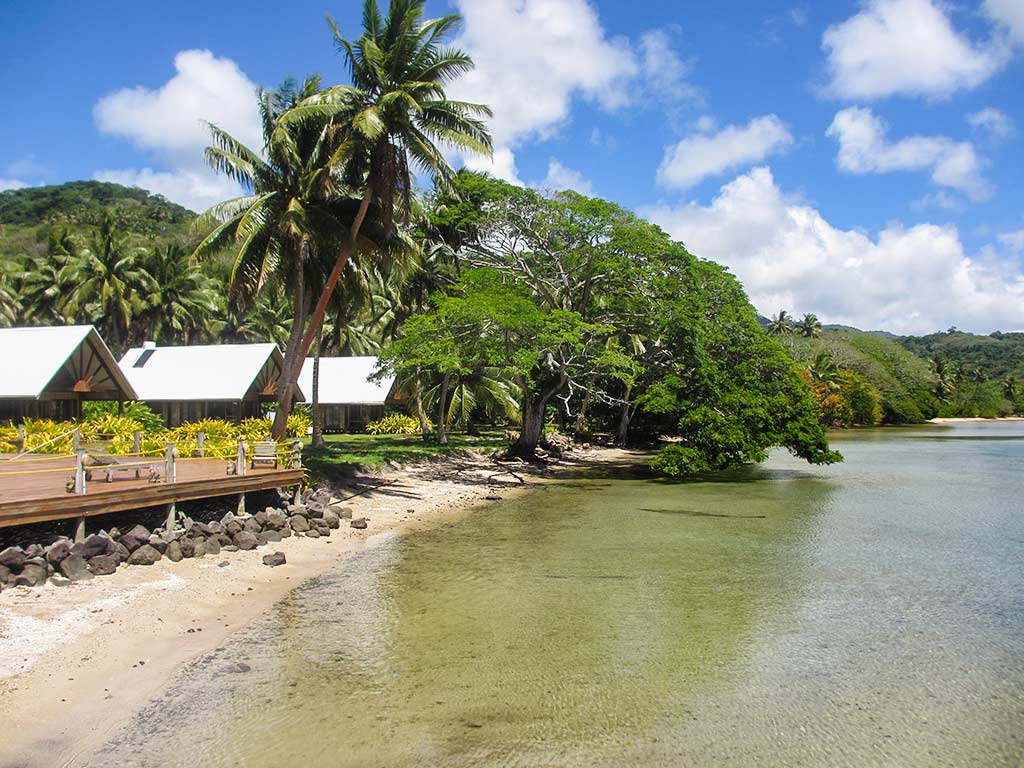
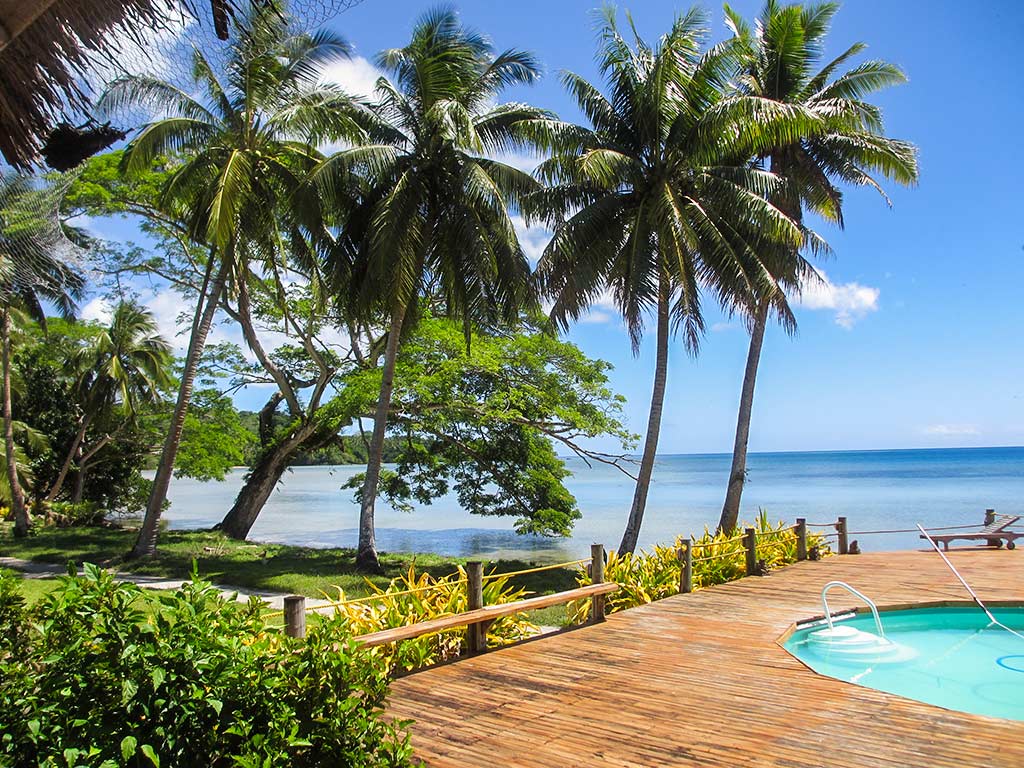
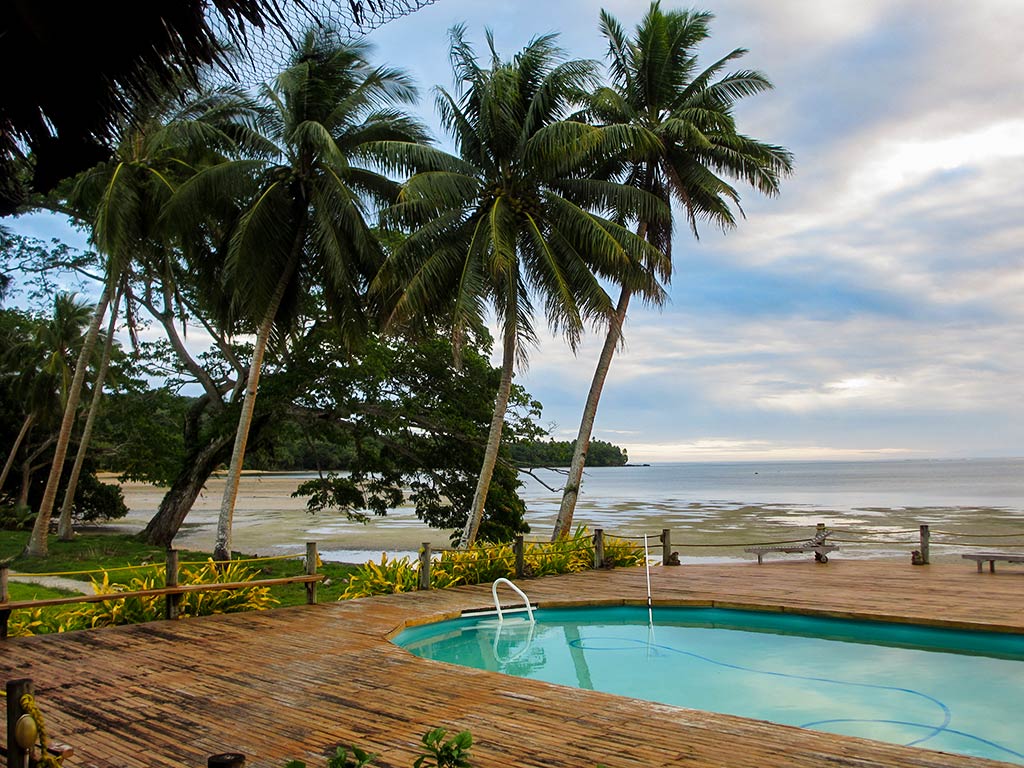
Now, we sat and took in the scenery. Koro was greener and hillier than I expected, with a couple of very small resorts along the narrow beach of the bay, neither of which seemed to have any activity. A handful of little houses were scattered on the hillside, mostly hidden by trees. Another impression had more to do with the time of year than the place, and that was the feeling of the heat and stillness of a late summer afternoon, a line of thunderheads  visible in the distance. In fact it was only spring, but summer was coming.

(You can click to enlarge and scroll through any of the following photo galleries.)

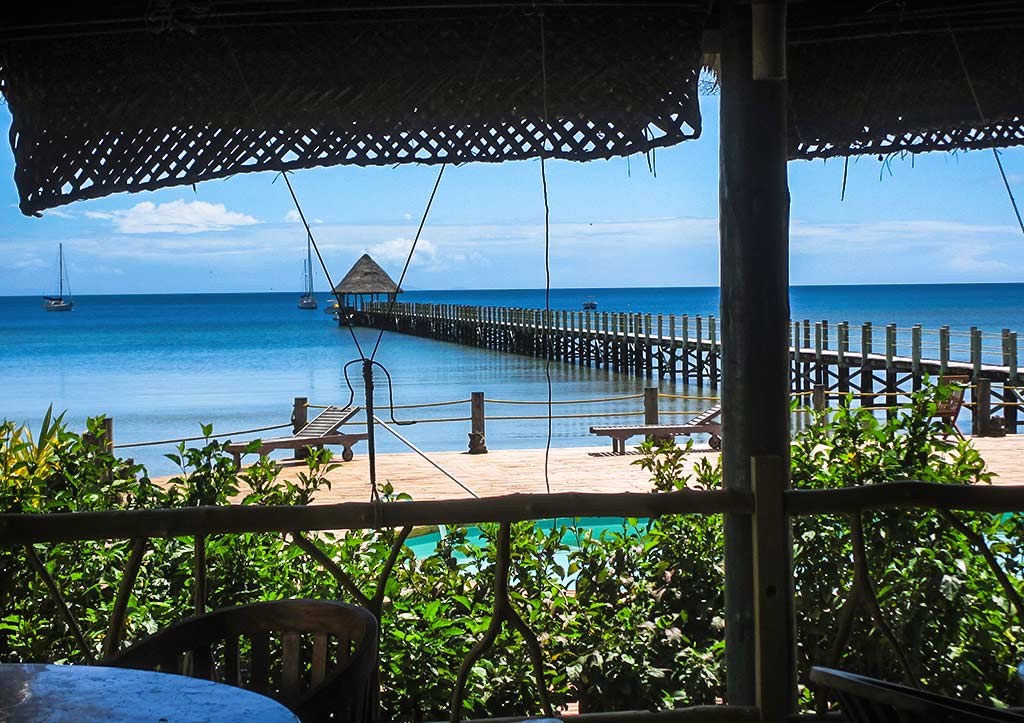
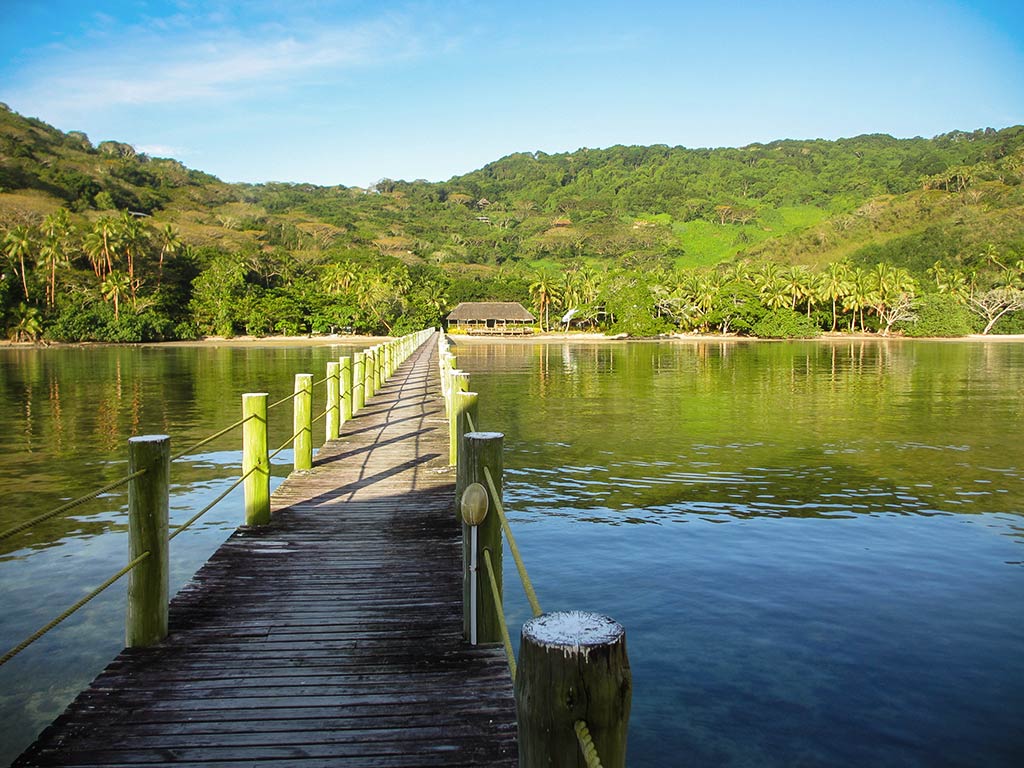
We dinghied over to the long skinny pier that stuck out into the bay and tied up near the end. It was a long but very pretty walk over the clear green water dotted with black rocks below the shallow surface. One striking thing was the number of swallows darting all round us while big black butterflies flitted about.

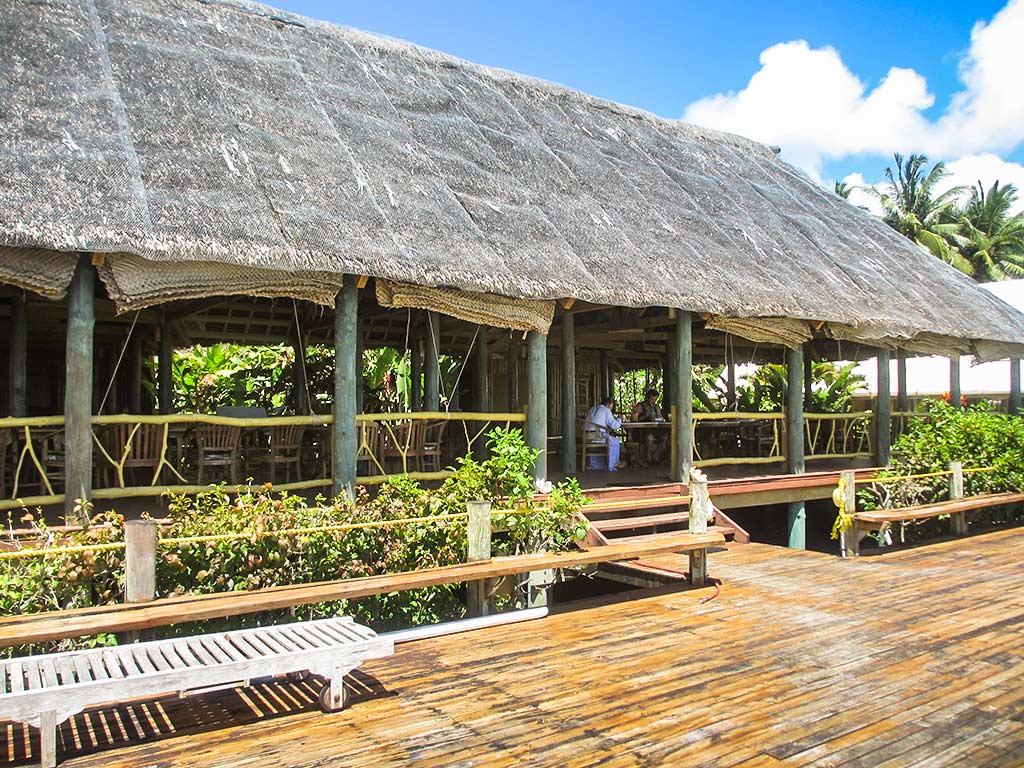
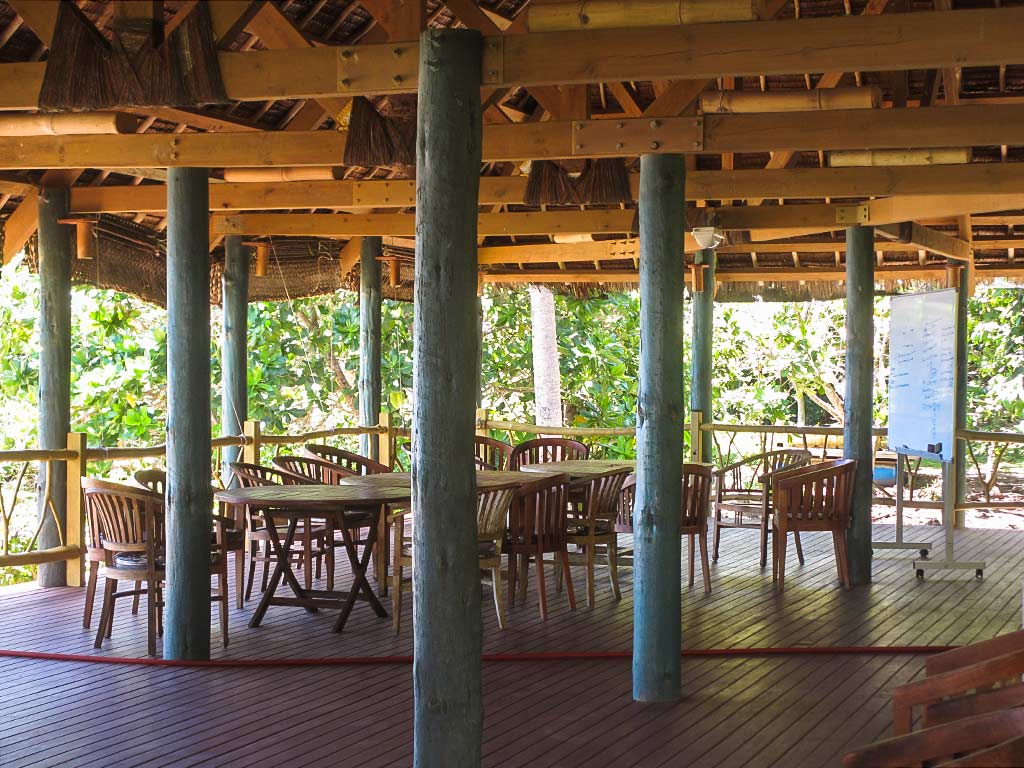
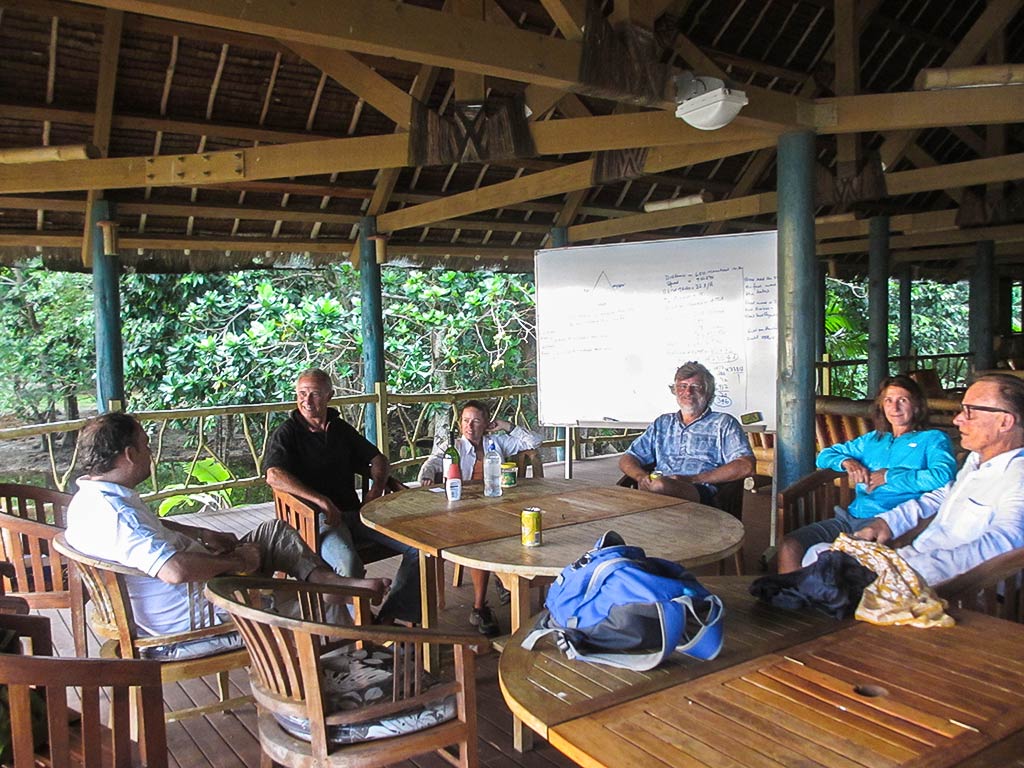
When we got to the resort we noticed it was very small and somewhat rustic, with only a few bures (aka cabins), none of which looked occupied. Not seeing anyone around, we walked over to the open-air dining room and found three people eating lunch there. We asked where the reception area was and they just laughed. Uh, OK, was there anyone we could talk to about making a dinner reservation?

We ended up chatting with them and got the scoop: it seems this resort was part of an operation that sells small houses to foreigners with a dream of owning a little place in Fiji. Each house was set up to be self-sufficient with its own solar panels and water tanks. And the homeowners then had the option of having their meals in this dining room.

The resort’s bures existed mostly to house potential customers, and the dining area existed to feed the homeowners as there wasn’t much in the way of markets nearby. The meal offering changed daily but the food was always good. They told us about the lady who runs things; so we went to meet her and asked if we could come in for dinner. Yes, it would be $30 Fiji a person. Sounded good.

Before going back to the boat we decided to go meet the people on one of the boats here. They were a really nice young couple who confirmed that we had the correct information about the snorkeling spot and with slack tide coming up we could go this afternoon. They also said we should come in this evening for happy hour at the resort because everyone shows up for that. They then advised us to switch moorings as ours was not as good as the outer one.

And so we switched moorings and got ready to go snorkeling. The spot wasn’t that easy to find, about a mile out with a nearby landmark–a rock with a stick on it–that we had to hunt for. Even with pretty good directions, it took some doing to find that marker; then we had to search for the area itself. We finally managed to find the spot, anchored the dinghy and jumped in.

The snorkeling was better than good, a more appropriate word would be astonishing. It wasn’t that it was the most exquisite snorkeling area we’d ever seen (although it was beautiful), but it was vast, an enormous bombie with a profusion of fish, corals and deep chasms. We were very excited to spot a giant humpead wrasse, the first we’ve seen. The more we explored, the more we found, something new around every corner.

We decided to come back the next day and do more exploring here; then headed off to look for another bombie we’d spotted on the way out here. We found it and while it wasn’t as impressive as far as its coral and rock formations, it had an amazing number of butterfly fish. Wow! Tomorrow we’d return to both these places as well as to another area that had been recommended, and this time we’d bring the Go Pro.

We headed back to the boat to shower and hang out until happy hour. As we were heading in I remembered there’d been a time change and now we were late! But no, we were fine; no one here was really paying attention to the time change and other people hadn’t come in yet. Very laid back and casual, this place! Some people even brought their own drinks! We sat down and met a handful of other people who have places here, either vacation or year round.

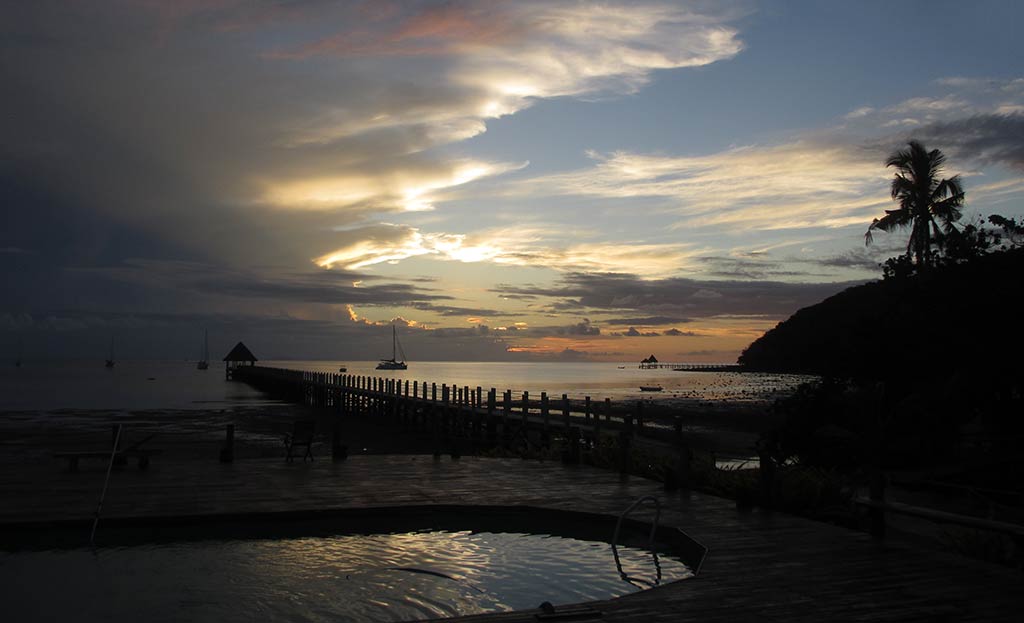
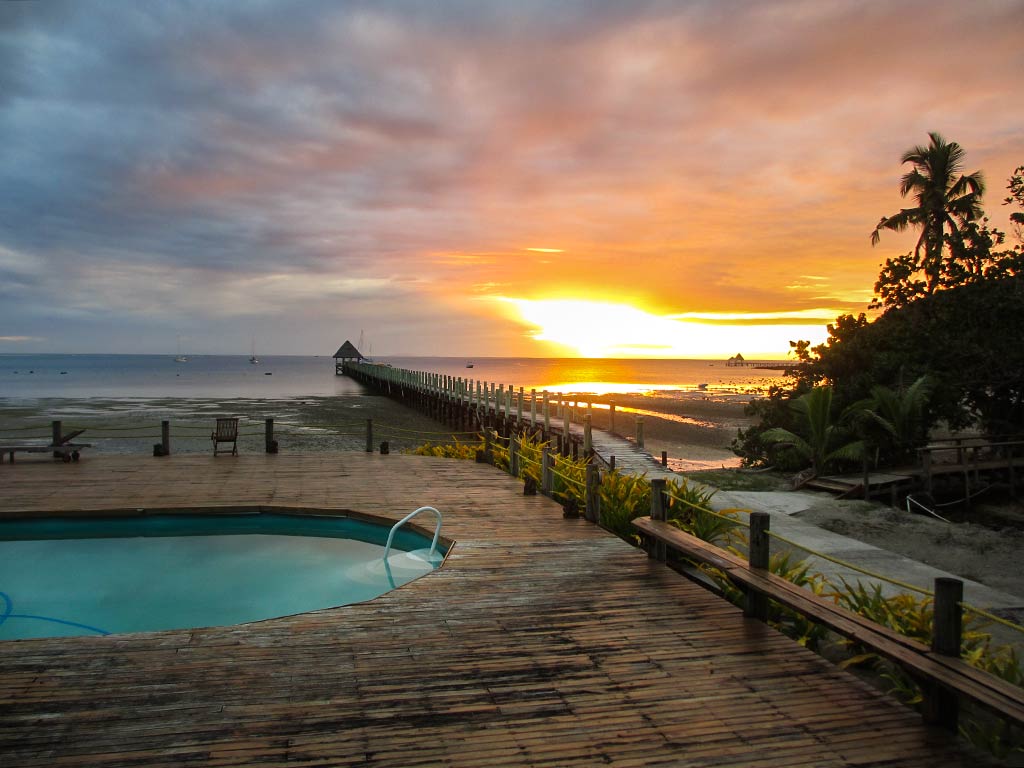
We all sat together for dinner, which today was a beef curry on rice followed by a piece of chocolate cake. In all, the food was OK, but for $30 it would have been nice to have a vegetable, and the fluorescent lighting washed out any feeling of tropical romance from the setting. Still, while the meal wasn’t worth what we’d paid, the experience was. We enjoyed meeting these people and hearing about this life. It sounded nice, but I’d noticed something about this west-facing bay: it’s exposed to the sun all the way to sunset with no mountains to block it. This meant great sunset views, but this far north at this time of the year, it also meant hotter afternoons and evenings. By the time we arrived back to the boat, drenched in bug repellent and some sweat, we needed another round of showers.

At this point I had mixed feelings about the place. It was nice, but there was something strange about it. It reminded me a bit of the TV show, Lost, in that nothing seemed to really belong here. I could imagine the hodgepodge of people here had been thrown together, not quite knowing where they were, how they got here, or how to leave.

In reality these people had worked to be here and make homes and seemed happy with the place. In fact the two other boats in the anchorage belonged to cruisers who came here and liked it so much they, too, invested in homes. I can’t put my finger on why it seemed a little off here, but it was strong enough that after our earlier visit ashore, I wanted to snorkel right away and if it wasn’t special, leave the next day. Of course, it turned out to be special enough we’d decided stay a few days. –Cyndi