Best and Worst with 20/20 Hindsight

January 5, 2017

We’ve been in the Pacific five years now. What should we have done differently before we left on this cruise? What was right on? Here are our three best and worst decisions.

Done Right

Watermaker.
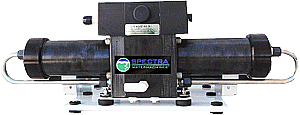
clark_pump_tn

We ended up with a much nicer watermaker than we’d planned to install. It’s a Spectra Cape Horn Extreme and makes up to 14 gallons an hour of fresh water. It has been flawless. Well almost flawless, but that flaw showed one if it’s strengths. One of the two low pressure water pumps went out. No problem. We were able to make seven gallons of water an hour with just one pump running, and we didn’t have to do that for long. The repair of the failed pump in our modular system was quick and easy.

I think this accidental upgrade was very fortuitous considering our diminutive tankage – we hold only 40 gallons of fresh water. We make water almost every day for an hour or so and at only 20 amps of 12 volt DC power, our Solar panels keep up with it just fine.

Solar Panels.
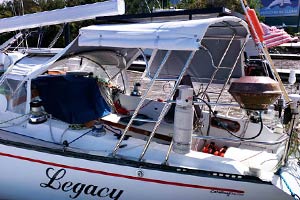
solar-and-bimini-small

After three years of cruising, we added another solar panel (and new solar controllers). We had two, eighty watt panels on our dodger. With this, we had to run our engine for at least an hour a day to make electricity (we don’t have a generator nor do we want one but that’s another story). I think over half the hours we put on our poor little, overworked engine are from charging.

In Australia two seasons ago, we added a stainless steel bimini and put a big, 327 watt, Sunpower solar panel on top. Now we’re up to 487 watts and since this change, we’ve only run the engine for charging about three hours. What a difference.

It’s not only the increase in solar wattage that’s benefited us, but the Sunpower panel we installed is amazing. It produces significant power in overcast skies or with a low sun angle. It’s much more efficient than our other two panels. The other major improvement was to install Victron Energy solar controllers. We chose to replace our existing, troublesome Blue Sky controller with two of these Victron controllers (for redundancy that has not, thus far, been necessary). Now, our batteries are often at 100% by 10 AM (major drains include our watermaker as well as a refrigerator with a small freezer compartment and heavy use of the computer, TV and electronics).

More…
Bimini and Solar Arch
17 Amps from a Cloudy Sky

Refrigeration.
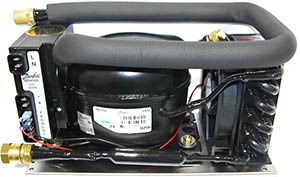
refrigeration-small

Speaking of our refrigerator, we replaced our ailing holding plate unit that had a massive 1/3 HP motor with a hermetically sealed compressor/evaporator type unit. This has been a major part of our new energy independence as it uses about half the power of our old refrigeration. Our new unit has an extra large condenser and no water cooling. Gone is the water pump noise and significant maintenance required by the water cooling system. I was skeptical about air cooling in the tropics but after two seasons, it’s worked great.

Also, we now have a freezer compartment (inside the evaporator). It’s changed our provisioning for the better. We can stay away from towns longer now that we carry frozen meat and fish. I never knew we needed a freezer until we had one. I never knew we could afford the power demands of a freezer until we had this one.

More…
New Boat Stuff

Other stuff that’s just too good not to mention: I was trying to limit this to the best three things we’d done but I can’t.

Electronics
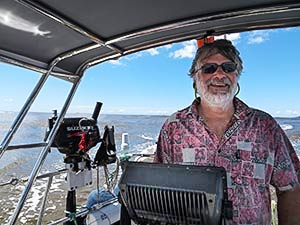
chartplotter-small-2

Our electronics have been wonderful. We had a chartplotter in the cockpit for the first time when we left on this cruise. I would never again be without one. All our electronics are integrated and at the touch of a button on our chartplotter, our autopilot will follow a winding path through reef passes. We have a radar unit that uses just an amp of power, is incredibly sensitive and has a reliable guard zone alarm. We run it whenever the boat’s moving and it has made us much safer, and watches much more pleasant.

Diesel Hydronic Heater
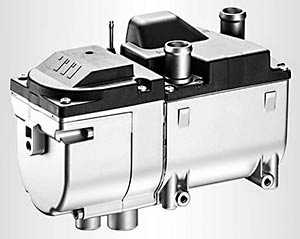
espar-heate-smallr

We installed a diesel, Espar (Eberspacher) hydronic heater with a small, plate heat exchanger for hot water heating. Three minutes after we hit the power button, we have all the hot shower water we want (limited, of course by our paltry tankage). It’ll heat the cabin in minutes even on the coldest weather New Zealand’s had to offer. Cyndi made me install this. “Who needs a heater? We’re going to the tropics!” I said before we left Los Angeles. Cyndi said “Just do it” and I did. She was right. It’s great.

More…
I Took a Shower

Mistakes

Roller Furling Main. The only time I’ve felt like I might die while cruising on Legacy was when reefing in a storm on the way to Hawaii. I was at the mast and so where the waves, trying to wash me away. I vowed to install roller furling on the main. We did. An in-boom furler. It’s not great.

It’s so hard to get the sail up and down that after a season of using it, we had to install an electric winch in the cockpit. We can’t reef off the wind and have had to turn up into big seas. No fun. In hindsight, I think I would install slab reefing with a stack pack arrangement, making sure the sail could be reefed from the cockpit, even off the wind.


Not Enough Solar (or Shade).
shade-small

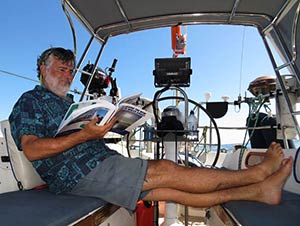
Discussed above, it was a big mistake to leave without sufficient charging capacity. It was also silly to leave without shade over the cockpit. (We had a flimsy bimini that we seldom took the trouble to put up and couldn’t leave up when sailing.) I guess I didn’t realize the tropics would be sunny and hot! Having shade in the cockpit has drastically increased the livable space aboard. Having the additional electricity has… well, you read about it above. -Rich

New Cruising Reality: Crowds

January 4, 2017

Cruising has changed over the years and part of the new cruising reality isn’t all that pleasant: Crowds. Here’s Waiheke Island in New Zealand over silly season…

oneroa-crowds

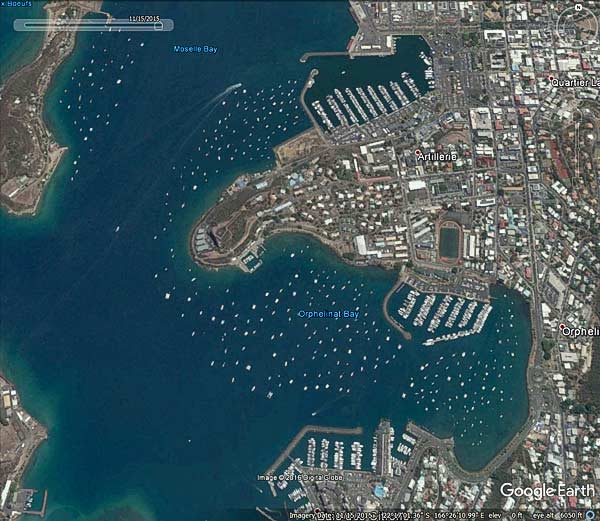
“Silly Season” is the term commonly used in New Zealand and Australia to describe the vacation time just after Christmas and lasting up to six weeks. In New Zealand, it lasts until just after Waitangi day in early February. It’s a little shorter in Australia. During this time, everyone who owns a boat uses it (and it seems everyone owns a boat down here). And it’s not just silly season we have to worry about. Here’s Noumea in New Caledonia at the end of the winter cruising season…

noumea-crowds

Have fun anchoring in that mess! (The clear areas are all a no-anchoring zones enforced by the police and military.)

Somewhat more moderate, but still difficult crowds were our reality all the way across the Pacific. Our first landing at Hiva Oa Island in the Marquesas was packed. So packed that the only way to anchor was to use a bow and stern anchor, and even then it was a challenge. Getting out of the bay, with the anchors of others draped over ours was very hard.

Planning our itinerary almost always involves trying to outguess the pack and arrive before or after the crowds. It’s just the way it is now. It’s a trade off. Abundant information and advanced, affordable technology make cruising easier but because more people are able to cruise now, we deal with crowds.

Don’t worry. There are still places where you can have a cove, beach or even an entire island to yourself. Here we are in the Yasawa Islands (Fiji) in the height of cruising season with a beautiful bay all to ourselves. -Rich

alone-in-fiji-1

Navionics SonarChart™ Problem

January 2, 2017

We’re in a lake area called Gippsland Lakes in Australia and the water is pretty skinny here. Complicating matters is our discovery that even the newest Navionics electronic chart information (downloaded yesterday on our iPad for yet another $54 payment) is wildly incorrect.

Our problems started yesterday when we got yet more local mis-information. It seems like this local believed that several of the areas where we wanted to anchor were too shallow for our 7′ draft. He also seemed to believe that an area where we happily anchored for two days was also too shallow for us. That was suspicious. It seems he was basing this on his use of Navionics SonarCharts. He bragged that because this was crowd-sourced, it was absolutely accurate and up to date.

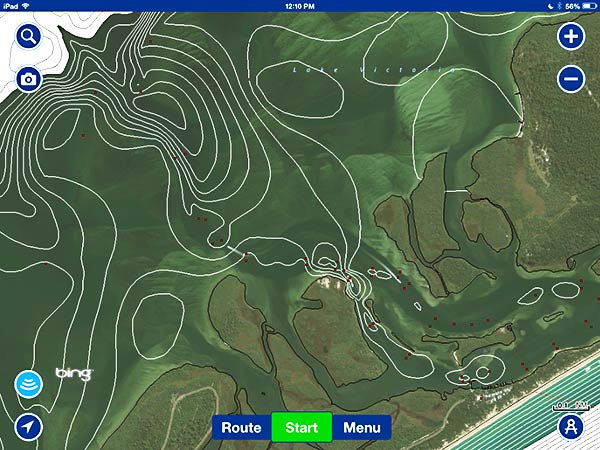
I spent the next three hours (and the aforementioned $54) trying to get these SonarCharts installed on our iPad. When I finally did, I was horrified. Even in Navionics own program, you can see how wildly inaccurate they are, at least in this area. This is apparent when you turn on the SonarCharts with a satellite image overlay, like the screenshot below.

navionics-sonar-charts-2

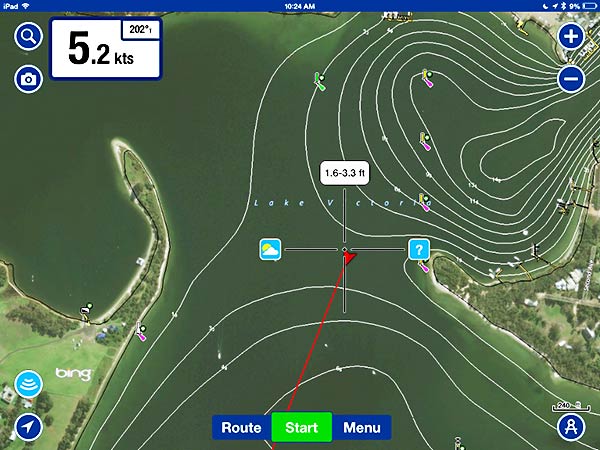
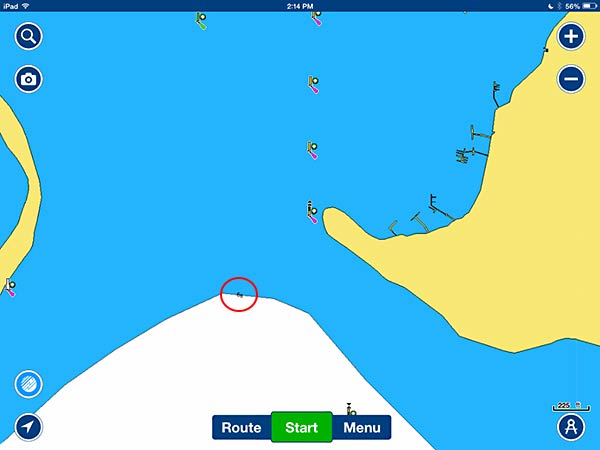
You can see that the depth contour lines have very little bearing on the shoals obvious from the satellite images. The other thing that I immediately noticed is that the channel we’d already entered to get to Paynesville was way too shallow for Legacy, at least according to Navionics.

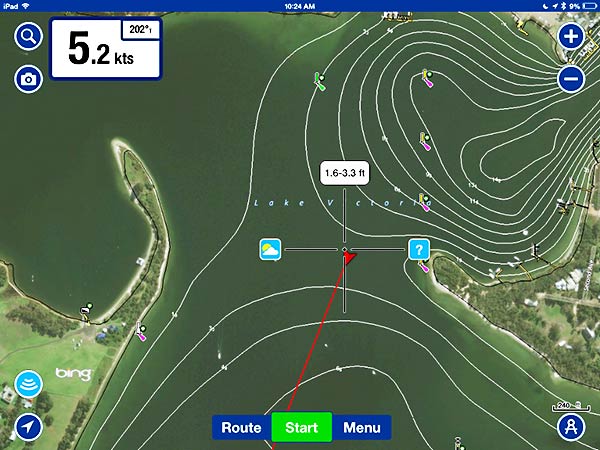
navionics-sonar-charts-3

Above is a screenshot from our iPad as we left through this channel this morning. The area we passed through says 1.6 – 3.3 ft. deep. Legacy draws 7 feet. Neat trick!

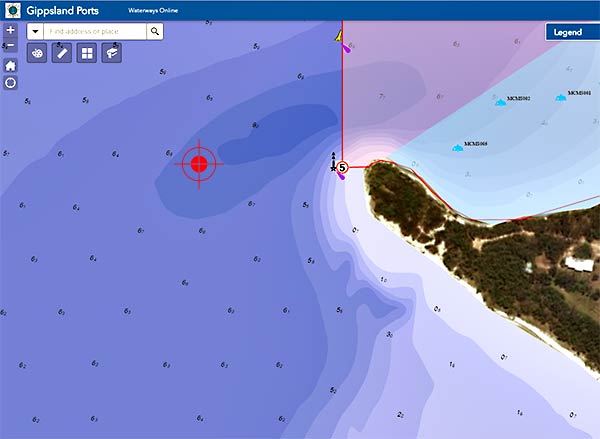
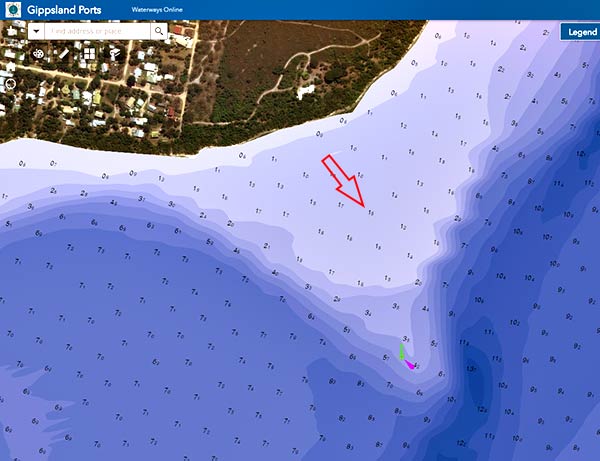
When researching this depth issue yesterday, I found that Gippsland Ports has a great online mapping program. (You can find it here.) Here is that same spot on a screen shot from the Gippsland Ports maps.

gippsland-oneline-maps-1

It shows the depth at that spot somewhere between 6 and 8 METERS! That’s a pretty big difference!

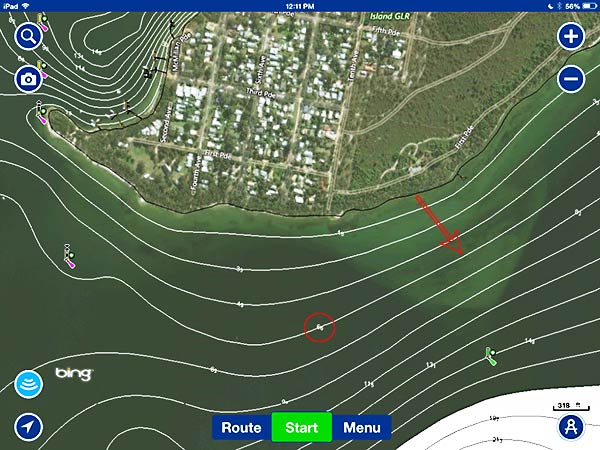
The problem with this kind of error is that if you believe the data, there are very few places you’ll visit here. There’s a more dangerous problem. Here’s what Navionics shows for an area south of Raymond Island.

navionics-sonar-charts-1

Navionics shows that the depth at the red arrow is almost 7 feet. The visible shoal on the satellite image makes that data very suspect. Below, Gippsland Ports shows that same area as being only one and a half meters deep (and in complete agreement with the satellite image).

gippsland-oneline-maps-2

The large amount of detailed contour lines shown on the Navionics SonarCharts makes it appear that the underlying data is more accurate than it is. This is like weighing something on a scale that only reads to the nearest gram and representing the result as 3.434564 grams.

Not only does this kind of false-precision give the impression of greater accuracy than is present in the underlying data, but it turns out that all or most of the soundings in this area, regardless of how they are represented by Navionics, must be based on inaccurate or obsolete data. And it’s hard to believe this is the only area with this issue.

Here is a screenshot of the Navionics chart with SonarCharts turned off. There is only a single sounding in this entire area – 6.6 feet. I wonder where the rest of the “data” used for the depth contours came from?

navionics-lack-of-soundings

I believe that the SonarChart data is supposed to be crowd-sourced; collected from the depth sounders of users as they traverse the world’s waterways. It’s hard to believe that any of the data represented on the SonarCharts for this area has been updated by users. Maybe there’s some way to tell when the data has been updated but if there is, I can’t find it. (It took me about a half an hour to figure out that you turn the SonarCharts on by clicking the little Navionics logo on the bottom, right of the screen. I couldn’t find it in the help file, nor online. I just found it by randomly clicking around.)

I understand that mapping the world’s oceans is a monumental task, but Navionics keeps charging me significant sums of money, while leading me to believe that their charts are accurate enough to be used safely (despite the disclaimer I am required to acknowledge each time I use their charts). Lots of this chart information is not a secret. In this case, Gippsland Ports makes the data freely available. I’m not sure what the official Australian charts look like in this area. I would just hope I’d get a better product for my many repeated payments to Navionics.

It’s been a while since I’ve felt like I could rely on Navionics charts. I first began to question them when we found an entire island missing in Tonga. In Fiji’s Northern Lau, we anchored on top of a mountain (at least according to Navionics). There have been many other examples where the charts were just wrong. Google to the rescue (at least partially).

satellite-charts

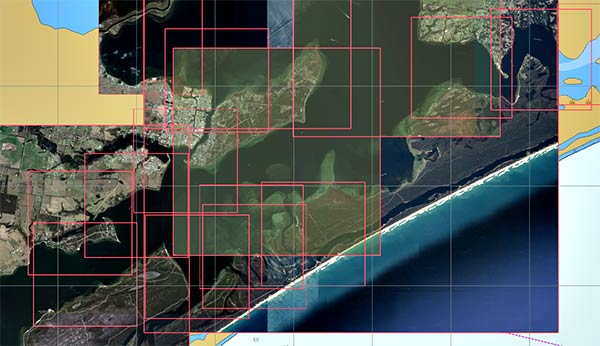
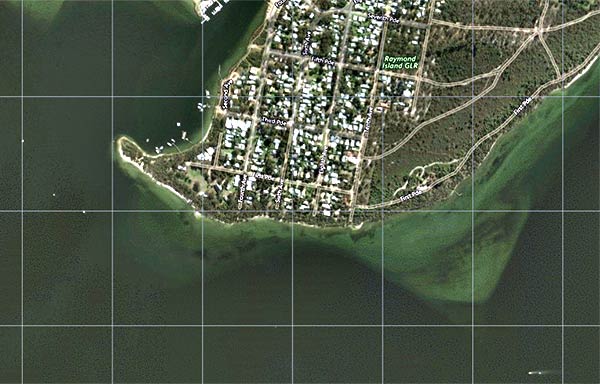
Above is a screenshot of just some of the nearly two dozen satellite images we’ve downloaded for this area alone. Below is a screenshot of a satellite chart displayed on openCPN of a couple of the problem areas I talked about above.

satellite-charts-on-opencpn

This chart (which is either from Bing, Nokia or Google, captured with ChartAid) shows dark water in the area we passed through and an obvious sandbar where Navionics shows safe water.

But here’s the thing I’ve realized about satellite images. If you can see an obstacle on the satellite image, it’s probably really there, but if you can’t see any obstacles, it doesn’t necessarily mean there aren’t any lurking.

Here are two examples.

  • Just because the water looks dark and deep in the channel off the west point of Raymond Island in the satellite image above, it doesn’t mean it really is deep water. Shallow spots might just be hidden on the satellite image for whatever reason.
  • I feel like I can count on obstacles that I can see in the satellite images. That sandbank off the southeast corner of Raymond Island (image above) really is too shallow for us to pass over.

On Navionics charts (and others as well, I’m sure), it doesn’t seem you can count on either what you can see really being there or what you can’t see really being clear of obstacles.

I’m not saying that all Navionics charts are bad. We’ve seen incredible accuracy in places like Sydney and Auckland. For that matter, all of NZ’s North Island seems pretty well charted. Australia’s Queensland and New South Wales is good too from what we’ve seem. But when we get just a little of the beaten path, where we really need accurate charts, they let us down.

“So, what can you do?”

In areas where there’s any doubt, we proceed slowly and with care. Despite all the satellite images, charts and other technology, Cyndi still spends a lot of time on the bow looking for obstacles, trying to spot them visually rather than feel.

If you have charts by a company other than Navionics, I’d sure love to know what kind of depth detail your charts show for this area. The “pass” I talked about above (2nd and 3rd photos) is at 37º 55.460 S, 147º 43.130 E. Let us know.

Rant over. -Rich

Wait, wait. Not quite over. Update, January 8, 2017

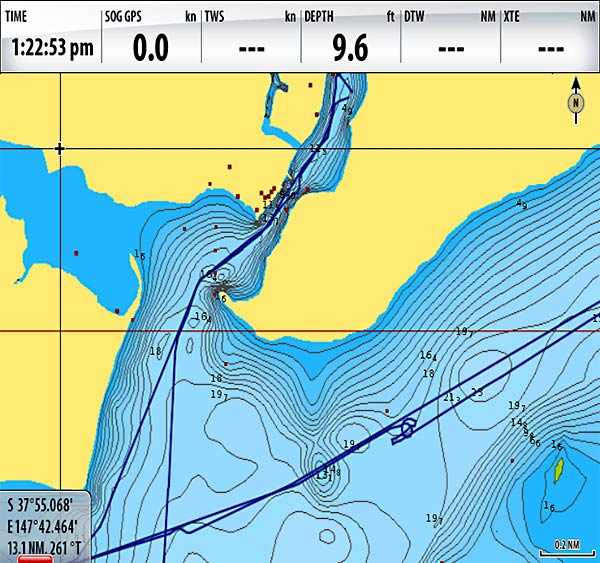
I updated the Navionics on my SD card. I did this largely to get the SonarCharts, thinking that while they’re wildly wrong here, they might be useful in Tasmania or other places we’re going. This also involved updating the firmware in our chartplotters. After all that, I never could find any way to turn on SonarCharts but I did find something called “Fish N Chips” in the menu. I turned that on and it looks a lot like the SonarCharts – except different!

Below is a screenshot from my chartplotter of the Fish N Chips chart for one of the areas I wrote about above.

fish-n-chips

And below is the SonarChart again from my iPad of the same area.

navionics-sonar-charts-3

The Fish N Chips chart shows about 16 feet where in the spot that the SonarChart shows 1.6-3.3 feet. The Fisn N Chips chart is much closer to reality. It also shows the sandbank extending south from Raymond Island (that the SonarChart didn’t show).

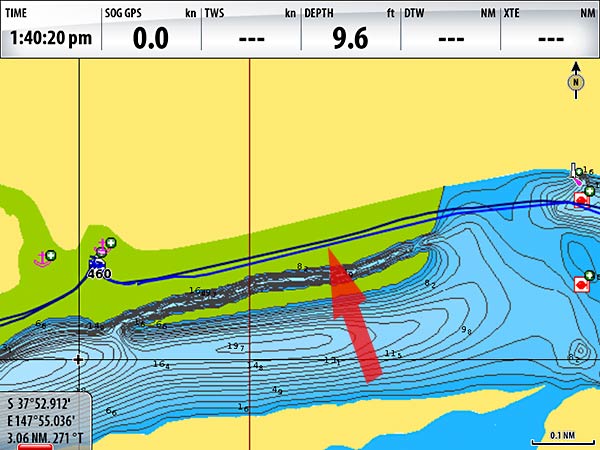
But all’s still not well. Below is a screenshot of the course we took this morning from our mooring.

course-over-reef

The chart shows that we motored our 7′ draft boat over a drying reef. Wrong!

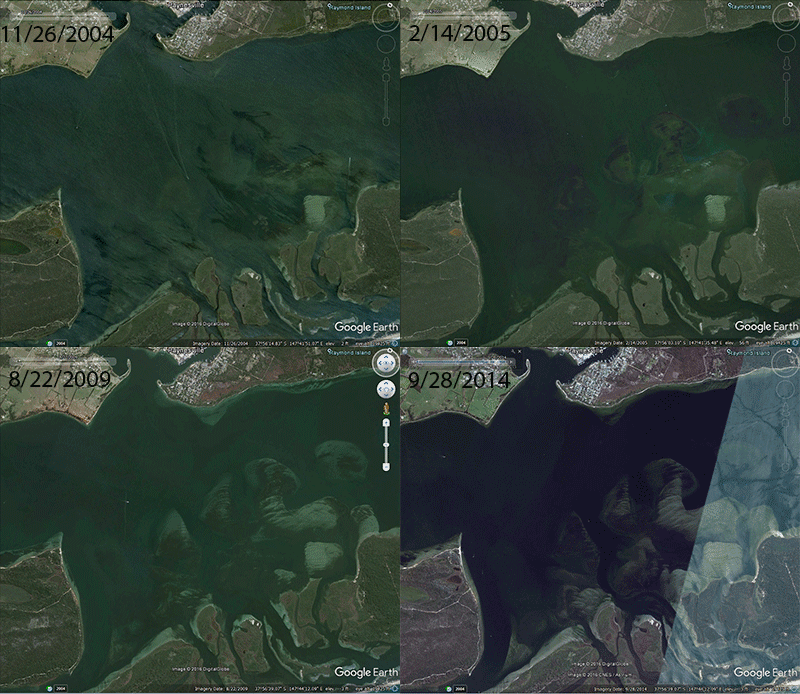
I heard the argument that maybe it isn’t possible to chart this area as “Sand Moves!” Not that much as it turns out. Below is an animated GIF from Google Earth showing images from 2004 to 2014. It turns out that the major bottom features haven’t changed much in ten years!

sands-of-time

OK, if it can’t be right, I’d at least expect some consistency in the products from the same company. Which am I supposed to believe? None, I guess. And by representing incorrect depths with what looks like very precise contours, giving the impression of accuracy that’s just not there, I think this is a real danger to mariners.

OK, now the rant is over. -Rich

Koala Day

December 30, 2016

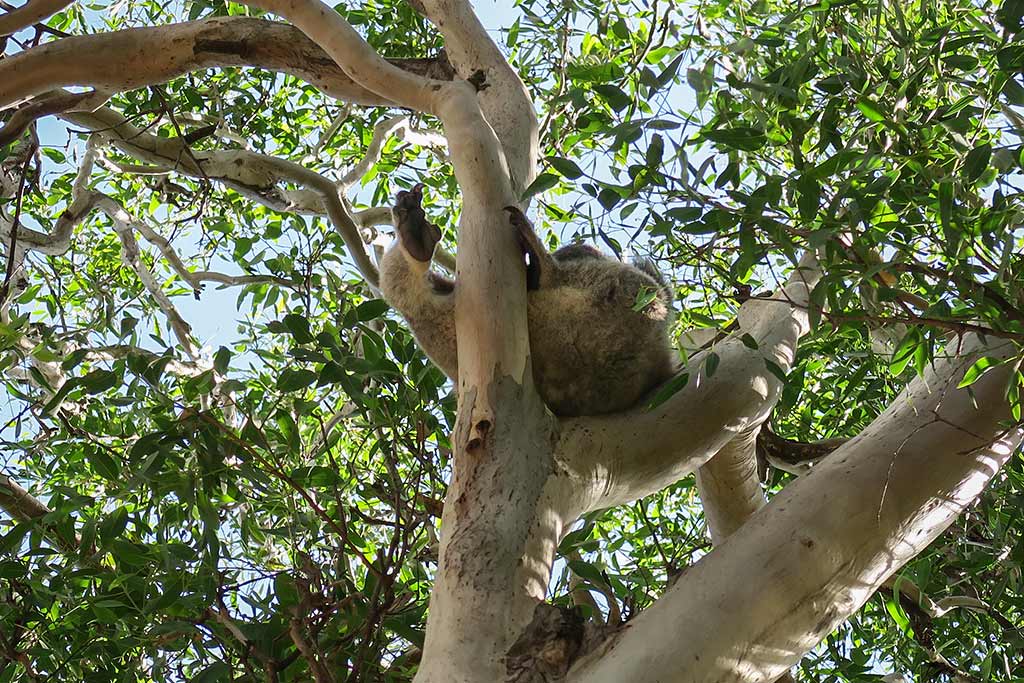
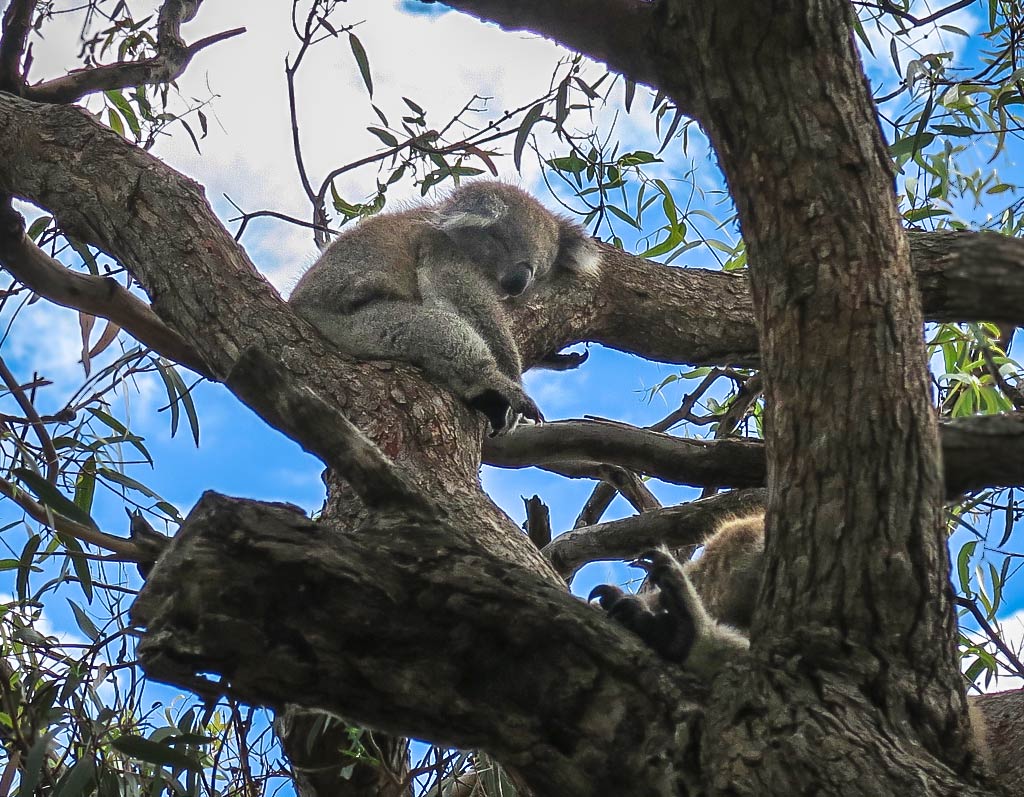
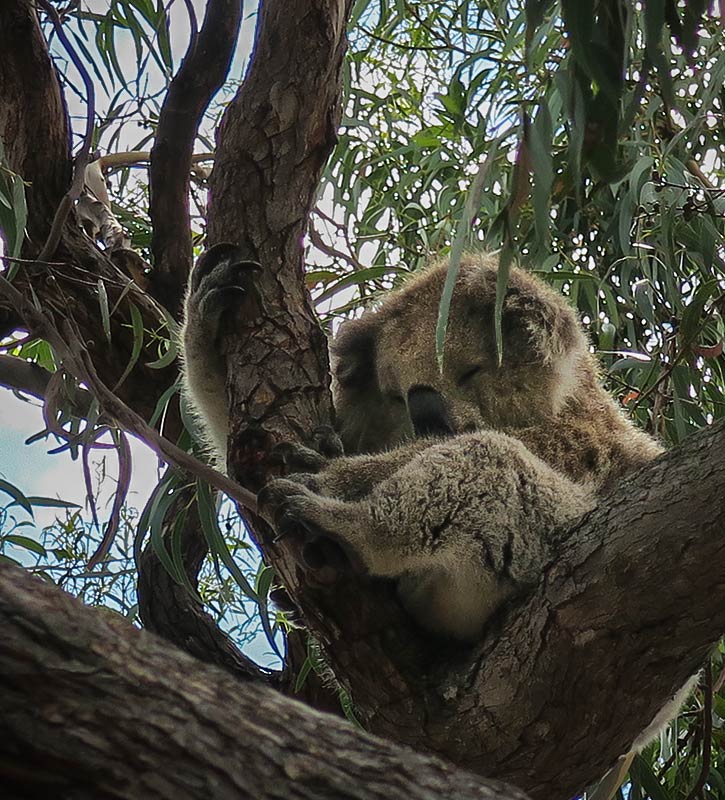
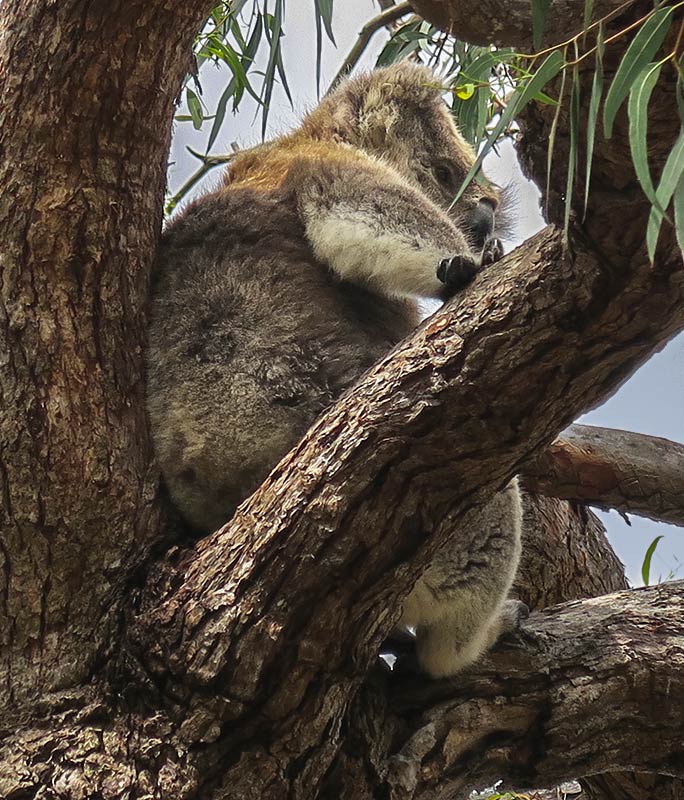
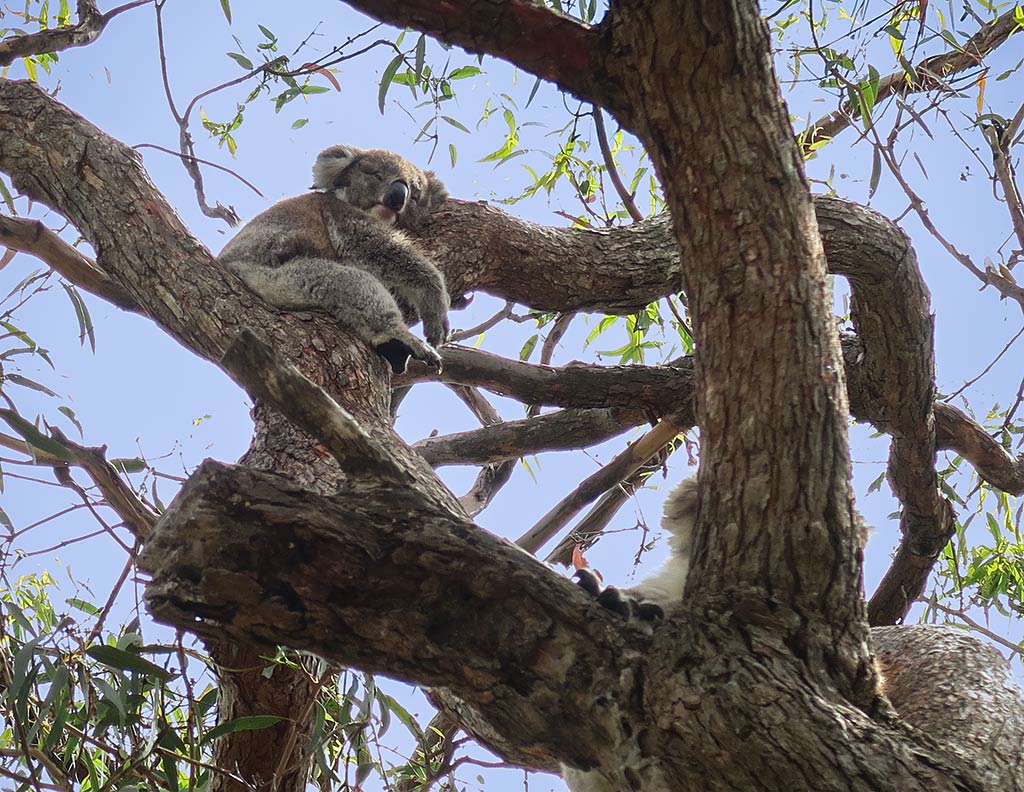
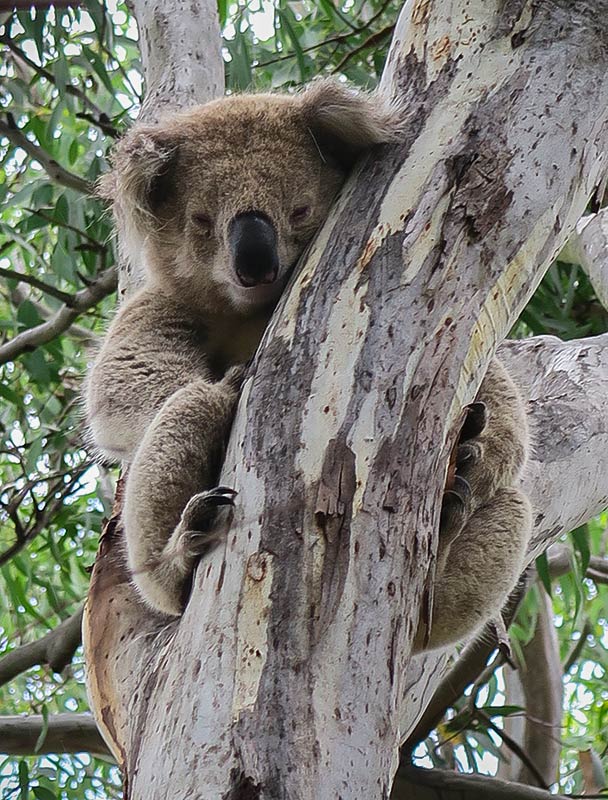
We had an incredible walk on Raymond Island and the Gippsland Lakes Reserve. It’s famous for Koalas and it’s justified fame. There were lots! (Below is a gallery from our walk. Click on an image to enlarge and scroll through the pictures.)

The were both in the wilderness area as well as in the neighborhood trees. We didn’t have to go far to see them. We even got to see a couple of Koala babies.

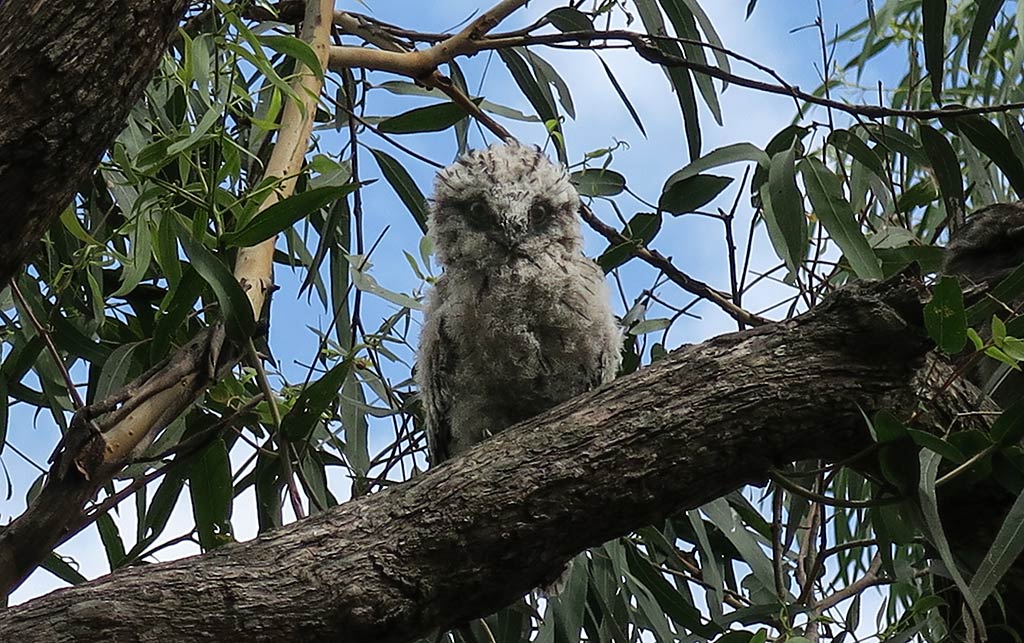
We were also treated to a nice view of a couple of baby tawny frogmouths.

tawny-frogmouth-baby-1
Tawny Frogmouth Baby

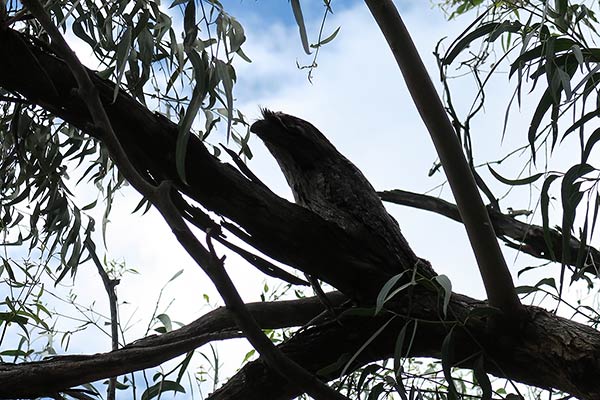
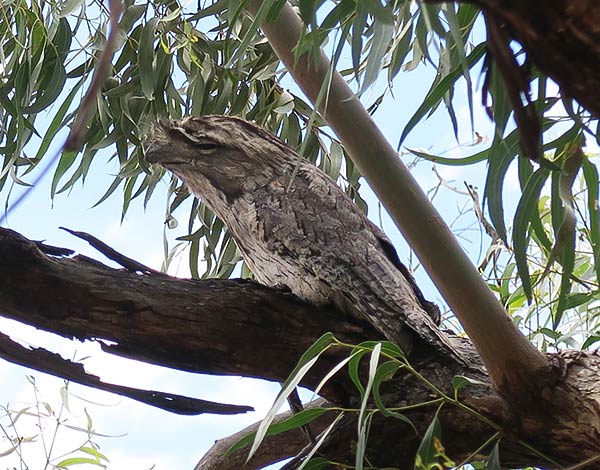
The adult tawny frogmouths are so hard to see with almost perfect camouflage for hiding in eucalyptus trees (called gum trees here). See?…

tawny-frogmouth-camouflage-1
Camouflaged Tawny Frogmouth

With a little better angle, better lighting and the help of Photoshop, here he is with his camouflage exposed…

tawny-frogmouth-camouflage-2
Adult Tawny Frogmouth

It was a very, very good day.

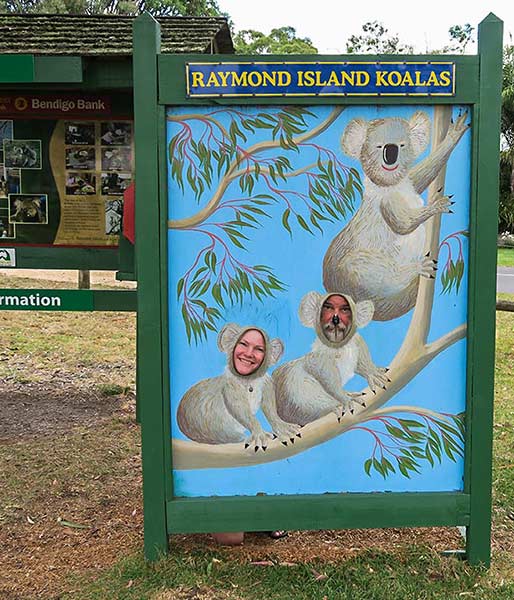
Cyndi and Rich, really. This isn't another picture of koalas!
Cyndi and Rich, really. This isn’t another picture of koalas!

Where we are…

Here’s an interactive Google map showing where we are moored and where we walked, along with Paynesville just across from Raymond Island.

Look Who Hopped By for Breakfast

December 28, 2016

Moored in Gippsland Lakes, we’ve had a real National Geographic time here. This was today’s topper.

A little later, we took a dinghy ride to explore a peaceful inlet…

The virtuosos with that gentle, melodic call are yellow crested cockatoos. They also love to do less-than-constructive things atop sailboat masts. More on that soon. -Rich