March 3, 2013…
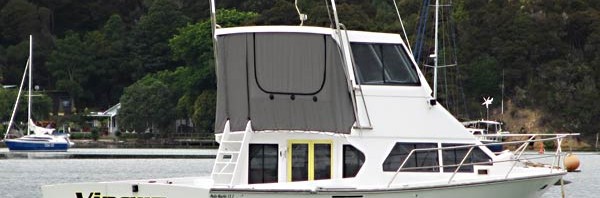
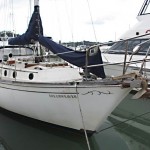
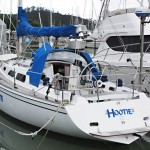
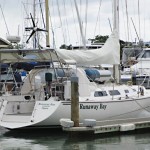
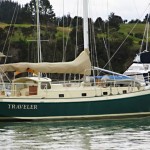
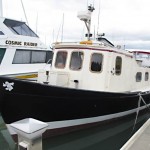
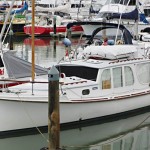
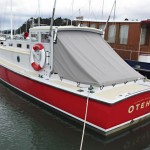
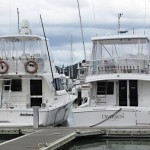
Our friend Tom asked about the boats we see here in New Zealand. Rather than go into a wordy description, I thought I’d just post pictures of some of them. Click the picture. Enjoy. -Rich
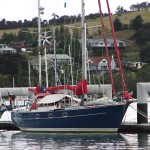
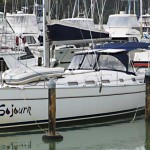


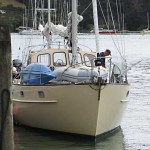
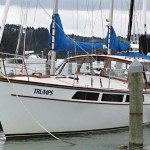

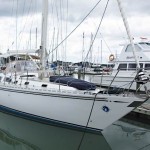
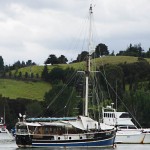
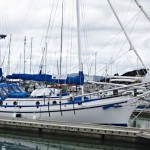
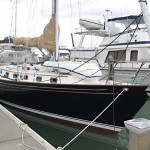


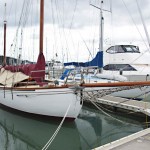
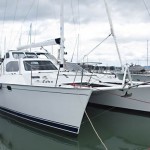
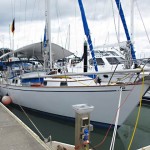


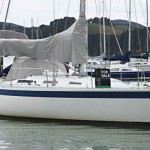
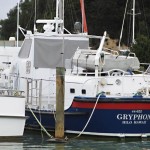
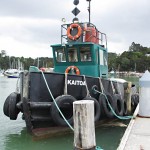
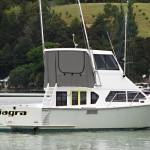
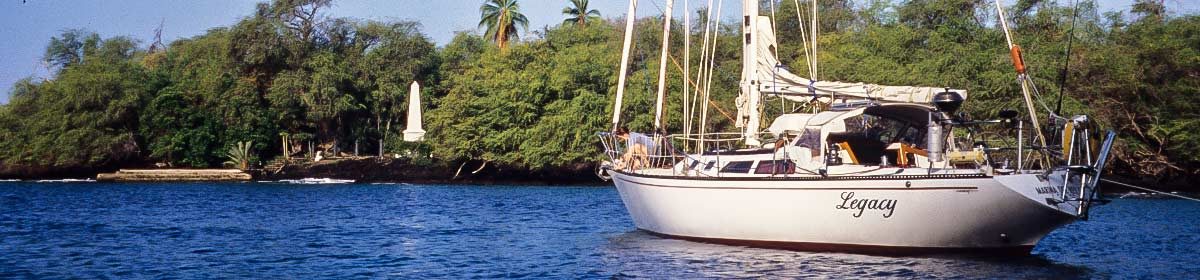
Cyndi and Rich aboard Legacy
March 3, 2013…
Our friend Tom asked about the boats we see here in New Zealand. Rather than go into a wordy description, I thought I’d just post pictures of some of them. Click the picture. Enjoy. -Rich
March 2, 2013
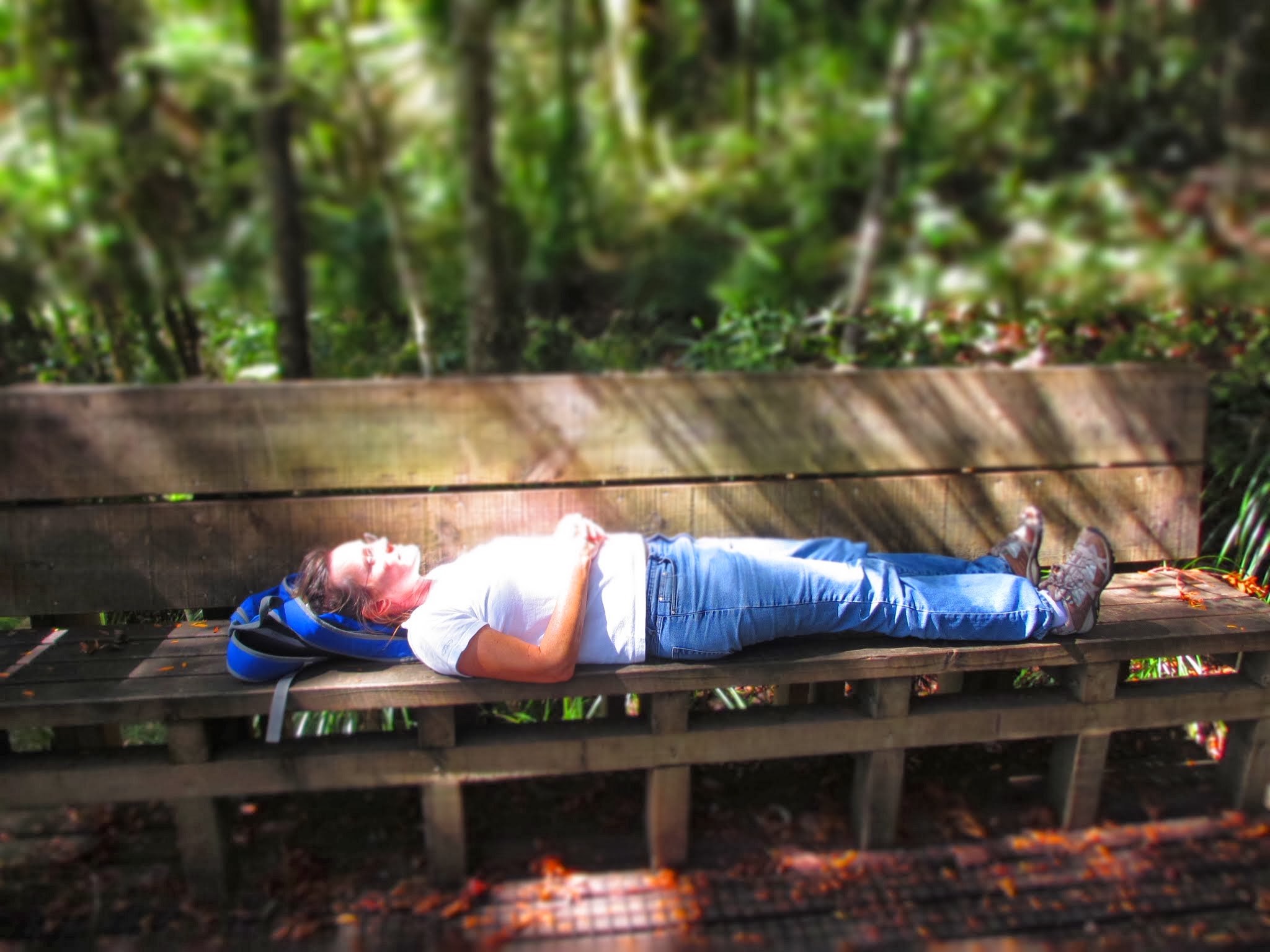
One of the final outings we did in the days before leaving Opua was a trip to the Puketi Forest, about an hour’s drive from us. The reason it took us so long to get here was it fell into the “sketchy information” category of sights in New Zealand. A great guidebook could be written about the many things to see and do if only you could: a. Hear enough about them to have the incentive to seek them out, and b. Figure out where the heck they are. Oh, you’ll hear mention of these places here and there, but always with vague descriptions and no directions.
Traveling in New Zealand (or many other foreign countries for that matter) can be very frustrating to someone used to the American signage and direction system. If you ever see signs with arrows that state: “This way to xyz,” “Continue this way to xyz,” “Two miles to XYZ Exit,” “Xyz: Exit Here,” “Xyz: You are here,” “Restroom this way,” etc., then you must be in America. Take a moment and appreciate the effort and thought that went into making all those signs with their helpful arrows pointing the way.
Pretty much every place we go in New Zealand includes practice at U turns and following wild guesses. And pretty much every park we’ve been to involves a walk to some place we didn’t mean to go. If there’s more than one path (and there always is), we will invariably take the wrong one, discovering this when we reach a restroom, out building, trash bin, etc. That is, once we find a path in the first place! I think for Kiwis, if you’ve made it to the parking lot, you should be able to figure it out from there. They underestimate how clueless we visitors can be.
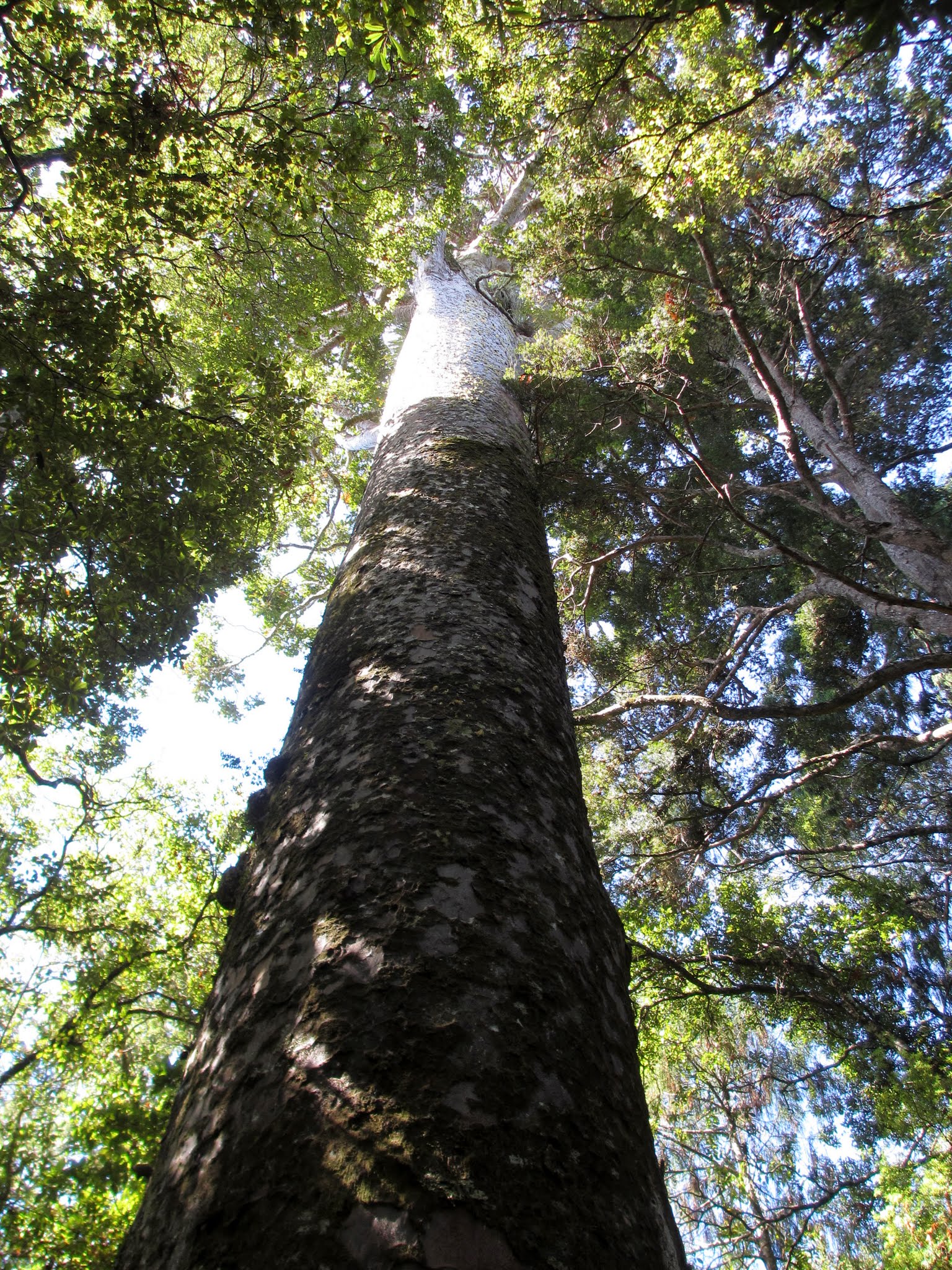
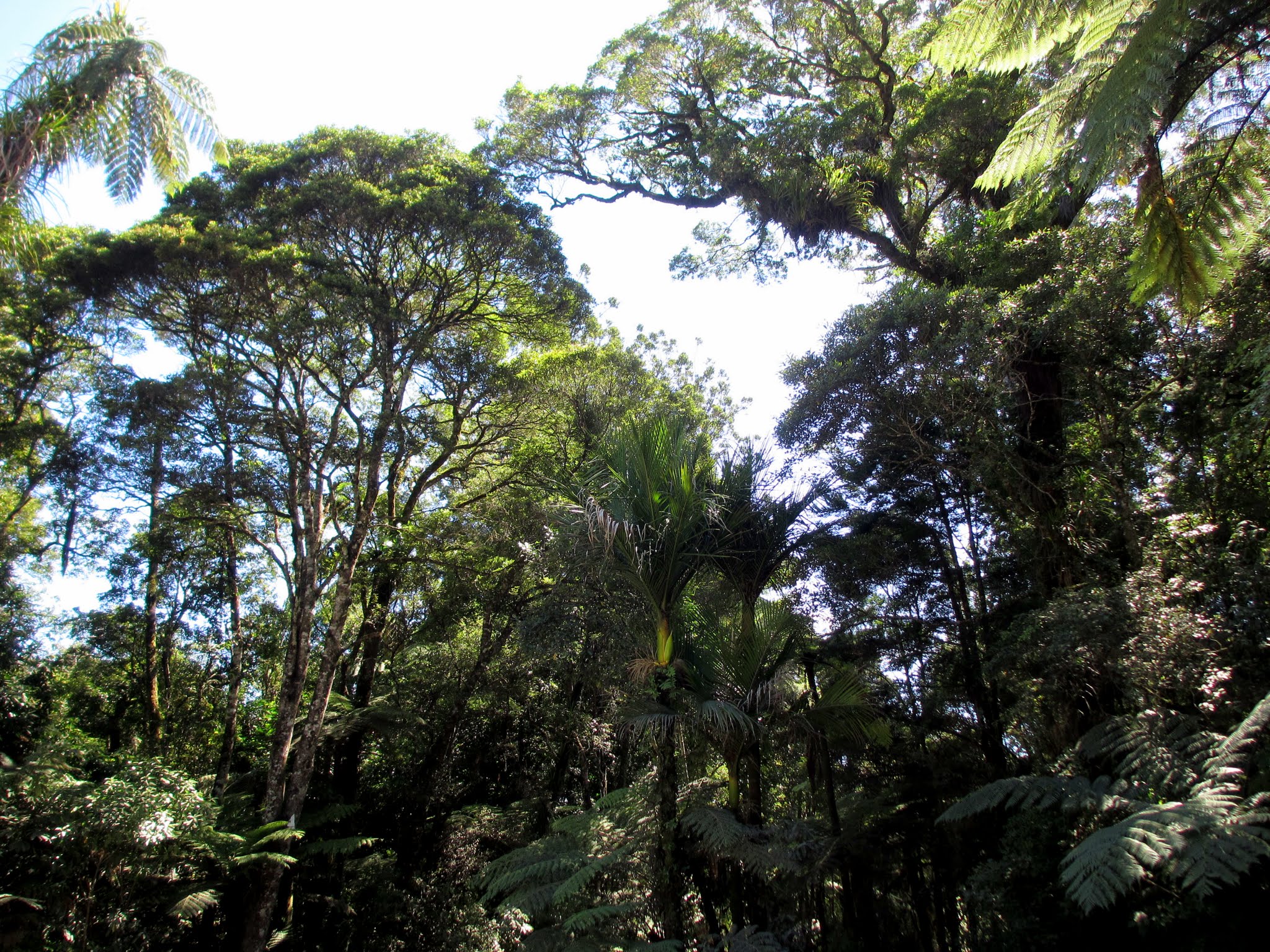
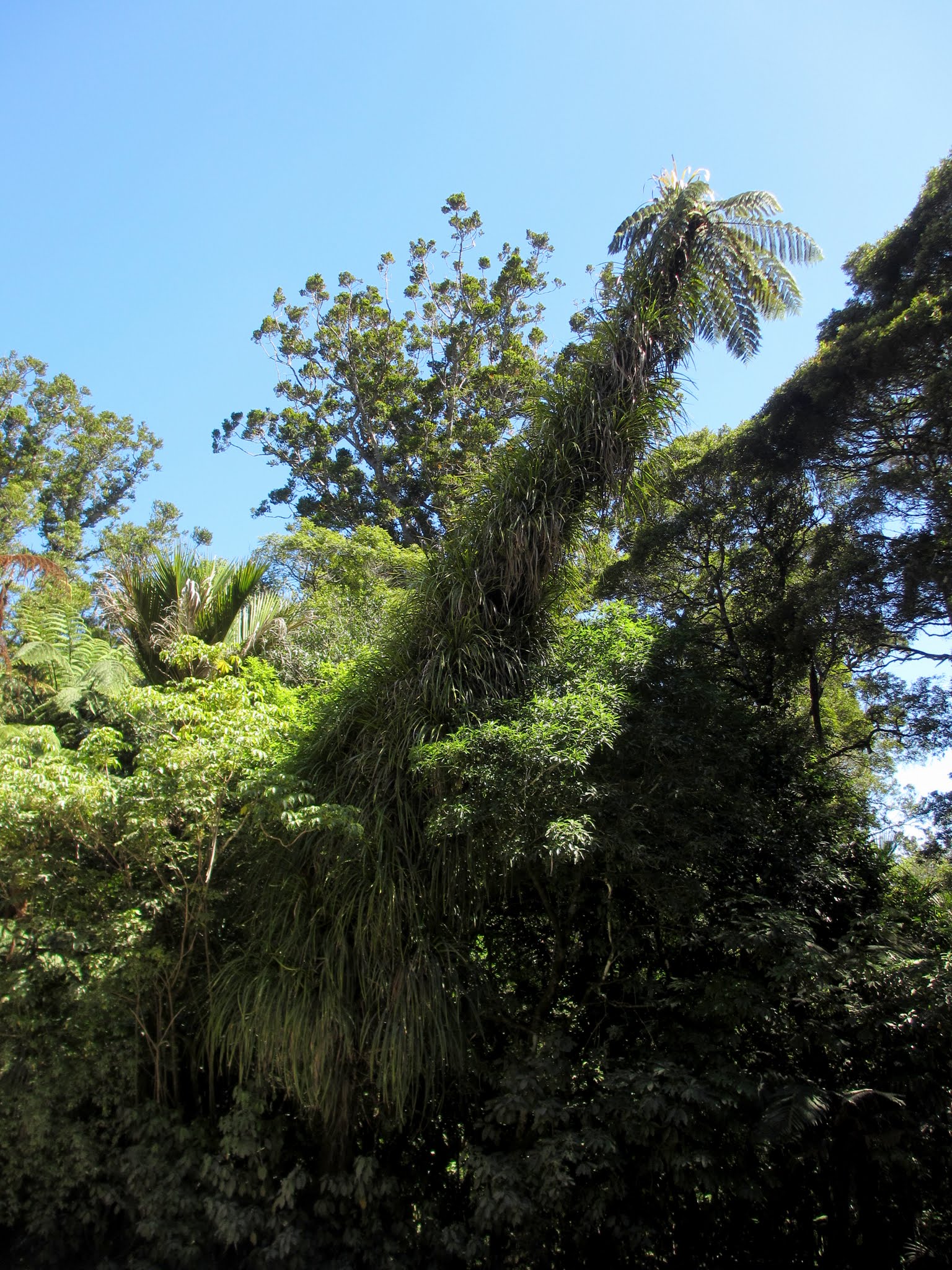
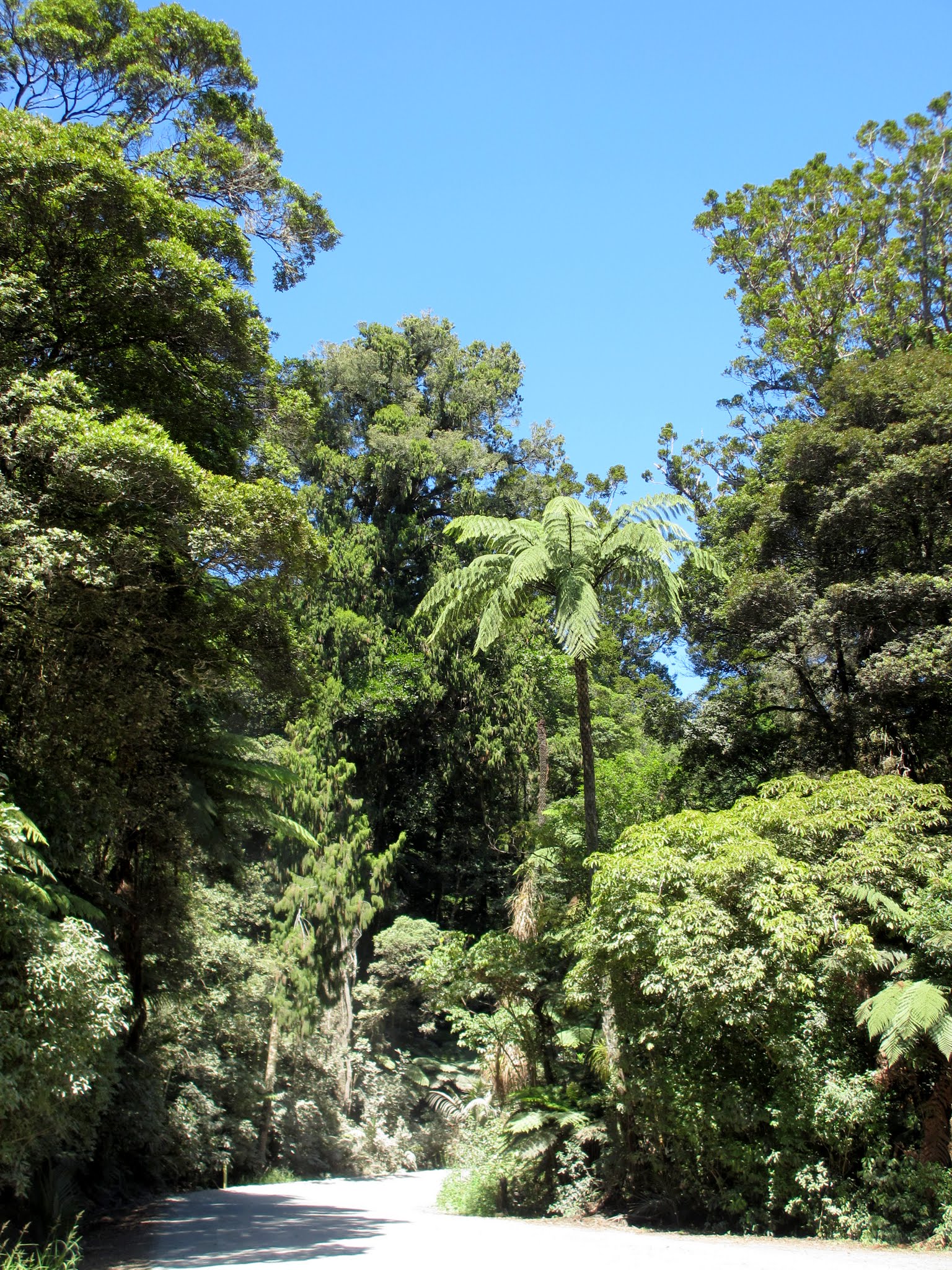
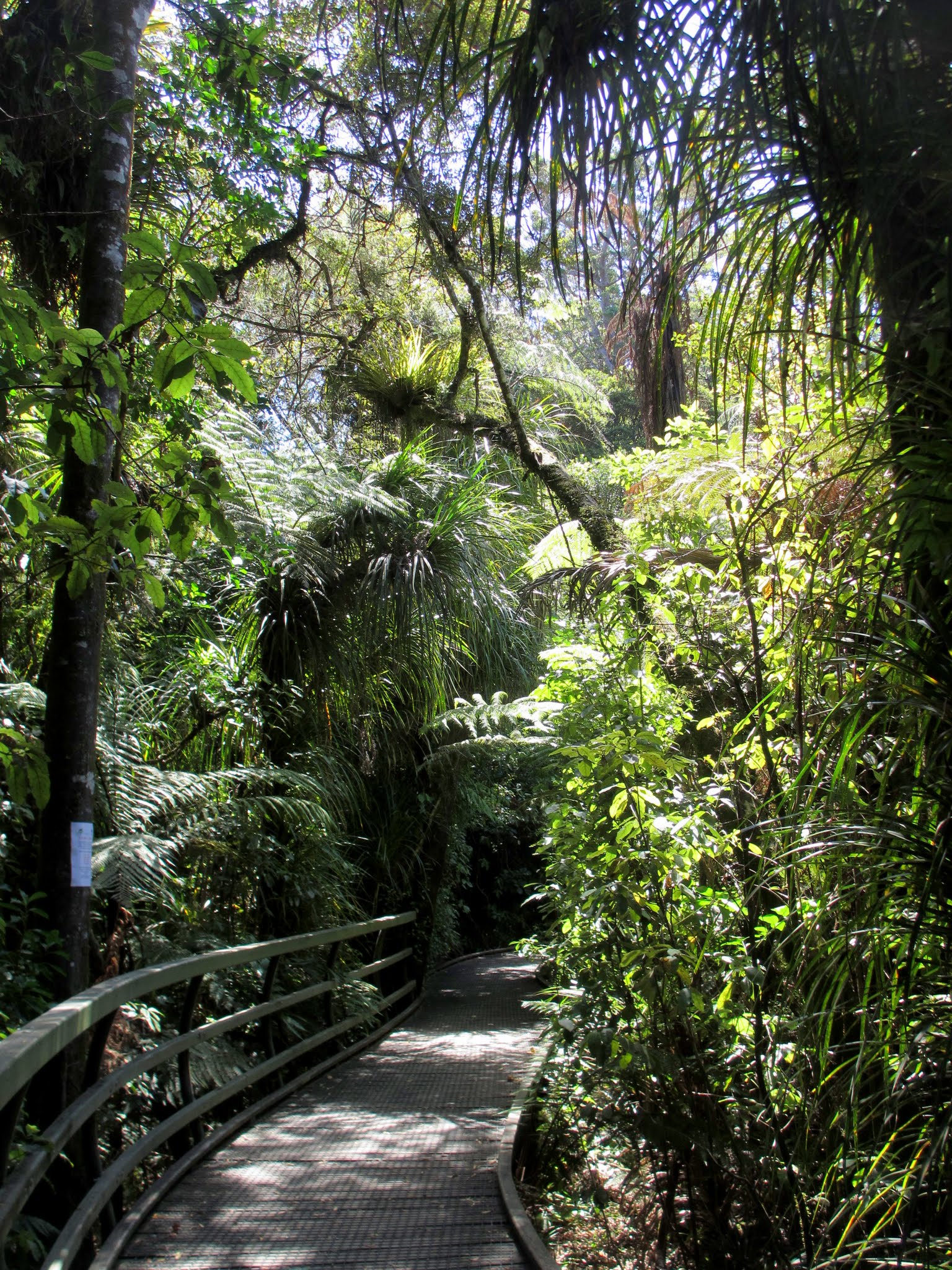
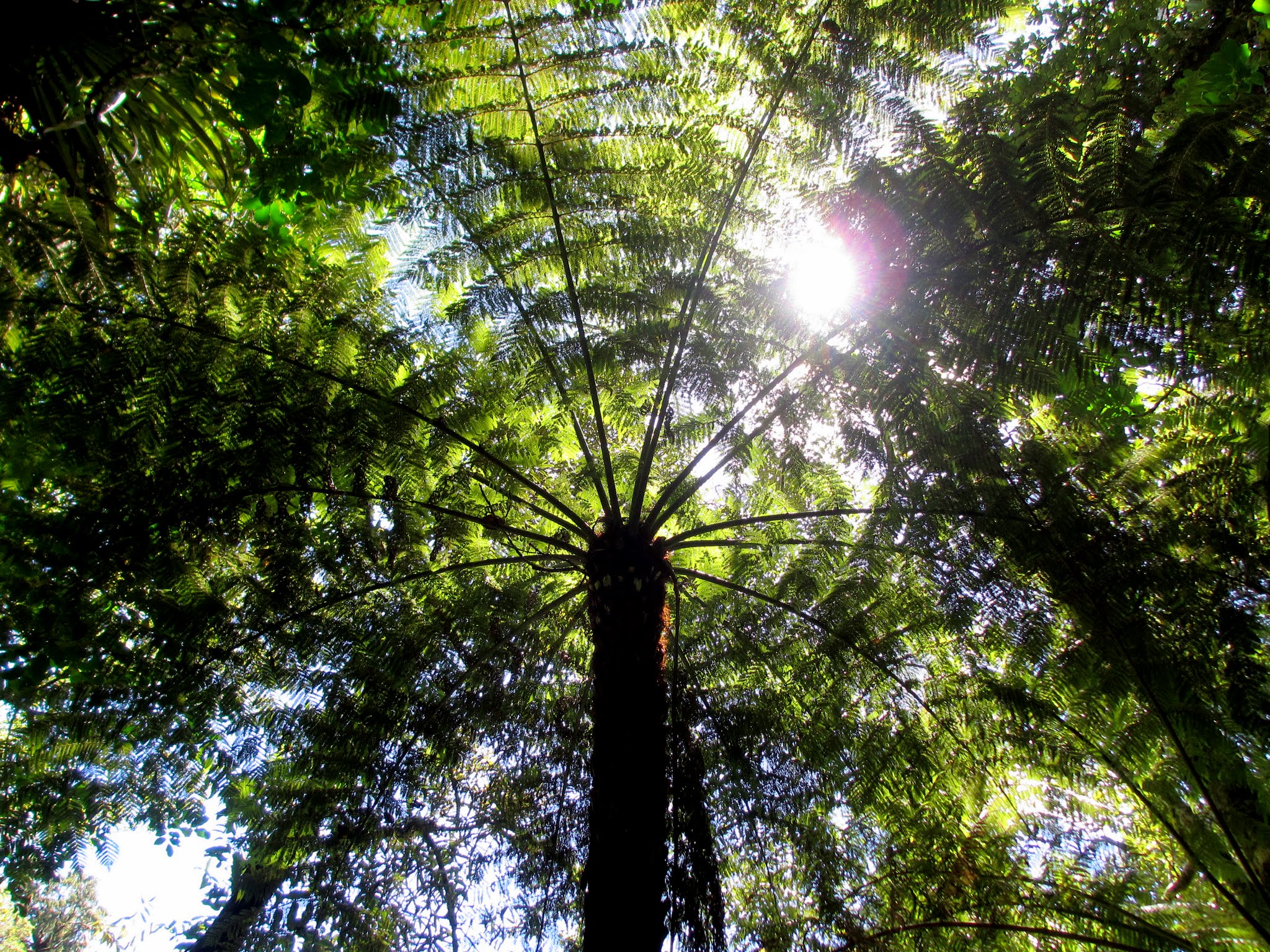
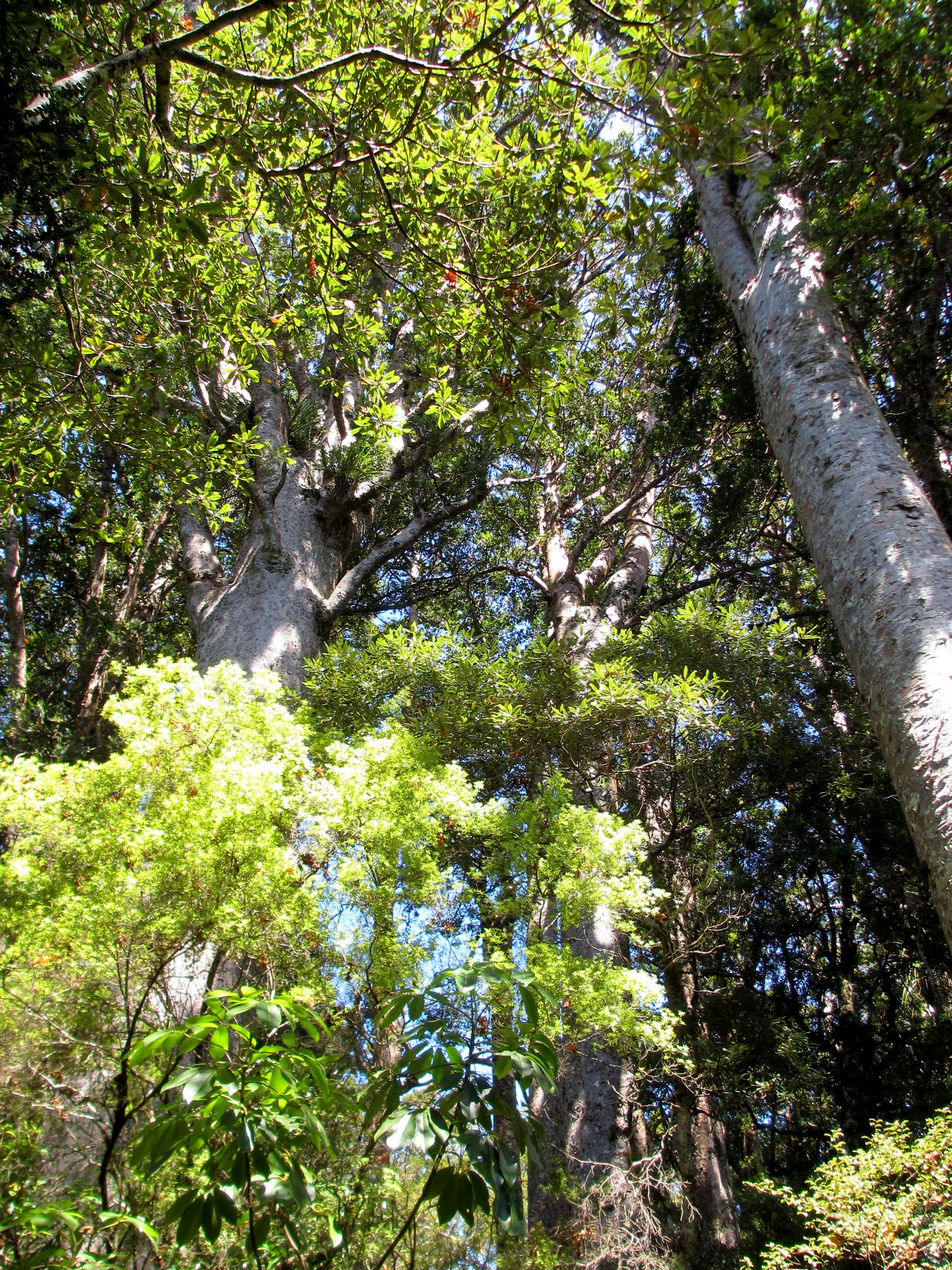
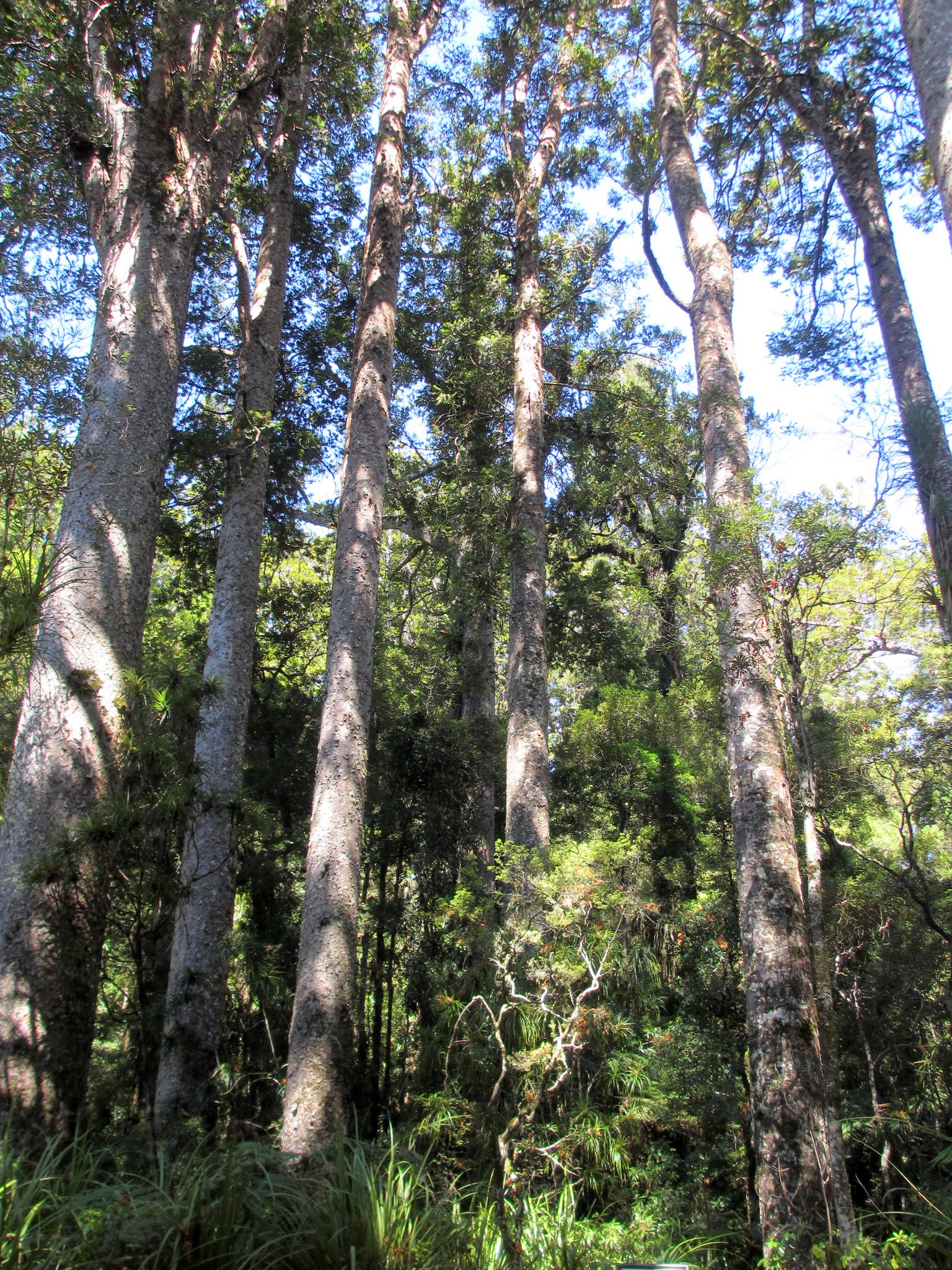
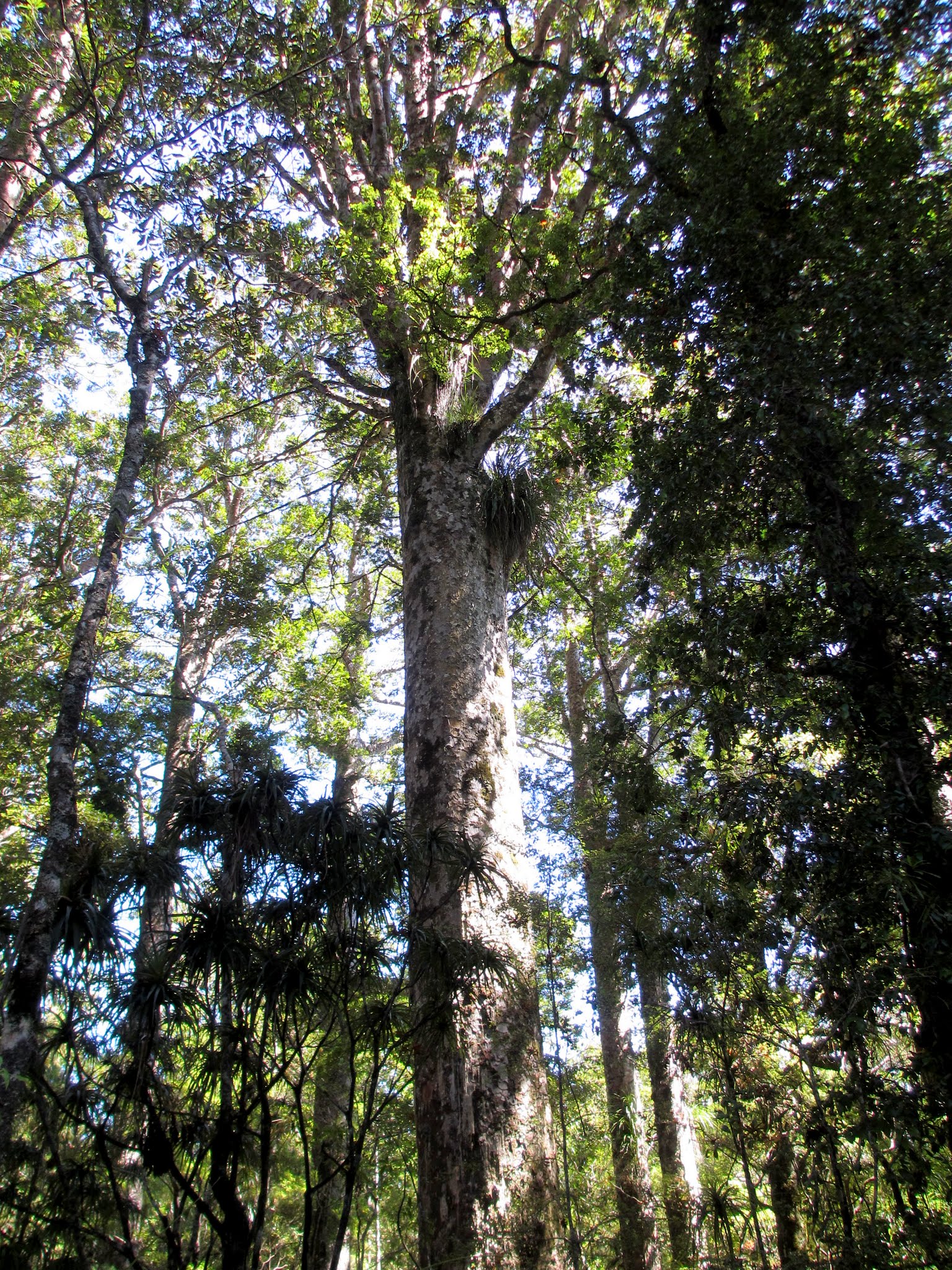
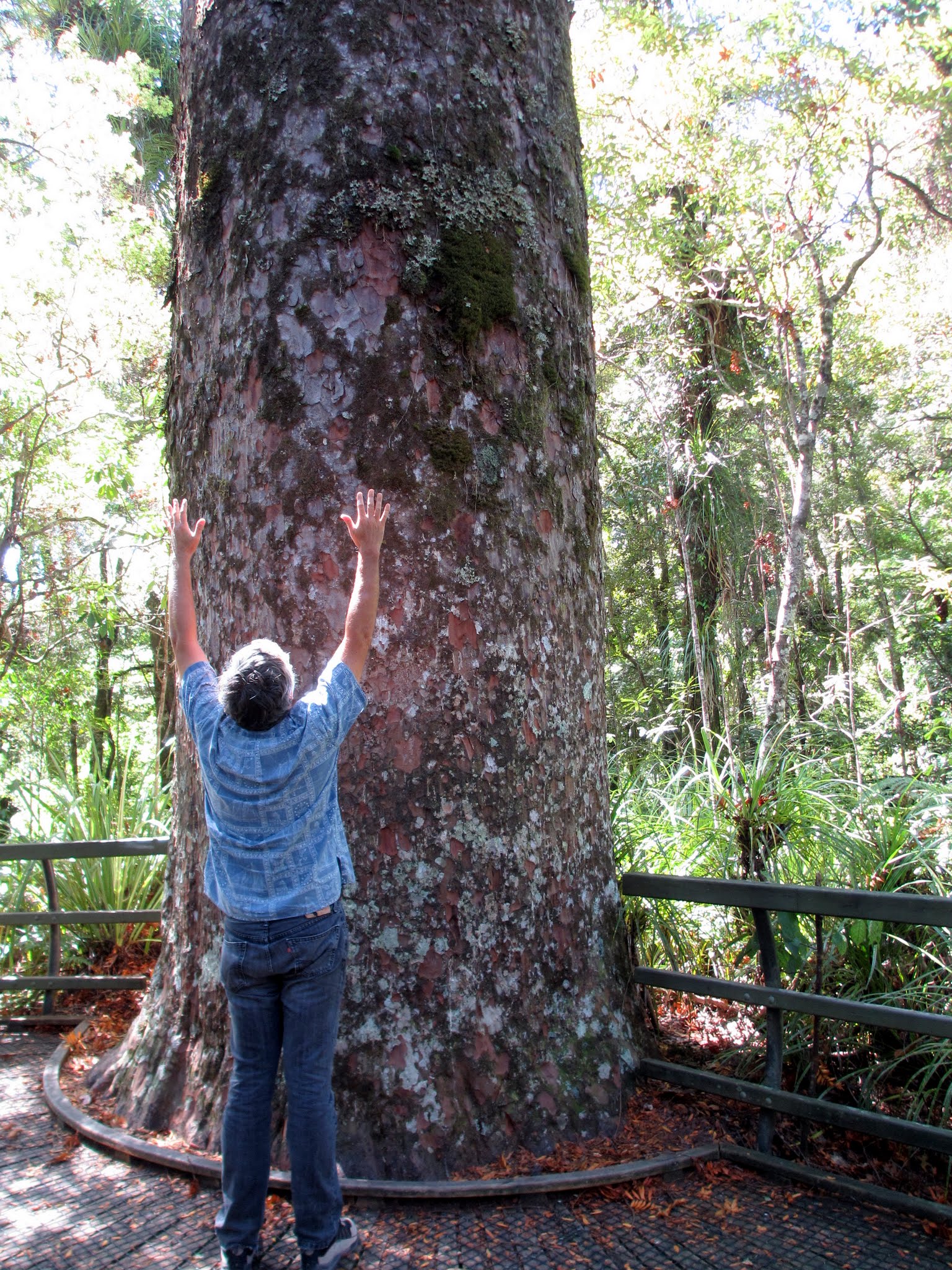
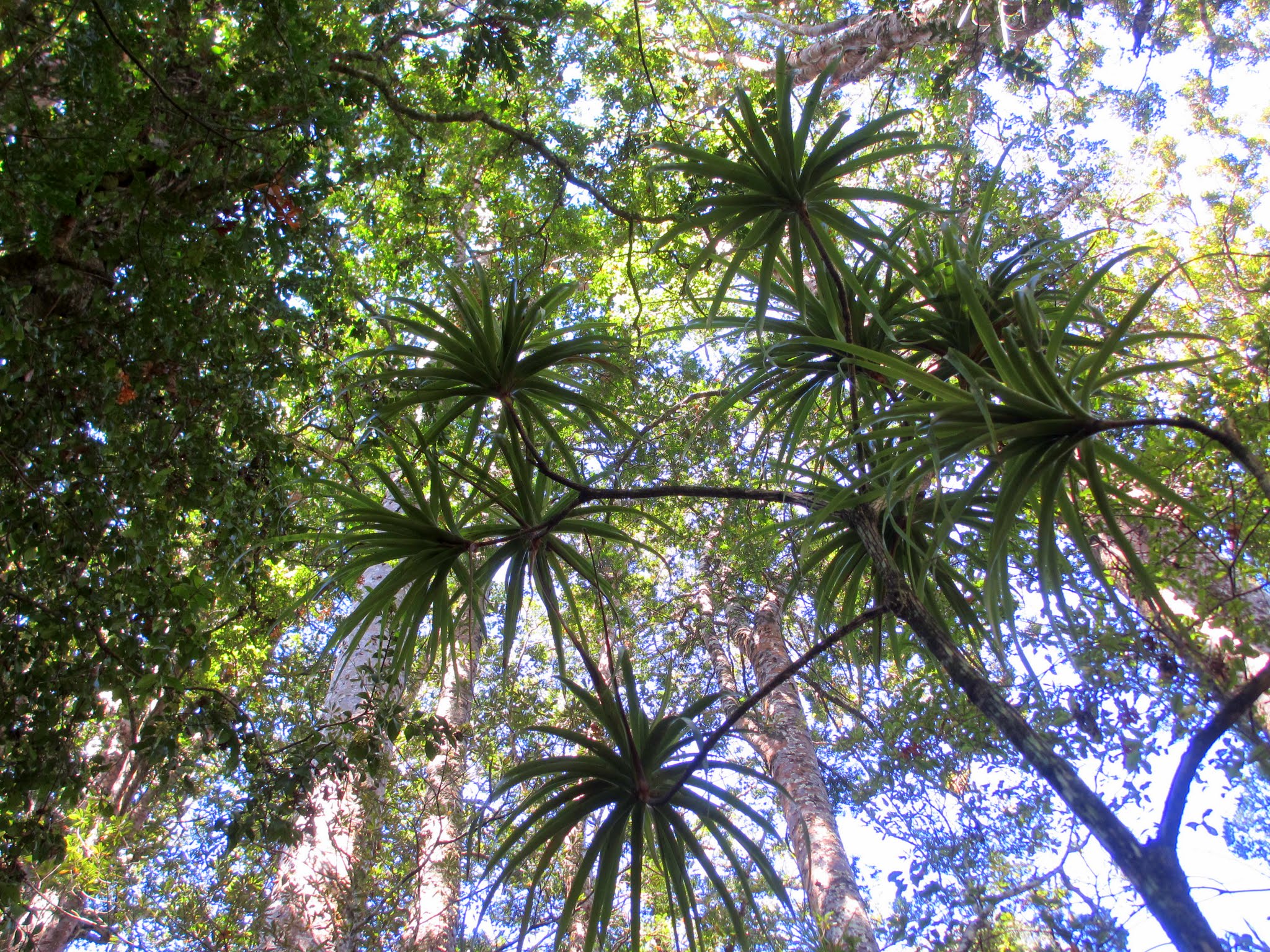
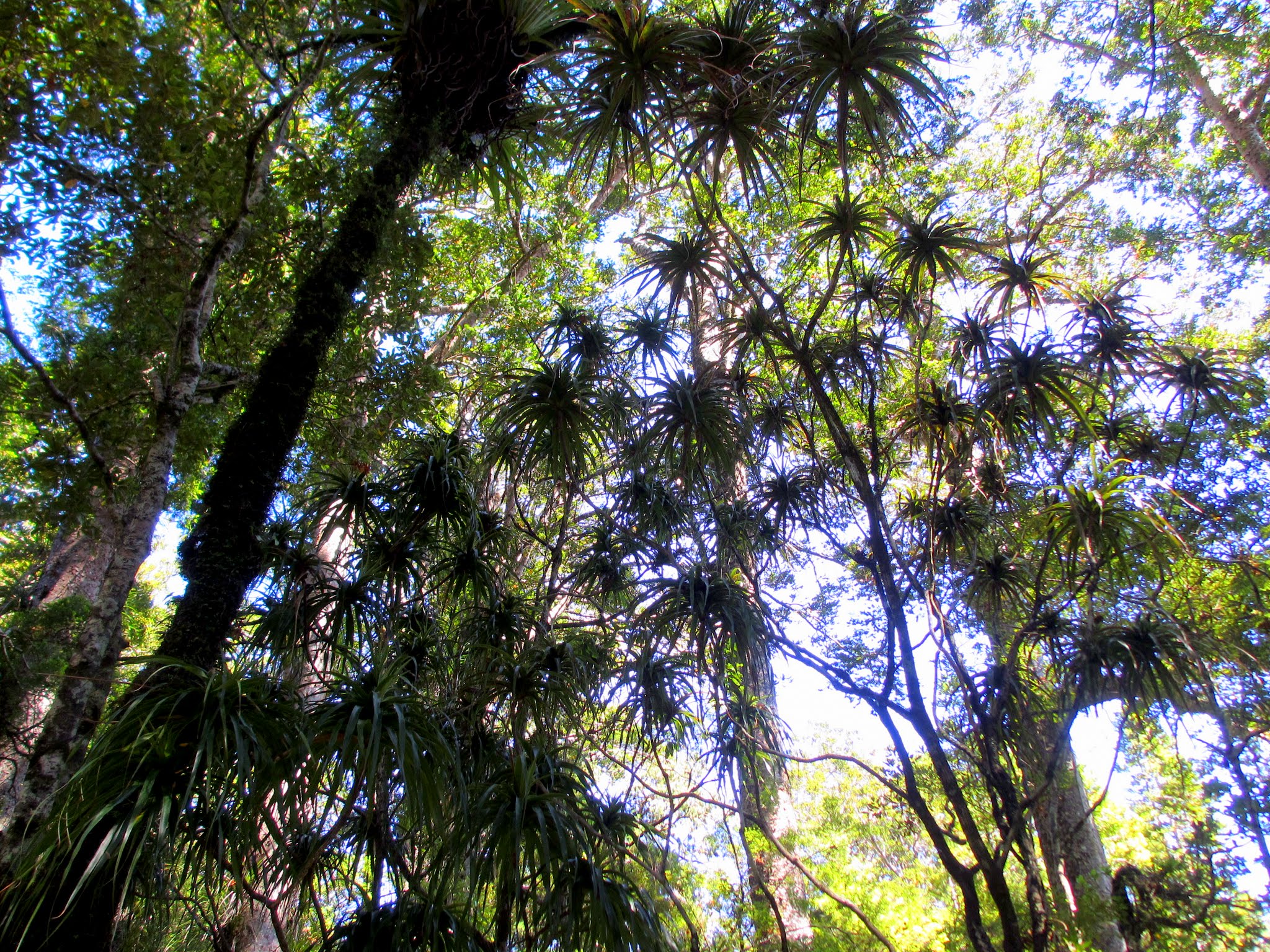
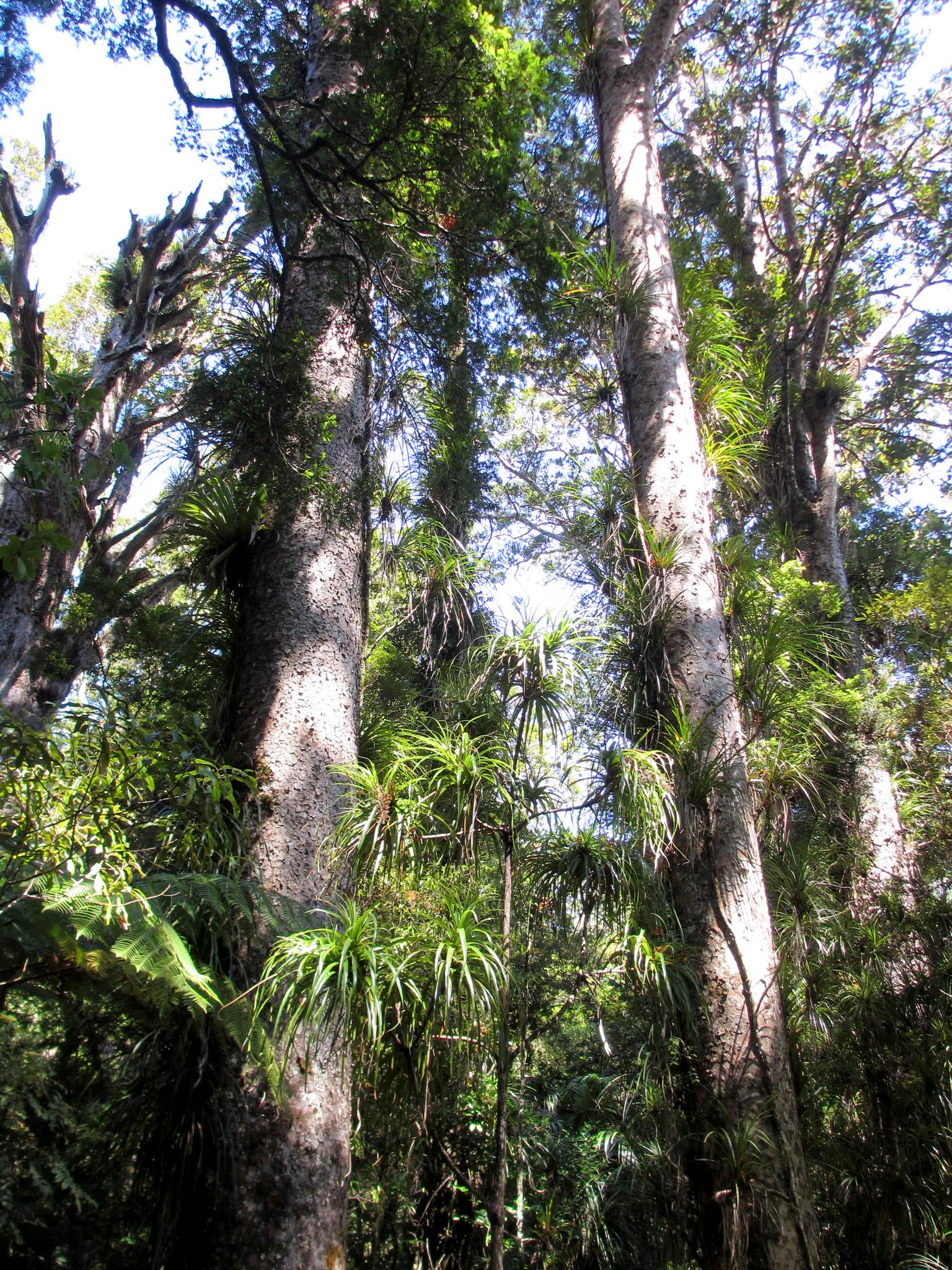
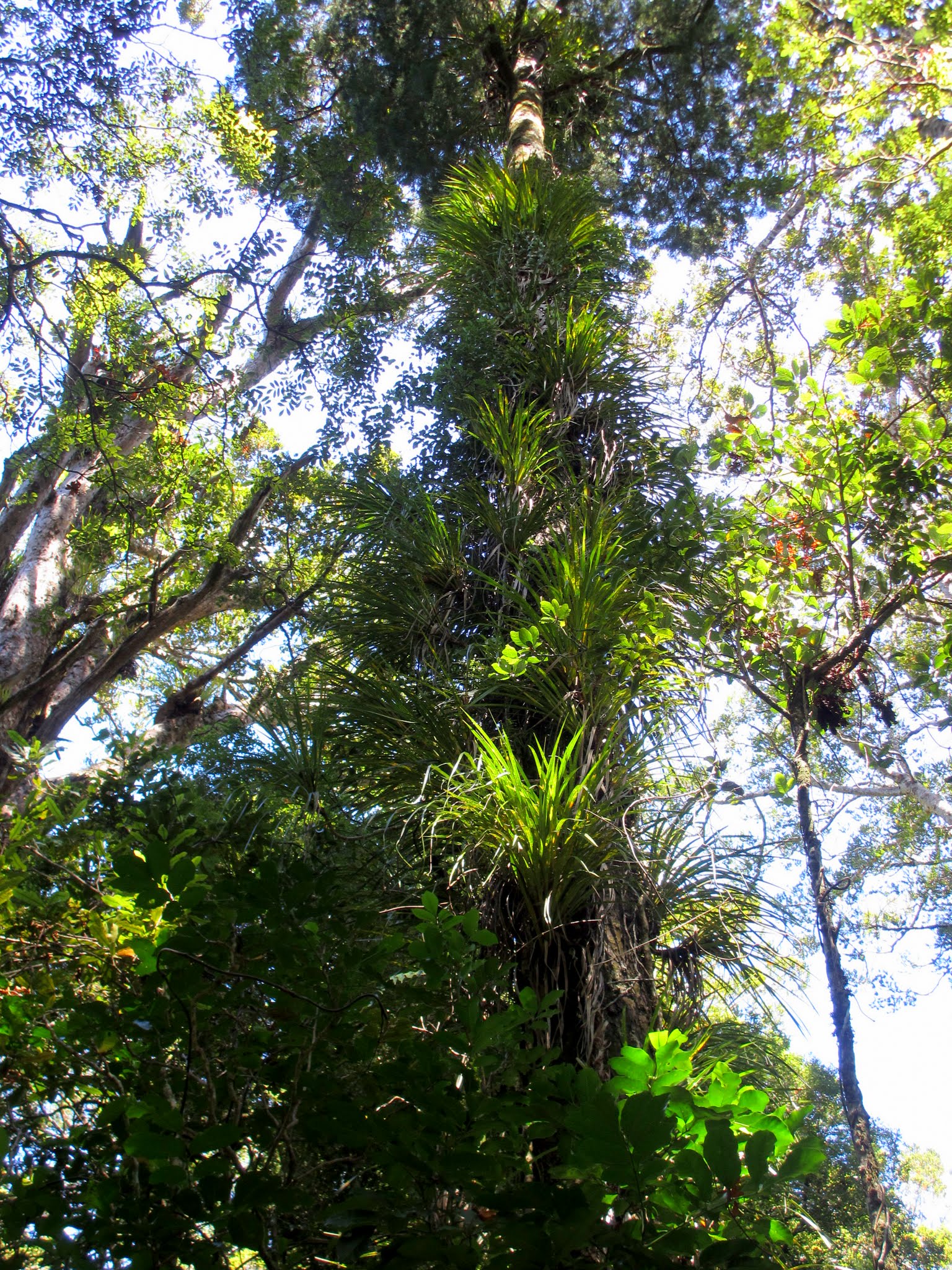
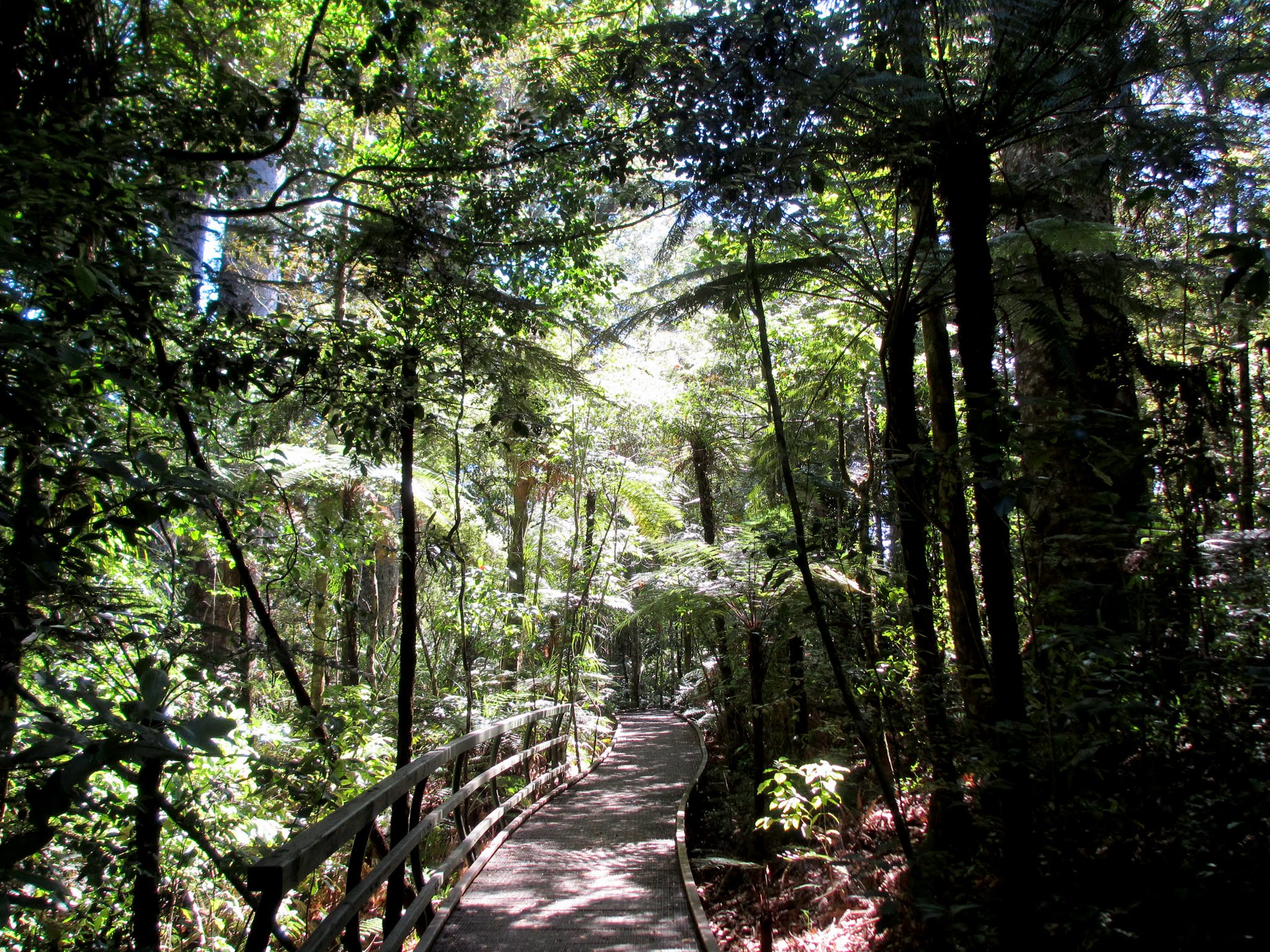
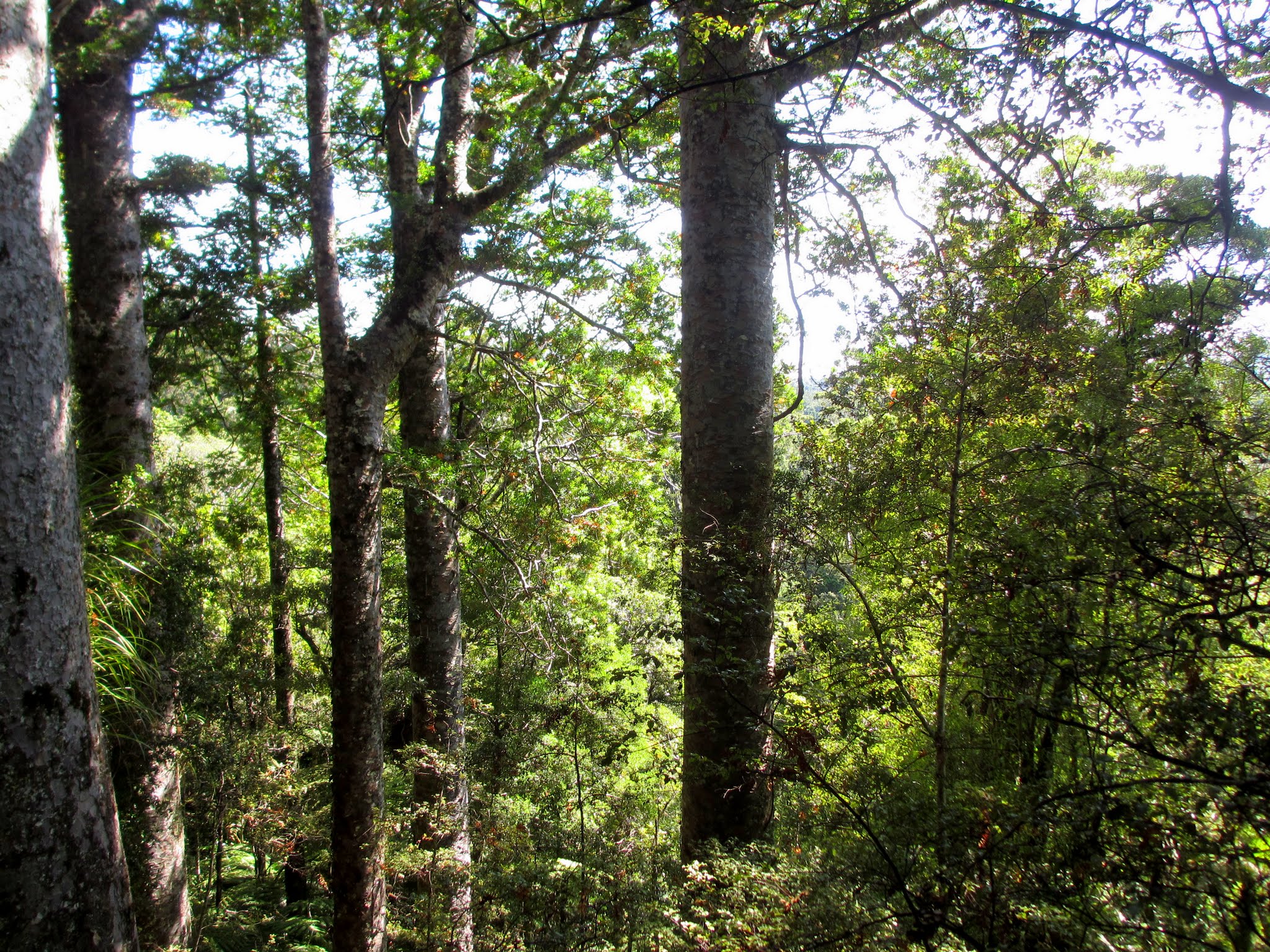
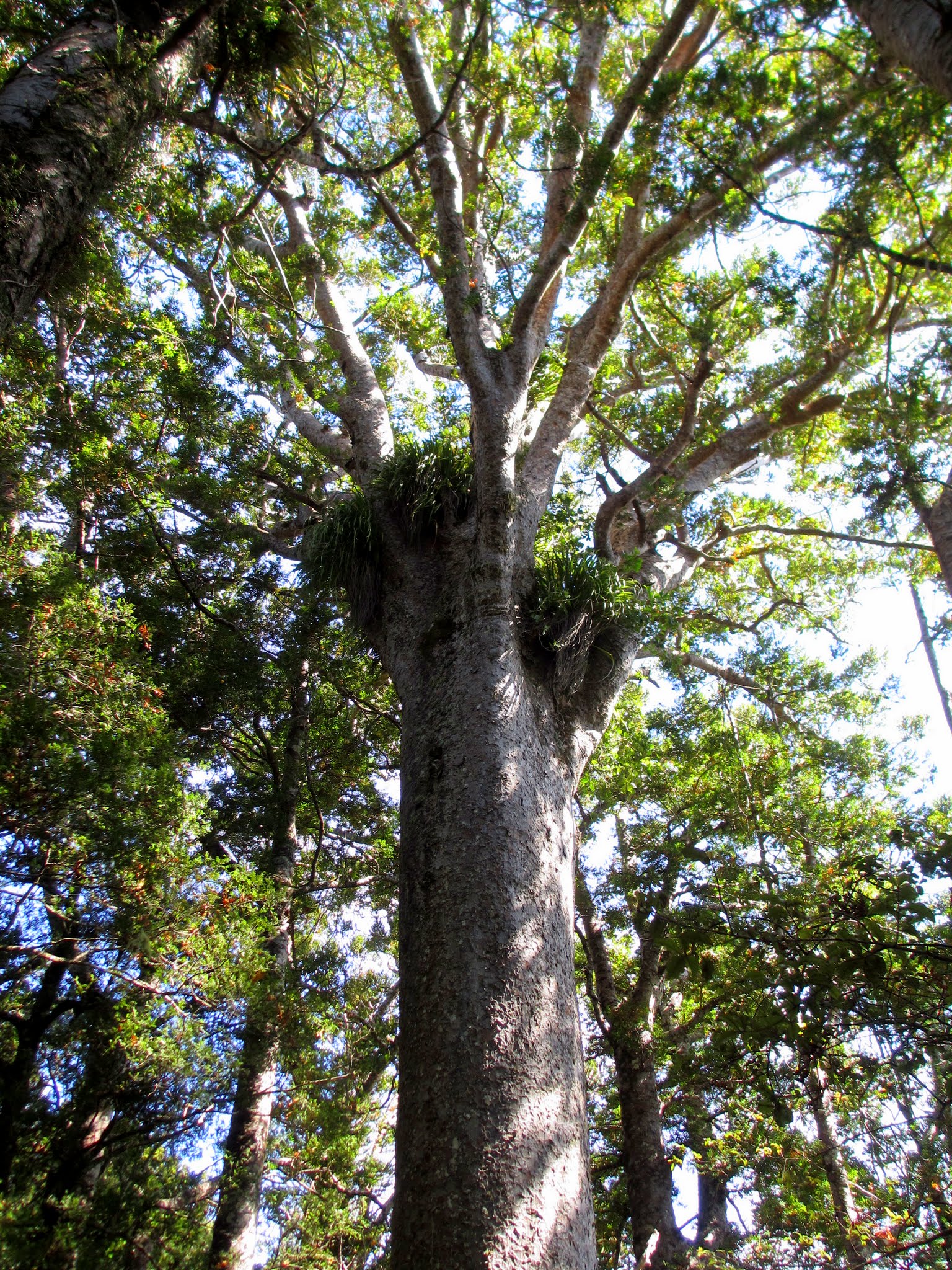
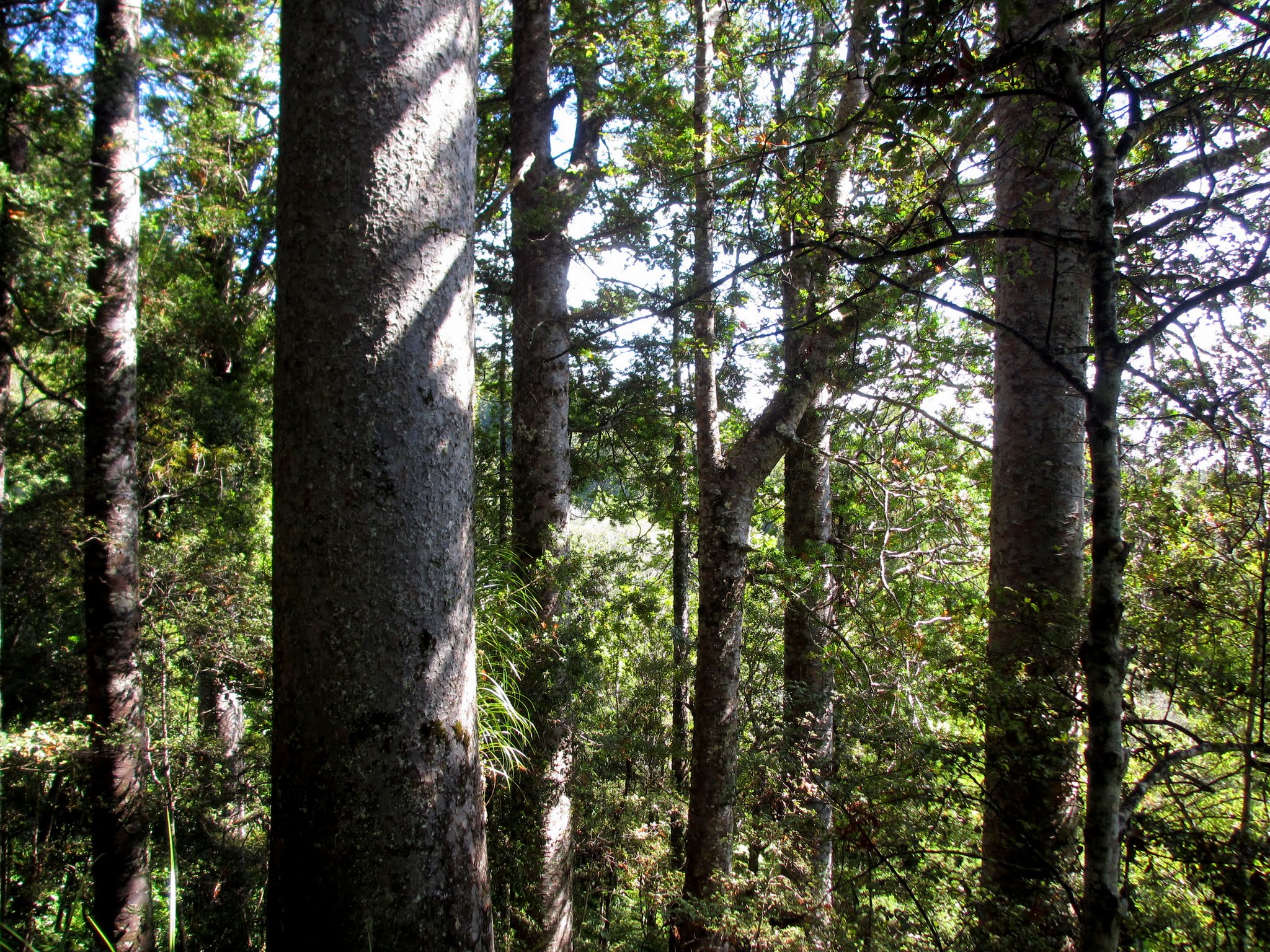
Anyway, back to the Puketi Forest. During our three months in Opua, I managed to gather enough information to get us to the general area, but beyond that my info was sketchy. After reaching a T intersection and guessing which direction to turn, we managed to stumble across the Manginangina Kauri Walk. We set out and soon found ourselves on an elevated walkway through the forest. The kauri trees were smaller, but it was as beautiful as the famous Waipoua Forest on the west coast. The walk took about 20 minutes.
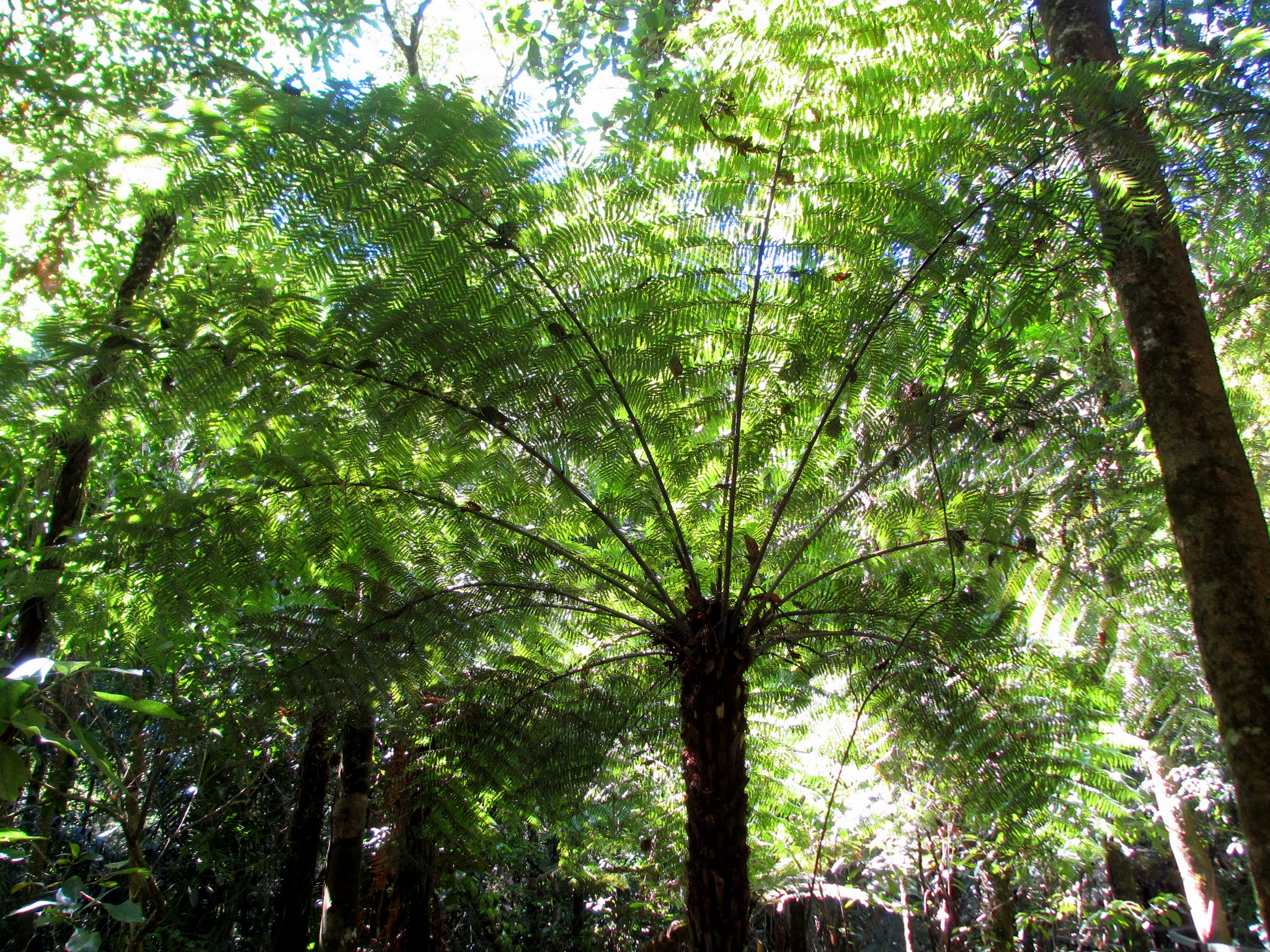
Next, we headed down the road the other direction and found the Puketi Forest Loop, which turned out to be an hour-long walk through subtropical forest. At the furthest point there is an elevated platform among kauri trees that puts you up amid their trunks – a stunning scene, well worth the effort to walk there.
One thing we learned here is that a lack of information available about a place does not equal a lack of worthiness of the sight. We have never sought out one of these places and felt let down. In fact it’s just the opposite: why don’t they make more of this? I don’t know the answer, but if you find yourself in the area and wondering if you should go see the Puketi Forest, the answer is yes. –Cyndi
Below, a photo gallery from both the Manginangina Kauri Walk and the Puketi Forest Loop. You can click to enlarge and scoll through the photos.
March 2, 2013
We considered changing boats in New Zealand – maybe even to a power boat (see Sailing Sucks). We looked a bit but decided that once we started spending more money on Legacy, we’d be committed to her for at least one more season.
We spent a bunch of money on the boat before we left – about $60,000. Hopefully, we front-loaded a lot of the maintenance for the next several years by replacing just about everything on the boat. We joked that we saved our favorite cushion and replaced everything else. Sadly, it’s not that far from true. We’d changed our engine a few years earlier so it stayed but we replaced almost all of our electronics, re-rigged, stripped and painted the mast. We added a roller furling main boom and all new sails.
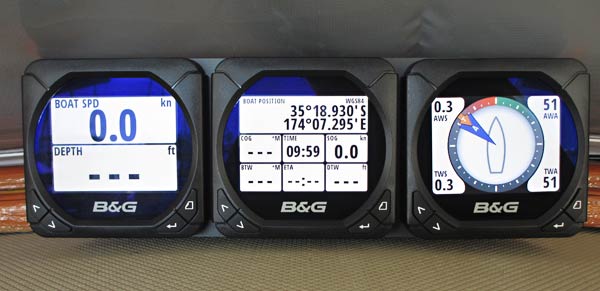
When talking about buying the $10,000 roller furling boom, someone suggested to us that we’d never get our investment out of the boat. What a silly notion. A boat as an investment! Ha ha ha! Now, here in New Zealand, we’ve added another almost $10,000 with new sail instruments and an electric sheet winch. Talk about sunk costs!
Just to get our recent costs out of the boat, we’d have to sell her at a price that would net us $70K. (We paid about $70,000 for Legacy about 14 years ago but my memory’s not that long, so I wouldn’t feel as compelled to recoup that “investment.”) The market wouldn’t bear that. I think at best, we might walk away with $60K or so. That led me to come up with this bit of wisdom about selling a used sailboat:
Use it until it’s worthless and then sell it for what it’s worth.
That’s what we now intend to do. We’ll sail around this area of the South Pacific for the next x years (see The Plan). Enjoy all our new, expensive gear, probably until most of it no longer works, then sell our boat for what it’s worth (see above). -Rich

February 2013
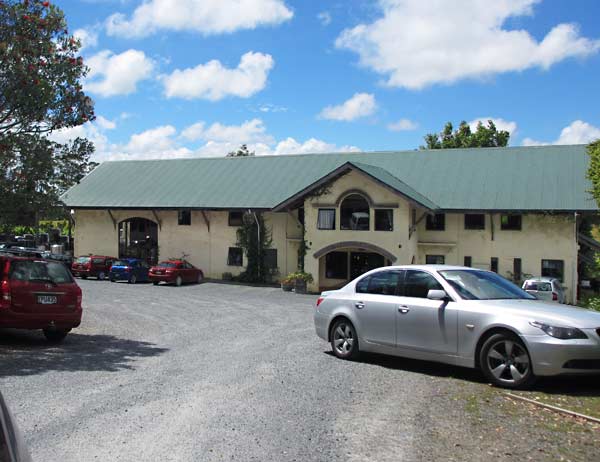
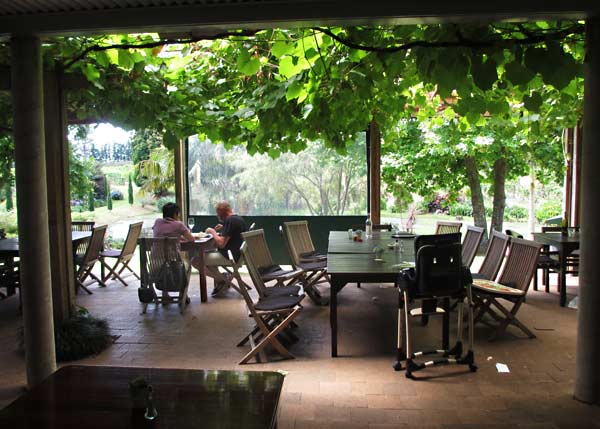
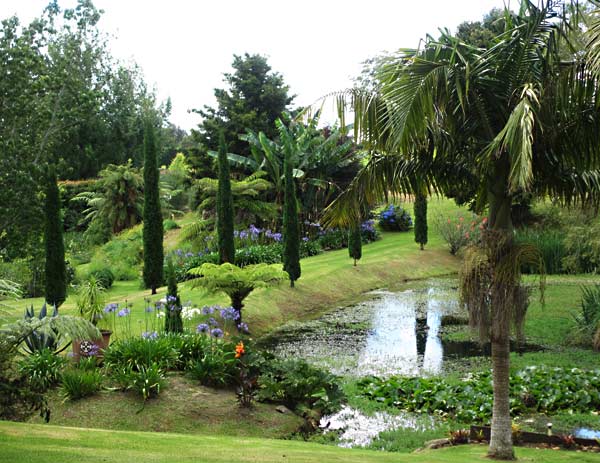
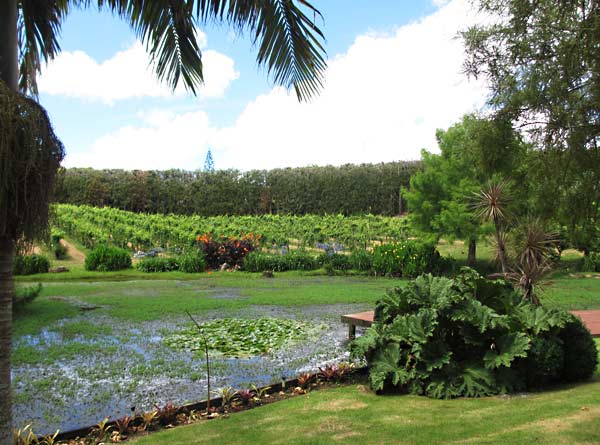
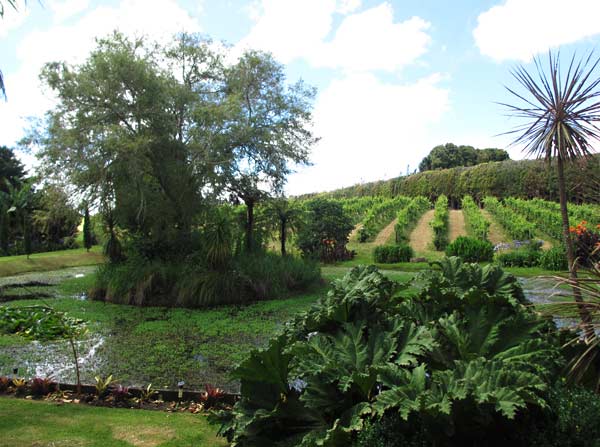
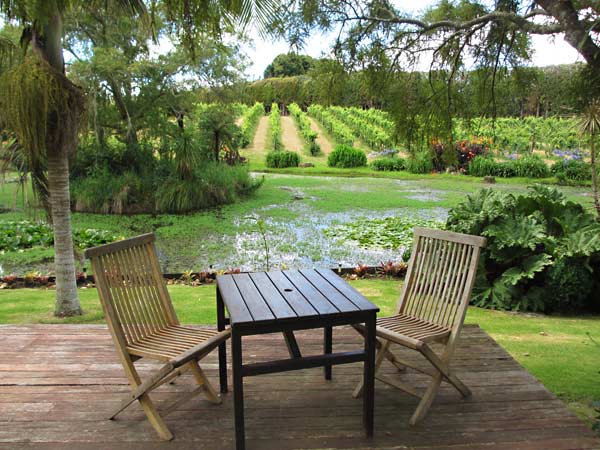
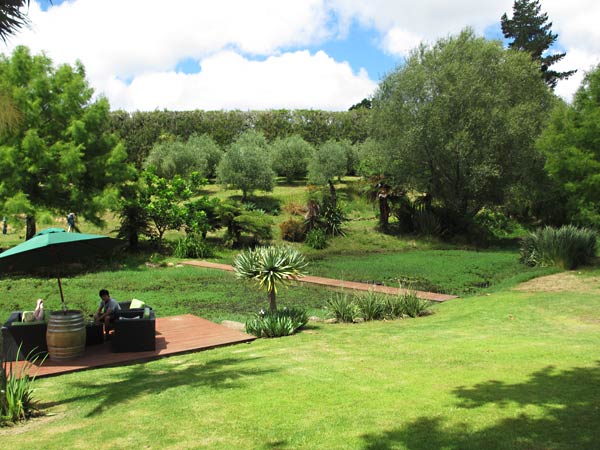
Just inland from Kerikeri is the Marsden Estate, the biggest and fanciest winery in the Northland area. The tasting area and shop share the estate building with a fine restaurant, and outside are beautifully manicured grounds with seating alcoves where you can enjoy a glass of wine and admire the scenery.
After strolling around the grounds, we went inside so I could do a wine tasting (Rich opted out today). They had a beautiful tasting area set up, and you could taste as many wines as you wanted with no fee, which is generous in that they make a lot of different wines. But tasting fees have never been relevant to me anyway in that there are always at least one or two wines amid the “that’s good” and “very nice” that get the response: “that one’s coming home with us!” I’m not sure we’ve ever left a winery with fewer than 2 bottles.
So it was a surprise as I tasted wine after wine that nothing was standing out—I’ve never had this happen. It’s not that the wines weren’t good; they were fine. But wines from wineries tend to start at $18USD, so for that price “good” isn’t good enough, I want special! Unfortunately, I wasn’t finding anything special and started to wonder how I could exit gracefully without buying anything. I wasn’t obligated, but I couldn’t help it; I felt guilty. Then I spotted a nice-looking rose on sale for about $10USD and bought that.
We never did get back to try the restaurant, but I hear it’s very good. I won’t ever be wine shopping here (the rose was nice but not special), but it’s such a pretty setting that I’d go back to have a glass of wine by the pond. –Cyndi
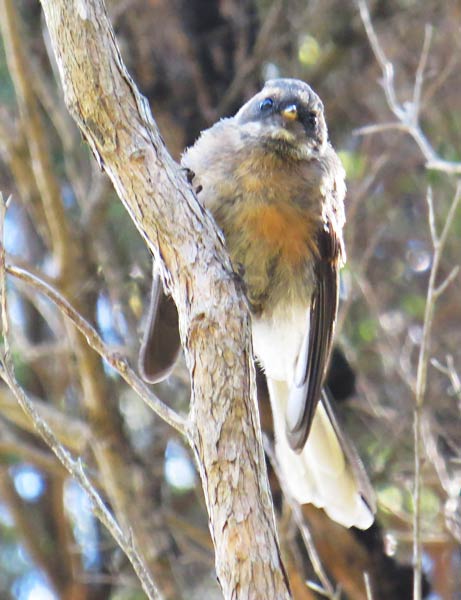
On any given walk through New Zealand forest, whether it’s native brush, pine, or sub-tropical, you will probably see these birds.
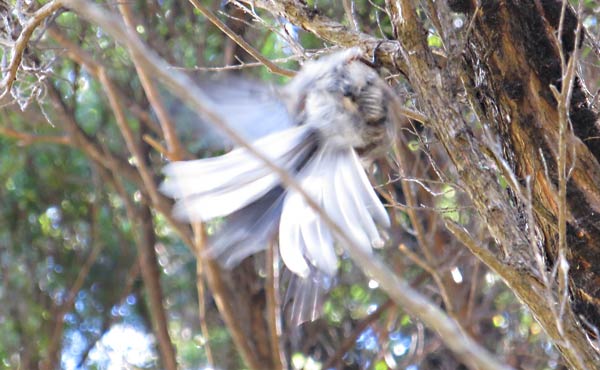
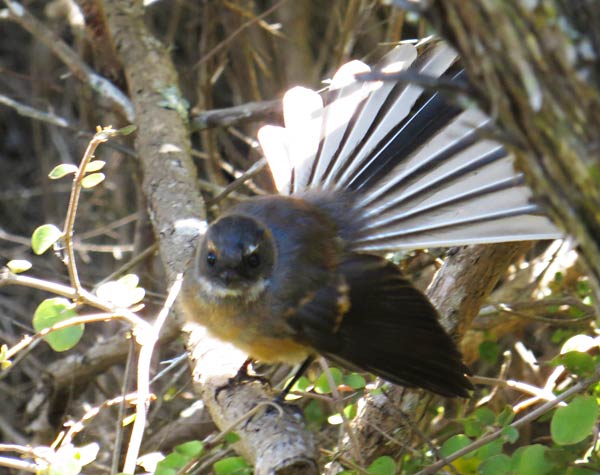
They are small birds about the size of a sparrow, and they are in near-constant movement, flitting about like butterflies. Their most striking feature is their tails, which they spread out like small fans when they land, probably for balance or for show.
It seems when we humans walk on a path, we stir up small insects that these birds like to eat. The result is the charming sight of these beautiful little birds flitting about as you walk and making their little fans as they land on nearby branches.
Watching them is wonderful, but trying to get a good snapshot is maddening. It took us two seasons and many blurry pictures to finally catch one with its tail fanned out. Here they are, our favorite (and only decent) fantail photos. –Cyndi