December 2013
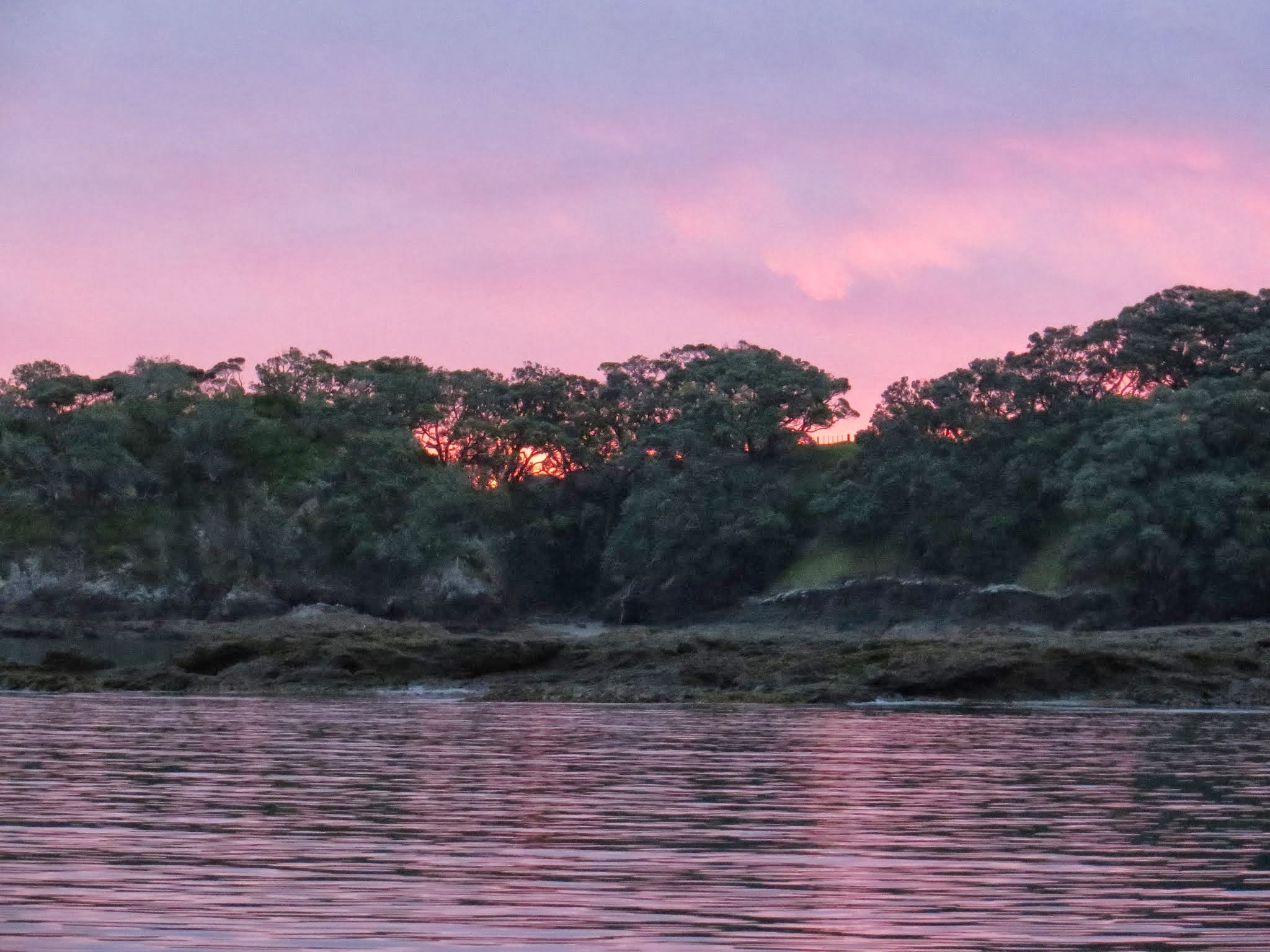
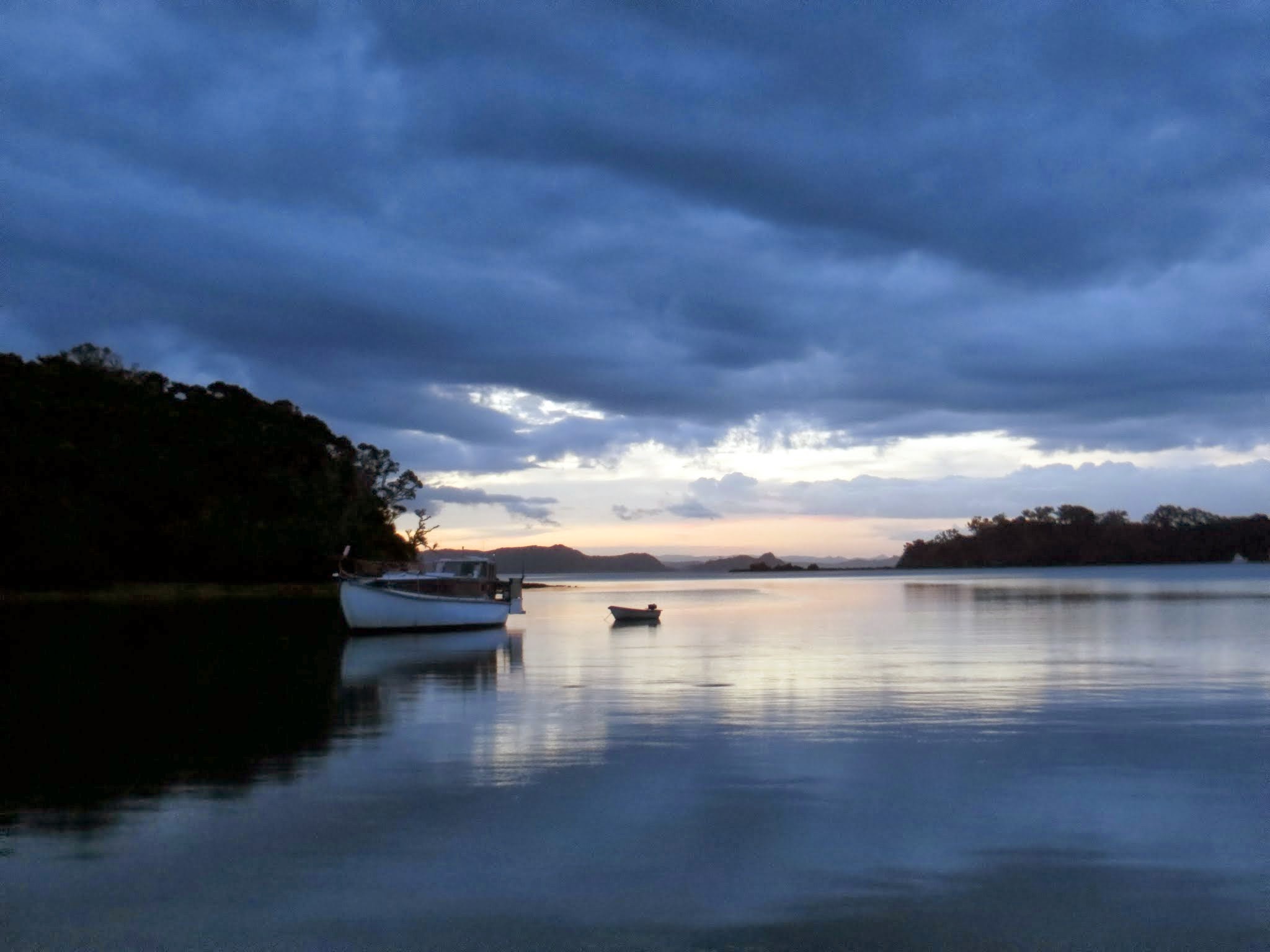
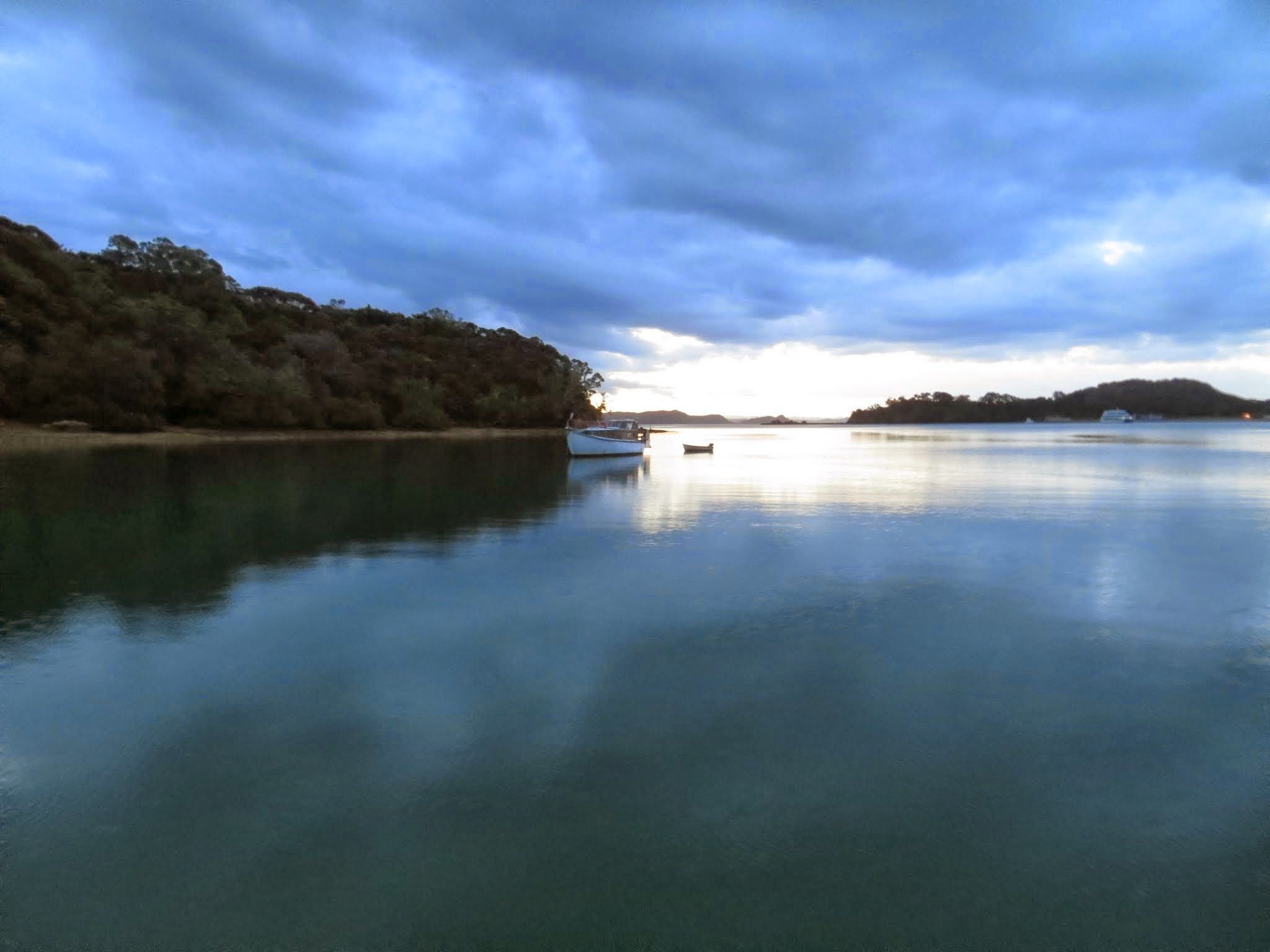
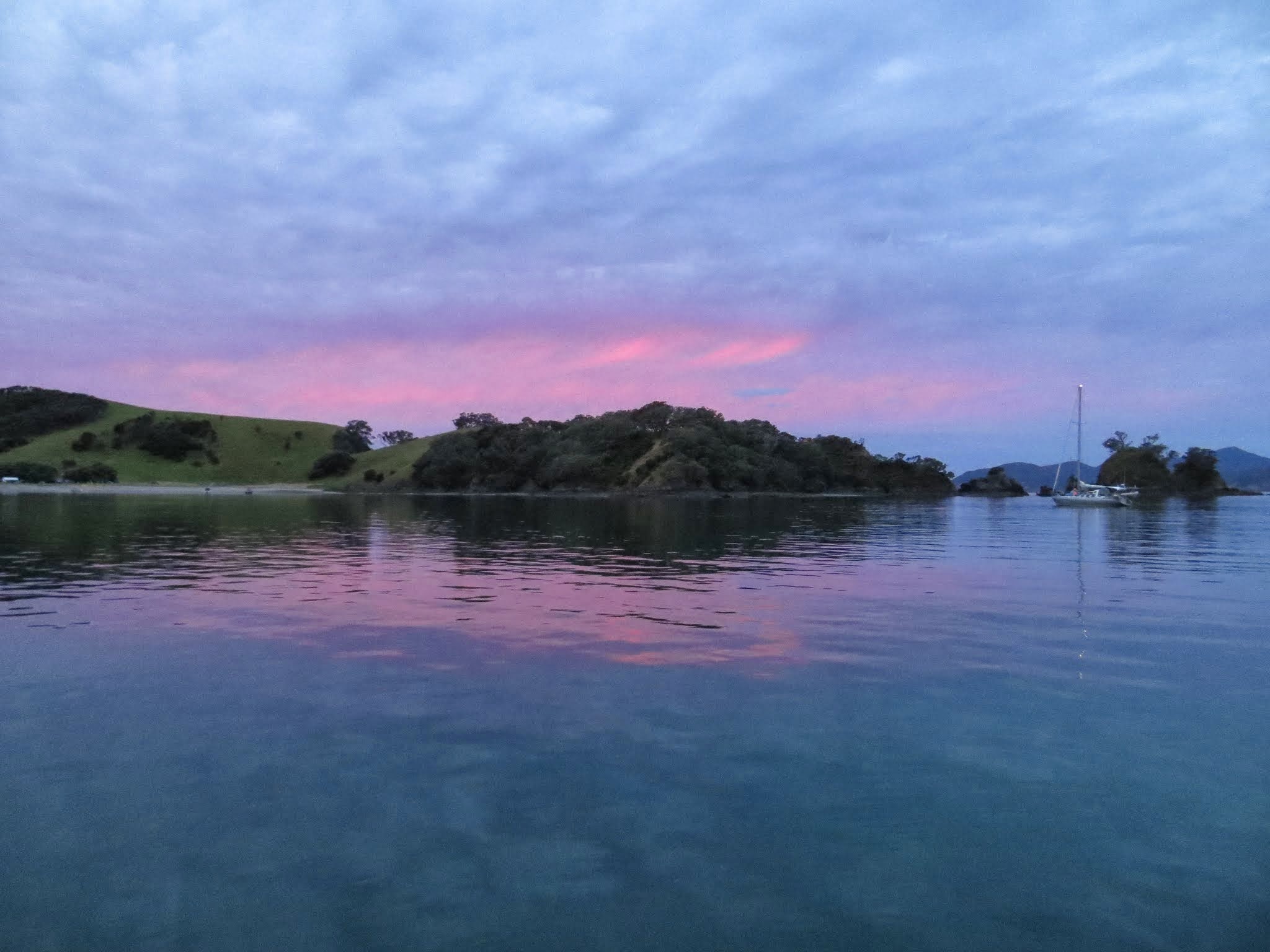
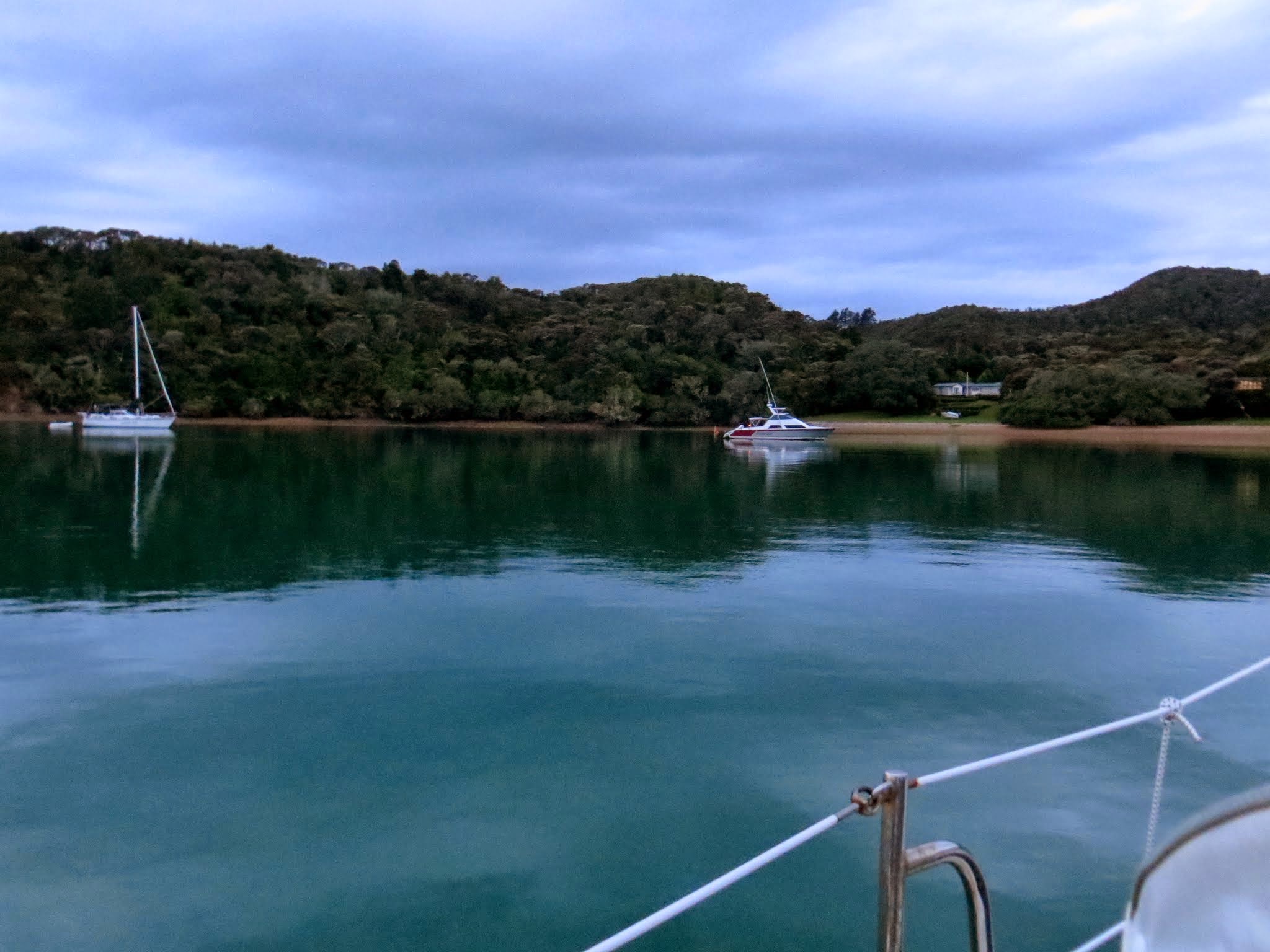
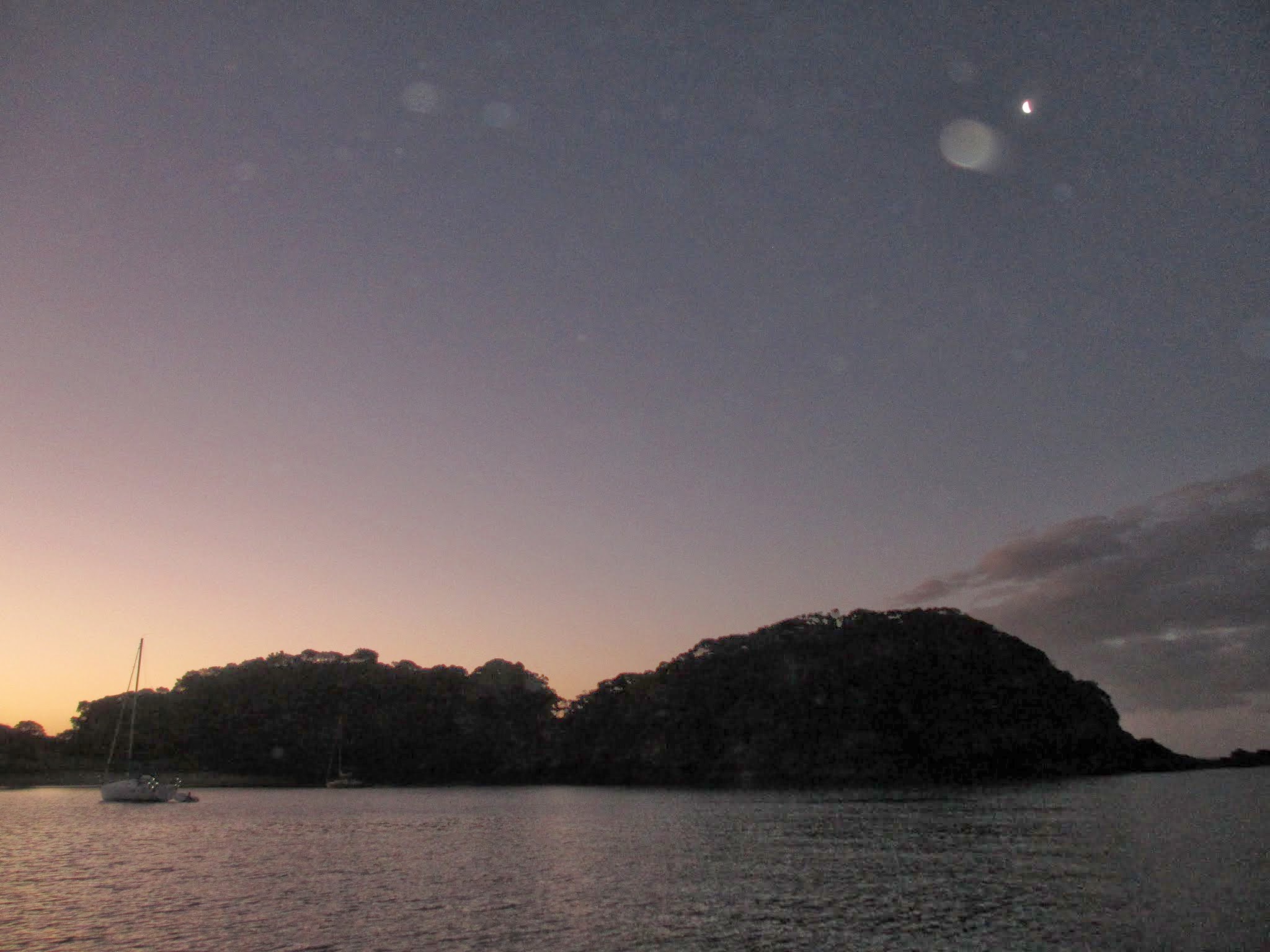
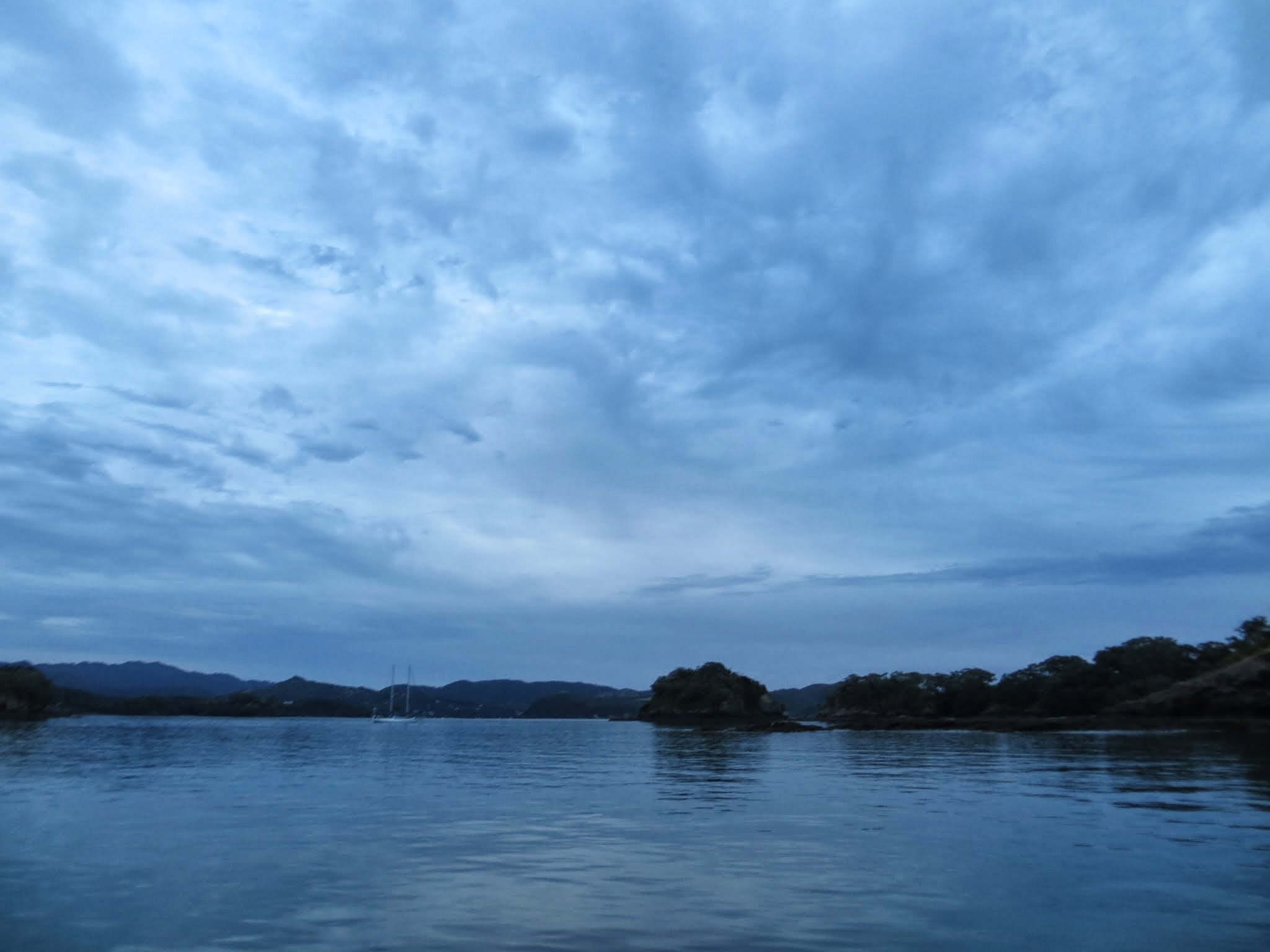
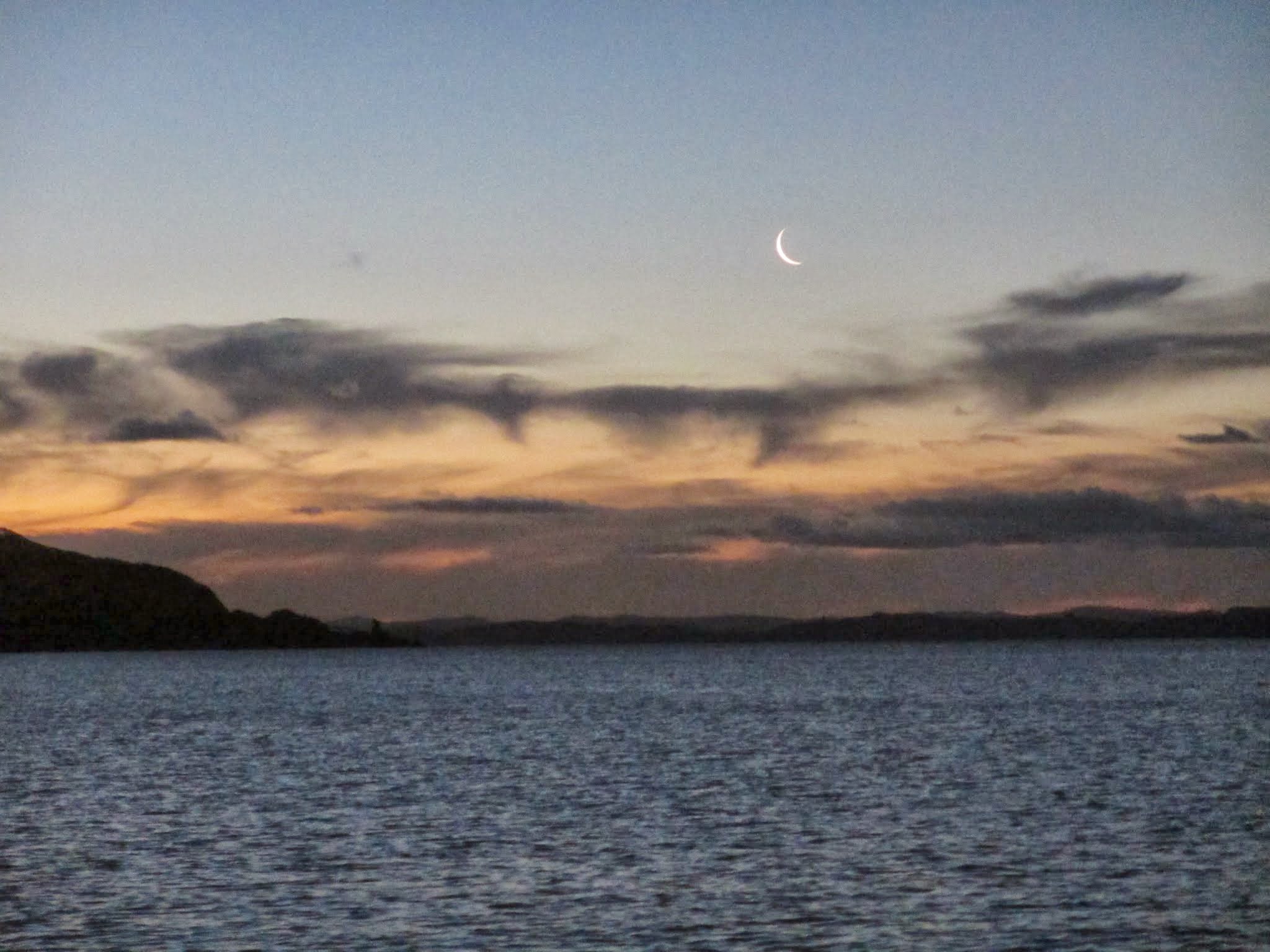
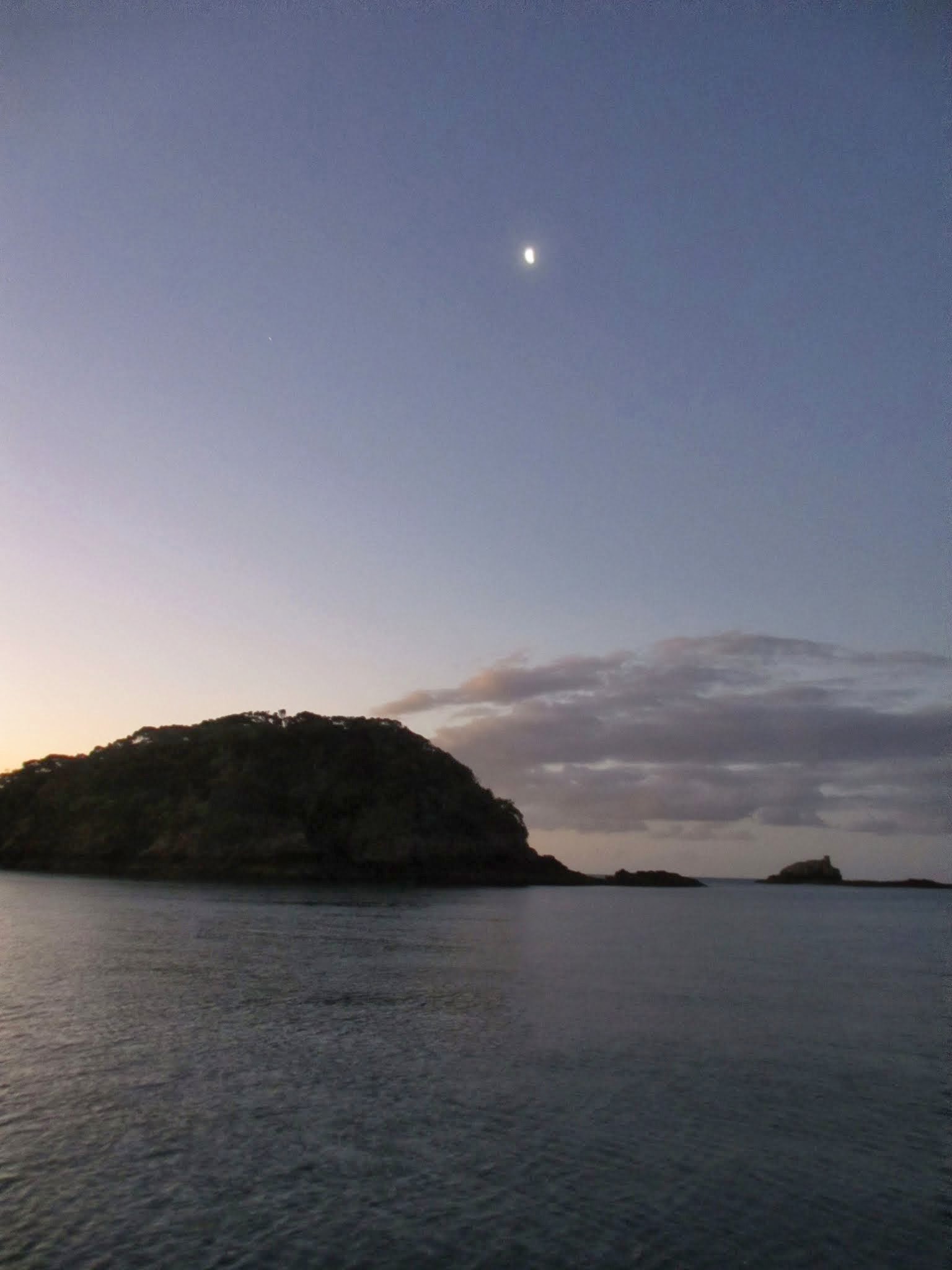
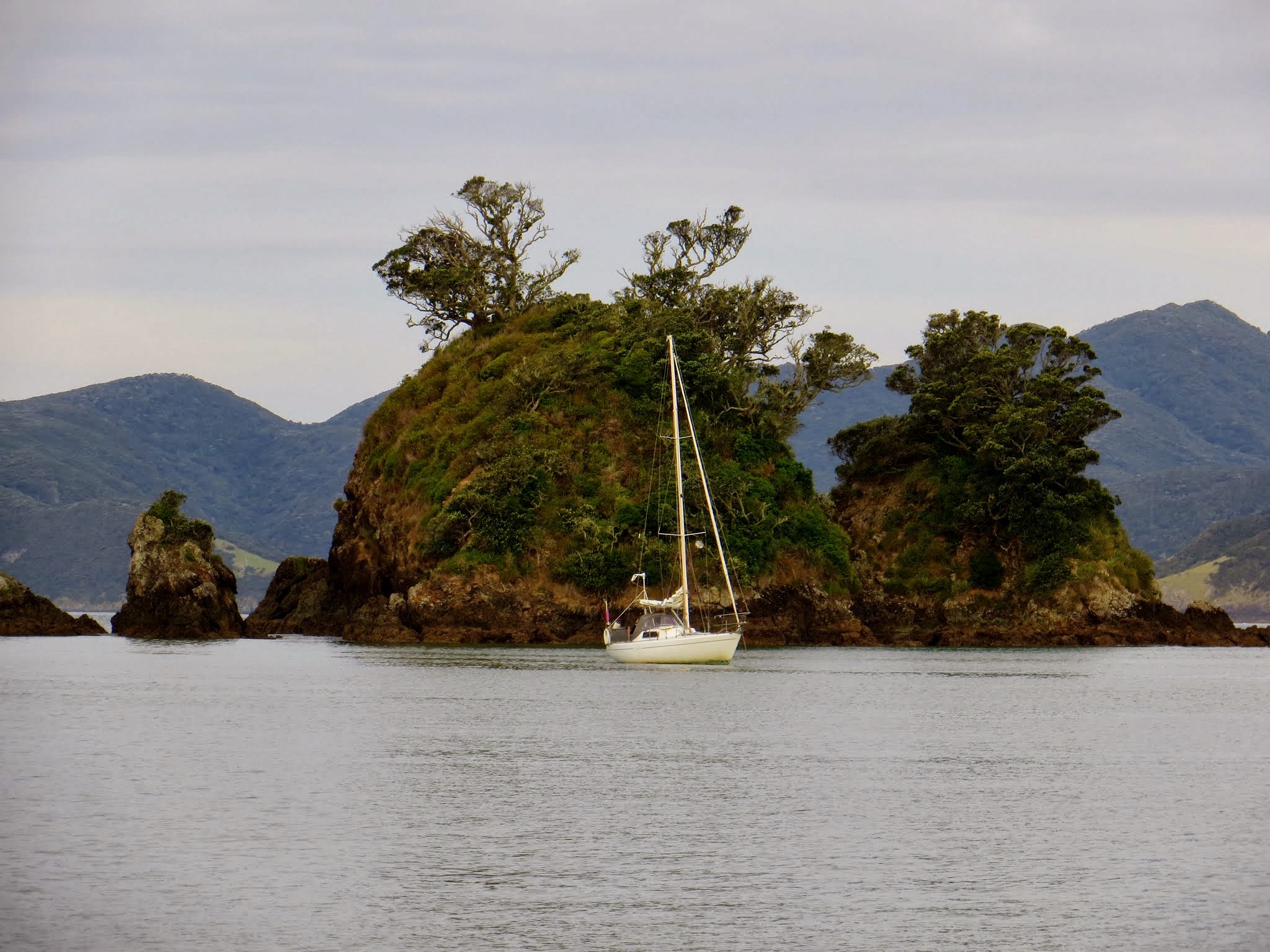
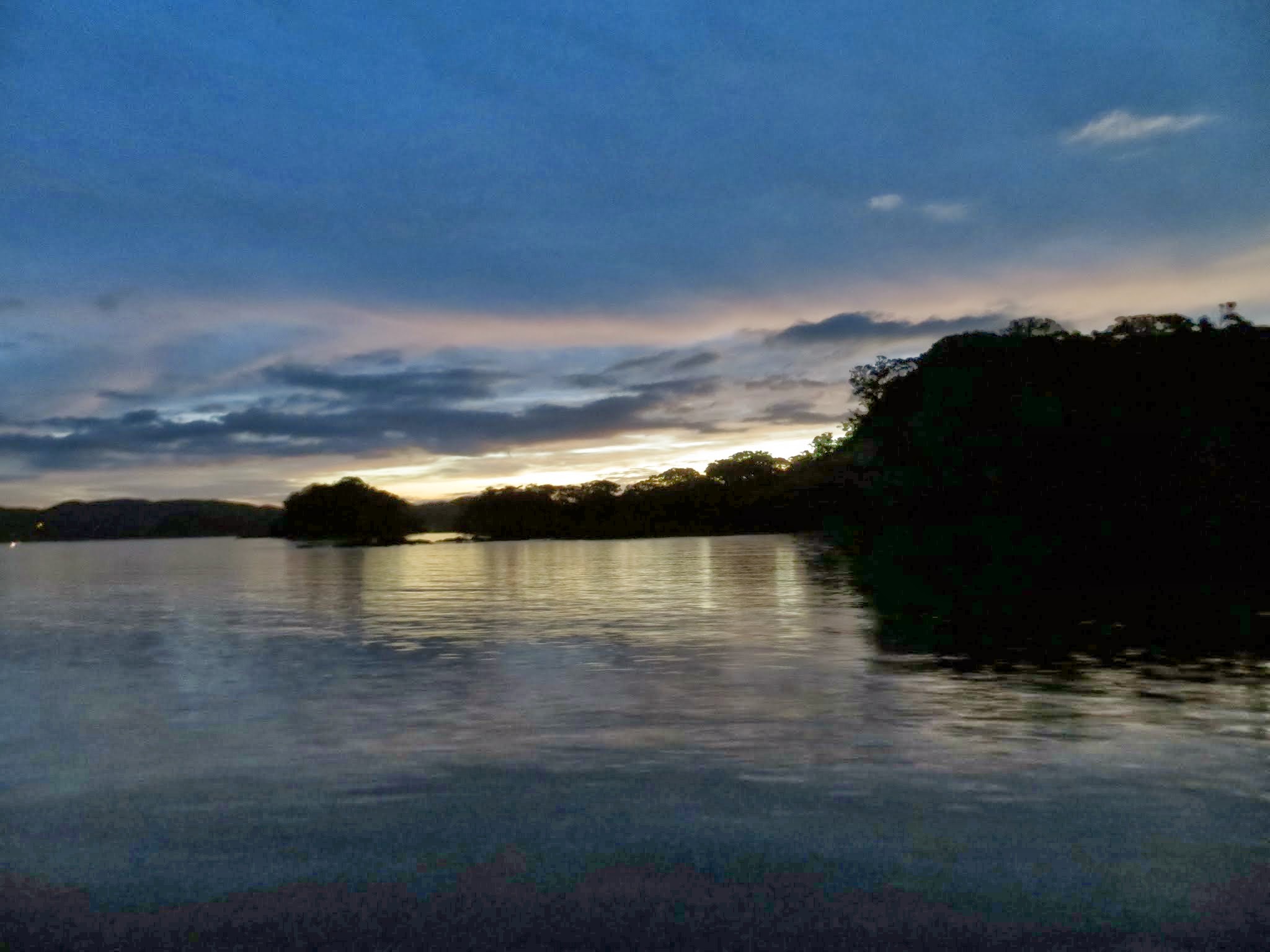
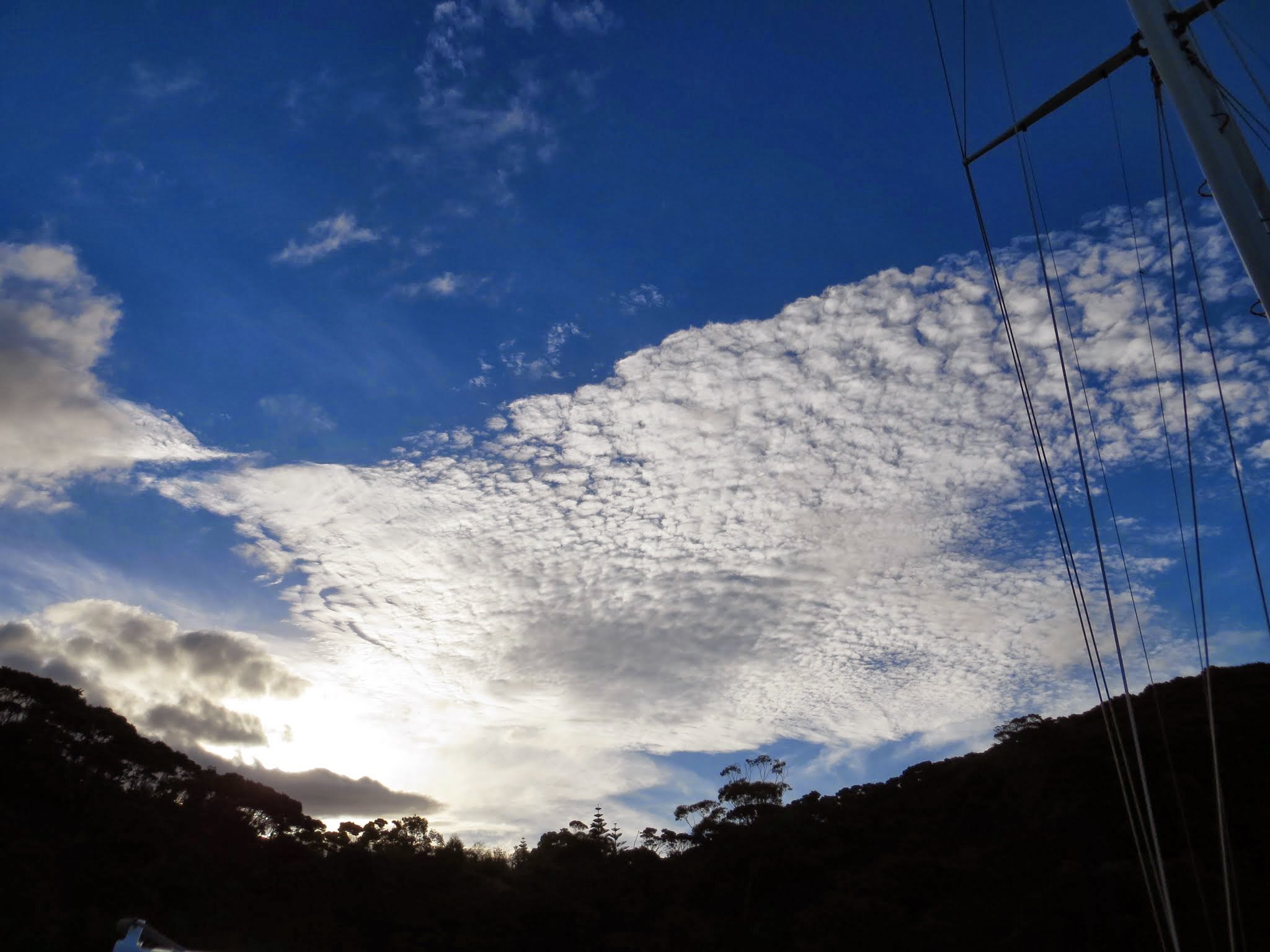
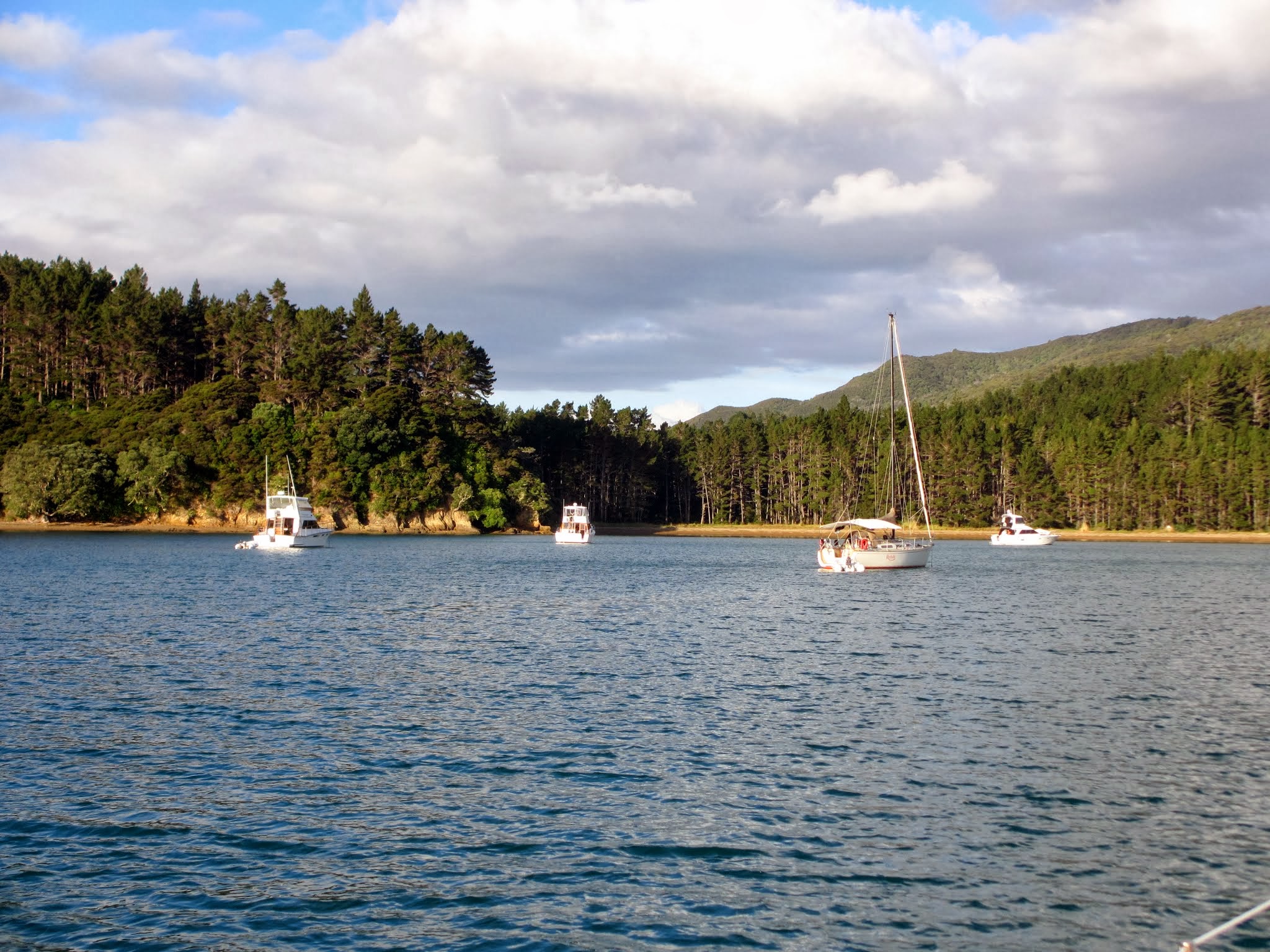
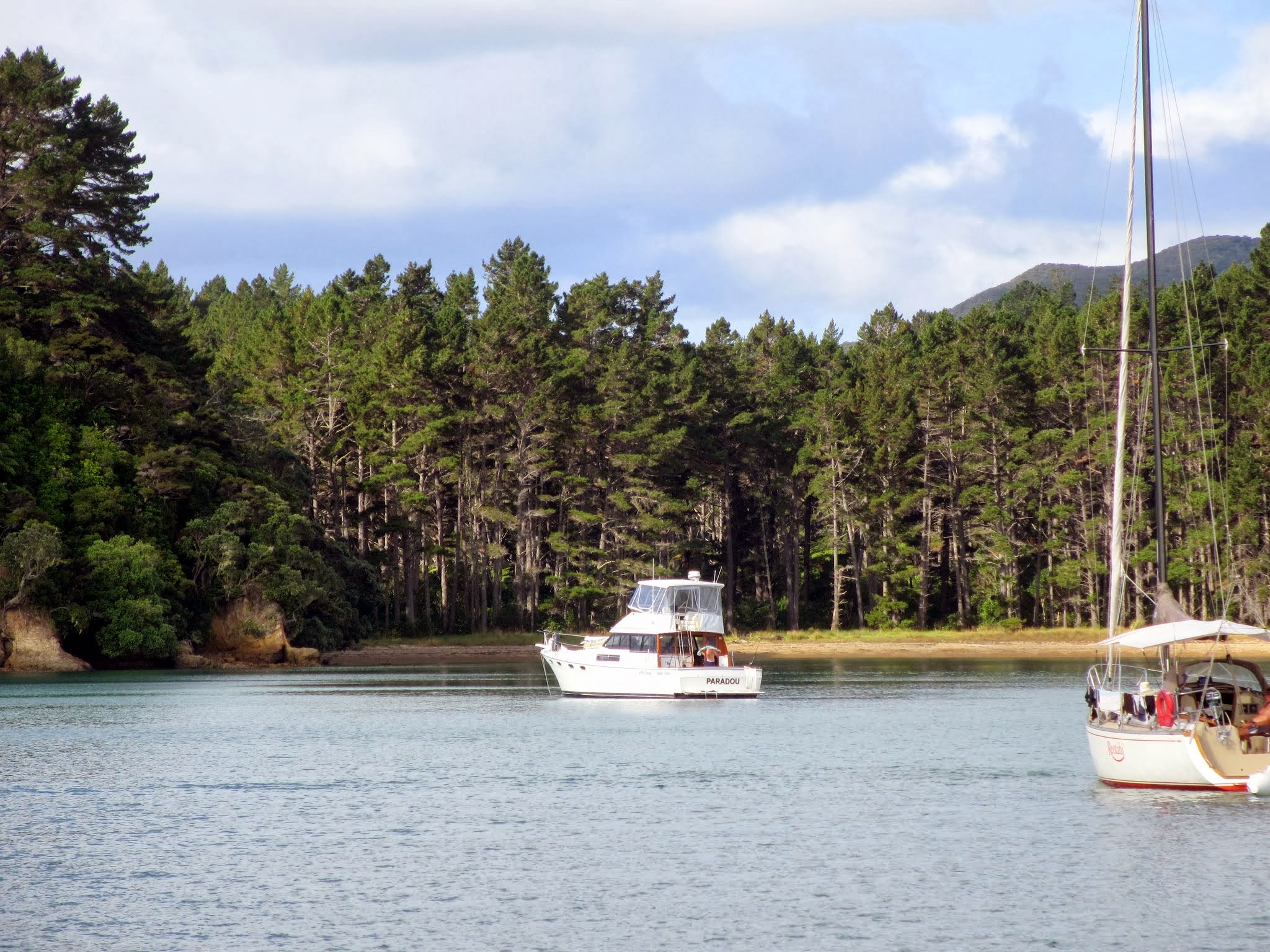
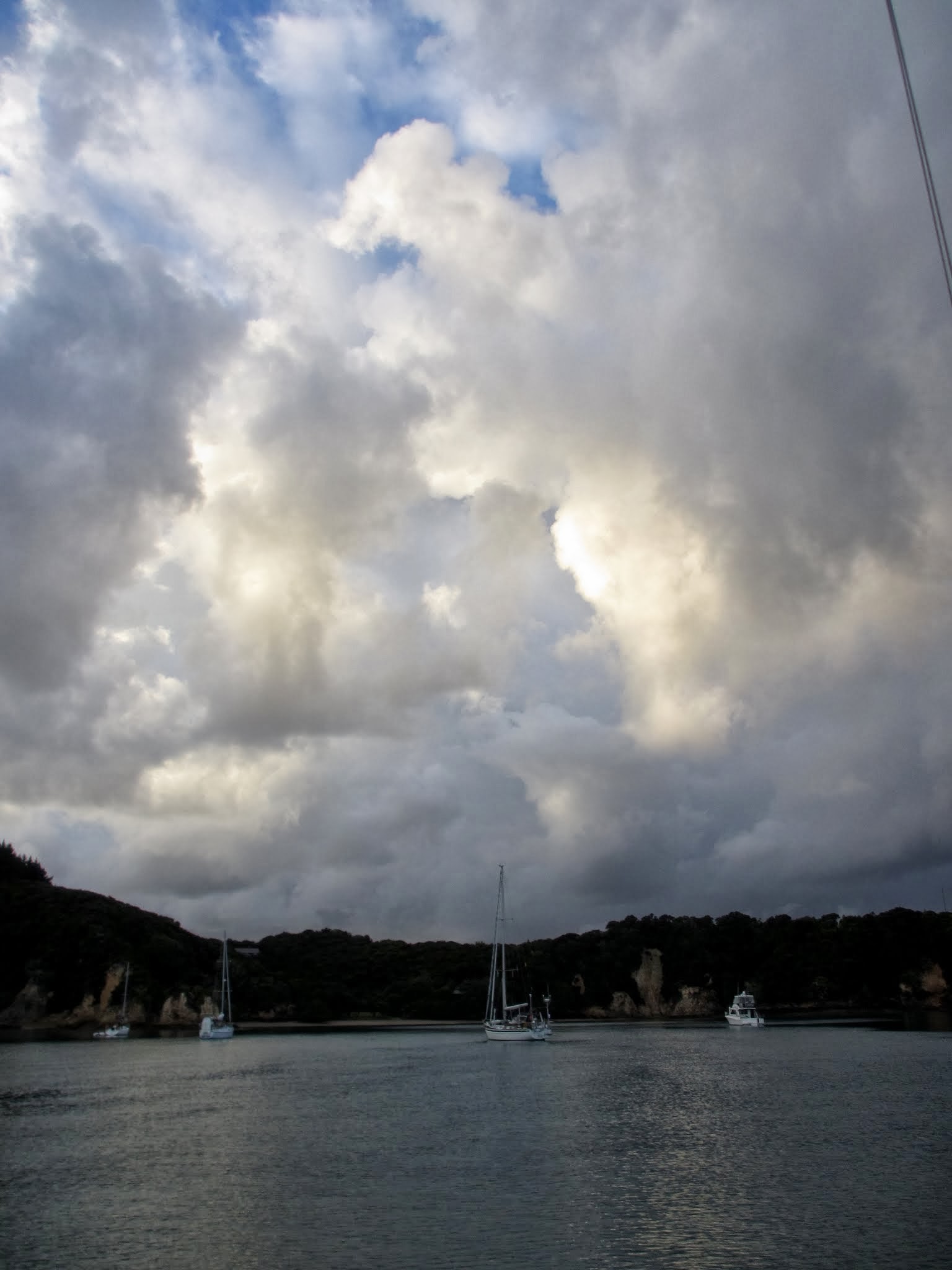
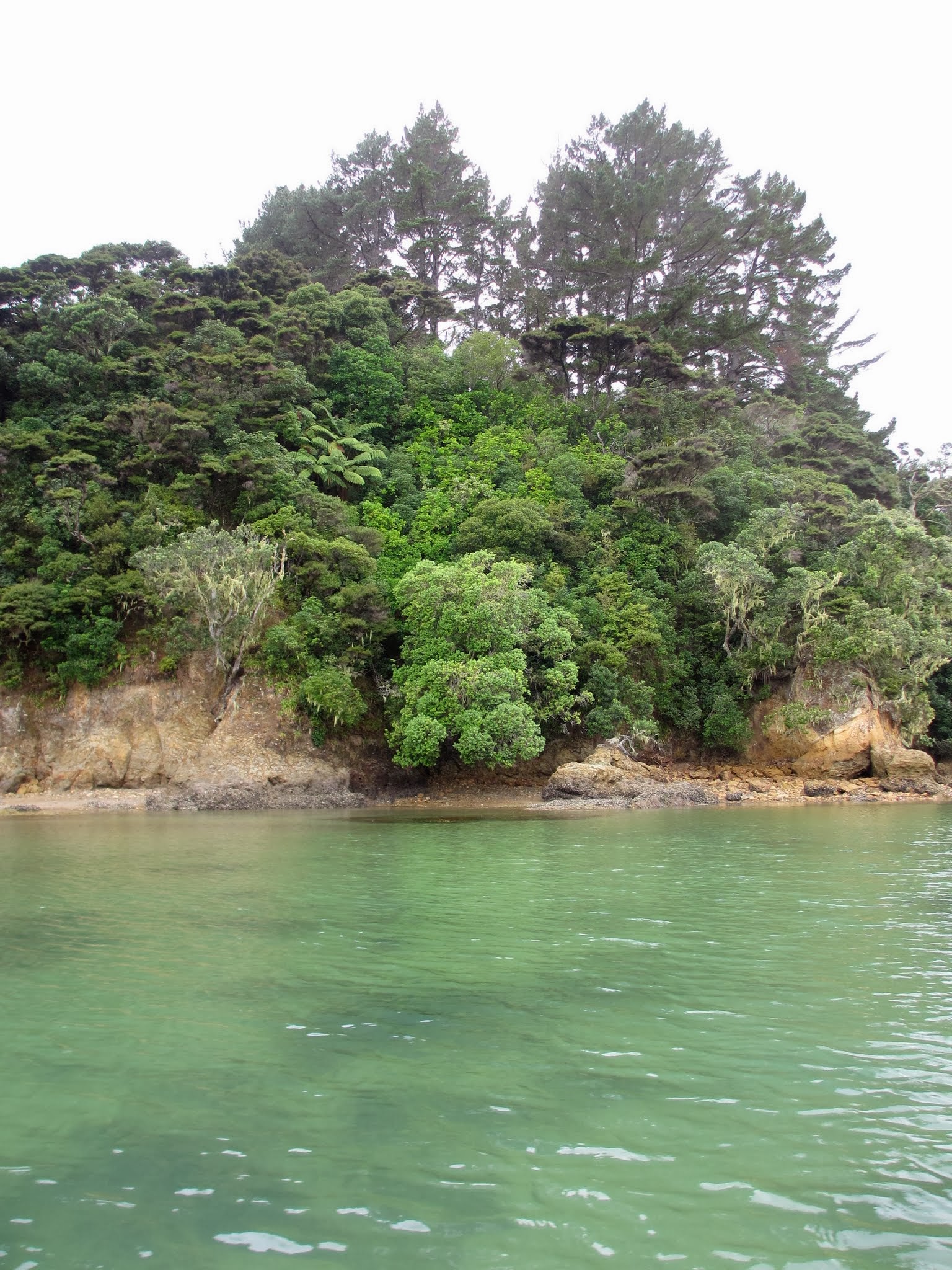
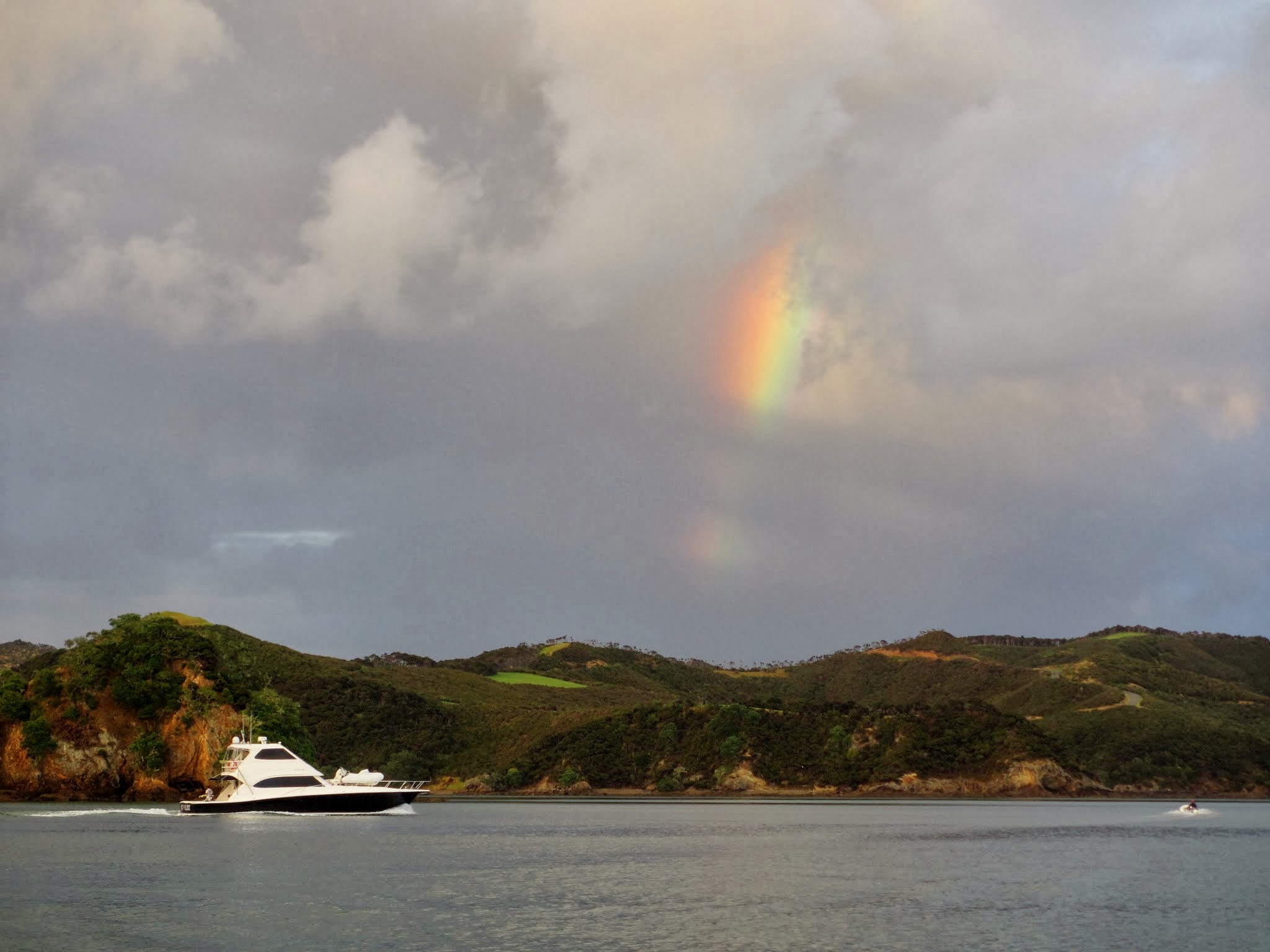
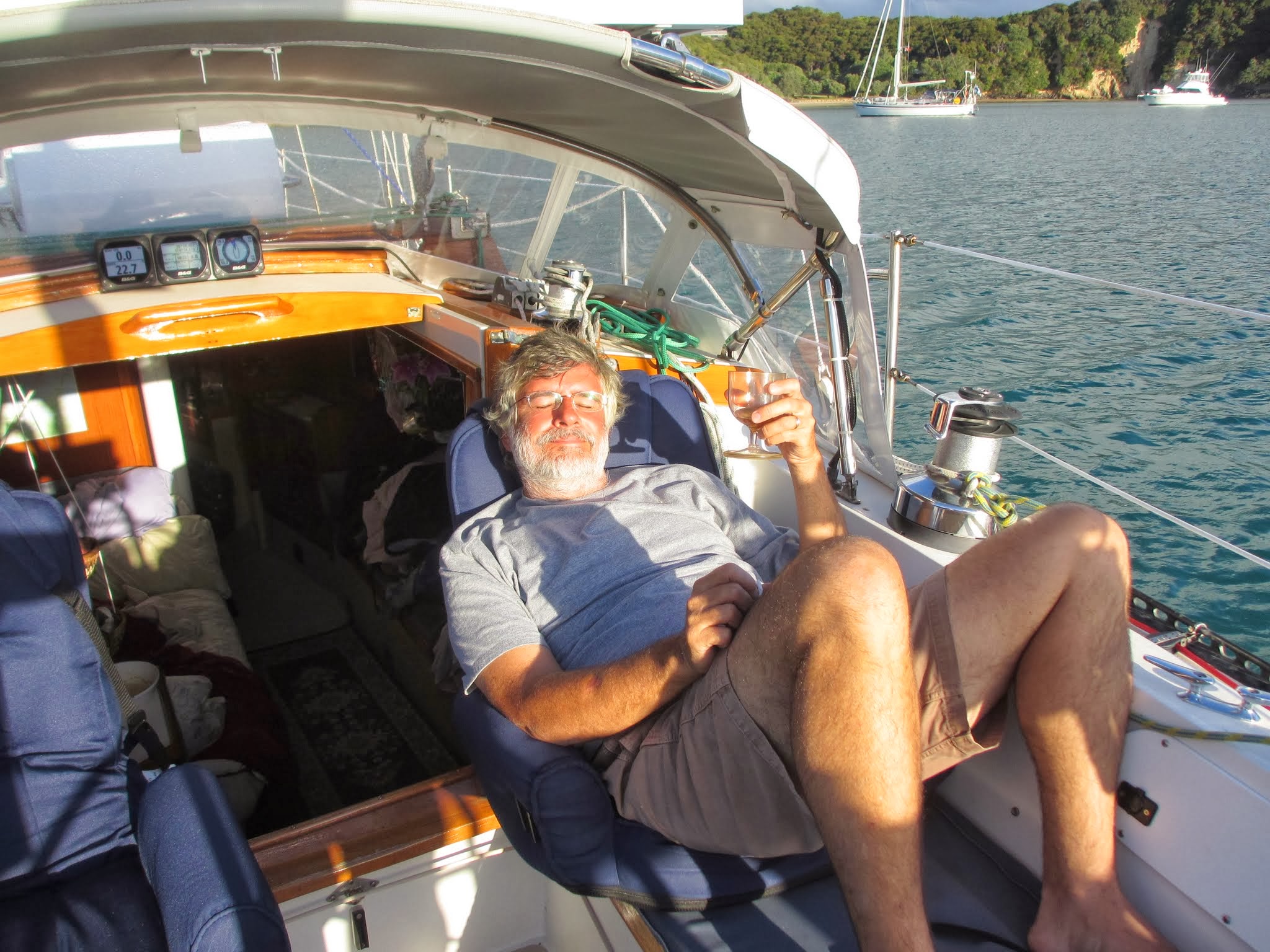
We enjoyed some very nice evenings while cruising the Bay of Islands. Here’s a gallery of our favorite evening photos. –Cyndi
Cyndi and Rich aboard Legacy
December 2013
We enjoyed some very nice evenings while cruising the Bay of Islands. Here’s a gallery of our favorite evening photos. –Cyndi
March 21, 2013
You’ve probably heard of northerlies, southerlies and so on, wind from the north, the south, etc. We’ve had gusterlies yesterday and today. It’s mostly from the east but varies between no knots and 15 knots in a flash. We’d prefer the no knots while at anchor. We call those winds nonerlies.
Speaking of words but with no real relation to this post, we have a device on board that converts 12 volts from our batteries to 115 volts AC so we can power appliances. It’s called an inverter. Why? It doesn’t invert anything. It converts. From now on, we’re going to call it our converter! -Rich (possibly with too much time on his hands)
March 21, 2013
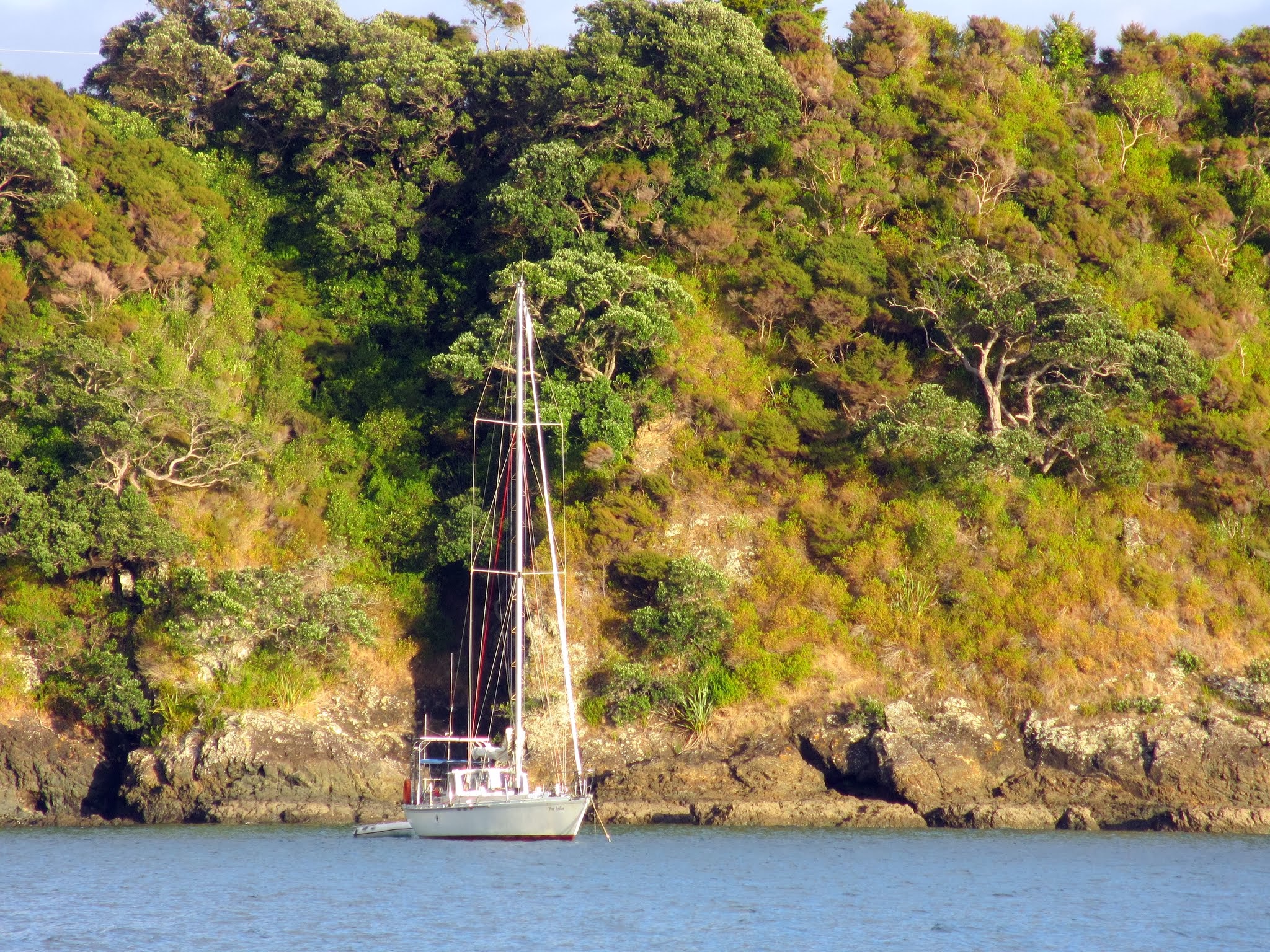
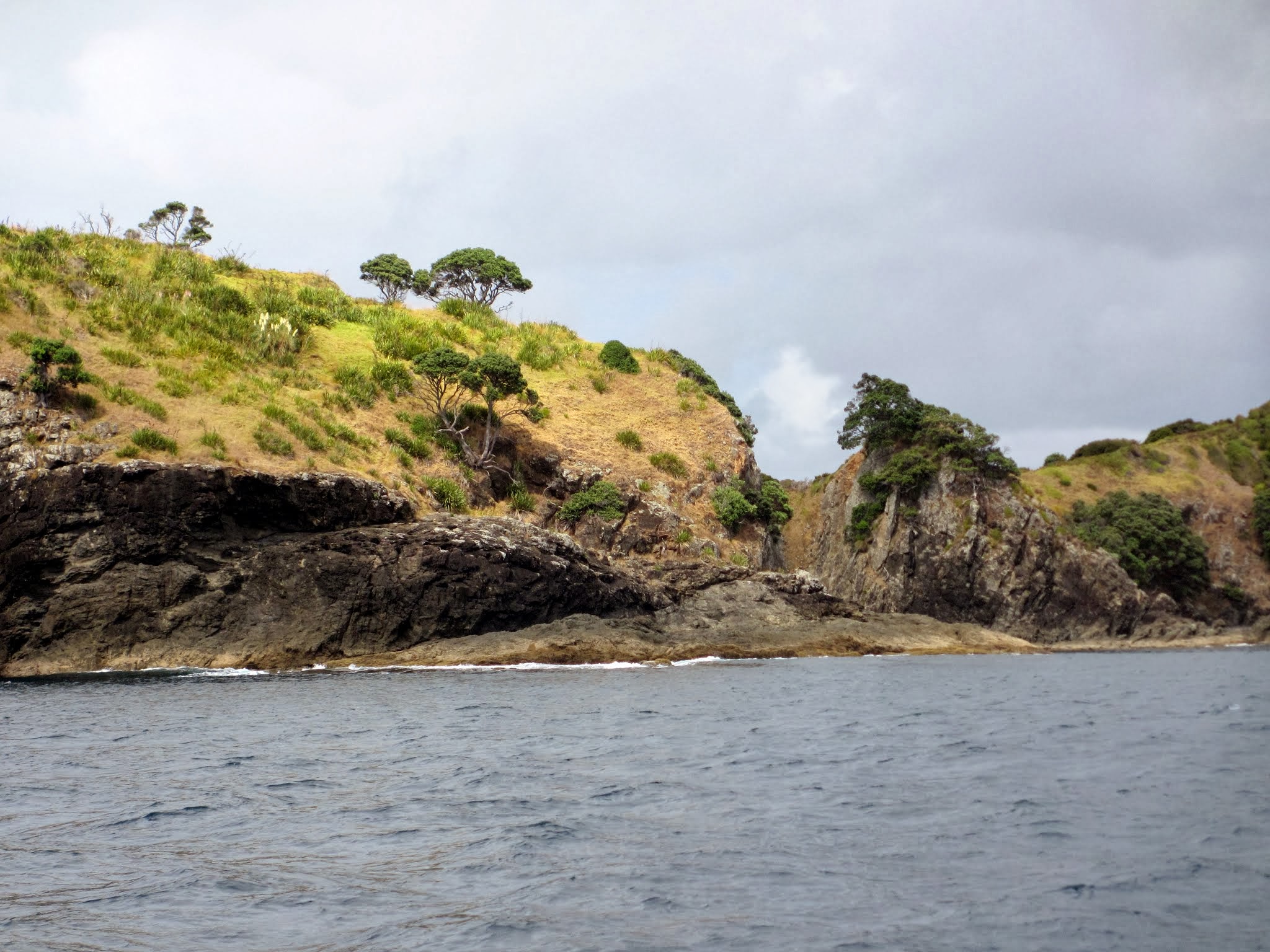
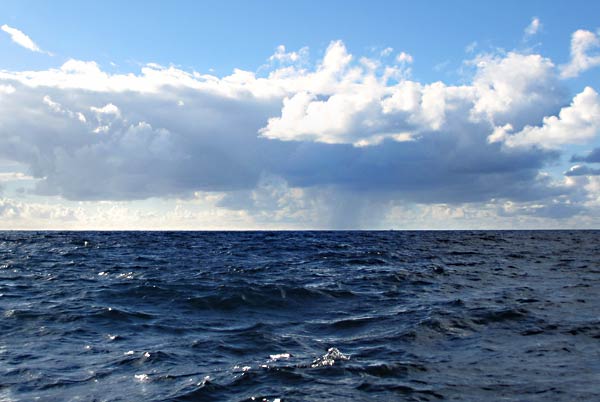
When we left Omakiwi Bay (and the Parekura Bay area), we passed under Urupukapuka Island heading east, which meant we were leaving the more enclosed area of the Bay of Islands and getting closer to the open ocean. It felt like it, too. The anchorages here are more exposed and rugged, meaning windier and rollier. Cape Brett, marking the entrance to the Bay of Islands on the south side, would be only 4.5 miles away from our next destination: Oke Bay.
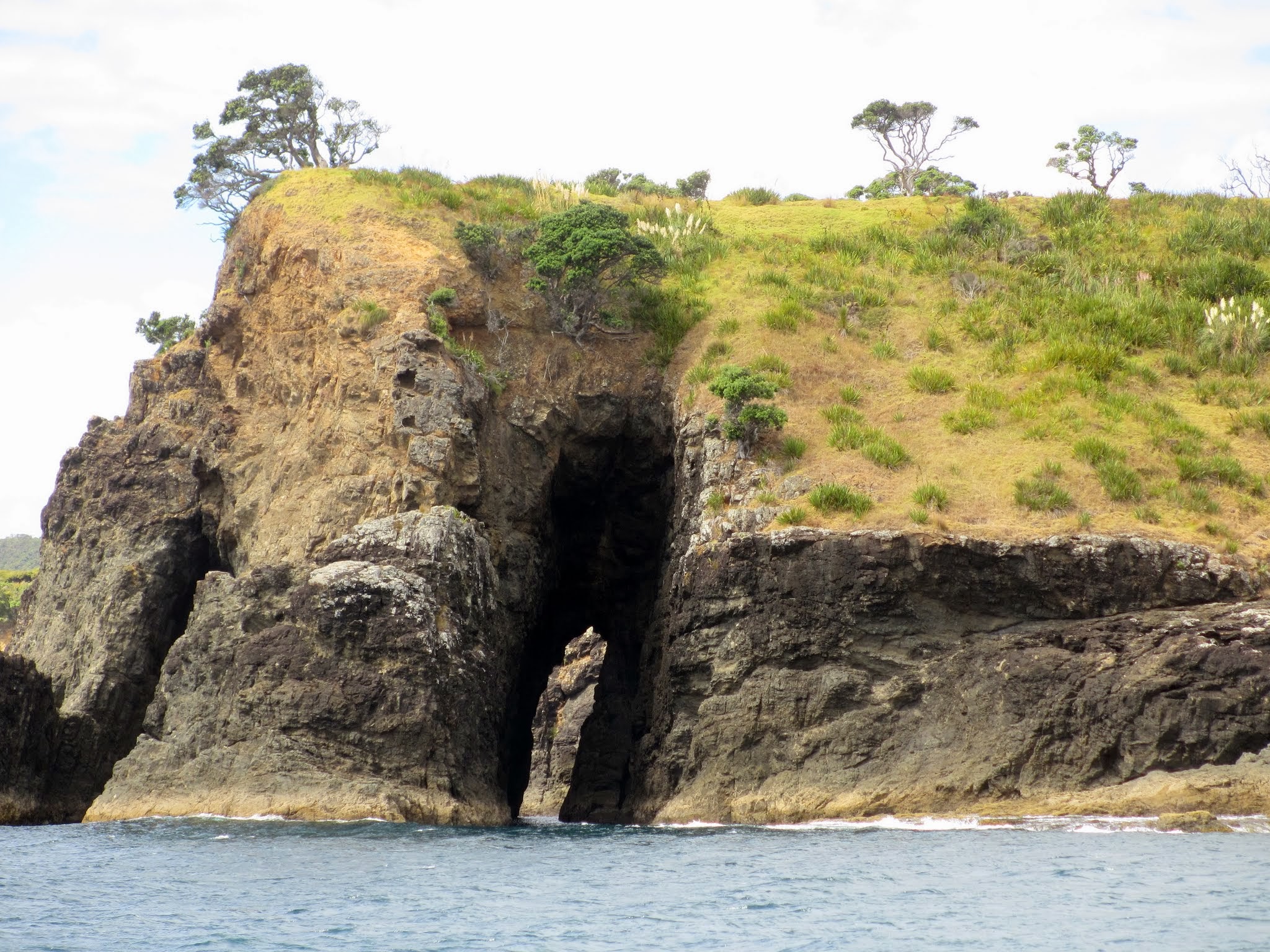
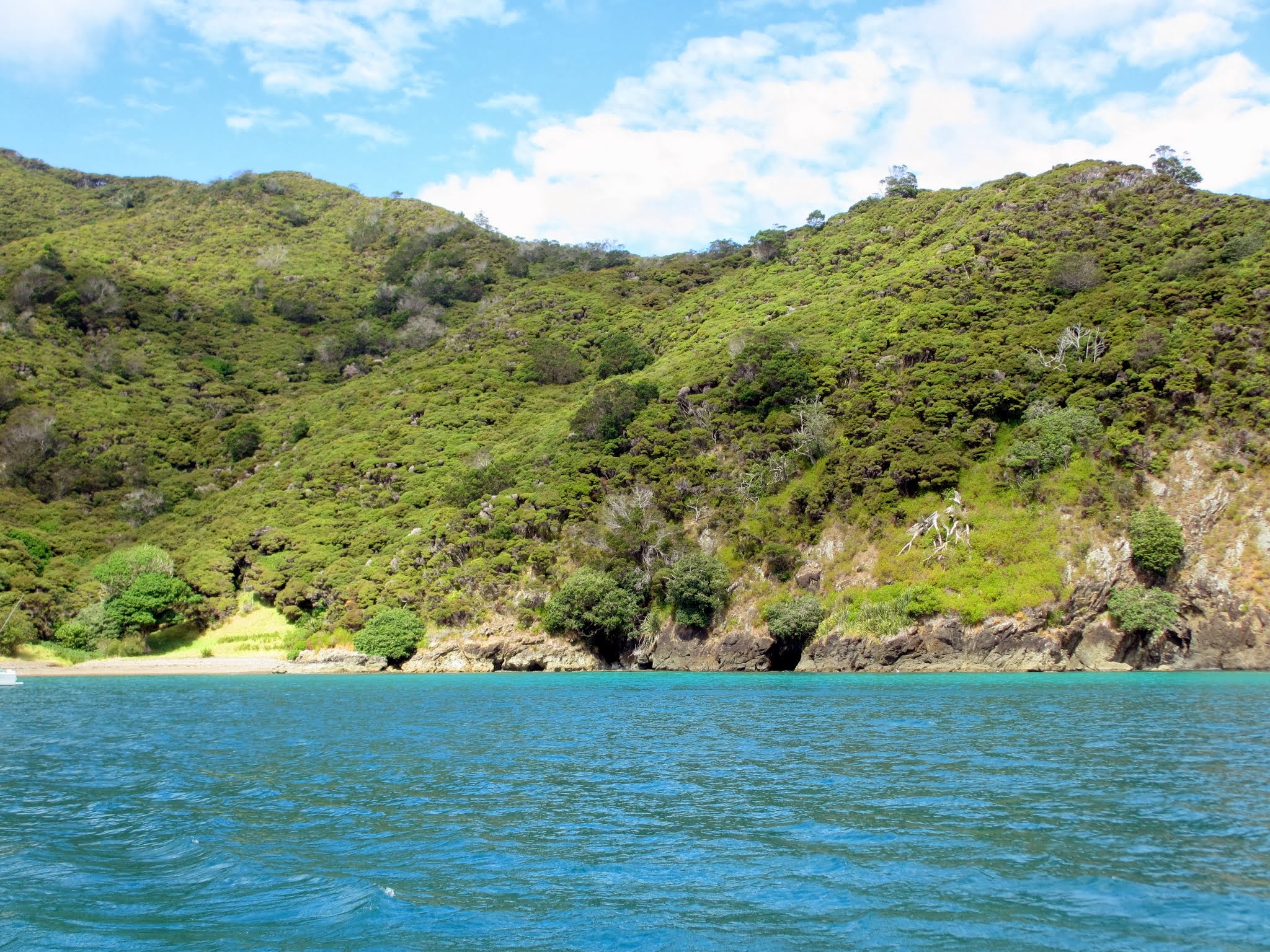
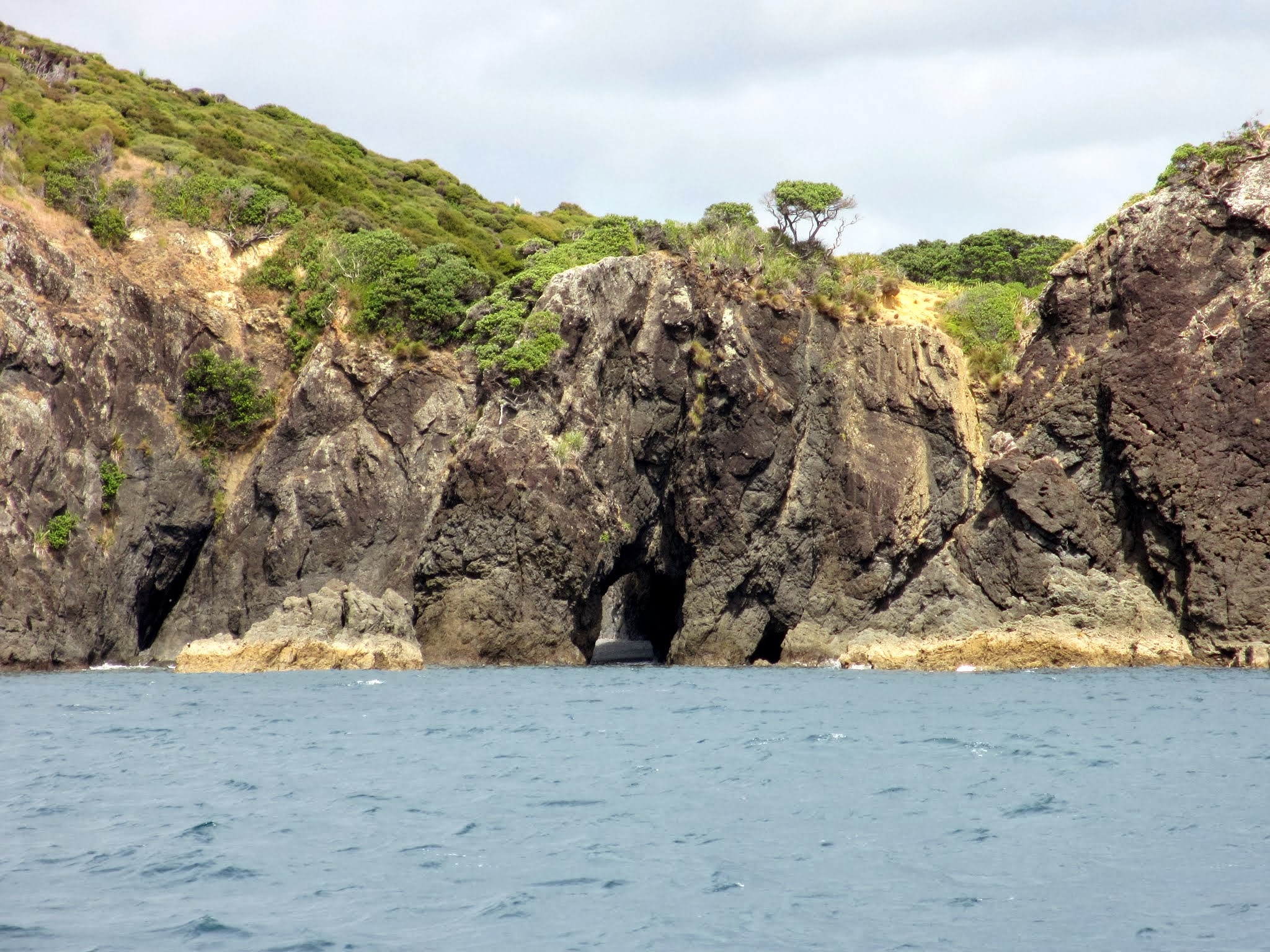
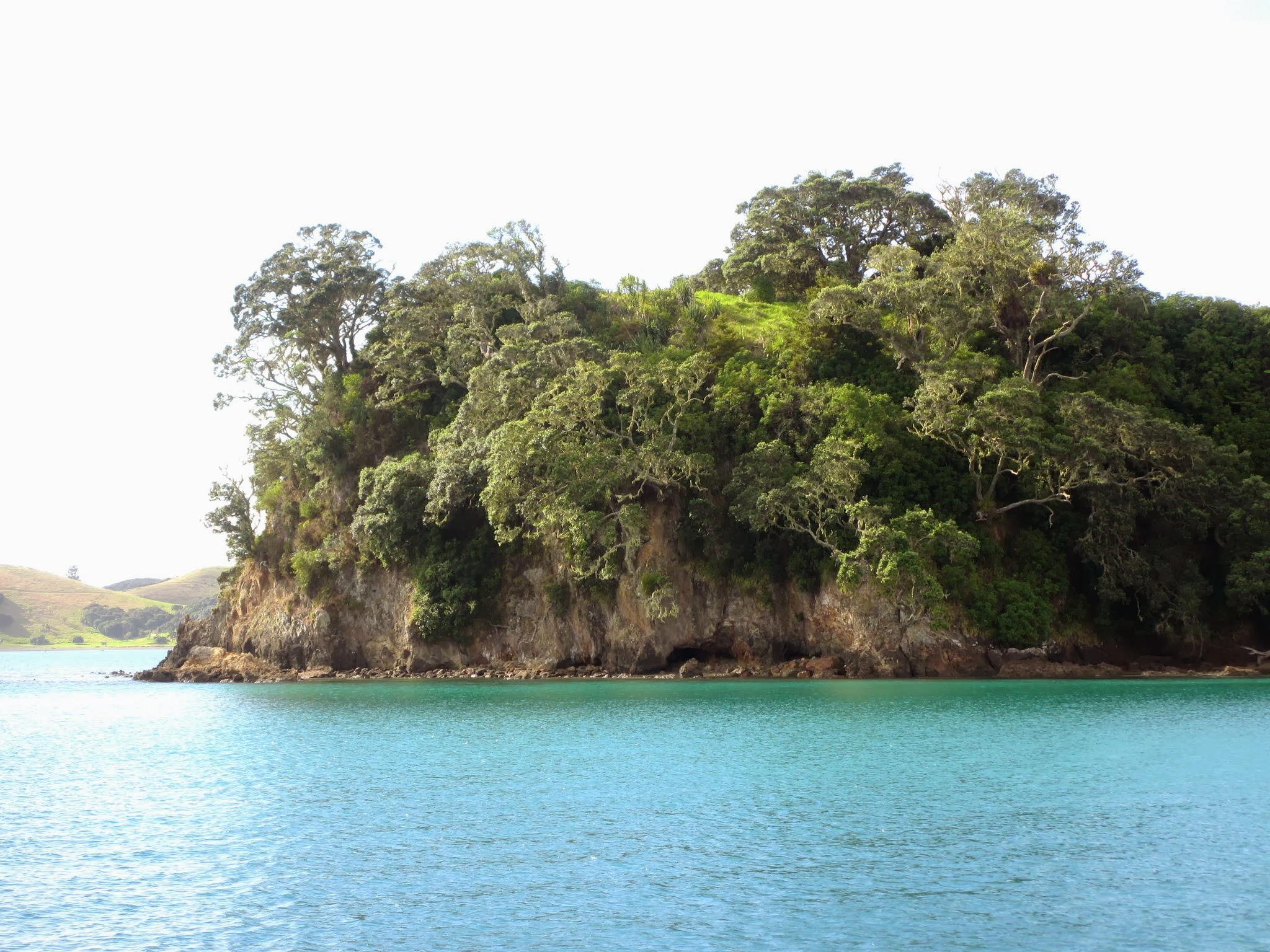
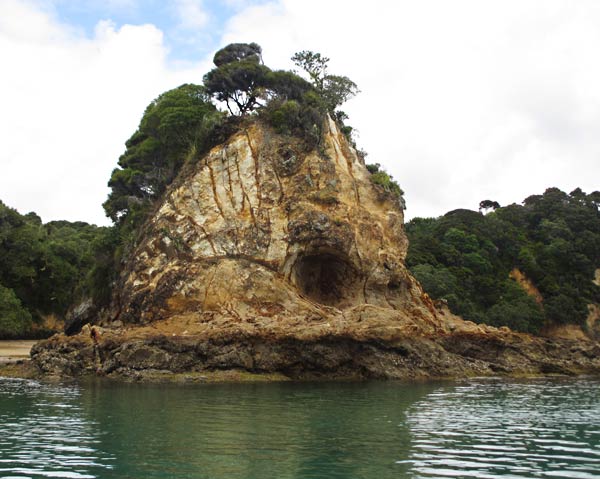
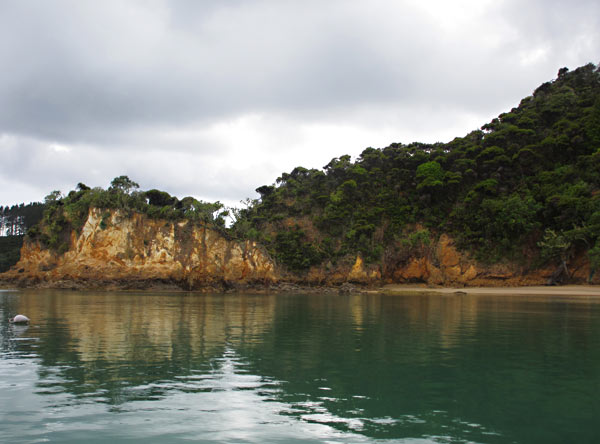
One of the most interesting aspects of Oke Bay was the rocky headland enclosing it. It had lots of little inlets and caves that looked like it could be fantastic snorkeling on a day when the water’s calm. We passed by all this to end up in the bay itself, enclosed by hills and mountains.
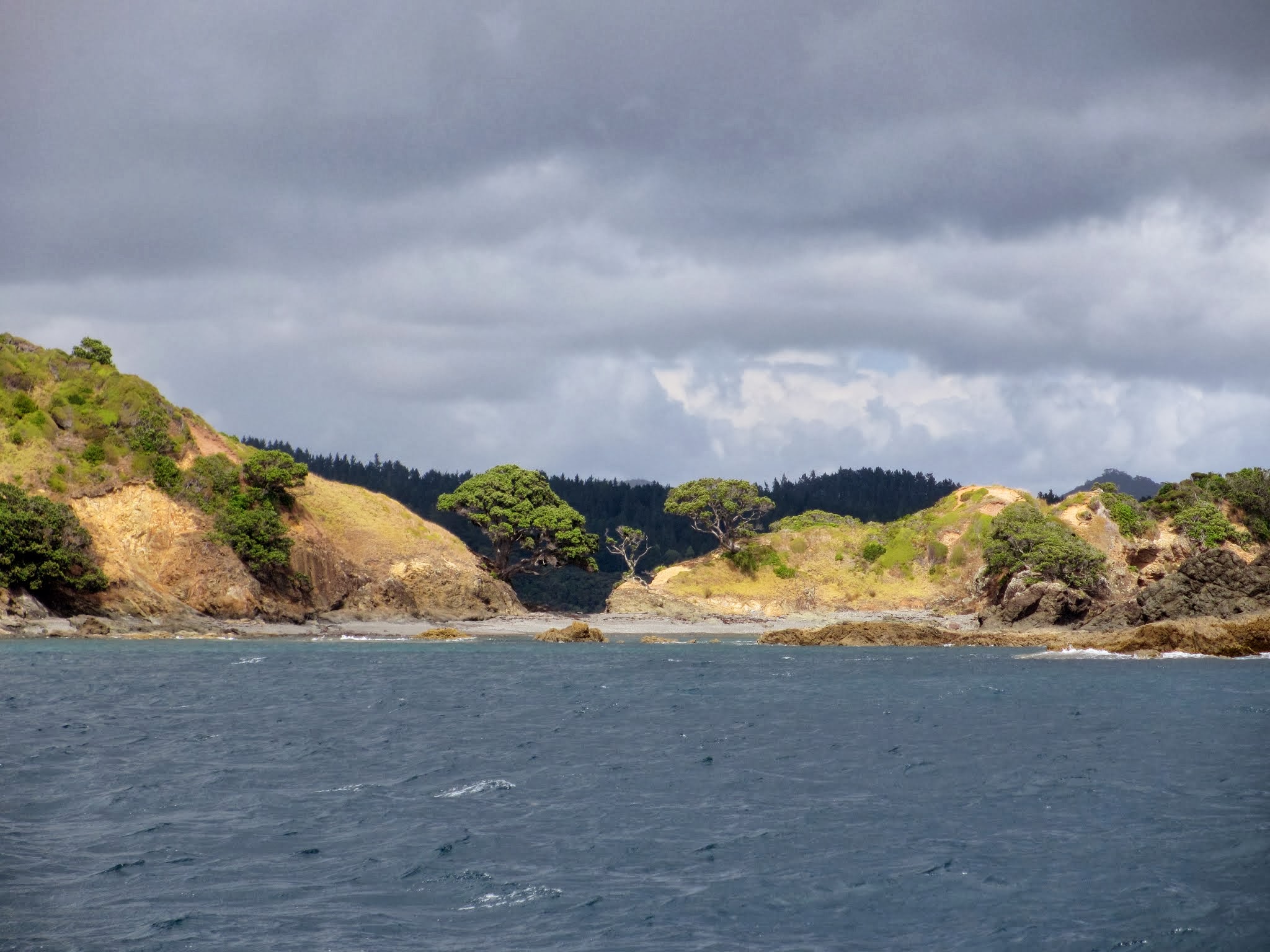
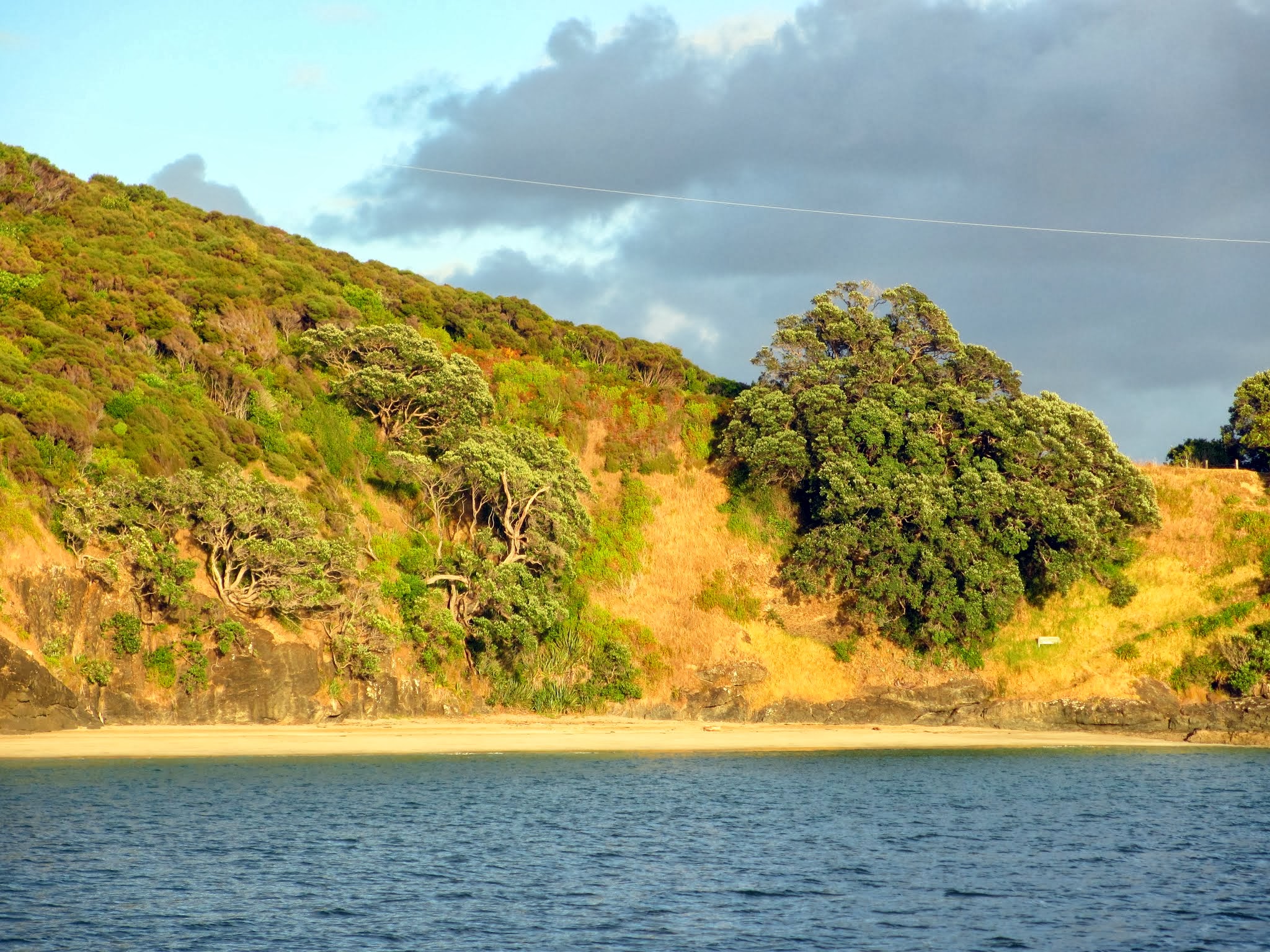
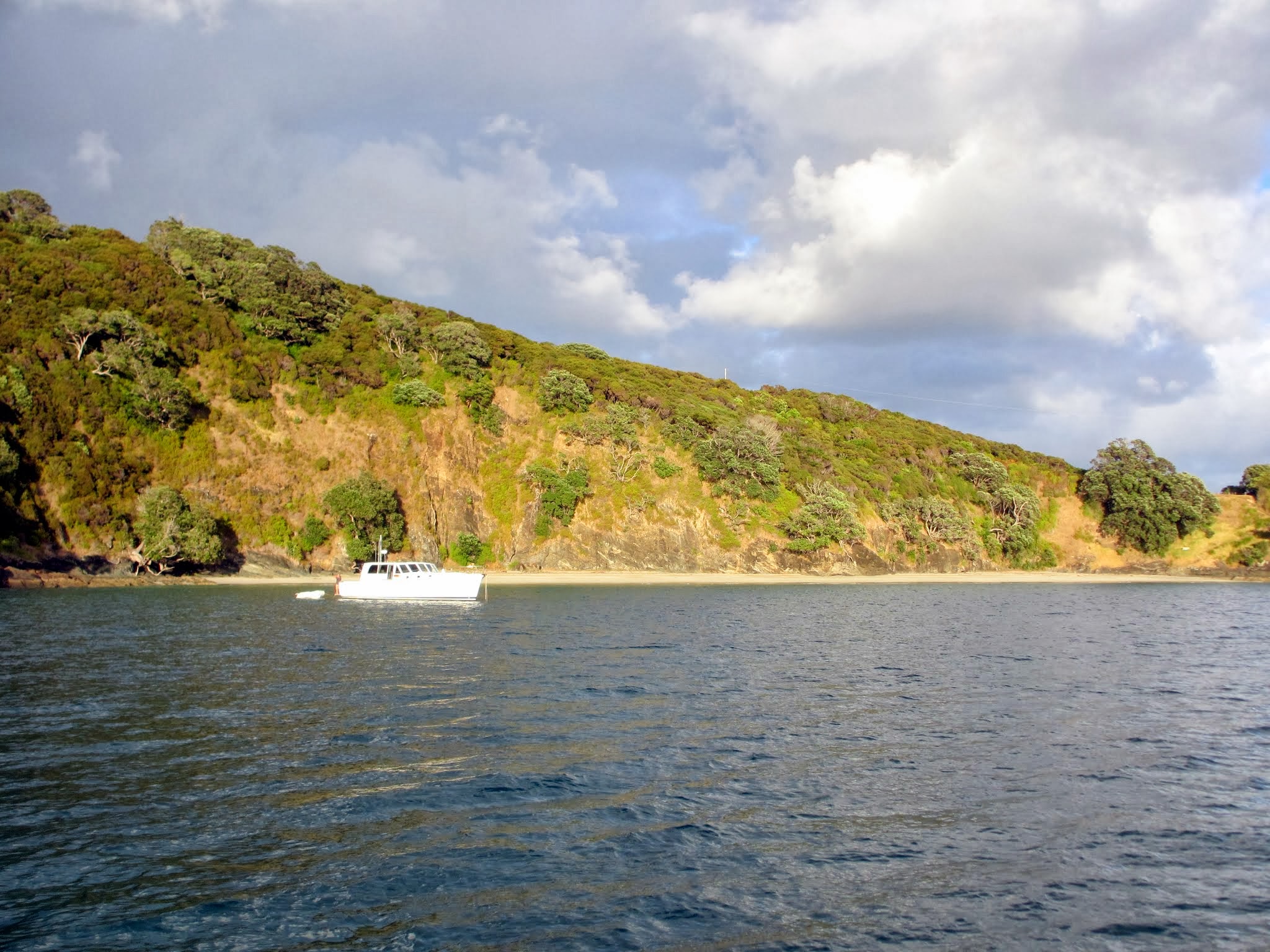
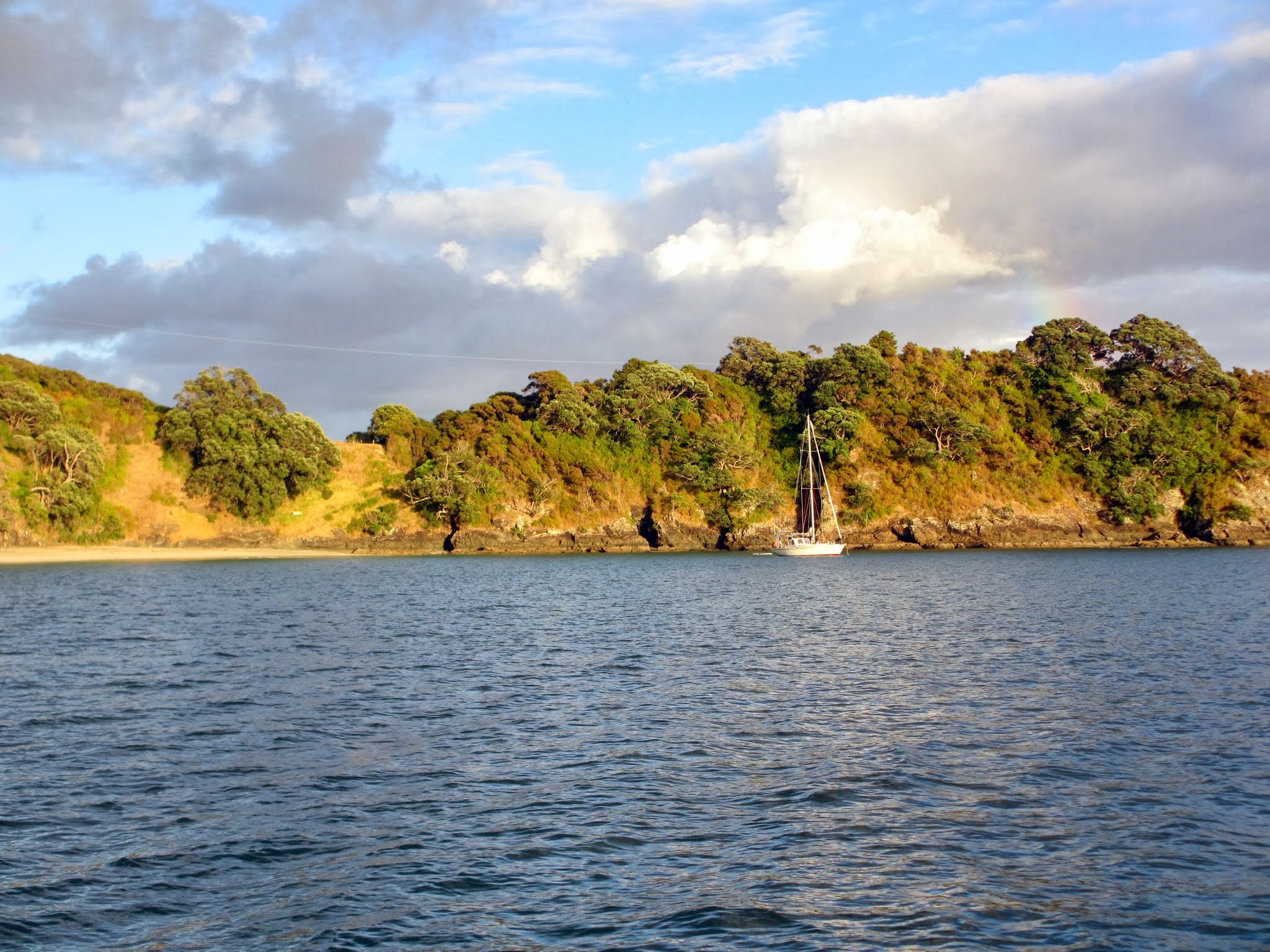
In spite of the rugged look and exposure to more open ocean conditions, this area managed to have the white sand beach and grassy hill look of some of the more sheltered bays further in. This made an interesting combination and gave the bay its own unique look.
The afternoon was windy, and even though the bay was sheltered, we were getting more of the ocean effect than we were used to. The sound of the wind and the bumpy conditions made us edgy, but it’s nothing that a nice dinner and a bottle of wine in the still-sunny cockpit couldn’t fix. Chocolate from Makana made us feel even better. Chocolate and wine are really nice antidotes for wind anxiety. If you drink enough wine, you don’t care so much about anchorage rolliness, either.
We hoped conditions would calm the next morning so we could land the dinghy and take a walk ashore, but it wasn’t looking good. I finally gave up, informing Rich that boot camp would not happen today, and that I was ready to move on. Rich did not do a very good job of concealing his glee over this regretful decision. He wasn’t thrilled about this bay and is not always an enthusiastic participant in boot camp. It was time to pull our anchor and head to our final bay in the Bay of Islands.
Above is a gallery of photos of both Oke Bay and the rocky headland that encloses it. As always, click any to enlarge, click on the right side to scroll through and click on the lower right X to close the enlargements. –Cyndi
March 21, 2013
Omakiwi Cove sits just above a large bay, Parekura Bay, that contains three smaller bays within it: Whiorau Bay, Te Uenga Bay, and Waipiro Bay. They aren’t among the top destination bays in the Bay of Islands, and I suppose the reason is they’re less attractive and more remote feeling than other Bay of Islands anchorages.
There was one neat area just below Omakiwi Cove, with pohutukawa trees backing a long, sandy beach. Amid the trees were a house and lawn, and on the shore a big black dog who was hoping we’d come ashore to play. Unfortunately I don’t remember exactly where this was, but it’s a cute spot and I’d like to post the pictures.
While I’m at it, I’ll post a map of our route through this area, including Omakiwi Cove, Parekura Bay, and our next destination, Oke Bay. –Cyndi


A map showing our approximate path through this area of mainland coast bays. Part of Urupukapuka Island is at the top of the page. You can see this area consists of one bay, headland and peninsula after another, but in general the bays are not as pretty as the ones in the islands. (Bay of Islands, New Zealand)
March 20, 2013
When the wind started to pick up in our anchorage at Waewaetorea Island, we decided to head to a well-protected anchorage on the mainland called Omakiwi Cove. The trip only took an hour, but going from Waewaetorea to Omakiwi was like leaving a tropical islet and arriving in the pacific northwest.
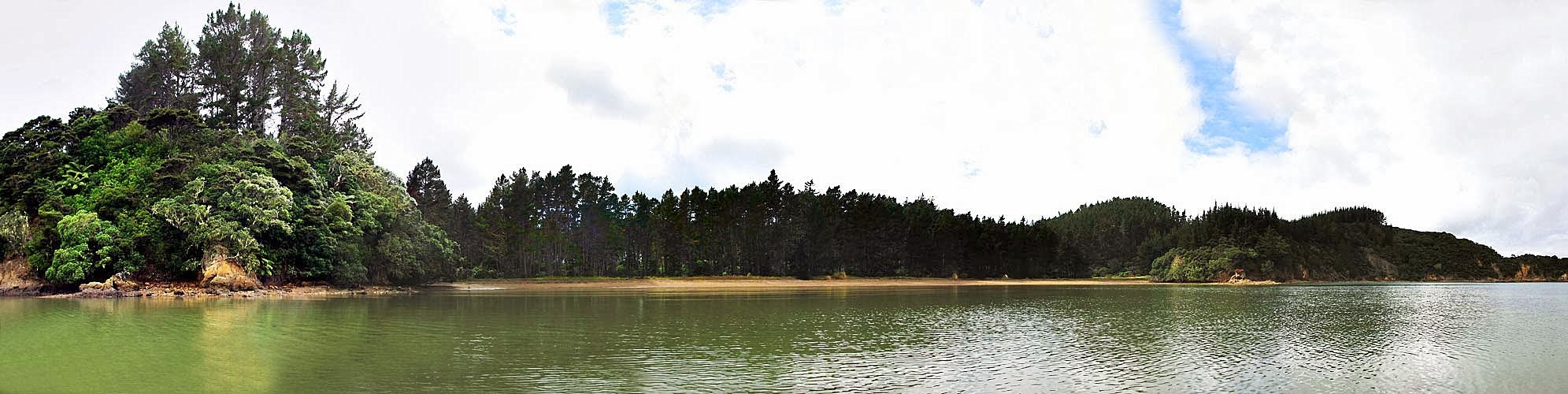
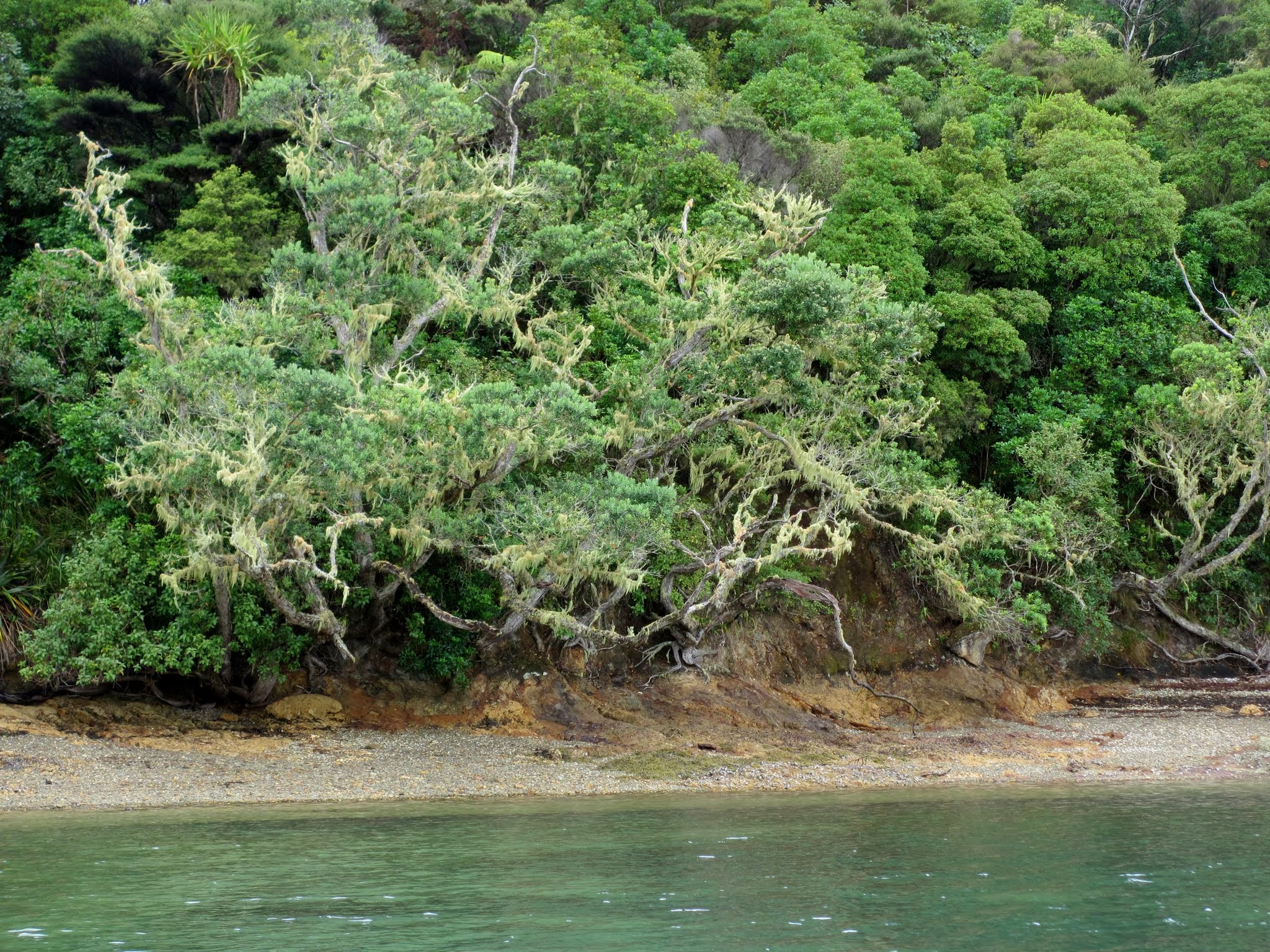
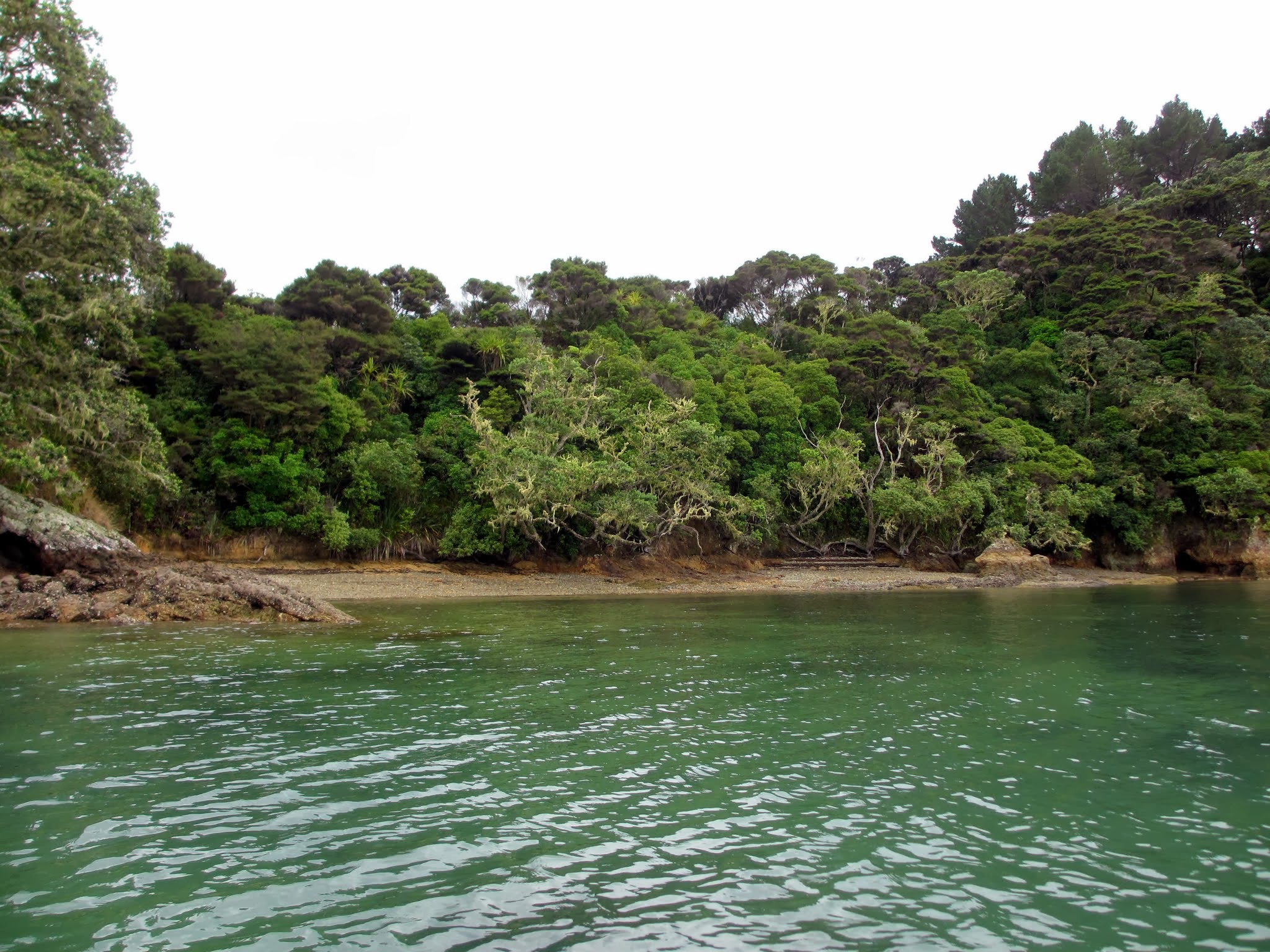
Omakiwi Cove is beautiful, but it couldn’t be more different from Waewaetorea. Tall pine trees line the brown pebbly beach while moss-draped pohutukawa trees cling to the craggy rock headlands alongside the bay. The water ranges from dark green to black. It’s the kind of place you’d half expect to see grizzly bears on the beach (if they had them here). Omakiwi looks like it’s no a stranger to rough weather, but it would be well-protected in the current conditions.
One of the nicest things about being in Omakiwi was not feeling the need to go ashore. Between the morning hike in Motorua Island and the afternoon hike in Waewaetorea, we had overdone it and needed a rest. This was a great place to just sit in the cockpit and just enjoy the scenery.
Overnight the weather moved in, and we woke up to a rainy morning, which felt fitting for this bay. Sunny mornings are always nice, but so are those mornings where you hunker below with a hot cup of coffee, read and listen to the rain patter outside. Those mornings are a nice time out when we don’t have to go anywhere or get anything accomplished. I’m often a little sorry when it clears up.
Eventually the rain stopped and the sun started to reappear through the clouds. With that, it was time to go take a dinghy ride around the anchorage and get a good look at it before we headed on, first to do some sightseeing of the bays in this area, and then to our next bay for the night: Oke Bay to the east.
(Note: We’re doing something different these days: putting photo galleries above blog posts instead of beneath them. Click on any picture to enlarge, then on the right side of the picture to scroll through them. Click the X on the lower right corner to return to the regular-size photos. If a picture looks blurry in the gallery it’s probably wide angle. Enlarge it and it will be sharp.) –Cyndi