Dining in Savusavu (Vanua Levu, Fiji)

June – September, 2013

One thing Fiji cruisers find out quickly is there’s very little in the way of provisions available once you leave the cities: Savusavu (in north Fiji), Suva (in south Fiji), or the Denarau/Vuda Point area (in west Fiji). Those of us without a big freezer need to return to these places periodically to re-provision.

Since we spent our entire season cruising only the east side of the Fiji island group, Savusavu became our re-provisioning base, and we were always happy to return here after cruising and rush to our favorite eateries!

The best foods to enjoy in Savusavu (and Fiji in general) are Indian, Chinese, and Fijian cuisines. There’s always burgers and pizza, but the former three really stand out as special–we had some fantastic dining experiences! Here, in approximate order, are our favorite places to eat in Savusavu (on the island of Vanua Levu, Fiji).

Hidden Paradise Restaurant

If we could only eat at one restaurant in Savusavu, it would be Hidden Paradise Restaurant (not to be confused with the Seaview Restaurant at the Hidden Paradise Guest House). It’s a very basic little hole in the wall, minimally decorated, cooled only by fans, and no liquor license so it’s byob. It’s not the place to come for the ambience, but in a town with lots of great Indian food, this easily stood out as the best (and incidentally the cheapest).

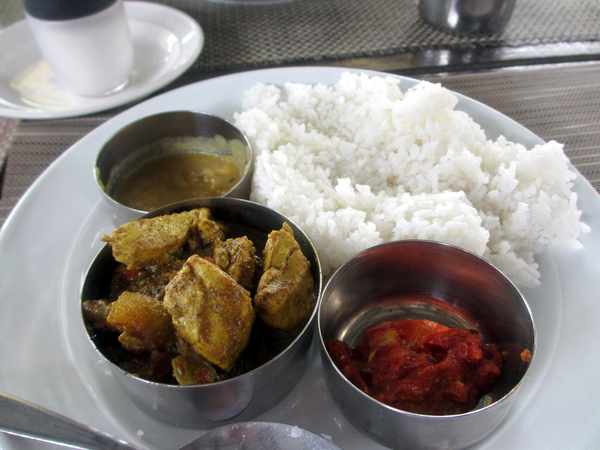
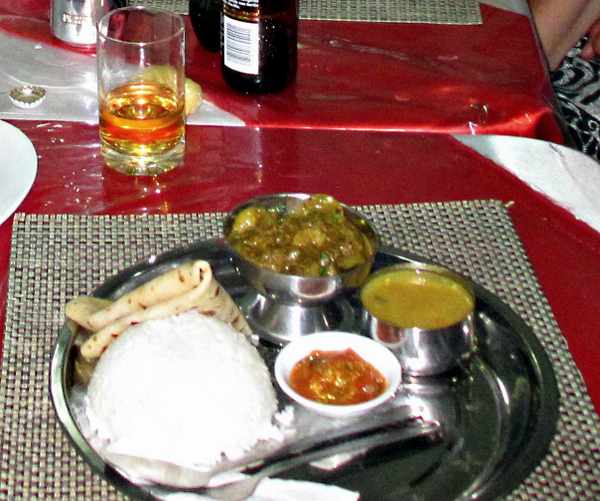
The curry was served as a meal called a thali, on a metal plate with bowls of dahl (lentil soup), rice, the main curry dish, tomato chutney and rotis (an Indian flatbread much like a tortilla). It was wonderful, but our very favorite dish to order was the Thai chicken with an extra side of rotis. Whatever we ordered, we’d put some of it over rice and stuff the rest into rotis and enjoy it burrito-style.
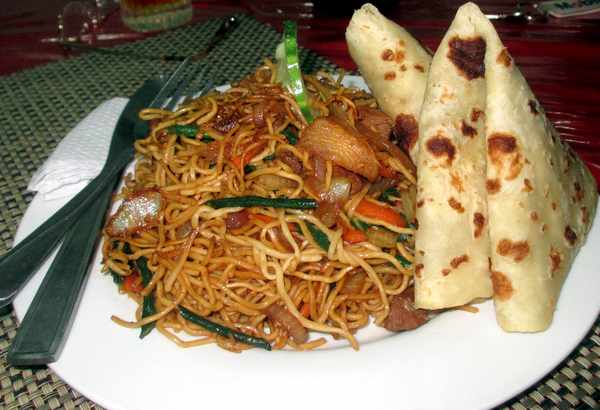
Chow mein with a side of rotis.
A classic Indian thali featuring chicken curry as the main dish.

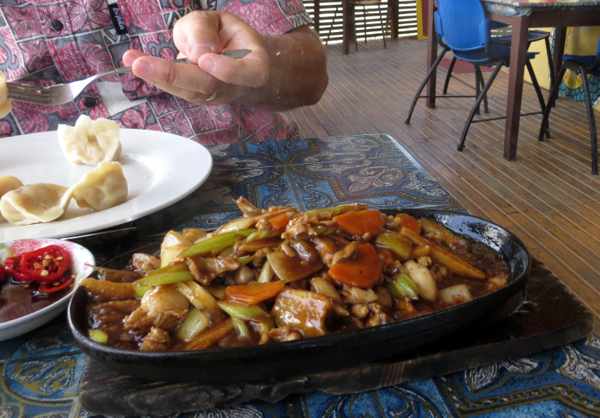
Savusavu Wok

Savusavu Wok is almost a tie with Hidden Paradise restaurant and often the first place we’d go when returning to Savusavu. It’s a casual and fairly inexpensive eatery, and while it does get some mixed reviews from cruisers, the foods we ordered were fantastic! One of the best foods on earth are their dumplings. The flavorful homemade-tasting pasta surrounds an incredible meat filling, and alongside are a sweet chili dipping sauce and, on request, a soy chili pepper sauce. They were so good we’d each get an order, then share the sizzling Mongolian chicken or the garlic eggplant. We had many, many happy meals here!

Savusavu Wok, one of our favorite eateries.
The utterly incredible, unbelievably good dumplings at Savusavu Wok.
Sizzling Mongolian chicken from the Savusavu Wok.

The Captain’s Table

There are two upscale restaurants in town, and this is one of them. It’s located in the Copra Shed Marina building and looks out over boats docked at the marina. The food is continental cuisine, a mixture of Indian, Fijian, Italian, etc. Whatever we ordered, it was always wonderful. Our favorites were the chicken tikka masala, the spaghetti bolognese made with kidney beans, the Toa Vakalolo (a Fijian dish made with chicken cooked in coconut milk, greens, onion, chili, garlic and lemon), and some of the wonderful specials from the blackboard.

The Captain's Table has a great location in the Copra Shed Marina.
The Captain’s Table has a great location in the Copra Shed Marina.
The chicken tikka masala was a frequent special and our favorite dish there.
Toa Vakalolo, a Fijian dish of chicken cooked in coconut milk, greens, onion, chili, garlic and lemon.

Surf ‘n Turf

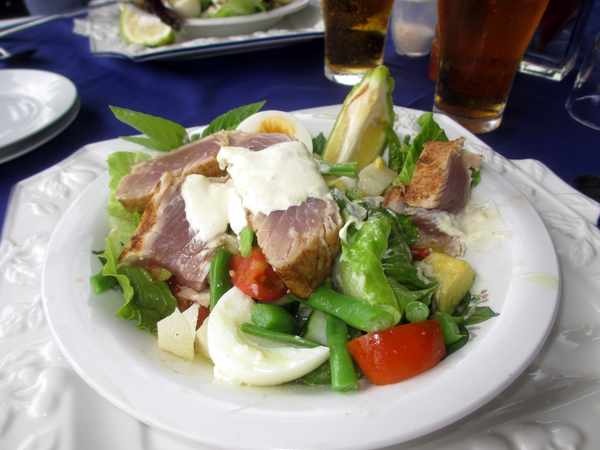
This is the other upscale restaurant in town and generally known as the best restaurant in town. I can’t say I disagree–it does have some incredible food. Like the Captain’s Table, it’s continental cuisine, and they serve a lot of specials aside from their regular menu. Our favorite special was the salad nicoise which had seared tuna chunks, avocado, green beans, potato, egg, lettuce and a wasabi dressing that was out of this world. Our favorite regular item was the Kokoda, the Fijian name for the classic south pacific dish of raw fish and vegetables marinated in coconut milk and lime juice. It’s listed as an appetizer but made a great meal.

The Surf 'n Turf restaurant has a very pretty setting.
The Surf ‘n Turf restaurant has a very pretty setting.
Our favorite salad ever! We didn't know salad nicoise could be like this!
Our favorite salad ever! We didn’t know salad nicoise could be like this!
Kokoda (aka poisson cru, ota ika, or oka ita depending on which south pacific country you're in).
Kokoda (aka poisson cru, ota ika, or oka ita depending on which south pacific country you’re in).

The Captain’s Cafe

This is the more casual eatery at the Copra Shed, with sandwiches, burgers, pizzas, and some Chinese, Indian, and Mexican dishes. We enjoyed their chili garlic chicken, chicken curry, and their chicken quesadilla. We also enjoyed an occasional breakfast on their deck, a wonderful place to sit in the morning and have eggs on toast and coffee.

Inside the Captain's Cafe.
Inside the Captain’s Cafe.
The deck at the Captain's Cafe is the best place to sit.
The deck at the Captain’s Cafe is the best place to sit.
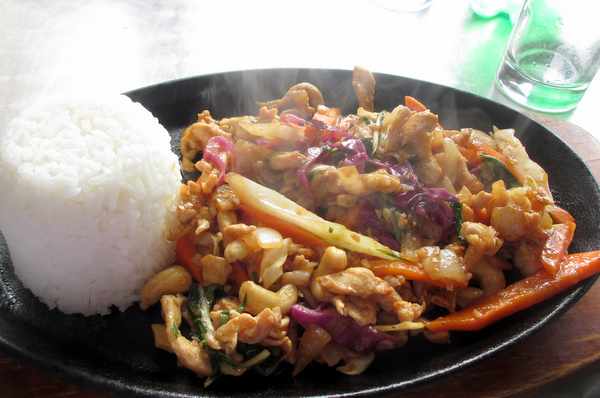
Our favorite thing at the Captain's Cafe is the sizzling chili garlic chicken.
Our favorite thing at the Captain’s Cafe is the sizzling chili garlic chicken.
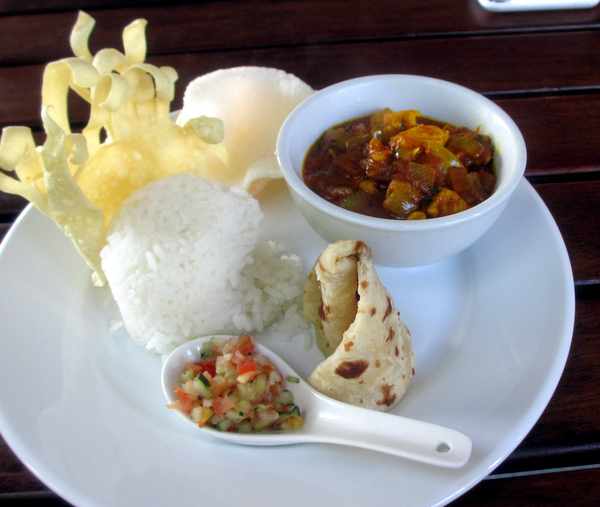
The Captain's Cafe also has great chicken curry that they serve with rice, roti and a crispy Indian flat bread called papadam.
The Captain’s Cafe also has great chicken curry that they serve with rice, roti and a crispy Indian flat bread called papadam.

Decked Out Cafe (aka Dinner’s Paradise)

This is a laid-back, comfortable eatery with pretty good food. They make a variety of good dishes: curries, burgers, some Chinese dishes, etc. Our favorite, though, was the pizza. Depending on the person cooking that day, it was either pretty good or great.

The Decked Out Cafe.
Our favorite tables in the Decked Out Cafe overlooked the sidewalk outside.
Pizza and beer at the Decked Out Cafe.
A classic chicken curry plate served with rice, tomato chutney, dahl (lentil soup) and rotis (not in the picture).

Chong Pong

This hole in the wall is hard to spot. Once you do find it, you climb the stairs to find a very basic eatery, another one not to come to for the ambience. But the food is good and very cheap, and they serve the best chow mein in town.

Finding Chong Pong was a challenge.
Chong Pong had the best chow mein in town.

The Seaview Restaurant

This is a nice Indian restaurant in town that also serves Fijian dishes. The Indian food is good, but not as good as Hidden Paradise down the street. It does have a prettier dining room, though, and the Fijian dishes were very good.

Chong Pong had the best chow mein in town.
Outside the Sea View Restaurant at the Hidden Paradise Inn.
A chicken curry plate (chicken curry, dahl, rice, tomato chutney and roti) with a side of greens.
Ika Vakalolo, fish in coconut milk with vegetables.

Ravin’s Restaurant

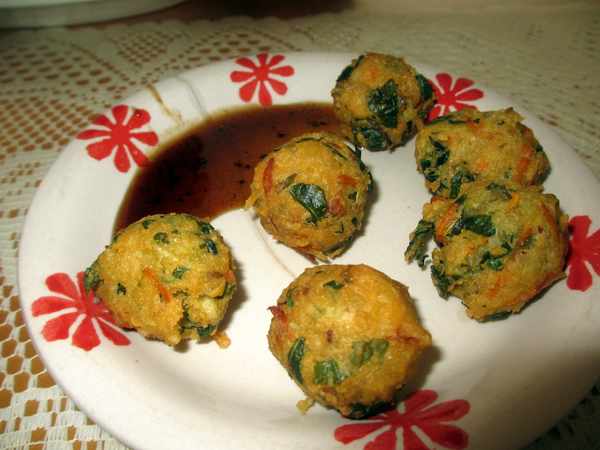
Yet another hole in the wall with cheap-but-good food. We enjoyed their chow mein and bara, an Indian appetizer of savory donut-like balls rolled with vegetables, deep fried, and served with a tamarind sauce.

Ravin's in Savusavu is a very small, casual eatery.
Ravin’s in Savusavu is a very small, casual eatery.
Ravin's is another great place to have chicken chow mein.
Ravin’s is another great place to have chicken chow mein.
Bara, a tasty Indian fried appetizer served with tamarind sauce.

Farmer’s Market Eateries

Around the farmer’s market are a few tiny eateries that serve Fijian food. We went to this one because I wanted to try their fish in miti, a coconut milk sauce. It was OK but not good enough to come back to the restaurant. I don’t know the name of the place, but other people found some good stuff at some of the other little eateries around the market.

One of the little eateries next to the open-air Market.
Fish in miti (coconut milk and chilies) sauce topped with greens.

The Planter’s Club

This is more of a bar than a restaurant, but they serve a monthly lovo, a Fijian feast where the food is wrapped in banana leaves then cooked in an earth oven over hot stones.

The view from the deck at the Planter's Club.
The view from the deck at the Planter’s Club.
Enjoying the monthly lovo (Fijian feast) at the Planter's Club with friends.
Enjoying the monthly lovo (Fijian feast) at the Planter’s Club with friends.

Street Foods

The best street food to get in Fiji is a stuffed roti. They are pre-made burrito-like things stuffed with spiced chicken, beef, or a potato mixture. They are cheap, delicious and filling enough to make a meal. They are sold near the farmer’s market, or there might be a plate of them on the counter of a shop.
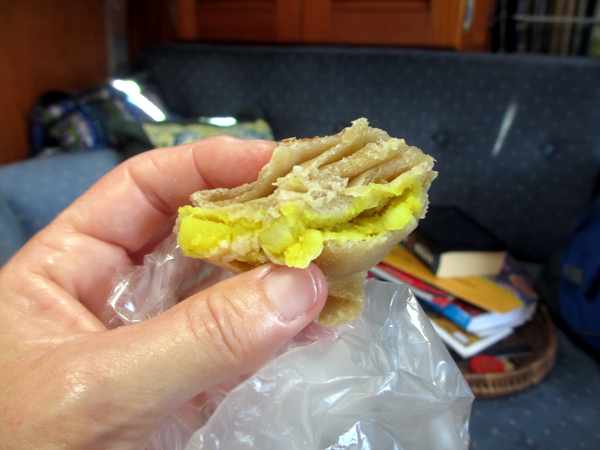
A roti stuffed with spiced potato--only 1FD and delicious!
A roti stuffed with spiced potato–only 1FD and delicious!

Ice Cream

There is ice cream in Savusavu, and the most famous place is Surf ‘n Turf for their homemade ice cream. It’s good and there are lots of flavors, but we found the ice cream at the Captain’s Deck was creamier and quite excellent, although the choices were limited. It didn’t matter: their coffee ice cream was so good that’s the only flavor we wanted.

Delicious coffee ice cream from the Captain's Cafe.
Delicious coffee ice cream from the Captain’s Cafe.

Usually we just wanted a quick ice cream cone and would go to Ram Charan’s 1 Stop Shop. Our favorite flavor was the passionfruit. We always enjoyed coming here, and the friendly staff who knew what we wanted as soon as we came in. One thing we love about cruising is how quickly some places get to feel like home.

Heading into Ram Charan's for yet another ice cream cone.
Heading into Ram Charan’s for yet another ice cream cone.
The passion fruit was our favorite flavor of ice cream at Ram Charan's 1 Stop Shop.
The passion fruit was our favorite flavor of ice cream at Ram Charan’s 1 Stop Shop.

Fiji Water

Who knew Fiji Water is actually from Fiji?  It is, and it’s available everywhere here.  It’s very good water, and we ordered it with a lot of meals.

Rich enjoying some Fiji water on a rainy day.
Enjoying a large bottle of Fiji Water at the Savusavu Wok.

And now, I seem to have gotten really hungry. I wonder how much it costs to fly back to Savusavu? –Cyndi
Favorite Times of the Day in Savusavu (Vanua Levu, Fiji)

June – September, 2013

There is no single best time of the day in Savusavu, but there are times that stand out as special.

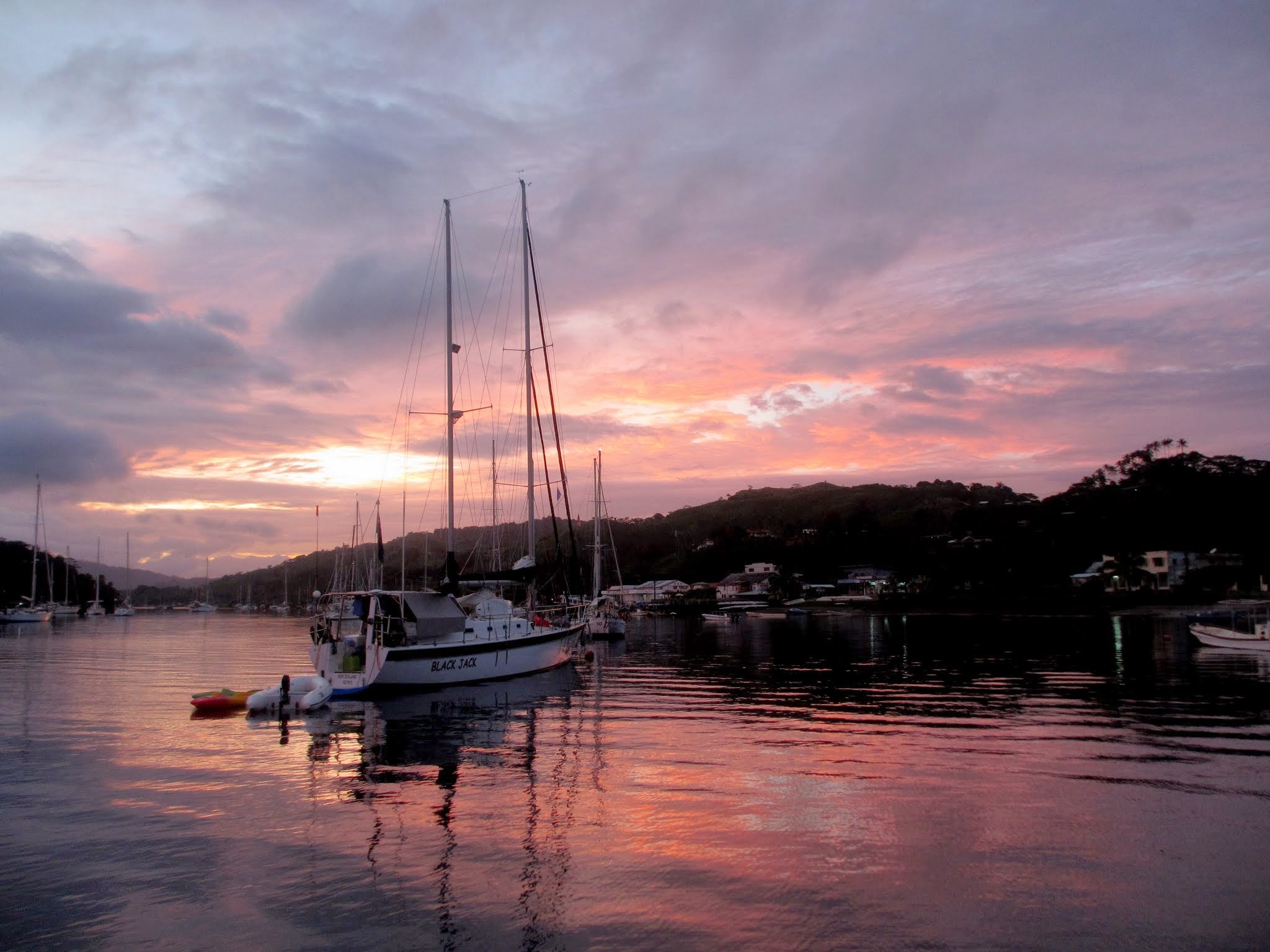
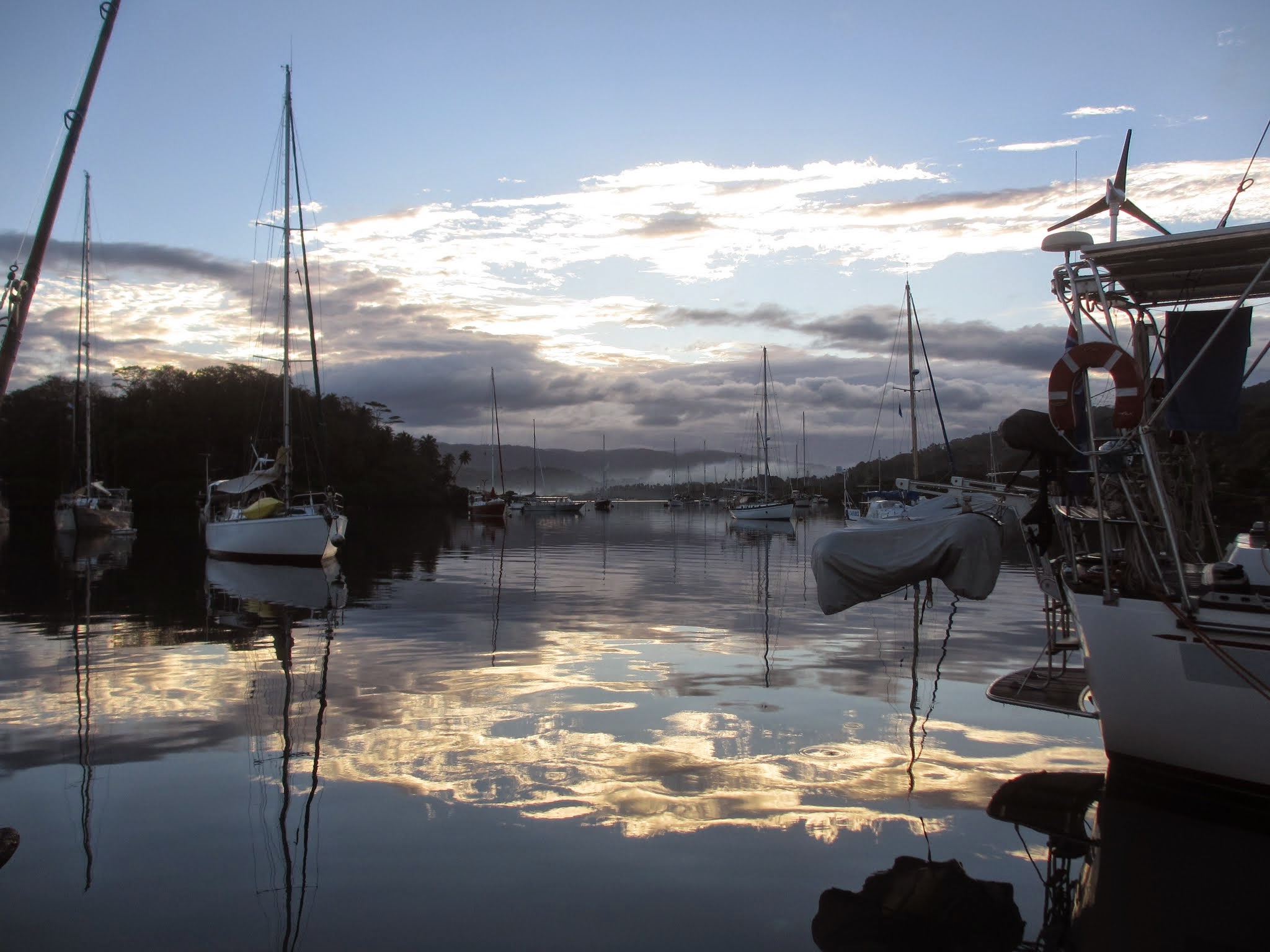
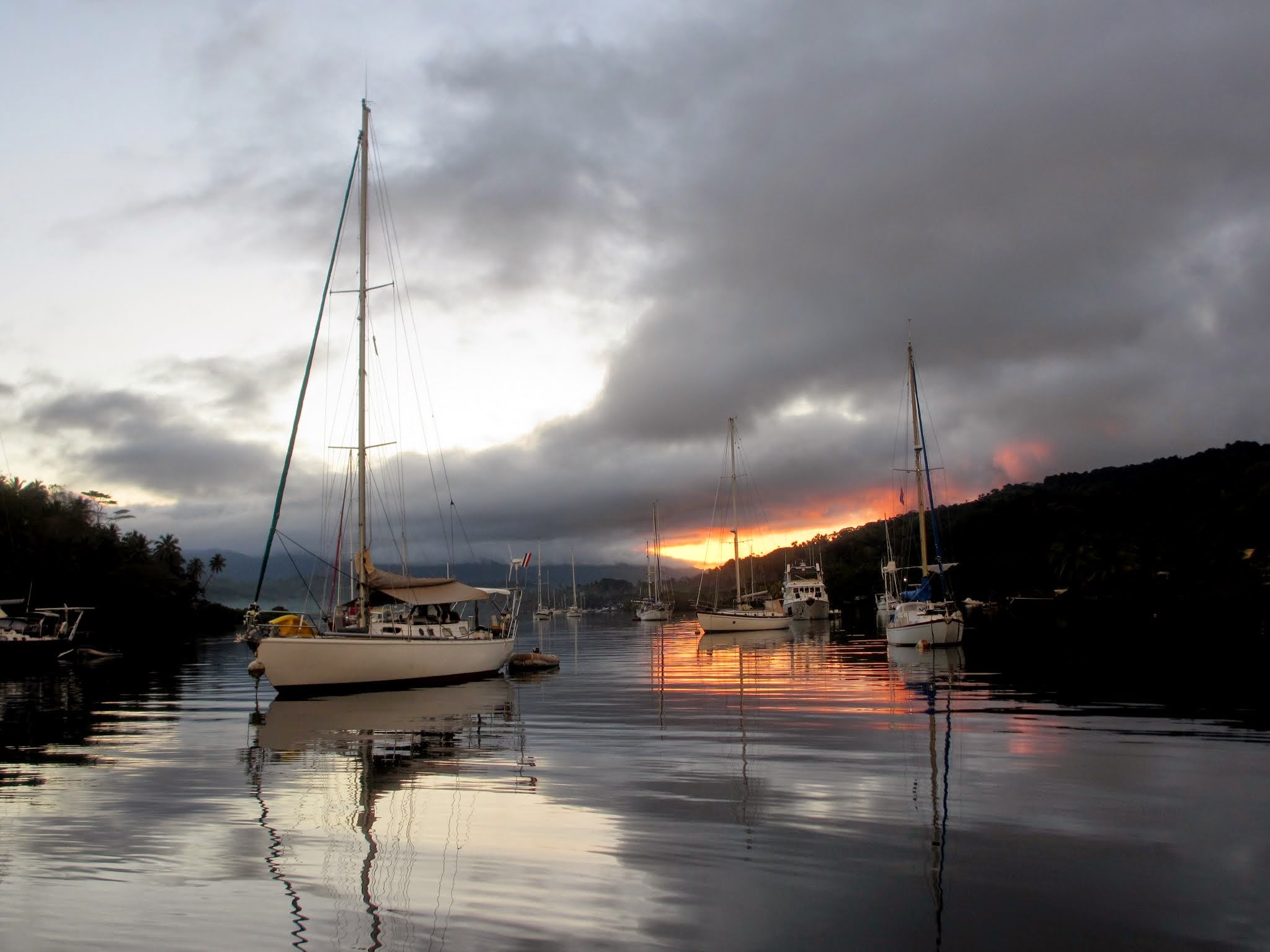
Sunrises here can be beautiful, the air warm enough to sit in the cockpit and enjoy a cup of coffee while watching the colors change. (click to enlarge and scroll on the photos in the galleries below)

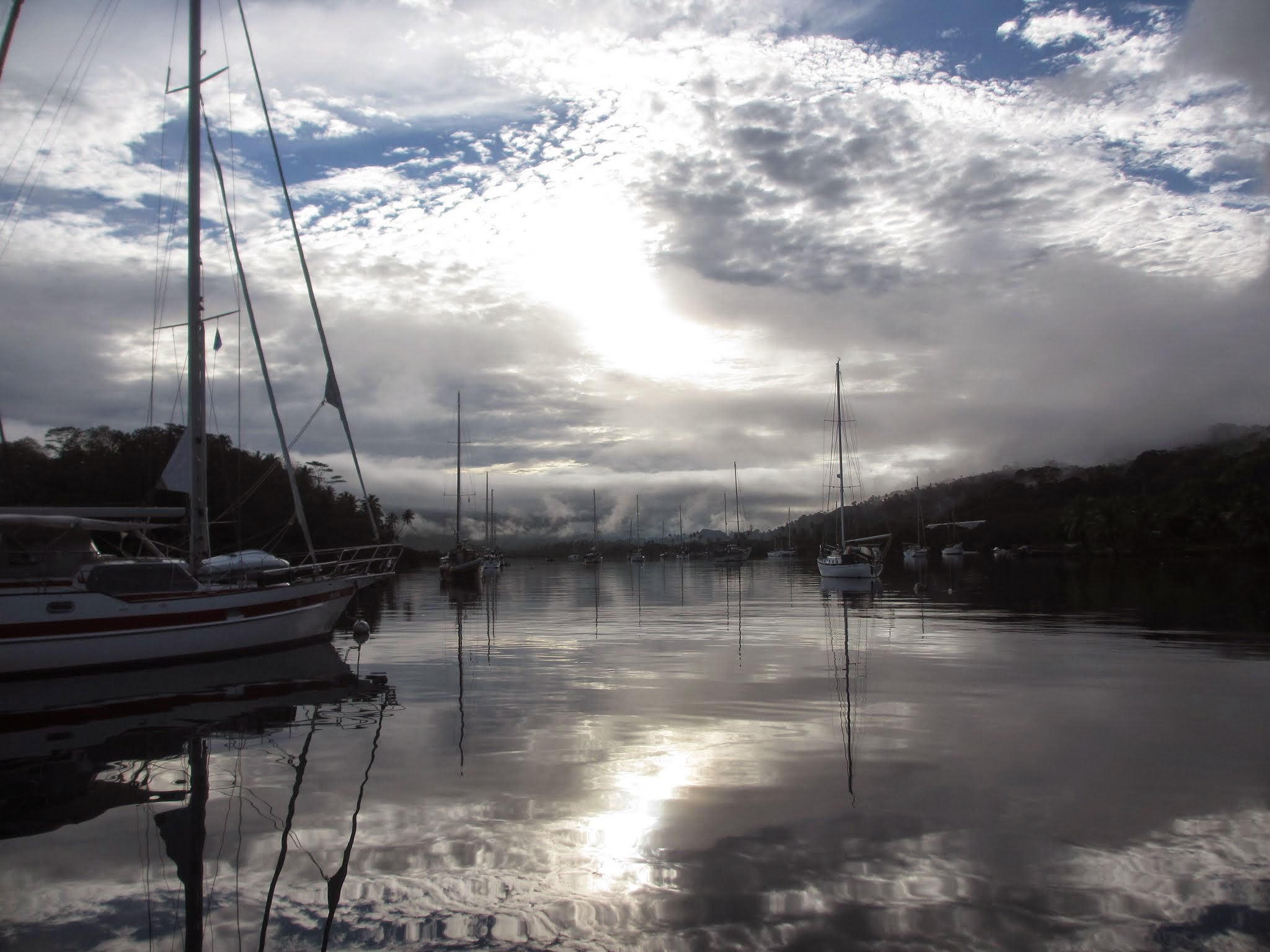
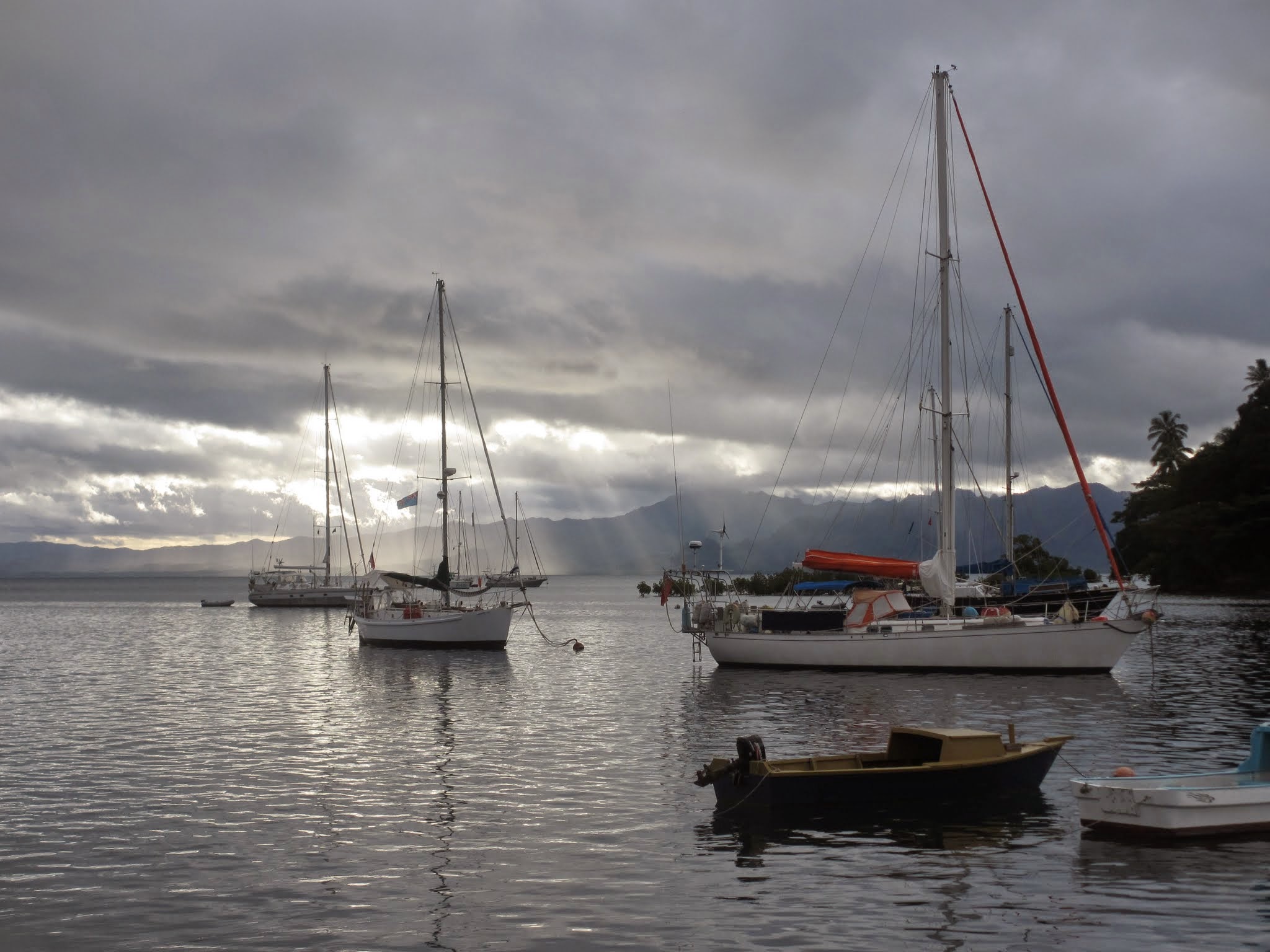
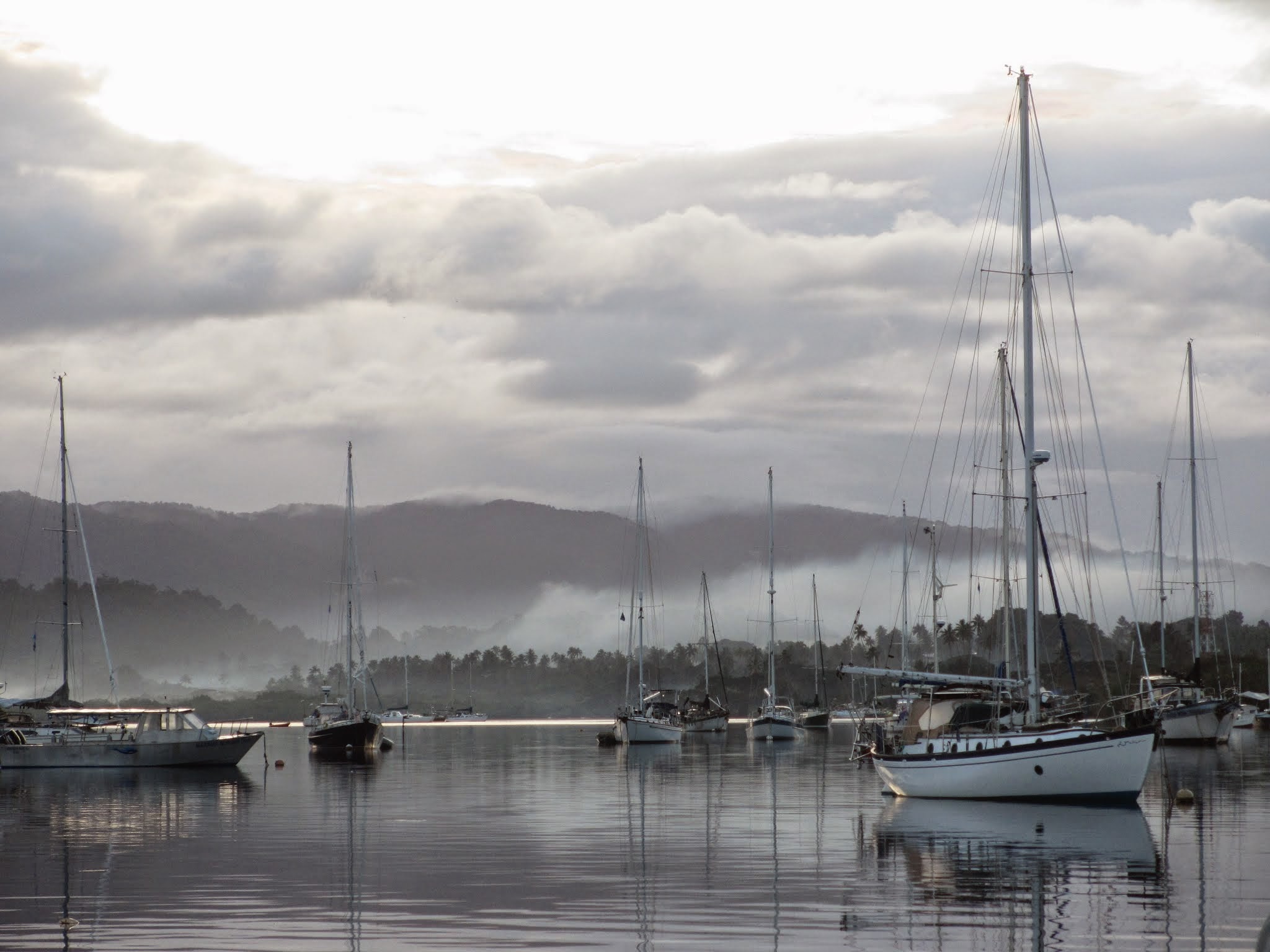
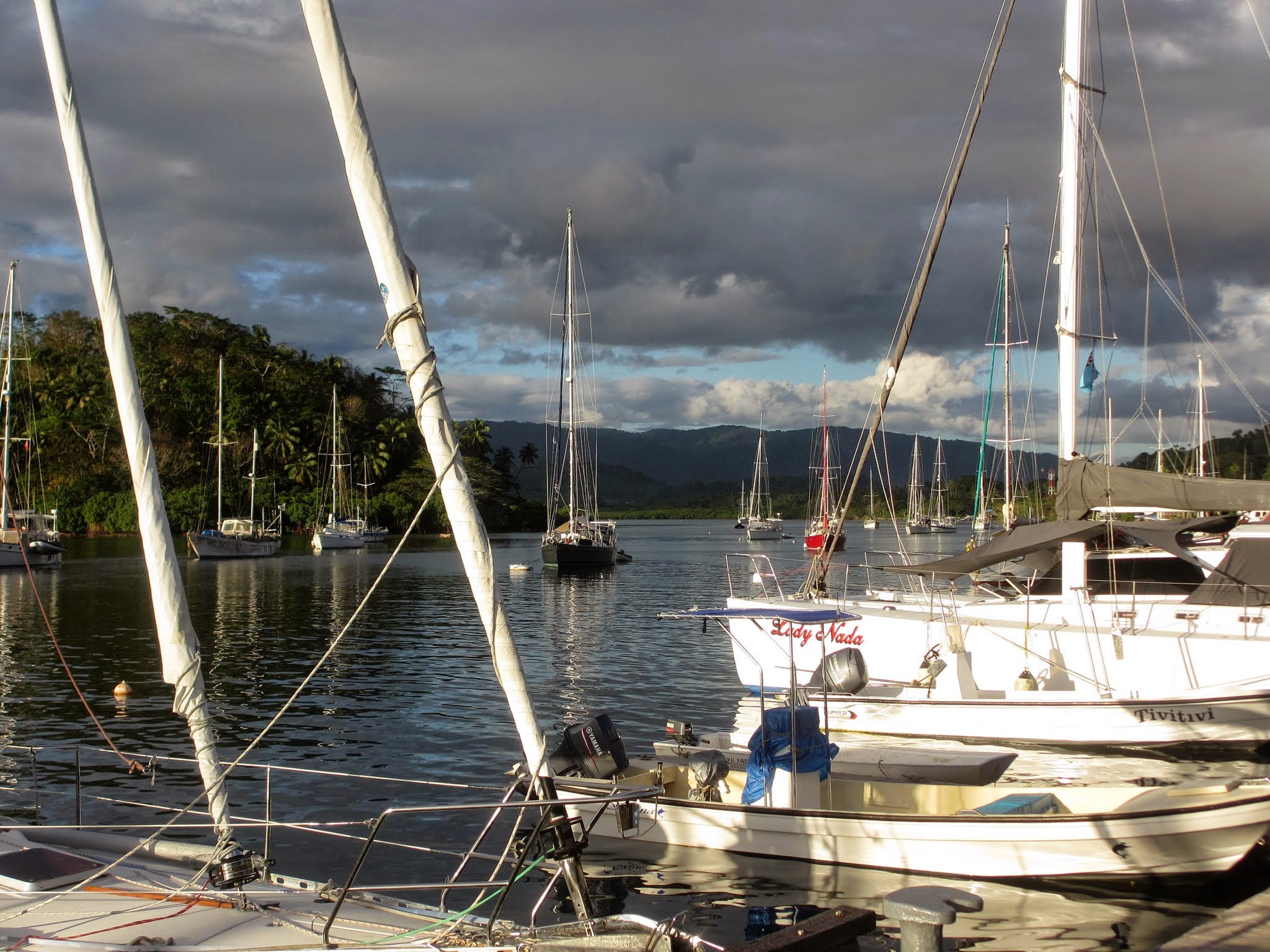
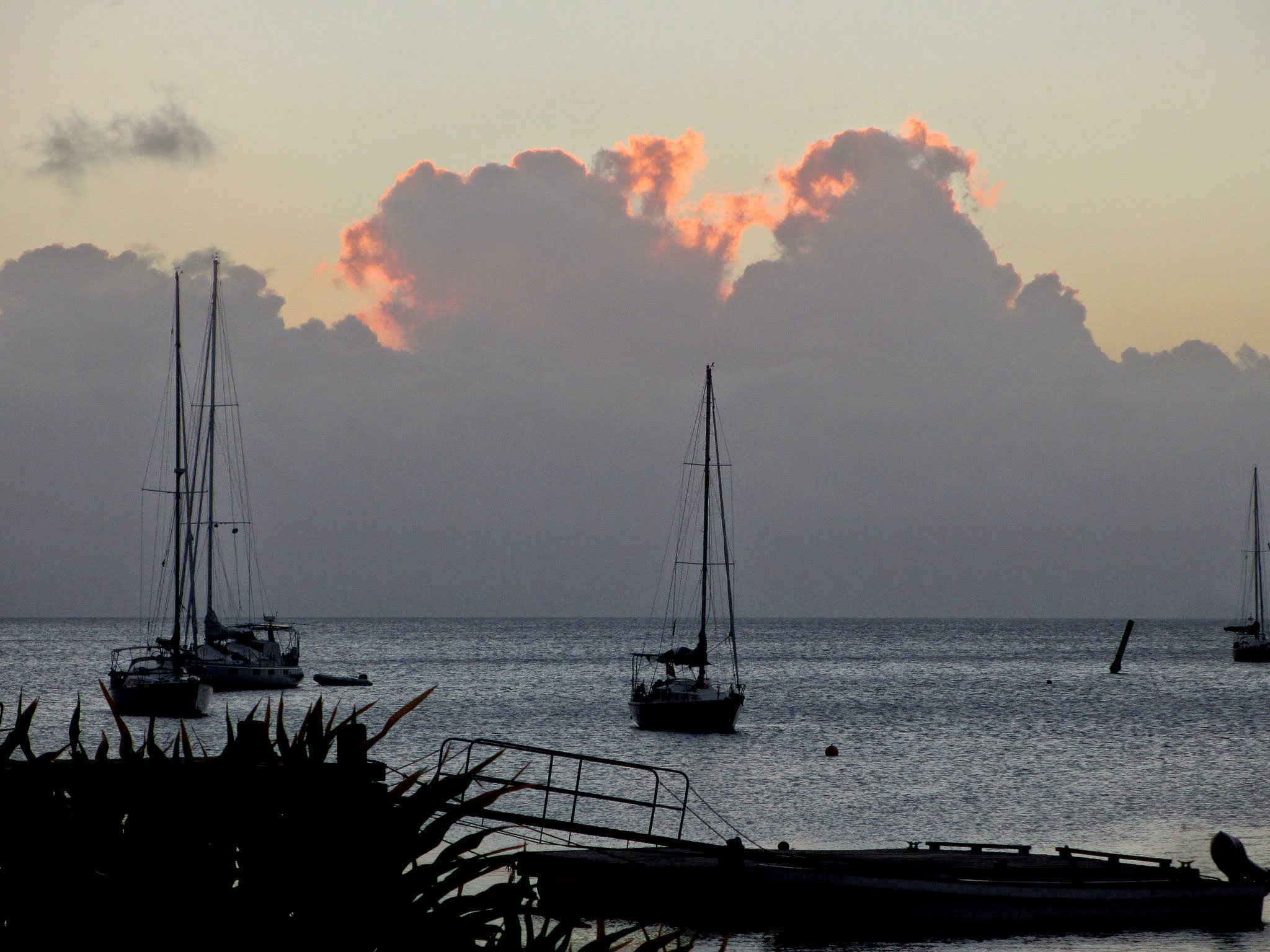
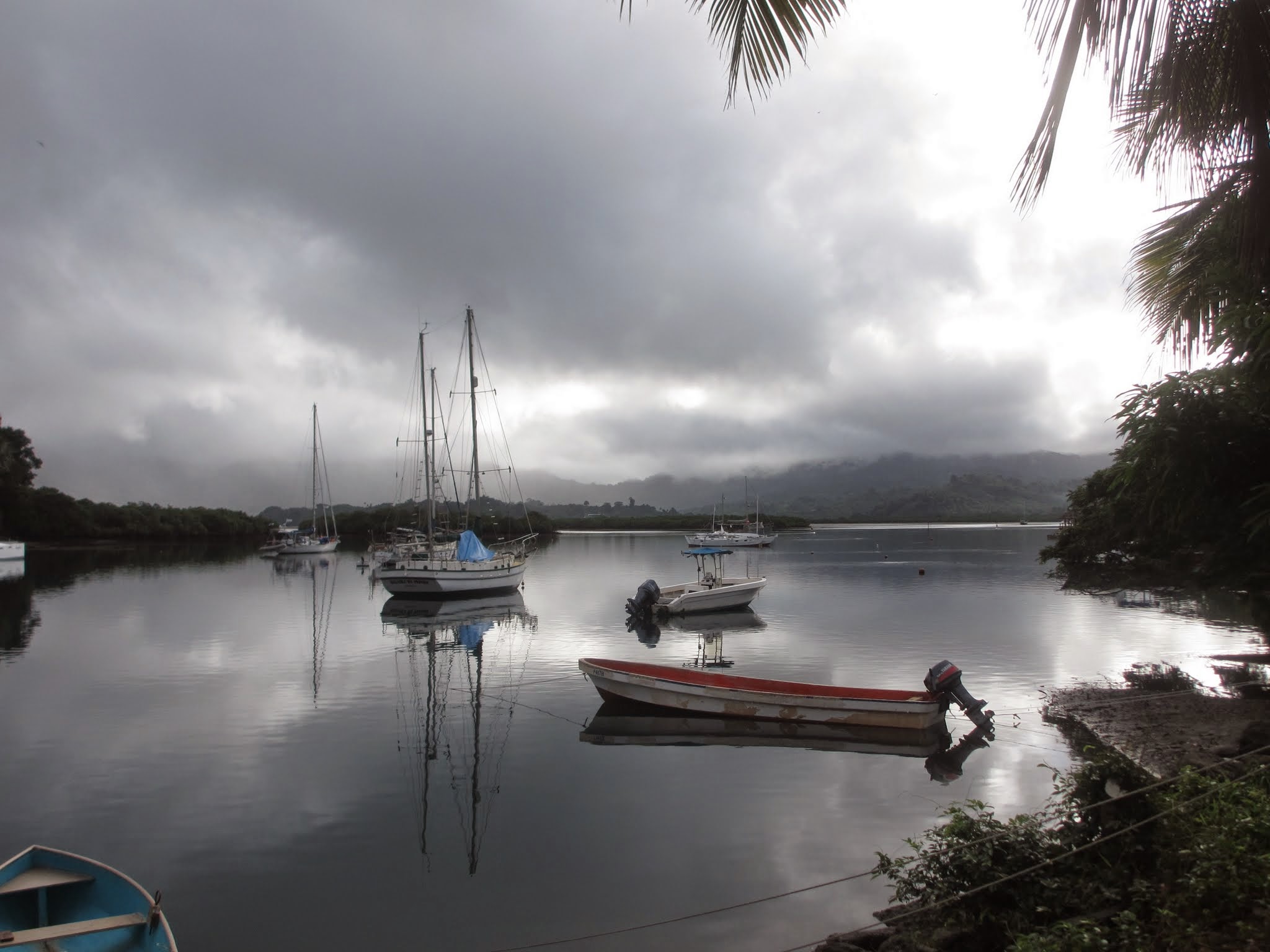
Some mornings are misty if there’s been overnight rain, with sun rays streaking down through the clouds. The anchorage will be cool, still and quiet while people linger inside their boats.

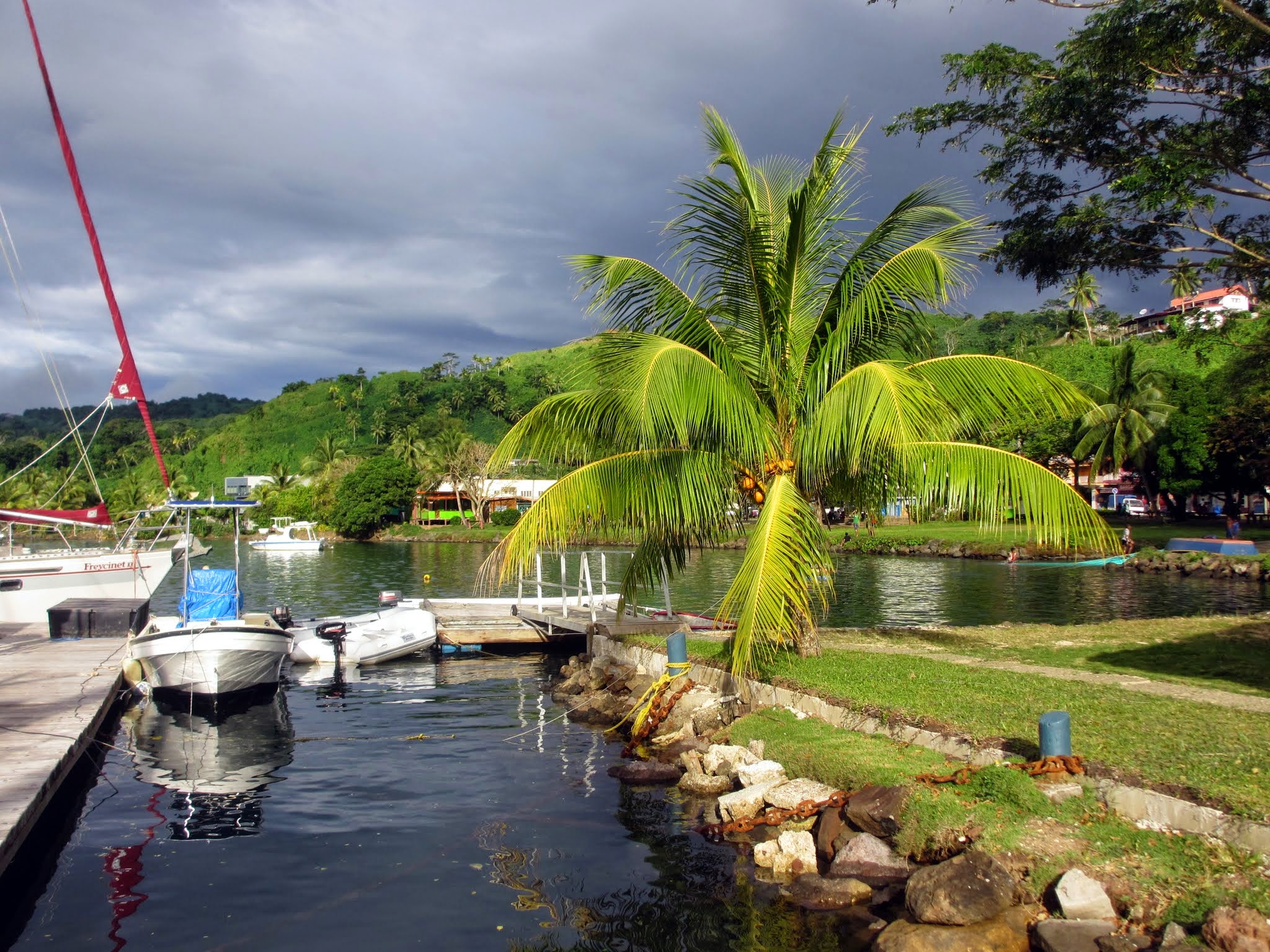
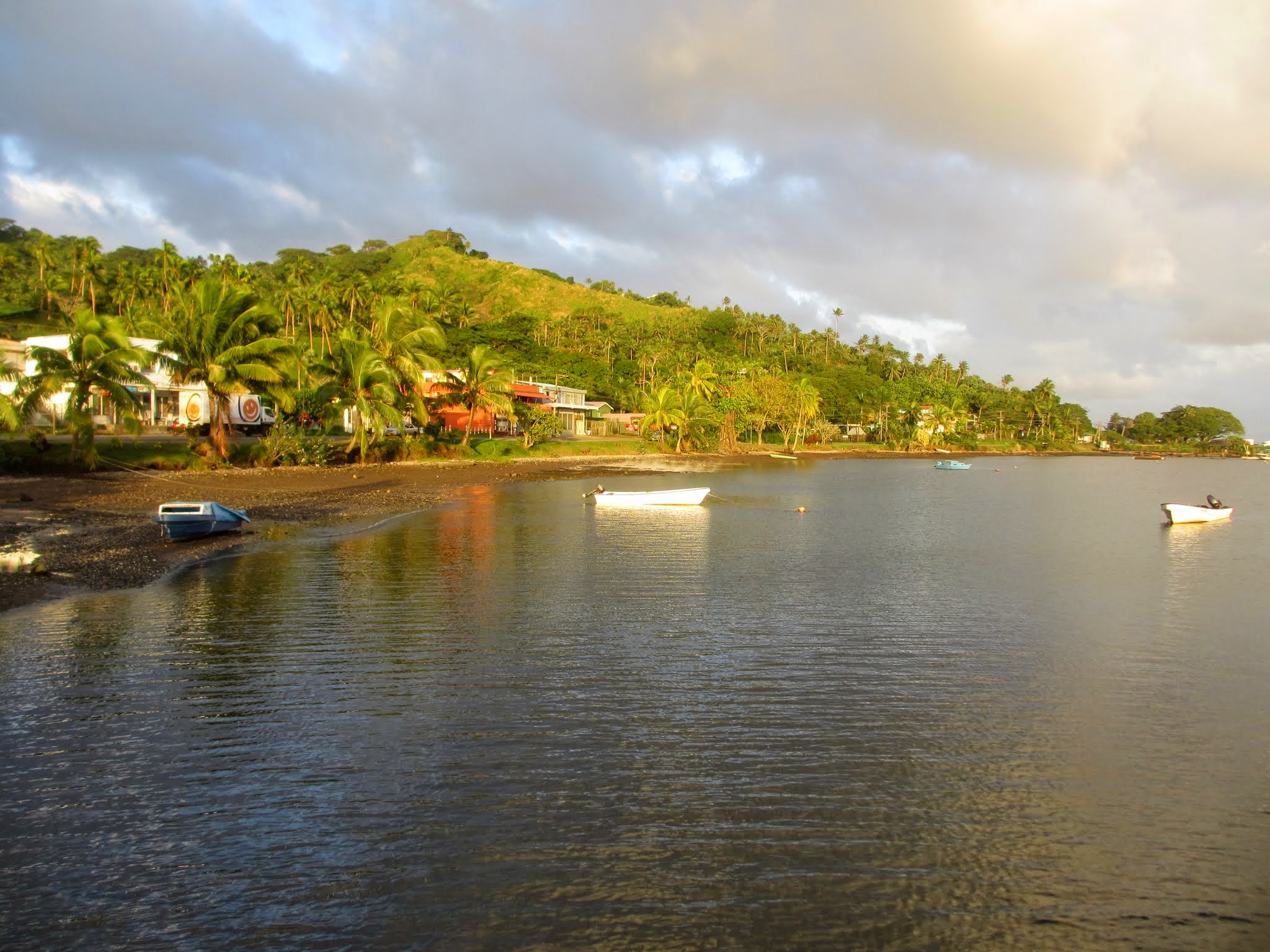
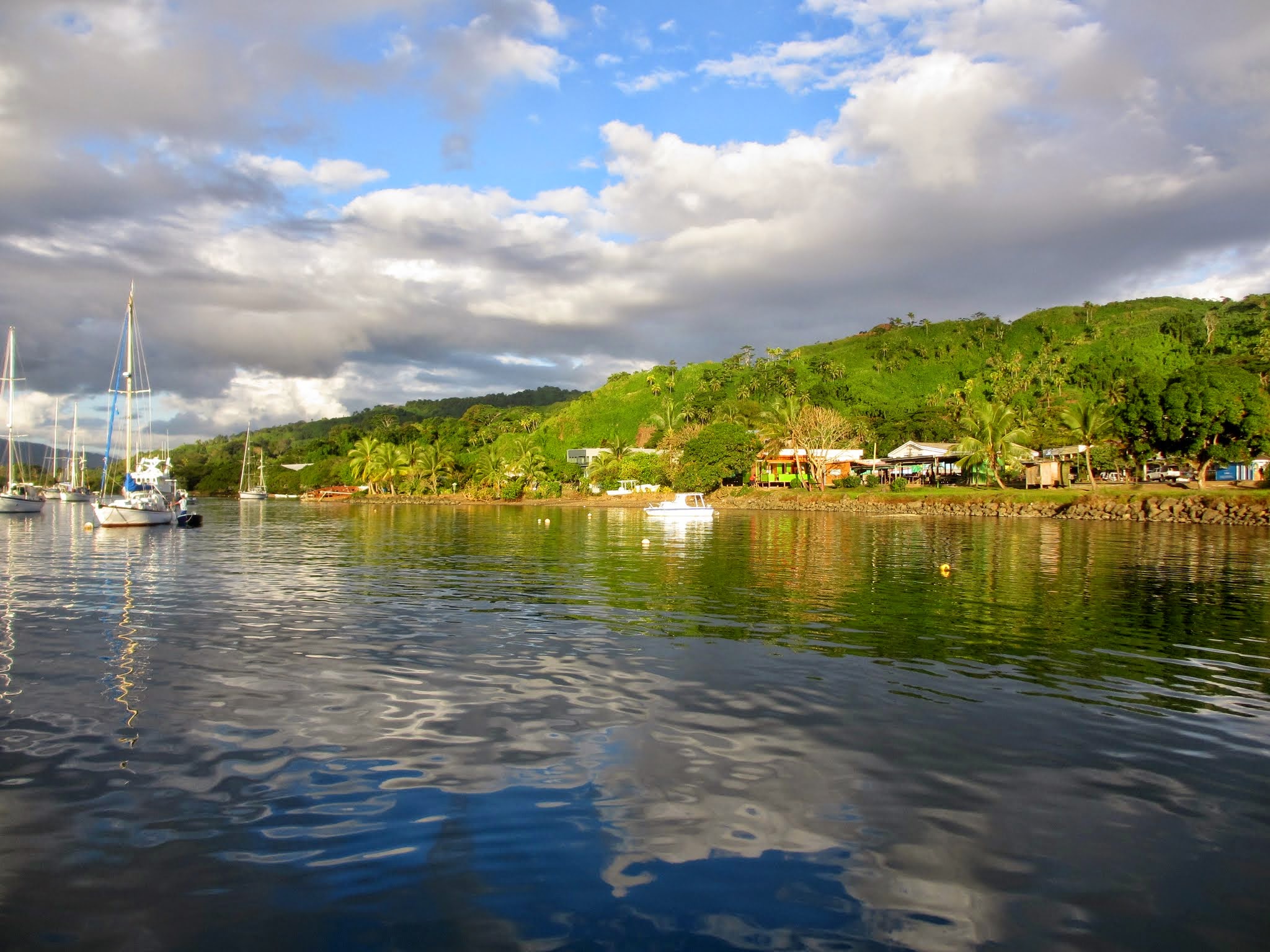
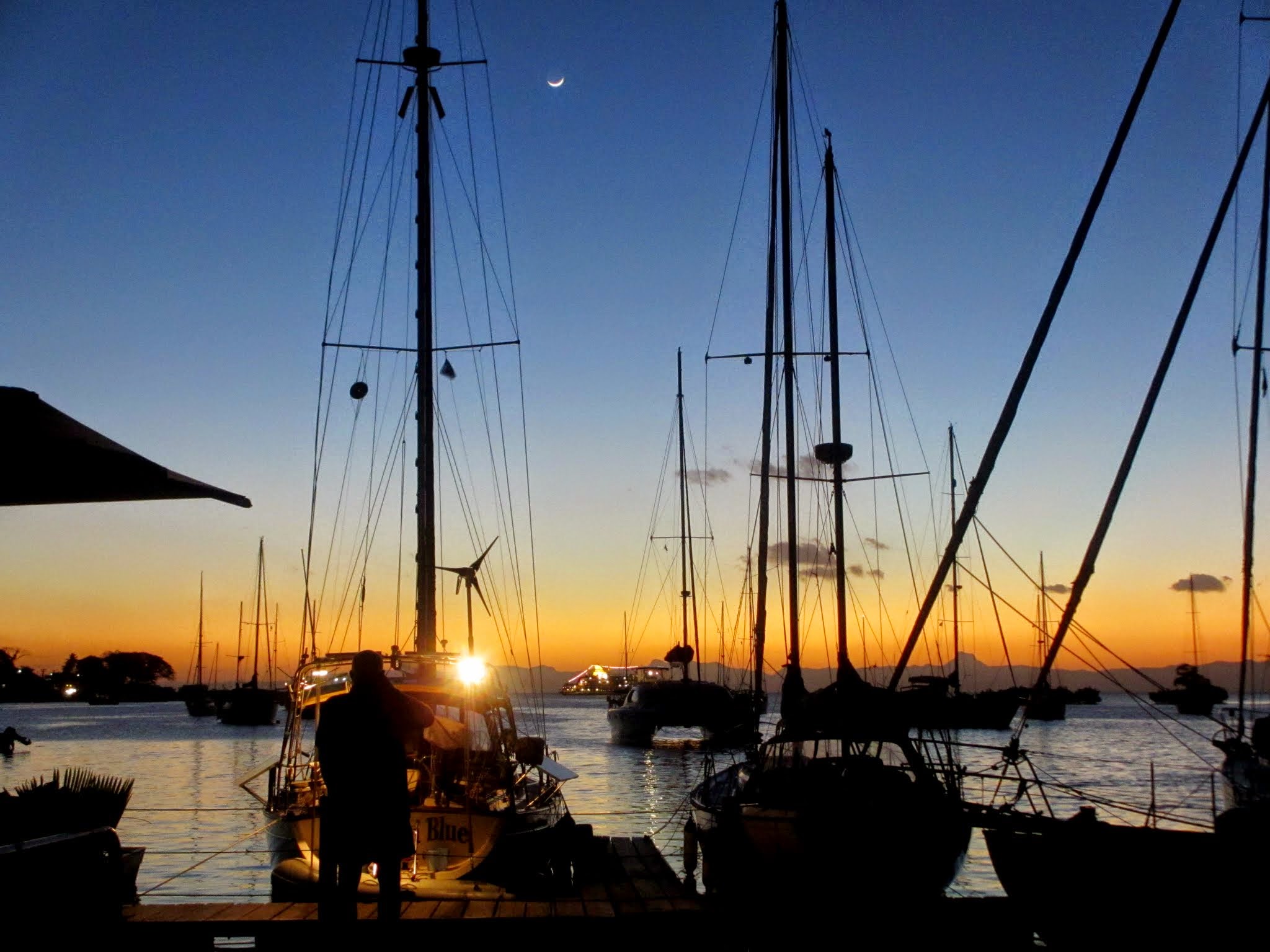
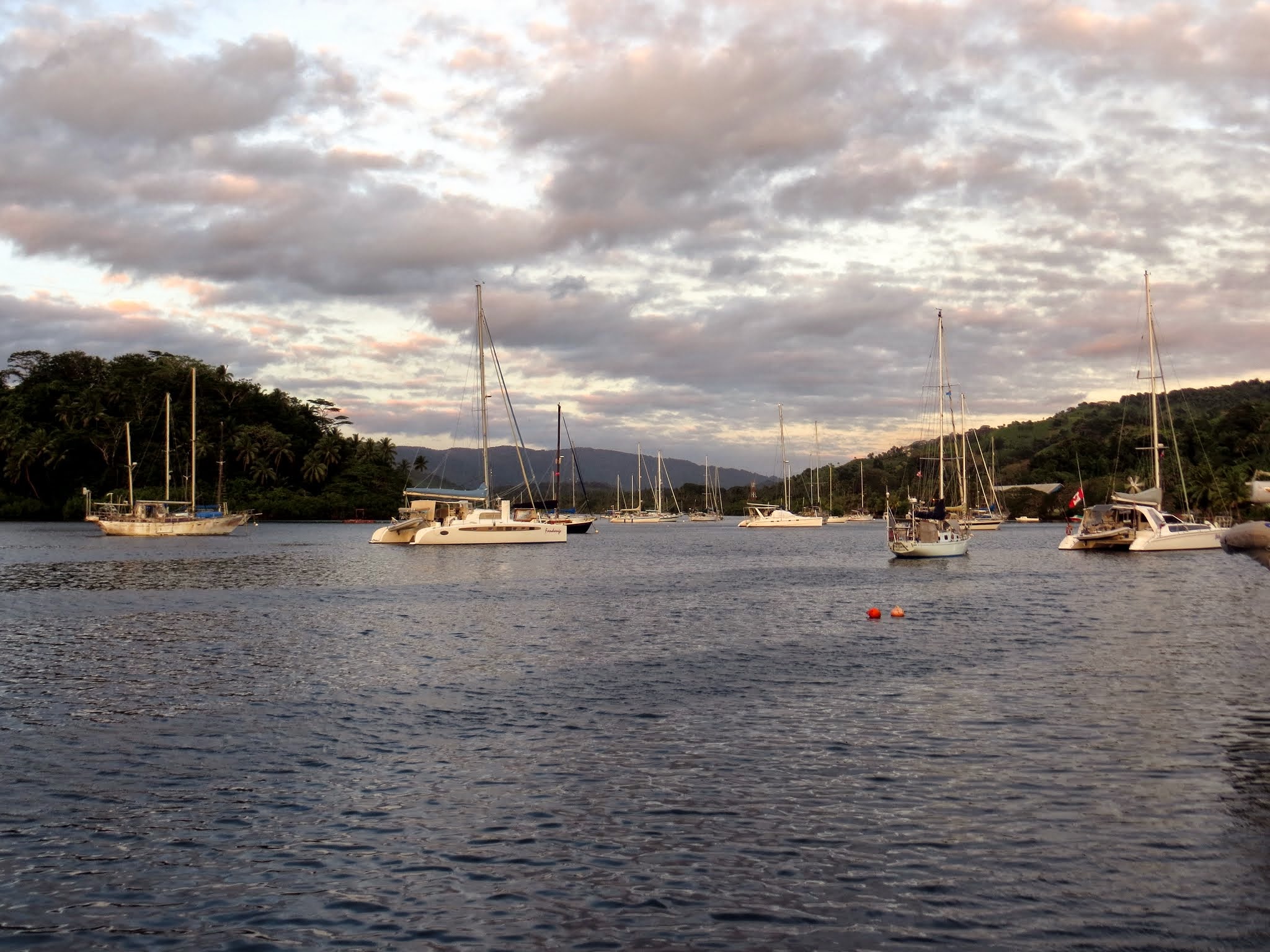
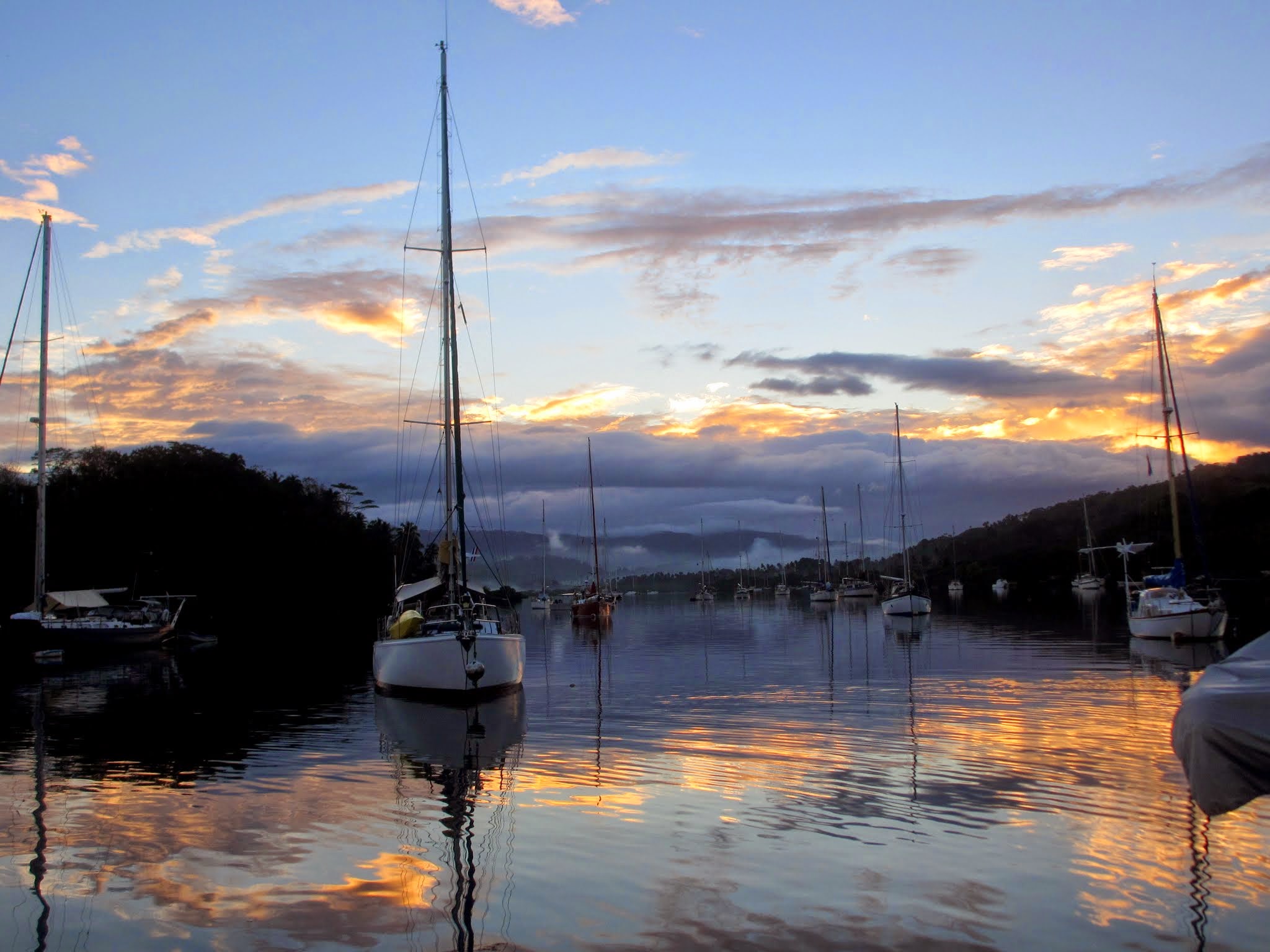
My favorite time of the day comes with the frequent golden evenings, the kind that makes the all the colors really pop.

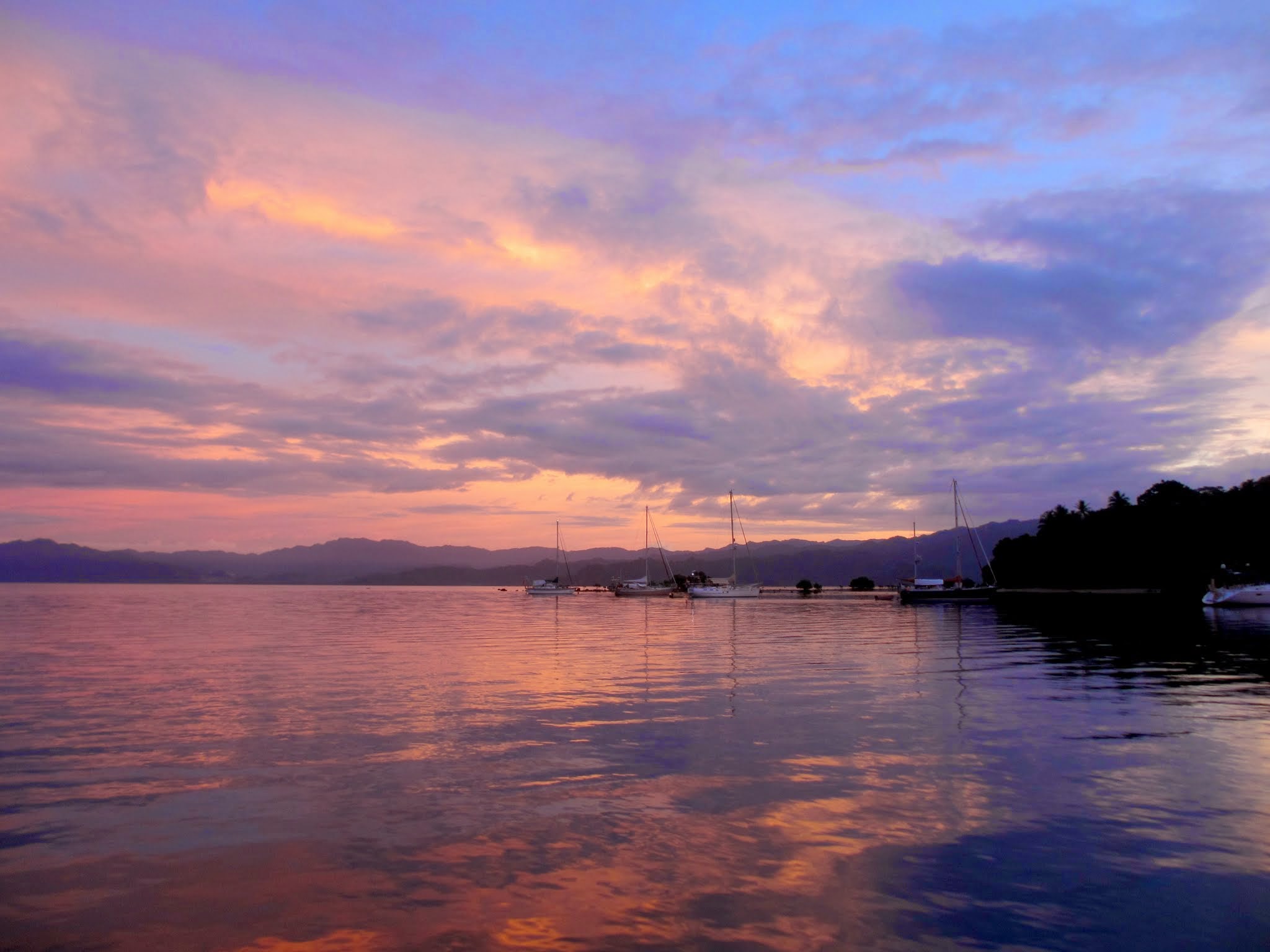
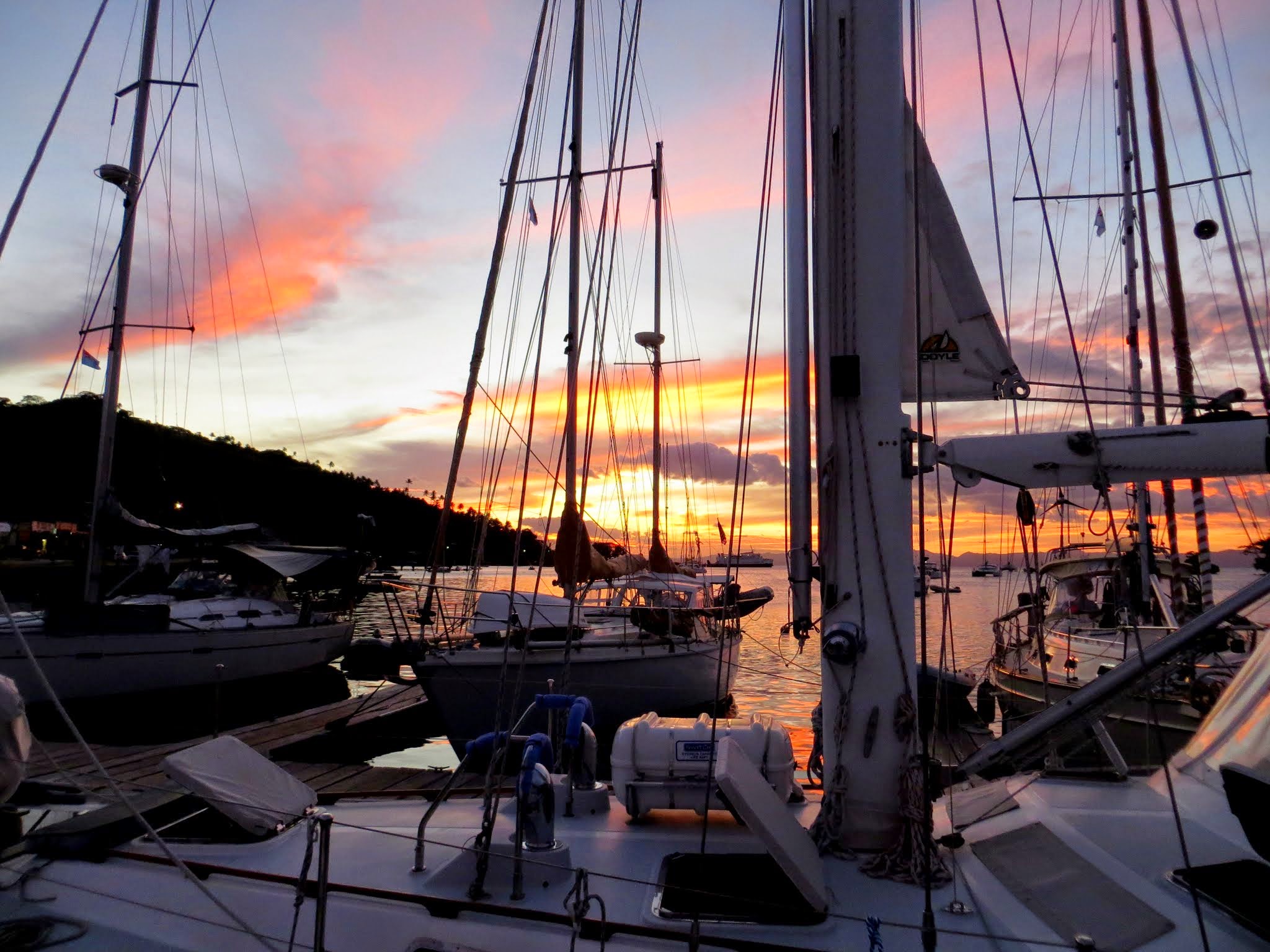
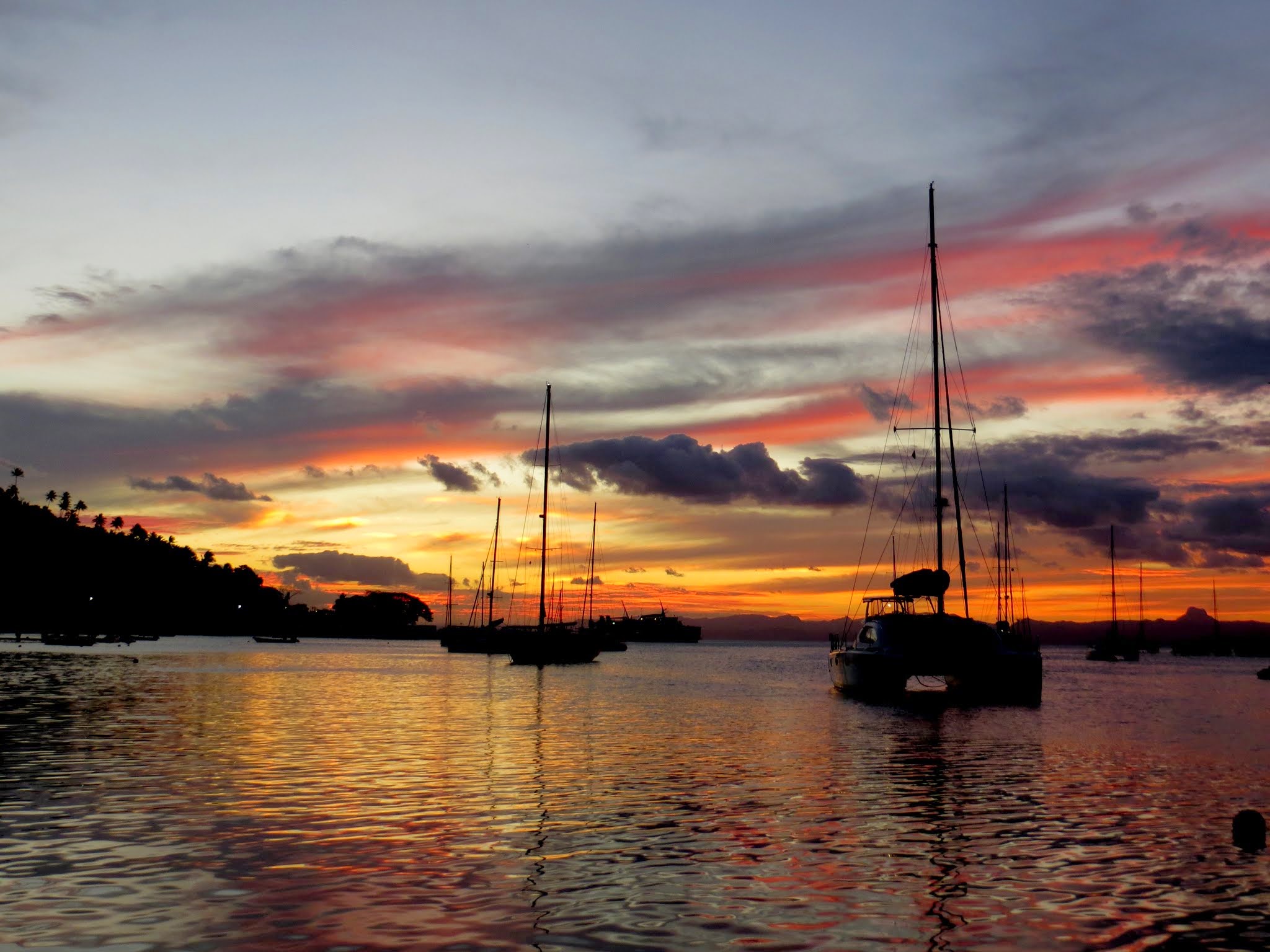
And then come the sunsets, which can be pretty amazing.

It’s not surprising that some people get to Savusavu and never leave. –Cyndi
Steamy Savusavu (Vanua Levu Island, Fiji)

June 10 – 18, 2013

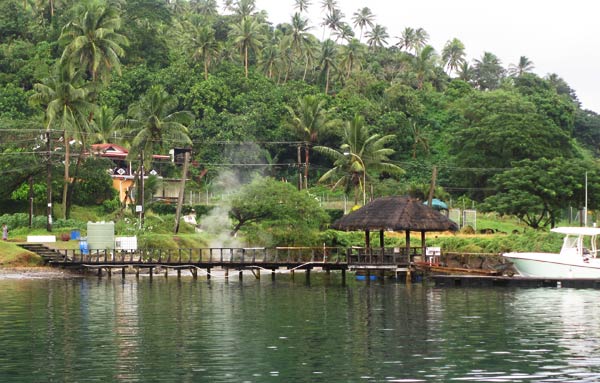
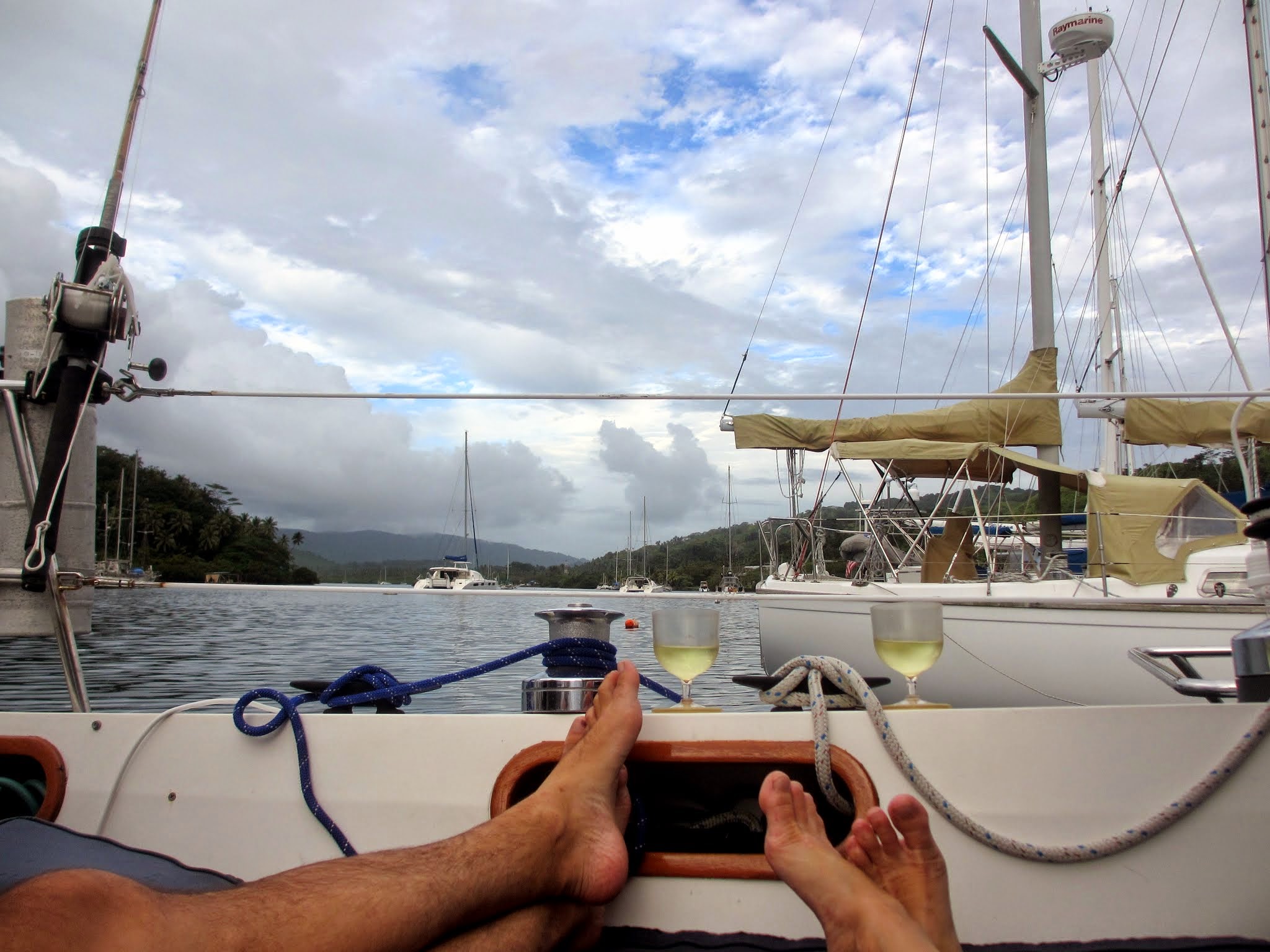
One interesting thing about Savusavu is it’s in a thermally active area and has steamy hot springs. The hot springs themselves are located in the small medical facility near town, but there are outlets along the shore and steam can be seen rising from the beach and the stream near town. The Hot Springs Hotel is on a hill just above town.

Unfortunately, Savusavu is not a good location for hot springs. At its coolest, Savusavu is still pretty warm. I can’t imagine anyone would have the slightest desire to go sit in hot water, especially in a medical facility. People who stay at the Hot Springs Hotel prefer to sit by the pool and enjoy the breezy deck on the hillside.

I think the these steamy sights around Savusavu are the closest most people get to experiencing the hot springs. –Cyndi
Steam rising from an area along shore in Savusavu. (Fiji)
Another steamy area along the shore in Savusavu. (Fiji)
The steamy stream that runs along the town area. (Savusavu, Fiji)
The Hot Springs Hotel. A better name would be The View and Cool Breeze Hotel (Savusavu, Fiji)

Curly’s Cruising Seminar (Savusavu, Fiji)

Warning: Rant Ahead!

June 12, 2013

We’d only been in Savusavu a couple of days when we attended Curly’s seminar on cruising Fiji, held weekly at the Surf ‘n Turf restaurant. It’s a 3- to 4-hour talk that includes Curly’s waypoints, maps, and a cheeseburger lunch for one low price. I’ve told this story in our Fiji Information pages, but I’ll recap it here.

Curly is a nice guy with some good info, and we do agree with some of the things he says. We also appreciate his maps and waypoints. But frankly, some of his advice is, in retrospect, way out of date. Below is a summery of things we were told at the seminar, with our thoughts in parenthesis below each one.

–Dangerous reefs and winds necessitate that you only exit and enter bays when winds are very light, the sky clear, the sun overhead or, when entering a new bay, behind you.

(Really? Consistently clear skies in the rainy tropics? And how do you manage sun overhead for both your exits and entries when many trips take the better part of a day?)

–After you arrive at a new anchorage, you must to make a pilgrimage ashore, locate the village, then hunt for a representative to take you to the chief where you can present kava and do the sevusevu ceremony. Someone asked, “What if you’re only making a brief stop for the night?” Curly replied that if and when your boat ends up on the reef at the pass (is this the norm?), the villagers will not help you because without doing the ceremony, you’re dead to them. He said it’s best seek out villages and do a sevusevu everywhere you go.

(Sounds like the Amazing Race–after completing the challenge we should get a yellow clue to the next destination. We don’t believe that a Fijian would ever deny help to anyone in need, under any circumstances.)

–Be prepared that the chief might not like you, in which case you’ll have to leave.

(Intimidating or what? We can’t imagine a Fijian, the kindest people in the world, not welcoming a visitor!)

–Be prepared to fend off locals hitting you up for anchoring fees. Curly recommends you find a stationery store, laminate the copy of your cruising permit, get it translated into English and have that laminated, too. Bring these ashore with you at all times. When you need to argue, you take out your laminated permit (which entitles you anchor for no fee in most of Fiji), find the specific rule in English and point it out to the local who’s trying to shake you down. Two people asked Curly to be more specific about where this disagreement might occur, but he never would say.

(Oh great, go find the village and argue about any asked-for fee, yet not offend the chief?)

–The having to fend off fee-seekers really ramps up on the west side (the mainstream tourist side) of Fiji, where various people will try to extract fees from you for the same anchorage and kids try to sell you stuff.

(I don’t know where Curly gets this: there are few villages to contend with on the west side and resort owners ask for fees only in exchange for Mai Tais.)

–Don’t pay for anything: trade only! This means you have to know the value of anything you might be trading for (fruit, fish, coconuts, etc.) and have baggies of that same value of flour, sugar, tea, etc. “Ladies, it’s up to you,” he likes to say.

(As though the uterus is a magic grocery price calculator.)

–Speaking of ladies, we are bottom of the barrel in kava ceremonies as women’s main job is serving the men, heh heh heh.

(I didn’t find this at all amusing. So why would I want to go someplace where I’m considered a second class citizen because of my gender? Oh wait, I guess I already live on planet Earth.)

–You generally need to carry 12 bundles of fresh kava to cover all your sevusevus, replenishing as you go to keep it fresh.

(We’re not supposed to set a precedence of paying for things yet we’re supposed to buy over a hundred dollars worth of kava? Oh yea, more if you “keep it fresh!”)

Frankly cruising Fiji sounded like a nightmare, and at one point in the talk, Rich became so irritated that he got up and left. After it was over, I am not exaggerating when I say we considered leaving Fiji. But the story has a happy ending: we went to the bar and met up with friends who’d also suffered through the talk, with whom we could vent, and drink alcohol, with which we could feel better.

More people started to drift in, including a couple that we didn’t know well, Helena and Kari from Merilelu. We’d become aware of them on the pacific crossing last season as we heard Helena is a dive instructor who teaches a Padi course. I’d been keeping my eye on them, thinking if we ever ended up in the same area, maybe I could do the dive course and finially get certified. Well here they were! And they were going to Viani Bay, an anchorage about 35 miles away, near the famous Rainbow Reef, to stay awhile and yes, give dive lessons to anyone interested. It was time for me to take the leap and do this! Suddenly we had our first destination decided and were ready to tackle Fiji.

In Retrospect:

I would like to offer some observations about Curly’s seminar. Curly is a great guy and a very experienced sailor, but that experience comes from another era, an era of real sailors who made do with the basics, and true explorers who went places few had visited and lived among native communities. These are people who needed to trade goods to have fresh things to eat, and they didn’t have many of the electronic geegaws we have today, including chart plotters and Google Earth charts, plus access via Soggy Paws and cruising friends to excellent waypoints (and good advice on where to go in the first place). Curly loves tradition and authentic experiences and often rates places on how interesting they are historically and culturally. He loves Fiji’s traditional culture and prefers things to stay as they’ve always been, and his seminar reflects this.

As it turned out, Curly’s whole thing about fees, showing cruising permits and arguing seems to stem from the Lau Group. No other Fijians ever asked us for fees and I’m sorry he gives people that impression. As for the Lau Group, it used to be off limits unless you paid a lot of money (thousands of dollars) for a special permit to go there. Now, the government has opened the Lau to cruisers, but Fulaga and Vanua Balavu (the main go-to places in the south and north Lau groups) demand a set fee when you go in to do your sevusevu.

The fee is not a secret: it’s a flat $50FJD in Fulaga and $30FJD per person in Vanua Balavu. If it bothers anyone, they don’t have to go. But some of the old-timers like Curly and the director of the ICA rally don’t like the idea of paying Fijians actual money and thus encourage people to argue about paying, perhaps hoping that if everyone does, things will change.

The problem is this is like going to Yellowstone and arguing with the ranger at the gate about park fees–it’s just pointless. Overall, this smacks of trying to convince other people to do your dirty work. If you don’t like it, guys, you go argue, but don’t advise others to do so when all it will do is cause upset and bad feelings. It’s not like the Lau has ever been free of charge.

By the way, sevusevu ceremonies are often optional–while they are called for in some places, you certainly don’t have to do them everywhere you go. If you do opt to sevusevu, the chief appreciates you simply because you showed up and paid your respects! And if your boat were to end up on a reef, the Fijians would be right out there helping you whether you did the ceremony or not–they are very kind, compassionate people.

We have one more issue.  The classic sailors’ wisdom is to enter a bay with the sun high and just behind you, giving you the best view into the water.  How is a person supposed to achieve this?  Do you leave one bay in the dark in order to make it to the next one at the proper time?  Do you go out and hove to overnight?  What happens if it’s cloudy when you arrive–do you turn around and go back from where you came?  Rich and I would have to do this a lot because inevitably whenever we start through a pass, it clouds up and starts to rain.  It’s become a running joke:  no matter how sunny it is, we get a rain cloud that sees Legacy and rushes over to gray everything up and give us a brief shower.  (Apparently clouds can see and play pranks.)

There are two things we do agree with Curly on: taking the winds very seriously, and taking lots of precautions in having guests come visit a boat in Fiji. The winds are feisty here and the shallow seas rambunctious, and it’s just not worth going out on those days with high wind warnings. People who try, often turn back. As for guests go, the problem is both in picking them up and getting them to the airport during high wind warning times. Curly says this is often what causes people to get into trouble and lose their boats. Having seen how rough a pass can get in just moderate winds and seas, I believe it.

And that, in a giant nutshell, is my rant about Curly’s Fiji Cruising seminar. Obviously we have some issues with it, but we still advise our friends to go to the seminar, take the good info and leave the rest.  Don’t be intimidated and enjoy Fiji:  it’s a wonderful place to cruise.

Since I didn’t get a picture from Curly’s seminar, I’m putting in another gallery of Savusavu pictures. As always, click to enlarge and scroll. –Cyndi
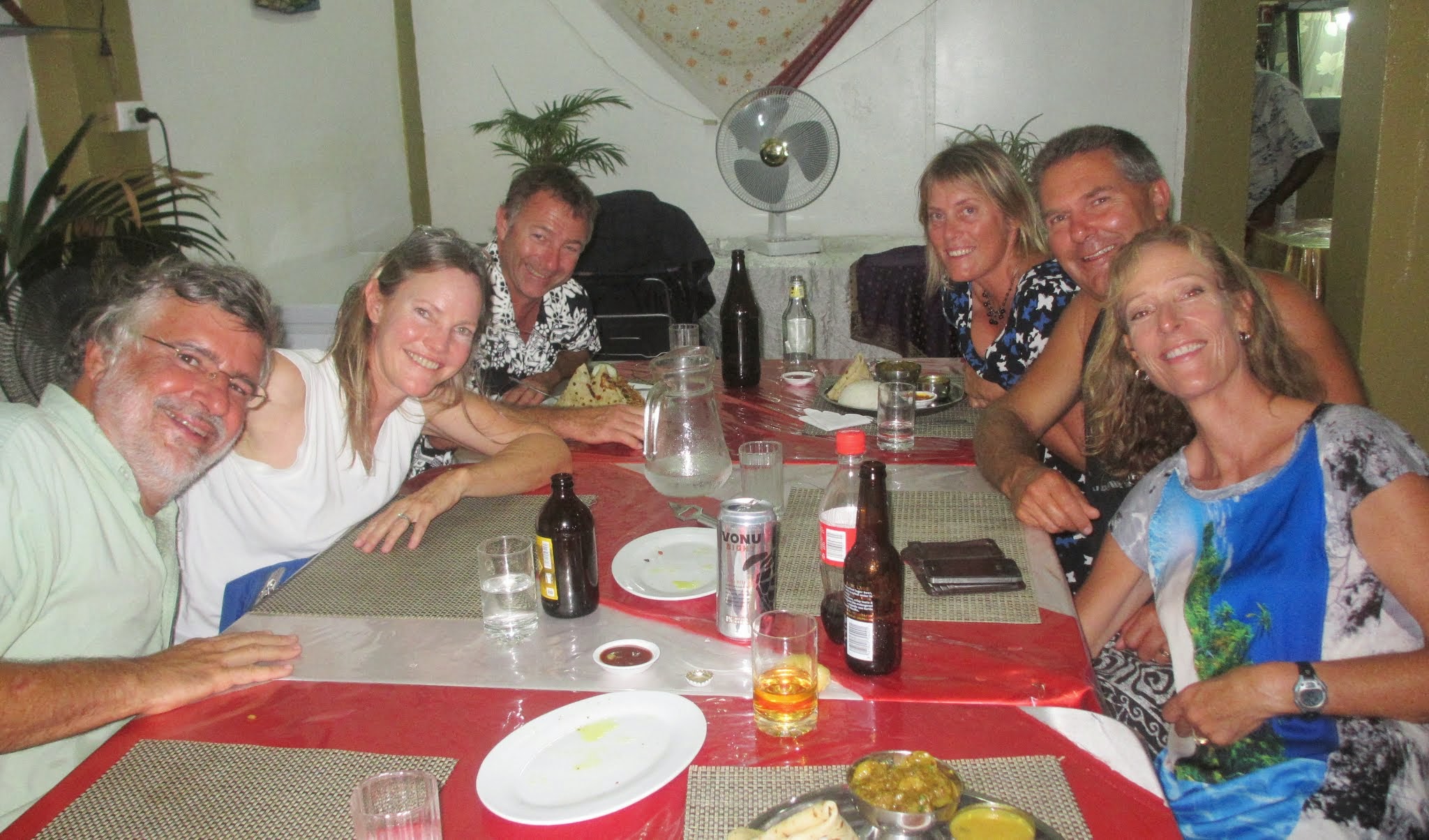
Update: Curly has passed on. Has anyone taken over for him? I don’t know, but his opinions do linger so I’ll leave this page up.

Life in Savusavu (Fiji)

June 10 – 18, 2013

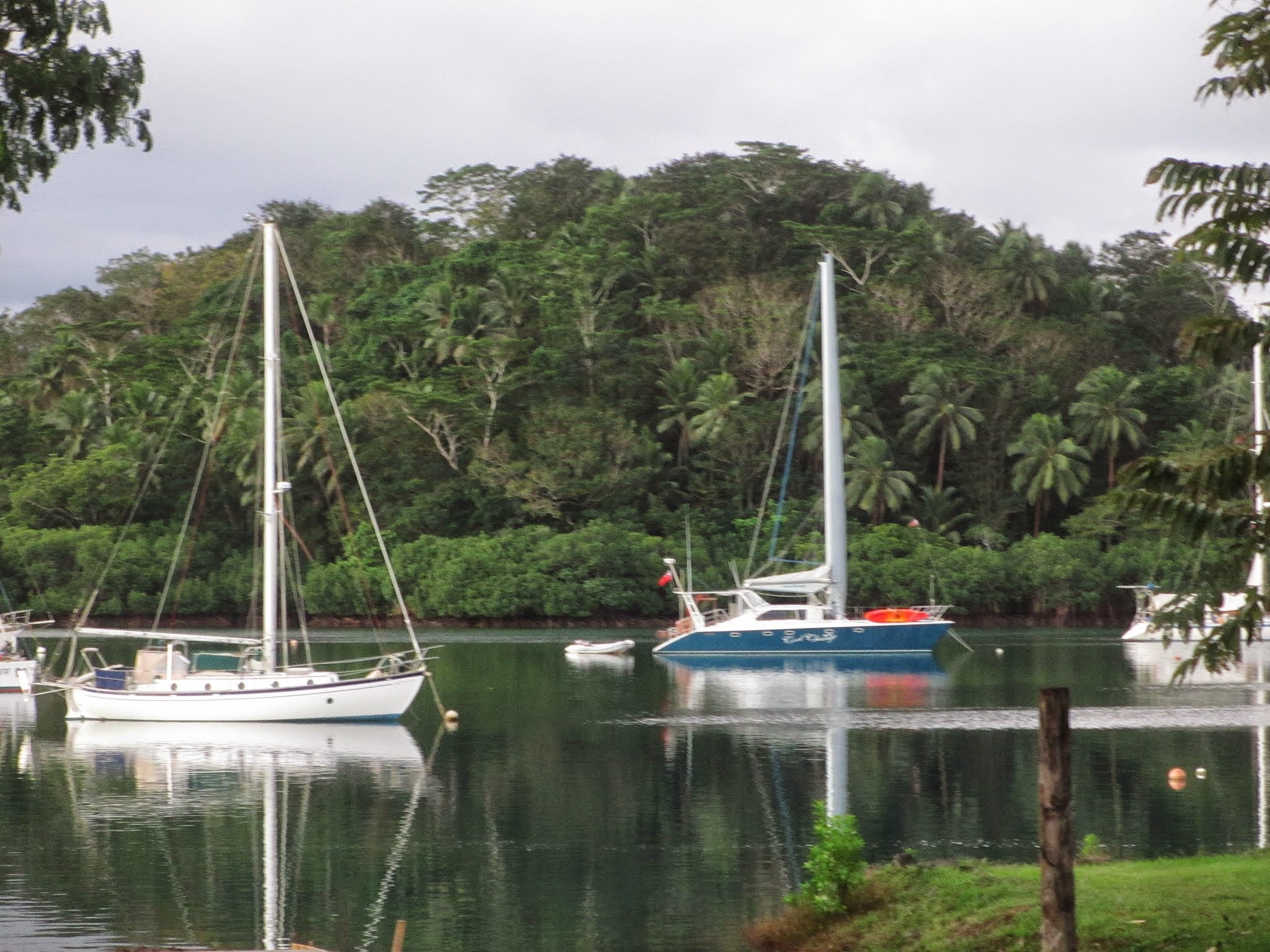
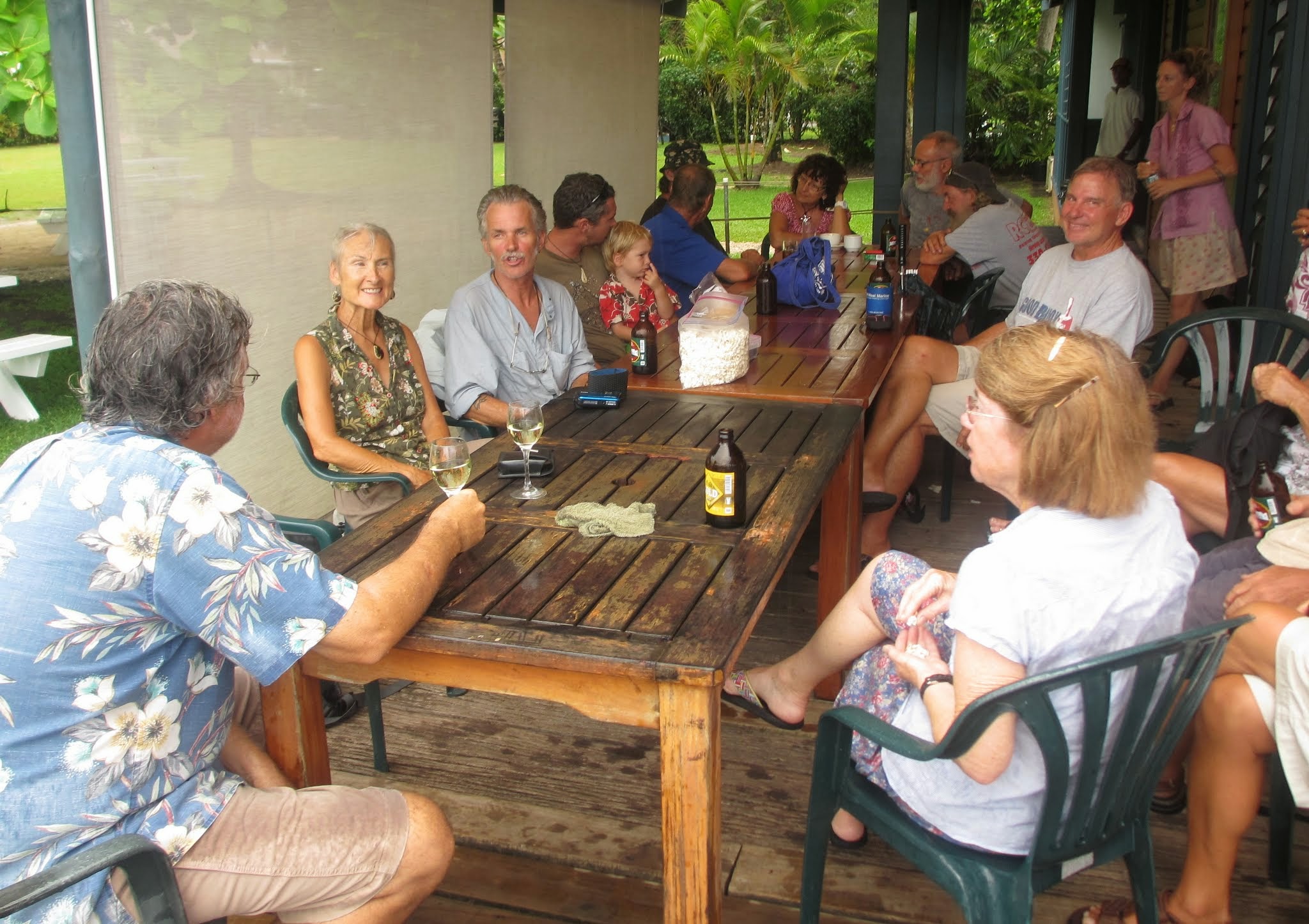
Our time in Savusavu had kind of a summer camp feeling. In the morning everyone would listen to the radio net run by a local Kiwi expat named Curly. There we could get local weather forecasts, learn about fun stuff going on during the week, hear advertisements for local business, and ask questions.
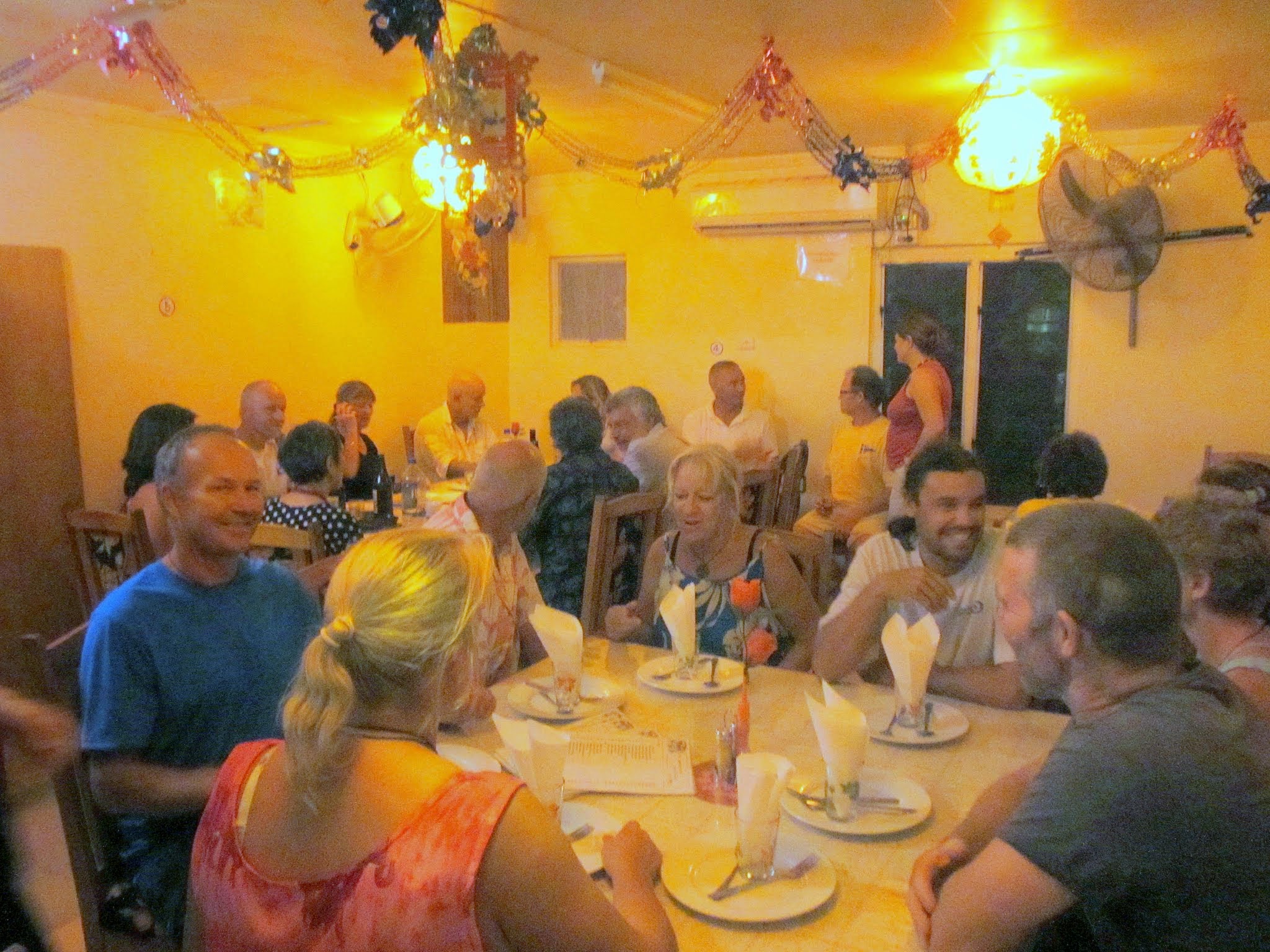
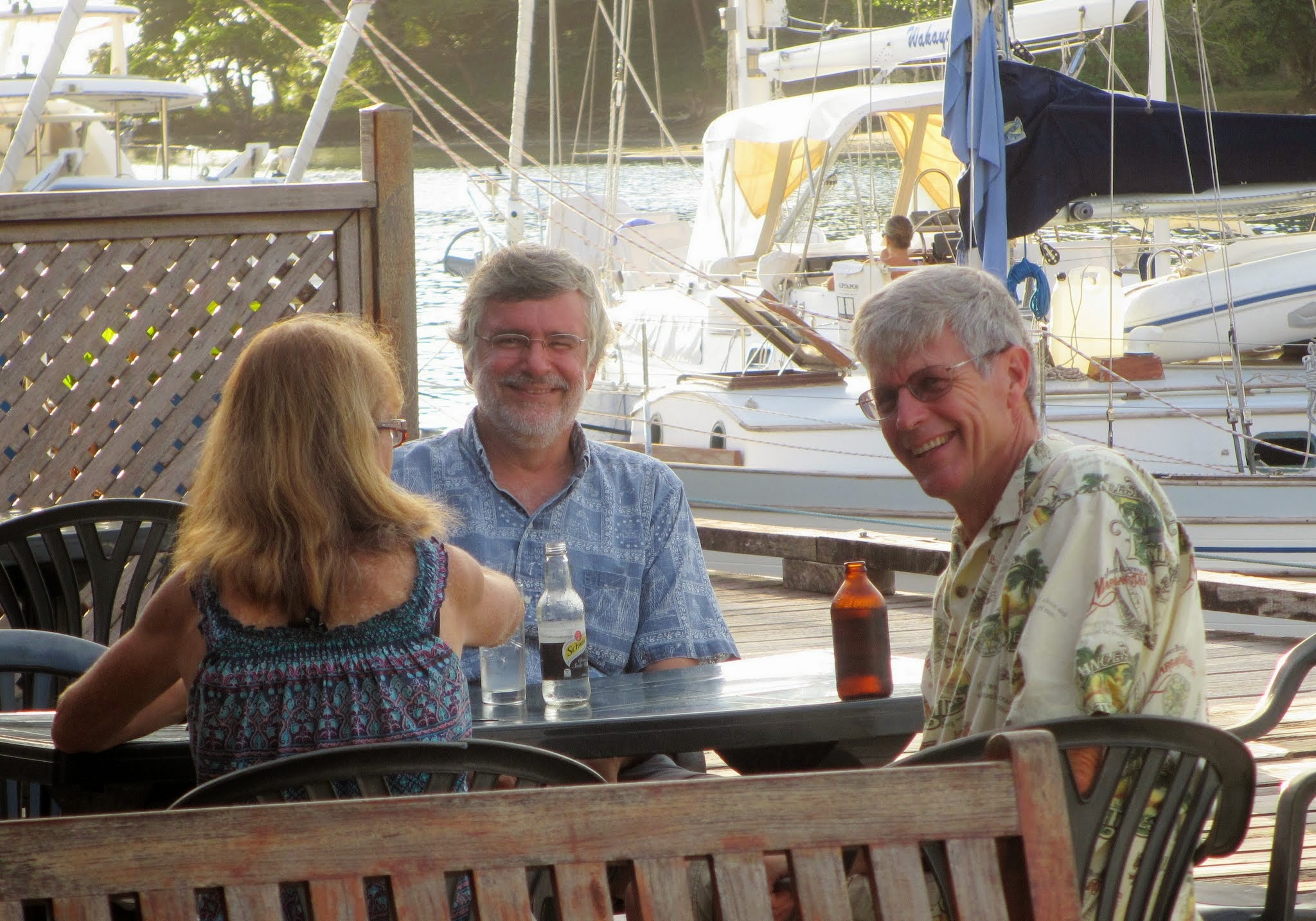
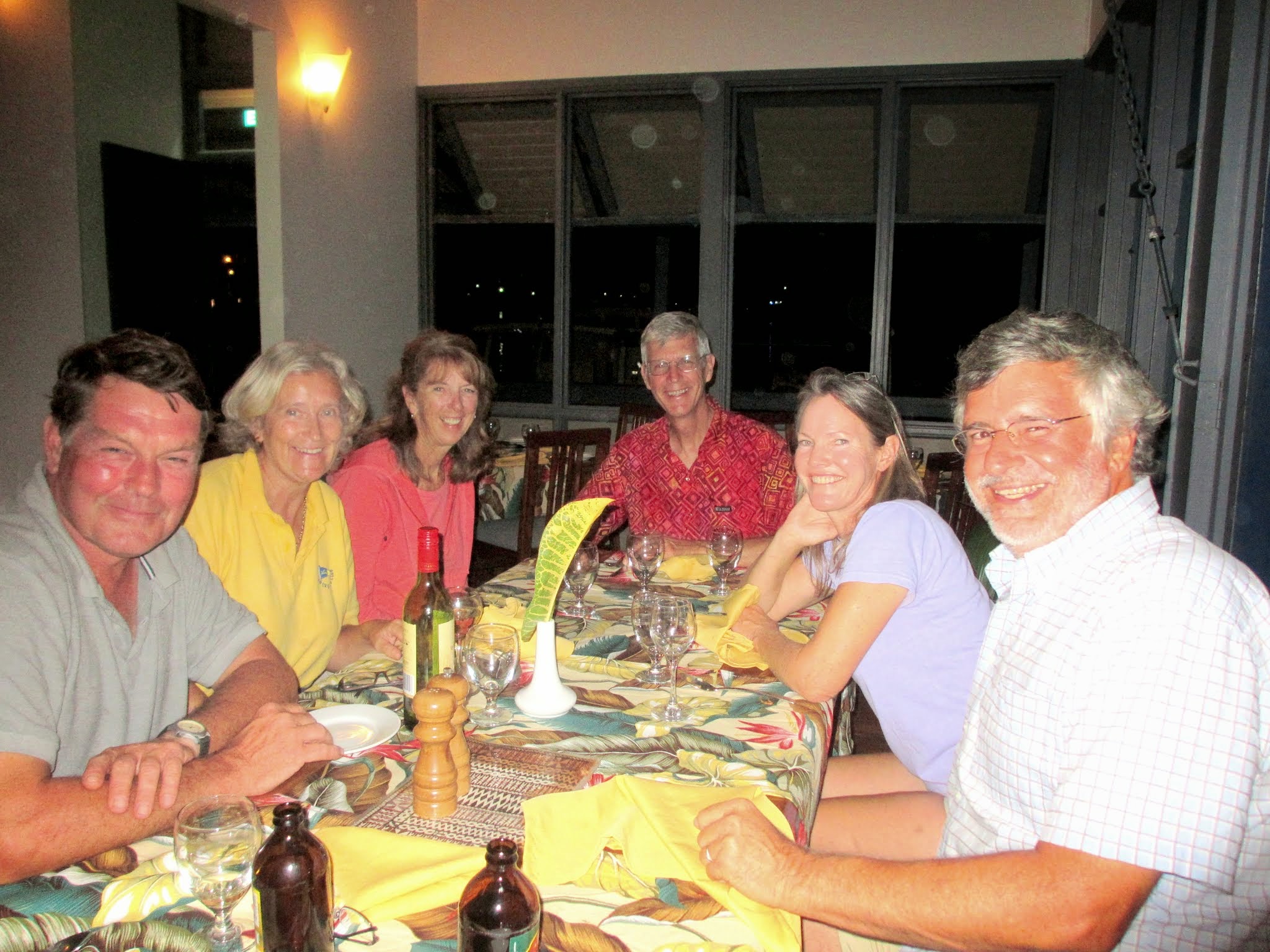
During the day, the town and mooring areas were a hub of activity, and with all the cruisers newly arrived and the early-season feeling, it was pretty festive! We couldn’t walk far through town or take our dinghy through the moorings without running into people we knew. With the exchange rate, some of the restaurants were so reasonably priced that it was cheaper to eat out than cook on a boat, which meant lots of fun lunch and dinner gatherings. And of course the deck bar at the Copra Shed was hopping around sunset. Meanwhile the air was nicely warm during the day and comfortably cool at night, and rain showers generally happened overnight. Overall, this was a really nice time, but we did have one hiccup when we went to Curly’s seminar on cruising Fiji. That will be the subject of my next blog post.

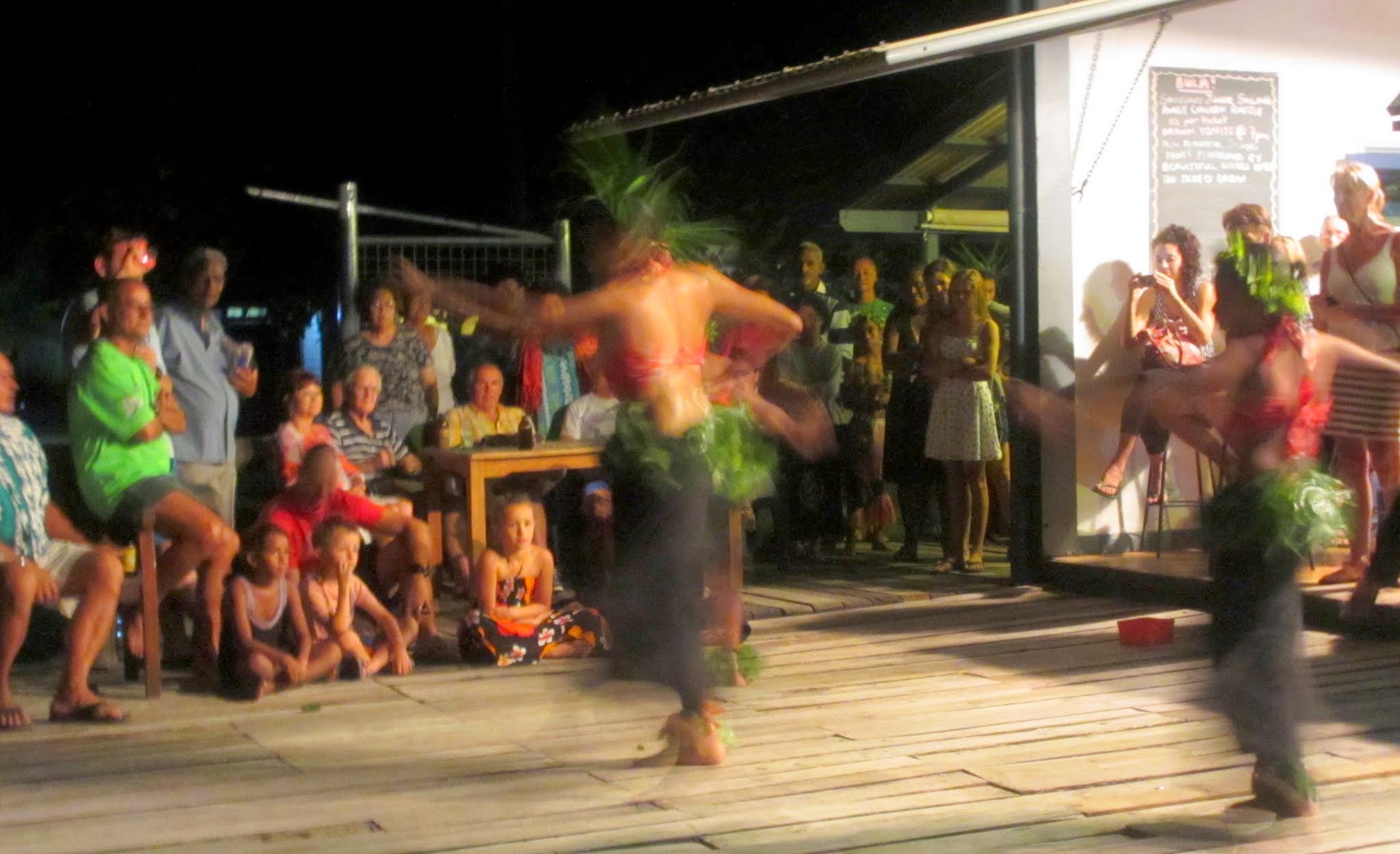
Meanwhile, below is a gallery of some of the festivities in Savusavu over the cruising season. (Click to enlarge and scroll) –Cyndi